Posted on — Leave a comment

Scottsdale Is Building a 196,000-Square-Foot Pickleball Campus with a Wolfgang Puck Restaurant Inside It

The Pet Pickleball retro novelty shirt in 1970s living room with shag carpet and vinyl records — pickleball in Scottsdale Arizona

Scottsdale Pickleball Is Getting a 196,000-Square-Foot Campus

Pickleball in the Phoenix metro has a problem that most cities would love to have. There are not enough courts. Not enough hours. Not enough parking spaces at 7 AM when the Arizona sun is still manageable and the entire retirement community shows up ready to compete like something personal is at stake. A 2023 Trust for Public Land study ranked the Phoenix metro 56th in the country for access to public pickleball courts per capita, and the private market responded the way Scottsdale always responds to scarcity: by building something enormous and putting a Wolfgang Puck restaurant inside it.

PURE Pickleball Is Not a Facility. It Is a Campus.

What is the largest pickleball facility in Scottsdale?

PURE Pickleball and Padel is the largest pickleball facility under construction in Scottsdale and one of the largest in the country. The complex spans 196,000 square feet on 11.44 acres at the Riverwalk development, with 40 indoor pickleball courts, a 1,200-seat pro arena, and a Wolfgang Puck restaurant. The target opening is late 2026 into 2027.

PURE Pickleball and Padel is being built off Loop 101 and Via de Ventura, between Topgolf Scottsdale and OdySea Aquarium. Beyond the 40 courts: eight indoor padel courts. A HonorHealth sports performance and recovery center. Member locker rooms with cold plunges, red-light saunas, and jacuzzis. AI and livestream technology on every court. A VIP lounge. A rooftop patio and bar. Childcare rooms.

That is a lot of square footage for a sport that started on someone’s driveway in Bainbridge Island.
The facility is the future intended home of the Phoenix Flames, Arizona’s Major League Pickleball team, and the future intended permanent headquarters and National Training Center for USA Pickleball. Eight courts will be dedicated to open play, free to the public, all day, every day. Co-developed with Caliber, a public company traded on Nasdaq.
The Scene That Was Already Deep Before PURE

PURE is the headline, but the Scottsdale and Mesa pickleball scene was already deep before anyone broke ground on a 196,000-square-foot building. Center Court Pickleball Club operates an indoor facility with tournament-quality surfaces at 10220 N 90th Street and is building a second 35,000-square-foot location at Scottsdale Fiesta Retail Center with 13 courts, a retail shop, dining, and a social lounge. That second location has a summer 2026 opening target.

Pickle and Social Scottsdale is coming to The Sydney corridor near 90th Street and the Loop 101 with 12 courts, eight indoor and four outdoor. The restaurant is 7,500 square feet. The Fairway Fieldhouse has four Full Swing golf simulators and a putting green. There is a 30-foot outdoor live music stage and a rooftop bar.

This is a city that does not build a pickleball facility without also building a bar and a stage.

In Mesa, Dink and Dine Pickle Park opened a 72,000-square-foot hybrid hospitality and recreation venue at Mesa Riverview with 13 courts (10 indoor, 3 outdoor covered), a chef-driven restaurant called Paddle Heads Bar and Eatery, two private indoor courts with full-service bar and lounge, and three private dining rooms with AV. Selkirk is the official paddle partner. Arizona Athletic Grounds, the massive multi-sport complex in Mesa, has 41 pickleball courts alongside basketball, volleyball, futsal, and gymnastics. Forty-one courts in a single complex is not a number that registers until you walk in. Tournaments draw players from across the state. Weekend open play fills up early. The sheer volume means you can always find a game at your level, which is not true at smaller venues where a 3.0 ends up on a court with a 4.5 and spends an hour learning what they do not know.

Dink and Dine takes the opposite approach. Smaller, more curated, more designed around the experience of spending an evening somewhere rather than just playing. The private courts with bar service and dining rooms with AV are built for corporate events, birthday parties, and the kind of social pickleball that is half sport and half excuse to be out of the house. Their partnership with Selkirk puts demo paddles in the hands of players who might not have tried a premium paddle before, which is smart marketing disguised as hospitality.

Is pickleball big in Phoenix?

Pickleball in the Phoenix metro area is among the fastest-growing scenes in the country. Scottsdale, Mesa, and the surrounding cities have added more than 100 dedicated courts in the last two years, with PURE Pickleball’s 40-court campus and the 41-court Arizona Athletic Grounds anchoring the east Valley. The climate supports year-round outdoor play from October through April, and the snowbird population from Minnesota, Michigan, and the upper Midwest arrives each winter specifically to play.

The Scottsdale pickleball demographic skews older and wealthier than the national average. That is not a judgment. That is a competitive advantage. Retirees with disposable income and empty mornings are the fuel that built this scene. They play five days a week. They know every referee by name. They have opinions about court surfaces that would make a contractor nervous. They drove the demand that convinced developers to put a Wolfgang Puck restaurant inside a pickleball arena.

But the scene is not exclusively retirement-age. The 18-to-44 bracket now makes up 70% of all pickleball players nationally, and Scottsdale’s younger tech and finance crowd has picked it up as a networking sport. The same person who plays golf at Troon on Saturday is playing pickleball at Center Court on Tuesday evening, and they are taking both equally seriously.

The community lives online, too. The Scottsdale Pickleball Club has 13,000 Instagram followers and runs regular events across local facilities. They are not a venue. They are a community that moves from court to court, organizing play for people who want competition and people who want a social excuse to be outside before it hits 110 degrees. The Scottsdale Pickleball and Pals Facebook group coordinates sessions and clinic announcements. The Arizona Pickleball group on Facebook fields questions from snowbirds looking for 4.5-level games before they even book their flights. Orchard Pickleball in Scottsdale runs liveball sessions and court rentals with no membership required, and their Facebook following tracks every new clinic and drop-in opportunity.

The Companion That Requires No Feeding

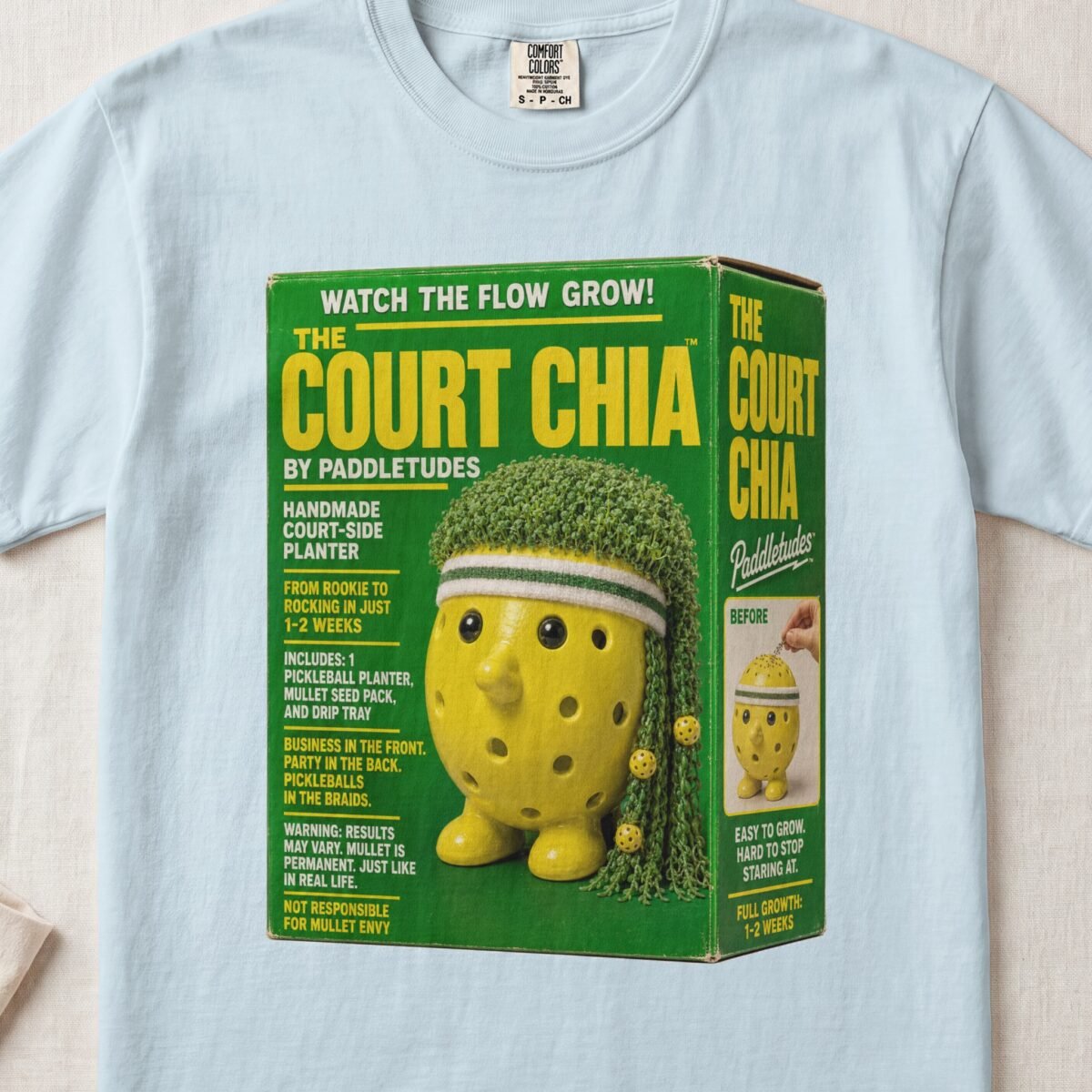
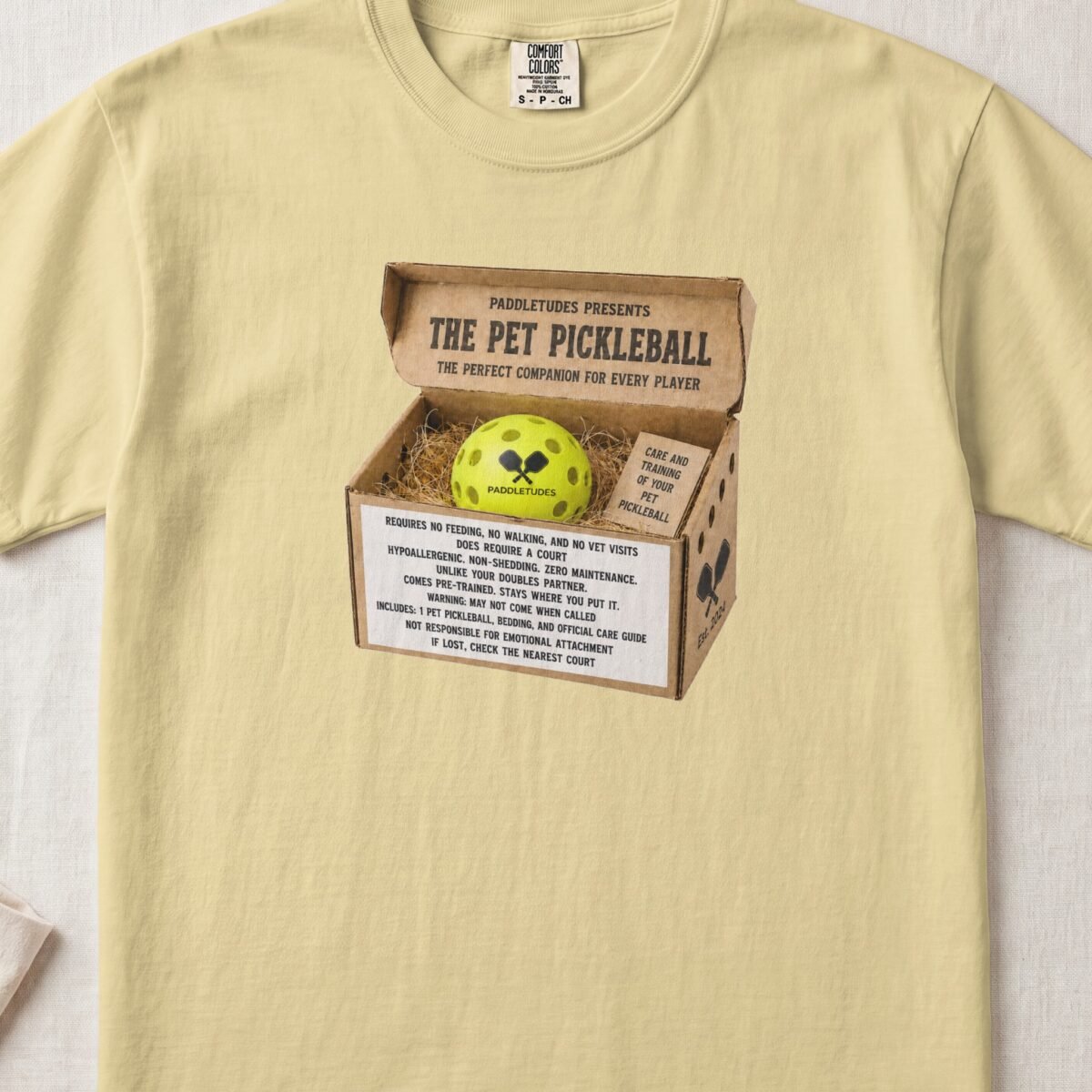
There is something specific about Scottsdale pickleball culture that makes it the right home for a product like The Court Chia or a shirt with a pickleball sitting in an adoption box labeled “requires no feeding, no walking, and no vet visits.” The obsession here is real and openly acknowledged. People schedule their lives around court time. They have a paddle bag and a backup paddle bag. They know what time the afternoon wind picks up at Surprise City courts, 16 free outdoor courts where USA Pickleball currently has its headquarters before the planned move to PURE.

The joke lands because it is not a joke. The pickleball is the companion. It goes everywhere. It sits in the car between sessions. It rolls under the couch and gets found three weeks later. Unlike a doubles partner, it comes pre-trained and stays where you put it.

If you are visiting Scottsdale and want to play, start at Arizona Athletic Grounds in Mesa for the sheer volume of courts and the best odds of finding a game at your level without a reservation. If you are moving here and plan to play seriously, get on the Center Court membership list before the second location opens at Fiesta Retail Center. And if you want to watch where the sport is going before it gets there, keep an eye on PURE’s opening date. A Wolfgang Puck restaurant and a rooftop bar inside a pickleball campus is either the future of the sport or the most Scottsdale thing that has ever happened. Probably both.

Posted on — Leave a comment

Pickleball in Nashville Sounds Exactly Like You Think It Does

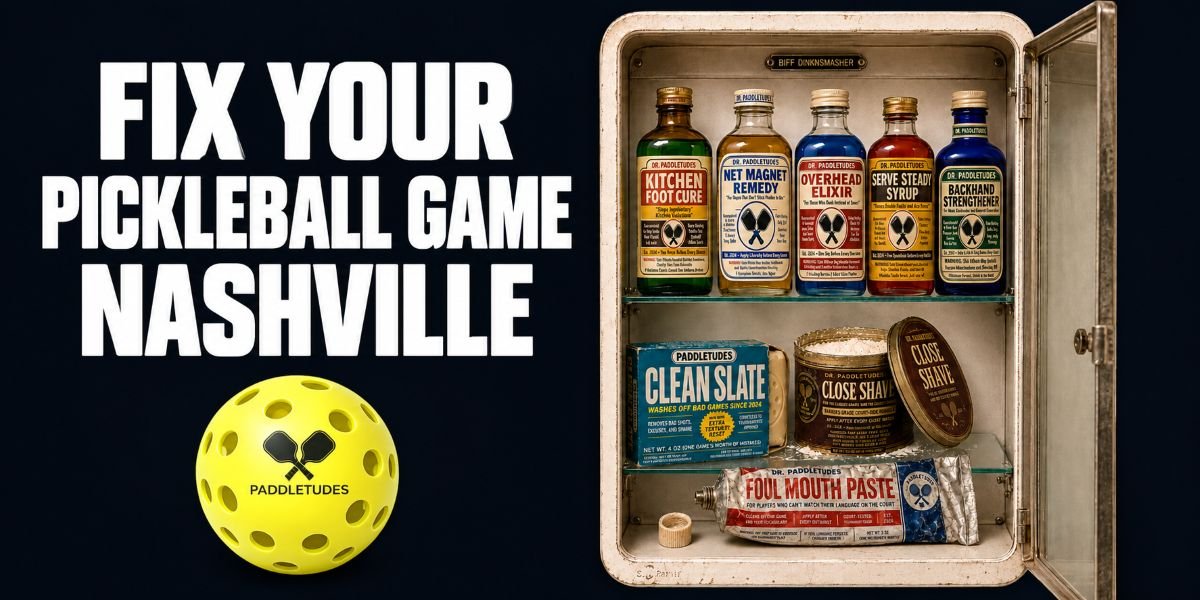
Biff Dinknsmasher's vintage pickleball medicine cabinet filled with Dr. Paddletudes remedies including Kitchen Foot Cure, Net Magnet Remedy, Overhead Elixir, Serve Steady Syrup, Backhand Strengthener, Clean Slate soap, Close Shave cream, and Foul Mouth Paste — Fix Your Pickleball Game Nashville

Pickleball in Nashville runs across close to 200 courts, from twelve lined courts at Centennial Sportsplex in Midtown to five covered courts built under the Broadway railway bridge at Dinkville. The scene is year-round, the communities are organized, and the volume on Court 3 during Thursday league is exactly what you’d expect from a city that turned performing for strangers into a regional economy.

Nashville invented a specific kind of loud. Not angry loud. Entertainer loud. The same energy that fills Lower Broadway at 10 PM on a Tuesday fills the courts at Centennial at 6:35 PM on a Wednesday, right after intermediate open play sign-ups close and fifty people who all think they’re a 3.8 start jockeying for position on the paddle board. The difference is that on Broadway, the audience paid to be there. On the pickleball court, the audience is the couple on Court 7 who just wanted a quiet Tuesday night hit-around and now can’t unhear what just came out of a retired accountant’s mouth after a blown line call.

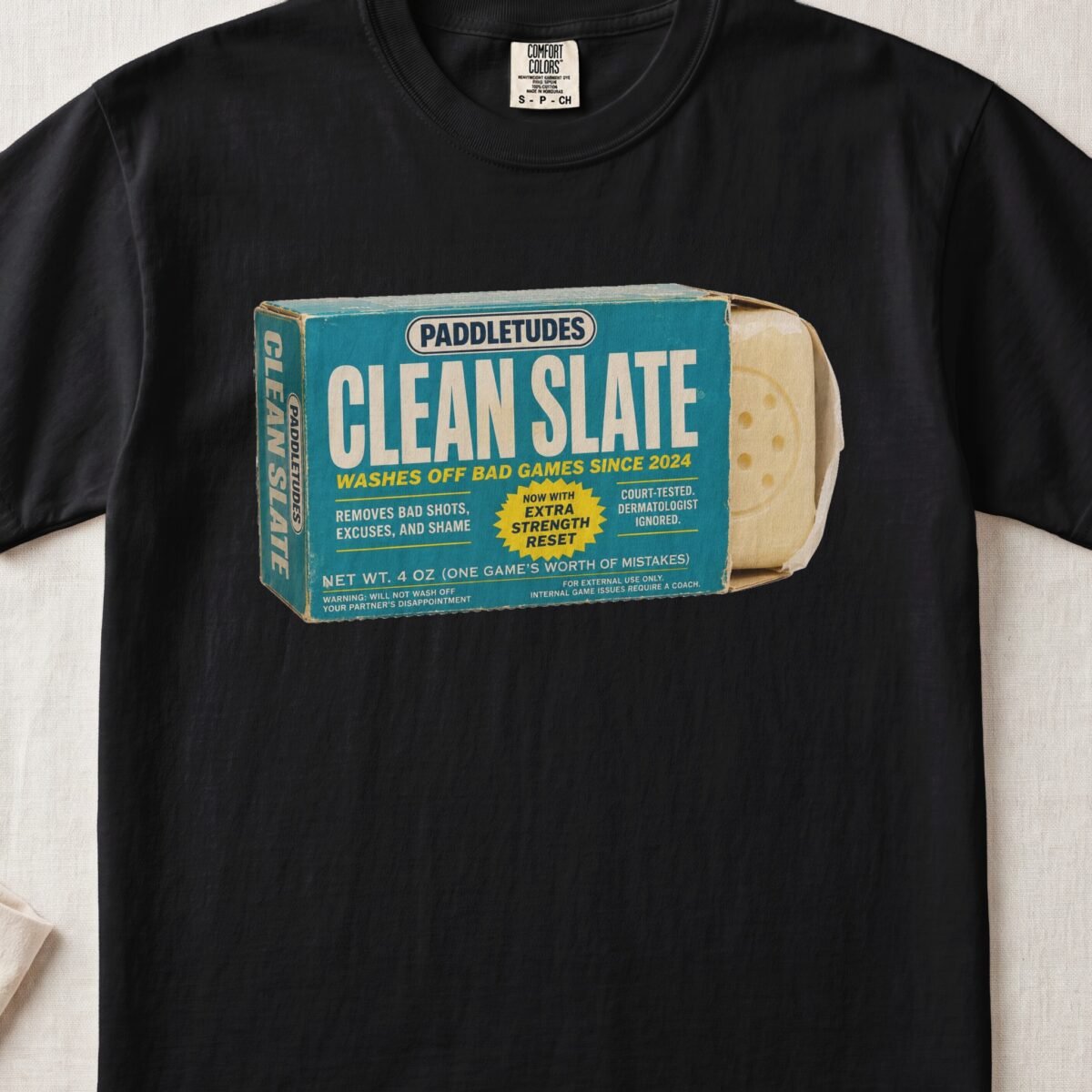
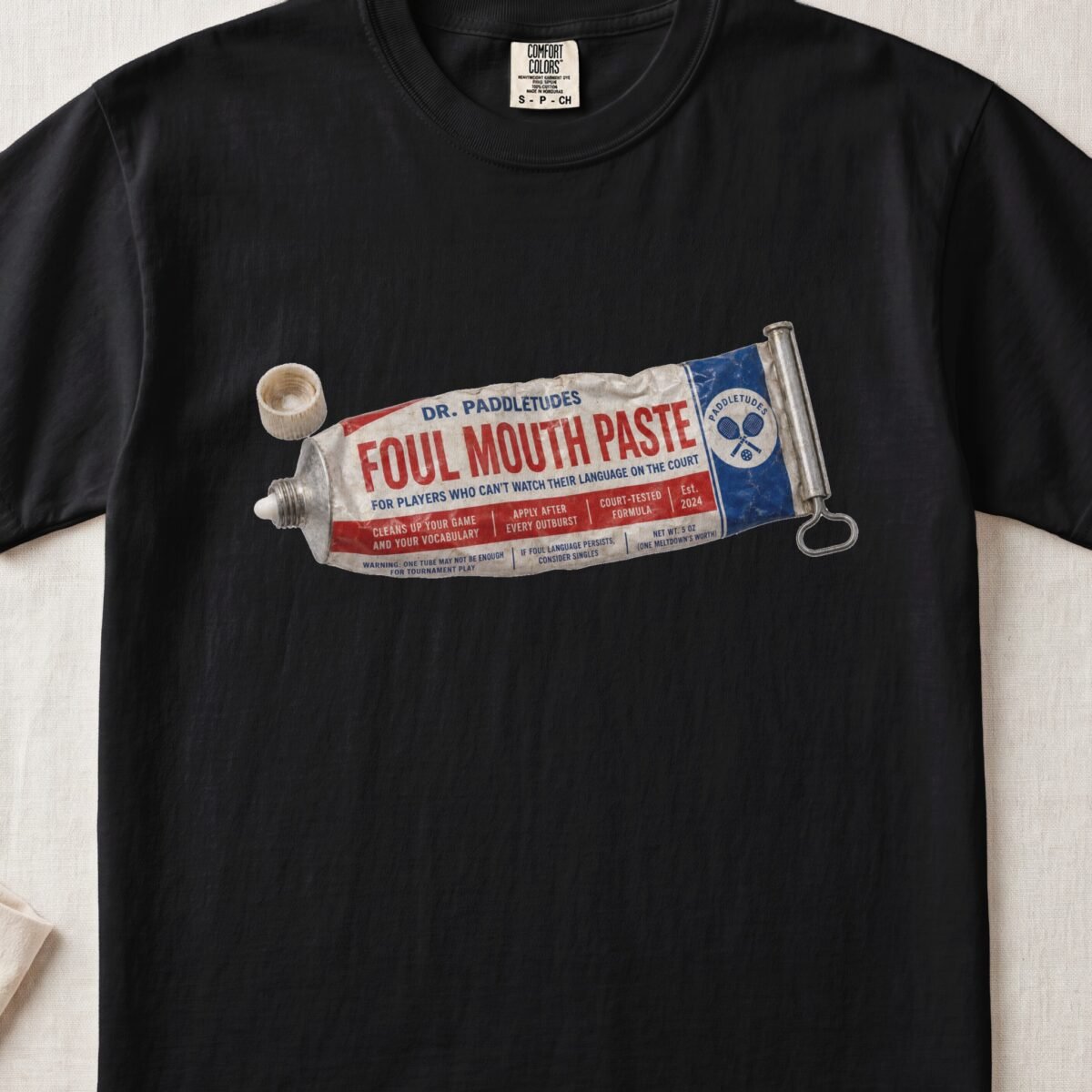
That gap between how pickleball presents itself and how it actually sounds during a close game is where this city’s scene lives. And it’s the reason a fake vintage toothpaste tube printed on a shirt resonates harder here than almost anywhere else in the country.

Playing Under Broadway and Everywhere Else

Where do people play pickleball in Nashville?

The Nashville metro has 32 pickleball locations spread from Midtown to Donelson to Franklin. The anchor facility is Centennial Sportsplex, a Metro Parks facility at 222 25th Avenue North with twelve courts lined for pickleball. It sits walking distance from Centennial Park, the Parthenon replica, and Vanderbilt’s campus. Court reservations run $5 per hour. Open play happens Monday nights for beginners starting at 6:30 and Wednesday nights for intermediates at 6:00, both running until 9 PM, both capped at fifty players per session.

That fifty-player cap matters. Sign-ups open at 5:45, and by 5:50 the paddle line is deep enough that you might play three games in a two-and-a-half-hour window. The rotational format at Centennial uses first-to-nine scoring without win-by-two, which keeps games short and the line moving. If you want guaranteed court time, reserve outside of open play hours.

Across town in Donelson, Two Rivers Park opened new free outdoor courts in May 2026. Gordon Jewish Community Center runs three indoor and two outdoor courts in the West End, free for members and five dollars for guests. The Courts at West Meade has six outdoor courts with lighting for evening play. None of these are destination facilities that you’d plan a trip around, but they fill a role that matters more than spectacle: neighborhood courts where regulars show up at the same time every week and know each other’s backhand weaknesses by name.

Are there pickleball courts at Nashville Yards?

Yes, and they might be the most Nashville thing that’s happened to pickleball anywhere. Dinkville Under Broad opened in October 2025 at Nashville Yards with five covered pickleball courts built underneath the Broadway railway bridge between Union Station and the Grand Hyatt. Murals cover the bridge supports. Trains roll overhead. The downtown skyline sits behind the baseline. There’s a nine-hole mini golf course next to the courts and a bar that the Union Station Hotel operates.

Open play runs weeknights from 5 to 9 PM and weekends from 10 AM to 1 PM and again 5 to 9 PM. Non-members pay $12 per session. A basic membership at $19.99 a month cuts that in half. The Plus membership at $49.99 gets you free open play and half off court reservations.

Before Under Broad, Dinkville ran rooftop courts at the Bobby Hotel in downtown Nashville. When the hotel sold, the brand moved everything street-level to the Under Broad space, and the result landed Dinkville a Court of the Week feature from CourtSource. The raw industrial setting under the bridge turned out to be a better fit for the brand than a rooftop ever was. People who’ve never held a paddle walk past on their way to Broadway, see a game happening under the bridge lights, and stop. That’s how a sport grows in a tourist city. You don’t advertise. You play where people can see you.

Dinkville also runs free intro-to-pickleball clinics on weekends and hosted a celebrity pickleball tournament at Nashville Yards benefiting music education through the CMA Foundation. Selkirk sponsors the venue. If you want to understand what Nashville pickleball feels like at its most Nashville, play at Dinkville on a Friday night. The courts are ten feet from the sidewalk. Bachelorette parties walk past in matching boots. A train shakes the bridge overhead. And somewhere on Court 2, a doubles team that met forty-five minutes ago during open play rotation is arguing about who should have taken the middle ball. It’s competitive, it’s social, and nobody is using their indoor voice.

The growth across the rest of the metro has been less cinematic but just as real. Nashville’s population boom added 100 people per day for the better part of a decade, and those transplants brought their paddle bags with them. The demand outpaced the courts for years. Two Rivers Park’s new free courts in Donelson were the city’s first significant public court expansion in recent memory, and they filled immediately. The waitlist culture at Centennial’s open play sessions exists because twelve courts and fifty players is a math problem that hasn’t been solved yet.

The Part Nobody Puts in the Brochure

Can you yell out to your partner in pickleball?

You can. The official USA Pickleball rules allow communication between partners during play, and calling out shots is standard doubles strategy. “Mine,” “yours,” “switch,” “no” on a ball heading out. That’s not trash talk. That’s teamwork.

The line gets interesting after that.

“Nice serve” to your opponent is sportsmanship. “Another one just like that, please” after your partner smokes a passing shot is gamesmanship. “I KNEW you were going backhand” loud enough for Courts 4 through 6 to hear is Nashville. The sport’s etiquette guidelines acknowledge this grey area without resolving it, and every facility handles it differently. Centennial’s open play coordinator will talk to you if your volume becomes a problem. Dinkville, built underneath a working railway bridge next to a bar, has a higher tolerance for noise. The setting self-selects for people who came to be loud.

What Nashville adds to this dynamic is performance instinct. This is a city full of people who moved here to be heard. Singer-songwriters. Session musicians. Comedians. Real estate agents who used to be singer-songwriters. When a close game gets competitive, the commentary turns into material. The shake and bake doesn’t just win the point. It gets narrated on the way down.

What is the golden rule of pickleball?

The golden rule of pickleball is that all line calls are made by the team whose side the ball lands on, and you call your own lines honestly. Players are expected to give their opponent the benefit of the doubt on any close call. If you didn’t see it clearly, the ball is in.

This rule works perfectly until it doesn’t.

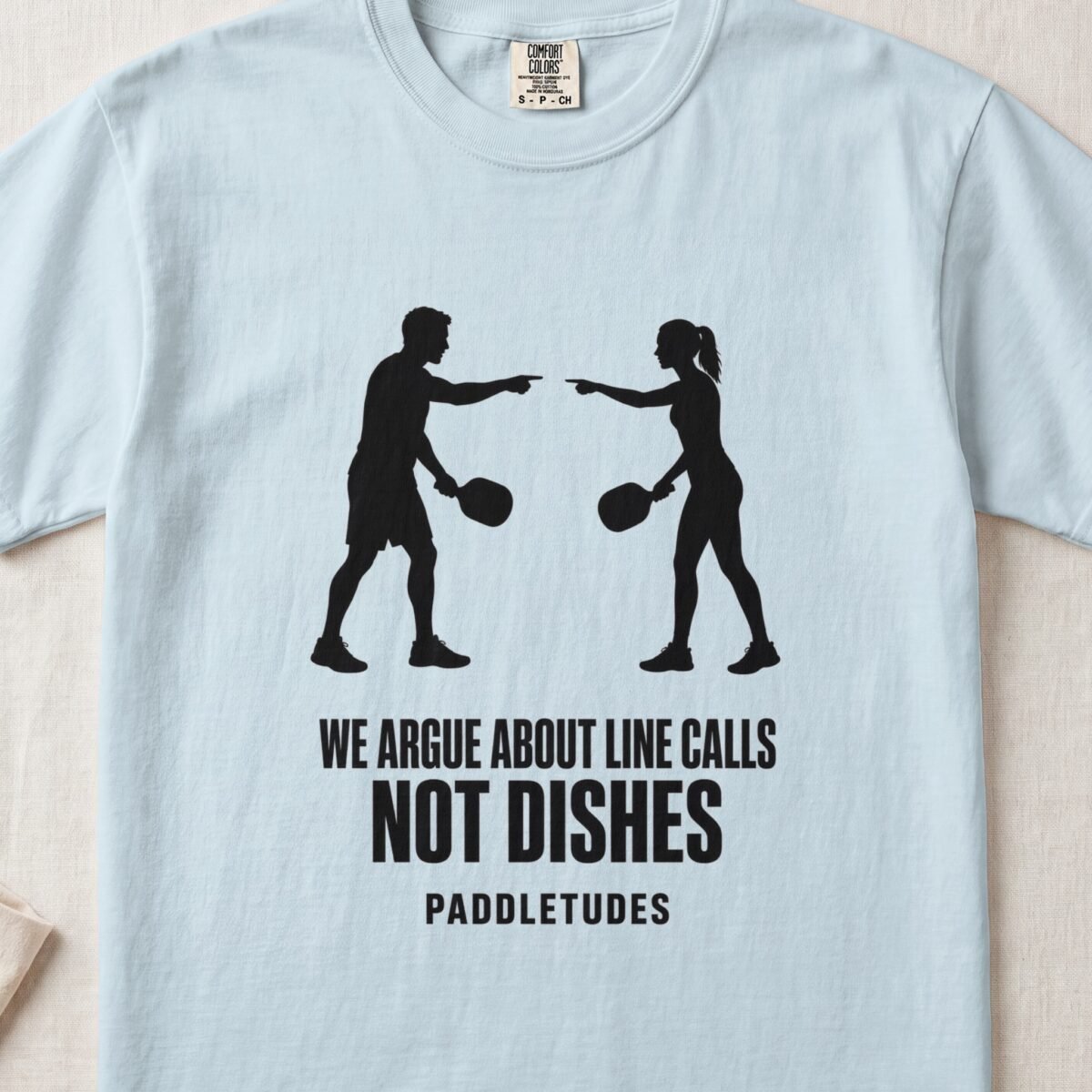
Nashville’s league nights run at facilities across the metro, and the line call is where more friendships have been tested than any other single element of the game. Not because Nashville players are dishonest. Because Nashville players are dramatic. A ball lands on the line at 7:45 PM during a 9-7 game with two teams watching from the bench, and the reaction you get isn’t a quiet “out.” It’s a production. Arms spread. Head tilt. Eye contact held for exactly one beat too long. The call is correct. The delivery would get you cast in something.

The etiquette infrastructure exists. USA Pickleball publishes sportsmanship guidelines. Facility coordinators run pre-session briefings at Centennial. League organizers send emails about court behavior every season. None of it prevents what happens when two competitive people disagree about a ball that landed within an inch of the line at a moment that mattered. What it does is give everyone a shared language for the post-game debrief, which in Nashville usually happens at a bar, which means the story gets better with every retelling.

The Nashville Pickleball Association runs organized league play at multiple venues across the metro, and the culture of those leagues reflects the city. Teams have names. Some of them are unprintable. The post-match handshake line is genuine because the trash talk was genuine, and in a city where creative expression is considered a professional skill, the on-court banter has higher production value than most places. Nobody in Nashville says “nice try” without at least a half-beat of timing behind it.

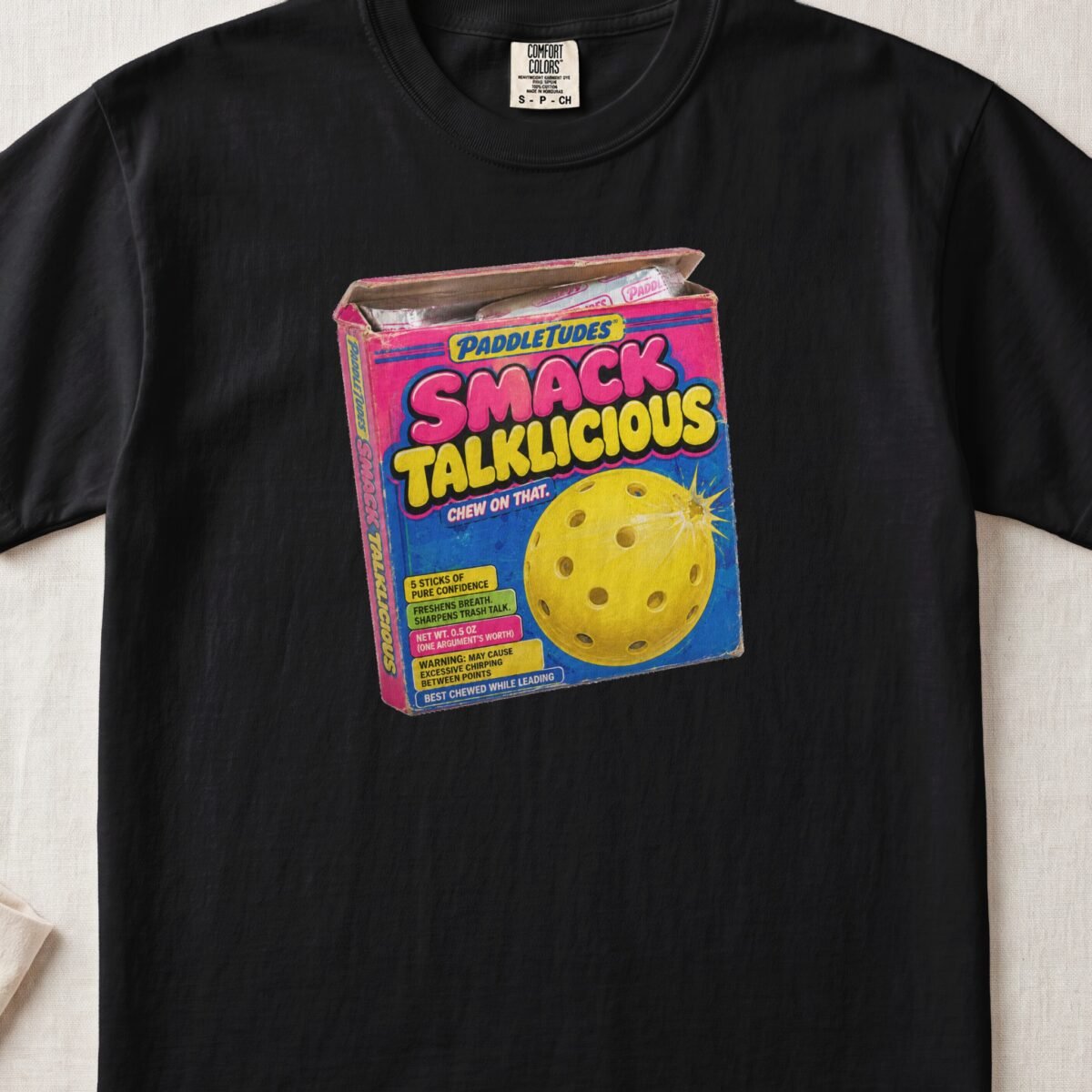
If you’ve spent any time in competitive pickleball communities, you already know the type. The person who means every apology and none of them. The one whose partner has started pre-apologizing to the adjacent court. The one who needs a tube of something stronger than toothpaste after every Tuesday session. The fine print on the label says it: if foul language persists, consider singles.

South of the City Line

Where can I play pickleball in Franklin, TN?

Franklin and the surrounding Williamson County suburbs have become the Nashville metro’s indoor pickleball corridor. Music City Pickleball operates out of the TOA Sports Performance Center in Cool Springs with up to twelve indoor courts. Members get open play, court reservations, leagues, and clinics. The organization has been the hub of Middle Tennessee’s competitive scene since before most of the metro’s newer venues existed.

The Franklin Recreation Complex at 1120 Hillsboro Road runs indoor pickleball with court reservations at $10 per hour per court, bookable three days in advance starting at 8 AM. Brentwood’s Indoor Sports Complex at 920 Heritage Way has additional courts. Academy Park in Franklin offers free outdoor courts. Nolensville and Spring Hill each have their own rec center courts, and the Hillsboro-Leiper’s Fork Community Center runs morning open play Monday through Friday from 7 to 10 AM.

The suburban scene plays differently than downtown. The facilities are quieter. The parking lots are bigger. The players are, on average, slightly older and slightly more likely to have migrated from tennis. League play matters more here than drop-in sessions, and the wait times are shorter because the population density is lower.

Pickleball Kingdom opened a Nashville South location with indoor climate-controlled courts, free daily lessons, and a pro shop. The franchise model brings standardized programming, which means structured open play divided by skill level. It fills a gap in the south Nashville corridor where options were previously limited to rec center gym time.

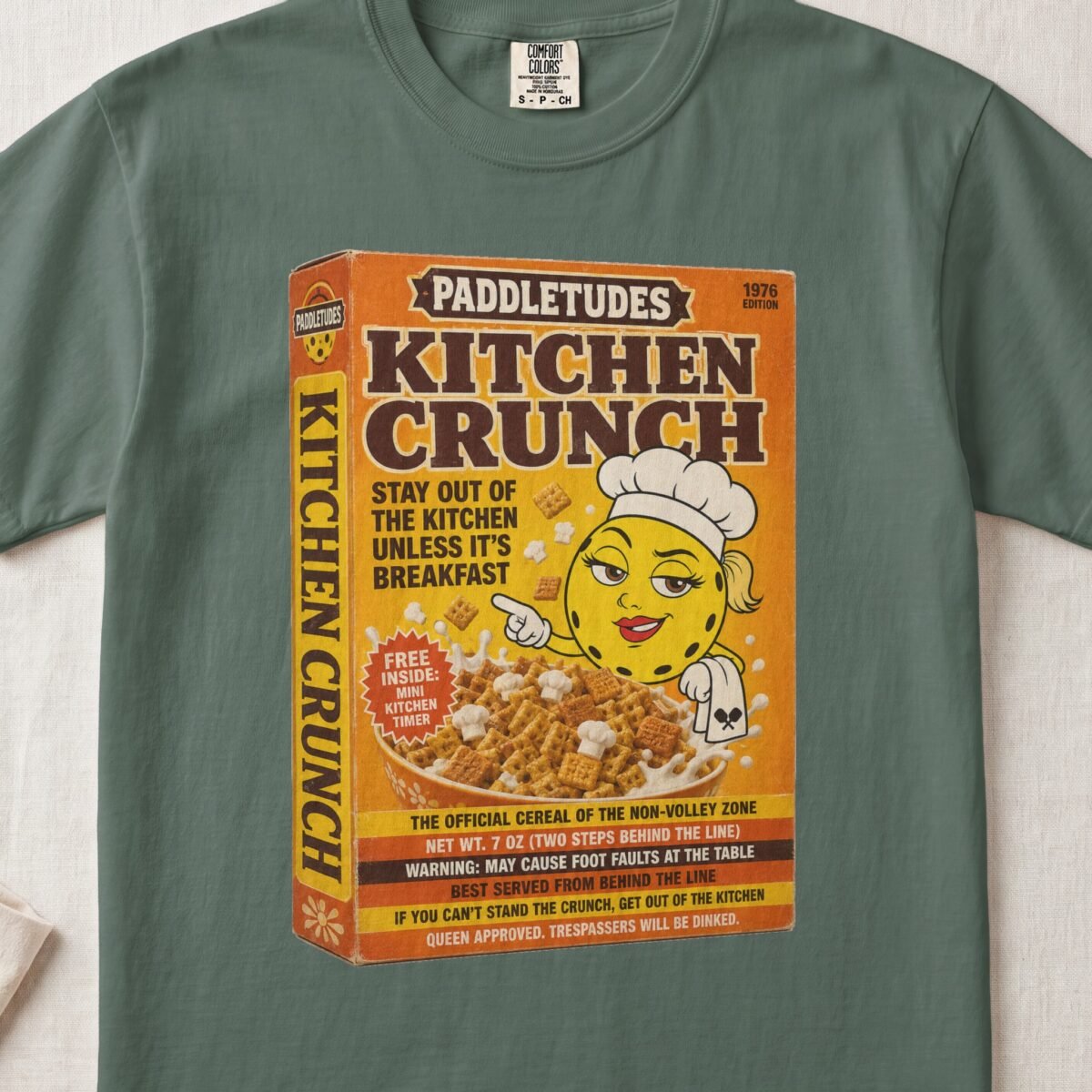
The full Almost Seen On TV retro collection was designed for exactly the kind of player who drives thirty minutes from Franklin to play league night in Midtown, gets a little too competitive under the Centennial lights, says something that probably carries further than intended, and needs a shirt that turns the whole thing into a joke before anyone can turn it into a problem.

If you’re visiting Nashville and want to play, start at Dinkville Under Broad on a weeknight. Book a court, play under the bridge, grab a drink after, and walk to Broadway. If you’re moving here and want a regular game, get on the Centennial Sportsplex open play schedule and bring patience for the paddle line. If you’re south of the city, Music City Pickleball in Cool Springs is the fastest way into the competitive community. Bring your own paddle. Leave your indoor voice at home.

Posted on — Leave a comment

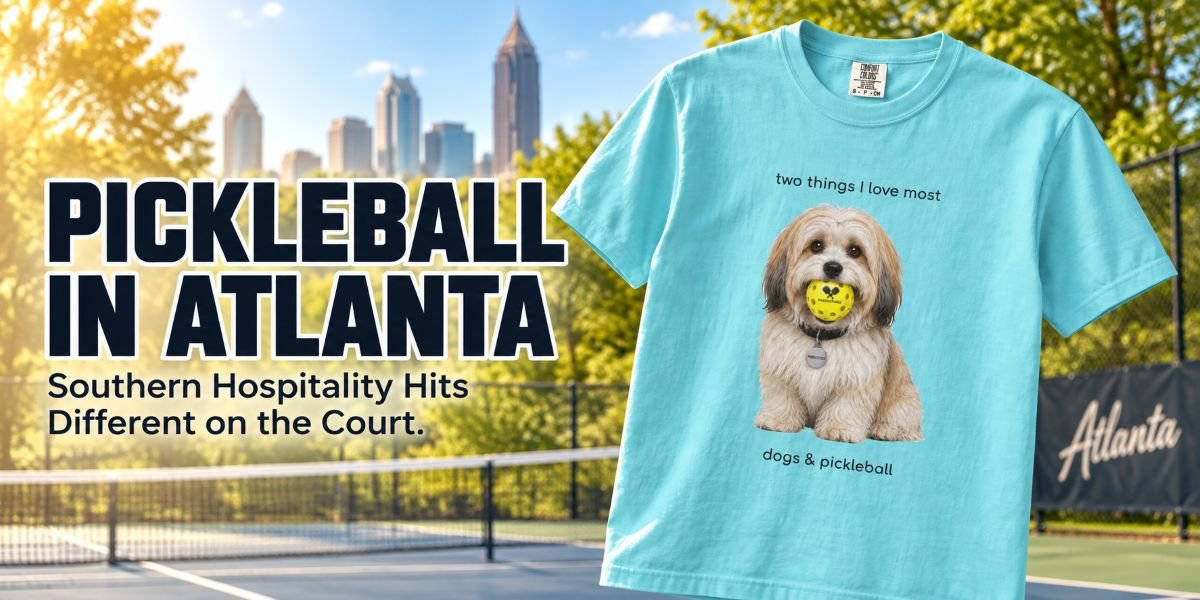
Pickleball in Atlanta: Southern Hospitality Hits Different on the Court

Pickleball shirt in Atlanta — Almost Seen On TV

Pickleball in Atlanta ranks fifth nationally according to Lawn Love’s 2026 rankings, and the metro has 94 verified court locations with over 260 courts spread from Midtown to Marietta to Kennesaw. The Painted Pickle runs eight indoor boutique courts in West Midtown with a full restaurant and bar adjacent to the BeltLine. Atlanta Pickleball Center has ten indoor climate-controlled courts with a championship court and pricing that starts at $6.50 per person during off-peak hours. And the suburbs are adding indoor facilities so fast that the PAA questions people ask Google about pickleball in Marietta and Kennesaw now have real answers.

Atlanta pickleball has a personality that’s distinctly Southern but not simple. The hospitality is genuine. Someone will introduce themselves, ask about your game, offer you water, and learn your name before the first serve. Then that same person will run the table for three straight games, apologize after each winner, and say “y’all come back now” as they walk to their car. The niceness is real. The competitiveness hiding inside the niceness is also real. And the intersection of those two things is what makes playing here feel like nowhere else.

The metro’s geography shapes the scene as much as the culture does. Atlanta players talk about ITP and OTP like they’re different countries. Inside the Perimeter is where the premium clubs, the BeltLine-adjacent facilities, and the urban energy live. Outside the Perimeter, which covers Marietta, Kennesaw, Alpharetta, and the sprawling suburbs that stretch in every direction, is where the family-friendly parks and the growing franchise operations are building their footprint. Both matter. Both are growing. And the questions people ask Google about pickleball in Marietta, Kennesaw, and Alpharetta confirm that suburban players are actively looking for options that didn’t exist a year ago.

Atlanta also has something most Southern cities don’t: a forest. This city is built into a canopy. The outdoor courts here sit under old-growth trees that provide shade you won’t find in Houston or Phoenix. That natural shade extends the comfortable playing window during Georgia summers, which would otherwise be brutal. The humidity is real, and June through August will test your commitment. But playing under a tree canopy at 7 PM in September is one of the best pickleball experiences in the country.

Inside the Perimeter

Where can I play pickleball in Atlanta?

Start with the Painted Pickle at 279 Ottley Drive, tucked between Buckhead and Midtown near the SweetWater brewing district. Eight indoor boutique courts plus one signature outdoor court, built by Signature Tennis Courts with professional-grade surfaces. Painted Pickle calls itself a “compeatery,” which is competition plus eatery, and the concept delivers on both halves. The restaurant and bar are legitimate dining destinations, not an afterthought bolted onto a gym. Ping pong, darts, cornhole, and ring toss fill the space around the courts. Court reservations run Monday through Thursday from 9 AM to 11 PM, with open play on Fridays at $25 per person and Sundays at $20.

The Painted Pickle sits adjacent to the Atlanta BeltLine, which means foot traffic and visibility from one of the most popular walking and cycling paths in the city. People discover it by accident. They’re walking the BeltLine, they hear the unmistakable pop of paddles hitting balls, they look through the fence, and they wander in. That organic discovery path is something no amount of Google advertising can replicate. Location matters, and Painted Pickle picked one that markets itself every day to thousands of BeltLine walkers.

Hours run Monday through Thursday 9 AM to 11 PM, Fridays 9 AM to midnight, Saturdays 9 AM to midnight, and Sundays 9 AM to 10 PM. The food and beverage space opens at 11 AM daily. The Pickleball Social Club also runs Wednesday evening open play at Peachtree Hills Park for $5 per player, offering a budget-friendly community option connected to the Painted Pickle orbit.

Atlanta Pickleball Center operates ten indoor climate-controlled courts in West Midtown, making it the first dedicated indoor pickleball facility in the city of Atlanta proper. One championship court. Spacious layout with seven feet of clearance on every side. Air conditioning and heat for year-round comfort. The pricing is accessible: $6.50 per person per hour during weekday mornings, $13 per person per hour during peak evening and weekend slots. Court reservations, open play, clinics, and lessons are all available. Players 16 and up can book.

The affordability at Atlanta Pickleball Center is worth emphasizing. In a market where premium facilities charge $25 to $50 per person for open play, a $6.50 morning session puts indoor pickleball within reach of retirees, students, and anyone on a tight budget. That low barrier to entry builds a broader player base, which in turn builds the community, which in turn builds the demand for more facilities. It’s a cycle, and Atlanta Pickleball Center sits at the beginning of it for a lot of local players.

Where can I play indoor pickleball in Atlanta?

The Pickleheads directory lists 18 indoor locations with 124 indoor courts across the Atlanta metro. Beyond Painted Pickle and Atlanta Pickleball Center, Life Time Fitness in Peachtree Corners operates 30 covered outdoor courts on cushioned acrylic, making it the single largest pickleball facility in the metro. Several YMCA locations, community recreation centers, and private clubs offer indoor court time as well.

The Pickleball Club of Georgia has plans for a 100,000-plus square foot facility in the Blandtown neighborhood near the BeltLine, which would make it the largest indoor pickleball facility in the United States if completed. The plans call for over 30 courts, a full gym, golf simulators, event spaces, and a full kitchen and bar.

The city of Atlanta itself offers pickleball at public parks including Peachtree Hills Park with six lighted hard courts, Grant Park, East Lake Park, Adams Park with four dedicated courts, and Southside Park with six courts. Racquet centers at Piedmont Park, Chastain Park, and Bitsy Grant all offer outdoor pickleball on reserved courts managed by Agape Tennis and Pickleball Academy.

Outside the Perimeter

Where can I play pickleball in Marietta, GA?

Larry Bell Park at 592 Fairground Street SE in Marietta has six outdoor courts with lighting, permanent lines, and permanent nets. It’s close to the Marietta Square and the Kennesaw State University campus. Shaw Park near the Town Center Mall has 11 outdoor courts, making it the largest free public pickleball facility in the northern suburbs. Shallowford Park at 2653 Shallowford Road in Marietta has six outdoor courts with permanent lines and reservations available.

For indoor play in the Marietta area, Cobb County has three locations with 12 indoor courts according to the Pickleheads directory. The top spots in Cobb County include community recreation centers and fitness facilities that run organized open play and leagues. The county tourism board actively promotes pickleball locations across Cobb County as a visitor amenity, which tells you something about how central the sport has become to the area’s identity.

Is there an indoor pickleball club in Kennesaw?

Yes. Dill Dinkers Kennesaw at 2500 Cobb Place Lane NW is a national franchise that opened with 10 indoor courts on Pro Cushion Play surfaces. Eight regulation-sized courts and two championship courts. Climate-controlled. Pro shop. The facility runs memberships, open play, leagues, and lessons.

Dill Dinkers is specifically the answer to the question Google keeps showing: “Is there an indoor pickleball club in Kennesaw?” Before Dill Dinkers, the answer was effectively no. The closest indoor option for Kennesaw residents was driving into Atlanta proper or finding a gym with temporary lines. Now there’s a dedicated 10-court club within the community. That matters for the northwest suburban corridor. Players who might have tried pickleball once at a park and then given up because there was no convenient indoor option now have a home court.

Dill Dinkers is also opening a location in Atlanta’s West End at 1200 White Street in a 36,000-square-foot space with 11 outdoor-style fenced courts, a pro shop, and event space. The West End location is near Lee + White, the mixed-use development with breweries, restaurants, and a BeltLine connection. When it opens, it will be the first set of courts dedicated to pickleball on the southwest side of the city, filling a gap in a neighborhood that has been underserved for racquet sports.

The Kennesaw Recreation Center at 2737 Watts Dr also has 9 indoor courts with portable nets, lights, food service, and wheelchair accessibility. Between the Rec Center and Dill Dinkers, Kennesaw has quietly become one of the strongest suburban pickleball markets in the Southeast. Players in the northwest corridor of the metro no longer need to drive 45 minutes into Midtown to find quality indoor play. They have it in their own backyard.

The Southern Trash Talk Paradox

Is pickleball popular in Atlanta, Georgia?

The question answers itself when you look at the numbers. Ninety-four court locations. Over 260 courts. Fifth nationally. Facilities opening in neighborhoods from West Midtown to West End to Kennesaw. But the raw count doesn’t capture what makes Atlanta’s scene feel different from Houston’s bravado or Chicago’s deadpan grit.

Southern trash talk is its own species. It doesn’t sound like trash talk. That’s the point. “Bless your heart, that serve looked like it needed a map” is an insult wrapped in concern. “Oh honey, you almost had that one” is encouragement that isn’t encouraging at all. Atlanta players have perfected the art of competitive kindness. They’ll feed you compliments while feeding you losses and you won’t realize which one hurts more until you’re in the parking lot.

The BeltLine culture plays into this. Atlanta’s trail system connects neighborhoods and creates a culture of outdoor socializing that feeds directly into pickleball’s growth. People who walk the BeltLine are already comfortable being active in public, being social with strangers, and discovering new things in their city. Pickleball fits that lifestyle like it was designed for it. The Painted Pickle’s BeltLine adjacency isn’t just good real estate. It’s a cultural match.

The suburban scene has its own flavor. Marietta pickleball feels different from Midtown pickleball. The skill levels overlap, but the vibe doesn’t. Suburban open play tends to be more community-oriented, with the same players showing up at the same times and building real friendships across the net. Midtown open play moves faster, turns over more often, and pulls from a younger, more transient population. Both are valid. Both are growing. And the fact that Atlanta supports both simultaneously is why the city cracked the top five nationally.

The nicest people you’ll ever lose to. That’s Atlanta pickleball in seven words. They’ll shake your hand before and after. They’ll ask if you need water. They’ll tell you your backhand is improving. And they’ll send you home wondering how someone that polite just beat you 11-3 without breaking a sweat.

Ninety-four locations. Two hundred sixty courts. Southern hospitality with a competitive edge sharp enough to cut. Atlanta built its pickleball scene the way it builds everything: with charm on the surface and serious business underneath.

Posted on — Leave a comment

Pickleball in Las Vegas: Rooftop Courts, Resort Play, and Sunset Park After Dark

Pickleball shirt in Las Vegas at Sunset Park — Almost Seen On TV

Pickleball in Las Vegas runs from free 24-court complexes under the desert sky to rooftop courts at downtown hotels to a brand-new indoor club in Summerlin that hit its one-year membership goal in the first month. The Sunset Park Pickleball Complex has 24 dedicated outdoor courts with lights that stay on until 10 PM. The Plaza Hotel has 13 courts on the fifth-floor rooftop with views of Fremont Street. The Courts LV opened in May 2026 with eight climate-controlled indoor courts and 24/7 member access. And Chicken N Pickle brought its eatertainment model to Henderson with 14 courts, a chef-driven restaurant, and a dog park. Vegas doesn’t do anything halfway, and pickleball is no exception.

What makes the Las Vegas scene different from every other city on this list is the layering. You have the local community that plays year-round. You have the snowbirds who flood in from November through March and drive search traffic for “pickleball courts las vegas” up by 300 percent. And you have the tourists who Google “do any Vegas hotels have pickleball courts” because they want to squeeze a game in between shows and steaks. Three completely different audiences. Three completely different needs. Las Vegas serves all of them.

Sunset Park: The Center of Everything

Can I play pickleball at Sunset Park in Las Vegas?

You can, and you should. The Sunset Park Pickleball Complex at 2601 E. Sunset Road is the epicenter of Las Vegas pickleball. Twenty-four outdoor dedicated courts on acrylic surfaces with permanent lines, permanent nets, and lights for evening play. Courts 5 through 8 are the challenge courts. Courts 9 through 12 and 17 through 20 run an open rotation system. Courts 1 through 4 are reserved for leagues, clinics, and tournaments run by the Las Vegas Pickleball Club. And it’s free.

The rotation culture at Sunset Park has its own rules that regulars know by instinct and newcomers learn by watching. Paddles go on the ground near the fence to claim next. Two-on, two-off during normal hours. Four-on, four-off during peak times. Ask if you can play next before you just walk on. The culture is friendly, but the court time is earned through the queue. Nobody cuts the line.

The best times for open play are 6:30 to 10 AM and 5 to 10 PM. The middle of the day during summer is out of the question. Las Vegas heat regularly exceeds 110 degrees from June through August, and even the outdoor die-hards retreat to shade by noon. Evening play at Sunset Park is the sweet spot. The lights turn the complex into a beacon visible from the road. The temperature drops into the upper 80s. The courts fill up with a mix of locals, off-shift casino workers, and visiting players who drove over from the Strip. It’s the most diverse pickup scene in the country.

The atmosphere at Sunset Park shifts throughout the day and across seasons. Winter mornings bring the snowbird crowd, and the courts are packed by 7 AM with players who flew in from Minneapolis or Detroit and haven’t touched a paddle since April. Summer evenings bring the local workforce, including a surprising number of casino and hospitality workers who get off shift at odd hours and use pickleball as their decompression. You’ll play alongside a blackjack dealer at 8 PM on a Wednesday and a retired teacher from Wisconsin at 8 AM on a Saturday. Sunset Park doesn’t care who you are. It only cares whether you showed up with a paddle.

Clark County is expanding the complex with additional courts, converting two tennis courts into six resurfaced pickleball courts. A massive new 24-court complex is under construction at Wayne Bunker Park in northwest Las Vegas, expected to open in early 2027. The city is investing because the existing courts are full. Not trending toward full. Full. The wait times during peak hours prove it, and the construction budget confirms the city noticed.

The Resort Courts

Which Las Vegas resorts have pickleball courts?

The Plaza Hotel and Casino sits at the head of Fremont Street in downtown Las Vegas with 13 pickleball courts on the fifth-floor rooftop. Free for hotel guests. Fifteen dollars for non-guests, ten if you have a Nevada ID. The setting is unlike anything else in pickleball. You’re playing with D*Face’s 21-story mural on one side and downtown Vegas on the other. The Plaza hosts tournaments, runs clinics, and holds open play sessions for all skill levels. They even offer free lessons. It’s the most accessible resort pickleball experience in the city.

Westgate Las Vegas Resort and Casino has eight outdoor courts on the third floor near the pool area, available by reservation at $20 per hour per court. Open daily from 9 AM to 5 PM. The courts have permanent lines and nets. If you’re staying at the Westgate and want to play without leaving the property, it works. Just call ahead.

Bally’s on the Strip has 14 courts, putting pickleball directly on Las Vegas Boulevard. The energy of playing on the Strip adds something that a suburban facility can’t replicate. You’re a five-minute walk from restaurants, shows, and the kind of sensory overload Vegas is built on.

The resort angle is unique to Las Vegas. No other city has multiple hotels offering pickleball courts as a guest amenity. For tourists, this means you can plan a trip around playing. Fly in Thursday. Play at the Plaza Friday morning. Catch a show Friday night. Play at Sunset Park Saturday. Eat your way through the Strip Saturday night. Fit in one more session Sunday before your flight. Pickleball tourism is real, and Vegas is built for it in a way that other cities can’t easily replicate.

For locals, the resort courts create an interesting dynamic. You’re sharing facilities with visitors from every region of the country. You’ll play alongside someone from Minnesota who plays outdoors six months a year, someone from Phoenix who handles heat the same way you do, and someone from New York who plays with an intensity that suggests they think prize money is on the line. That cross-pollination of playing styles is something that only happens in a city that imports people from everywhere, every single week of the year.

Does Las Vegas have indoor pickleball courts?

The Courts LV opened on May 1, 2026, and immediately became the indoor destination for serious players in the valley. Eight regulation-size climate-controlled courts at 10000 Covington Cross Drive in Summerlin, inside a 24,000-square-foot facility. The club was founded by three Summerlin residents, including a retired Metro Police sergeant who used to drive an hour round trip to Henderson just to play indoors. They built what they wished already existed.

The Courts hit 390 members within the first month. Their original goal was 300 members in the first year. They’re capping membership at 640 to protect court availability, which tells you everything about the demand for quality indoor play in a city where outdoor temperatures make the sport unplayable for three months straight.

The facility features two court environments. Green Courts are designed for social and learning play. Blue Courts are built for competitive, faster-paced matches. DUPR-rated play, PodPlay replay technology for reviewing your games, leagues, clinics, and private lessons round out the programming. Non-members can reserve court time, join open play, or book lessons without committing to membership. The lounge and event space make it work for corporate outings and private parties, which puts it in the same social-destination category as Rally in Charlotte and SPF in Chicago.

Henderson and the Suburban Scene

Where to play pickleball in Henderson, NV?

Chicken N Pickle Henderson opened at 3381 St. Rose Parkway in November 2024 as the franchise’s first Nevada location. Fourteen courts total, six indoor and eight covered outdoor, plus a chef-driven restaurant, sports bar, beer gardens, shuffleboard, cornhole, and a dog park. Three acres. Two levels. The kind of facility where pickleball is the anchor but not the entire experience. You can bring someone who has zero interest in pickleball and they’ll still have a good time.

Henderson itself has a growing local scene beyond Chicken N Pickle. The Picklr, a Utah-based national franchise, has a Henderson location that draws players from across the southeast valley. Community parks in Henderson offer additional outdoor courts for casual play. The Henderson scene tends to skew slightly more residential and family-oriented than the Las Vegas proper scene, which makes sense given the demographics. Families with kids want facilities where the adults can play while the kids are entertained. Chicken N Pickle’s yard games, dog park, and restaurant handle that perfectly.

The Henderson market is important because it represents the suburban residential side of Las Vegas pickleball. Sunset Park draws from the whole metro. The Strip resorts draw tourists. The Courts LV serves Summerlin. Henderson is where the families live, where the communities are established, and where pickleball is becoming part of the neighborhood fabric rather than a destination you drive to.

The Poker Table on a Smaller Court

Las Vegas has always been a city that understands competition in a way most places don’t. Poker culture runs deep here. Reading your opponent. Timing your aggression. Knowing when to bluff and when to fold. Knowing when to talk and when to shut up and let the cards speak. That psychology translates to the pickleball court more directly than most people realize.

The soft dink that sets up a speed-up is a poker play. You’re feeding your opponent comfortable balls, lulling them into a rhythm, and then you attack when they relax. The body language before a big serve is a tell. The trash talk between points is table talk with a paddle instead of chips. Vegas players understand this instinctively because they live in a city where reading people is an industry. The person across the net from you at Sunset Park might deal cards for a living. They are watching your eyes before every serve and they know what you’re going to do before you do it.

The snowbird factor amplifies everything from November through March. Players from Minnesota, Wisconsin, Michigan, and Ontario arrive with months of pent-up court time and strong opinions about every aspect of the game. They descend on Sunset Park and the indoor clubs and immediately raise the competitive temperature. The regulars have been playing through the summer heat and earned their court time. The snowbirds show up fresh, rested, and ready to grind. Both sides think they’re the tougher players. The resulting open play sessions are some of the most competitive recreational pickleball in the country.

That collision of local grit and imported intensity defines Las Vegas pickleball the same way it defines Las Vegas itself. Everyone comes here from somewhere else. Everyone brings their game. And the courts, from Sunset Park to the Plaza rooftop to The Courts LV in Summerlin, are where all of it converges.

Twenty-four free courts under desert lights. Rooftop play at a downtown casino. A brand-new indoor club that sold out its membership goal in a month. A three-acre eatertainment complex in the suburbs. Las Vegas built a pickleball scene as layered and as loaded as the city itself. Come for the courts. Stay because you can’t stop playing.

Posted on — Leave a comment

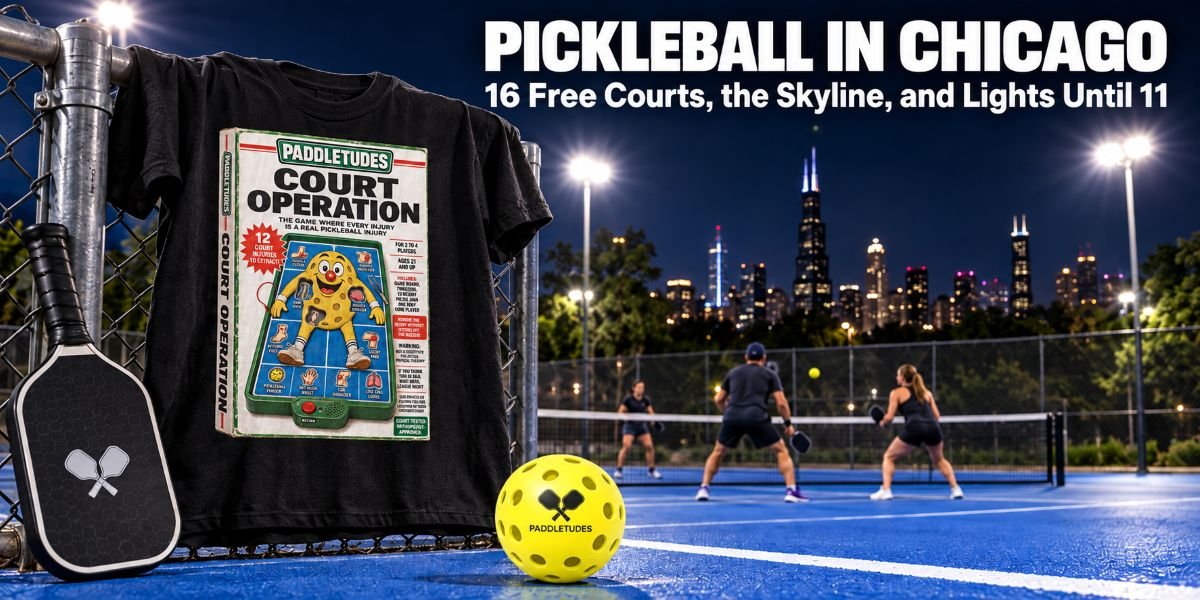
Pickleball in Chicago: 16 Free Courts, the Skyline, and Lights Until 11

Pickleball shirt in Chicago at Grant Park — Almost Seen On TV

Pickleball in Chicago has something no other major city in America can match: 16 free dedicated courts at Grant Park with permanent nets, permanent lines, and lights that stay on until 11 PM, all sitting directly in front of the downtown skyline. No membership required. No reservation needed. Just show up with a paddle and play under the same lights that illuminate one of the most recognizable cityscapes in the world.

That alone would make Chicago worth writing about. But the indoor scene is catching up just as fast. Big City Pickle operates 30 courts across three locations in Fulton Market, Gold Coast, and Lincoln Yards. SPF Pickleball in Lincoln Park built a 42,000-square-foot facility with eight indoor courts, a glow-in-the-dark court, two full bars, and leagues that sell out in minutes. Players Sport and Social runs a Blind Draw Social format designed for people who show up alone and want to play immediately. Chicago’s pickleball scene has both the best free outdoor courts in the country and a rapidly expanding indoor infrastructure that keeps the game going through six months of winter.

Grant Park and the Outdoor Game

Are there pickleball courts at Grant Park?

Yes. Sixteen outdoor dedicated pickleball courts at 820 S. Columbus, right in the shadow of downtown. The Chicago Park District installed permanent lines and nets, and the lights run until 11 PM. First-come, first-served. No fees. City Courts Management operates a concession on site with food, drinks, and equipment.

The setting is what separates Grant Park from every other free pickleball court in the country. You’re playing with the Art Institute behind you and Lake Michigan to the east. The buildings light up as the sun drops. The court lights kick in. And you’re playing competitive pickleball in the middle of one of America’s great cities for absolutely nothing. There’s a reason players from all over the metro drive downtown specifically to play here, even when closer courts are available. The experience is different.

Weekday mornings draw the regulars. The crowd thins out in the middle of the day and builds again in the evening as the after-work players arrive. Weekend mornings are packed. If you want guaranteed court time on a Saturday, show up early. By 10 AM, every court has a rotation going and the wait can stretch.

The skill level at Grant Park is higher than what you’d expect from a free public court. Because the setting draws players from across the metro, you get a mix that includes 2.5 beginners and 4.5 tournament players on adjacent courts. The challenge court culture here is real. You hold the court if you keep winning. You sit if you lose. Nobody manages the rotation. The rotation manages itself, and it works because the players police it.

The outdoor season in Chicago runs roughly from April through November, which creates a natural urgency. Players squeeze every possible session out of the warm months because they know what’s coming. By late October, the wind off Lake Michigan makes it difficult to track a ball in the air. By November, it’s over. The entire outdoor community migrates indoors, and every indoor facility in the city feels the surge simultaneously.

That seasonal compression is why Chicago’s indoor scene is growing so aggressively. Five months of winter demand drove the investment. The clubs that opened in the last two years didn’t build for the summer players. They built for the November-through-March crowd that has no other option.

Where can I play pickleball for free in Chicago?

Beyond Grant Park, the Chicago Park District maintains pickleball courts at parks across the city. Gompers Park at 4222 W. Foster Ave has indoor wood-floored courts where you bring your own net, plus outdoor courts with permanent lines. Columbus Park has four outdoor courts in a large park setting. The full list of Park District pickleball locations covers dozens of parks with varying levels of court quality and equipment.

Free courts in Chicago serve the same purpose they serve everywhere. They’re the entry point. A person plays at Grant Park for three months, falls in love with the game, realizes they can’t stop thinking about their third shot drop, and then November arrives and they need somewhere to go. That pipeline from free outdoor play to paid indoor membership is the engine driving Chicago’s facility boom.

Every new indoor club in this city can thank Grant Park for creating the players who need a winter home. SPF didn’t build eight courts for tourists. They built them for the thousands of Chicagoans who played outside all summer and refuse to take five months off. Big City Pickle didn’t open 30 courts across three locations on speculation. They opened them because the demand already existed, created by free public courts that turned curious walkers into addicted players.

Indoor Chicago

Where can I take a pickleball class in Chicago?

Big City Pickle runs classes, clinics, and league play across three locations. Their Fulton Market spot at 170 N. Green Street sits in one of Chicago’s most active dining and nightlife neighborhoods. Gold Coast at 302 W. Walton and Lincoln Yards at 1680 N. Throop round out the network. Thirty total courts across the three venues. Memberships start at $149 a month. Pick-up play, structured clinics, and organized leagues are available at all locations.

SPF Pickleball in Lincoln Park is the facility that gets the most buzz, and it earns it. Their space on N. Clybourn Avenue spans 42,000 square feet with eight indoor courts, including a glow-in-the-dark court that plays under blacklights and neon. Two full bars. A food menu. Leagues structured from Social level through Competitive 4.0+, and those leagues sell out in minutes when registration opens. Not hours. Minutes. SPF also has a Training Academy led by coaches Emir and Martin Stanchev, with locations expanding to Hyde Park and West Loop.

The glow-in-the-dark court sounds gimmicky until you play on it. The ball is fluorescent. The lines glow. The music changes. The experience is genuinely different from standard play, and it attracts people who wouldn’t walk into a regular pickleball club. Groups book it for birthdays. Companies book it for team outings. Couples book it for dates that don’t involve sitting across a table pretending to be interested in a menu. SPF is after the same audience Rally targets in Charlotte and Chicken N Pickle targets nationally: the person who wants their sport wrapped in a social experience, not separated from it.

The expansion to Hyde Park and West Loop means SPF is building a network, not just a single location. Hyde Park opens access to the South Side and the University of Chicago community. West Loop puts courts in the same neighborhood as some of the best restaurants in the Midwest. Both locations extend SPF’s reach to players who would never drive to Lincoln Park regularly but will gladly play somewhere in their own neighborhood.

Are there indoor pickleball courts in Chicago?

Chicago now has more indoor court options than most Midwestern cities combined. Big City Pickle’s 30 courts, SPF’s facilities across multiple neighborhoods, and a growing list of community centers and recreation facilities offering indoor play throughout the winter months. Gompers Park is one of the more established public indoor options.

The indoor boom here is seasonal economics in action. A pickleball player who plays outdoors four times a week from April to November is not going to stop playing for five months. They’ll find an indoor option or they’ll quit the sport, and nobody who plays pickleball four times a week quits voluntarily. The clubs that opened in 2025 and 2026 timed their launches to capture that winter demand, and the wait times for league registration prove the demand was there.

The Chicago Way to Play

Where are the best places to play pickleball in Chicago?

It depends on what you want. For free outdoor play with the best setting in the country, Grant Park. For premium indoor courts with a social atmosphere, SPF Pickleball. For network coverage with multiple locations, Big City Pickle. For organized league play without needing a partner, Players Sport and Social.

Players Sport runs seven-week pickleball seasons with six regular-season weeks and a playoff week. Paddles and balls are available on site. Their Blind Draw Social format is worth knowing about if you’re new to the city or new to the sport. You register as a solo player. Partners are drawn randomly at the start of the session. You play your games with whoever you get. Next week, you get someone new. It eliminates the biggest barrier most new players face, which is not knowing anyone well enough to form a team or not wanting to commit to a regular partner.

I think the Blind Draw format is one of the smartest things any league has done for pickleball growth. It takes the social anxiety out of showing up alone. You don’t need to recruit a friend. You don’t need to post in a Facebook group hoping someone replies. You just register and show up. The league handles the rest. Chicago Sport and Social Club runs similar programming with doubles tournaments and seasonal events at indoor locations, booking through fall and winter 2026.

The social league model fits Chicago’s personality. This is a city of neighborhoods, and every neighborhood has its own character. The players at Grant Park on a Tuesday evening are different from the players at SPF on a Friday night. The South Side crowd plays differently than the North Side crowd. The suburban players who drive in from Evanston or Oak Park bring their own energy. Pickleball in Chicago isn’t one scene. It’s a dozen micro-scenes connected by the same sport and separated by the same thing that separates everything in Chicago: geography and attitude.

The trash talk here is its own art form. Chicago sports culture produced generations of fans who learned to chirp at stadiums, at bars, and at pickup basketball games in parks across the city. When those people pick up pickleball paddles, that energy doesn’t disappear. It just shifts to a smaller court. A Midwest chirp is different from a Southern one. It’s drier. More deadpan. Delivered without a smile and meant to land five seconds after you’ve already moved on. You’ll hear it at Grant Park at 9 PM on a Thursday. You’ll hear it at SPF during league play. You’ll hear it from the 65-year-old at Gompers Park who looks like she’s playing casually until she drops six straight points on you and says nothing except “nice try” in a tone that conveys the exact opposite.

That’s pickleball in Chicago. It’s the Midwest wrapped around a wiffle ball on a court that’s one-quarter the size of what these people grew up playing on. The competitiveness translates. The community translates. And the mouth translates most of all.

Sixteen free courts under the skyline until 11 PM. Thirty indoor courts across three neighborhoods. Leagues that sell out in minutes. Glow-in-the-dark courts with cocktail bars. Chicago didn’t need pickleball to be a great sports city. But pickleball sure fits right in.

Posted on — Leave a comment

Pickleball in Houston: The Biggest Scene Nobody’s Talking About

Pickleball shirt in Houston — Almost Seen On TV

Pickleball in Houston is the second-largest scene in the country and the most tournament-heavy city in America, with 47 tournaments counted in 2026 alone. The metro has purpose-built indoor clubs in The Heights and Midtown, cushioned courts with cocktail lounges, free outdoor courts with skyline views at Spotts Park, and a competitive community that treats open play like a warmup for the next bracket. Houston doesn’t dabble in pickleball. Houston goes all in on everything, and this sport is no exception.

The city’s first fully dedicated indoor facility belongs to Elite Pickleball Club, owned by a touring professional player who wanted to build the kind of place that didn’t exist in Texas yet. Casa Pickle went even further, constructing a purpose-built facility from the ground up instead of converting a warehouse. Solarium added the upscale social angle with a cocktail bar and climate-controlled viewing lounges. And the public parks, from Memorial Park’s competitive courts to the beloved free courts at Spotts Park near Buffalo Bayou, fill the gaps so nobody gets priced out.

Texas does everything at scale. The pickleball scene here is no exception.

The Heights and the Heart of Indoor Play

What are the best pickleball courts in Houston?

The best indoor courts in Houston are at Elite Pickleball Club in The Heights. Twenty-four courts across two connected buildings at 610 and 650 W. 6th Street, owned and operated by a professional pickleball player who built the facility with tournament-level play in mind. This isn’t a gym that added pickleball lines to a basketball court. This is a dedicated pickleball building with dedicated pickleball infrastructure.

Elite also has a second location in The Woodlands at 3905 FM 1488, Suite 110, with eight indoor courts, a private event room, and The Last Serve Bar opening late in 2026. The Woodlands location serves the northern suburbs, which have their own growing player base that used to have no indoor option without driving into Houston proper.

The Heights location is where the competitive community gravitates. Leagues, lessons, tournaments, and enough court space that you’re not waiting 45 minutes for a rotation spot during peak hours. The 24-court footprint means Elite can run programming on one bank of courts while keeping others open for drop-in and private rentals simultaneously. That flexibility matters in a city this size.

Casa Pickle took a different approach to the same goal. Instead of converting an existing space, they built from scratch with CushionX cushioned court surfaces, professional lighting, high ceilings, and a layout designed specifically for pickleball flow. The Vista Lounge serves food and drinks with a view of the courts. The programming goes beyond standard clinics and leagues. Casa Pickle runs yoga sessions, HIIT classes, Pilates, trivia nights, and karaoke alongside their competitive offerings. The message is clear: come for the courts, stay for everything else.

The CushionX surface at Casa Pickle deserves a mention on its own. Cushioned courts reduce the impact on joints over long sessions. If you play three or four times a week, which a surprising number of Houston players do, the difference between cushioned and concrete surfaces compounds over months. Knees that hold up through a two-hour session on CushionX start barking after 45 minutes on raw concrete. For the over-40 crowd that makes up the heart of competitive pickleball, that’s not a luxury. It’s a reason to choose one facility over another.

Solarium rounds out the premium tier with four dedicated pickleball courts, two padel courts, climate-controlled viewing lounges, a pro shop, and a full-service restaurant and cocktail bar. This is the facility for players who want the social experience polished to a high shine. The courts are excellent. The restaurant is a destination on its own. If Casa Pickle is where you go to combine fitness and fun, Solarium is where you go when the post-game matters as much as the game itself.

Where can I play pickleball in downtown Houston?

Downtown Houston’s pickleball options run through the parks system and into the near-in neighborhoods. Spotts Park, which locals call Pumpkin Park, sits near Buffalo Bayou with free outdoor courts and a view of the downtown skyline that makes you forget you’re standing on a public court in 95-degree heat. It’s the most popular free option in the city for a reason. Bring your own net for some courts, and bring patience on weekends.

Jaycee Park in the Timbergrove and Heights area offers free outdoor courts in a family-friendly setting with a splash pad that keeps kids entertained while parents play. It’s the kind of park where you can bring the whole family without anyone getting bored.

Memorial Park Tennis Center has paid courts with excellent lighting for evening play and draws the competitive crowd, particularly rated players at 4.0 and above who use it as their regular hitting spot. Houston Pickleball Leagues run their organized play here. If you want to find the best open play players in the city on any given evening, Memorial Park is consistently the answer. The lighting quality makes it playable well after dark, and in Houston’s climate, after-dark play is sometimes the only tolerable option from May through September.

Spread Across the Sprawl

Houston is a massive metro, and the pickleball infrastructure reflects that geography. You can’t cover this city with one facility, three facilities, or even ten. The Houston Parks and Recreation Department operates indoor open play at multiple community centers and maintains outdoor courts in neighborhood parks on a first-come, first-served basis across the city. The full list of Houston Parks pickleball locations is worth checking before you drive anywhere, because some parks have dedicated courts with permanent nets and others have shared tennis courts with temporary lines.

Where to play pickleball for free in Houston?

Spotts Park is the answer most players give first. Free courts, downtown skyline views, and a community that self-organizes open play sessions throughout the week. The best times are early morning before the heat hits and evening after the sun drops behind the buildings. Midday in summer is not recommended. This is Houston. The humidity alone will end your session before your opponent does.

Jaycee Park in the Heights area is free and has a more relaxed atmosphere. Several neighborhood parks throughout the city have courts you can use without paying, though quality varies. Some have permanent lines and nets. Others require portable equipment. The Parks and Recreation website has the current list, and it grows regularly.

The free courts serve a specific role in Houston’s pickleball ecosystem. Not everyone can afford a membership at Elite or Casa Pickle. Not everyone wants to. The park courts give people a place to play without any financial barrier, and plenty of strong players choose the outdoor game over indoor clubs because they prefer the heat, the sun, and the lack of walls.

In Texas, outdoor play is its own identity. There’s a toughness associated with playing through the humidity that indoor players don’t experience. The outdoor regulars at Spotts Park will tell you that anyone can play well in a climate-controlled 68-degree facility. Try maintaining your serve at 4:30 PM in August with 90% humidity and sweat running into your eyes. That builds a different kind of player. A stubborn kind. The kind that Houston produces by the hundreds.

Tournament Town

How do I find pickleball tournaments near me?

Houston makes that question easy to answer because the city runs more tournaments than any other metro in America. Forty-seven in 2026, according to Lawn Love’s national rankings, which placed Houston at number two overall for pickleball in the country. That number reflects something deeper than popularity. It reflects infrastructure. You can’t run 47 tournaments without enough courts, enough players, enough organizers, and enough venues willing to host competitive play. Houston has all four.

Elite Pickleball Club hosts sanctioned tournaments at their Heights facility. Memorial Park draws outdoor tournament play. Smaller venues run brackets on weekends throughout the suburbs. The tournament calendar in Houston is dense enough that competitive players can find a bracket almost any weekend without leaving the metro.

How expensive are pickleball tournaments?

Entry fees vary widely depending on the event and the sanctioning body. Local unsanctioned tournaments might run $30 to $50 per player. Sanctioned events through USA Pickleball or the PPA typically run higher, from $60 to over $100 per event. The cost adds up if you’re playing doubles and mixed doubles in the same weekend. Most tournaments include balls and referees for medal matches. Some include a t-shirt. None of them include enough water for a Houston summer, so bring your own.

The tournament culture in Houston shapes the broader scene in a way casual players notice even if they never enter a bracket. When you play regular open play alongside people who tournament grind every other weekend, the skill level of your drop-in sessions rises. The competitive bar at an Elite open play session is higher because half the players on the court have recent tournament experience. That competitive pressure is contagious. It makes everyone sharper.

Houston also has a connection to bubblegum, believe it or not. This is an Astros town. Baseball runs deep here. Big League Chew was invented by a minor league pitcher who wanted an alternative to chewing tobacco, and the shredded bubblegum in a pouch became the snack of every kid in a baseball dugout for the next four decades. The energy that comes out of competitive sports in Houston has a specific Texas swagger to it. The trash talk on the pickleball court here isn’t polite and it isn’t subtle. It’s loud, it’s constant, and it comes with a grin that says they know exactly what they’re doing. If you can’t take the chirping, you might want to stick to solo drills.

The Woodlands and Beyond

Elite’s expansion into The Woodlands at 3905 FM 1488 signals where Houston pickleball is heading. The suburbs are catching up. The Woodlands, Sugar Land, Katy, Pearland, and the rest of the ring cities around Houston are all growing their own pickleball communities. Some are building dedicated facilities. Others are converting tennis courts. The demand is real, and it stretches well beyond the 610 loop.

The Last Serve Bar at the Woodlands Elite location, opening late 2026, adds a social anchor to the suburban facility. Indoor courts plus a bar plus The Woodlands’ family-oriented demographic equals a spot where couples can play together on a Saturday morning and stay for brunch. That formula works everywhere, but it works especially well in the suburbs where the competition for weekend attention comes from youth sports, brunch restaurants, and the pull of the couch.

Houston’s pickleball future is about filling the map. The inner loop has Elite, Casa Pickle, Solarium, Spotts Park, and Memorial. The north has The Woodlands. The pieces that are still missing are dedicated facilities in the west (Katy, Energy Corridor), the south (Pearland, League City), and the east (Pasadena, Clear Lake). When those fill in, Houston won’t just be number two nationally. It’ll be a case study in how a massive metro builds a sport from the courts up.

Forty-seven tournaments. Twenty-four indoor courts at a single club. Free skyline views at Spotts Park. A purpose-built facility with cushioned surfaces and karaoke. Houston’s pickleball scene is as big and as loud and as unapologetic as the city itself. And it’s only getting started.

Posted on — Leave a comment

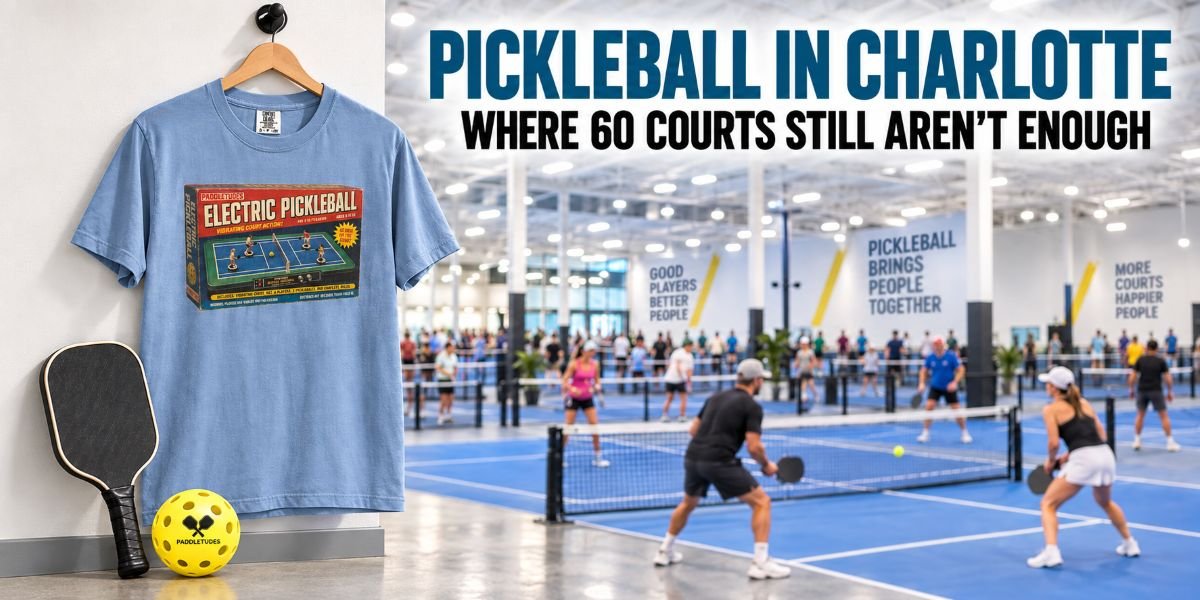
Pickleball in Charlotte: Where 60 Courts Still Aren’t Enough

Pickleball shirt in Charlotte — Almost Seen On TV

Pickleball in Charlotte has more courts, more clubs, and more attitude than cities twice its size. The Pickleball Charlotte network runs four locations with over 60 indoor and outdoor courts across the metro. Peak Time opened a 19-court facility in Southend with PPA-grade acrylic surfaces. Rally built a full restaurant around its courts. And the free public courts at Freedom Park and Tuckaseegee Park stay packed from sunrise until the lights shut off. Charlotte didn’t ease into pickleball. It built the whole infrastructure at once.

What makes the scene here different from most cities is who’s playing. Charlotte is a transplant town. The banking industry brought people from the Northeast, the Midwest, and everywhere in between. Those people showed up with competitive streaks and strong opinions about how open play should run. Then they walked onto courts full of locals who’d been playing for years and had their own ideas about court etiquette, noise levels, and whether you should apologize after a body shot. That collision of cultures is the most interesting thing happening on a pickleball court in the Southeast right now.

I keep hearing from players in Charlotte that open play there feels different from anywhere else. Southern politeness is real. But so is the energy from someone who moved here from Boston and treats a Tuesday morning drop-in session like it has playoff implications. Both exist on the same court, and somehow it works.

The Pickleball Charlotte Network

Sports Connection did something smart when they built Pickleball Charlotte. Instead of dropping one massive facility and hoping the entire metro would drive to it, they spread four locations across the city. Sharon Lakes at 8401 Sharon Lakes Road has 15 indoor courts and 6 outdoor courts. Granite Street was the original indoor location. Ballantyne covers the southern suburbs. Northlake serves the north side with climate-controlled courts and a pro shop. The combined network offers open play, leagues, clinics, lessons, and private court rentals across all four.

The math behind this approach is straightforward. Charlotte’s metro stretches across Mecklenburg County and into the surrounding suburbs. Nobody is driving 40 minutes through traffic on Independence Boulevard to play a casual game of pickleball. By planting facilities in four different areas, Pickleball Charlotte made the sport accessible to neighborhoods that would never have made the trek to a single central club. If you live in the Charlotte metro, there’s a Pickleball Charlotte location within a reasonable drive. That density of coverage doesn’t exist in most markets.

What’s worth noting is the growth trajectory. “Pickleball Charlotte” is both the top search term for the sport in this area and the dominant brand name. The company earned that overlap by being first, being everywhere, and running real programming that keeps players coming back. Their evening leagues have waitlists. Their morning open play sessions draw regulars who’ve been playing together long enough to have inside jokes about each other’s backhands.

The lesson system across the network is another reason people stick around. Each location offers structured clinics for different skill levels, private lessons, and organized league play. The Sharon Lakes facility at (704) 583-1444 handles booking for that location’s programming. What separates a real pickleball network from a collection of courts is whether people progress. If you start playing at Granite Street as a 3.0 and you’re still a 3.0 six months later, something isn’t working. Pickleball Charlotte is investing in the instruction side because they understand that player development is what turns a drop-in visitor into a five-year member.

Is Peak Time pickleball located in Charlotte, NC?

Peak Time is at 1515 S Clarkson St in the Southend neighborhood, and it represents the next evolution of what a Charlotte pickleball club looks like. Nineteen indoor courts and two outdoor courts, including a championship court with PPA-grade acrylic flooring. The climate control keeps the facility between 54 and 72 degrees year-round. There’s a fitness center, recovery saunas, and a social lounge. A second phase is adding a bar.

The Southend location is deliberate. This is one of Charlotte’s hottest neighborhoods. Light rail access, breweries, restaurants, young professionals stacking up in new apartment buildings. Peak Time bet that the 28-to-45 crowd wants serious courts in a serious setting, and the evening sessions filling up suggest they were right. People are walking in after work from offices a few blocks away, playing for an hour, then heading to dinner down the street. That integration into the neighborhood rhythm is something a suburban facility can’t replicate.

The surface quality matters here more than most casual players realize. PPA-grade acrylic plays differently than painted concrete or repurposed gym floors. The ball responds more consistently. The cushion reduces joint stress over long sessions. Players who’ve dealt with knee pain on hard outdoor courts feel the difference in the first ten minutes. That difference compounds. An hour on cushioned acrylic versus an hour on bare concrete is the gap between wanting to play again tomorrow and needing two days off.

Peak Time also hosts tournaments, including the Charlotte Pickleball Open, which pulls competitive players from across the Carolinas. The Summer Sizzler drew rated players from as far as Atlanta and Asheville. Having a tournament-grade facility in the city means Charlotte players can compete at a high level without traveling to Raleigh or Durham. That matters for player development. If the best local players have to drive three hours to find competitive tournament play, they eventually stop improving or stop playing. Peak Time solves that.

Food, Drinks, and the Eatertainment Model

Rally brought something to Charlotte that most pickleball cities don’t have yet. Their facility at 101 Southside Drive in the LoSo neighborhood combines indoor and outdoor courts with a full restaurant, craft cocktail bar, and specialty coffee program. Every court runs RallyTrack, an automatic scoring system that handles point tracking so you don’t need to remember whose serve it is or argue about the score at 8-7.

Rally also has a Neapolitan pizza program with a brick oven, which is the kind of detail that changes who walks through the door. The person who would never step into a traditional pickleball club will come to Rally because their friend said the pizza is incredible. They eat. They watch. They ask to try. And suddenly they’re signing up for Rally Rookies, a beginner clinic that runs weekly.

The programming is built for people who want pickleball to be part of a night out, not the entire night. Leisure League runs Tuesday evenings as a no-commitment weekly competition. You show up, you play, you leave. No six-week commitment. No team drama. Pickle Pump is a cardio-focused fitness class that wraps drills and matchplay into a workout format. Clinics and leagues sell through the website.

Rally isn’t competing with Pickleball Charlotte for the same customer. It’s creating a new one. The person who discovers pickleball through Rally’s social atmosphere is a different entry point than the person who found it through a DUPR-tracked league at Sharon Lakes. Both paths lead to the same sport, but the on-ramp matters. Charlotte is one of the few cities where both on-ramps exist in mature, well-run facilities within ten minutes of each other.

Up at Lake Norman, The Serve Pickleball + Kitchen adds another dimension with 16 indoor and outdoor courts and a JOOLA Official Facility Partnership. Lake Norman has its own growing pickleball community, and The Serve gives that community a home base without requiring the drive into Charlotte proper.

Playing for Free

Does Freedom Park in Charlotte have pickleball courts?

Freedom Park has outdoor pickleball courts available first-come, first-served with no fee. The park is one of Charlotte’s best for a reason. Walking trails, a lake, shade trees, and enough room to spread out if you’re waiting for a court. Weekday mornings are your best window. Saturday afternoons are a different story. Show up early or bring patience.

Where to play pickleball for free in Charlotte?

Charlotte has free outdoor courts scattered across the city beyond Freedom Park. Tuckaseegee Park has dedicated courts with lighting for night play, which is the detail that matters most during summer. When daytime temperatures push into the 90s, the only comfortable window is after 6 PM. Tuckaseegee lets you play into the evening. Most free courts don’t.

Alexander Park, Carmel Road Park, and Clanton Park also have free outdoor courts open to the public. The experience at these parks is entirely different from the club scene. You’ll find retirees who’ve been playing for a decade and know every crack in the surface. Teenagers who picked up a paddle three weeks ago because they saw it on TikTok. Families sharing one set of equipment between four people and making rules up as they go. The skill range is enormous. Nobody is checking DUPR ratings. Nobody is wearing matching team jerseys. People are just playing, and there’s something valuable about that.

The free court community in Charlotte also serves as a feeder system for the clubs, even if nobody planned it that way. A player spends three months at Freedom Park, realizes they want more competitive games and better surfaces, and walks into Pickleball Charlotte for the first time. That journey from public park to paid membership happens constantly here because both ends of the spectrum are strong.

If you’re visiting Charlotte and want to try pickleball without spending anything, Freedom Park and Tuckaseegee are the two to hit. If you’re a local deciding whether pickleball is worth a club membership, spend a few mornings at the public courts first. You’ll know within a week if you want more.

The Trash Talk Capital of the Carolinas

What is replacing pickleball?

Nothing. Not here. Every few months an article floats the idea that pickleball has peaked. Then a city like Charlotte opens multiple new facilities in the same year and the question answers itself.

Charlotte’s growth isn’t driven by trend chasers. It’s driven by infrastructure. You don’t build 60-plus courts across four locations, a 19-court premium club, an eatertainment concept, and a JOOLA partnership in the Lake Norman suburbs because a fad is dying. You build that because the demand is real, it’s accelerating, and the waitlists for evening leagues prove it.

The culture here is what keeps people coming back. Charlotte pickleball has a specific flavor because the city itself has a specific flavor. Southern roots mixed with transplant energy. Polite on the surface, competitive underneath. The kind of open play where someone will shake your hand, compliment your shoes, and then run off seven straight points while smiling the entire time.

The trash talk reflects the city perfectly. You’ll hear someone from the Midwest deliver a deadpan line after an ace that lands so flat you’re not sure if it was a compliment or an insult. You’ll hear someone born and raised in Mecklenburg County say “bless your heart” after painting a line that makes you question your footwork, your paddle choice, and your entire athletic career. And you’ll hear the Wall Street transplant who narrates his own highlights like he’s calling the game for ESPN.

Put all three of them on a court at Rally on a Friday night. Hand them paddles and cocktails. That’s Charlotte pickleball. That’s why people who play here don’t leave.

The city added more courts this year. It will add more next year. The question isn’t whether pickleball is being replaced. The question is where Charlotte is going to put the next 60 courts.

Sixty courts and counting. Five major facilities and a dozen public parks. A culture that blends Southern manners with transplant fire and enough trash talk to fill a bubblegum pack. Charlotte didn’t just adopt pickleball. It built something no other city in the Carolinas can match, and it’s still building.

Posted on — Leave a comment

What Is Shake and Bake in Pickleball — The Doubles Strategy That Ends Points Fast

Shake and Bake pickleball shirt — Almost Seen On TV

The shake and bake is a pickleball doubles strategy where one partner dinks softly — the shake — to draw a weak, poppy return, and the other partner attacks it hard for a put-away — the bake. It’s the most effective coordinated play in doubles pickleball, and the teams that run it well look like they’re reading each other’s minds. The name comes from the old Shake ‘n Bake coating mix, but pickleball borrowed it because the setup-to-finish sequence feels exactly like it sounds — slow, slow, slow, then sudden violence.

How the Shake and Bake Works

The play starts at the kitchen line. One partner — usually the player with better touch — initiates a soft dinking rally. The goal isn’t to win the point with the dink. The goal is to force the opponent to hit a ball that sits up just a little too high. The moment that ball pops up above net height, the other partner — usually positioned slightly off-center toward the middle — drives it hard at the opponent’s feet or into the open court.

The timing is everything. The “baker” has to read the dink exchange and anticipate which ball is going to pop up. Jump too early and you’re reaching. Jump too late and the opportunity passes. The best shake and bake teams practice the read until the attacker moves before the ball crosses the net — they’re reacting to the opponent’s paddle face, not the ball itself.

If you’ve watched players run this at the 4.0 level and above, you’ve seen the point end in a blink. The dink rally looks casual, almost sleepy. Then one ball sits up an inch too high, and the put-away comes so fast the opponents don’t move their paddles. That’s the shake and bake.

When to Use It — and When Not To

The shake and bake works best when your team has one player with soft hands and one with a strong speed-up. If both players are dinkers, there’s nobody to pull the trigger. If both players are bangers, there’s nobody to set the table. The strategy is built for mixed-skill partnerships where each player does what they’re best at.

Don’t try it against a team that resets everything. If your opponents can absorb speed-ups and drop the ball back into the kitchen every time, the bake half of the play won’t produce winners. Against resetters, patience and placement beat aggression. The shake and bake is designed to punish teams that pop the ball up under pressure — and most recreational teams do exactly that.

It also falls apart if the shaker gets impatient. The soft dink rally has to be genuinely patient. Two dinks and a speed-up isn’t a shake and bake — it’s just banging with extra steps. The setup needs to build. Four, five, six dinks. Let the opponent get comfortable. Let them get lazy with their paddle angle. Then the bake comes out of nowhere.

How to Practice the Shake and Bake with Your Partner

Start with a pure dink rally — no speed-ups allowed for the first ten shots. After ten, the shaker is allowed to signal (some teams use a foot tap, some just know) and the baker watches for the pop-up. Practice the read, not the slam. The hard part isn’t hitting the ball fast. The hard part is knowing which ball to attack.

Set a rule: the baker can only speed up a ball that’s above the net tape when it crosses. Anything below the tape stays in the dink rally. This trains discipline. Most players speed up too early on balls that are still dropping, which sends the attack into the net or gives the opponent an easy block. The shake and bake only works when the baker waits for the right ball.

Once you and your partner can run ten consecutive dink rallies and convert a pop-up into a winner at least half the time, you’ve got the play. Now it’s about running it in games without telegraphing it. The best teams don’t signal at all — the baker just knows. That comes from reps, not from strategy sessions.

Looking for more pickleball strategy breakdowns and court-tested apparel? The full pickleball collection has attitude tees, retro parody shirts, and dog breed crossovers — all on Comfort Colors 1717 garment-dyed blanks.

More Pickleball Attitude Tees

Every shirt in the collection is original art on a Comfort Colors 1717 garment-dyed tee with water-based DTG ink. Sizing and care details here.

Posted on — Leave a comment

The Corgi Who Built Seattle’s Dog Culture (And the Sport That Started Next Door)

Corgi pickleball shirt in Seattle — Almost Seen On TV

A Corgi named Rufus is the reason Amazon lets dogs into its offices. In 1998, Rufus belonged to Amazon’s editor-in-chief and principal engineer, and he showed up to work every day at the company’s early Seattle headquarters like he was on the payroll. He attended meetings. He napped in his crate. He chased tennis balls down the hallway. Employees would place his paw on a computer mouse to click products live during launches. When Amazon grew from a warehouse into a global company, they wrote Rufus into the lease agreements with new landlords so he could keep coming. He died in 2009, but there’s a building on the Amazon campus named after him. Today, over 10,000 dogs are registered to come to work at Amazon’s Seattle headquarters, and Corgis remain one of the most popular breeds on campus. A Welsh Corgi literally built the dog-friendliest workplace culture in America.

Seattle is the most dog-obsessed city in the country. There are more dogs than children living within the city limits. Rover, the pet services company, is headquartered here. Dog-friendly bars, restaurants, offices, and parks are the default, not the exception. And 35 minutes across the Puget Sound by ferry sits Bainbridge Island, where pickleball was invented in 1965 in Joel Pritchard’s backyard. The most dog-friendly city in America and the birthplace of the fastest-growing sport in America are practically neighbors. The Corgi in between them connects both worlds perfectly, because Corgis don’t just participate in things. They take over.

The Dog That Thinks It’s in Charge

Why do Corgis try to herd everything that moves?

Because they were bred to do exactly that, and a few centuries of living in apartments hasn’t changed the wiring. Pembroke Welsh Corgis were cattle herding dogs in Wales, and they moved animals by nipping at their heels and darting underneath them. The low center of gravity wasn’t a cute accident. It was functional. A Corgi is built close to the ground so a cow’s kick passes over its head. That same instinct now gets redirected at children, other pets, joggers, bicycles, and anyone walking through the house in the wrong direction.

Corgi owners know the look. The dog locks eyes on something that’s moving, drops into a crouch, and starts circling. Kids in the backyard get herded into a corner. Cats get cut off from doorways. Guests walking from the living room to the kitchen get ankle-nipped with a precision that suggests the dog has been planning the route. None of this is aggression. It’s project management. The Corgi has decided where everyone should be, and it’s executing the plan.

This is the same energy that makes Corgis hilarious to live with. They argue with you. Not barking, but actual vocalized opinions delivered in grumbles, groans, and a specific whine that every Corgi owner can distinguish from the “I’m hungry” whine. They sploot on the floor with their back legs stretched out behind them like a tiny bearskin rug. They follow their favorite person from room to room with the dedication of a security detail. And they are absolutely, spectacularly stubborn about things they’ve decided are their business.

Are Corgis good family dogs?

They’re great family dogs, but they come with fine print. Corgis are loyal, protective, intelligent, and genuinely funny to be around. They bond deeply with their families and treat the household like their personal jurisdiction. They’re small enough for apartments but athletic enough for long hikes. They learn commands fast because they’re one of the smartest breeds on the planet.

The fine print is the herding. Small children will get nipped at the heels. Not out of meanness, but because the Corgi has decided the child is going the wrong way and needs to be redirected. This is trainable, but it takes consistency and patience, because the Corgi is convinced it knows better than you about where the toddler should be walking. The other fine print is the barking. Corgis are vocal. They were watchdogs on farms, which means they announce everything. The mailman. A leaf. A sound three blocks away that only the dog heard. This is also trainable, but you need to start early, because a Corgi that learns barking works will never stop volunteering its opinion.

The people who love Corgis don’t love them despite these traits. They love them because of them. A Corgi has more personality per pound than any breed alive. They’re the dog that will stare you down when you tell them to get off the couch, then slowly, deliberately, lie down while maintaining eye contact like they’re daring you to say it again. They’re the dog that learns to open the treat drawer, then acts surprised when you catch them. They’re the dog that every other dog owner at the park recognizes by name after one visit because the Corgi made absolutely sure everyone noticed it arrived.

Owning one is like living with a very small, very confident middle manager who sheds.

Where the Sport Started and Where the Dogs Live

Where was pickleball invented?

On Bainbridge Island, Washington, in the summer of 1965. Joel Pritchard, a congressman, came home from a golf game and found his family bored. The badminton court in the backyard had no shuttlecock, so he and his friend Bill Bell improvised with a wiffle ball, lowered the net, and made paddles out of plywood. The game stuck. The rules evolved. And sixty years later, pickleball is played by nearly 50 million people in the United States.

Bainbridge Island is a 35-minute ferry ride from the Seattle waterfront. Battle Point Park on the island still has six dedicated Founders Courts, and they carry a significance in the pickleball community that’s hard to overstate. Playing there is a pilgrimage. The courts are free, first-come-first-served, and maintained by a community that understands exactly what happened in their backyard.

The proximity matters for this article because Seattle didn’t become a pickleball city by accident. The sport was born next door. The culture seeped across the water. And now the Seattle metro area has 196 pickleball venues with over 700 courts. The city that built the most dog-friendly workplace culture in the world also happens to sit 35 minutes from the birthplace of America’s fastest-growing sport. The Corgi holding a pickleball isn’t a random pairing. It’s geographic destiny.

Where can you play pickleball in Seattle?

Everywhere, and the list keeps growing. Lower Woodland Park has 12 dedicated courts and is the most popular public venue in the city. Green Lake has six dedicated courts in a setting that makes you forget you’re playing in a major metro. Bitter Lake Community Center in North Seattle has 11 courts (eight outdoor, three indoor), all free to play with reservable court times, lights for evening play, and restrooms.

The indoor scene is expanding fast because Seattle’s rain makes outdoor play unreliable eight months a year. The Picklr opened a location in Fremont with pristine courts and a growing membership. Side Out Tsunami Pickleball Center in South Seattle is building what will be Washington’s largest dedicated indoor facility with 26 courts. Rally Pickleball Club in Auburn runs 14 pro-level indoor courts. The Seattle region is adding nearly 150 new courts across nine major facilities, with openings rolling through 2026.

The Seattle Parks system is actively building its racquet sports strategy, with designated pickleball hubs across the city. The parks department’s approach separates “open play” venues from “drop-in/reservation” venues, so you can find both casual walk-up courts and structured play depending on what you’re looking for. For a city that gets 37 inches of rain a year, the investment in indoor and covered facilities is what keeps the sport growing year-round.

If you make the trip to Bainbridge, take the ferry from the downtown Seattle waterfront to Winslow. It’s a 35-minute ride with views of the Olympic Mountains and the city skyline. Battle Point Park is a 10-minute bike ride from the terminal. Play a game on the courts where the sport started, then grab lunch on the island before heading back. It’s the kind of day trip that only works if you live in Seattle, which is one more reason the city’s pickleball culture runs deeper than most people outside the Pacific Northwest realize.

Why Corgis and Pickleball Belong Together

What is the best gift for someone who loves Corgis?

Something that tells them you actually understand the breed, not just that you know they own a dog. Generic dog gifts are fine. Breed-specific gifts are better because they signal that you’ve paid attention to what makes their particular dog ridiculous. A Corgi lover doesn’t just love dogs. They love the sploot. They love the arguing. They love the tiny legs and the enormous attitude. They love telling stories about the time their Corgi tried to herd the Roomba.

A shirt with their breed on it works because it’s identity, not just merchandise. The Corgi person wears it to the dog park, to the vet, to the farmer’s market, and every other Corgi owner within eyeshot will comment on it. Breed-specific apparel is a conversation starter in a community that never needs encouragement to start conversations. It’s also the kind of gift that works for birthdays, holidays, and the specific occasion of “I saw this and thought of you and your insane dog.” That last one is how most Corgi gifts actually get bought.

Can you bring your dog to pickleball?

It depends on the facility, and the answer is more often yes than you’d think, especially in a city like Seattle. Most outdoor public courts allow leashed dogs. Some indoor facilities are dog-friendly in their lounge and social areas but not on the courts themselves. The concern is straightforward. A Corgi watching a wiffle ball bounce back and forth across a net is going to want to get involved. The herding instinct doesn’t distinguish between a sheep and a pickleball. If the ball is moving, the Corgi has opinions about where it should go.

The better question is whether your dog will let you play. Corgi owners who play pickleball outdoors have all experienced the moment when the dog decides the ball belongs to them. The low drive, the quick paws, the absolute conviction that this is now their job. It’s the same instinct that makes them herd kids, applied to a sport with a ball that’s the perfect size for a Corgi mouth. You don’t bring a Corgi to pickleball. The Corgi brings itself to pickleball and then tries to run the court.

Seattle’s dog-friendly culture means more venues accommodate dogs than in most cities. The parks with outdoor courts generally allow leashed dogs in adjacent areas. The indoor clubs vary, so check before you show up with your four-legged doubles partner.

The reason Corgis and pickleball pair so well isn’t the obvious one. It’s not just that both are trendy, or that both photograph well, or that putting a pickleball in a Corgi’s mouth makes people stop scrolling. It’s that both are constantly underestimated. Pickleball looks like a backyard game until you play against someone who knows what they’re doing. Corgis look like a decorative breed until one decides to herd your entire family into the kitchen at dinnertime.

Both are faster than they look. Both are smarter than people expect. And both have a way of taking over a room, a court, or a city without asking permission first. Seattle figured both of these things out before the rest of the country did, which is probably why a Corgi and a pickleball feel like they belong together. In this city, they always have.

If you know someone who loves Corgis and plays pickleball, you don’t need to keep looking for the gift. You already found it.

Posted on — Leave a comment

Pickleball in Austin Has a Kitchen Problem (The Good Kind)

Foul Mouth Paste pickleball shirt in Austin — Almost Seen On TV

Austin is the only city in America where pickleball and food culture crash into each other this hard. The pickleball scene in Austin runs from free city park courts to 16-court indoor facilities with bars and food trucks, and nearly every serious venue in town has figured out that people who just played two hours of doubles want a cold drink and something to eat without getting back in their car. The kitchen in pickleball is where points get won. The kitchen at Austin’s best clubs is where the post-game happens. Both require good hands.

This isn’t an accident. Austin has always been a city that mixes its hobbies. Live music and tacos. Craft beer and volleyball. Now it’s pickleball and barbecue, pickleball and breweries, pickleball and rooftop bars. The sport found a natural home here because Austin already had the infrastructure for activities that are half athletic and half social. Pickleball just walked in and sat down at the table.

It helps that some of the best players in the world live here. Ben and Collin Johns, the most dominant doubles team in professional pickleball, are Austinites. Their firm, Johns Design & Consulting, certified the courts at Austin Pickle Ranch. When the sport’s biggest names choose to build their lives in your city, it tells you something about the quality of play available.

Where Austin Plays Pickleball

Where can you play indoor pickleball in Austin?

You need indoor courts in Austin because the summers will end you. Triple-digit heat from June through September means outdoor play before 8 a.m. or not at all, and even morning sessions can feel like cardio inside a convection oven. Indoor facilities with climate control aren’t a luxury here. They’re a survival strategy.

Austin Pickle Ranch is the flagship. Sixteen indoor courts at their Braker Lane location on Middle Fiskville Road, with CushionX surfaces and the first courts in Texas certified by Johns Design & Consulting. Membership starts at $49 a month for the Range Rider tier, with Wrangler at $99 and Trailboss at $149 for players who want unlimited access and priority booking. Non-members can book courts and sign up for open play sessions without a commitment. The facility has indoor and outdoor lounge areas, and they’re building out food and beverage service on site.

Pickleland in the Pflugerville area runs nine indoor, climate-controlled courts and was voted Best Pickleball Club in Austin by over 750 local players. Their pricing undercuts most competitors, with open play starting at $5 during off-peak hours and unlimited monthly memberships running about $30 less than the other major clubs. They enforce skill-level matching at signup, which means a 3.0 session is actually 3.0 players, not a mix of beginners and intermediates pretending the ratings don’t matter.

Eastside Paddle Club brings six indoor courts to East Austin in a 22,000-square-foot space. South Austin Recreation Center and Dittmar Recreation Center offer free indoor pickleball courts through the city parks system, with organized open play sessions throughout the week. Between the paid clubs and the city facilities, Austin has enough indoor courts to keep you playing through the hottest summer in Texas history without breaking a sweat that wasn’t earned on the court.

Are there free pickleball courts in Austin?

Yes, and they’re solid. Austin Parks and Recreation operates several facilities with free outdoor courts, including Dick Nichols District Park in southwest Austin with five courts, South Austin Recreation Center with six outdoor courts (two with permanent nets, four bring-your-own), and Pan Am Recreation Center. The city courts run 7 a.m. to 10 p.m. daily, first-come-first-served. No membership, no booking fee, no app to download. Just show up with a paddle.

The free courts are where Austin’s pickleball community started, and they still carry a different energy than the paid clubs. The skill range is wider, the conversations between games are longer, and you’ll meet people who’ve been playing in Austin since before the sport had a cable TV deal. If you’re visiting and want to feel the local vibe without spending a dollar, the city park courts are where you find it.

The Kitchen Line and the Kitchen Table

Why do they call it the kitchen in pickleball?

Nobody knows for certain, which is half the fun. The most popular theory traces the name to shuffleboard, where the “kitchen” is a scoring zone near the back of the board that costs you points if your puck lands there. Pickleball borrowed the concept and the name. Step into the kitchen at the wrong time and it costs you the point, same as it does in shuffleboard. The other theory is that it’s just a funny word for a zone with a lot of rules, and funny names tend to stick in sports that don’t take themselves too seriously.

In Austin, the kitchen has a second layer of meaning that you don’t get in most cities. When someone says “meet me at the kitchen” after a session at Austin Pickle Ranch or Pickleland, they might mean the non-volley zone or they might mean the bar. At a place like PickleHub ATX in South Austin, which is literally a sports bar with pickleball courts, the line between the two kitchens barely exists. You dink for an hour, then you eat. The sport and the meal are part of the same outing.

What can’t you do in the kitchen in pickleball?

You cannot volley the ball while touching the kitchen zone or the kitchen line. That’s the core prohibition, and everything else is a footnote to that one rule. A volley means hitting the ball before it bounces. If the ball bounces first, you can step in, hit it, and step back out. No fault. The restriction only applies to shots taken out of the air.

The footnotes are where people get caught. Your momentum after a volley cannot carry you into the kitchen. If you stretch to volley a ball from outside the line and your forward step lands you in the zone, that’s a fault even though you hit the ball from a legal position. Anything attached to your body counts. If your hat falls off during the volley and lands in the kitchen, that’s a fault. If your paddle slips from your hand and slides across the line, fault. The kitchen is a no-fly zone, and the rules treat it like one.

Austin’s coaching community loves teaching kitchen discipline because it separates the players who can compete from the players who just hit the ball hard. Power gets you through your first few months of pickleball. Kitchen discipline gets you through the next ten years.

How Austin Does Pickleball Differently

Can you play pickleball at a bar in Austin?

You can, and in some cases the bar came first. Last Stand Brewing in South Austin has an indoor pickleball court inside a working brewery. One court, cold beer, and an atmosphere that treats pickleball like another thing to do at a taproom rather than the main event. PickleHub ATX pairs two outdoor courts with food trucks, a coffee shop, and arcade games. Bouldin Acres in the Bouldin Creek neighborhood puts courts next to a restaurant and bar where families gather on weekends. Even Ski Shores Cafe on Lake Austin has a single court with a permanent net, right next to a waterfront restaurant with live music.

This is uniquely Austin. Most cities have pickleball courts that happen to be near restaurants. Austin has restaurants and bars that happen to have pickleball courts. The distinction matters because it changes who shows up. The person who walks into Last Stand Brewing for a beer and discovers the court is a different entry point to the sport than the person who pays $149 a month for a dedicated club membership. Austin feeds the sport through social spaces, not just athletic ones. Both funnels produce players who end up at the kitchen line eventually.

What is the point of dinking in pickleball?

Dinking is the art of hitting the ball softly into your opponent’s kitchen zone so they can’t attack it. The ball arcs low over the net, lands in the non-volley zone, and forces the other team to hit up on it. When you hit up, you give your opponents an attackable ball. When you dink, you keep the ball unattackable. The entire strategy is about patience. You dink until someone makes a mistake, then you punish the mistake.

New players hate dinking because it feels like nothing is happening. Experienced players love it because they understand what IS happening. Every dink is a question. Can you keep it low? Can you move it to my backhand? Can you speed it up without giving me a ball I can drive? The rally is a conversation played at kitchen-line speed, and the player who runs out of answers first loses the point.

Austin’s competitive scene is stacked with dinkers because the city’s best coaching programs teach the soft game as a foundation, not an afterthought. At Pickleland, the clinics are DUPR-leveled, meaning you’re learning alongside players at your actual skill rating rather than self-assessed. At Austin Pickle Ranch, their Greenhorn Series includes a dedicated session on non-volley zone play. The city’s indoor facilities create an environment where the soft game thrives because there’s no wind, no sun glare, and no excuse to revert to all-power-no-touch.

Getting Better in Austin

Is dinking more important than power in pickleball?

At every level above beginner, yes. Power wins games against players who can’t handle pace. Dinking wins games against players who can. The reason is structural. A hard drive from the baseline gives your opponent time to react because the ball has to travel the full length of the court. A well-placed dink at the kitchen line gives them almost no time because the ball is moving slowly across a short distance and dying on contact. They have to move to it, get low, and lift it back over the net without popping it up. If they pop it up, you put it away.

The best players in the world combine both. They dink until an opening appears, then they speed the ball up with precision. The shift from soft to fast is where points are scored at the highest level. Austin is a good city to learn this because the range of playing environments forces you to develop both tools. The competitive players at Austin Pickle Ranch will test your dinking patience. The casual players at PickleHub will test your ability to handle pace from unexpected angles. You need both skills, and Austin gives you both training grounds.

Can your partner stand in the kitchen in pickleball?

Yes. Both players can stand in the kitchen simultaneously if they want. The kitchen rule restricts volleys, not positioning. Your partner can camp out in the kitchen all day, and so can you, as long as neither of you hits the ball out of the air while you’re in there. Once the ball bounces, anyone in the kitchen can hit it freely.

This matters strategically more than most intermediate players realize. There are situations in doubles where one player deliberately positions in the kitchen to handle a ball that’s about to bounce there, while the partner stays behind the line ready to volley anything that comes higher. It’s a defensive formation that looks passive but actually gives your team coverage of the entire court. The player in the kitchen handles the low balls. The player behind the line handles the high ones. The opponents have nowhere to put the ball that isn’t covered.

Austin’s league culture reinforces this kind of team positioning because the level-matched play at Pickleland and Austin Pickle Ranch means you’re consistently facing teams that know how to exploit positioning mistakes. You learn to coordinate with your partner or you lose to teams that do.

Austin’s pickleball scene is still growing, and that’s the part that matters most. New facilities keep opening. The free city courts keep filling up in the mornings. The breweries keep adding courts because they figured out that pickleball players buy more beer than dart players and take up less space than volleyball leagues. The sport and the city fit together in a way that feels permanent, not trendy.

The kitchen is where it all happens. On the court, that means the seven-foot zone where soft hands and quick decisions win points. Off the court, in this city, it means the bar, the food truck, the brewery patio where the post-game conversation runs longer than the game itself. Austin figured out that pickleball is a social sport, and social sports need a place to be social. The kitchen provides both.

If you’re playing in Austin and you haven’t worked on your dinking game, you’re leaving points on every court in the city. And if you haven’t tried playing at a brewery yet, you’re leaving the best part of Austin pickleball on the table.