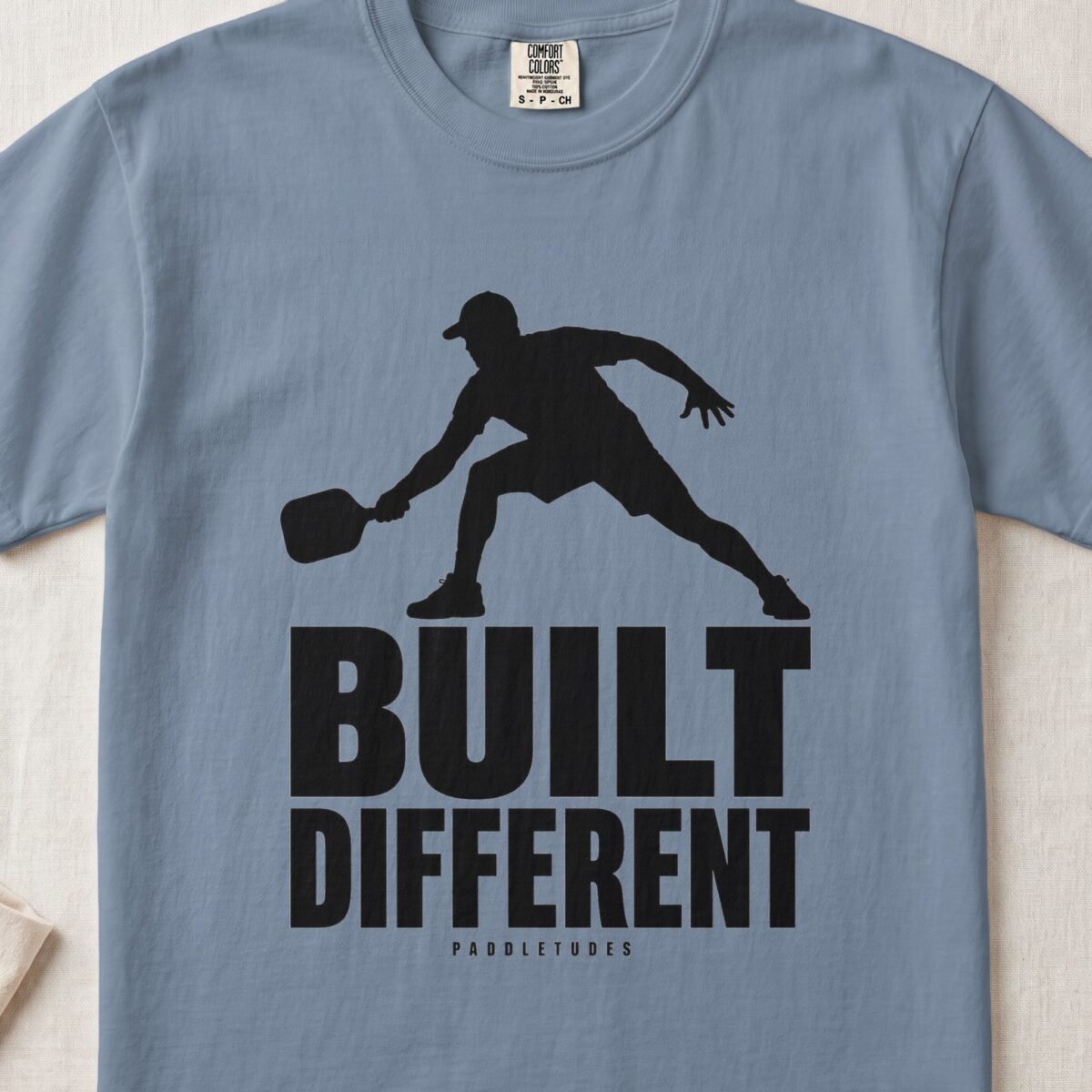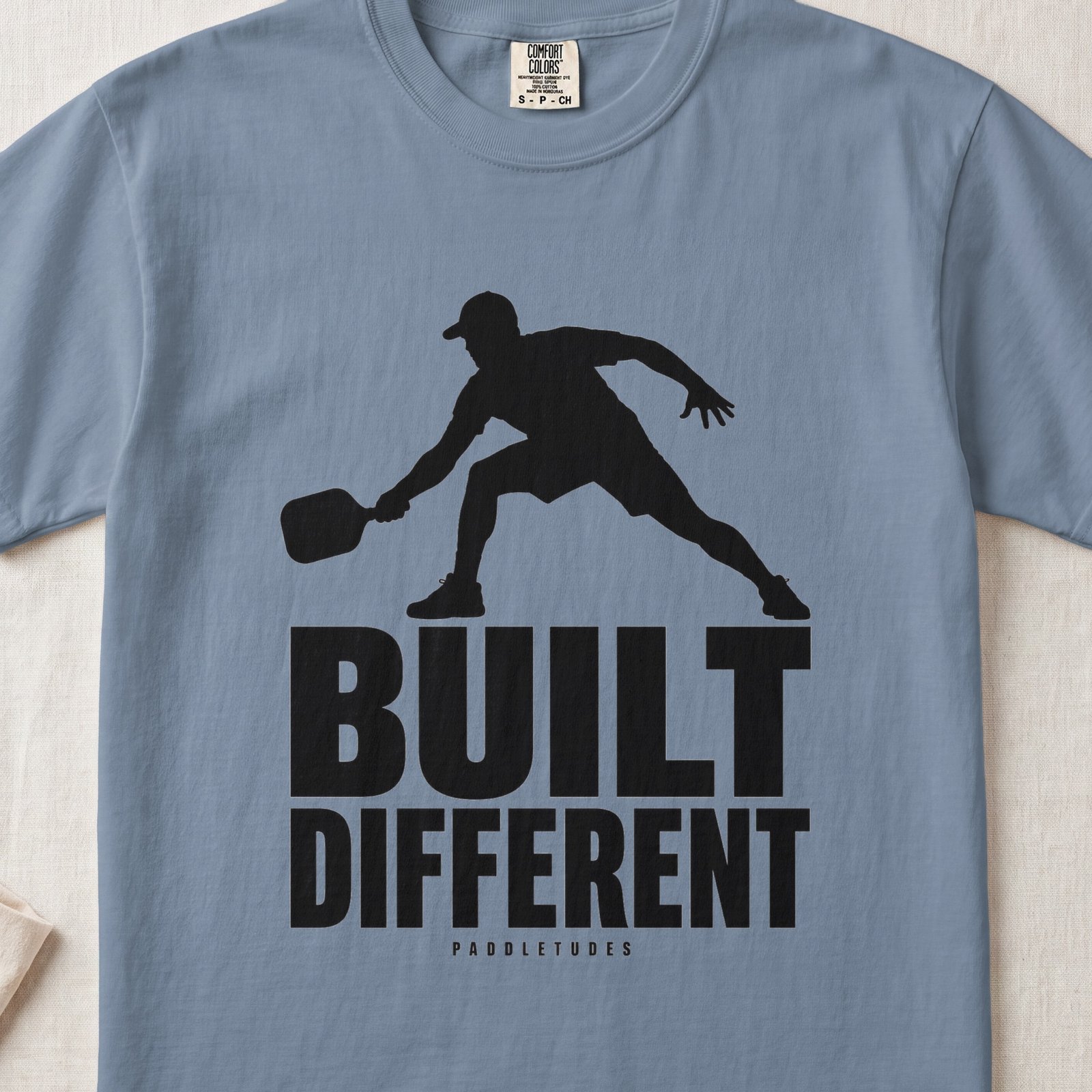
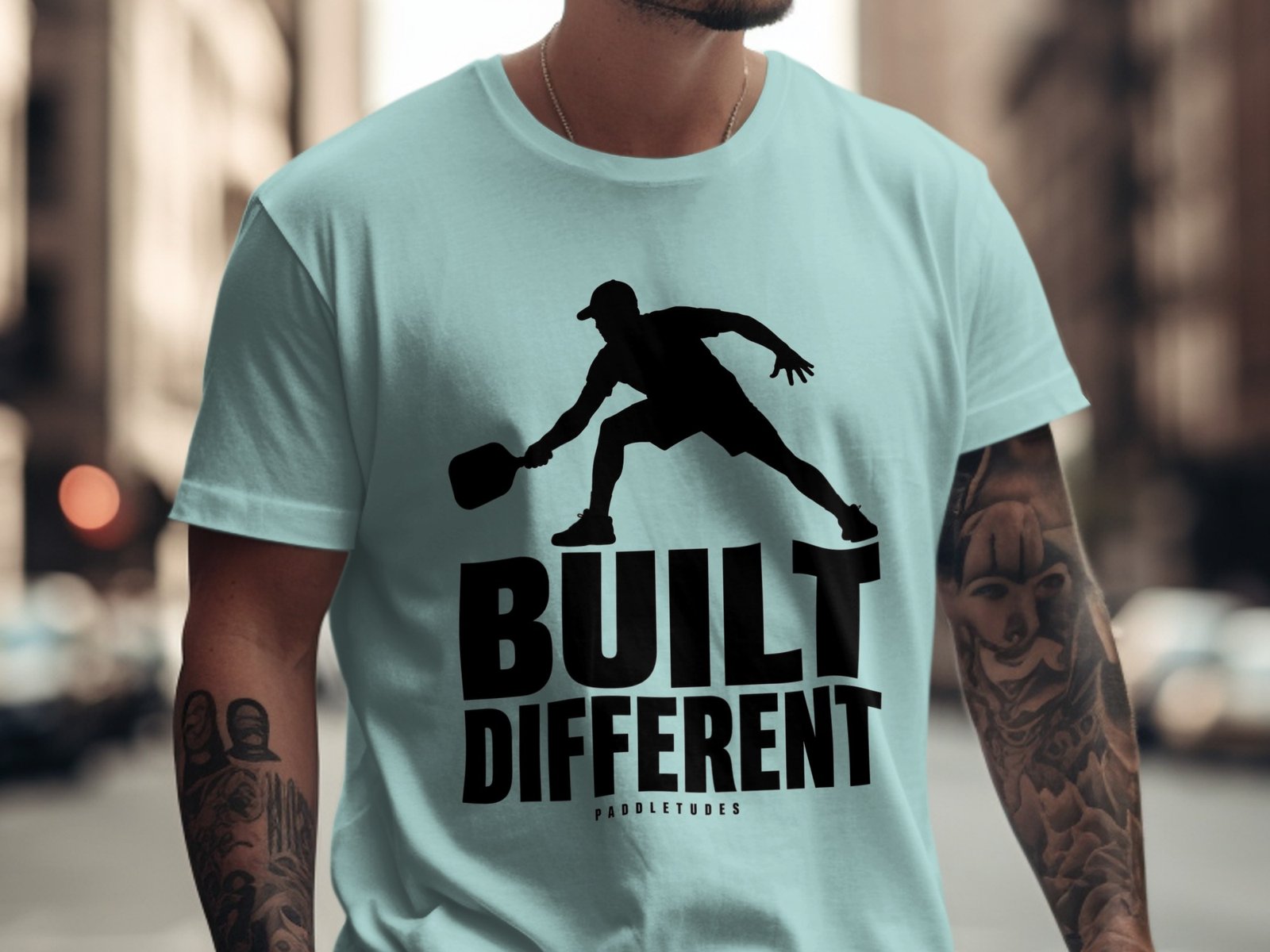
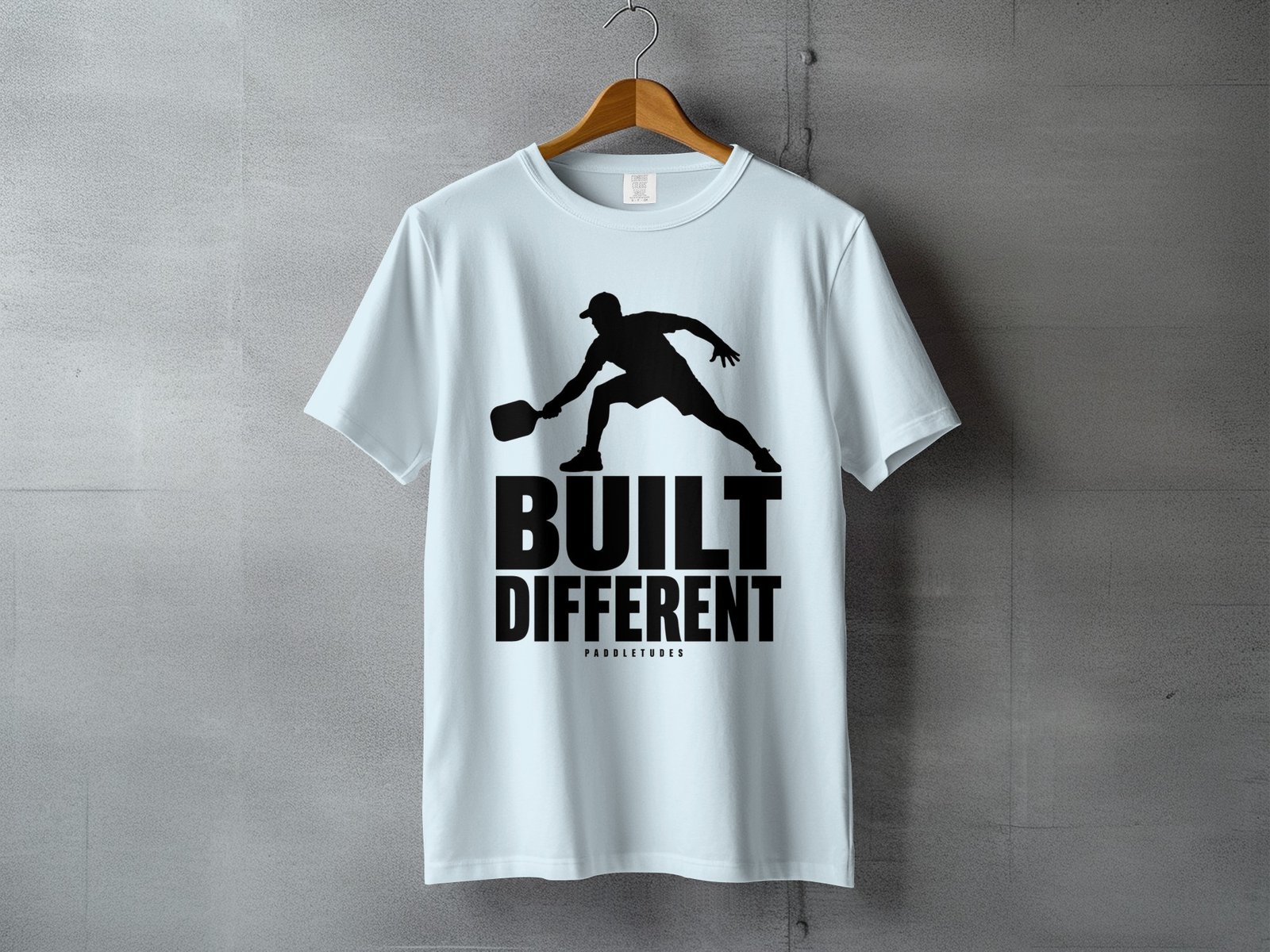
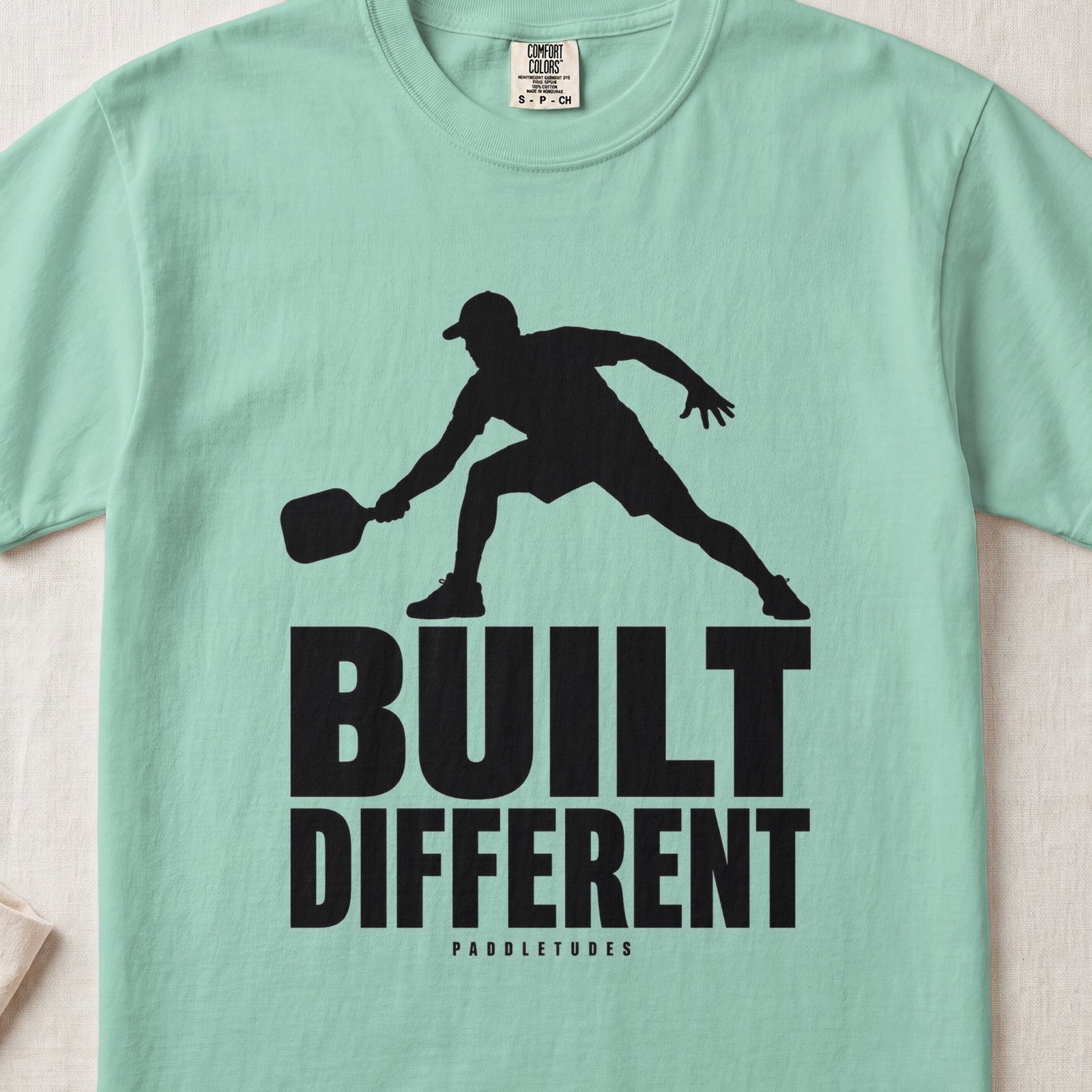
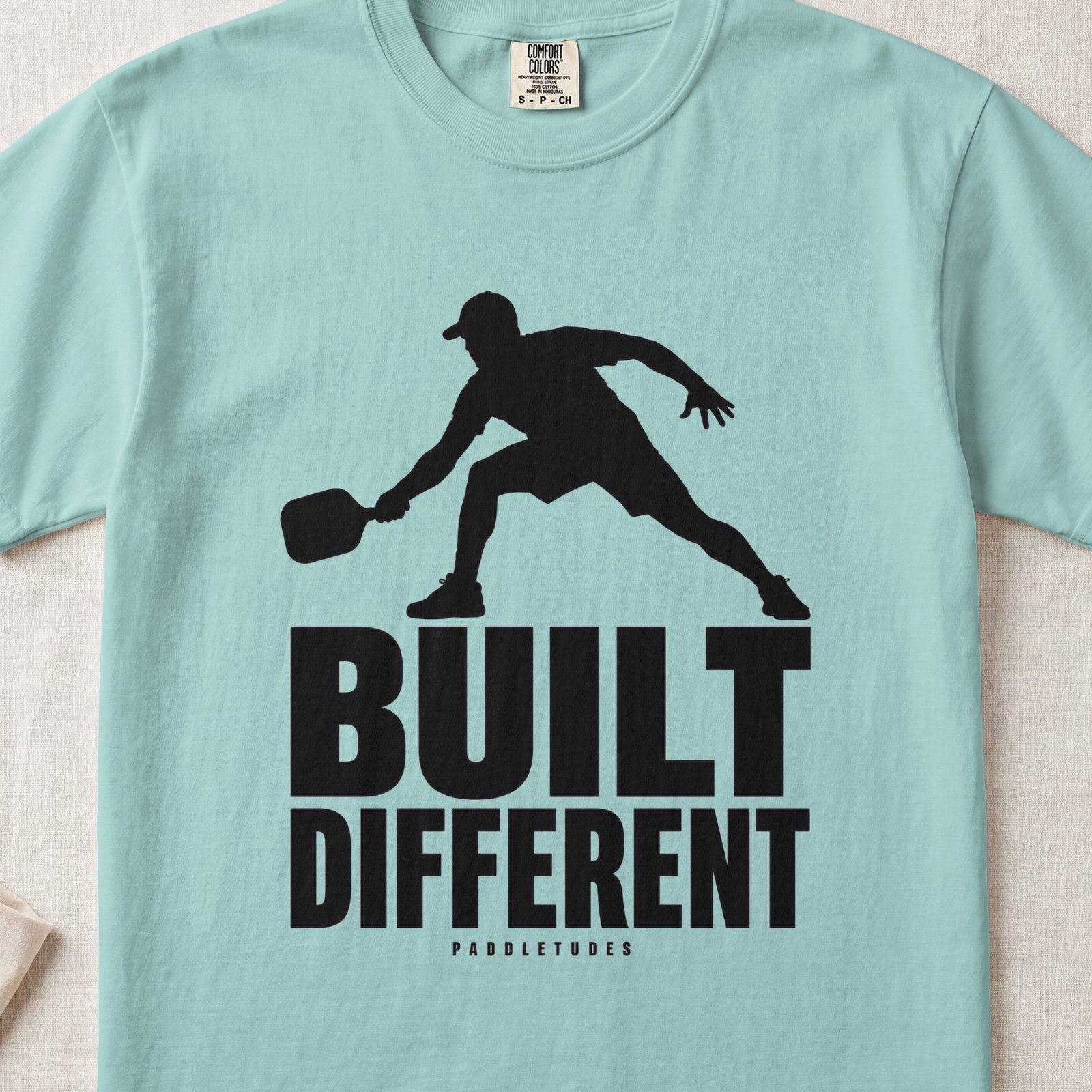
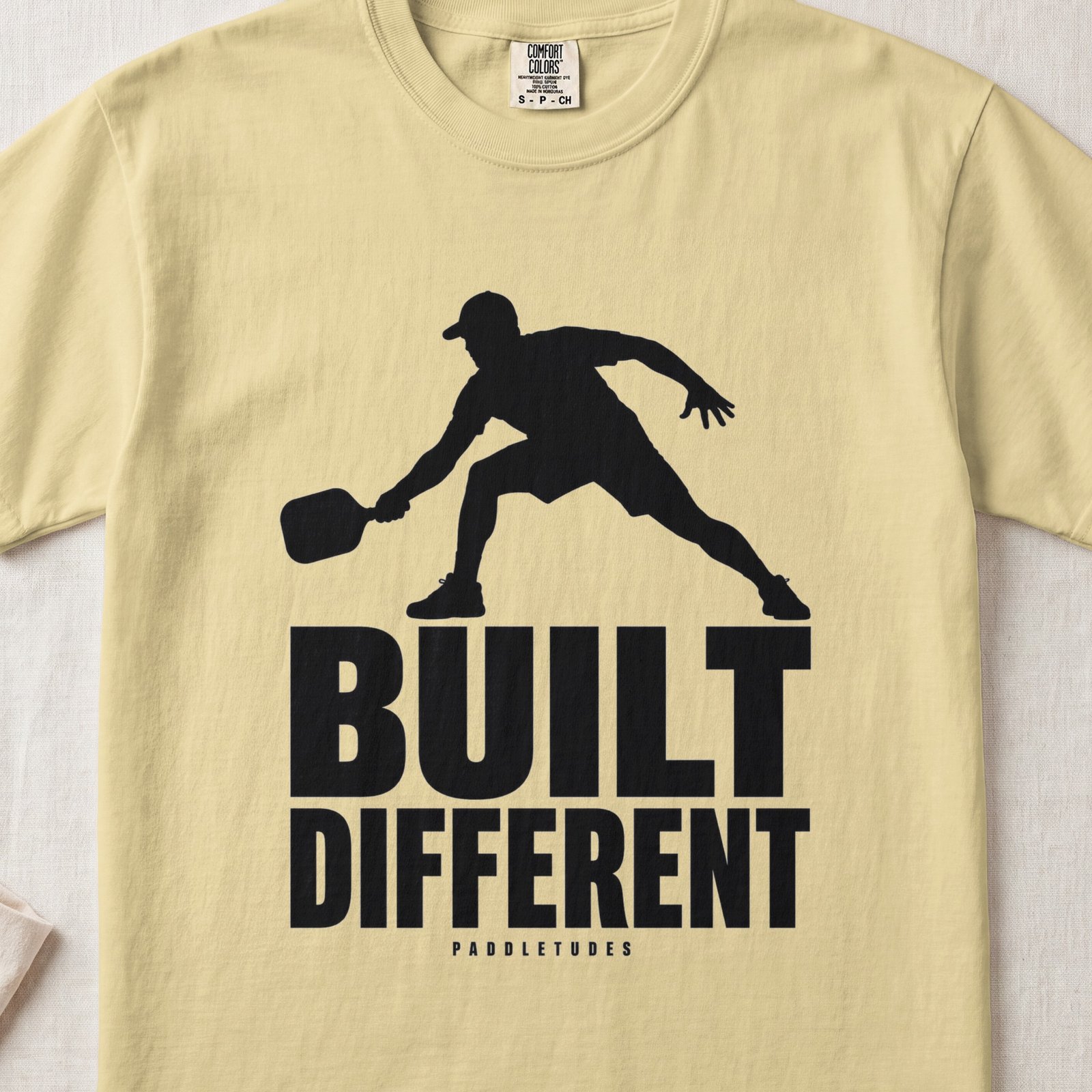
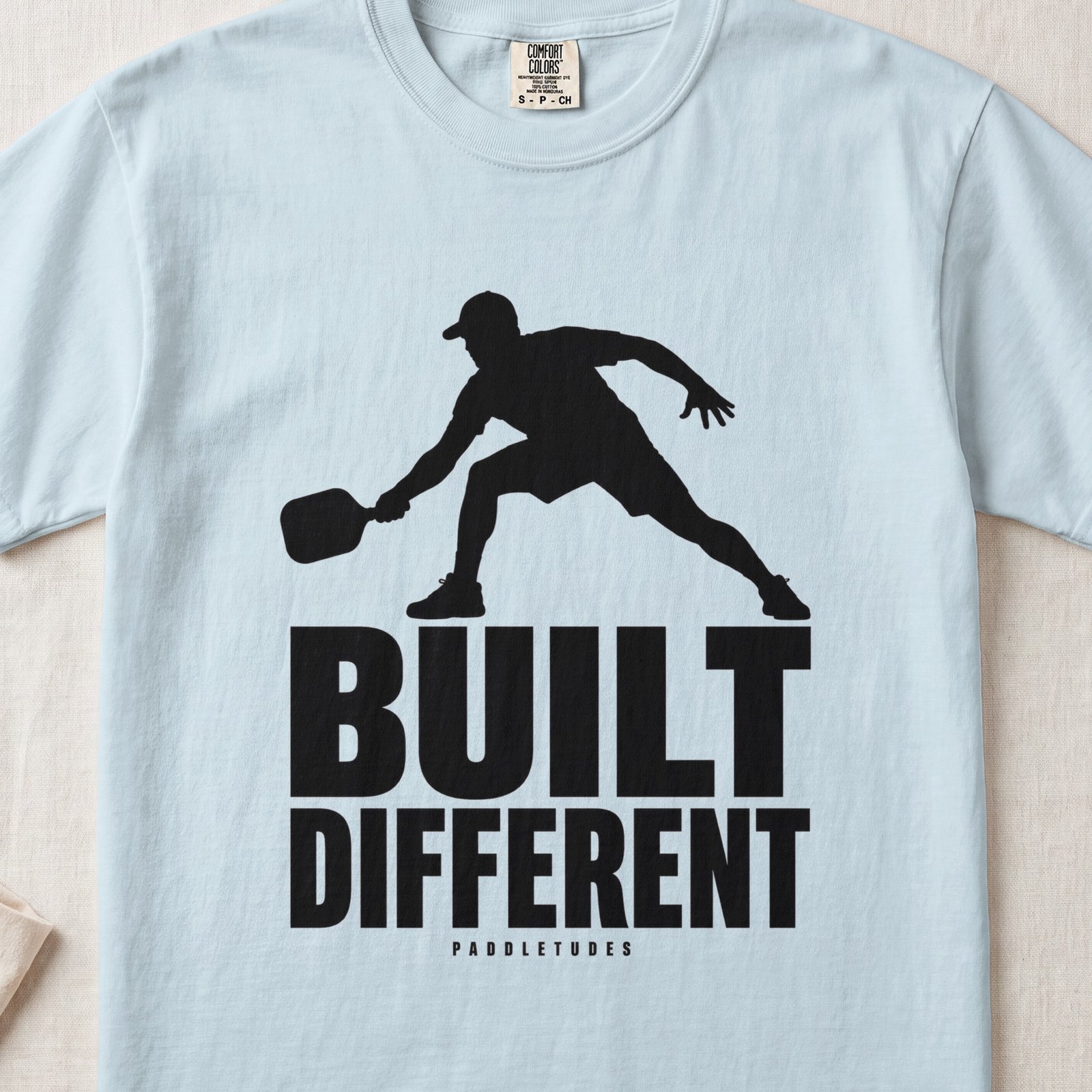
Sports Comfort Colors 1717
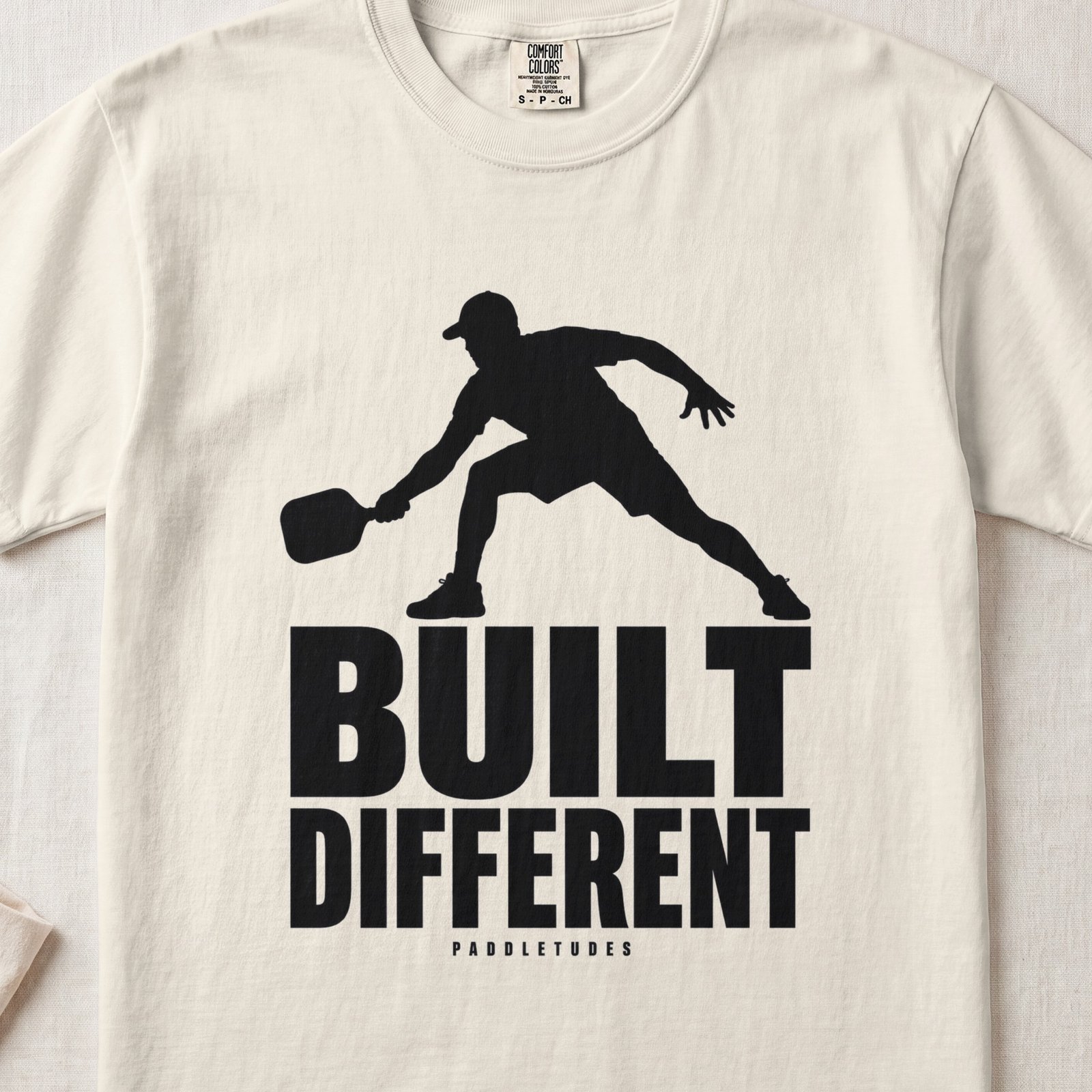
Built Different
$29.99
- Comfort Colors 1717 heavyweight cotton
- Original design · printed to order
- U.S. print partners
What Built Different Looks Like on a Pickleball Court
You notice it in the first rally. She doesn’t just move to the ball — she arrives before it, feet set, paddle positioned, weight already loaded in the direction she’s going to hit. The shot you aimed at her backhand corner doesn’t catch her reaching. It catches her waiting. The angle you opened up by pulling her wide closes before you can exploit it because she’s already recovered to center court while your ball is still in the air. Three points in, you know. This player is not like the other 3.5s on the rotation board. The mechanics look different. The movement looks different. The game makes sense to her in a way that took you two years to approximate and she seems to have arrived with on day one.
She’s 28, a former competitive gymnast who aged out at seventeen and spent the next decade without a sport that used her body the way gymnastics did. She tried running and hated the monotony. She tried CrossFit and liked the intensity but not the culture. She walked onto a pickleball court at a friend’s birthday party fourteen months ago and felt something click before the first game ended — the spatial awareness, the balance through direction changes, the ability to position her body precisely in a small space under time pressure. Gymnastics gave her a proprioceptive foundation that most pickleball players spend years trying to build through drills. She doesn’t have the strongest serve. She doesn’t have the fastest hands. What she has is the ability to be in the right place at the right time, every time, in a way that looks effortless from across the net and is nearly impossible to coach into someone who doesn’t already carry it.
Being built different in pickleball doesn’t mean being more athletic in the general sense. It means having a foundation — from another sport, from another physical discipline, from genetics, from something — that translates to this specific court in ways that drills can’t fully replicate. The tennis convert who already understands net geometry. The basketball player whose lateral quickness covers the court in two steps. The table tennis player whose wrist speed creates angles nobody else can find. The USA Pickleball skill level descriptions outline what separates each rating, and the gap between 3.5 and 4.5 is almost entirely about court awareness and anticipation — seeing the play develop before it happens. That ability is trainable, but the player who arrives with it accelerates through the ratings at a pace that makes everyone else wonder what they’re doing differently. The answer is usually nothing different. They just started with more.
The drill that exposes whether a player is built different or built through repetition is the reaction drill. A partner stands at the kitchen line and feeds ten rapid-fire volleys — left, right, body, high, low — with no pattern. No time to set up. No time to think. Pure reaction. The built-different player gets eight or nine back. The technically trained player gets six or seven and looks more mechanical doing it. Both approaches work. But the player whose body solves the problem faster than their brain can formulate the solution has something that can’t be taught in a clinic, only refined by one. The advanced version: both partners at the kitchen line, trading speed-ups as fast as they can for thirty seconds. The player who stays quiet — no grunting, no tension, no white-knuckling the paddle — while keeping every ball in play is the one who trusts their body to handle what comes.
The paddle for this player should amplify what’s already there rather than compensate for what’s missing. A well-balanced paddle with a responsive face and enough weight to generate power without requiring a full swing lets the natural athlete play their game without fighting the equipment. Selkirk’s all-court models are built for players who don’t specialize in one style because they don’t have to — their physical tools let them dink, drive, reset, and overhead within the same point without switching modes.
If someone you know found pickleball after a major life change — a move, a career shift, a divorce, a retirement that came earlier than planned — and the sport became the thing that rebuilt their sense of identity and competence, this shirt says what the scoreboard has been saying for months. They didn’t just pick up a paddle. They discovered something about themselves that was always there and never had a place to show up until now. The shirt makes it visible to everyone at the court, at the gym, at the store — and when another player reads it, the nod of recognition is the whole conversation.
Being built different connects to every philosophy in our pickleball collection, because the built-different player doesn’t specialize — they draw from all of them. I Am The Wall is their defensive mode — the patience and absorption that frustrates opponents who rely on power. Overhead Everything is their attacking mode — the athleticism that turns every lob into a closed point. And Hands Battle Won is the firefight mode — the reaction speed that wins ten-shot exchanges at the kitchen line while less natural players are still processing the third volley. Book courts built for competitive play at Indian Wells Tennis Garden, where the best players in the world test their games against each other.
Printed on a Comfort Colors 1717 garment-dyed heavyweight tee with water-based DTG ink — sizing and care details here.
What Separates Good Pickleball Players From Great Ones
The gap between a good pickleball player and a great one is anticipation — the ability to read what’s about to happen before it happens and position your body, paddle, and intentions accordingly. Good players react to the ball. Great players react to the pattern that produced the ball, which gives them a half-second advantage on every shot that compounds over the course of a rally until the opponent feels like they’re playing someone who can see the future.
At the 3.0 to 3.5 level, improvement comes from reducing errors — serving consistently, returning deep, keeping the ball in play. That’s the good player. At 4.0, improvement shifts from error reduction to pattern recognition. The player starts seeing that a cross-court dink followed by a line dink followed by another cross-court dink creates a predictable opening on the fourth ball. They start noticing that an opponent who leans forward after a hard drive is vulnerable to a reset that lands behind them. They start reading paddle angles before the ball is struck and moving toward the landing zone while the shot is still in the air. That read is what separates levels more than any individual technique.
The great player also manages energy differently. A good player works hard on every point. A great player works precisely — conserving energy during the setup phase of a rally and expending it only at the moment of attack or defense that decides the outcome. This isn’t laziness. It’s efficiency. The great player at 9-9 looks the same as they did at 1-1 because they haven’t been wasting physical or mental resources on points that were going to resolve themselves. The good player at 9-9 is visibly tired, visibly tense, and making decisions from fatigue rather than clarity.
Natural talent plays a real role, and pretending it doesn’t would be dishonest. Some players arrive with spatial awareness, hand-eye coordination, and body control that took other players years to develop through deliberate practice. But talent without volume never reaches its ceiling. The player who is built different AND practices four times a week becomes the one that other players stop trying to figure out and start trying to avoid. The best version of “built different” isn’t the talent itself — it’s the talent plus the discipline to keep refining it long after the initial advantage stopped being enough to win on its own.
-
She Bangs
$29.99 Select options This product has multiple variants. The options may be chosen on the product page -
Net Gains
$29.99 Select options This product has multiple variants. The options may be chosen on the product page -
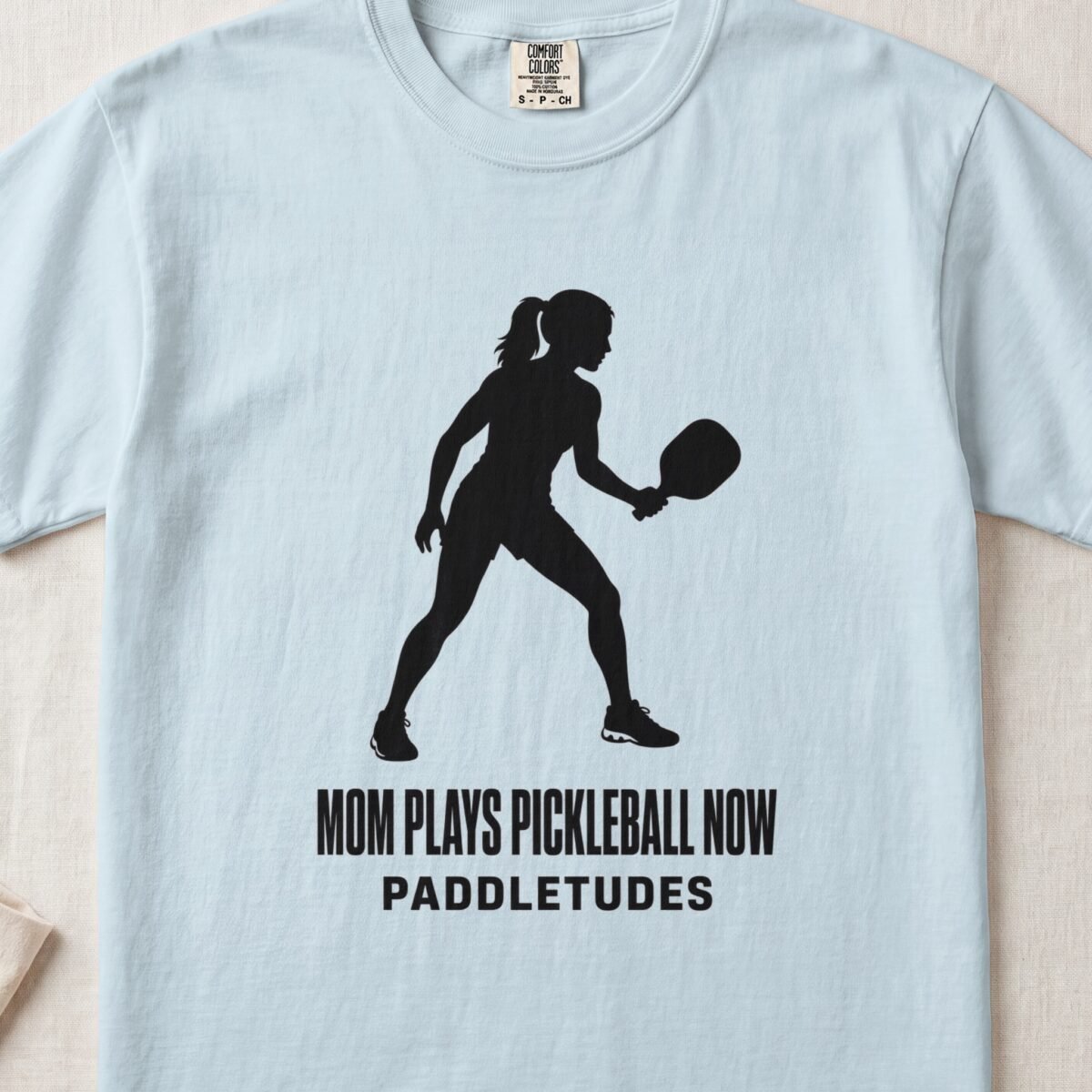
Mom Plays Pickleball Now
$29.99 Select options This product has multiple variants. The options may be chosen on the product page