Sports Comfort Colors 1717
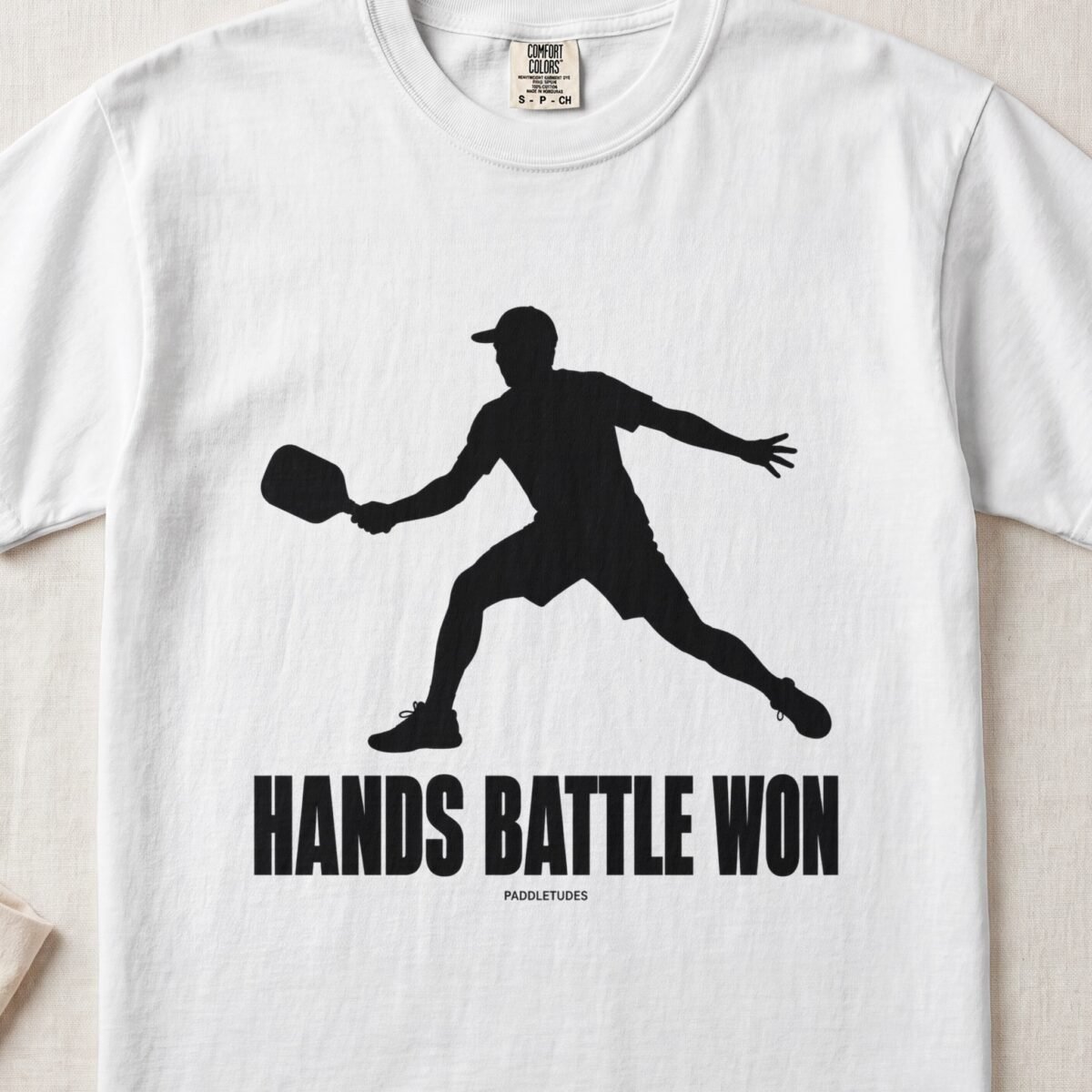
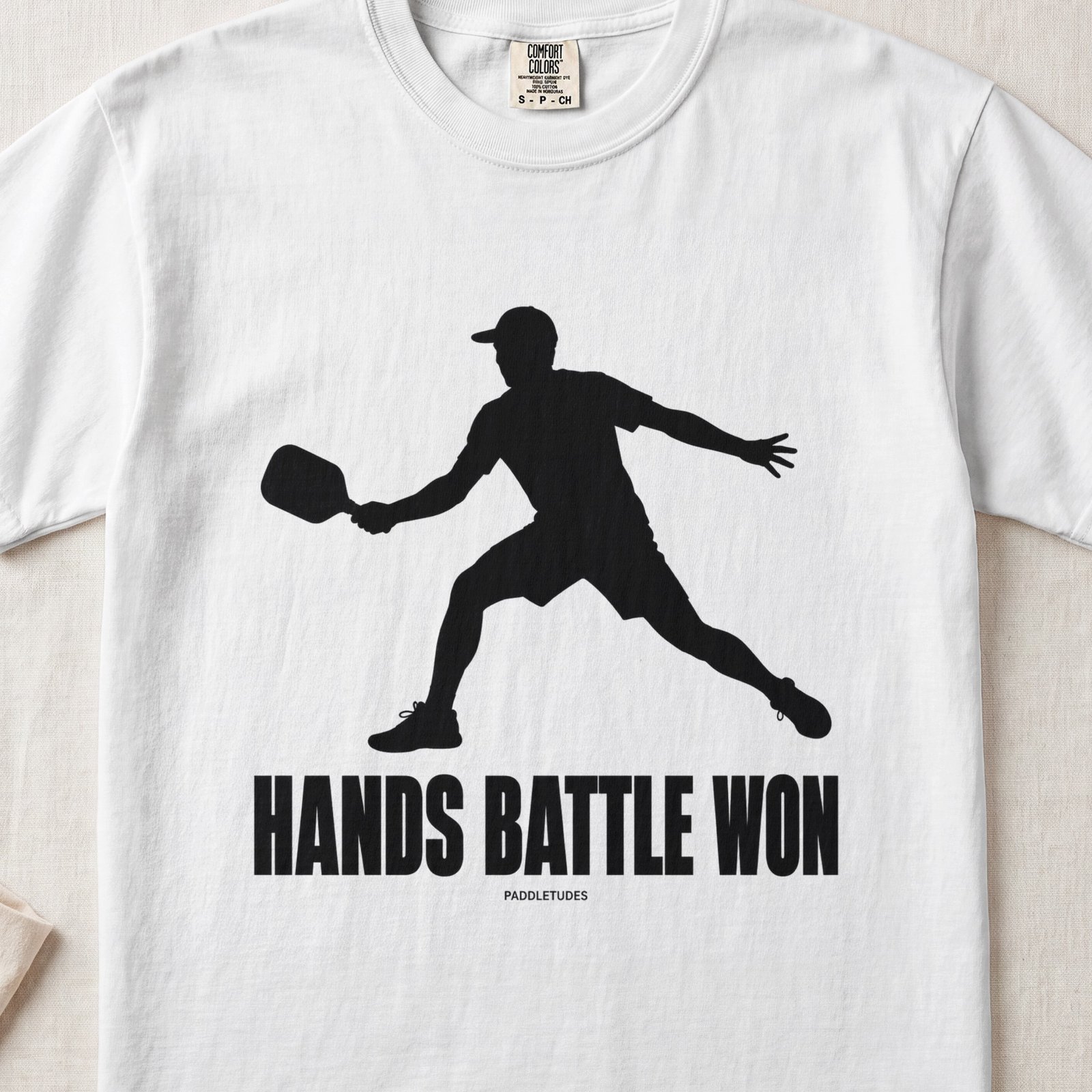
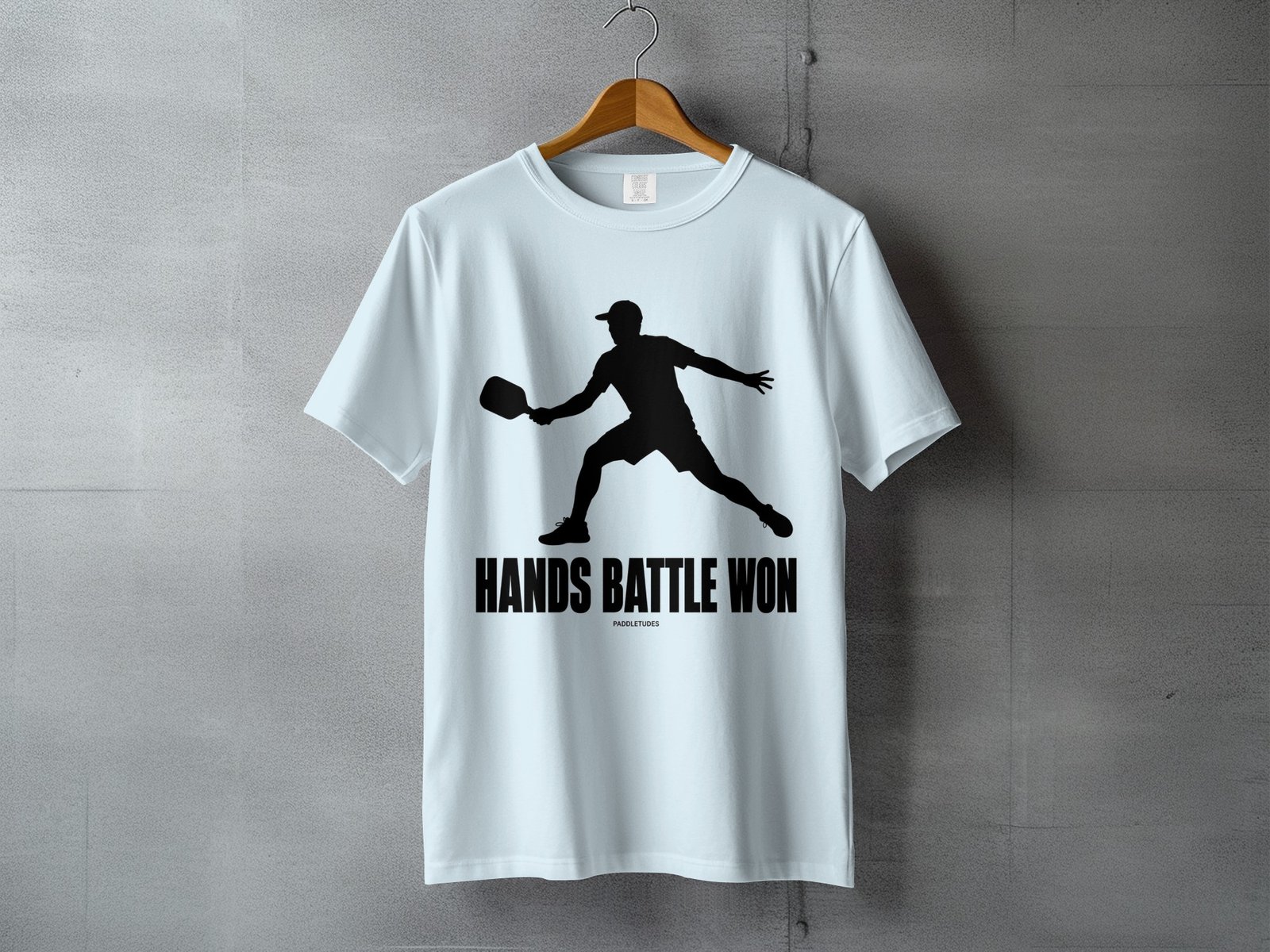
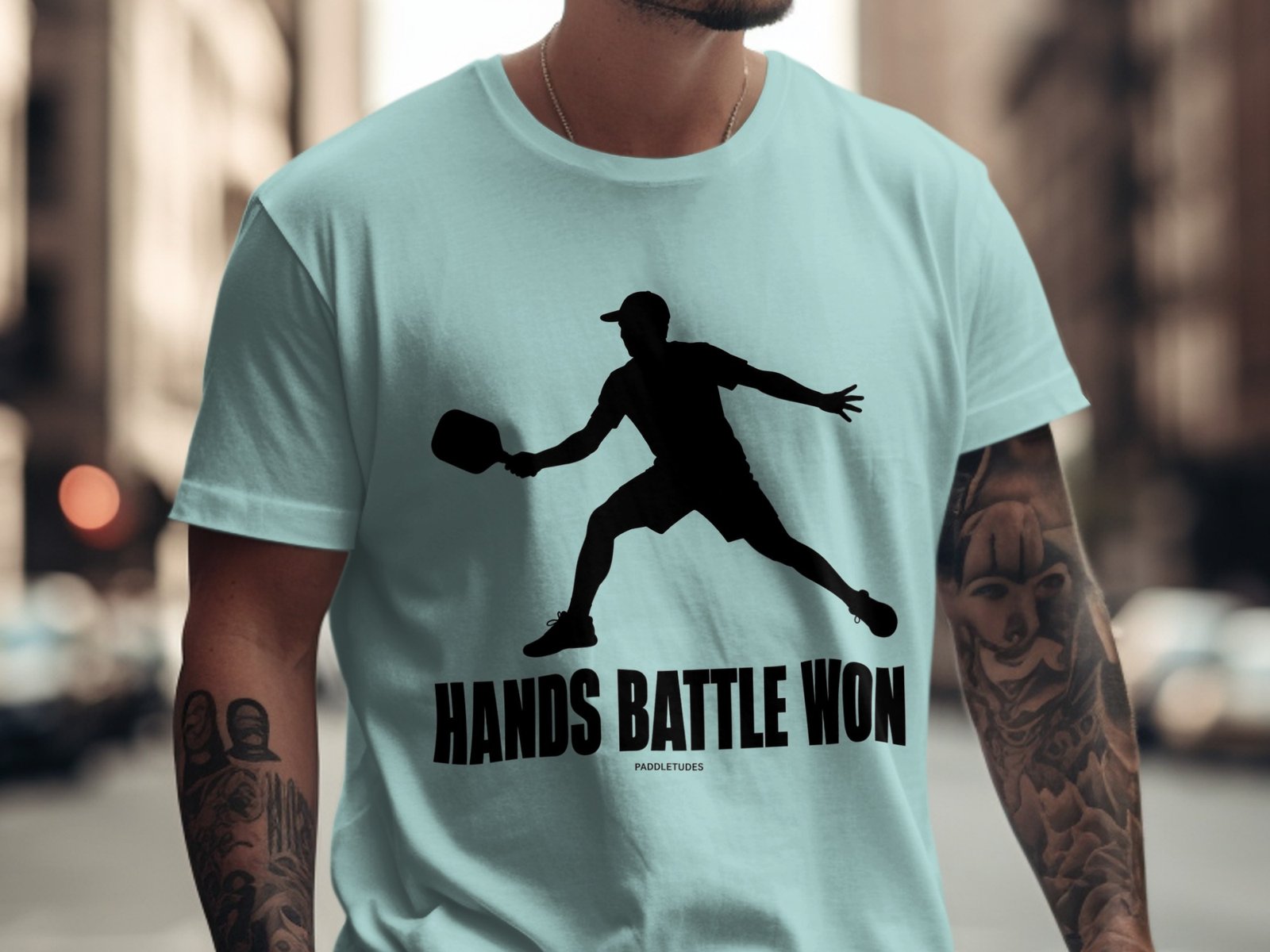
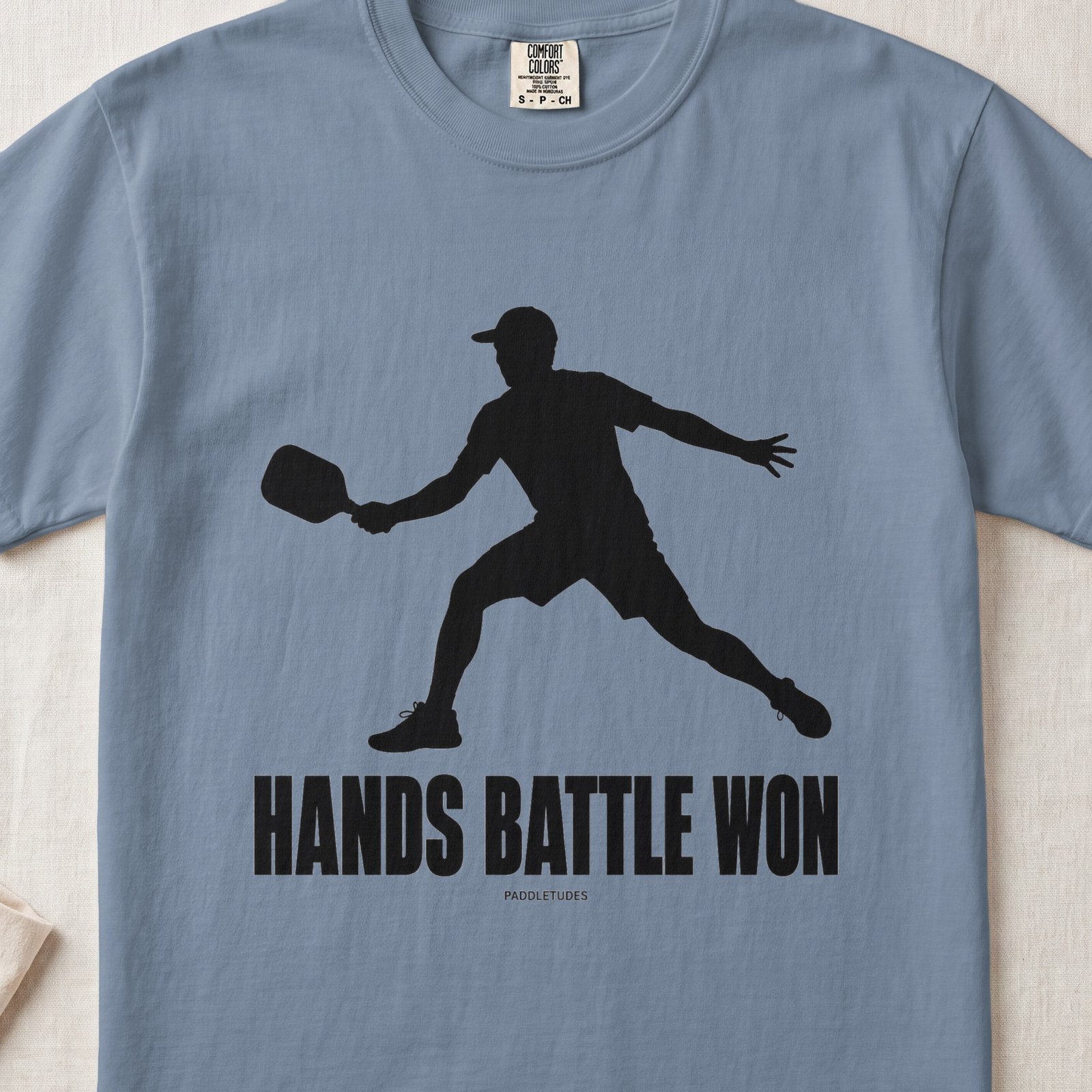
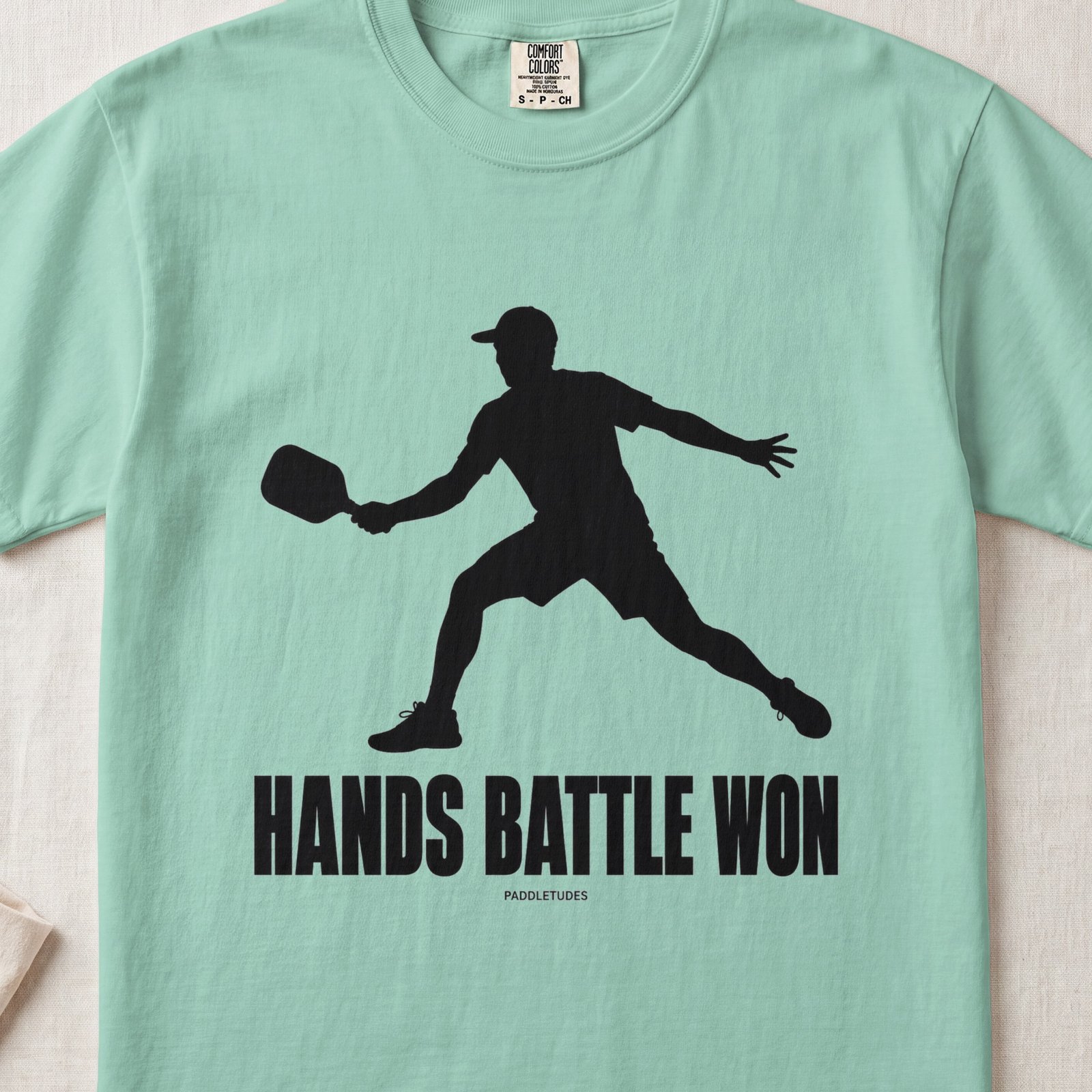
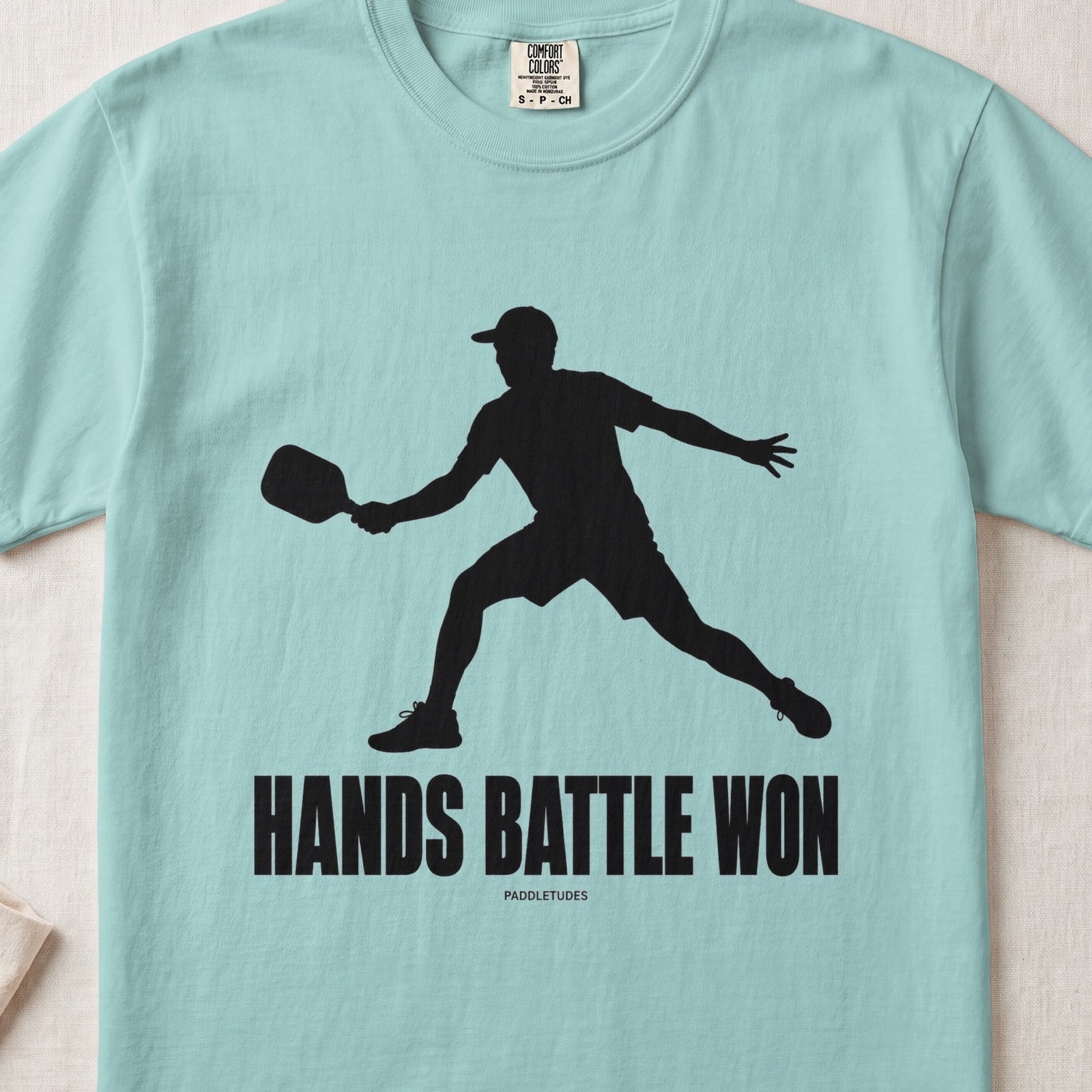
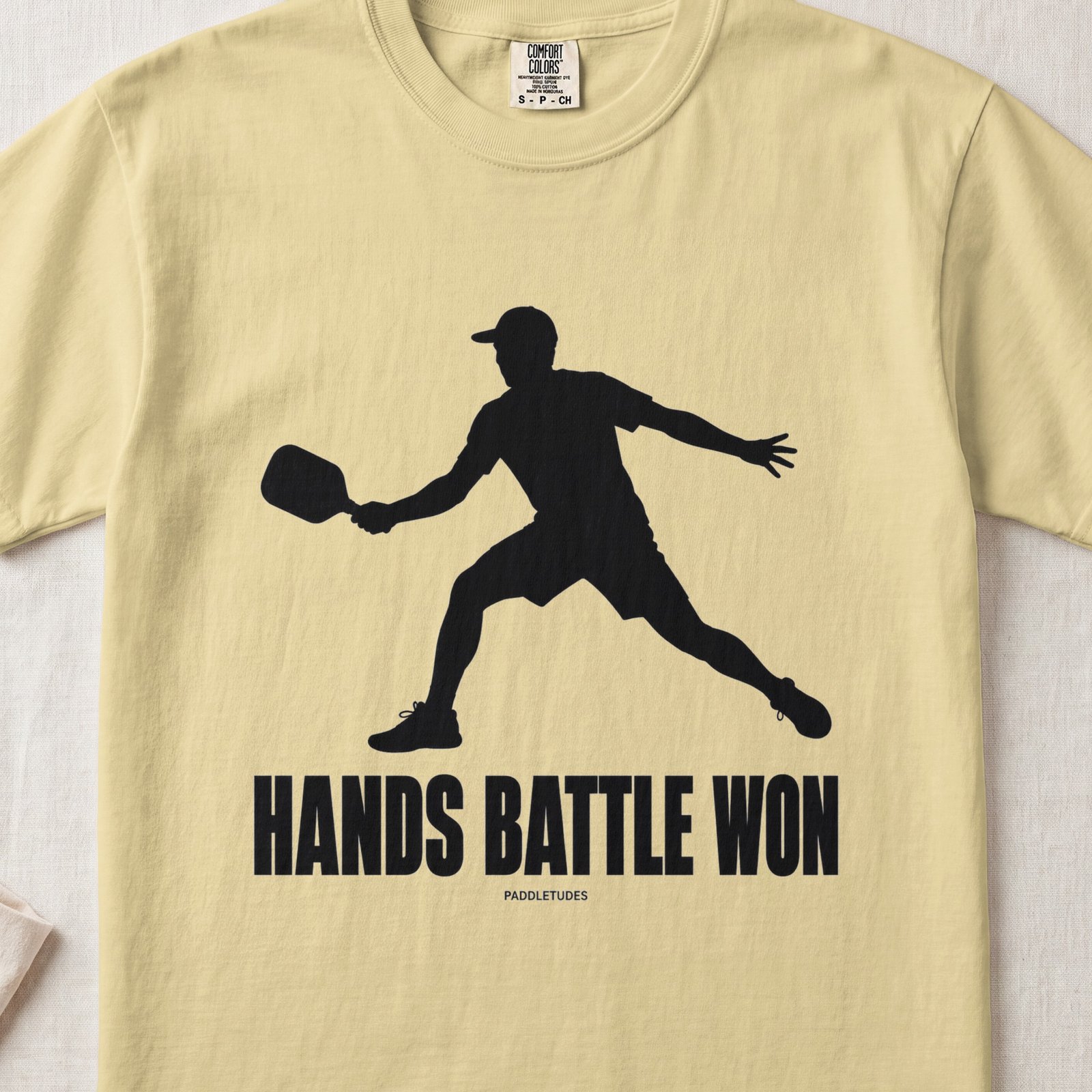
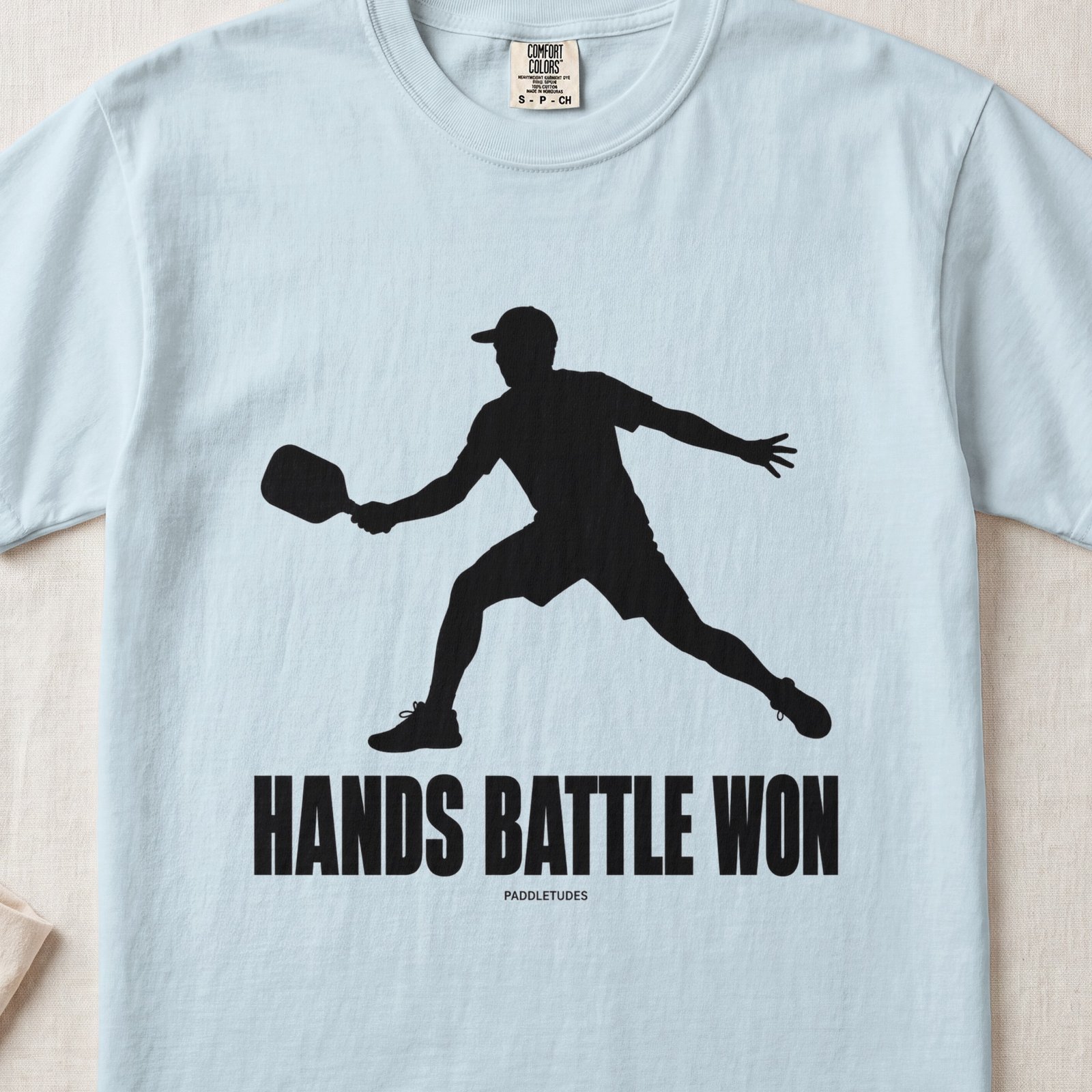
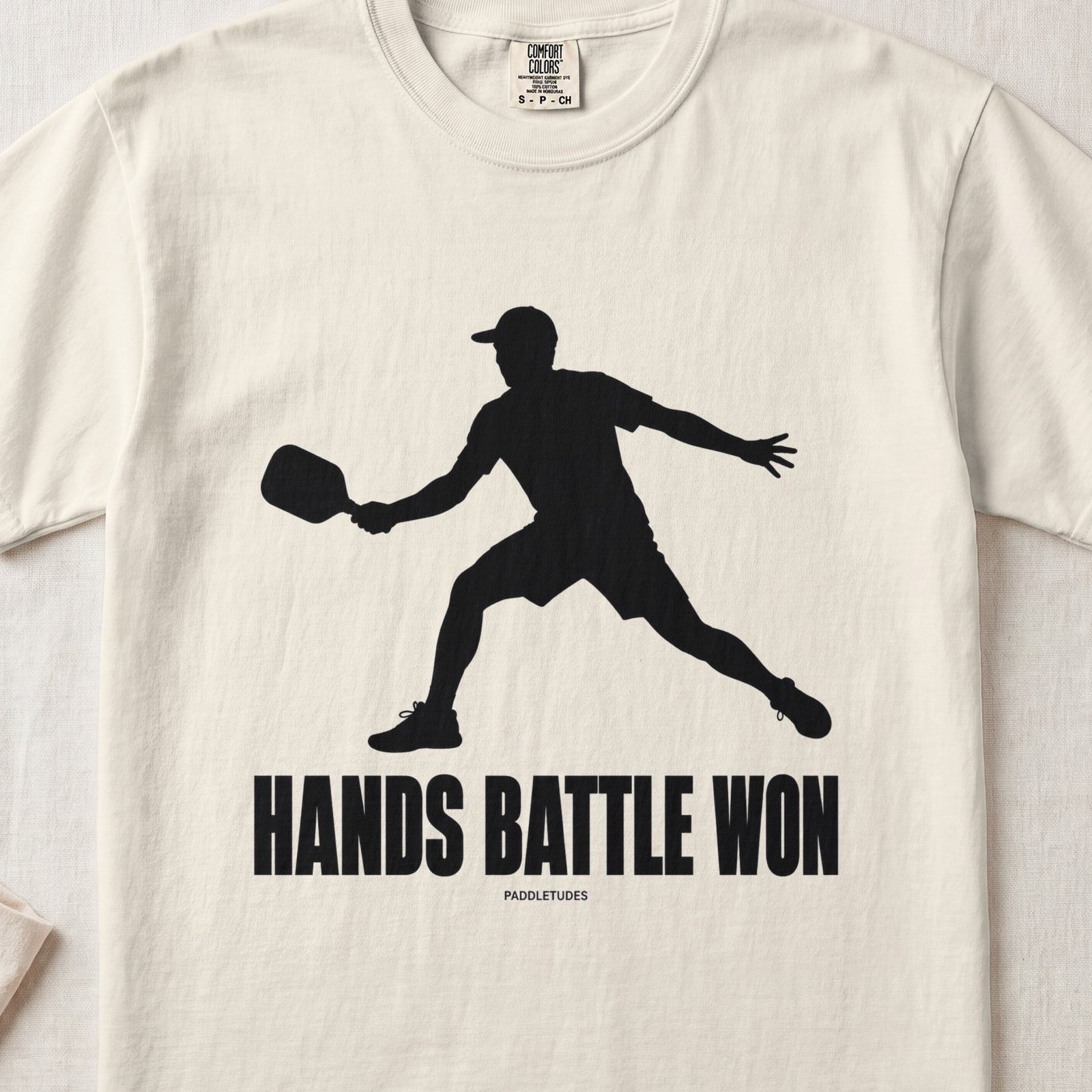
Hands Battle Won
$29.99
- Comfort Colors 1717 heavyweight cotton
- Original design · printed to order
- U.S. print partners
Where Pickleball Fast Hands Decide the Point
Fourth shot. The speed-up came at your right hip. Your paddle was already there — not because you saw it coming, but because your hands decided before your brain caught up. Redirect to the gap. Fifth shot. Block. Sixth shot. Punch volley, low, at their feet. Seventh shot — there is no seventh shot. The ball didn’t come back. The exchange is over. You won it in less time than it takes to read this paragraph.
Hands Battle Won. This shirt is for the player whose reflexes don’t negotiate.
There’s a former table tennis player at every facility who picked up pickleball and found their hands were already trained for the fastest part of the game. There’s an ex-racquetball player whose wrists move at speeds the rest of the court can’t process. And there’s the person who never played a racket sport before pickleball but whose reflexes were just wired fast — the person who catches the glass before it tips off the counter, who texts back in under a minute, whose reaction to any stimulus is immediate and decisive. The Hands Battle Won player isn’t always the most skilled person on the court. They’re the fastest. And at the kitchen line, where the ball is traveling four feet between paddles and the whole exchange lasts two seconds, fast is the only thing that matters.
Off the court, this is the person who processes information at a speed other people find slightly unnerving. They’ve already answered the email you’re still reading. They’ve already solved the problem you’re still describing. They don’t hesitate, not because they’re impulsive, but because their assessment-to-action pipeline is shorter than everyone else’s. At the pickleball court, that pipeline is the difference between a paddle that’s in position and a paddle that’s still moving when the ball arrives.
The mechanics of winning a hands battle are counterintuitive. Most recreational players think the answer is hitting harder. It’s not. The answer is staying compact. A hands battle is won by the player whose swing is shortest — a punch volley, paddle in front of the chest, no backswing, no follow-through past the body. The paddle acts as a wall with direction, not a bat with momentum. Target the opponent’s crossover zone — the paddle-side hip, elbow, and shoulder where they have to decide between forehand and backhand before they can respond. That decision takes a fraction of a second. In a hands battle, a fraction of a second is a lifetime.
The paddle for this game needs to be light and responsive. Hands battles reward quick wrists, and a heavy paddle slows the wrist down. Paddles in the 7.5 to 7.8 ounce range with a responsive face give the fastest exchange possible. Joola’s Perseus shape — elongated for reach, lightweight for speed — is the paddle Ben Johns uses in the exchanges that end up on highlight reels. Selkirk’s Invikta series prioritizes the same combination of reach and reaction speed. The grip matters too — a relaxed hold allows the wrist to move freely, and a grip that’s too tight locks the wrist and slows the paddle by milliseconds that add up across a seven-shot exchange.
The drill that builds hands battle confidence is the popcorn drill. Two players at the kitchen line, both step two feet inside the zone to close the distance. Volley back and forth with no bouncing, increasing speed gradually. Goal: thirty consecutive volleys without dropping one. The reduced distance forces faster reactions, shorter swings, and better paddle positioning — which is exactly what a real hands battle demands. Do it for ten minutes at Pictona, at Bobby Riggs, at whatever court is closest on the Pickleheads map, and the speed feels manageable in games the same week. The figure-eight drill adds another layer — forehand to partner’s backhand, partner returns to your backhand, you hit to their forehand. The pattern builds smooth transitions between both sides without the panic of choosing in real time.
If you and your doubles partner have won three consecutive hands battles together — the person you trust to cover the middle, whose paddle seems to appear in the right place without either of you saying a word — this is the gift that marks the partnership. It says you’ve found the person whose reflexes match yours, and the court knows it. It also works for the person whose hands are so fast that opponents have stopped speeding up to their side of the court entirely, which is its own kind of compliment.
A successful poach leads directly into a hands battle, and Rather Be Poaching is for the player who starts the exchange by crossing the center line. For the raw power that initiates the speed-up before the hands battle begins, She Bangs is the opening shot. And for the player who watches a hands battle unfold and thinks “I would have just kept dinking,” No Speed Up is the discipline that avoids the firefight entirely. The USA Pickleball community debates the value of hands speed versus soft hands constantly — and both sides are right, which is why the debate will never end and the sport keeps getting better.
Printed on a Comfort Colors 1717 garment-dyed heavyweight tee with water-based DTG ink — sizing and care details here.
What Is a Hands Battle in Pickleball
A hands battle is the rapid exchange of volleys at the kitchen line where neither player backs off and the ball never bounces. One player initiates a speed-up, the opponent blocks or redirects, and the exchange continues at full pace until someone makes an error, hits a winner, or resets the rally back to soft. A typical hands battle lasts three to seven shots and takes less than three seconds.
The term comes from the fact that hand speed — not footwork, not positioning, not strategy — determines the outcome. Both players are at the net. Both are in position. The only variable is whose paddle gets to the ball faster and whose placement is more precise. The player who stays compact and controlled wins. The player who swings big pops a ball up or sprays one wide. That distinction — compact versus big — is the single most important mechanical difference in hands battles at every level.
Hands battles happen when the dink rally escalates. One player reads an opportunity and speeds up the ball. The opponent, instead of resetting, matches the pace. Now both teams are in a firefight. The exchange ends when someone’s paddle is too slow, someone’s placement is too wide, or someone makes the decision to soft-block and reset the rally back to the kitchen. At 3.0, hands battles are panicked and random. At 4.0 and above, they’re calculated — the speed-up was planned, the target was specific, and the exchange that follows is a test of whose preparation and reflexes hold up under real-time pressure.
How Do You Get Faster Hands in Pickleball
Keep your paddle up at chest height in ready position before every exchange, shorten your swing to a compact punch volley with no backswing, and relax your grip to let the wrist move freely. Fast hands in pickleball are less about reaction speed and more about eliminating the wasted motion that slows the paddle down. A player with average reflexes and a compact, ready paddle will beat a player with elite reflexes whose paddle starts at their hip.
The popcorn drill is the fastest path to improvement. Stand at the kitchen line with a partner. Both step two feet inside the zone so you’re closer together than regulation distance. Volley back and forth at increasing speed — no bouncing, no pauses. The goal is thirty consecutive exchanges without dropping one. The compressed distance forces the exact adaptations you need: shorter swing, faster reset to ready position, and a paddle that stays in front of the body instead of drifting to the side. Do this for ten minutes before open play and the improvement is immediate.
Two additional drills build specific hand speed skills. The figure-eight drill — forehand to partner’s backhand, return to your backhand, you hit to their forehand — trains smooth transitions between both sides without the panic of choosing in real time. The speed-up-and-reset drill alternates three fast volleys with one soft reset back into the kitchen, which builds the discipline to shift from fast to slow without losing control. The Joola paddle guide explains how paddle weight and handle length affect wrist speed — lighter paddles with shorter handles allow faster reactions, while heavier paddles with longer handles provide more stability but sacrifice quickness. For hands battles specifically, speed wins, which is why the best volleyers at the kitchen line tend to play with paddles on the lighter end of the range.
-
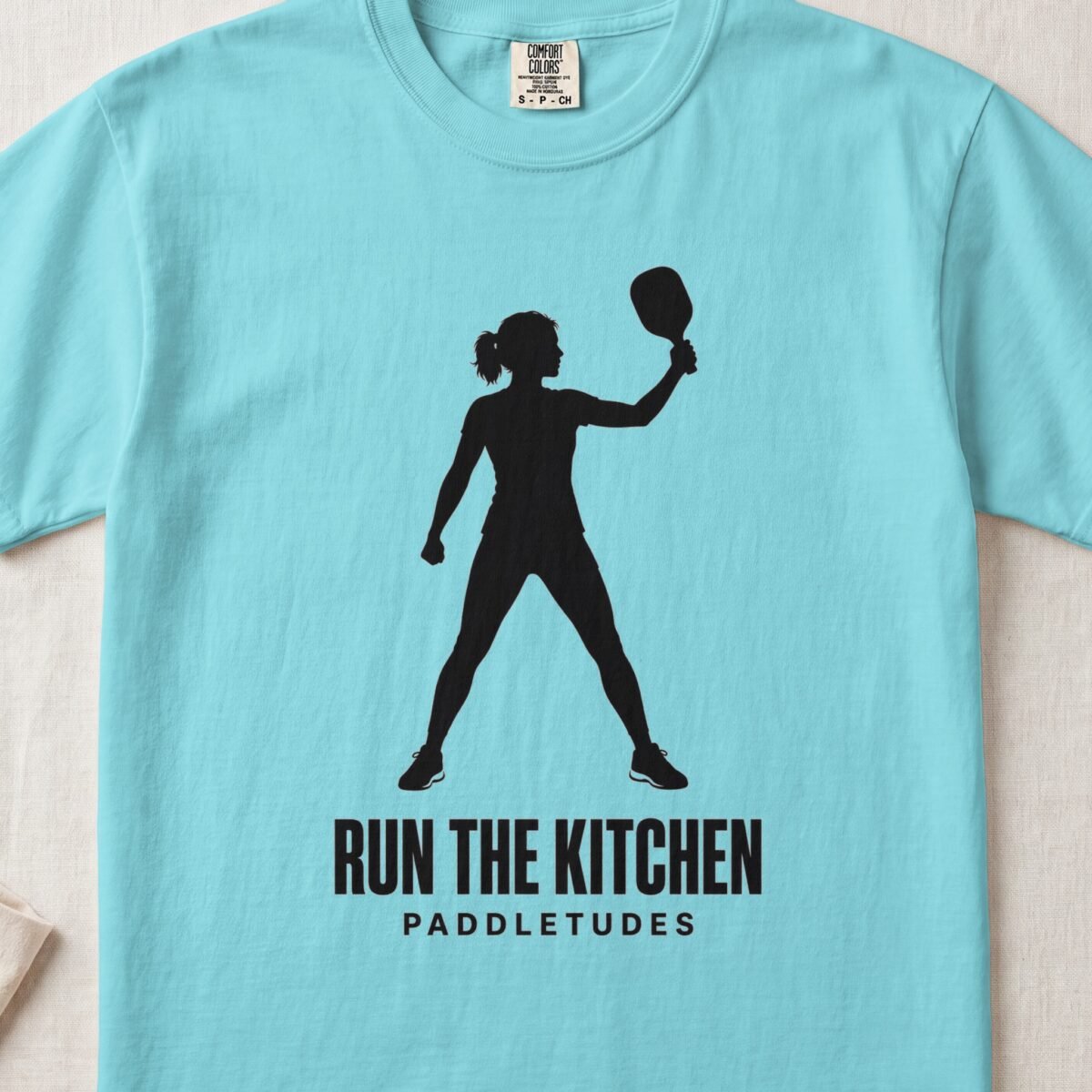
Run The Kitchen
$29.99 Select options This product has multiple variants. The options may be chosen on the product page -
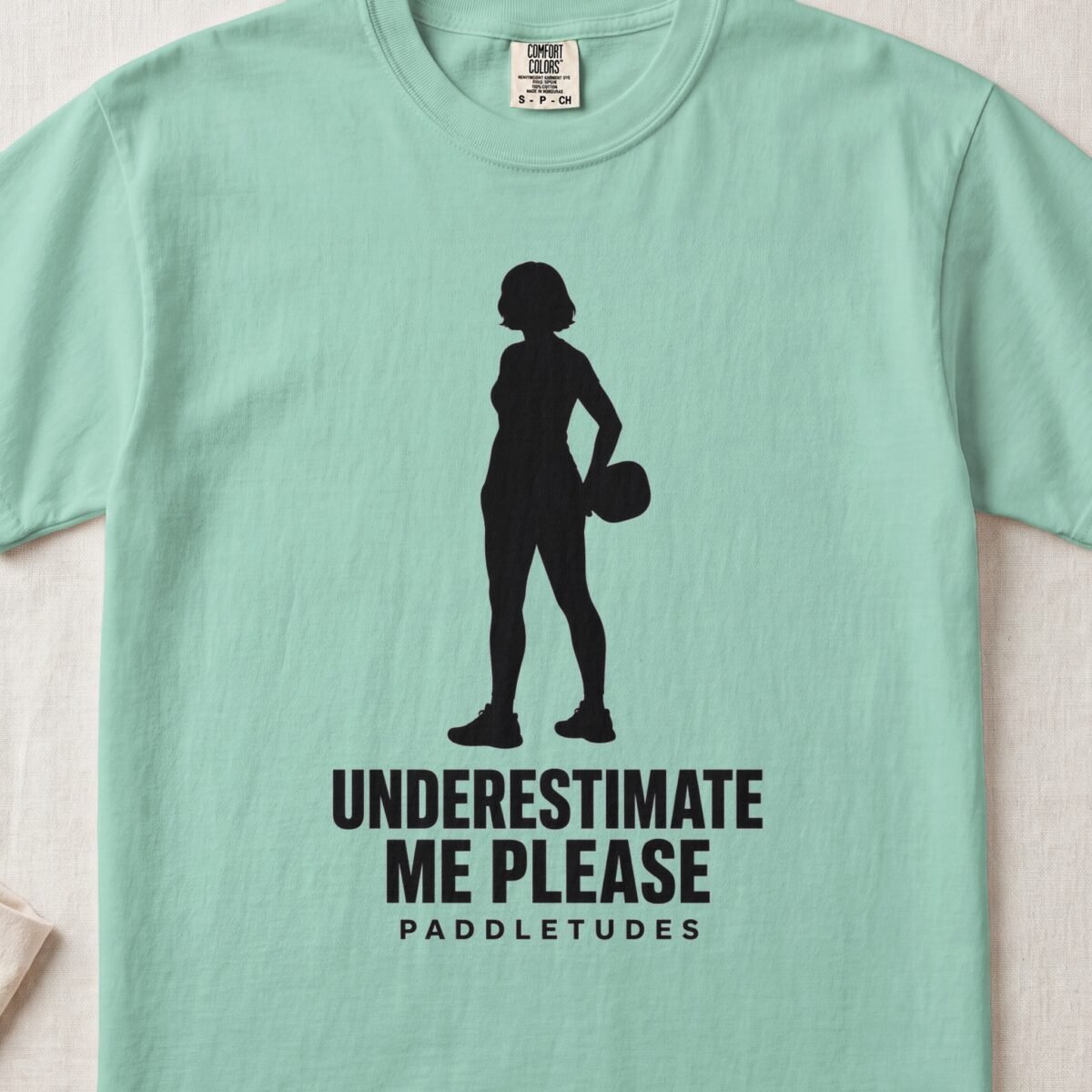
Underestimate Me Please
$29.99 Select options This product has multiple variants. The options may be chosen on the product page -
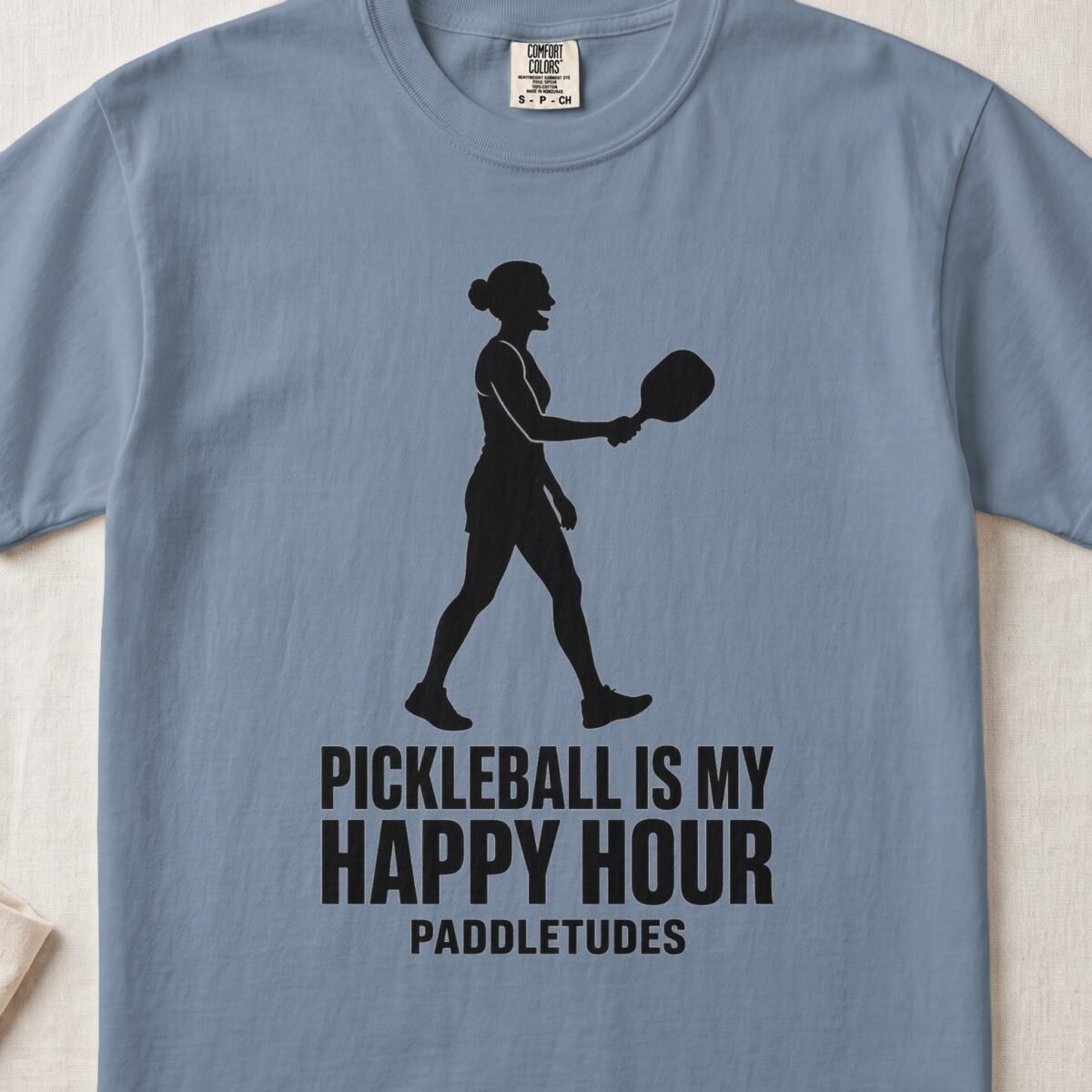
Pickleball Is My Happy Hour
$29.99 Select options This product has multiple variants. The options may be chosen on the product page