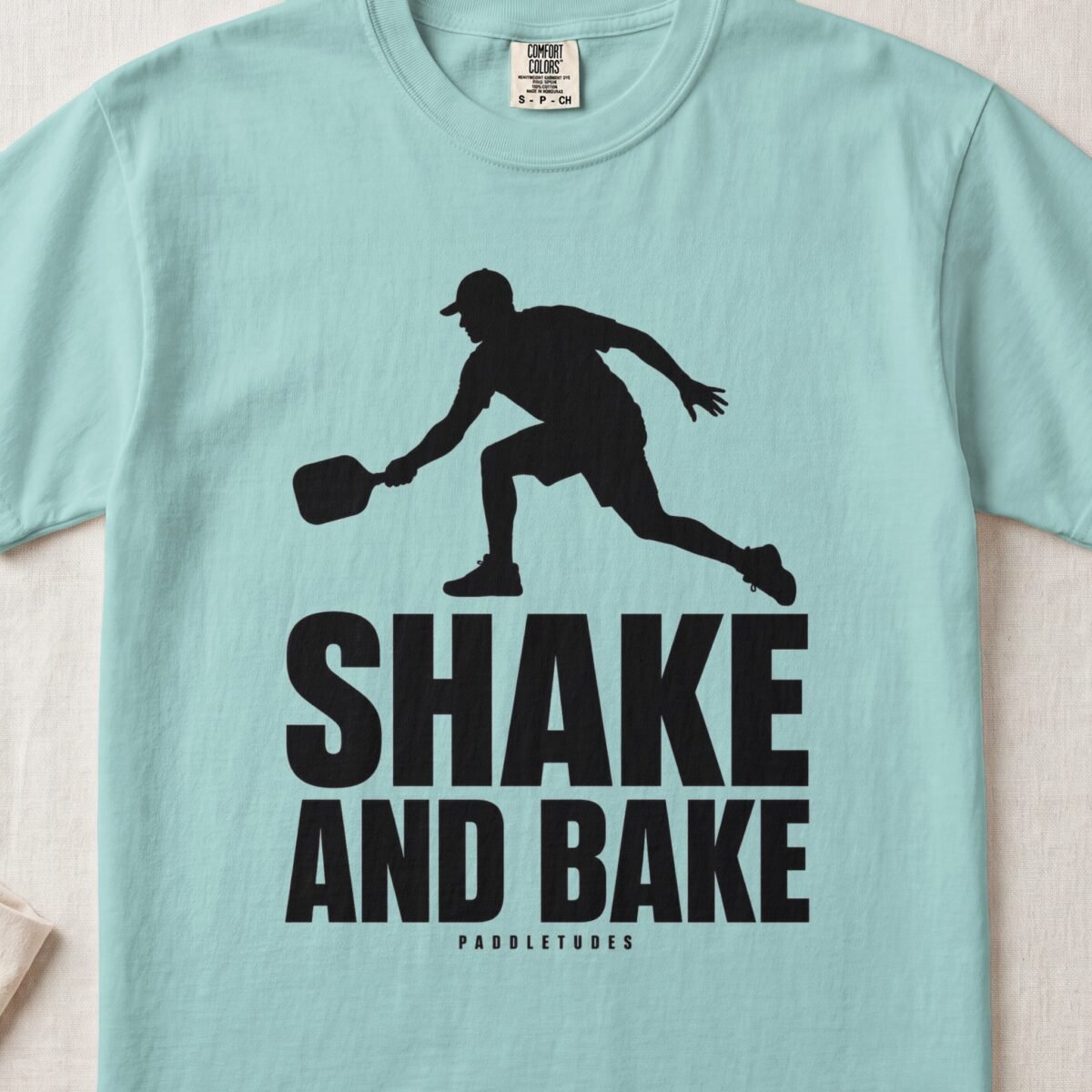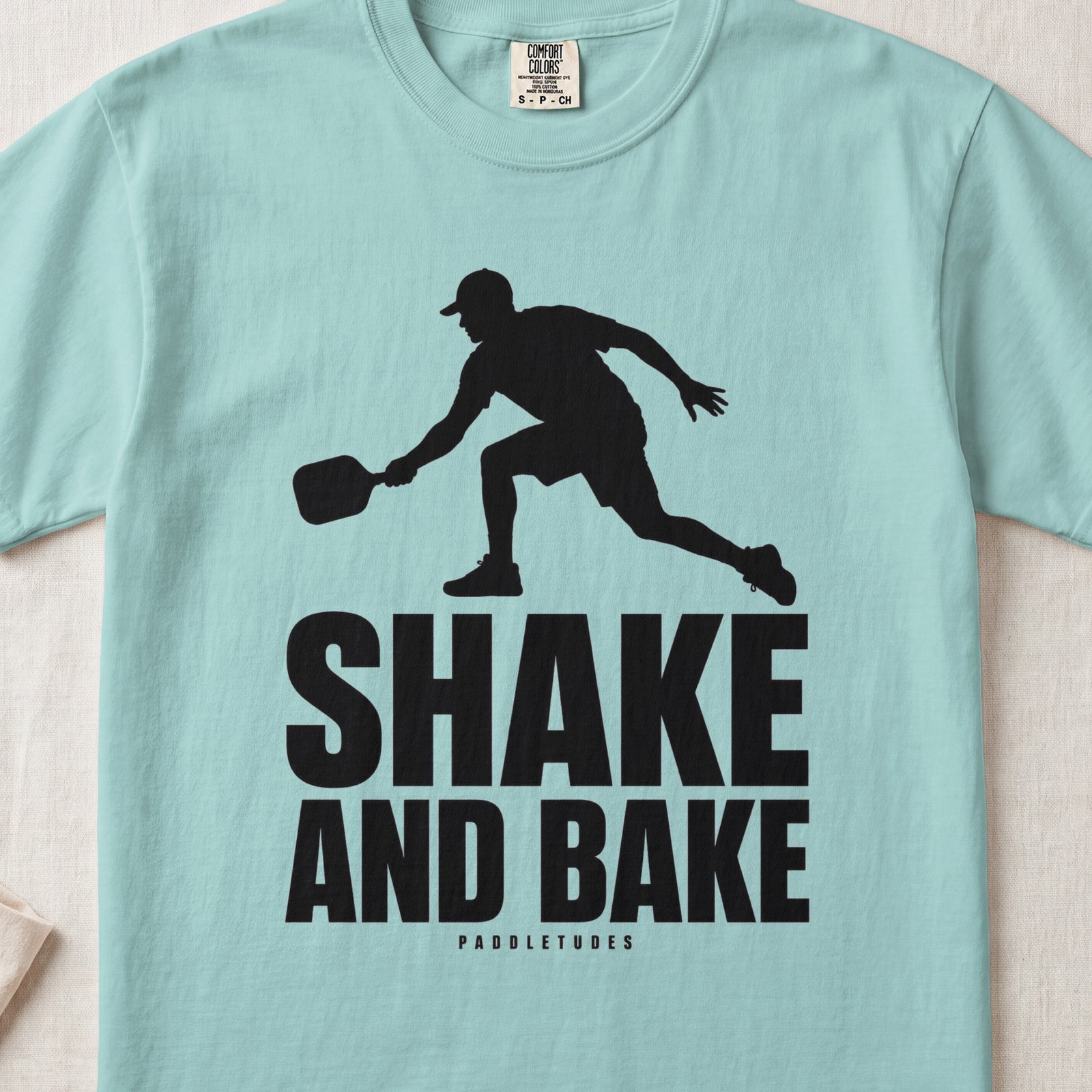
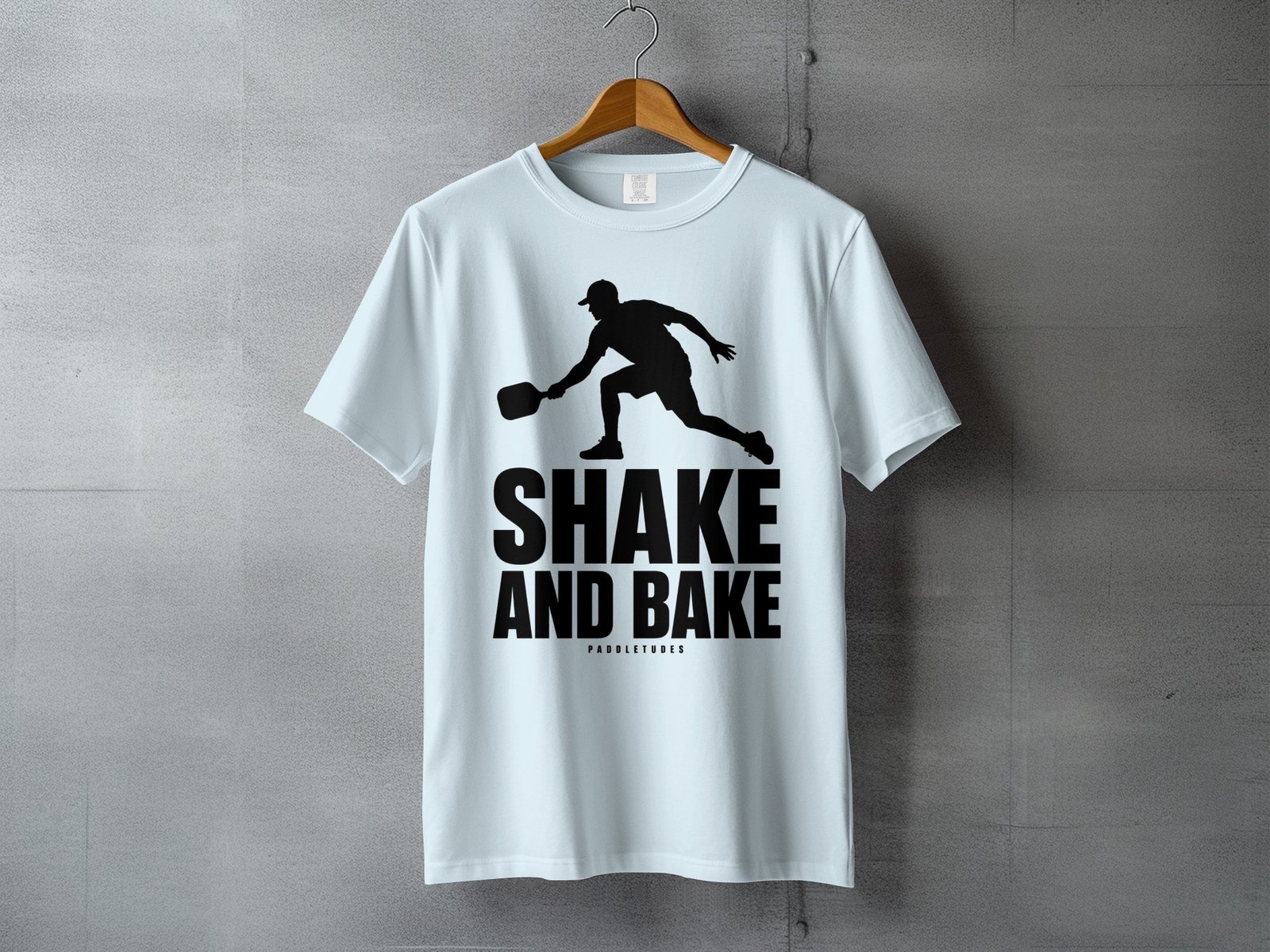
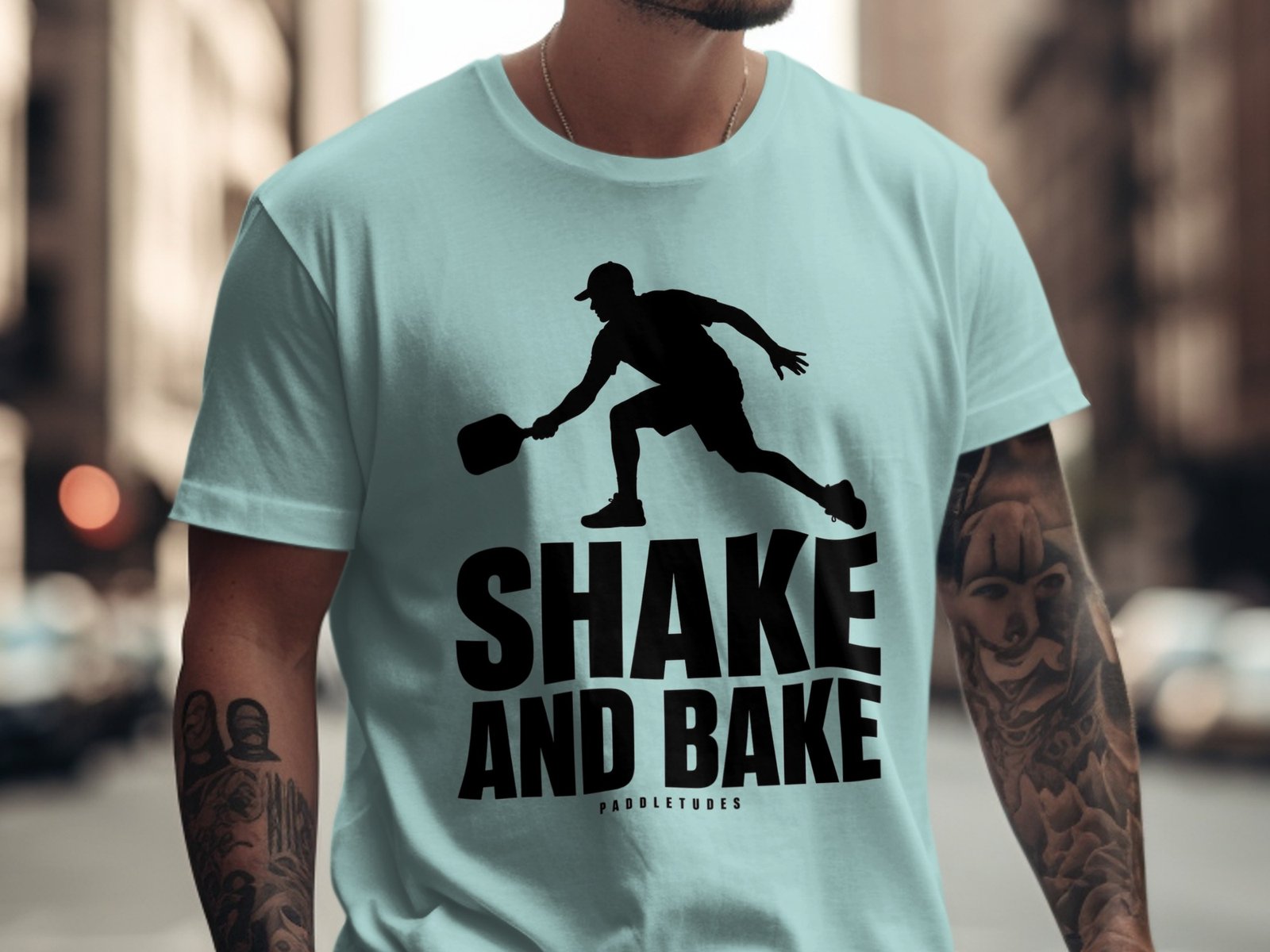
Sports Comfort Colors 1717
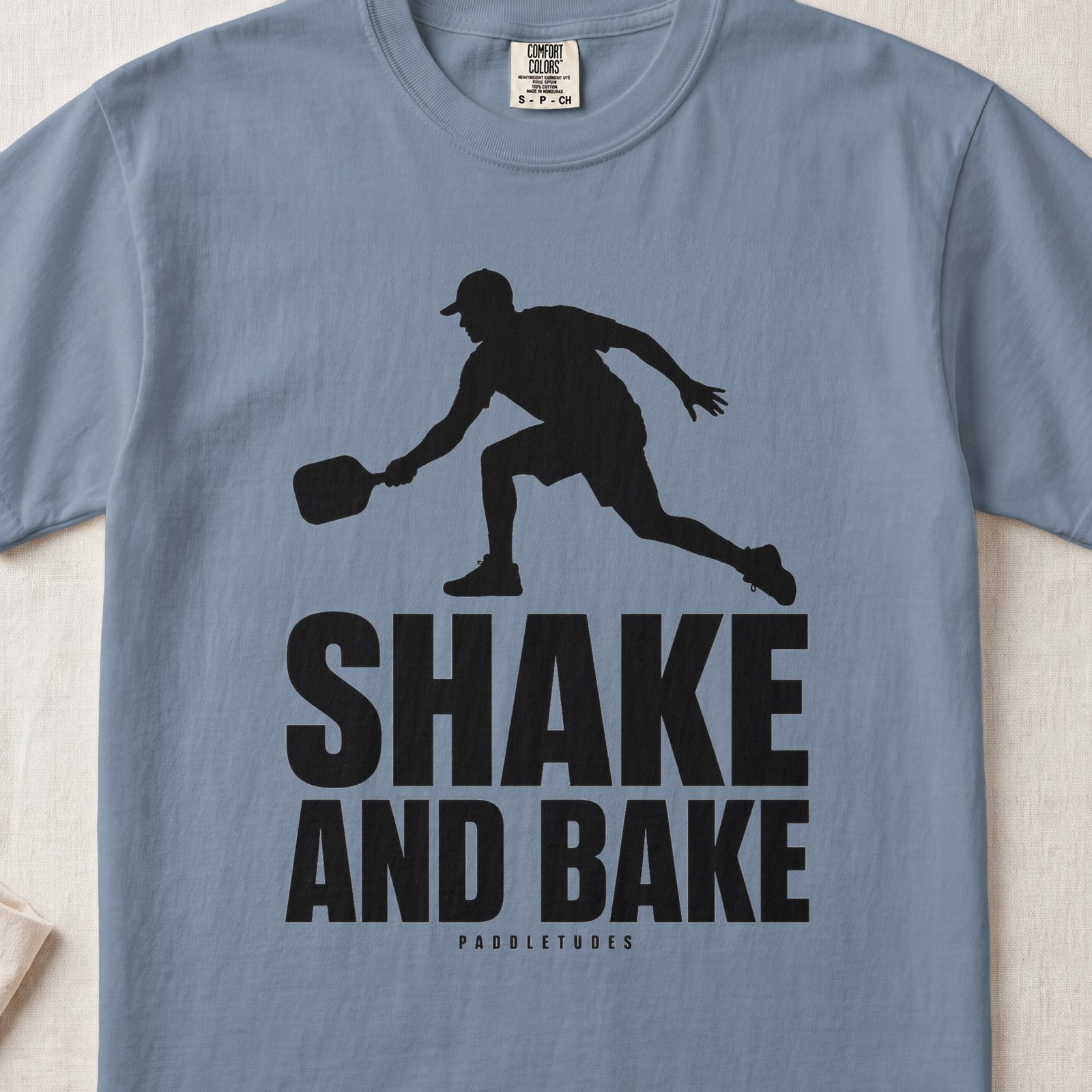
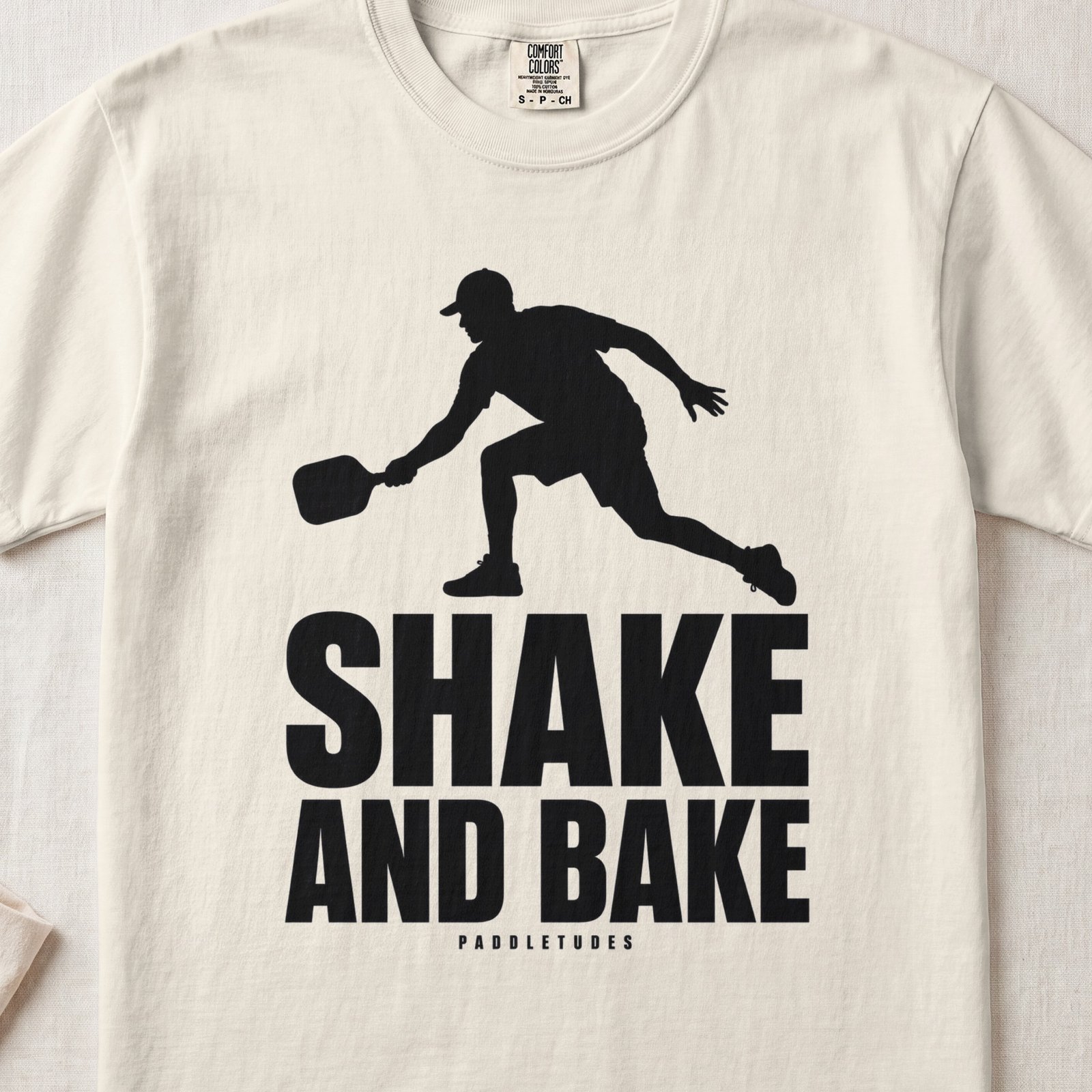
Shake And Bake
$29.99
- Comfort Colors 1717 heavyweight cotton
- Original design · printed to order
- U.S. print partners
Shake and Bake — The Pickleball Doubles Play That Ends Rallies
Three soft dinks land in the kitchen — each one placed a little wider, each one pulling the opponent’s paddle a little further from center. Then the fourth ball isn’t soft. It’s a flat third-shot drive aimed straight at the paddle-side hip, low over the net, and before the opponent can process the tempo change, a second player is already crashing the net with a paddle raised. The pop-up comes. The put-away goes down. The point lasted six shots and the other team is still blinking at each other trying to figure out what happened. That’s the shake and bake — pickleball’s version of the pick and roll, and this shirt is for the team that runs it like a rehearsed play.
He’s a 44-year-old sales manager who played JV tennis for one season in high school and thought his racket sport days were behind him. His wife dragged him to a corporate pickleball event two years ago, and now they play mixed doubles three nights a week. She’s the shaker — patient dinks, surgical placement, the kind of soft game that makes opponents lean and reach. He’s the baker — the moment she creates an opening, he’s already moving, crashing from mid-court to the kitchen line with his paddle loaded. They don’t call it out loud anymore. She taps the top of her paddle grip with her index finger before the serve, and he knows the play is on.
At 3.0, the shake and bake is barely a strategy — it’s two people who figured out that one of them can hit hard and the other should get out of the way. The drive goes wherever it goes. The crash is more of a jog. The pop-up, if it comes, gets slapped back with no placement. By 3.5, the pieces start clicking. The shaker learns to keep dinks low enough that the opponent’s return has to travel upward, creating exactly the ball the baker needs. The baker learns to start moving before the drive lands, not after — reading the opponents’ body language to know whether the return will pop up or stay down. By 4.0, the play becomes directional. The drive targets the straight-ahead opponent’s hip, because a cross-court drive gives the receiving team more time and leaves the baker covering too much court. The USA Pickleball rulebook requires the two-bounce rule on the serve and return, which means the shake and bake activates on the third shot — the first real opportunity for the serving team to take the offensive, and the moment where coordination between partners matters more than individual skill.
The drill that sharpens this play needs two people and a purpose. The shaker stands at the baseline. The baker starts at mid-court, two feet behind the kitchen line. A feeder hits a deep return from the other side. The shaker drives the third shot low and hard — ten straight ahead, ten to the backhand side, ten to the middle. On every drive, the baker reads the feeder’s body and crashes forward if the return pops up, or holds position and resets if the return stays low. The shaker is training placement under pressure. The baker is training reads, not reactions — the difference between watching your partner’s drive and watching the opponent’s paddle face is the half-second that separates a put-away from getting burned.
The paddle choice splits between the two roles, and that split matters. The shaker needs a power-oriented paddle that generates pace on the third-shot drive without overswinging — something with a stiffer core and a responsive face that rewards clean contact. Selkirk’s power lineup builds paddles for exactly this player, where the swing generates depth and speed rather than soft touch. The baker needs the opposite — a lighter, more maneuverable paddle with a large sweet spot for the quick reflex volley at the net. The baker’s job isn’t to generate power. It’s to redirect whatever pops up, and a paddle that moves fast in the hand beats a paddle that hits hard every time.
If your brother and your sister both play doubles and they’ve spent the last year arguing about who’s a better shaker and who’s a better baker, this is the gift that keeps the argument alive through every holiday dinner. The shirt doesn’t settle it. It starts it all over again — which is the whole point of sibling rivalry on the court.
The shake and bake shares DNA with every doubles strategy in our pickleball shirts collection, but the philosophical connections run in opposite directions. No Speed Up is the mirror image — the team that refuses to accelerate, that wins through patience rather than explosion. Where the bake punishes the pop-up, the no-speed-up player punishes the impatience that created it. Hands Battle Won is what happens when the bake doesn’t end the point cleanly — both teams at the kitchen line flicking volleys until someone blinks. And Can’t Teach Touch is the shaker’s secret weapon — the soft hands that make the setup dinks so convincing that the speed-up catches everyone off guard. Find Chicken N Pickle locations across thirteen cities to run the play on real courts.
Printed on a Comfort Colors 1717 garment-dyed heavyweight tee with water-based DTG ink — sizing and care details here.
What Is Shake and Bake in Pickleball
The shake and bake is a doubles strategy where one player drives the third shot hard and low while their partner crashes the net to put away the next ball if it pops up. The shaker creates pressure with the drive. The baker finishes the point at the net. It’s also called “drive and crash” or “crush and rush,” but the Talladega Nights reference is why the name stuck.
The play activates after the serve and return — both of which must bounce under the two-bounce rule — making the third shot the first opportunity for the serving team to attack. The shaker’s drive needs to be low over the net and targeted at the opponent directly in front of them, not cross-court. A straight-ahead drive gives the baker a shorter path to crash and eliminates the need to cover the full width of the court. Aiming at the opponent’s paddle-side hip is the highest-percentage target, because it jams the return and makes a pop-up more likely than a clean reset.
The baker’s job starts before the drive lands. Instead of watching their partner swing, the baker watches the opposing team’s body language. Opponents crouching low signals a quality drive — time to crash. Opponents standing tall with an open paddle face signals a high return — proceed with caution, because a high return means the baker might be running into a counter-attack. That read is the difference between finishing the point and becoming a sitting duck at the net with no time to react.
Communication makes or breaks the play. Both players decide before the serve who is shaking and who is baking. If the return of serve doesn’t set up a good drive — maybe it lands deep and heavy, maybe it has too much spin — the shaker has to call it off, and the baker has to stop the crash and hold position. The teams that run the shake and bake well aren’t the ones with the hardest drives. They’re the ones who know when not to run it, who reset when the setup isn’t there, and who trust each other enough to execute or abort in a fraction of a second.
-
Ladies Who Dink
$29.99 Select options This product has multiple variants. The options may be chosen on the product page -
My Court My Rules
$29.99 Select options This product has multiple variants. The options may be chosen on the product page -
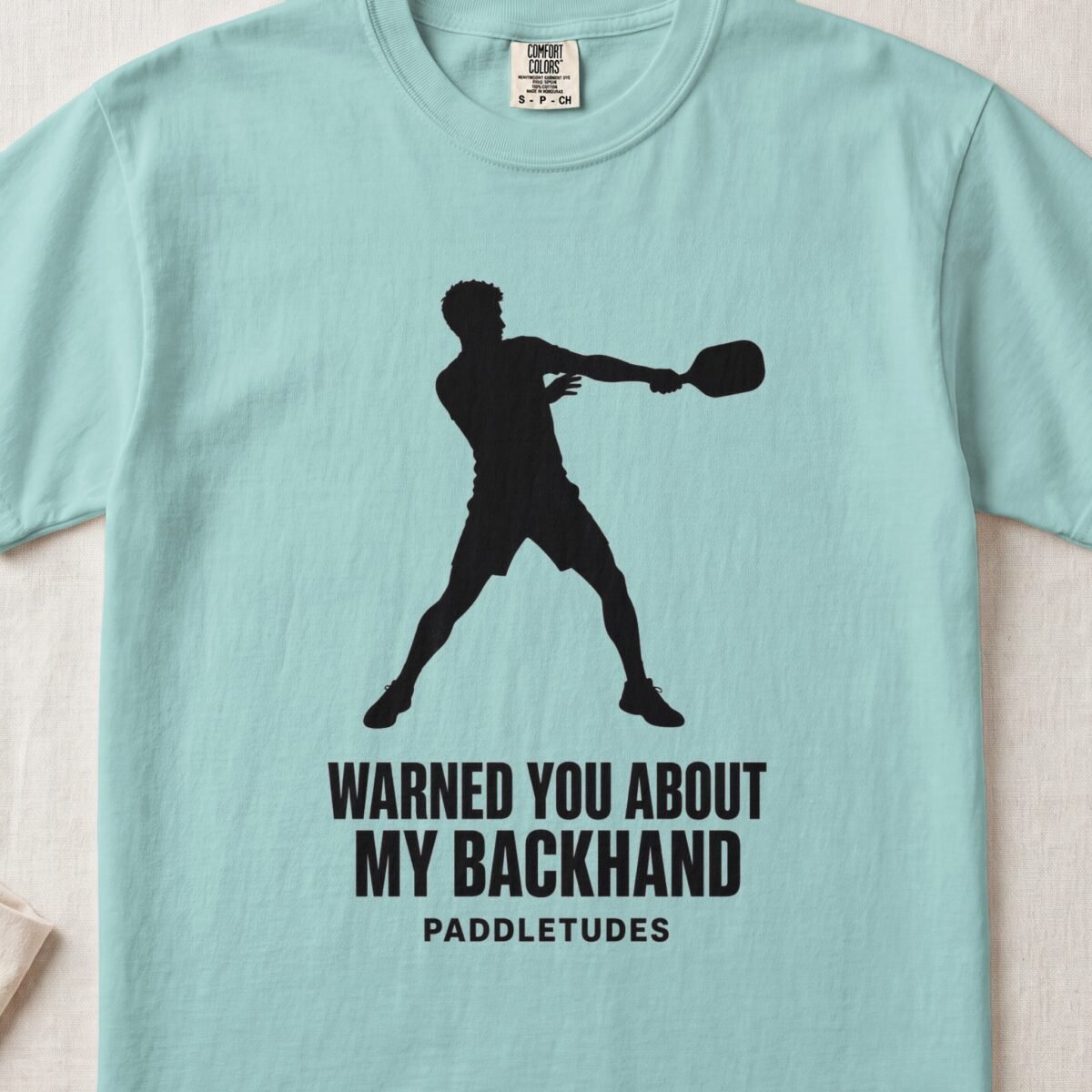
Warned You About My Backhand
$29.99 Select options This product has multiple variants. The options may be chosen on the product page