Sports Comfort Colors 1717
The Alibi – Pickleball Personality
$39.99
- Comfort Colors 1717 heavyweight cotton
- Original design · printed to order
- U.S. print partners
The Alibi: A Funny Pickleball Excuse Tee for the Player Who Has a Reason for Every Missed Shot Except the Real One
The sun was in his eyes. The court was slippery. The ball had a weird spin on it. His grip tape is old. His elbow has been acting up since that thing in February. The net is higher on this side — he’s almost positive. The wind shifted. His shoes don’t grip the way they used to. He was screened by his own partner. He thought it was going out. He didn’t think it was going out. Someone on the next court yelled at the wrong moment. The ball was dead — not the rally, the actual ball, the physical ball itself had lost its bounce and if anyone had tested it with a drop test it would have proven him right. And the paddle. It must be the paddle.
It’s never him. It is always, relentlessly, creatively, exhaustively something else. The Alibi has a reason for every missed shot in his arsenal, and not a single one of those reasons has ever been “I just missed it.”
The Most Creative Mind at Your Courts
The Alibi isn’t making excuses in the way most people make excuses — the casual, throwaway “ah, I should’ve had that” shrug that normal players give when they miss a routine ball. The Alibi is constructing narratives. Elaborate, multipart, occasionally scientifically-flavored narratives in which external forces conspired against him in ways that made the missed shot not just forgivable but practically inevitable. He doesn’t say “my bad.” He says “I think the humidity changed the ball flight.” He doesn’t say “I whiffed.” He says “the paddle face must have rotated during the swing — I’ve been reading about micro-torque and this is exactly what they’re talking about.” He missed a serve by four feet and blamed the altitude. You’re playing at sea level. He knows that. He said it anyway.
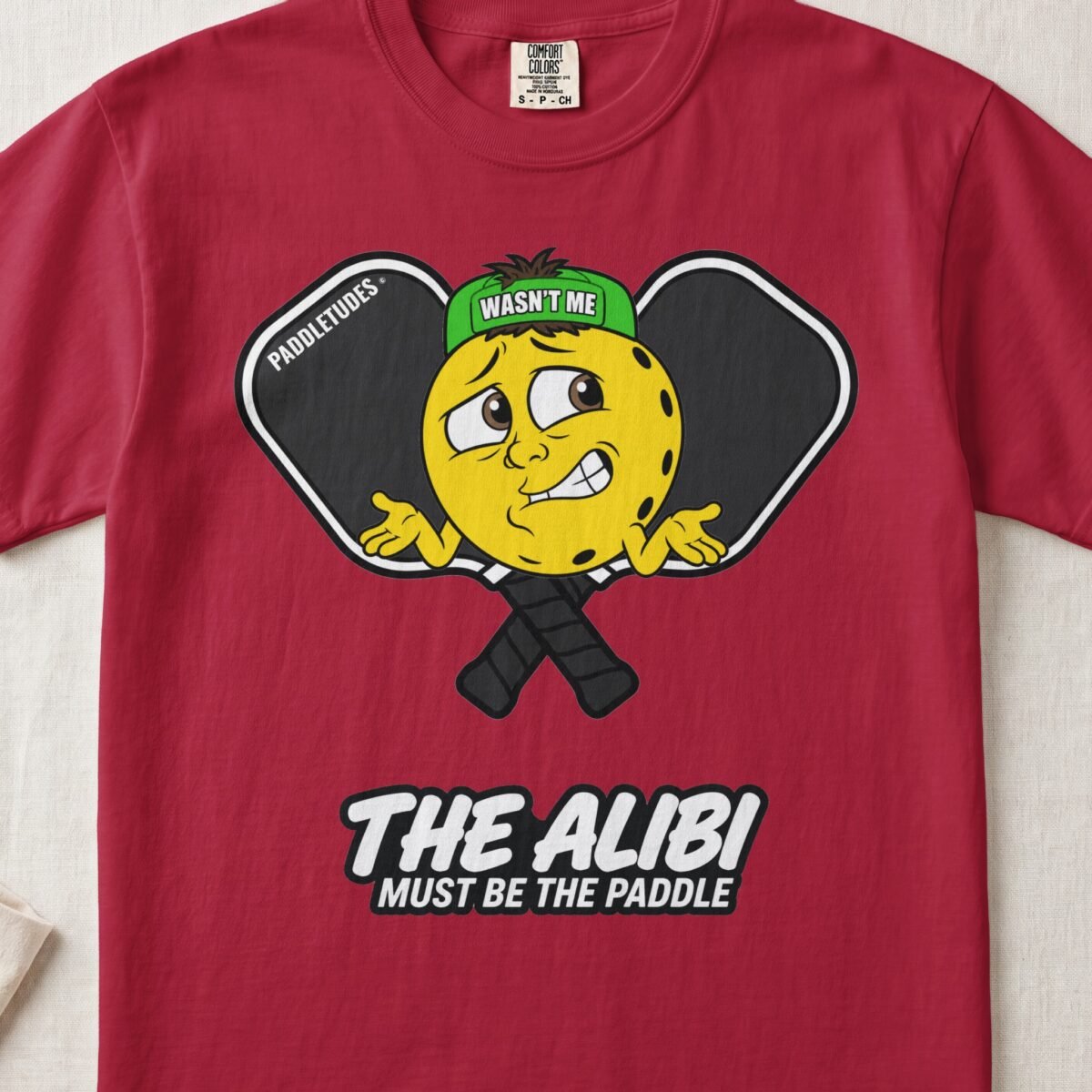
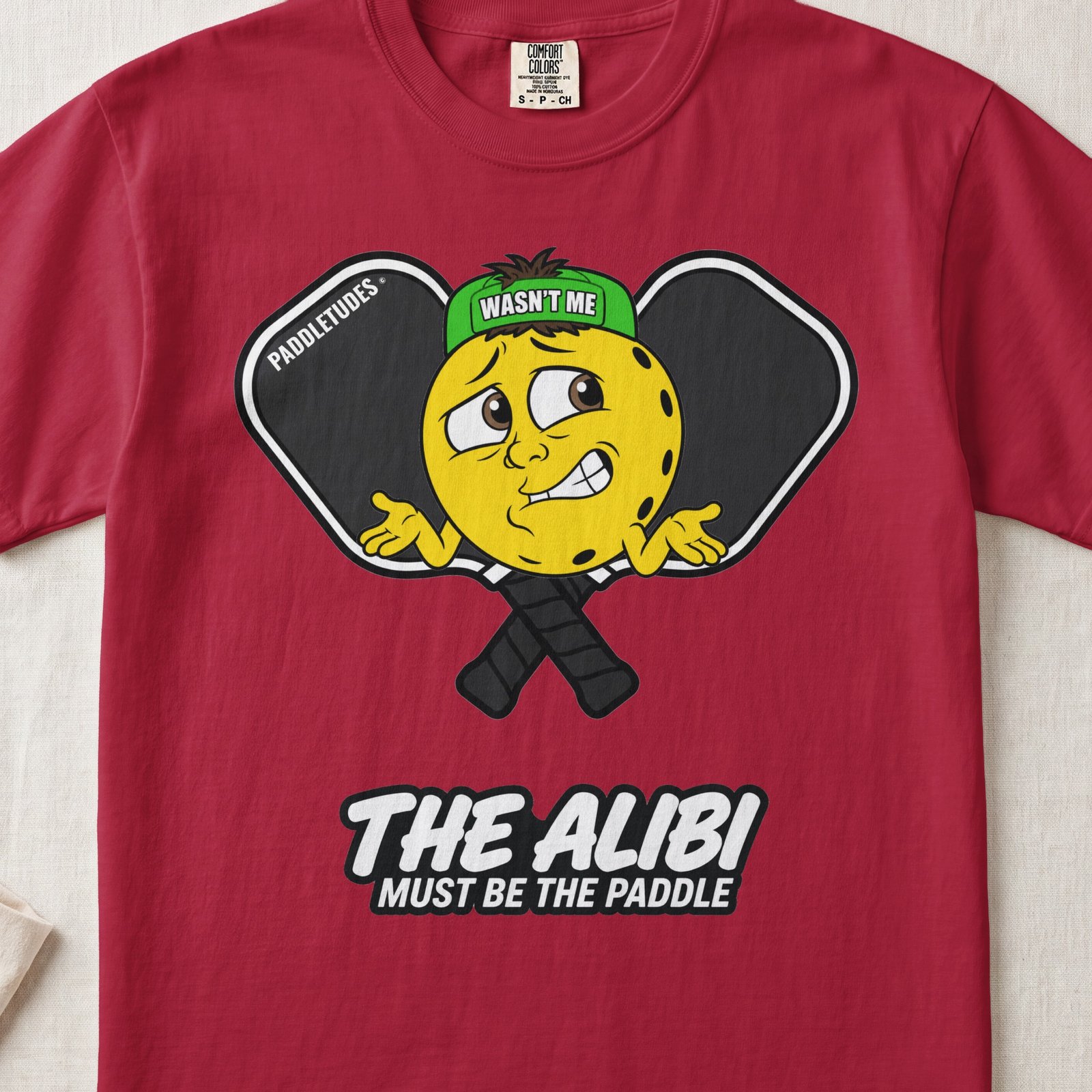
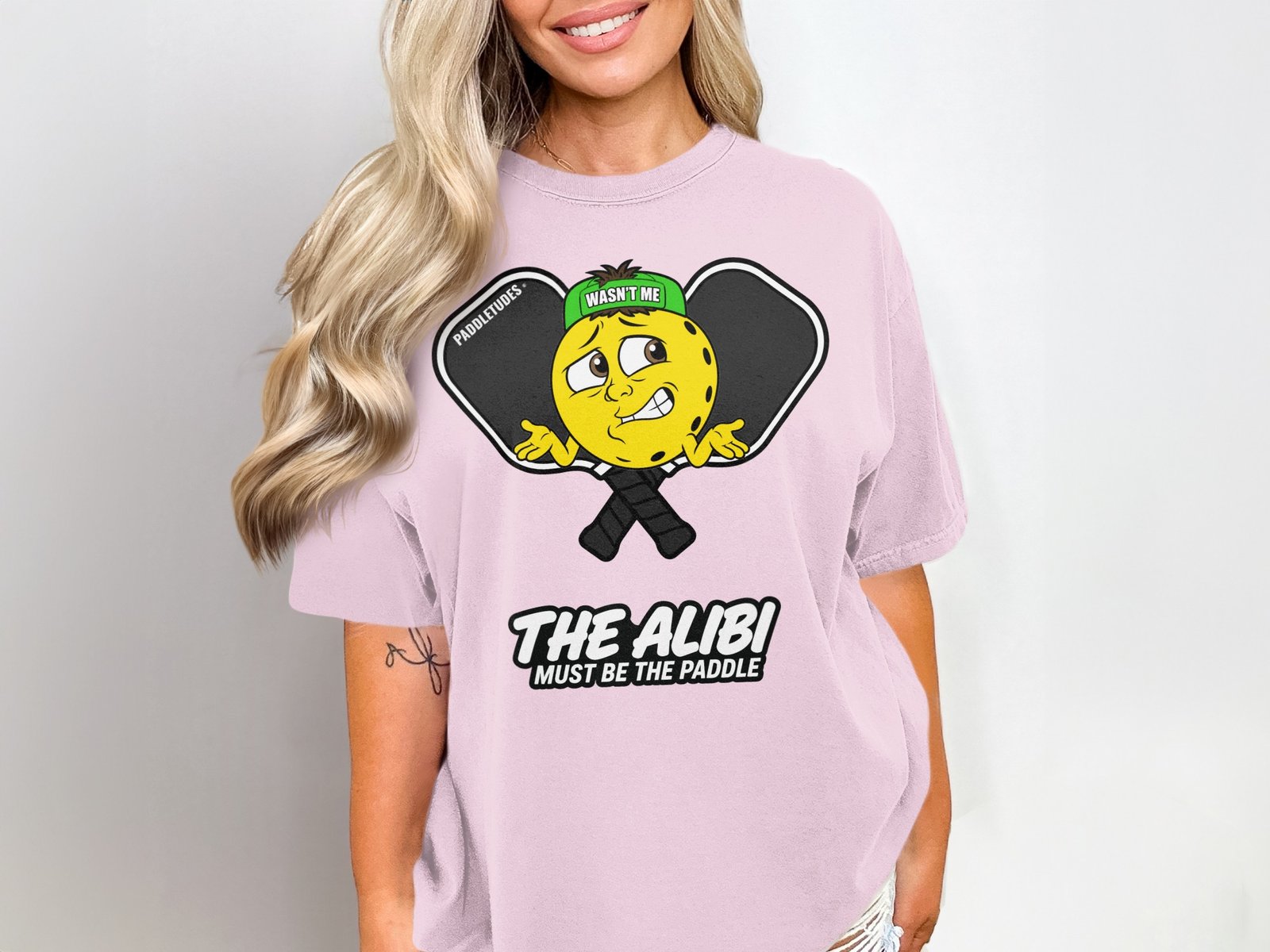
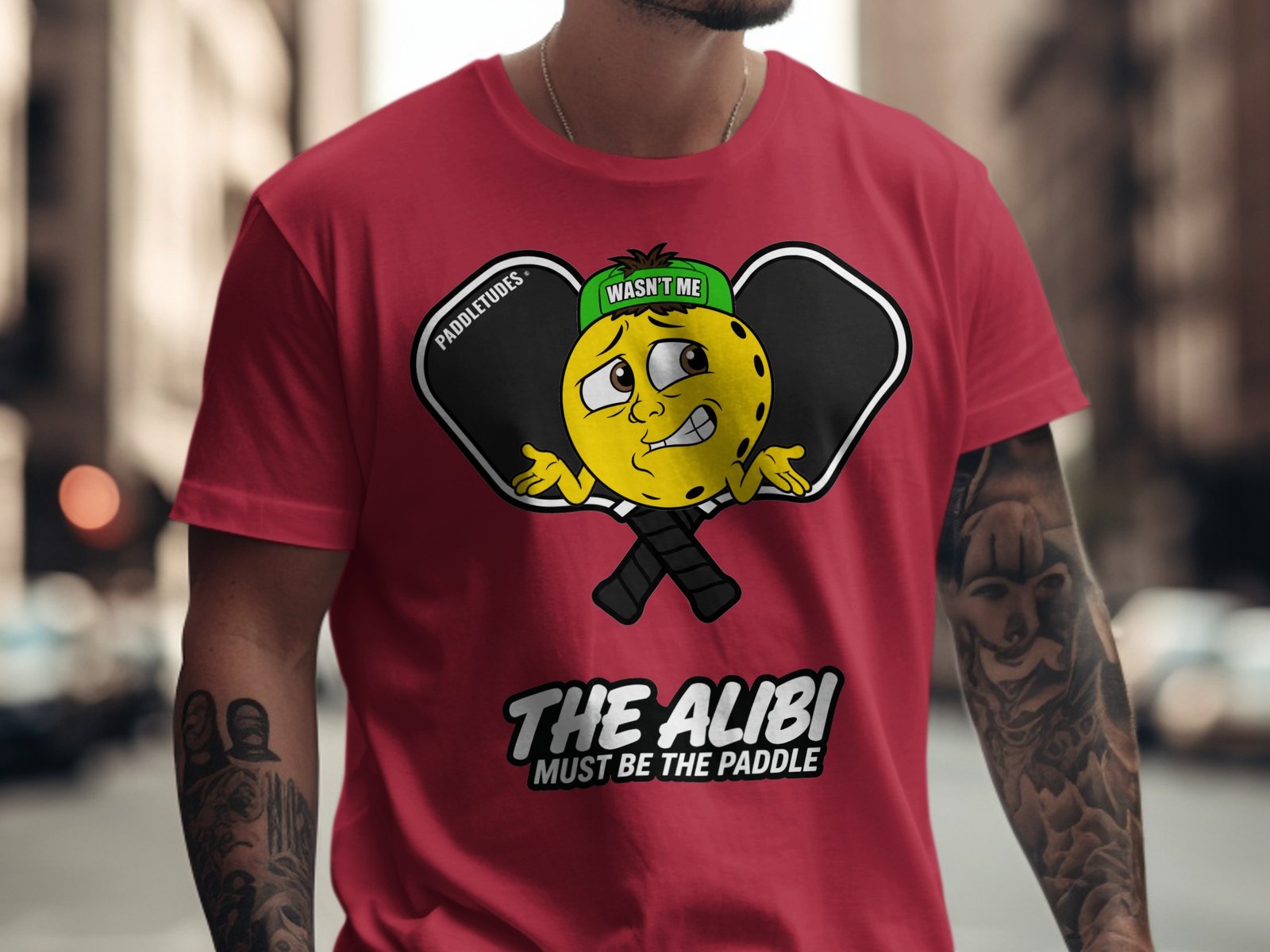
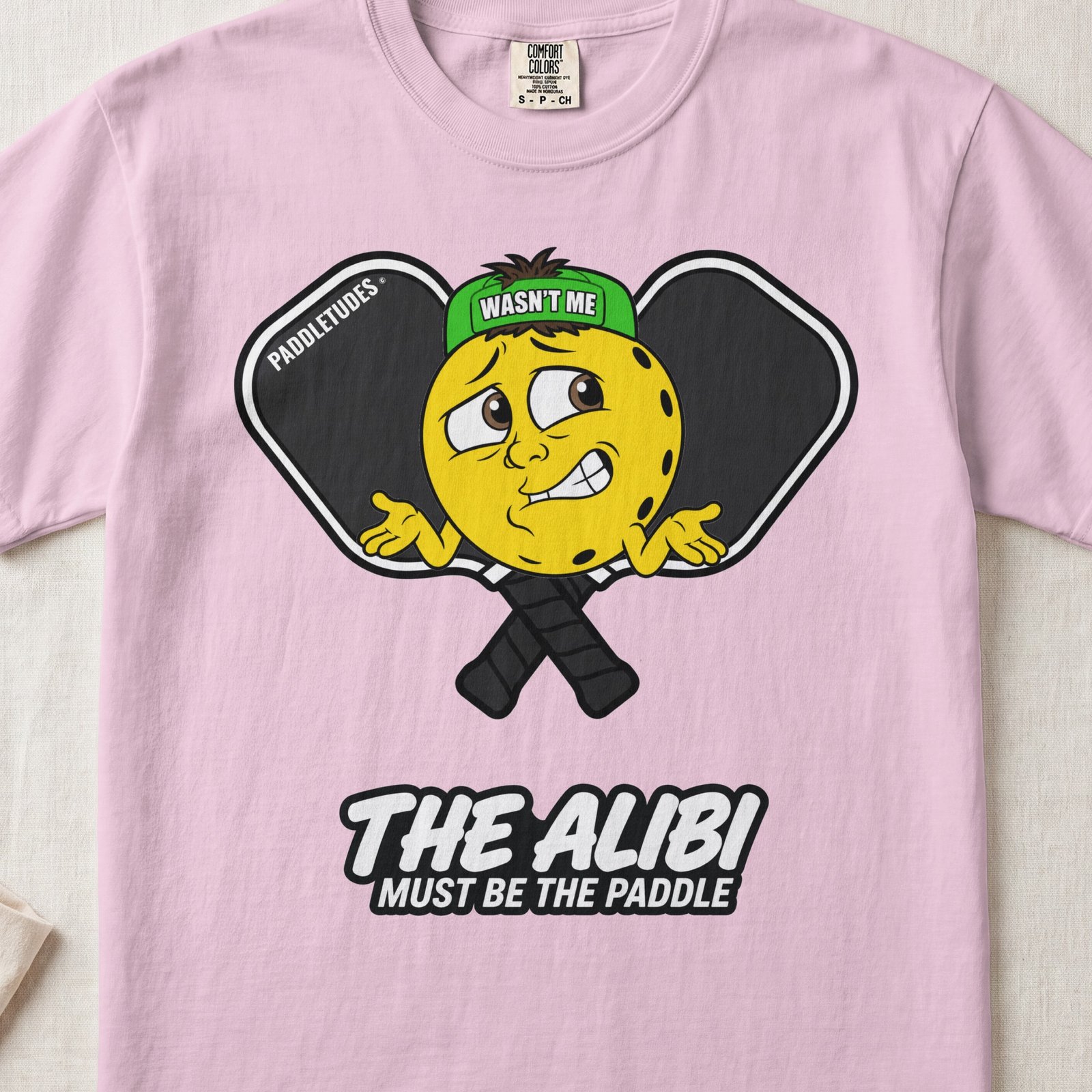
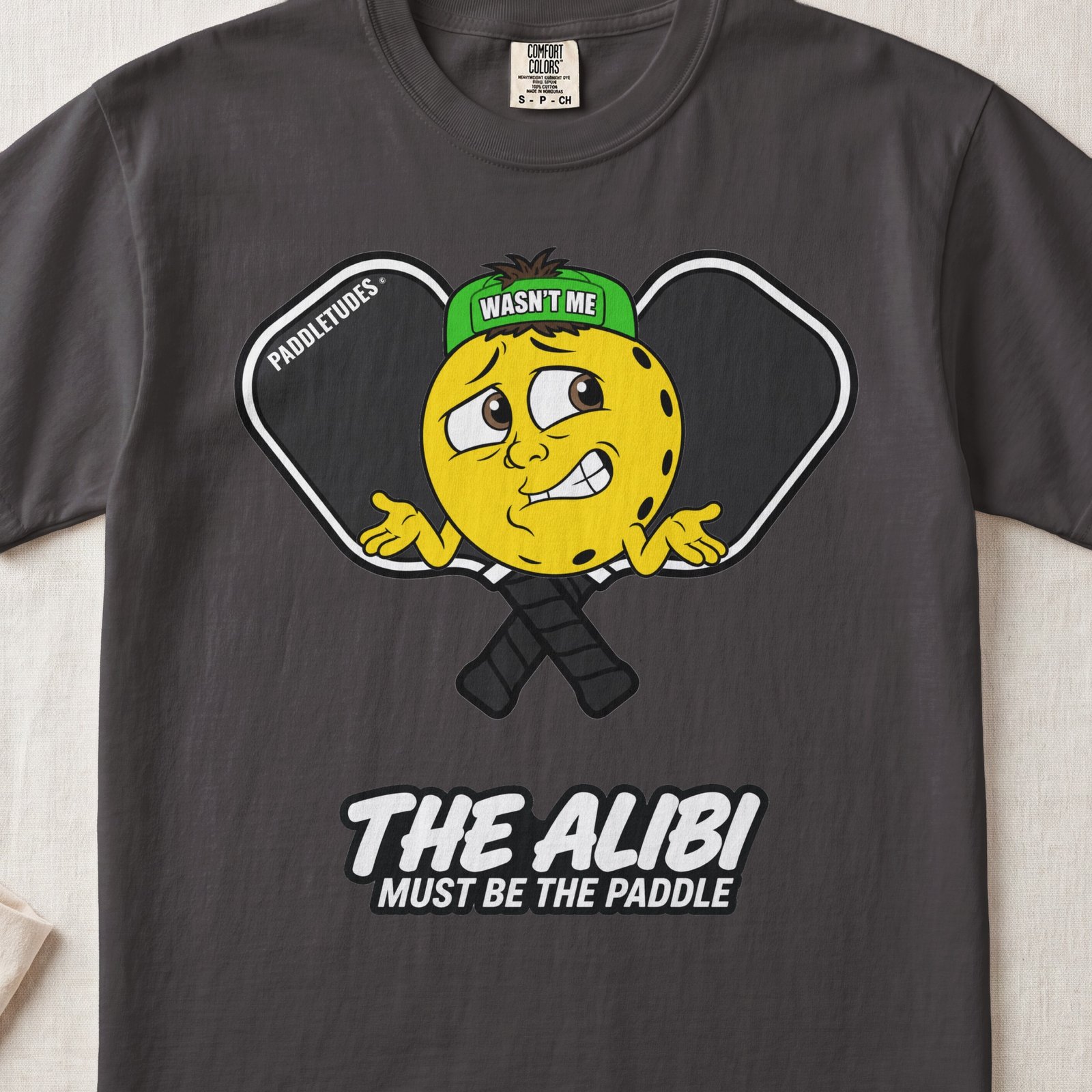
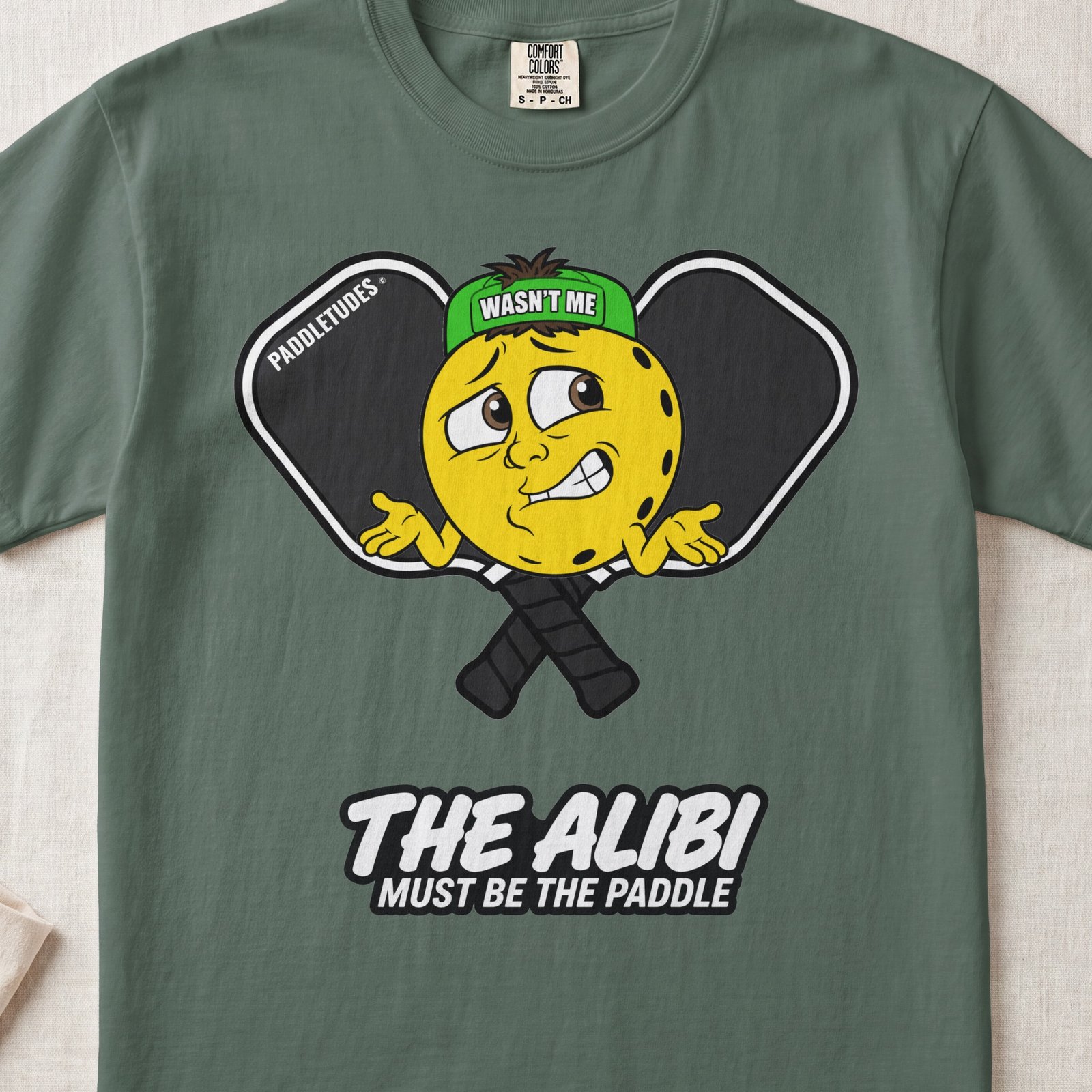
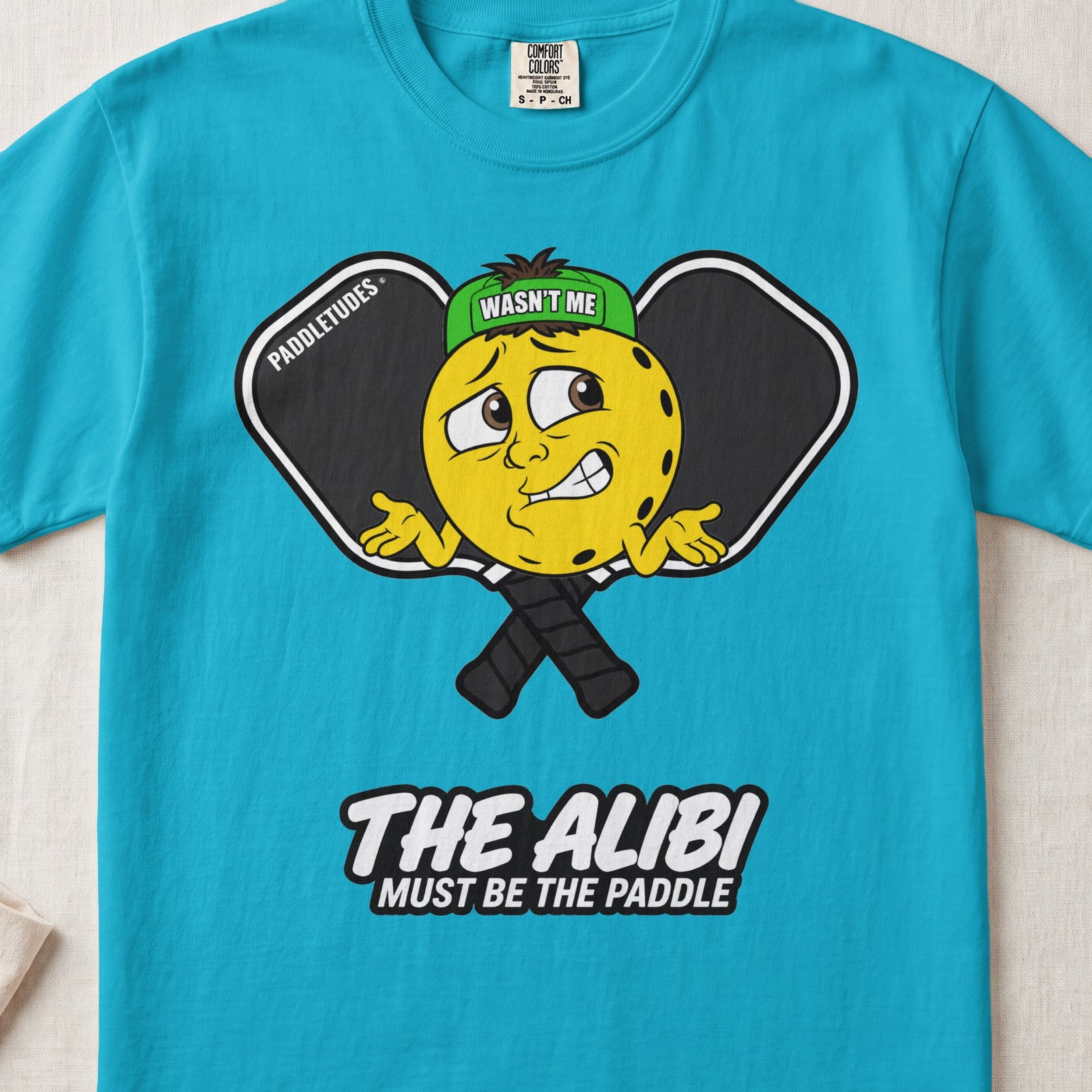
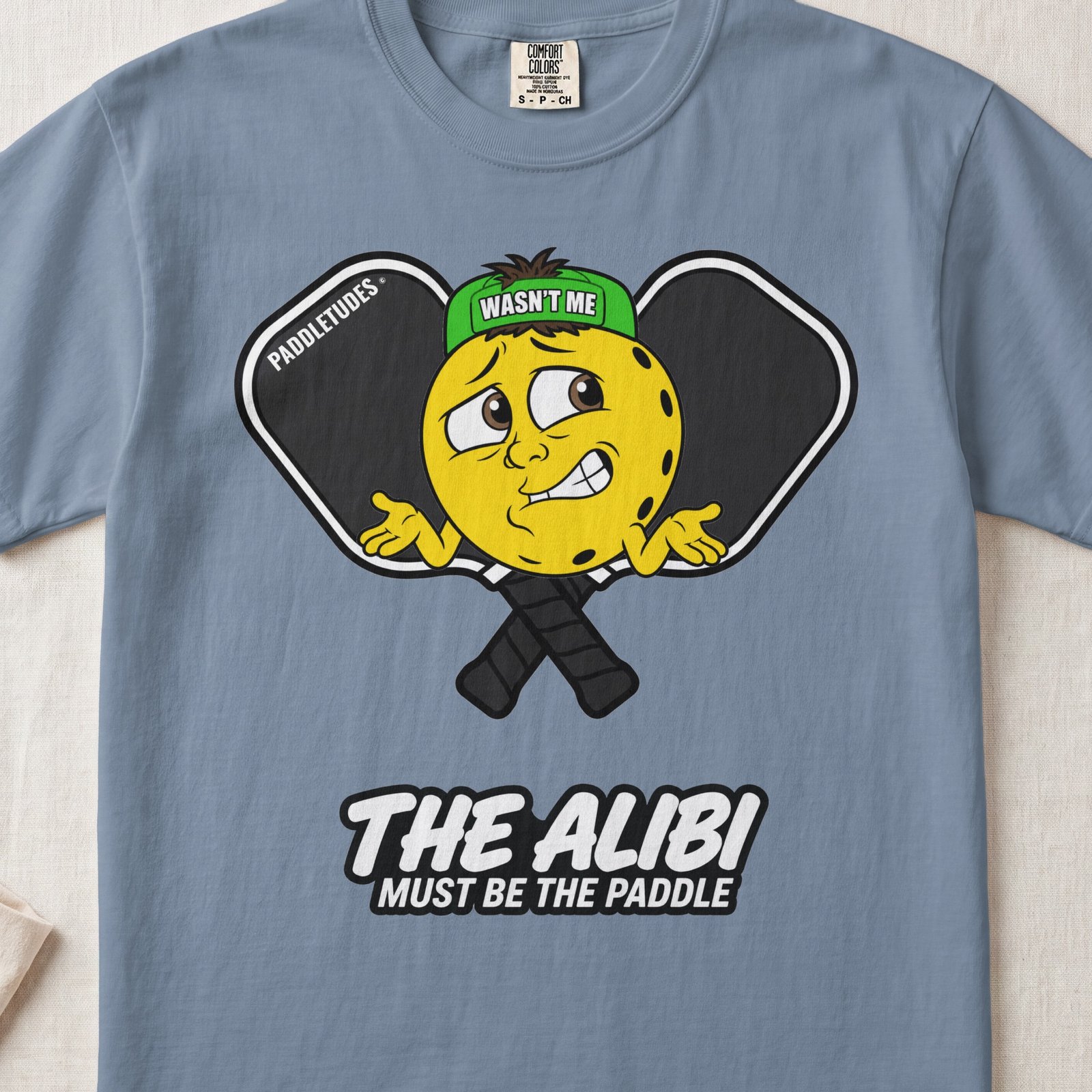
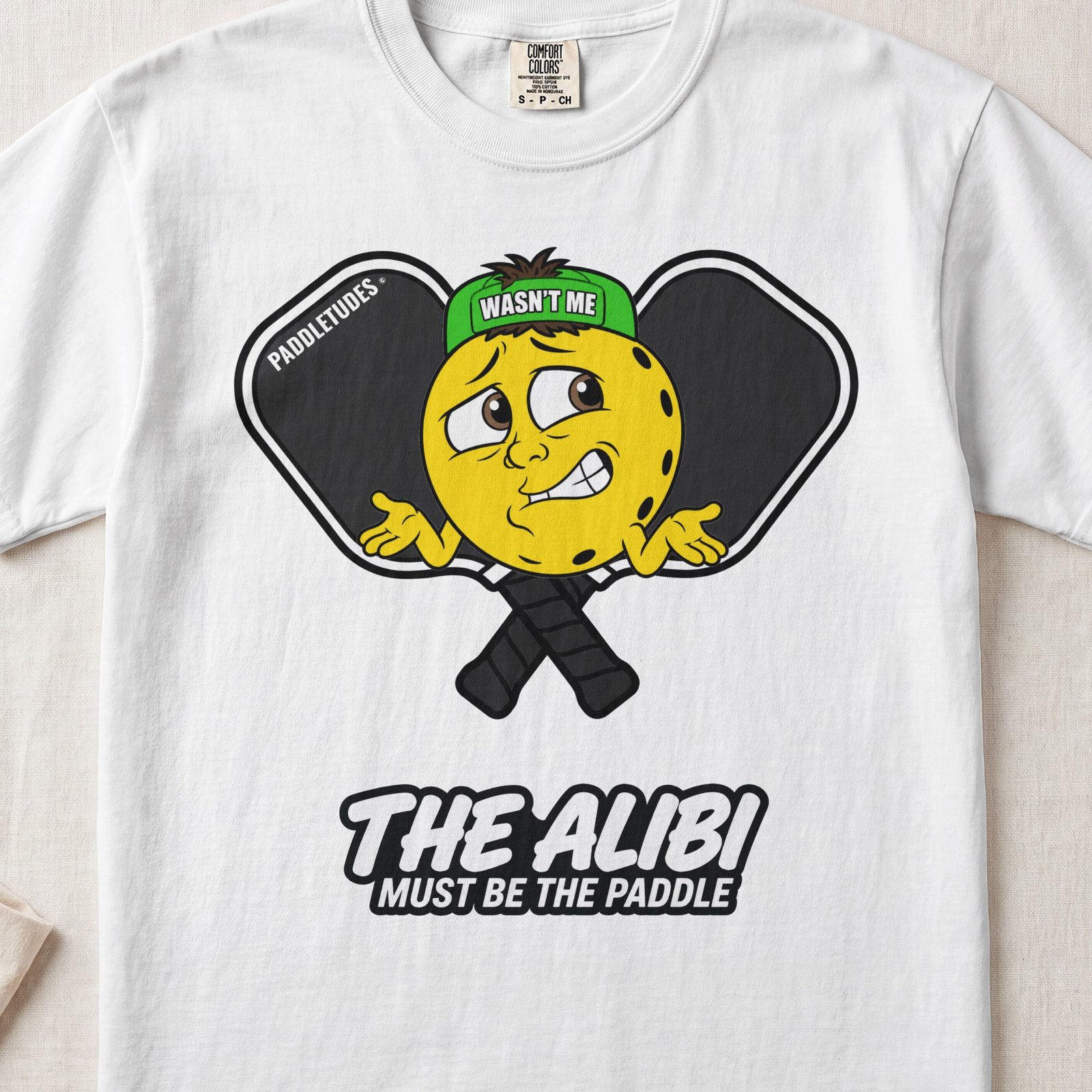
The “Wasn’t Me” headband on this shirt isn’t a joke — it’s a legal defense worn as an accessory. The shrug is his signature move. Both hands out, palms up, the universal body language of a man who has just committed an error in front of four witnesses and is now pleading not guilty to all charges. He’s not angry about the miss. He’s not frustrated. He’s just certain — genuinely, deeply certain — that the miss was caused by something beyond his control, and he will identify that something before anyone can suggest the simpler explanation, which is that he hit the ball into the net because he hit the ball into the net.
His paddle takes the most abuse. “Must be the paddle” is the tagline for a reason — it’s his most reliable alibi, the one he reaches for when the more creative explanations have been used up or when the miss was so clean and so obviously his fault that even the wind-and-sun defense feels like a stretch. The paddle is always available for blame. It’s too heavy. It’s too light. The sweet spot has shifted. The surface has lost its grit. He’s been thinking about switching to a different one, and if he had a better paddle — a paddle that matched his actual skill level — that ball would have gone exactly where he intended. He has owned four paddles in the last two years. He has blamed all four. The backhand strengthener he saw online wouldn’t fix the problem either, but he almost ordered it, because the alternative to buying a solution is admitting there isn’t one.
The Alibi File
If you kept a record of every excuse The Alibi has used over the course of a single season, you’d have a document longer than most pickleball rulebooks and considerably more creative. He has blamed the court surface, the lighting, the net tension, the brand of ball, the color of ball, the temperature, the time of day, a plane that flew over (“it broke my concentration”), a dog that barked two courts away, a text notification he heard through his pocket, and — on one occasion that has become legendary at your courts — the rotation of the Earth, which he claimed affected the trajectory of a lob that went eight feet past the baseline. He said it with a straight face. His partner almost quit the sport.
The beautiful thing about The Alibi is that he means well. He’s not a bad partner. He’s not a bad sport. He just has a relationship with accountability that can best be described as long-distance. He wants to own his mistakes the way someone who’s afraid of the ocean wants to go swimming — in theory, from a distance, with several layers of protection between himself and the actual experience. He’ll get there eventually. He just needs to exhaust every other possible explanation first, and there are a lot of other possible explanations, and he is extraordinarily good at finding them.
He has zero regrets and zero unforced errors — in his mind. In reality he has plenty of both, but the alibis arrive so quickly and so confidently after each one that the unforced error gets reclassified as an act of God before anyone can process what actually happened. A clean slate every point. No history. No pattern. Just a man, a paddle he’s blaming, and an ever-expanding catalog of external factors that have conspired to prevent him from playing the way he knows he can play if only the conditions would cooperate for once.
This is the birthday gift for the player whose excuse game is better than his actual game. The Christmas present for the doubles partner who’s heard “must be the paddle” so many times he’s considered buying the man a new one just to eliminate the excuse — except it wouldn’t work, because The Alibi would find something wrong with the new one within three games. The gag gift from the crew, the stocking stuffer for the husband, the Father’s Day present for the dad who has spent more time explaining why he missed the ball than he’s spent actually hitting it. He’ll open it. He’ll read the tagline. He’ll shrug — both hands out, palms up, headband practically visible — and he’ll say something like, “well, the color on this shirt is a little off from what I expected.” Because it must be the shirt. It must always be something.
And he’ll wear it. Every session. Warned you about his backhand — it’s just that the paddle isn’t cooperating today.
$39.99 with free US shipping. Printed to order — and if it arrives late, it must be the shipping.
Printed on a Comfort Colors 1717 garment-dyed heavyweight tee with water-based DTG ink — sizing and care details here.
-
Game Set Dink
$29.99 Select options This product has multiple variants. The options may be chosen on the product page -
Mom Plays Pickleball Now
$29.99 Select options This product has multiple variants. The options may be chosen on the product page -
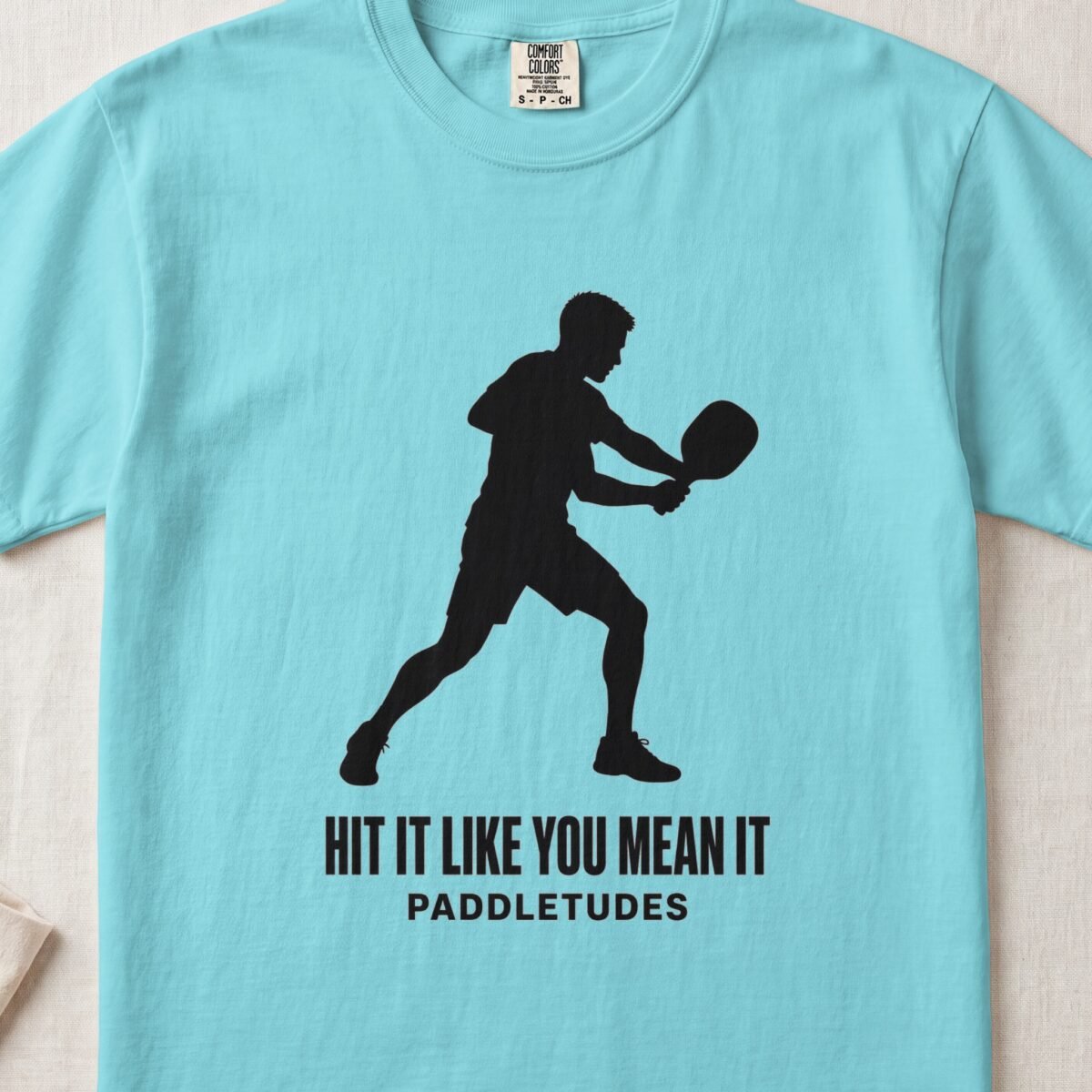
Hit It Like You Mean It
$29.99 Select options This product has multiple variants. The options may be chosen on the product page