Sports Comfort Colors 1717
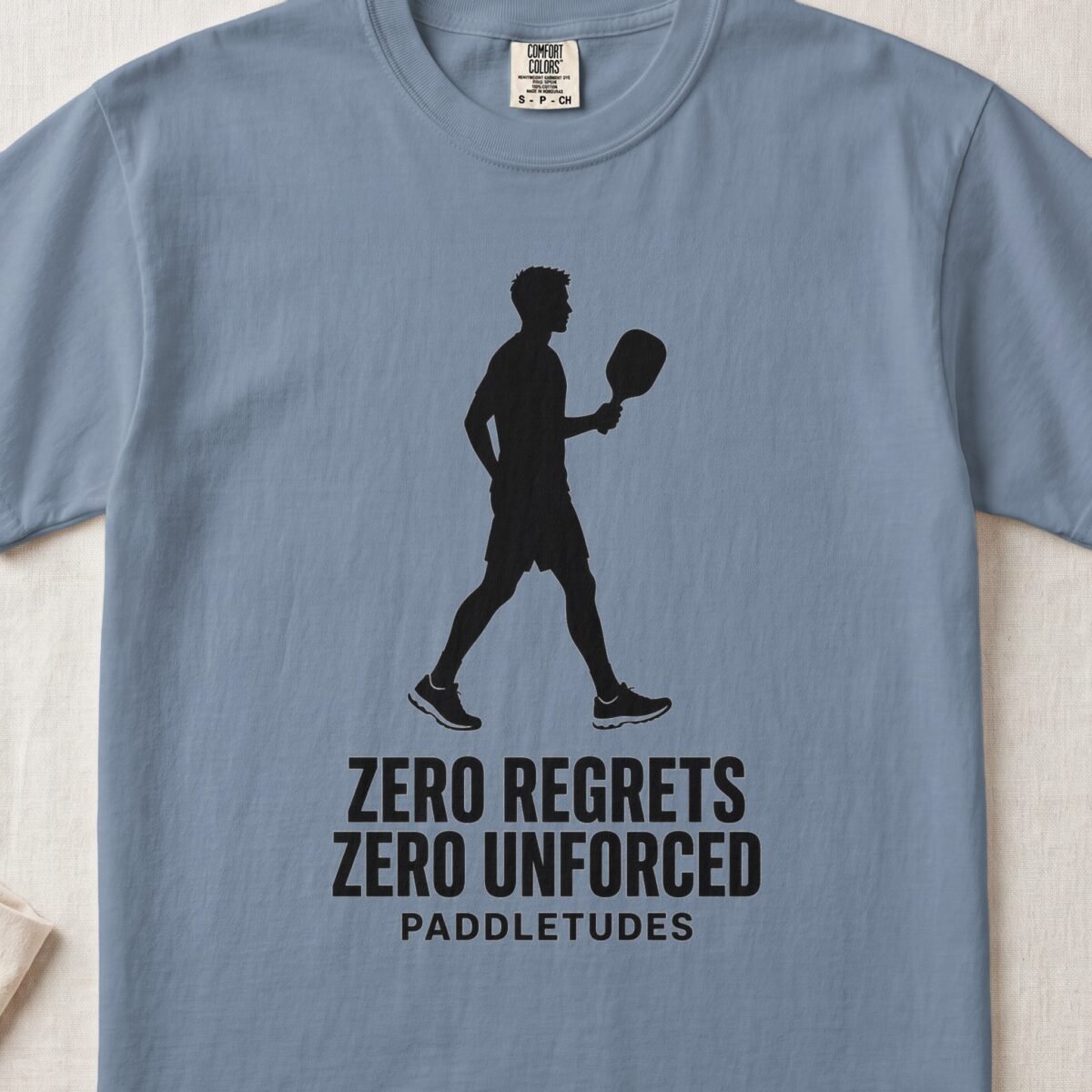
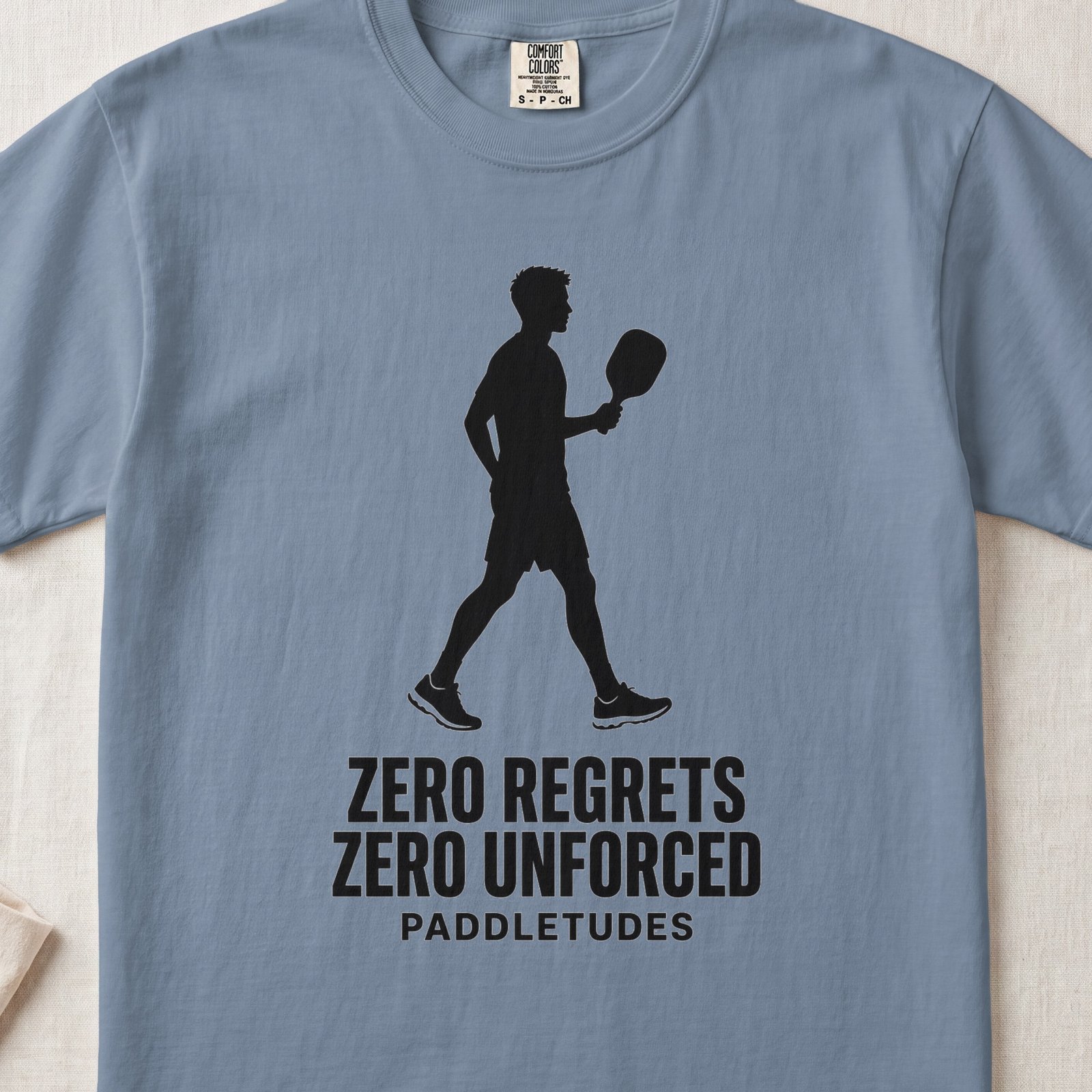
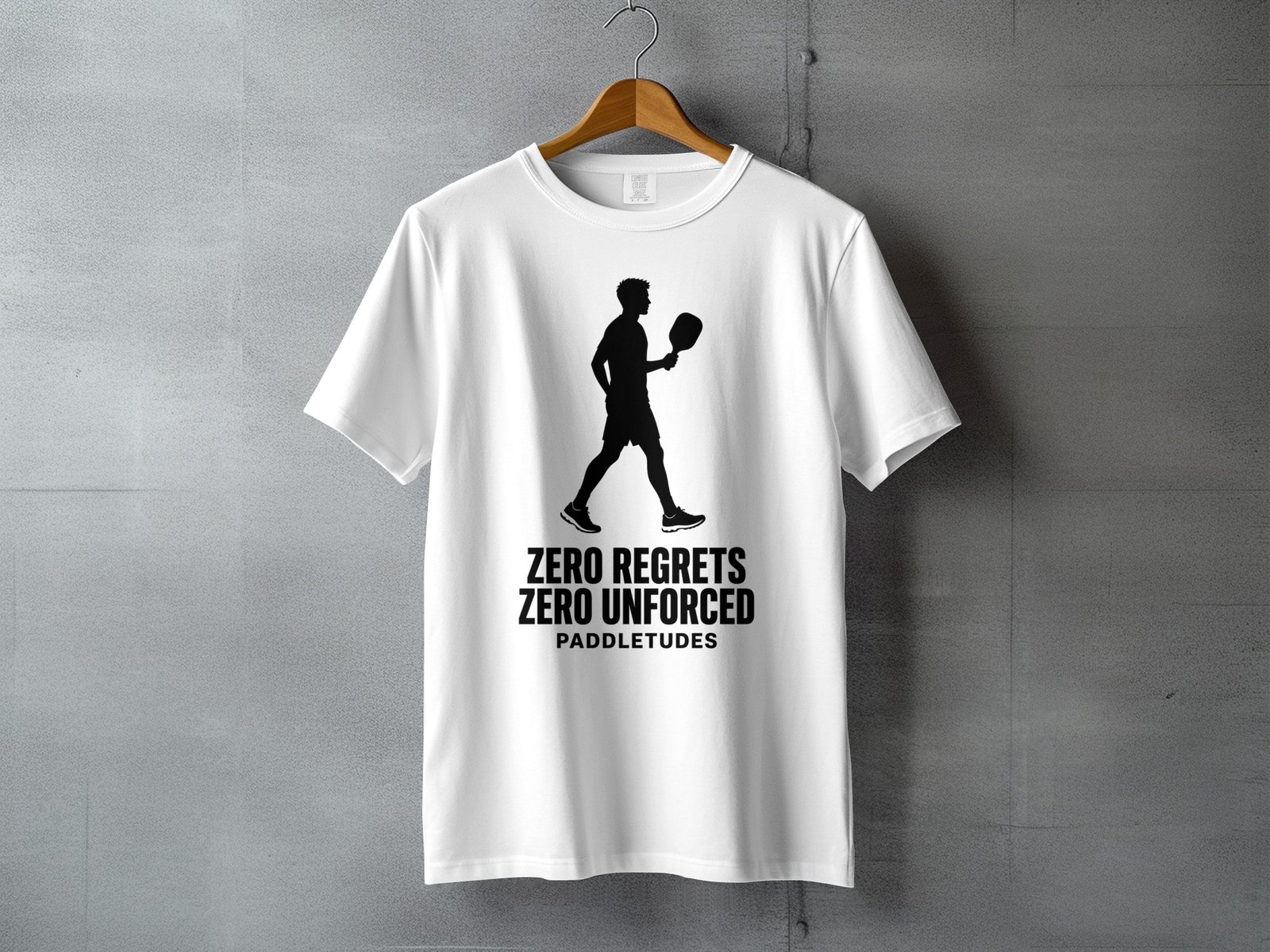
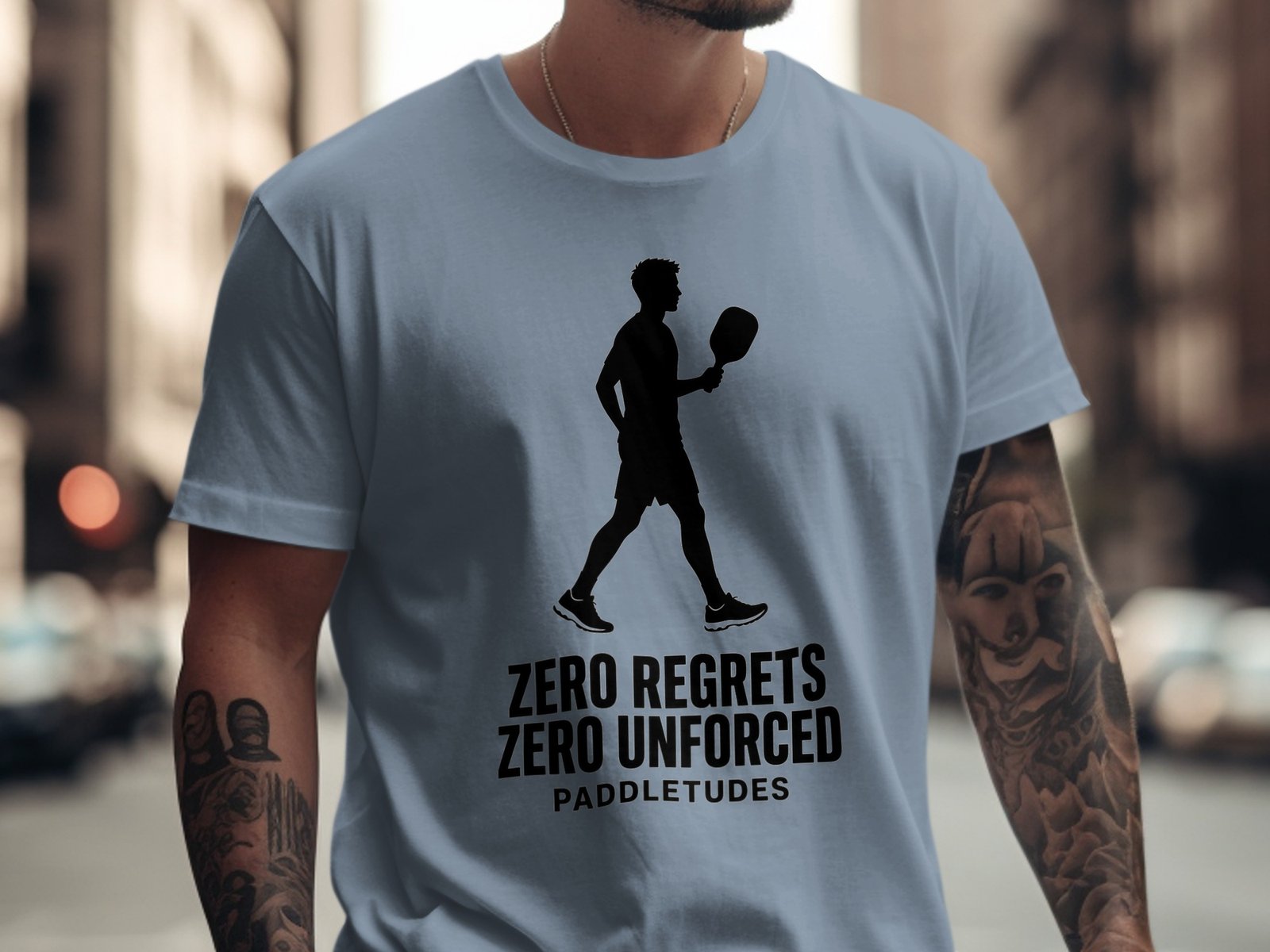
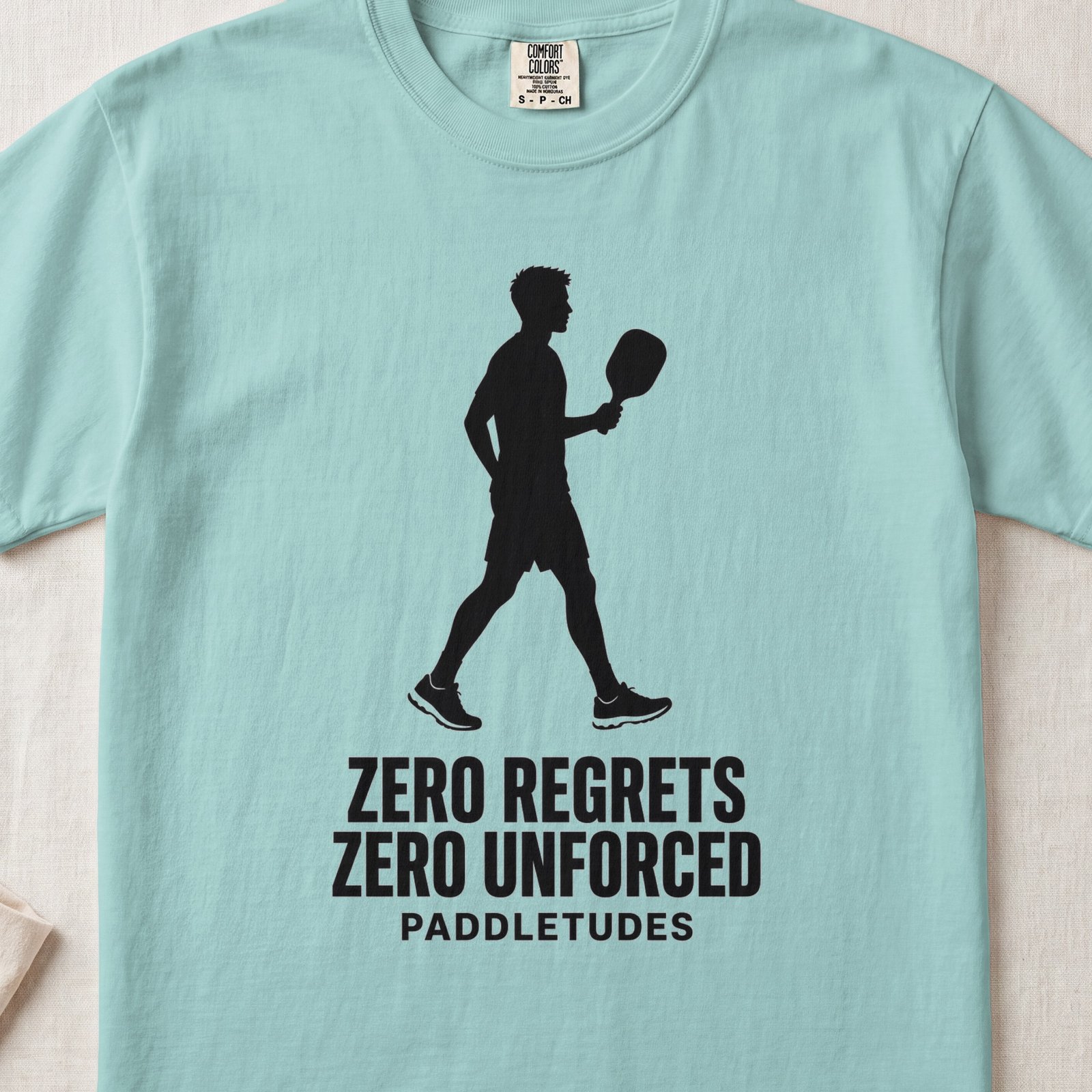
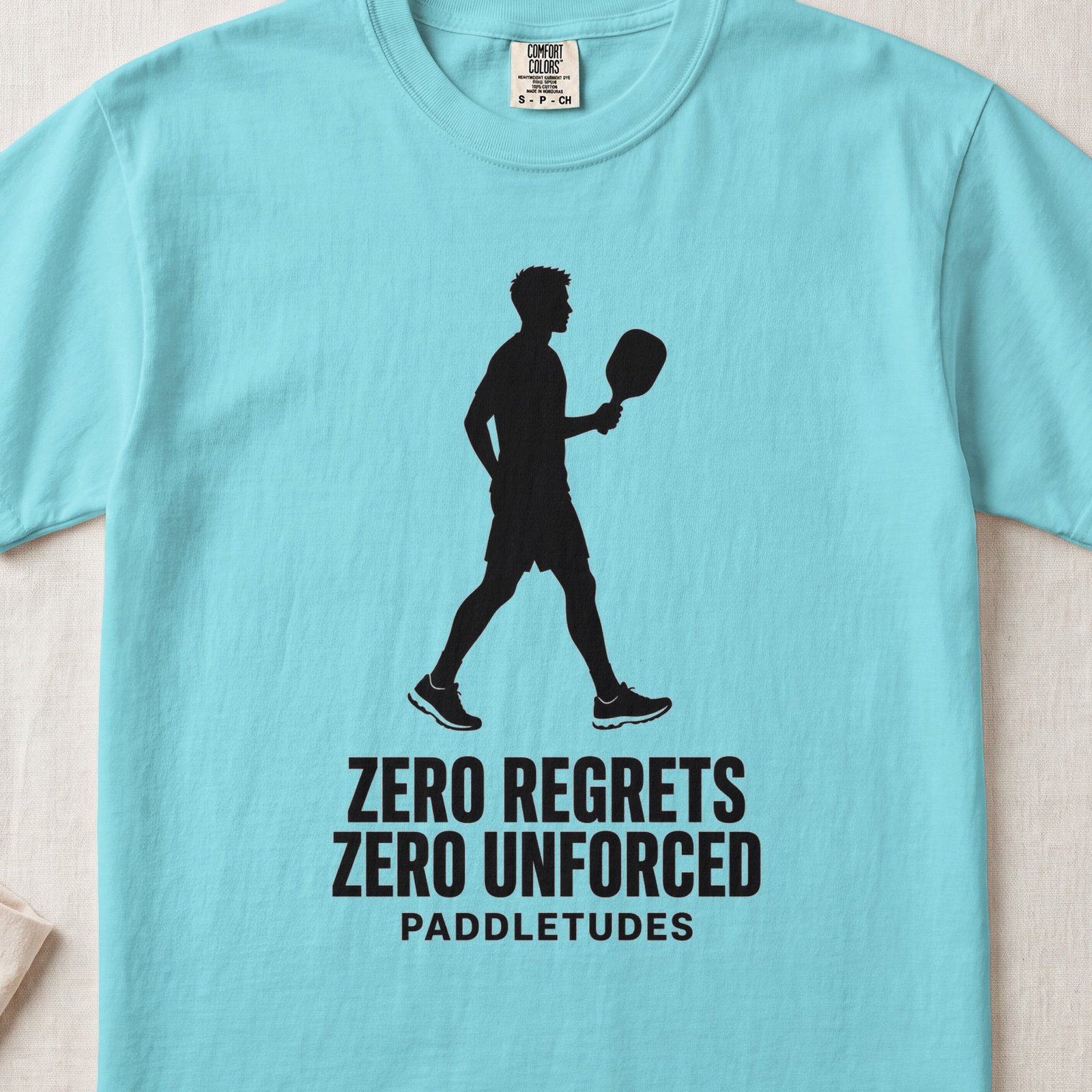
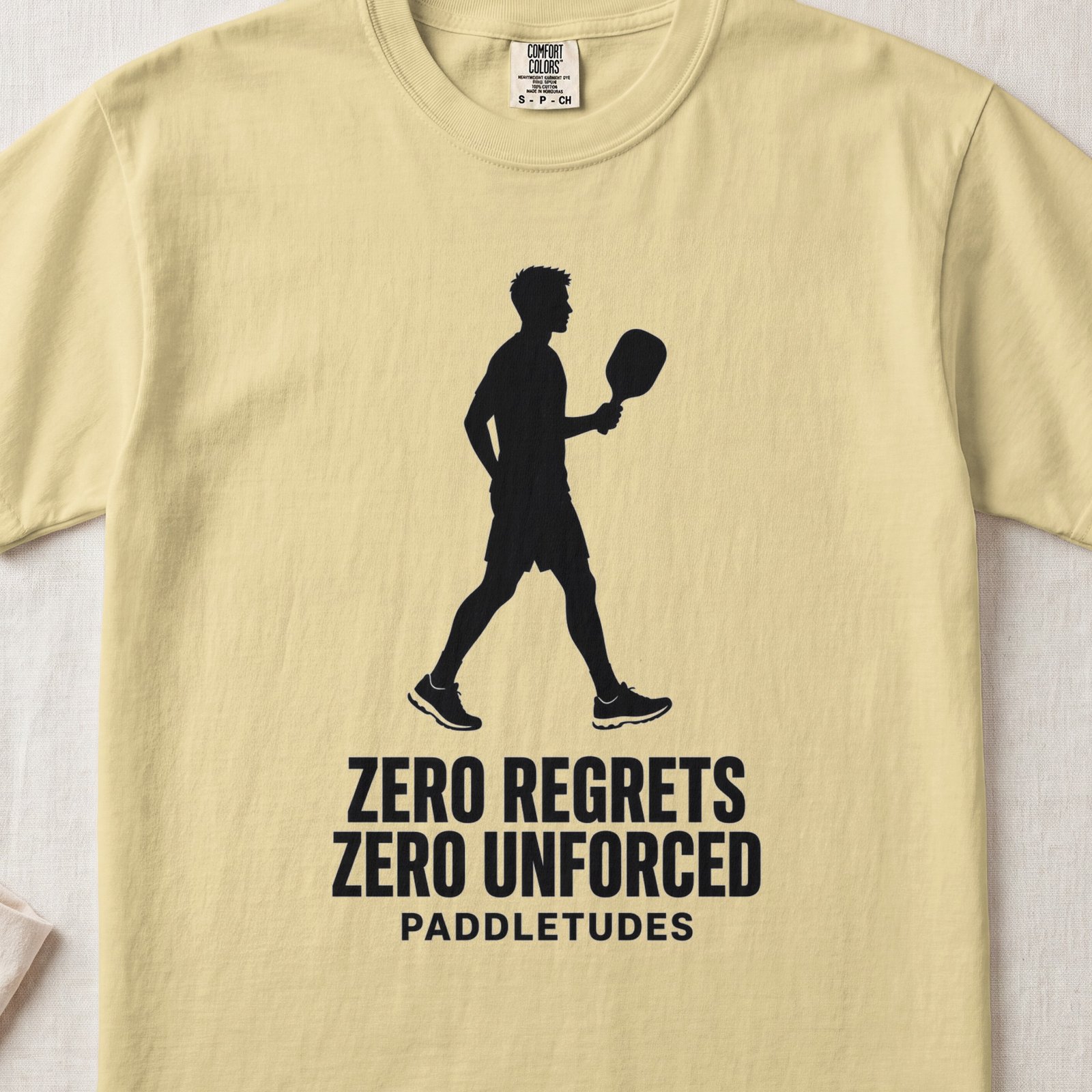
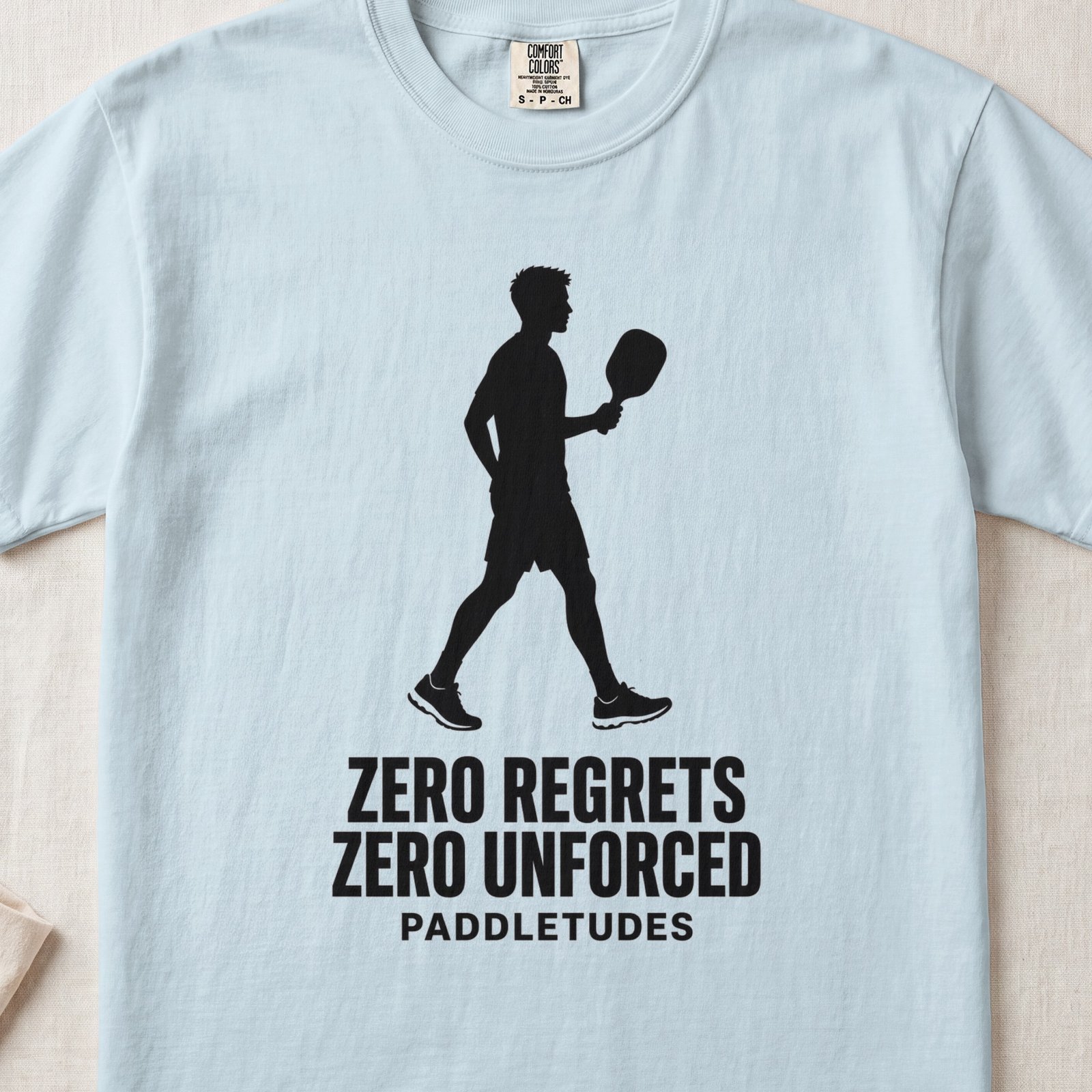
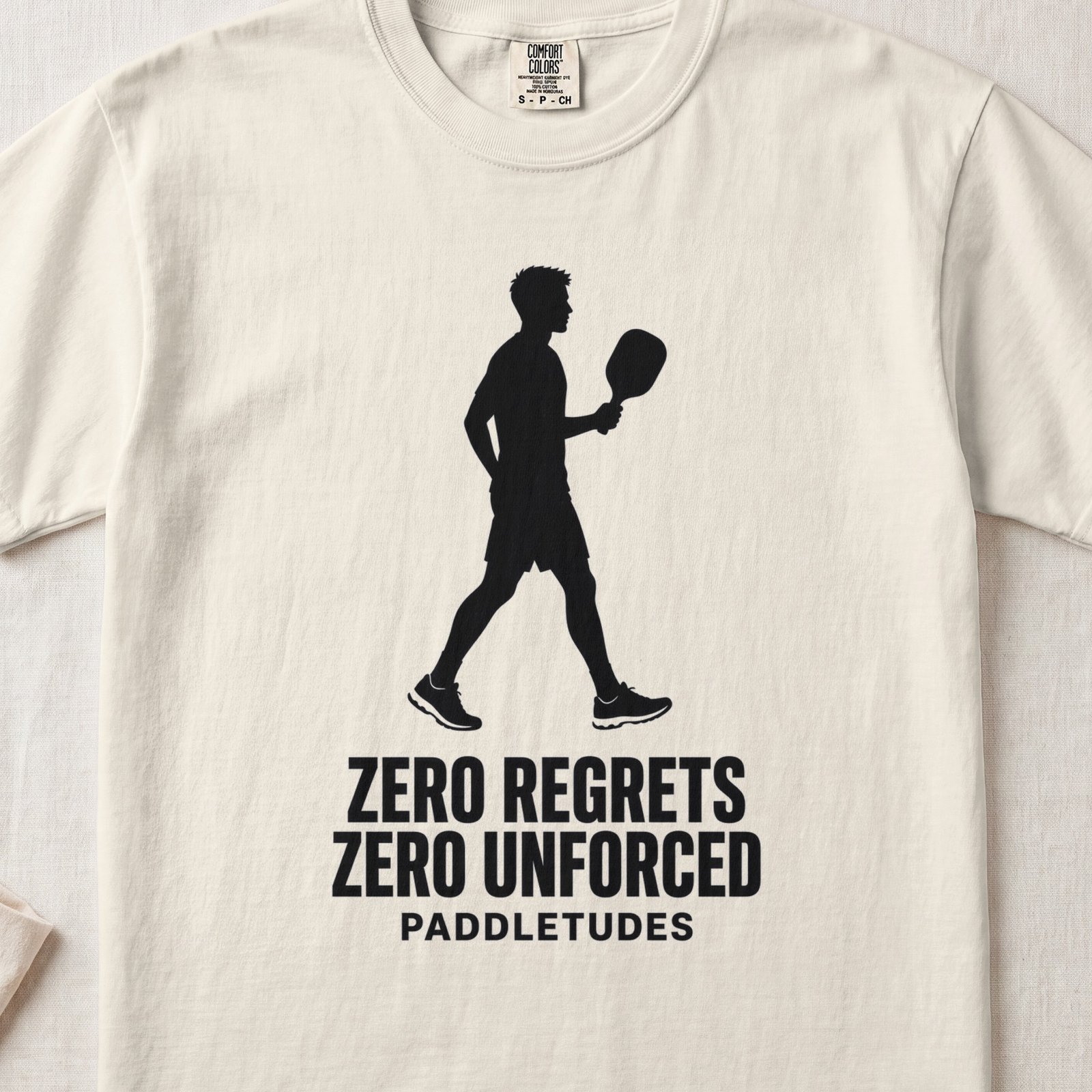
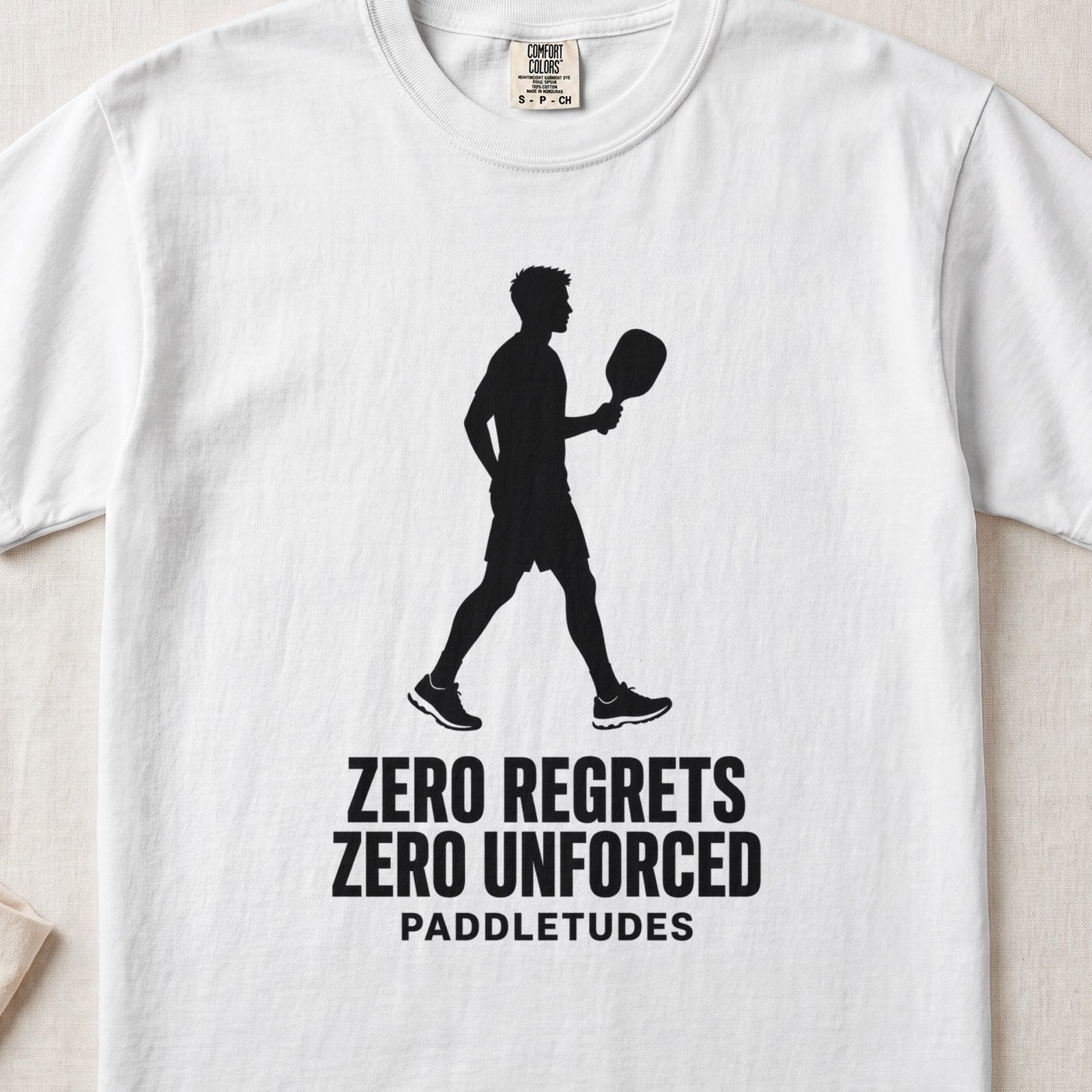
Zero Regrets Zero Unforced
$29.99
- Comfort Colors 1717 heavyweight cotton
- Original design · printed to order
- U.S. print partners
Zero Regrets Zero Unforced — Every Error Is a Choice
The game ended 11-4. It was a blowout. The opponent tapped paddles and said “good game,” which it was. And the player walking back to the bench is already replaying the two points they gave away — the return that sailed long in game one and the dink that hit the tape in game two. They won by seven. They’re thinking about the two.
Zero Regrets Zero Unforced is for that player.
This is the person whose internal scorecard is more punishing than the actual score. They don’t celebrate the win. They audit it. Every point they donated — the lazy return, the rushed speed-up, the third shot they drove when they should have dropped — gets cataloged, analyzed, and filed under “things that will not happen next game.” The opponent scored four points. Two of those were earned. Two were gifts. And the Zero Regrets player has decided that two gifts is two too many.
Off the court, this is the editor. The accountant. The person whose email has no typos because they read it three times before sending. The person whose presentation has no dead slides because they rehearsed it twice the night before. They don’t cut corners, not because someone is watching, but because they can’t tolerate the feeling of knowing they left something undone. Quality isn’t a goal for this person. It’s a reflex. And when that reflex meets a pickleball court, it produces a player whose consistency is so reliable that the opponents start to feel the pressure of perfection before the first serve even crosses the net.
The unforced error is the most revealing statistic in pickleball. It tells you nothing about how good you are and everything about how disciplined you are. A player who hits three winners and ten unforced errors is losing to themselves. A player who hits zero winners and zero unforced errors is winning by staying on the court and letting the opponent make the mistakes. At 3.0, unforced errors are invisible — nobody counts them because nobody knows what they are. At 3.5, players start noticing their own errors but can’t stop making them. At 4.0 and above, unforced errors are the conversation after every game. How many did I give away? Which ones were avoidable? What was I doing with my feet, my grip, my paddle angle on that ball?
The USA Pickleball skill rating system doesn’t explicitly track unforced errors, but every coach who works with advancing players focuses on error reduction before shot development. The reasoning is mathematical: at the recreational level, roughly 75% of points end on errors rather than winners. Reducing your errors by even 20% changes the outcome of more games than learning a new shot ever could. The paddle that supports this philosophy is a control-oriented model with a forgiving sweet spot — a Selkirk widebody or a Joola Scorpeus that keeps the ball on the strings even on off-center contacts. The Zero Regrets player doesn’t need the paddle that hits hardest. They need the paddle that hits cleanest, every single time.
At Chicken N Pickle locations from Kansas City to Grand Prairie and at every open play session tracked on Pickleheads, the player with the fewest unforced errors is usually the player who wins the most games. They’re not the most exciting player on the court. They’re not the one who draws the crowd. But they’re the one who’s still playing at the end of the night while the exciting players are sitting on the bench wondering where the consistency went.
If the person in your pickleball circle who just went 11-2 and spent the walk back to the bench analyzing the two points they donated — the person whose standard for their own play is higher than the standard for anyone else on the court — deserves acknowledgment, this is the shirt. It says you noticed the discipline. You noticed the clean rallies. You noticed that the reason they win is not that they do anything spectacular. It’s that they don’t do anything wasteful.
The zero-error mindset pairs with the shot discipline of No Speed Up — refusing to force the action is one of the primary ways unforced errors get eliminated. For the return that starts every point clean and deep, Deep Return Every Time is the first shot in the zero-error sequence. And for the soft hands that make every contact controlled rather than chaotic, Can’t Teach Touch is the feel behind the discipline. The Zero Regrets player doesn’t play flashy. They play clean. And clean, compounded across a match, is the most dangerous thing on the court.
Printed on a Comfort Colors 1717 garment-dyed heavyweight tee with water-based DTG ink — sizing and care details here.
What Is an Unforced Error in Pickleball
An unforced error is a mistake you make on a ball you should have been able to play — a shot that misses the court, hits the net, or produces a put-away for the opponent, not because the opponent hit a great shot but because you hit a poor one. The ball was reachable. The pace was manageable. The correct play was available. And you chose the wrong shot, the wrong angle, or the wrong amount of force.
Unforced errors are different from forced errors, where the opponent’s shot quality puts you in a position where a mistake is the likely outcome. A ball driven at your feet that you pop up is a forced error — the opponent created the problem. A third shot drop that you dump into the net on a ball sitting at comfortable height is an unforced error — you created the problem. The distinction matters because the fix is different. Forced errors require better defense. Unforced errors require better discipline.
At recreational levels, unforced errors decide the majority of points. Most rallies don’t end with a spectacular winner — they end with someone hitting a ball long, into the net, or to the wrong spot when a simpler, safer shot was available. The player who reduces their unforced errors by even a few per game changes their win rate more dramatically than the player who adds a flashy new shot. That’s the math of competitive pickleball: consistency beats spectacle, and the scoreboard doesn’t know the difference between a boring point and an exciting one.
How Do You Reduce Unforced Errors in Pickleball
Aim for the middle of the court instead of the lines. Most unforced errors come from aggressive targeting — going for corners, painting lines, hitting to spots that look open but leave no margin for the natural variation in every swing. The center of the court is always available. A ball hit to the center stays in play, creates no easy angle for the opponent, and keeps the rally going. The line shot is higher reward. The center shot is lower risk. Over a full match, lower risk wins more points than higher reward.
The second fix is shot selection discipline. Before every shot, the question is not “what CAN I hit” but “what SHOULD I hit.” The dink that’s sitting below the net should not become a speed-up. The third shot from the baseline should not become a drive when the opponents are set at the kitchen line. The overhead that’s drifting behind you should be let go, not swung at with a full motion and a prayer. Most unforced errors are the result of choosing a high-difficulty shot when a low-difficulty shot would have kept the rally alive.
The third fix is physical: footwork. A huge percentage of unforced errors happen because the player wasn’t in position — reaching instead of moving, off-balance instead of set, hitting from an awkward contact point because their feet didn’t get them to the right spot. The split step before every shot resets the body into ready position. Lateral shuffles keep the body centered behind the ball. Small adjustments — six inches of footwork — turn an off-balance reach into a clean, balanced contact. The error disappears not because the swing changed but because the foundation underneath it became stable.
-
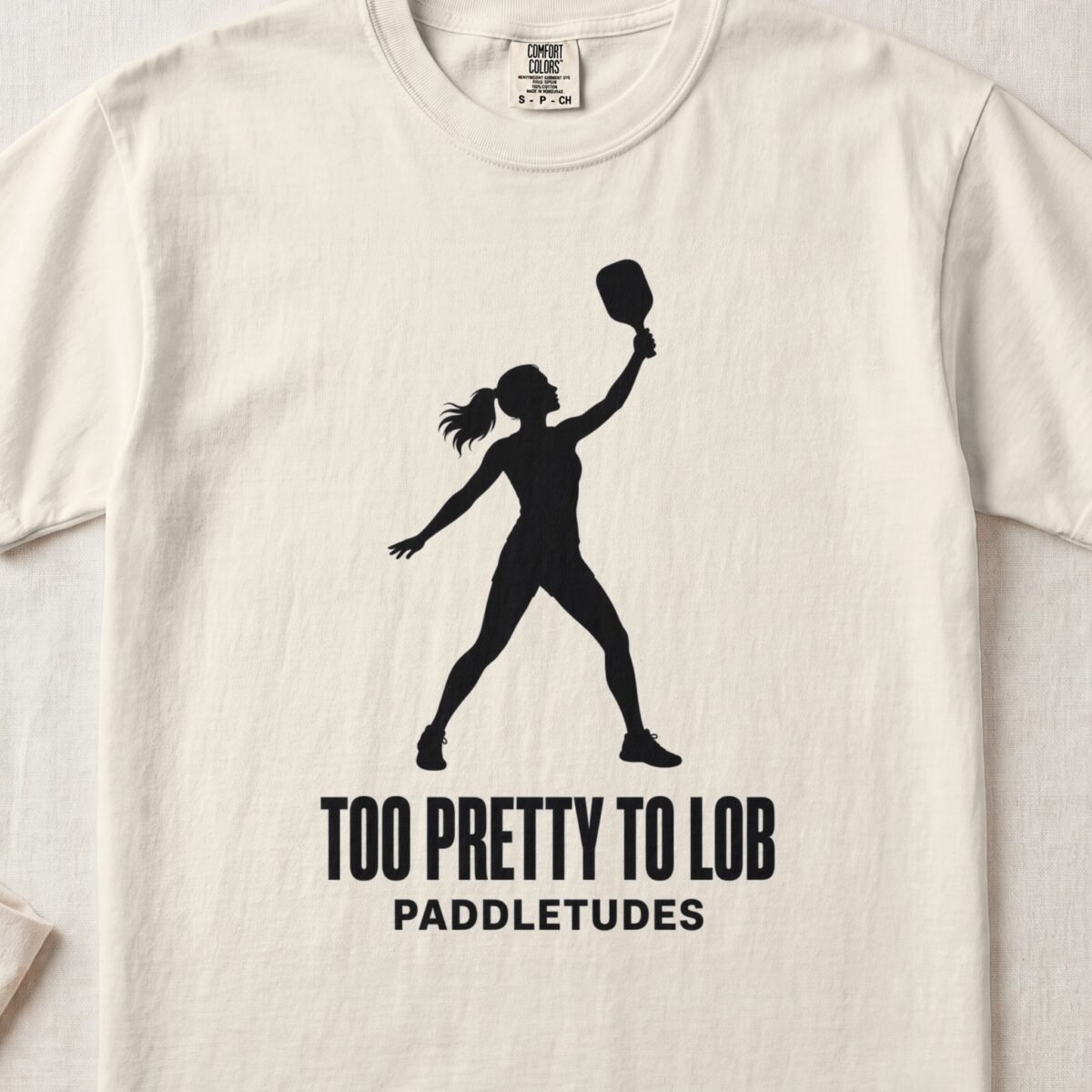
Too Pretty To Lob
$29.99 Select options This product has multiple variants. The options may be chosen on the product page -
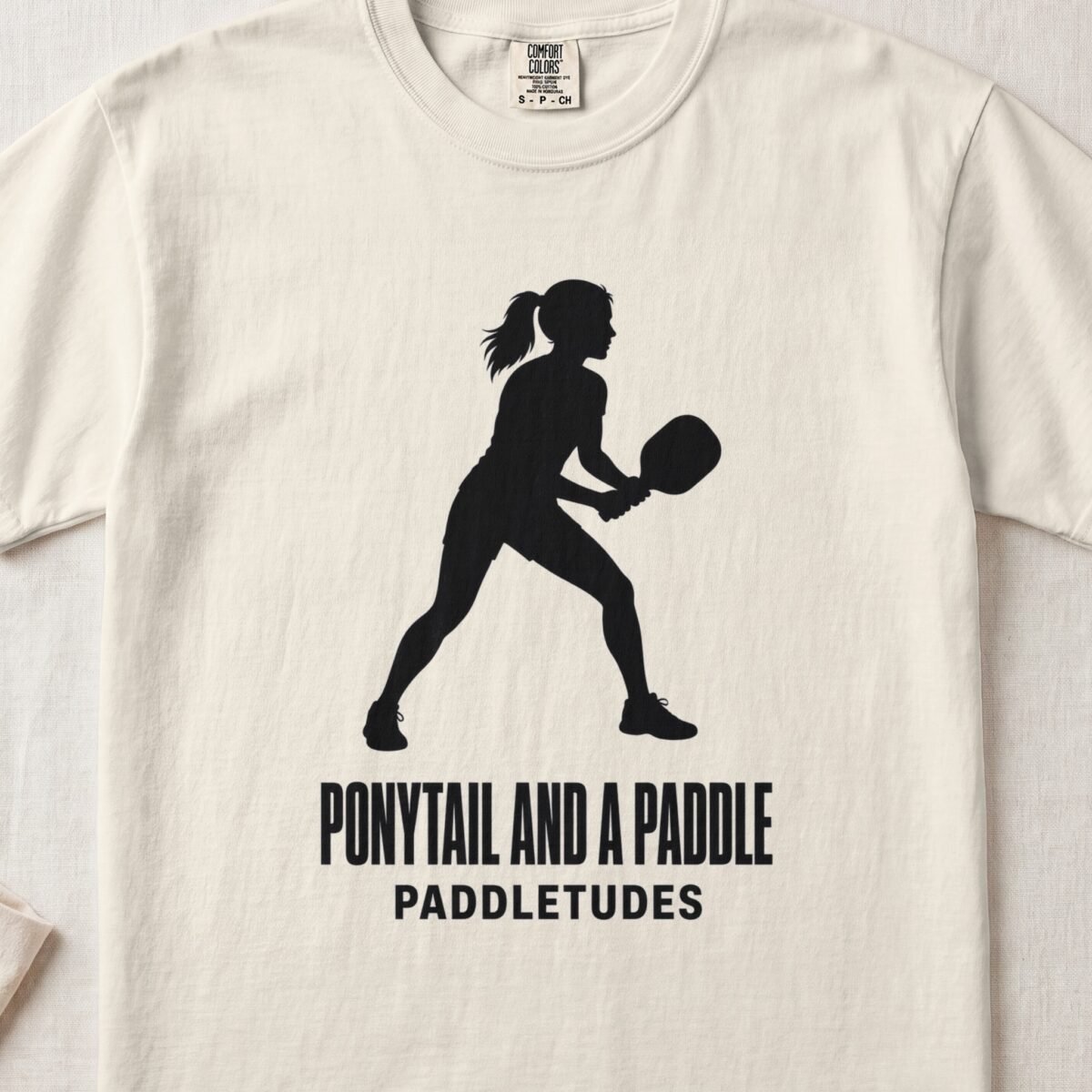
Ponytail And A Paddle
$29.99 Select options This product has multiple variants. The options may be chosen on the product page -
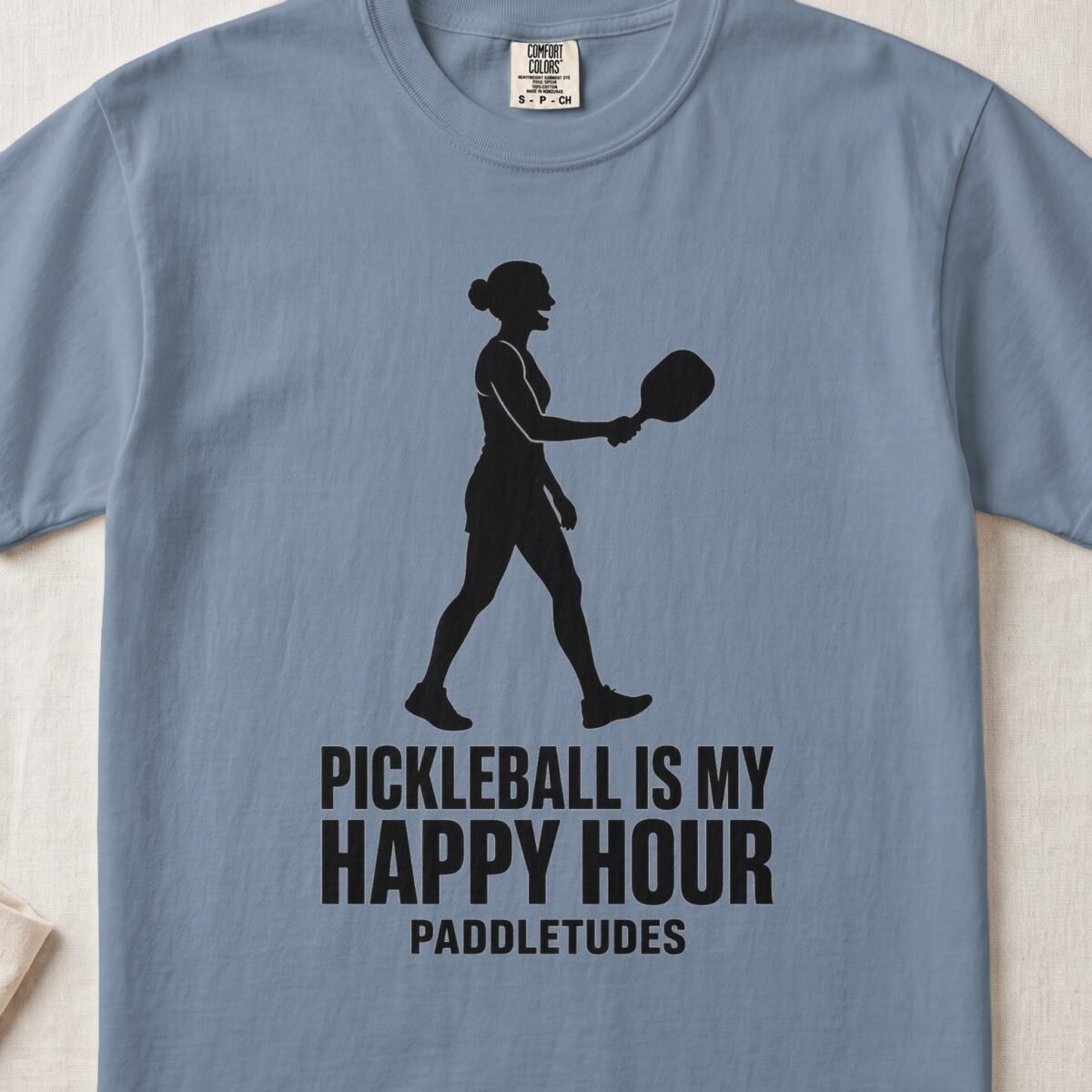
Pickleball Is My Happy Hour
$29.99 Select options This product has multiple variants. The options may be chosen on the product page