Retro Comfort Colors 1717
The Pickleball Family
$39.99
- Comfort Colors 1717 heavyweight cotton
- Original design · printed to order
- U.S. print partners
The Pickleball Family — Sunshine Family Doll Nostalgia Meets the Pickleball Court on a Retro Vintage Graphic Tee
Your mother sat down.
Not at the table. Not in the chair by the phone where she paid the bills and made the calls and kept the whole household running from a two-foot radius. She sat down on the carpet — the gold shag carpet that she vacuumed twice a week and your father said would last forever and didn’t — and she folded her legs beneath her and picked up the Dad doll. The one with the molded brown hair and the permanent smile. She held him between her thumb and two fingers, walked him across the little plastic picnic table, and gave him a voice. Deeper than her own, silly enough to make you laugh, serious enough that for the thirty seconds she held him, you believed he was a real person in a real house having a real conversation with the Mom doll in your left hand about what the family was going to do that afternoon.
The kitchen timer was running. You both knew it. She had maybe three minutes before she’d have to stand up, wipe her hands on the dish towel tucked into her waistband, and go back to whatever was in the oven. Three minutes. That’s all she gave herself. But she sat down. She always sat down. Even when dinner was on the stove and the phone was ringing and your brother was doing something in the backyard that would almost certainly end with somebody needing a bandage, she sat down on that carpet and she played with you, because that’s what mothers did when they could tell you needed them — which was always, even when you didn’t say so.
What the Yellow Box Was Really Selling
The toy was called the Sunshine Family. Mattel, 1973. Maybe you remember the name. Maybe you just remember the box — yellow, bright, warm as a kitchen window in July, with a family on the front that looked like a family was supposed to look. Mom, Dad, baby. Matching outfits. Smiling. Together. The Sunshine Family doll set wasn’t the only one on the shelf — Fisher-Price had the little people in the A-frame house, and every toy aisle in every department store had some version of the same promise — but it was the one that felt real. The craft studio with the tiny loom that never actually worked. The camper with the fold-out canopy. The little farm stand with vegetables the size of your pinkie nail. Every accessory was a prop in a play about togetherness, and you were the director, and the script was simple: this is what a family looks like when everybody shows up.
The box promised it the way every toy box in 1974 promised things — completely, without fine print, without conditions. Just buy this set. Put these people on this little plastic porch. And your family will look like this. Will feel like this. Will be this.
You were six. You believed every word of it. Not because you were naive, but because your mother was sitting on the carpet giving the Dad doll a voice, and that was all the proof you needed that the picture on the box was real.
Where the Family Went
The Sunshine Family lasted until it didn’t. The baby’s basket cracked. Dad’s arm stopped bending at the shoulder. The craft studio ended up in the bottom of the toy box underneath the things you’d circled in the next Sears Christmas catalog, and by the following spring the whole set had migrated to a shelf in the closet where childhood goes when it’s not quite ready to be thrown away but not quite being used anymore.
You grew up. You became the mother. Or the grandmother. Or both — sometimes in what felt like the same afternoon. You learned what the kitchen timer really meant. Not that dinner was ready. That a woman’s time was always being divided, always being pulled toward something louder or more urgent than the carpet and the dolls and the daughter who needed three minutes. You learned to sit down anyway, the way your mother did. Or you wished you had sat down more. One or the other. Every woman reading this knows which one it is for her.
The vintage toys went to garage sales. The carpet got replaced. The dish towel your mother tucked into her waistband — that was the kind of detail you didn’t think to remember until one day, decades later, you remembered it so clearly it stopped you in the middle of a grocery store. The gold shag is gone. The kitchen is different. The phone doesn’t sit on a table anymore. But the feeling — that three-minute feeling, the one where your mother’s hands smelled like dish soap and she was giving a plastic man a deep voice and somewhere in the oven a casserole was quietly deciding whether to burn — that feeling is still right where you left it. Behind your ribs. In the place where the things from before live.
Then Somebody Said “One More Game”
You didn’t expect it to come back on a pickleball court. Nobody expects pickleball to be the thing that fixes anything, because it’s pickleball — it’s a sport played with a wiffle ball on a court the size of a large living room, and the first time someone explained the rules you thought they were making it up. But your daughter called and said come play with us Saturday, or your son set up a net in the driveway, or your neighbor’s grandkids were visiting and needed a fourth, and you went because you didn’t have a reason not to and your knees hadn’t made their final ruling yet.
And within an hour — probably less — something happened that hadn’t happened in a very long time. Your family was together. On a court. Doing something together. Not looking at separate screens in the same room and calling it quality time. Not texting from different cities about schedules that never quite align. Actually together — laughing about missed serves, arguing about the score the way people argue when they’re so happy they need something small to disagree about, watching your granddaughter hit a backhand that made everybody stop and look at each other like did you see that?
The cooler was by the bench. Somebody had packed snacks. The sun was doing what the sun does on a Saturday afternoon when the people you love are all in the same place at the same time — which, at sixty, you’re old enough to appreciate because you’re old enough to know how rare it is. And somewhere between the second game and the fourth, you looked at the court and you saw it. The picture. The yellow box. The family on the front — Mom, Dad, the kid — matching outfits, smiling, together. The Sunshine Family. Except now it was real. The people weren’t plastic. The smiles weren’t molded on. And the little picnic spread waiting on the bench was a real cooler with real drinks that nobody would finish because somebody would always say one more game, and everybody would stay, because that’s what happens when the box finally delivers on the promise it made in 1974.
Your mother would have loved it. She would have sat down — right there, on the court, the way she sat on the carpet — and she would have played. Not because she was any good. Because she always showed up. And showing up was always the brightest thing in the room.
A Playset That Never Existed, for a Family That Always Did
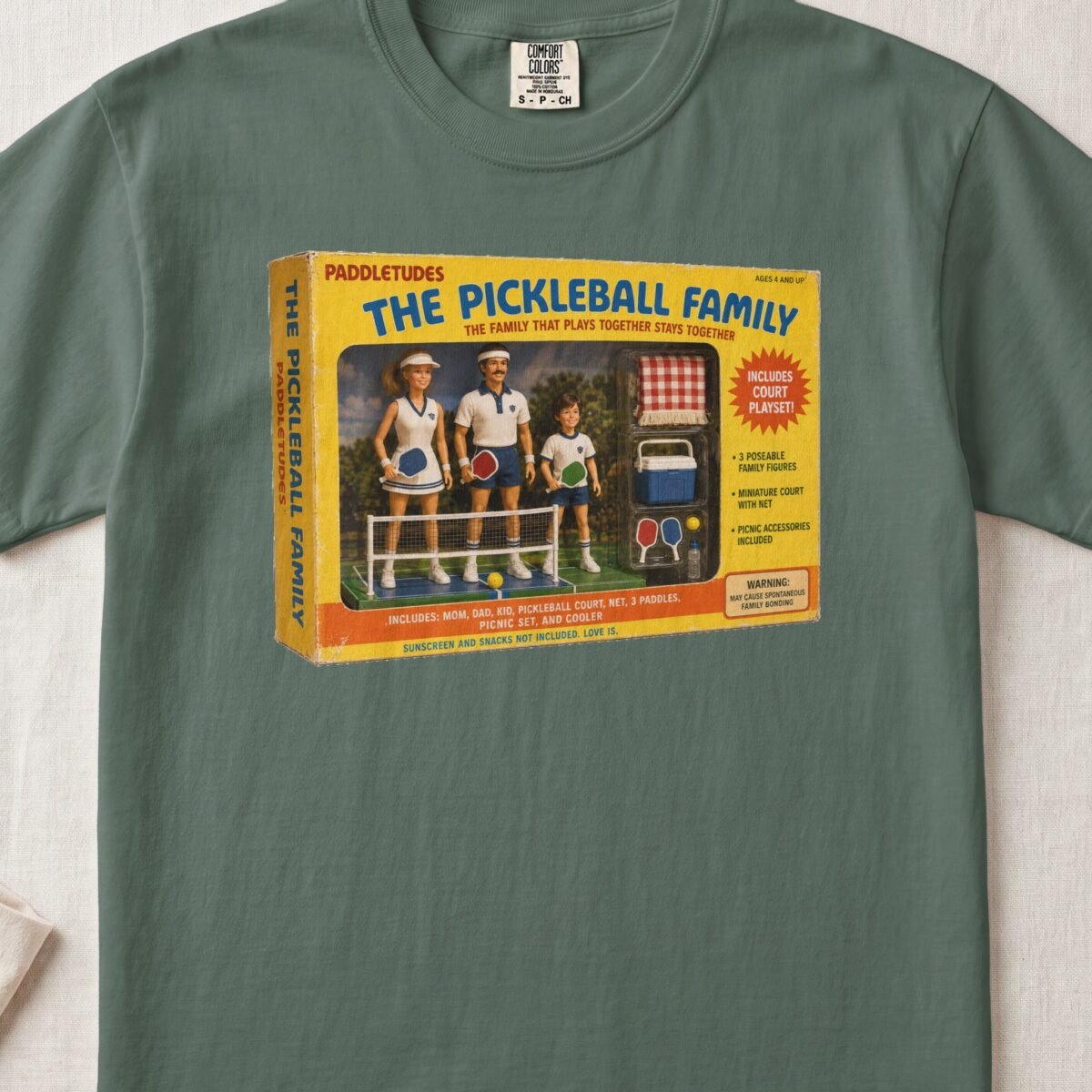
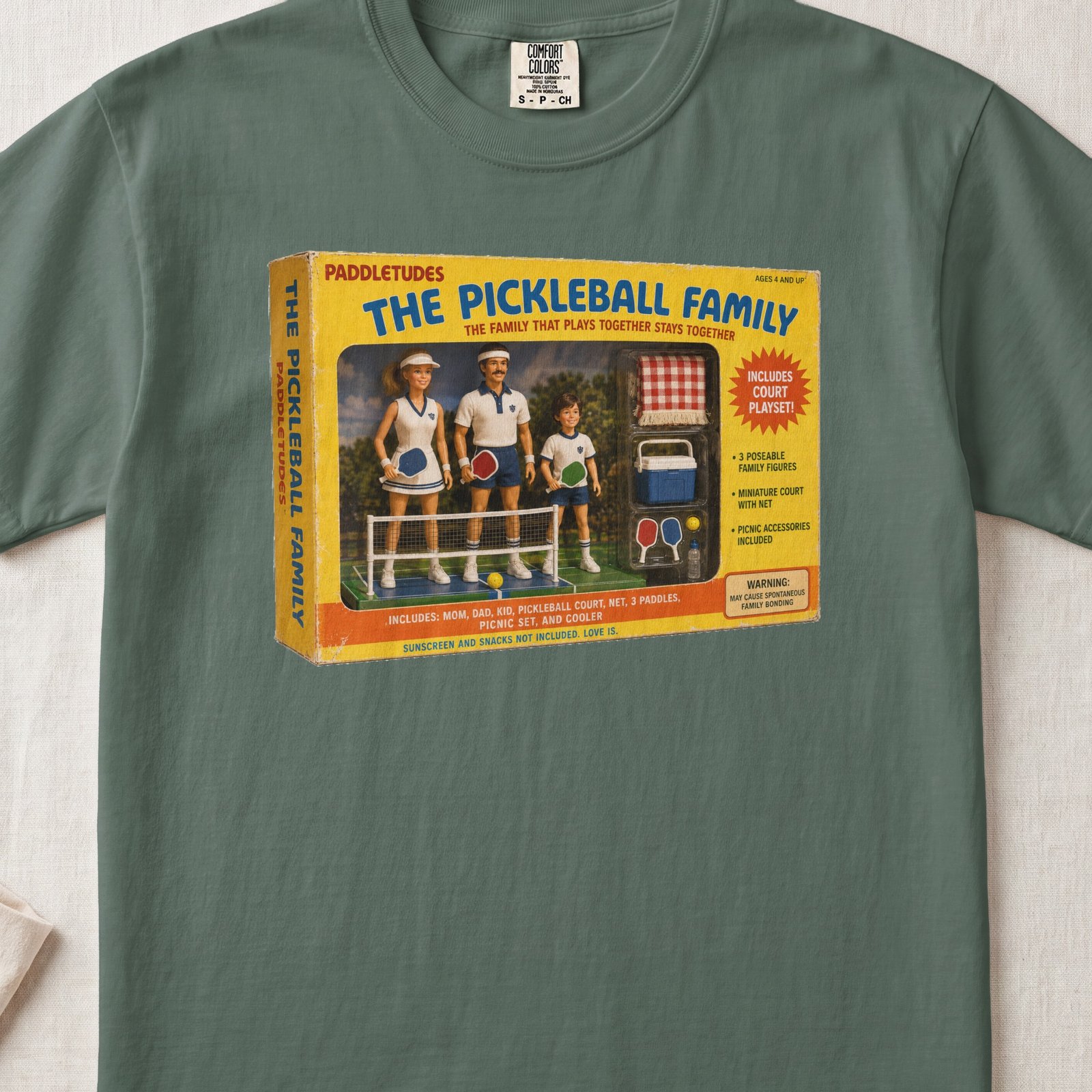
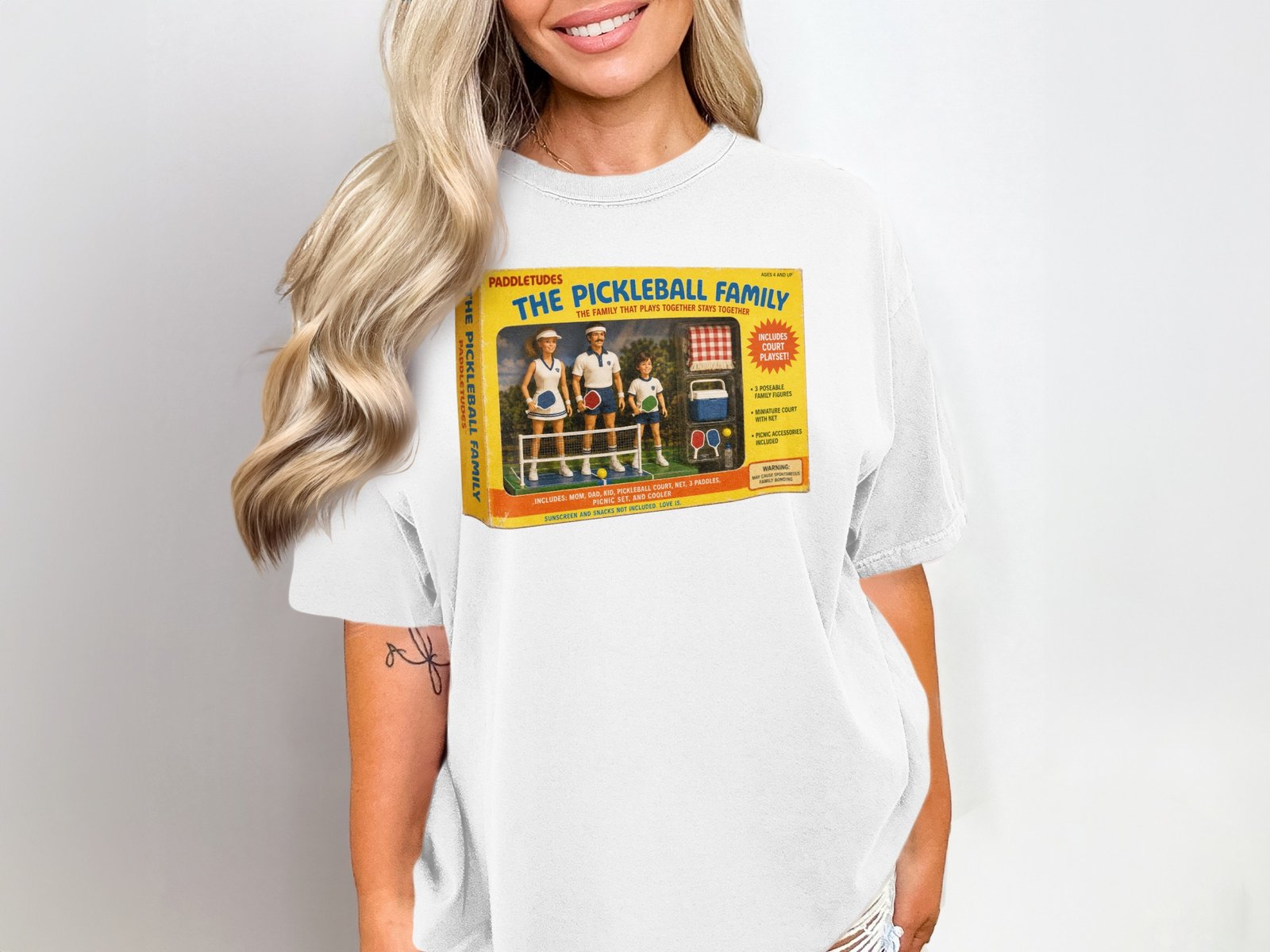
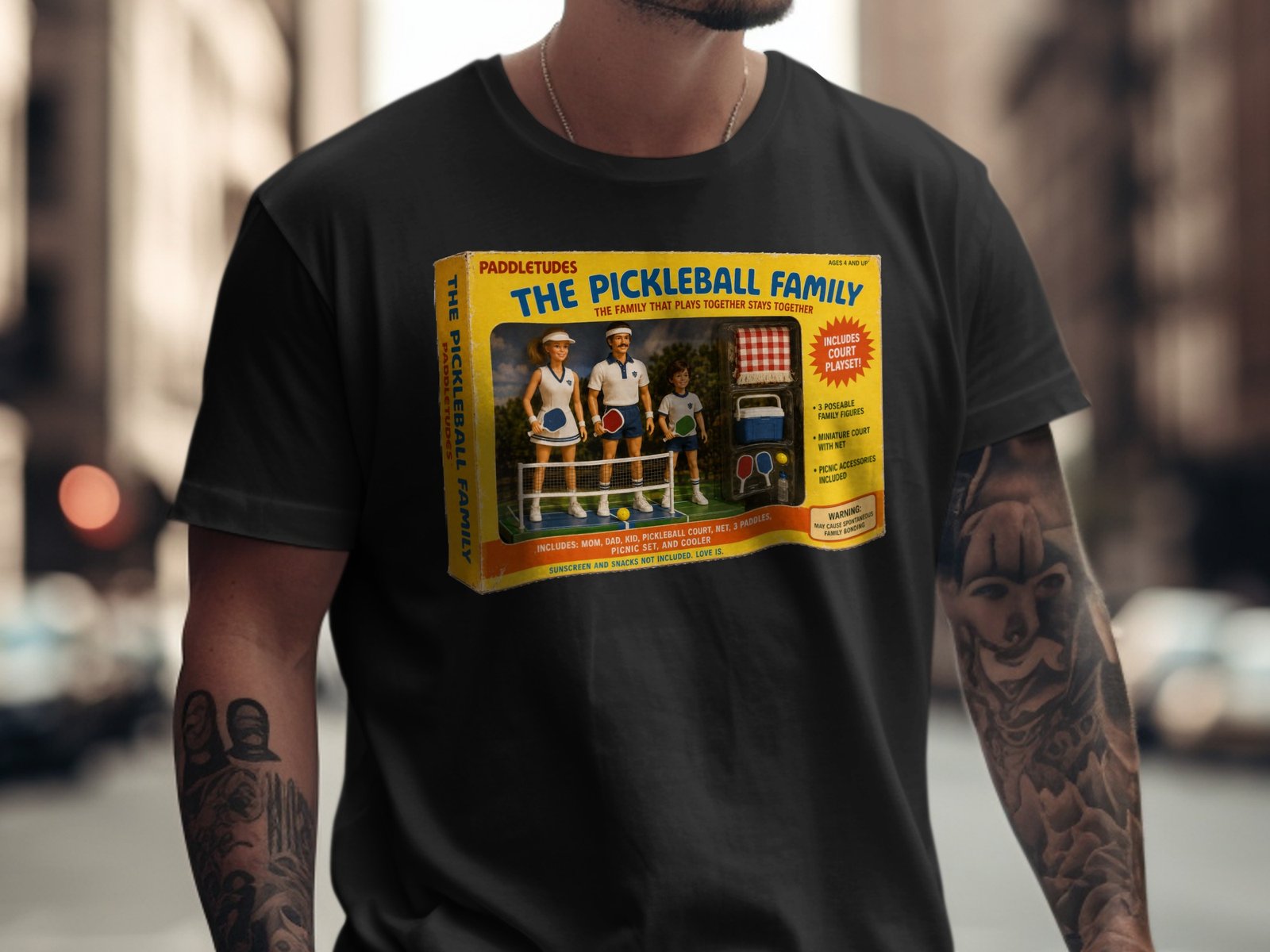
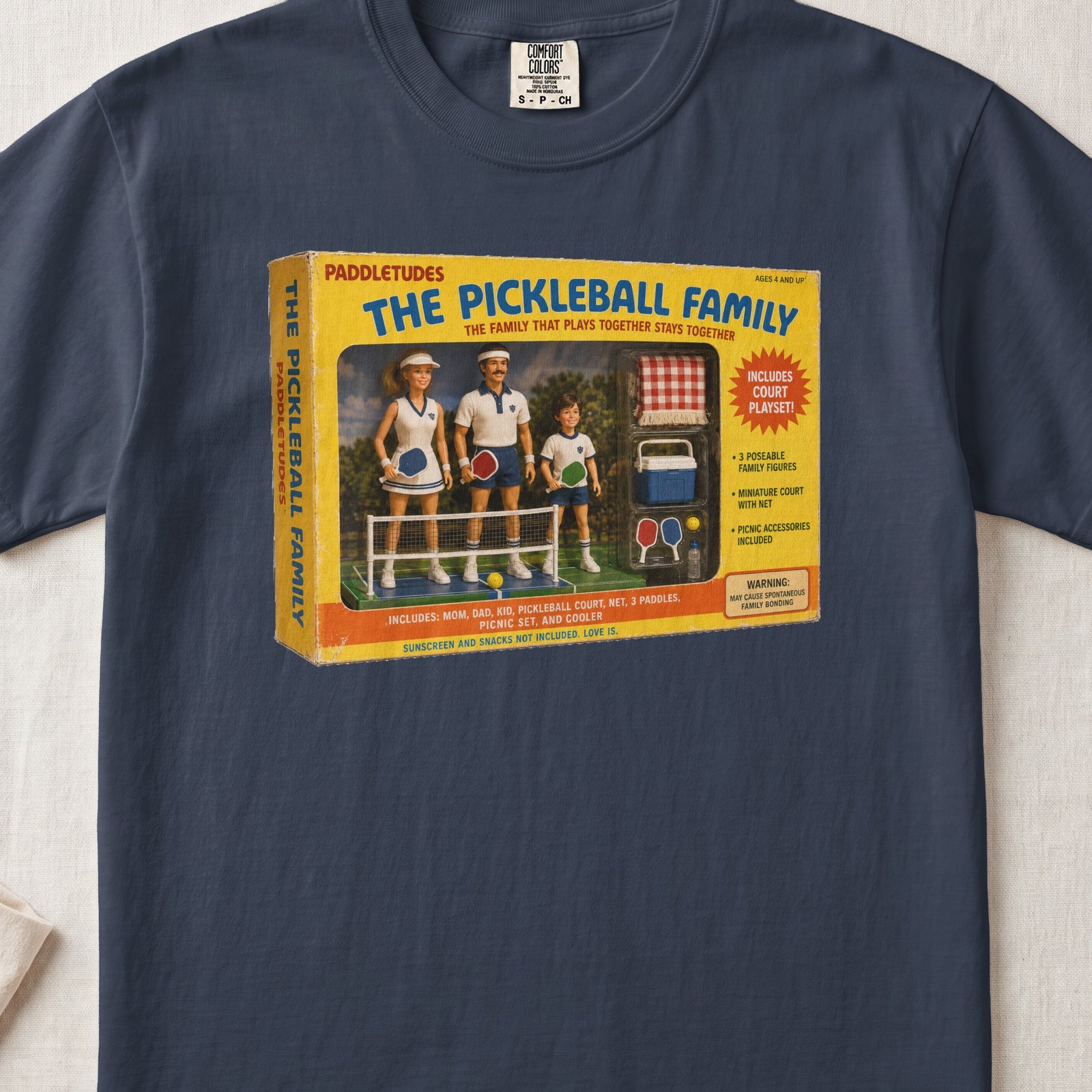
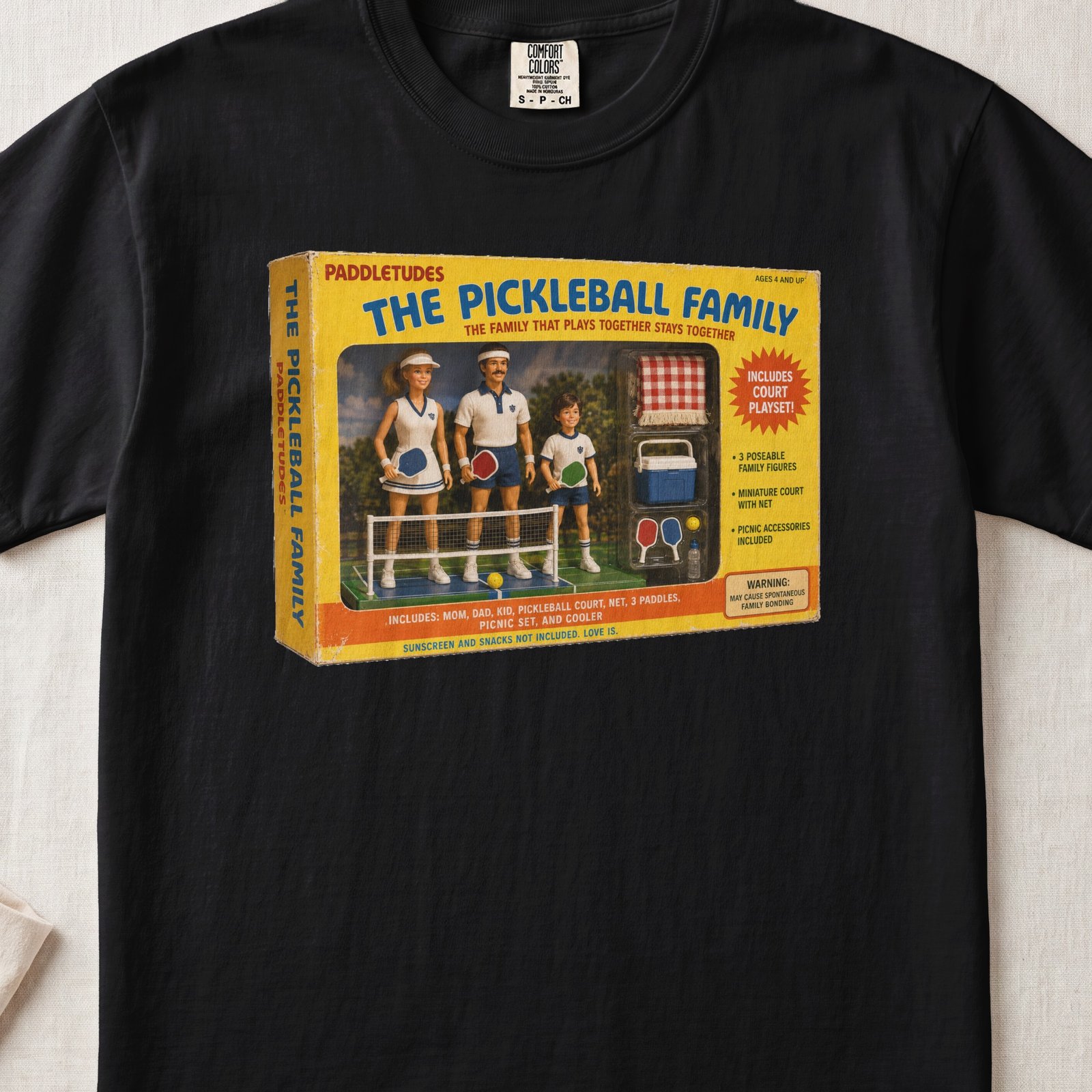
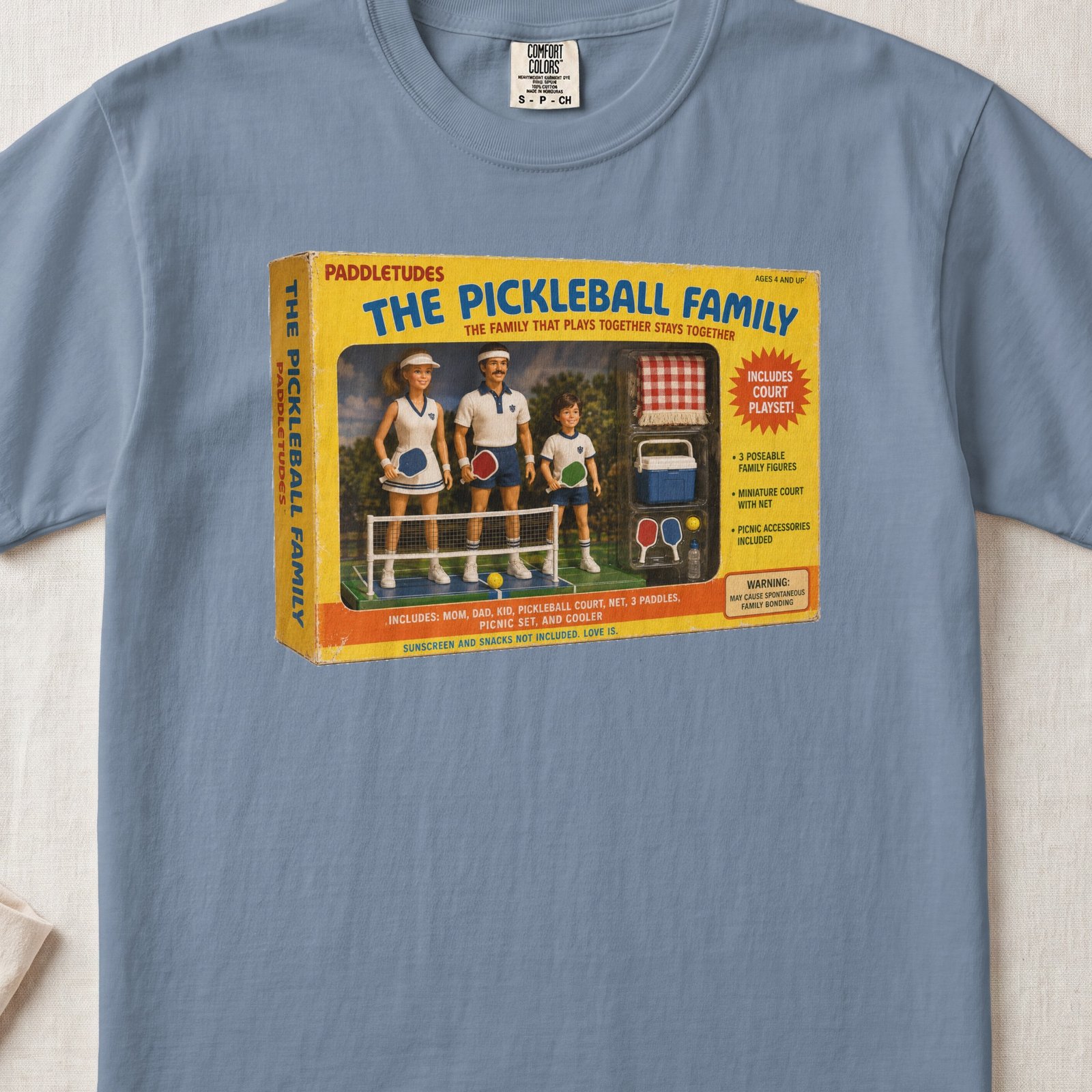
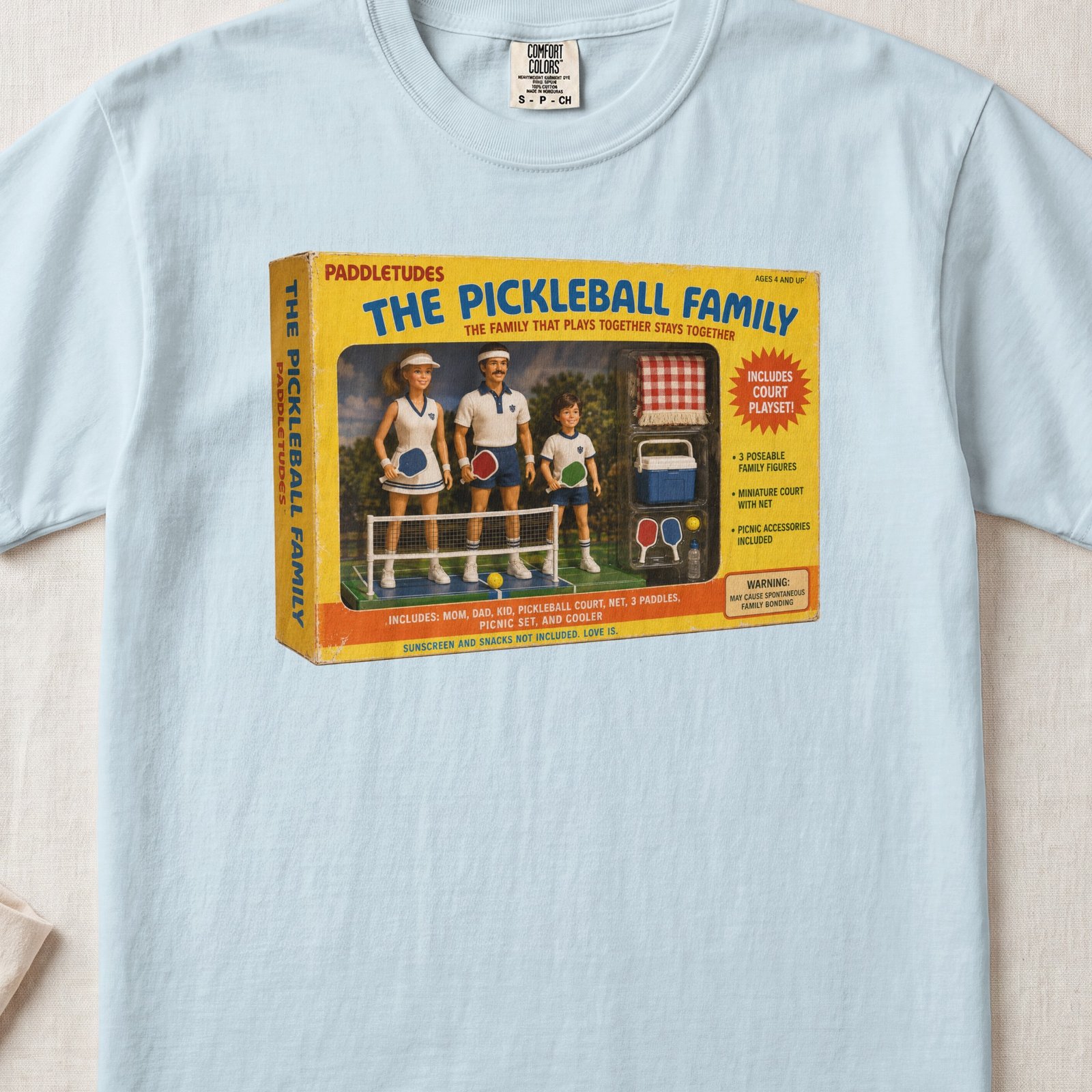
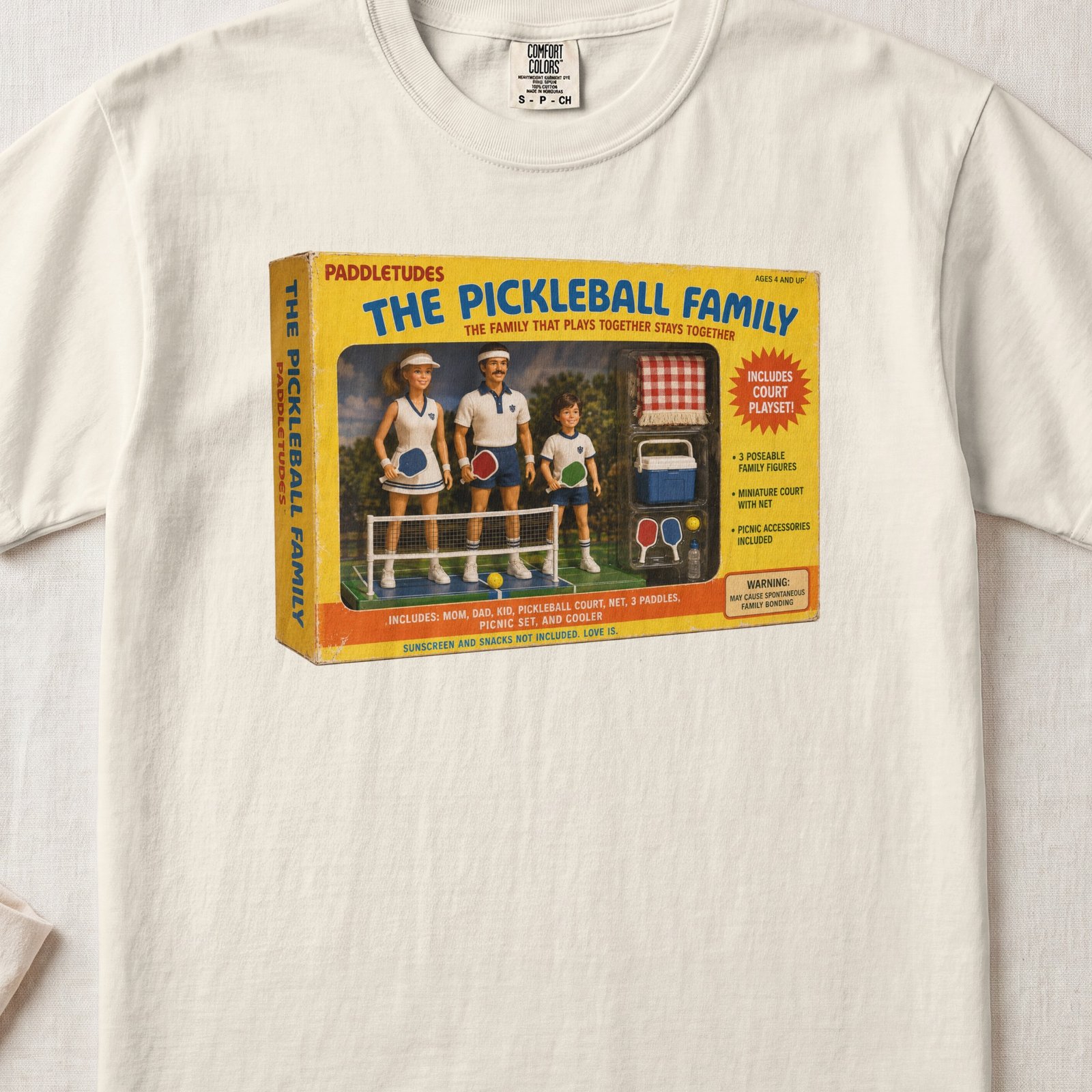
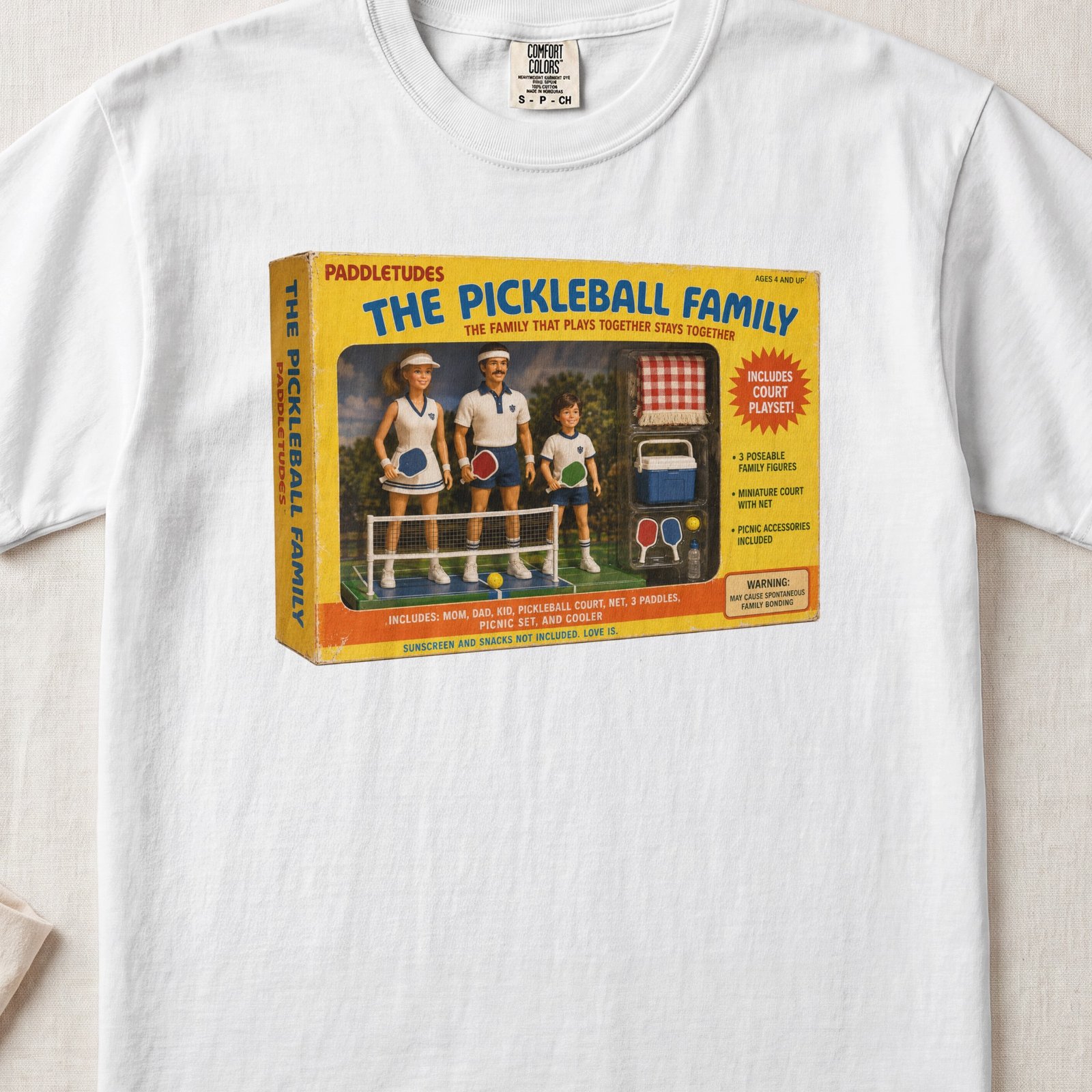
This shirt is the Sunshine Family for the pickleball generation. Paddletudes’ Pickleball Family — boxed in yellow, just like the original, with three poseable figures standing on a miniature court: Mom in the visor, Dad with the mustache and the headband, the kid in the polo with a green paddle and the easy confidence of someone who doesn’t know yet that the thing happening on this court is the thing his parents will remember for the rest of their lives. The starburst says “Includes Court Playset!” The features list reads like a real toy catalog: “3 Poseable Family Figures. Miniature Court With Net. Picnic Accessories Included.” There’s a checkered blanket. A blue cooler. A water bottle. Three paddles — red, blue, green — one for each of them. Ages 4 and Up. The warning reads May Cause Spontaneous Family Bonding, which isn’t a joke. It’s a diagnosis. Every family that’s found this sport knows the bonding isn’t spontaneous — it’s inevitable, the way it was inevitable that Mom would pick up a paddle and turn out to be the best player on the court, surprising no one more than Mom herself.
And at the bottom — in the fine print, in the place where the real message always hides — it says what every family on every court already knows. What your mother knew when she sat down on the carpet. What you knew when you watched your granddaughter’s backhand land on the line. What the yellow box promised in 1974 and what pickleball finally delivered, forty years later, on a Saturday afternoon with a cooler full of drinks nobody finished and a score that nobody remembers because the score was never the point:
Sunscreen and Snacks Not Included. Love Is.
At thirty-nine ninety-nine, The Pickleball Family costs about what the Sunshine Family did when your mother bought it — and nothing compared to the three minutes she spent on the carpet, which turned out to be worth more than anything else in the house. It’s a vintage toy box for a toy that never existed, a family portrait for a family that found each other on a court instead of in a box, and the only product in America that puts love in the fine print and actually means it. Your mother sat down. You showed up. The yellow box was right all along.
Printed on a Comfort Colors 1717 garment-dyed heavyweight tee with water-based DTG ink — sizing and care details here.
-
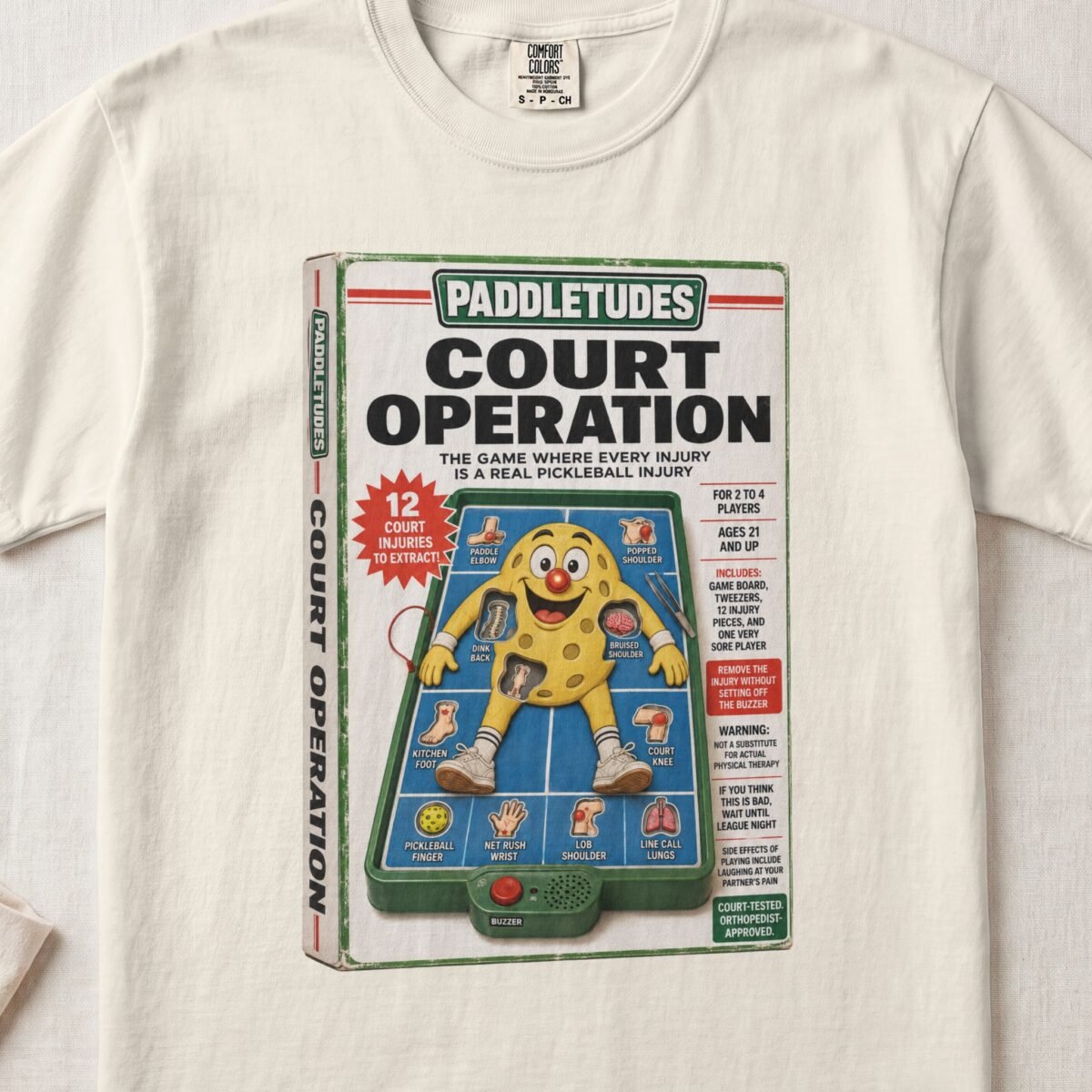
Court Operation
$39.99 Select options This product has multiple variants. The options may be chosen on the product page -
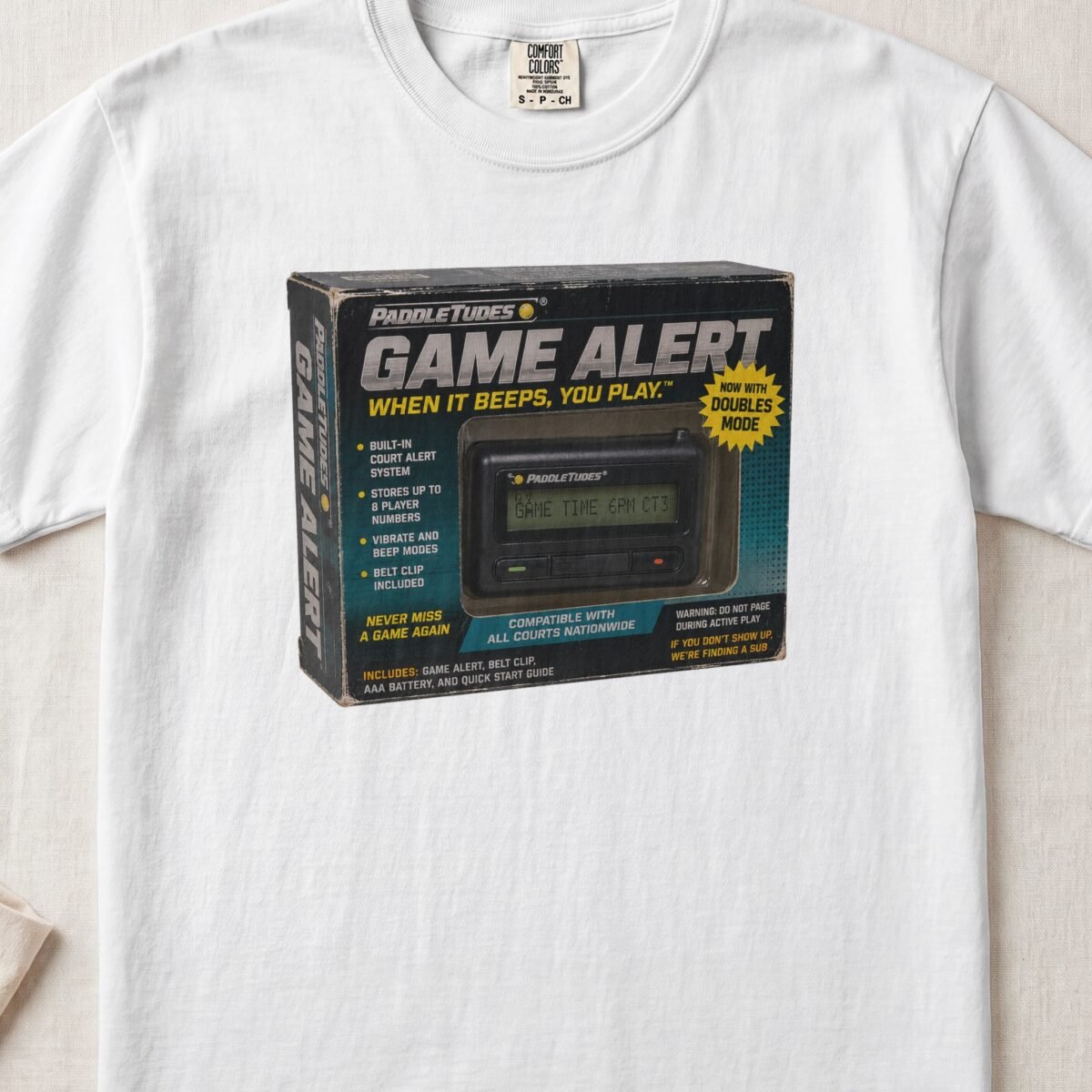
Game Alert
$39.99 Select options This product has multiple variants. The options may be chosen on the product page -
Kitchen Crunch
$39.99 Select options This product has multiple variants. The options may be chosen on the product page