Retro Comfort Colors 1717
Kitchen Crunch
$39.99
- Comfort Colors 1717 heavyweight cotton
- Original design · printed to order
- U.S. print partners
The Dinker’s Cereal on a Retro Graphic Tee
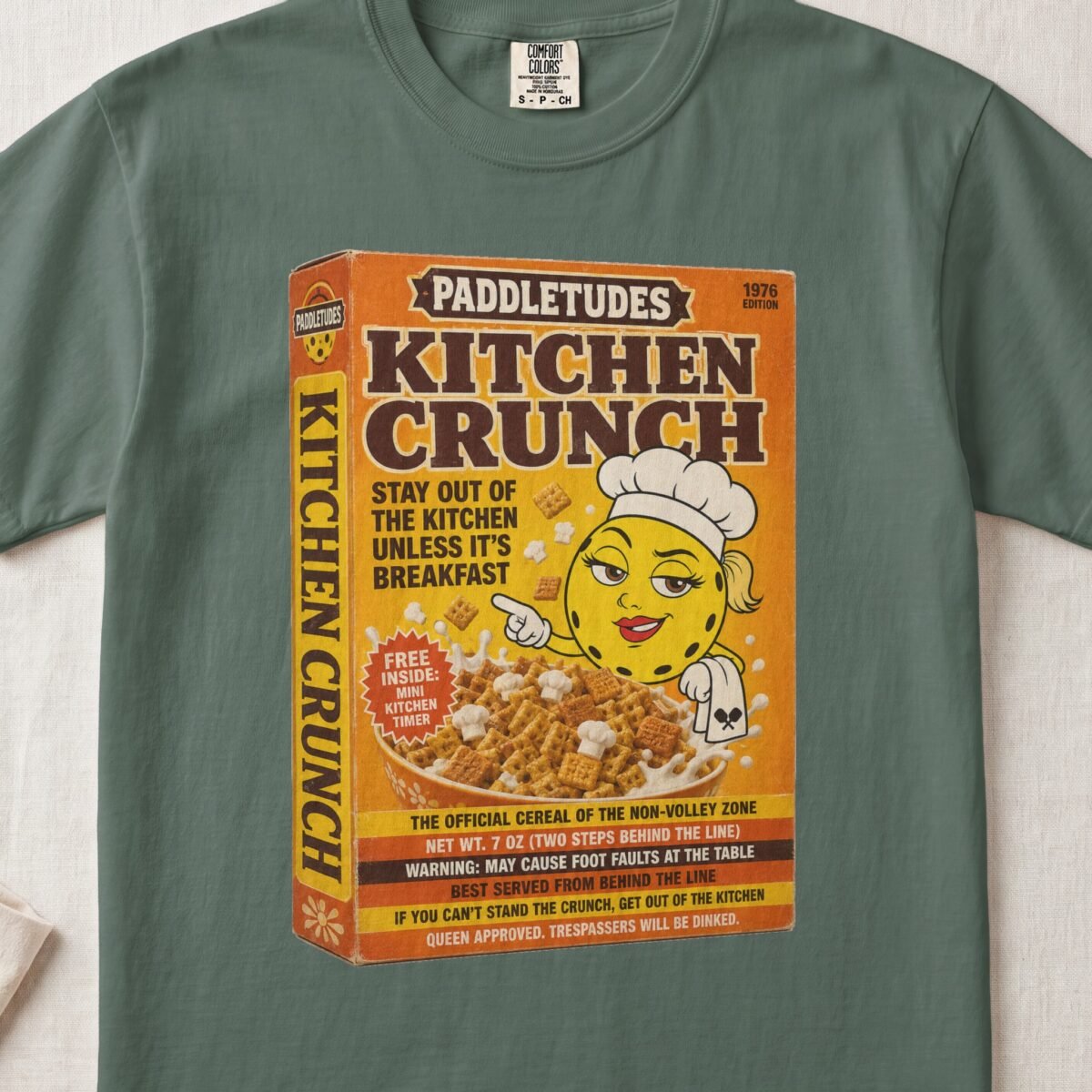
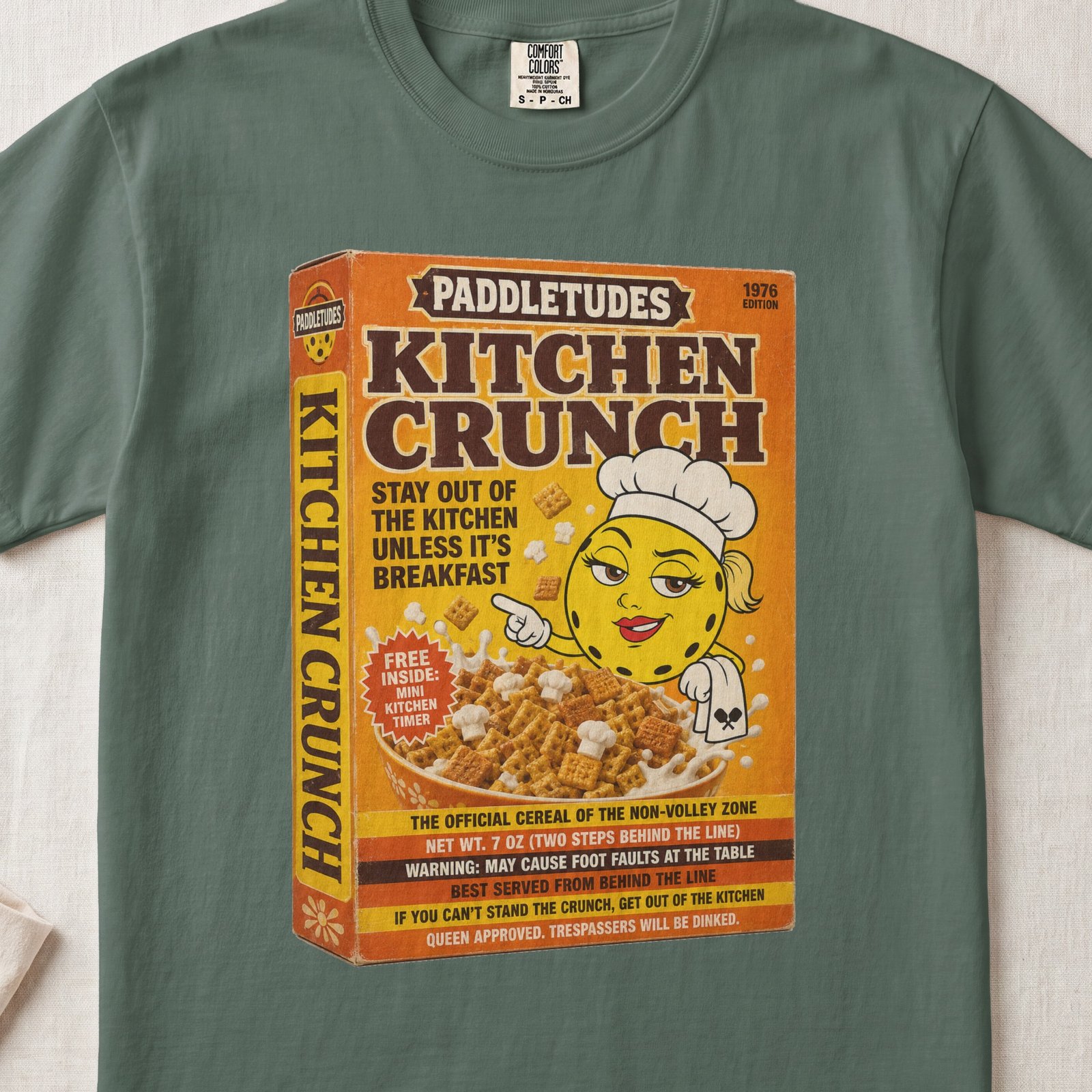
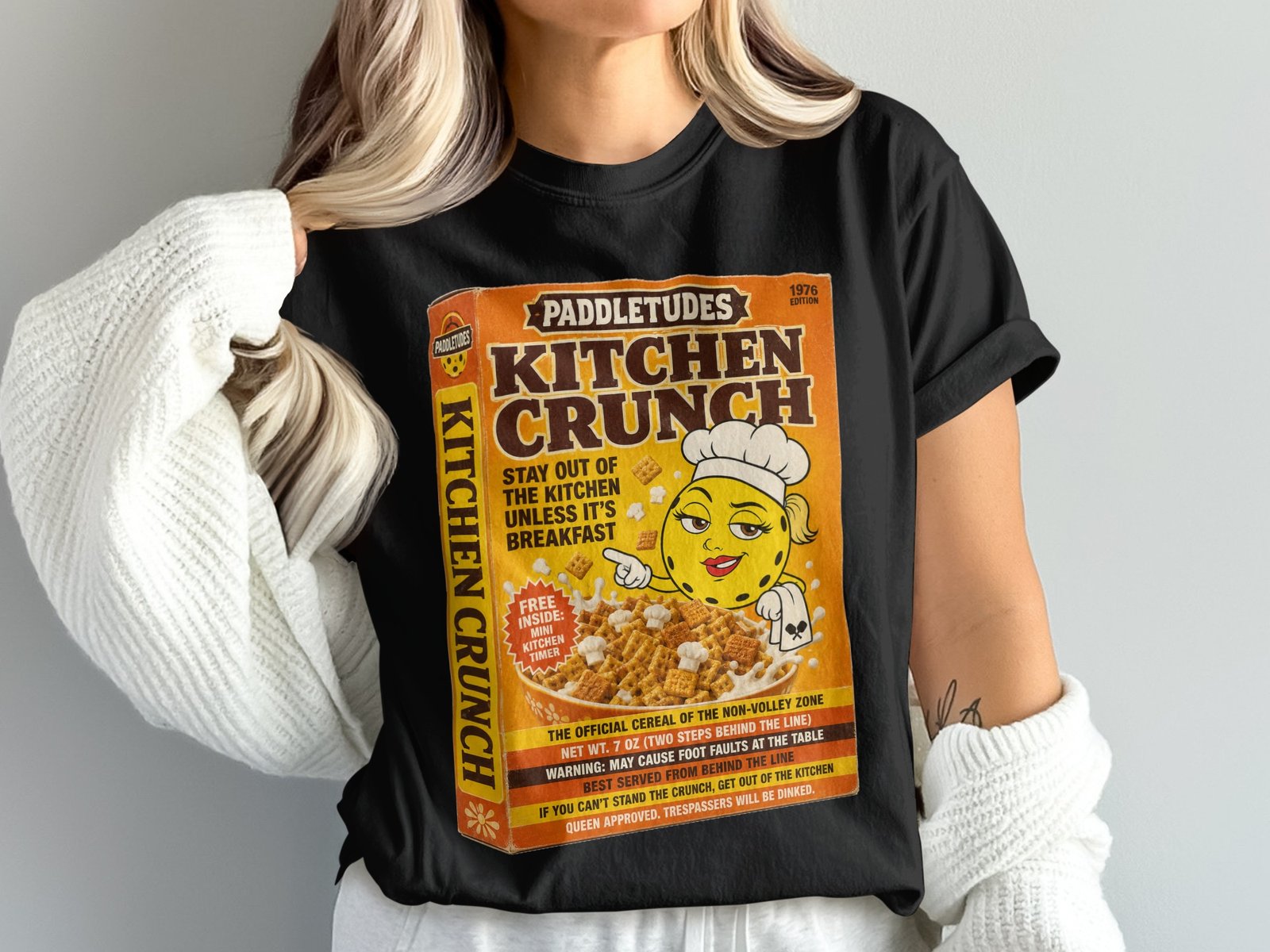
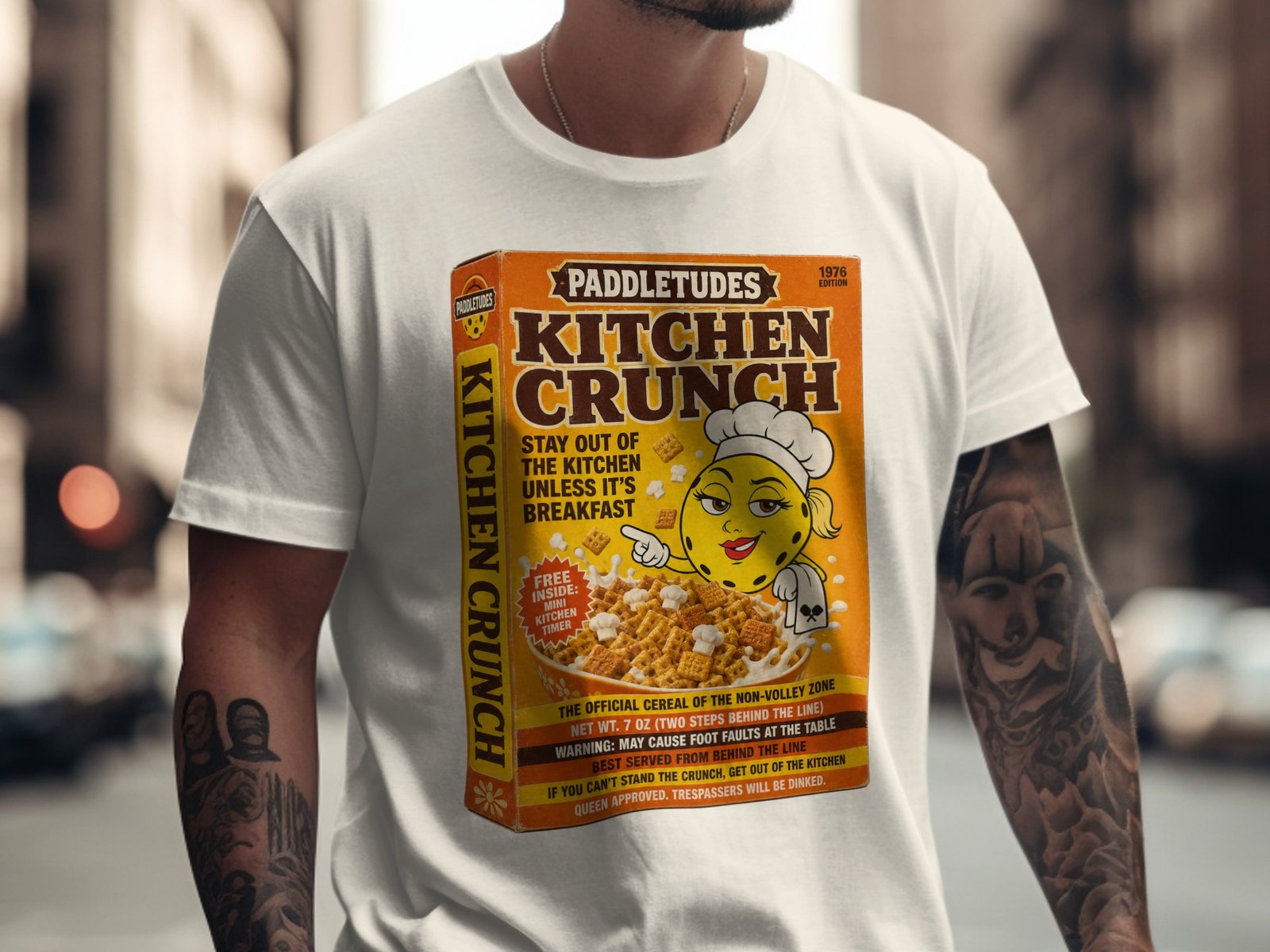
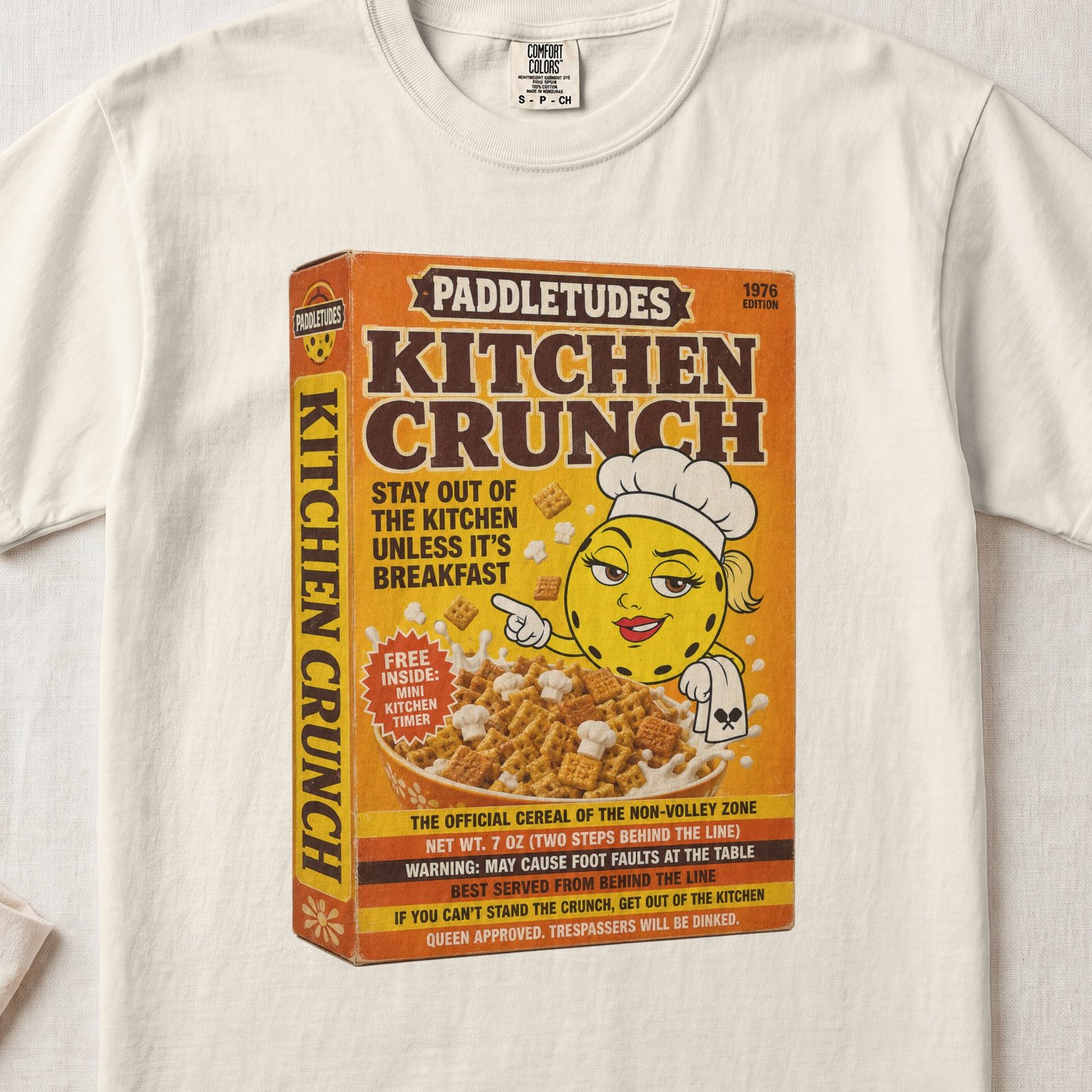
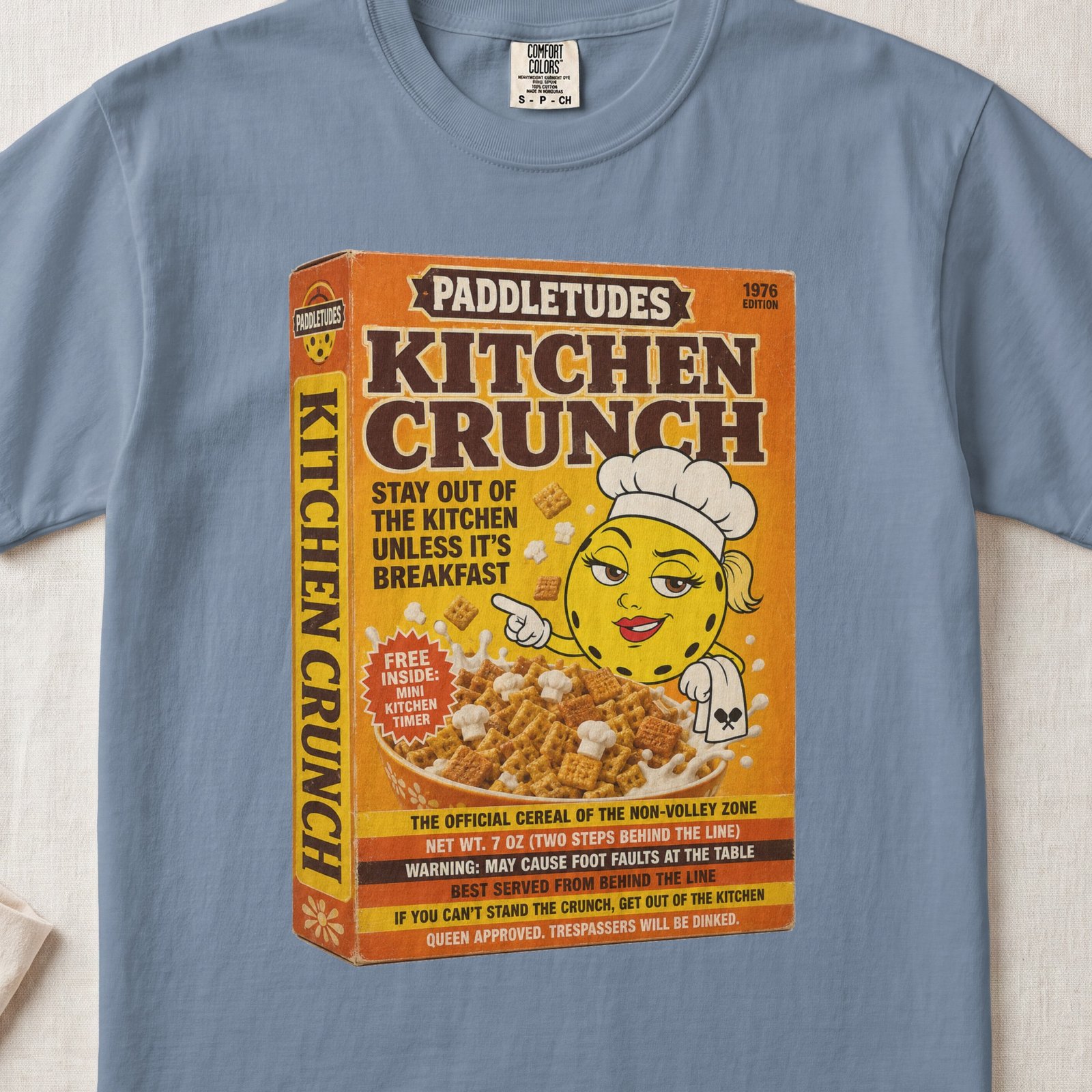
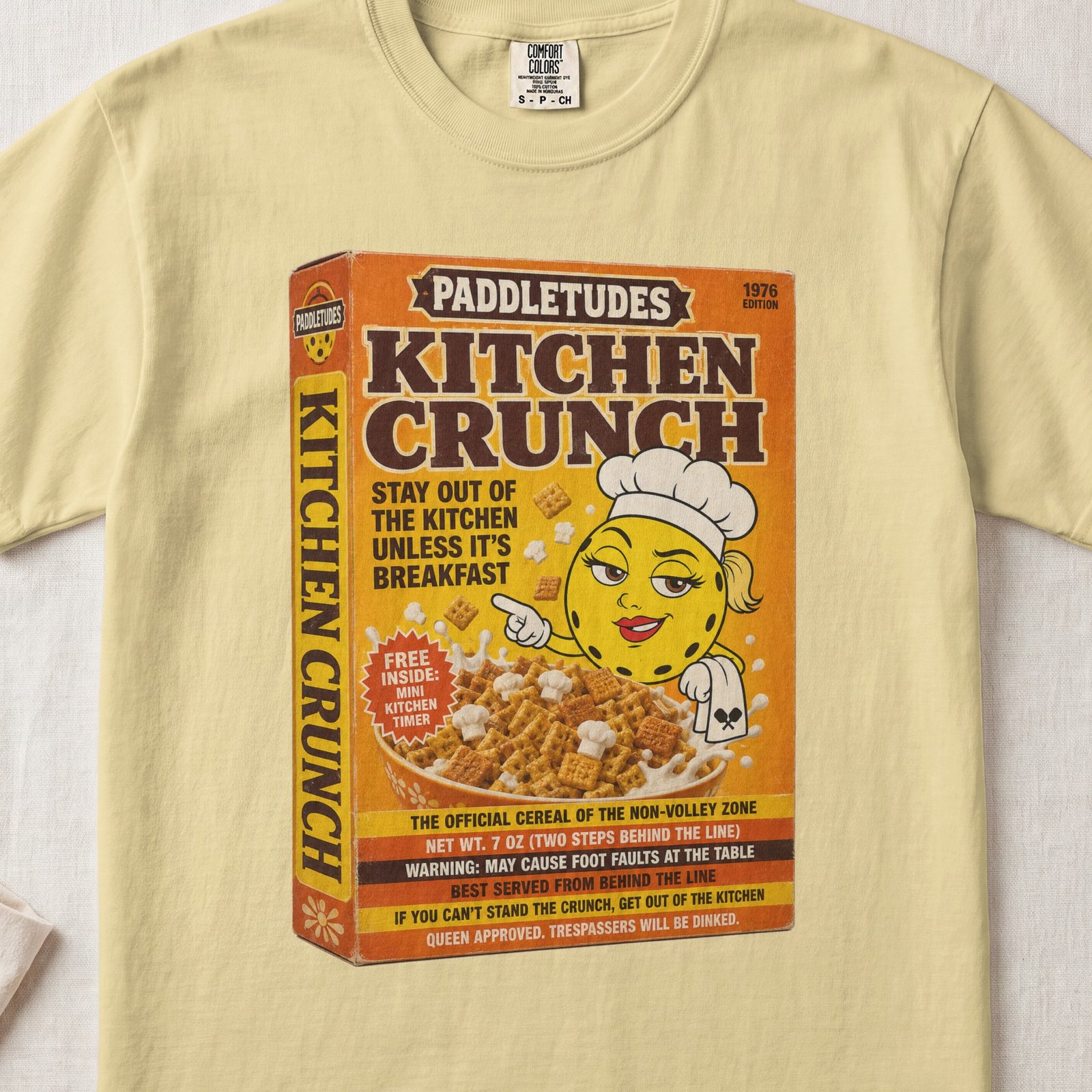
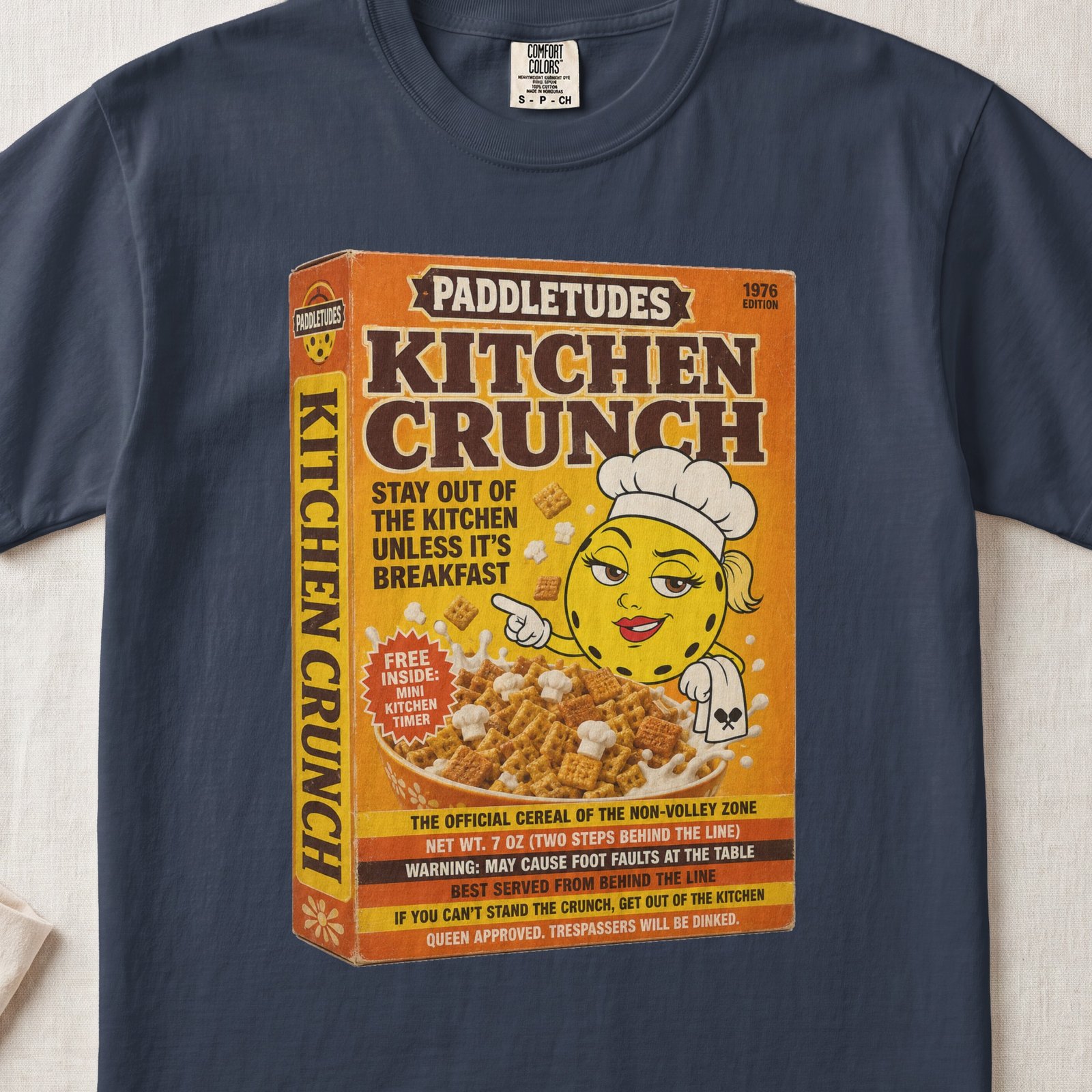
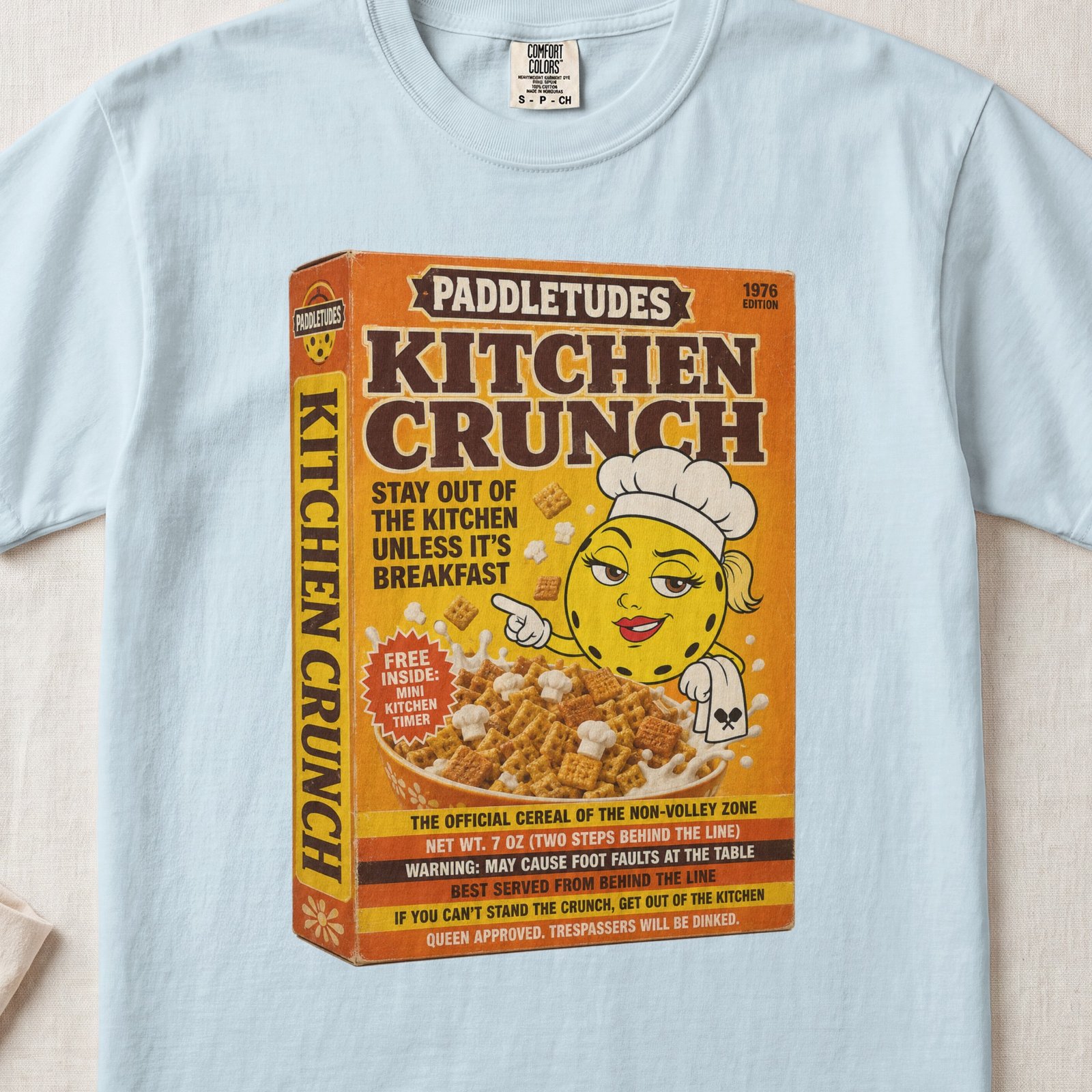
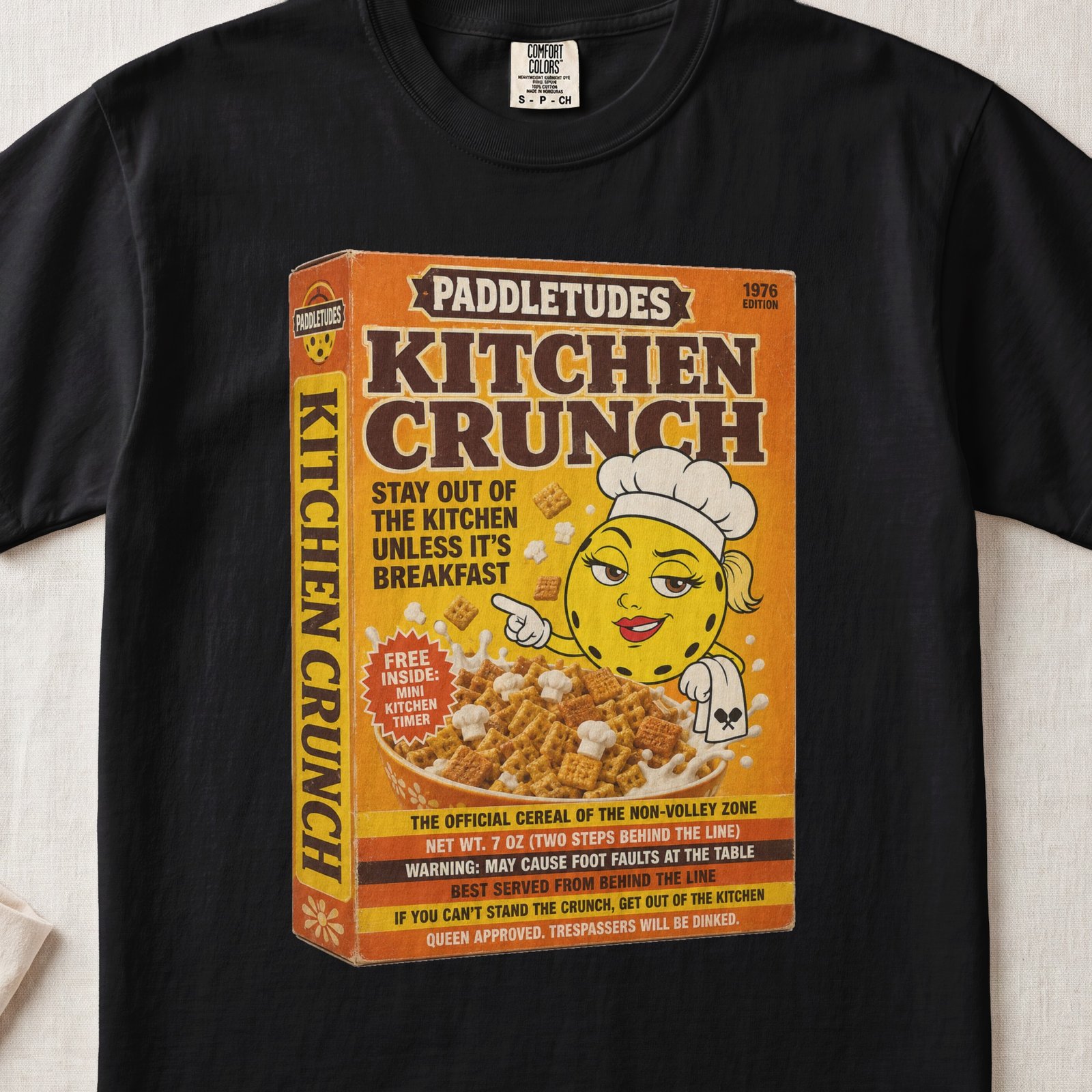
Kitchen Crunch is a retro pickleball shirt on a Comfort Colors 1717 — a fake 1976 cereal box where every line doubles as a joke about the non-volley zone.
The box art is unmistakable. Burnt orange palette, the “1976 EDITION” stamp in the corner, a bowl of cereal mid-splash, and a pickleball mascot in a chef’s hat pointing directly at you with a look that says she knows exactly what you did at the kitchen line last Tuesday. The character wears a Paddletudes apron with crossed paddles, and there’s a starburst callout on the front: “FREE INSIDE: MINI KITCHEN TIMER.” That’s not a breakfast timer. That’s a timer for how long you’ve been standing in the non-volley zone pretending you weren’t about to volley.
The tagline is the first thing your eye hits after the title: “STAY OUT OF THE KITCHEN UNLESS IT’S BREAKFAST.” It’s the non-volley zone rule disguised as cereal box copy, and it sets up the entire shirt. Every line that follows works two ways — once for breakfast, once for pickleball — and the deeper you read, the tighter the wordplay gets. “THE OFFICIAL CEREAL OF THE NON-VOLLEY ZONE.” “NET WT. 7 OZ (TWO STEPS BEHIND THE LINE)” — the seven isn’t random. The non-volley zone extends exactly seven feet from the net on each side, spanning the full width of the court. They baked the actual dimension into the net weight. “WARNING: MAY CAUSE FOOT FAULTS AT THE TABLE.” “BEST SERVED FROM BEHIND THE LINE.” “IF YOU CAN’T STAND THE CRUNCH, GET OUT OF THE KITCHEN.” And at the very bottom, in the kind of fine print that rewards people who read the entire shirt: “QUEEN APPROVED. TRESPASSERS WILL BE DINKED.”
This is a shirt for the person who treats the kitchen line like a property boundary. The one who calls foot faults on recreational Tuesday. The one who watches their opponent’s feet more than the ball during dink rallies, and who has said the words “your toe was on the line” with the conviction of someone reporting a crime. They know the kitchen rule by heart, they know the disputed origin story about shuffleboard, and they have strong feelings about both. They also know that the non-volley zone is the most misunderstood rule in pickleball — you can stand in it any time you want, you just can’t hit the ball out of the air while you’re in there or touching the line. Half the arguments on public courts start with someone misunderstanding that distinction, and the person wearing this shirt has been on both sides of those arguments.
The 1976 cereal box format is the second joke baked into the design. Saturday mornings in the mid-1970s had a ritual: pour the cereal, park in front of the television, and read every word on the box while you ate. The nutrition panel. The maze on the back. The offer for a decoder ring that required three box tops and six weeks of patience. Cereal boxes were designed to be read, and the good ones rewarded the reading — hidden jokes in the ingredients list, fake contests with absurd prizes, fine print that was funnier than the front panel. Kitchen Crunch uses that format because it’s built for the same kind of attention. The front panel gets a laugh. The fine print gets a better one. The person wearing it at the court becomes a walking conversation piece because someone always notices a new line they missed the first time.
If you’re buying this for a pickleball player, the sweet spot is the person who plays before work and cereal is literally their pre-game meal. The 6 a.m. open play crowd who eats a bowl of something fast, drives to the courts, and spends the first ten minutes arguing about who’s on which court. This shirt connects two parts of their morning routine they never thought about together. It also works for the league captain who enforces kitchen rules like building codes — the person whose reputation at the facility is “the one who actually read the USA Pickleball rulebook.” For them, “Queen Approved, Trespassers Will Be Dinked” isn’t just a tagline. It’s a personal mission statement.
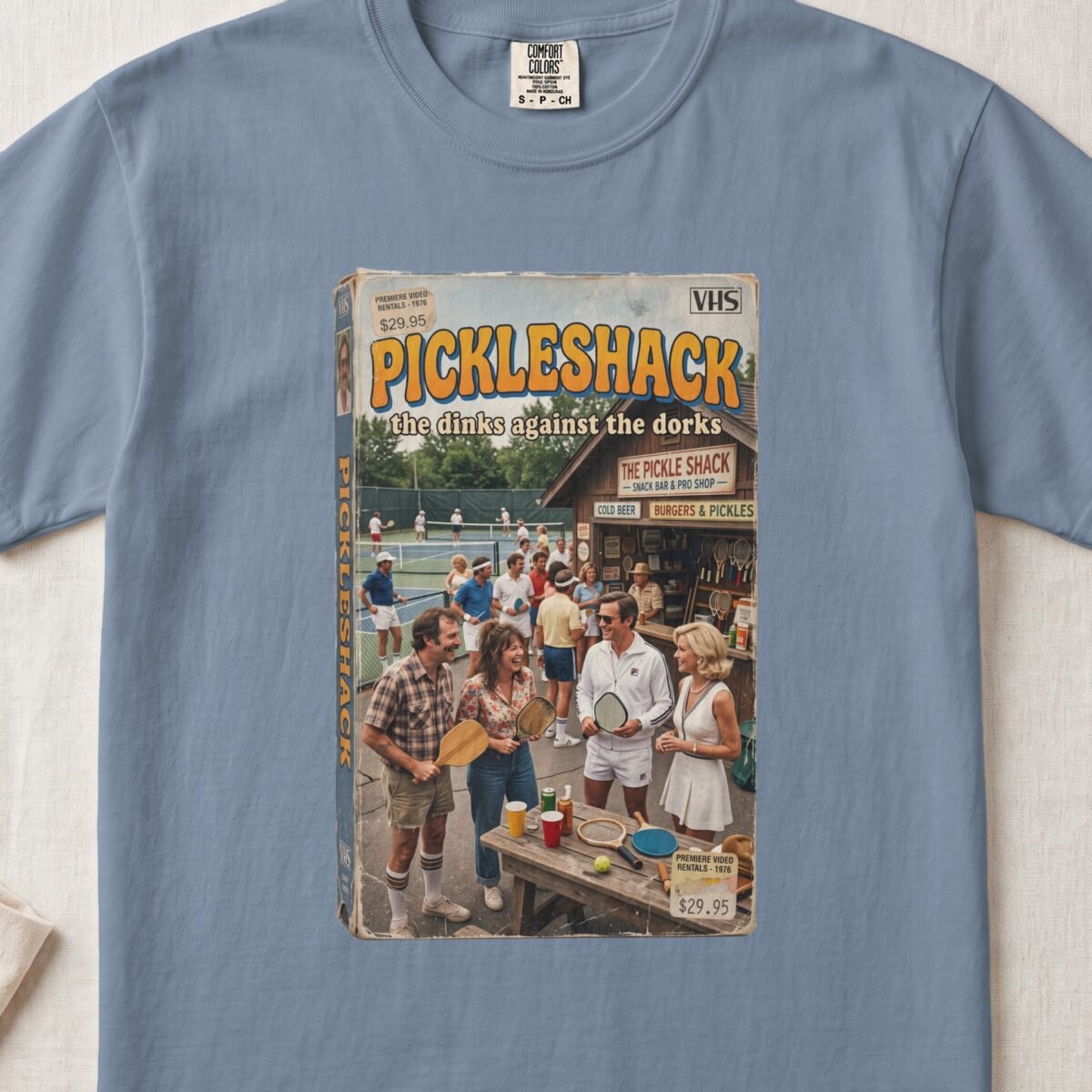
Kitchen Crunch lives on the same shelf as the rest of the fake product lineup. The Pocket Paddle is the 1977 mail-order novelty for the player who would carry a folding paddle in their fanny pack if the technology existed. PickleShack is the VHS tape from the summer everyone at the club switched from tennis. Breaking Balls is the transformation story — from 3.0 rec player to competitive menace — on a video rental box. And Mixed Doubles Misery is what happens when your doubles partner decides you’re never switching. Same fake universe, different aisle — cereal, video store, mail order, horror section.
Printed on a Comfort Colors 1717 garment-dyed heavyweight tee with water-based DTG ink — sizing and care details here.
What Are Some Funny Pickleball Terms
Pickleball has some of the most absurd terminology in any sport. The kitchen is the non-volley zone — a seven-foot strip on each side of the net where you can stand but cannot hit the ball out of the air. A dink is a soft shot that barely clears the net and drops into the kitchen. An erne is when you jump around the side of the net to volley outside the court boundaries. And a falafel is a dead shot that barely makes it over the net with no spin or pace.
The vocabulary sounds like it was invented by people who didn’t take themselves too seriously, and that’s because it was. Pickleball was created in 1965 on Bainbridge Island by three dads improvising with a wiffle ball and plywood paddles — the terminology evolved the same way. The kitchen almost certainly borrowed its name from shuffleboard, which has its own penalty zone called the kitchen. A “dink” just sounds like what a dink looks like. The scoring call “side out” comes from volleyball. The language is a patchwork of borrowed terms, onomatopoeia, and inside jokes that stuck.
What makes pickleball terms funny to outsiders is that they sound like food and household objects: pickle, dink, kitchen, flapjack, nasty nelson. What makes them meaningful to players is that each one describes a specific situation on the court with more precision than the formal name ever could. Nobody says “I executed a non-volley zone drop shot.” They say “I dinked it.” The Kitchen Crunch box art puts half a dozen of these terms into cereal box copy where every word pulls double duty — and that only works because pickleball’s vocabulary is strange enough to sound like breakfast items in the first place.
-
Pickle Shack
$39.99 Select options This product has multiple variants. The options may be chosen on the product page -
The Pet Pickleball
$39.99 Select options This product has multiple variants. The options may be chosen on the product page -
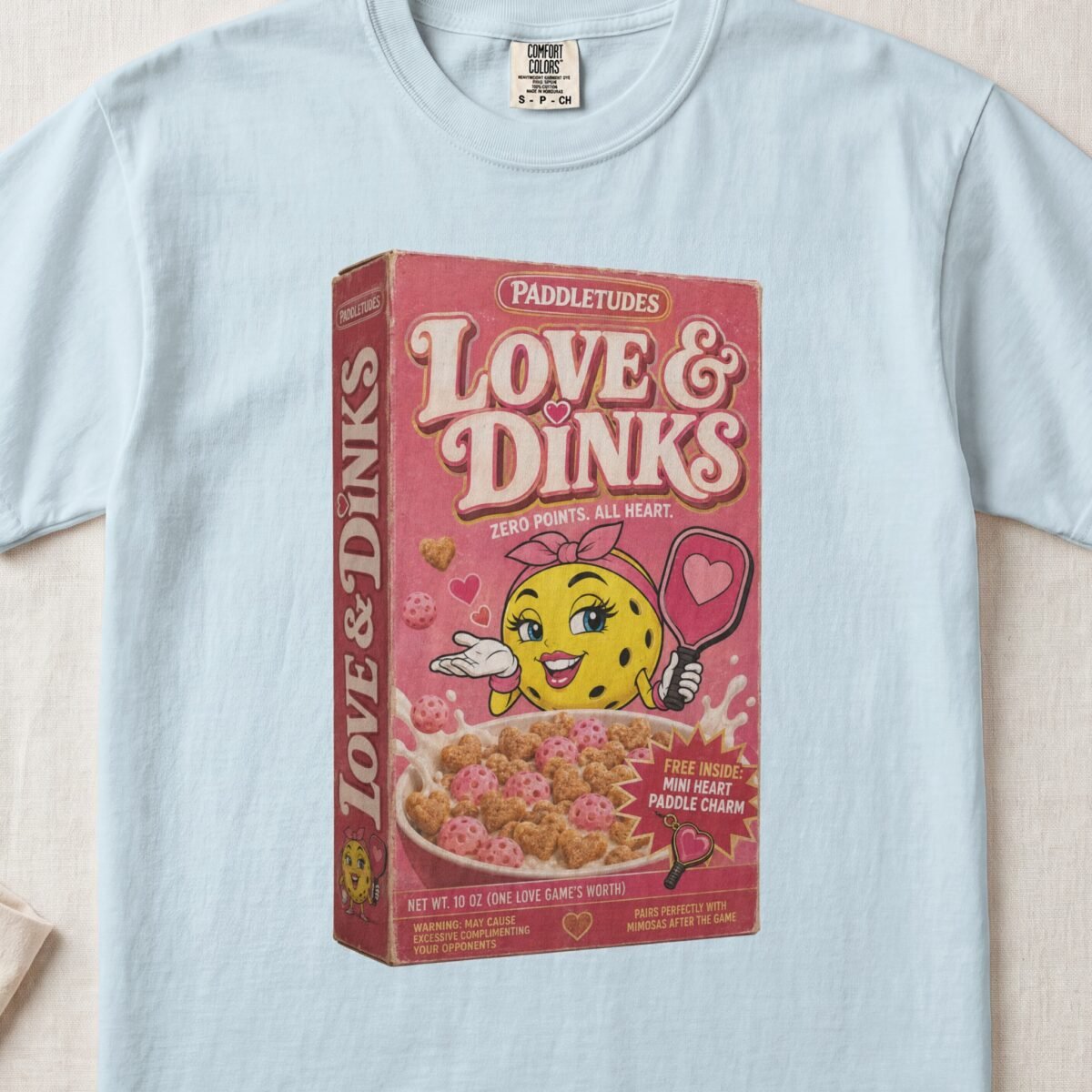
Love & Dinks
$39.99 Select options This product has multiple variants. The options may be chosen on the product page