Retro Comfort Colors 1717
Breaking Balls
$39.99
- Comfort Colors 1717 heavyweight cotton
- Original design · printed to order
- U.S. print partners
The Pickleball Transformation on a Retro VHS Graphic Tee
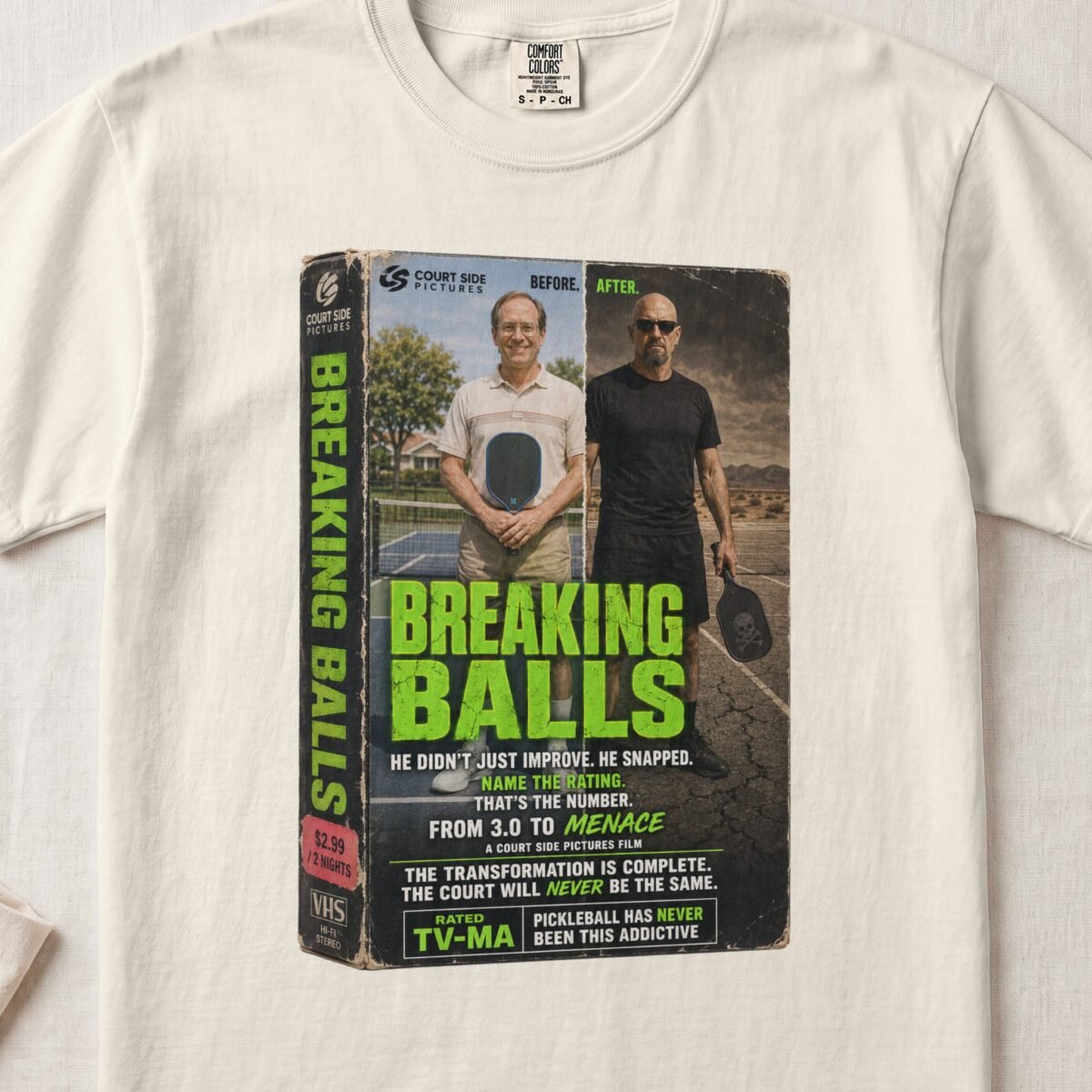
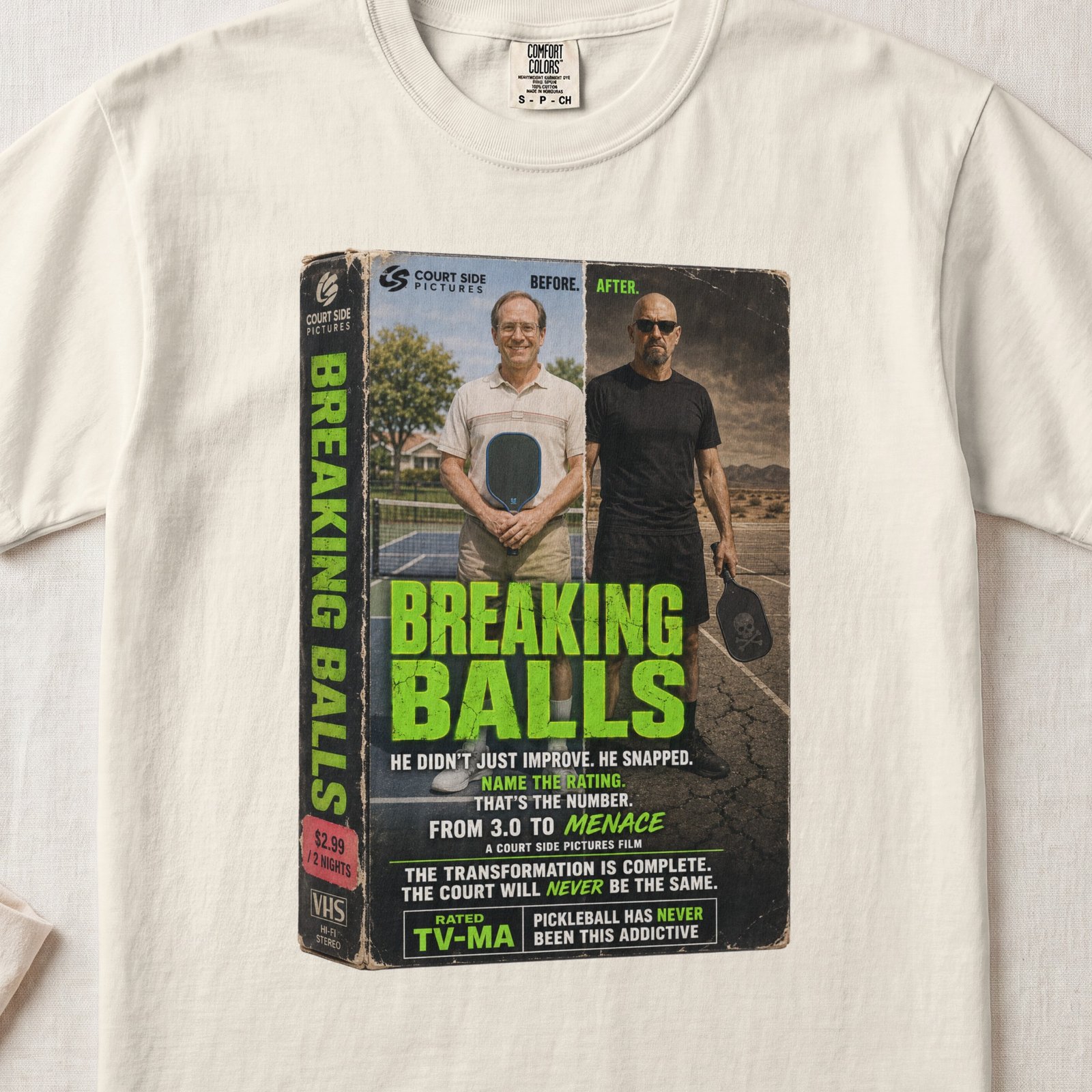
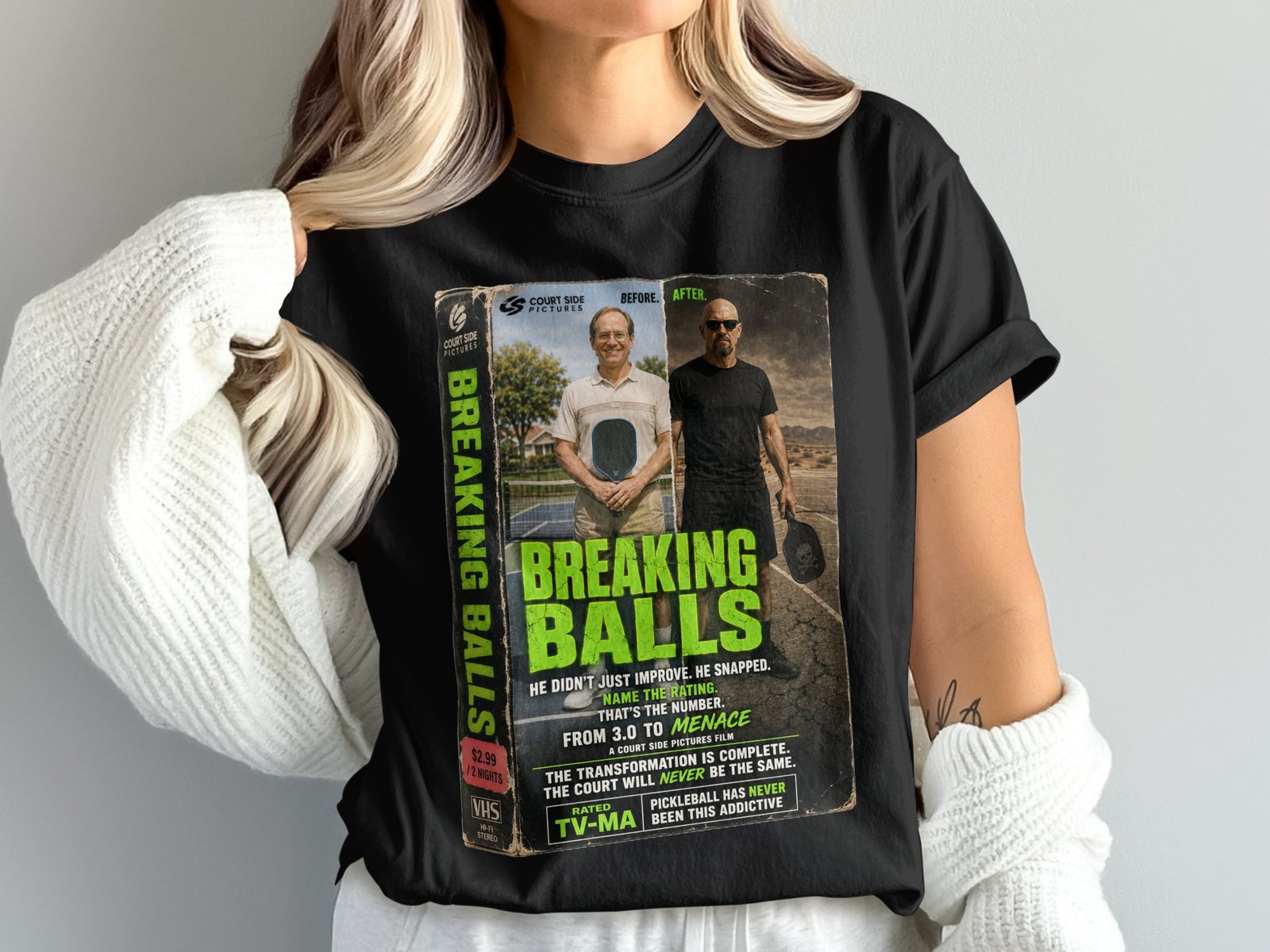
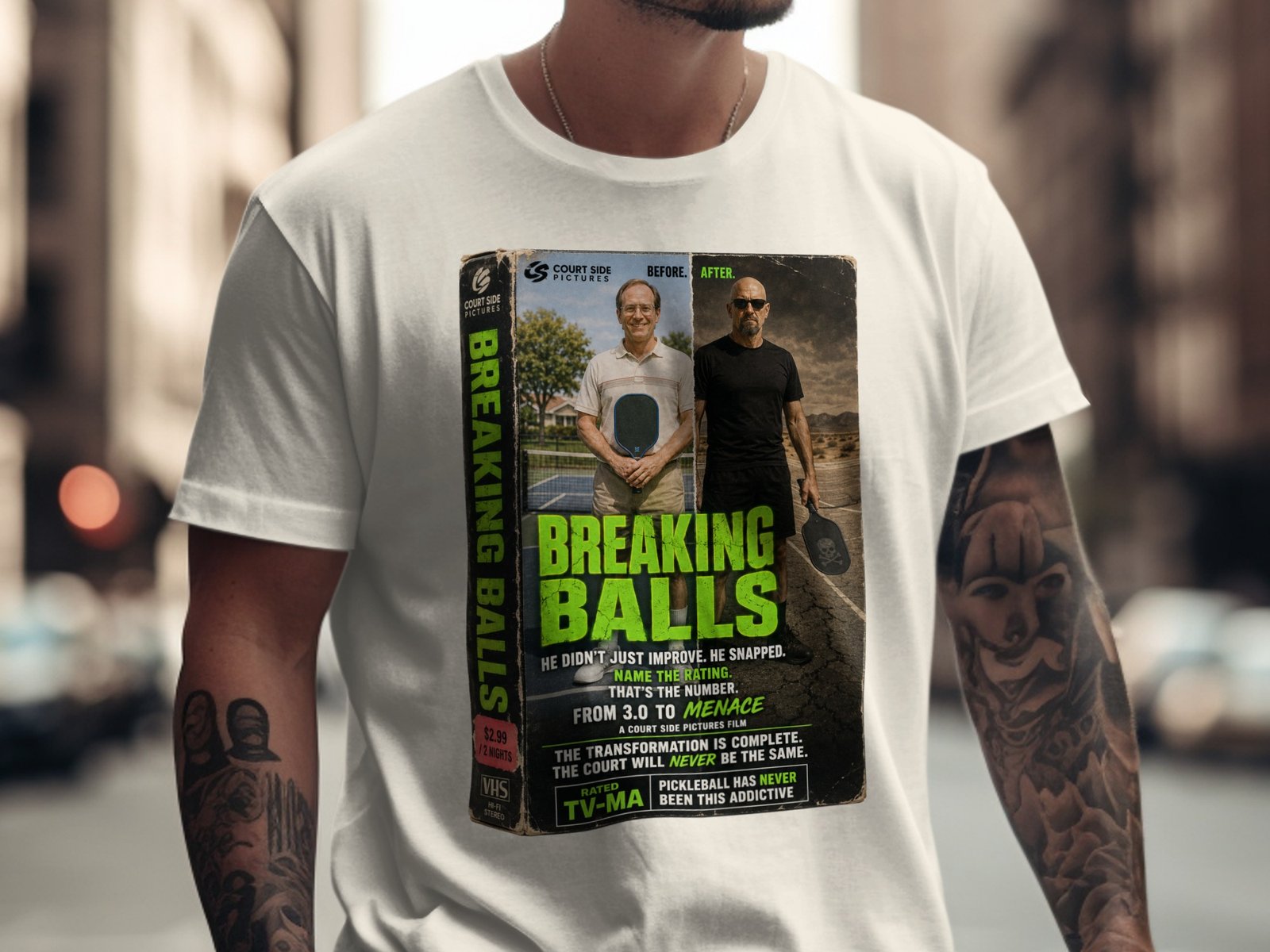
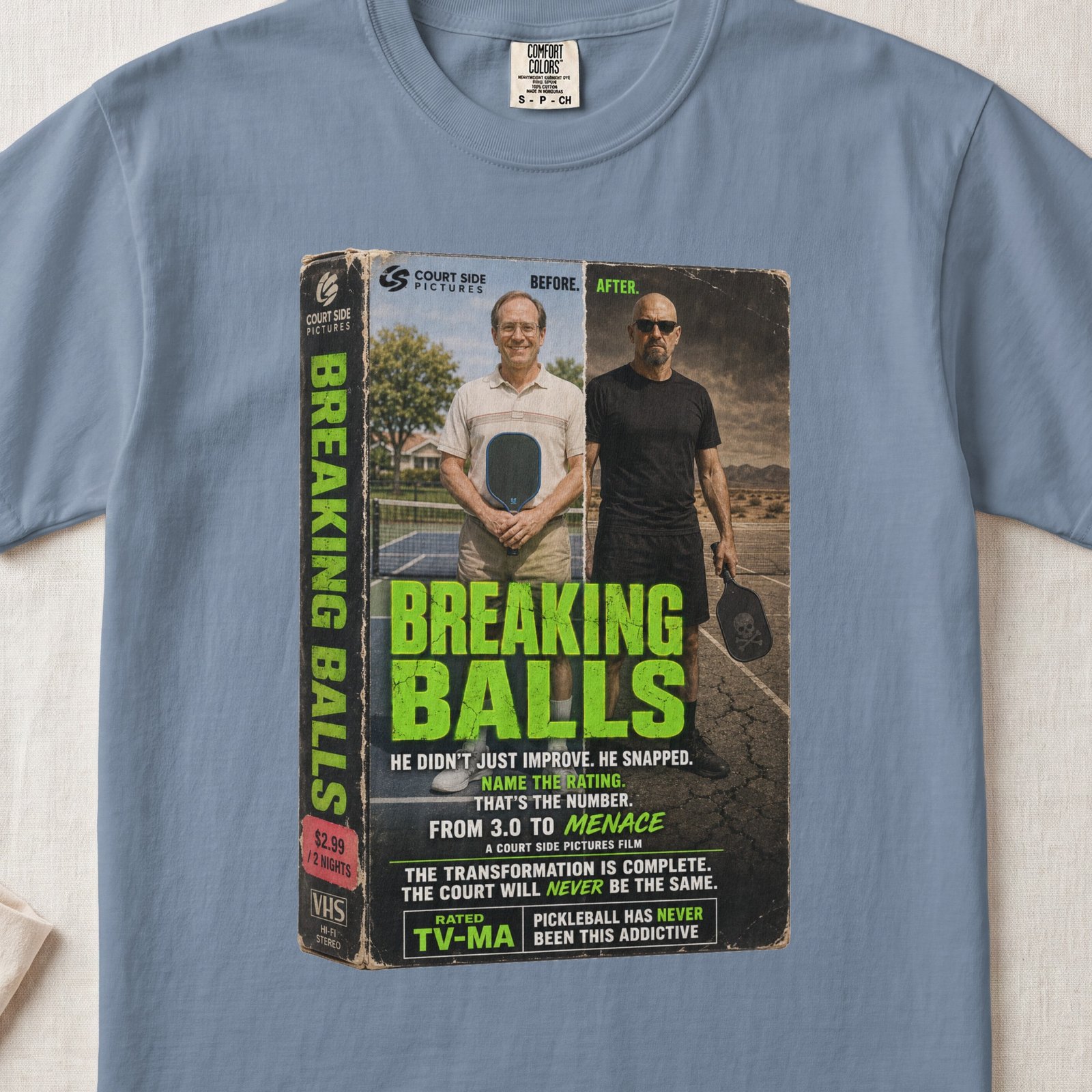
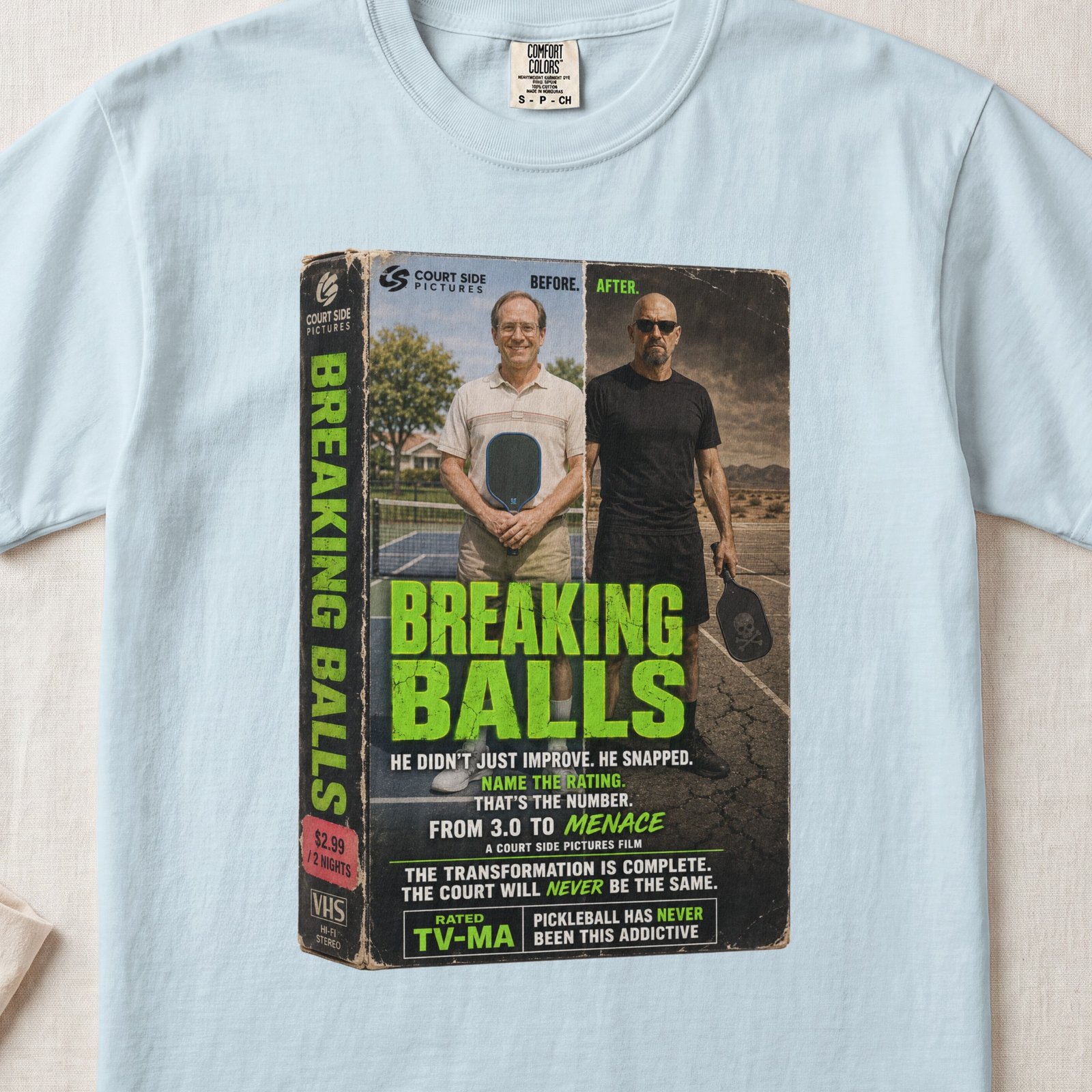
Funny pickleball shirt featuring Breaking Balls — the fake VHS cover for the player who didn’t just pick up a paddle and get better. They picked up a paddle and became someone else entirely. Printed on a garment-dyed Comfort Colors 1717 heavyweight tee.
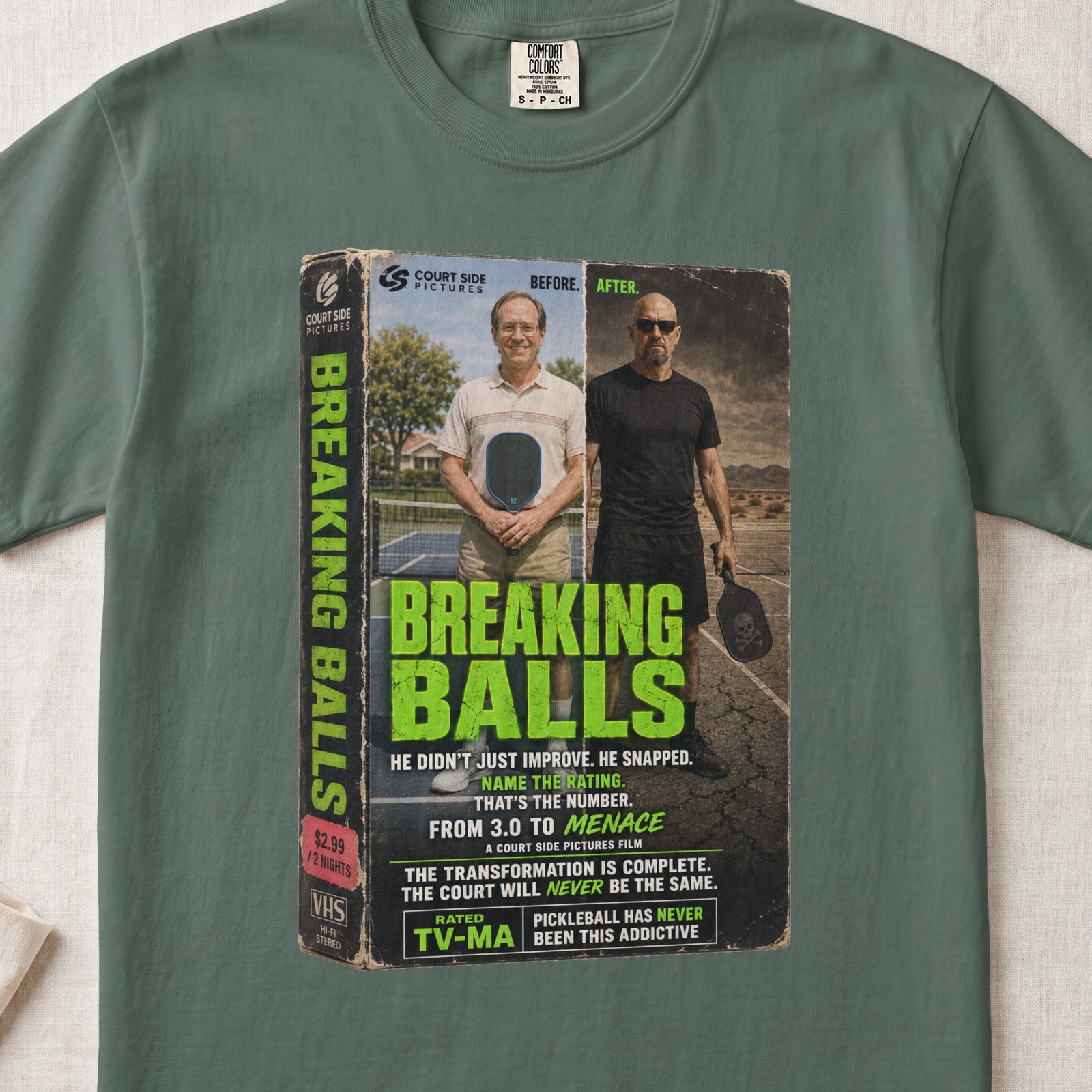
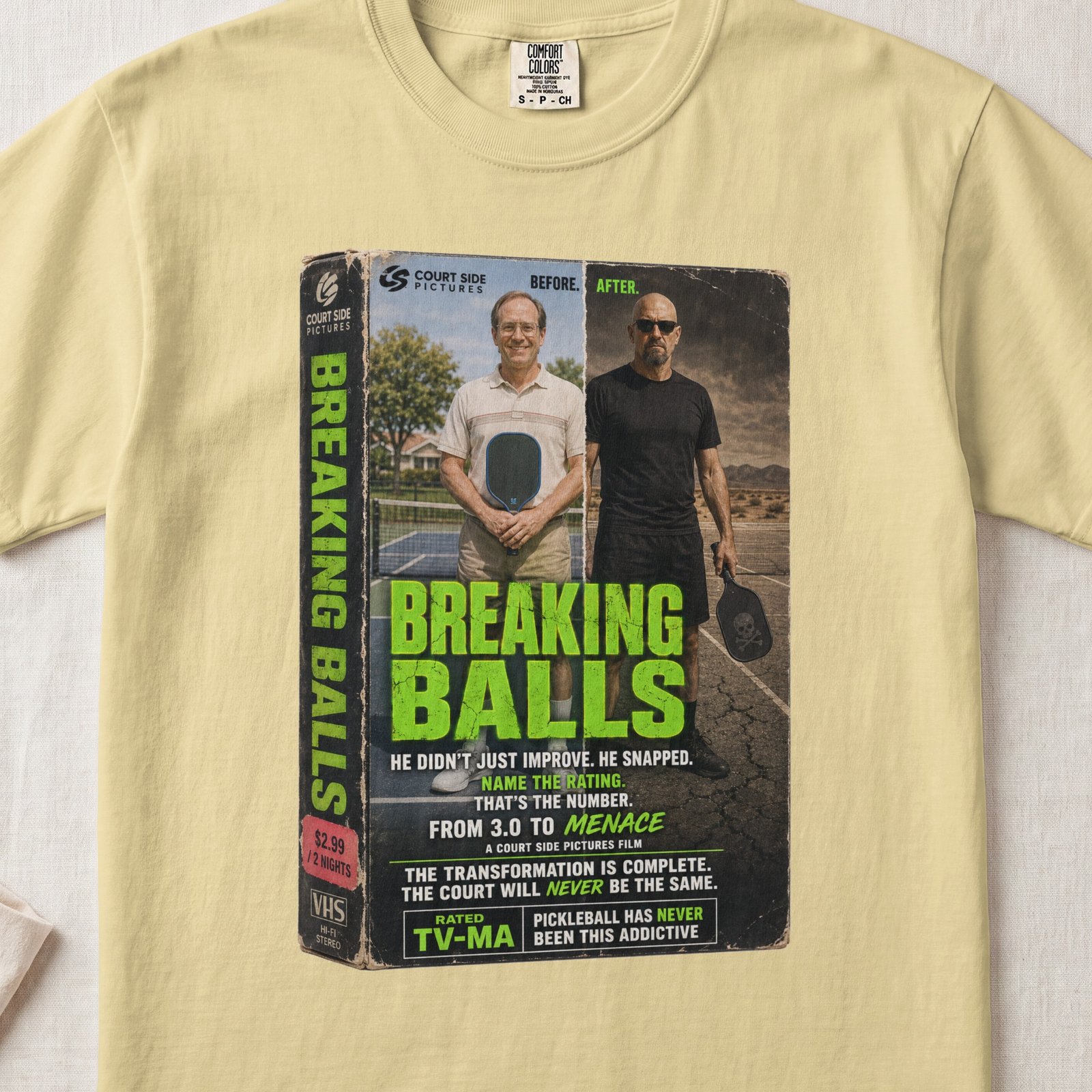
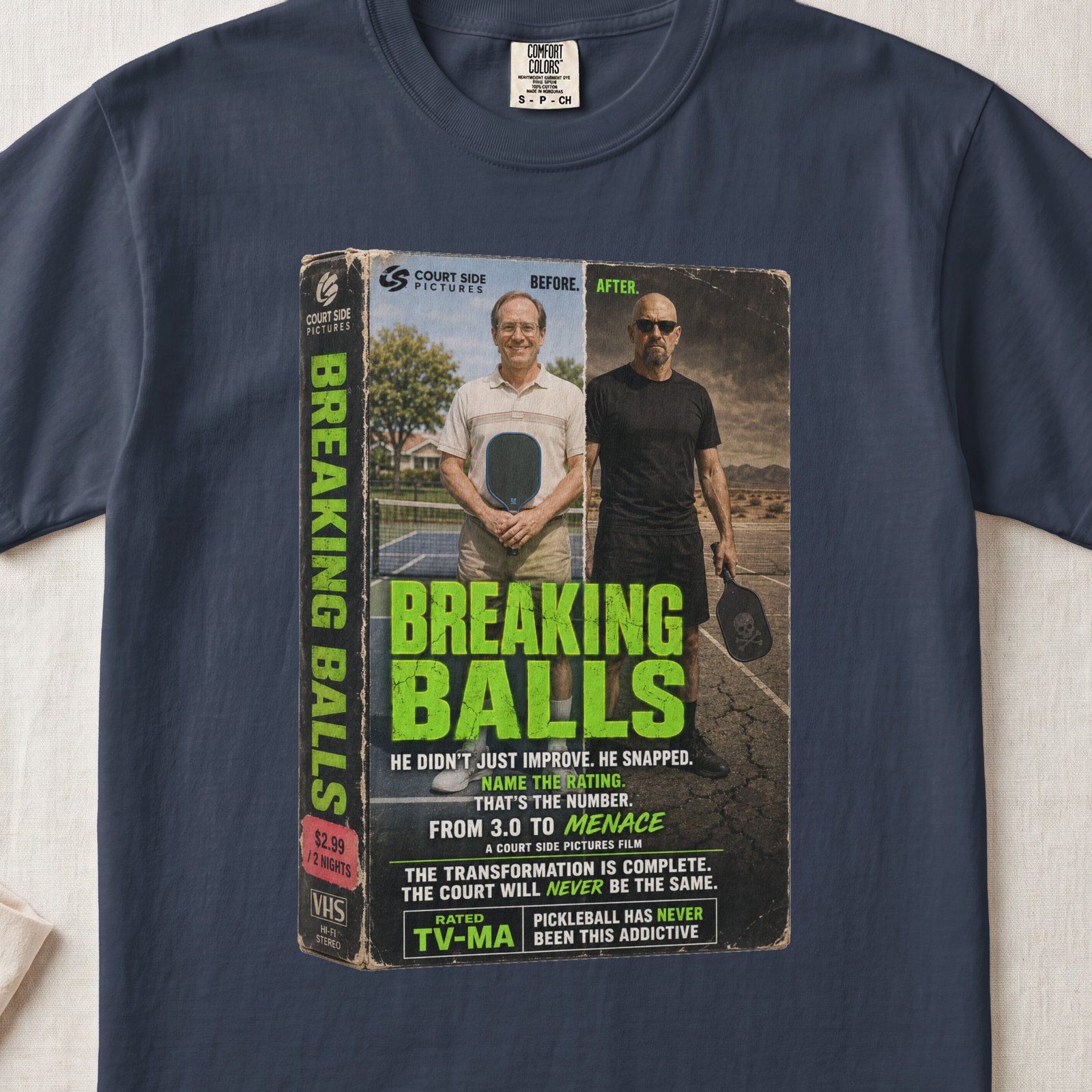
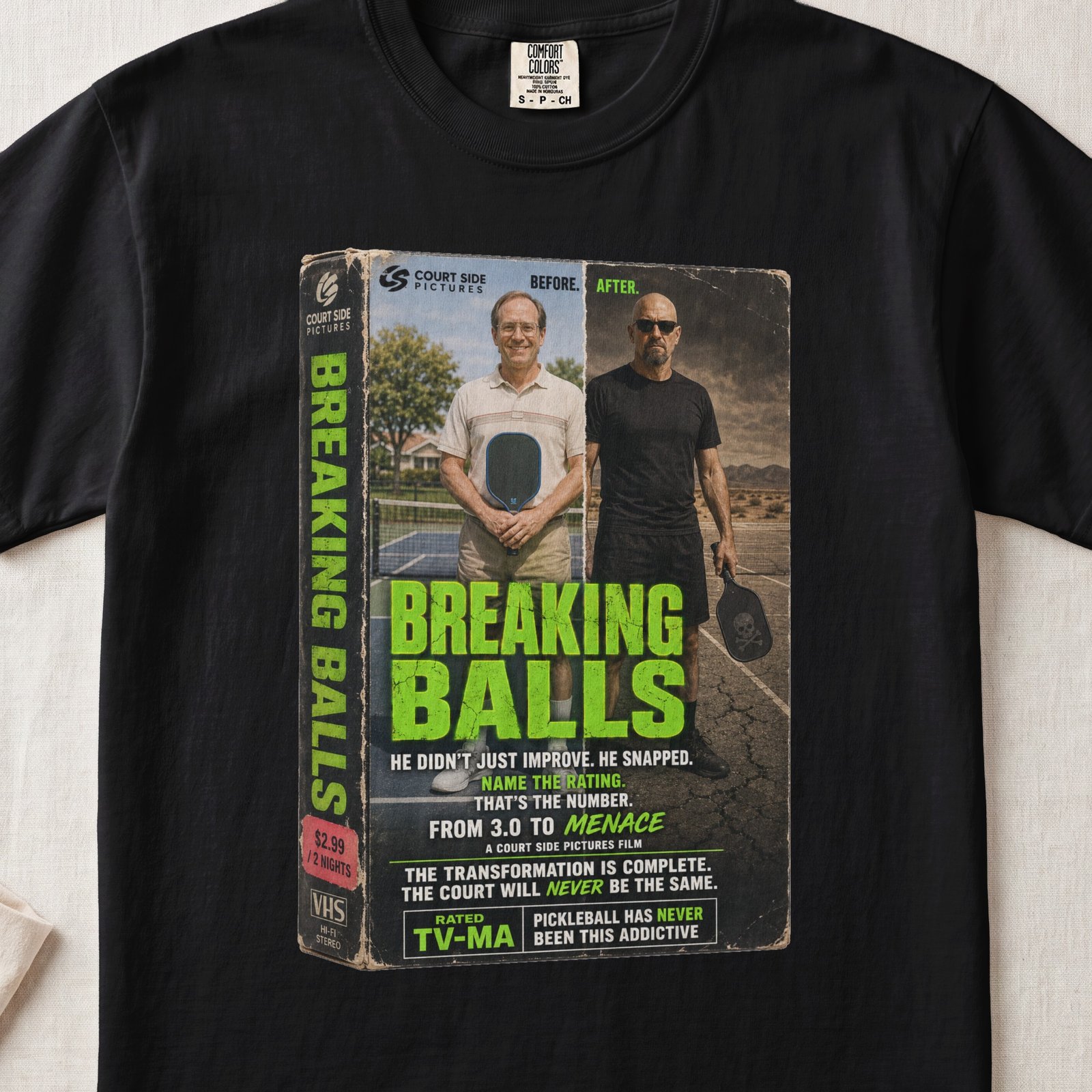
The cover tells the whole story in one split screen. On the left: Before. Khaki shorts, polo shirt, wire-rim glasses, a polite smile, and a basic blue paddle held with both hands on a well-maintained suburban court. On the right: After. Bald. Black shirt. Sunglasses. A skull-and-crossbones paddle hanging from one hand on a cracked desert court under storm clouds. He didn’t just improve. He snapped. A Court Side Pictures film. Rated TV-MA. $2.99 for two nights at the video store. The transformation is complete. The court will never be the same.
Every detail on this VHS box was written for the player who knows exactly what happened — because it happened to them. “Name the rating. That’s the number.” The line only lands if you’ve watched someone go from not knowing what DUPR stands for to checking their score after every single session. “From 3.0 to menace.” That’s not hyperbole for at least half the people playing competitive pickleball right now. They started playing because a friend invited them. Six months later they own three paddles, have opinions about paddle cores, and get genuinely upset about a bad call on a recreational Tuesday. The before-and-after on this shirt isn’t fiction. It’s a documentary.
The person who wears this shirt is the After. They know they’re the After because they remember being the Before. They remember when pickleball was something they did on Saturday mornings when the tennis courts were full. They remember thinking it was just a fun little game. Then something clicked — a rally that went thirty shots, a tournament where they won their bracket, a lesson where a coach told them their hands were fast enough to compete — and the casual player died. The competitive player was born. Now they have a bag with two paddles, a towel, a water bottle, and a spare set of court shoes. Their phone has three pickleball apps. Their DUPR rating is pinned to their home screen. They are the person on this VHS cover, and they are not going back.
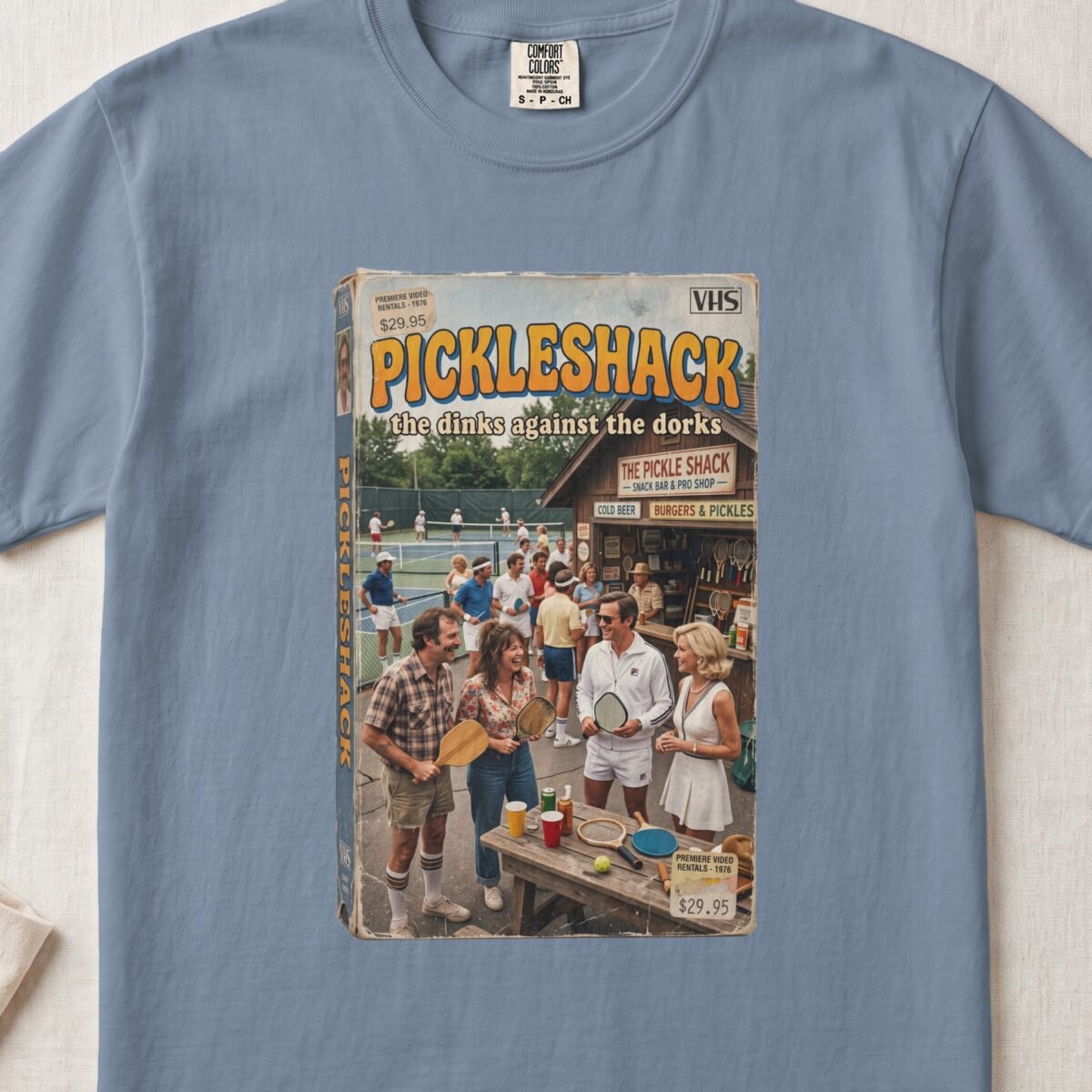
If you’re buying this for someone, you watched the transformation happen in real time. It started with “sure, I’ll try it.” Then it was “I signed up for a league.” Then they bought the paddle. Then the second paddle. Then they started waking up at 6 a.m. to get court time before work, and suddenly every vacation itinerary includes “I found courts near the hotel.” This is the gift for that person — the spouse who lost a partner to the sport, the friend who hasn’t had a conversation without the word “dink” in three months, the doubles partner who remembers what they were like before they got good. If the VHS shelf appeals to you, the PickleShack captures the golden-era country club comedy — wooden paddles, cold beer, and the dinks against the dorks. And Mixed Doubles Misery is the horror film about the doubles partner who won’t let you switch — ever.
The retro product side of the collection takes the same obsession in a different direction. The Pocket Paddle is a fake 1977 mail-order novelty product for the player who’d carry a folding paddle in their fanny pack. The Kitchen Crunch cereal box turns the non-volley zone into a breakfast experience. Same universe, different format — all of it printed on Comfort Colors 1717 and all of it built for people whose entire personality shifted the day they stepped onto a court.
Printed on a Comfort Colors 1717 garment-dyed heavyweight tee with water-based DTG ink — sizing and care details here.
What Is a 3.0 Pickleball Player
A 3.0 pickleball player is an intermediate-level player on the DUPR scale, which rates players from 2.0 to 8.0 based on actual match results. At 3.0, a player can sustain rallies, understands basic positioning, and knows the rules — but strategy, shot selection, and consistency under pressure are still developing.
The 3.0 is the Before on this shirt. They show up in comfortable clothes with whatever paddle was on sale. They enjoy the game. They play for fun. They don’t own wristbands or have opinions about grip size. They say “nice shot” without calculating whether that dink was actually tactically sound or just lucky. There is nothing wrong with being a 3.0. Most players start there. The sport was designed to be accessible at that level, and millions of people play happily at 3.0 for years without any desire to change.
But some players hit a threshold where the competitive instinct activates. They start noticing patterns — where their opponent is weak, which return angle opens the court, why the player across the net keeps winning with soft shots instead of power. That awareness is the beginning of the transformation. A 3.0 who starts drilling, takes a lesson, or enters their first tournament is a different player within three months. The DUPR system tracks that change in real time, updating after every match. The number becomes the obsession. From 3.0 to 3.5 feels like a promotion. From 3.5 to 4.0 feels like joining a different sport. From 4.0 up, you’re the person on the right side of this VHS cover — and you’re never going back to the polo and the wire-rim glasses.
Why Do Pickleball Players Get So Competitive
Pickleball’s unique combination of a visible rating system, short games that deliver instant feedback, a low barrier to entry that makes early improvement feel rapid, and a community structure built around leagues and tournaments creates a competitive loop that most recreational sports don’t have. Players get competitive because the game is engineered to reward improvement at every level.
Most sports don’t give you a number that moves after every match. Pickleball does. The DUPR rating system updates dynamically — beat someone ranked above you and your number climbs. Lose to someone ranked below you and it drops. That constant feedback creates what psychologists call a variable reinforcement schedule — the same mechanism that makes games and social media compulsive. You’re always one good session away from a higher number, and that next session is always available because open play runs every day at most facilities.
The community structure accelerates it. Recreational pickleball has leagues, ladders, round robins, and tournaments at every skill level, in every city, nearly every week. There is always a next event. Always a next level. A casual player who enters one local tournament and wins a match is now a tournament player. A tournament player who moves from 3.5 to 4.0 is now comparing themselves to players who were unreachable six months ago. The rating makes the improvement visible. The tournaments make it social. The short game format means you can play five competitive matches in a single evening and feel every win and every loss. That combination doesn’t exist in weekend golf or rec league basketball. It exists in pickleball, and it is why the Before on this shirt becomes the After faster than anyone expects — including the person holding the paddle.
-
Pickle Shack
$39.99 Select options This product has multiple variants. The options may be chosen on the product page -
The Pop Stop
$39.99 Select options This product has multiple variants. The options may be chosen on the product page -
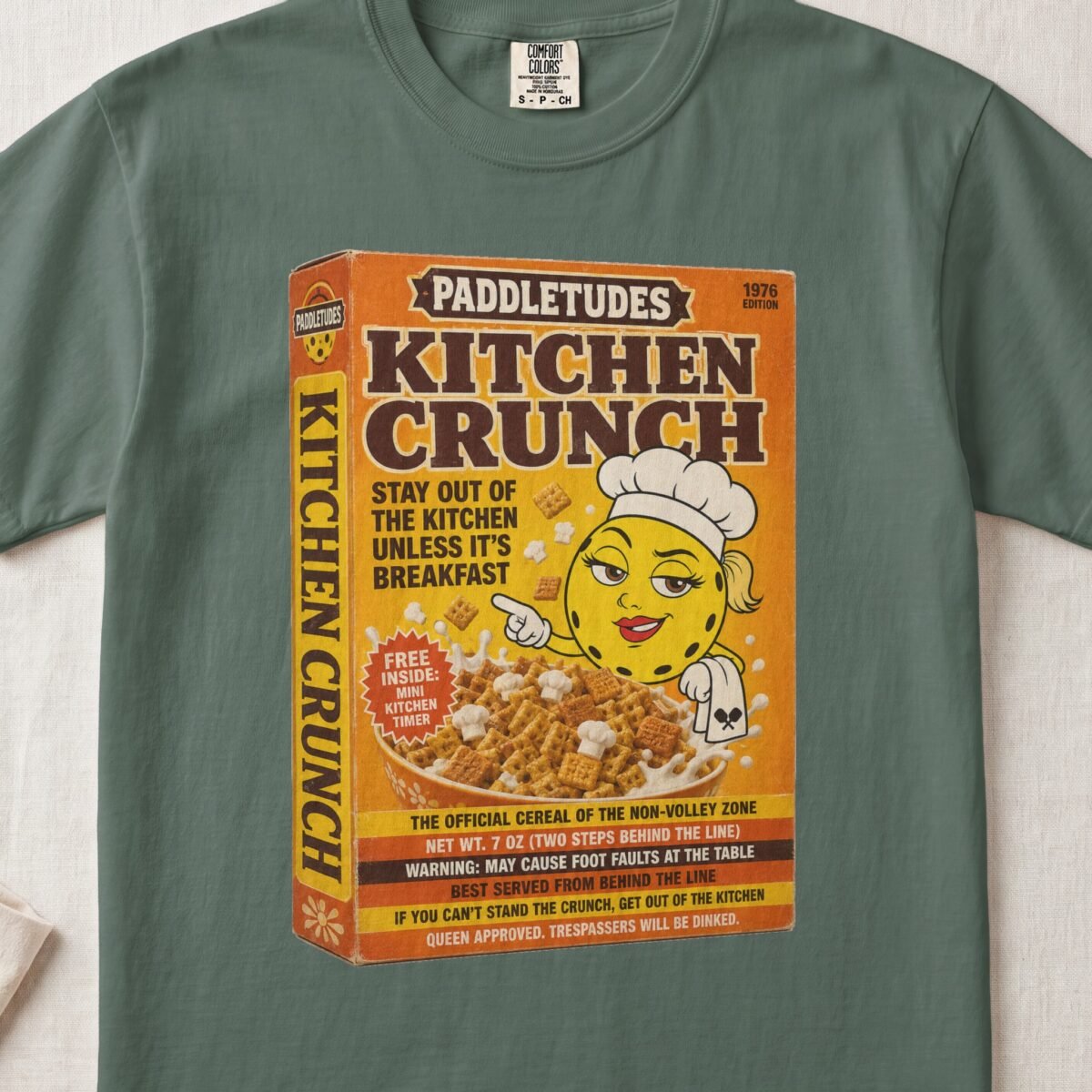
Kitchen Crunch
$39.99 Select options This product has multiple variants. The options may be chosen on the product page