Retro Comfort Colors 1717
One Flew Over The Pickleball Net
$39.99
- Comfort Colors 1717 heavyweight cotton
- Original design · printed to order
- U.S. print partners
Pickleball Addiction Is Real — This Retro Movie Shirt Proves It
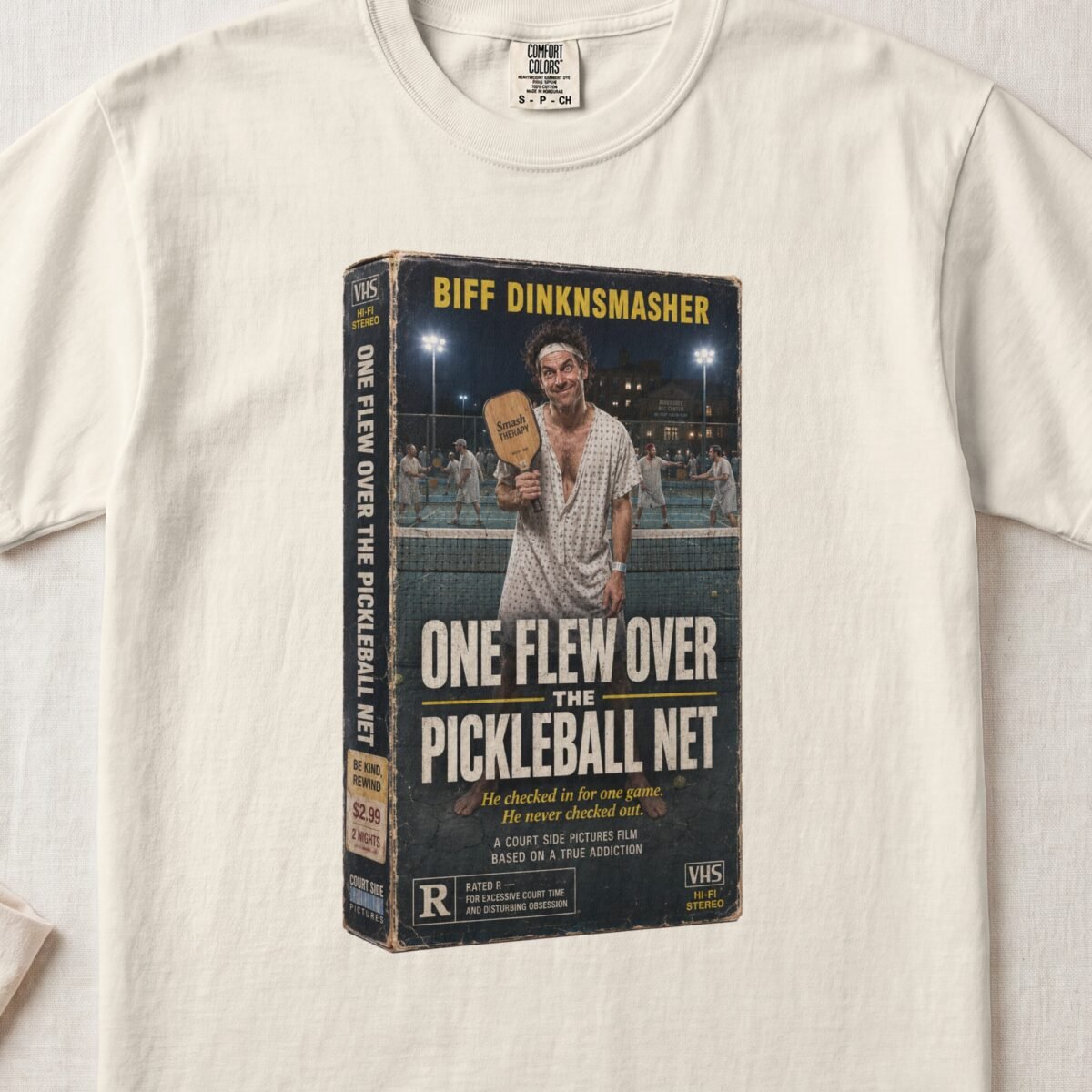
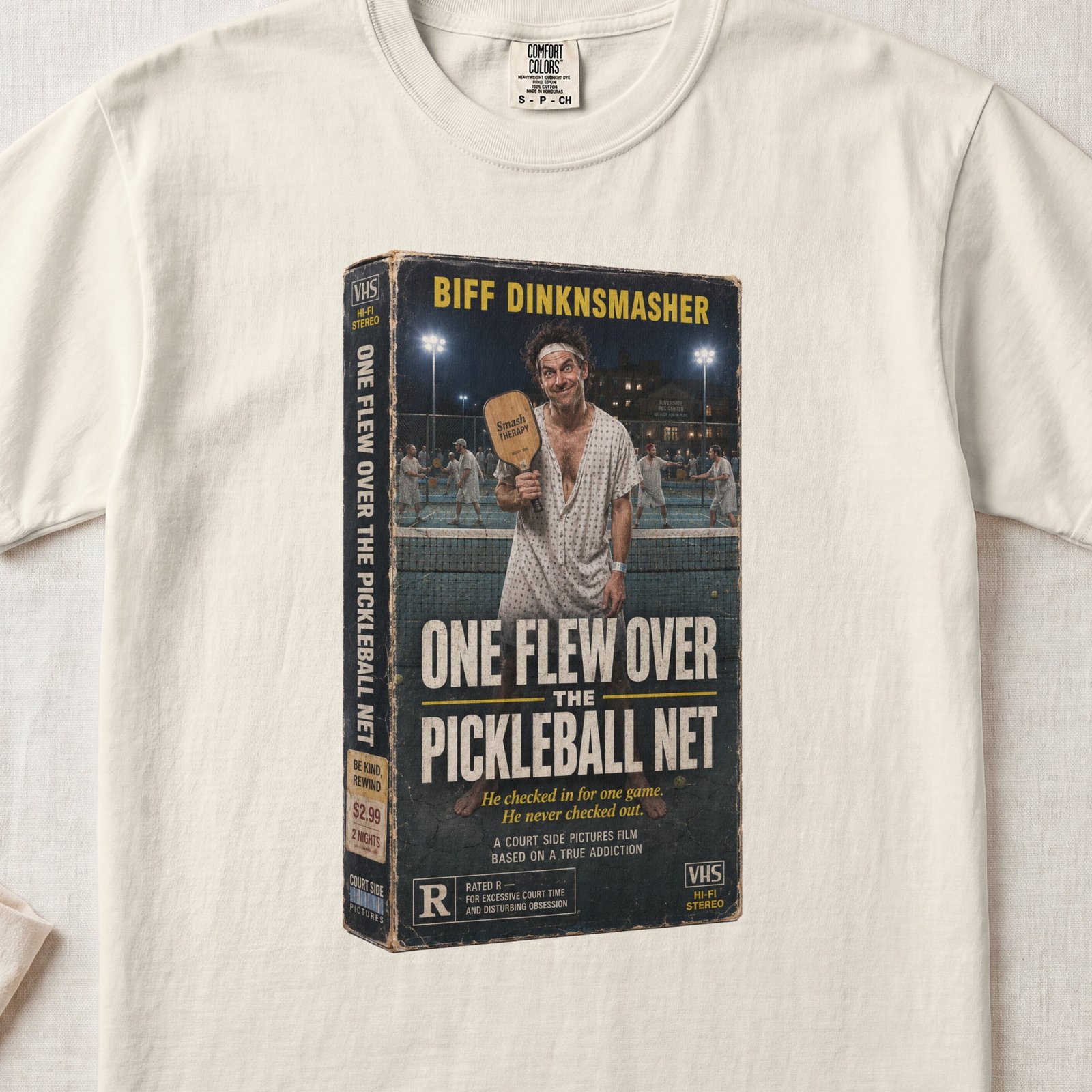
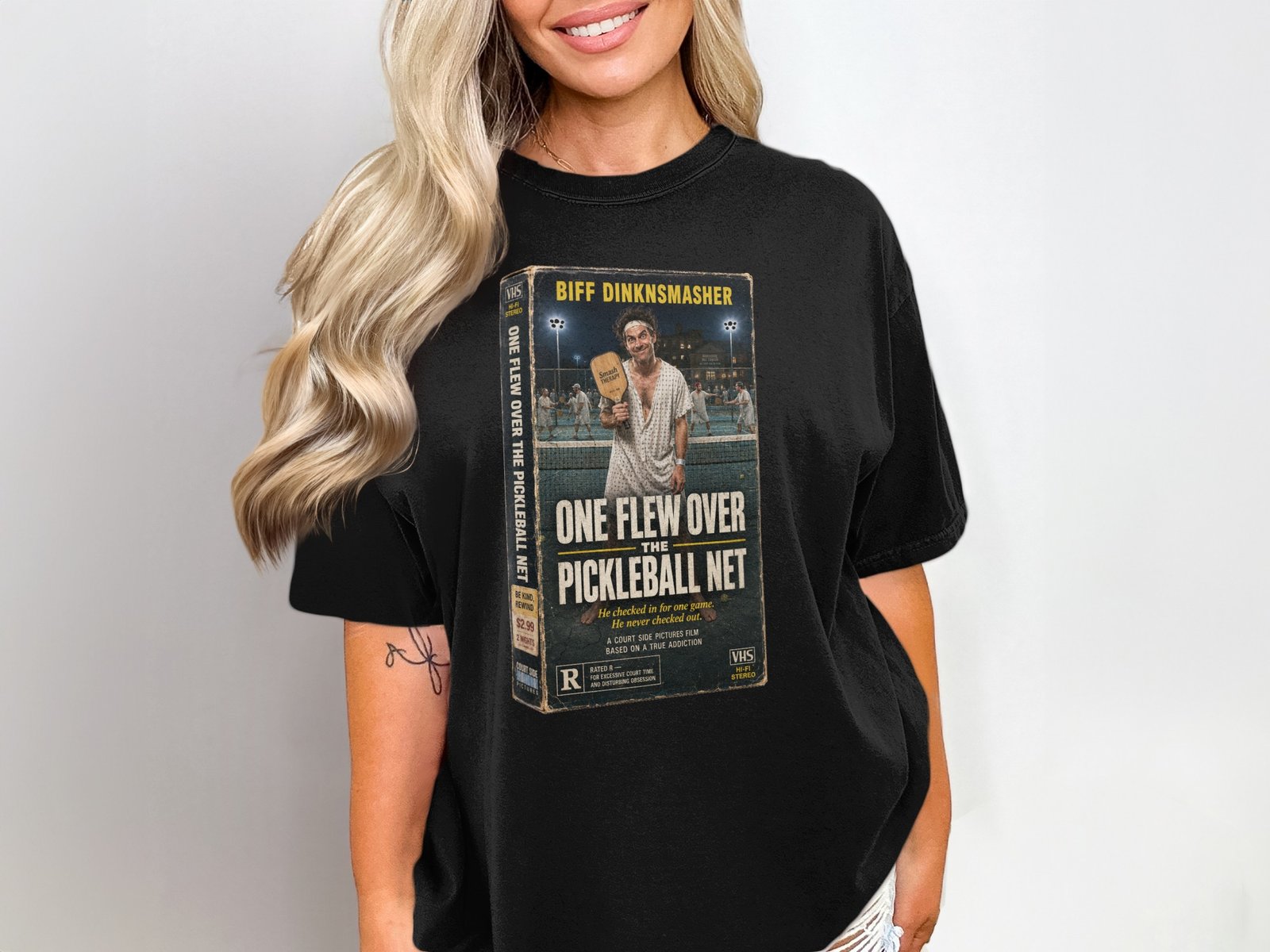
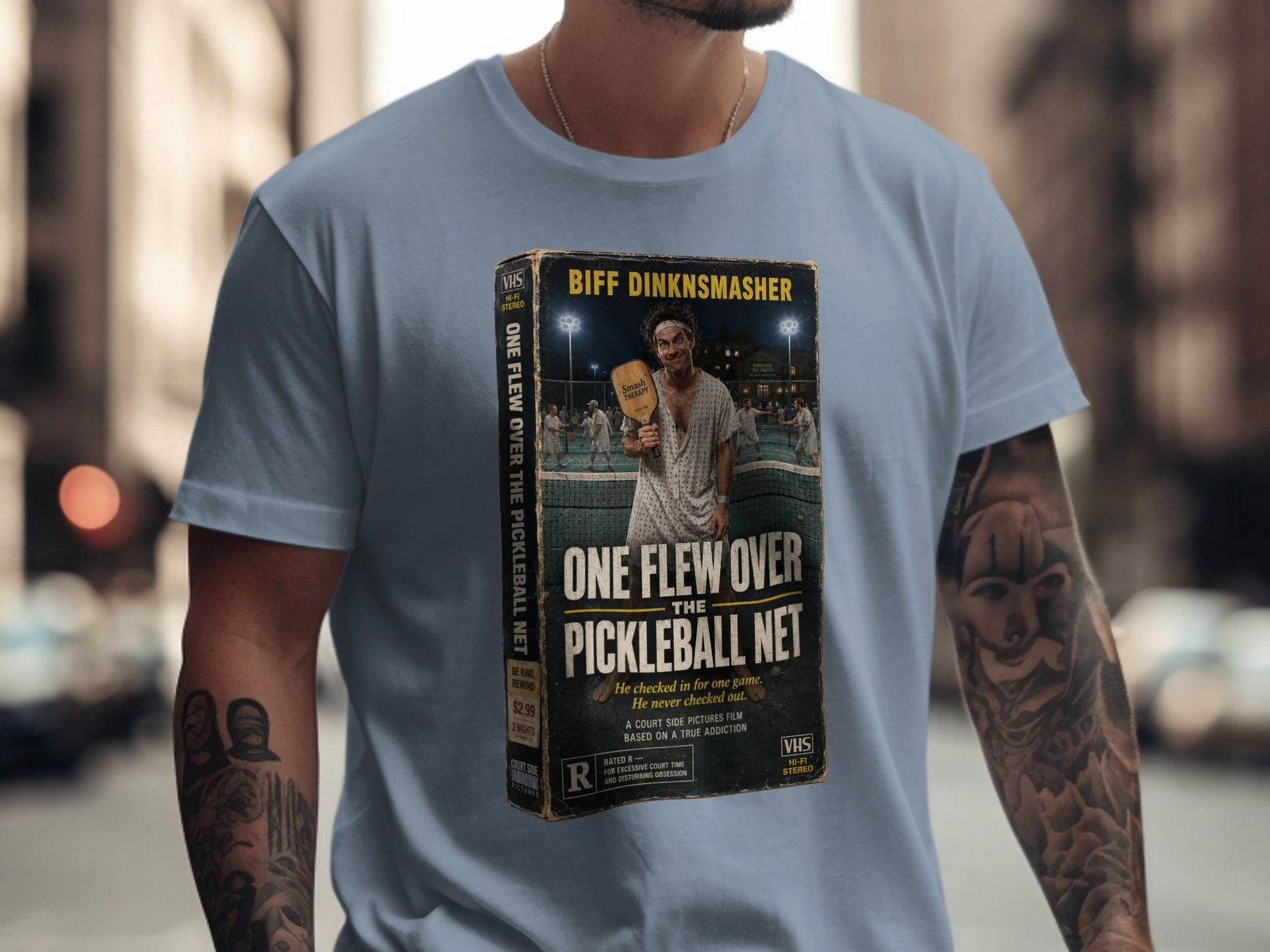
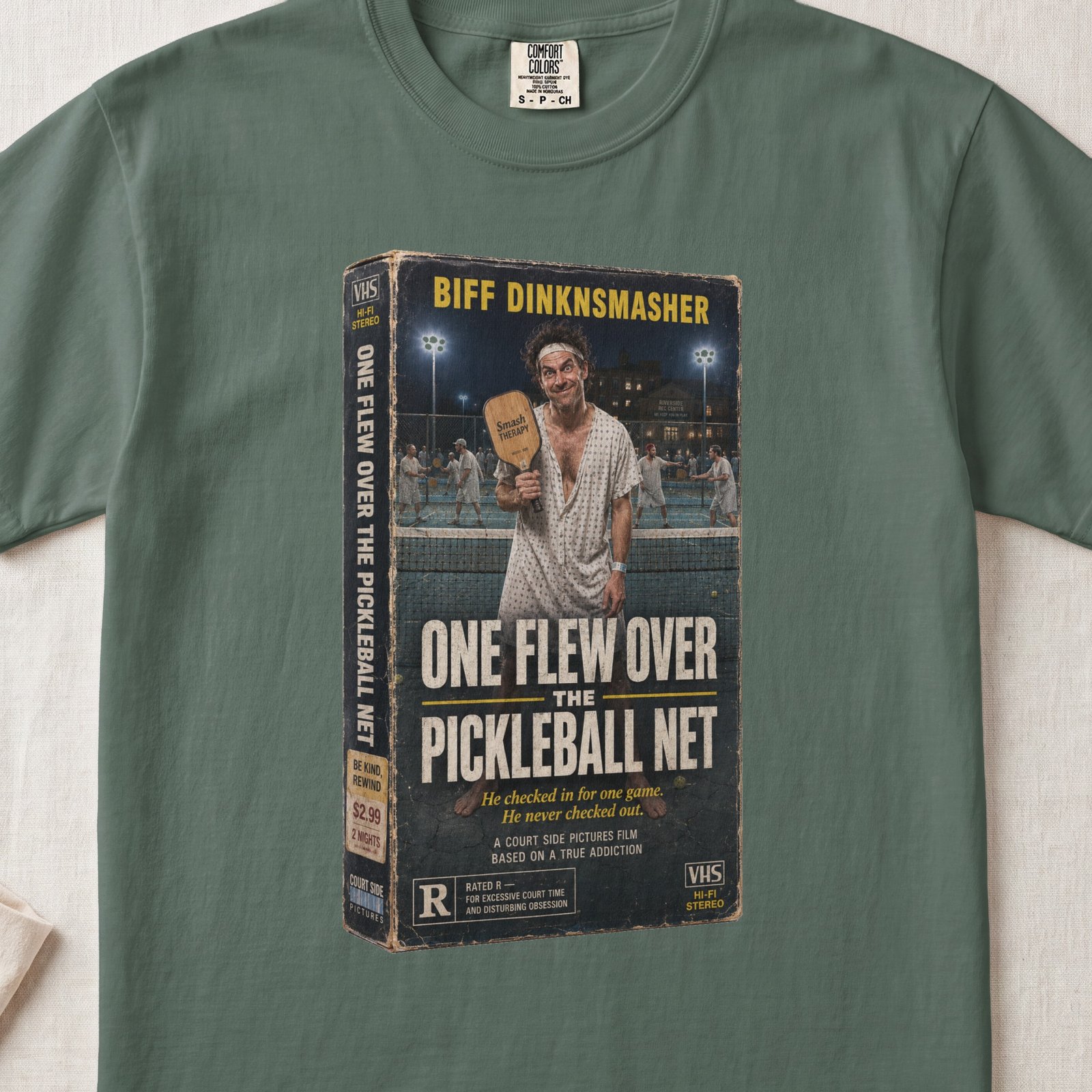
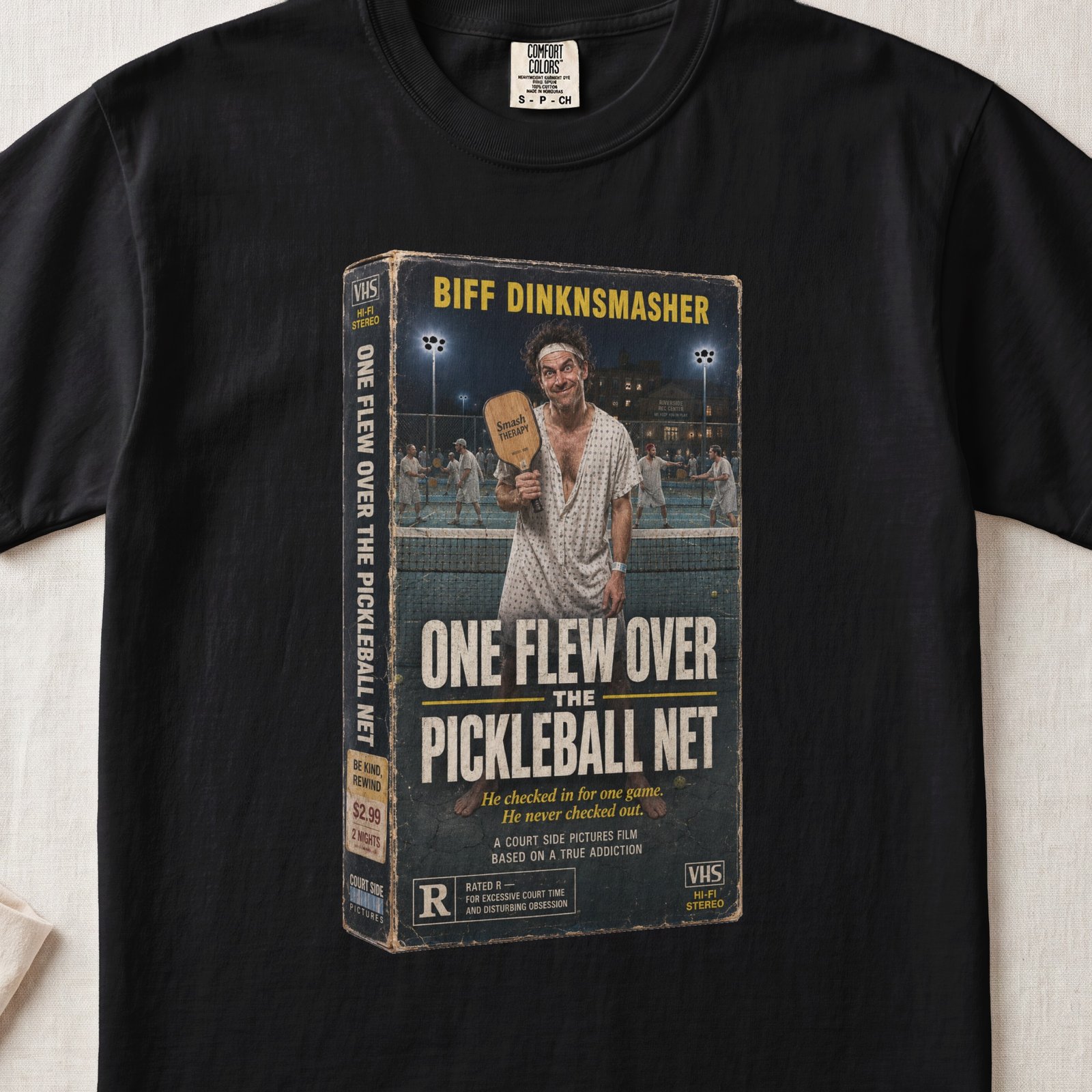
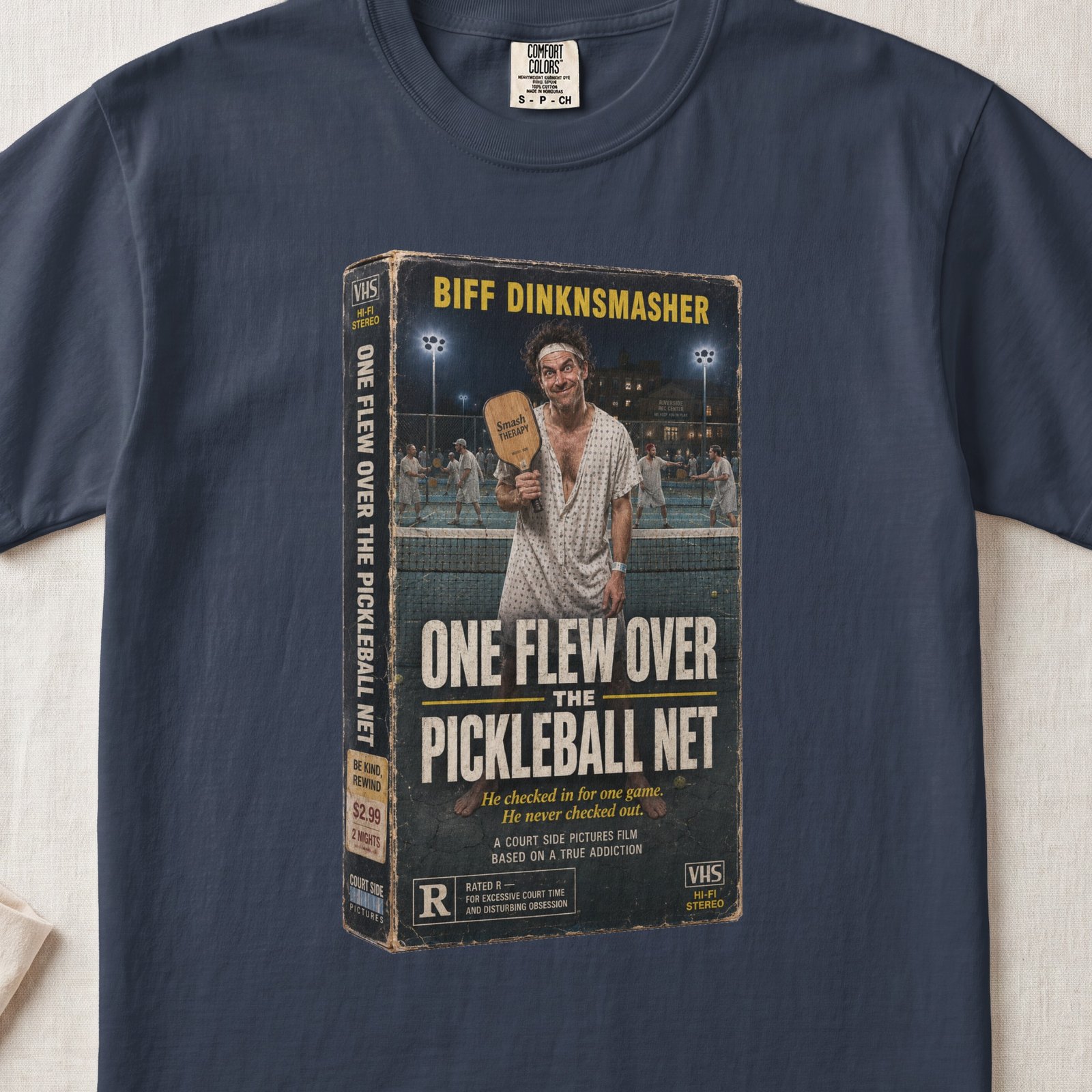
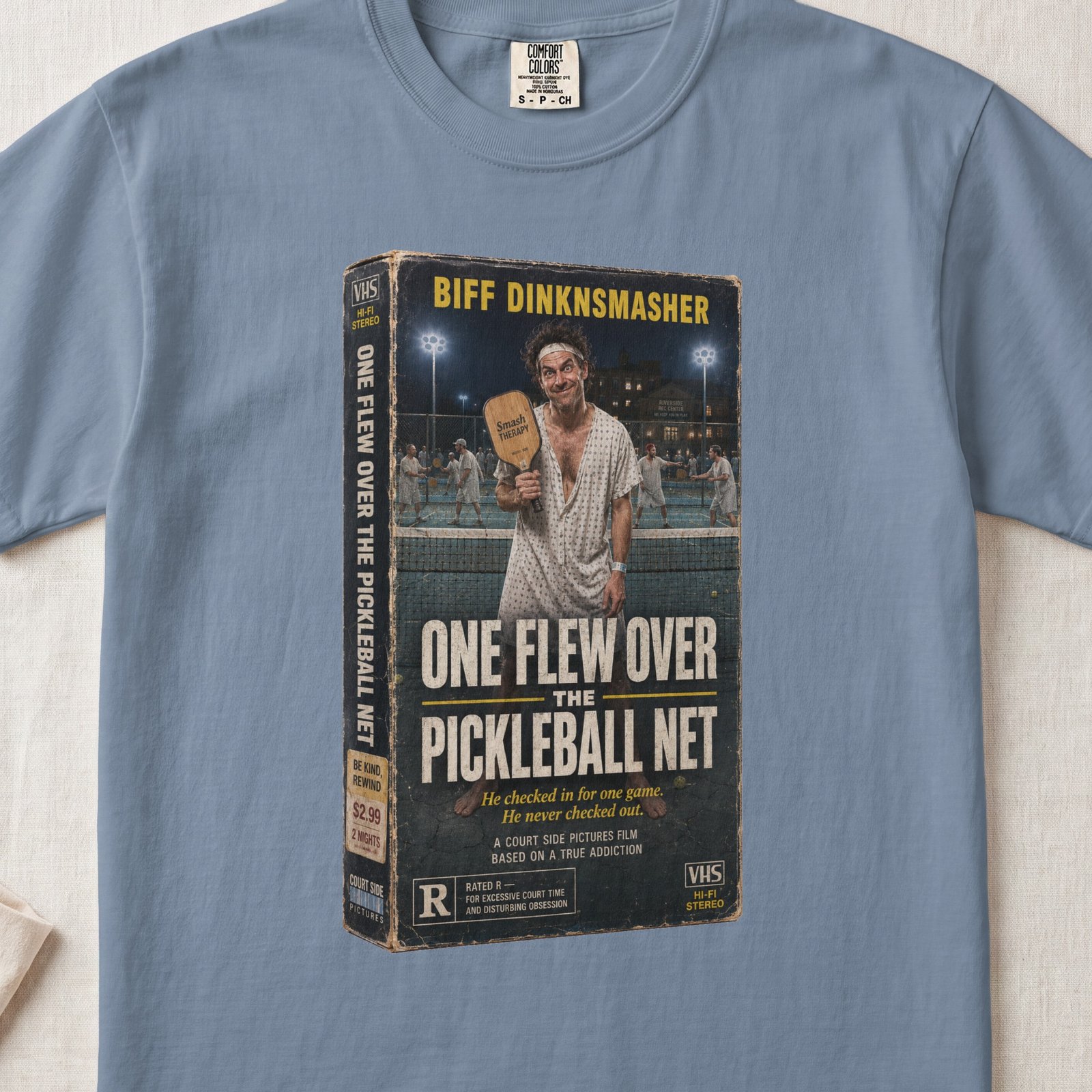
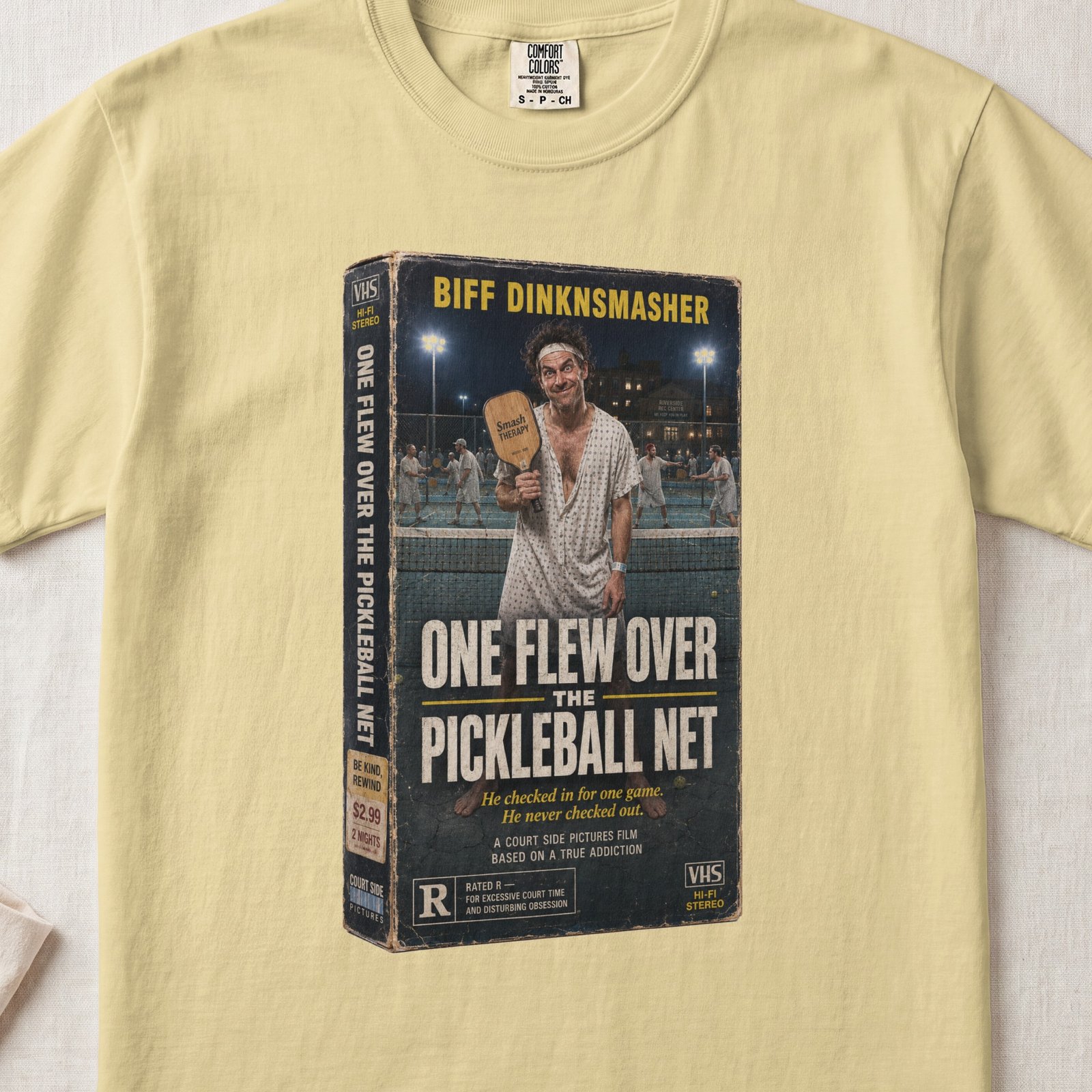
He checked in for one game. He never checked out. One Flew Over the Pickleball Net is a VHS pickleball shirt on a Comfort Colors 1717 — based on a true addiction.
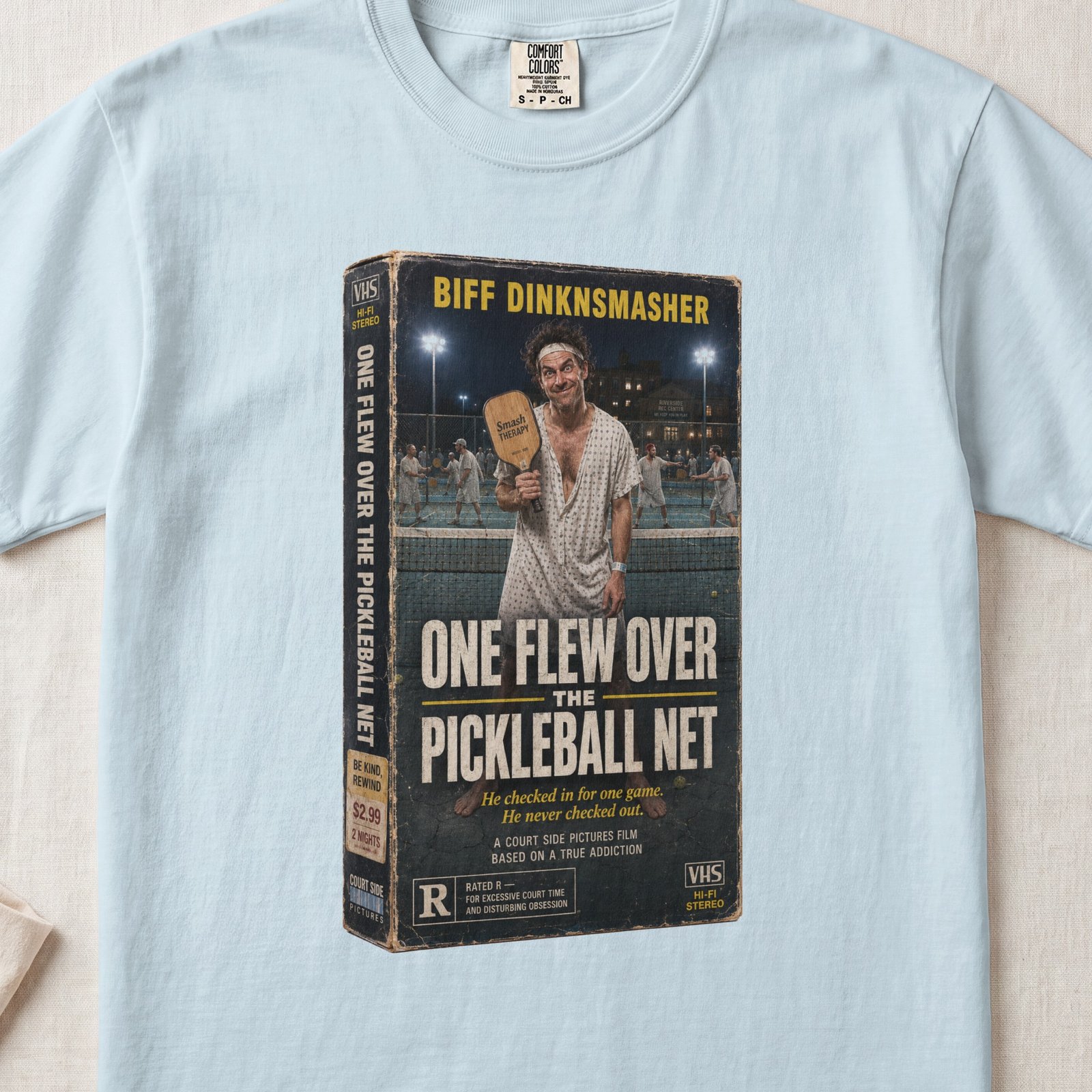
Biff Dinknsmasher stands barefoot on an outdoor court at Riverside Rec Center, wearing a hospital gown, a headband, a wristband, and a grin that says the treatment plan is going exactly as he designed it. His paddle reads “Smash Therapy” in handwritten marker. Behind him, under the floodlights, the rest of the ward is playing too — half a dozen figures in matching gowns running a full rotation on the courts while the building’s windows glow in the background. It’s nighttime. The session should have ended hours ago. Nobody is leaving. A Court Side Pictures Film. $2.99 for two nights. RATED R — FOR EXCESSIVE COURT TIME AND DISTURBING OBSESSION.
The tagline is the whole diagnosis: “He checked in for one game. He never checked out.” And below it, the line that makes it a documentary instead of fiction: “BASED ON A TRUE ADDICTION.” The humor works because pickleball addiction isn’t a metaphor — it’s the most commonly used word in the sport’s own community to describe what happens when someone picks up a paddle for the first time and surfaces three months later with a DUPR rating, a paddle bag, two compression sleeves, and a social calendar that revolves entirely around court availability. The SFIA reported 24.3 million American players in 2025, a 480% increase since 2020. Those numbers don’t come from moderate interest. They come from the kind of escalation this VHS cover illustrates — one game at a rec center turning into a lifestyle that reorganizes everything around it.
The person who wears this shirt didn’t start here. Six months ago they didn’t own a paddle. A year ago they’d never heard the word “dink” used outside of a swimming pool. Then someone at work mentioned there was open play at the park on Saturday morning, and they went because they had nothing better to do. The first session was fine — fun, casual, a decent workout. By the third session they’d downloaded the Pickleheads app to find other courts in the area. By the sixth session they’d bought their own paddle. By month two they were playing four mornings a week and had rearranged their work schedule to make it happen. The hospital gown on this VHS cover is funny because it implies the person needs institutional help. The reason it sells is that the person wearing the shirt agrees with the diagnosis and has no intention of seeking treatment.
The “Smash Therapy” paddle is the detail that separates this shirt from a generic pickleball humor tee. It’s a treatment plan that IS the condition — therapy through the same activity causing the problem, prescribed by a patient who has appointed himself chief of the ward. That’s not just a sight gag. It’s an accurate description of how competitive pickleball players actually talk about the sport. “I need to get on the court” isn’t a preference. It’s a coping mechanism. A bad day at work gets processed through a 90-minute open play session. A stressful week gets solved by a Saturday morning round-robin that runs until someone’s knees make the decision their brain won’t. The physiological loop is real — the combination of cardiovascular effort, hand-eye coordination, social bonding, and competitive adrenaline produces a neurochemical cocktail that makes the “one more game” impulse genuinely difficult to override. Biff checked in for one game at Riverside Rec Center, and the floodlights came on, and now it’s midnight, and nobody’s called for the check.
If you’re buying this for someone, the target is not the casual player. It’s the convert — the person whose identity shifted. They used to introduce themselves by their job. Now they introduce themselves by their playing schedule. The friend who responds to “how was your weekend” with a play-by-play of a rally from Saturday that they are still genuinely excited about on Monday. This is the birthday gift that arrives with a card that says “we know” and nothing else, because the card doesn’t need to explain what it’s referencing. The intervention-as-gift-giving angle also plays: the spouse who wraps this shirt and presents it with “I found this documentary about you” knows exactly what they’re doing, and the person opening it knows they’re right. The shirt doesn’t fix the addiction. It celebrates the refusal to fix it.
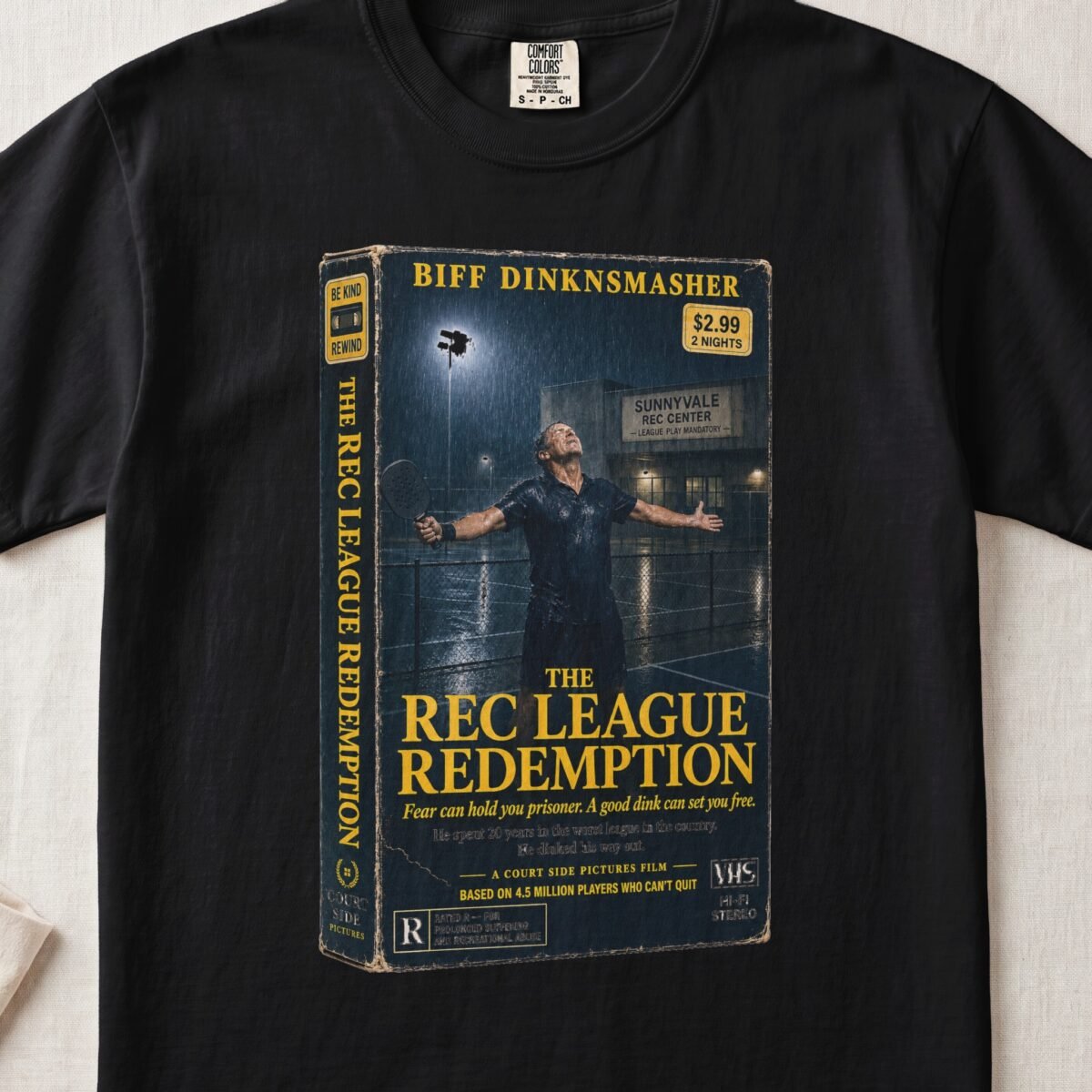
One Flew Over the Pickleball Net takes the Court Side Pictures catalog into a genre the other tapes haven’t touched — the institutional drama about someone who can’t stop playing and a system that can’t make them. The Rec League Redemption tells the opposite story: a player trapped in a terrible league for twenty years who dinked his way to freedom. One film is about checking in and never leaving. The other is about finding the exit. Both end on the court. Elsewhere in the VHS collection, Breaking Balls captures the moment the addiction tips from casual to competitive — the before-and-after split screen of a person the sport changed. And Court Operation catalogs what happens to the body when “one more game” becomes a lifestyle — twelve real injuries that the person wearing this shirt probably has three of right now and is ignoring all of them.
Printed on a Comfort Colors 1717 garment-dyed heavyweight tee with water-based DTG ink — sizing and care details here.
What Is Open Play in Pickleball
Open play in pickleball is a drop-in format where players show up without a reserved court or a prearranged partner, sign in on a rotation board, and cycle through games with whoever else is there. Most public facilities and recreation centers run open play during set hours — typically mornings and evenings — and anyone can join regardless of skill level. The format is the primary entry point for new players and the main reason the sport grows through word of mouth rather than formal instruction.
The mechanics vary slightly by facility but the core system is consistent. Players add their names or paddle to a queue. When a court opens, the next four players in line form two teams, play a game to 11, and the losing team rotates off while the winners stay on or the whole group rotates — the specific rule depends on the facility’s culture. Some locations use skill-based courts to separate beginners from competitive players. Others run a single rotation where a 3.0 player might end up partnered with a 4.5, which produces the kind of wildly uneven games that are either frustrating or hilarious depending on your temperament.
Open play is the mechanism behind most of pickleball’s growth because it solves the hardest problem in recreational sports: finding people to play with. Tennis requires coordinating a specific partner at a specific time. Basketball pickup exists but the culture can be intimidating for newcomers. Pickleball open play at most facilities is designed to welcome anyone who shows up with a paddle — and most locations have loaners for people who don’t own one yet. The social structure that builds around a regular open play session is what turns casual interest into the kind of commitment that the USA Pickleball participation numbers reflect: people come back because the people are there, and the people are there because the format makes showing up alone feel easy. That loop is what Biff checked into at Riverside Rec Center. He hasn’t checked out because the next rotation starts in ten minutes and he’s already on the board.
-
The Pocket Paddle
$39.99 Select options This product has multiple variants. The options may be chosen on the product page -
Rec League Redemption
$39.99 Select options This product has multiple variants. The options may be chosen on the product page -
Mixed Doubles Misery
$39.99 Select options This product has multiple variants. The options may be chosen on the product page