Retro Comfort Colors 1717
Smack Talklicious
$39.99
- Comfort Colors 1717 heavyweight cotton
- Original design · printed to order
- U.S. print partners
Five Sticks of Confidence on an As Seen on TV Parody
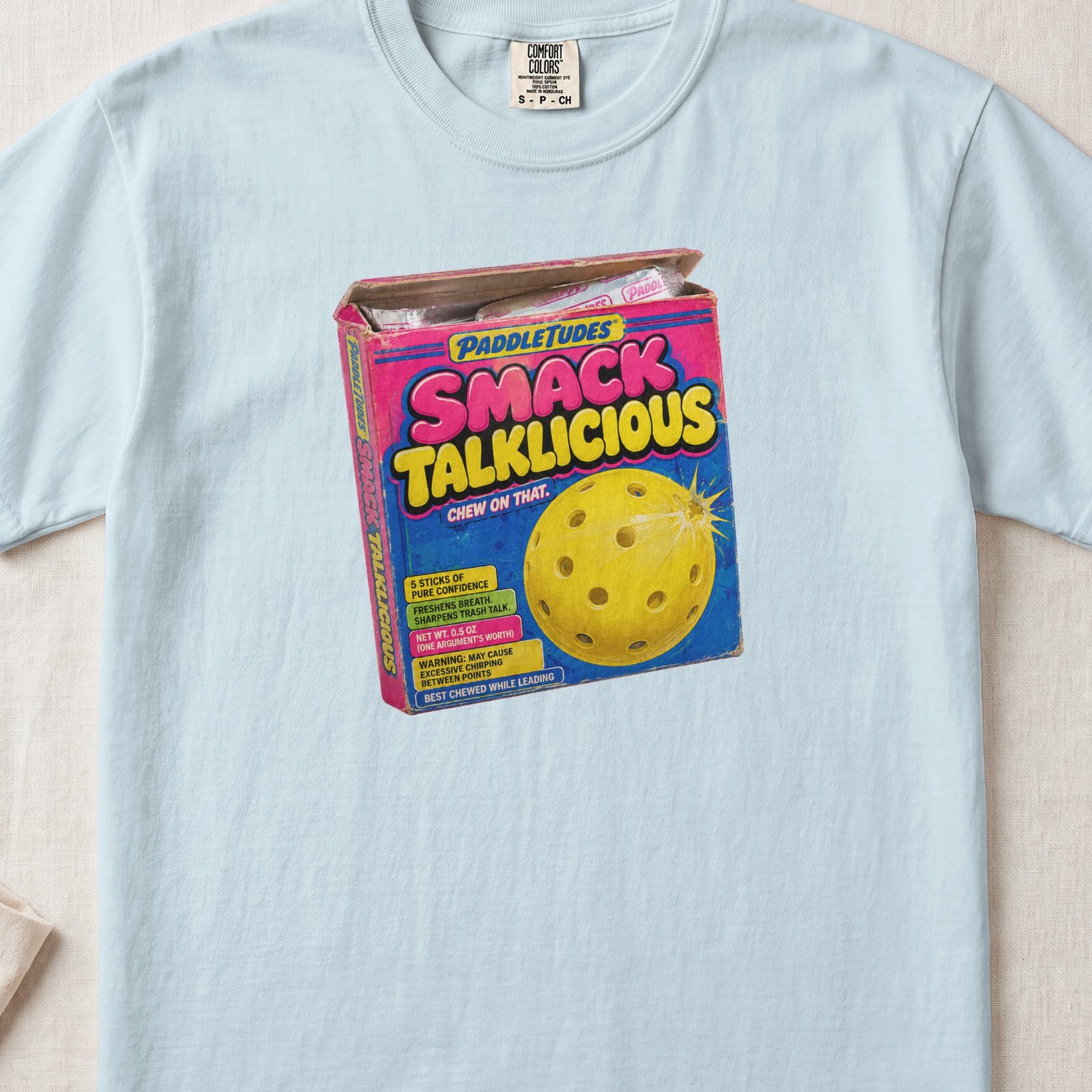
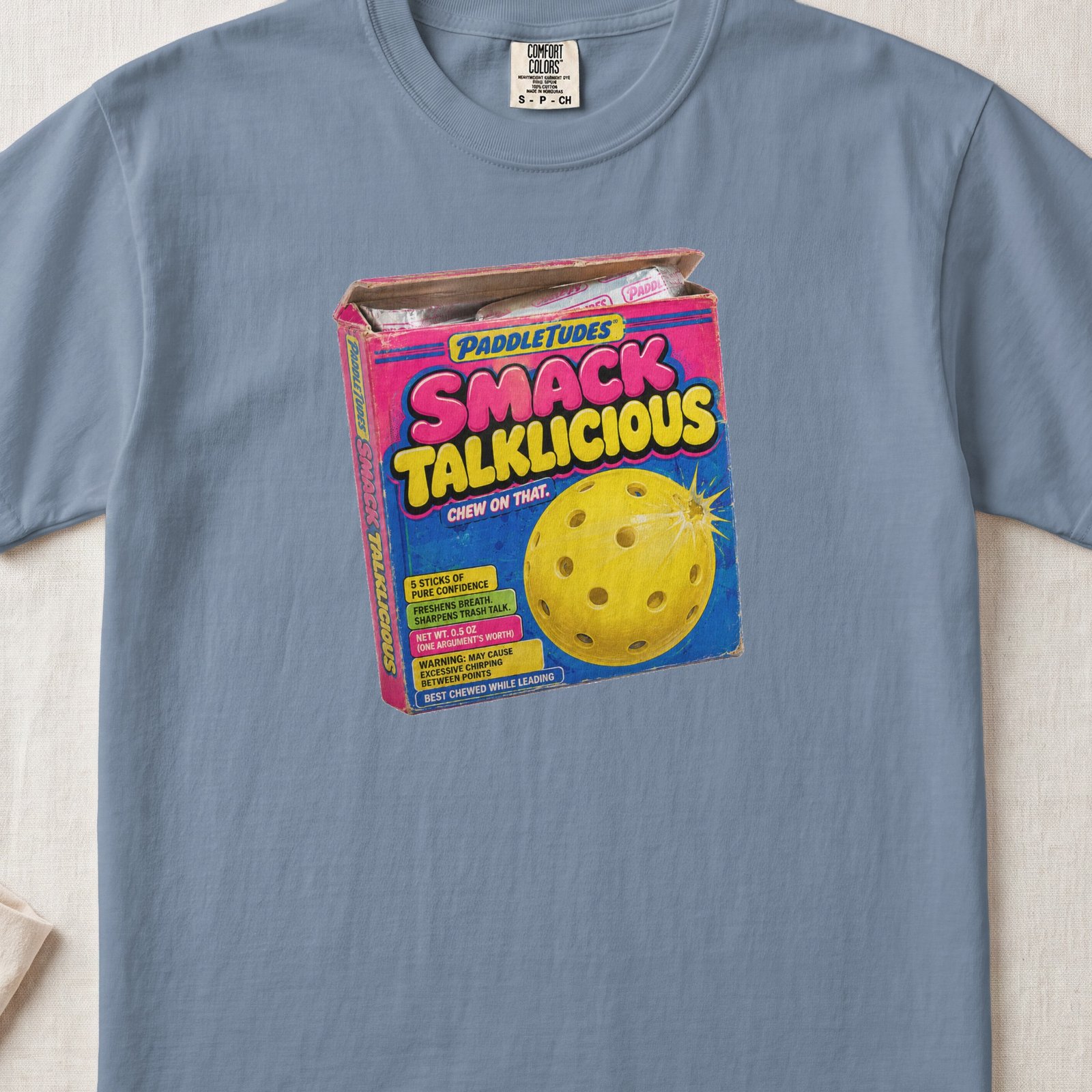
Five sticks of pure confidence on a Comfort Colors 1717 tee — Smack Talklicious is a retro bubblegum box for the player who never stops talking between points.
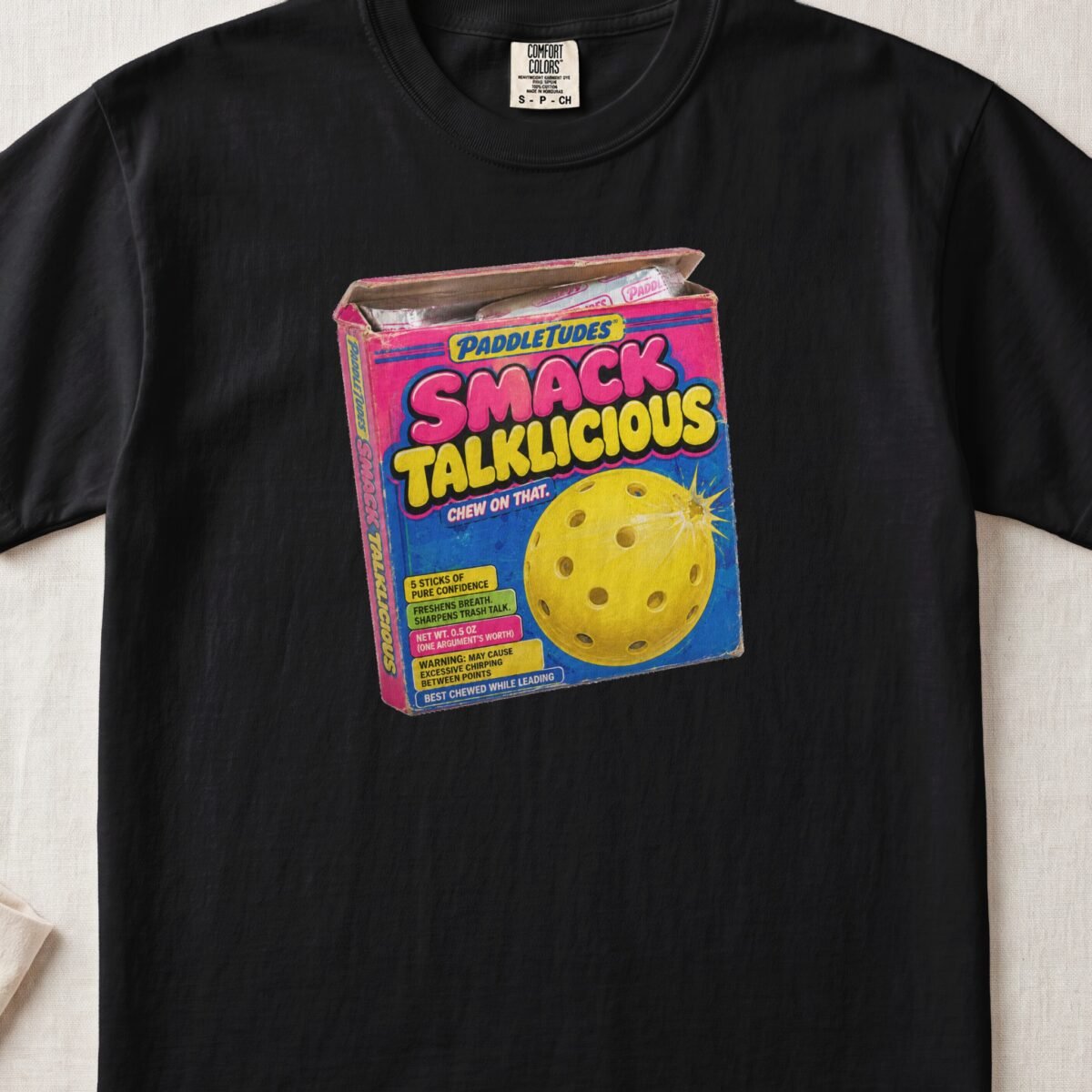
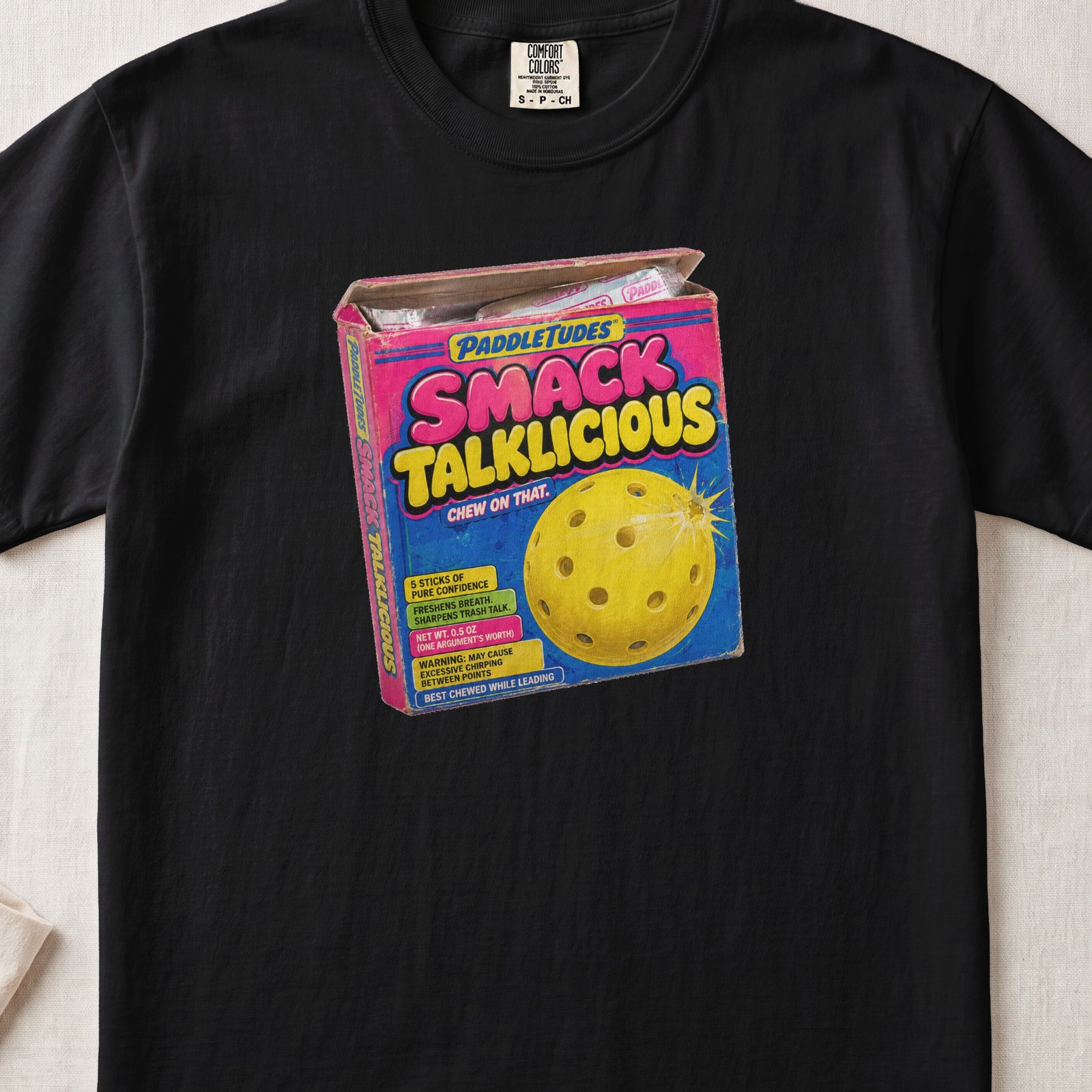
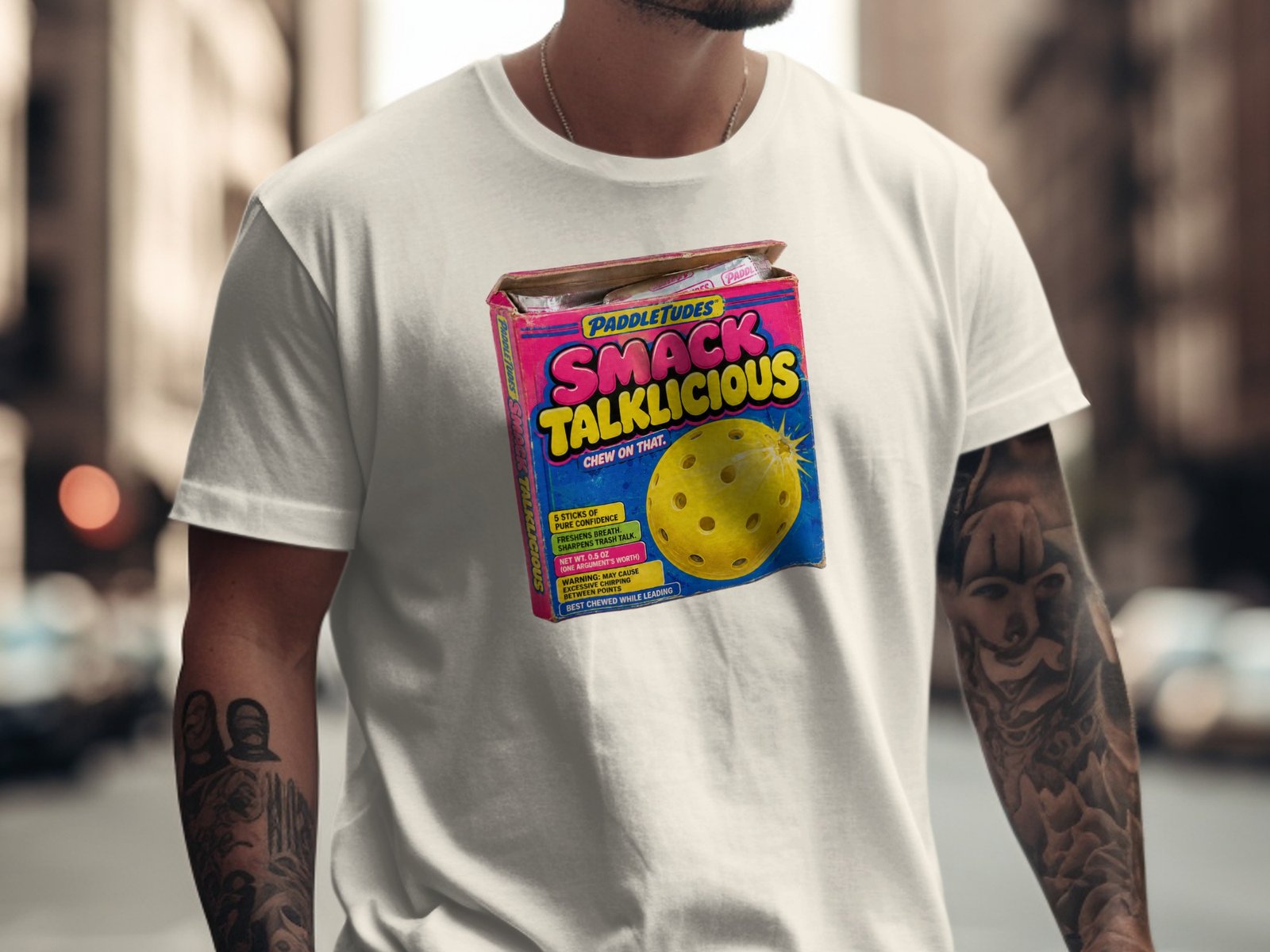
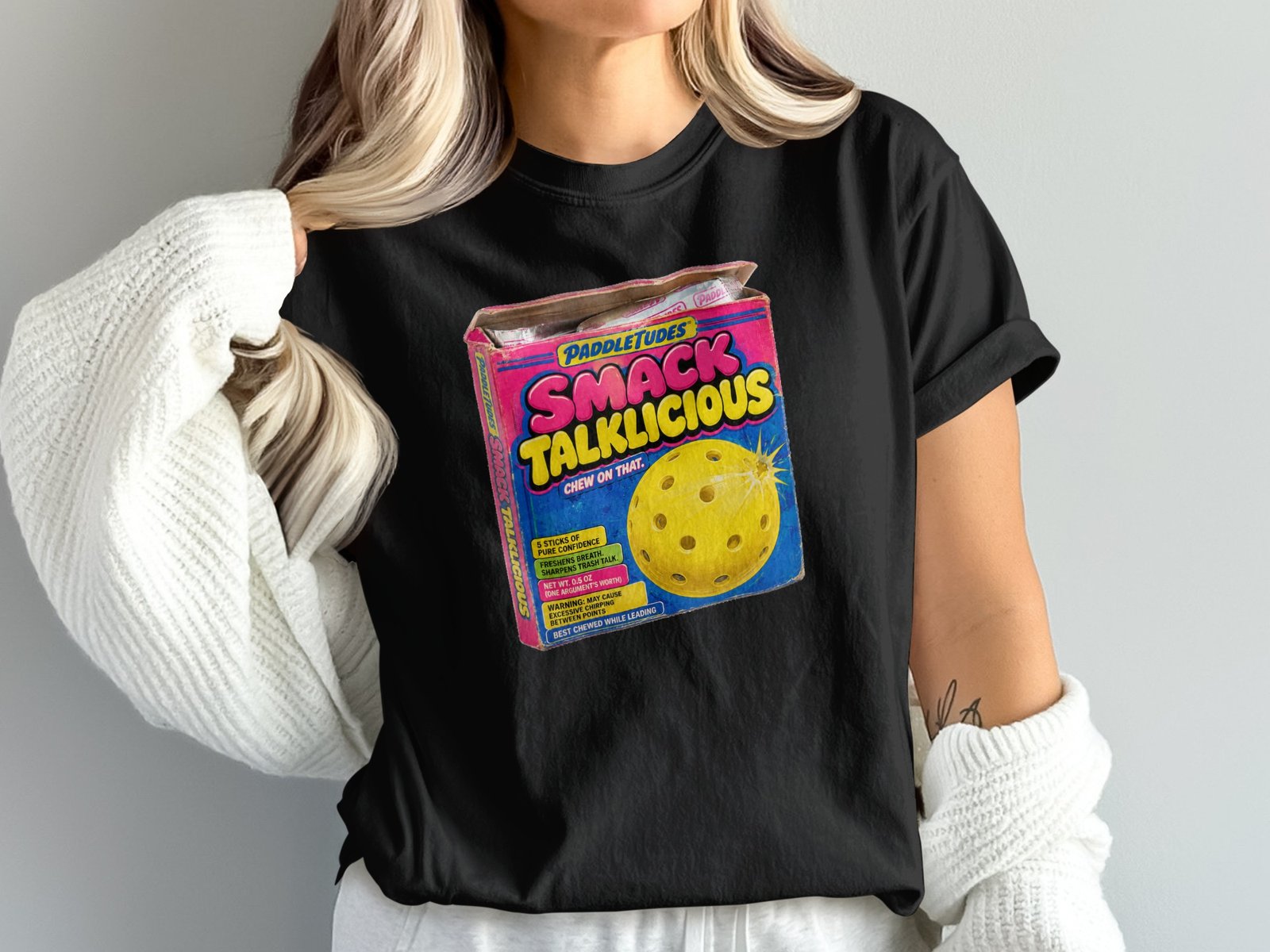
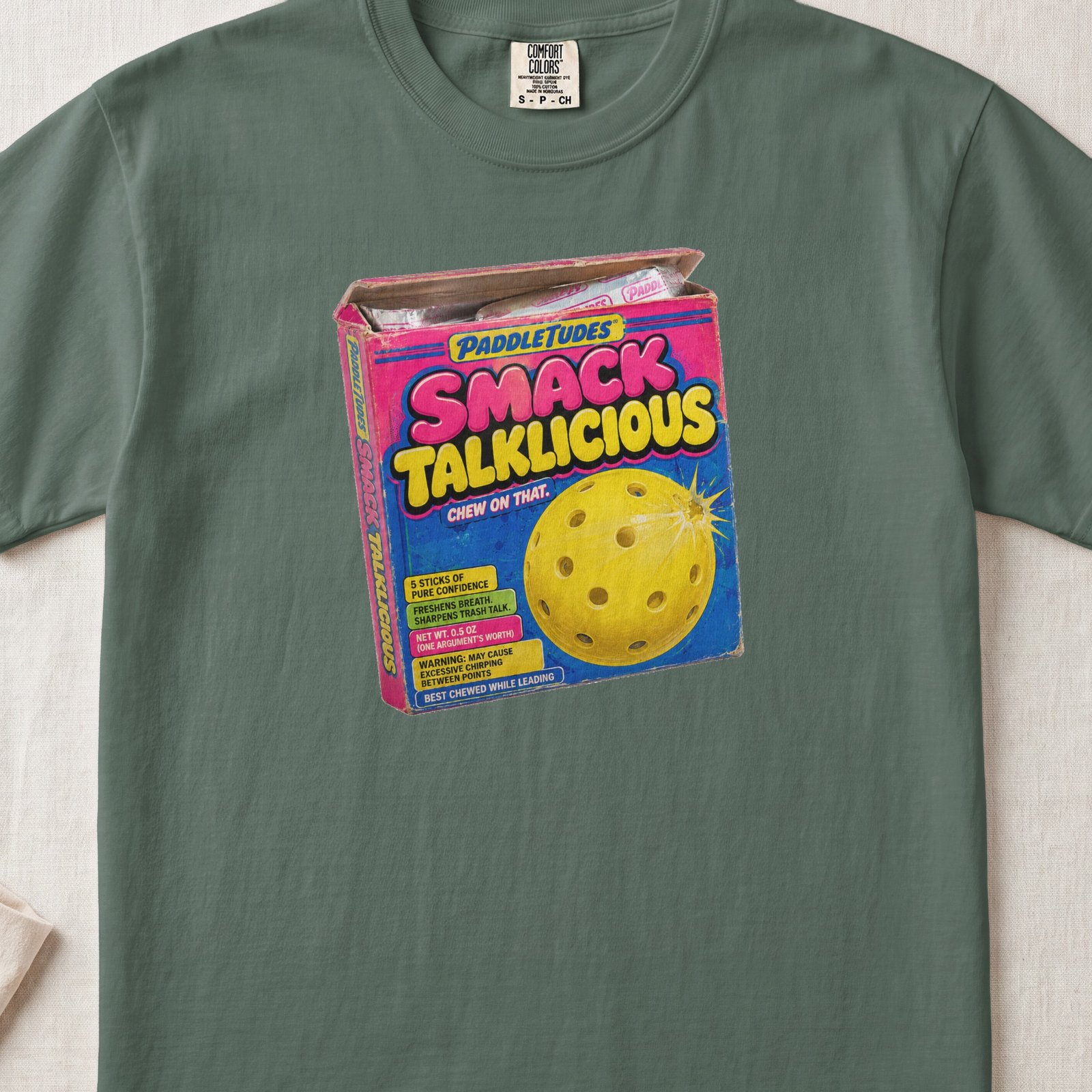
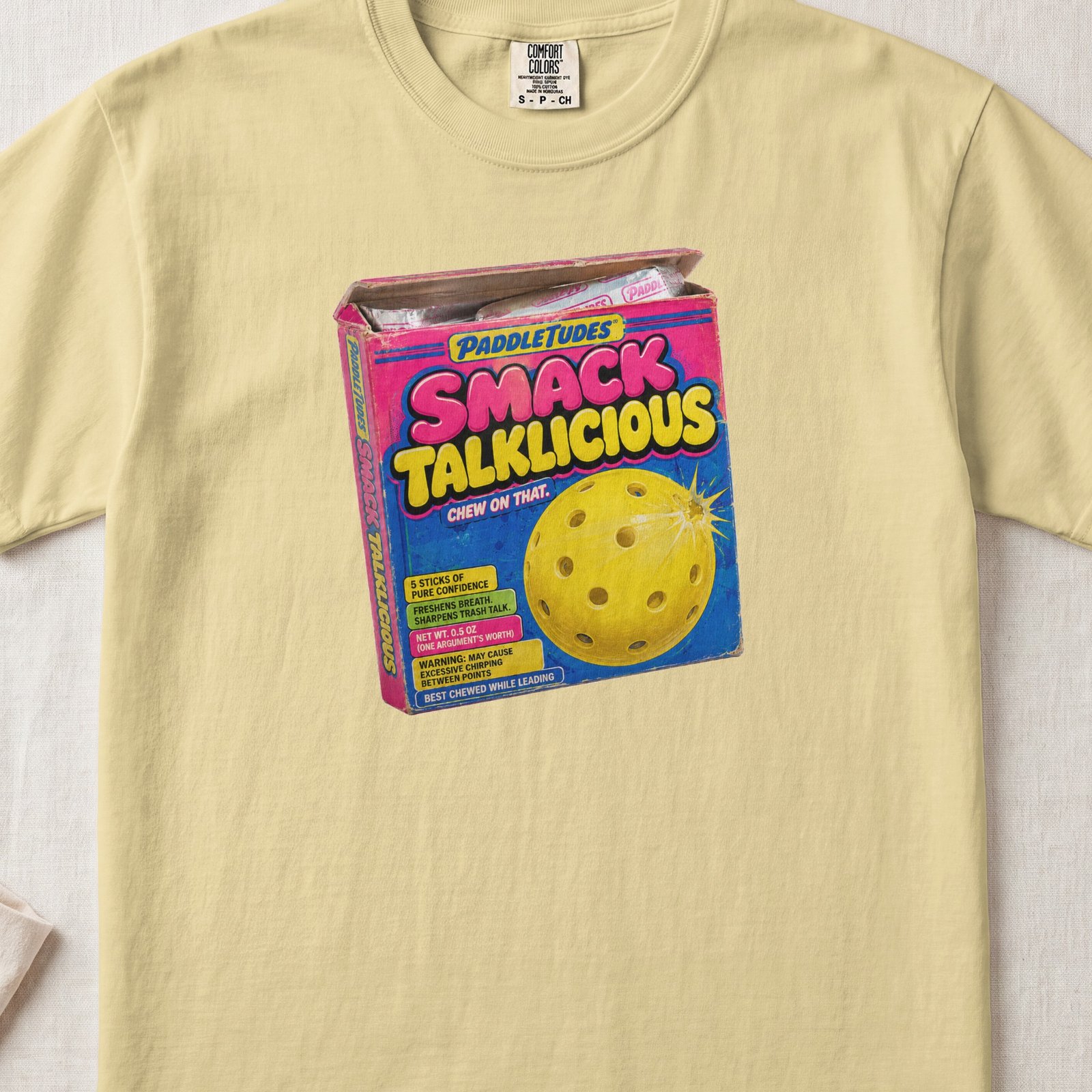
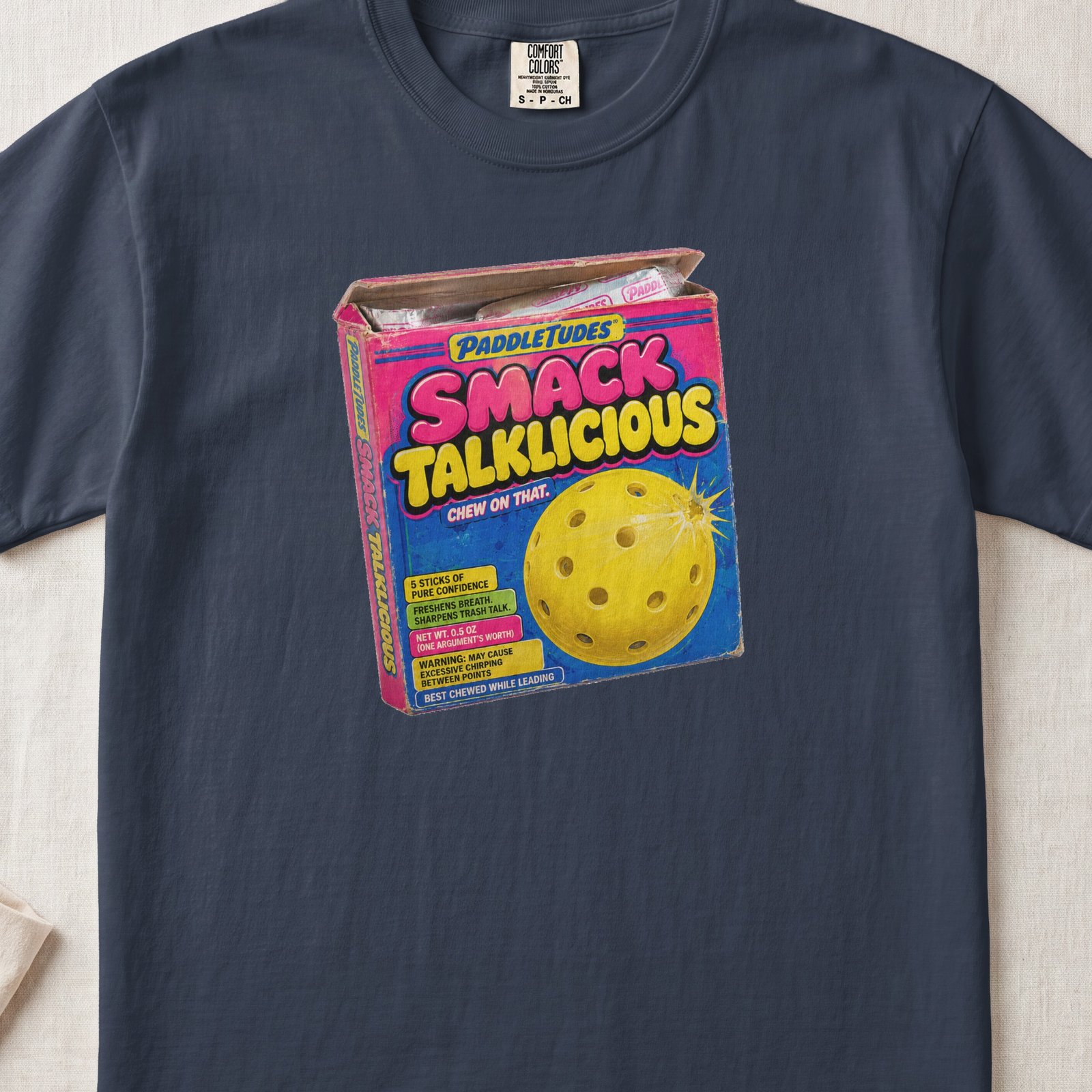
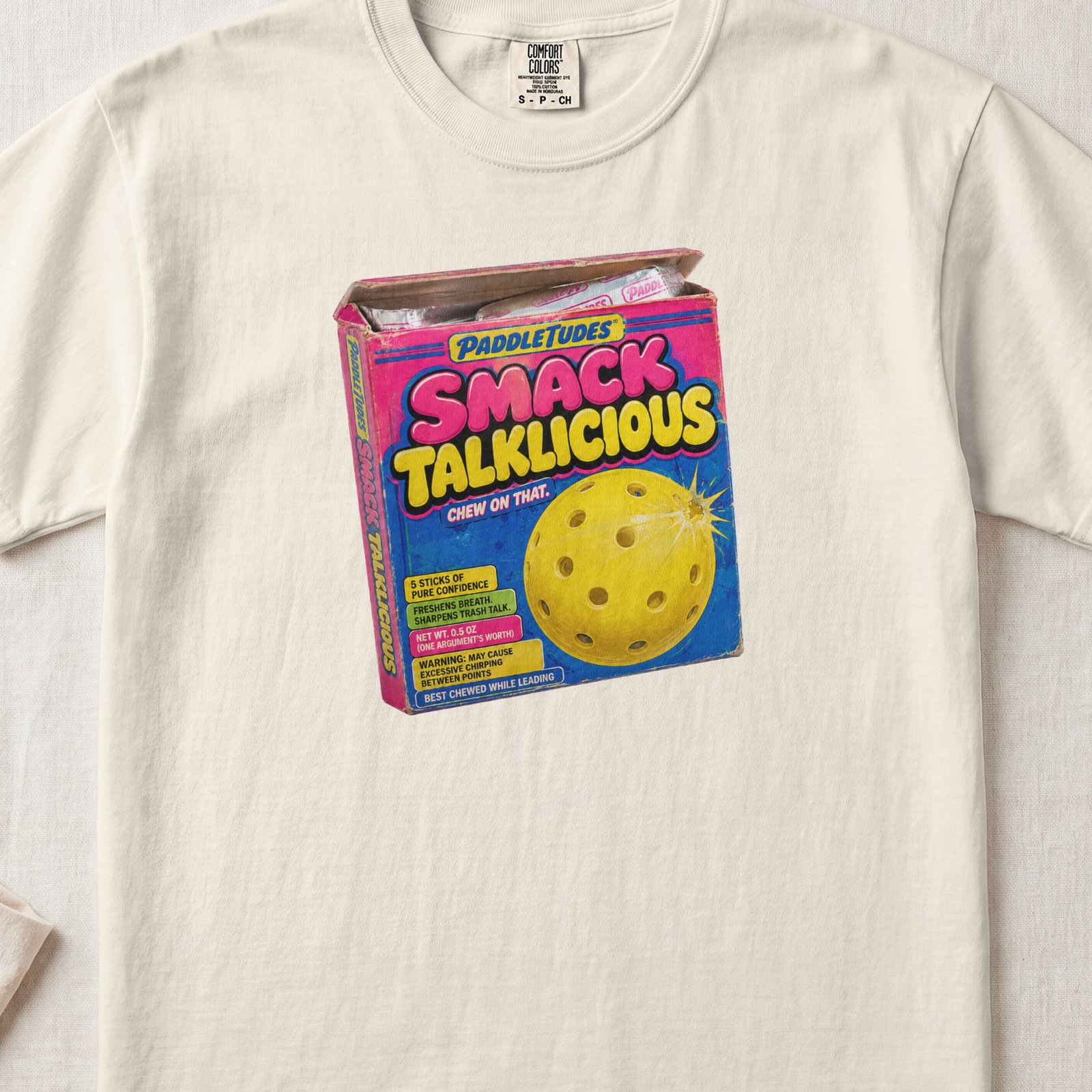
The packaging screams checkout lane, 1989. Hot pink and electric blue. Bubble letters so inflated they look like they might pop. A giant yellow pickleball with an impact starburst across the front. And the box is open at the top — you can see the individually wrapped sticks inside, each one stamped with the Paddletudes logo, which is the kind of branding commitment that separates a real fake product from a lazy one. The tagline underneath the title says everything in three words: “CHEW ON THAT.” It’s not a suggestion. It’s what you say after you hit a winner down the line while your opponent is still moving the wrong direction.
The fine print on the left side of the box is where the product goes from funny to personal. “5 STICKS OF PURE CONFIDENCE.” That’s not gum — that’s what the loudest player on the court chews through in a single open play session. “FRESHENS BREATH. SHARPENS TRASH TALK.” One of those services is dental. The other one is the reason their doubles partner pretends not to know them when they start chirping at the net. “NET WT. 0.5 OZ (ONE ARGUMENT’S WORTH).” Exactly enough to fuel one disputed line call. “WARNING: MAY CAUSE EXCESSIVE CHIRPING BETWEEN POINTS.” A warning that is also a promise. And at the bottom, the closer: “BEST CHEWED WHILE LEADING.” Because the confidence required to talk between points evaporates the moment the score flips. Everybody is a trash talker at 9-3. Nobody is a trash talker at 3-9.
The person who wears this shirt has a reputation at their facility, and they’ve earned it on purpose. They’re the one who says “nice shot” in a tone that could mean genuine compliment or psychological warfare depending on the game situation. They celebrate a little too hard after an ace and not hard enough after their partner’s winner. They’ve been told “it’s rec play” by someone they were beating and took it as confirmation that the talking was working. The chirper identity in pickleball occupies a specific and fascinating space — the sport’s culture originally leaned heavily toward politeness, tapping paddles after every point, apologizing for net cords. As younger and more competitive players entered, they brought the verbal energy of basketball pickup games and tennis match play into a sport that wasn’t built for it. The tension between “this is supposed to be friendly” and “I just hit a backhand passing shot and I want everyone to know about it” is the entire personality of this shirt.
Bubblegum packaging in the late 1980s and early 1990s was designed to do one thing: grab your attention from ten feet away in a convenience store. Oversized boxes for five sticks of gum. Neon colors that vibrated against the cardboard display. Bold fonts that looked like they were yelling. The product inside was secondary to the experience of buying it — you chose based on the wrapper, the included comic strip or sticker, and how the brand made you feel standing at the register. Smack Talklicious uses that packaging language because the shirt functions the same way. It’s a visual personality test. The person wearing it at the court has already told you everything you need to know about their playing style before they pick up a paddle. The hot pink announces them from across the facility the same way a neon gum box announced itself from across the checkout lane.
If you’re buying this for someone, it’s for the friend who texts the group chat after every session with their win-loss record and a comment about their best shot. Not ironically. Genuinely. They have a post-game debrief with themselves on the drive home where they replay the rally they won at 10-9 and decide it was the turning point of their entire week. This is also the white elephant gift that starts a conversation because everyone at the party — players or not — has an opinion about trash talk in sports. The people who play pickleball will argue about whether chirping belongs on the court. The people who don’t play will just laugh at “Best Chewed While Leading” because it’s a universal truth about confidence in any competitive setting.
Smack Talklicious comes from a different corner of the fake product universe than the VHS shelf. Dink Fiction puts the trash talk energy into a crime thriller — two guys in suits holding paddles like weapons, daring you to say “dink” one more time. Blazing Paddles turns it into a western showdown where the banter happens at high noon in a dusty court town. Where those tapes channel the confidence into character, the bubblegum box distills it into a consumable — five sticks of attitude you can carry in your pocket and unwrap between points. On the other end of the retro product shelf, Court Operation is the board game about what happens to your body when the trash talk writes checks the knees can’t cash, and Soft Hands is the Dr. Paddletudes tonic for players with the opposite problem — too much power, not enough touch.
Printed on a Comfort Colors 1717 garment-dyed heavyweight tee with water-based DTG ink — sizing and care details here.
What Are Some Examples of Pickleball Trash Talk
Pickleball trash talk ranges from playful chirping to full competitive mind games, and most of it happens during the seconds between points rather than during rallies. Common examples include calling your shot before you hit it — “right at you” followed by a perfectly placed drop — narrating your opponent’s mistakes out loud, celebrating an ace with more energy than the point deserves, and the classic deadpan “nice” after an opponent hits a ball three feet out. The creativity tends to scale with skill level.
The culture around trash talk in pickleball is genuinely split. The sport grew out of a community-recreation tradition where USA Pickleball etiquette emphasizes sportsmanship, paddle tapping after every game, and calling your own lines honestly. Open play at most public facilities still leans toward that friendliness. But tournament play and competitive leagues brought a different energy — players who grew up in tennis, basketball, or volleyball carried over the verbal intensity of those sports, and the result is a culture clash that plays out at every facility in the country. Some courts have posted rules about conduct. Some leagues have quiet periods between points. And some open play sessions have regulars who are legendary for their commentary and nobody wants them to stop.
The line between good trash talk and bad trash talk in pickleball is the same as in any sport: it’s funny when both sides are laughing. Calling “kitchen!” when your opponent foot faults is funny. Questioning someone’s line call in front of their partner is not. Self-deprecating trash talk — “I can’t believe that went in” — is almost always safe. Directed trash talk — “you can’t handle pace” — depends entirely on the relationship. The best trash talkers in pickleball know their audience, time their comments between points rather than during play, and understand that the goal is entertainment, not intimidation. The Smack Talklicious box gets this exactly right: “Best Chewed While Leading.” The confidence is the joke. The awareness that it disappears when the score changes is what makes it honest.
-
Smack Shot
$39.99 Select options This product has multiple variants. The options may be chosen on the product page -
One Flew Over The Pickleball Net
$39.99 Select options This product has multiple variants. The options may be chosen on the product page -
Breaking Balls
$39.99 Select options This product has multiple variants. The options may be chosen on the product page