Retro Comfort Colors 1717
Dink Fiction
$39.99
- Comfort Colors 1717 heavyweight cotton
- Original design · printed to order
- U.S. print partners
Dink Fiction — A 90s Graphic Tee That Treats Dinking Like Crime
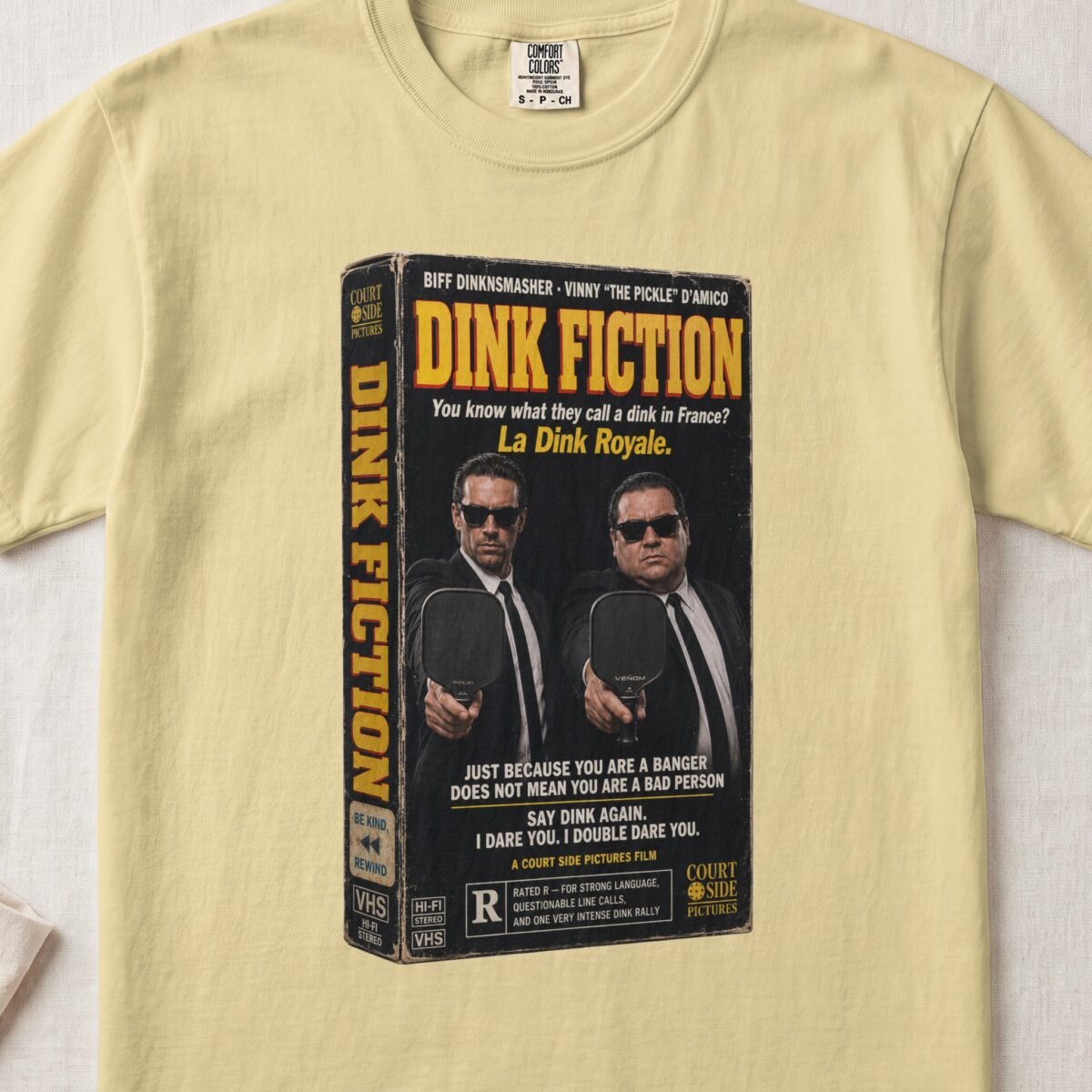
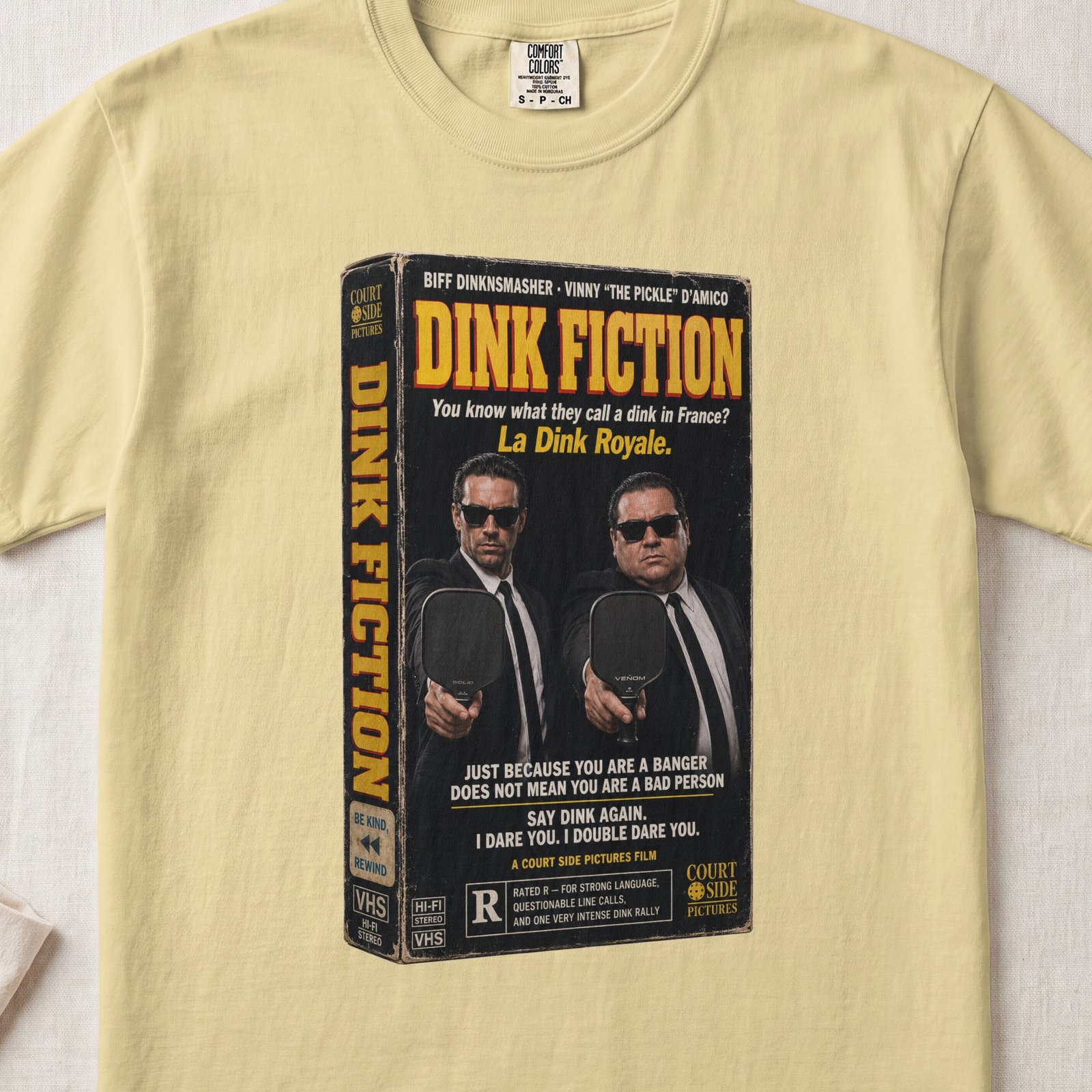
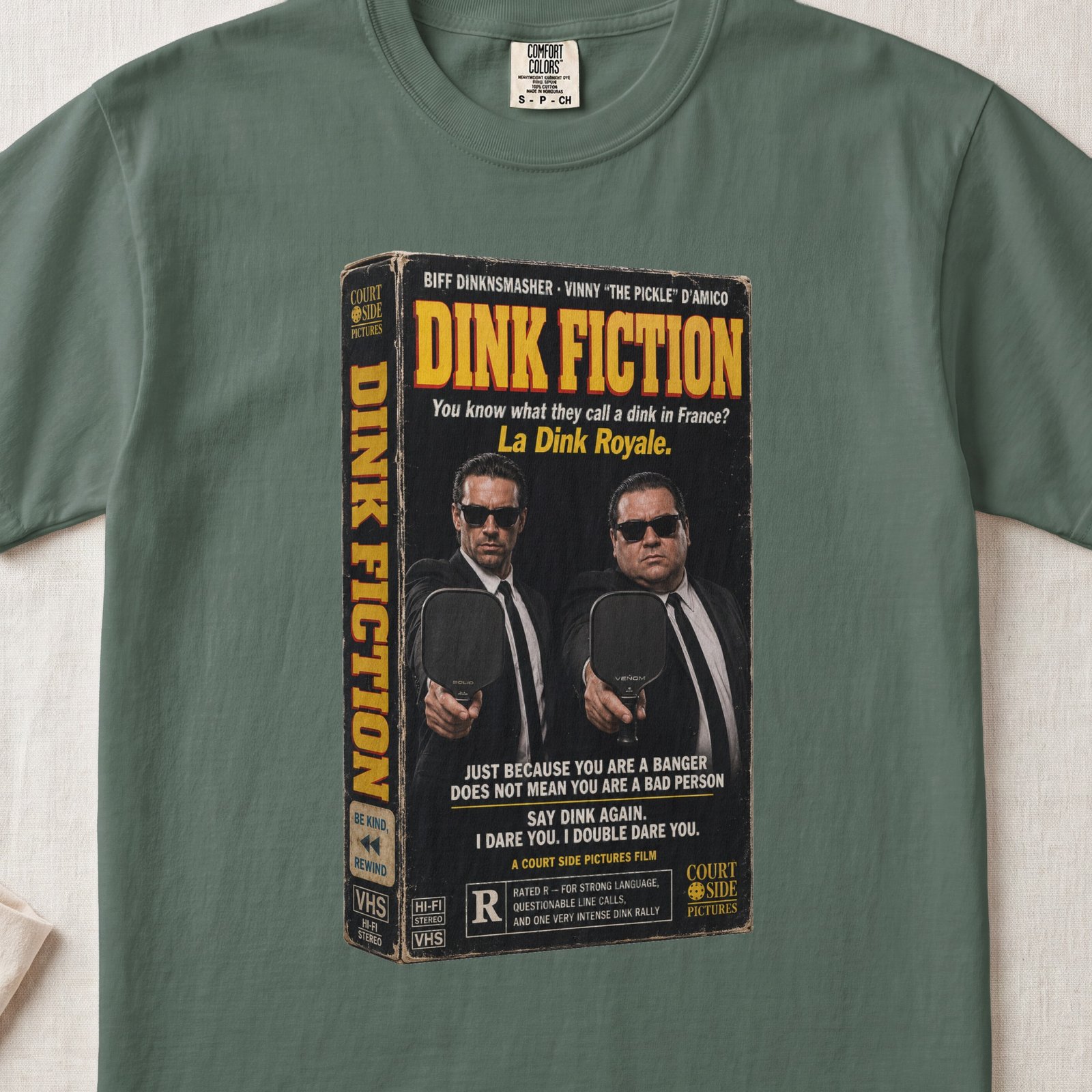
La Dink Royale — that’s what they call it in France. Dink Fiction is a retro VHS pickleball shirt on a Comfort Colors 1717 for the player who treats the soft game like serious business.
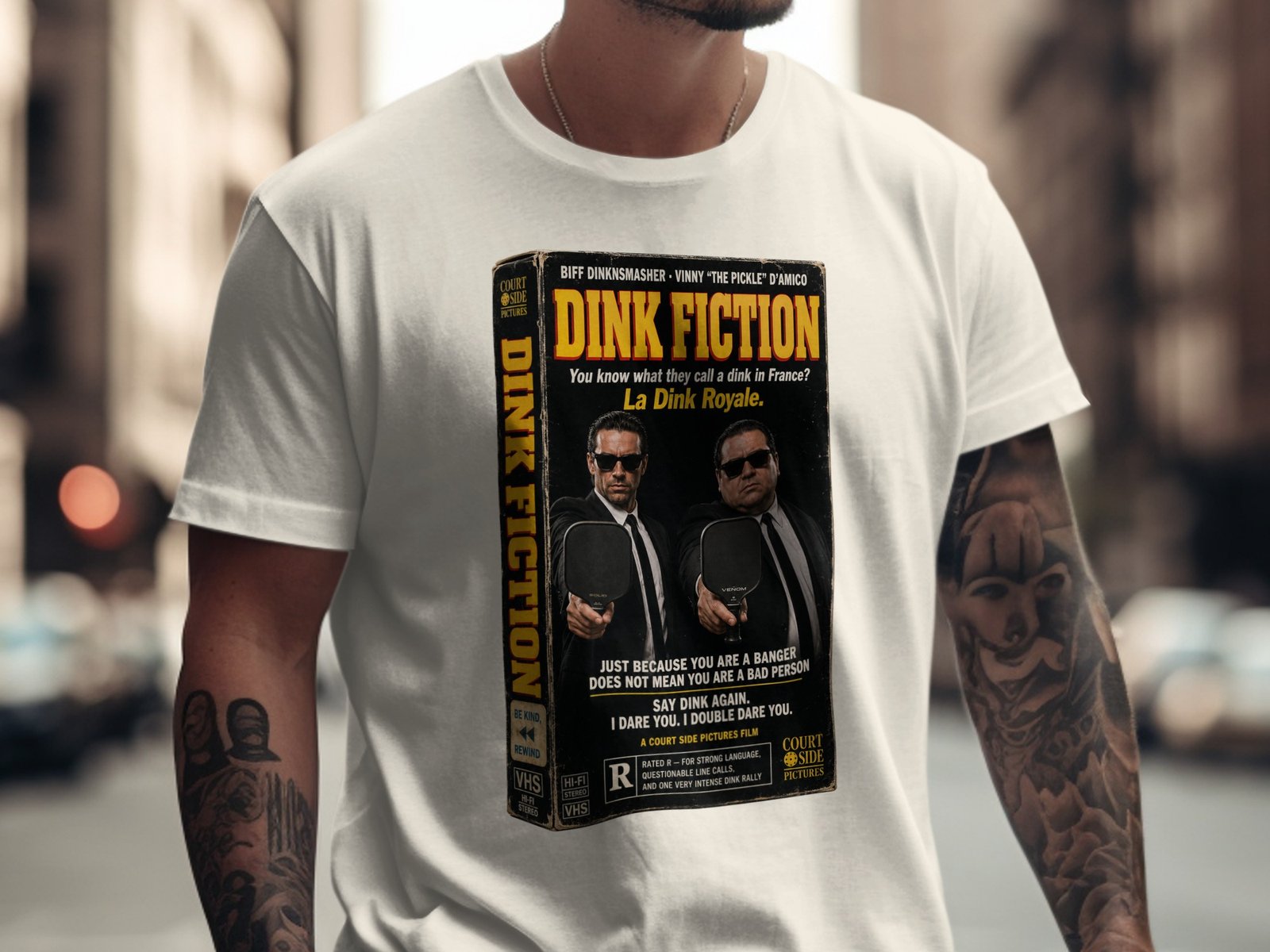
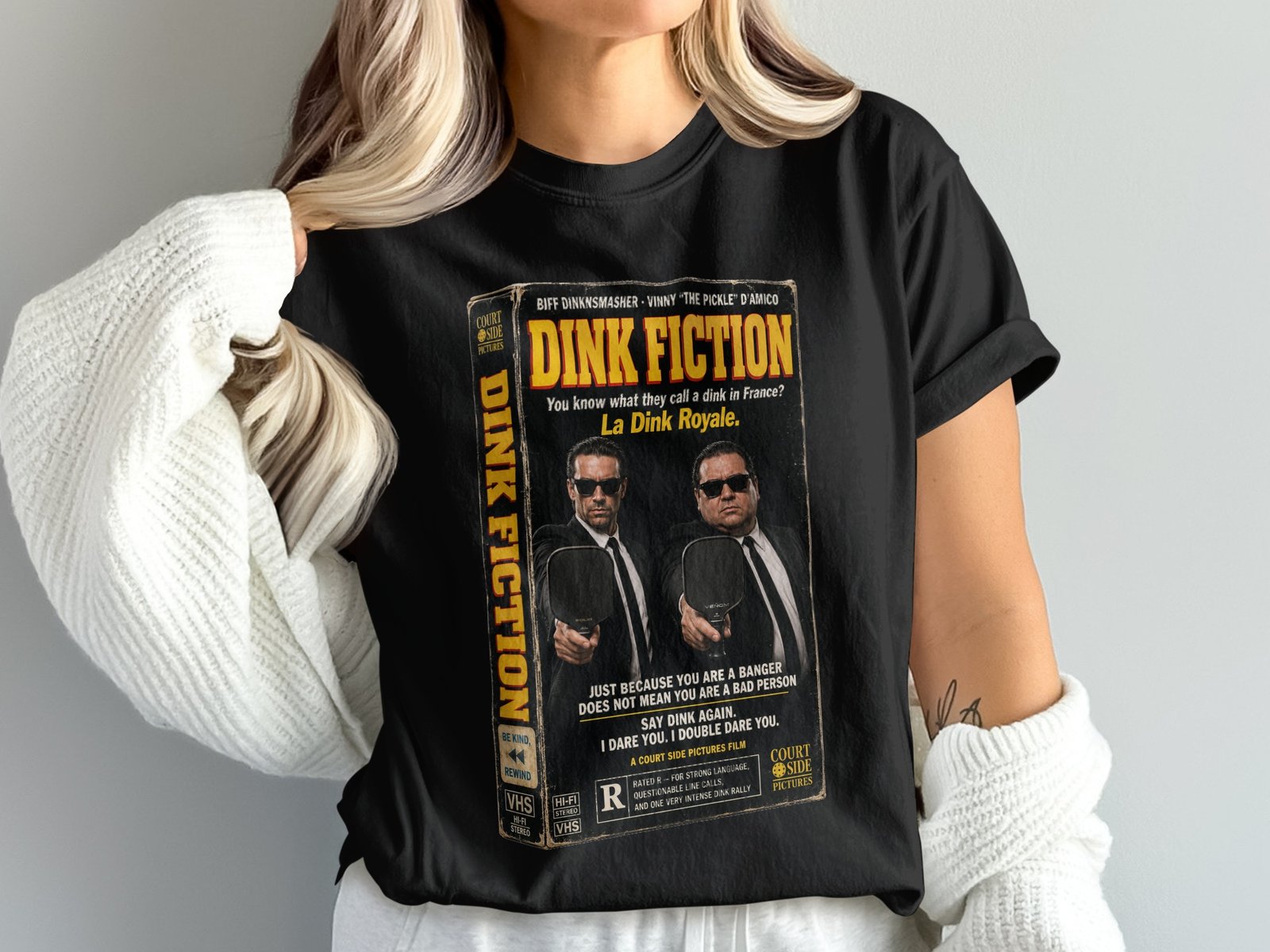
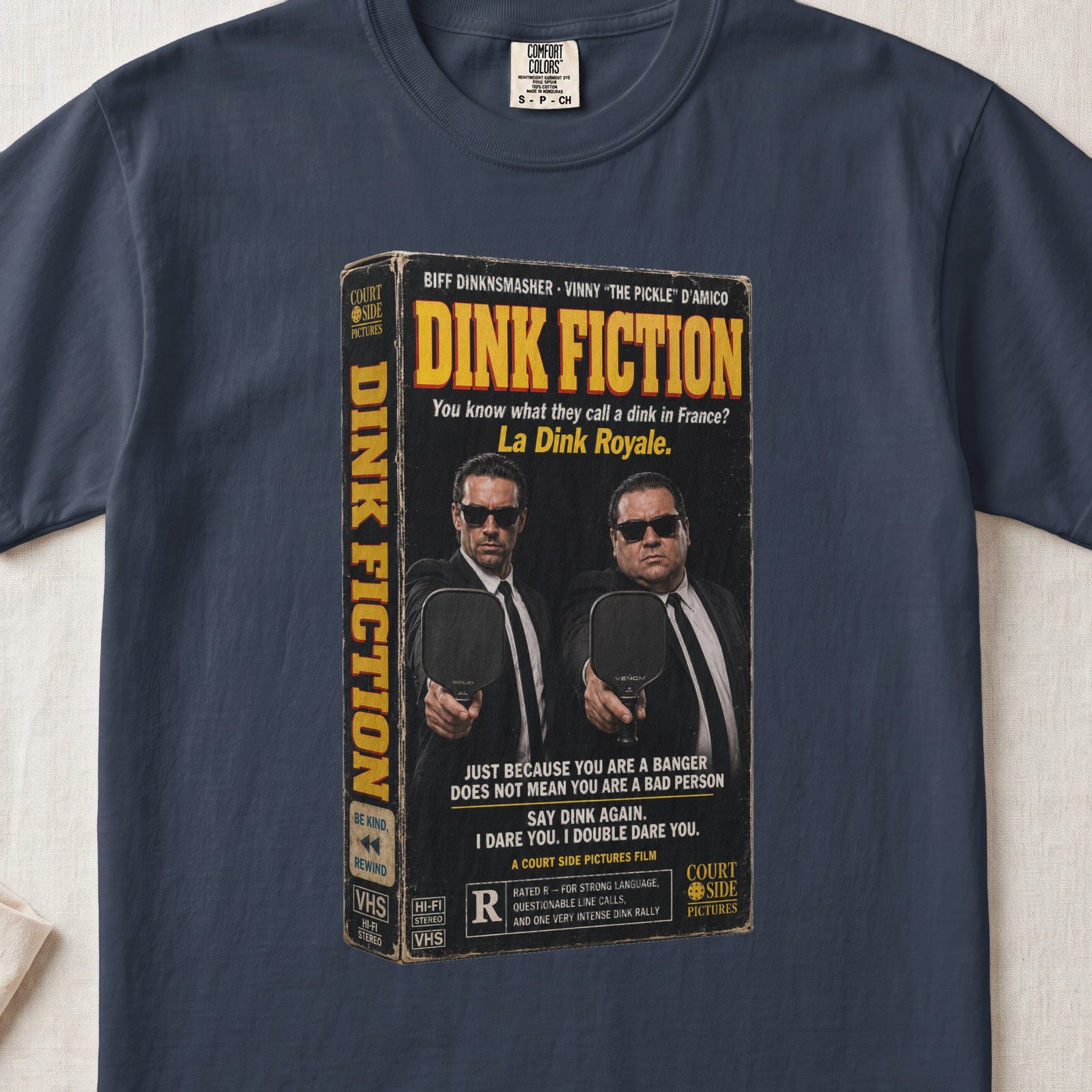
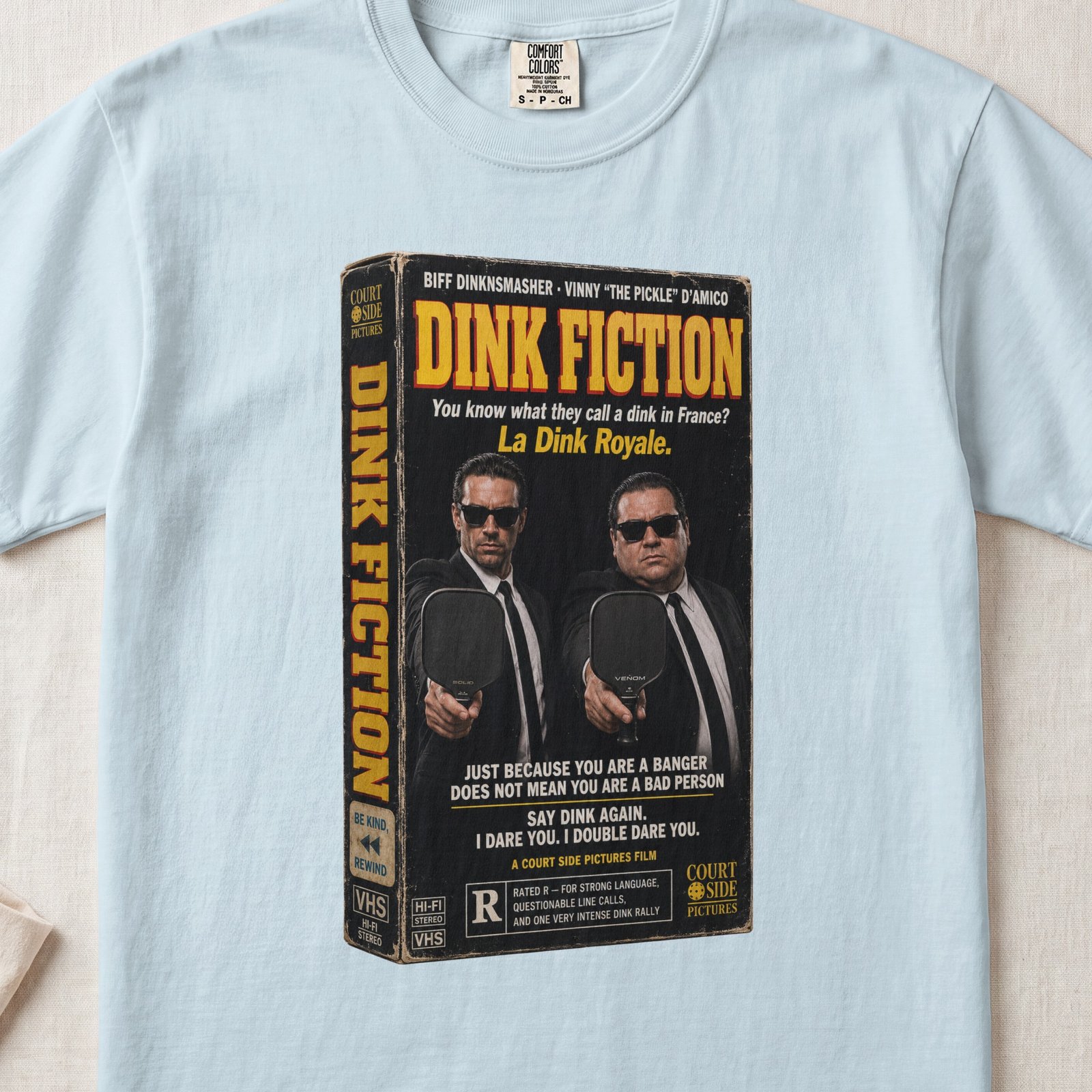
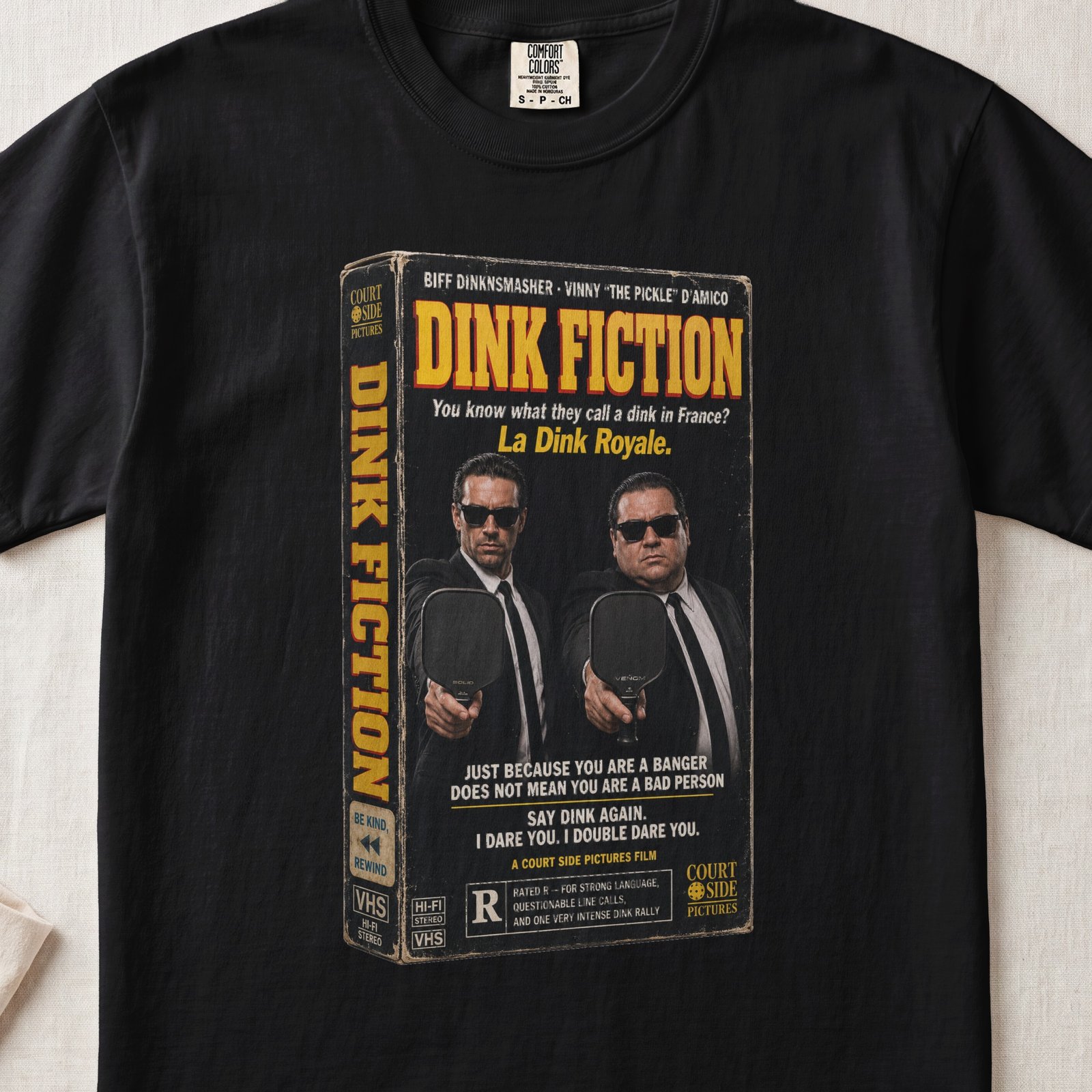
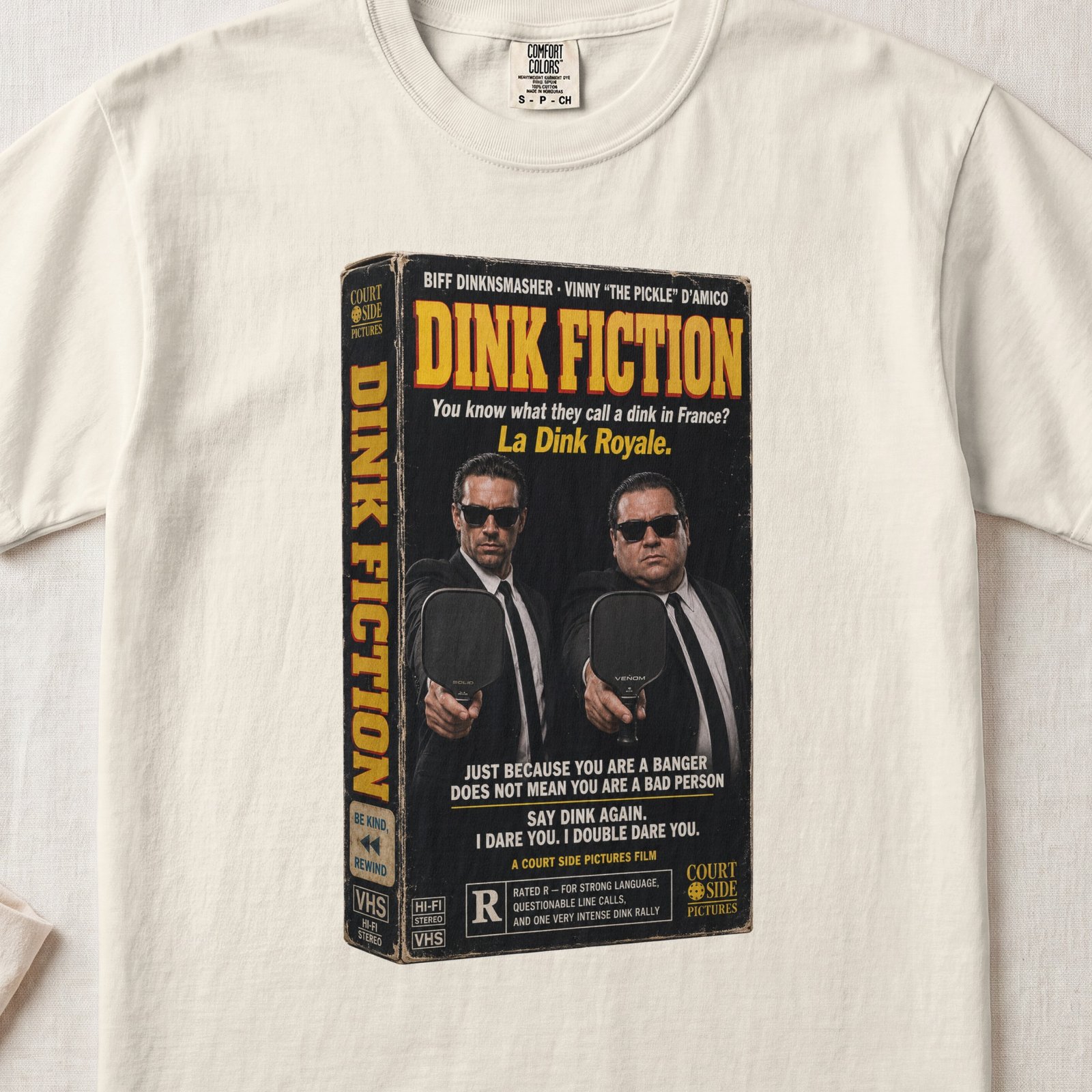
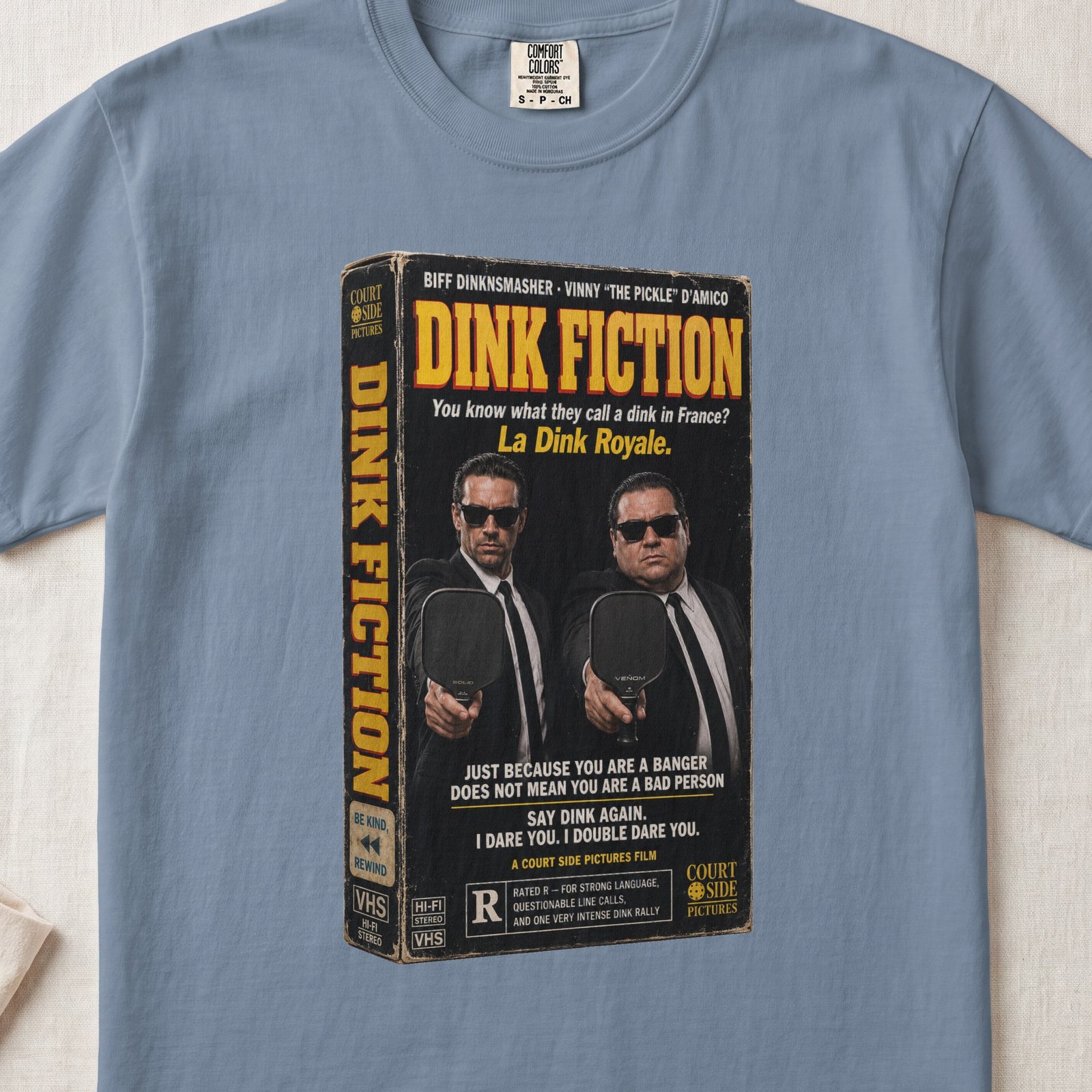
Two men in black suits. Dark sunglasses. Identical stances. Each one holding a paddle pointed directly at the camera like a weapon. The paddle on the left reads SOLID. The one on the right reads VENOM. They are not smiling. They have not smiled since the warm-up ended. The VHS box is black and gold with distressed edges, the title across the top in block letters that look like they were stamped from a printing press in a basement. Below the title: “You know what they call a dink in France? La Dink Royale.” Below the two men, in text that reads like a manifesto: “JUST BECAUSE YOU ARE A BANGER DOES NOT MEAN YOU ARE A BAD PERSON.” And then the line that people notice from across the court when someone’s wearing this shirt: “SAY DINK AGAIN. I DARE YOU. I DOUBLE DARE YOU.”
The starring credits read Biff Dinknsmasher and Vinny “The Pickle” D’Amico — a Court Side Pictures production. The rating box at the bottom seals it: “RATED R — FOR STRONG LANGUAGE, QUESTIONABLE LINE CALLS, AND ONE VERY INTENSE DINK RALLY.” A BE KIND REWIND sticker sits on the lower left because this is a tape that’s been rented, watched, rewound, and returned by someone who understood it was about them. The entire presentation takes the most delicate shot in pickleball — a ball that travels three feet, clears the net by an inch, and dies on the other side — and gives it the visual treatment of a crime film. That contrast is the whole joke, and it works because the players who are obsessed with the dink genuinely do treat it with this level of intensity.
Dinking looks passive to people who’ve never played competitive pickleball. Two teams standing at the kitchen line, tapping the ball back and forth an inch above the net, over and over, waiting for someone to make a mistake. It looks like nobody is trying. In reality, every dink is a negotiation. The angle is a choice. The height is a choice. The depth, the spin, the pace — all deliberate, all designed to create a ball the opponent can’t attack without lifting it too high. The player who wins a dink rally didn’t do anything the crowd noticed. They adjusted their paddle face two degrees, moved their target six inches toward the sideline, and waited three more exchanges than their opponent had patience for. That’s the game inside the game that Dink Fiction is about — the quiet, ruthless, deeply technical contest that happens at the net while everyone watching thinks nothing is happening.
The person who wears this shirt has spent real time in that contest and come out the other side with opinions. They know the difference between a dink that’s actually good and a dink that just went over the net. They can feel when their opponent’s patience is running out — the grip tightens, the paddle angle lifts, the speed-up is coming — and they welcome it because they’ve already positioned their paddle to block the drive and send it right back soft. They don’t celebrate dink rallies the way bangers celebrate put-aways, but there’s a quiet satisfaction in watching an aggressive player dissolve across a fifty-shot exchange where nothing they tried worked. The suits and sunglasses on the VHS cover capture that energy exactly: composed, unflinching, and treating a recreational sport with a level of seriousness that would be absurd if it weren’t so accurate.
“JUST BECAUSE YOU ARE A BANGER DOES NOT MEAN YOU ARE A BAD PERSON” is the line on this shirt that starts the most conversations. It’s printed in all caps below the two lead characters, and it reads as both genuine reassurance and devastating condescension depending on who’s saying it. The person wearing the shirt at rec play probably means it with a hint of irony — they’ve accepted that bangers exist, they’ve figured out how to beat them, and this is their version of extending an olive branch. The beauty of the statement is that it implies a moral framework around playing styles, which is exactly how competitive pickleball players actually talk. There are dinkers who genuinely believe that banging is a lesser form of the sport. There are bangers who think dinking is boring and cowardly. The divide is real, it’s passionate, and it produces the kind of parking lot arguments that last longer than the games.
This is the gift for the player who has strong opinions about shot selection and isn’t quiet about sharing them. The doubles partner who says “we need to slow it down” after every point that ended in a speed-up. The league teammate who sends instructional videos about paddle angle in the group chat unprompted. The friend who started playing six months ago and now uses the word “reset” more often than “hello.” If their birthday falls during tournament season — which is effectively year-round at most facilities — this shirt shows up to the party and says everything their doubles partner is too polite to say: you take dinking very seriously, everyone has noticed, and this is your movie.
Dink Fiction is the sixth Court Side Pictures release and the one that takes the studio’s catalog closest to the kitchen line. Blazing Paddles puts the banger showdown on a western dirt court where someone has to learn the soft game or lose the town. PickleShack captures the country club comedy — the social side of the sport where the dinks and the dorks negotiate who gets the next court. Breaking Balls is the transformation origin story, and Mixed Doubles Misery is what happens when the partnership that formed during a dink rally becomes a hostage situation. Off the VHS shelf, Smack Talklicious arms the trash talker with bubblegum-fueled confidence, which is the personality type most likely to provoke the “say dink again” response from the two guys on this cover.
Printed on a Comfort Colors 1717 garment-dyed heavyweight tee with water-based DTG ink — sizing and care details here.
Why Do Pickleball Players Dink So Much
Players dink because the non-volley zone rule makes soft shots at the net the highest-percentage play in pickleball. When both teams are at the kitchen line, the net is seven feet away and the margin between a good shot and an attackable one is measured in inches. A dink that clears the net by two inches and lands in the kitchen is nearly impossible to attack. A ball that floats four inches higher gets driven back at full pace. The dink rally is how competitive players maintain control without giving the opponent anything to hit — and the team that loses patience first usually loses the point.
The frequency of dinking increases sharply with skill level. At the 3.0 recreational level, most points are decided by drives, serves, and return errors. By 4.0, dink rallies of twenty or thirty shots are routine. At the professional level, some rallies stretch past a hundred exchanges with neither player willing to provide an attackable ball. The shift happens because better players make fewer unforced errors, which means the game moves from “who makes fewer mistakes on drives” to “who can construct a better opportunity during a sustained exchange at the net.” Dinking is the medium for that construction. Every shot is an attempt to move the opponent’s paddle or body position by a few inches until a gap opens or the ball sits up high enough to attack.
The reason dinking frustrates some players — and produces the banger-versus-dinker cultural divide — is that it looks passive and feels counterintuitive. New players want to hit winners. Dinking asks them to hit shots that aren’t winners, repeatedly, on purpose, and trust that the winner will come as a consequence of the pattern rather than the individual shot. That patience requirement is the skill gap most players struggle with between 3.5 and 4.0. The ones who develop it unlock a style of play that’s sustainable, strategic, and extremely difficult to beat. The ones who don’t develop it continue to rely on power, which works until they play someone who can absorb and redirect everything they hit. That’s the dink rally’s purpose in one sentence: outlast the opponent’s patience and capitalize on the first mistake.
-
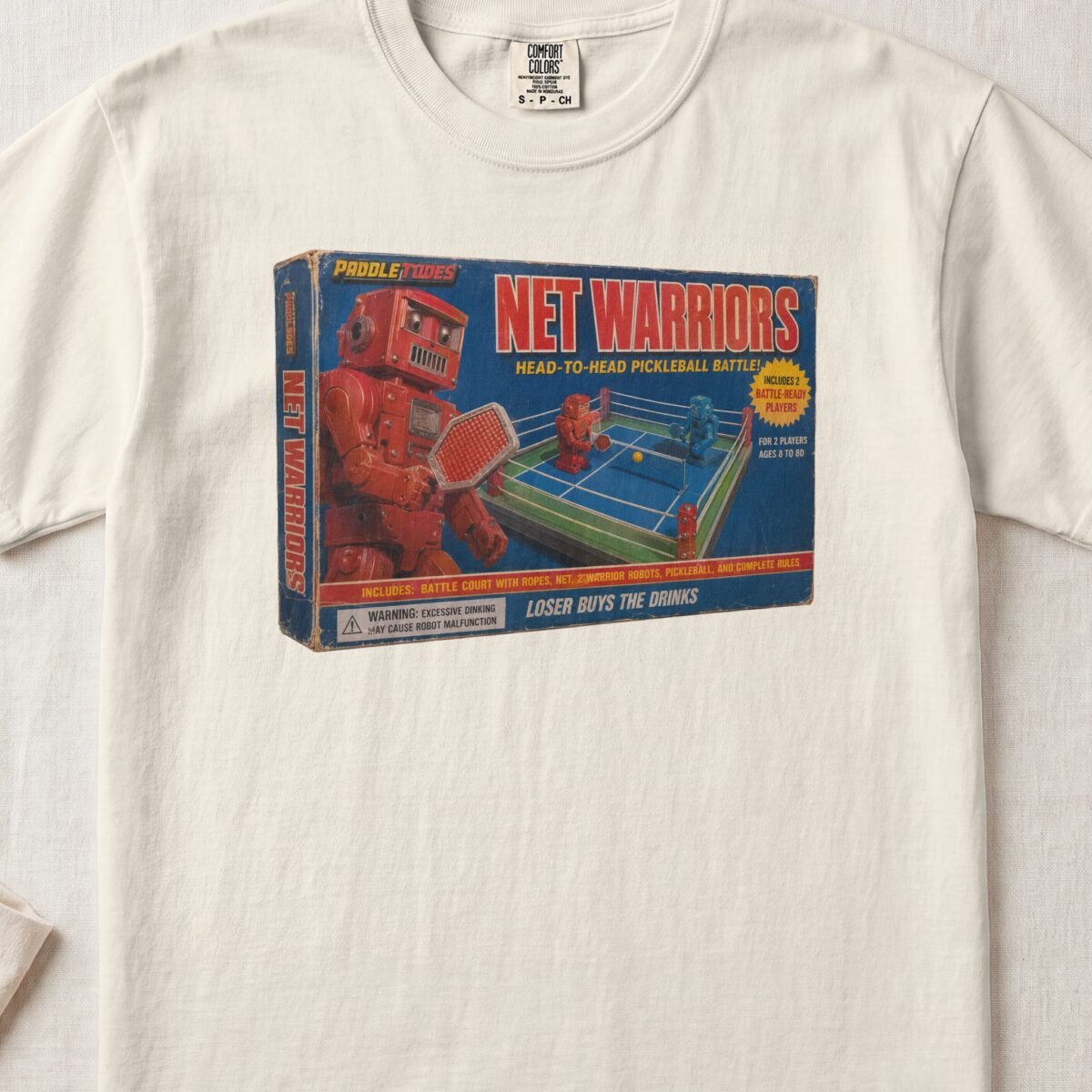
Net Warriors
$39.99 Select options This product has multiple variants. The options may be chosen on the product page -
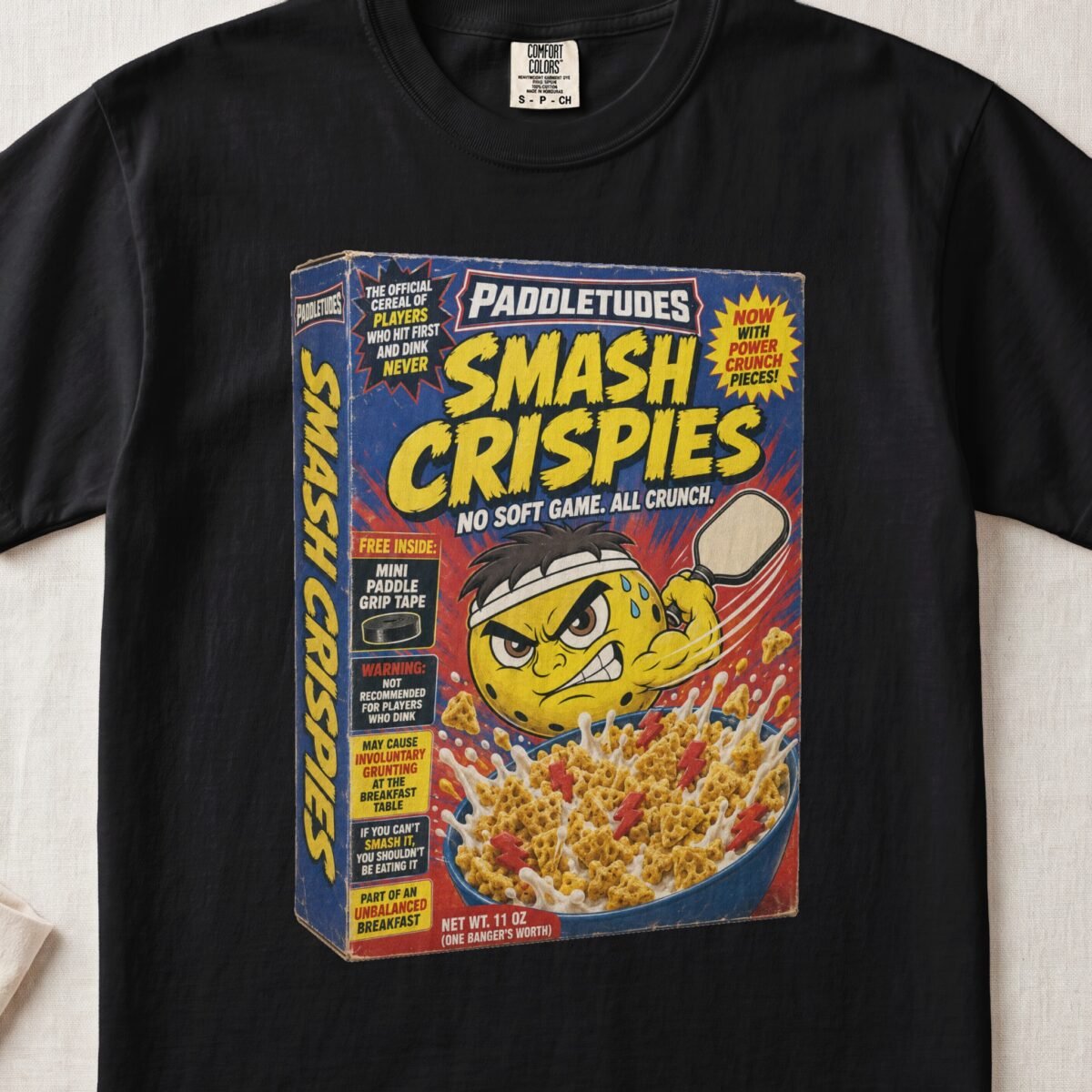
Smash Crispies
$39.99 Select options This product has multiple variants. The options may be chosen on the product page -
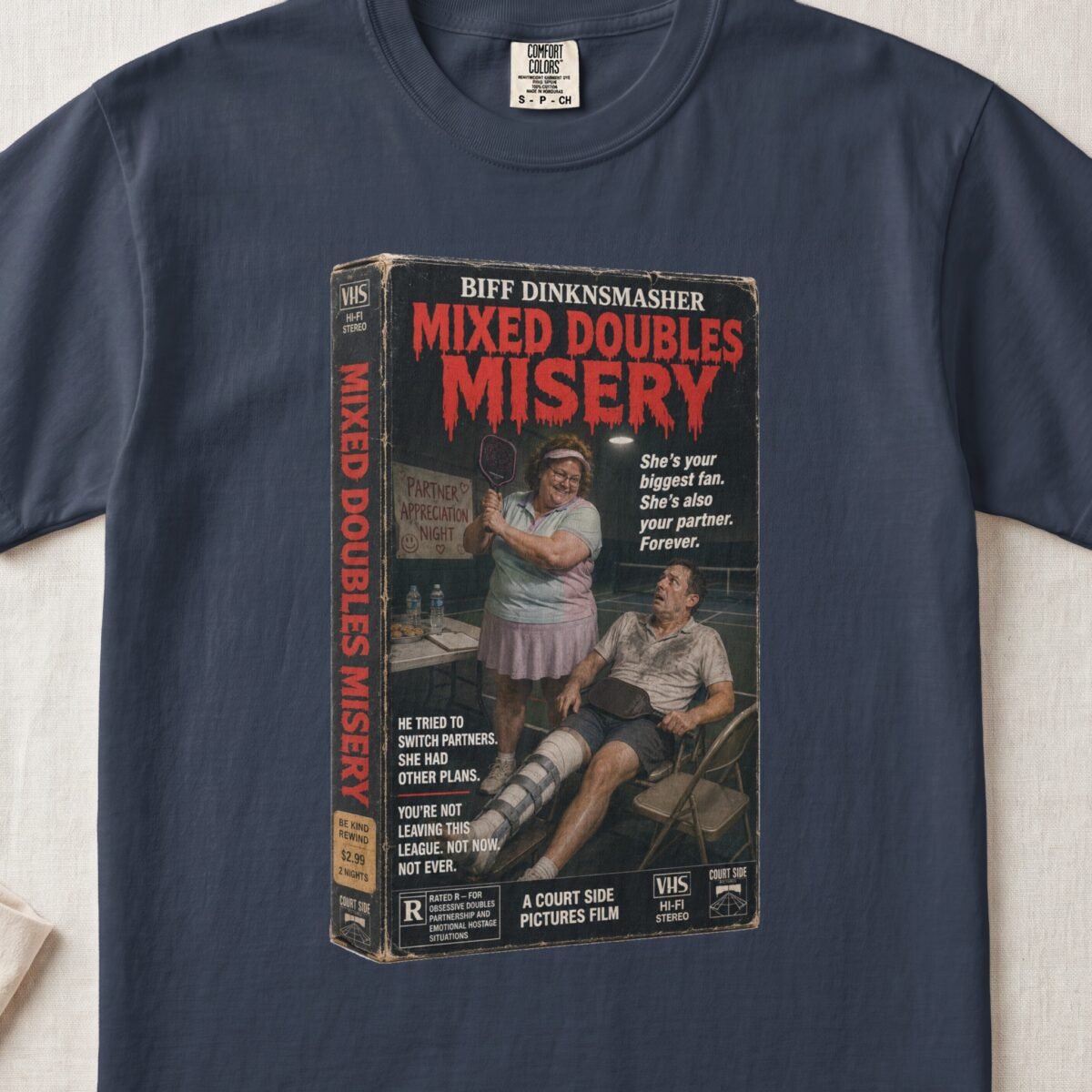
Mixed Doubles Misery
$39.99 Select options This product has multiple variants. The options may be chosen on the product page