Retro Comfort Colors 1717
Smash Crispies
$39.99
- Comfort Colors 1717 heavyweight cotton
- Original design · printed to order
- U.S. print partners
The Banger’s Breakfast on a Retro Cereal Box Graphic Tee
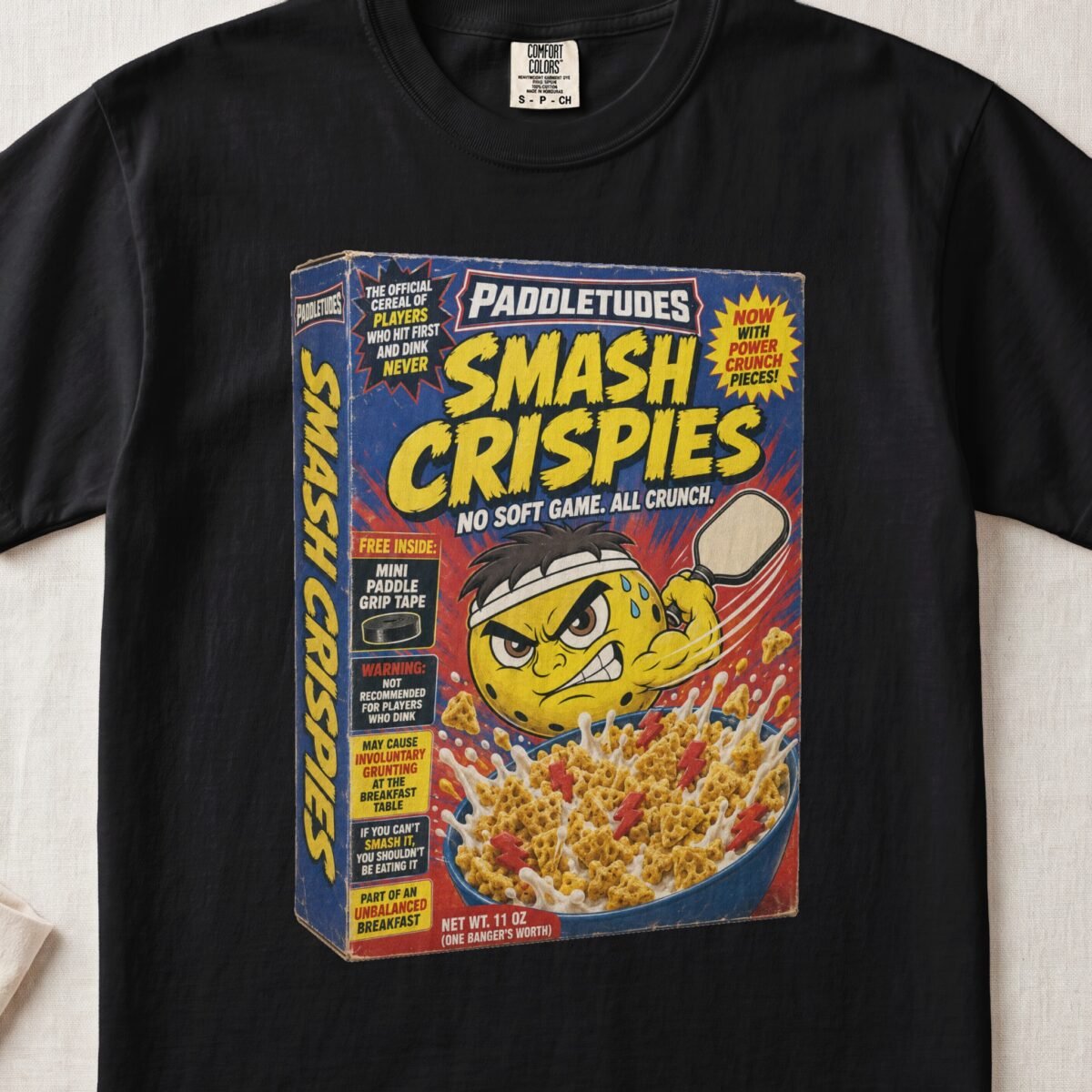
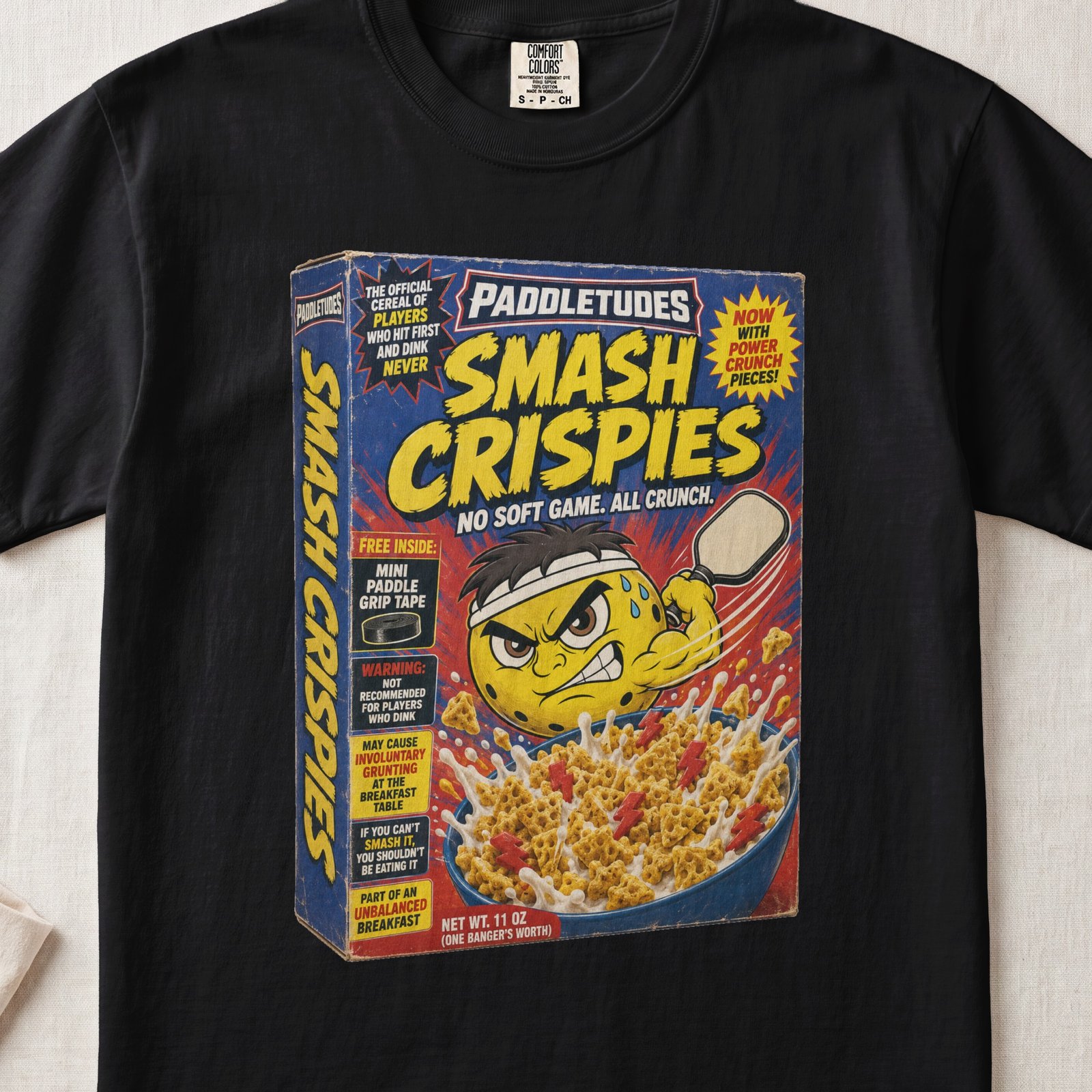
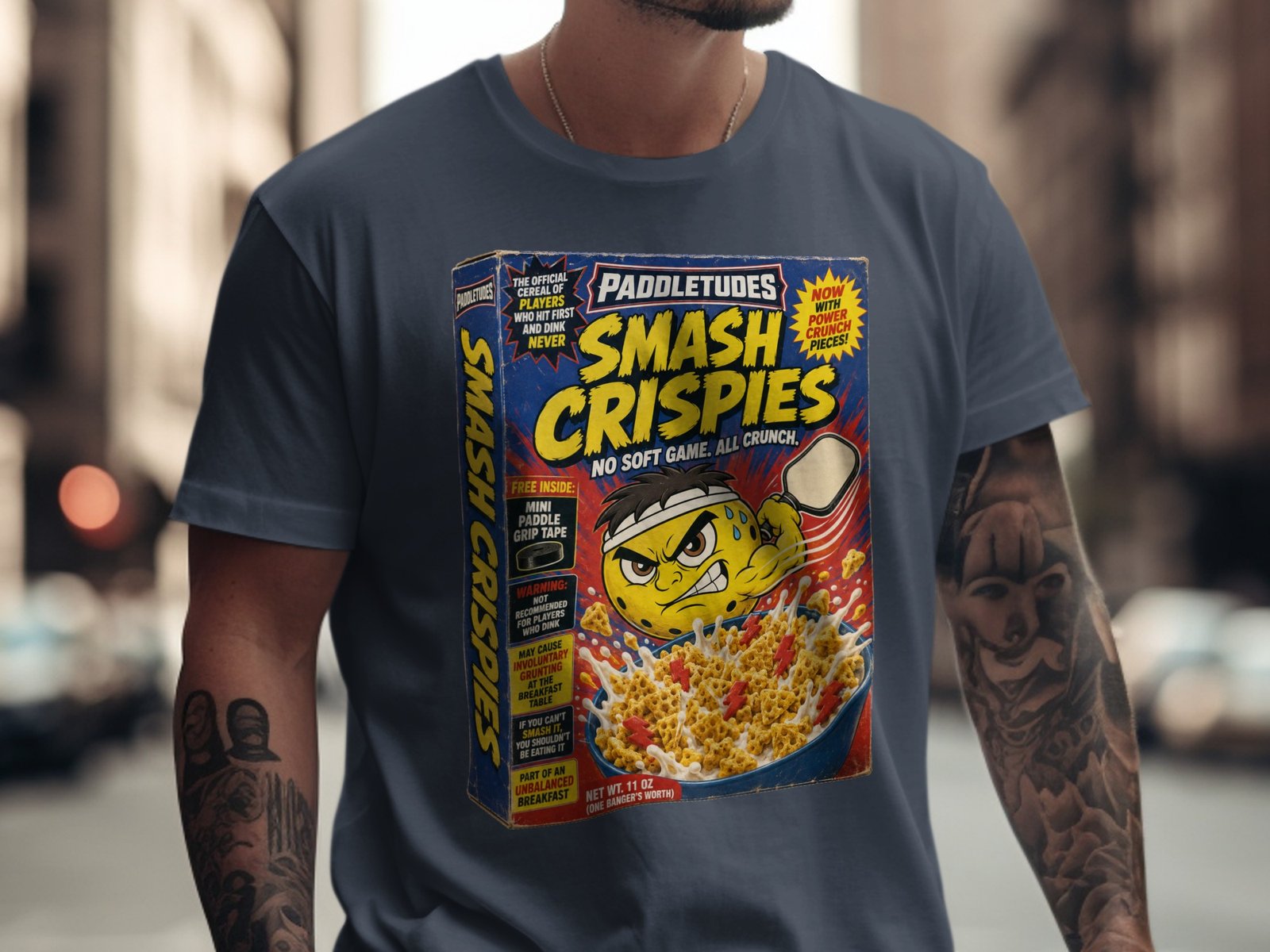
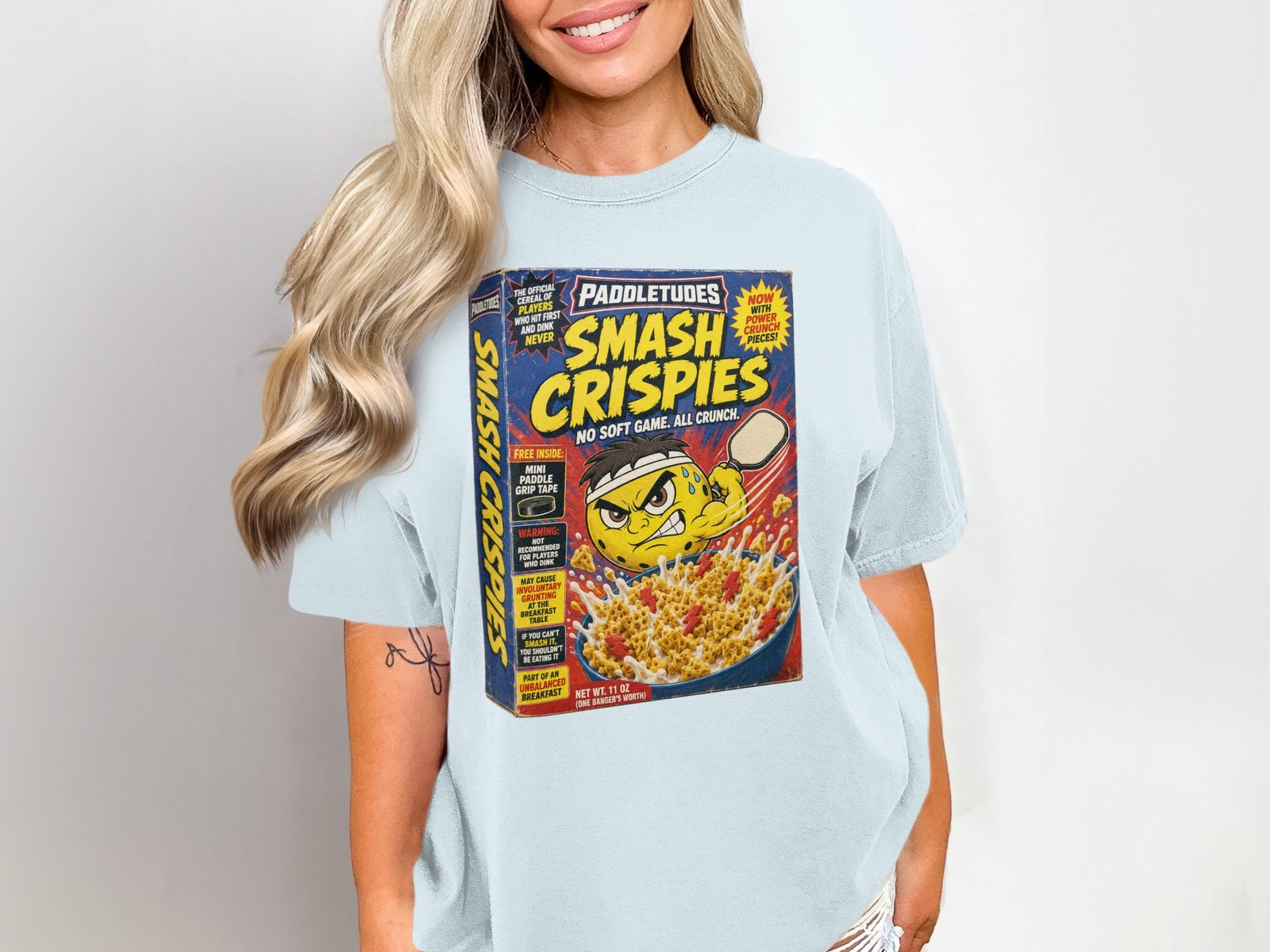
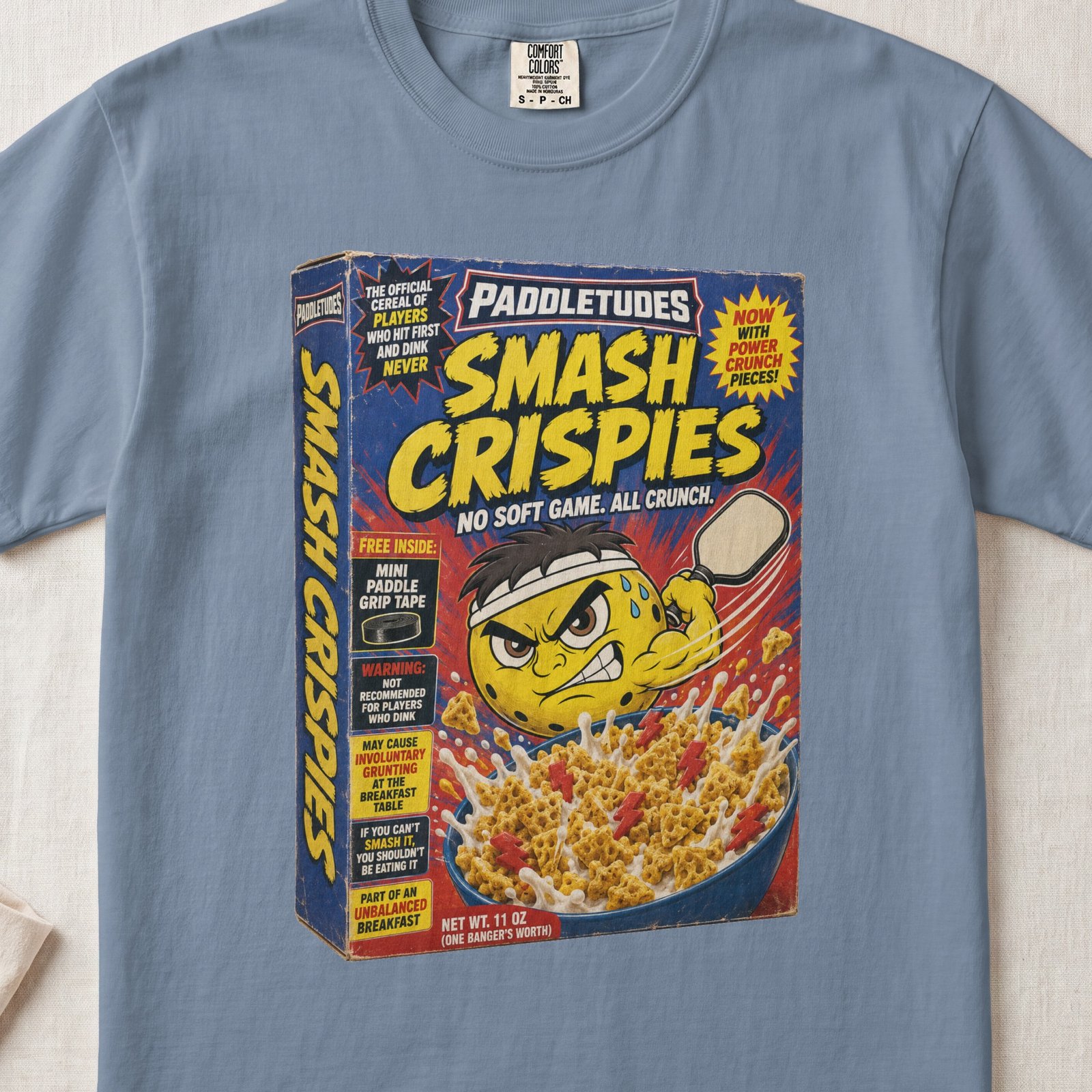
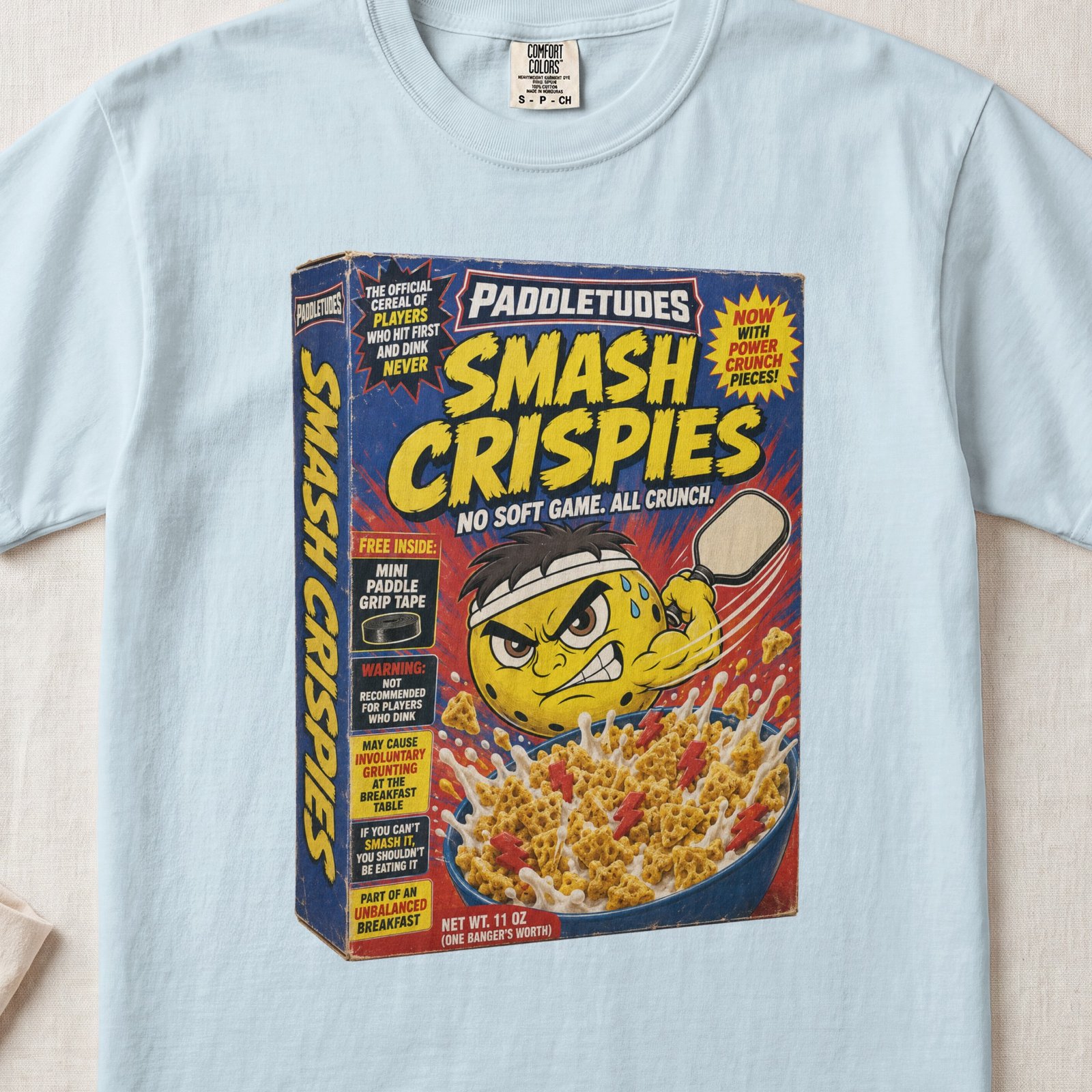
No soft game. All crunch. Smash Crispies is the banger’s cereal on a Comfort Colors 1717 — the official breakfast of players who hit first and dink never.
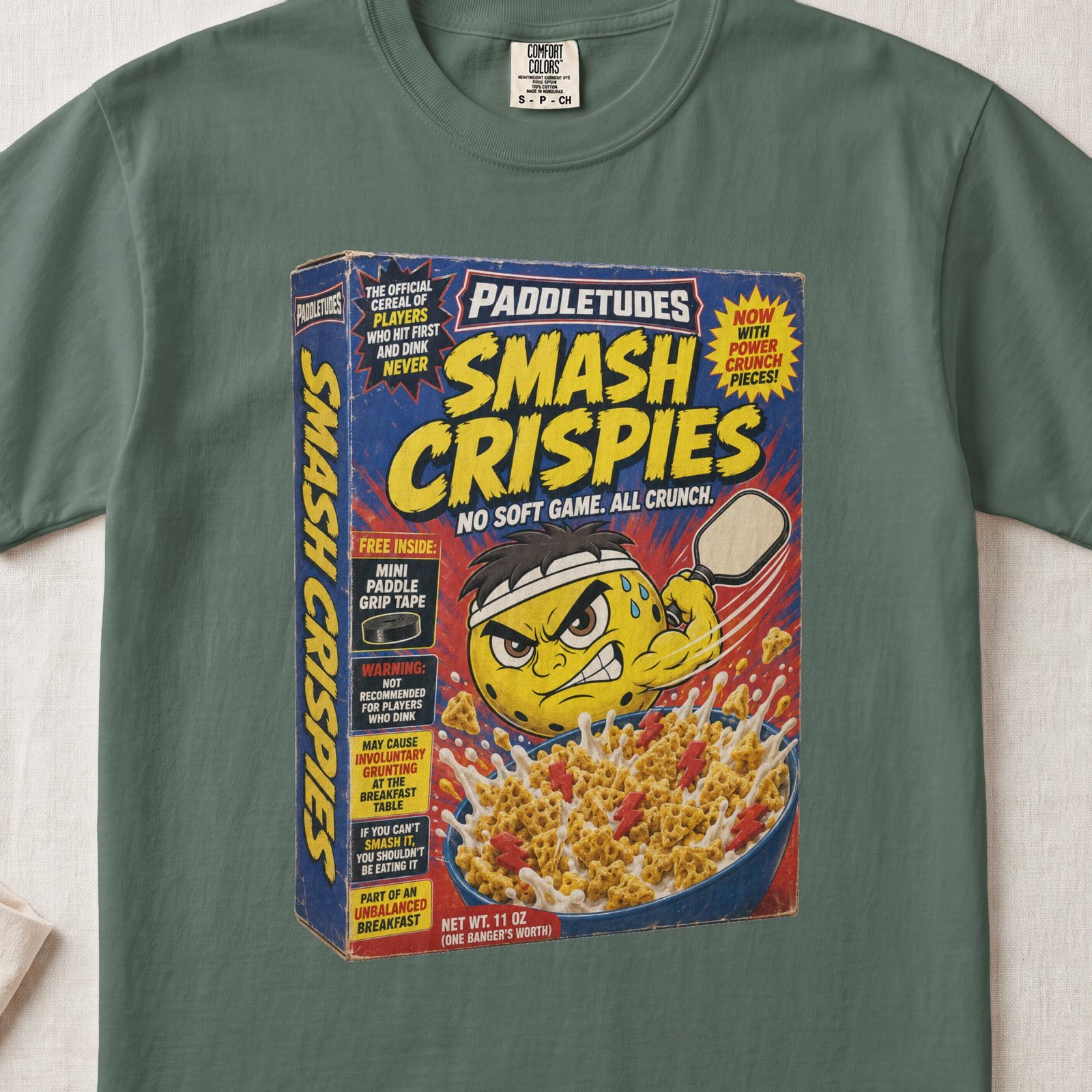
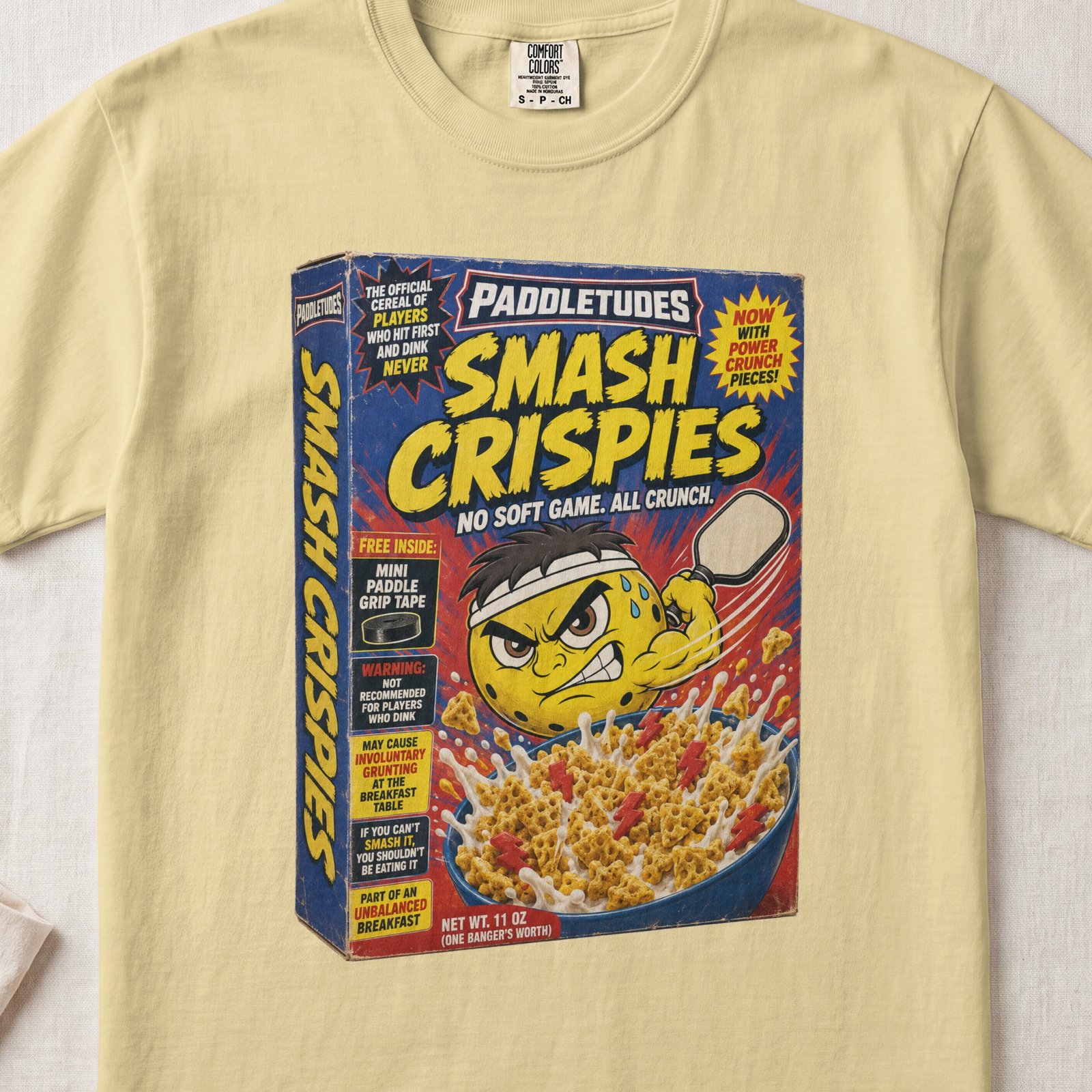
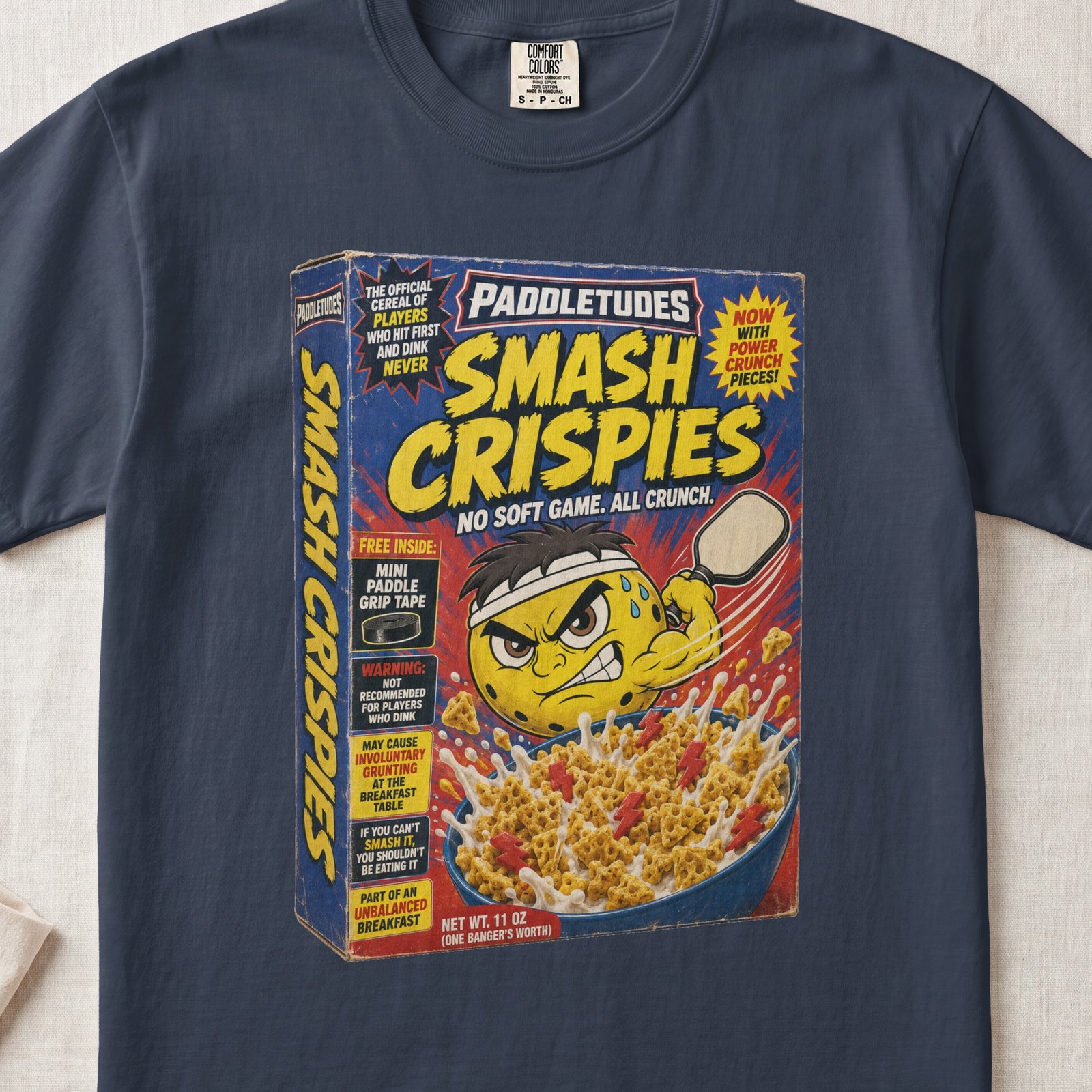
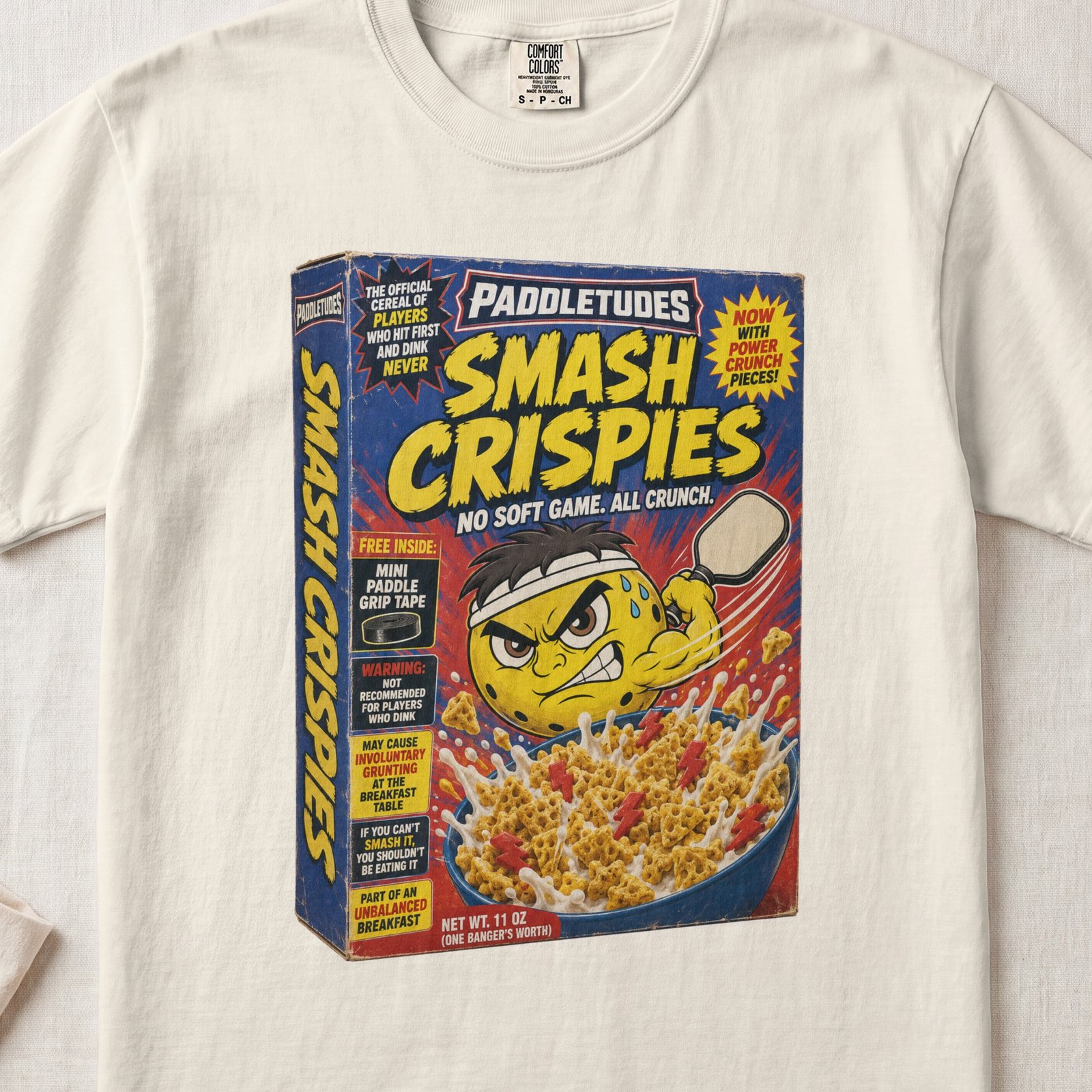
The box is loud on purpose. Red and blue action lines radiating out from an angry pickleball mascot with a headband, a clenched jaw, and a paddle cocked back for a full overhead smash. The cereal in the bowl is aggressive — paddle-shaped pieces and red lightning bolts splashing through milk like a rally that just went sideways. A starburst in the corner announces “NOW WITH POWER CRUNCH PIECES!” as if the standard level of crunch wasn’t already enough for a cereal that considers softness a character flaw. The Paddletudes logo anchors the top of the box next to a corner callout that reads like a manifesto: “THE OFFICIAL CEREAL OF PLAYERS WHO HIT FIRST AND DINK NEVER.”
The fine print runs down the left side and every line hits twice. “FREE INSIDE: MINI PADDLE GRIP TAPE” — the cereal box prize reimagined for a sport where overgrip is a consumable. The grip tape illustration looks like a hockey puck, which tells you everything about the energy level this cereal is fueling. “WARNING: NOT RECOMMENDED FOR PLAYERS WHO DINK.” A dietary restriction based on playing philosophy. “MAY CAUSE INVOLUNTARY GRUNTING AT THE BREAKFAST TABLE.” That one is the line people notice from across the room, because involuntary grunting on the pickleball court is a real and divisive phenomenon — some players grunt on every drive the way tennis players do, and the debate about whether it’s gamesmanship or genuine effort has been running at every facility since the sport left the recreation center and entered the competitive circuit. “IF YOU CAN’T SMASH IT, YOU SHOULDN’T BE EATING IT.” Applied to food, ridiculous. Applied to a sport that already has twelve named injuries, aspirational. And the net weight: “11 OZ (ONE BANGER’S WORTH)” — game point, one serving, exactly enough to fuel one session of hitting everything as hard as humanly possible.
The tagline at the bottom seals the philosophy: “PART OF AN UNBALANCED BREAKFAST.” Not balanced. Unbalanced. The word is deliberate, and it describes the playing style as much as the nutrition. A balanced pickleball game includes drives, drops, dinks, resets, and lobs. The Smash Crispies player has removed everything below the drive from their repertoire and replaced it with more drives. Their breakfast is unbalanced. Their game is unbalanced. They are remarkably comfortable with both.
The person who reaches for this shirt at 5:45 a.m. is not the person who eases into their day. They eat standing up. Their morning routine has been compressed to make room for 7 a.m. open play, and the cereal is functional — fuel, not experience. They don’t read the box because they’re reading the group chat to see how many courts are open. They don’t sit down because sitting is what happens after the session, not before it. The Smash Crispies mascot’s expression — teeth gritted, eyes narrowed, paddle loaded — is their face walking from the parking lot to the gate. Whatever happened yesterday at work doesn’t exist on the court. Whatever happens today at work doesn’t exist yet. Right now there are two hours of hitting things hard, and that is the whole morning.
Where Kitchen Crunch is the dinker’s cereal — teal and orange, a sweet mascot in a chef’s hat, every line a double meaning about the non-volley zone — Smash Crispies is its direct opposite. Kitchen Crunch rewards reading. Smash Crispies rewards hitting. Kitchen Crunch’s prize is a mini kitchen timer for tracking how long you’ve been standing in the NVZ. Smash Crispies’ prize is grip tape for the paddle you’re squeezing too hard. Kitchen Crunch weighs 7 oz — the seven feet of the non-volley zone. Smash Crispies weighs 11 oz — game point. Together, they’re the dink-versus-banger debate served as a breakfast cereal pair, and buying both for the same person acknowledges that most players live somewhere between the two philosophies even if they’d never admit it.
If you’re buying this as a gift, it’s for the person who plays pickleball like they’re late for something. Every shot arrives with urgency. They don’t construct points — they end them. The rally is not a conversation; it’s a one-sided argument delivered at volume. This shirt works as a standalone gift for that player, but it works even better as a pair with Kitchen Crunch for the couple where one partner dinks and the other drives — a pairing so common in recreational pickleball that USA Pickleball should study it as a sociological phenomenon. The Smack Talklicious bubblegum box arms the same banger personality with confidence between points, and the Smashton Brothers’ Smack Shot tape tells the story of what happens when three of these people form a team and refuse to evolve.
Printed on a Comfort Colors 1717 garment-dyed heavyweight tee with water-based DTG ink — sizing and care details here.
How Do You Hit an Overhead Smash in Pickleball
An overhead smash in pickleball starts with positioning — turn your body sideways to the net, raise your paddle arm with the elbow above your shoulder, and step forward with your front foot as you swing down through the ball. The contact point should be slightly in front of your body and as high as you can comfortably reach, which directs the ball downward into the court instead of flat into the net or long past the baseline. The power comes from the step and the shoulder rotation, not from the wrist.
The overhead is the highest-reward shot in pickleball when executed correctly. A well-placed smash aimed at the feet of the nearest opponent or angled to the sideline is effectively unreturnable. The situations that create overhead opportunities are lobs that don’t get high or deep enough — the ball hanging in the air at head height or above, close enough to the net that the angle allows a downward strike. Recognizing which lobs are smashable and which ones require a reset is the difference between a put-away and an error. A lob that pushes you behind the baseline is not a smash opportunity — it’s a reset. A lob that stays short and peaks below the lights is what the Smash Crispies mascot is loading up on.
The most common overhead mistakes are swinging too hard (the wrist takes over and sends the ball long), hitting the ball behind the body instead of in front (which aims it upward instead of down), and not moving the feet to get into position (reaching sideways for an overhead instead of shuffling underneath it). At the recreational level, most open play sessions produce more overhead errors than winners because players swing for maximum power without setting their feet. The technical irony is that the softer the swing, the more accurate the smash — an 80% effort overhead placed to the right spot beats a 100% effort overhead aimed at nothing every time. The Smash Crispies player is not interested in this information. They will continue swinging at 100%, and the cereal will continue being part of an unbalanced breakfast.
-
Electric Pickleball
$39.99 Select options This product has multiple variants. The options may be chosen on the product page -
Shoot The Dink
$39.99 Select options This product has multiple variants. The options may be chosen on the product page -
Pickle Shack
$39.99 Select options This product has multiple variants. The options may be chosen on the product page