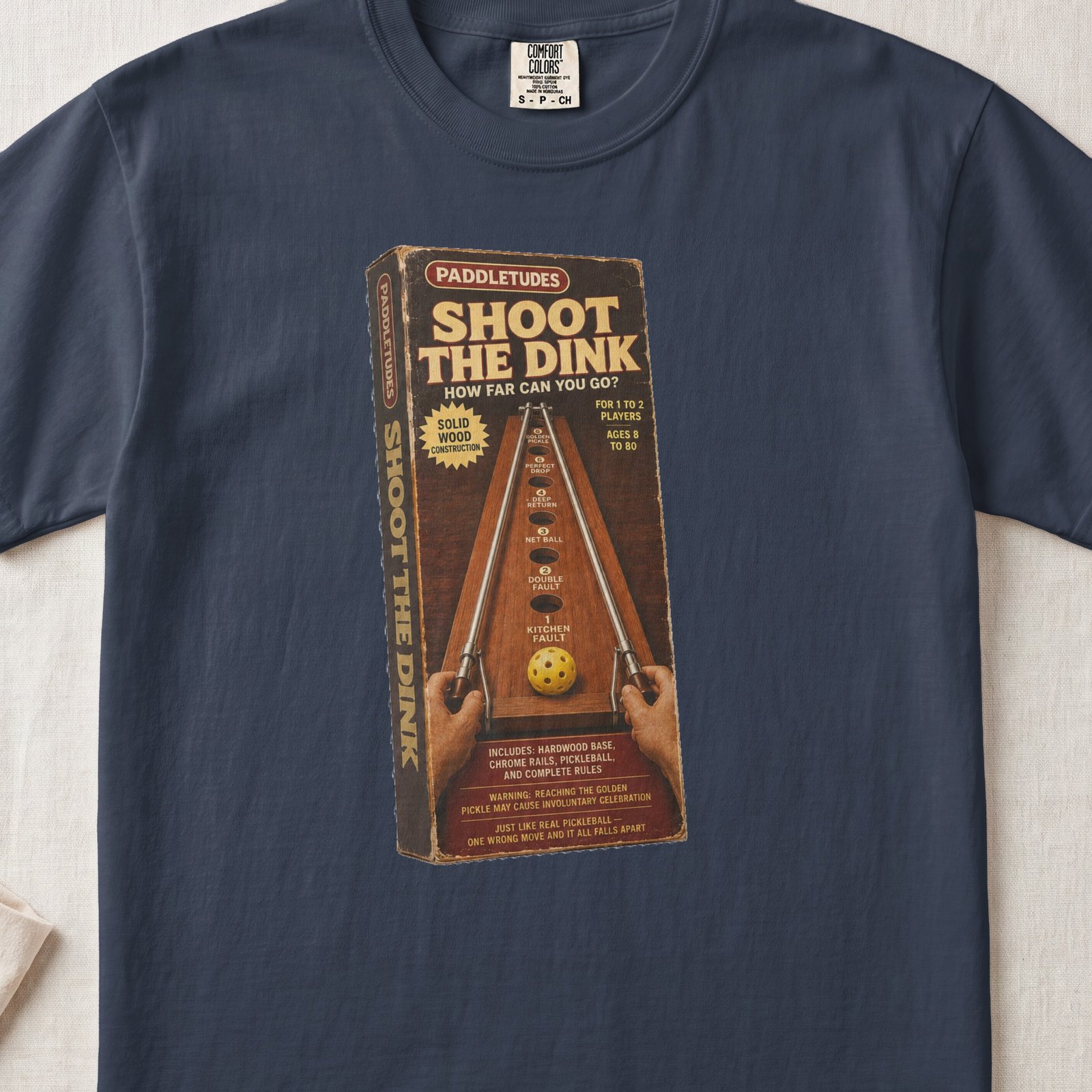
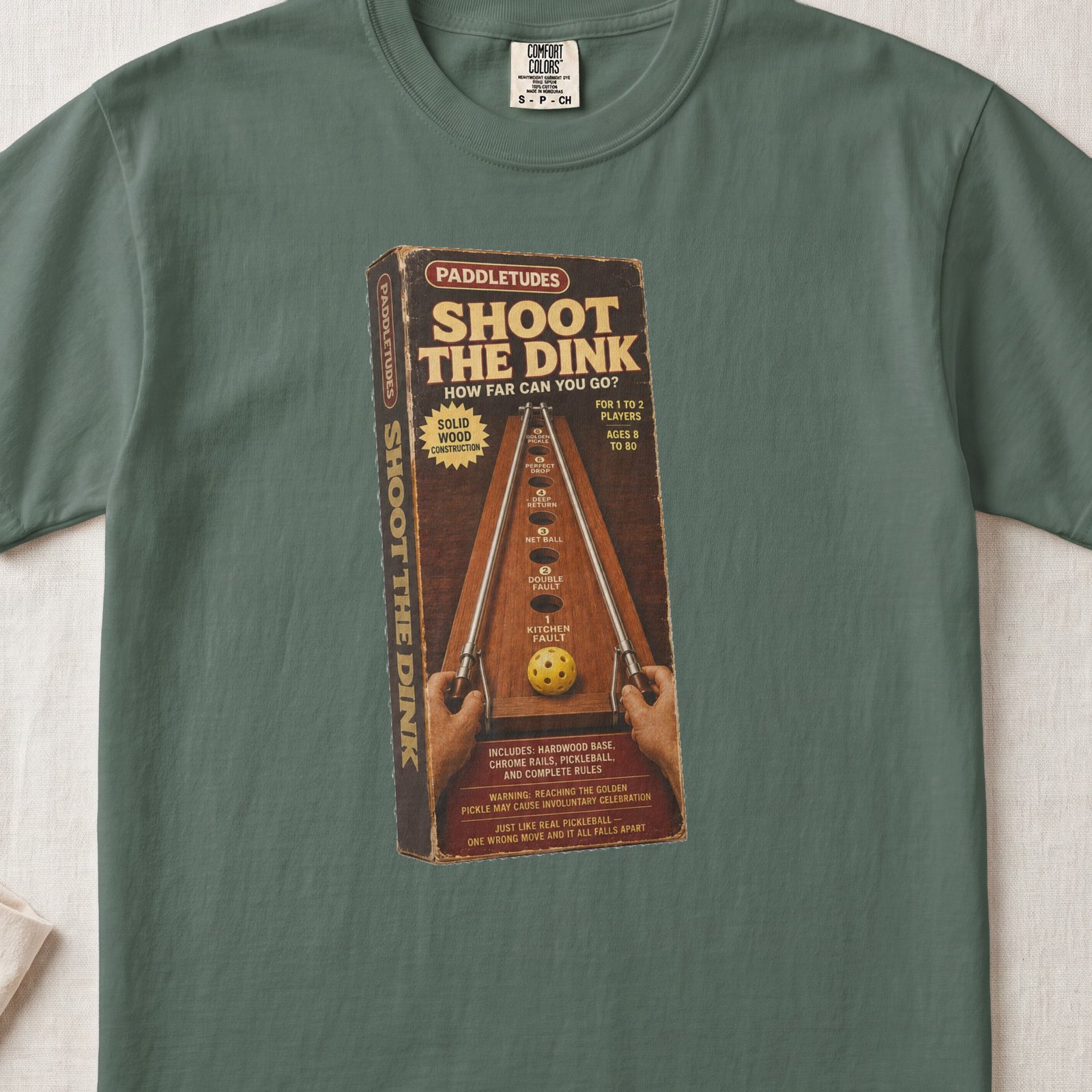
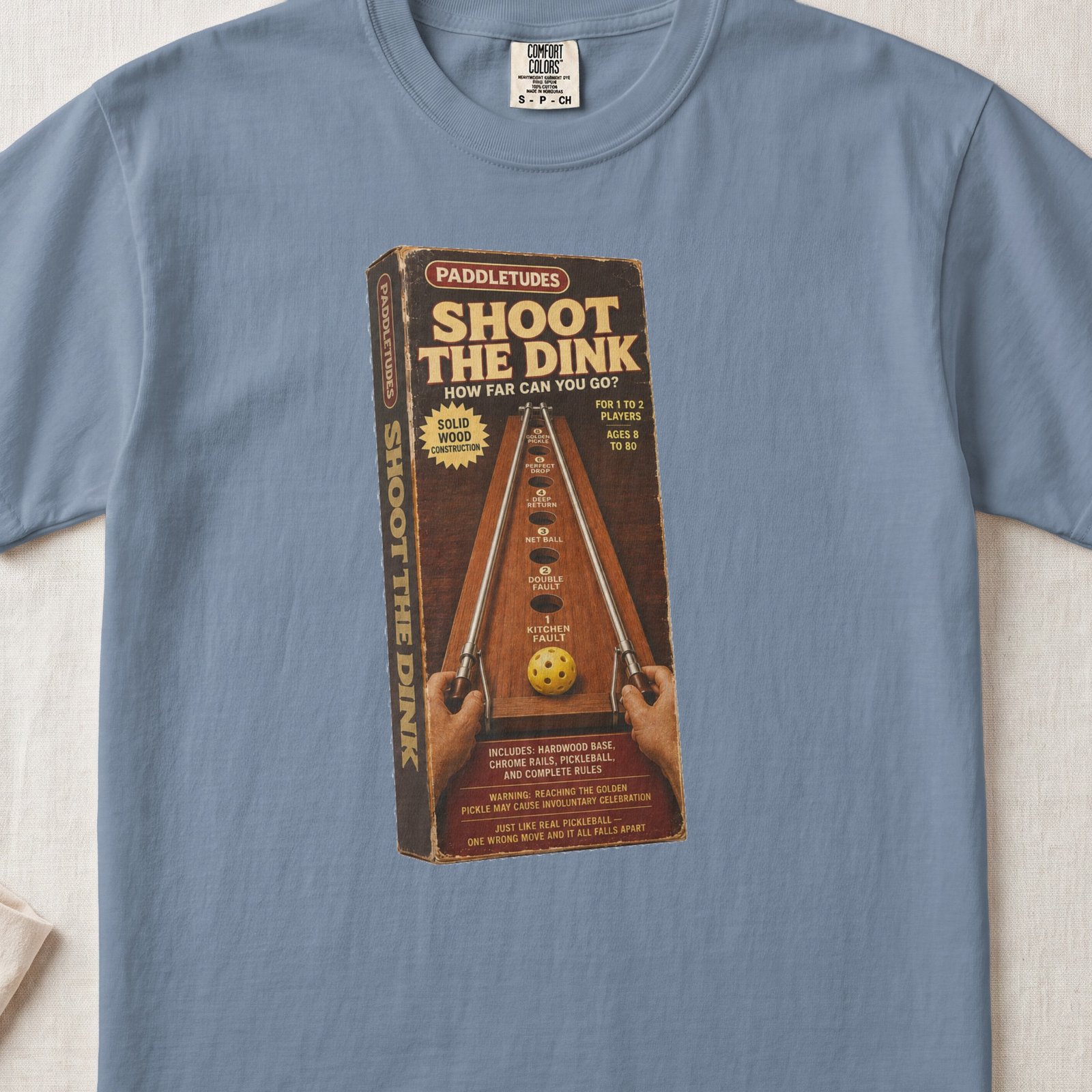
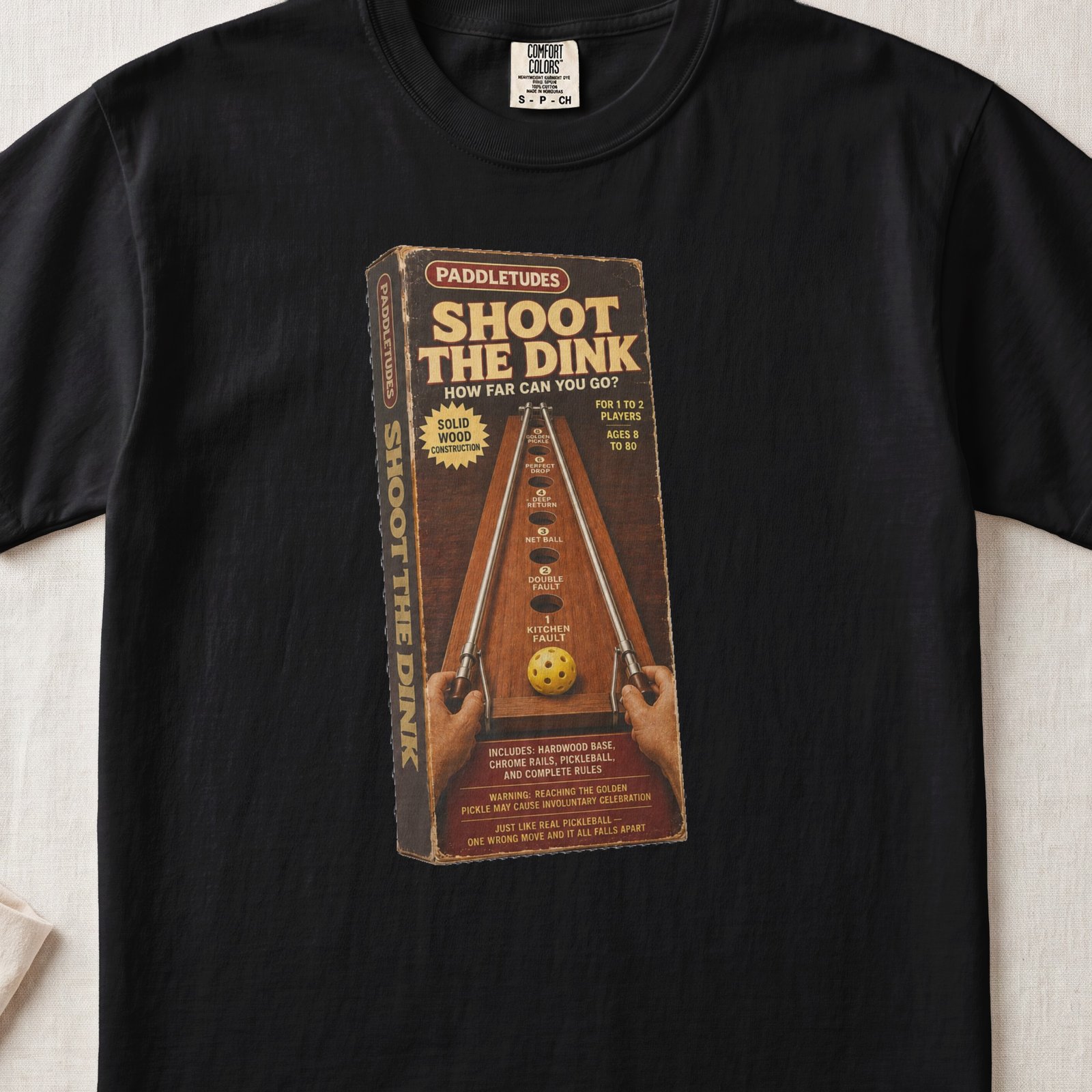
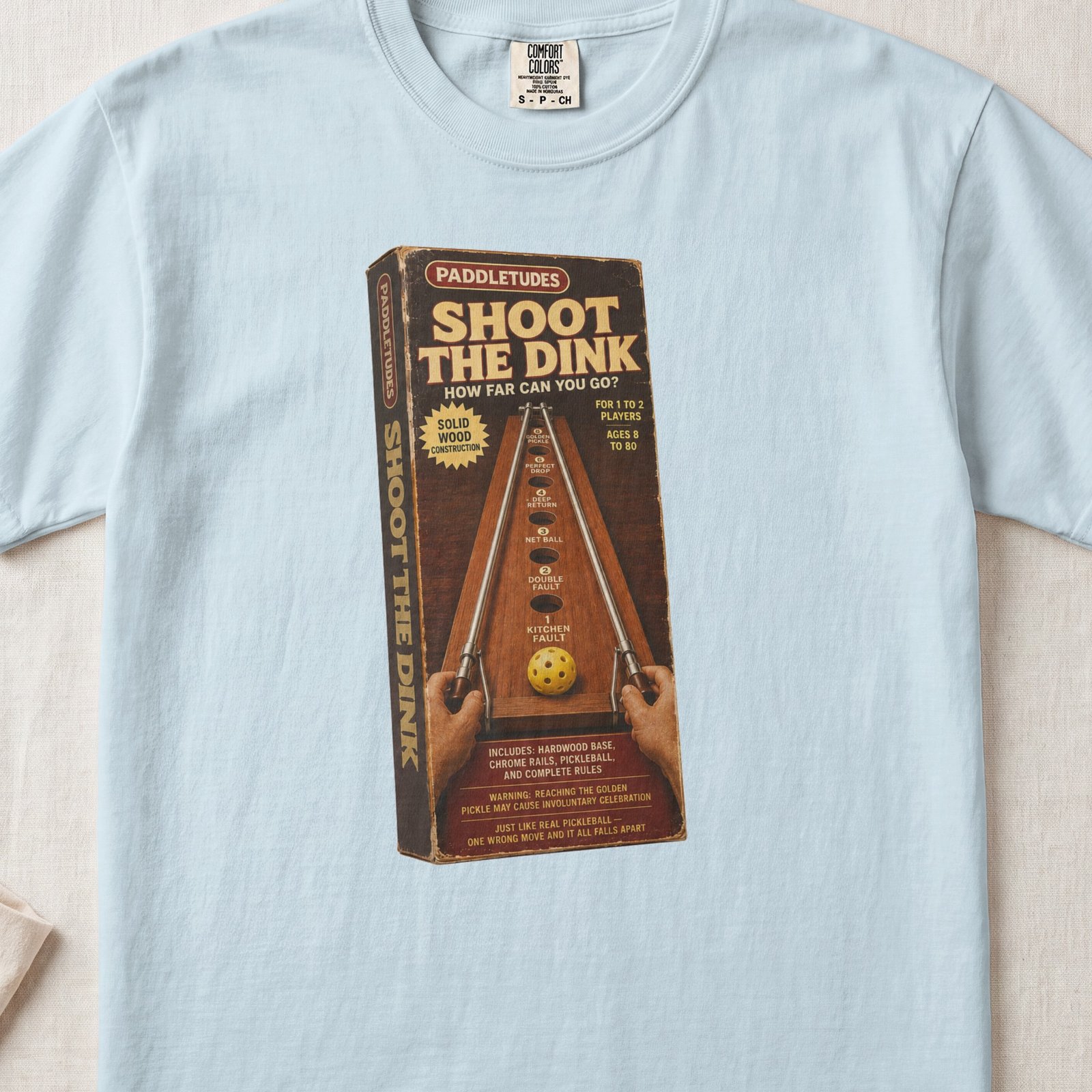
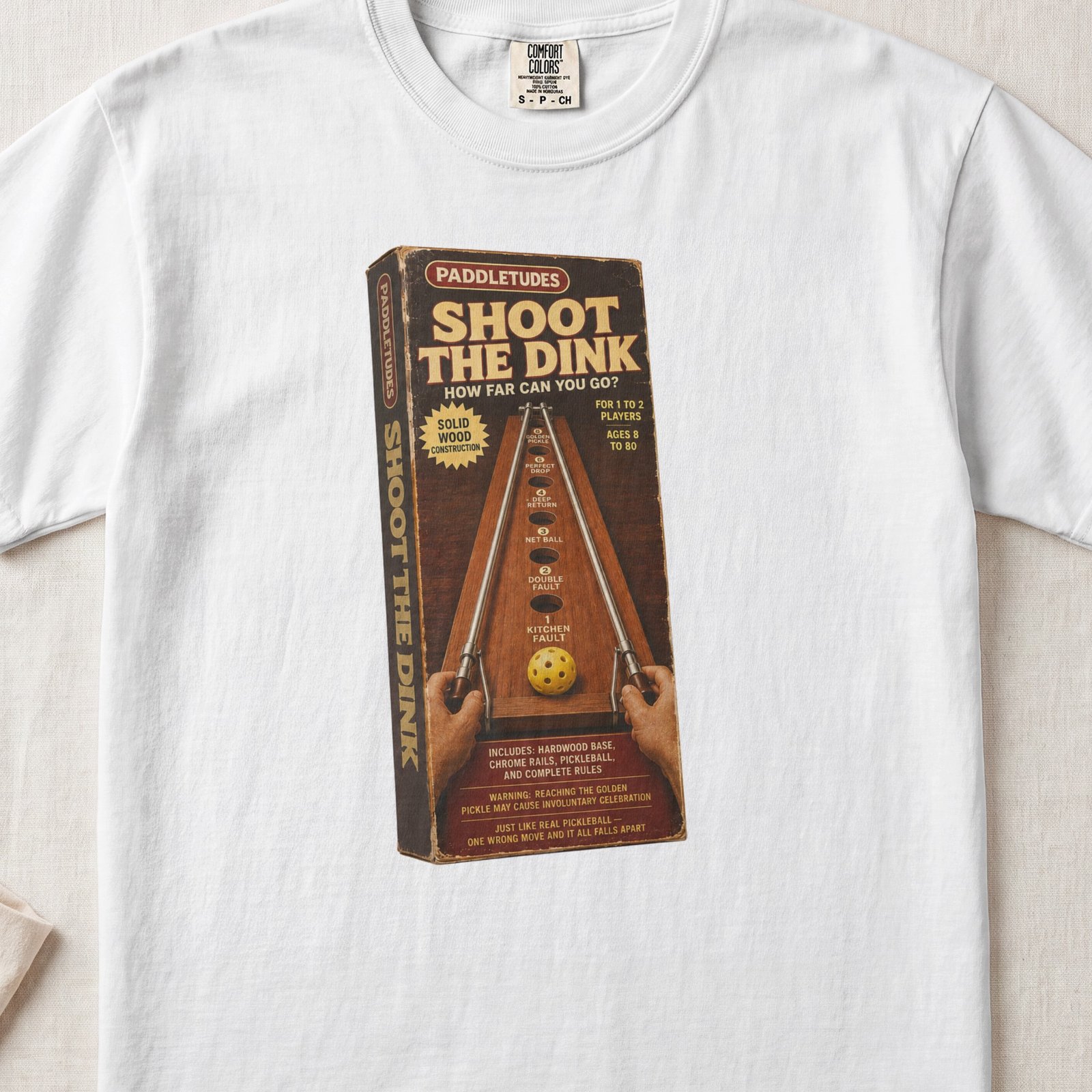
Retro Comfort Colors 1717
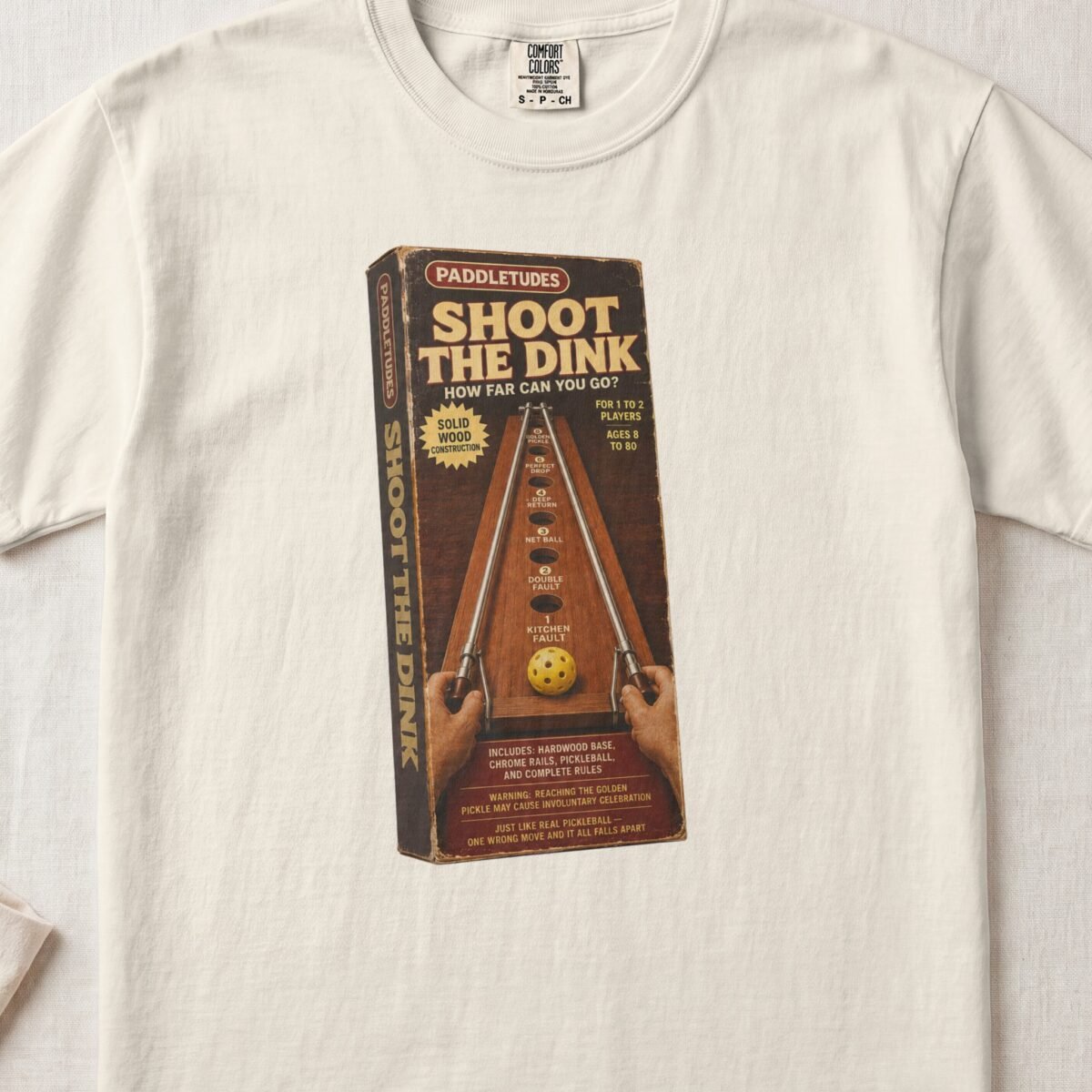
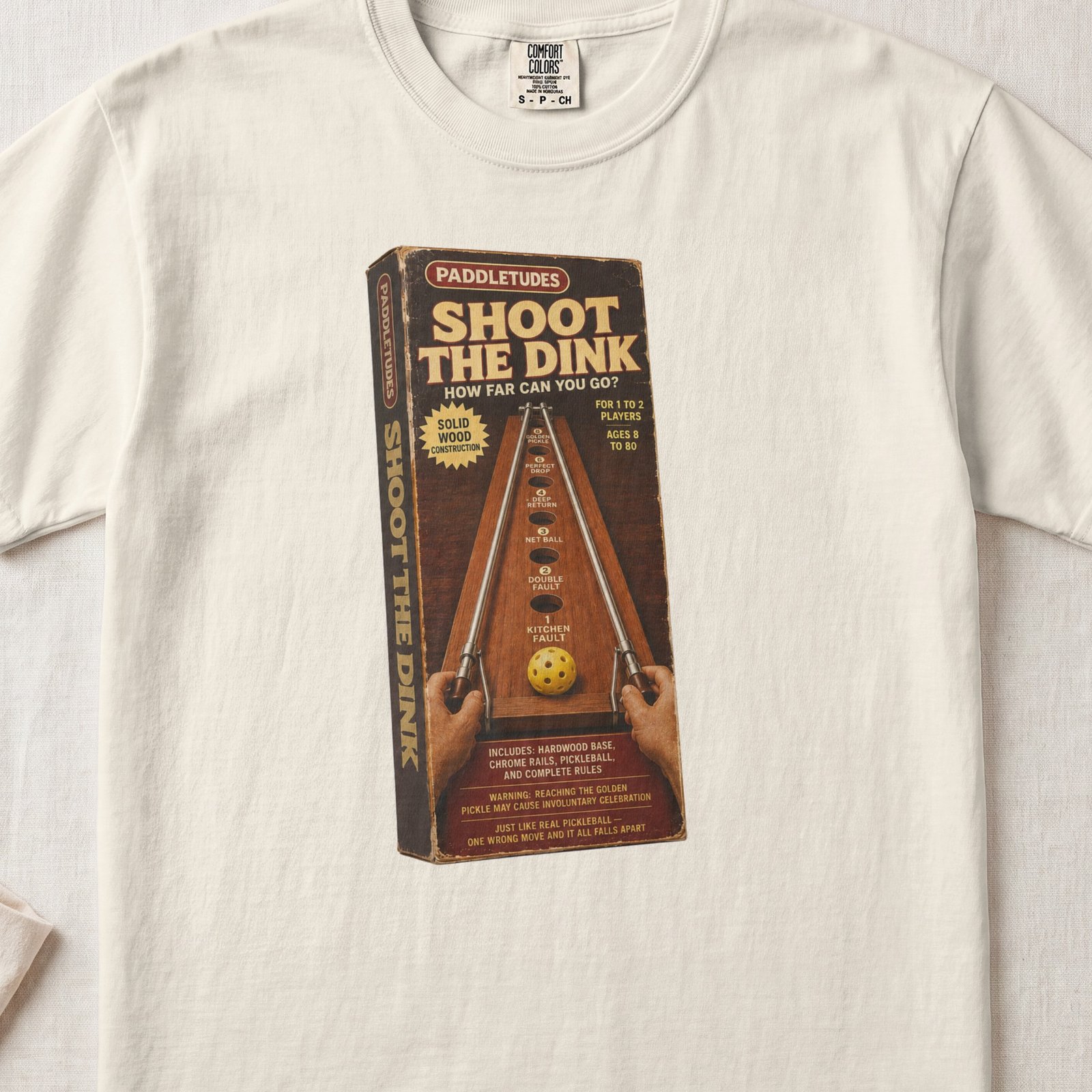
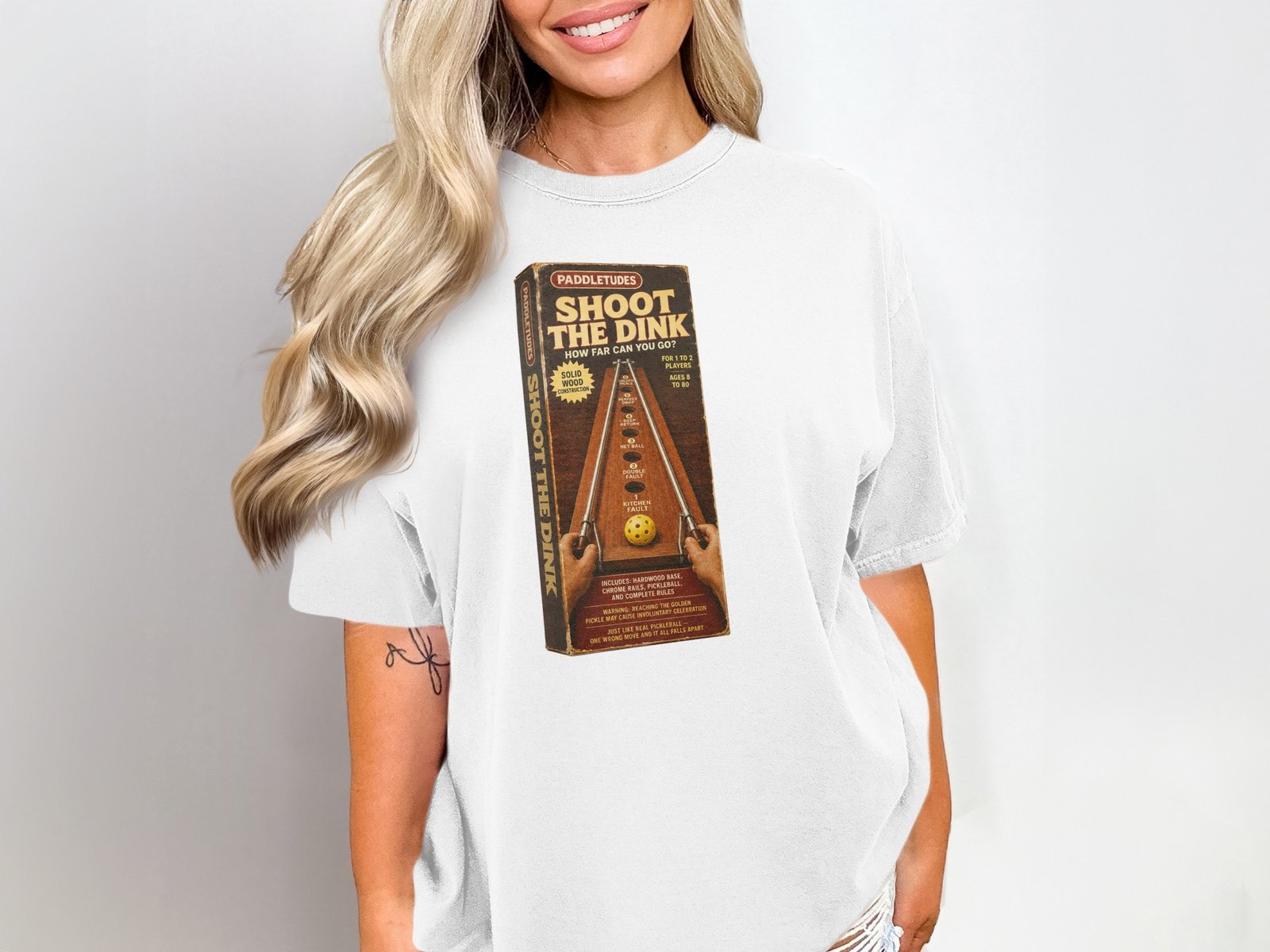
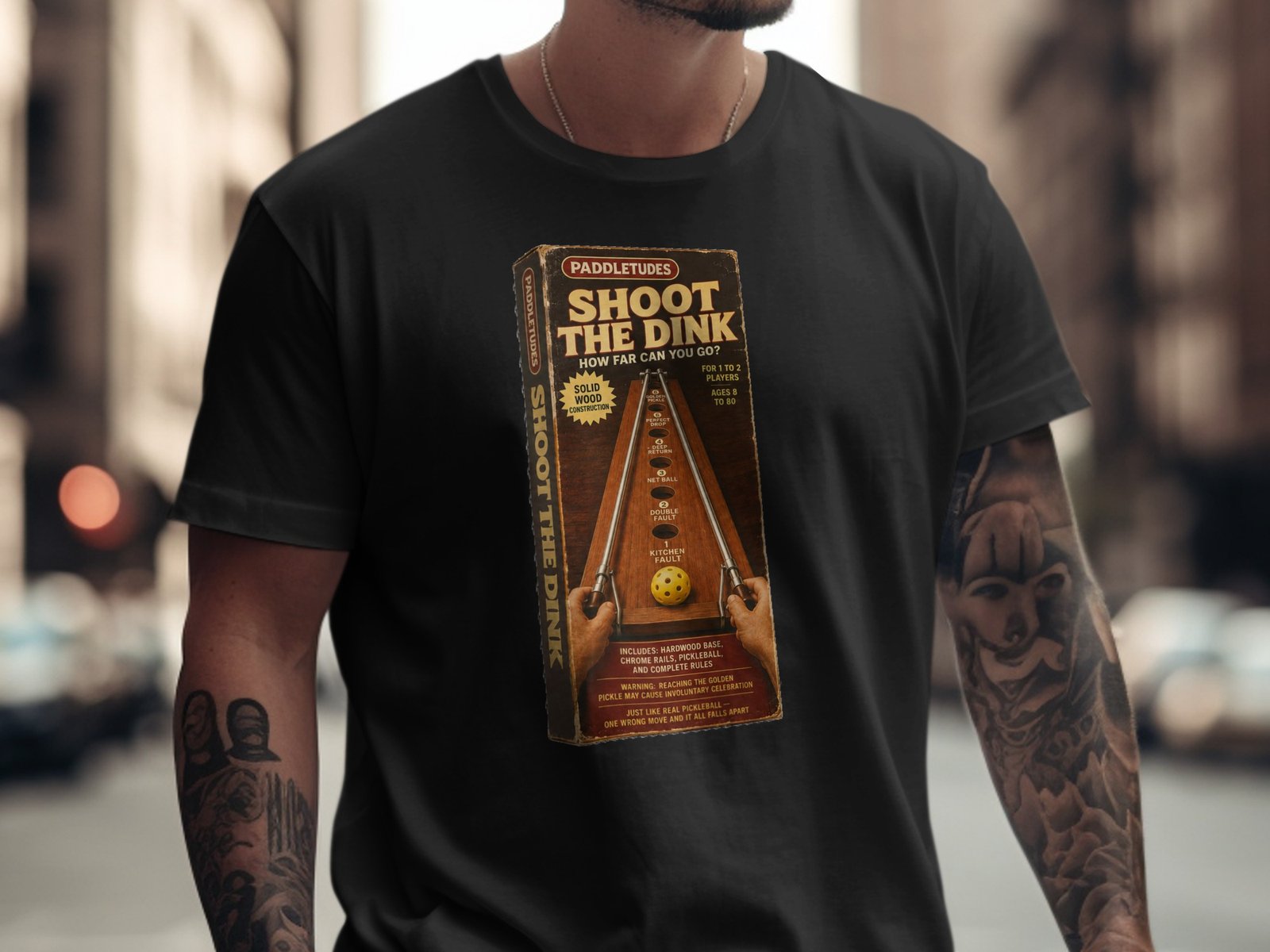
Shoot The Dink
$39.99
- Comfort Colors 1717 heavyweight cotton
- Original design · printed to order
- U.S. print partners
Shoot The Dink — For the Player Who Turns Soft Shots Into Weapons
This funny pickleball shirt is for the player who sees a dink and sees an opportunity. Not to dink back. Not to reset. To attack. Shoot The Dink is the two-word philosophy of the speed-up artist who’s been waiting three shots for a ball to sit up half an inch too high.
The best paddles on the market are engineered for exactly this moment. Thermoformed cores, carbon fiber faces, textured surfaces designed to generate spin on contact. All of that technology exists so the player standing at the kitchen line can take a dink that’s barely clearing the net and redirect it past the opponent’s ear at a speed they weren’t ready for. The dinking rally is chess. Shooting the dink is flipping the board. And the player who does it well doesn’t just end the point. They change the entire energy of the game. The other team starts flinching on every soft shot, waiting for the one that turns into a missile. That hesitation is where this player lives.
Shoot The Dink is the opposite of patience. It’s the anti-dink, worn by people who respect the soft game but refuse to live there. They’ll rally at the kitchen line for four or five shots, reading the angle, watching the paddle face, waiting for the moment the opponent’s weight shifts the wrong way. Then it happens. The ball comes back a little high, a little soft, and the speed-up fires through the gap before the other team can reset. At the 4.0+ level, this exchange happens three or four times per game. At open play, it happens once and the other team looks personally offended.
The dinking community has strong opinions about this player. The soft-game purists think speed-ups are reckless. The bangers think they take too long to pull the trigger. Shoot The Dink sits in between — the player who does both and switches on instinct. If you play with someone who makes you jump every time a ball crosses the net, this is their shirt. It belongs in the same conversation as Can’t Teach Touch and Overhead Everything, but it won’t agree with either of them. That’s the point.
As a gift, this works for the player who already has the skills but hasn’t found the shirt that matches the mentality. Your partner in league night who just learned the speed-up and won’t stop using it? This says you noticed. The friend who’s always practicing the around-the-post shot when she should be working on resets? This gift says “keep doing what you’re doing.” It also says you know pickleball well enough to understand the difference between a funny pickleball shirt that talks about the sport generically and one that captures a specific way of playing it.
When Should You Speed Up the Ball in Pickleball
You should speed up the ball in pickleball when the incoming shot is high enough to attack with a downward trajectory, when your opponent is leaning the wrong way, or when you’ve set up the point with enough soft shots to make the acceleration unexpected. The speed-up works best as a surprise, not a plan.
Height over the net is the primary trigger. A dink that clears the net by six inches or more is attackable. A dink that barely clears it is not. Trying to speed up a low ball means hitting upward, which gives the other team an easy counter. The best speed-up artists wait for the ball that’s just high enough to take on a flat or slightly downward trajectory, and they aim it at the opponent’s feet, hip, or the gap between two players. The target matters as much as the timing. A fast ball aimed at a ready paddle just comes back faster.
The mental game matters too. A player who speeds up every ball becomes predictable and gives the opponent permission to stand back and counter-drive. A player who speeds up one out of every eight or ten dinks keeps the other team guessing. The ratio changes based on the level of play and the opponent’s hands speed, but the principle stays the same: the speed-up earns its power from the dinks that came before it. Shooting the dink works because the dink rally built the trap. Without the setup, it’s just hitting hard. With the setup, it’s a statement.
What Is the Difference Between a Dink and a Speed-Up in Pickleball
A dink is a soft shot that lands in or near the non-volley zone and is designed to keep the rally slow and controlled. A speed-up is an aggressive shot hit hard off a ball at the kitchen line, designed to end the rally or force a weak return. The dink builds the point. The speed-up tries to finish it.
The technical difference is in the swing and the intent. A dink uses a compact paddle motion, often with an open face, to push the ball softly over the net with arc and placement. A speed-up uses a faster paddle head speed with a more closed face to drive the ball flat and fast, usually targeting the body or the gap. Both shots happen from nearly the same position at the kitchen line, and the best players can disguise one as the other until the last fraction of a second. That disguise is what makes the speed-up effective — the opponent reads a dink, prepares for a dink, and gets a ball at their hip before they can adjust.
Where it gets interesting is the counter. Good players at the USA Pickleball sanctioned tournament level don’t just take a speed-up and lose the point. They counter it with a block, a reset, or a counter-speed-up that turns the exchange into a hands battle at the kitchen line. Those ten-shot rapid-fire volleys that make spectators gasp — they all started with one player deciding to shoot the dink. The outcome depends on whose hands are faster, whose nerve holds, and whose paddle was in the right spot when the ball arrived.
Printed on a Comfort Colors 1717 garment-dyed heavyweight tee with water-based DTG ink — sizing and care details here.
-
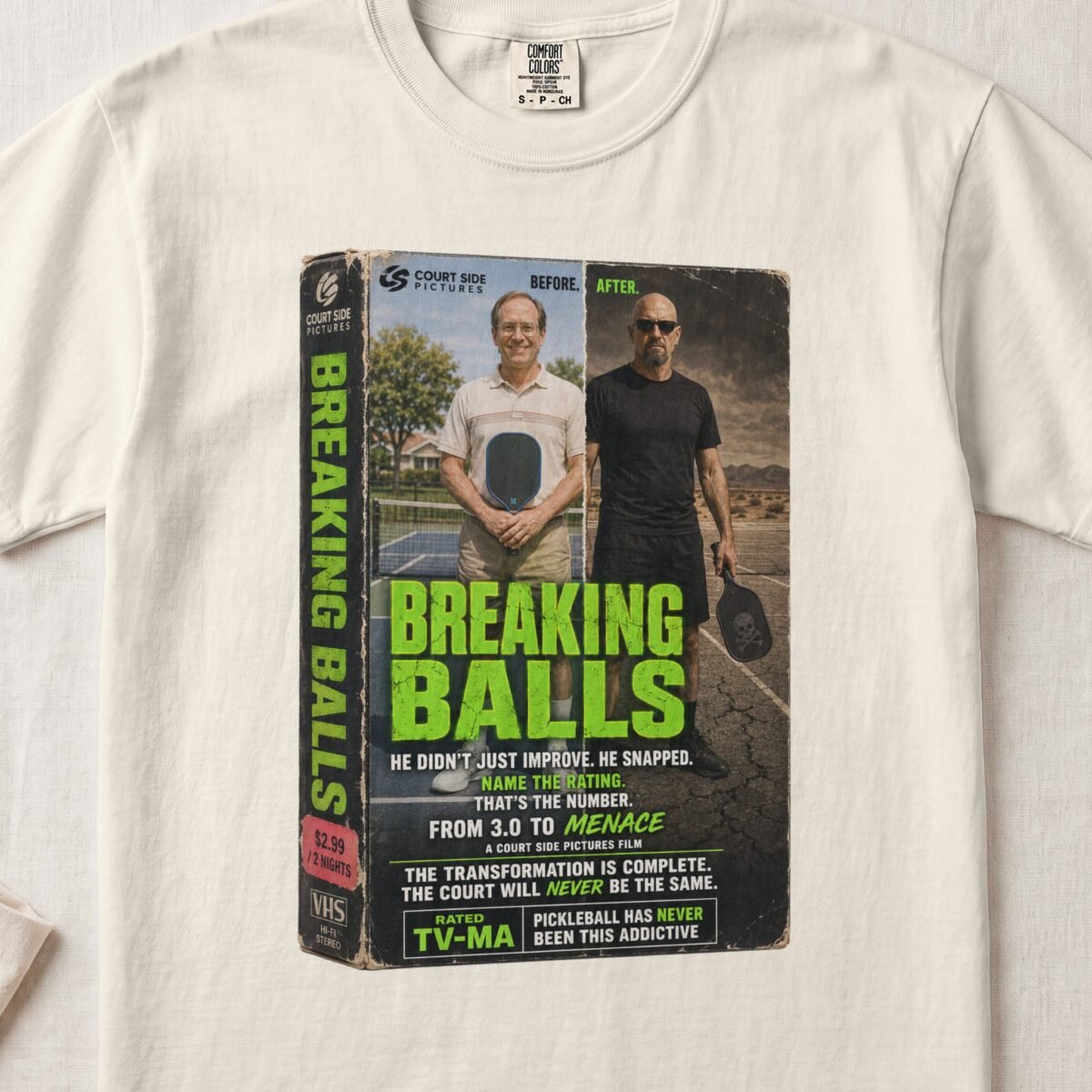
Breaking Balls
$39.99 Select options This product has multiple variants. The options may be chosen on the product page -
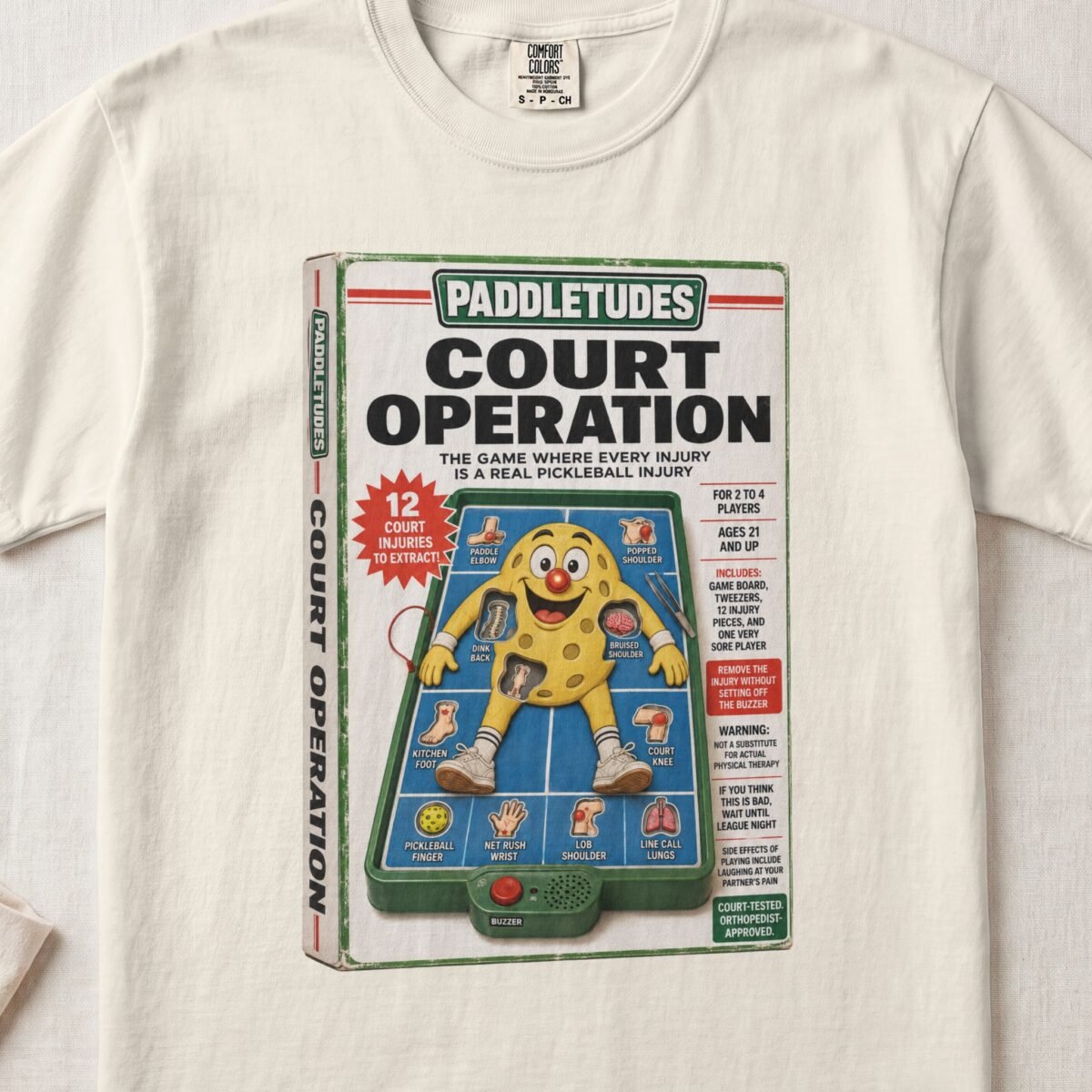
Court Operation
$39.99 Select options This product has multiple variants. The options may be chosen on the product page -
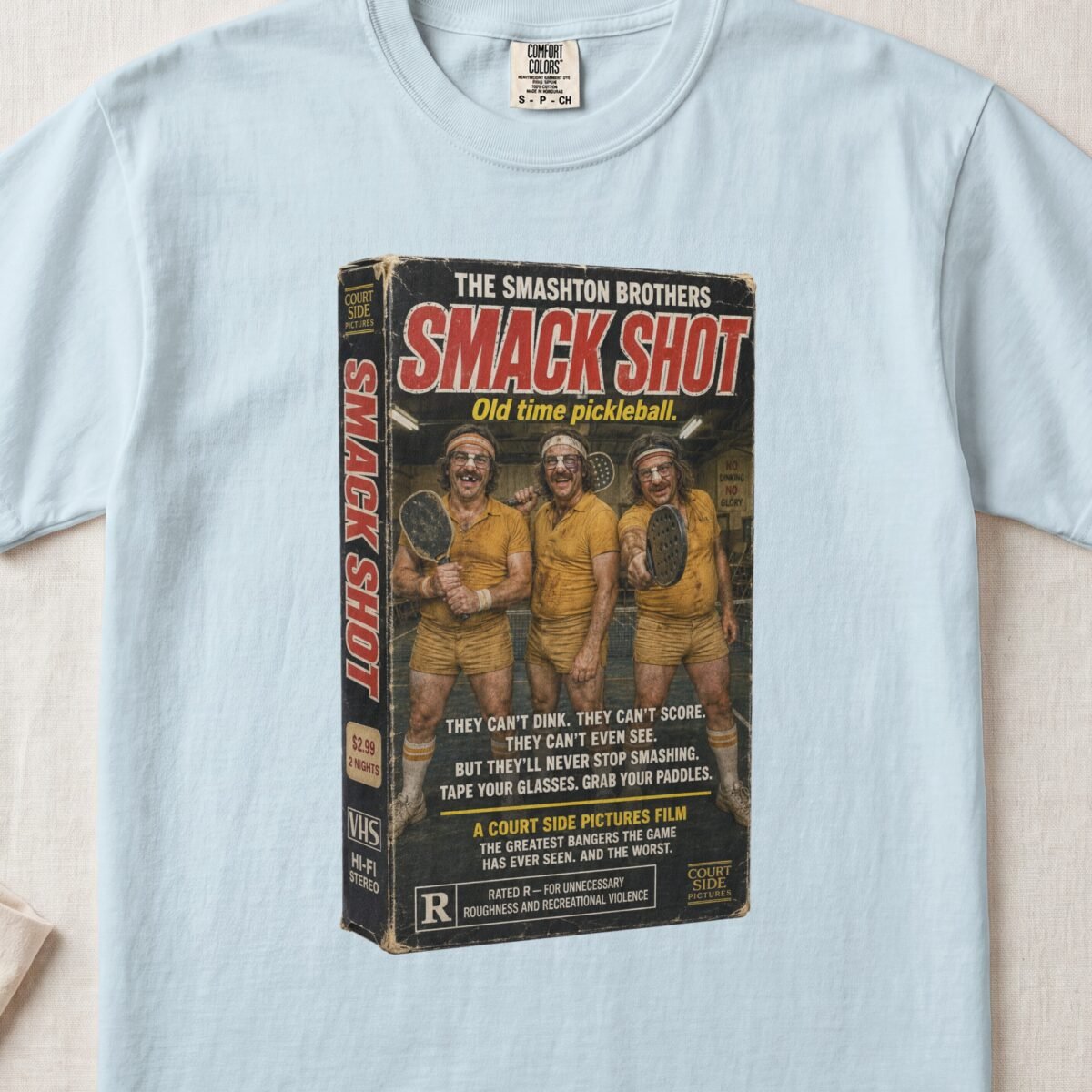
Smack Shot
$39.99 Select options This product has multiple variants. The options may be chosen on the product page