Retro Comfort Colors 1717
Smack Shot
$39.99
- Comfort Colors 1717 heavyweight cotton
- Original design · printed to order
- U.S. print partners
Three Brothers. Zero Soft Game. One Pickleball Gag Gift.
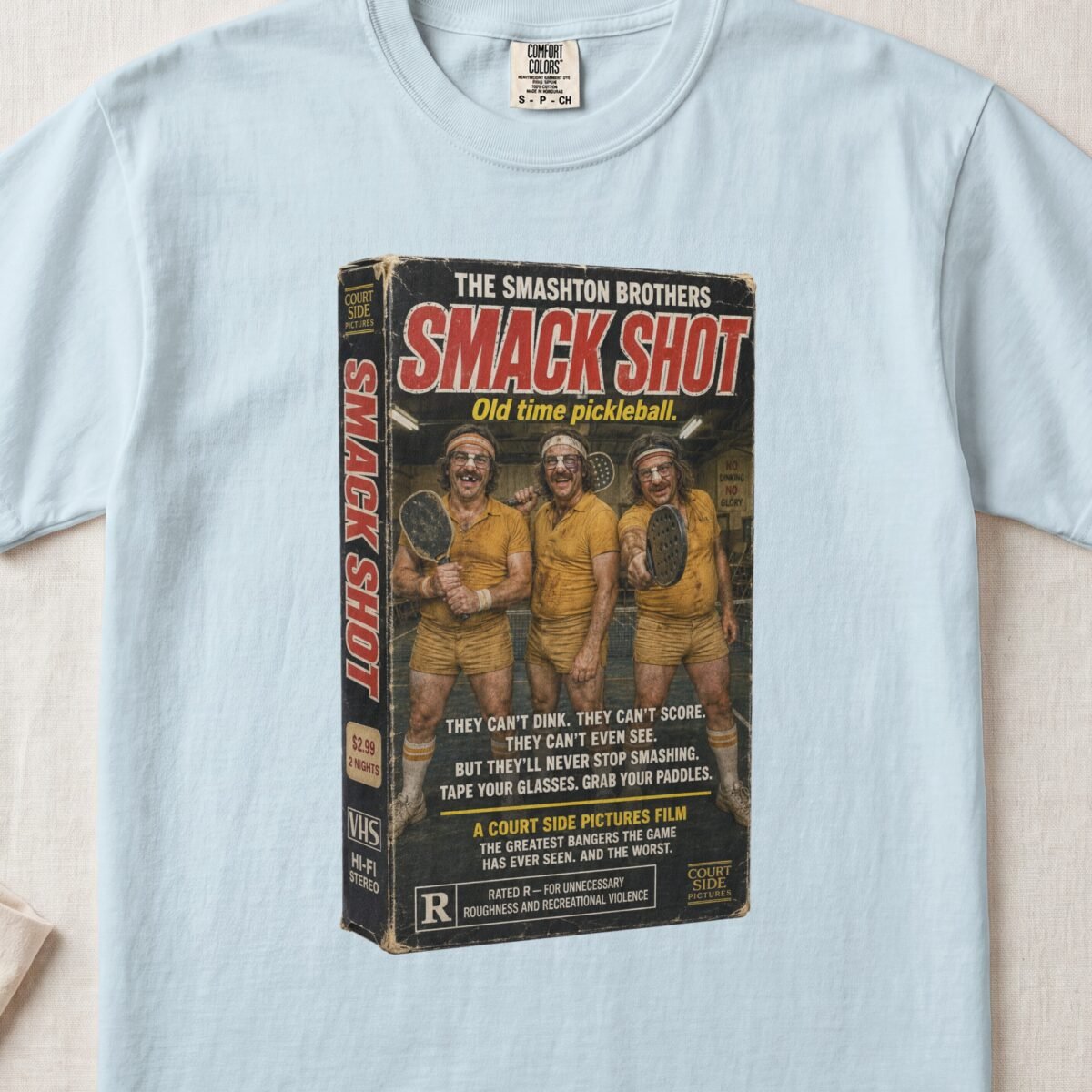
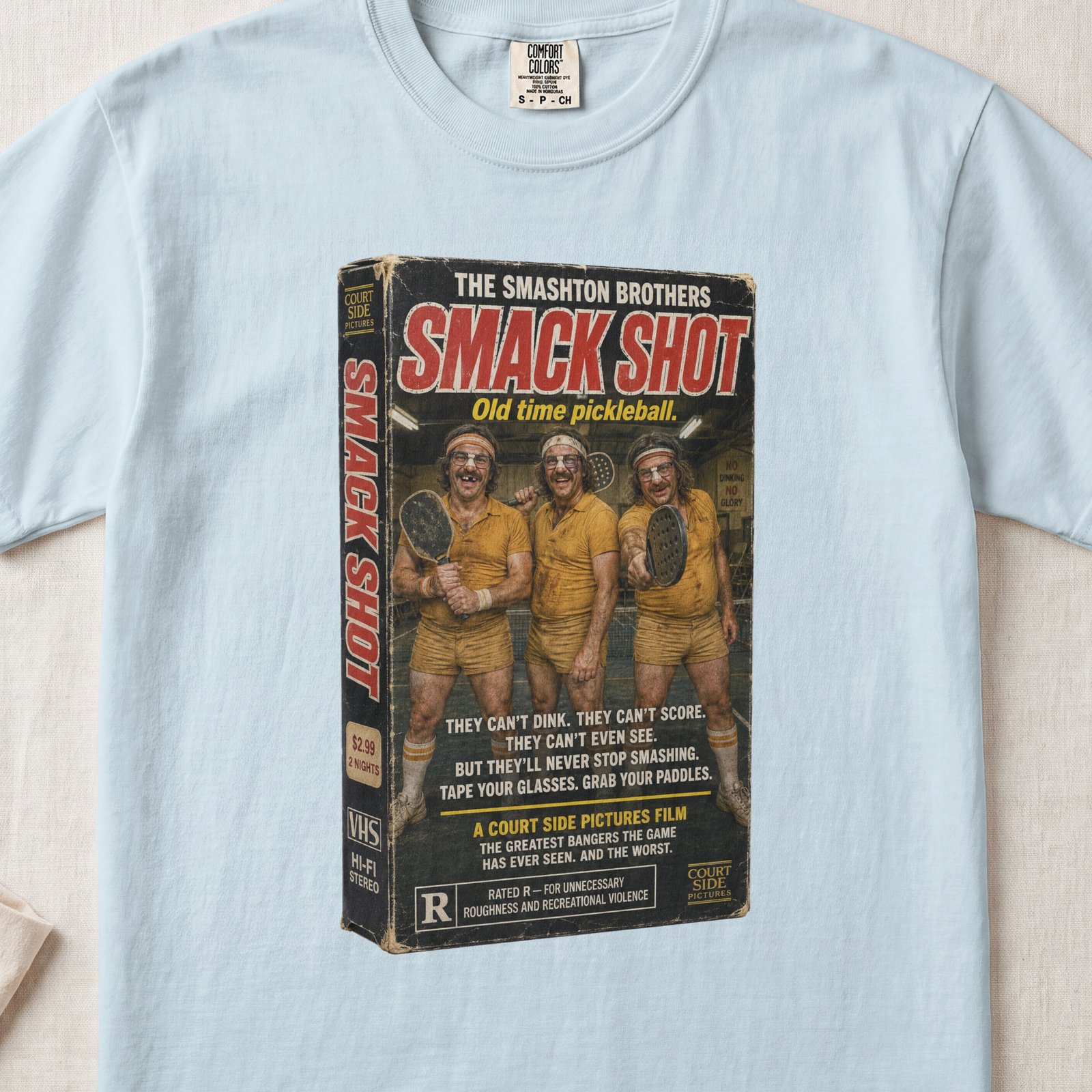
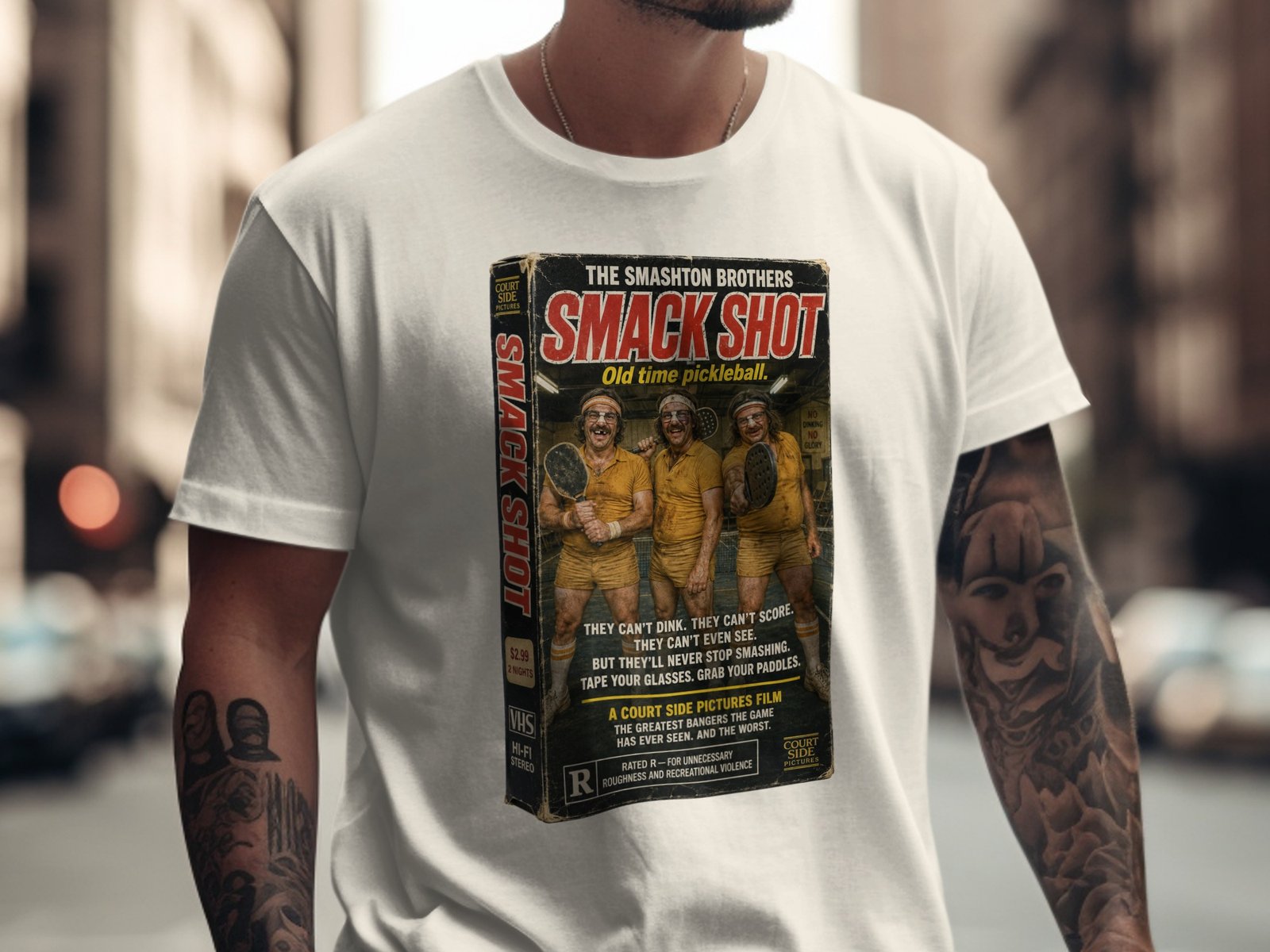
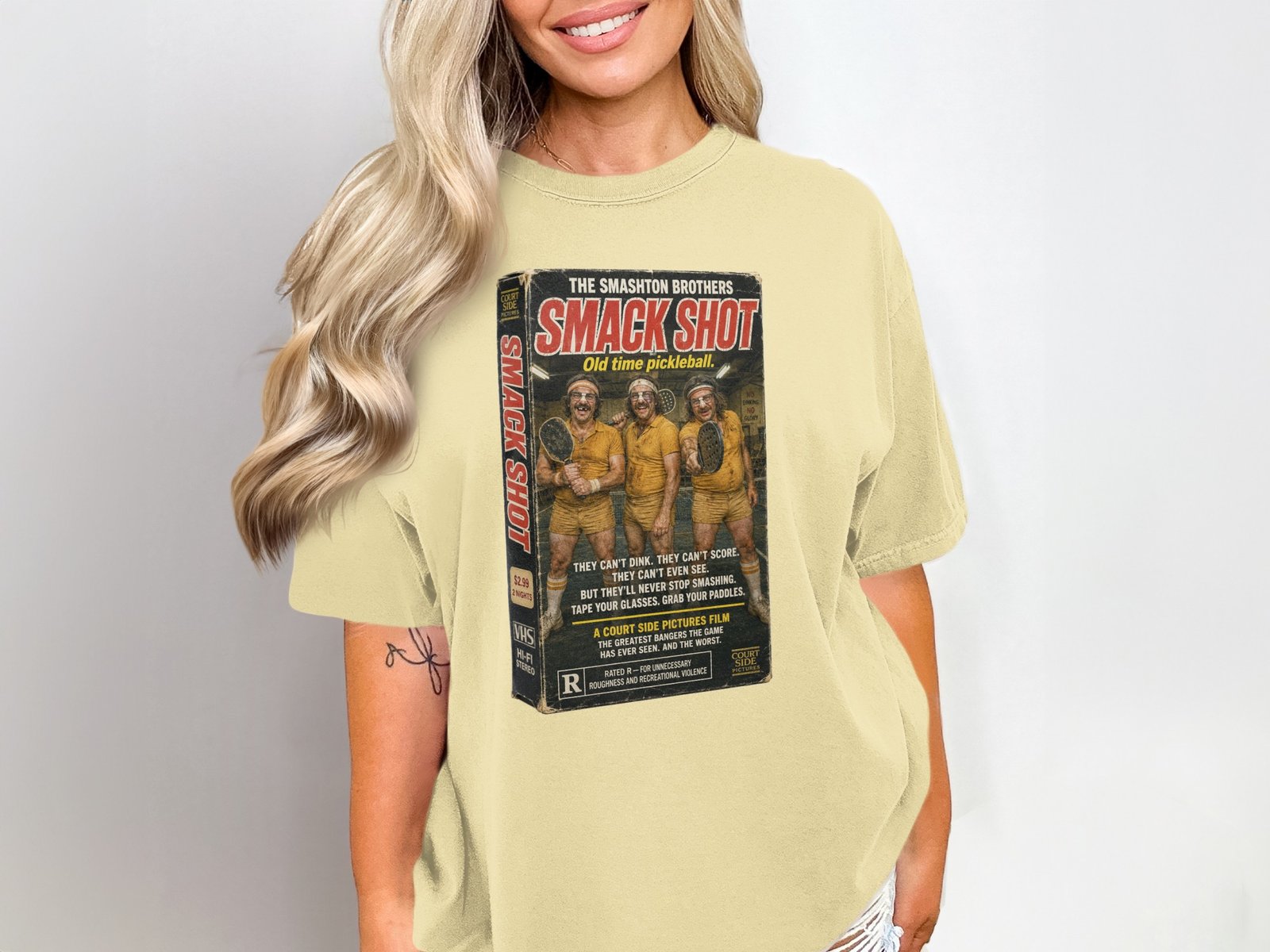
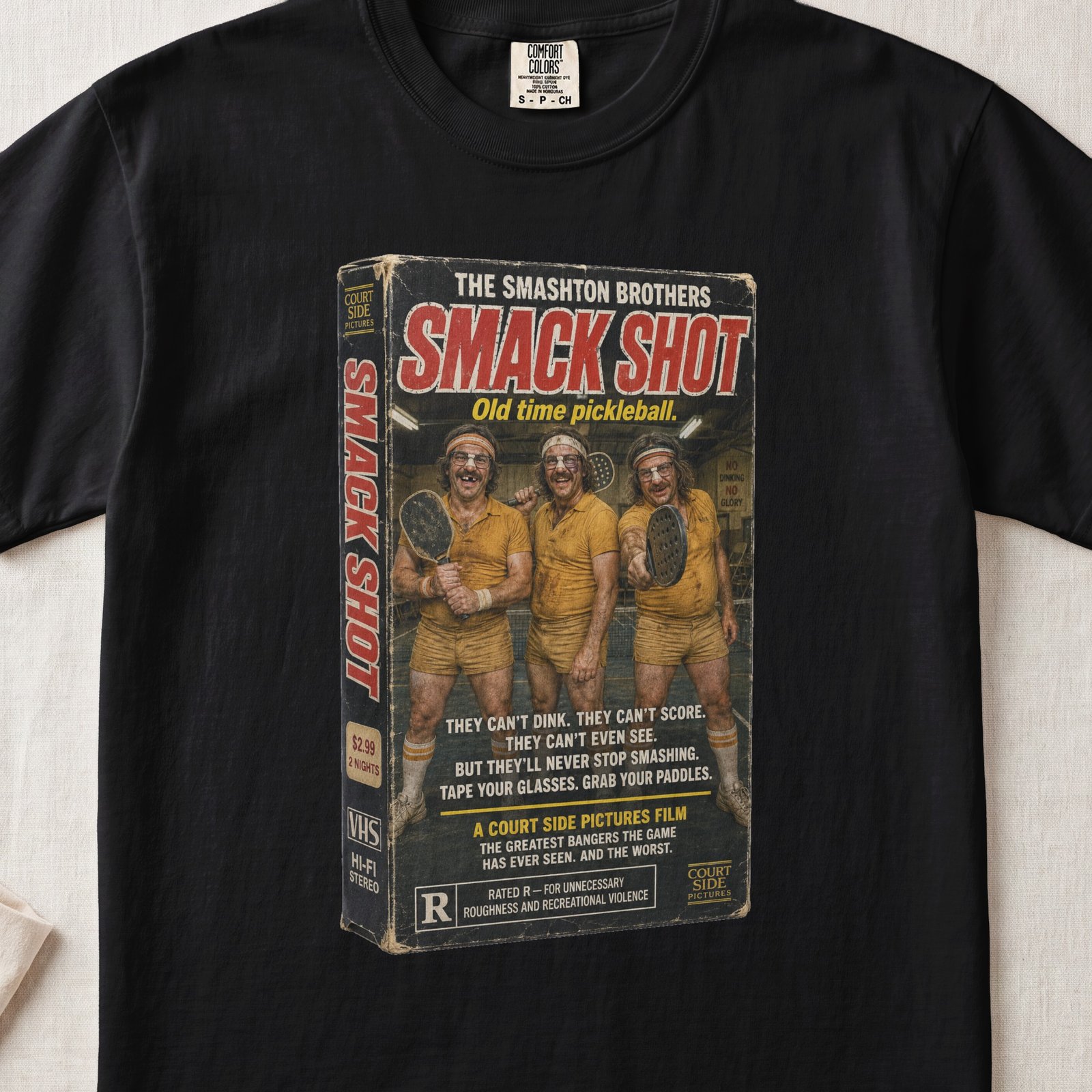
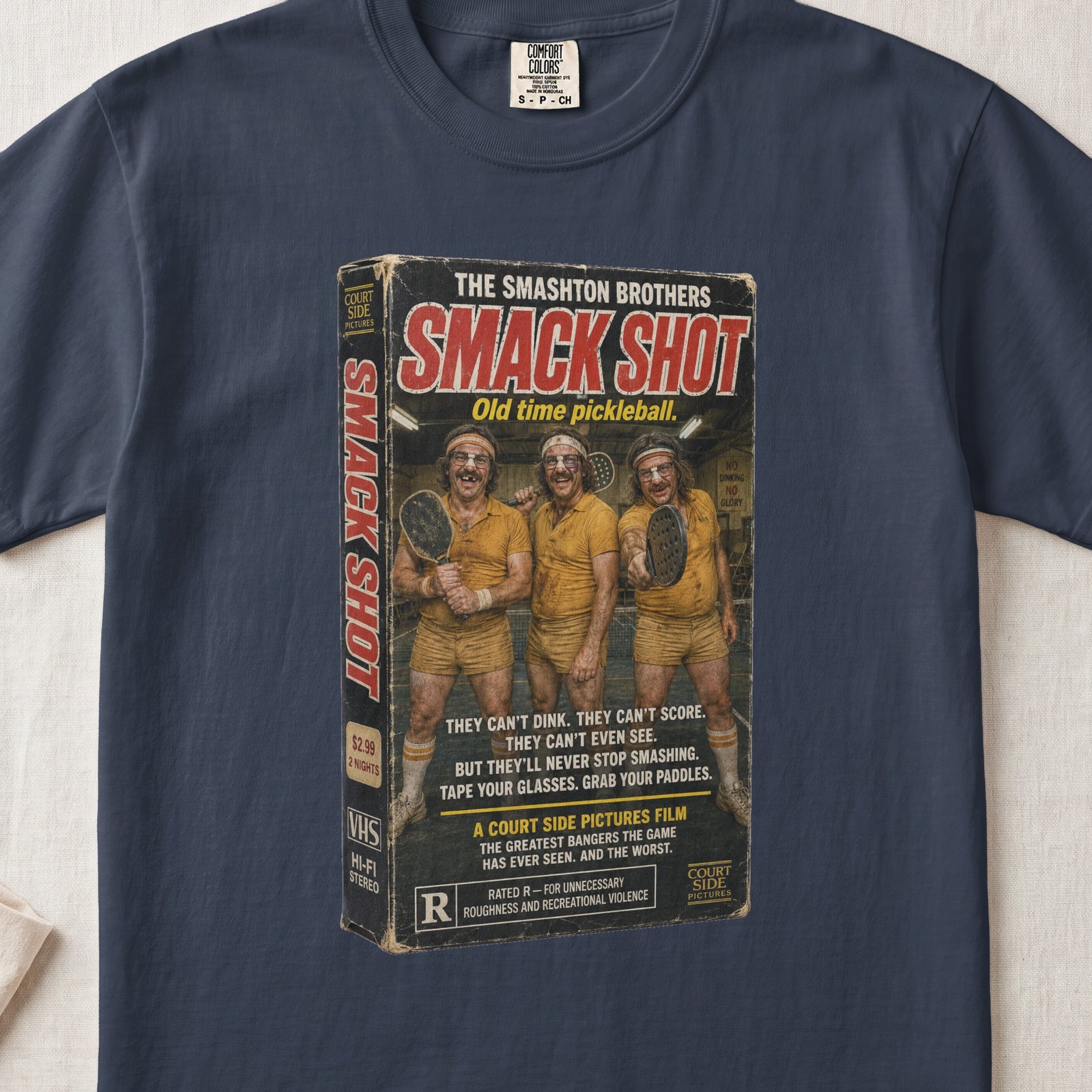
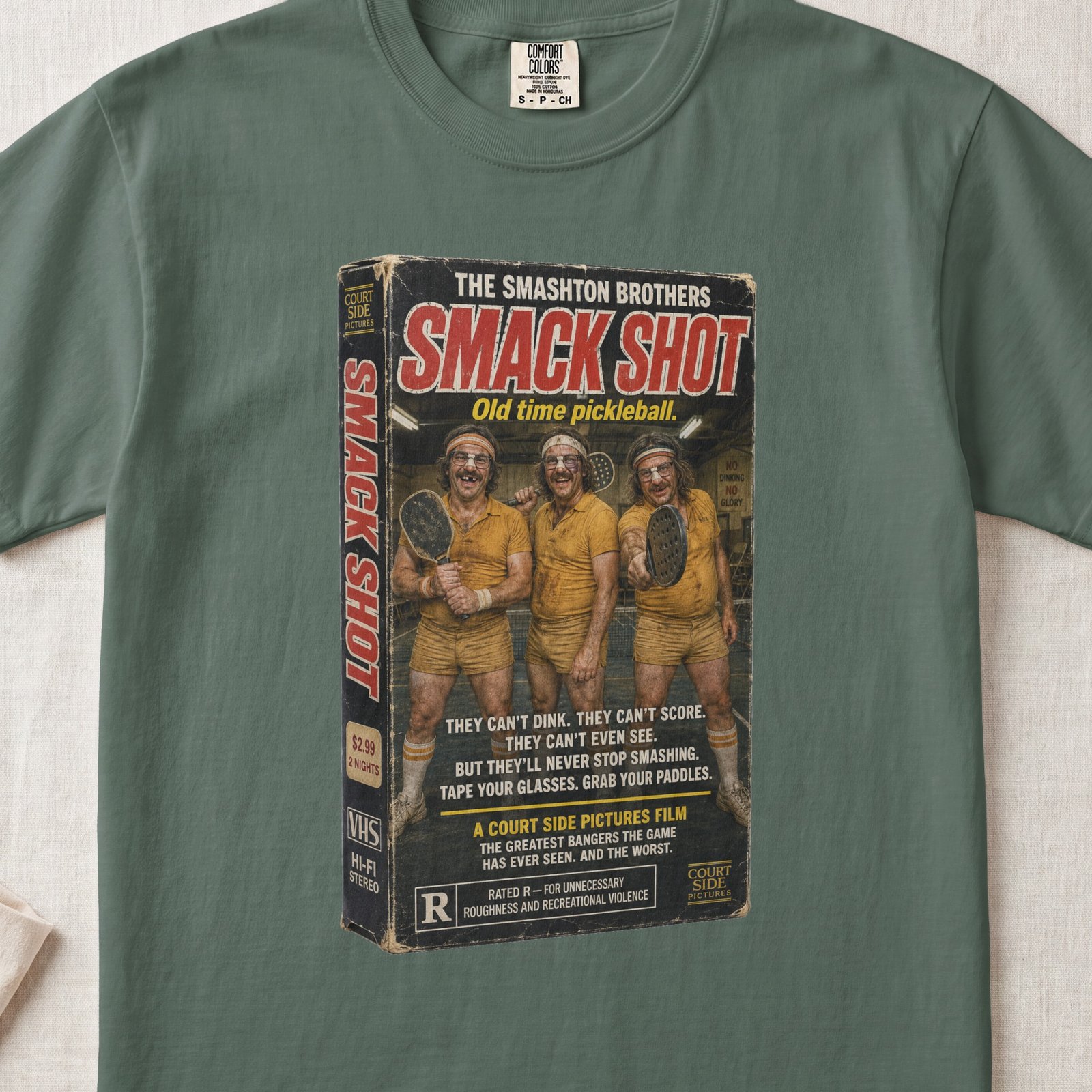
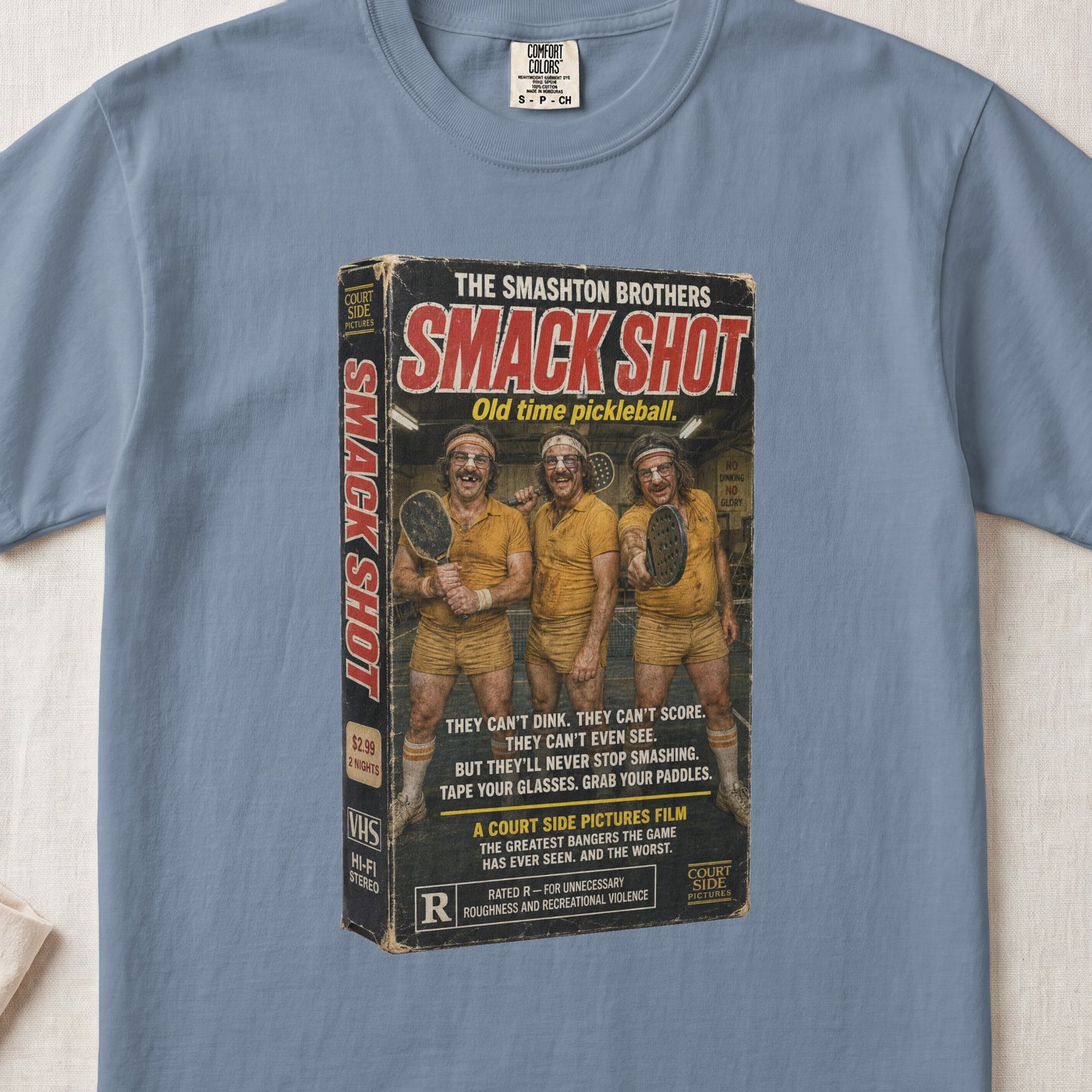
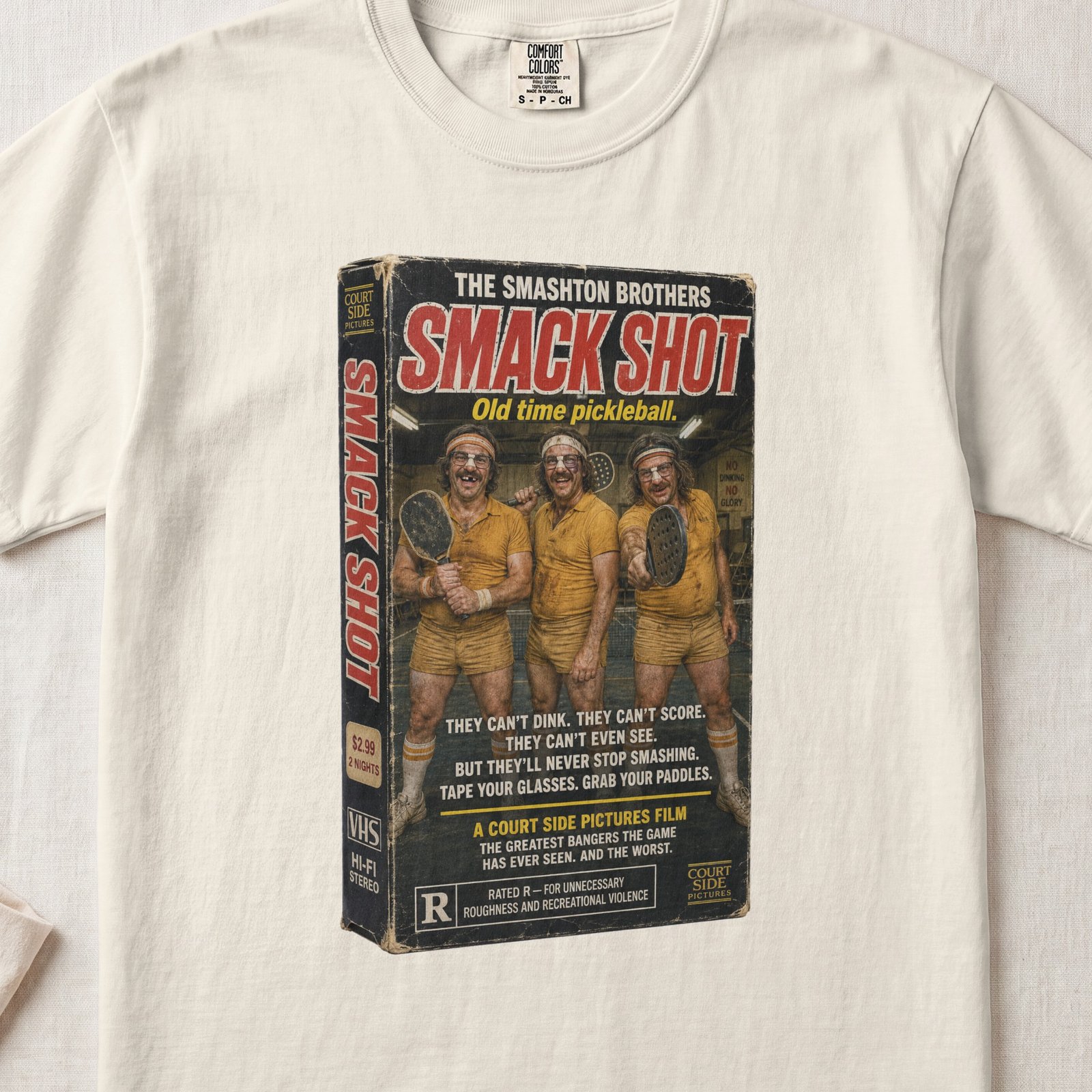
The Smashton Brothers can’t dink, can’t score, and can’t see — but they’ll never stop smashing. Smack Shot is old time pickleball on a Comfort Colors 1717.
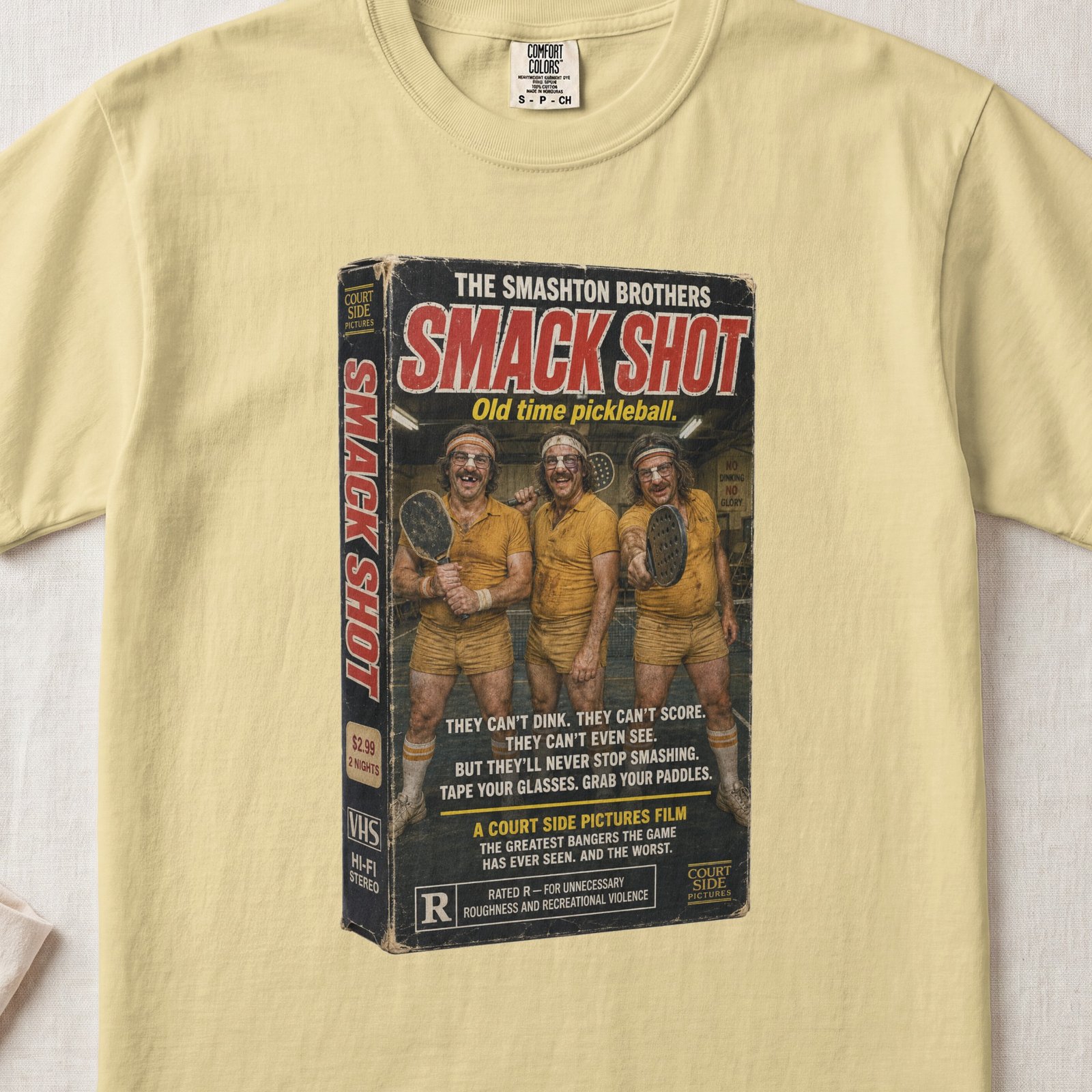
Three brothers in matching yellow jerseys, tube socks pulled to the knee, headbands over taped glasses, each one holding a paddle like it’s the only tool they’ve ever needed. They are not in good shape. They do not care. The sign behind them on the gymnasium wall reads “NO DINKING / NO GLORY.” They wrote that sign. Nobody else at the facility agrees with it, but nobody has taken it down either, because the Smashton Brothers play with a conviction that makes disagreement feel pointless. This is a Court Side Pictures Film. $2.99 for two nights. RATED R — FOR UNNECESSARY ROUGHNESS AND RECREATIONAL VIOLENCE.
The copy on the VHS box describes them with the kind of admiration normally reserved for athletes who are actually good at what they do. “THEY CAN’T DINK. THEY CAN’T SCORE. THEY CAN’T EVEN SEE. BUT THEY’LL NEVER STOP SMASHING.” Four sentences that tell you everything about a playing philosophy that refuses to evolve. Then the call to action: “TAPE YOUR GLASSES. GRAB YOUR PADDLES.” Below that, the blurb that ties the bow: “THE GREATEST BANGERS THE GAME HAS EVER SEEN. AND THE WORST.” Both things are true at the same time, which is what makes the Smashton Brothers the most accurate characters in the entire Court Side Pictures roster. The greatest because nobody hits harder. The worst because hitting harder has never once been enough.
Every open play session in America has a version of the Smashton Brothers. Maybe it’s one person instead of three, but the archetype is unmistakable — the player whose response to every situation on the court is the same shot at the same speed. Return of serve? Drive. Third shot? Drive. Dink rally at the kitchen line where both opponents are low and compact and waiting for exactly this? Drive. Into the net. The pattern doesn’t change because the player genuinely believes that the problem isn’t the strategy — it’s the execution. They didn’t hit it hard enough. Next time they’ll hit it harder. The taped glasses on the VHS cover are the physical manifestation of this worldview: the evidence that things keep breaking isn’t a reason to change the approach. It’s a reason to find better tape.
The identity behind this shirt is more specific than “the banger.” Smack Shot isn’t for the player who hits hard because they haven’t learned to play soft yet — that’s most beginners, and they’ll evolve. This shirt is for the player who has seen every instructional video about the third shot drop, watched every coaching reel about patience at the net, been told by three different partners to take pace off the ball, and consciously chosen to ignore all of it. Their game is power. It has always been power. The Dr. Paddletudes Soft Hands tonic was invented specifically for this condition, and this player would refuse to take the prescription. “NO DINKING / NO GLORY” is not a joke to them. It’s a principle. And the uncomfortable truth that makes the principle survive is that at the recreational level, hitting everything as hard as you can genuinely works about 60% of the time. That’s enough to keep doing it. Not enough to win a tournament. But enough to have a great time losing.
The “Old time pickleball” subtitle is the detail that anchors the whole concept in something real. There was a period — roughly 2016-2020 — before the sport’s competitive infrastructure caught up with its recreational popularity, when strategy hadn’t been codified, when nobody talked about stacking or erning or third shot drops, when the only plan was to hit it over the net and see what happened. The Smashton Brothers play like it’s still that era. Their game hasn’t changed because the game changed around them. The yellow jerseys, the gymnasiums, the taped glasses — all of it points backward to a time when pickleball was played in church basements and VFW halls by people who’d never heard of a USA Pickleball sanctioned event and wouldn’t have cared if they had. That era produced the most entertaining players the sport has ever had, and Smack Shot is their documentary.
The gift target for this shirt is the player in your life who makes you laugh and makes you lose in equal measure. The doubles partner who you love playing with because they’re hilarious and energetic and they never, ever stop trying, even though their version of trying is the same overhead from the same position at the same pace regardless of what just happened. The teammate at the end-of-season party who gets this shirt and wears it to the next practice unironically, because they’ve decided the Smashton Brothers are aspirational figures. It also works for the group that has a standing weekly game and a running joke about who hits the hardest and wins the least — a joke that is somehow both cruel and affectionate, which is the only register that works between people who play together every week and refuse to spare each other’s feelings about court performance.
Smack Shot is the Smashton Brothers’ debut, but their energy runs through the whole Court Side Pictures lineup. Blazing Paddles puts the same power-versus-finesse showdown in a western where the town ain’t big enough for two bangers — except in Blazing Paddles, one of them figures out the dink. In Smack Shot, neither one ever will. Dink Fiction is the other end of the spectrum: two men in suits treating the softest shot in the sport with the gravity of organized crime. The Smashton Brothers would watch that tape and genuinely not understand the premise. Off the VHS shelf, Smash Crispies is their breakfast cereal — no soft game, all crunch, part of an unbalanced breakfast.
Printed on a Comfort Colors 1717 garment-dyed heavyweight tee with water-based DTG ink — sizing and care details here.
What Is the Most Important Shot in Pickleball
The most important shot in pickleball is the third shot drop — a soft, arching shot hit from near the baseline that lands in the opponent’s kitchen and allows the serving team to move forward to the net. It’s the most important because it solves the structural disadvantage the serving team faces on every point: the return team gets to the kitchen line first, and the third shot drop is the only reliable way to neutralize that advantage without giving the opponents an attackable ball.
The argument for other shots exists and it’s genuine. Some coaches argue the return of serve is more important because a deep return pins the serving team back and sets up the third shot problem in the first place. Others argue the dink is the most important because it’s the shot used most often at higher levels and the one that determines who wins extended rallies at the net. A smaller camp argues the serve — particularly the new generation of power and spin serves — creates an advantage that cascades through the whole point. Each argument has merit at different skill levels, which is part of why the question never gets a consensus answer even among USA Pickleball certified coaches.
What the Smashton Brothers would tell you is that the most important shot is the one you hit the hardest. That philosophy is wrong above the 3.5 level and thoroughly entertaining below it. The reason the third shot drop gets the consensus pick from most competitive players is that it’s the shot that bridges two phases of the game — baseline play and net play — and doing it well unlocks everything that happens after it. A player who can’t drop is a player who stays at the baseline and drives, which works until the opponents can block and reset, at which point driving becomes a fast way to donate points. The Smashton Brothers have donated a lot of points. They keep showing up in their yellow jerseys anyway, because the smash is its own reward even when the scoreboard says it shouldn’t be.
-
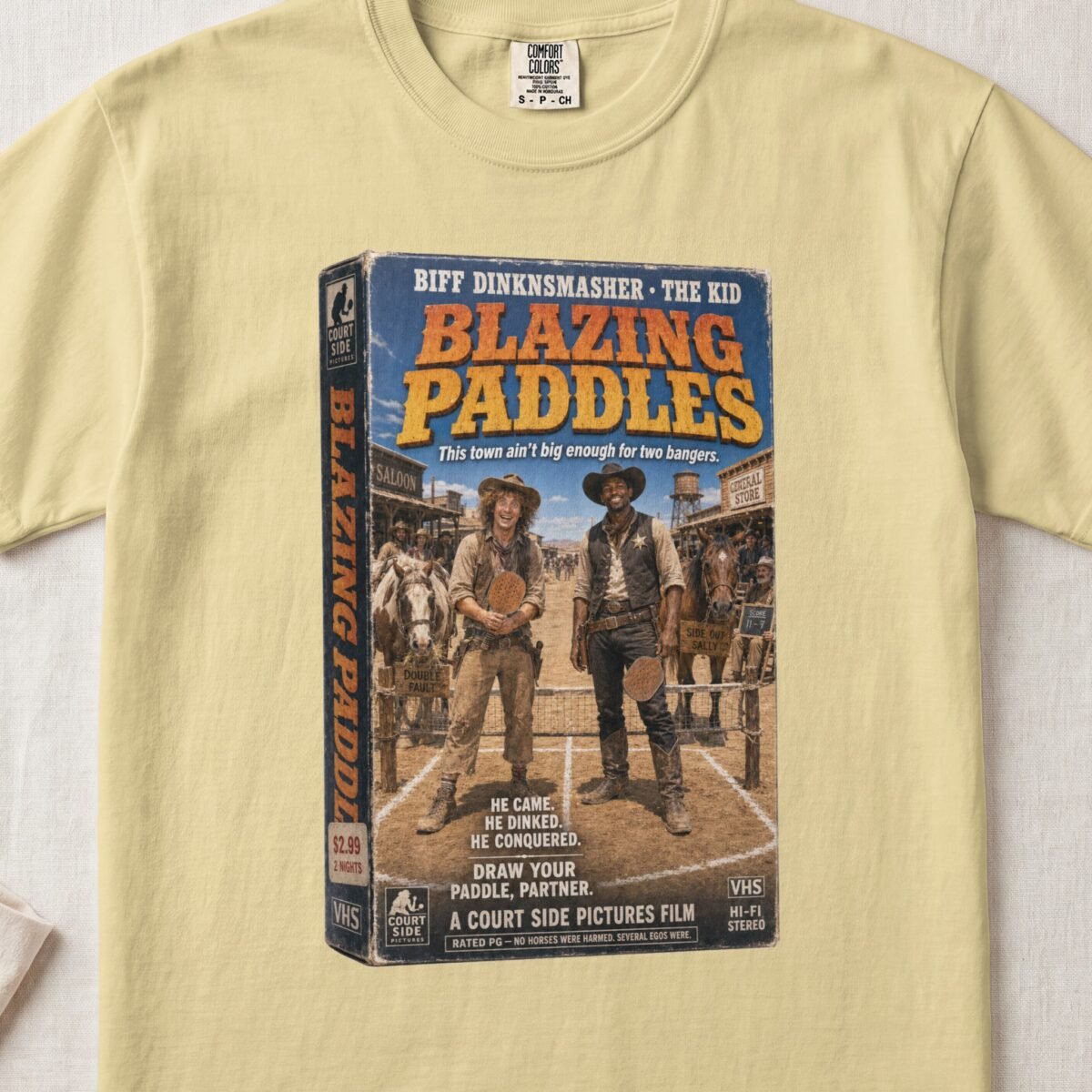
Blazing Paddles
$39.99 Select options This product has multiple variants. The options may be chosen on the product page -
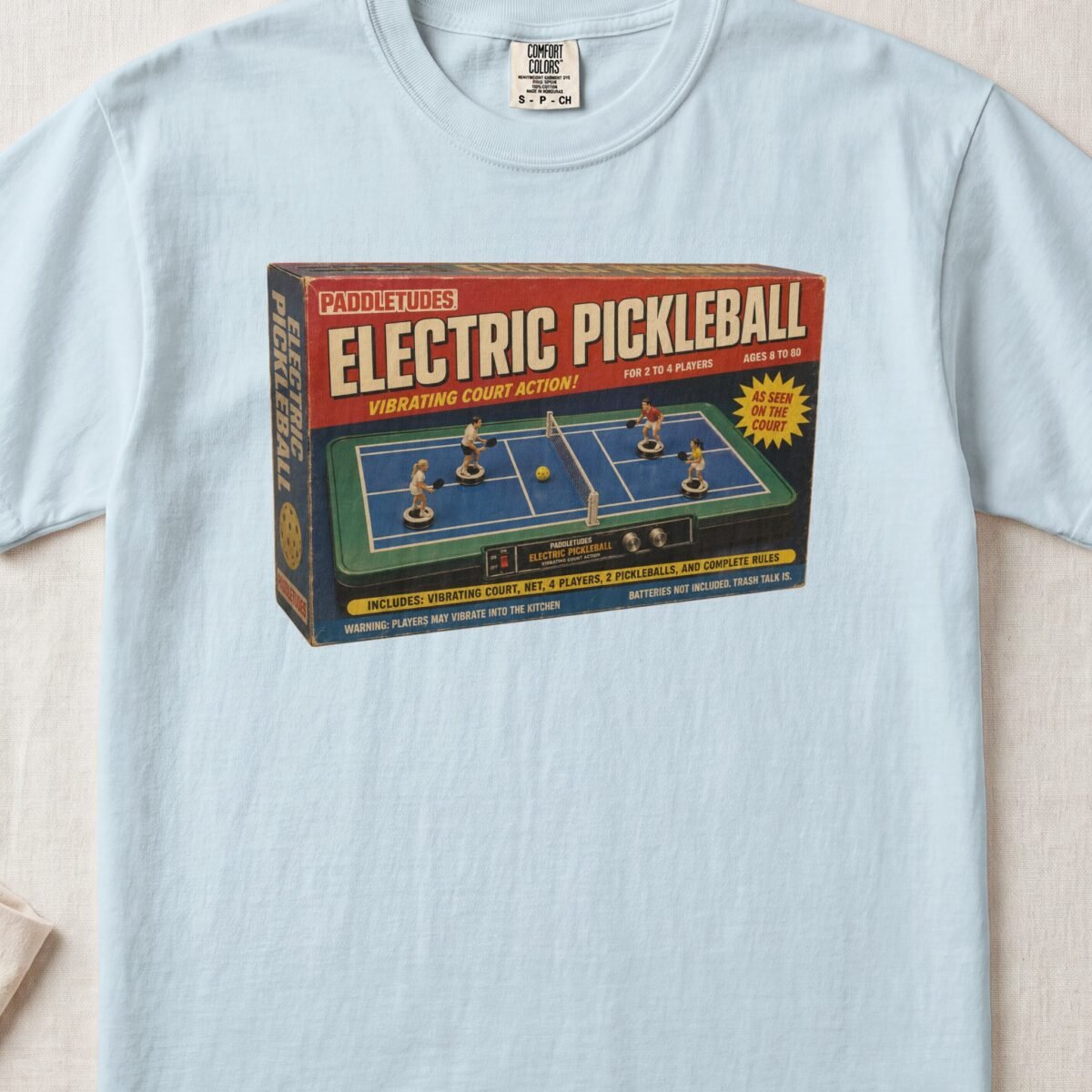
Electric Pickleball
$39.99 Select options This product has multiple variants. The options may be chosen on the product page -
Top Dink
$39.99 Select options This product has multiple variants. The options may be chosen on the product page