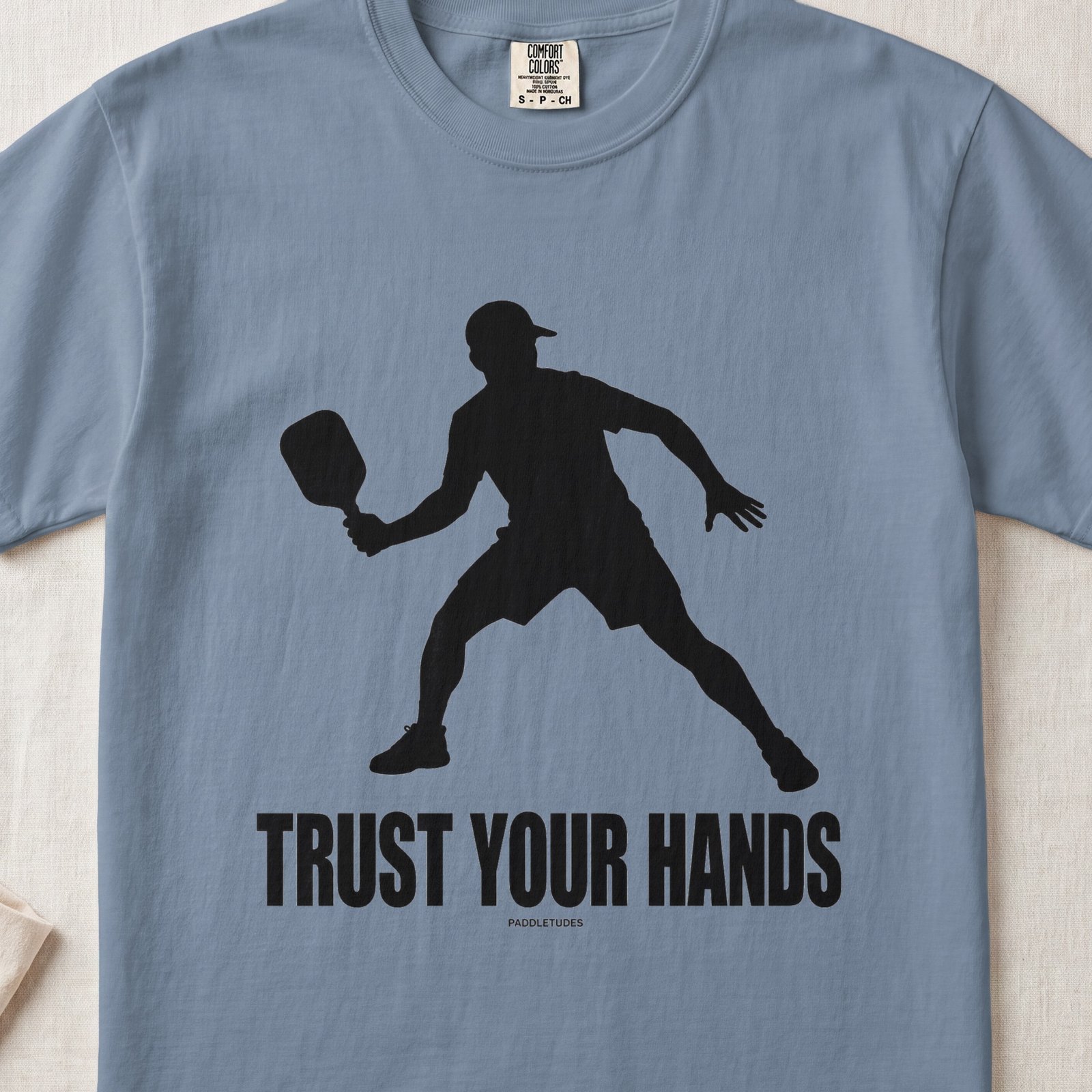
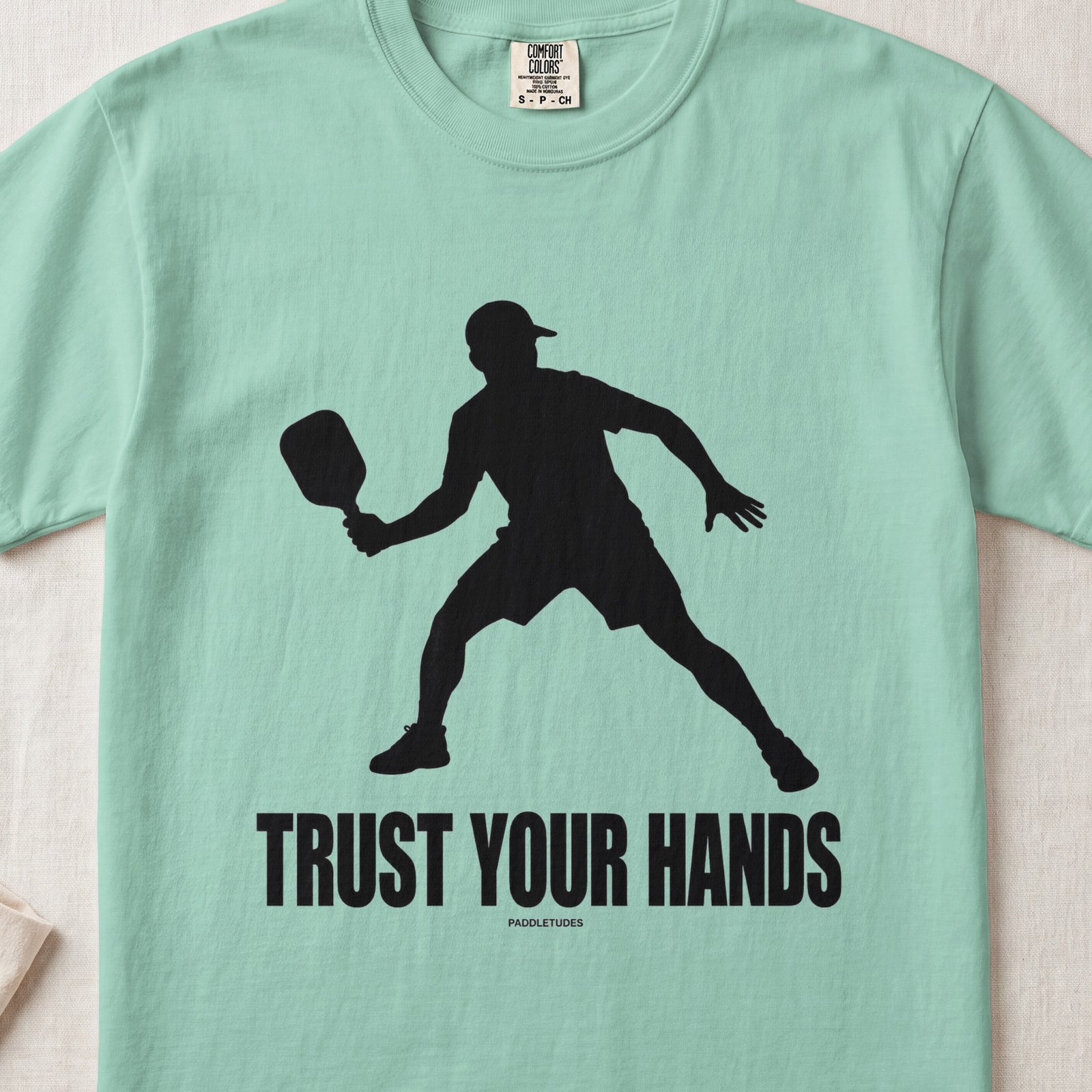
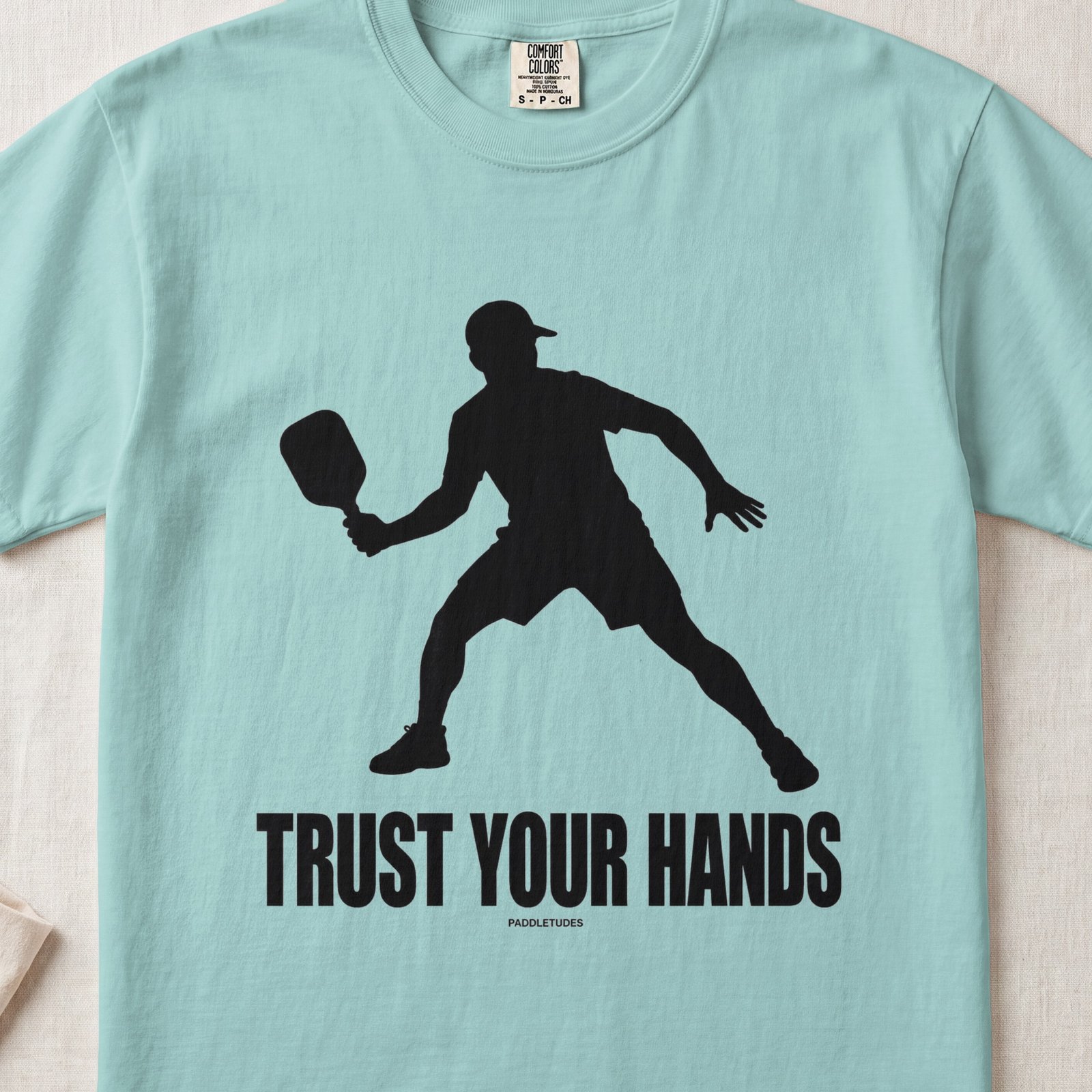
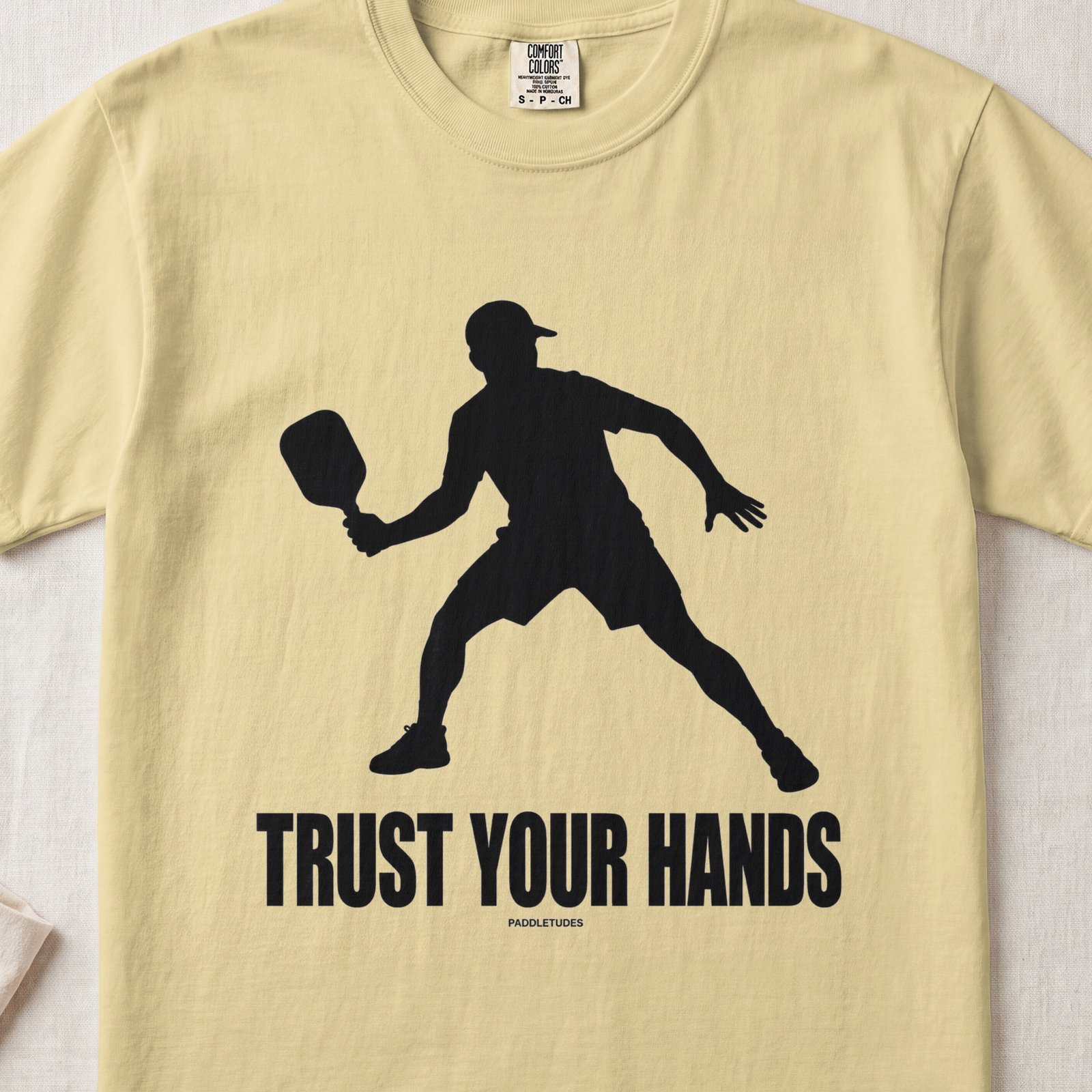
Sports Comfort Colors 1717
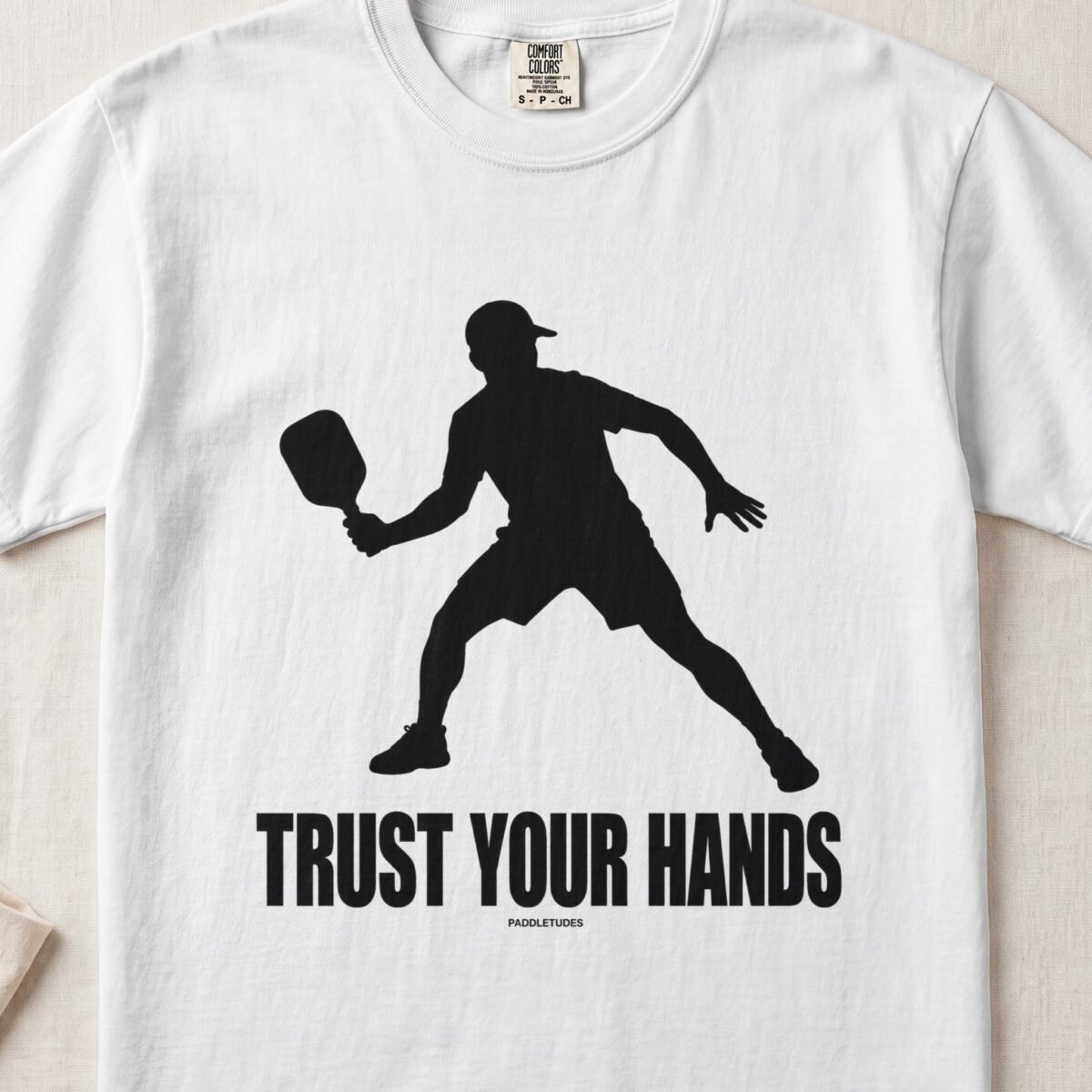
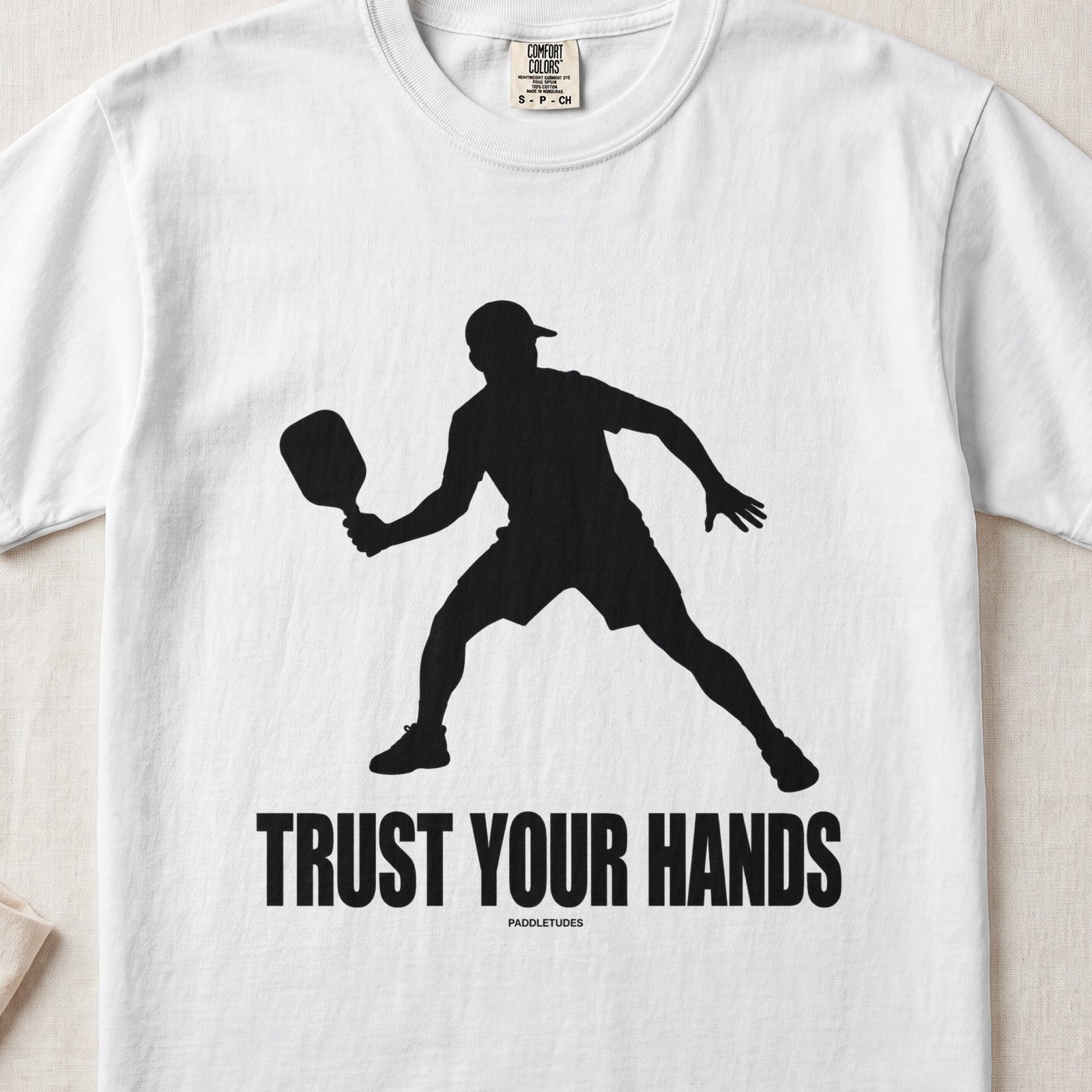
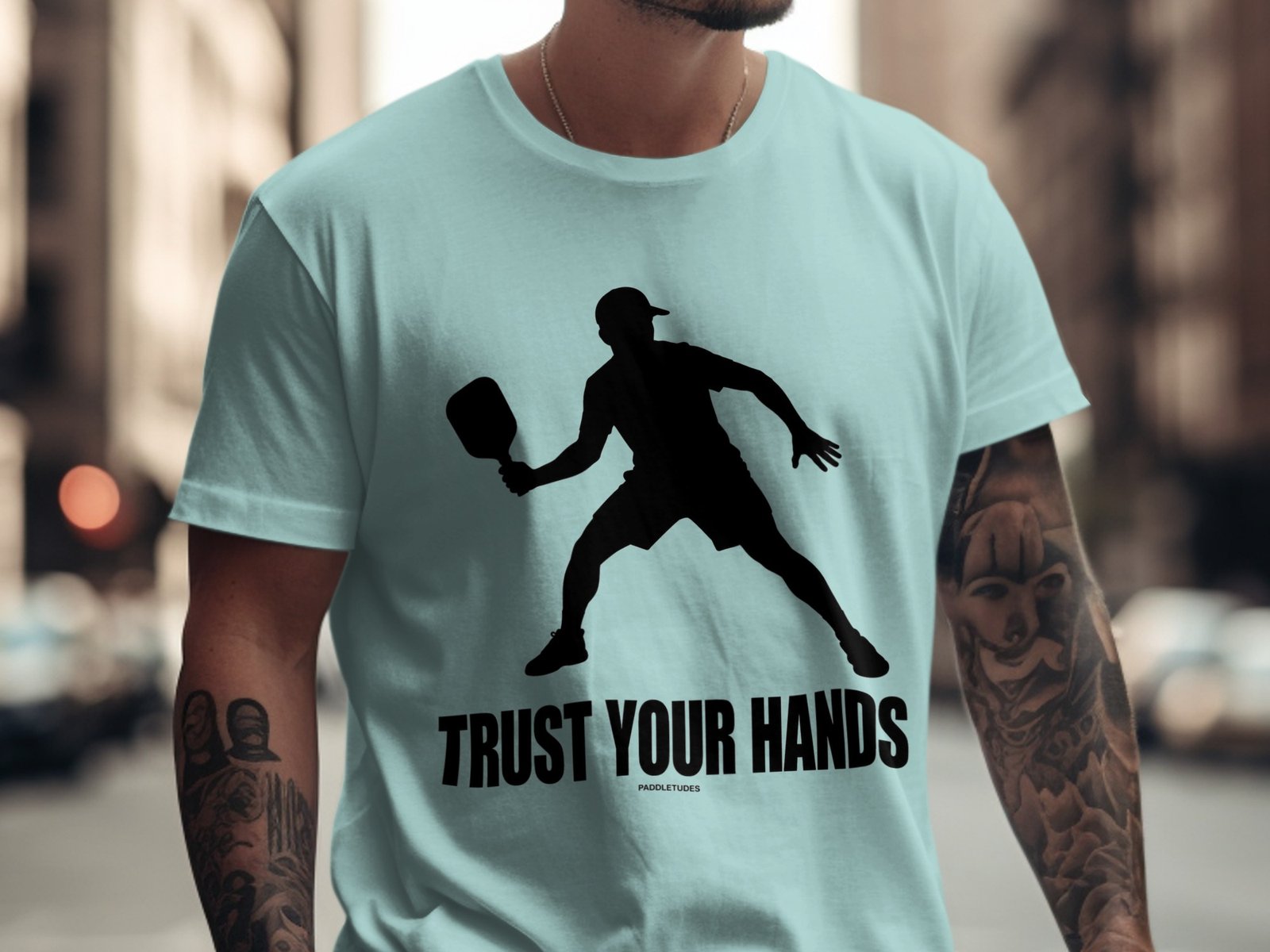
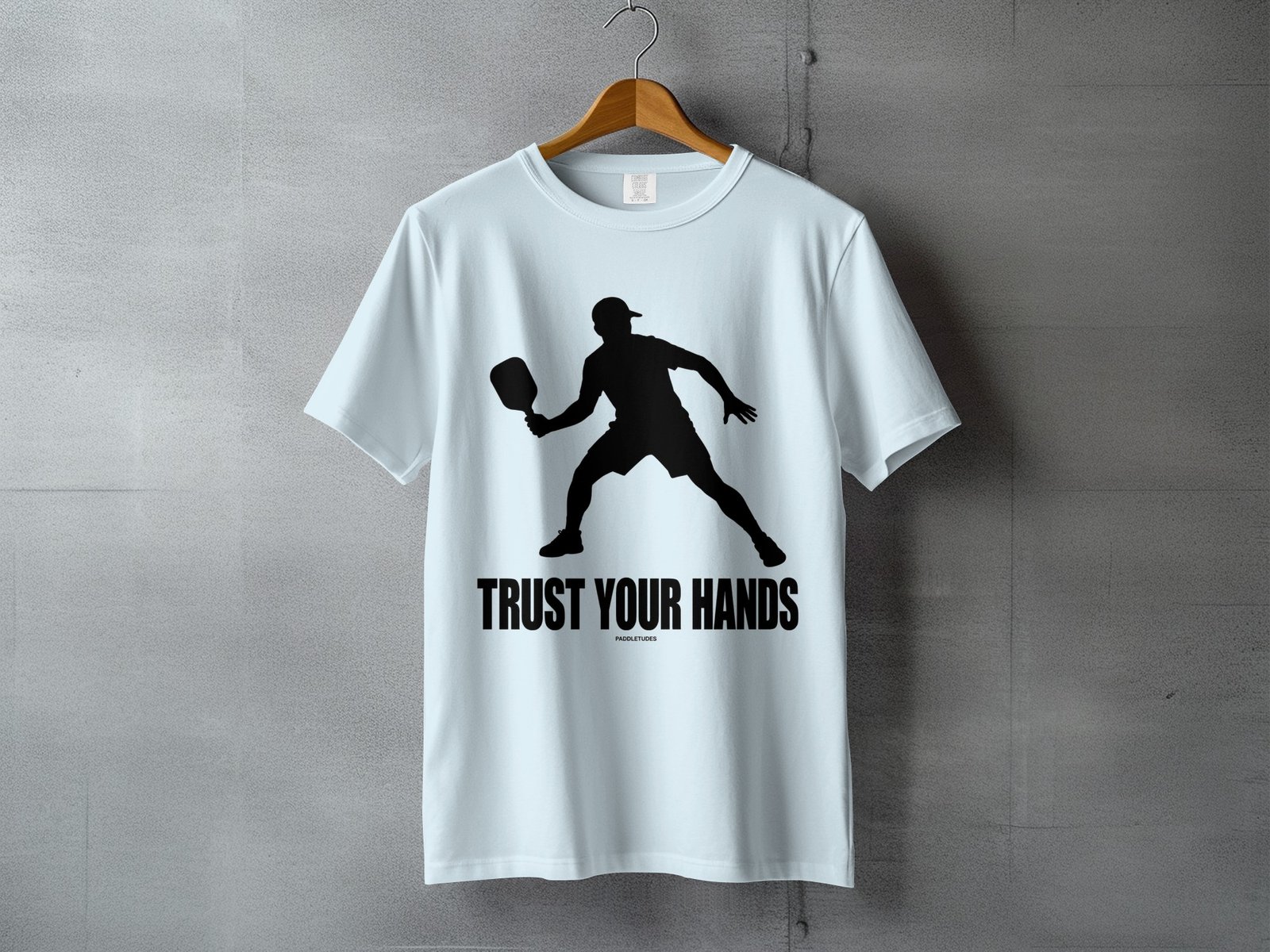
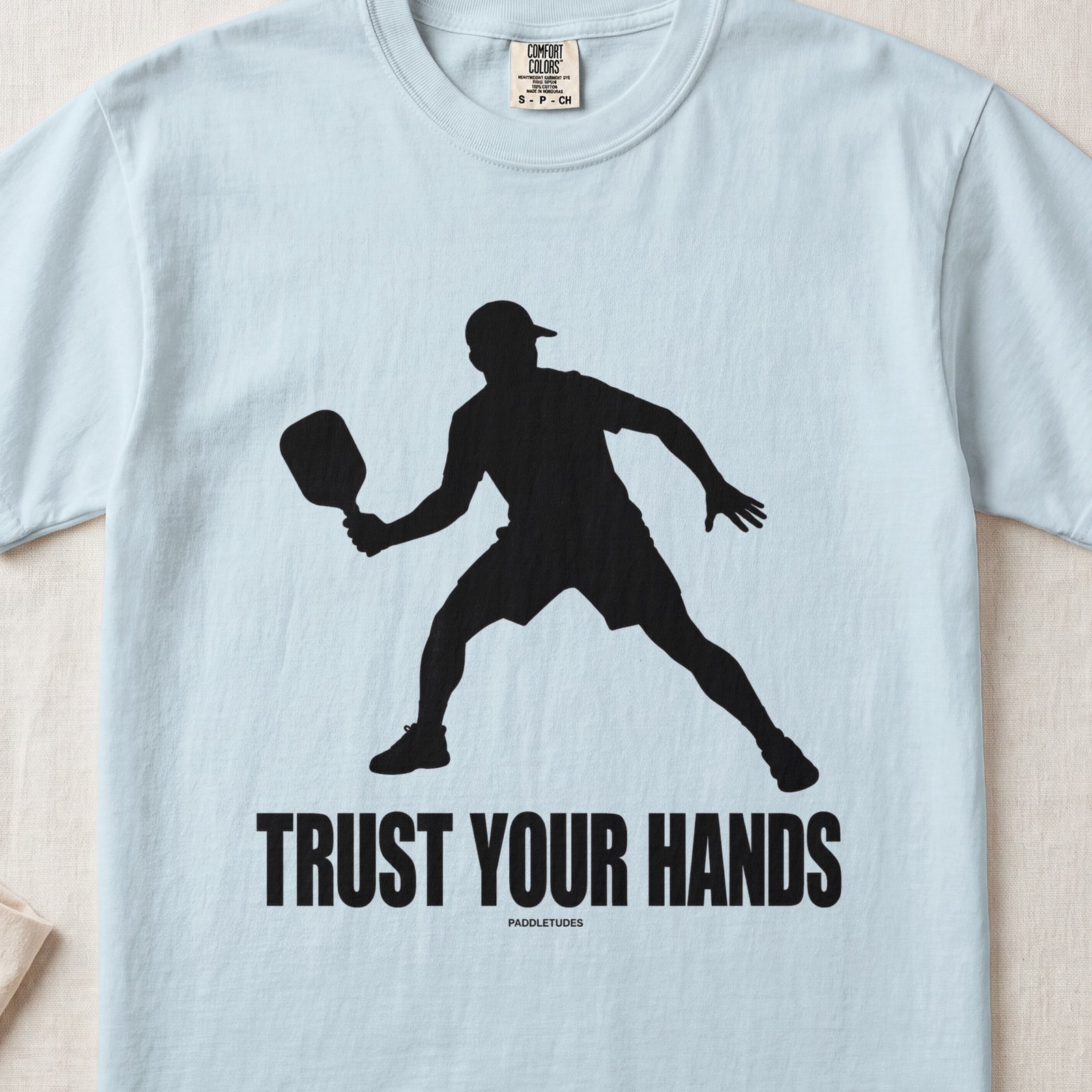
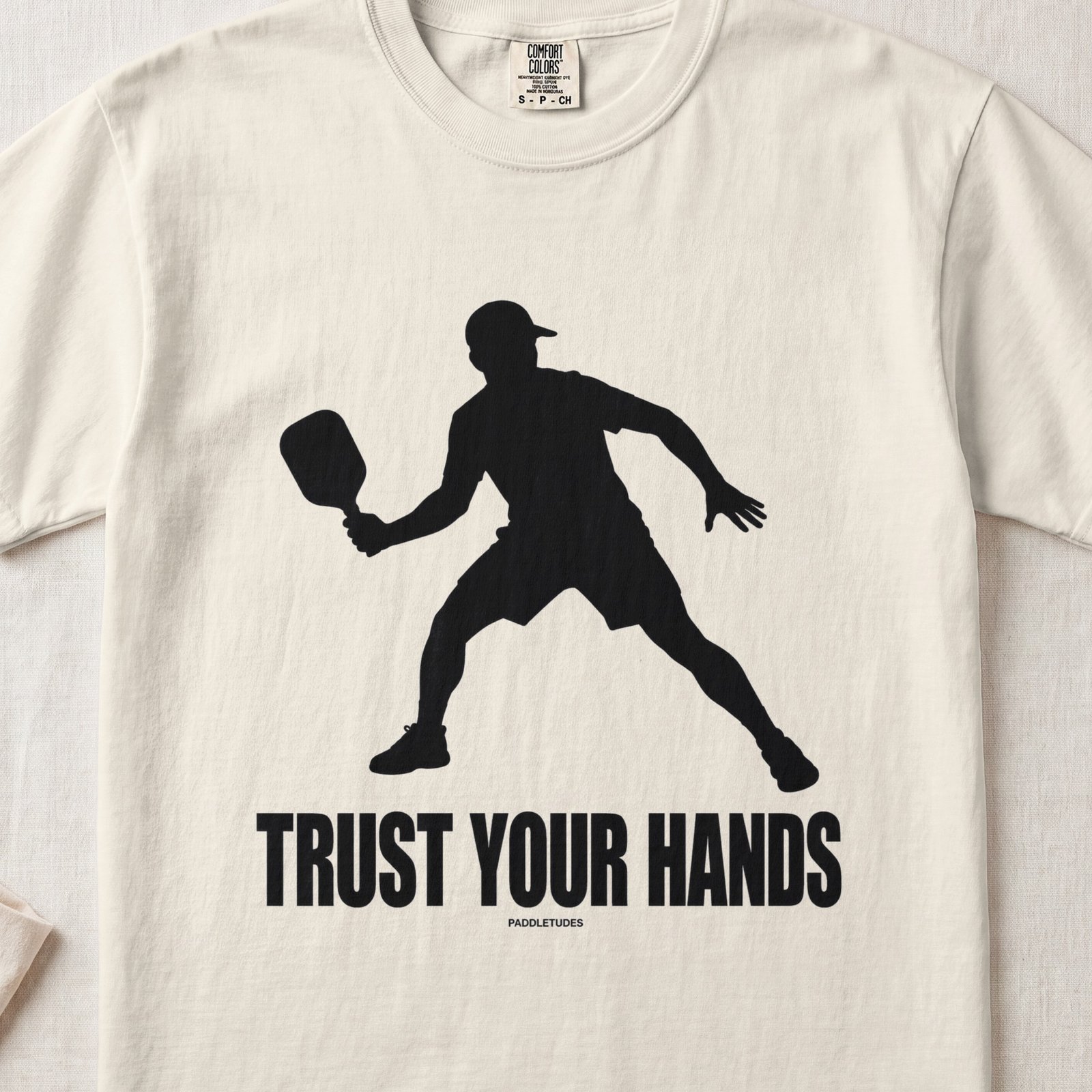
Trust Your Hands
$29.99
- Comfort Colors 1717 heavyweight cotton
- Original design · printed to order
- U.S. print partners
Stop Thinking — Your Pickleball Hands Already Know
The speed-up comes and you have a choice. Think or react. Calculate the angle, judge the spin, decide forehand or backhand, choose the target — or let your paddle find the ball the way it found the last five hundred balls in practice and deal with the result after the ball is already on the other side of the net. Trust Your Hands is the shirt for the player who chose the second option and stopped losing to their own brain.
He’s the 39-year-old former baseball player whose hand-eye coordination transferred to pickleball like a direct deposit. He doesn’t process fast exchanges. He survives them through motor patterns built over two decades of tracking a ball moving faster than conscious thought can follow. The hands battle at the kitchen line — four players flicking volleys back and forth in half-second intervals — is where this player lives. Not because he trained specifically for pickleball firefights. Because his hands already knew what to do before his brain started offering suggestions.
The mental game in pickleball is quieter than in most sports, but it’s just as decisive. The player who overthinks a speed-up is the player who hesitates, and in a hands battle, hesitation is the same as missing. A quarter-second delay between seeing the ball and moving the paddle is the difference between a clean block and a ball that jams your body and drops at your feet. The fix isn’t more thinking. It’s less. The competitive players who dominate hands battles aren’t running calculations — they’re running on autopilot that took hundreds of reps to build, and they trust the autopilot because they’ve verified it in practice.
At 3.0, hands battles barely exist — players either avoid the firefight or lose it immediately because their reflexes can’t keep up. At 3.5, the hands start catching up to the speed of the game, and players begin blocking shots they couldn’t touch six months earlier. At 4.0, the hands battle becomes a deliberate part of the strategy — players initiate speed-ups knowing they can win the exchange, and they read the opponent’s paddle face to anticipate which side the counter is coming to. At 4.5, the trust is total. The paddle moves before the ball arrives because the player read the cue in the opponent’s shoulder rotation, not in the ball’s trajectory. That’s what this shirt is about — the moment where training overtakes thinking and the hands stop asking for permission.
The drill is direct. Stand at the kitchen line across from a partner. One player initiates a speed-up. The other blocks. Then both players fire volleys back and forth — no dinks, no resets, just sustained fast exchanges — for as many shots as possible before someone misses. Count the shots. Do it again. Try to beat the count. Twenty consecutive volleys without a miss is a strong benchmark at 3.5. Thirty is competitive at 4.0. The reps teach the hands to operate independently of the conscious mind, which is exactly the skill this shirt advertises. Selkirk‘s lighter paddle models — the LUXX series — are built for this exchange: fast swing weight, responsive face, and enough control to redirect without overshooting. The paddle needs to be quick in the hand because the hand needs to be quicker than the thought.
If you saw someone make an impossible reflex volley last Thursday — paddle flipped backhand, ball redirected cross-court, point won before their eyes fully registered what happened — and you wanted to tell them you noticed, this is the “just because” gift. No occasion needed. Just acknowledgment that what their hands did in that moment was worth wearing on their chest.
For the outcome side of this same skill — the scoreboard version of what trust produces — Hands Battle Won is the companion shirt. Trust is the process. Battle Won is the result. And for the soft touch that lives at the other end of the speed spectrum — the player whose hands are quiet instead of fast — Can’t Teach Touch proves that trusting your hands works at every pace, not just the fastest one. Find courts where the hands battles run hot at Pickleheads.
Printed on a Comfort Colors 1717 garment-dyed heavyweight tee with water-based DTG ink — sizing and care details here.
How Do You Stop Overthinking in Pickleball
Play the ball in front of you, not the point in your head. Overthinking in pickleball almost always comes from focusing on outcome — the score, the last error, what shot you should have hit — instead of execution, which is the ball, the paddle face, and the next contact. The fix is present-tense attention: watch the ball onto your paddle, pick your target before you swing, and let the result happen without narrating it internally.
The most effective technique pros use is a reset routine between points. One breath. Eyes on the paddle strings. Call the score. Serve. The gap between the last point and the next one is where overthinking lives, and a consistent routine fills that gap with action instead of analysis. Players who skip the routine carry the last point’s emotions into the next one — the frustration from a missed dink becomes a tight grip on the next drive, which sails long, which creates more frustration, which creates more tightness.
During play, the cue is target orientation. Instead of thinking about your mechanics — “am I swinging right, is my grip pressure right, am I in the right position” — focus entirely on where the ball is going. Pick a spot. Hit it there. The body has already practiced the mechanics. Trying to manually control a motion that takes less than half a second is what causes the mechanical breakdown that overthinking produces. The hands are faster than the thoughts about the hands.
The players who struggle most with overthinking are often the ones who improved quickly — they learned enough to know what they should be doing, and now they’re consciously monitoring every shot instead of letting the practice take over. The paradox is real: the more you know about the right technique, the harder it is to stop thinking about it during a point. Trust is the bridge between knowledge and execution, and it’s built through reps, not through more knowledge. The shirt says it plainly. Trust your hands. They’ve done the work. Let them play.
-
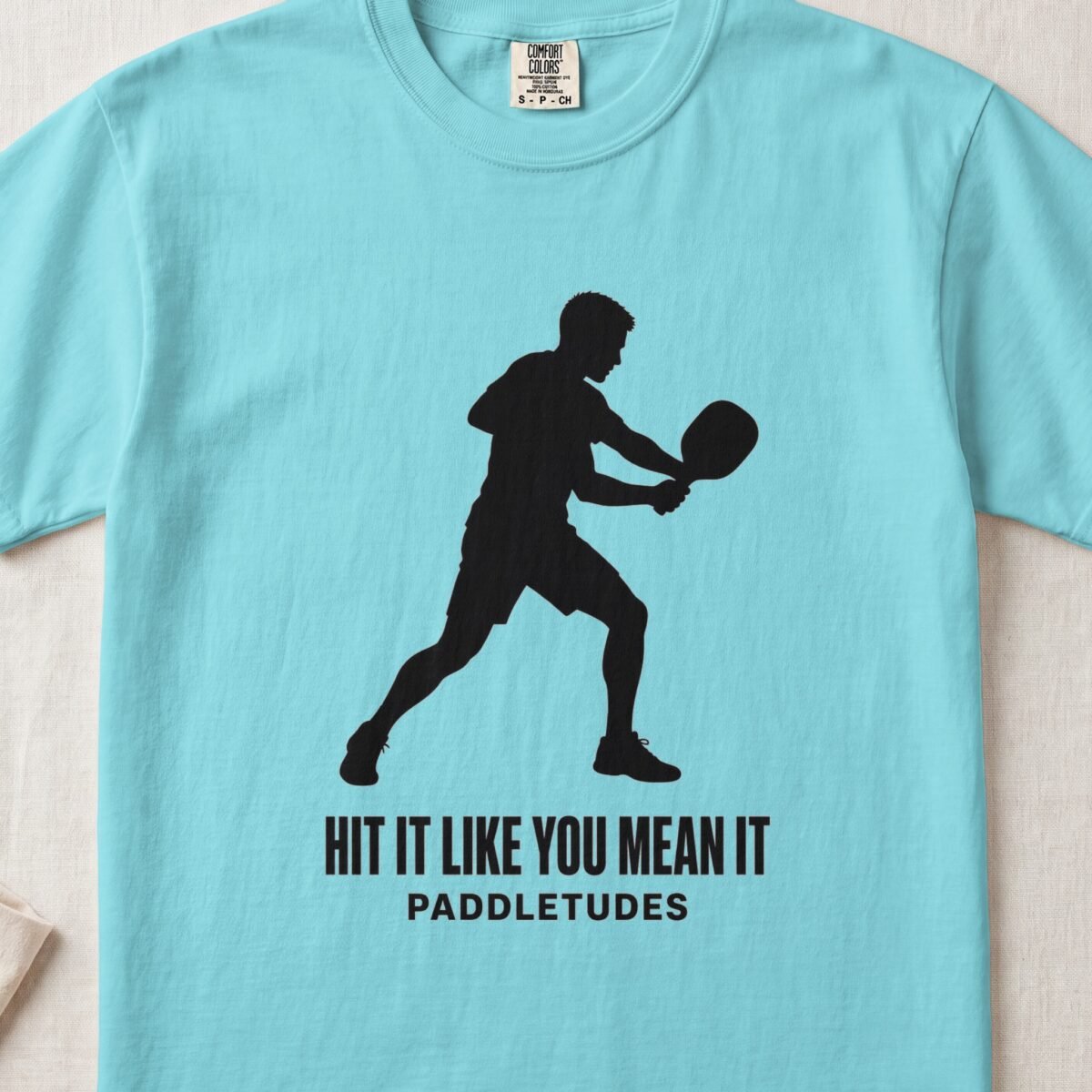
Hit It Like You Mean It
$29.99 Select options This product has multiple variants. The options may be chosen on the product page -
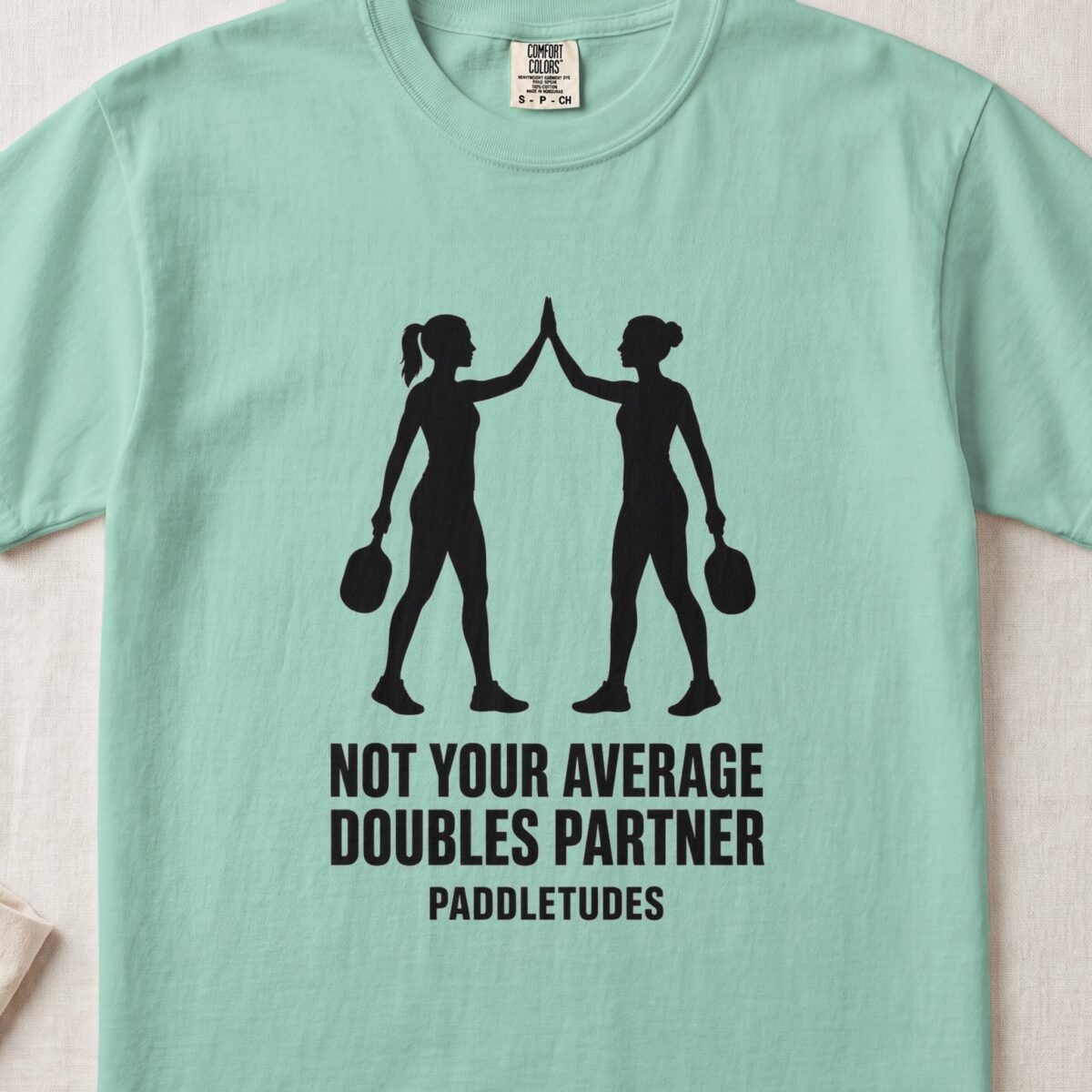
Not Your Average Doubles Partner
$29.99 Select options This product has multiple variants. The options may be chosen on the product page -
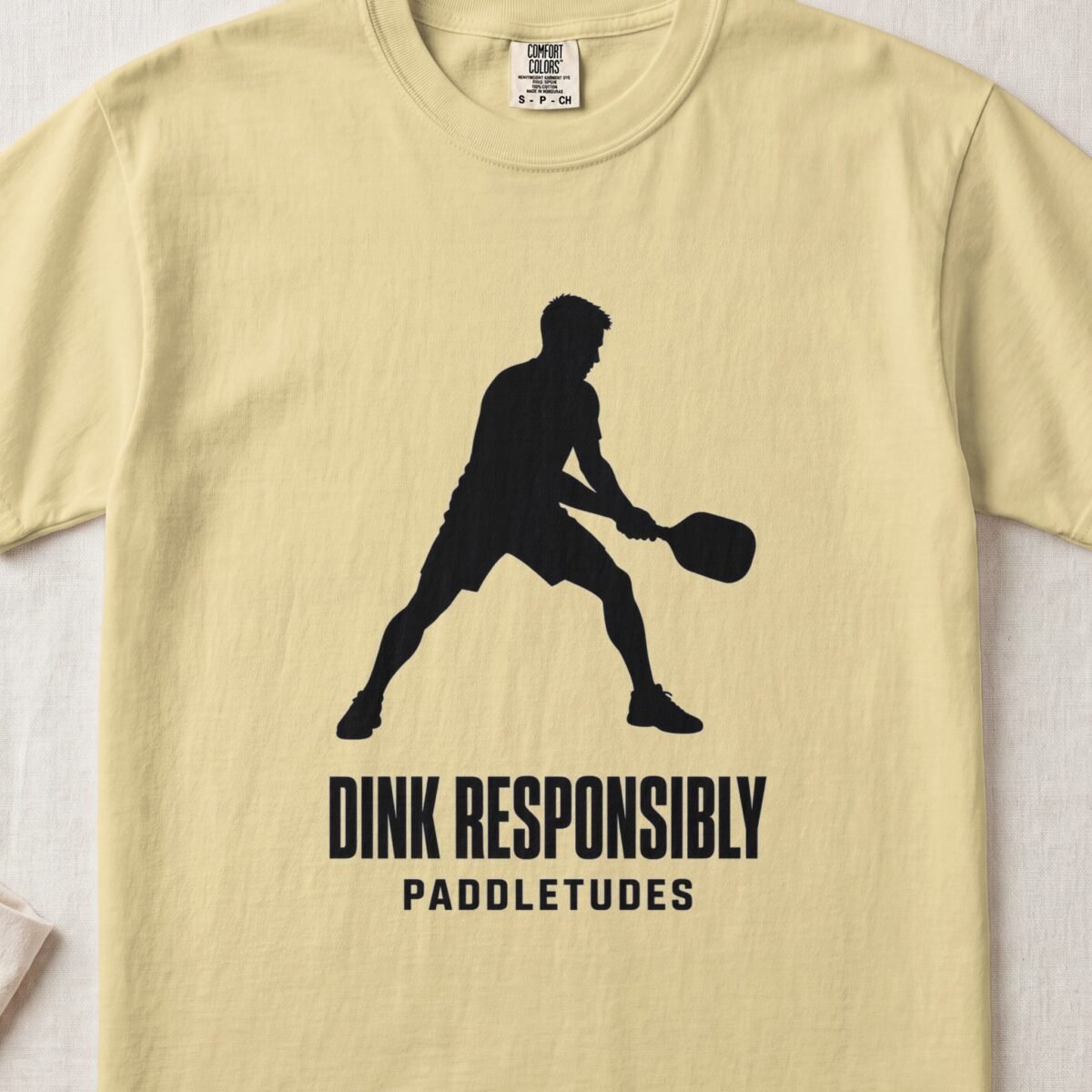
Dink Responsibly
$29.99 Select options This product has multiple variants. The options may be chosen on the product page