Sports Comfort Colors 1717
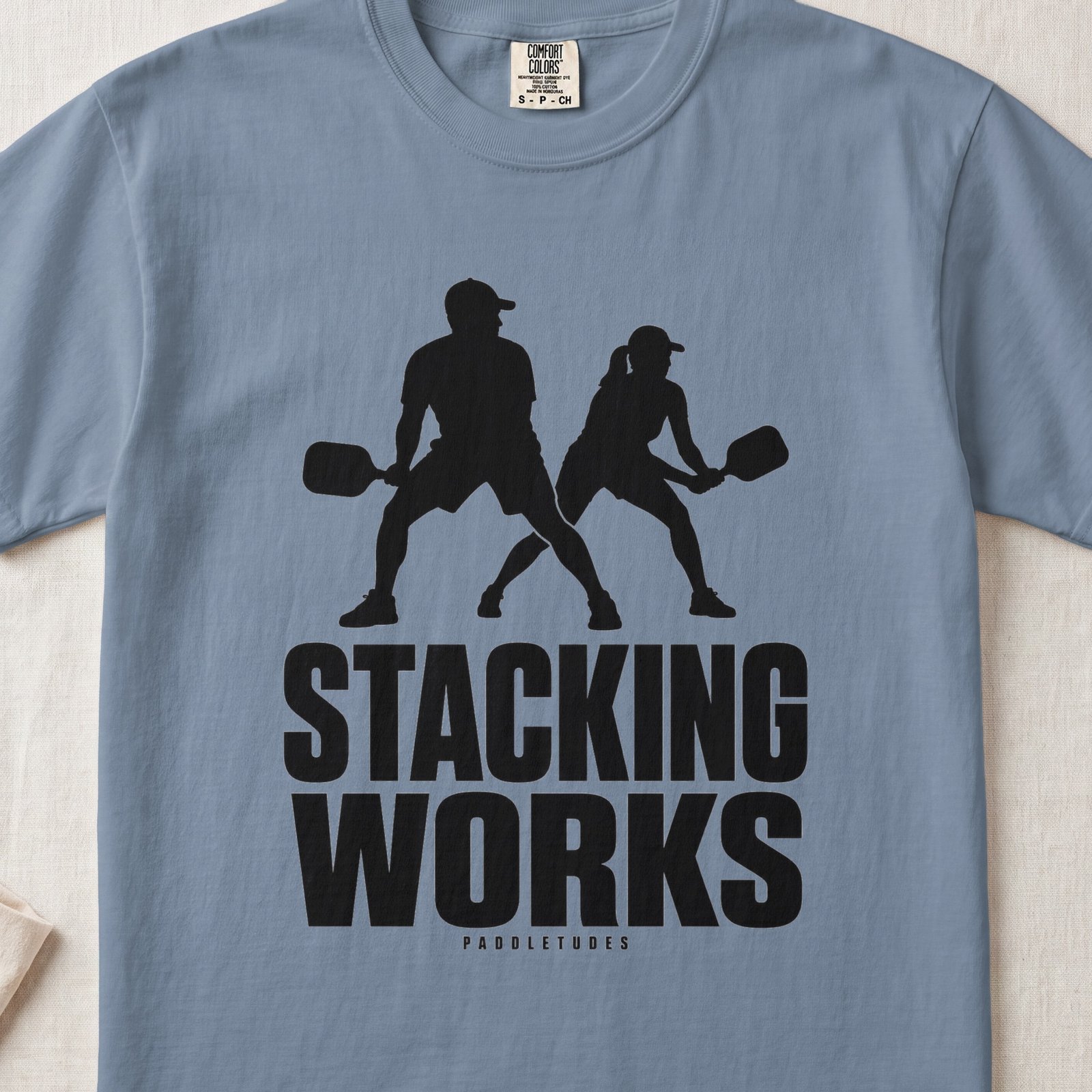
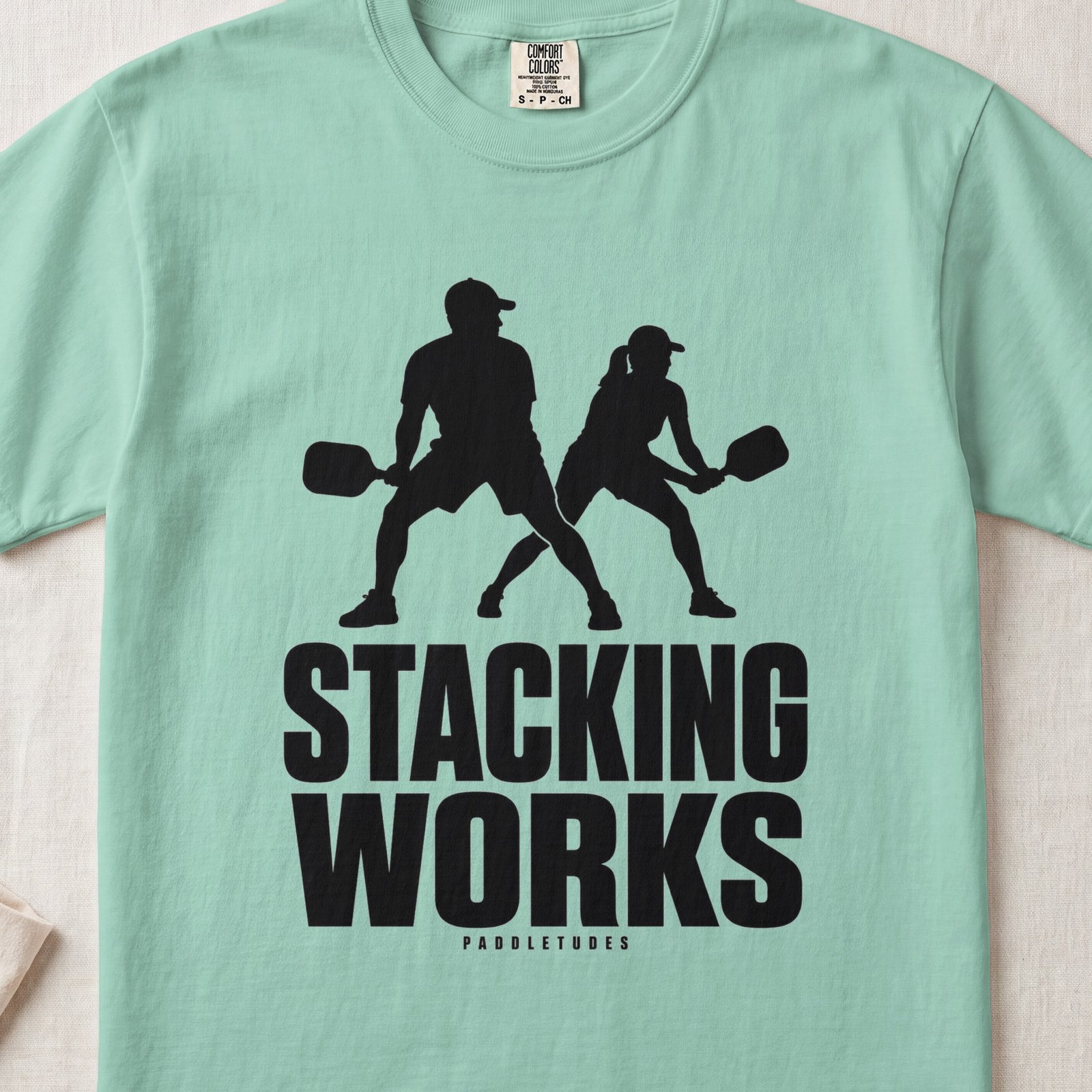
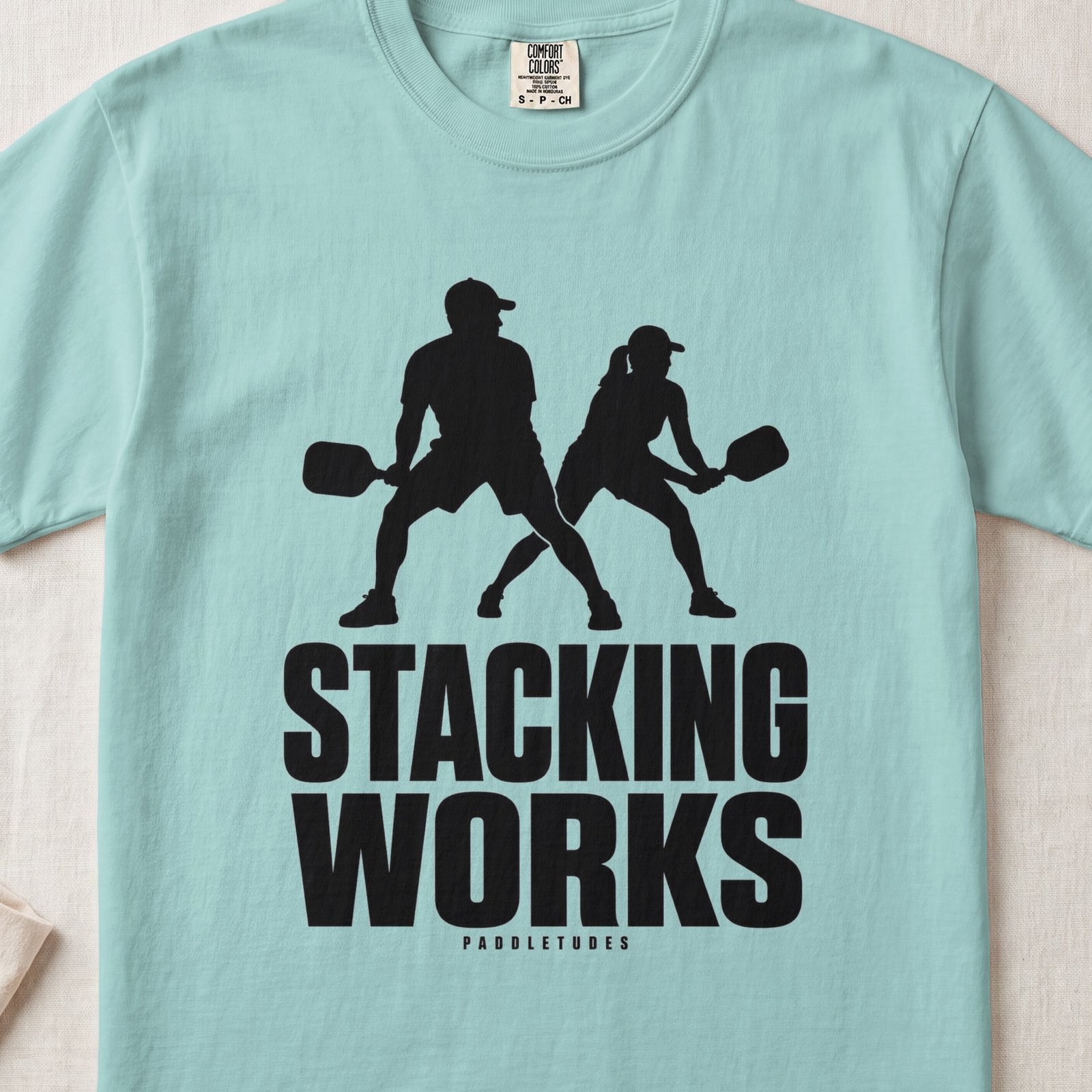
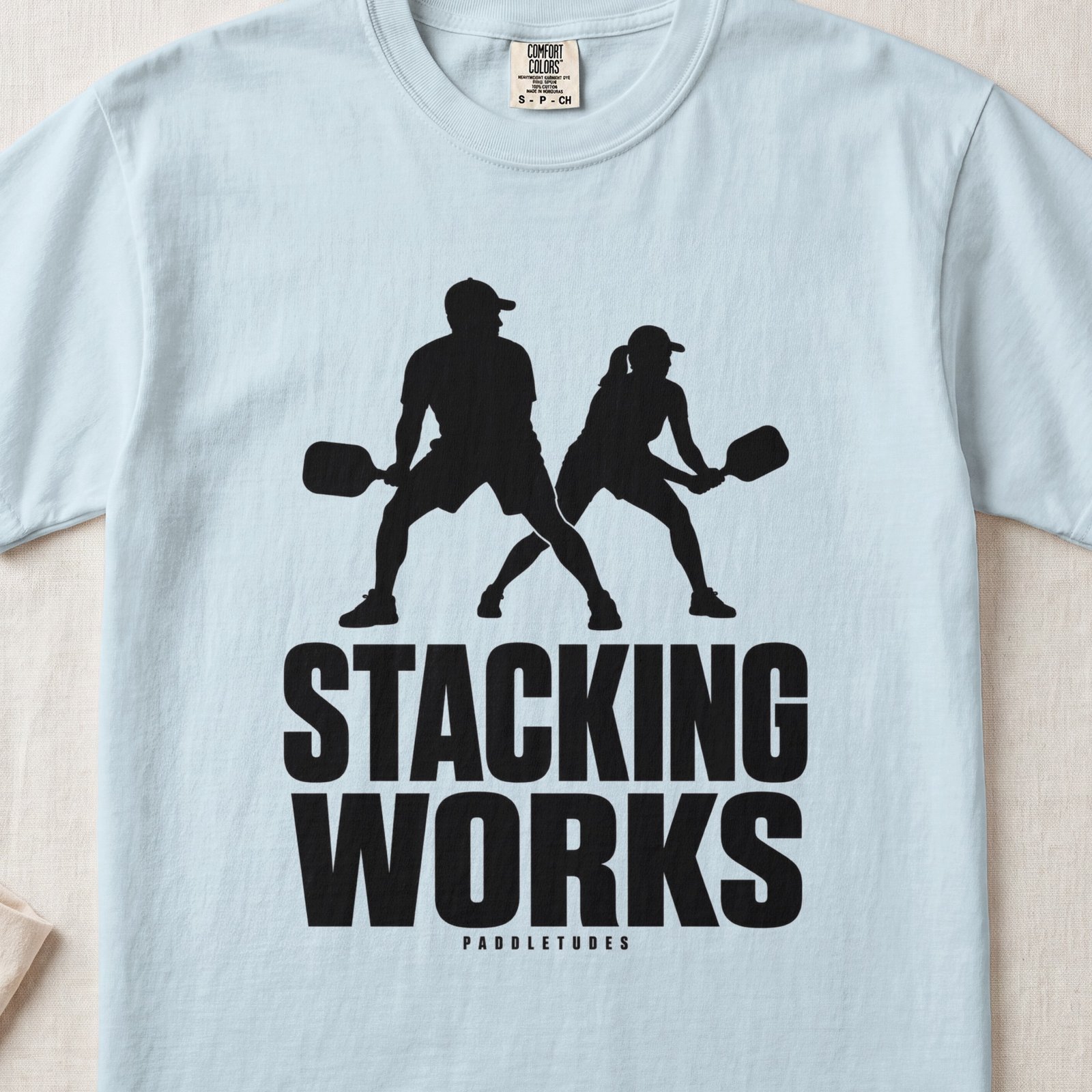
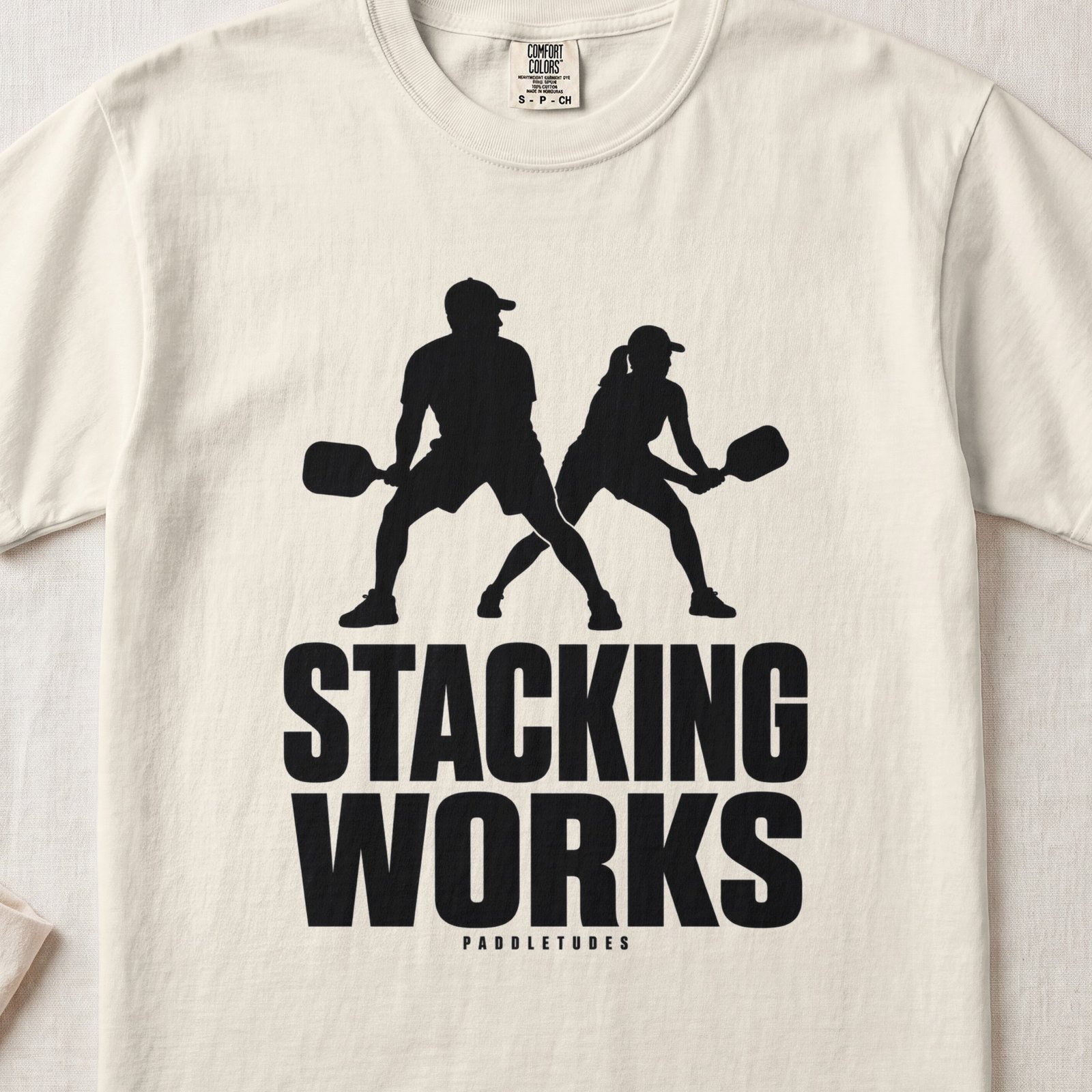
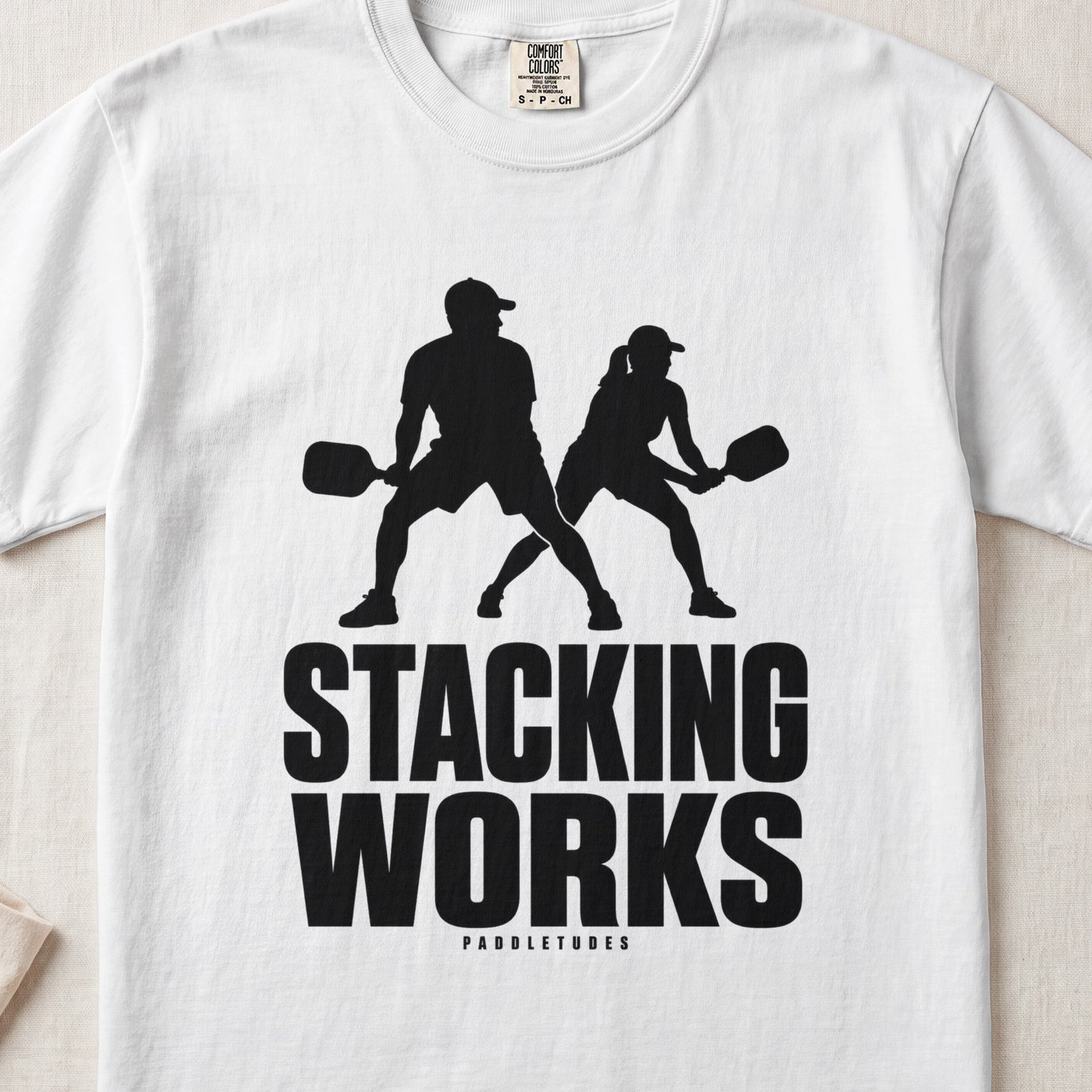
Stacking Works
$29.99
- Comfort Colors 1717 heavyweight cotton
- Original design · printed to order
- U.S. print partners
Stacking Works — Ask the Team That Just Lost to It
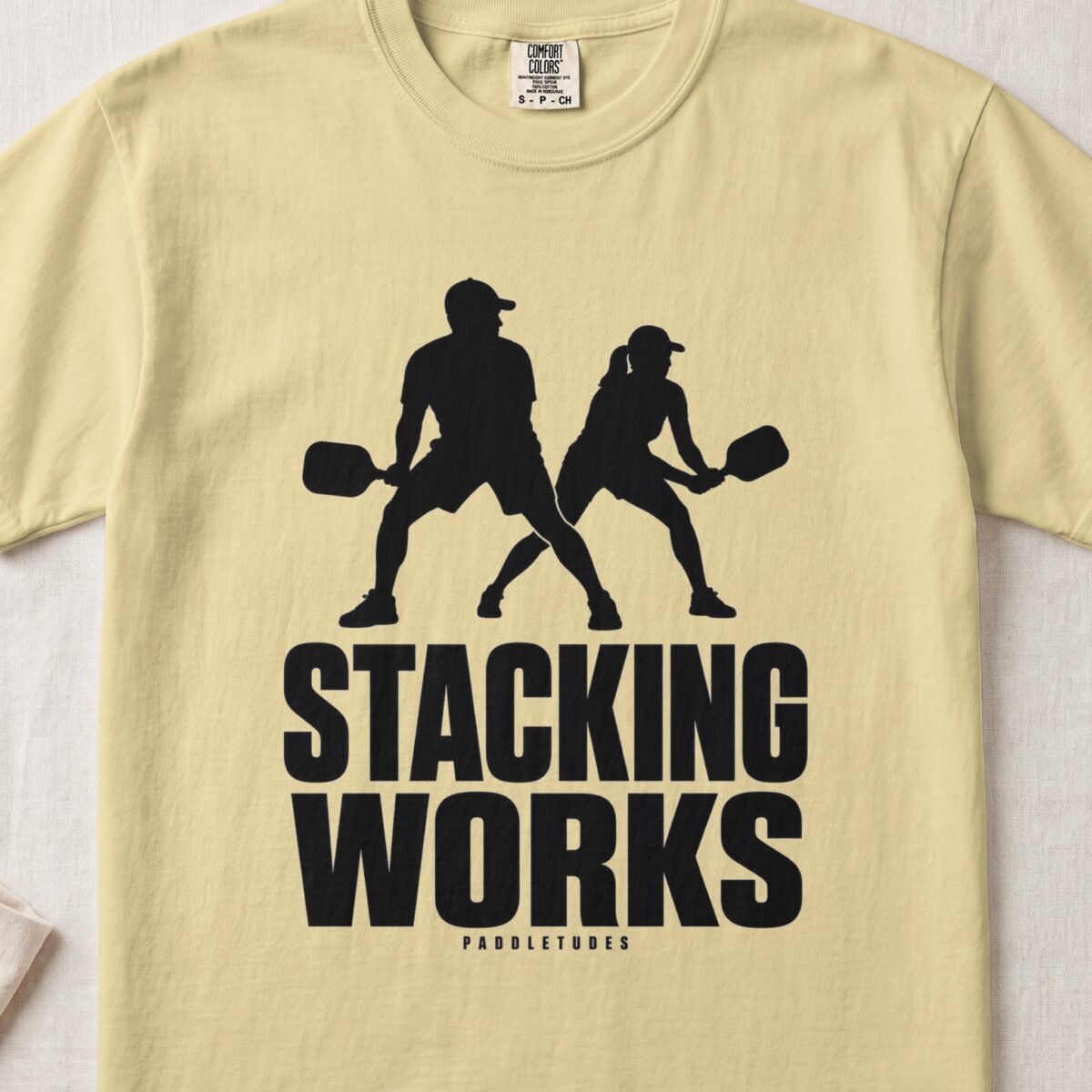
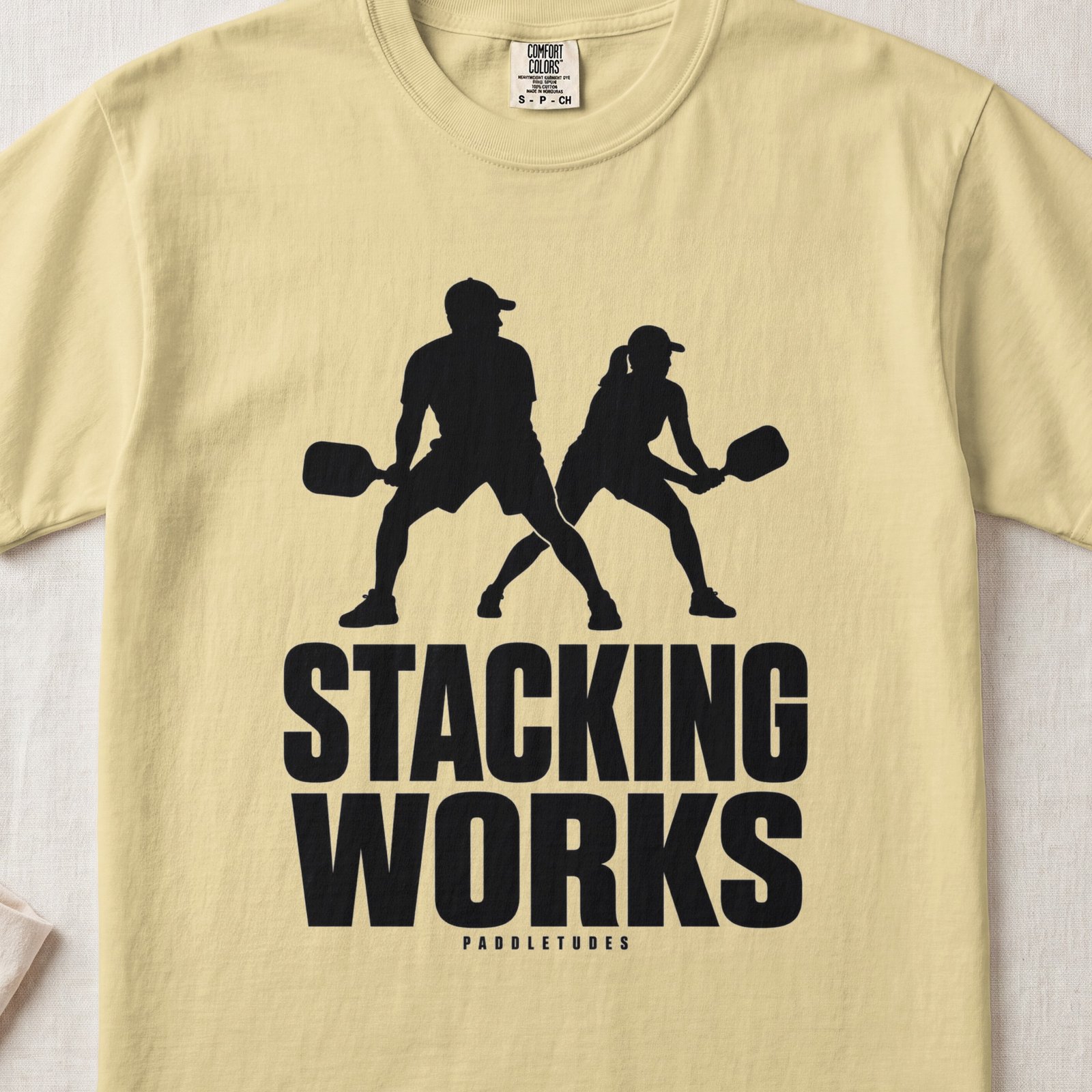
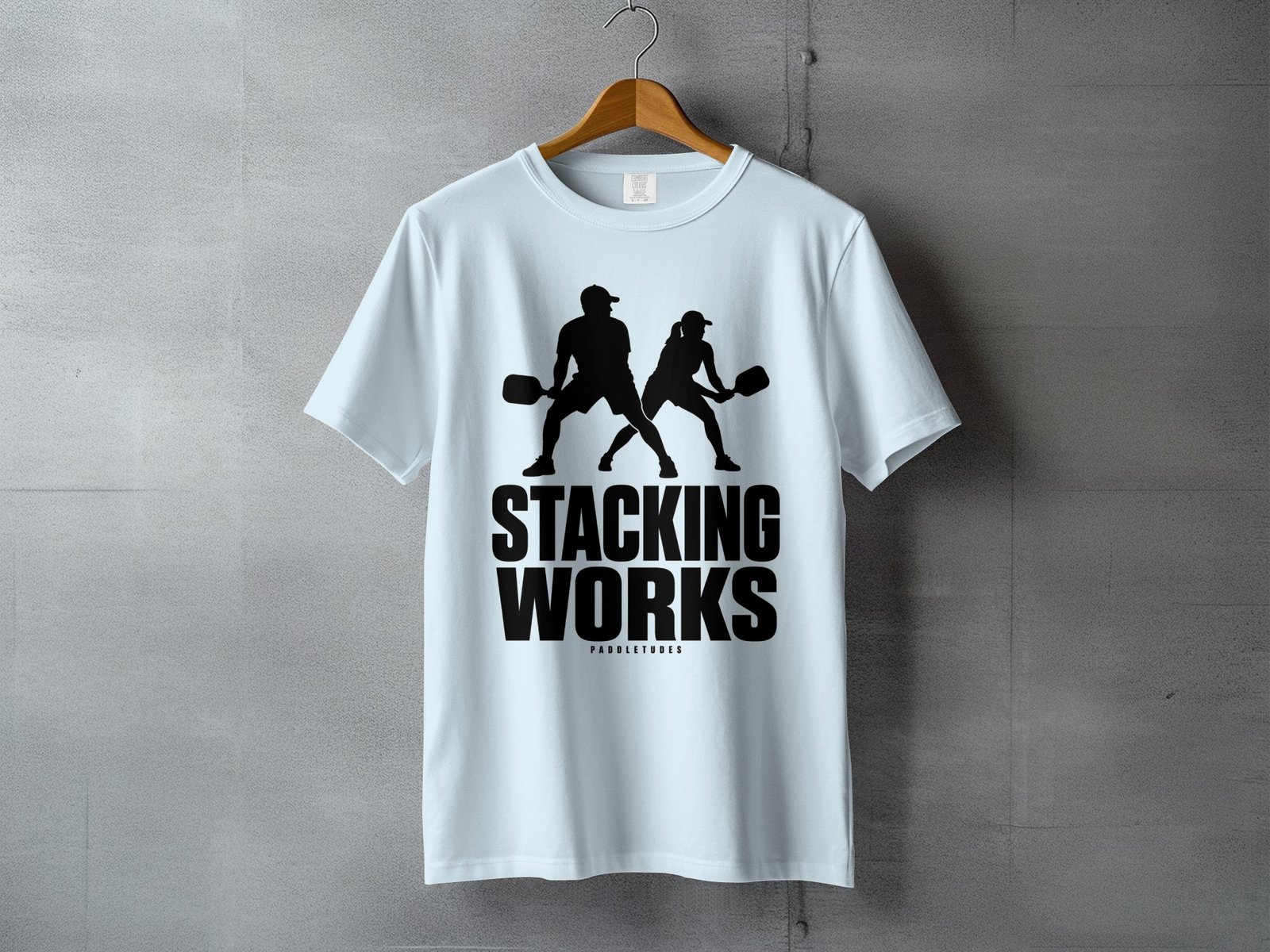
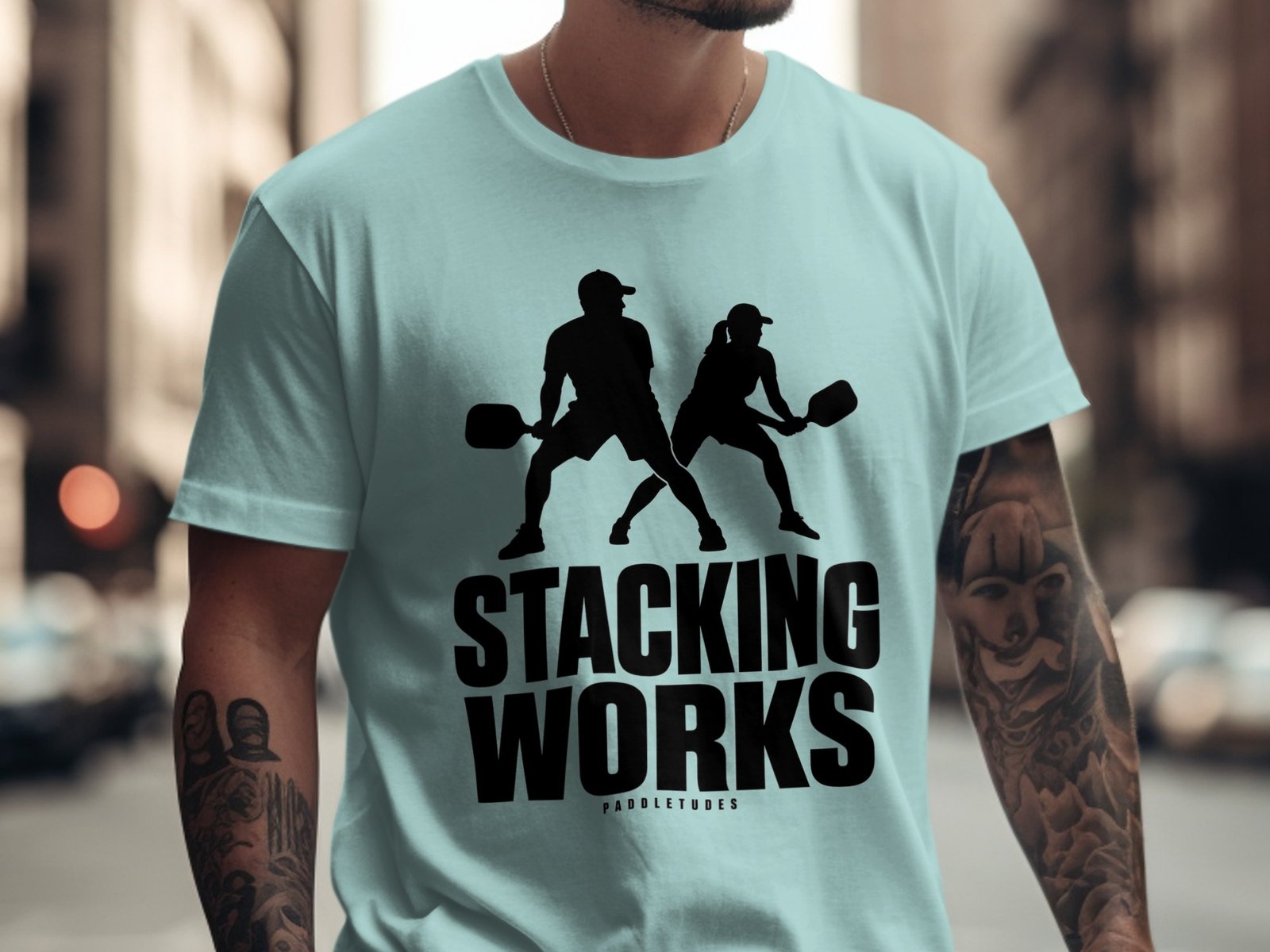
The score is 7-4-2 and the other team is staring across the net trying to figure out why both players are standing on the left side of the court. The serve goes. The return comes back. And by the time the third shot is in play, both players have slid into position — forehands in the middle, backhands to the outside, the exact same alignment they’ve been in for every point this game regardless of what the score says. The opponents are still processing the positioning when the forehand down the middle ends the rally. That’s stacking. This shirt is for the team that stopped letting the scoreboard decide where they stand.
They’re a married couple in their mid-fifties. He’s right-handed. She’s left-handed. For their first year of mixed doubles, they played traditional positioning — he on the right when the score was even, she on the left, switching after every point they won. It meant that half the time, both of their backhands faced the middle of the court, which is where most attacks go. They kept losing to teams that hit worse but aimed better. Then a 4.5 player at a tournament clinic showed them stacking — a simple positional swap that puts both forehands toward center court on every single rally. They tried it for one game, won 11-3, and haven’t played traditional positioning since. Now they’re the couple at mixed doubles night who other teams point at and whisper, “Wait, are they allowed to do that?”
At 3.0, stacking doesn’t exist. Both players stand where the score tells them to stand, and if that means two backhands in the middle, so be it. At 3.5, teams start experimenting — usually just on serve, which is the easier side to implement — but the movement between points feels clunky and someone inevitably ends up on the wrong side. By 4.0, stacking becomes a structural decision made before the match starts, not a play called during a game. Each partner knows their side, knows the slide pattern, and tracks the score to stay legal without thinking about it. The USA Pickleball rulebook only requires that the correct server serves from the correct side and the correct receiver returns — where the partner stands is unrestricted, as long as they don’t block the returner’s view. By 4.5, stacking becomes invisible. The slide between points is so fluid that opponents stop noticing it and start noticing the results — a forehand covering the middle on every exchange, no weak side to exploit, no free points from targeting a backhand that isn’t there.
The drill that makes stacking automatic is about movement, not hitting. Both partners start on the same side of the court. One serves or returns. The other stands just off the court near the sideline. The moment the ball is struck, the off-court partner slides into their preferred position while the server or returner moves to cover the other half. Ten reps on serve, ten reps on return. The ball doesn’t matter — you can let it bounce twice and start over. What matters is the footwork pattern: the timing of the slide, the width of the gap you leave during transition, and the communication that tells both players the stack is on or off for this particular point. Practice calling it off when a deep return makes the slide too risky, because a stacking team that can’t abort is a stacking team that gets caught out of position.
The paddle selection for a stacking team depends on which role each player fills. The player who holds the middle — usually the one whose forehand covers center court — benefits from a balanced, all-court paddle that handles dinks and drives equally. Joola’s paddle selection guide walks through how core thickness and face material affect touch versus power, and for the middle player, the answer is almost always balance. The outside player can go more specialized — a control paddle for net play or a power paddle for drives from the baseline — because they’re not covering as wide a range of shots.
If you recruited your doubles partner into the sport — if you were the one who said “just try it, you’ll love it” — and then you taught them to stack, and then the two of you started winning matches you had no business winning, this is the shirt that commemorates the whole arc. You didn’t just find a partner. You built one.
Stacking shares the doubles intelligence that runs through our entire pickleball collection. Shake And Bake is what you run once you’re stacked and in position — the drive-and-crash play that turns forehand dominance into a finished point. Hands Battle Won is what happens when stacking puts you in the middle and both teams start firing volleys. And We Argue About Line Calls Not Dishes is the other side of the doubles relationship — the shirt for the couple whose partnership extends from the court to the kitchen table. Find courts built for competitive doubles at Pictona in Holly Hill, Florida — one of the largest dedicated pickleball facilities in the country.
Printed on a Comfort Colors 1717 garment-dyed heavyweight tee with water-based DTG ink — sizing and care details here.
How Do You Stack in Pickleball Doubles
Stacking is a doubles positioning strategy where both players line up on the same side of the court before the serve or return, then slide into their preferred positions once the ball is in play. The goal is to keep each player on their strongest side every rally — usually putting both forehands toward the middle of the court — regardless of which side the score rotation would normally place them on.
The mechanics have two forms. A full stack means both players start stacked on the same side for every serve and every return, sliding after each ball is struck. A half stack is simpler — you only stack on one side, typically on serve, and play traditional positioning on the return or vice versa. Most coaches recommend starting with the half stack on serve because it’s the easier side to learn. You already know where you’re supposed to be on serve, and the non-serving partner just has to slide from outside the sideline into position after the ball is hit.
The most common reason to stack is a left-hand/right-hand partnership, because it puts both forehands in the center of the court where most attacks are targeted. But stacking also works for two right-handed players when one has a significantly stronger forehand or more aggressive net game. The critical requirement is that the correct server must serve from the correct side and the correct receiver must return from the correct side — those are the only positioning rules in the rulebook. Where the partner stands before, during, and after the shot is completely open as long as they don’t obstruct the returner’s view.
The mistake that kills most stacking attempts is movement timing. If the sliding partner moves too early, they telegraph the stack and leave a gap. If they move too late, the rally starts with them out of position and scrambling. The slide should begin the instant the ball is struck — not before, not after. And both players need a system for calling the stack off when conditions don’t favor it, like a deep return that pins the returner at the baseline and leaves no time for the slide. The teams that stack well aren’t the ones who do it every point without thinking. They’re the ones who know when to run it and when to play straight — and communicate that decision before every serve.
-

Wine After We Win
$29.99 Select options This product has multiple variants. The options may be chosen on the product page -
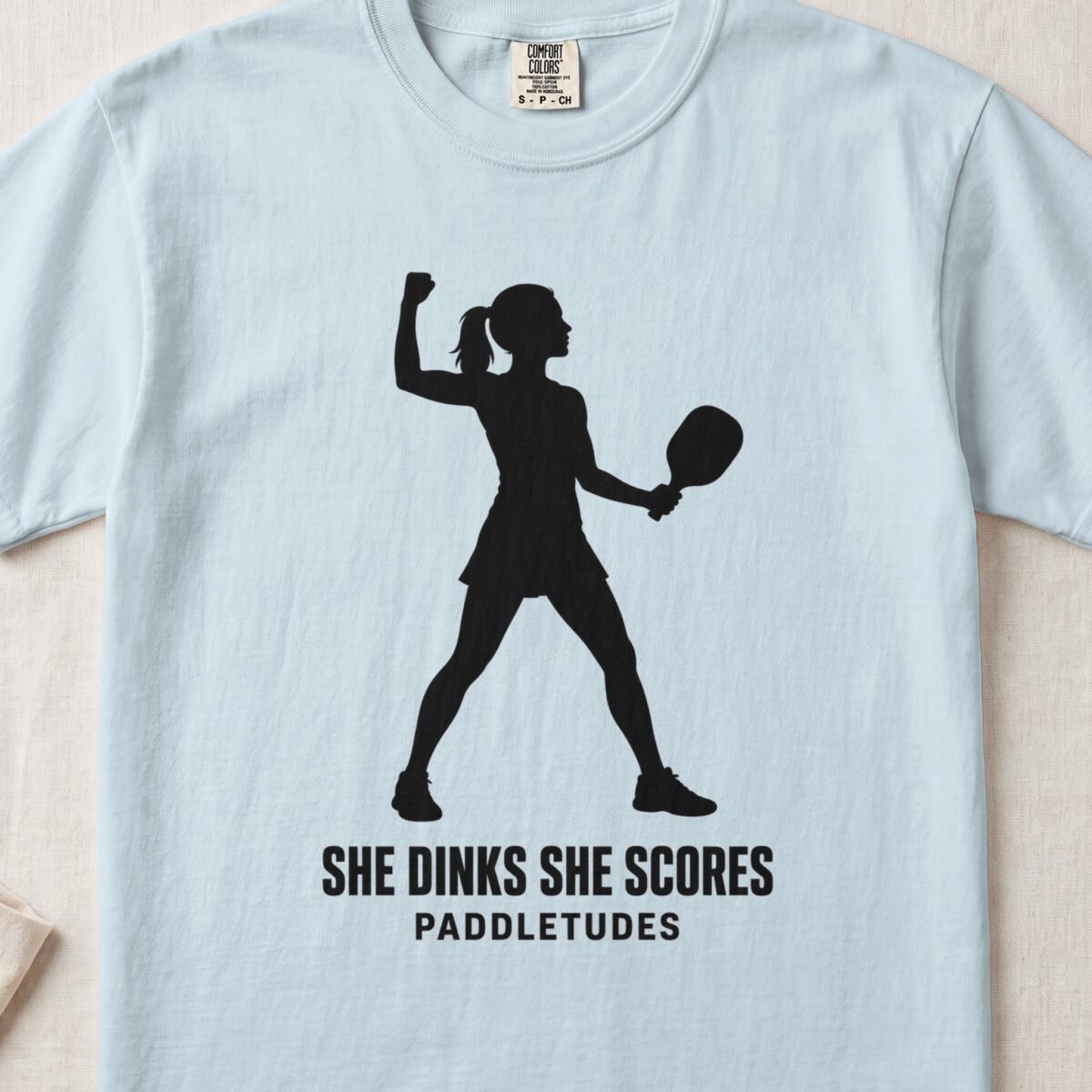
She Dinks She Scores
$29.99 Select options This product has multiple variants. The options may be chosen on the product page -
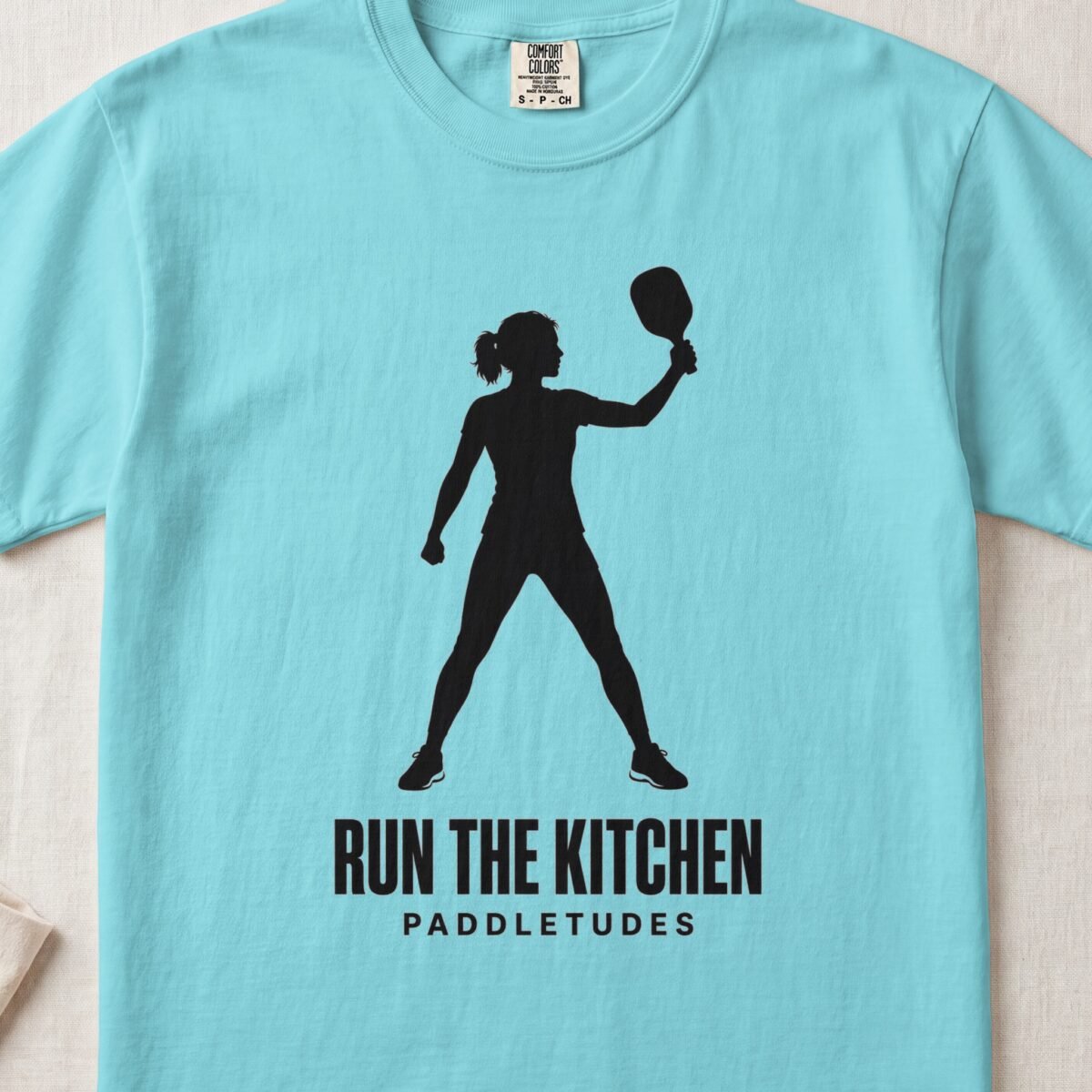
Run The Kitchen
$29.99 Select options This product has multiple variants. The options may be chosen on the product page