Retro Comfort Colors 1717
Kitchen Foot Cure
$39.99
- Comfort Colors 1717 heavyweight cotton
- Original design · printed to order
- U.S. print partners
Kitchen Foot Cure — Dr. Paddletudes Remedy for Repeat Kitchen Violators
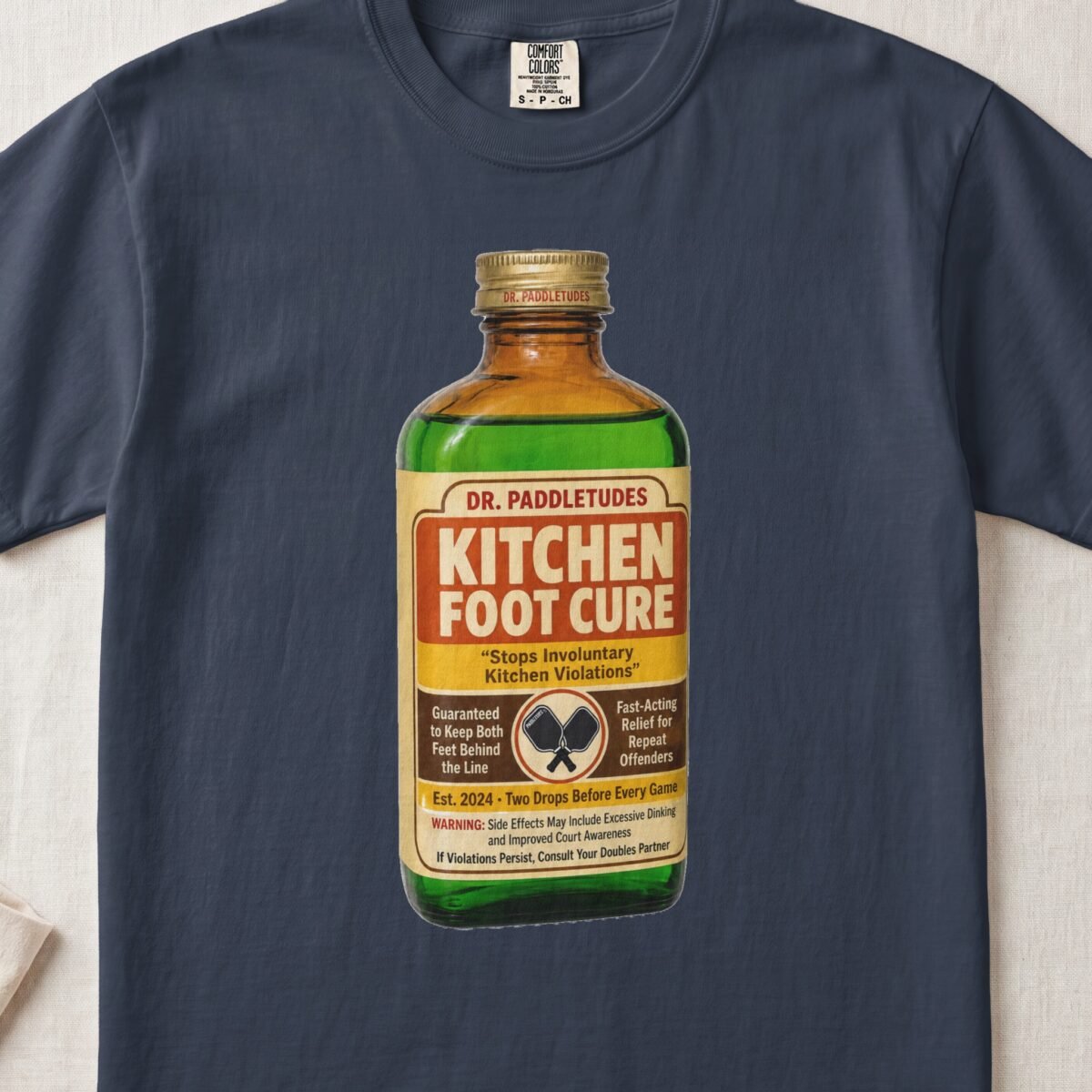
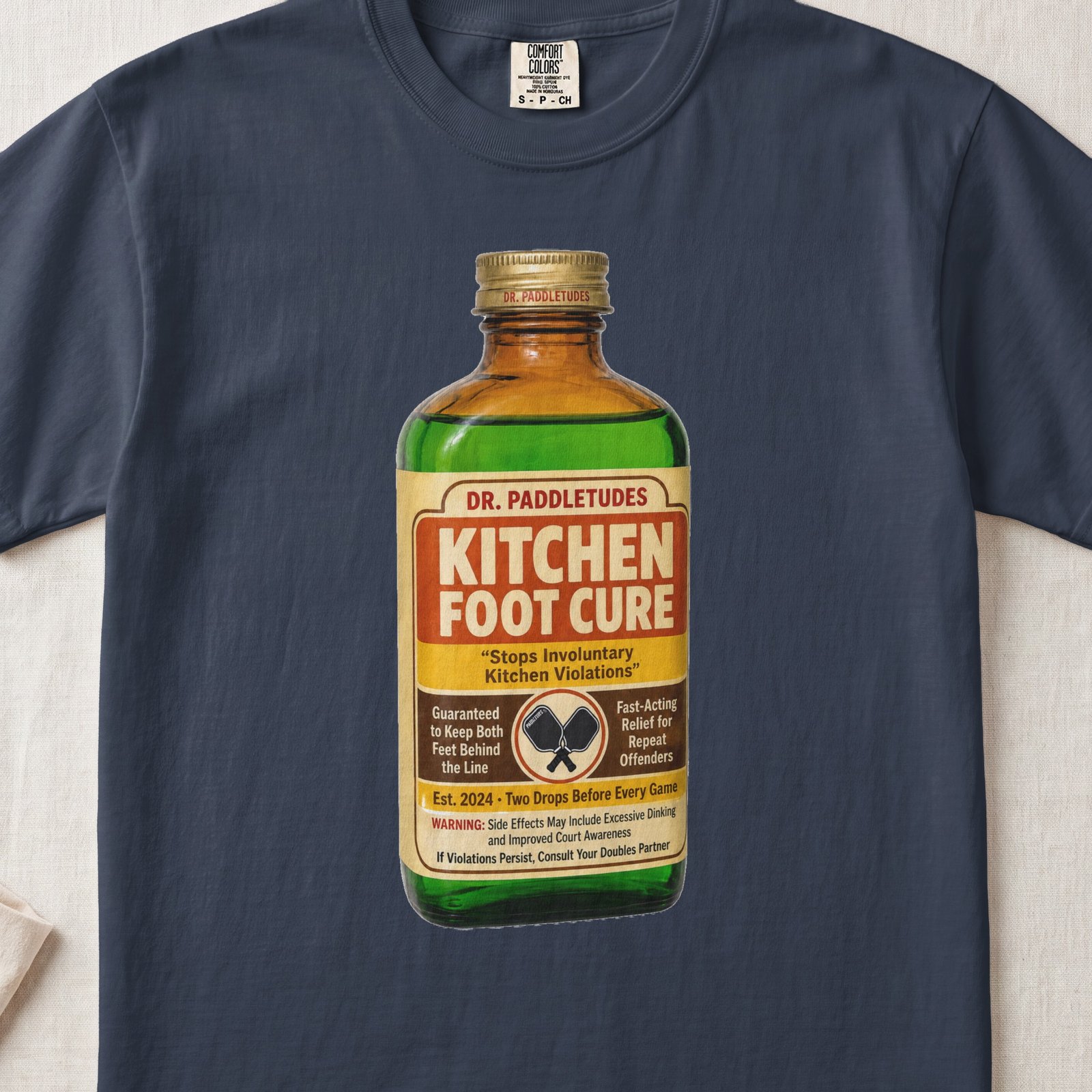
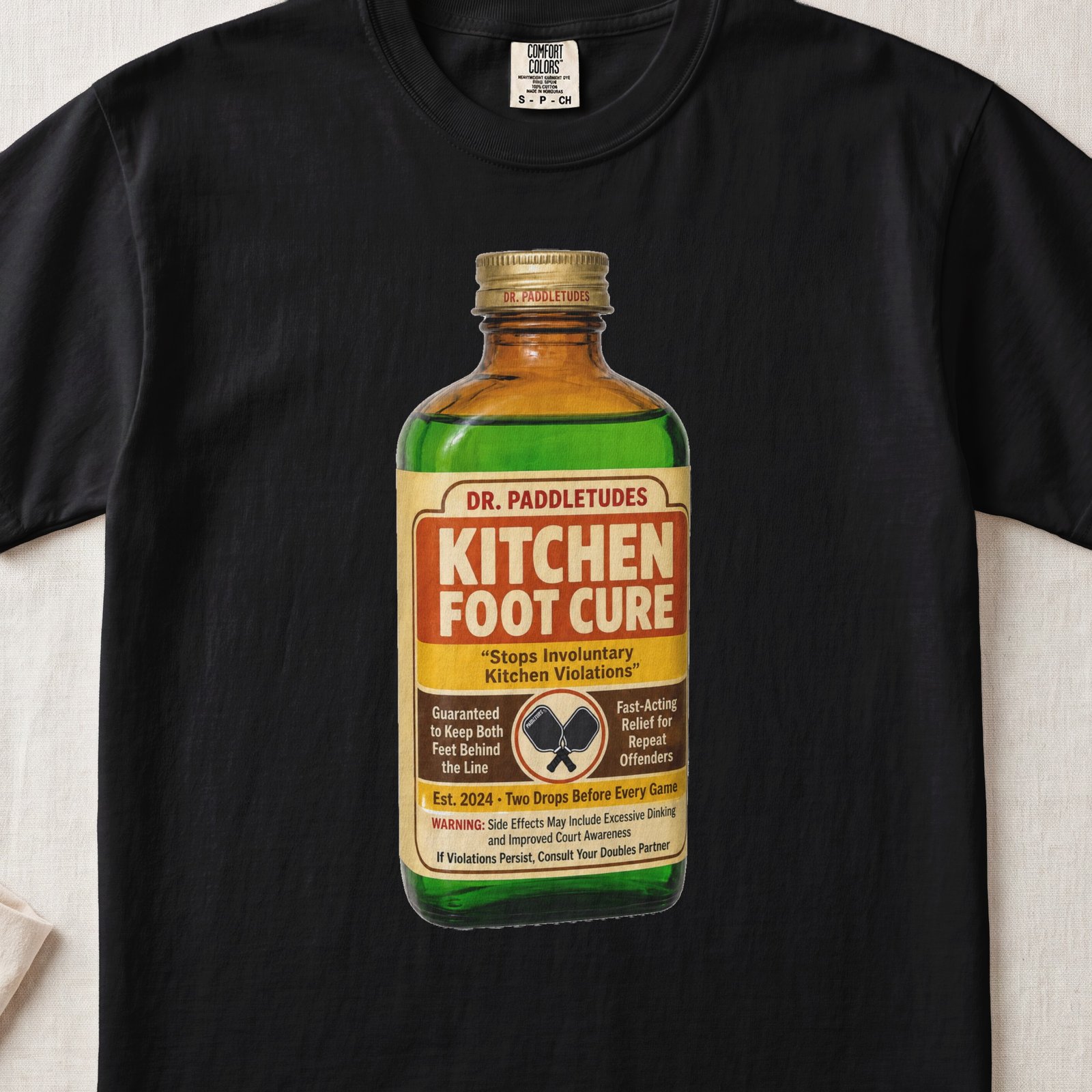
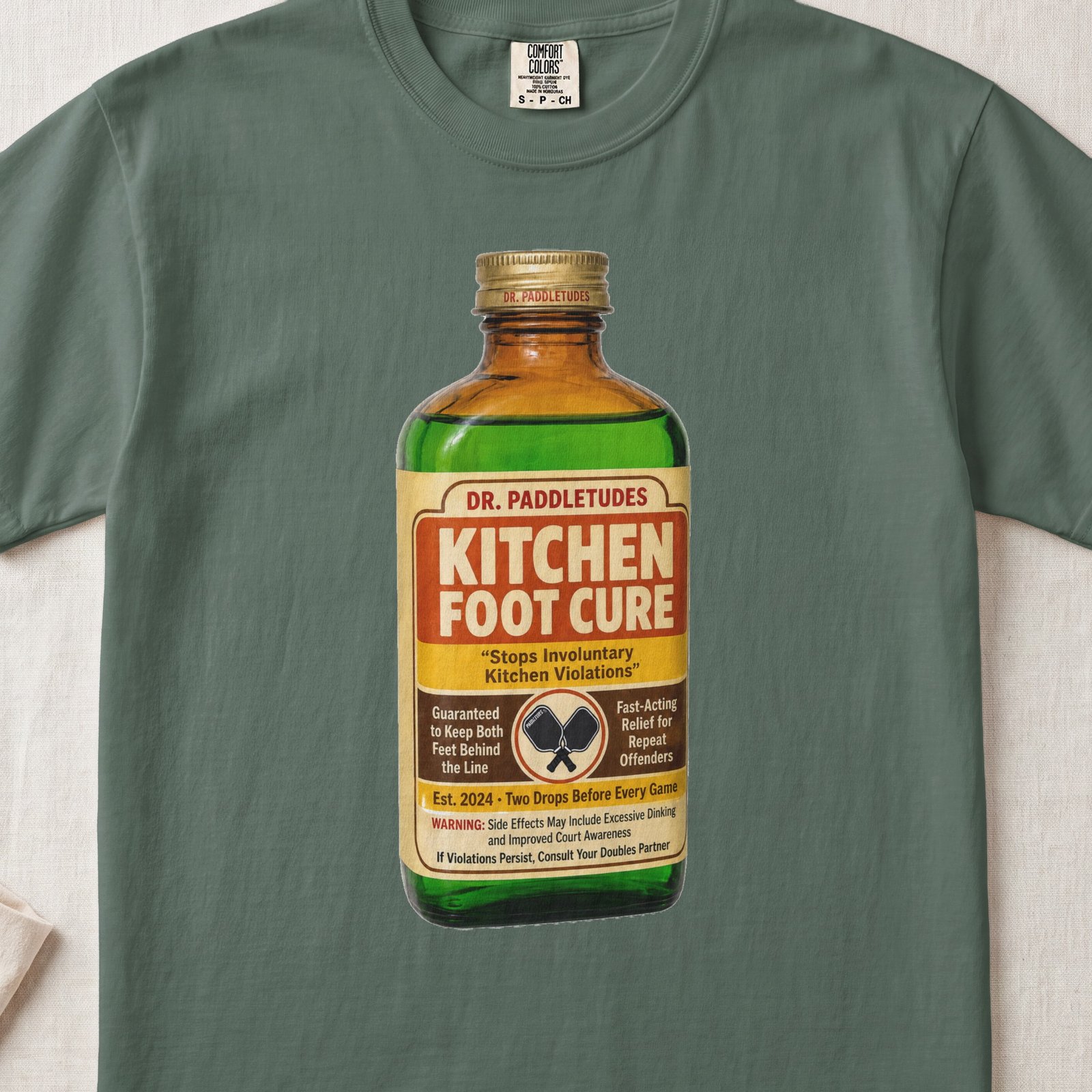
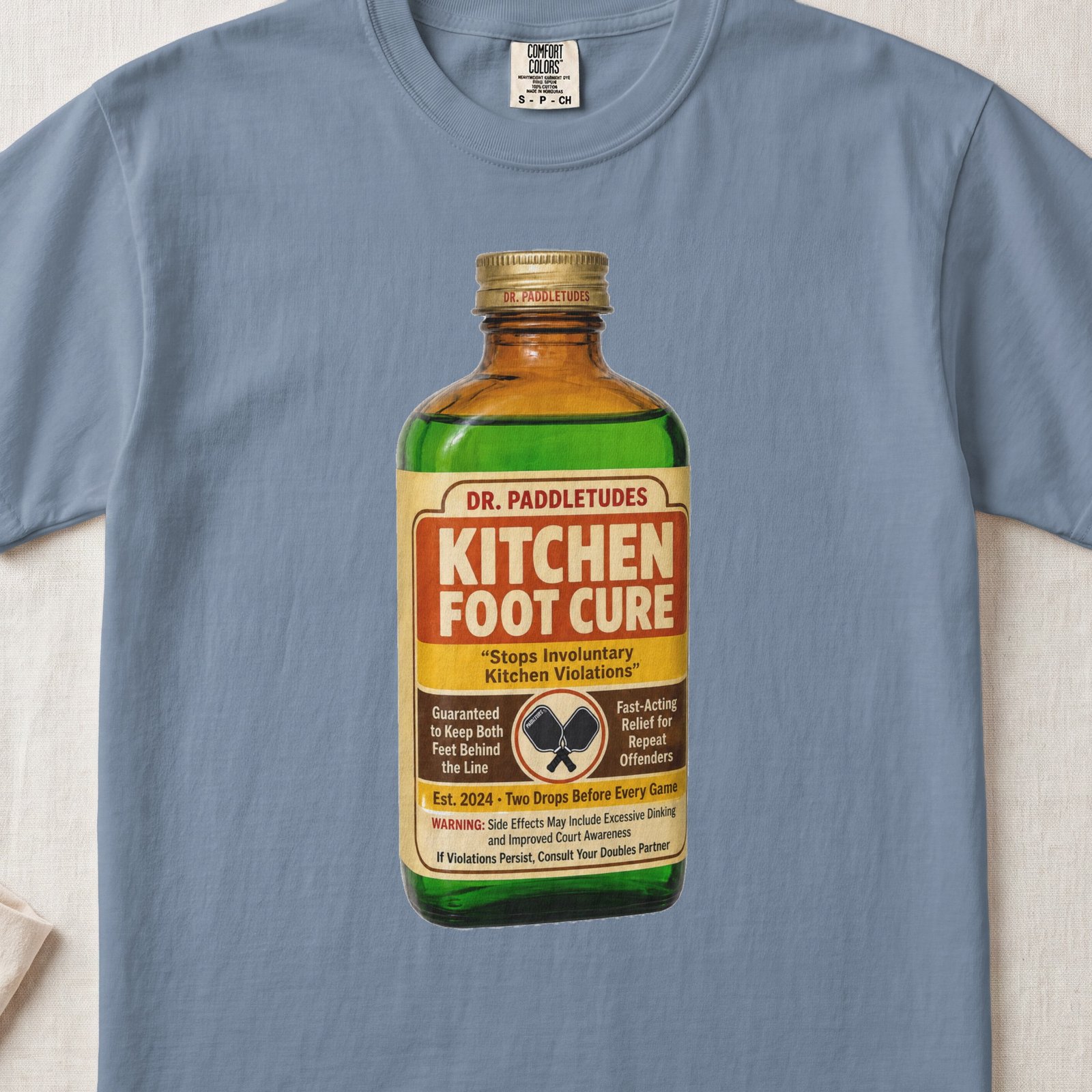
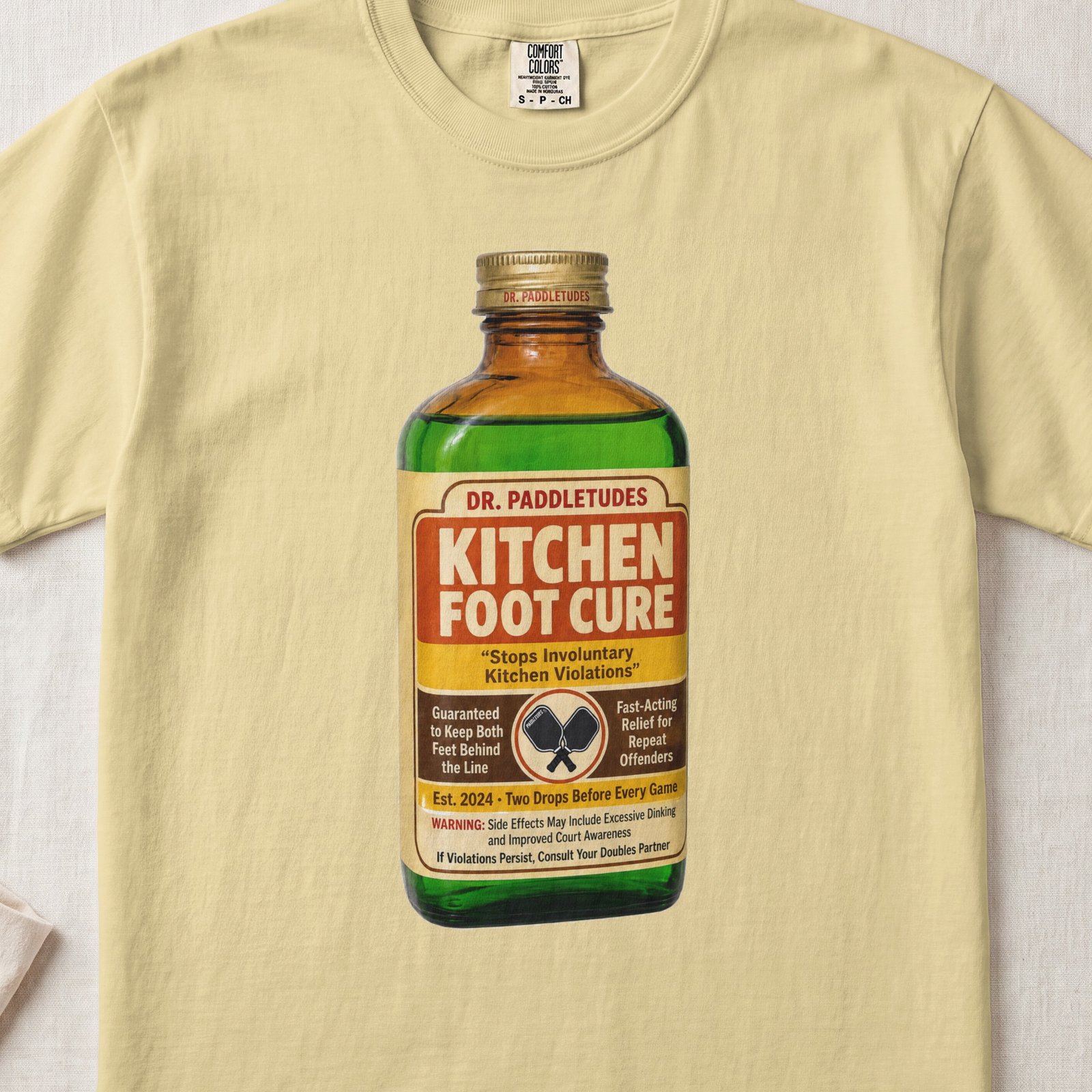
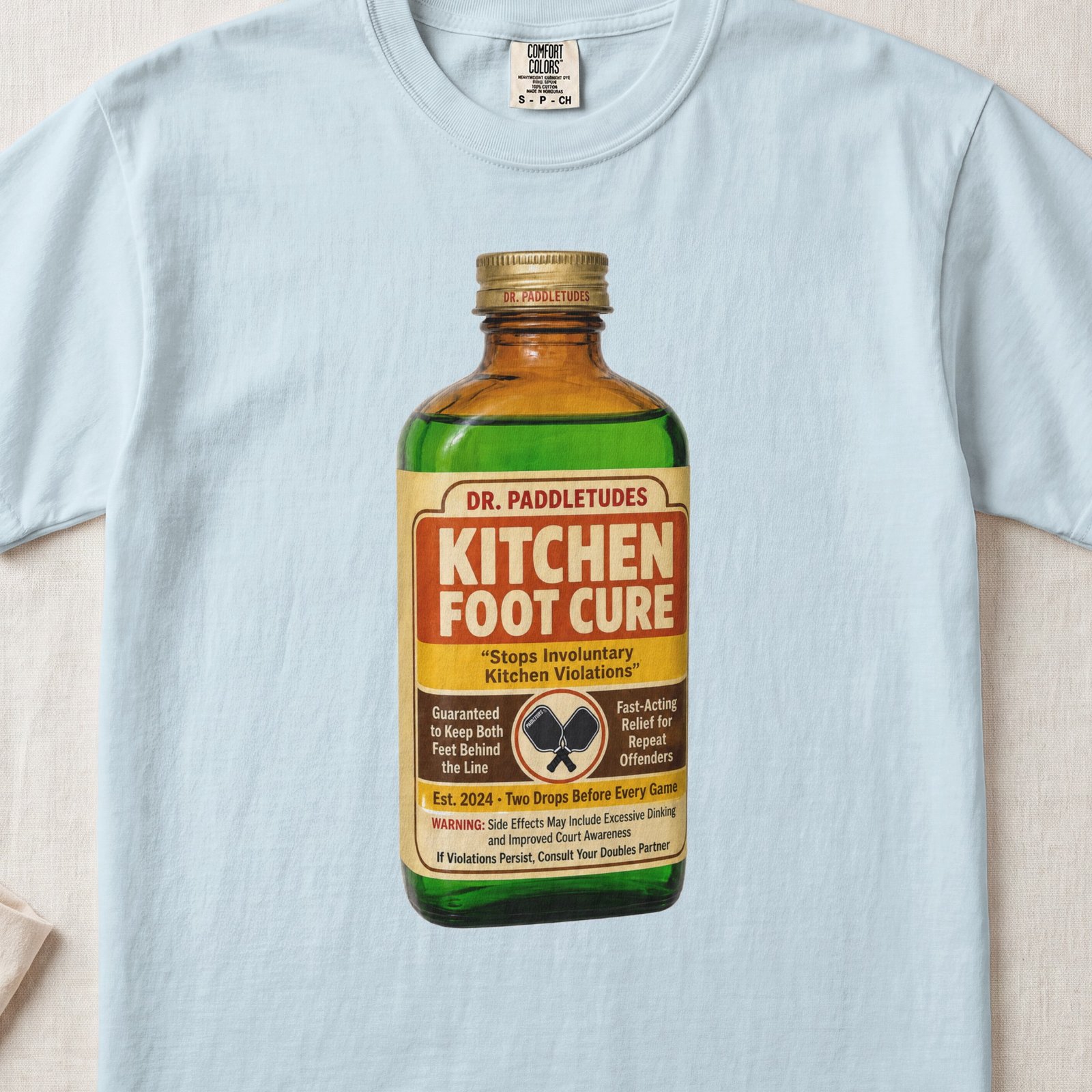
This retro pickleball shirt is a fake medicine bottle for the player who keeps stepping into the kitchen. Two drops before every game.
You know exactly who needs this shirt. They step in on every volley. They’ve been called for it twice in one game and still don’t believe it happened. They argue that their momentum carried them, that their toe barely touched, that the other team wasn’t watching closely enough to make that call. Kitchen foot faults are the parking tickets of pickleball, and this player has a glove box full of them. If someone at your court fits that description and their birthday is coming up, this is the pickleball gift that says what their doubles partner has been too polite to say out loud. Wrap it in a brown paper bag like a prescription and hand it over before warmups.
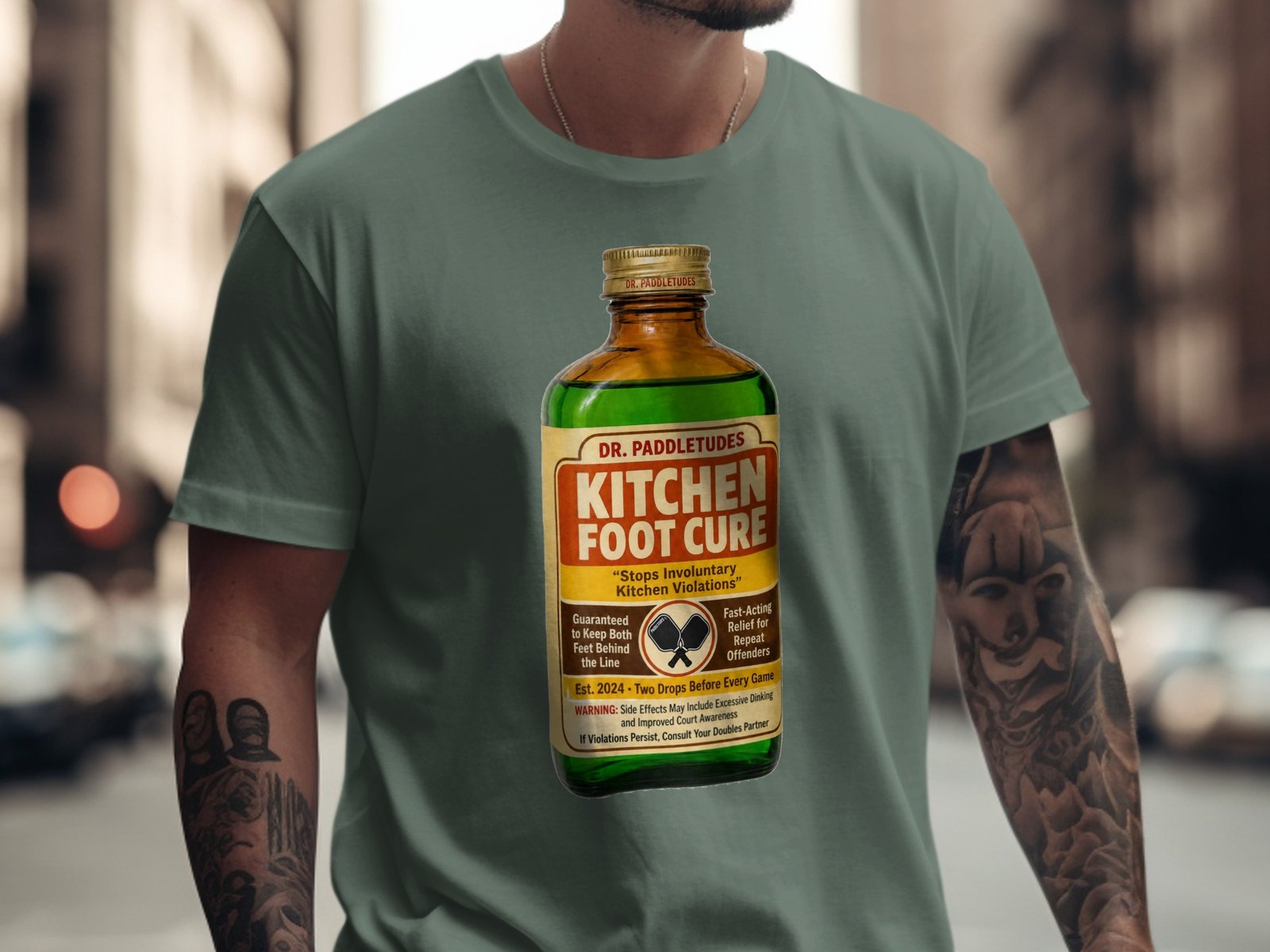
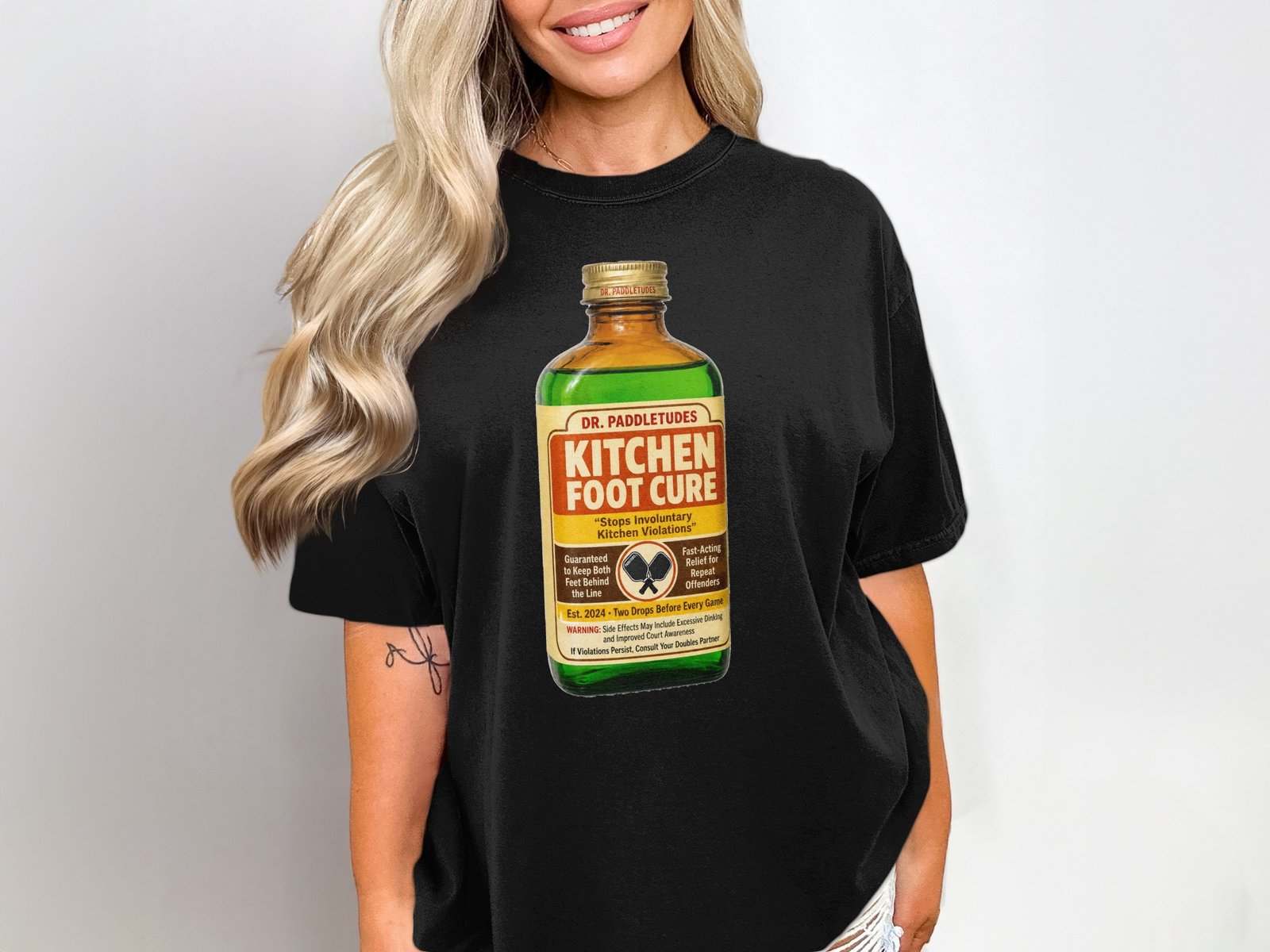
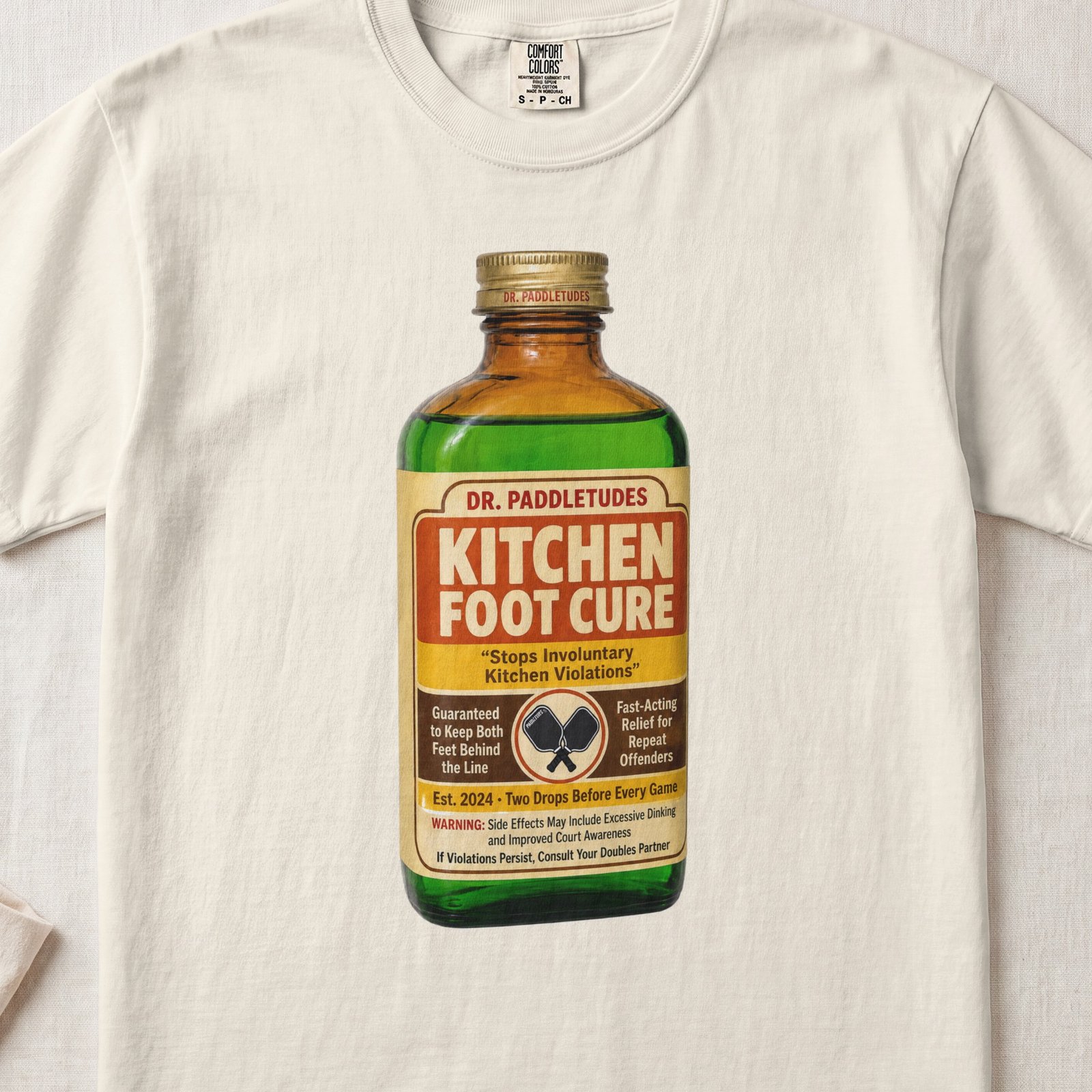
The label on this Dr. Paddletudes bottle reads like a real vintage apothecary product. Stops Involuntary Kitchen Violations. Guaranteed to Keep Both Feet Behind the Line. Fast-Acting Relief for Repeat Offenders. Est. 2024. Two Drops Before Every Game. The warning label at the bottom seals it: Side Effects May Include Excessive Dinking and Improved Court Awareness. If Violations Persist, Consult Your Doubles Partner. Every line is printed on the shirt exactly as it appears on the bottle, because in the retro graphic tee universe Paddletudes built, this product is real and it works. The green glass bottle looks like something you’d find behind the counter at a pharmacy that still had a soda fountain. It sits on the same shelf as Soft Hands tonic and Foul Mouth Paste, which handles the other common court ailment nobody wants to talk about.
The non-volley zone rule exists for a reason. Without it, a tall player could camp at the net and spike everything. The seven-foot zone on each side of the net keeps the game honest. You can stand in the kitchen. You can hit balls that bounce in the kitchen. But you cannot volley while touching the zone or any of its lines, and your momentum after a volley cannot carry you into it. That last part is where most violations happen. A player lunges for a volley at the line, makes contact legally, and then stumbles forward. Fault. The USA Pickleball rulebook is specific: both feet must be re-established outside the zone before the next volley. Players who struggle with this usually have a footwork problem, not a rules problem. They learned their volleying instincts from tennis or racquetball, where charging the net is the whole point. Pickleball asks them to play at the net without crossing the line, and that requires a different kind of discipline. The fix is the split step — a balanced ready position that keeps your weight centered instead of lunging forward. Find a court near you and drill it until the muscle memory replaces the habit.
Kitchen Foot Cure won’t actually fix your footwork. But wearing it to open play might remind you to check your feet before you check your ego. It’s the kind of pickleball gift that roasts and flatters at the same time, and it looks like a real product from a drugstore that understood your game better than your coach does.
Who Can Call a Kitchen Fault in Pickleball
In recreational pickleball without referees, any player on the court can call a kitchen fault, but the convention is that players on the side where the fault occurred make the call. In officiated tournament play, the referee calls non-volley zone violations. Either way, the fault must happen during or immediately after a volley.
The etiquette around kitchen calls is where things get complicated. In casual open play, calling a foot fault on an opponent can feel confrontational, especially if the violator doesn’t realize they stepped in. Most experienced players give a verbal heads-up the first time and call the fault on the second. The alternative is letting it slide, which trains bad habits and frustrates the players who follow the rules. Tournaments remove the ambiguity. A referee watches the line, and the call isn’t personal.
Self-calling is the cleanest version. The best players at any level know when their foot caught the line. They call it on themselves before anyone else has to. It earns respect, it keeps the game clean, and it means nobody has to be the court cop. The habit builds trust with regular playing partners and sets a standard for the entire court. When one player starts self-calling, others follow. When nobody does, the arguments start, and the arguments are always worse than the fault.
Printed on a Comfort Colors 1717 garment-dyed heavyweight tee with water-based DTG ink — sizing and care details here.
-
Smack Shot
$39.99 Select options This product has multiple variants. The options may be chosen on the product page -
One Flew Over The Pickleball Net
$39.99 Select options This product has multiple variants. The options may be chosen on the product page -
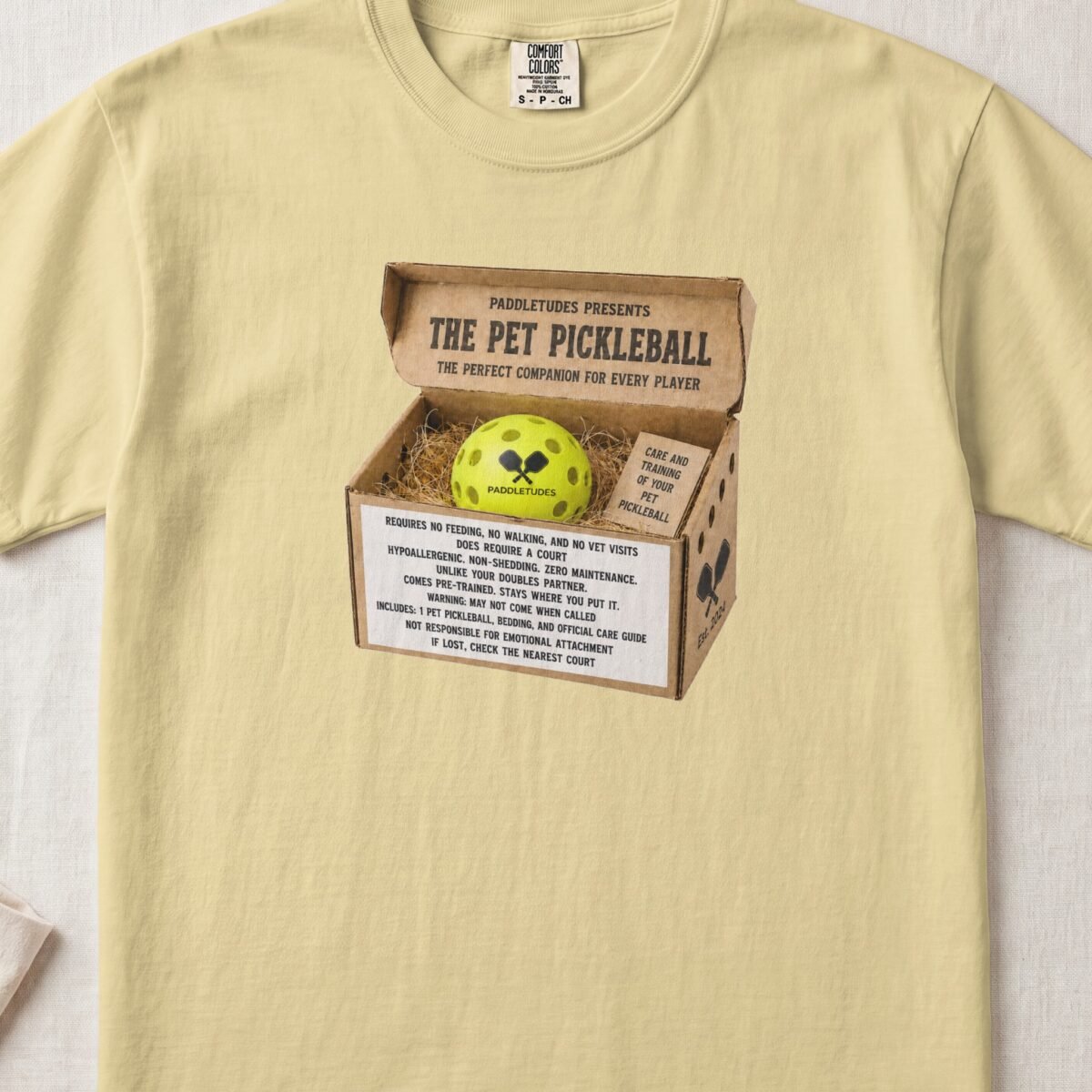
The Pet Pickleball
$39.99 Select options This product has multiple variants. The options may be chosen on the product page