

Animals Comfort Colors 1717
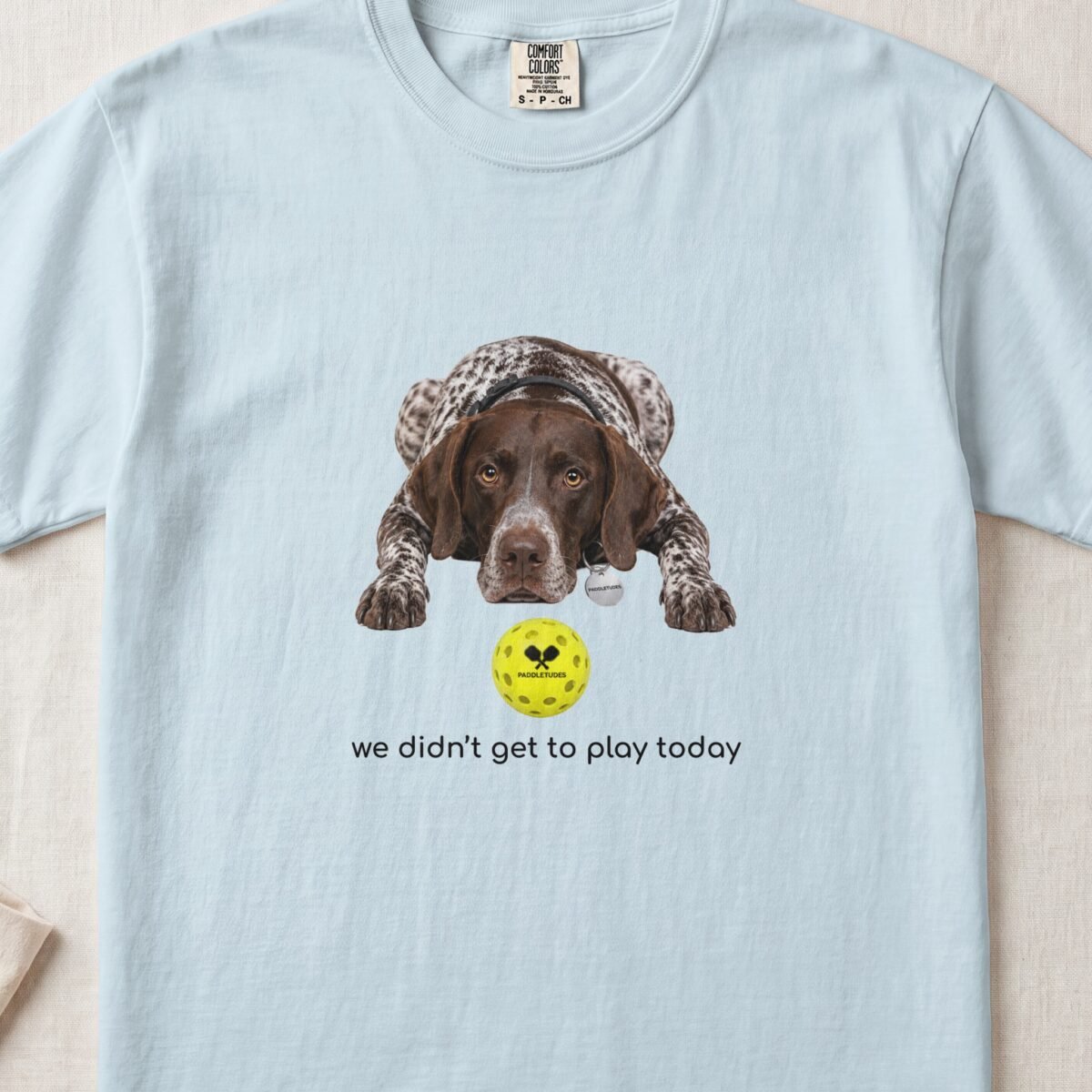
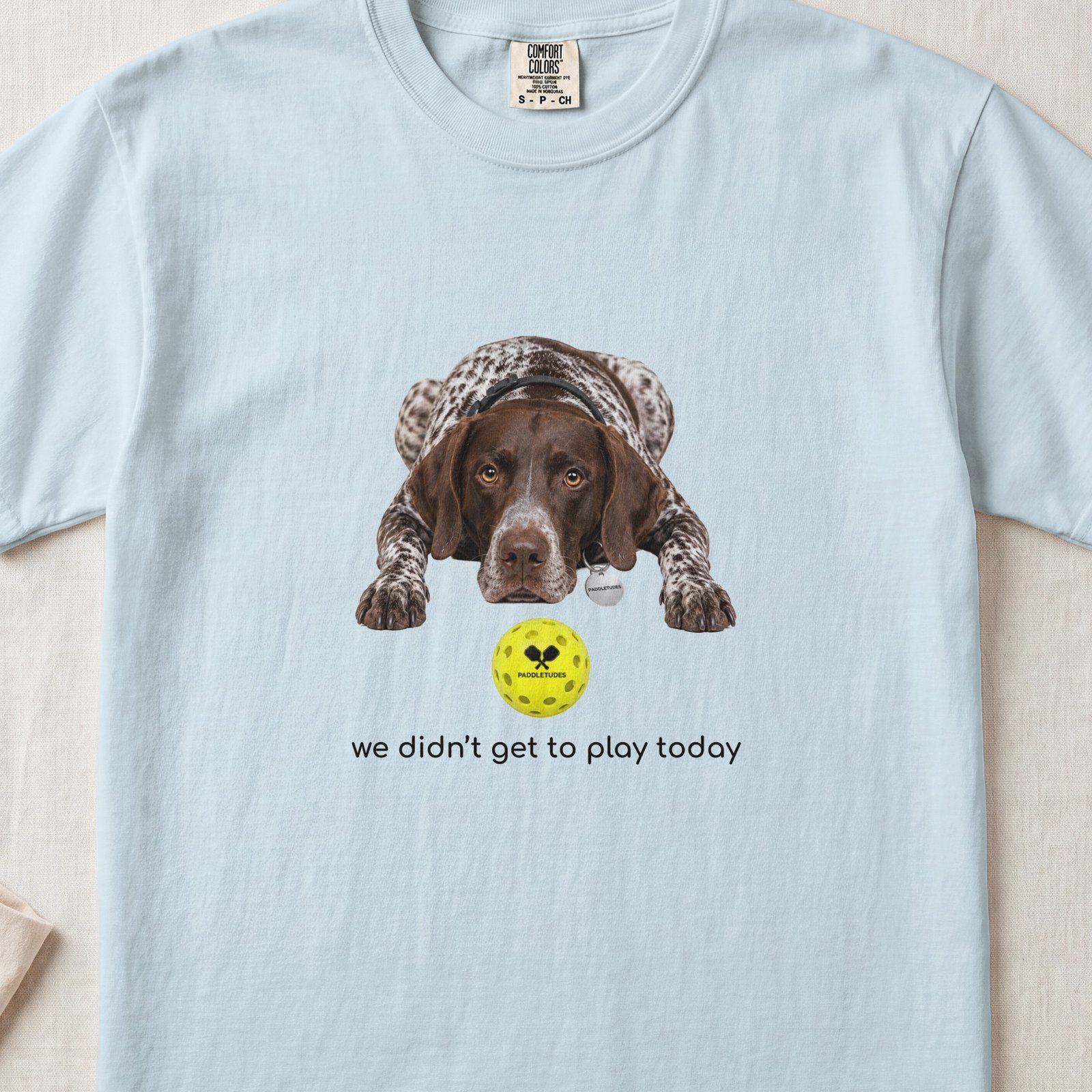
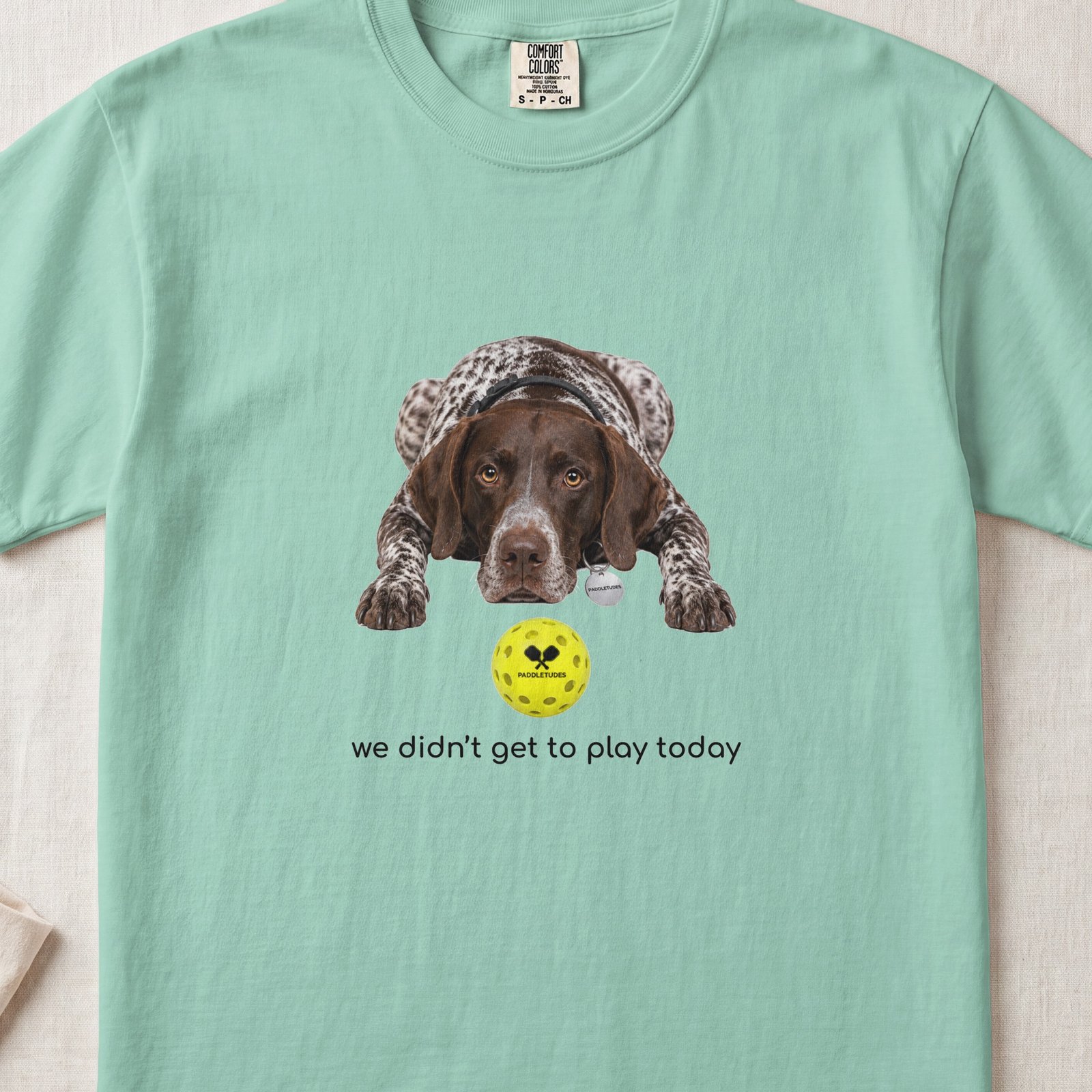
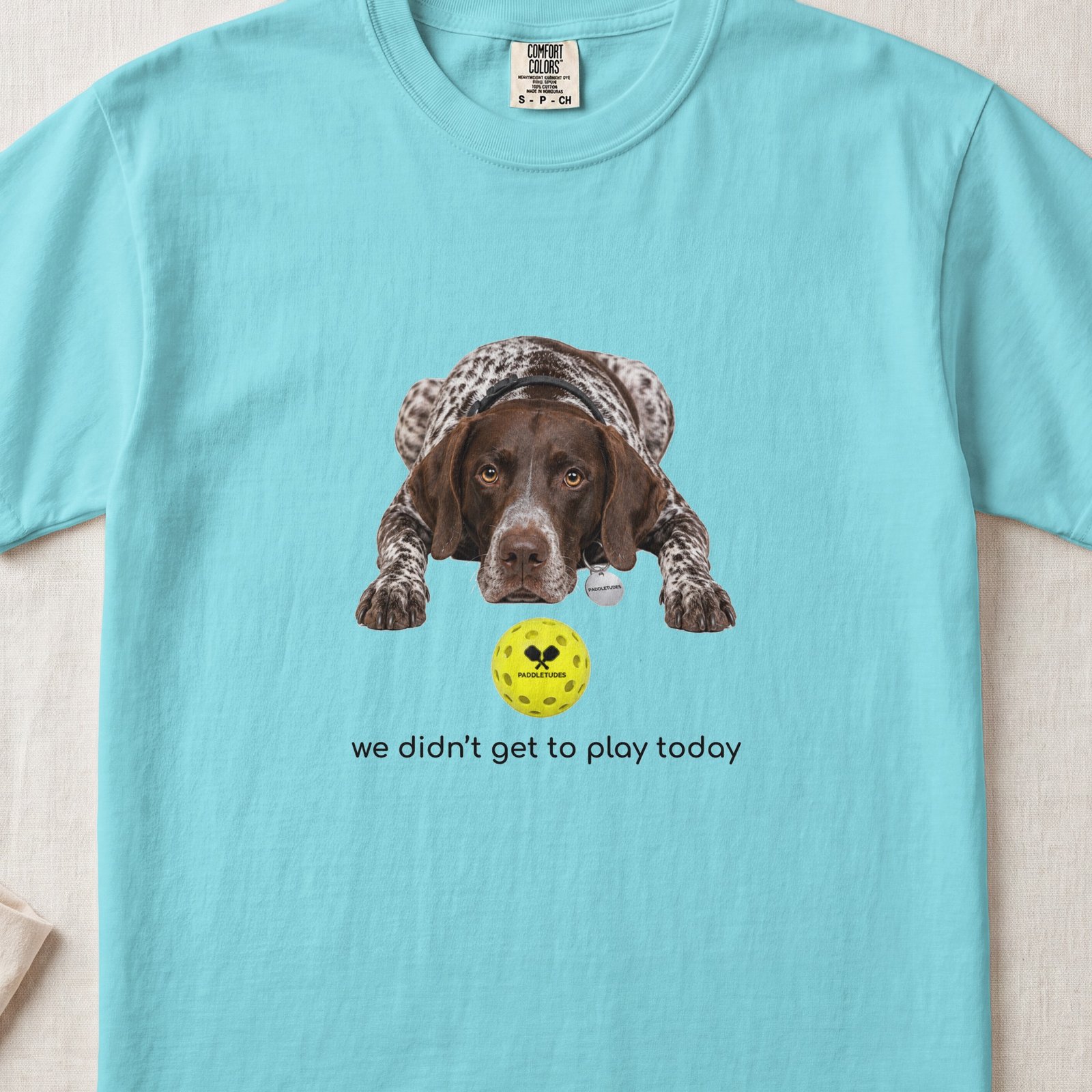
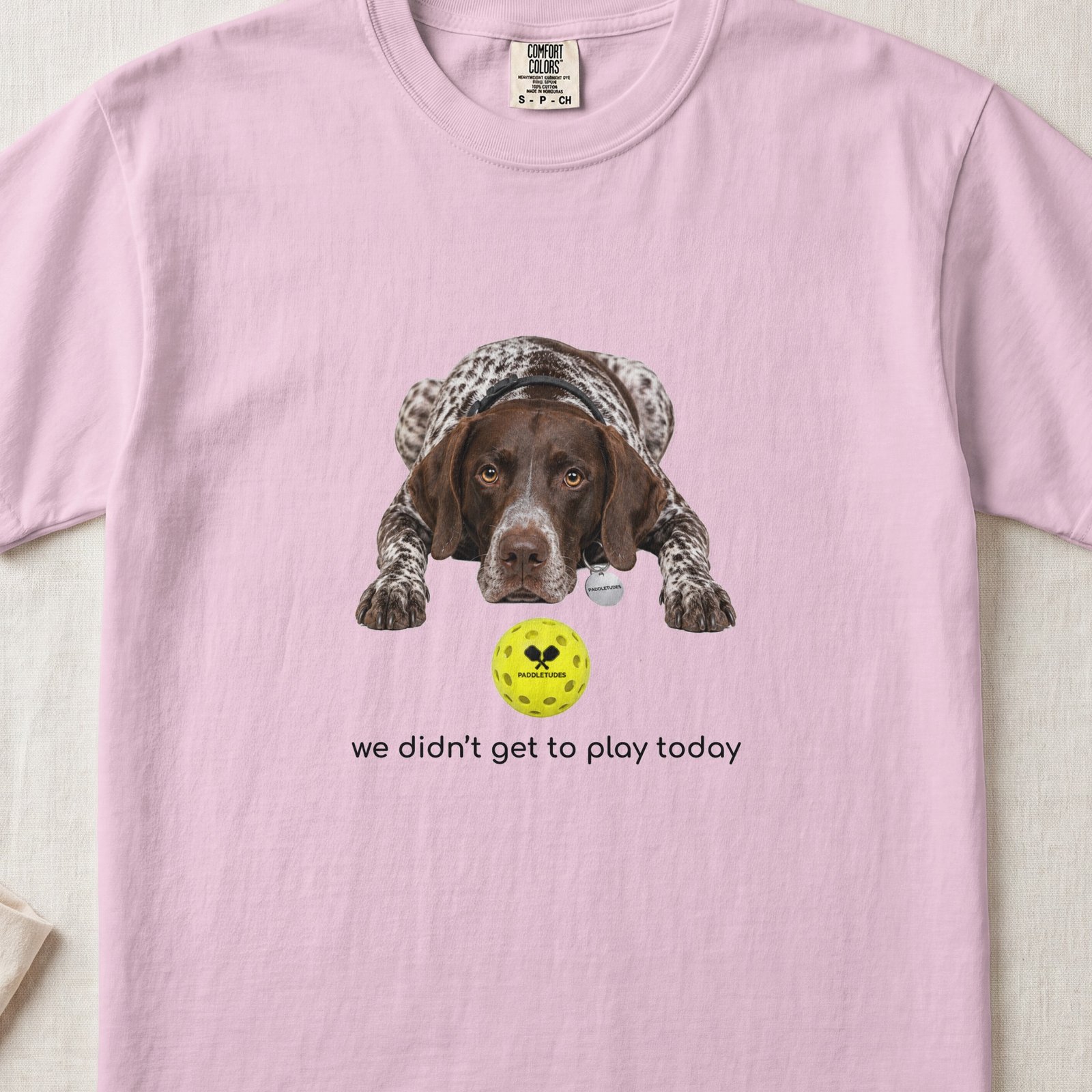
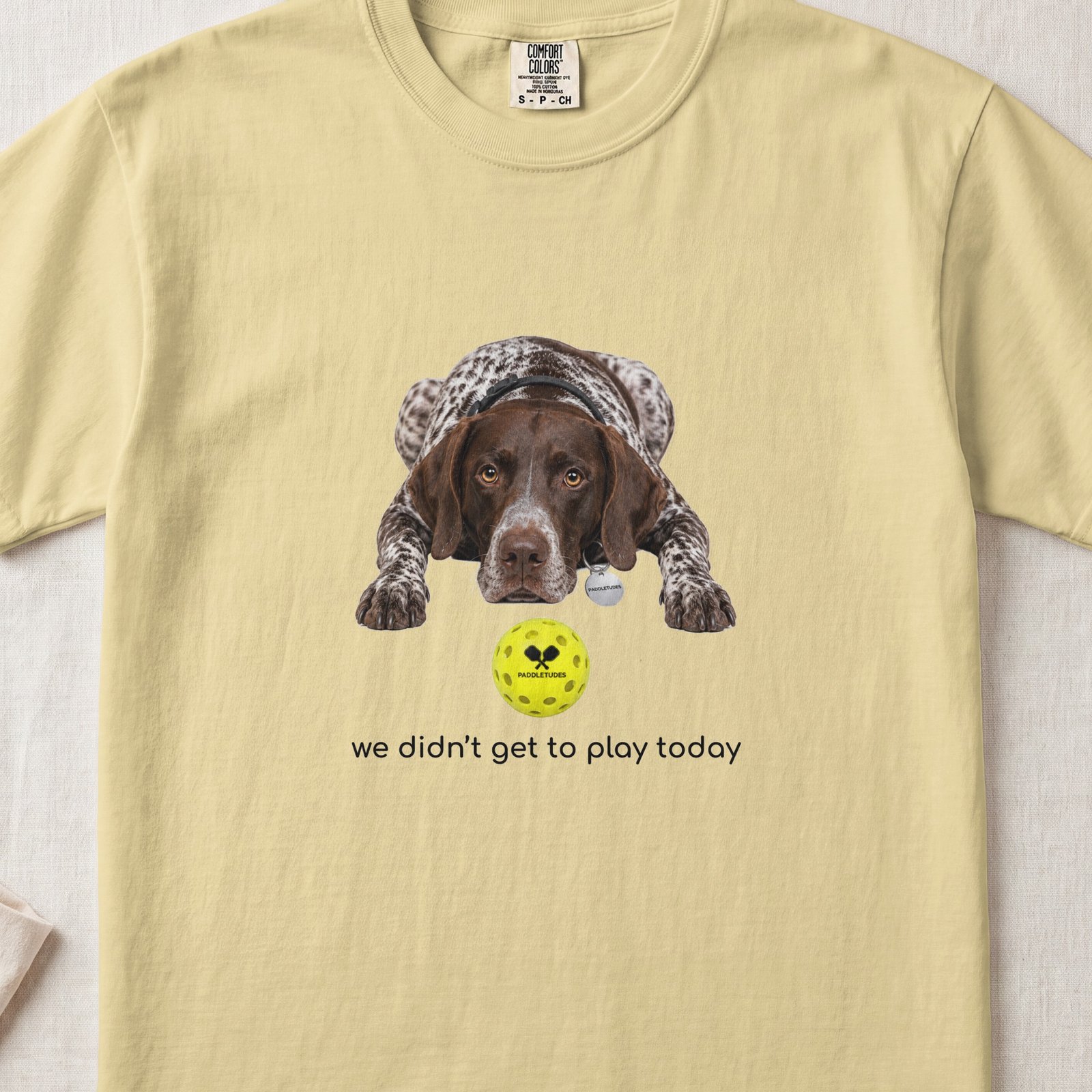
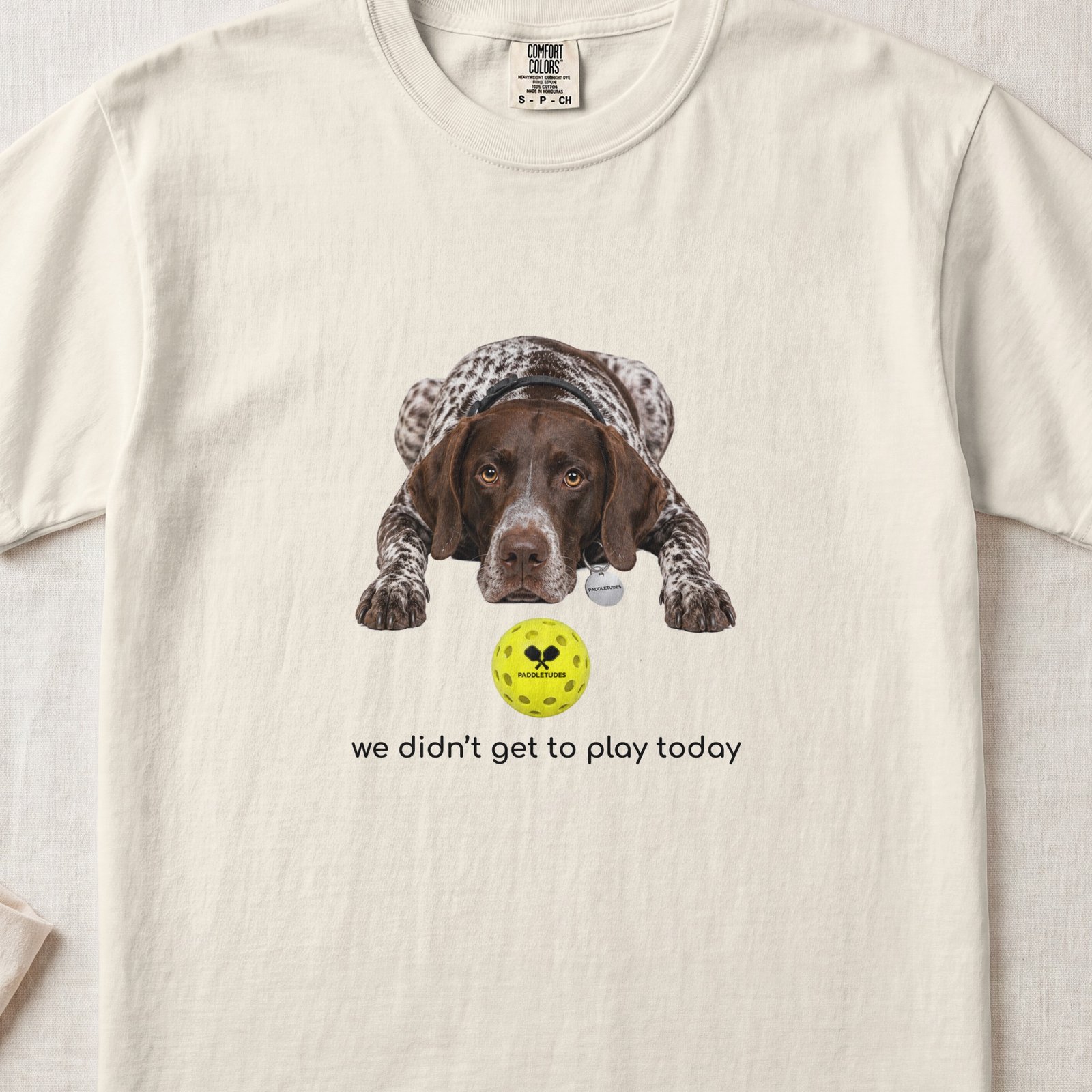
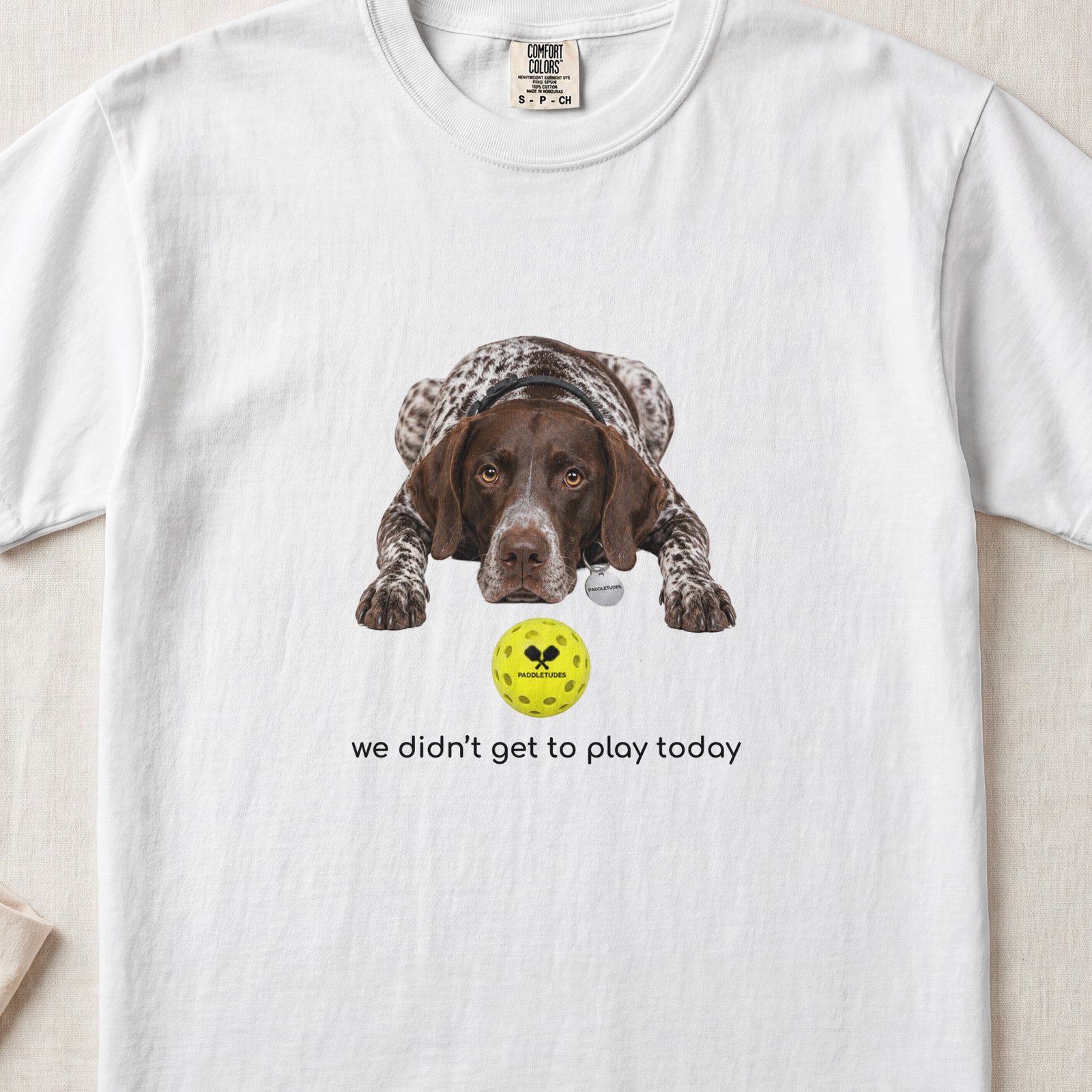
German Shorthaired Pointer Sad
$39.99
- Comfort Colors 1717 heavyweight cotton
- Original design · printed to order
- U.S. print partners
The Dog Lover Gift for a Pointer Without a Mission
A German Shorthaired Pointer is a dog built with instructions. Point at the bird. Retrieve the duck. Cover the field. Track the scent. Stay close to the handler. Every fiber of the breed’s neurology is wired for a job, a task, a next thing to do — and this GSP shirt captures the moment when there is no next thing. The dog is flat on the floor, the pickleball is untouched, and the pointing instinct has nothing to point at except the fact that today did not go as planned. We didn’t get to play today. Printed on a garment-dyed Comfort Colors 1717 heavyweight tee with water-based DTG ink.
Your sister-in-law’s GSP follows her from the kitchen to the living room to the bathroom and back to the kitchen in a continuous loop that the family has started calling “the orbit.” The dog has not been more than six feet from her since the day it came home from the breeder. When she plays pickleball, the dog sits by the window. When she goes to work, the dog sits by the door. The family has a group text dedicated entirely to photos of the dog’s face in various windows, doorways, and parked-car back seats, waiting. This is the Christmas gift that tells her the whole family sees the orbit, understands the orbit, and has accepted that the orbit will not stop until the dog does. German Shorthaired Pointer owners do not own independent dogs. They own satellites.
The happy version of this design captures the GSP in full athletic mode — ball in mouth, energy radiating, the Swiss Army knife of hunting dogs ready for anything. This shirt captures what happens when the Swiss Army knife gets put back in the drawer. A GSP that did not run today does not simply rest. It processes the lack of activity the way a high-performance engine processes being left in park — everything still running, still burning fuel, but with nowhere to direct it. The result is not destruction, exactly. It is a vibrating stillness. The dog lies flat but its eyes move. Its ears track sounds. Its nose works the air for information about when the routine will resume. Every muscle is technically at rest, but the operating system never shuts down.
The breed was designed for this level of intensity. Nineteenth-century German hunters wanted a dog that would work an entire day in the field without slowing down — pointing at upland birds, retrieving waterfowl from cold water, tracking wounded game over miles of rough terrain. They crossed Spanish Pointers with Bloodhounds and English Pointers, refining the breed until it could do the work of three dogs in one body. That same wiring is what produces a dog that cannot process an empty afternoon. The AKC breed page lists the GSP in the Sporting Group and notes that the breed needs an active owner — which is underselling it. The GSP does not need an active owner. It needs an owner whose schedule revolves around being outside.
Living with a GSP through the days that do not go according to plan is its own skill set. The breed’s separation anxiety is not a behavioral flaw — it is a feature of a dog that was selectively bred to stay within arm’s reach of its handler at all times. Scent work is the single best tool for channeling the GSP’s mental energy when the body cannot burn it off. Hiding treats around the house, running a nose-work course in the backyard, or even scattering kibble through grass and letting the dog find it piece by piece engages the part of the brain that physical exercise alone does not reach. A tired GSP is manageable. A mentally stimulated GSP is calm. The German Shorthaired Pointer Club of America recommends daily training sessions — short, varied, and challenging — as part of the breed’s standard care routine, and owners who play pickleball discover quickly that a fifteen-minute scent game before heading to the court buys them a much quieter departure.
The Chihuahua handles a broken routine by alerting the entire neighborhood. The Pit Bull handles it by occupying the exact spot where you were sitting and refusing to move. The GSP handles it by lying flat with one ear cocked, tracking every sound in the house for the signal that means the routine is back on — the paddle bag, the shoes, the car keys. The dog is never fully off. Find your breed in the Dogs page — a GSP lover’s dog lover gift, or browse the pickleball shirt lineup.
Printed on a Comfort Colors 1717 garment-dyed heavyweight tee with water-based DTG ink — sizing and care details here.
Do German Shorthaired Pointers Get Separation Anxiety
Yes. German Shorthaired Pointers are one of the breeds most prone to separation anxiety, and the reason is built into their history. The breed was developed to work in constant proximity to a human handler — pointing, retrieving, and tracking for hours at a time within arm’s reach. That closeness is not optional behavior the dog can unlearn. It is a bred-in orientation that makes the GSP one of the most handler-dependent sporting breeds.
True separation anxiety in a GSP is different from boredom, and the distinction matters for treatment. Boredom produces selective destruction — the dog chews a shoe it had access to, rearranges the trash, or digs a hole in the yard. Separation anxiety produces panic. The symptoms typically begin within fifteen to thirty minutes of the owner leaving and can include excessive barking or howling, scratching at doors and windows, escape attempts, destructive chewing focused on exit points rather than random objects, and in severe cases, self-injury. The panic is not about being alone. It is about the absence of the specific person the dog has locked onto.
The GSP’s intelligence compounds the problem. This is one of the smartest sporting breeds, and a smart dog in a panic state is a dog that systematically tests every possible exit — windows, doors, gates, fence lines. GSP owners share stories of dogs that figured out how to open crate latches, slide screen doors, or disassemble baby gates that were rated for much larger forces. The problem-solving ability that makes a GSP an extraordinary field dog is the same ability that makes it extraordinarily effective at escaping a house it has decided it should not be in without its person.
Prevention is more effective than correction. A consistent departure routine — the same sequence of actions every time you leave — reduces uncertainty. A hard exercise session before departure drains the body. A scent game or puzzle feeder engages the brain. Gradual desensitization, starting with absences of five minutes and building slowly to hours, teaches the dog that departures are temporary and predictable. For GSP owners who play pickleball on a regular schedule, the predictability itself becomes the treatment — the dog learns that this specific sequence of sounds and actions means the person leaves for ninety minutes and then comes back. Once the pattern is established, the anxiety drops. Until then, expect the orbit.
-
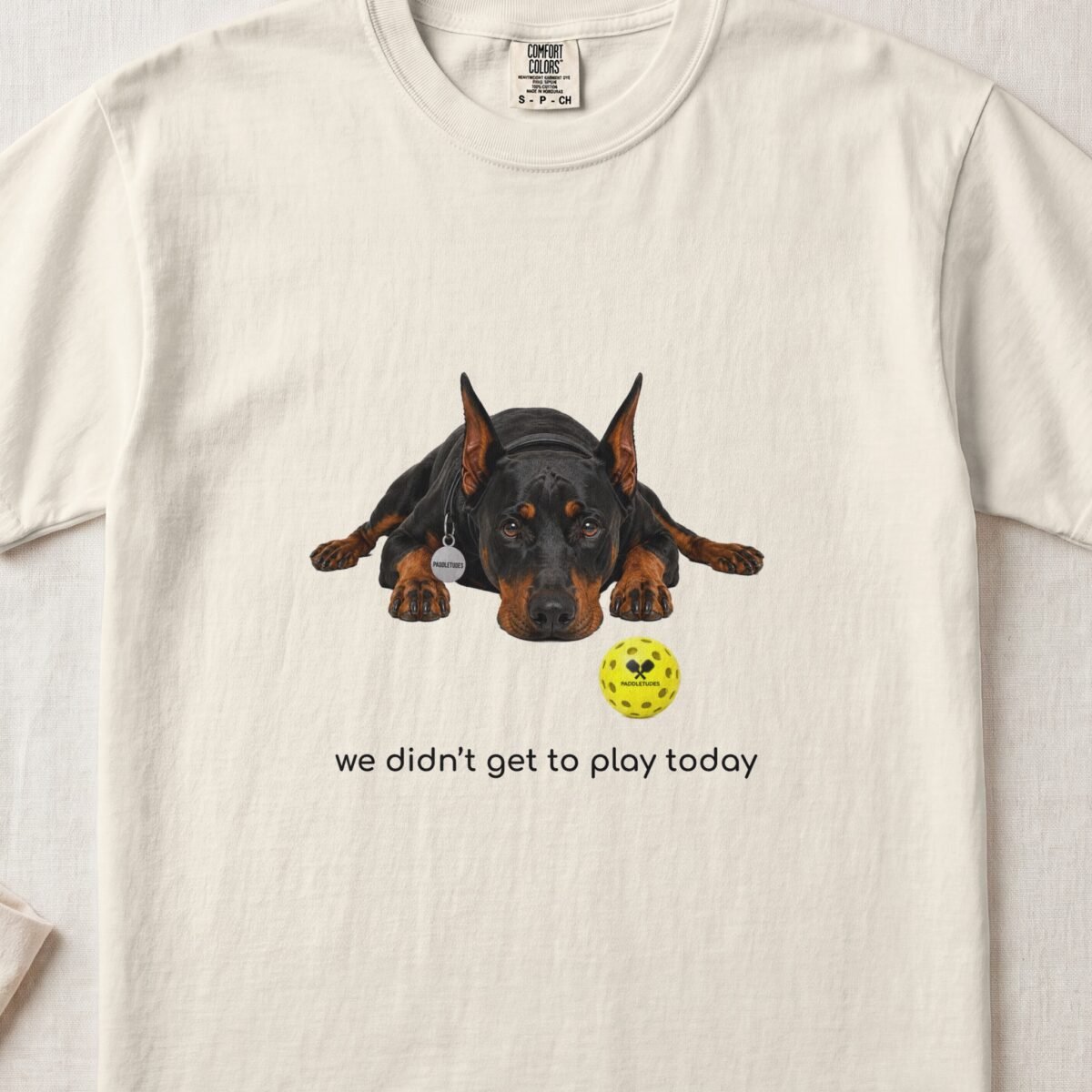
Doberman Sad
$39.99 Select options This product has multiple variants. The options may be chosen on the product page -
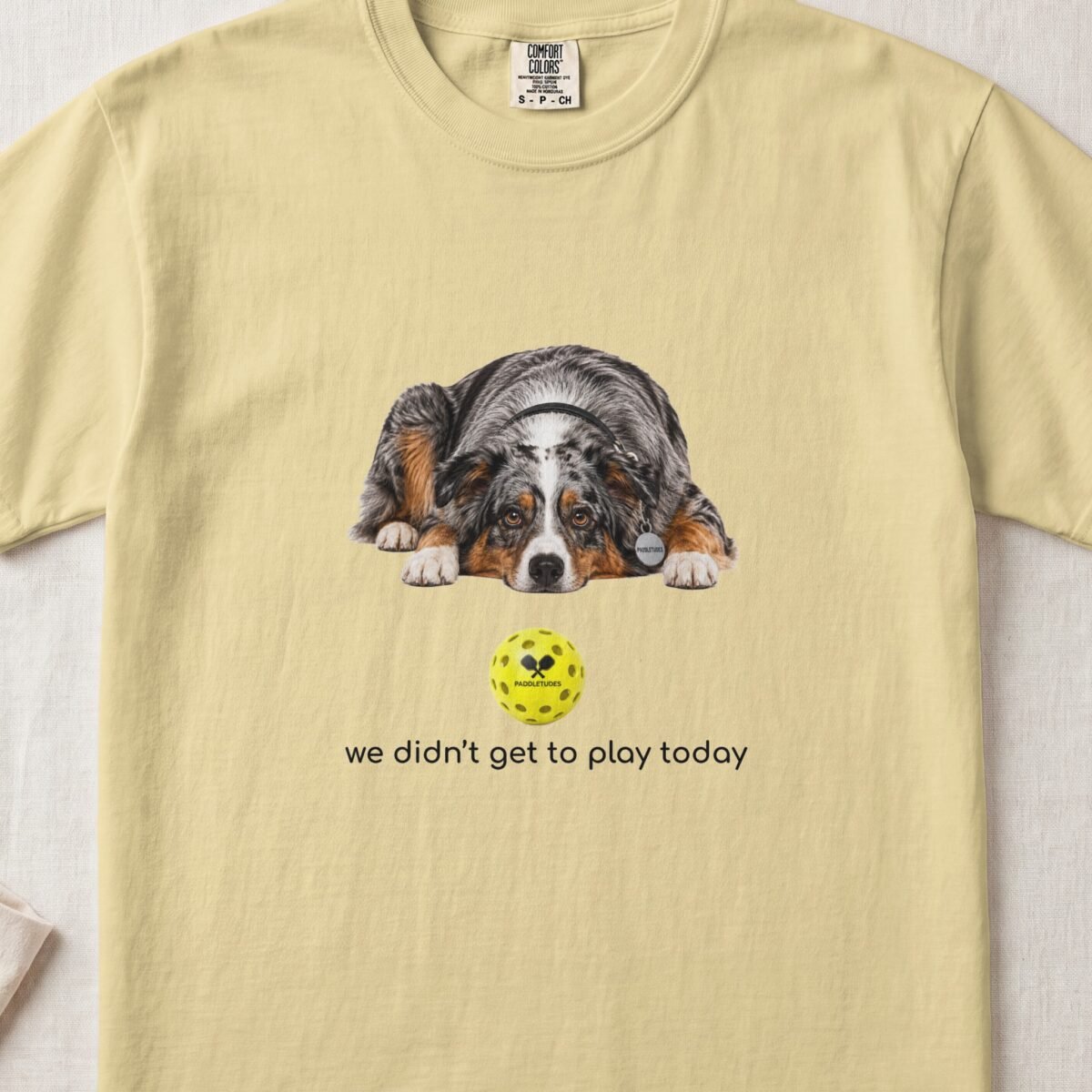
Mini Australian Shepherd Sad
$39.99 Select options This product has multiple variants. The options may be chosen on the product page -
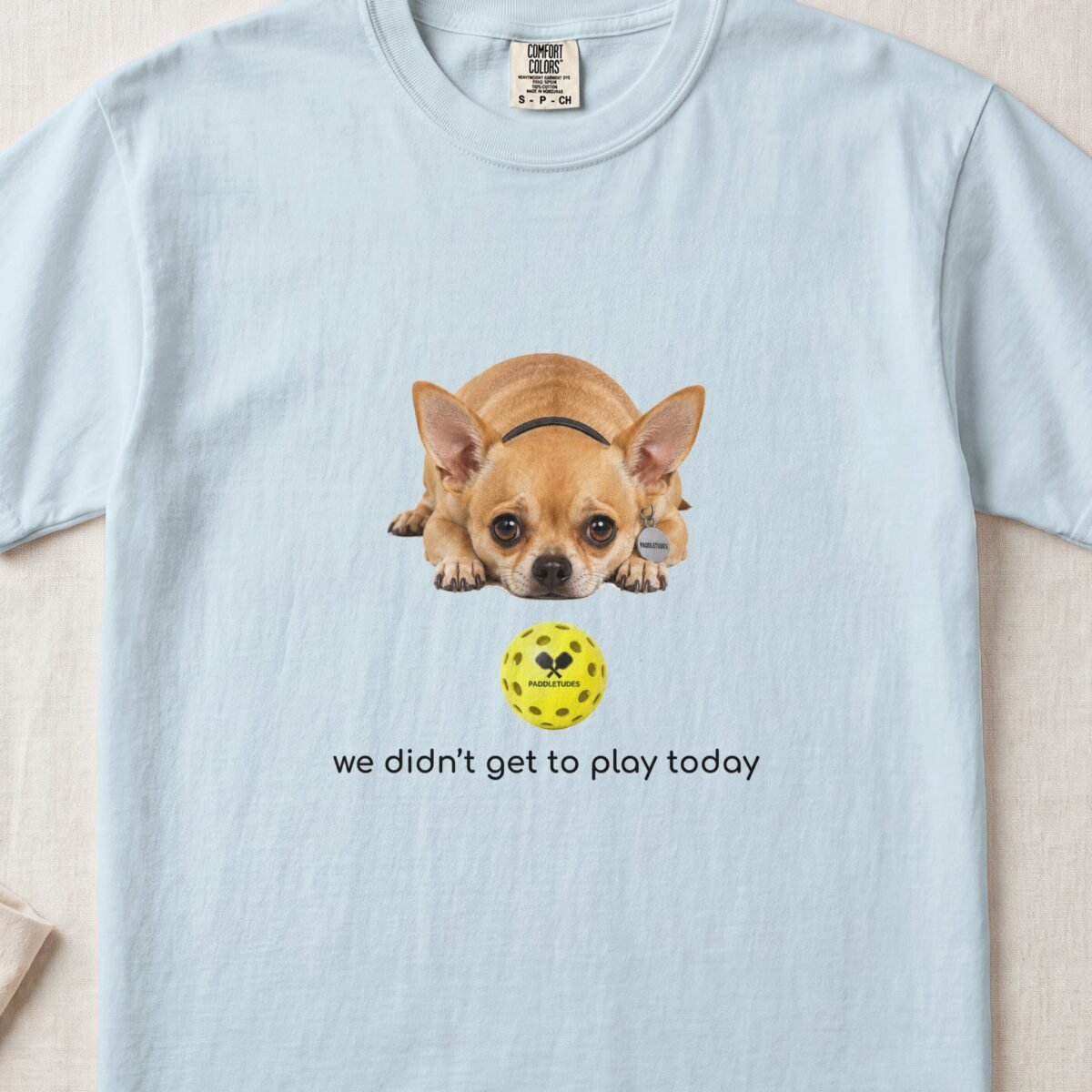
Chihuahua Sad
$39.99 Select options This product has multiple variants. The options may be chosen on the product page