Animals Comfort Colors 1717
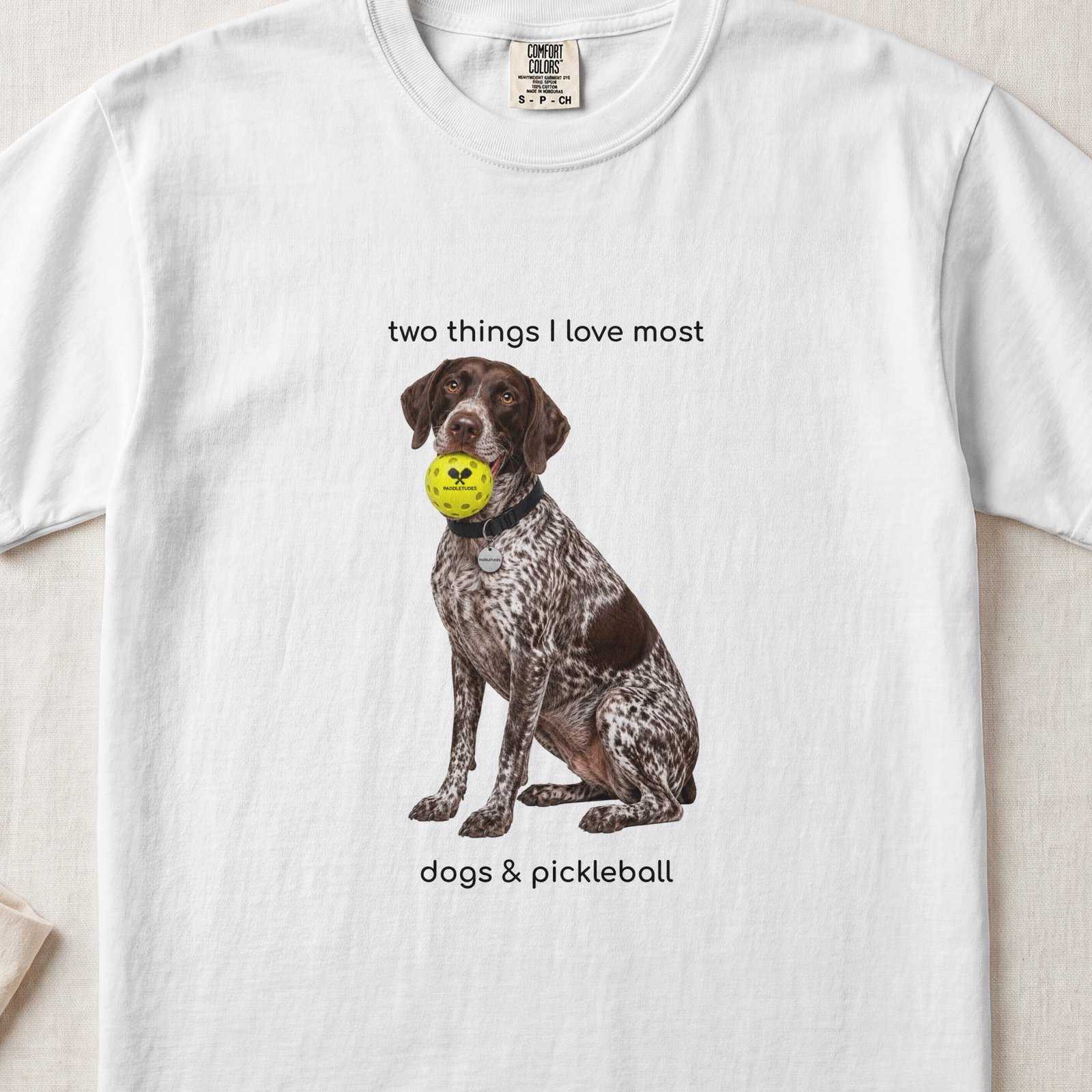
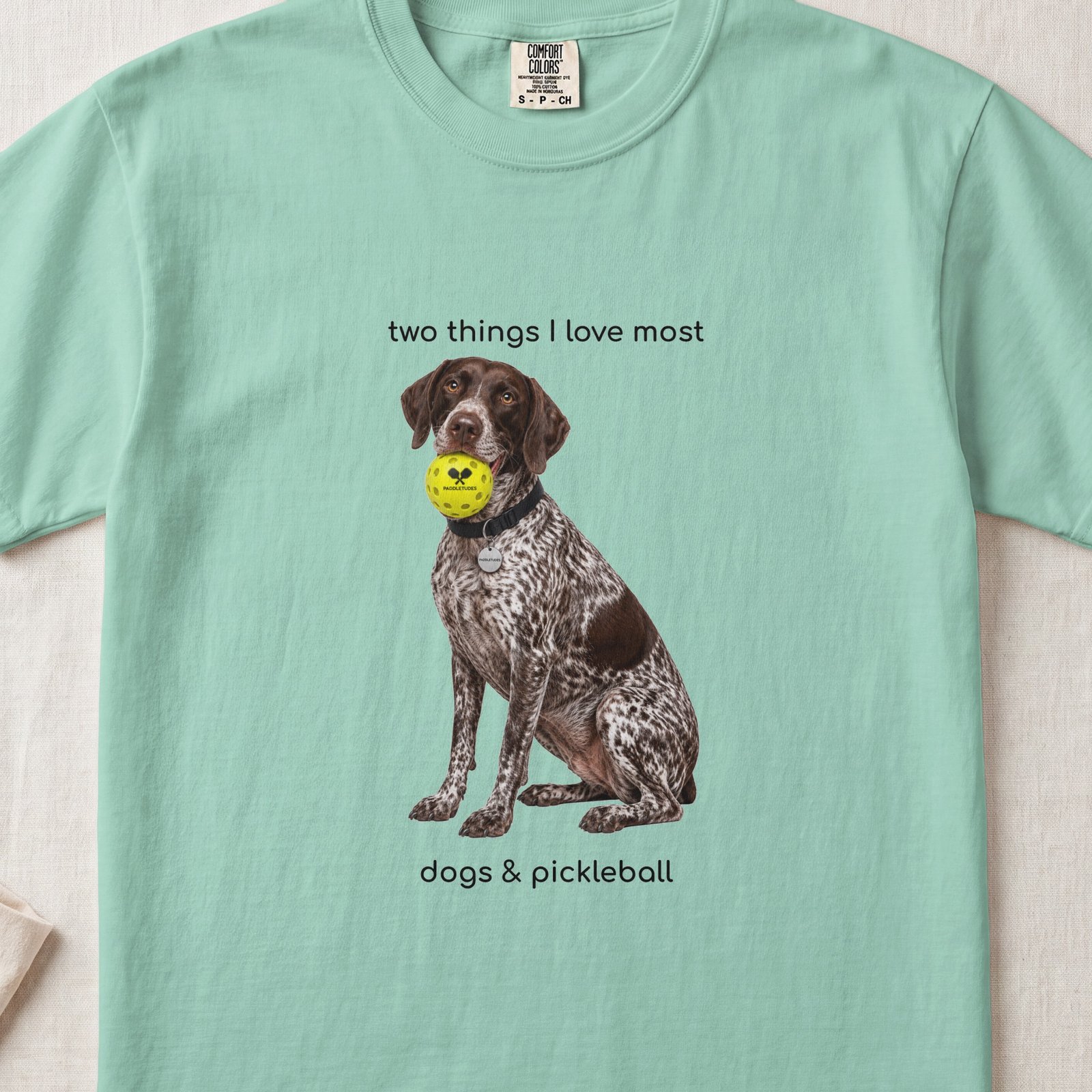
German Shorthaired Pointer Happy
$39.99
- Comfort Colors 1717 heavyweight cotton
- Original design · printed to order
- U.S. print partners
The Swiss Army Knife of Dogs on a Funny Graphic Tee
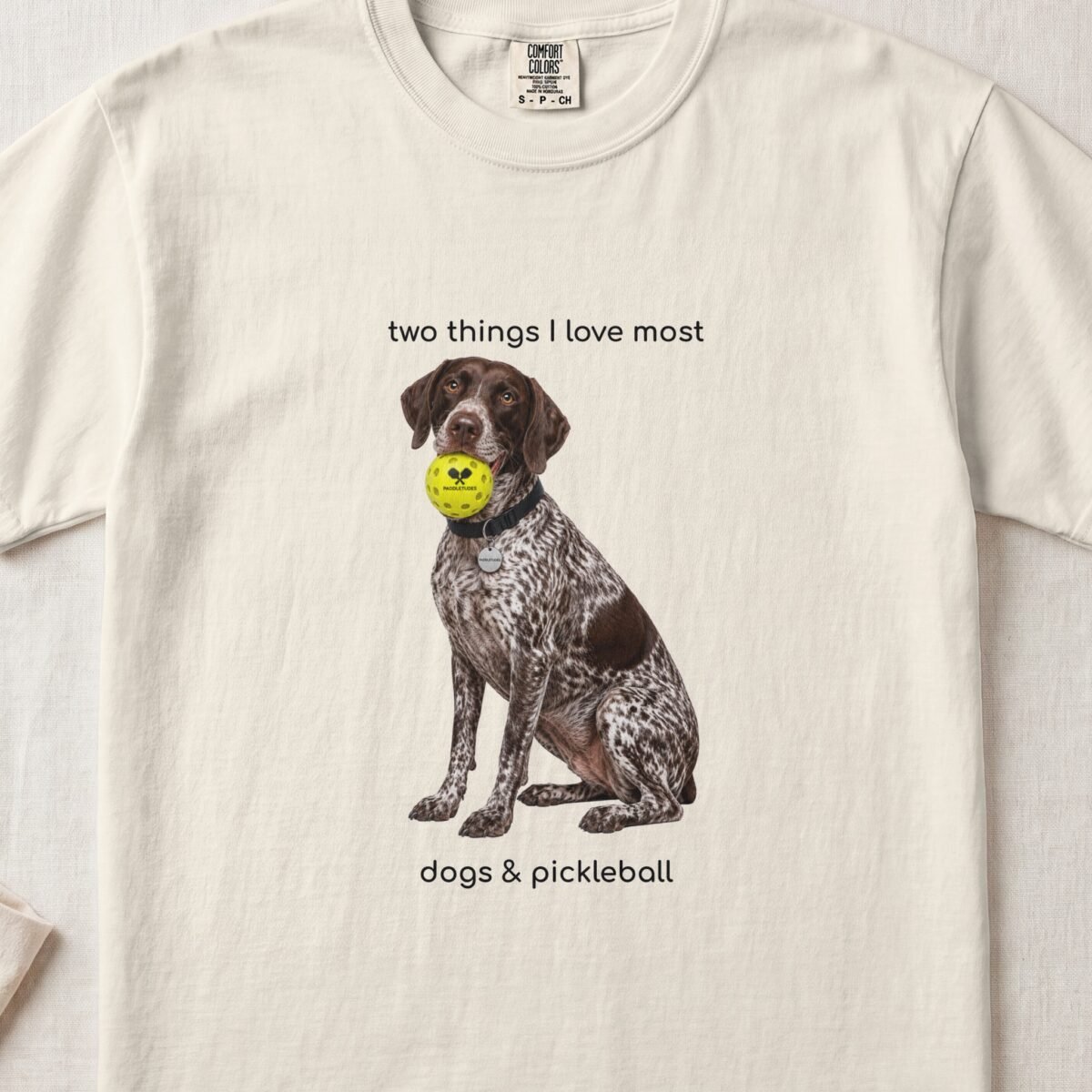
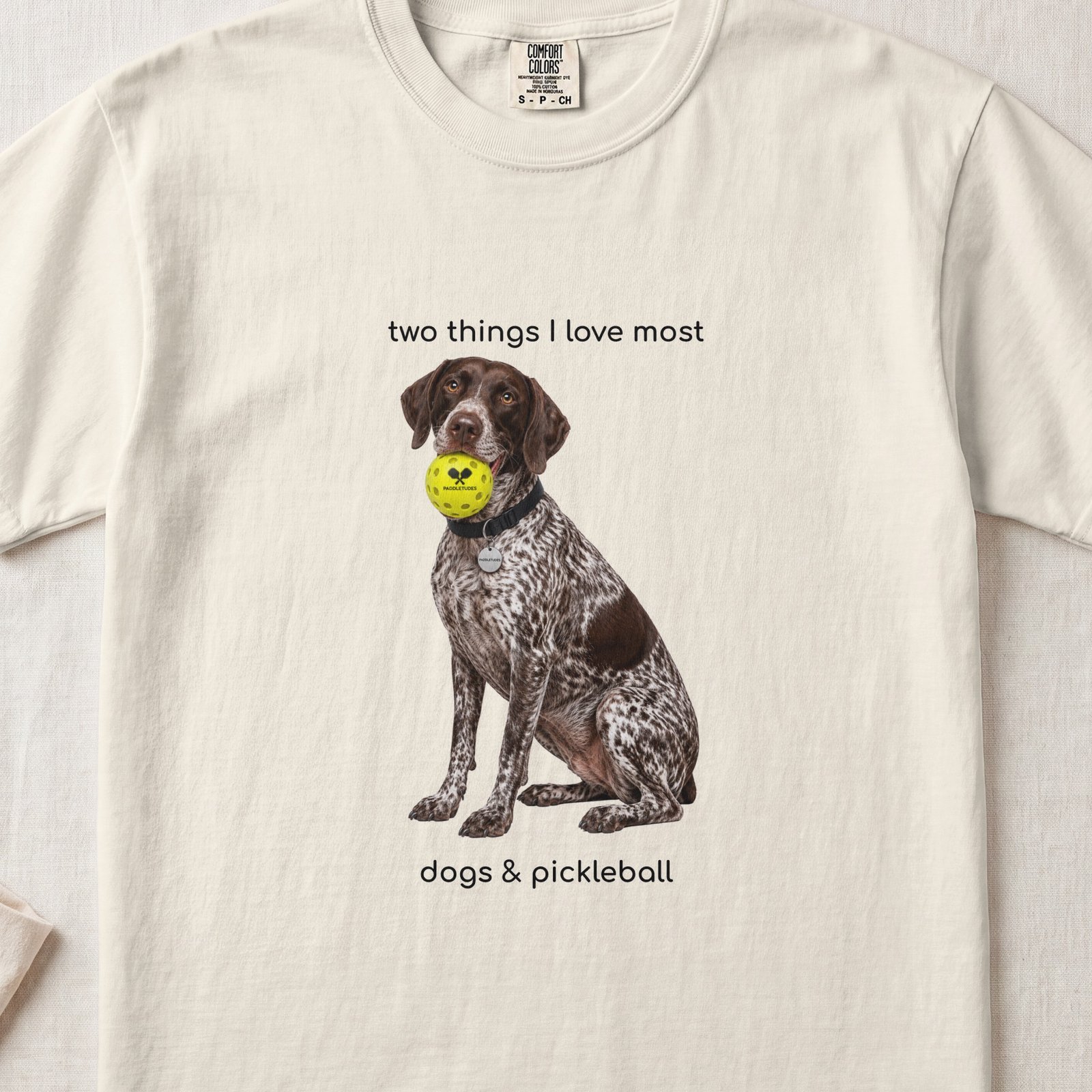
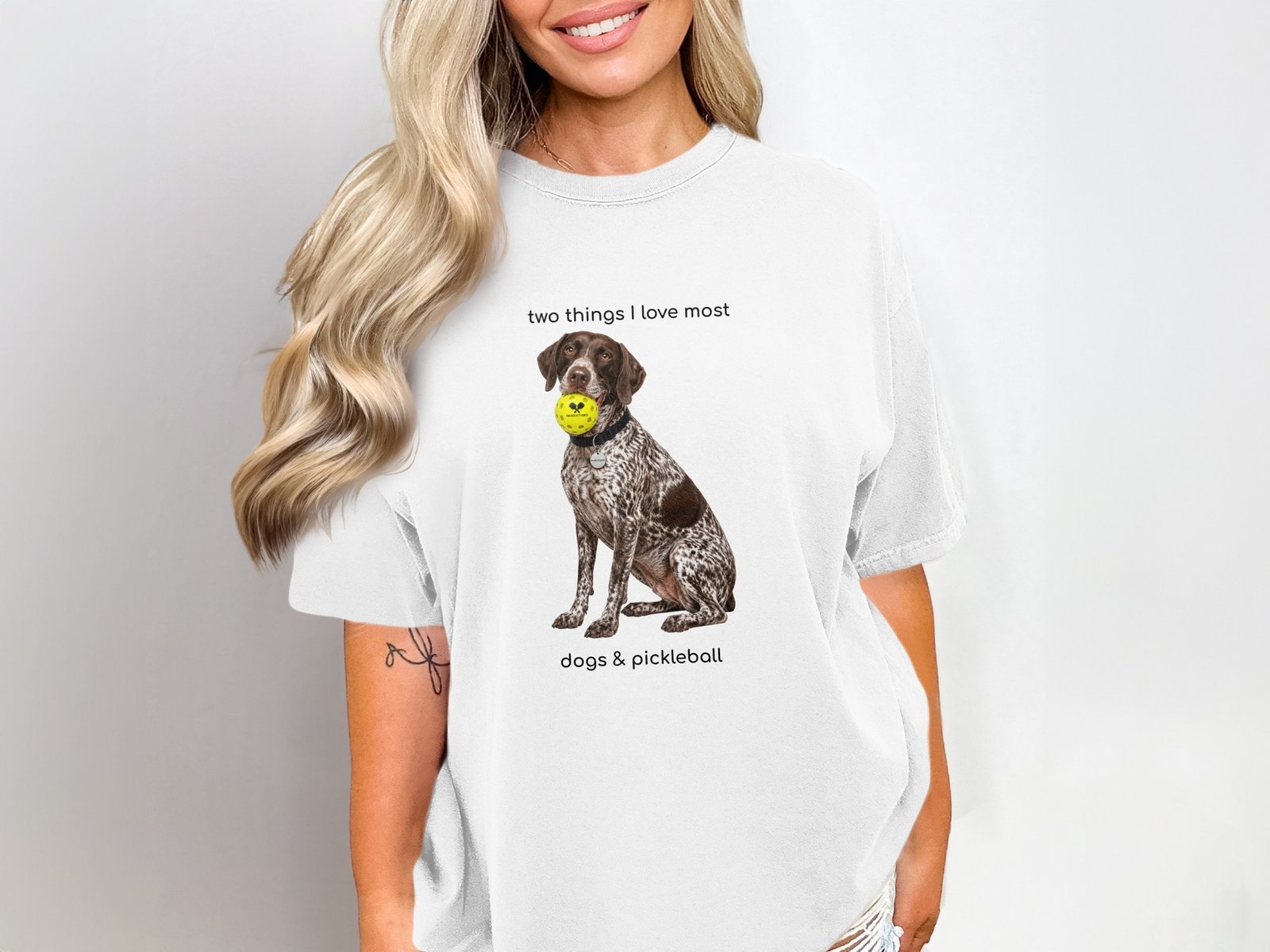
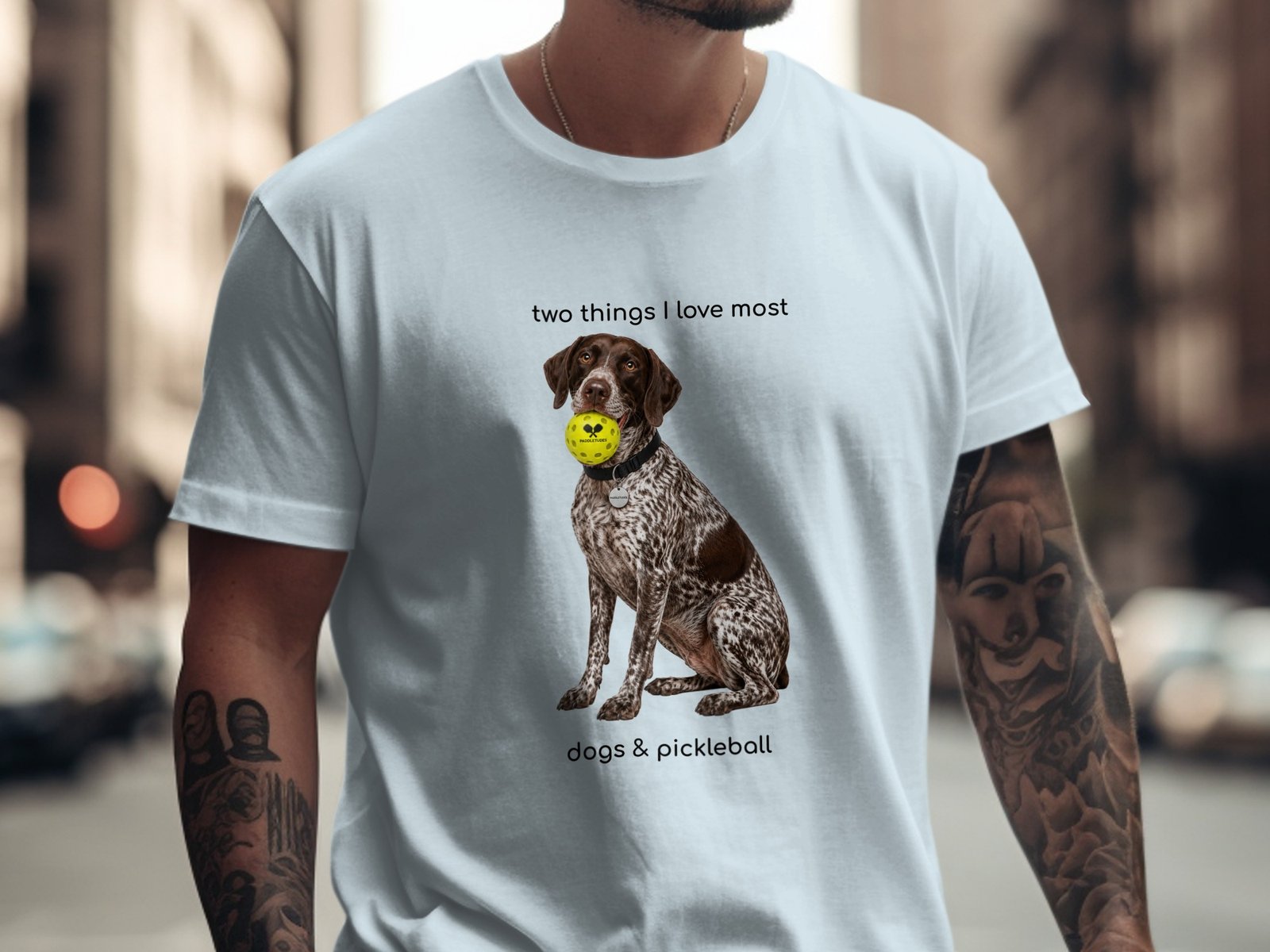
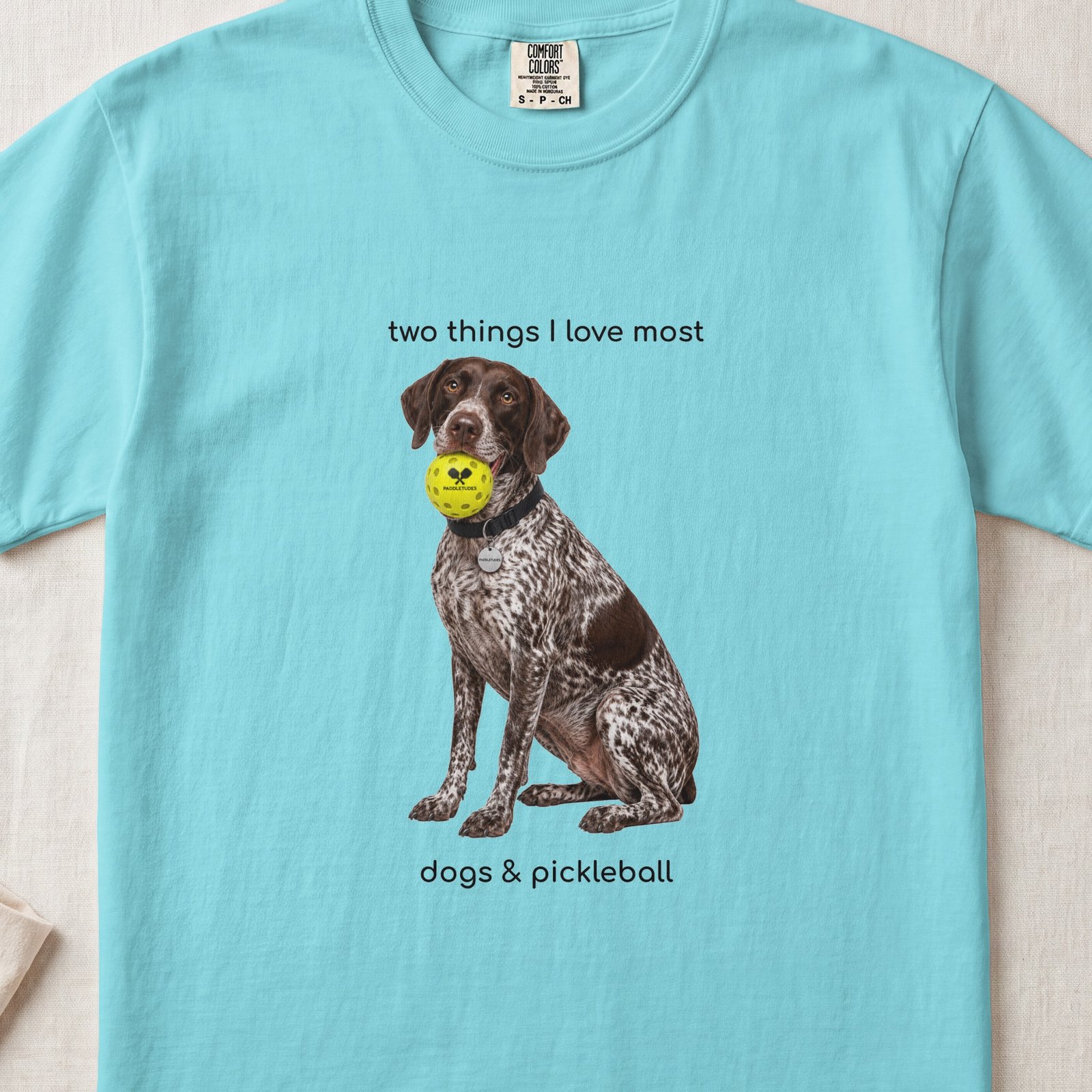
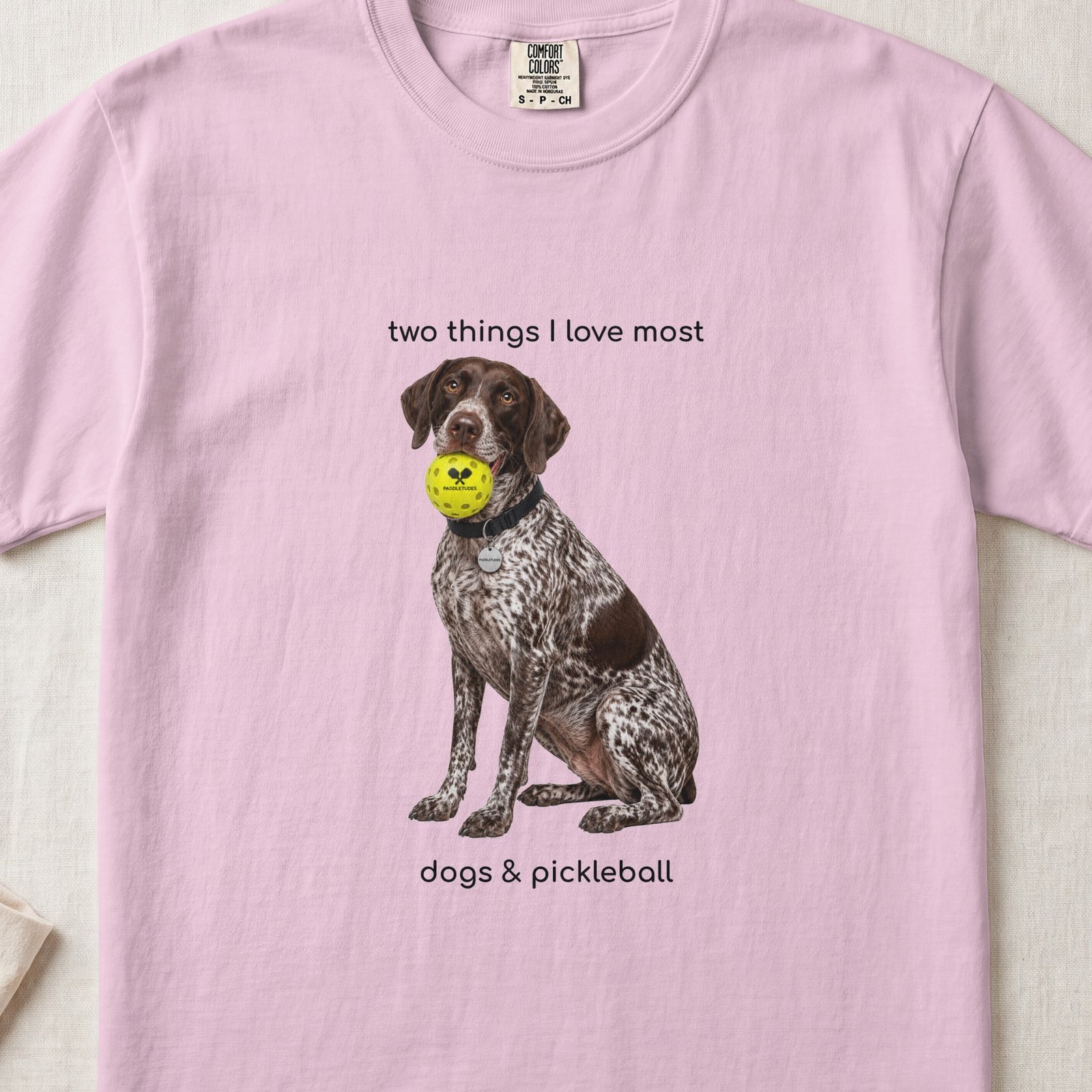
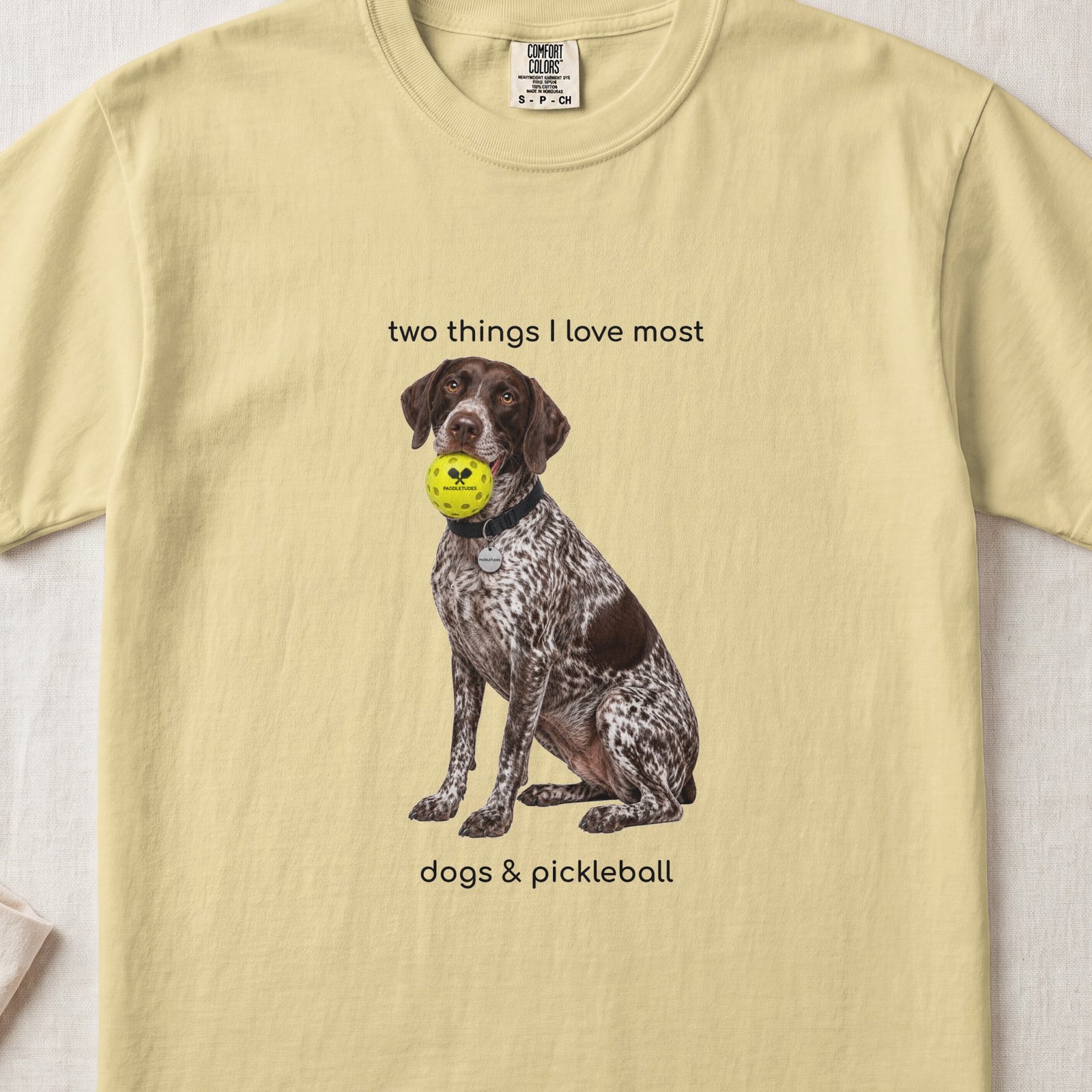
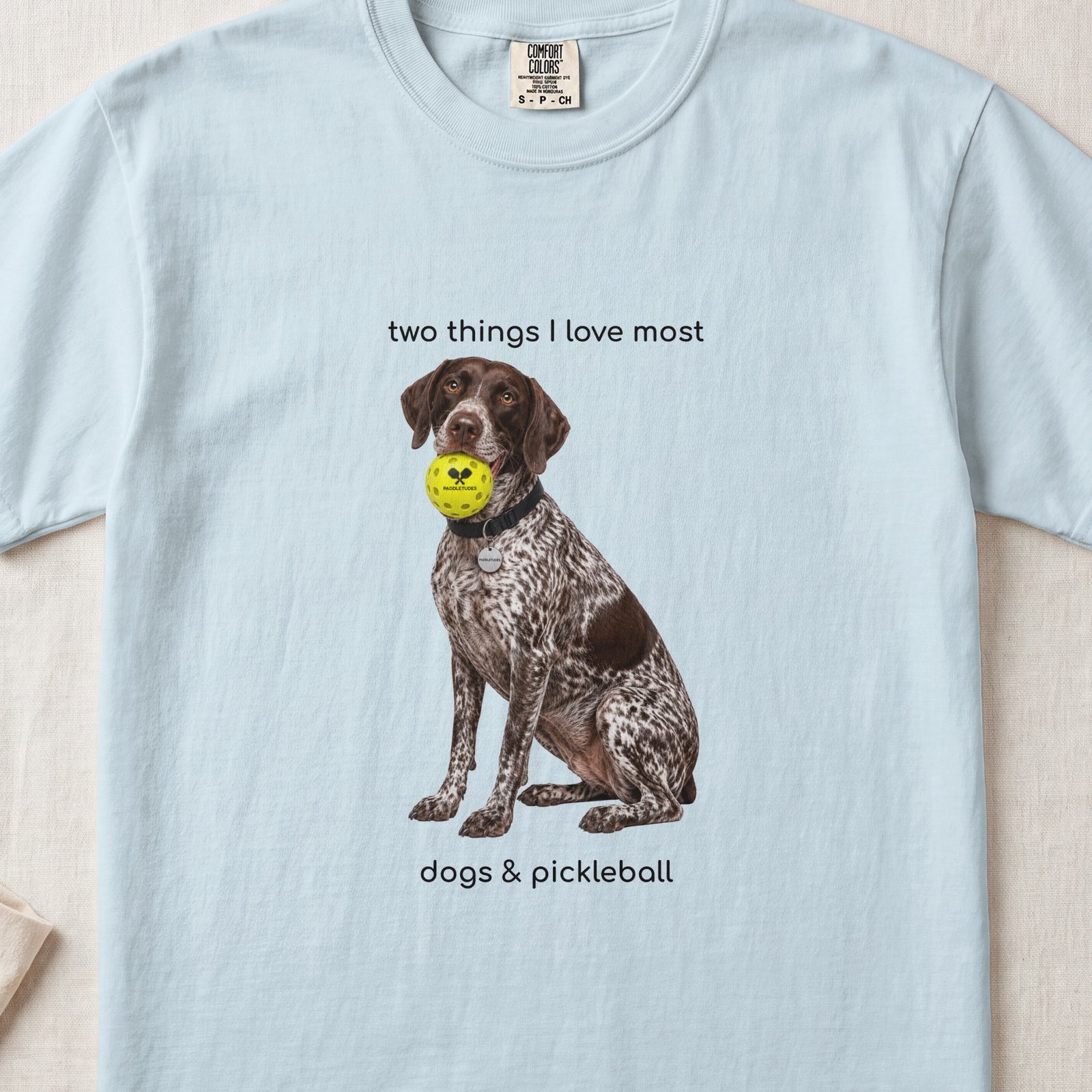
The German Shorthaired Pointer is the Swiss Army knife of hunting dogs — it points, retrieves, tracks, swims, and outlasts every other breed in the field. The sad version captures what happens when all that drive has nowhere to go — a GSP in full shutdown mode is an athlete in existential crisis. This GSP shirt puts that same all-terrain athlete next to a Paddletudes pickleball, because of course a dog bred to do everything would also want in on the fastest-growing sport in America. Printed on a garment-dyed Comfort Colors 1717 heavyweight tee with water-based DTG ink.
If your hunting buddy picked up pickleball last spring and now plays with the same intensity he brings to pheasant season — paddle in hand, GSP in the truck, both of them unable to sit still for more than twenty minutes — this is the birthday present that names both obsessions without making him choose between them. GSP people are active people, and they buy for each other the way runners buy for runners — the gift has to match the energy, and a shirt that puts their pointing dog next to a pickleball matches it exactly.
There is nothing casual about a GSP. Not the way it moves — coiled, efficient, covering ground like it has a GPS locked on something you cannot see. Not the way it watches you — steady, alert, processing your next decision before you have made it. And certainly not the way it holds a pickleball in this design — with the soft mouth of a dog trained across generations to retrieve game without damaging it and the locked-in focus of an animal that was literally bred to point at things and not move until told. At the dog park wearing this shirt, another GSP owner spots it instantly — there is no breed more recognizable to its own people — and the conversation starts with “how many miles did yours run this morning?” because GSP owners measure days in activity, not hours.
GSP owners are a breed unto themselves. They run. They hike. They hunt. They kayak. They are the person at the pickleball court who showed up at 6 AM, already finished a five-mile trail run, and will still be there at noon asking if anyone wants to play one more. Their dog matches that energy point for point, which is both the breed’s greatest appeal and the reason it is not for everyone. A bored GSP does not lie on the couch. A bored GSP redesigns your living room, starting with the couch cushions and moving on to whatever else it can reach.
The breed was purpose-built for versatility. German hunters in the nineteenth century wanted a single dog that could do the work of three — point at upland birds, retrieve downed waterfowl from cold lakes, and track wounded game over rough terrain. They crossed Spanish Pointers with Bloodhounds and English Pointers, refining the result over decades until Prince Albrecht zu Solms-Braunfels standardized the breed in the 1870s. The German Shorthaired Pointer Club of America was chartered in 1938, and the breed is now the most popular pointing dog in America and the third most popular sporting breed.
Living with a GSP also means managing a high-performance athlete’s body. As a deep-chested breed, GSPs carry an elevated risk of bloat — the life-threatening gastric emergency where the stomach twists on itself — and feeding smaller, more frequent meals rather than one large one reduces that risk. Hip dysplasia rates are relatively low for a breed this size (around four percent according to the Orthopedic Foundation of America), but the breed is susceptible to von Willebrand’s disease, a blood-clotting disorder, and hypothyroidism affects up to fourteen percent of the population. The webbed feet that make them exceptional swimmers also track mud through your house with industrial efficiency, and those floppy ears need regular cleaning because a dog that swims, runs through brush, and rolls in everything it finds is a dog whose ear canals collect moisture and debris. None of this slows a GSP owner down. It just means the vet appointments are scheduled around the court schedule.
Printed on a Comfort Colors 1717 garment-dyed heavyweight tee with water-based DTG ink — sizing and care details here. The Rottweiler channels the same working-breed intensity into a completely different package — guardian energy instead of field athlete, equally devoted. Browse every breed on the Dogs page.
Why Are German Shorthaired Pointers So High Energy
The German Shorthaired Pointer was bred to work full days in the field — pointing, retrieving, tracking, and swimming across varied terrain without rest. That energy is not a behavioral problem. It is the breed operating exactly as designed. A GSP that seems “hyper” in a suburban living room is a dog whose body was built for eight hours of hunting, receiving forty-five minutes of walking, and trying to close the gap through creativity and furniture rearrangement.
The breed’s energy has both physical and mental components, and both need to be addressed to produce a calm household dog. Physically, a healthy adult GSP needs a minimum of one to two hours of vigorous exercise daily — running, swimming, or off-leash field work, not a leisurely walk around the block. The breed has exceptional cardiovascular endurance because it was developed to cover miles of rough terrain without slowing down, and that stamina does not disappear in a domestic setting. It just redirects.
Mentally, the GSP is one of the most intelligent sporting breeds, and intelligence without stimulation produces a dog that invents its own entertainment — which is how you end up with a dog that has figured out how to open the pantry, disassemble a puzzle feeder in twelve seconds, or systematically remove every item from a laundry basket and organize them across the living room floor. Training sessions, scent work, puzzle toys, and retrieval games are not optional enrichment for a GSP. They are the baseline that keeps the dog from applying its problem-solving skills to your household infrastructure.
For pickleball players, owning a GSP creates a natural partnership. You need a reason to get outside every morning. Your dog needs a reason to run. The court session becomes part of the dog’s exercise routine — a morning run or trail walk with the dog, then an hour of pickleball while they wait, then a cool-down walk together afterward. The GSP fits into an active lifestyle because it demands one, and people who play pickleball four or five days a week already have the engine running. The shirt works because the pairing is not forced. It is inevitable.
-
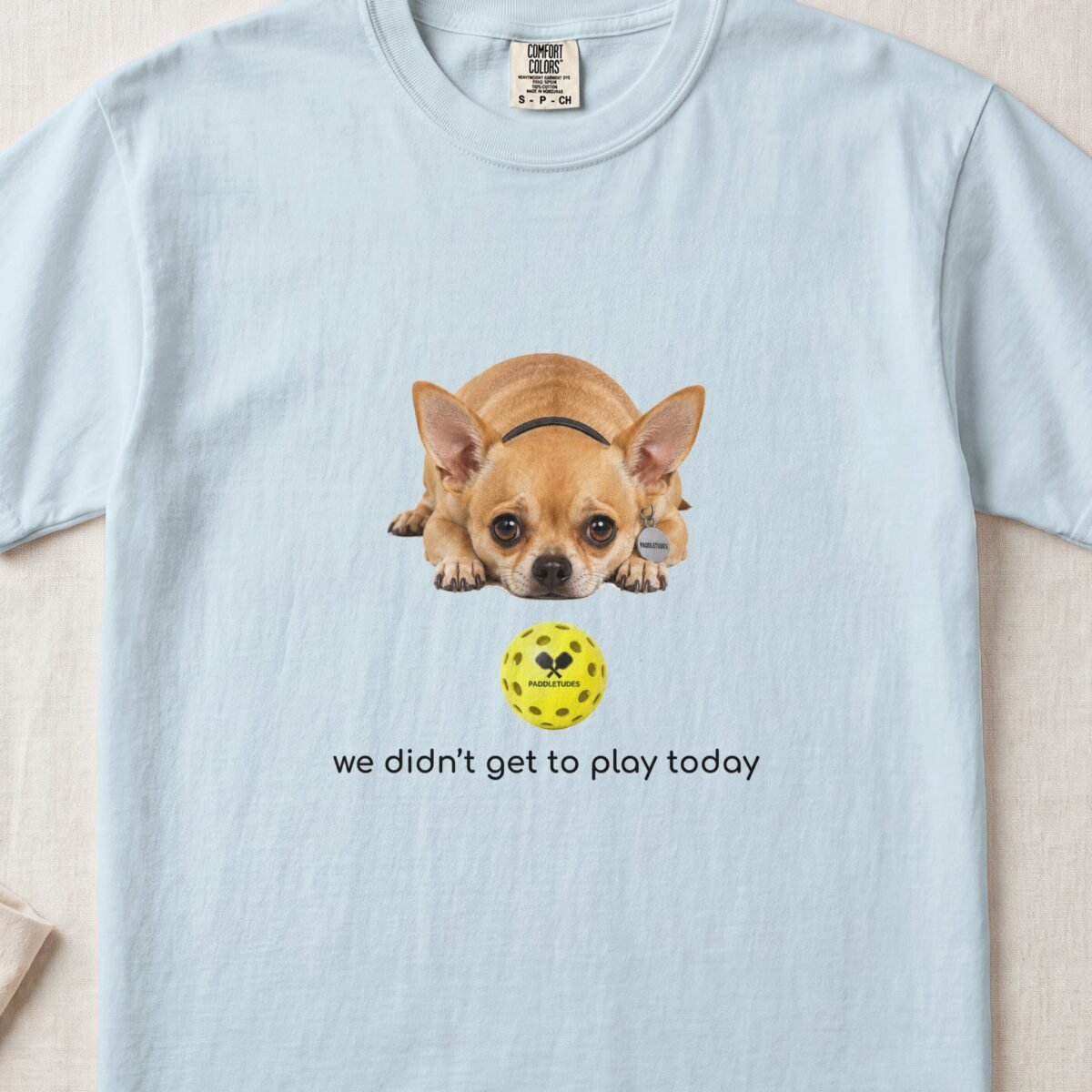
Chihuahua Sad
$39.99 Select options This product has multiple variants. The options may be chosen on the product page -
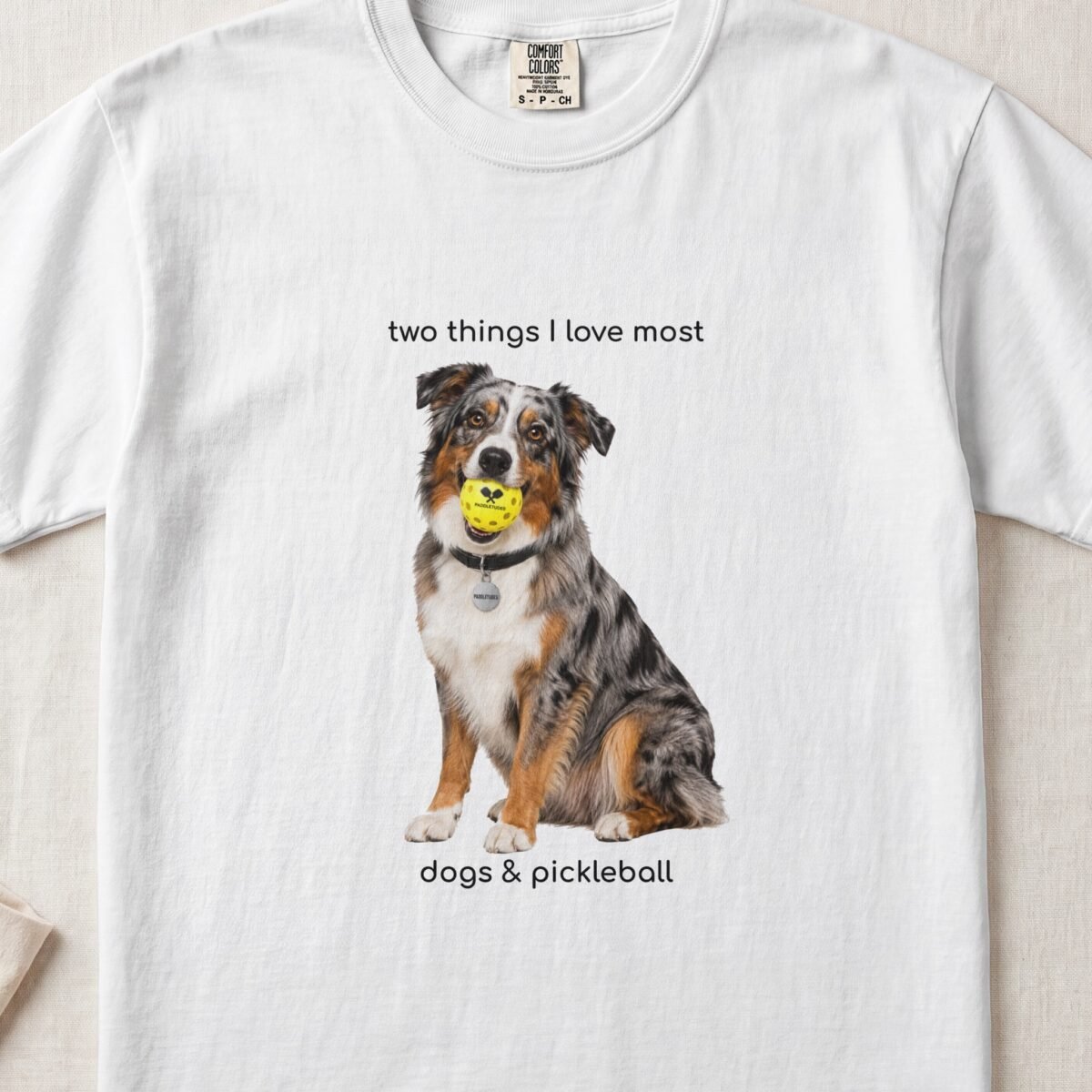
Mini Australian Shepherd Happy
$39.99 Select options This product has multiple variants. The options may be chosen on the product page -
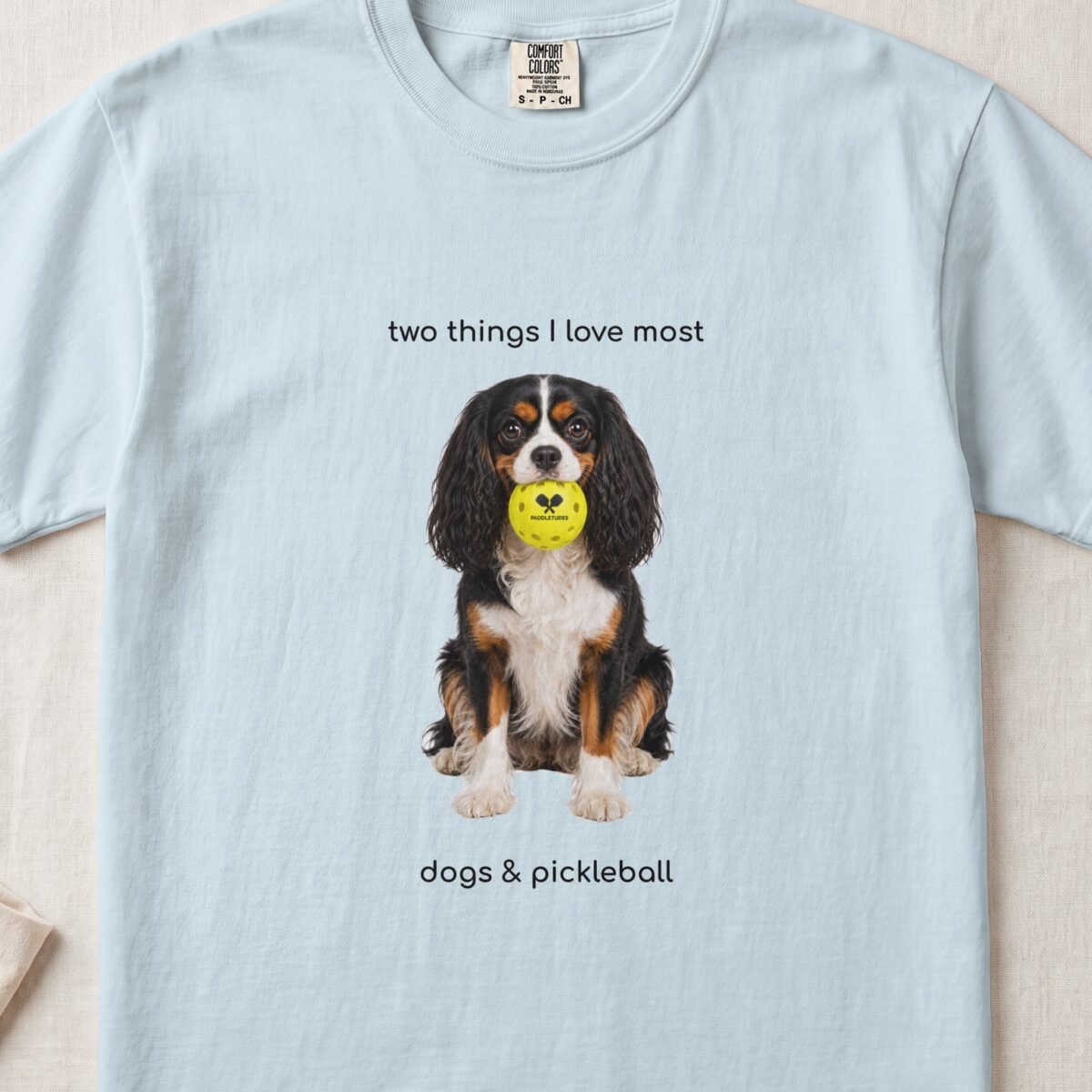
Cavalier King Charles Spaniel Happy
$39.99 Select options This product has multiple variants. The options may be chosen on the product page