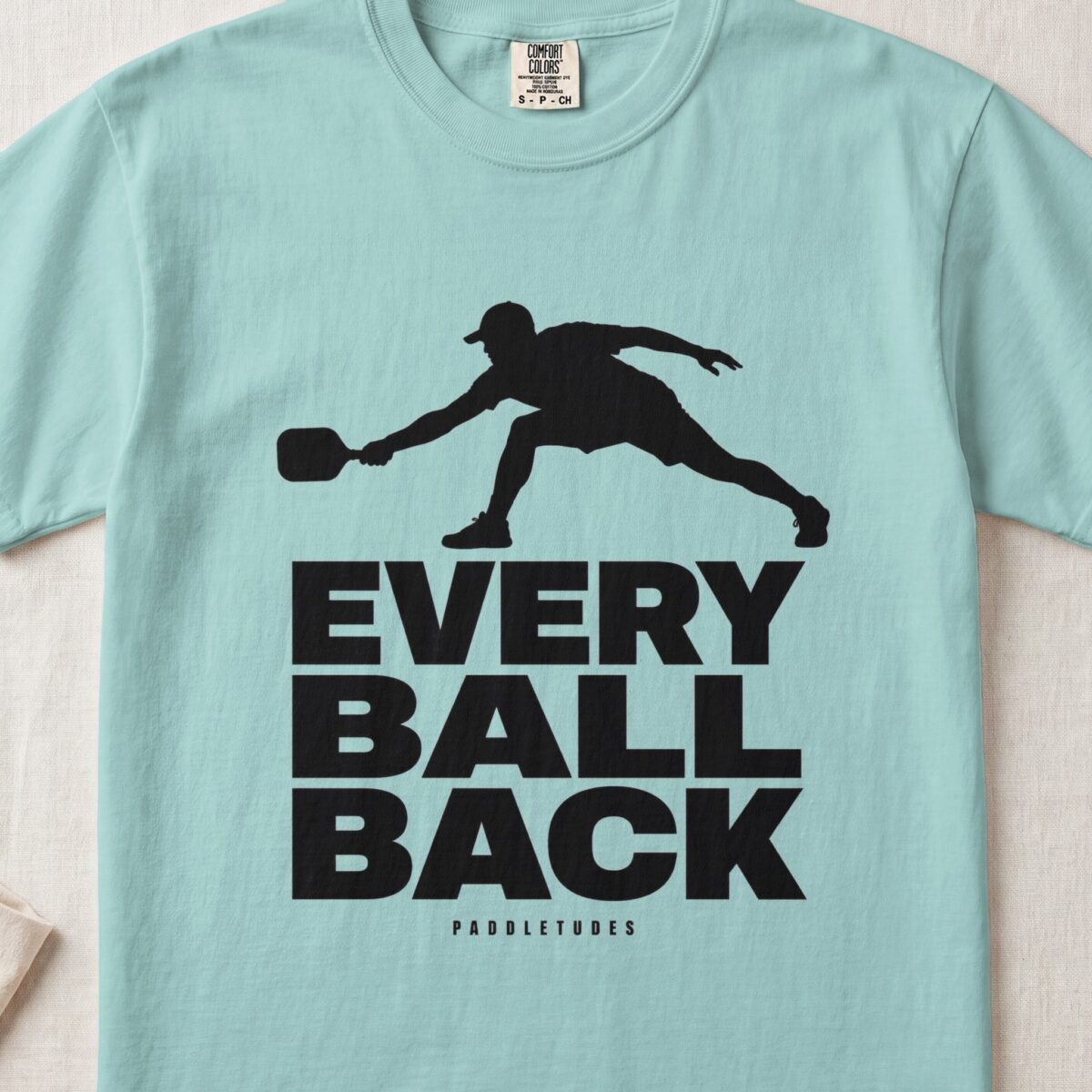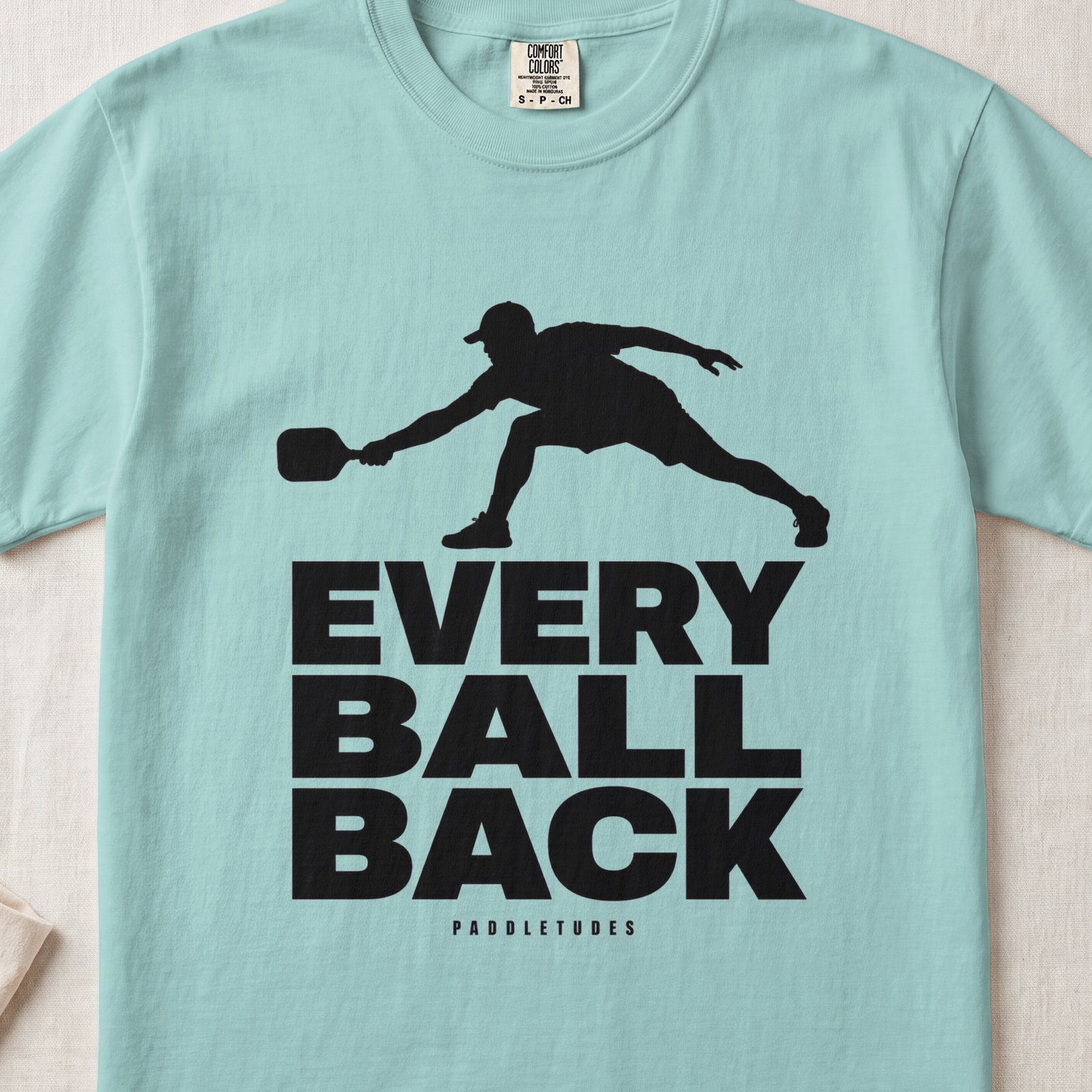
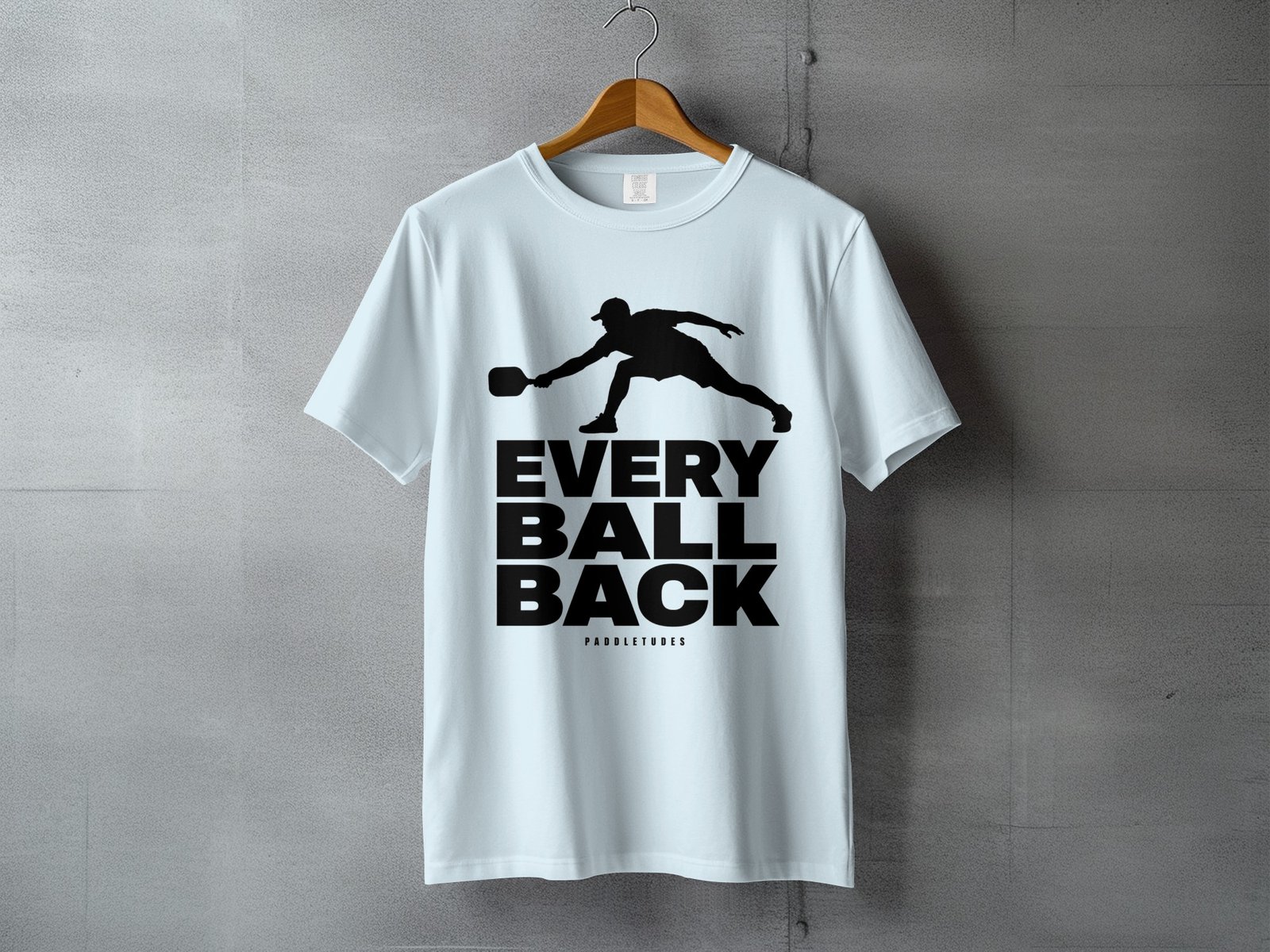
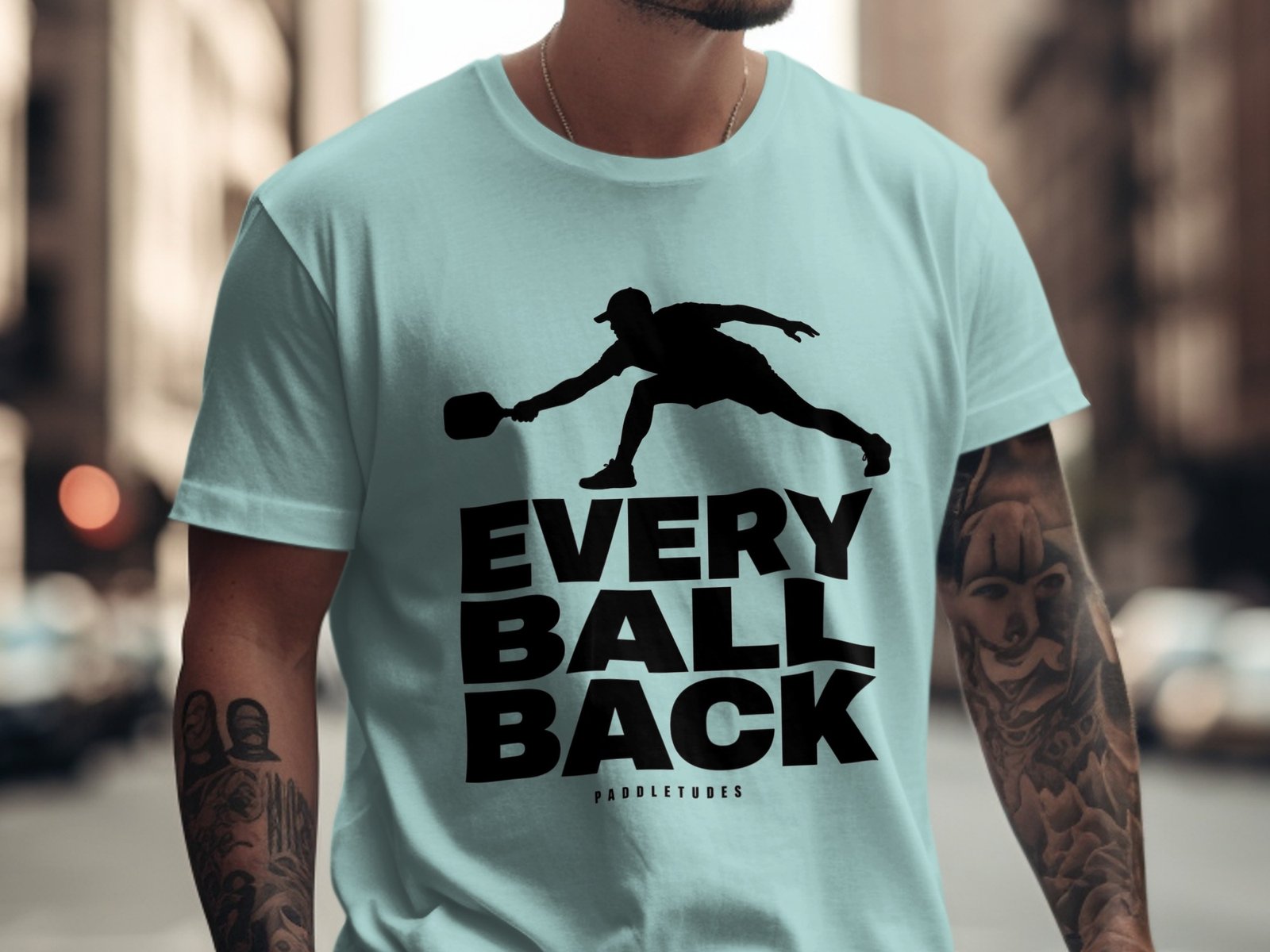
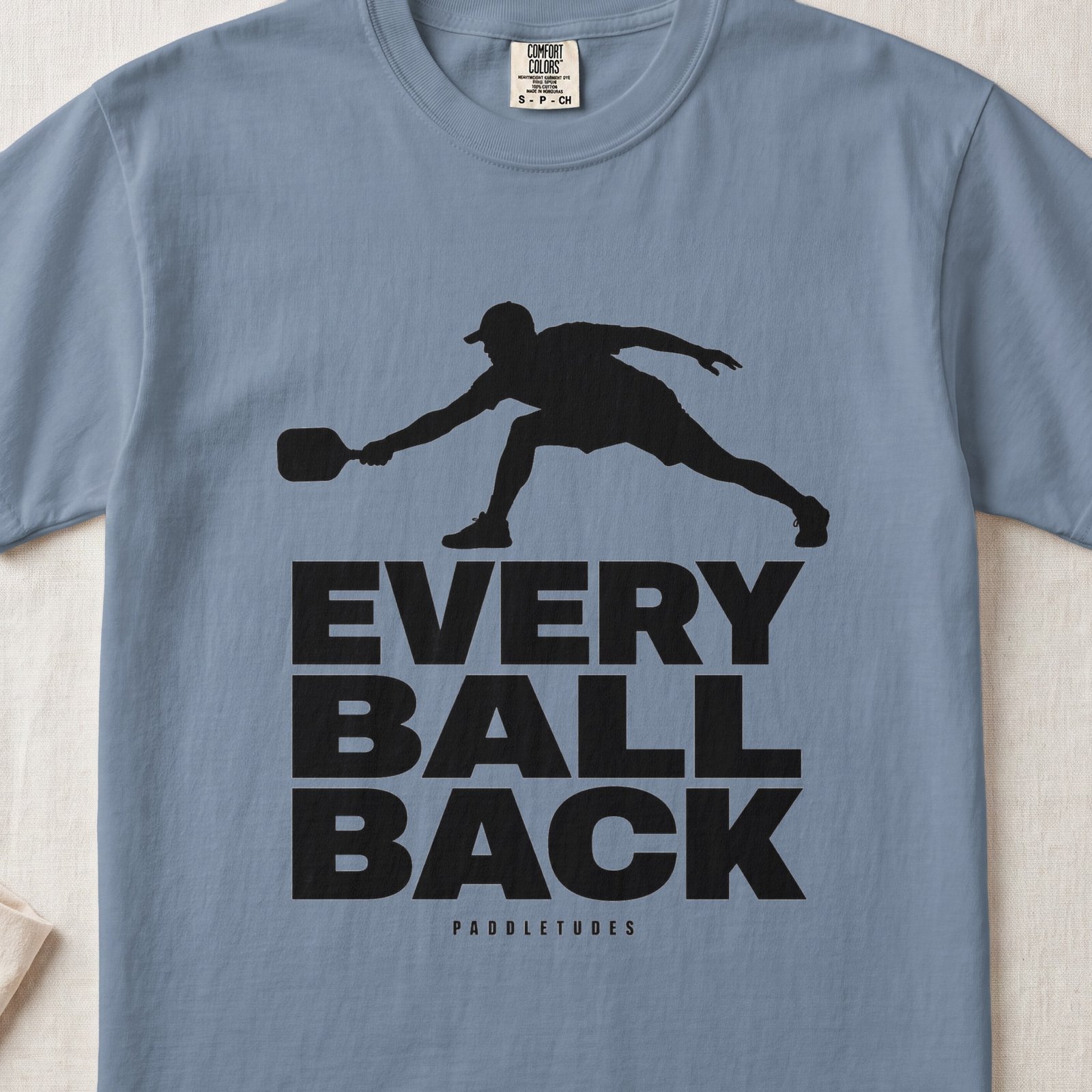
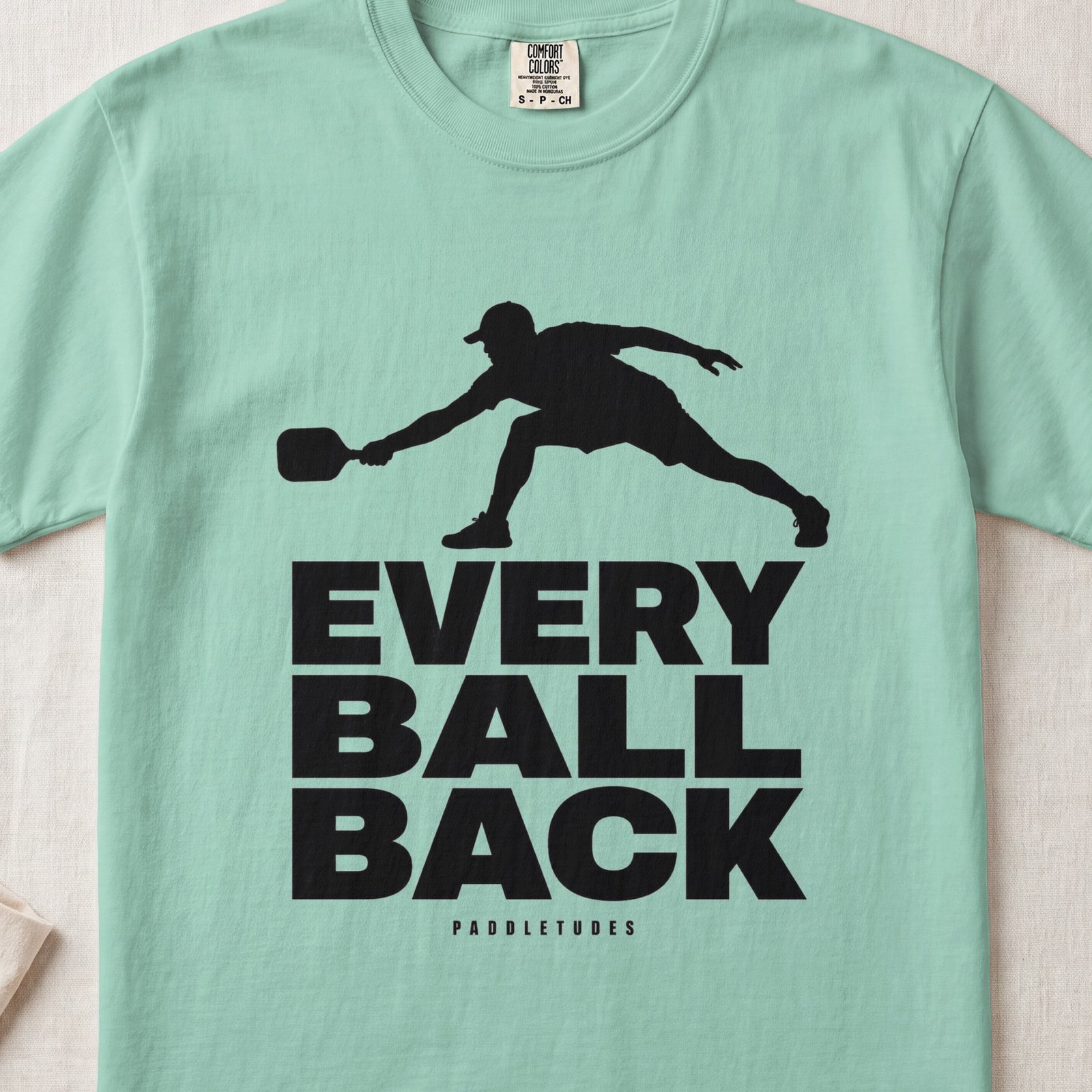
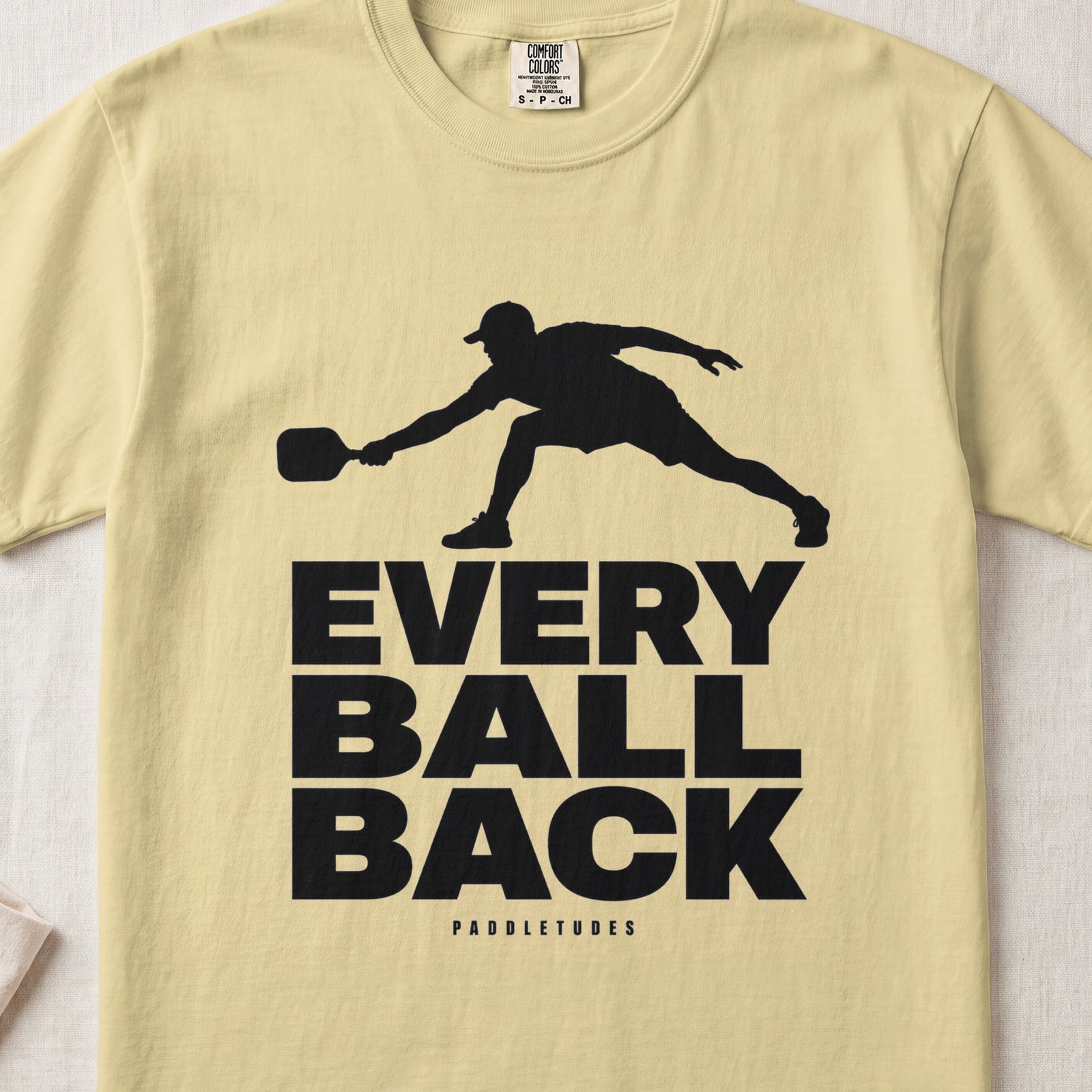
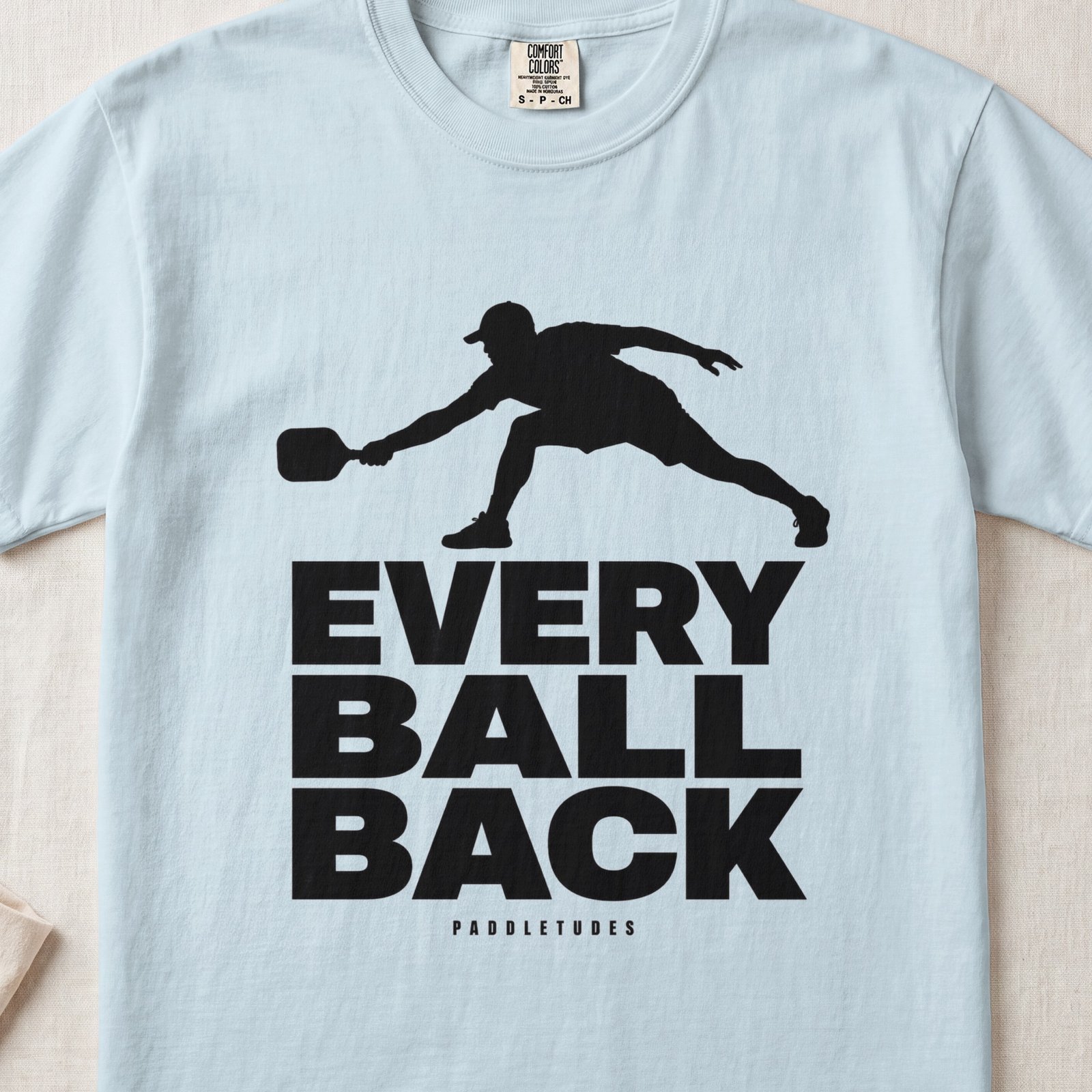
Sports Comfort Colors 1717
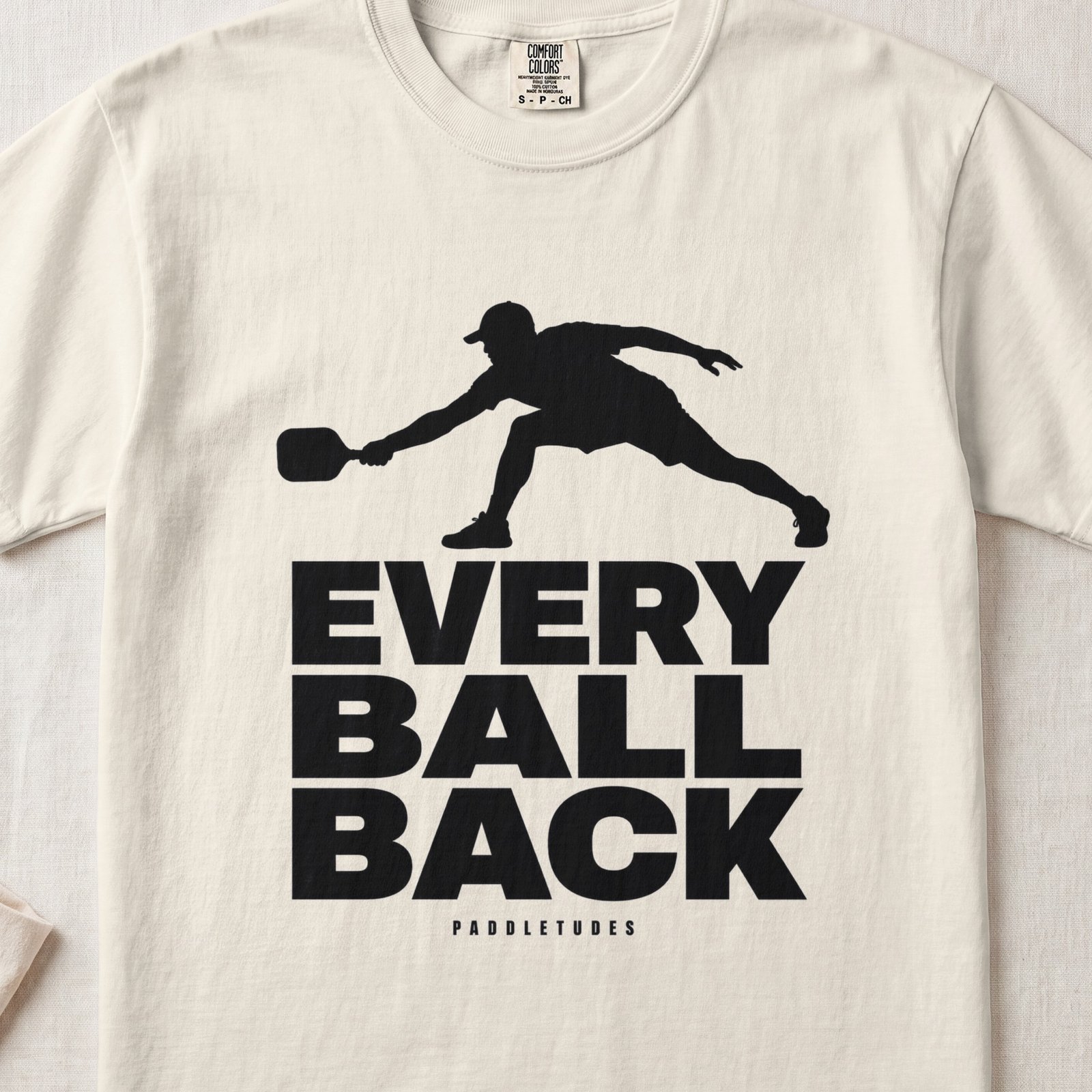
Every Ball Back
$29.99
- Comfort Colors 1717 heavyweight cotton
- Original design · printed to order
- U.S. print partners
Every Ball Back — The Pickleball Hustle Nobody Can Teach
The ball hits the baseline corner. She’s at the kitchen line — wrong side, wrong foot, no business being anywhere near it. But she pushes off, covers twelve feet in a direction her body didn’t agree to, extends the paddle at full stretch, and flips the ball back over the net with a shot that looks like it was designed by panic and executed by instinct. It lands. The opponents reset. The rally continues. Nobody claps because nobody is surprised anymore. This is what she does. Every ball back. Every single one.
He’s the 55-year-old high school basketball coach who retired from playing but never retired from competing. The knees aren’t what they were. The lateral quickness took a hit somewhere around forty-seven. But the motor — the thing inside the chest that refuses to watch a ball land without a paddle on it — that runs hotter than it did at twenty-five. He plays pickleball the way he coached defense: you don’t need to be the fastest person on the court if you start moving before the ball does. Anticipation is footwork that happens in the brain first. He reads the opponent’s paddle angle, guesses the direction, takes a shuffle step before the ball crosses the net, and arrives at the ball instead of chasing it. The grinder doesn’t get to more balls by running faster. The grinder gets to more balls by leaving earlier.
At 3.0, getting every ball back means surviving — just putting the paddle on the ball and hoping it clears the net. At 3.5, survival becomes consistency, and the player starts directing where the ball goes back instead of just getting it there. At 4.0, the grinder learns to read the opponent’s body for cues — an open paddle face means a dink, a loaded shoulder means a drive, a quick wrist snap means a speed-up aimed at the body. Those cues shave a quarter-second off reaction time, and a quarter-second at the kitchen line is the difference between a clean block and a ball that jams your hip. By 4.5, anticipation and coverage have merged so completely that the grinder appears to be in position before the ball arrives, and opponents start wondering if the court somehow got smaller.
The conditioning drill that builds this game isn’t on the court — it’s off it. Lateral shuffles with a resistance band. Fifteen yards, touch the line, shuffle back. Ten reps. Then crossover steps — the movement you use when the ball goes behind you and you have to turn and chase. The pickleball court is twenty feet wide and forty-four feet long, which means full-speed coverage requires explosion in four directions from a standing start. The on-court version: one partner feeds ten balls alternating corners — wide forehand, wide backhand, deep, short, repeat — and the grinder returns every one into the kitchen. The balls that hit the ground are the reps that matter most, because the grinder’s whole identity is making that number zero.
The paddle for this game needs a broad sweet spot because the grinder doesn’t always get to the ball in a textbook position. Off-center contact is a when, not an if. CRBN‘s elongated face models give extra reach on the stretch plays and forgive the off-center hits that a more compact paddle would dump into the net. The player who chases everything needs a paddle that rewards effort even when the form isn’t perfect.
Your neighbor heard about pickleball two months ago, bought a $40 paddle at a sporting goods store, and now plays every single day. She’s not good yet. She’s not strategic yet. But she gets to everything and she never stops moving. If you’ve watched that transformation happen in real time — the person who discovered a sport and immediately became the hardest worker on the court — this is the shirt that names what you’re watching.
I Am The Wall is the other half of this defensive identity. The wall stays planted and absorbs — immovable, patient, waiting for the opponent to make the error. Every Ball Back moves. Sprints. Dives. Covers court that shouldn’t be coverable and returns balls that should have been winners. Same family, opposite method. For the stat that proves the grinder’s approach works — the absence of mistakes mattering more than the presence of brilliance — Zero Regrets Zero Unforced is the scorebook version of the same philosophy. Find courts with enough space to chase at Pickleheads.
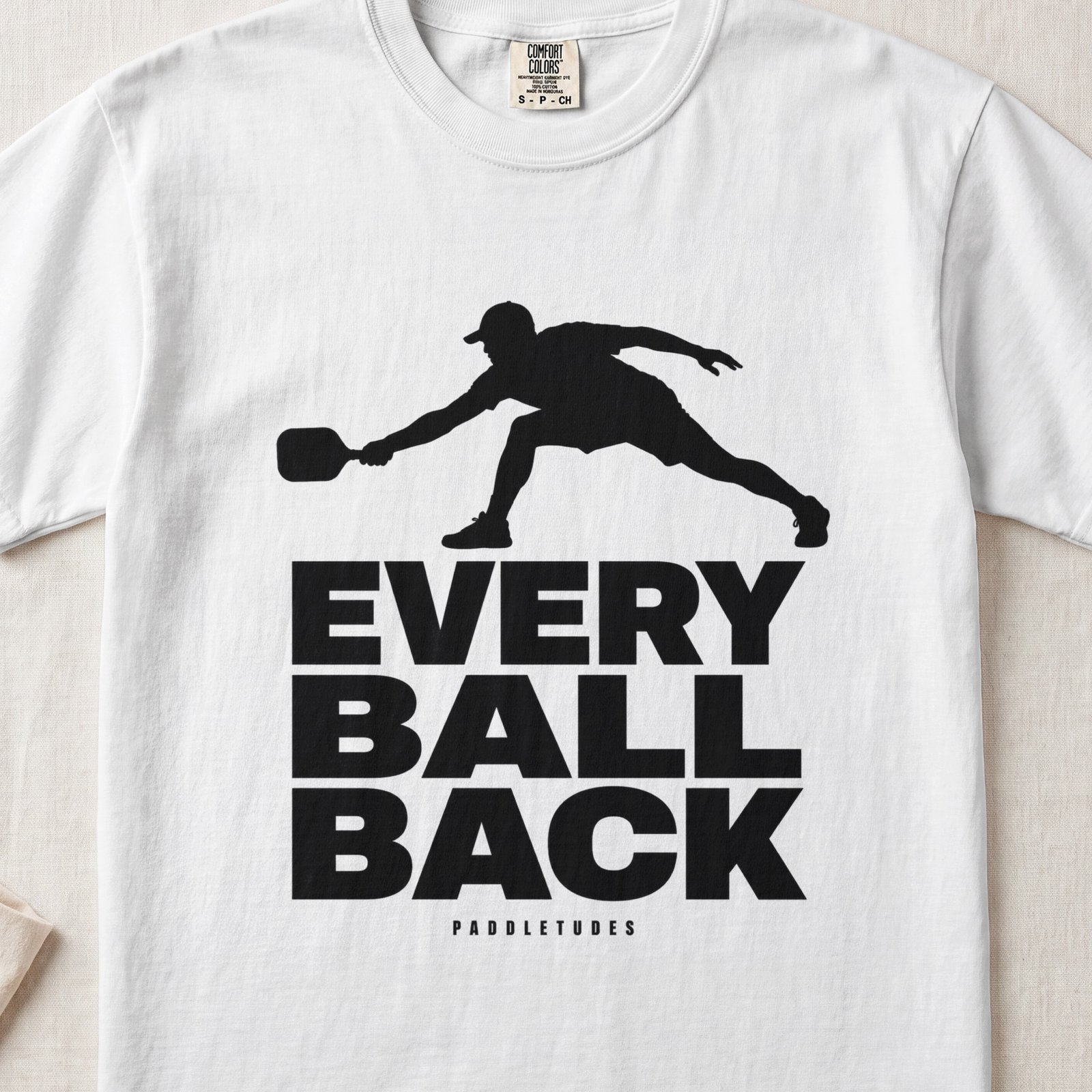
Printed on a Comfort Colors 1717 garment-dyed heavyweight tee with water-based DTG ink — sizing and care details here.
How Do You Get to More Balls in Pickleball
Anticipation beats speed. The player who covers the most court isn’t the fastest — they’re the one who starts moving before the opponent makes contact. Reading cues is the skill: an open paddle face signals a dink, a loaded backswing signals a drive, a short wrist snap aimed at your body signals a speed-up. Watching the opponent’s paddle instead of the ball gives you a half-second head start, and that’s enough time to take two shuffle steps toward where the ball is going.
The split step is the mechanical foundation. A small hop timed to land just as the opponent contacts the ball loads both legs evenly and lets you push off in any direction. Without the split step, your weight is committed before you know where the ball is heading, and you end up reaching instead of moving. With it, you arrive balanced and capable of making a quality shot instead of a desperate lunge. Players who drill the split step until it’s unconscious cover noticeably more court within weeks.
Court positioning compounds the advantage. Standing six inches closer to center after every shot means six inches less ground to cover on the next ball. Recovering to a neutral position between shots — paddle up, weight forward, feet under your hips — is the habit that separates the player who seems to be everywhere from the player who’s always a step late. The best grinders aren’t running more. They’re wasting less movement between the balls they’re already reaching.
Off-court conditioning matters more than most recreational players want to admit. Lateral shuffle drills, resistance band work, and short sprint intervals build the explosive first step that closes the gap between good positioning and great positioning. The player wearing this shirt doesn’t just want the ball to come back. They want every ball to come back — and the fitness to make that statement true in the third game is as important as the technique that makes it true in the first.
-
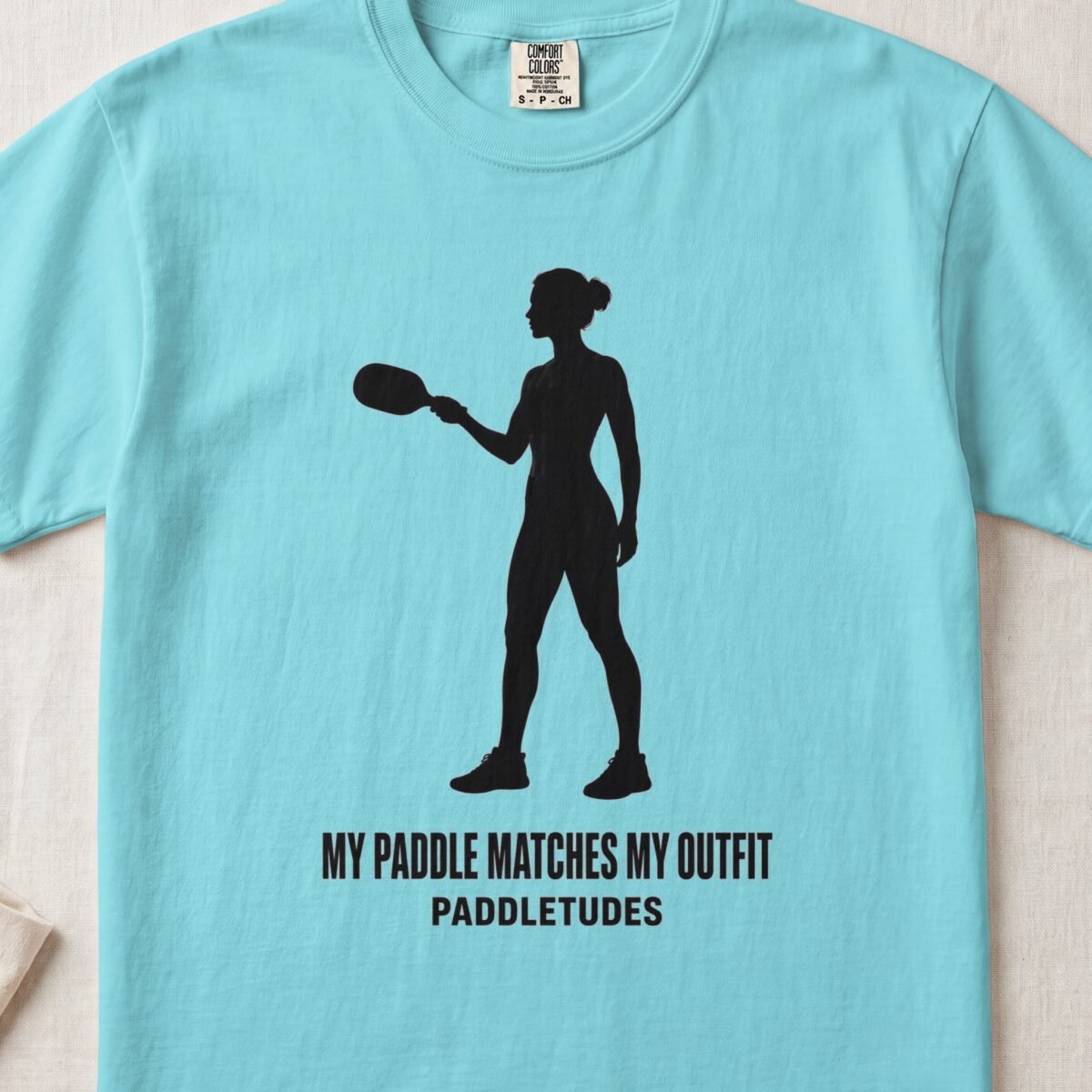
My Paddle Matches My Outfit
$29.99 Select options This product has multiple variants. The options may be chosen on the product page -
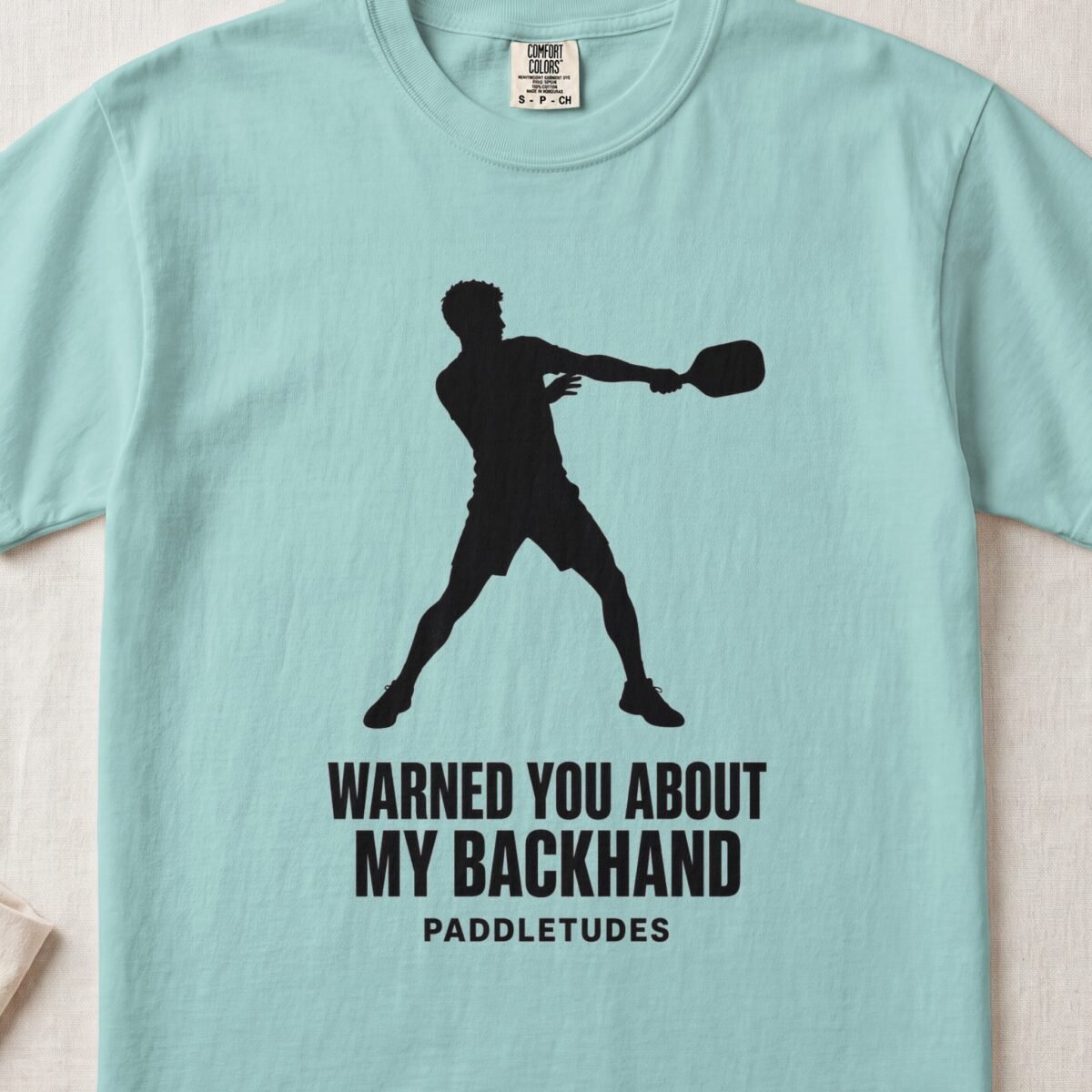
Warned You About My Backhand
$29.99 Select options This product has multiple variants. The options may be chosen on the product page -
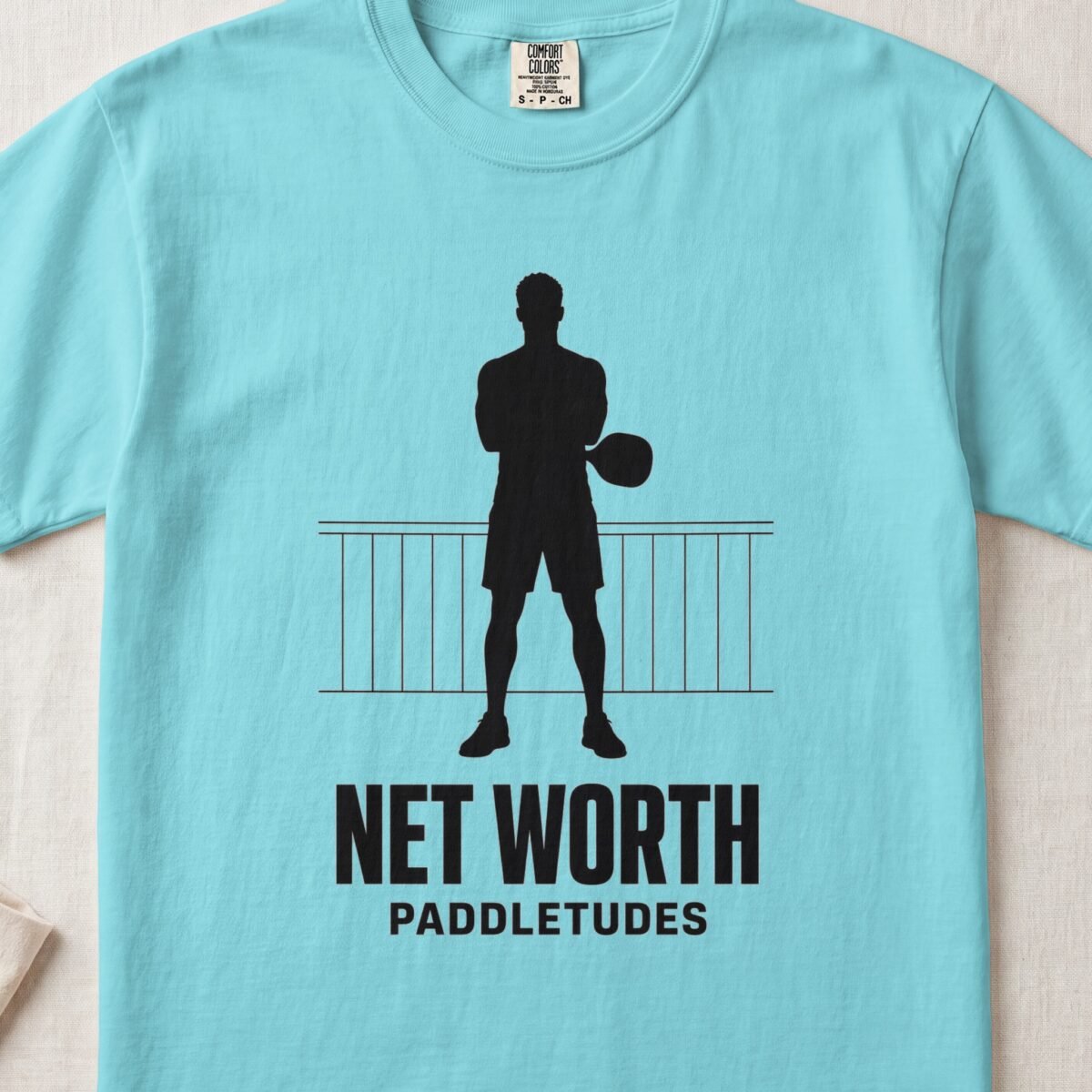
Net Worth
$29.99 Select options This product has multiple variants. The options may be chosen on the product page