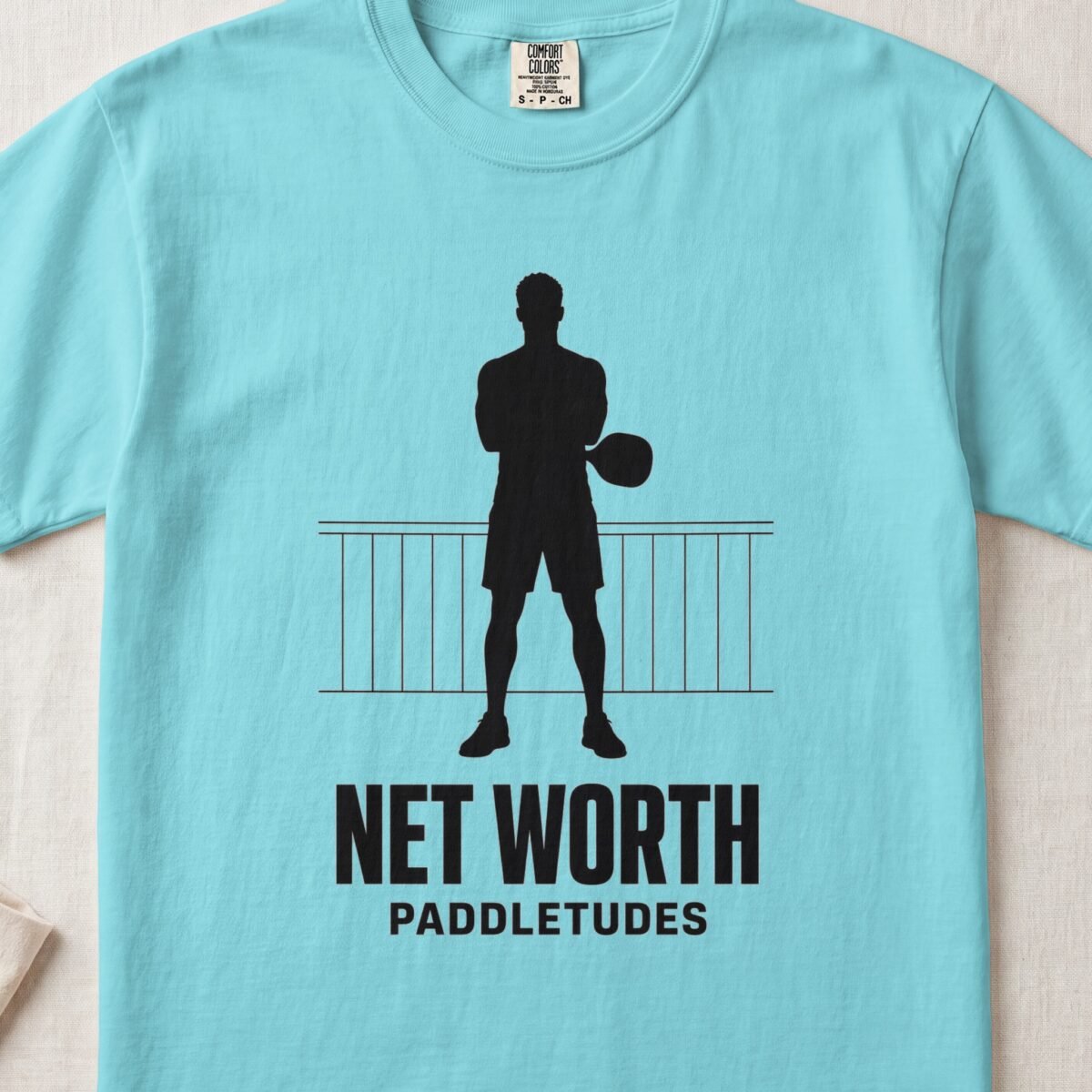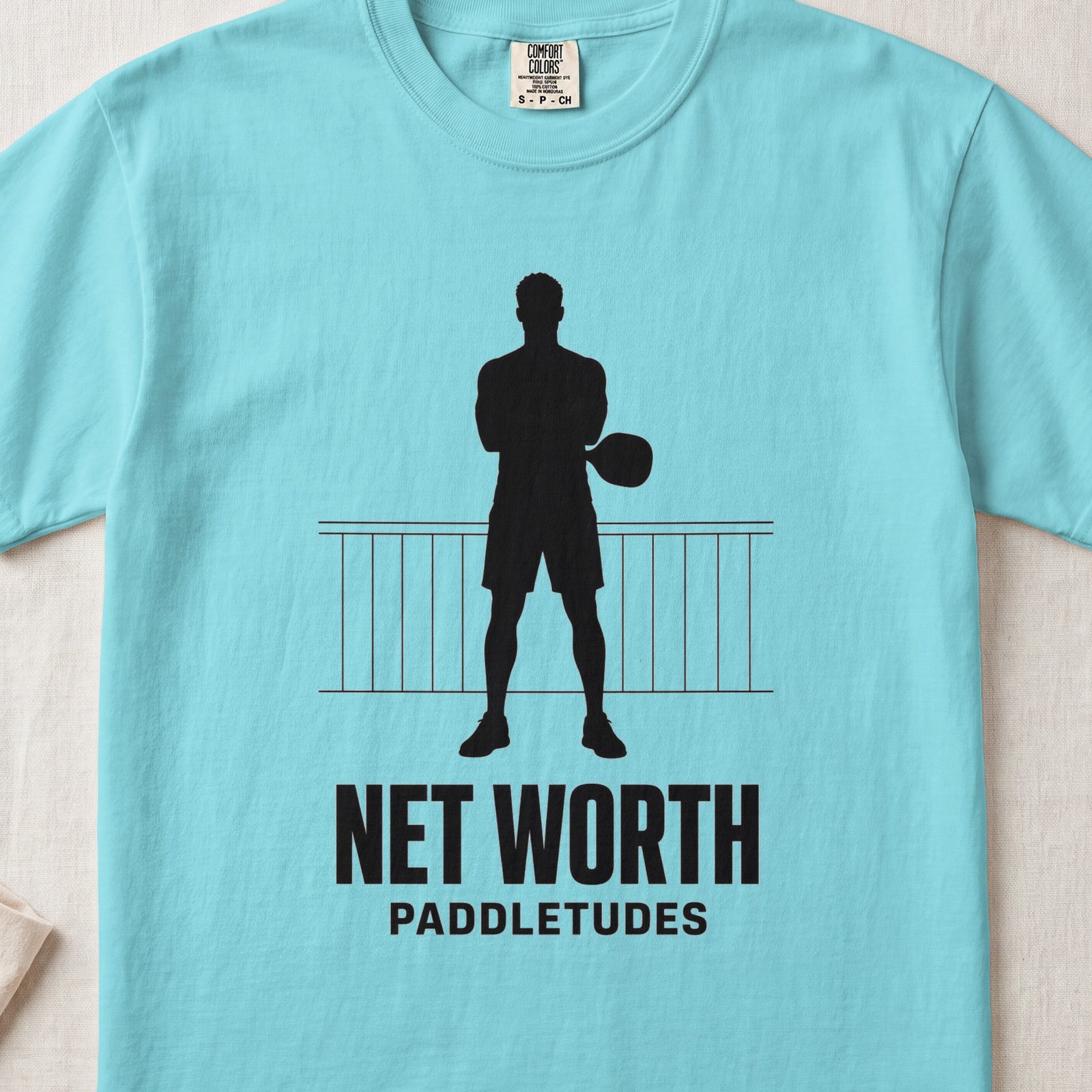
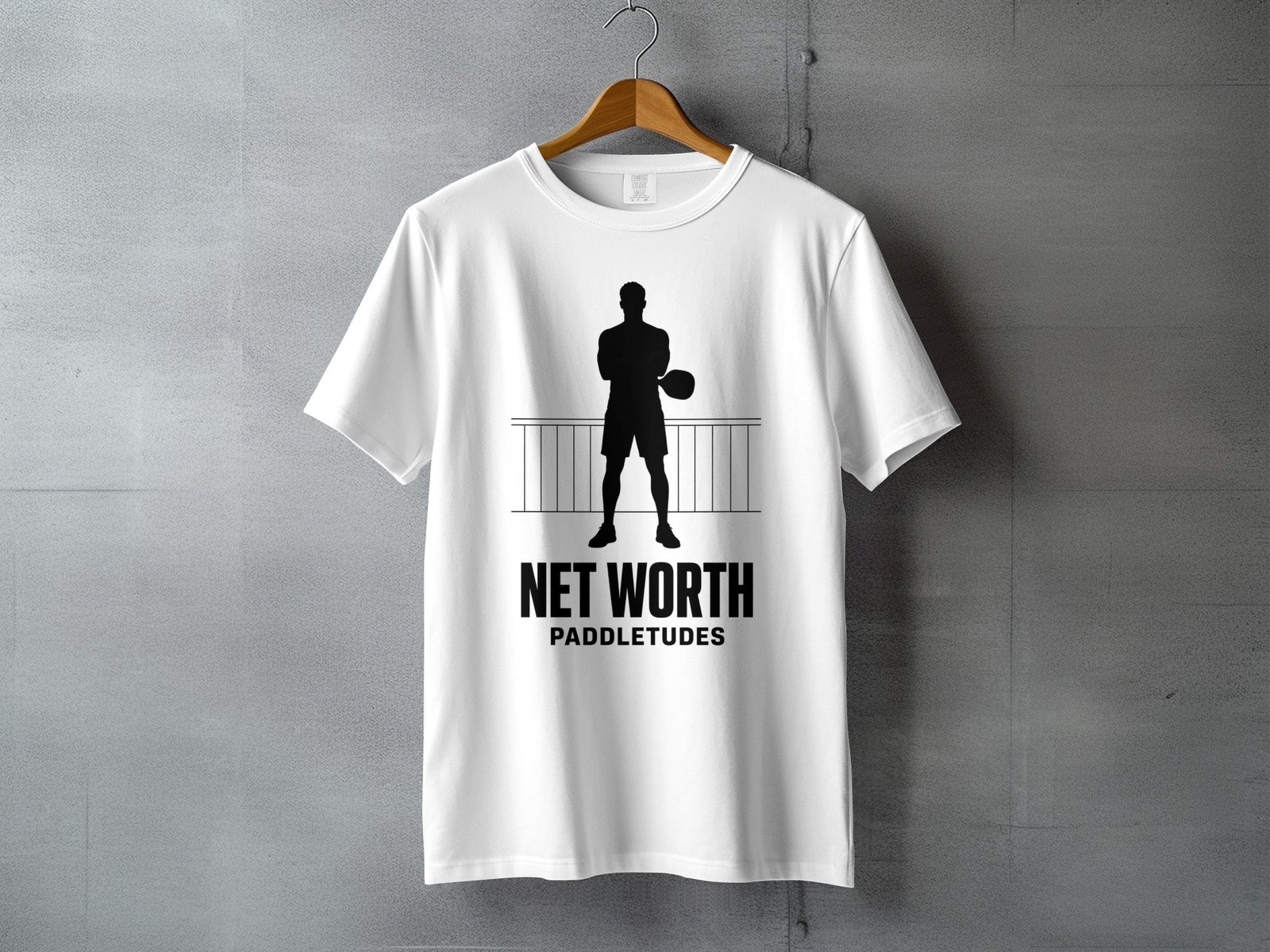
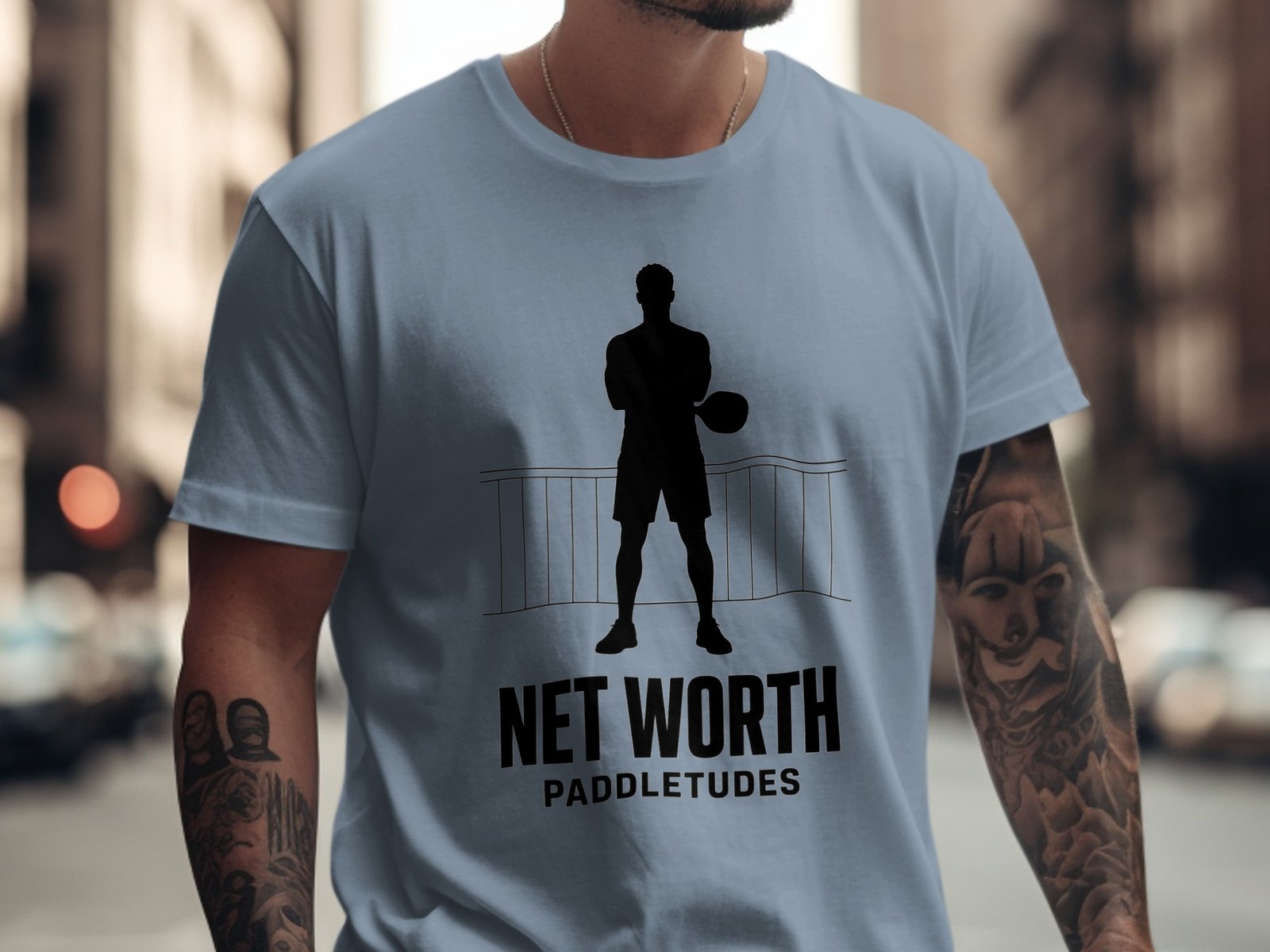
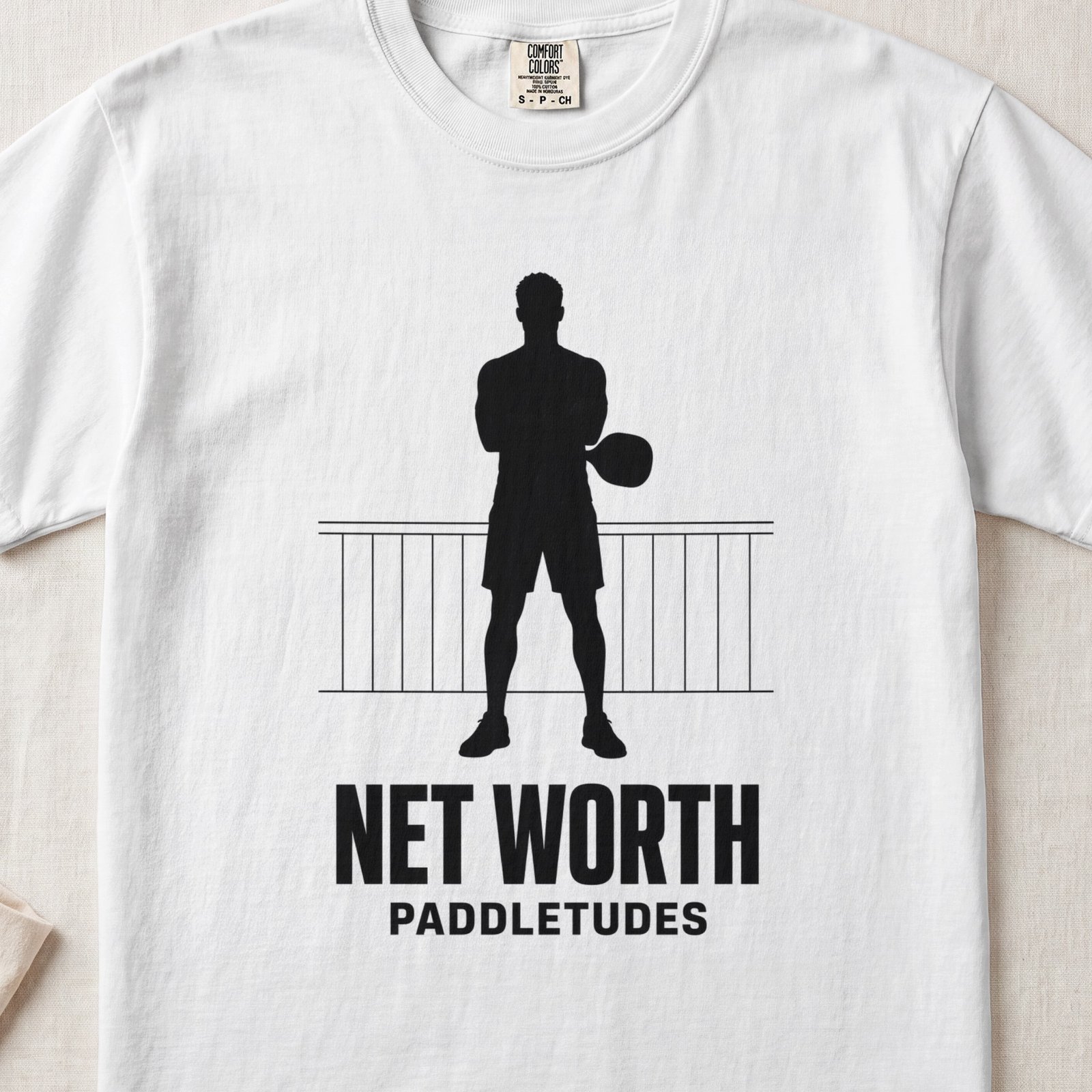
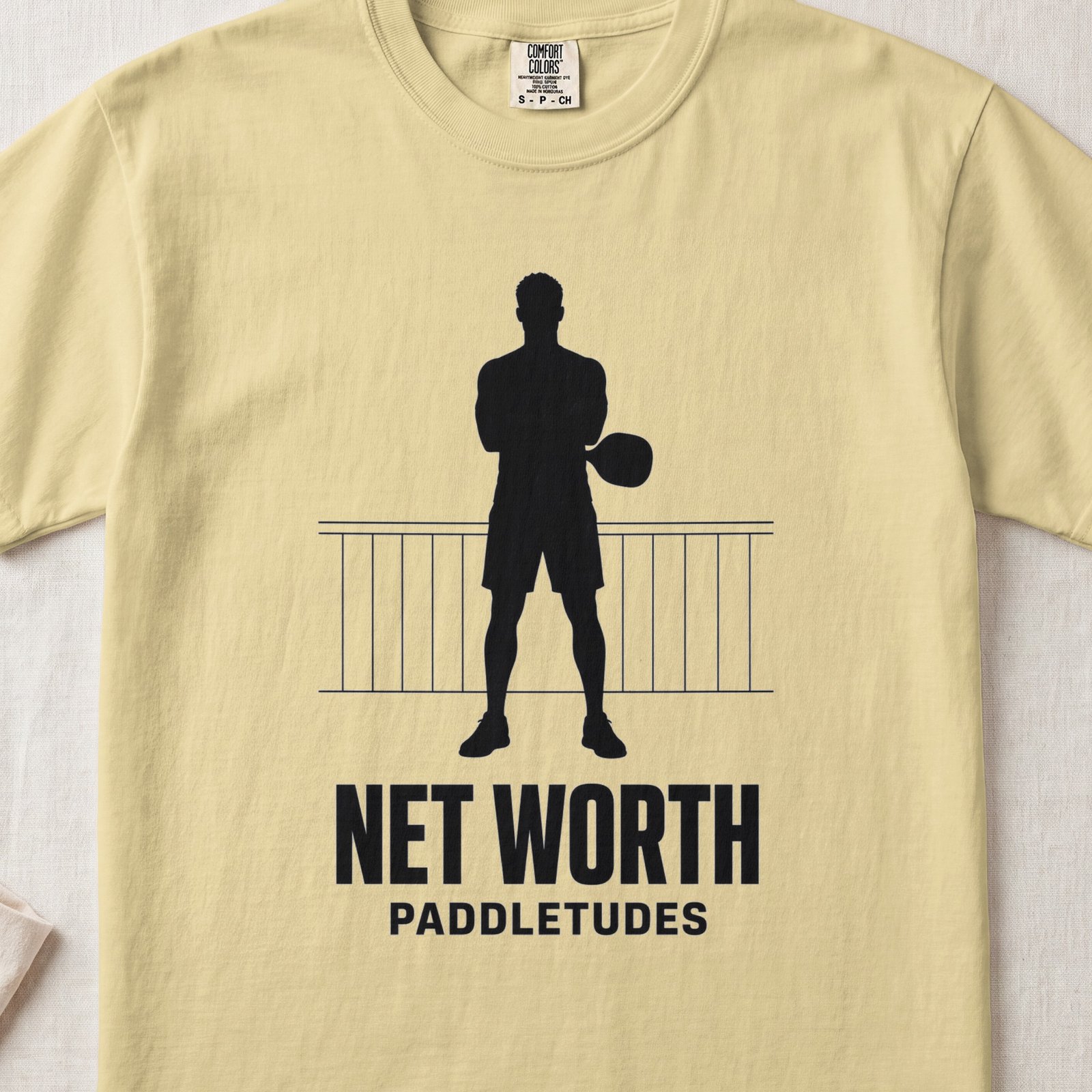
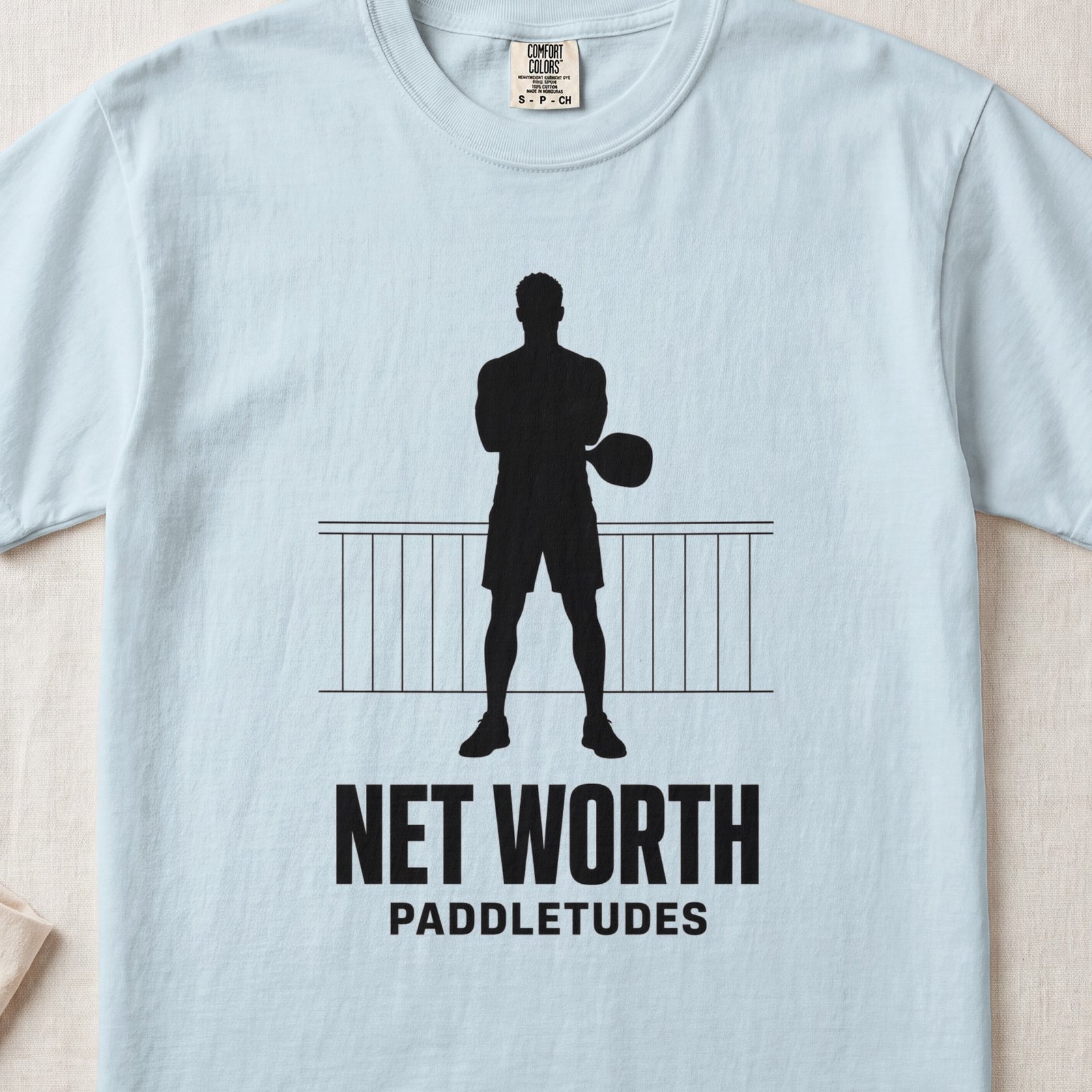
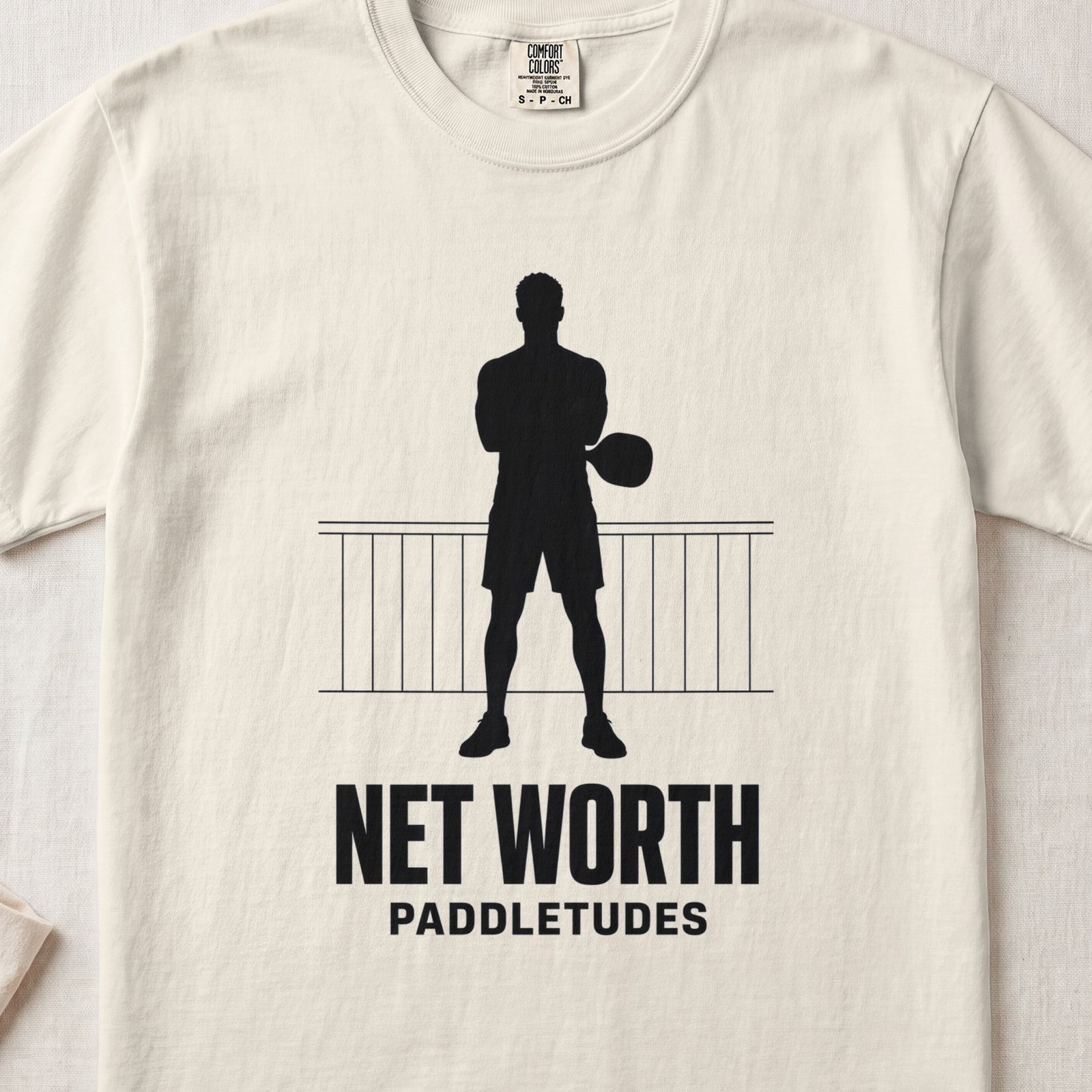
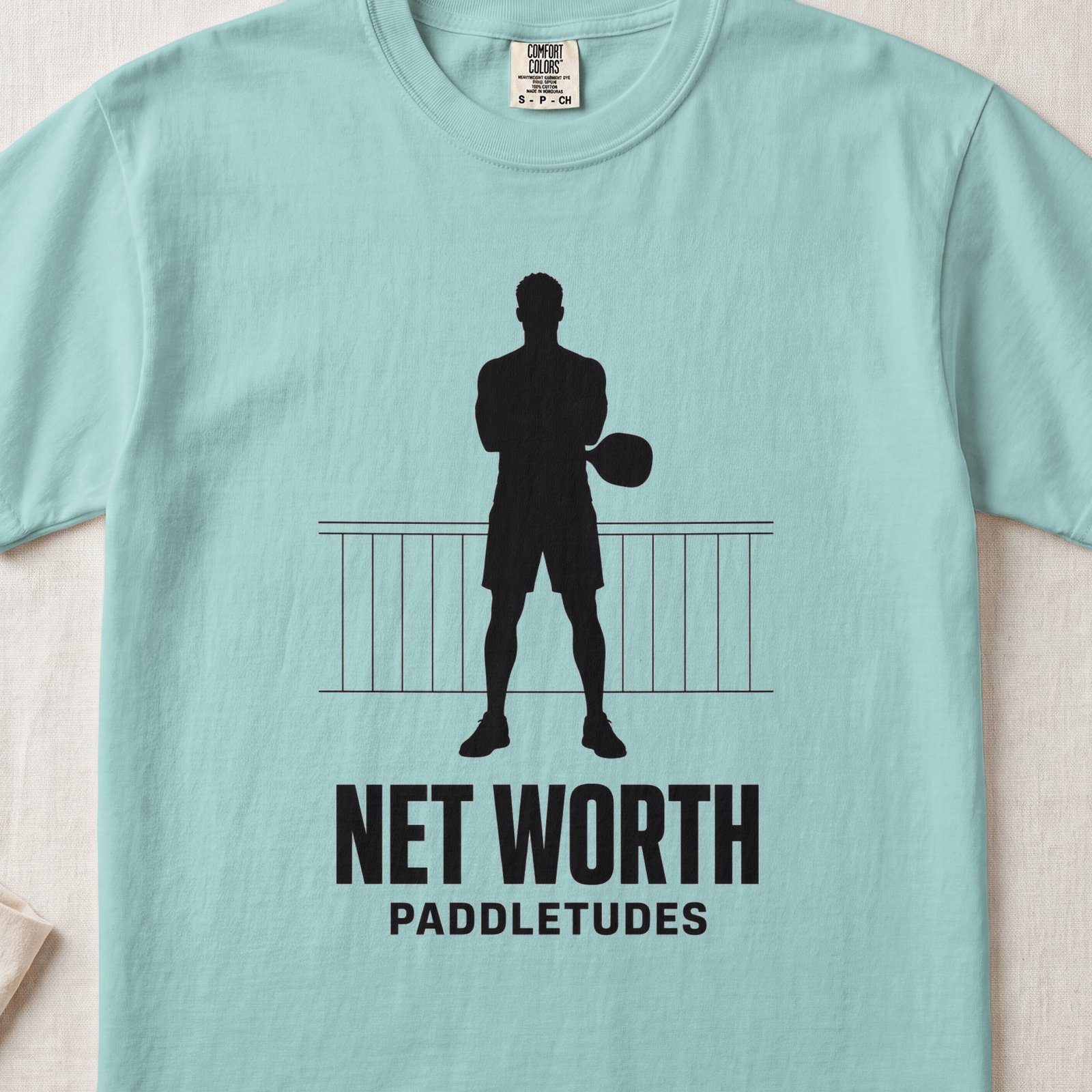
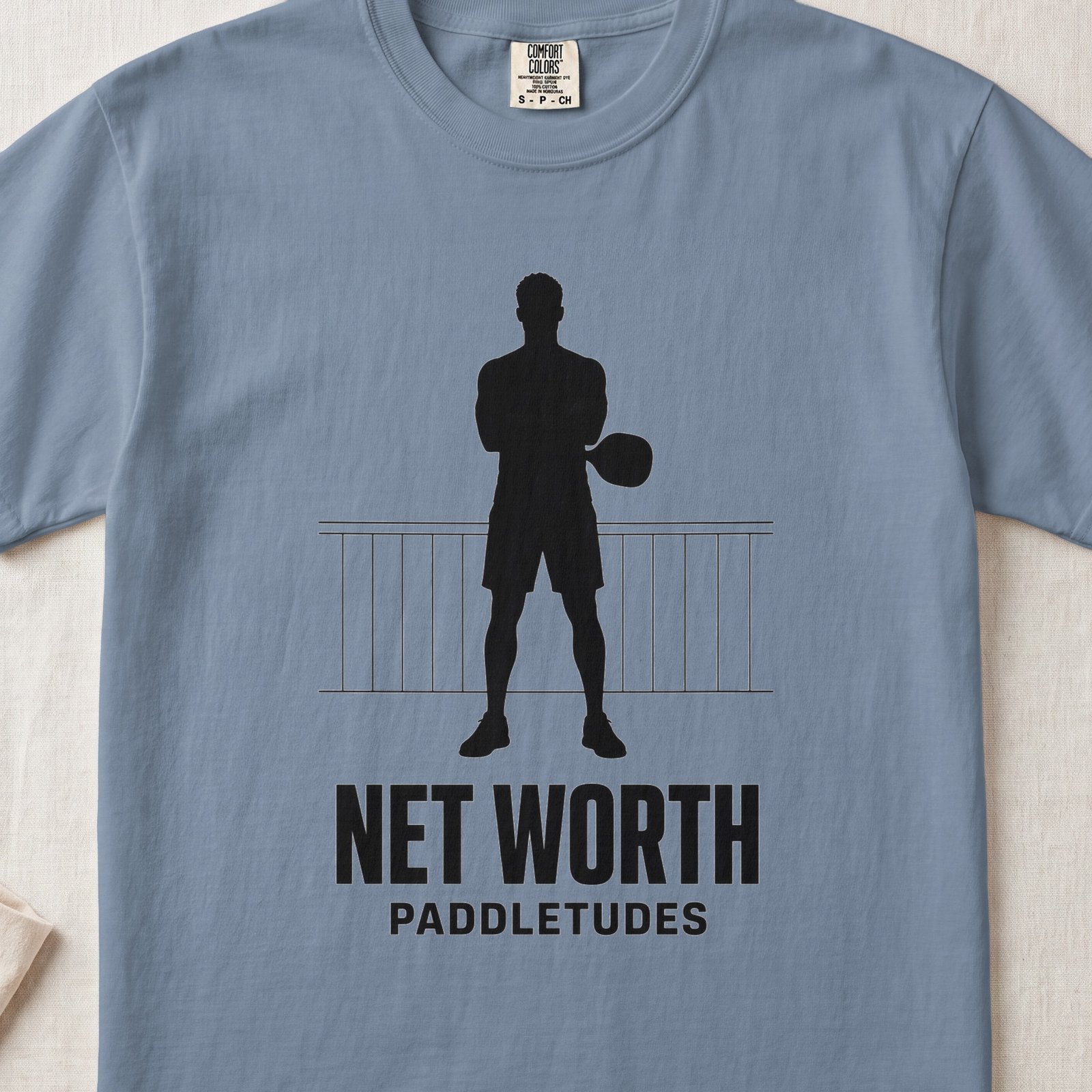
Sports Comfort Colors 1717
Net Worth
$29.99
- Comfort Colors 1717 heavyweight cotton
- Original design · printed to order
- U.S. print partners
Net Worth — The Pickleball Player Everyone Wants as Partner
Nobody announces it. There’s no speech, no highlight reel, no post-game interview. But when the rotation board fills up and three different players walk over to write their name next to yours, the court just told you what you’re worth. Net Worth is the shirt for the player who already knows.
She’s the 61-year-old retired teacher who started playing at the community center five years ago and now runs the competitive ladder without raising her voice. She doesn’t drive the ball unless the math says to. She doesn’t speed up unless the opening is wider than her paddle face. She plays a game that looks unremarkable until you check the score and realize she’s won eight of her last ten, and the two she lost were against tournament players who had to work for every point. Her worth isn’t calculated in power or athleticism. It’s calculated in the number of partners who trust her to make the right decision at 9-9-2 with the game on the line.
The quiet player gets overlooked in a sport that celebrates the highlight. Social media rewards the overhead smash, the diving volley, the impossible ATP that goes viral. But the player who wins consistently — who holds serve, who returns deep, who never gives away free points — that’s the one you want standing next to you when the game matters. Selkirk‘s control paddles are built for this game. The Vanguard Power Air Invikta gives enough surface area to place the ball where the opening is, with enough touch to keep dink rallies alive until the opponent blinks first. The paddle matches the philosophy — precision over spectacle.
Your doubles partner’s birthday is coming up and you’ve been trying to figure out what to get the person who covers for your mistakes without mentioning them. Who repositions when you’re out of place. Who takes the ball in the middle because they know their reaction time is half a second faster than yours and they’d rather win the point than protect your ego. This is the shirt that says you noticed. It says their value on the court isn’t measured in stats anybody tracks — it’s measured in the fact that you play better when they’re standing next to you.
Net worth in pickleball has a real definition that nobody writes down. It’s the ratio of points won to points given away. The player with high net worth doesn’t beat you — she waits for you to beat yourself. She puts the ball in uncomfortable spots, holds her position, and forces you to generate the pace. When you finally speed up because you can’t take the patience anymore, that’s when she blocks it back at your feet and the point is over. The USA Pickleball rulebook doesn’t have a section on composure, but it should — the ability to play within yourself while your opponent plays outside themselves is worth more than any single shot in the game.
At Chicken N Pickle, where the atmosphere runs casual and the skill range spans three full rating levels on any given night, the high-net-worth player is the one who adjusts. She plays down without condescending, plays up without panicking, and plays sideways — with the partner who showed up alone and needed someone reliable — without hesitating. Her value is portable. It travels to every court, every facility, every skill level. Find the courts where players like her congregate at Pickleheads.
For the investment metaphor taken the other direction — the player whose gains are tracked and measured and climbing — Net Gains is the progress-focused companion. And for the lifestyle declaration that connects the court to every other hour of the day, Living My Best Court Life is the broader statement.
Printed on a Comfort Colors 1717 garment-dyed heavyweight tee with water-based DTG ink — sizing and care details here.
What Makes a Good Doubles Partner in Pickleball
Communication and court coverage matter more than individual skill level. The best doubles partner is the one who calls the ball early, moves to cover the gap when you’re pulled wide, and takes the shot in the middle without hesitation. Hesitation in the middle kills more points than any missed dink or botched drive.
Complementary styles help. If you’re a banger, a partner with soft hands at the kitchen line creates the setup you need — they extend the rally, draw the pop-up, and you put it away. If you’re both dinkers, the partnership needs someone willing to recognize the speed-up opportunity and take it. Two passive players waiting for the other team to make a mistake can work at 3.0 but stalls above that because better opponents don’t make enough unforced errors to win on patience alone.
The underrated quality is emotional stability. The partner who shakes off a bad point, doesn’t blame you for a missed third, and resets to ready position without commentary is the partner you want at 9-9. Pickleball is a momentum game — three quick points can flip a match — and the team that stays steady through bad breaks holds serve longer than the team where one partner’s frustration becomes contagious. Consistency in temperament is worth as much as consistency in shot-making.
Trust is the compound interest of a good partnership. It builds over sessions, not points. The partner who covers the lob without being asked, who switches sides instinctively when stacking, who knows when you’re about to speed up before you do — that trust doesn’t come from talking about it. It comes from reps together. The best doubles teams aren’t always the most talented. They’re the ones who’ve played together long enough to stop thinking and start knowing.
-
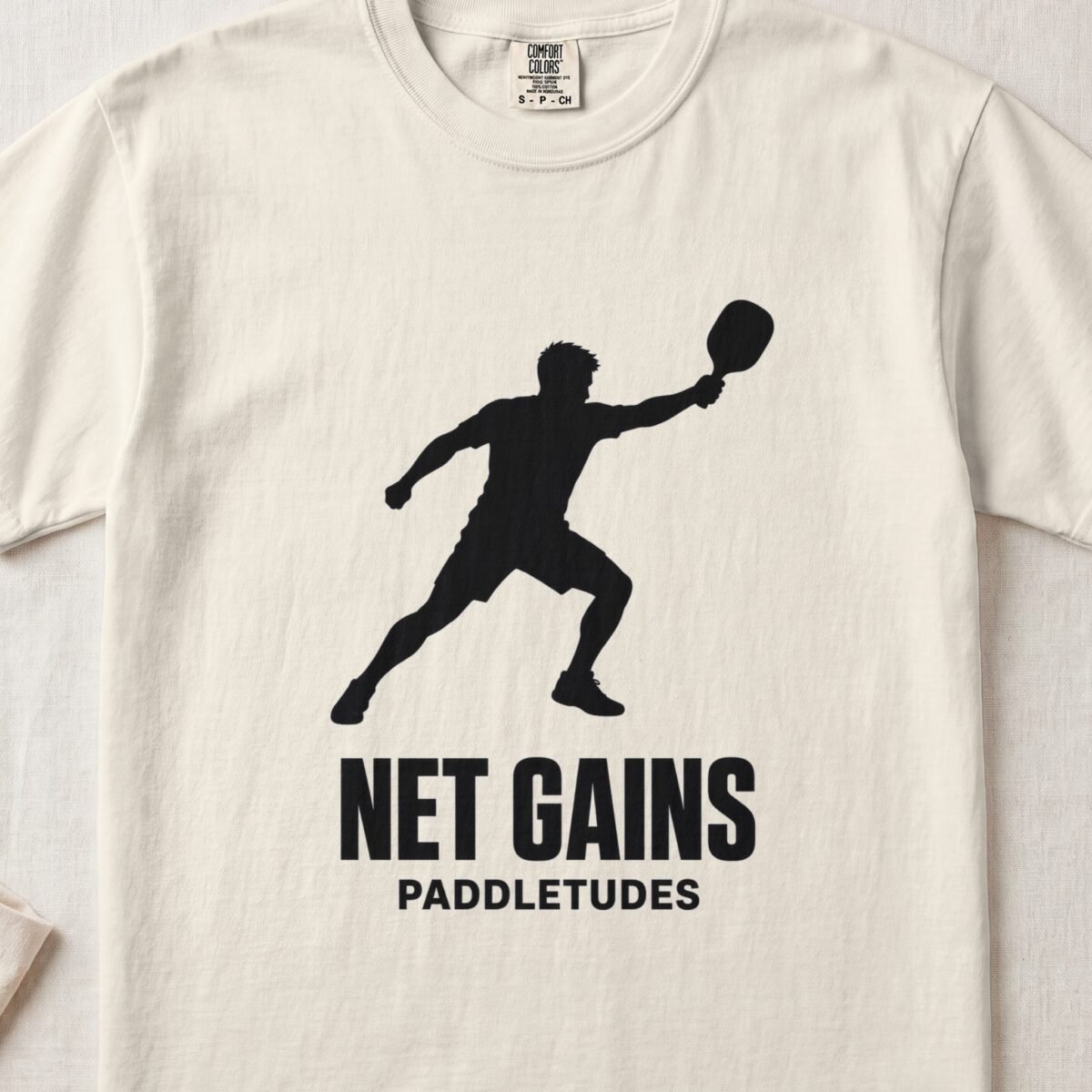
Net Gains
$29.99 Select options This product has multiple variants. The options may be chosen on the product page -
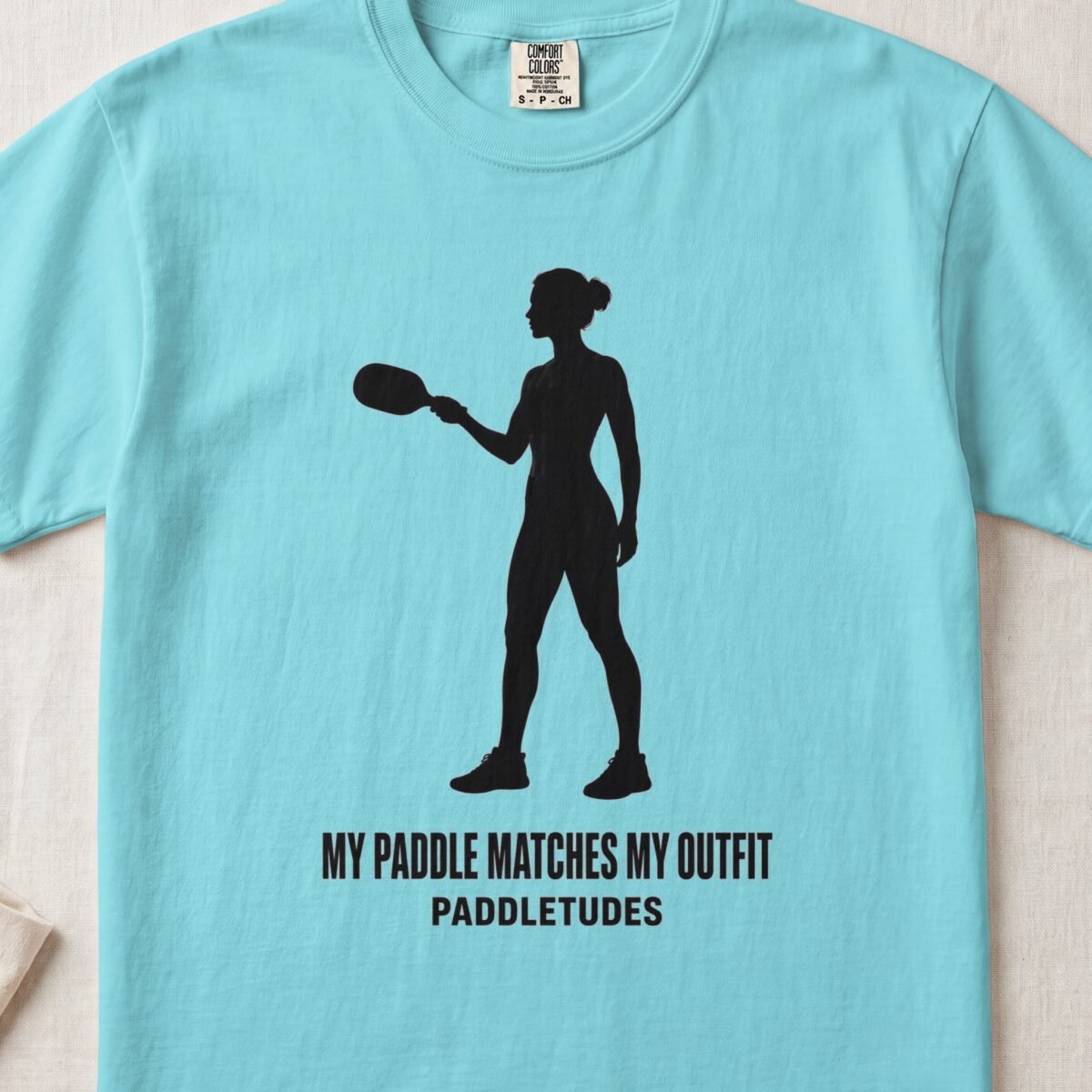
My Paddle Matches My Outfit
$29.99 Select options This product has multiple variants. The options may be chosen on the product page -
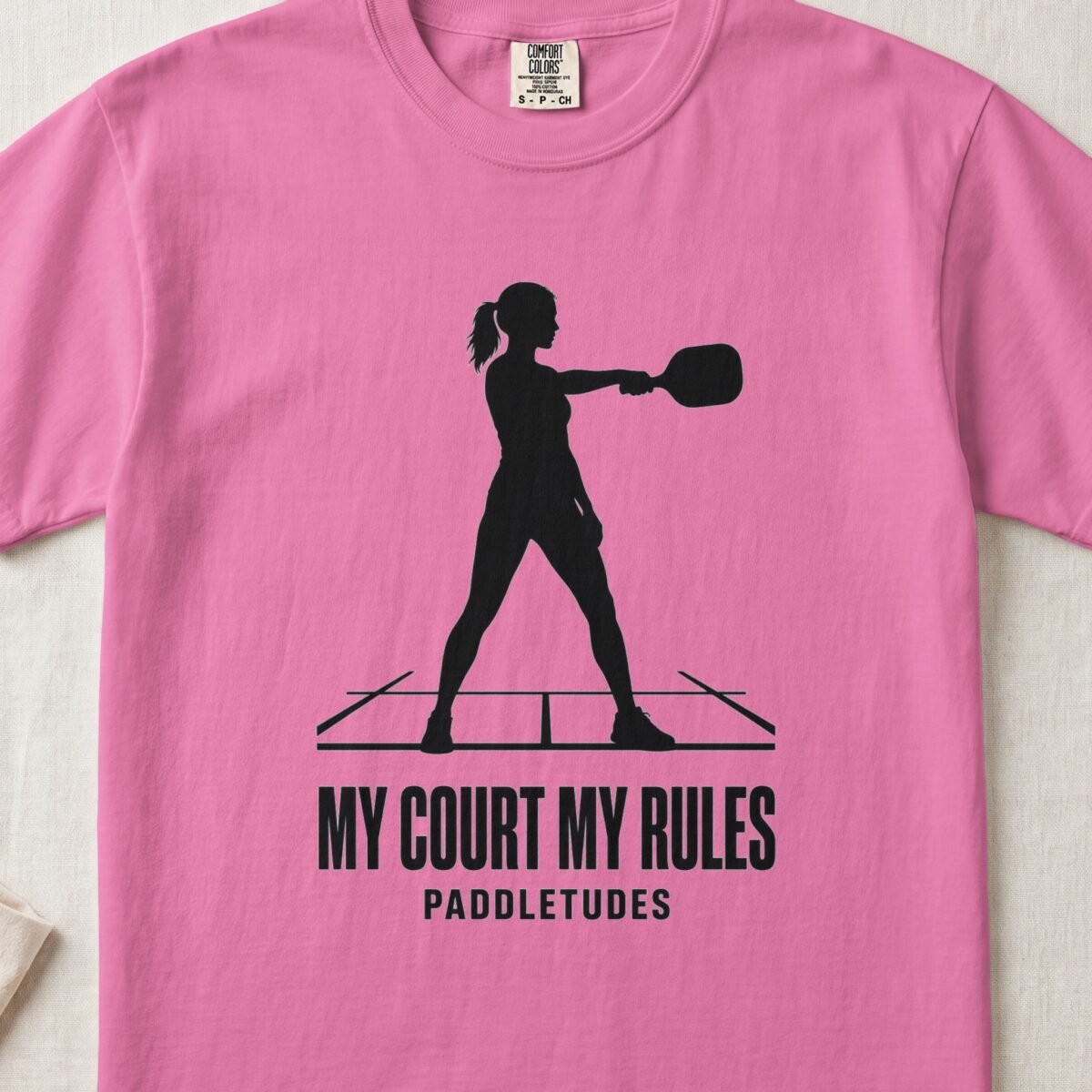
My Court My Rules
$29.99 Select options This product has multiple variants. The options may be chosen on the product page