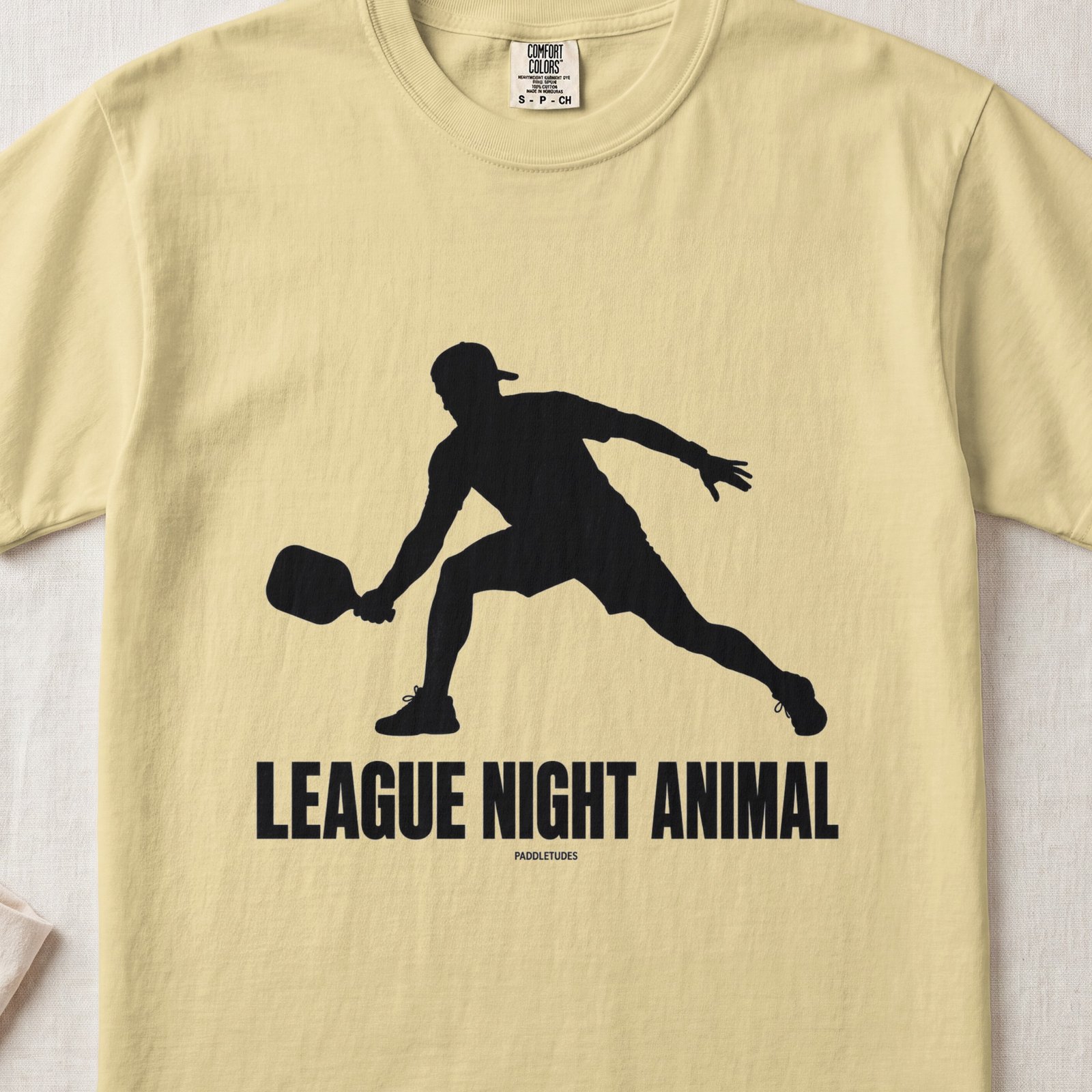
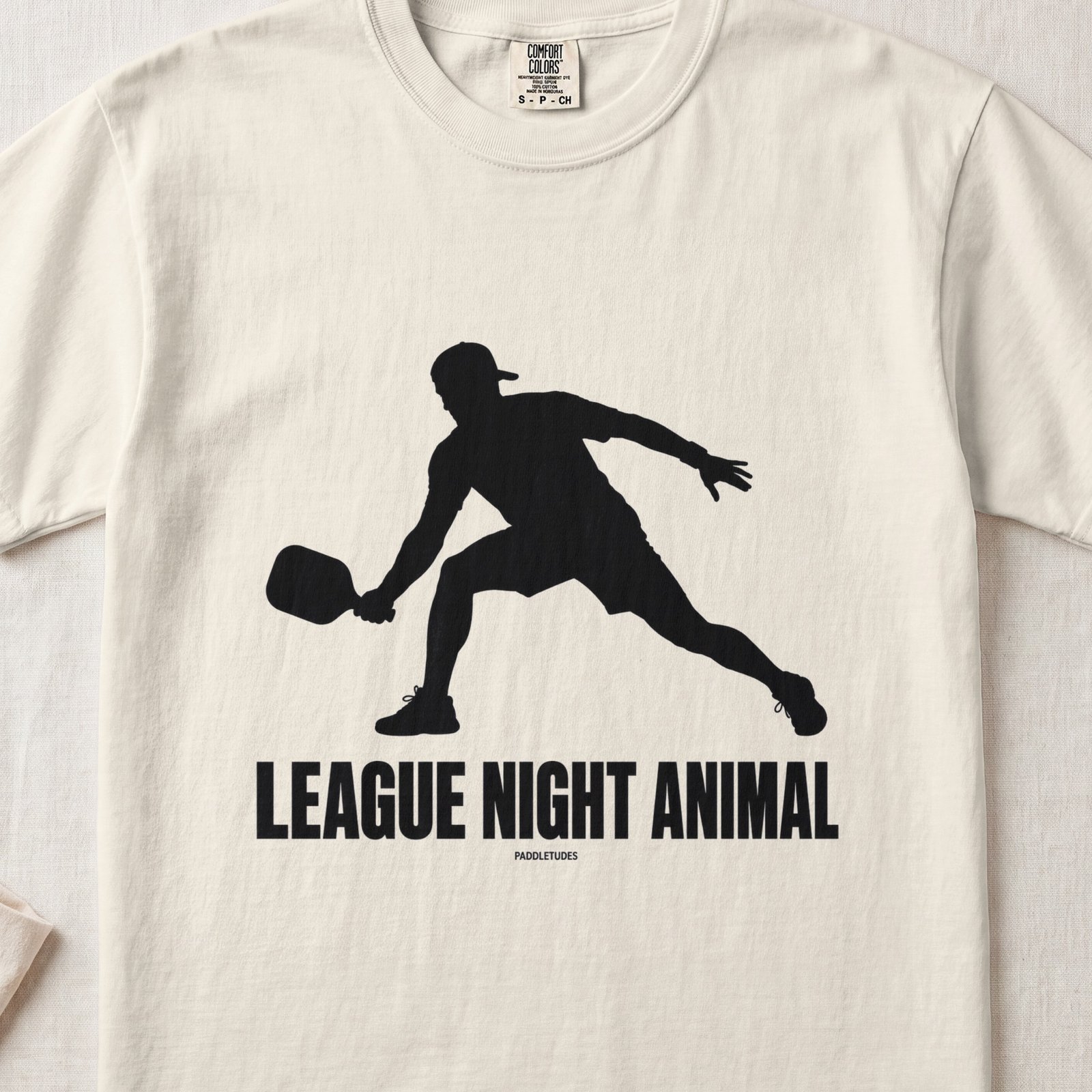
Sports Comfort Colors 1717
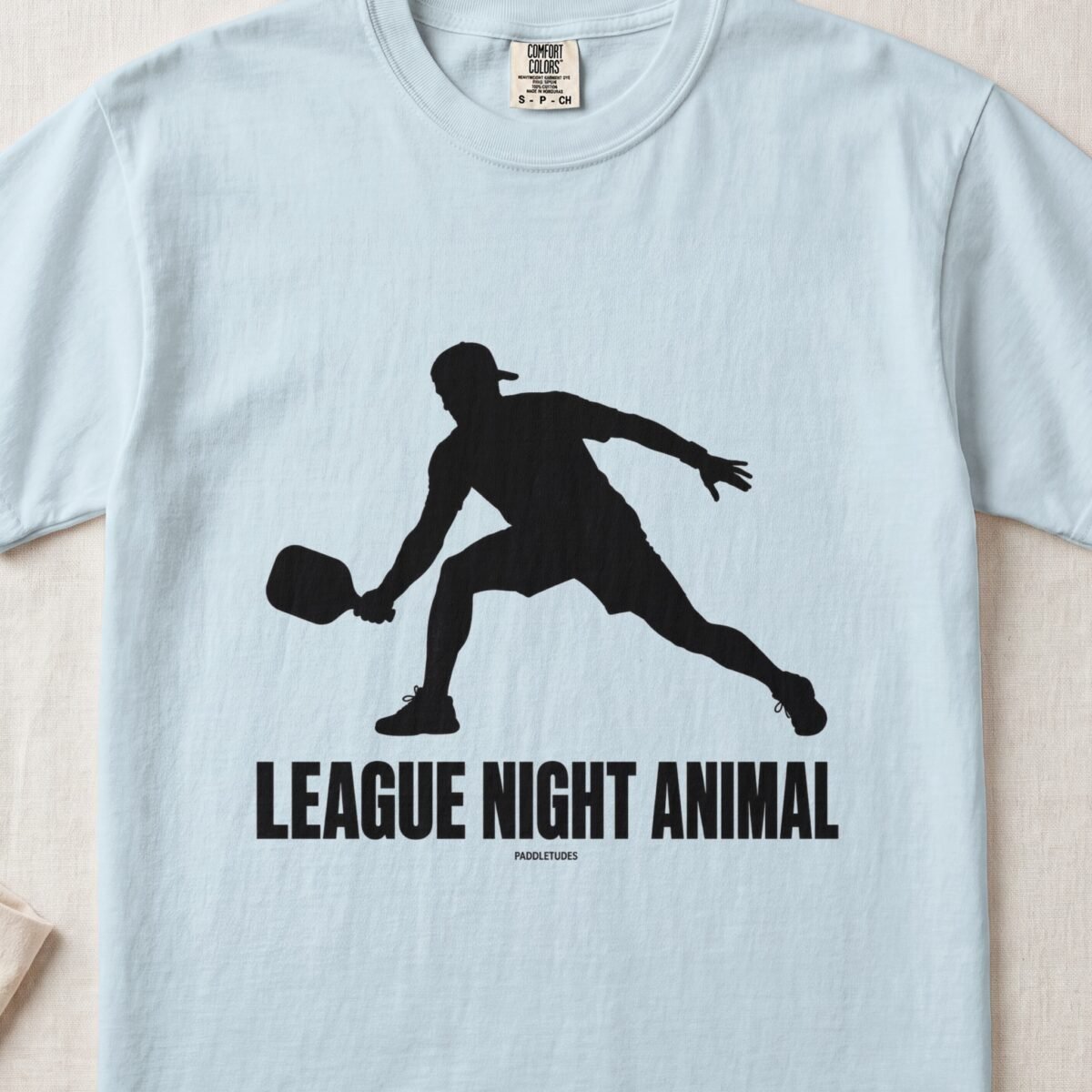
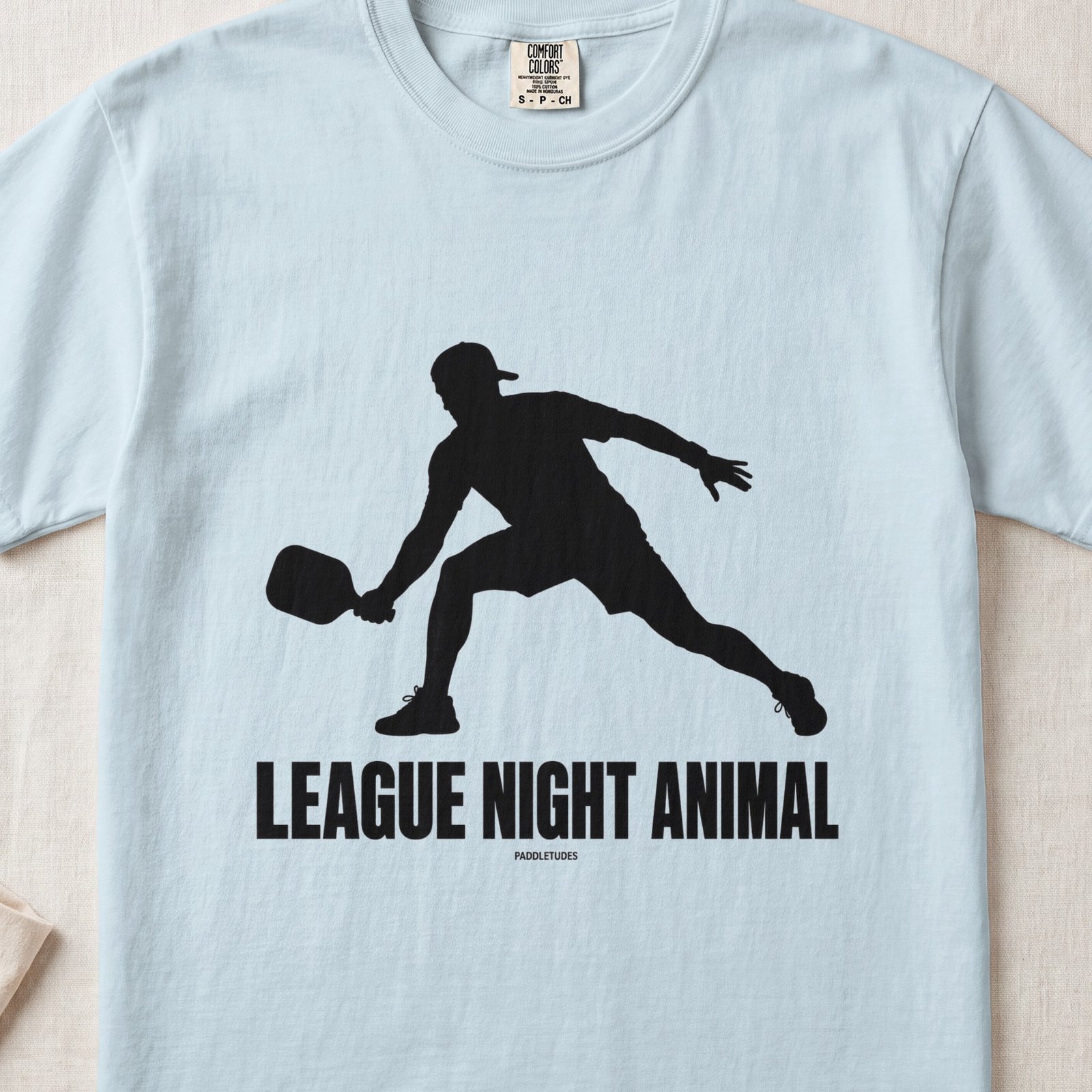
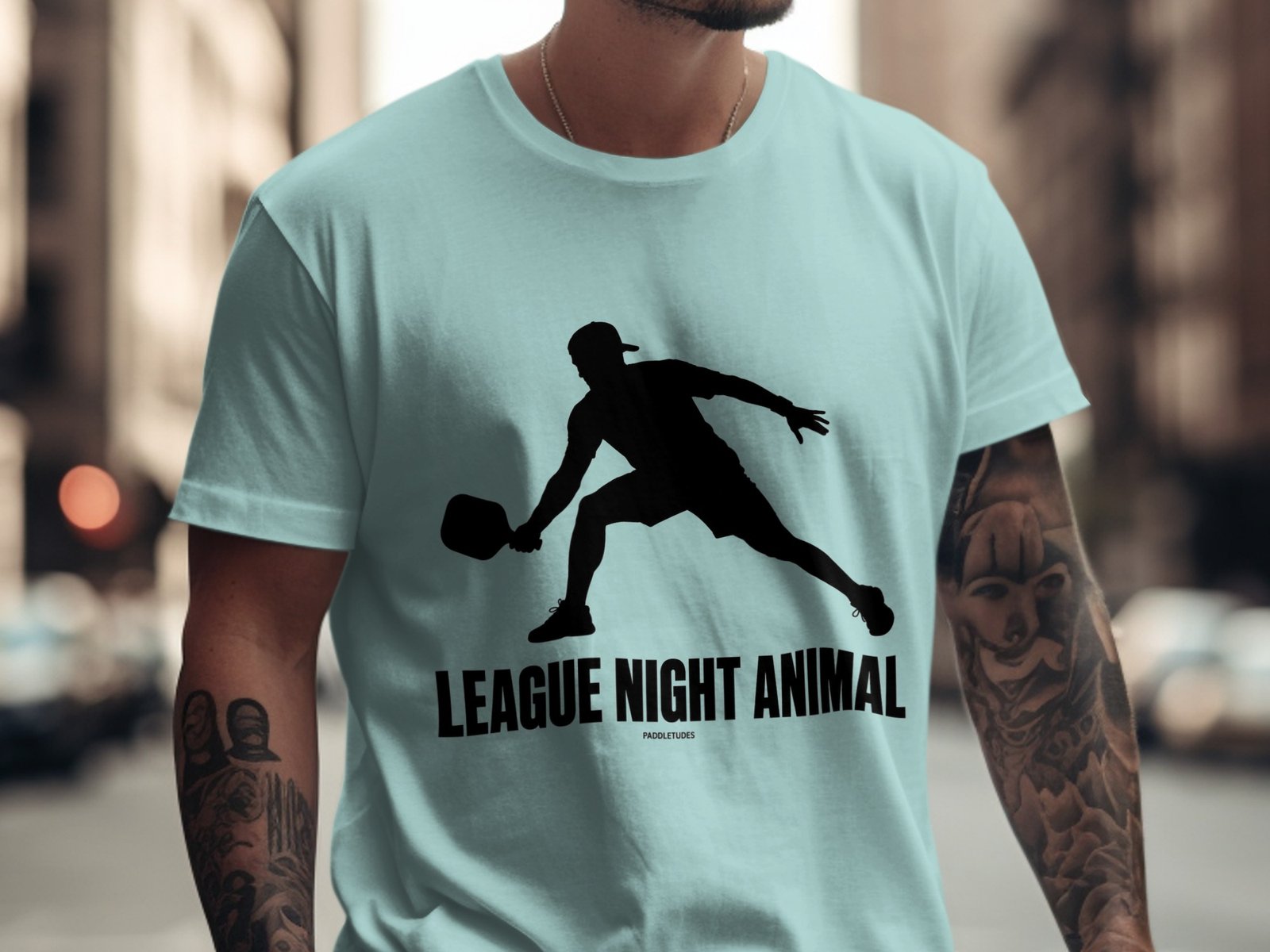
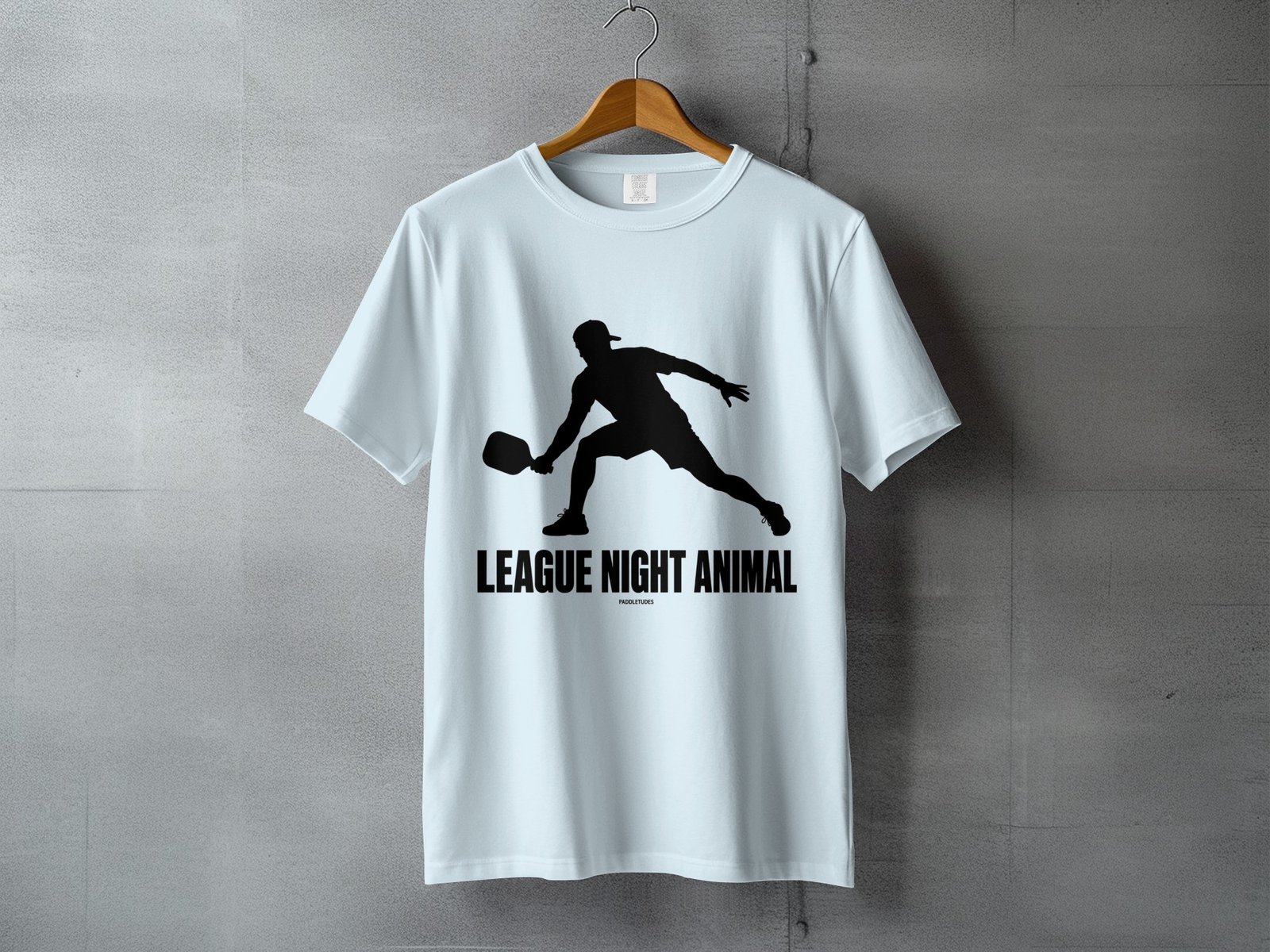
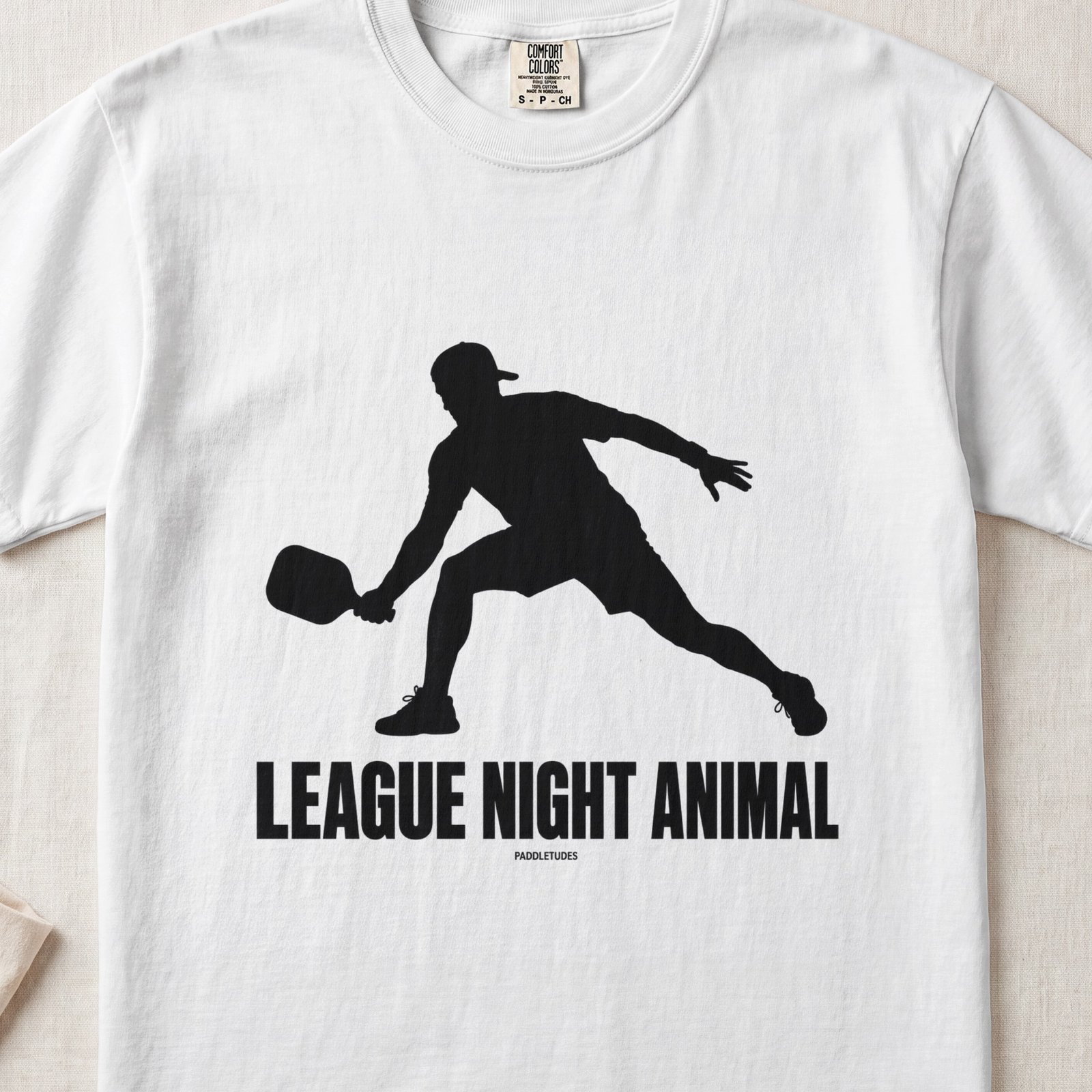
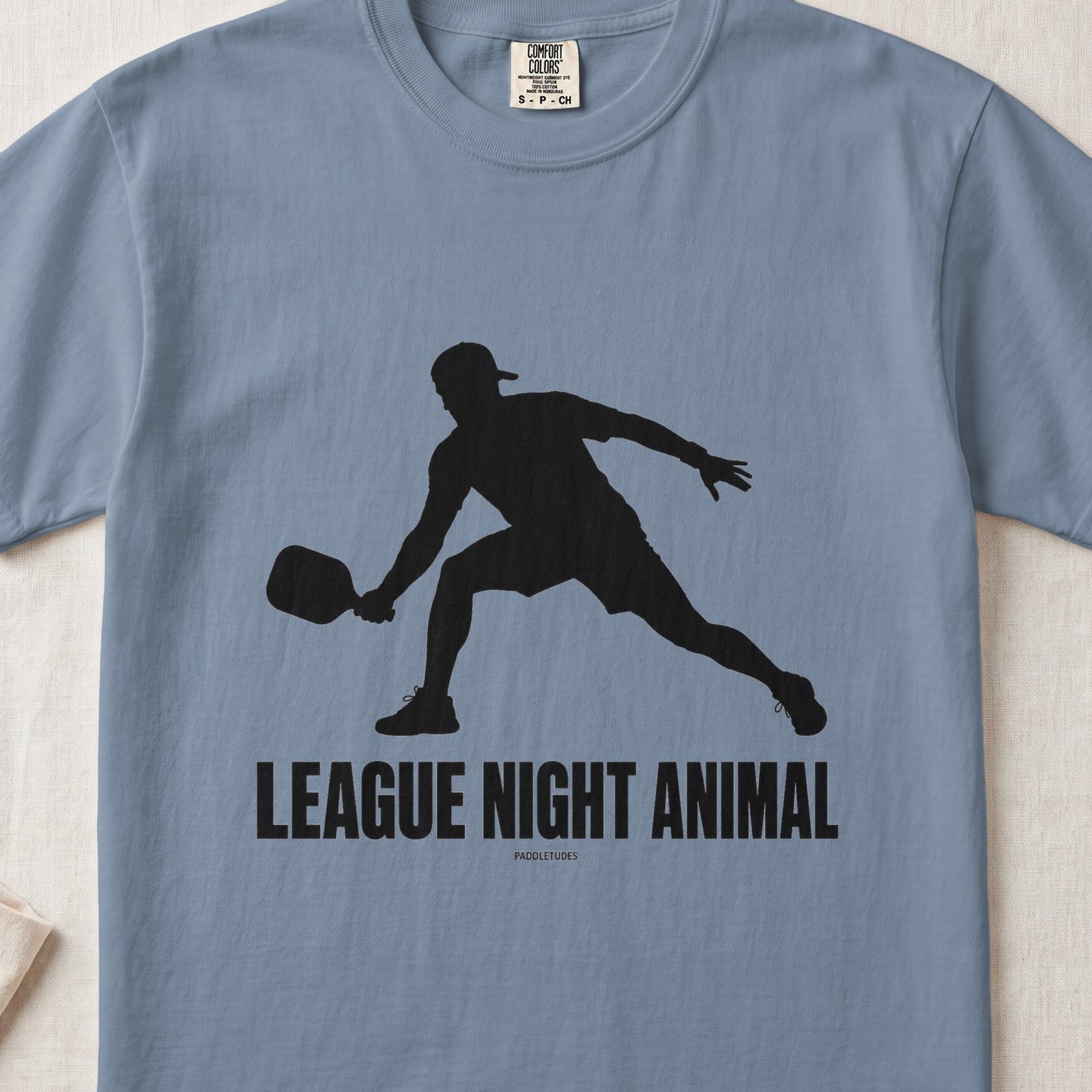
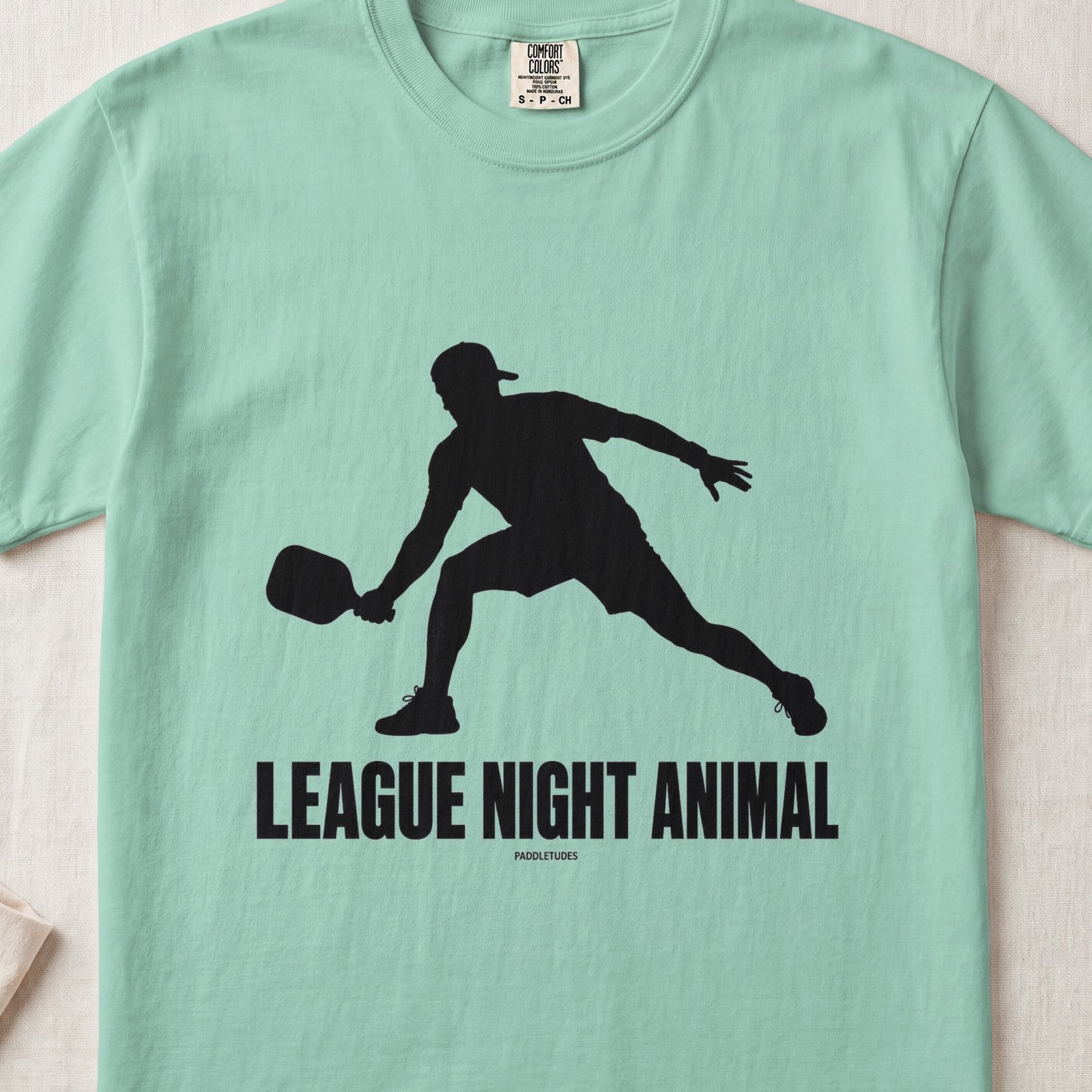
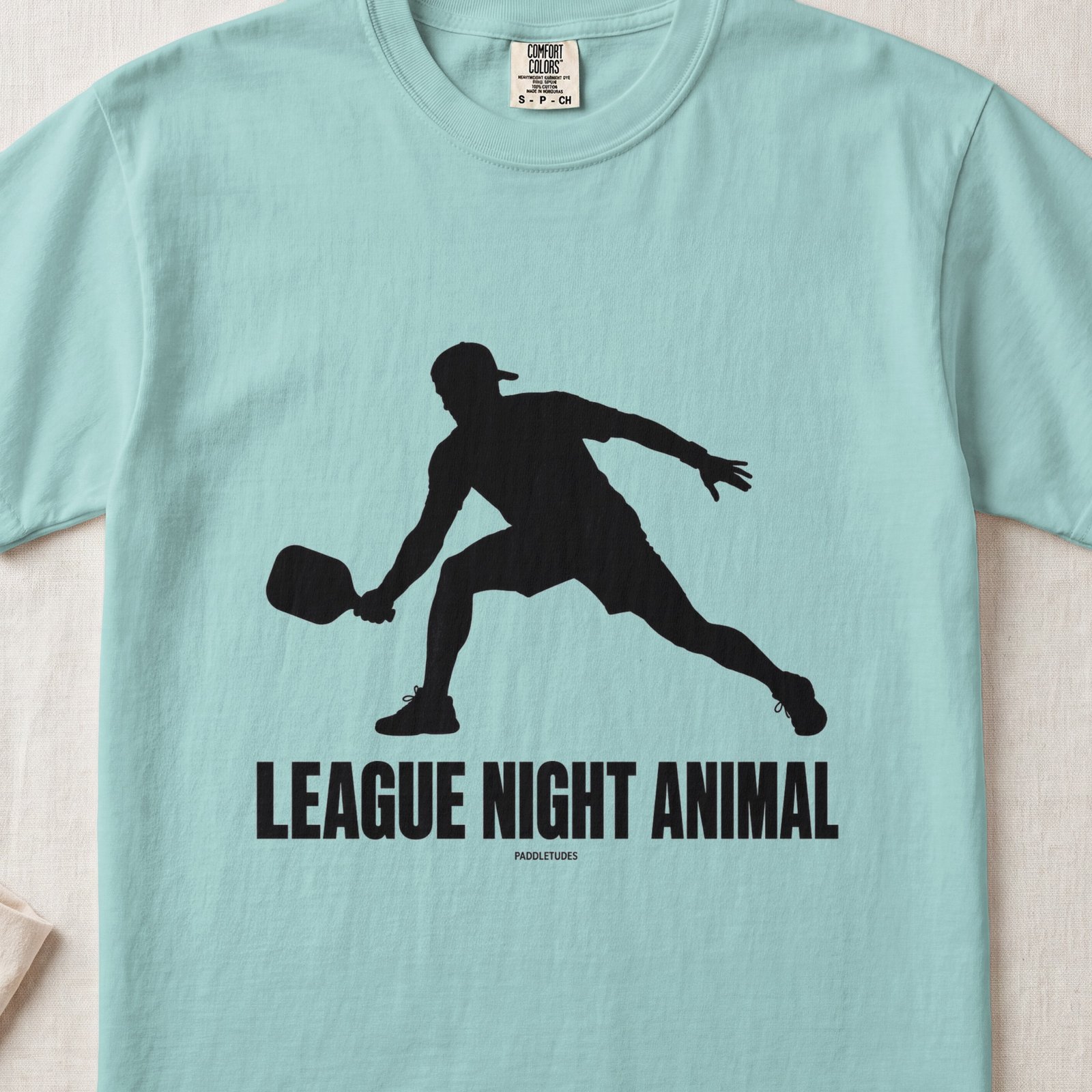
League Night Animal
$29.99
- Comfort Colors 1717 heavyweight cotton
- Original design · printed to order
- U.S. print partners
The Pickleball League Player Who Transforms After Five PM
At 2pm on a Tuesday, he’s facilitating a sprint planning meeting for a software team, taking notes, resolving a disagreement about ticket priority by asking both sides to explain their reasoning, and sending a follow-up email that starts with “Great discussion today.” At 6pm on the same Tuesday, he’s standing at the kitchen line with his teeth clenched, his paddle loaded, and a look on his face that would get him pulled into an HR conversation if anyone from the office could see it. The score is 8-7. It’s league night. The version of him that exists between the baseline and the kitchen line has no relationship to the version that exists between 9 and 5.
He’s a 46-year-old IT project manager who has never played an organized sport in his life — not in high school, not in college, not in a company softball league. He was the kid who read books during gym class and considered “competitive” a personality flaw. Then a coworker signed him up for a beginner pickleball clinic as a team-building exercise three years ago, and something switched that he didn’t know had an off position. The casual games were fine. Open play was pleasant. But the first time he played in a ladder league — the first time someone kept score across a season and the outcome carried from one Tuesday to the next — the animal came out. His dinks got surgical. His celebrations got loud. His partner started calling him “the problem” as a compliment. He plays open play on Saturday mornings and he’s the nicest person on the court. Tuesday nights, he’s a different species.
The transformation isn’t about skill level — it’s about stakes. At 3.0, league night feels awkward because the player is still figuring out the mechanics while also trying to compete. The pressure makes the errors worse instead of sharpening the focus. By 3.5, the player has enough muscle memory that the basics run on autopilot, and the competitive energy channels into shot selection and positioning instead of just surviving each rally. By 4.0, league night is where real growth happens. The player starts studying specific opponents — who can’t handle backhand dinks, who panics when the speed-up comes to the body, who falls apart at 9-9. The preparation between league nights becomes as important as the play during them. By 4.5, the animal is trained. The intensity is still there, but it’s controlled — channeled into a plan, executed without emotion, with adjustments made between games based on what worked and what didn’t. The fist pump still comes out. It just comes out after a point that was earned, not one that was lucky.
The drill for the league night player isn’t a shot drill — it’s a pressure drill. Play a practice game where every point starts at 8-8. Twelve points, alternating serves. The player has to perform when the score matters, not when there’s room to recover. The advanced version adds a rule: the losing team runs a sprint to the baseline and back before the next point starts. Fatigue plus pressure creates the conditions of a late-game league match, and the player who trains in that environment handles the real thing without their hands shaking or their decision-making collapsing. USA Pickleball’s league directory helps players find structured competitive play at every level, from social leagues for newcomers to ranked ladders for the fully converted animal.
A paddle for league night needs to perform consistently under tension — no surprises on the big points. A paddle that plays the same at 2-2 as it does at 9-9 lets the player trust their equipment and focus on execution. CRBN’s carbon fiber paddles are built for consistency — the face responds the same way on the hundredth shot as it does on the first, which is exactly what a pressure player needs when the margin for error disappears in the final stretch of a tight match.
If someone you know has been on a waitlist for a court membership — refreshing the email, checking the website, calling the front desk every other week — and they finally got in, and league night is the first thing they signed up for, this is the shirt that marks the moment. The waitlist is over. The animal is loose.
The league night energy lives across our pickleball collection. Rec Ball Legend is the daytime version of this player — dominant at open play, relaxed, no stakes, and somehow just as effective without the adrenaline. Point Mine is the mid-rally version of the league night switch — the moment inside a point where the animal decides this one is theirs. And Net Worth is the quieter pride that comes from showing up every week, tracking your progress, and knowing your game has actual value because the ladder says so. Find league play near you at Pickleheads.
Printed on a Comfort Colors 1717 garment-dyed heavyweight tee with water-based DTG ink — sizing and care details here.
How Does a Pickleball League Work
A pickleball league is organized, recurring competitive play — typically one session per week over a six-to-ten-week season — where teams of two or four play a set number of games each night and results are tracked across the season to produce standings and, usually, a playoff or championship round at the end.
The most common formats are round robin, ladder, and flex. In a round robin league, every team plays every other team over the course of the season, with wins and losses recorded in a standings table. Ladder leagues rank players individually — you’re assigned a court based on your position, and results move you up or down the ladder each week. Flex leagues assign opponents but let players schedule their own matches within a weekly window, which works for players with unpredictable schedules. Social leagues exist too, but they prioritize rotation and fun over standings, which means they don’t scratch the competitive itch that drives the league night animal.
Most recreational leagues use DUPR ratings or self-assessed skill levels to balance divisions. A typical session runs two to three hours with two to three matches per player. Games are usually played to eleven, win by two, under standard side-out scoring. Some facilities run rally scoring leagues for faster-paced sessions. The structure depends on the facility, but the common thread is that the same group of players competes against each other over multiple weeks, which builds partnerships, rivalries, and the kind of strategic depth that drop-in play never provides.
The difference between league play and open play isn’t just the scoreboard — it’s the accountability. In open play, you rotate partners, play one game, and move on. Nobody tracks whether you won or lost. In league play, your Tuesday result carries into next Tuesday’s standings, and the person you lost to last week is standing across the net again with a plan built on what worked before. That continuity forces improvement in a way that casual play doesn’t, which is why most players who join a league see their skill level jump noticeably within one season. The player wearing this shirt didn’t join a league to have fun. They joined to compete. The fun is a side effect of winning.
-
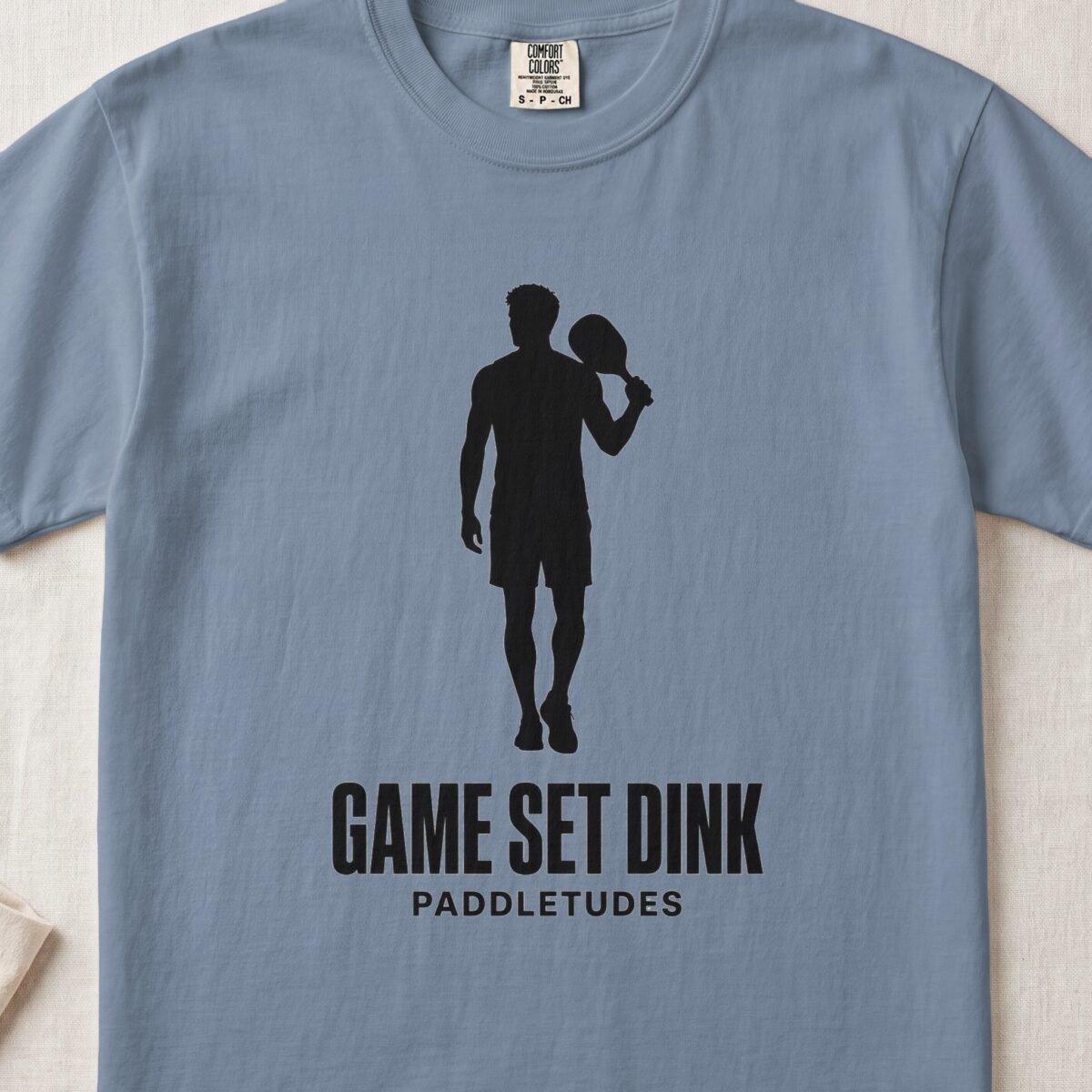
Game Set Dink
$29.99 Select options This product has multiple variants. The options may be chosen on the product page -
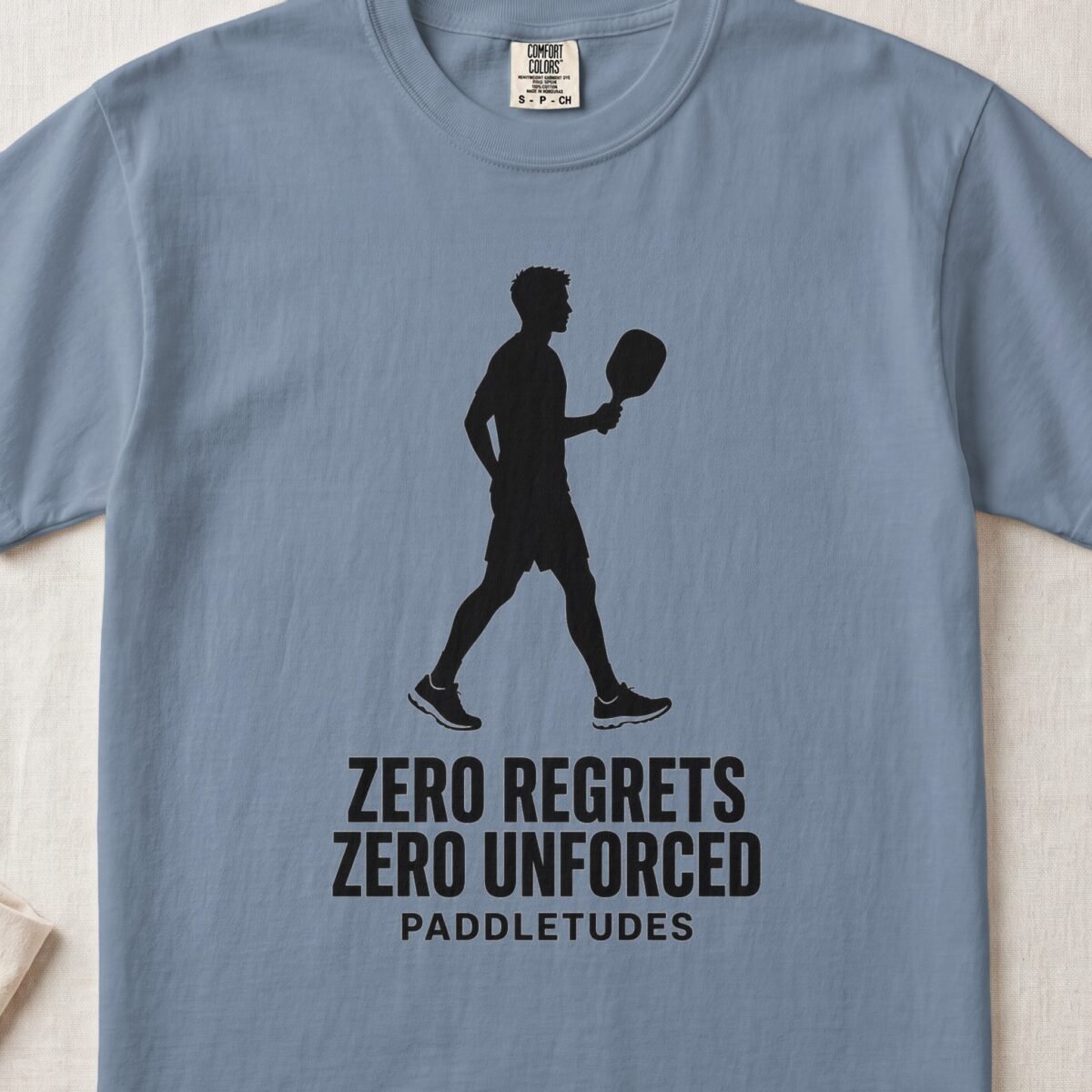
Zero Regrets Zero Unforced
$29.99 Select options This product has multiple variants. The options may be chosen on the product page -
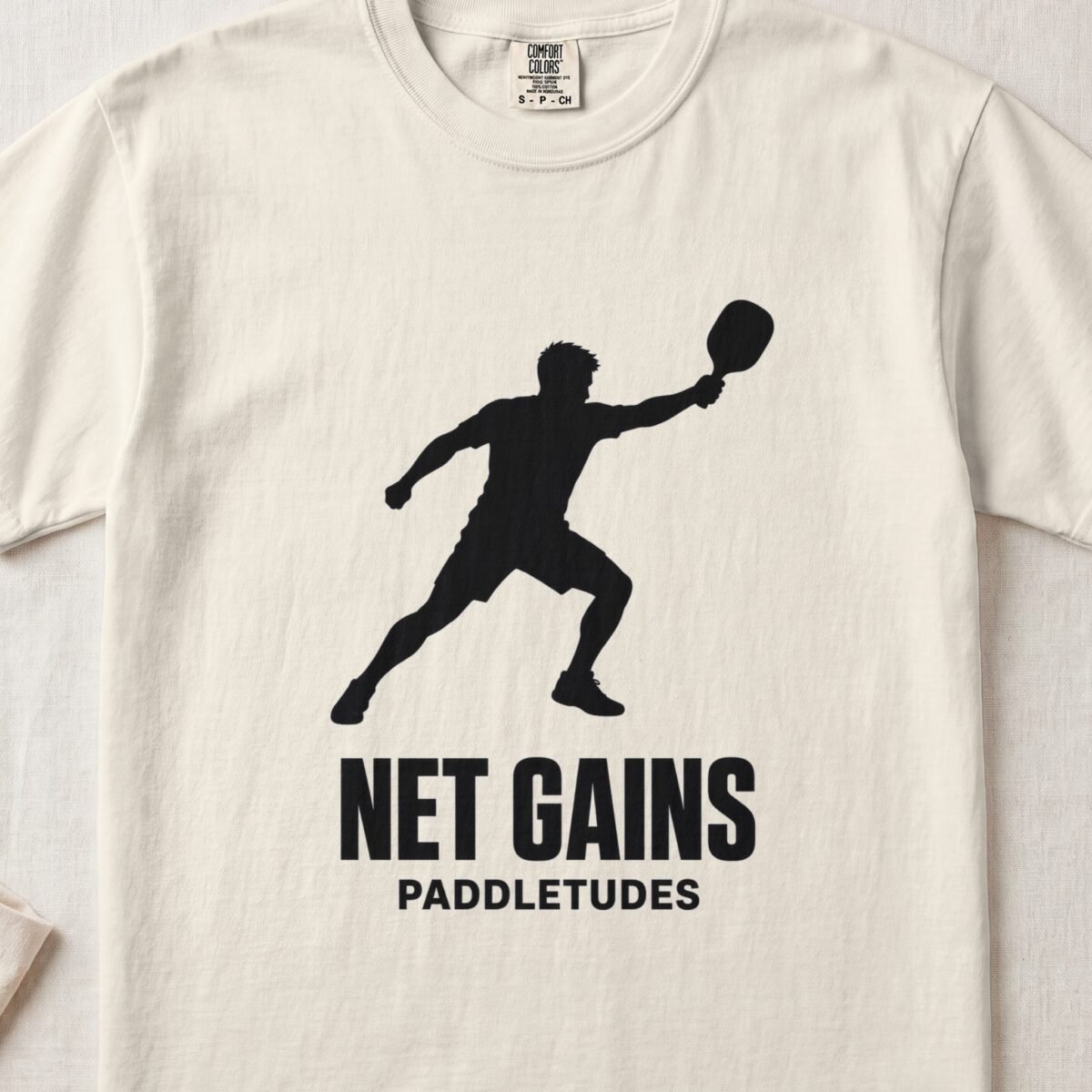
Net Gains
$29.99 Select options This product has multiple variants. The options may be chosen on the product page