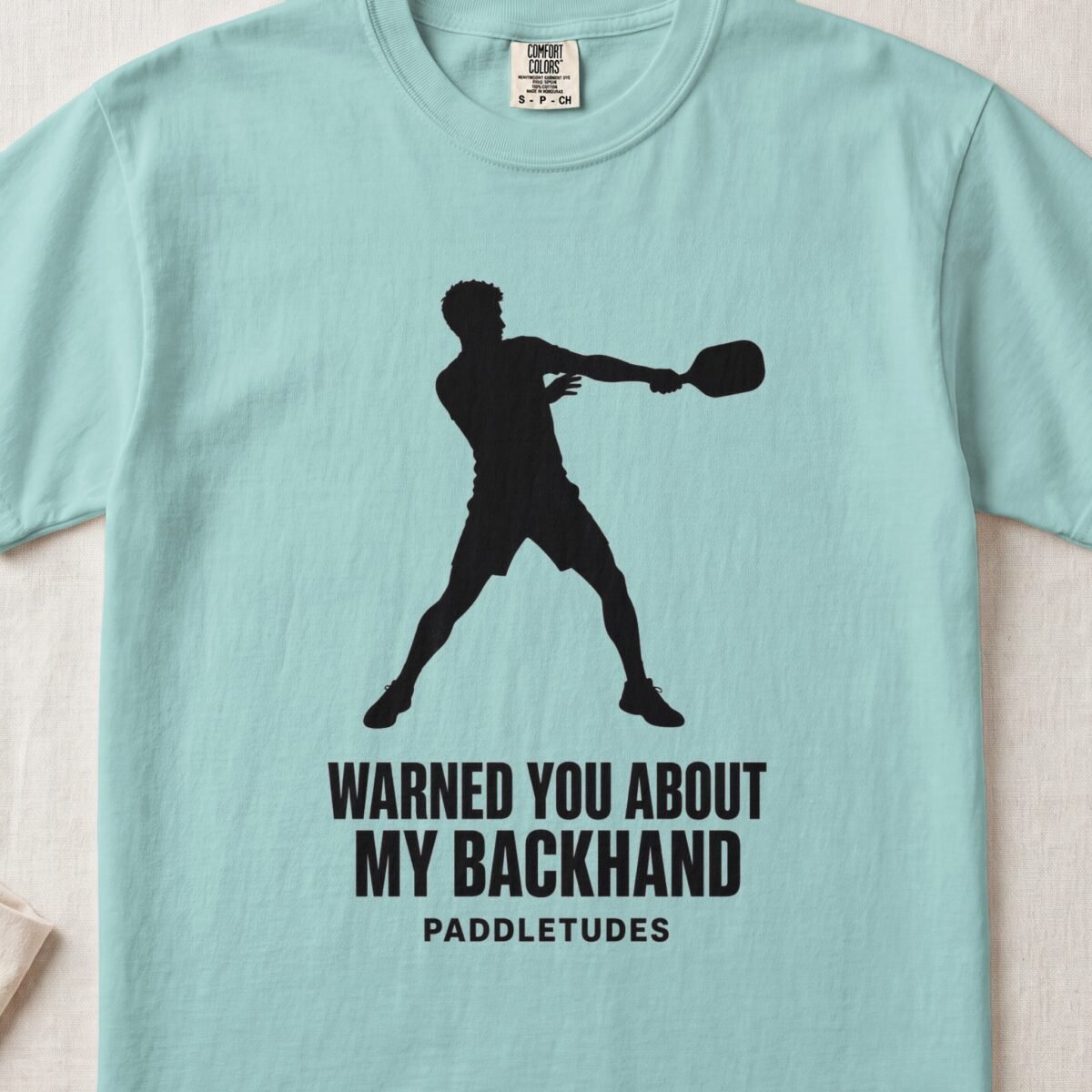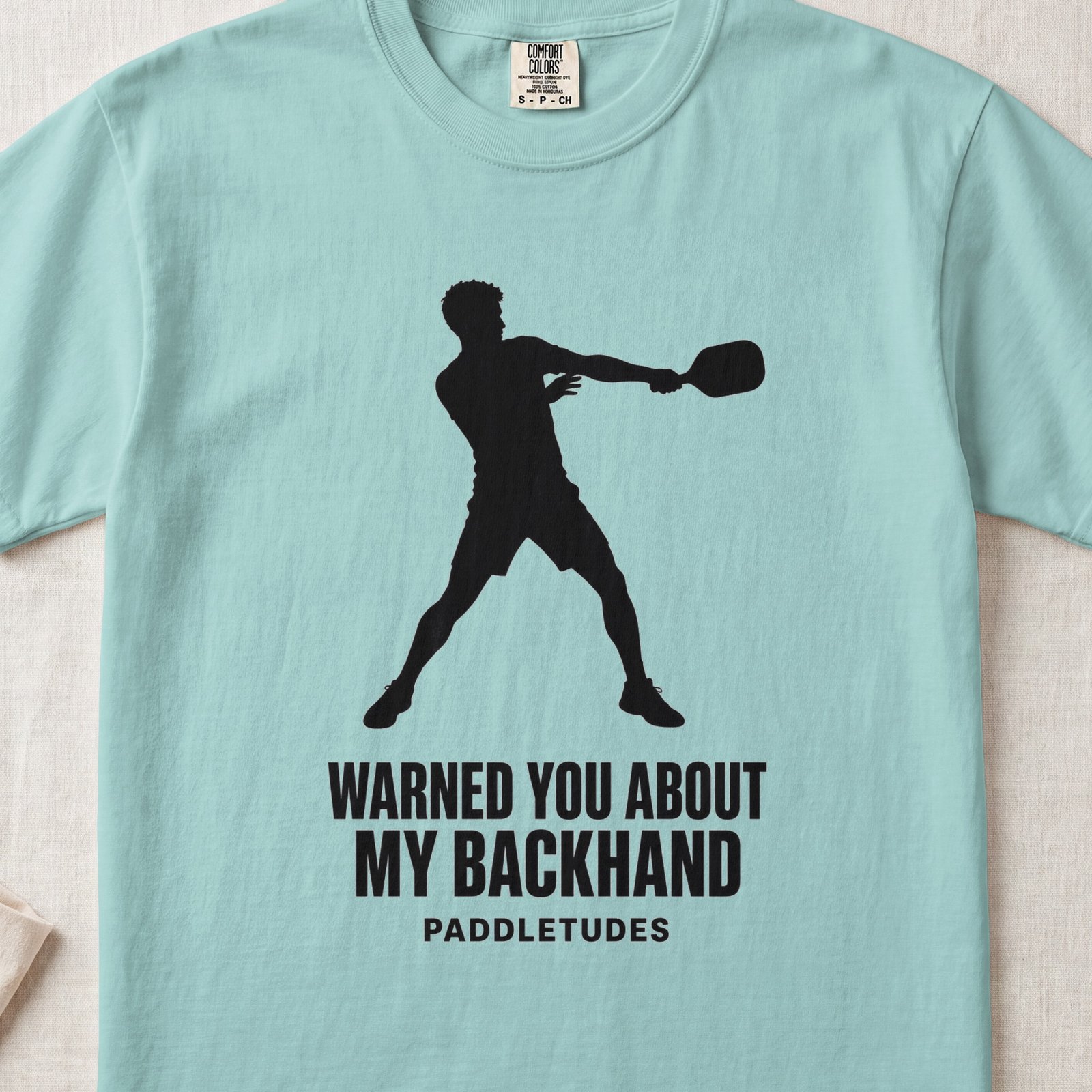
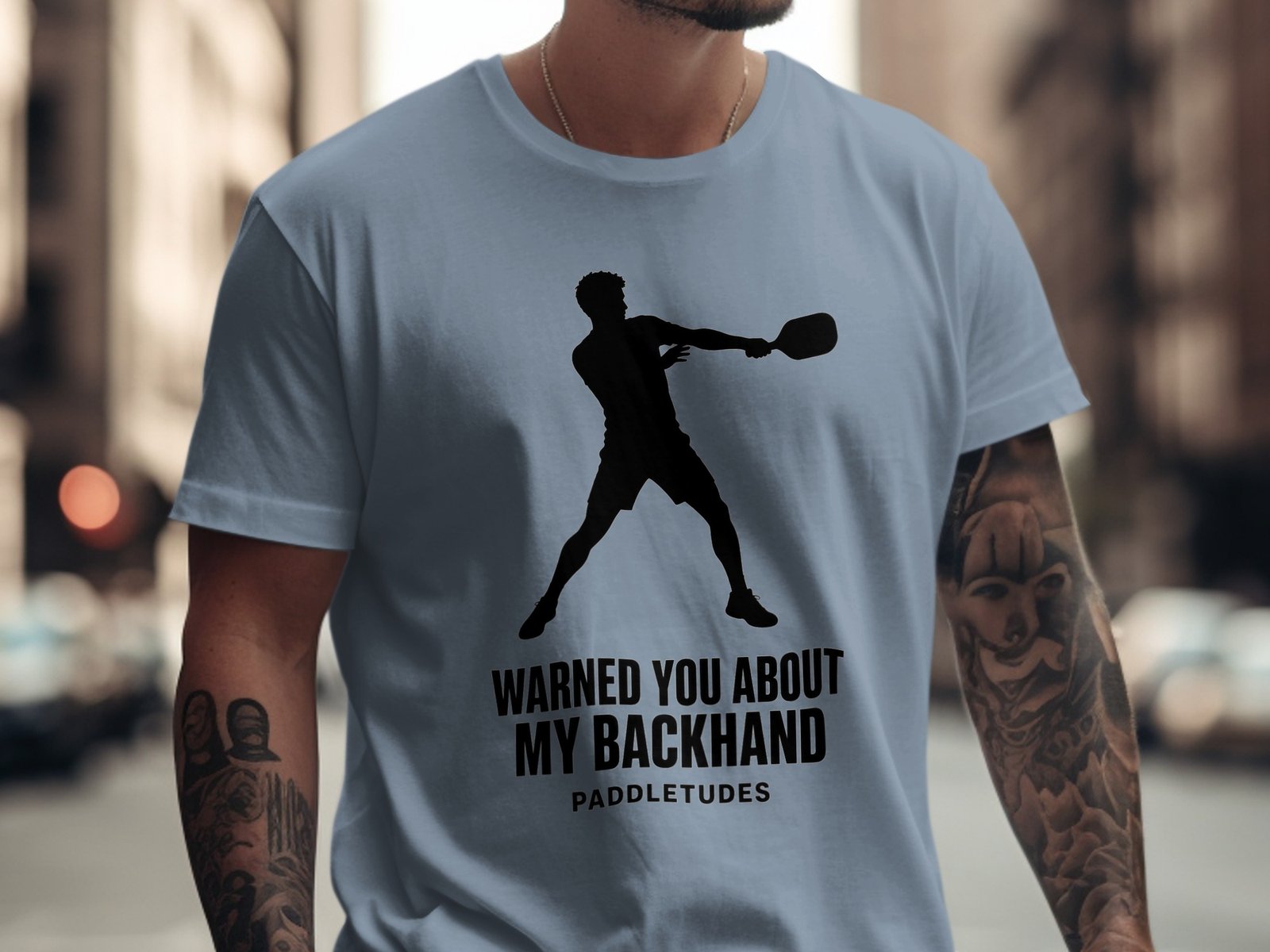
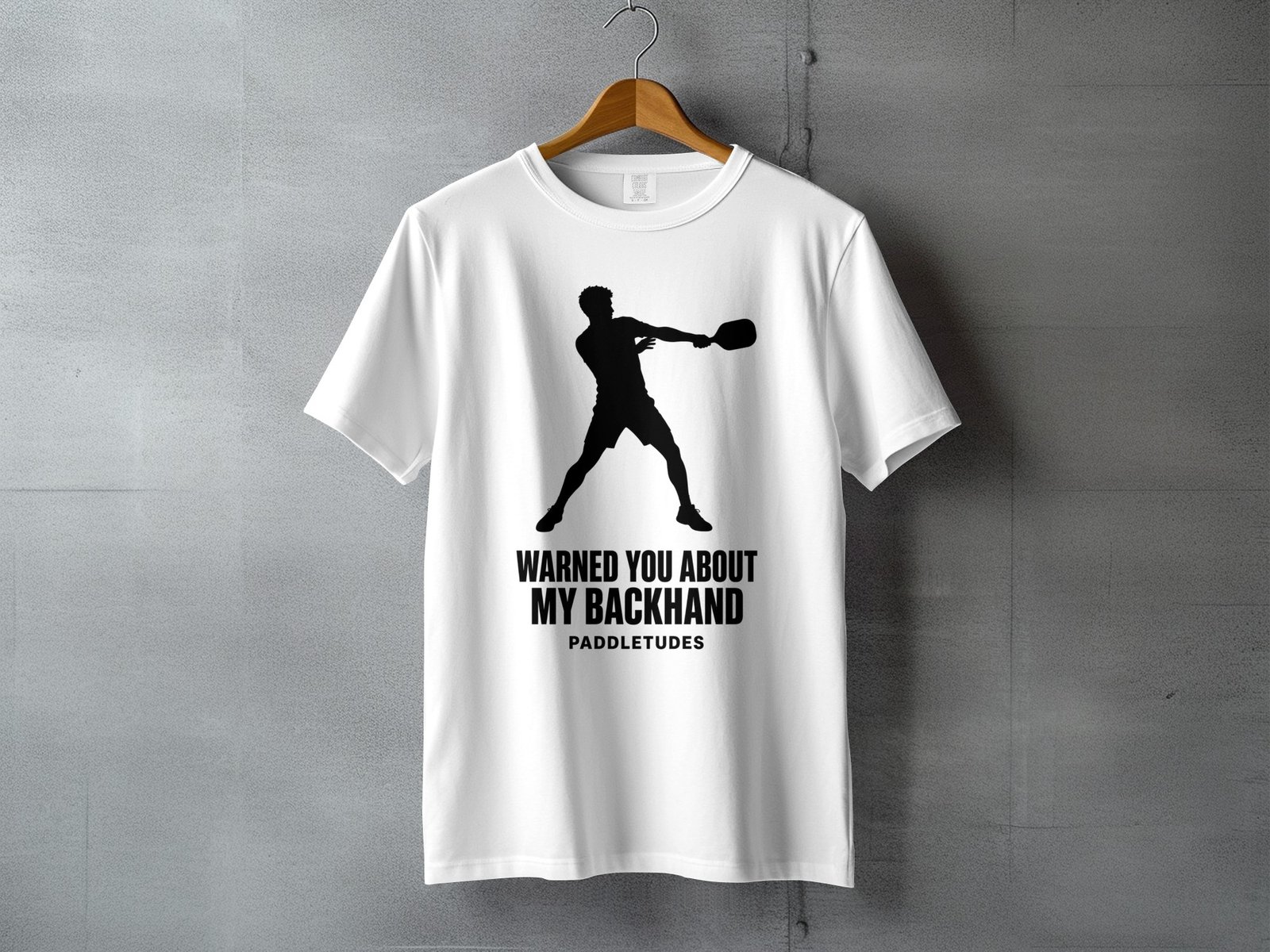
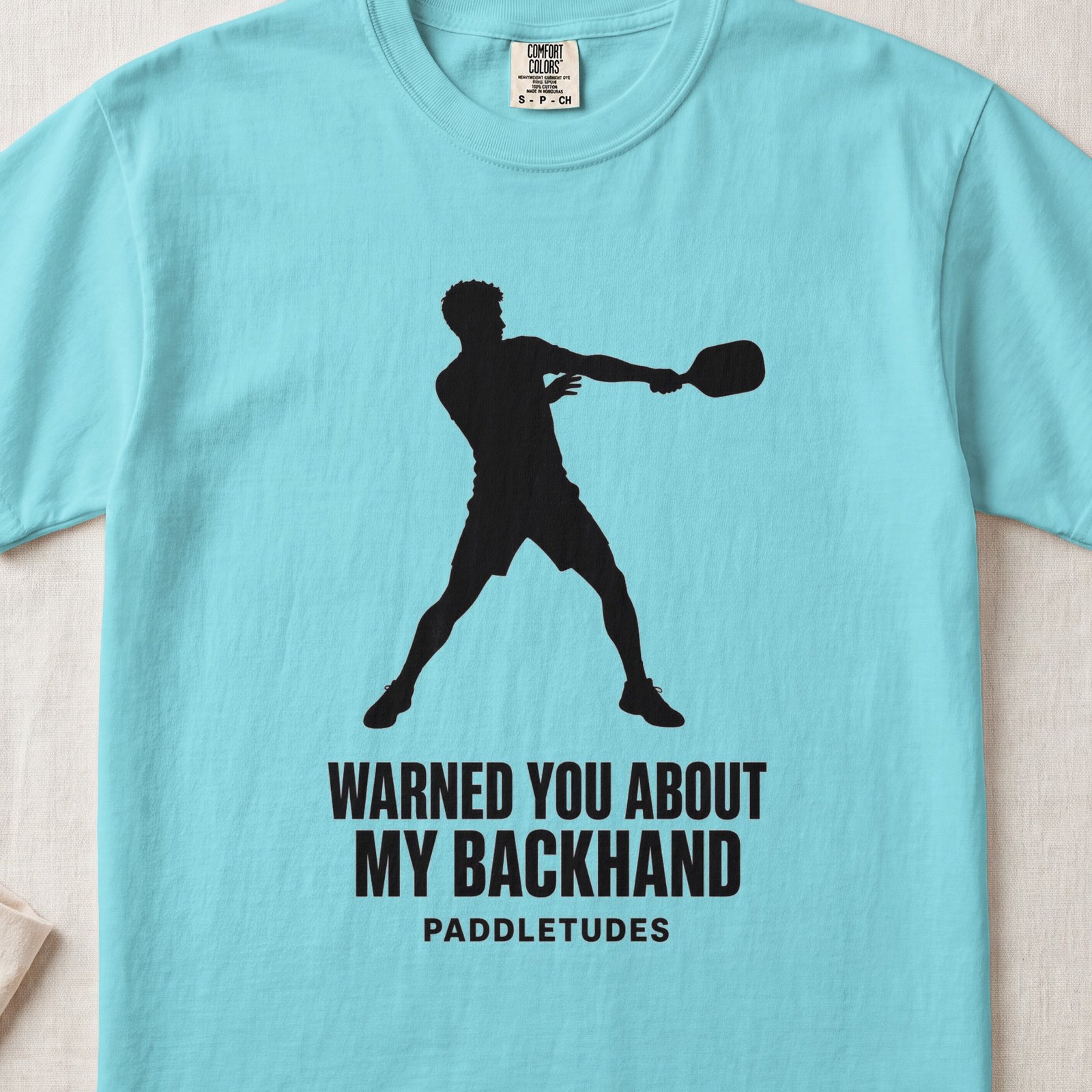
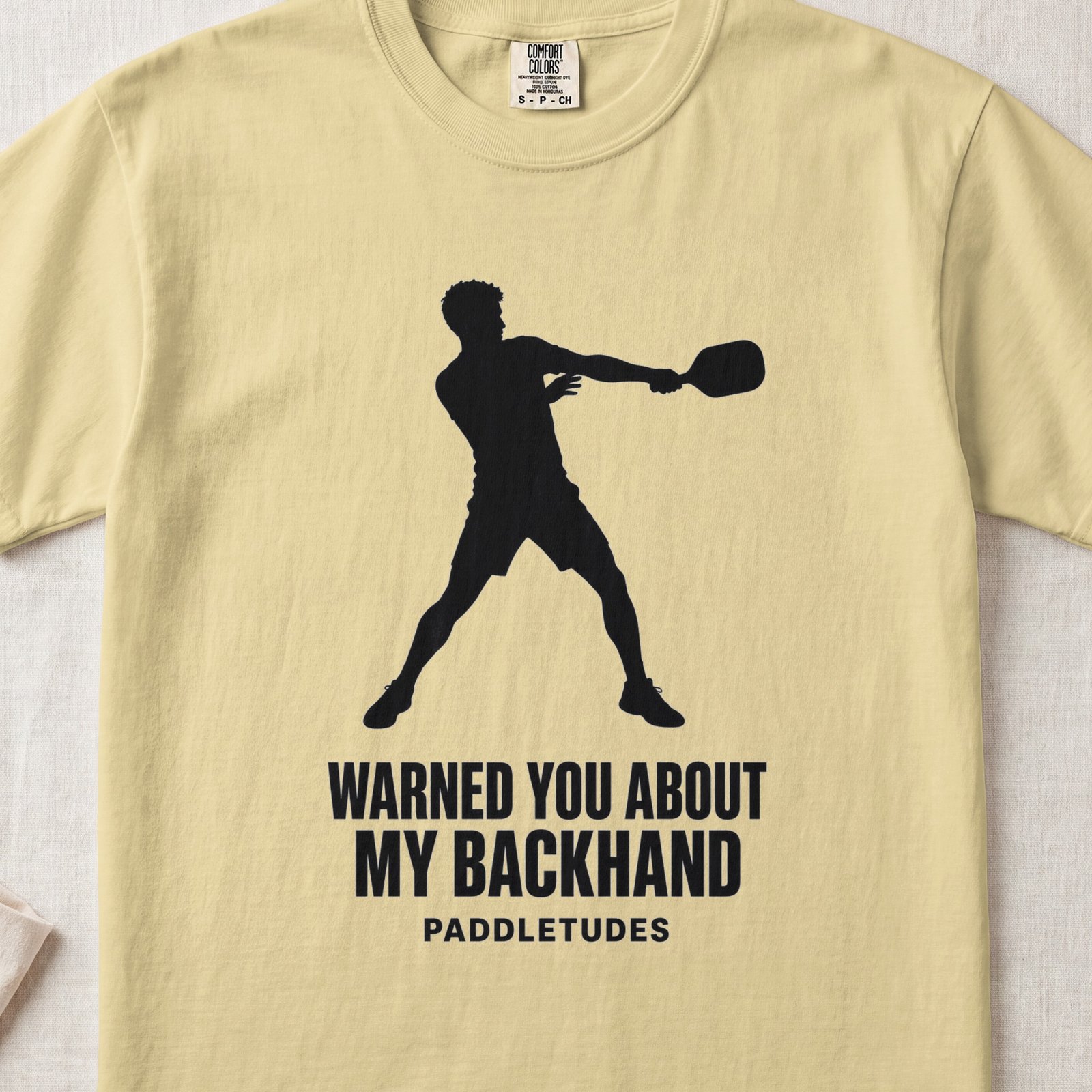
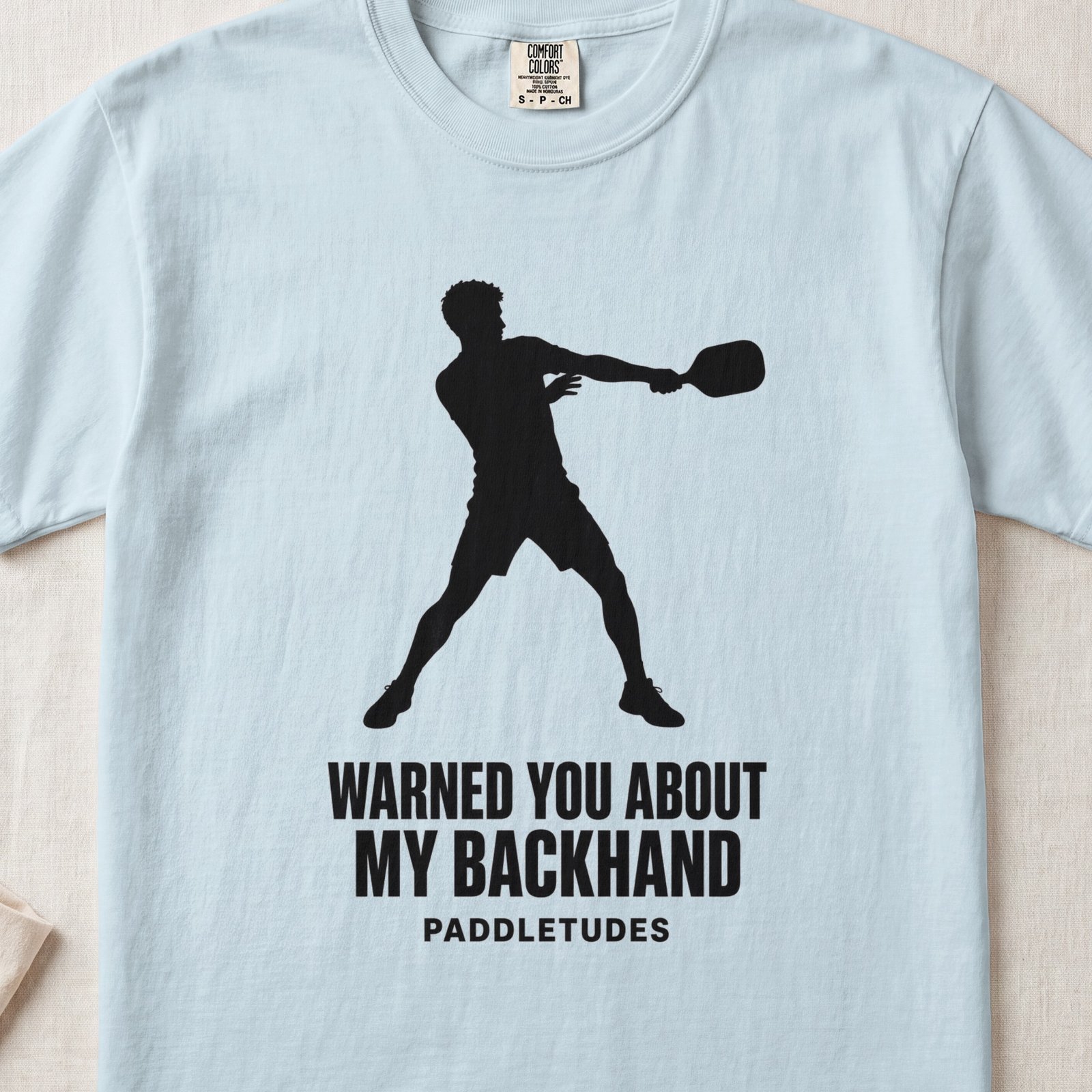
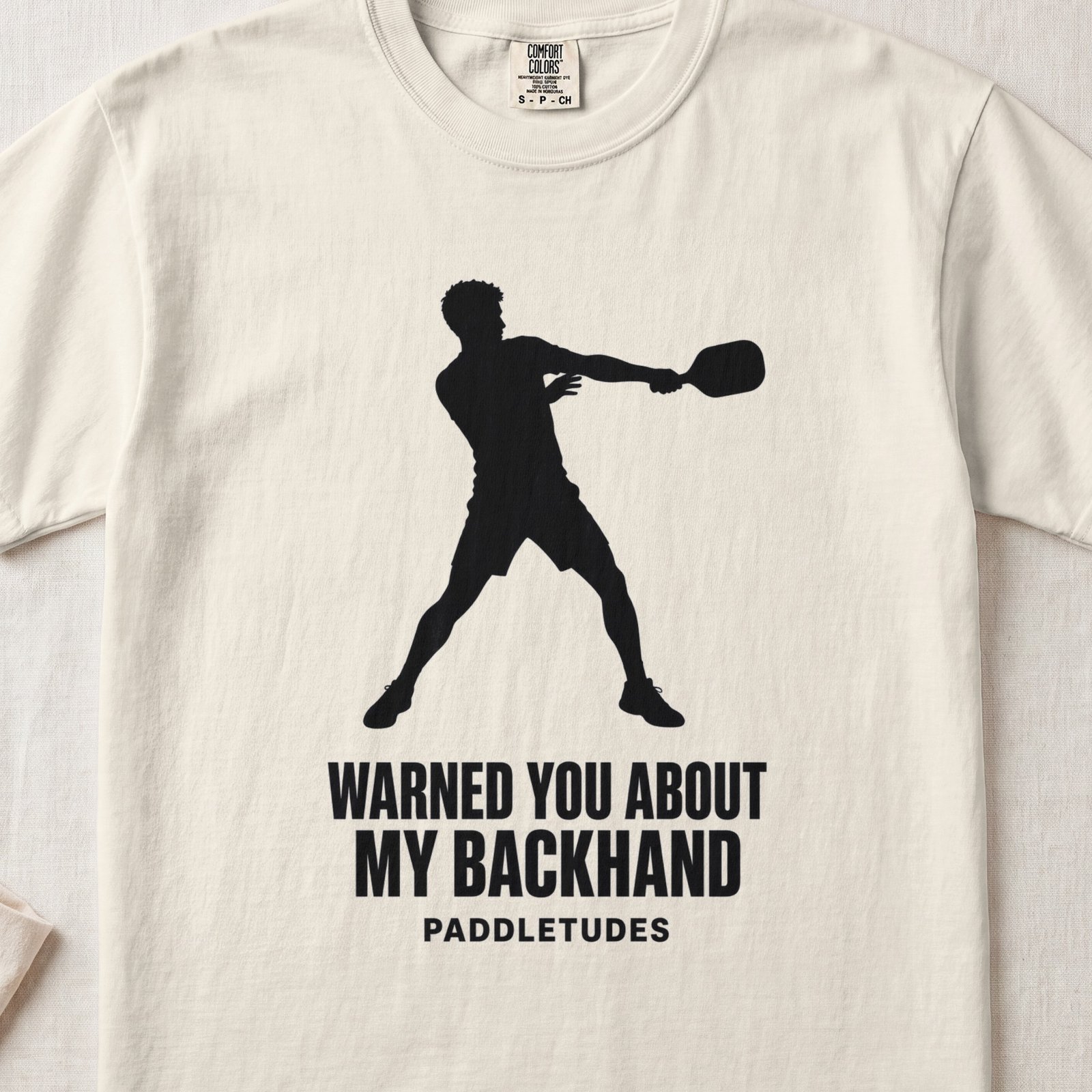
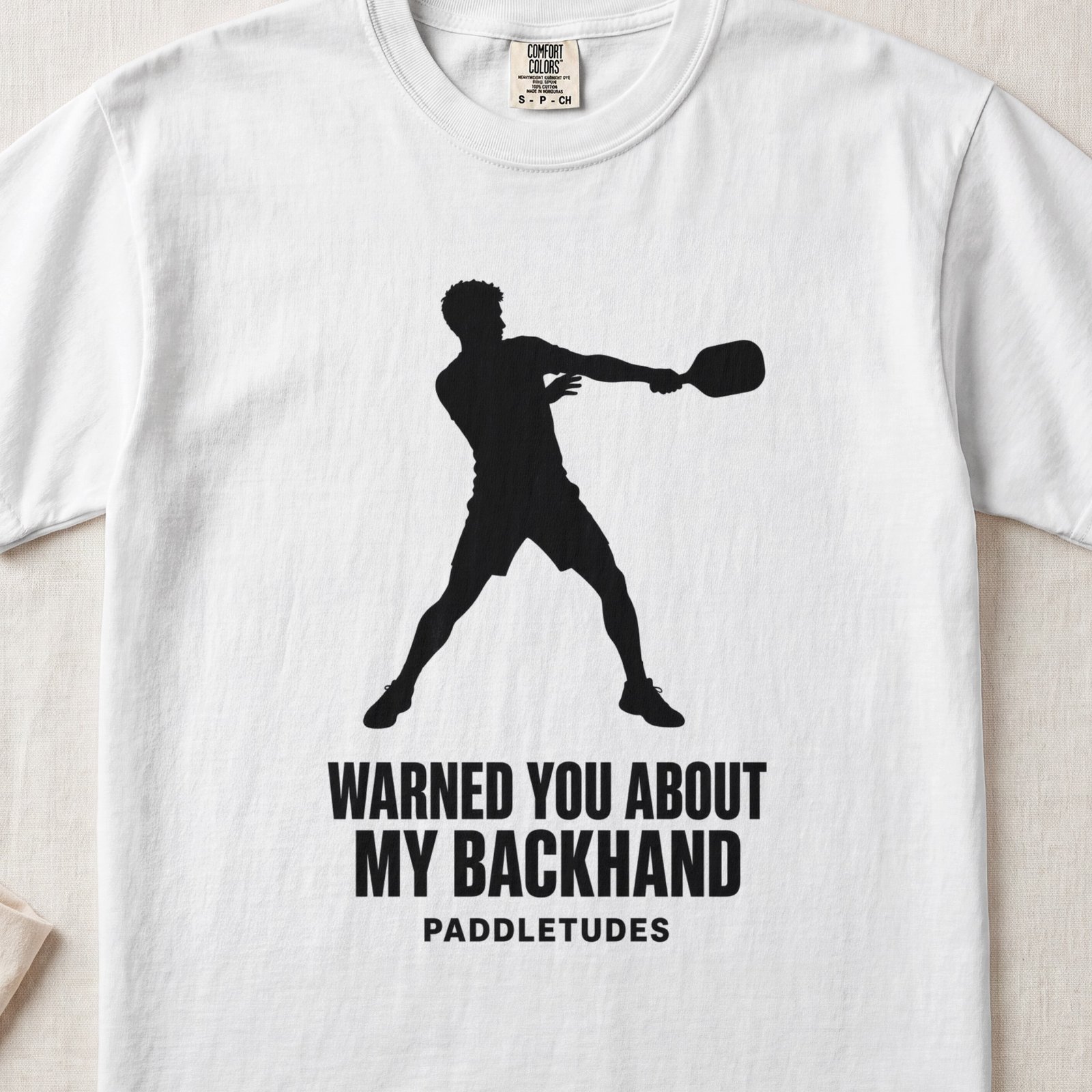
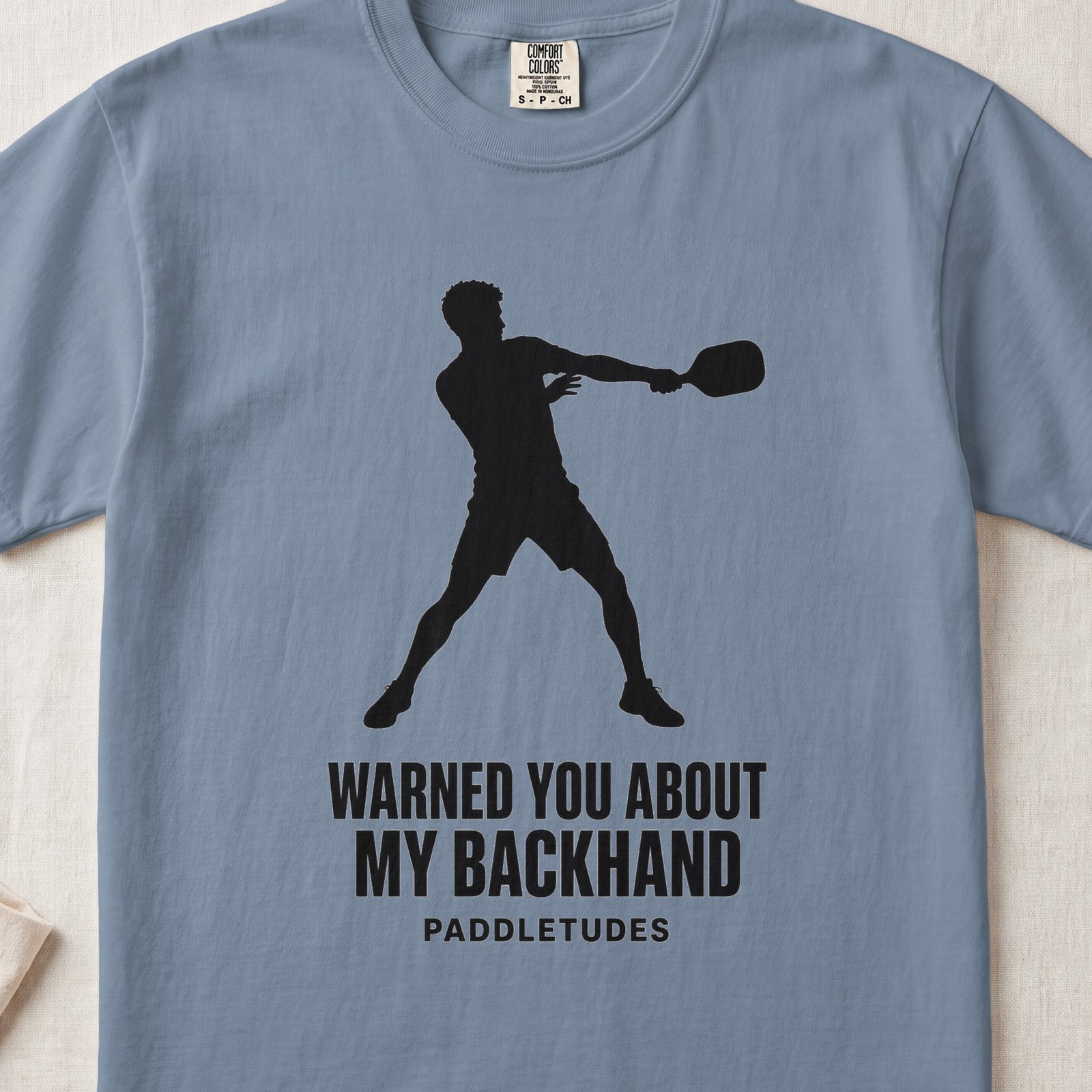
Sports Comfort Colors 1717
Warned You About My Backhand
$29.99
- Comfort Colors 1717 heavyweight cotton
- Original design · printed to order
- U.S. print partners
The Pickleball Backhand They Used to Target — Now It Targets Them
They kept targeting the backhand. Every serve. Every speed-up. Every ball they could place on the left side of your body, they put there — because three months ago, that side was a liability. The paddle was late. The contact was off. The ball sat up like an invitation and the opponent RSVPed every single time.
Then you fixed it. And they didn’t notice.
Warned You About My Backhand is for the player whose weakness became their weapon — not because of natural talent, not because of a paddle upgrade, but because they spent the time. They drilled it before open play. They hit against the wall when nobody was watching. They got the coaching, took the notes, and showed up the next week with a backhand that not only defended the side but attacked from it. The opponent who built their entire game plan around targeting your backhand is now dealing with a ball coming back with pace, placement, and the unmistakable energy of someone who’s been waiting for this moment.
Off the court, this is the person who takes feedback without flinching. The one who hears “your presentation needs work” and comes back the next meeting with a slide deck that makes the room quiet. The person whose response to criticism isn’t defense — it’s revision. They don’t argue about the weakness. They eliminate it. The Warned You About My Backhand player has the same relationship with their game that a serious editor has with a manuscript: find the problem, fix the problem, never make the same mistake twice.
The one-handed versus two-handed backhand debate is the biggest mechanical decision in modern pickleball, and this shirt’s wearer has an opinion forged in practice, not theory. The one-handed backhand offers more reach — critical for wide balls and emergency defense at the net during hands battles. The two-handed backhand offers more stability and power — two hands on the paddle absorb pace better and generate topspin on drives from the backhand side. Every pro uses both: one-handed for the stretch balls and quick volleys, two-handed for the third shot drive and the roll volley that dips over the net. The player wearing this shirt has figured out which combination works for their body and their game, and the opponent who’s still targeting that side hasn’t updated their scouting report.
The paddle for backhand improvement depends on which technique you’re building. The two-handed backhand requires a longer handle — at least 5.5 inches — to accommodate both hands comfortably. Joola’s Perseus shape and CRBN’s elongated models both offer the handle length and the face texture that makes two-handed topspin drives possible. For one-handed backhand players, the grip and paddle weight matter more than the handle length — a slightly heavier paddle with a responsive face helps absorb pace on blocks without requiring the stability of a second hand. Selkirk’s widebody models provide the forgiveness that one-handed backhand players need on off-center contacts at the net.
The drill that transforms a backhand fastest is targeted partner feeding. Have a partner at the kitchen line drive balls at your backhand side from different heights and speeds. Return thirty using your one-handed backhand. Then thirty with the two-handed. Feel the difference. The two-hander will feel more stable on hard drives. The one-hander will feel quicker on fast exchanges. Now mix — partner alternates between forehand-side and backhand-side feeds without warning. This builds the decision speed that separates a player who has two backhands from a player who uses the right one at the right time. At Pictona near Daytona Beach and at courts across the Pickleheads map, the players who own their backhand are the ones who drilled it in isolation before it ever had to show up under match pressure.
If the coach or partner who fixed your backhand — the person who saw the weakness, named it honestly, and showed you how to rebuild it — deserves recognition, this is the gift. Not a thank-you card. A shirt that says the work they put in produced a measurable result, and the opponents who used to exploit that side are now dealing with the consequences. It also works for anyone who recently transformed a specific part of their game through deliberate practice, because the feeling of watching an opponent target something that isn’t a weakness anymore is one of the most satisfying moments in any sport.
The backhand that this shirt celebrates is the shot that ends rallies the opponent thought they were winning. For the power game that a strong backhand enables, She Bangs is the drive-first philosophy. For the kitchen positioning where a reliable backhand becomes essential — blocking volleys, redirecting speed-ups, holding your side of the net — Kitchen Confidential is where the backhand does its most important work. And for the commitment to eliminating every weakness from your game, not just the backhand, Zero Regrets Zero Unforced is the broader philosophy that treats every error as a problem to solve. The USA Pickleball skill rating system rewards a reliable backhand at every level — because the opponent will always find it, and the question is whether they regret looking.
Printed on a Comfort Colors 1717 garment-dyed heavyweight tee with water-based DTG ink — sizing and care details here.
Is a One-Handed or Two-Handed Backhand Better in Pickleball
Neither is universally better — the right choice depends on the shot, the situation, and the player’s body. The one-handed backhand offers more reach on wide balls, faster transitions between forehand and backhand during hands battles at the net, and better emergency defense when the ball is already on top of you. The two-handed backhand provides more stability on hard-paced shots, more power on drives and third shots, and a natural topspin roll volley that dips over the net.
In 2026, the trend in competitive pickleball is toward using both. Every professional player on the PPA Tour has at least a situational two-handed backhand, because the fast exchanges at the kitchen line in modern doubles require the stability that two hands provide on pace. But those same players keep the one-handed backhand for the stretch balls, the wide dinks, and the quick reflex volleys where a second hand would slow the paddle down.
For recreational and intermediate players, the decision often comes down to background. Tennis players tend to bring a two-handed backhand with them and adapt it to pickleball. Players who started with pickleball tend to learn one-handed first because it feels more natural with the lighter paddle. The honest advice is to develop both and let the ball dictate which one you use. A high, hard drive at your body? Two hands. A wide dink that’s dying in the corner? One hand. A speed-up at your paddle hip during a hands battle? Whichever one gets there faster — and for most players at the net, that’s the one-hander.
How Do You Improve Your Backhand in Pickleball
Isolate it. The biggest reason backhands stay weak is that players avoid hitting them — they run around the backhand to use their forehand, which feels more comfortable but never forces the weaker side to develop. The fix is removing the forehand from practice entirely and forcing the backhand to handle everything.
The wall drill is the fastest solo improvement tool. Stand six to eight feet from a wall and rally against it using only your backhand. Start slow — just keep the ball in play. Then add pace. Then add topspin by brushing up on the back of the ball. Do fifty shots. Then a hundred. The wall doesn’t care about your comfort zone. It sends the ball back at whatever pace you gave it, and your backhand has to deal with every return.
With a partner, the backhand isolation drill works even faster. Your partner stands at the kitchen line and feeds drives at your backhand side — forehand is off limits. Return everything backhand. Start from the baseline, then move to the transition zone, then the kitchen line. At each distance the mechanics shift: baseline backhands are full swings with body rotation. Transition zone backhands are compact half-volleys. Kitchen line backhands are punch volleys with almost no swing at all. Training from all three positions builds a backhand that works everywhere on the court, not just from the spot where you practiced it.
The timeline for real improvement is shorter than most players expect. Two weeks of daily backhand-only practice — fifteen minutes before open play — produces visible results. The contact point becomes consistent. The paddle face stops wavering. The ball starts going where you aim instead of where it decides. The opponent who’s been targeting your backhand for months will notice the change before you tell them, because the ball coming back from your side will feel different. Harder. Lower. More intentional. That’s when this shirt goes from aspiration to declaration.
-
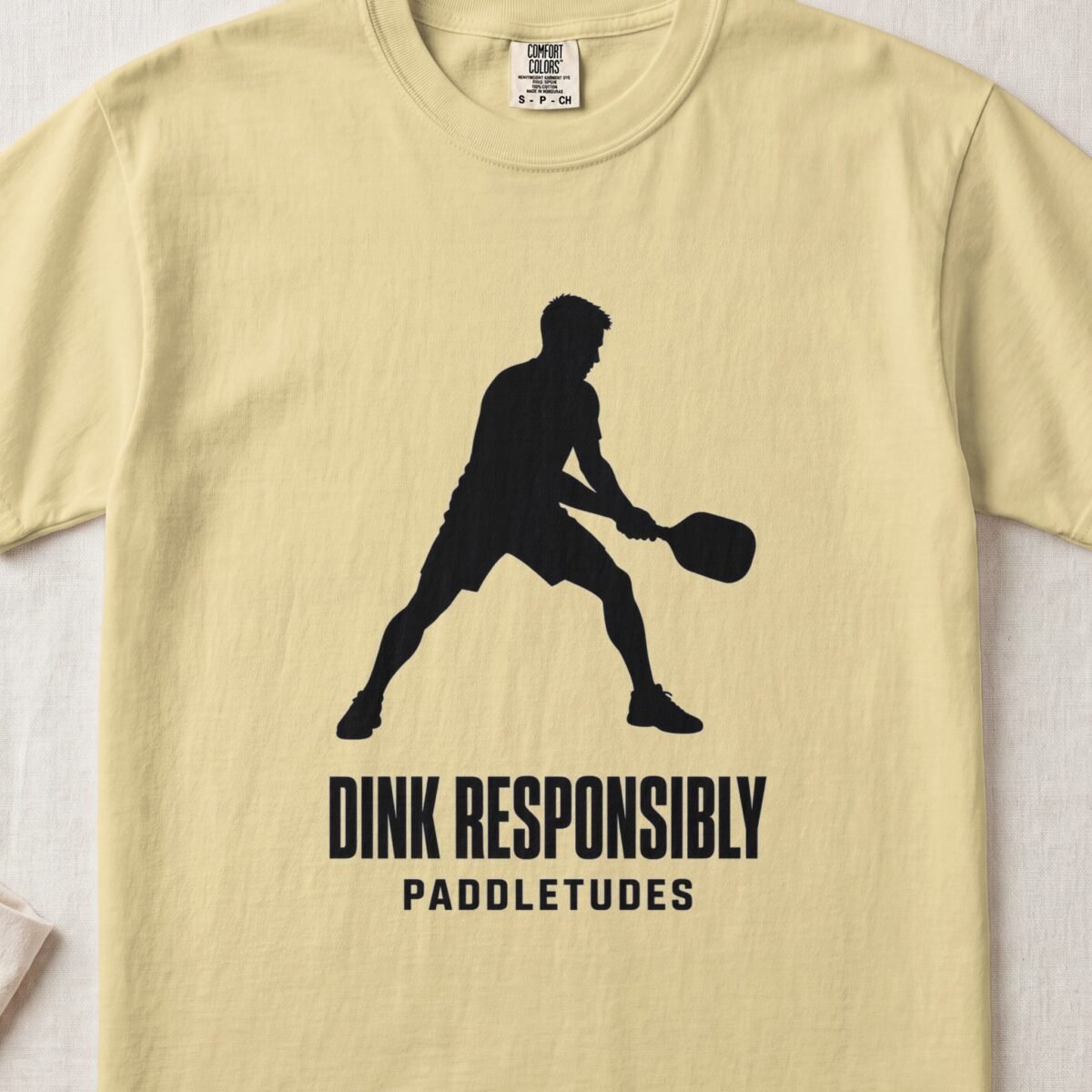
Dink Responsibly
$29.99 Select options This product has multiple variants. The options may be chosen on the product page -
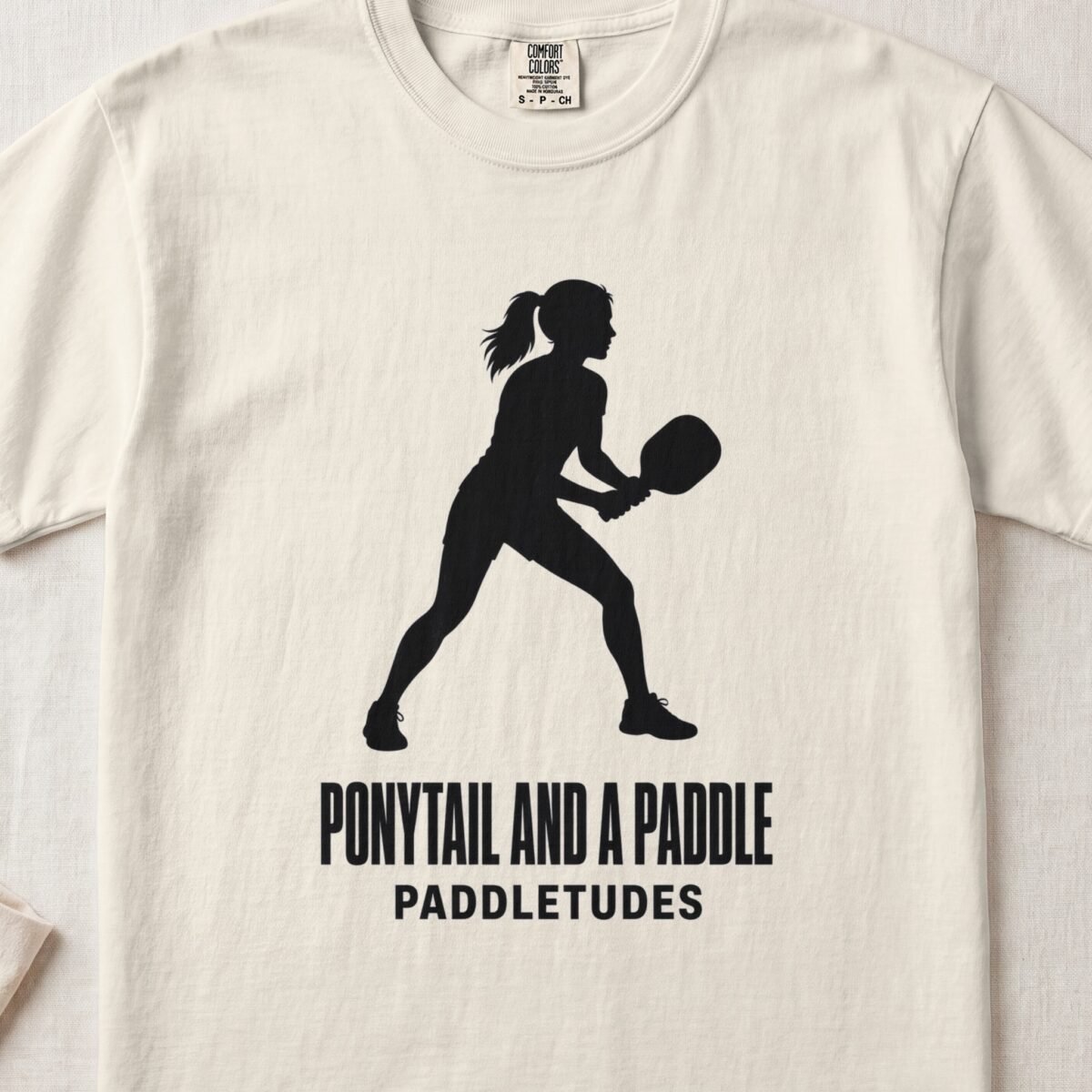
Ponytail And A Paddle
$29.99 Select options This product has multiple variants. The options may be chosen on the product page -
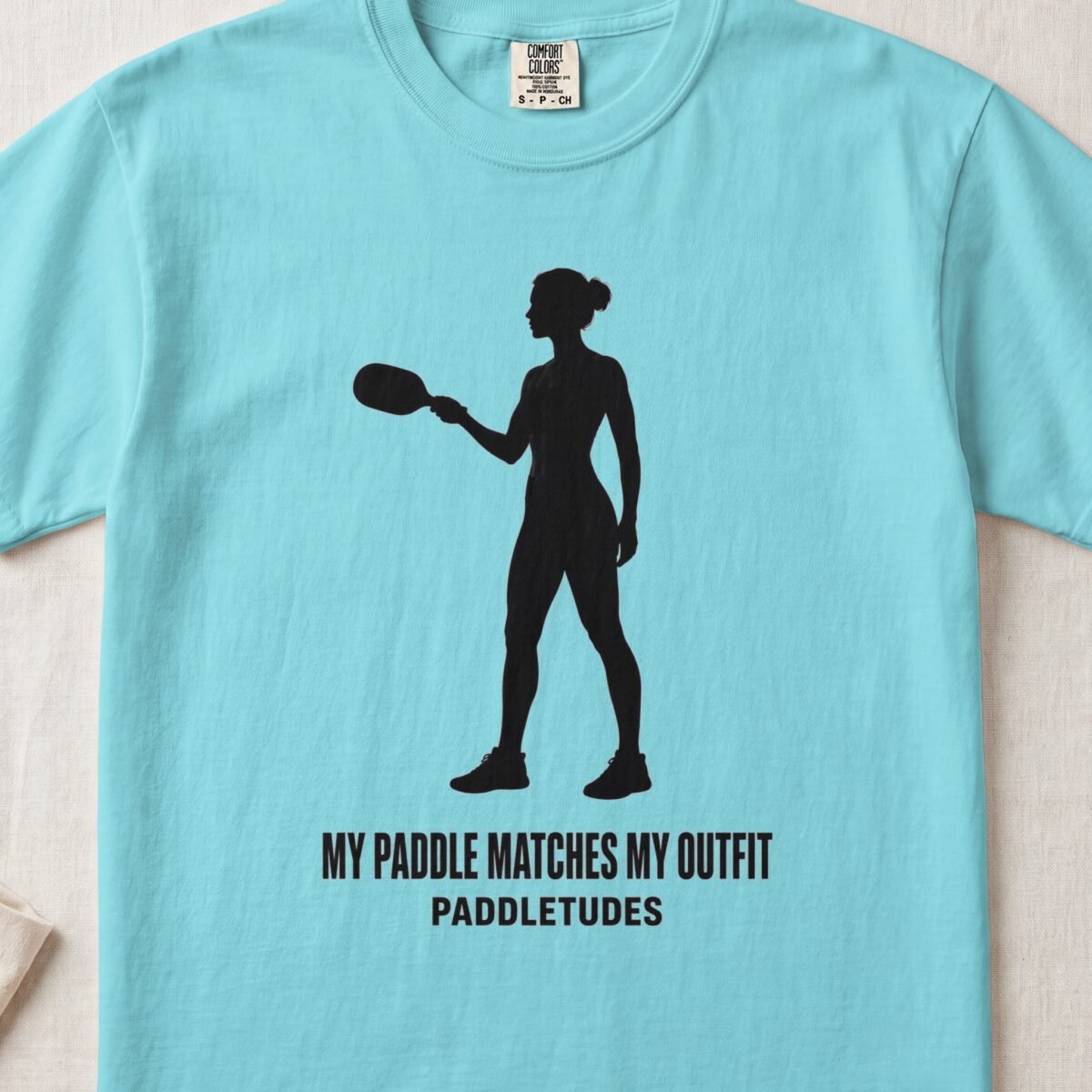
My Paddle Matches My Outfit
$29.99 Select options This product has multiple variants. The options may be chosen on the product page