Retro Comfort Colors 1717
Court Operation
$39.99
- Comfort Colors 1717 heavyweight cotton
- Original design · printed to order
- U.S. print partners
Twelve Real Pickleball Injuries on One Fake Board Game Shirt
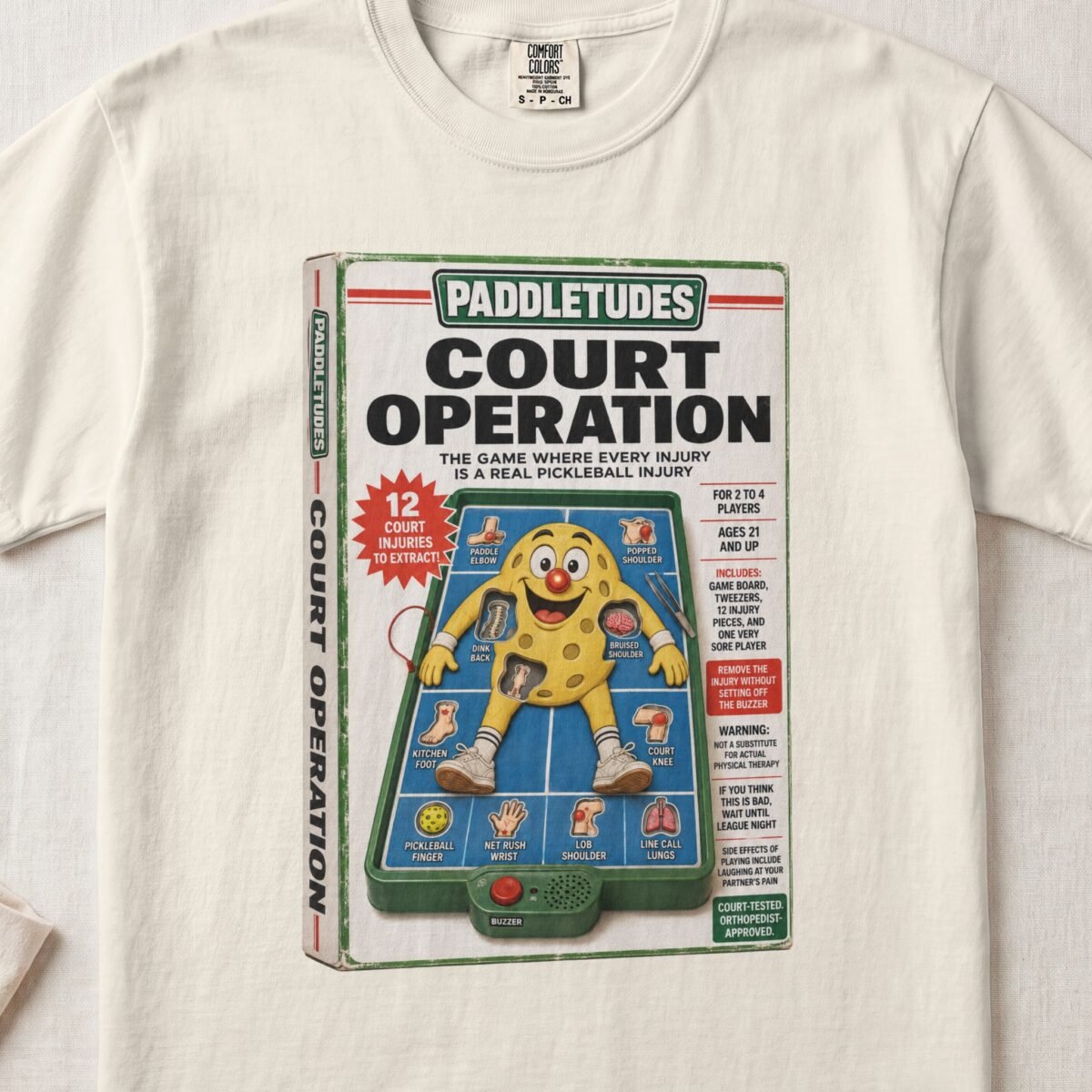
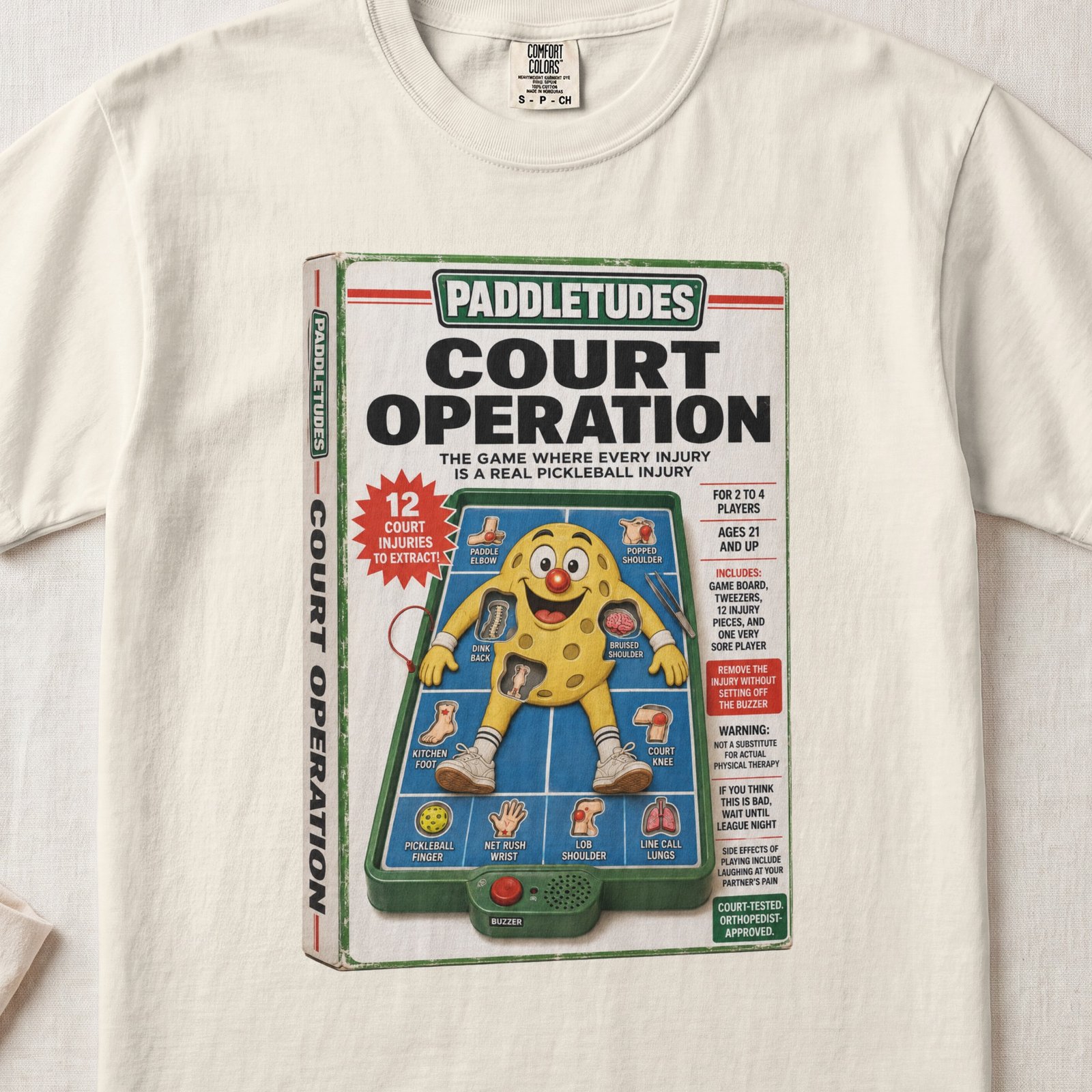
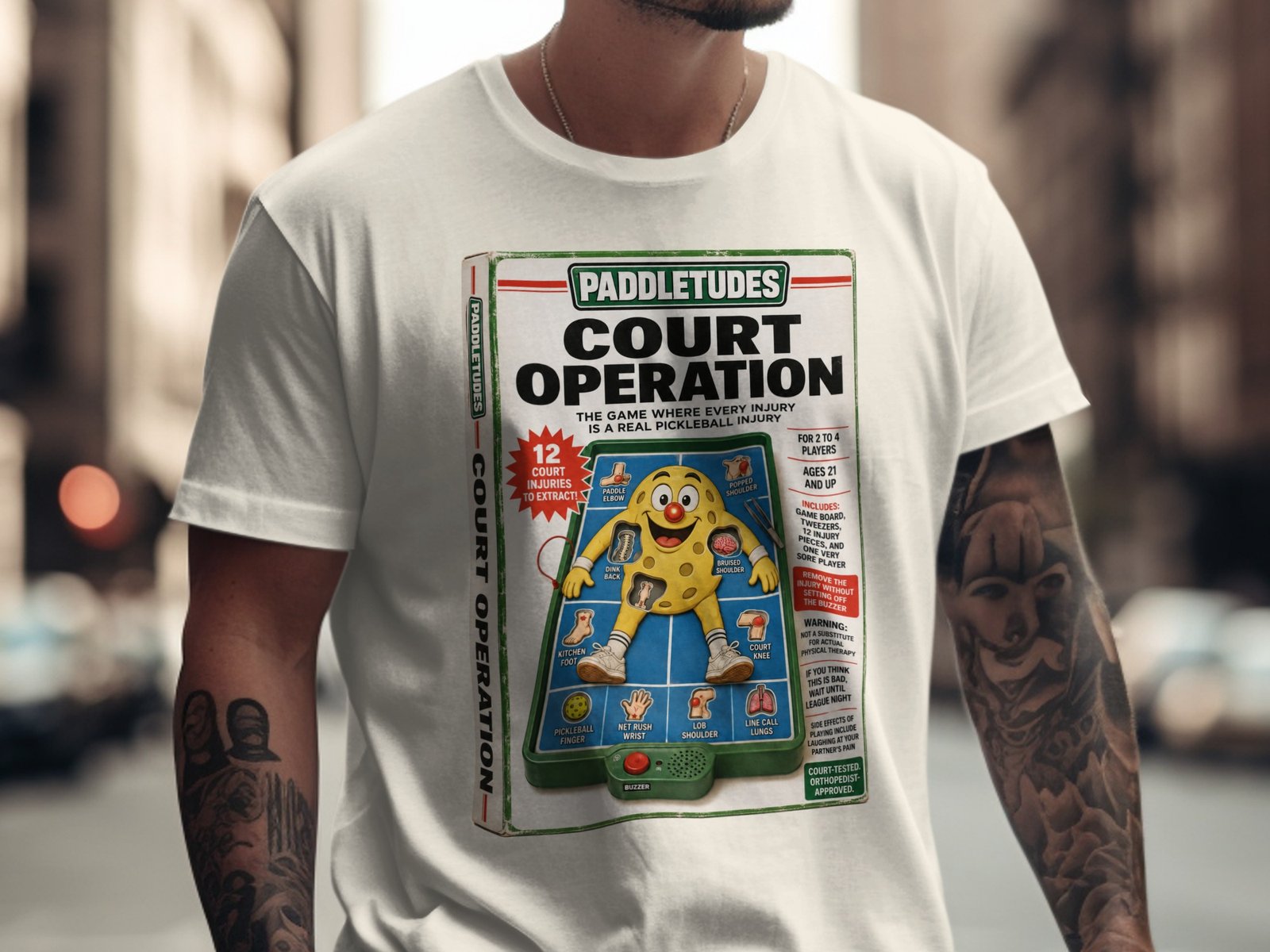
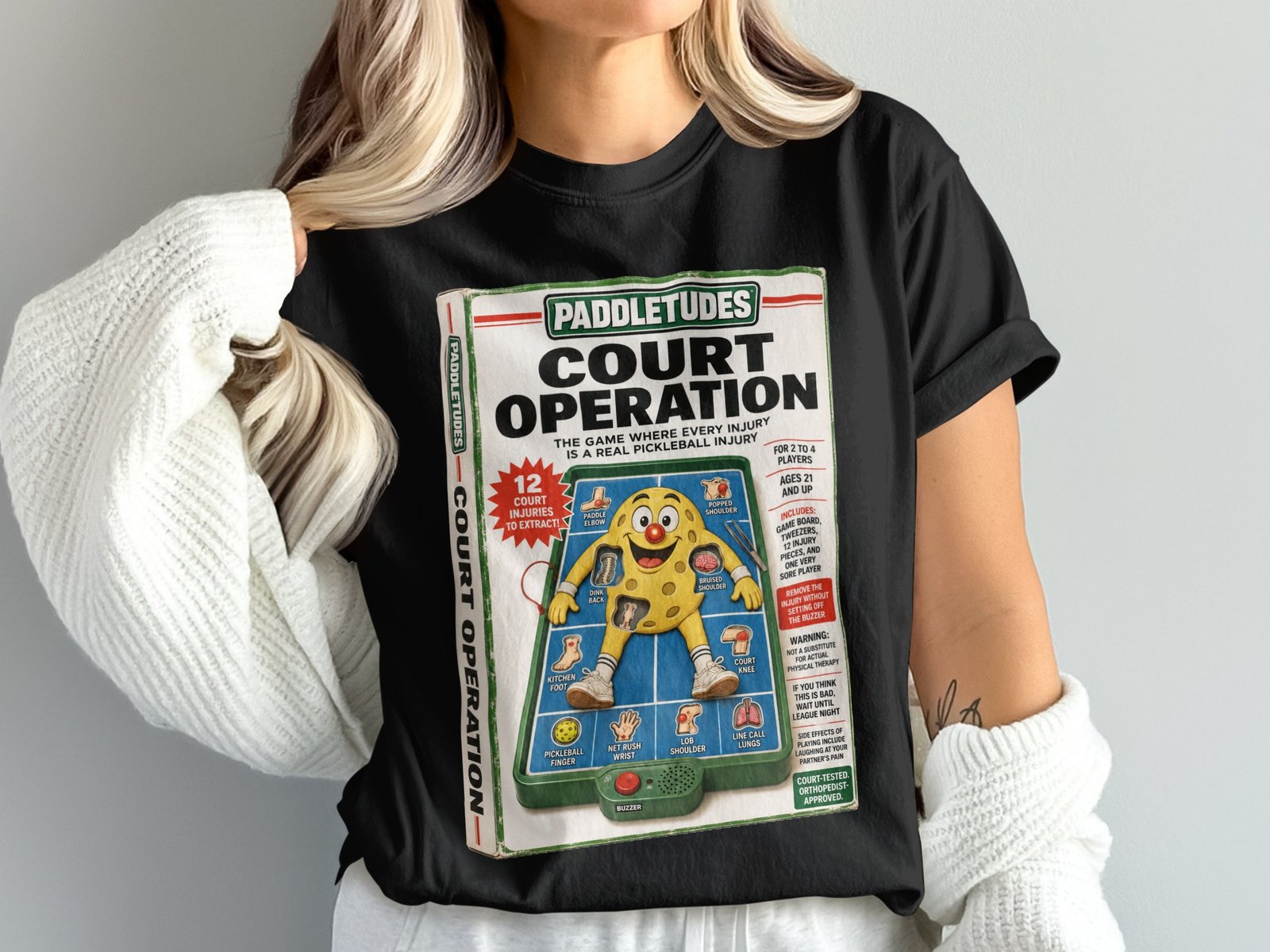
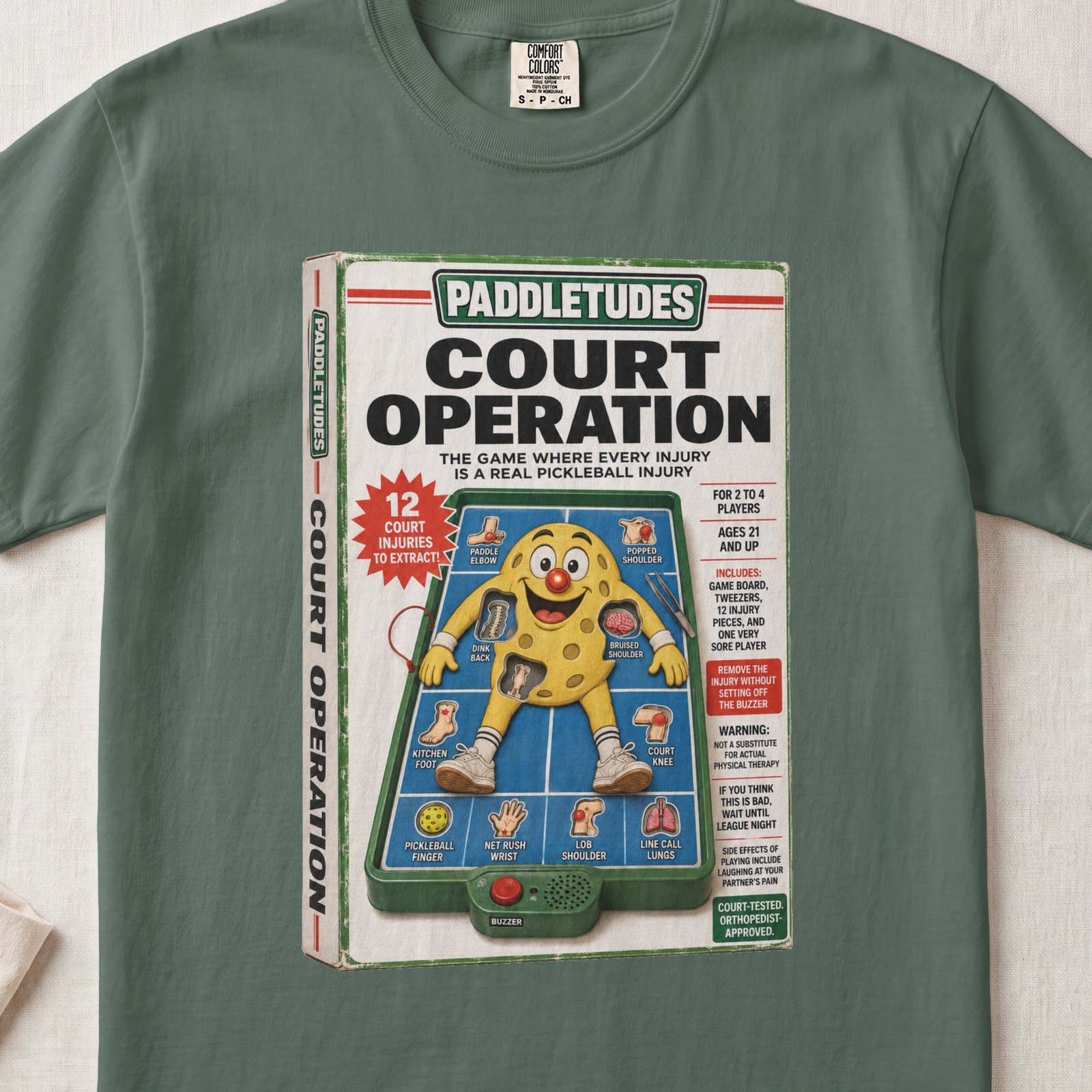
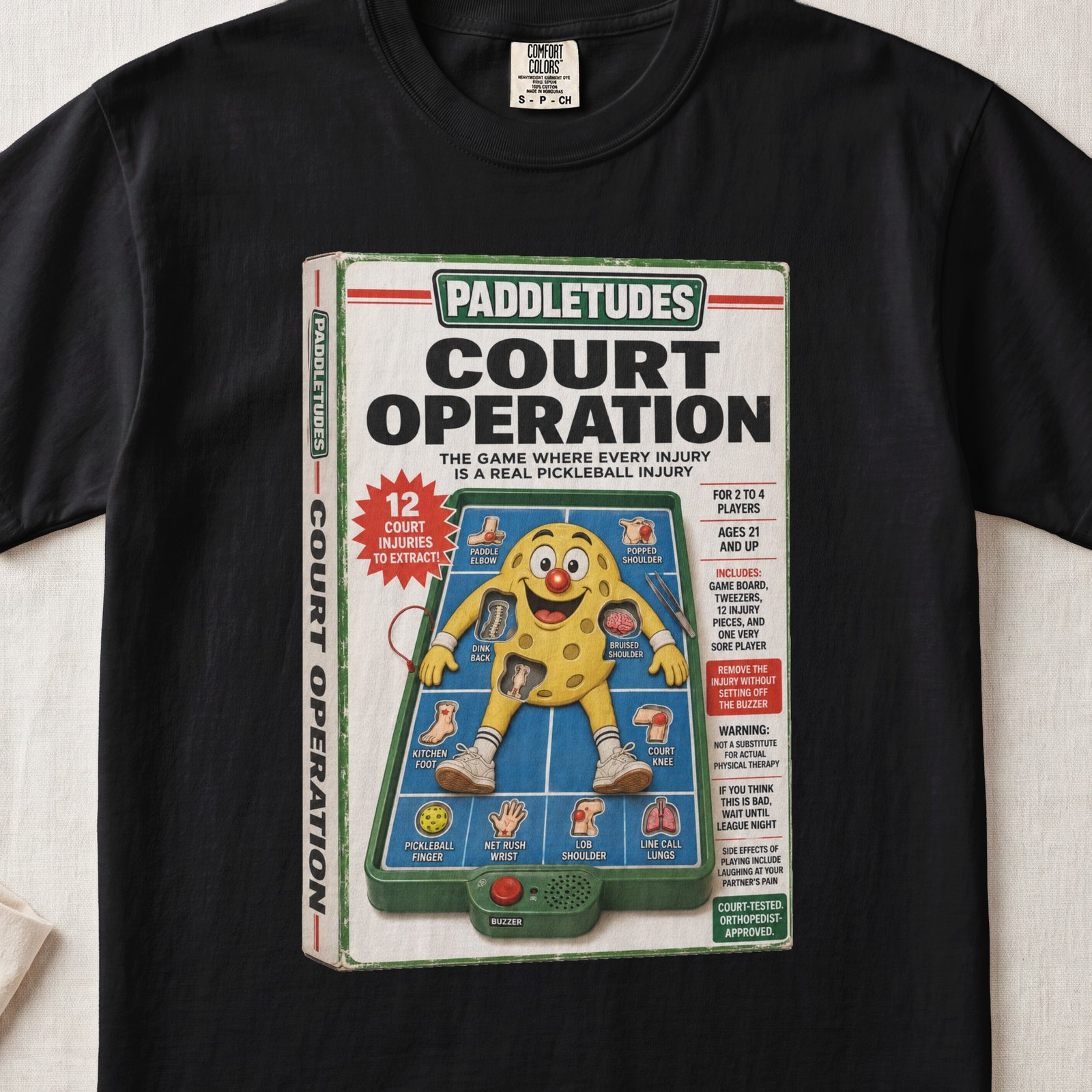
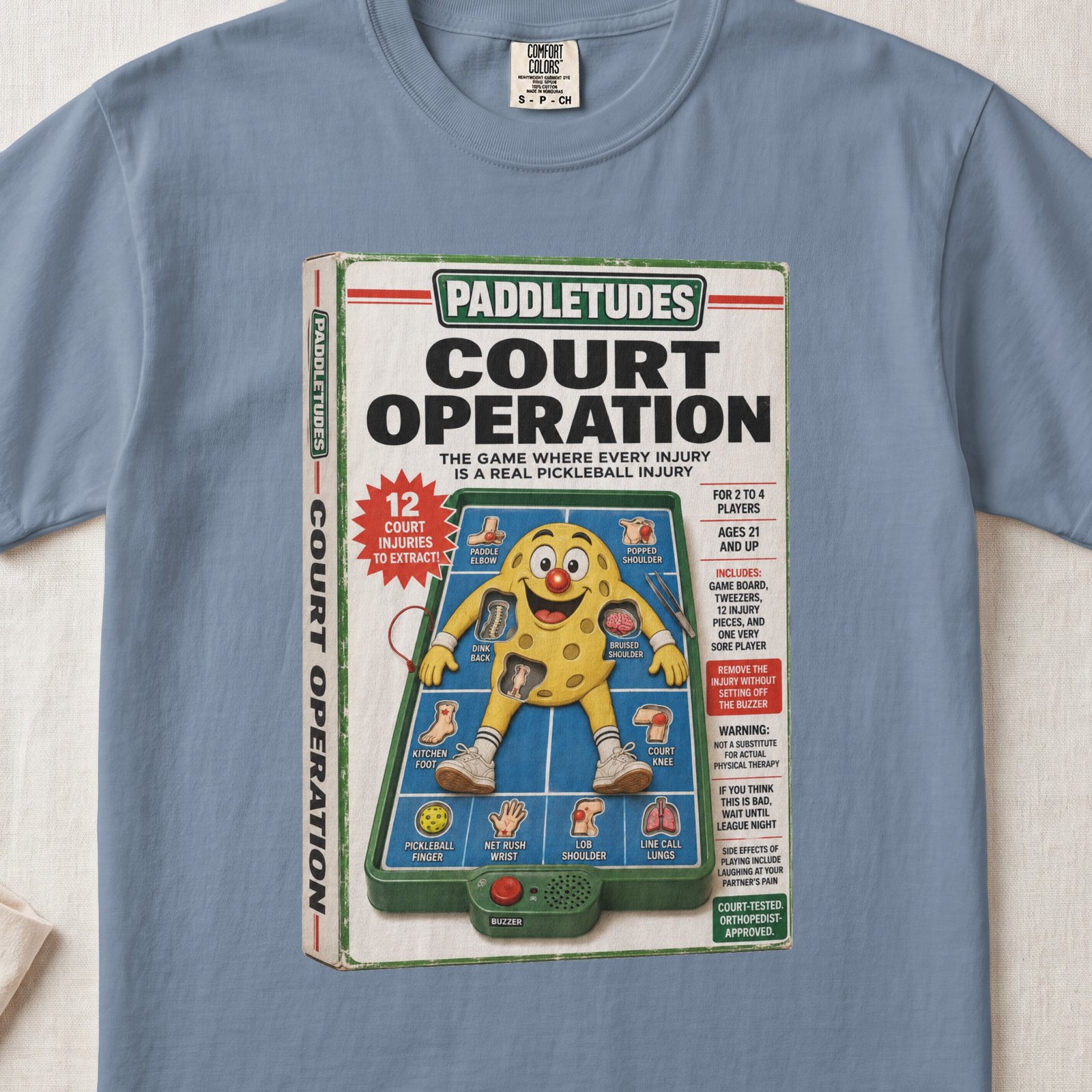
Court Operation puts twelve real pickleball injuries on a fake board game — printed on a Comfort Colors 1717 tee for everyone who’s limped off a court.
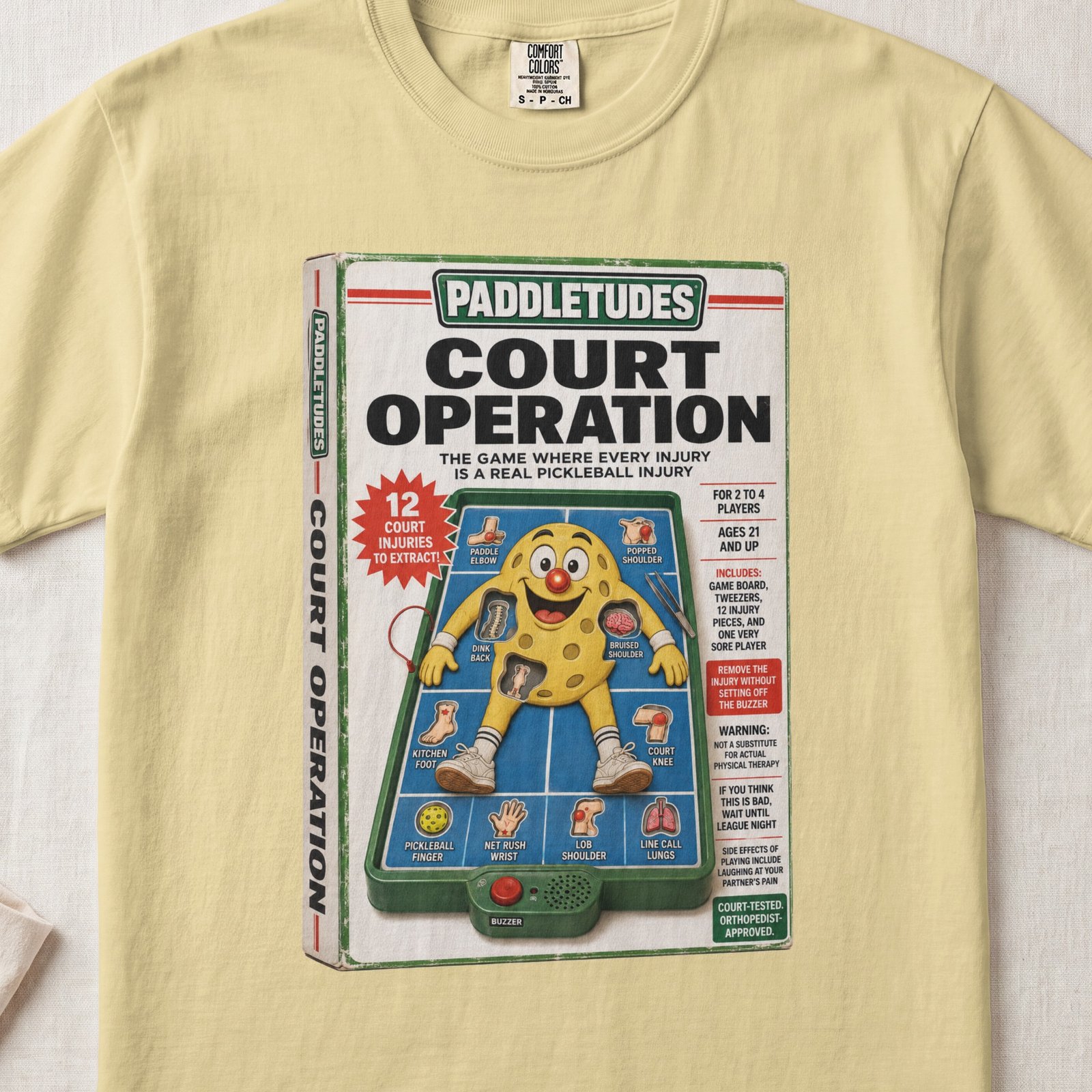
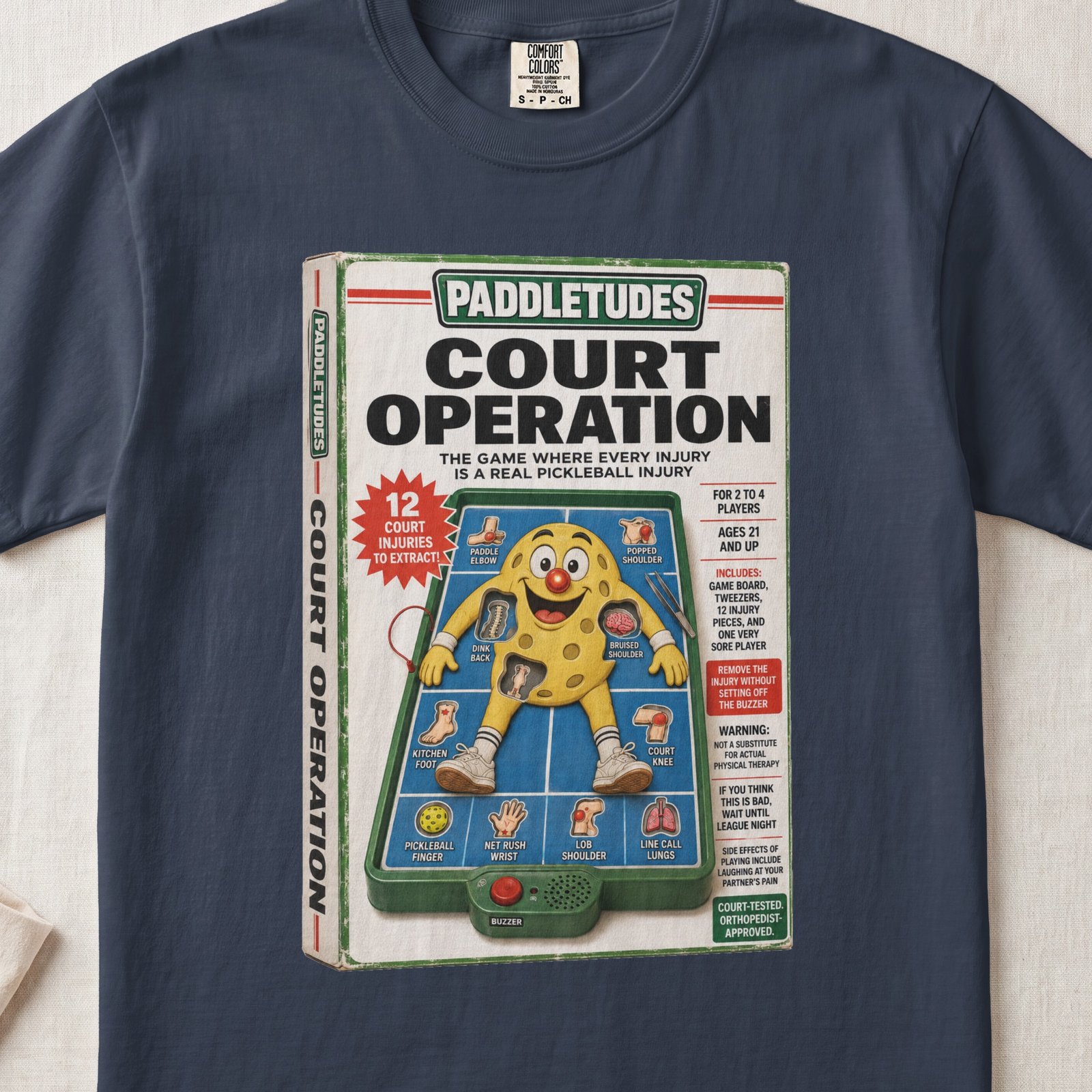
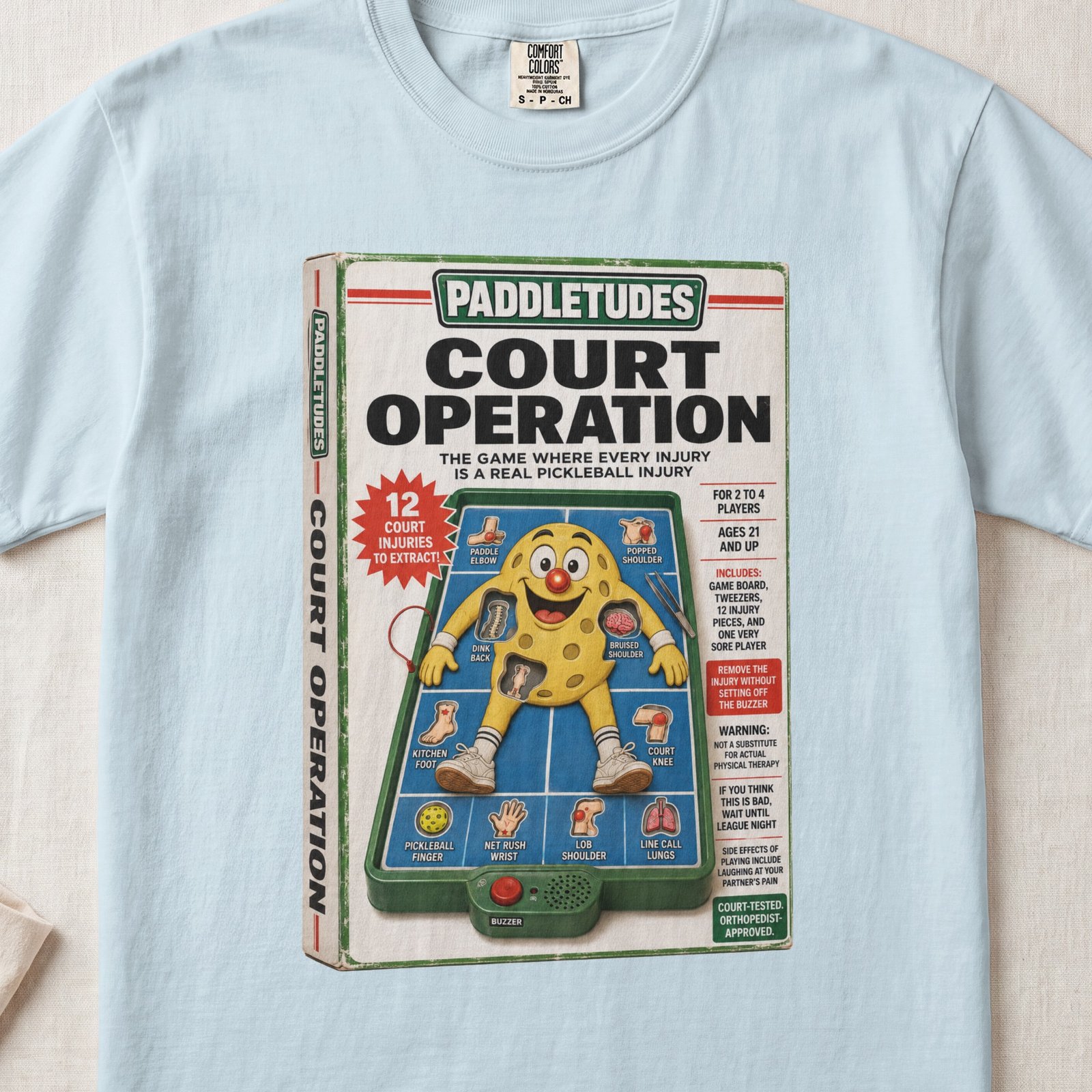
Paddle Elbow. Popped Shoulder. Dink Back. Bruised Shoulder. Kitchen Foot. Court Knee. Pickleball Finger. Net Rush Wrist. Lob Shoulder. Line Call Lungs. That’s the game board — a Paddletudes pickleball character lying flat with all twelve injuries mapped to the body, tweezers beside him, a red buzzer at his feet, and the expression of someone who played four hours of open play on a Tuesday and woke up Wednesday unable to turn his neck. “THE GAME WHERE EVERY INJURY IS A REAL PICKLEBALL INJURY.” For 2 to 4 players. Ages 21 and up. Remove the injury without setting off the buzzer.
What makes Court Operation land harder than a generic sports injury joke is that every single condition on the board is something pickleball players actually deal with. Paddle Elbow is lateral epicondylitis — inflammation on the outside of the elbow caused by repetitive gripping and wrist extension. It’s the most common overuse injury in racquet sports and the one most players pretend isn’t happening until they can’t open a jar. Dink Back is lower back strain from spending extended rallies in the hunched, knees-bent, paddle-forward dinking stance — a position the body tolerates for ten minutes and punishes you for after forty. Kitchen Foot covers the ankle sprains and plantar fascia flare-ups that come from quick lateral cuts at the non-volley zone line, especially on hard court surfaces without proper court shoes. Court Knee is the lateral meniscus and patellofemoral stress that accumulates from the constant side-to-side shuffling that defines the sport’s movement pattern.
The injuries that sound like jokes are often the most accurate. Pickleball Finger — a jammed or hyperextended finger from a ball that hits the paddle hand or, worse, misses the paddle entirely and catches a knuckle — happens more than anyone admits. Net Rush Wrist is the wrist strain from snapping volleys during fast exchanges at the kitchen line, where the reaction time is measured in fractions of a second and the wrist absorbs every redirect. Lob Shoulder is the rotator cuff complaint from reaching back and overhead for lob returns — a motion that feels fine at 30 and announces itself at 50. And Line Call Lungs is the one that isn’t physical at all. It’s the cardiovascular event that occurs when someone across the net calls your clearly-in shot out and you have to decide whether to argue, accept it, or develop a reputation as the person who argues. Every player over 40 who reads this shirt will point at three injuries they currently have and one they’re pretending they don’t.
The board game box format completes the bit. The same green-and-white packaging, the same rounded corners, the same buzzer at the bottom. “INCLUDES: GAME BOARD, TWEEZERS, 12 INJURY PIECES, AND ONE VERY SORE PLAYER.” The warnings in the corner read like a physical therapist wrote them after losing a patient to the sport: “NOT A SUBSTITUTE FOR ACTUAL PHYSICAL THERAPY.” “IF YOU THINK THIS IS BAD, WAIT UNTIL LEAGUE NIGHT.” “SIDE EFFECTS OF PLAYING INCLUDE LAUGHING AT YOUR PARTNER’S PAIN.” And at the very bottom, the endorsement: “COURT-TESTED. ORTHOPEDIST-APPROVED.” The humor works because the injuries are real and the people wearing the shirt have them right now. It’s not mockery — it’s solidarity. Every court has a bench full of players in compression sleeves and knee braces who showed up anyway because sitting out is worse than the pain.
This shirt belongs on the person who ices something after every session and considers it a routine part of the sport. The one who owns a foam roller specifically for pickleball recovery. The one whose physical therapist knows them by first name and has asked, more than once, “have you considered taking a week off?” They have considered it. They rejected the suggestion. They are playing tomorrow. If you’re buying it as a gift, the target is the player recovering from something right now — the torn rotator cuff that happened reaching for a lob, the knee surgery that came from one too many lateral lunges, the elbow that finally forced them to switch to a lighter paddle. This is the recovery gift that makes them laugh about the thing that sidelined them, and it works because the shirt acknowledges that they’ll be back on the court the moment the doctor clears them. Which is also what makes the “Ages 21 and Up” detail on the box so perfectly wrong — the real demographic for these injuries skews significantly older, and every player over 50 knows it.
Court Operation sits on the game shelf next to the retro product lineup. Smack Talklicious is the bubblegum box for the player whose mouth creates problems the body hasn’t caught up to yet — five sticks of confidence that run out when the score flips. Soft Hands is the Dr. Paddletudes tonic for chronic hard hitters — a bottle that promises to cure the power game and replace it with patience, touch, and annoyingly long rallies. Different shelf, same philosophy: the fake product captures a real part of the sport. On the VHS side, Breaking Balls covers the transformation that causes half these injuries in the first place — the casual player who went competitive and now plays with an intensity their joints weren’t built for.
Printed on a Comfort Colors 1717 garment-dyed heavyweight tee with water-based DTG ink — sizing and care details here.
What Are the Most Common Pickleball Injuries
The most common pickleball injuries are lateral epicondylitis (paddle elbow), rotator cuff strains from overhead shots, lower back pain from the dinking stance, ankle sprains from lateral movement at the kitchen line, and knee strain from the constant side-to-side shuffling the sport demands. Most of these are overuse injuries rather than acute trauma — they build gradually over weeks of play and announce themselves one morning when reaching for a coffee mug sends a message from the elbow.
Pickleball’s injury profile is shaped by its demographics and its movement patterns. The sport’s fastest-growing segment is adults over 40, and the movement — quick lateral shuffles, sudden forward sprints to the net, overhead reaches for lobs, and the sustained low stance during dink exchanges — loads joints and tendons in ways that recreational walking and weekend golf do not. The American Academy of Orthopaedic Surgeons has flagged pickleball-related injuries as a growing category in sports medicine, with emergency room visits for pickleball injuries increasing alongside the sport’s participation numbers. The most common acute injury is an ankle sprain from a lateral cut, often at the kitchen line where the change of direction is sharpest. The most common chronic injury is lateral epicondylitis — the same condition tennis players deal with, caused by the repetitive gripping and wrist motion of paddle sports.
Prevention comes down to three things most recreational players skip: proper court shoes with lateral support instead of running shoes, a dynamic warm-up before playing that includes hip and shoulder mobility, and honest volume management — the willingness to stop at three games instead of playing until something hurts. Players transitioning from sedentary lifestyles to four or five sessions a week are at the highest risk because the sport’s low skill barrier means they can play competitively long before their body is conditioned for the load. The USA Pickleball safety guidelines recommend starting with two to three sessions per week and building from there, though the “one more game” culture at most open play facilities makes volume management the hardest prescription to follow.
-
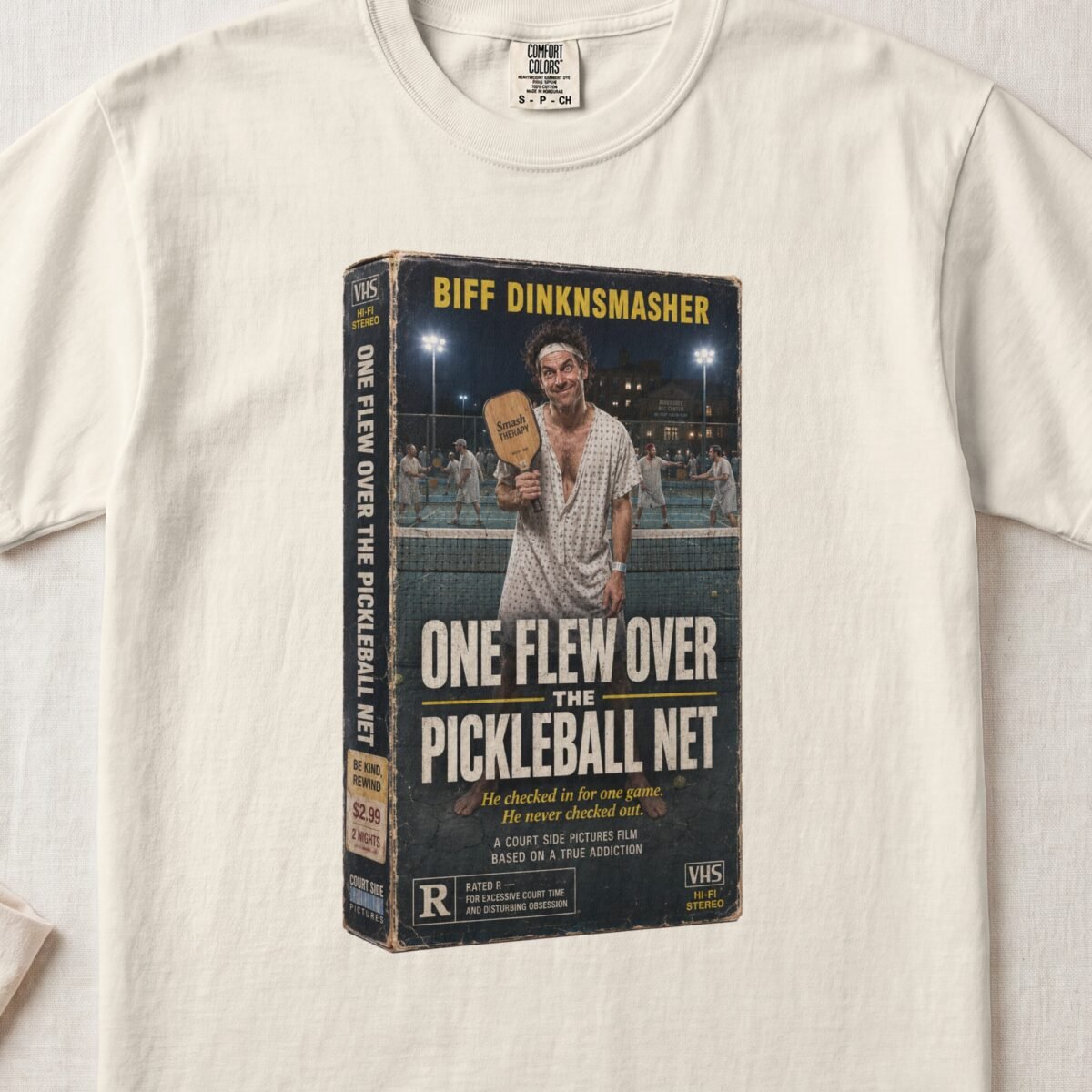
One Flew Over The Pickleball Net
$39.99 Select options This product has multiple variants. The options may be chosen on the product page -
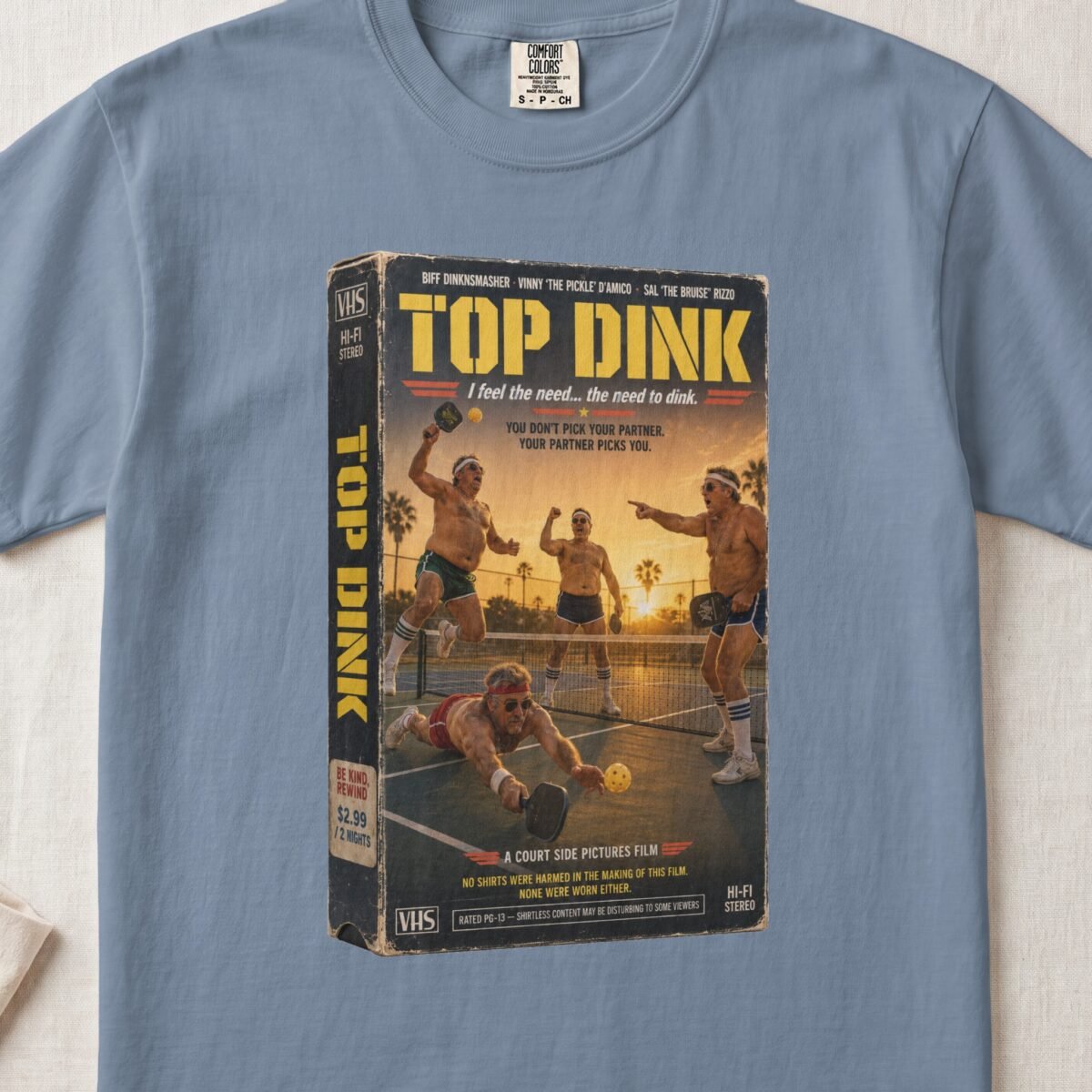
Top Dink
$39.99 Select options This product has multiple variants. The options may be chosen on the product page -
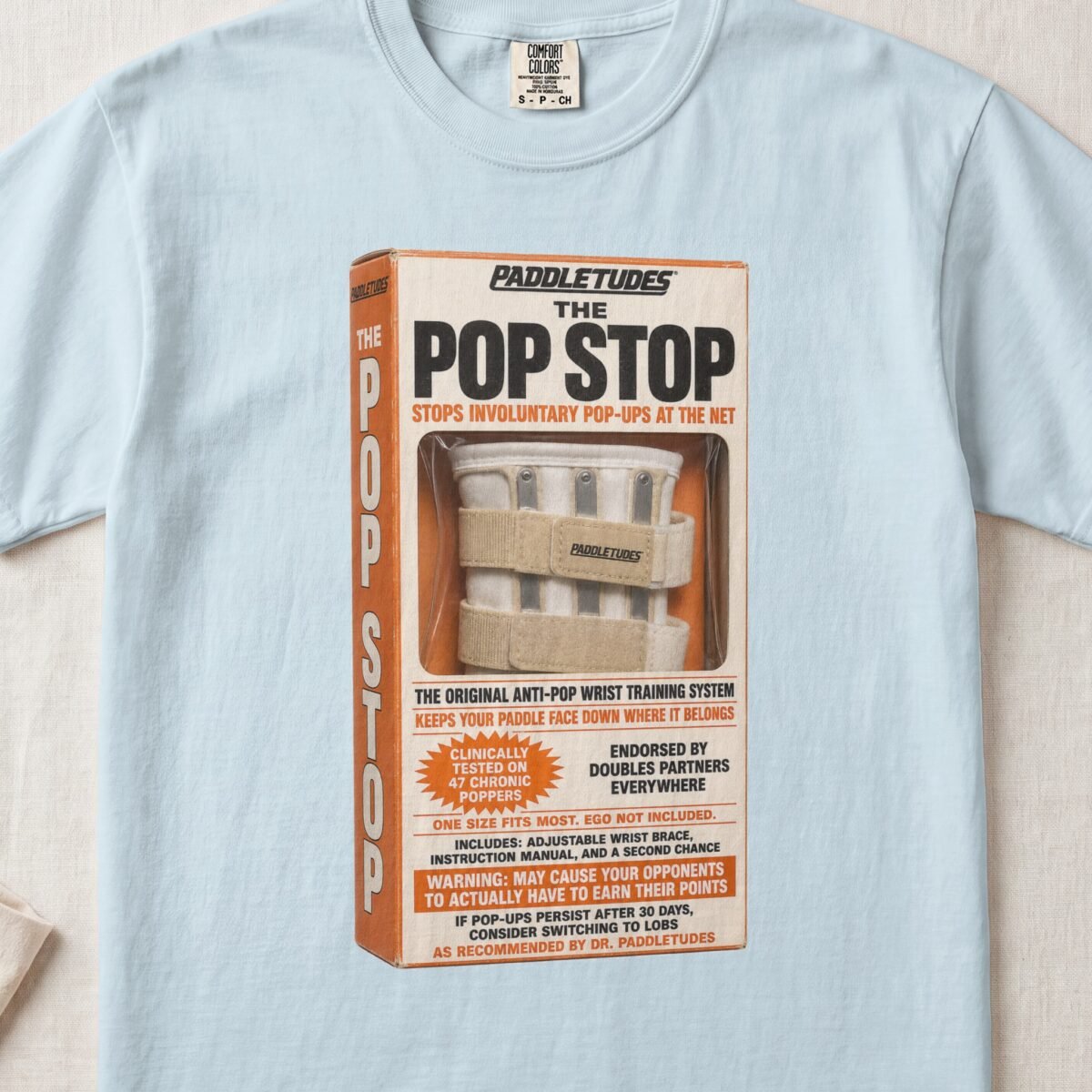
The Pop Stop
$39.99 Select options This product has multiple variants. The options may be chosen on the product page