Retro Comfort Colors 1717
Blazing Paddles
$39.99
- Comfort Colors 1717 heavyweight cotton
- Original design · printed to order
- U.S. print partners
Blazing Paddles — The Retro Shirt for a Pickleball Showdown
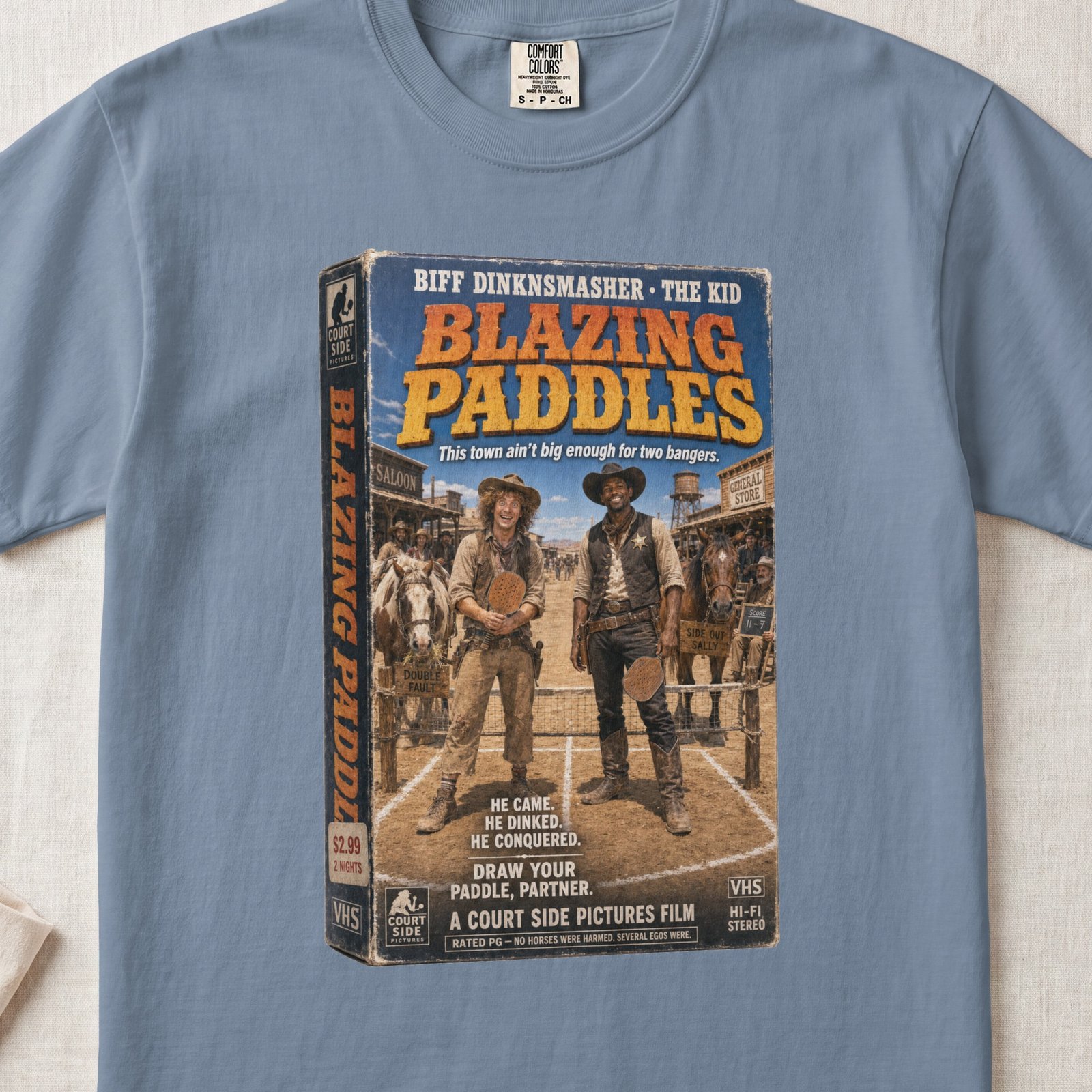
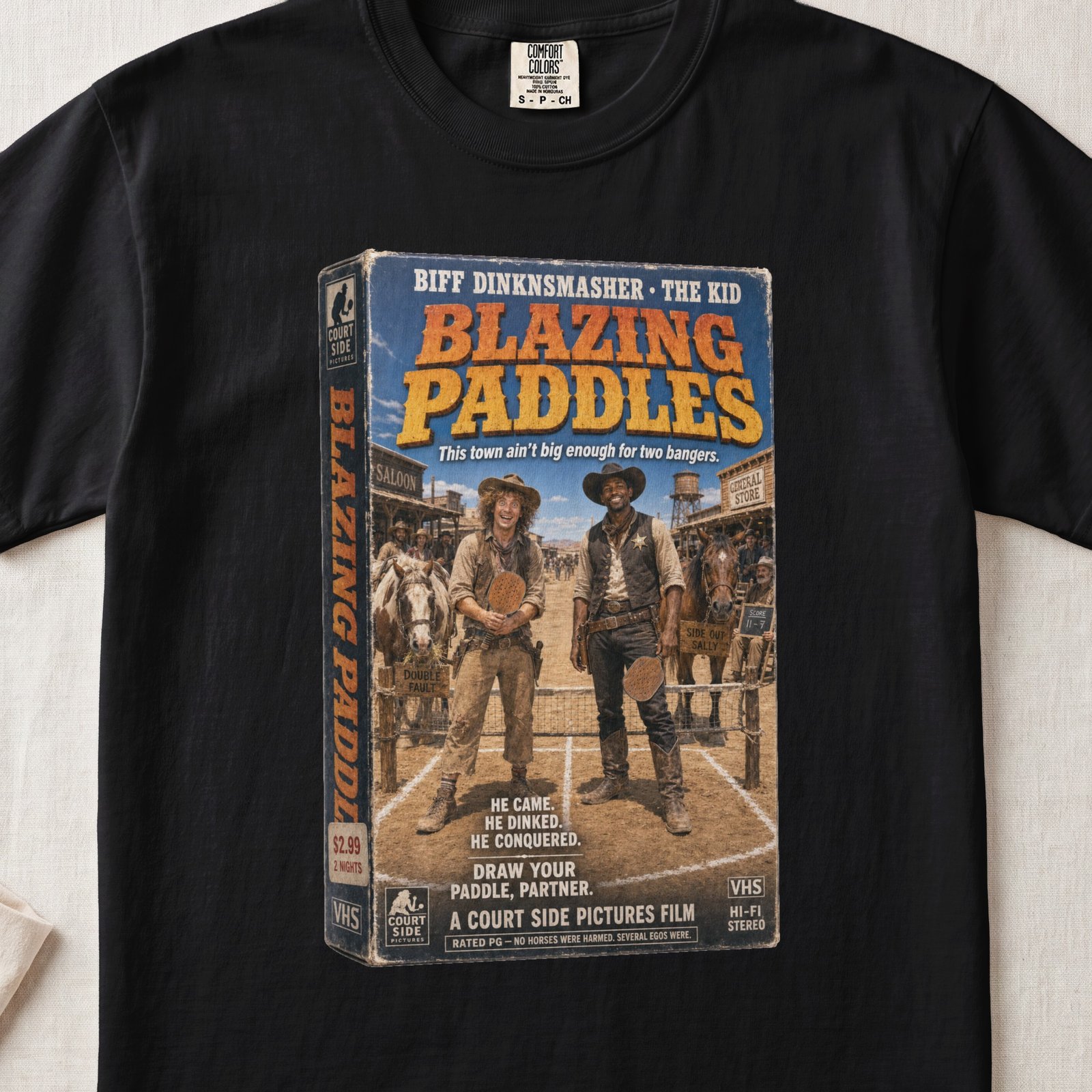
He came. He dinked. He conquered — Blazing Paddles is a VHS western on a Comfort Colors 1717 where the town ain’t big enough for two bangers.
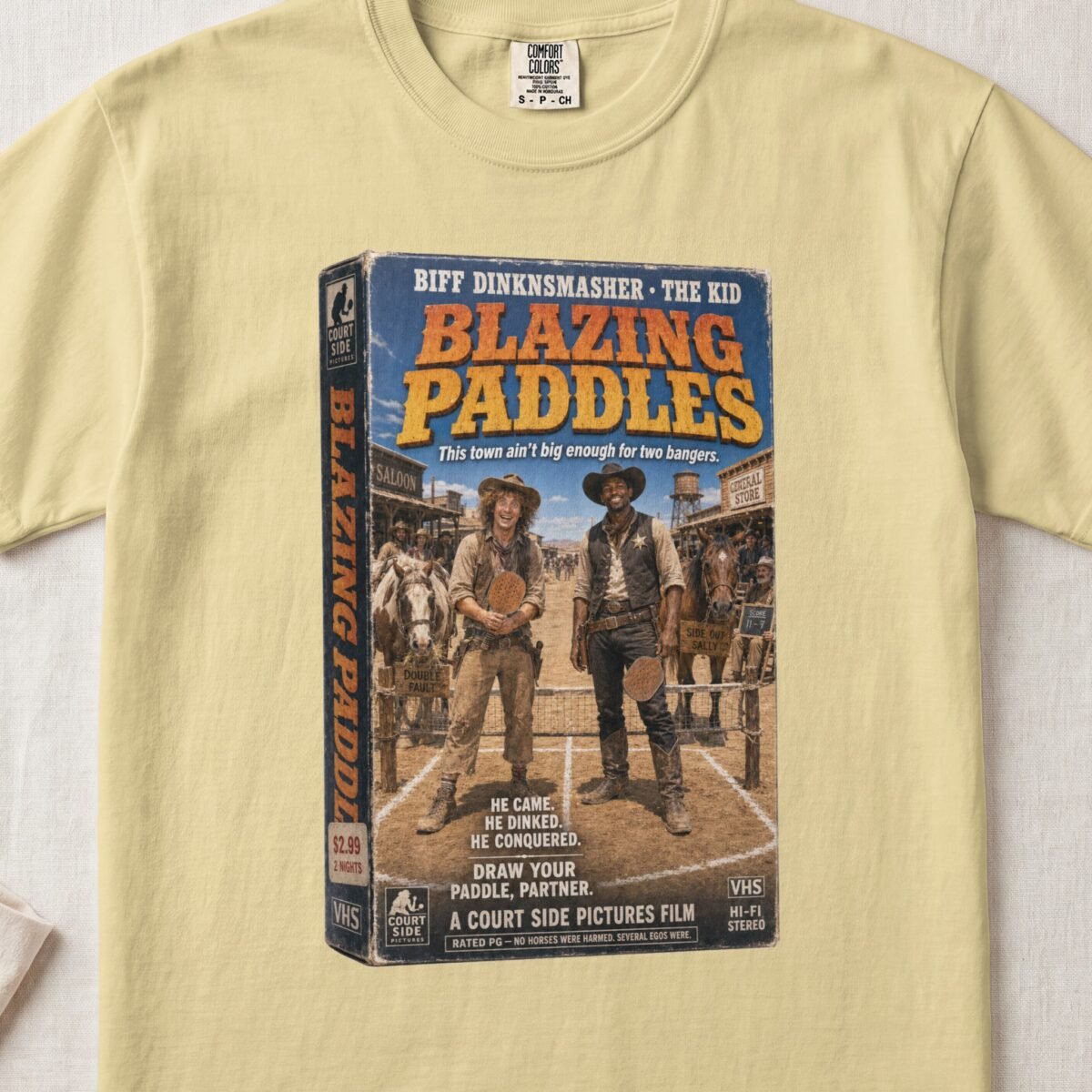
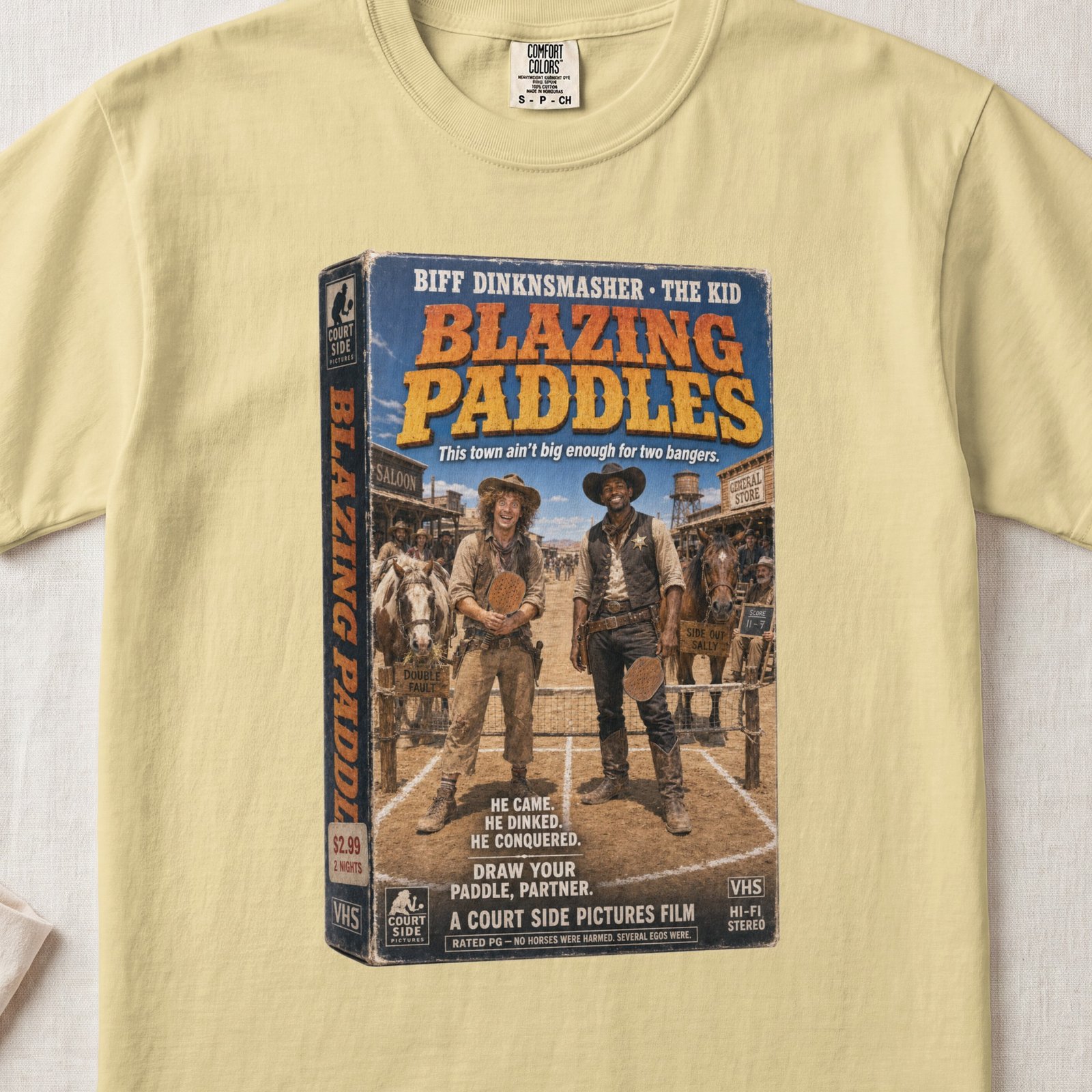
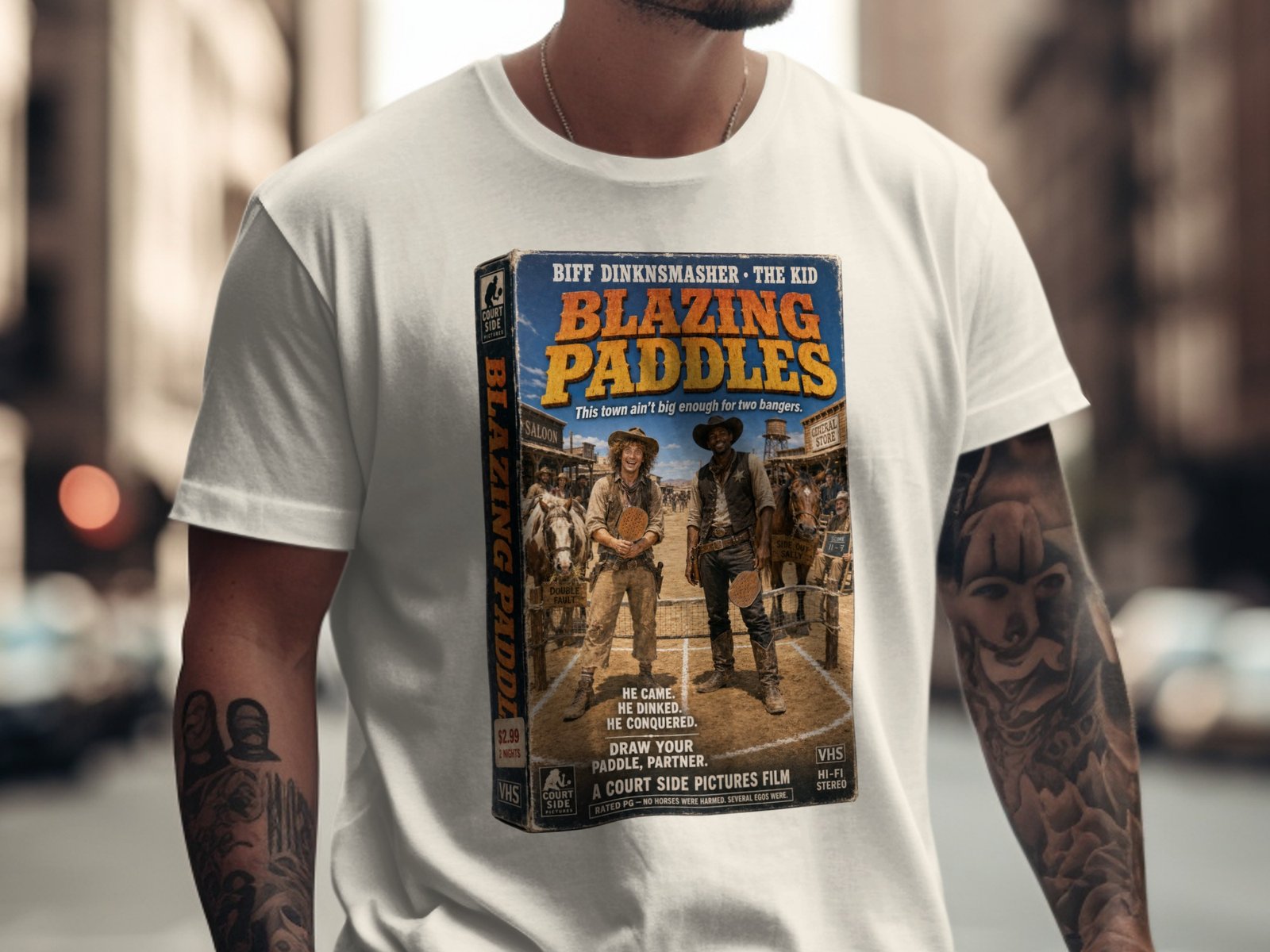
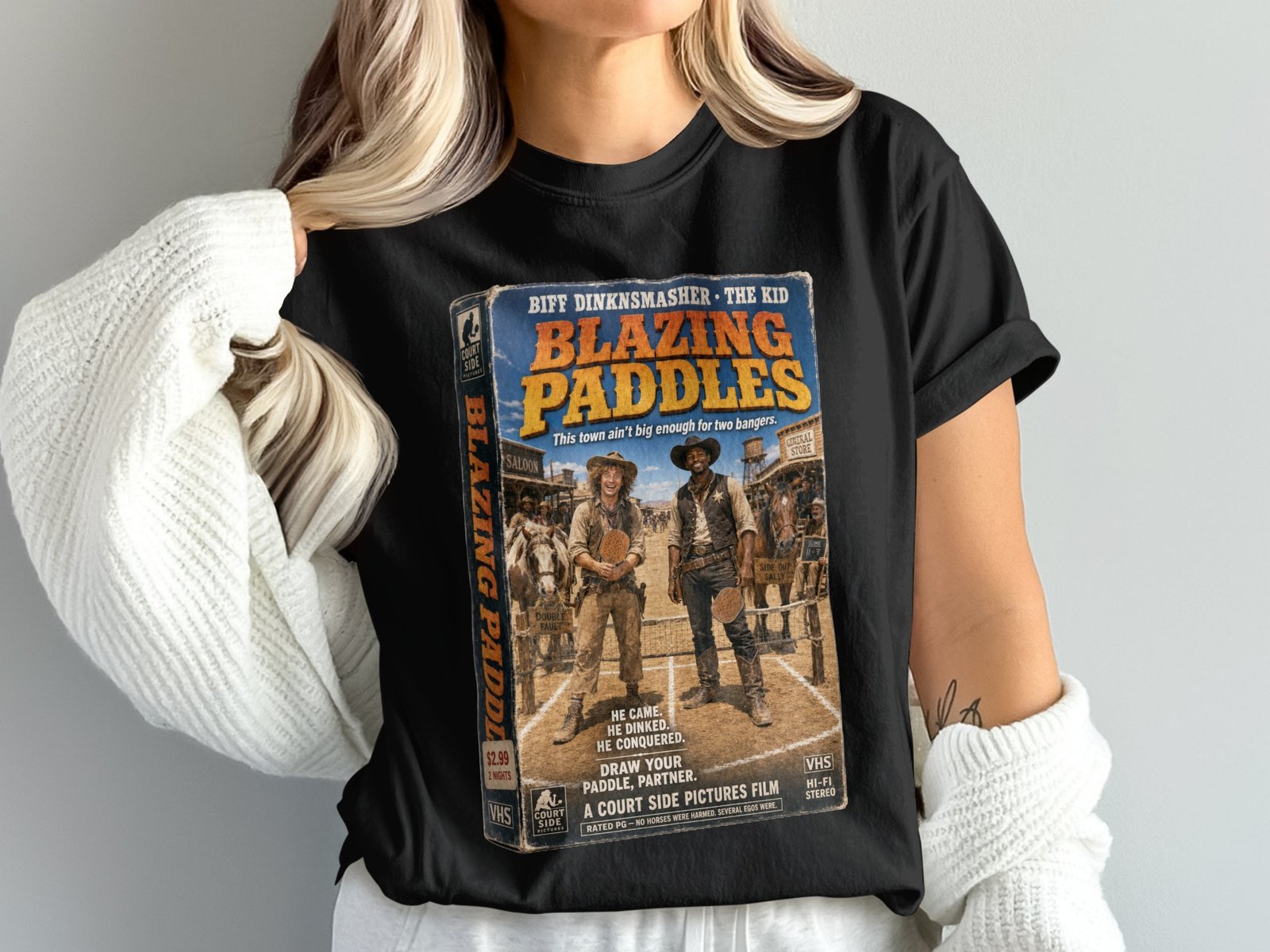
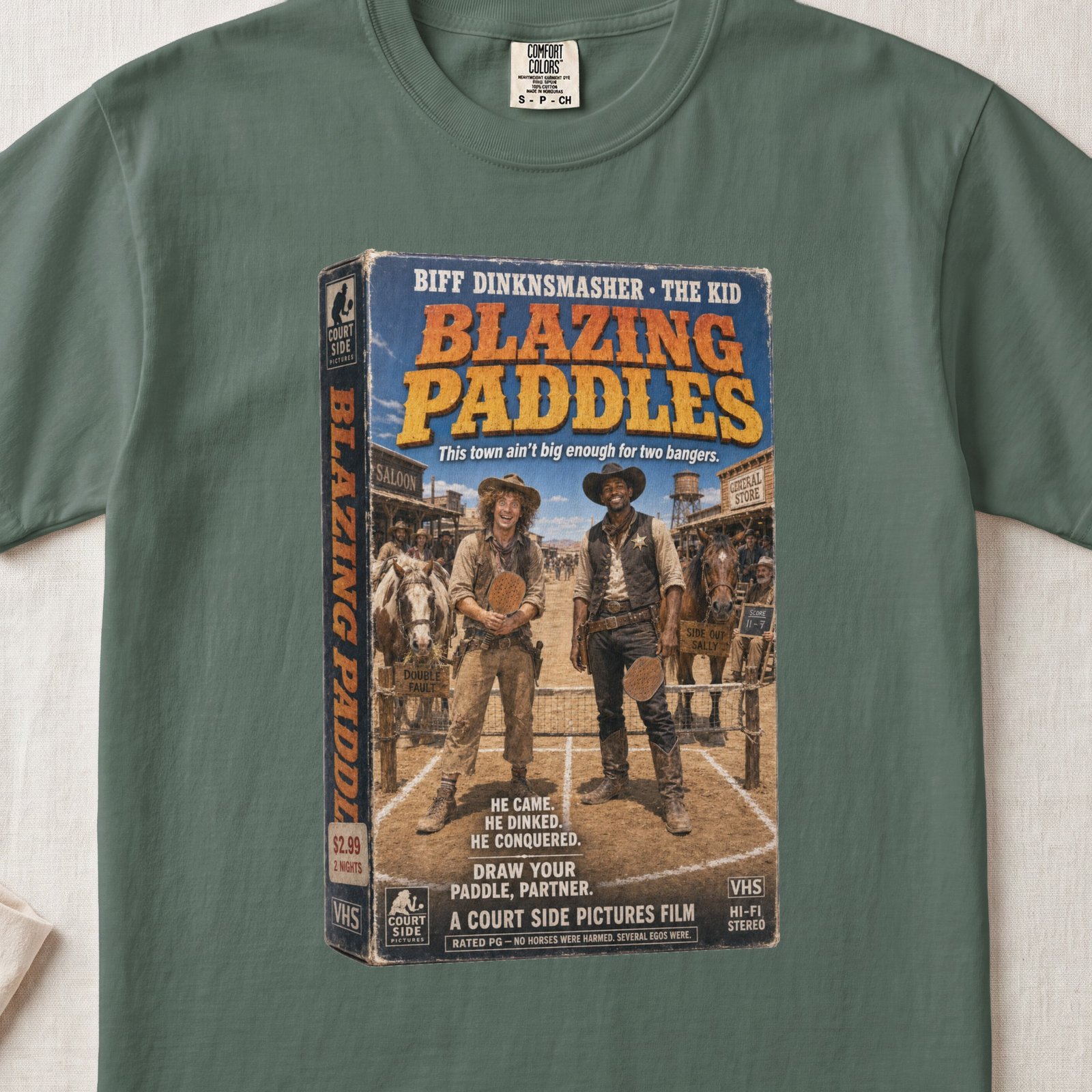
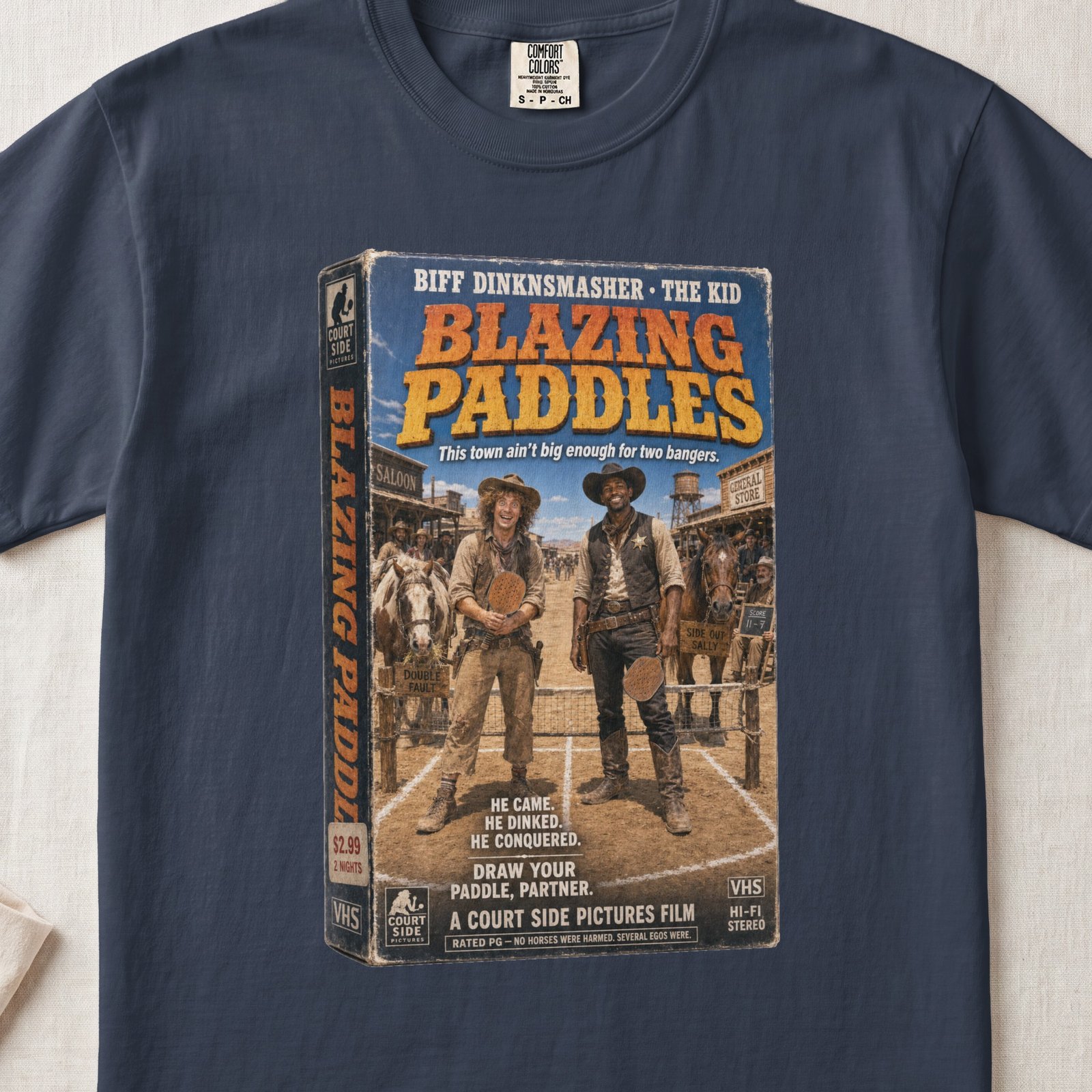
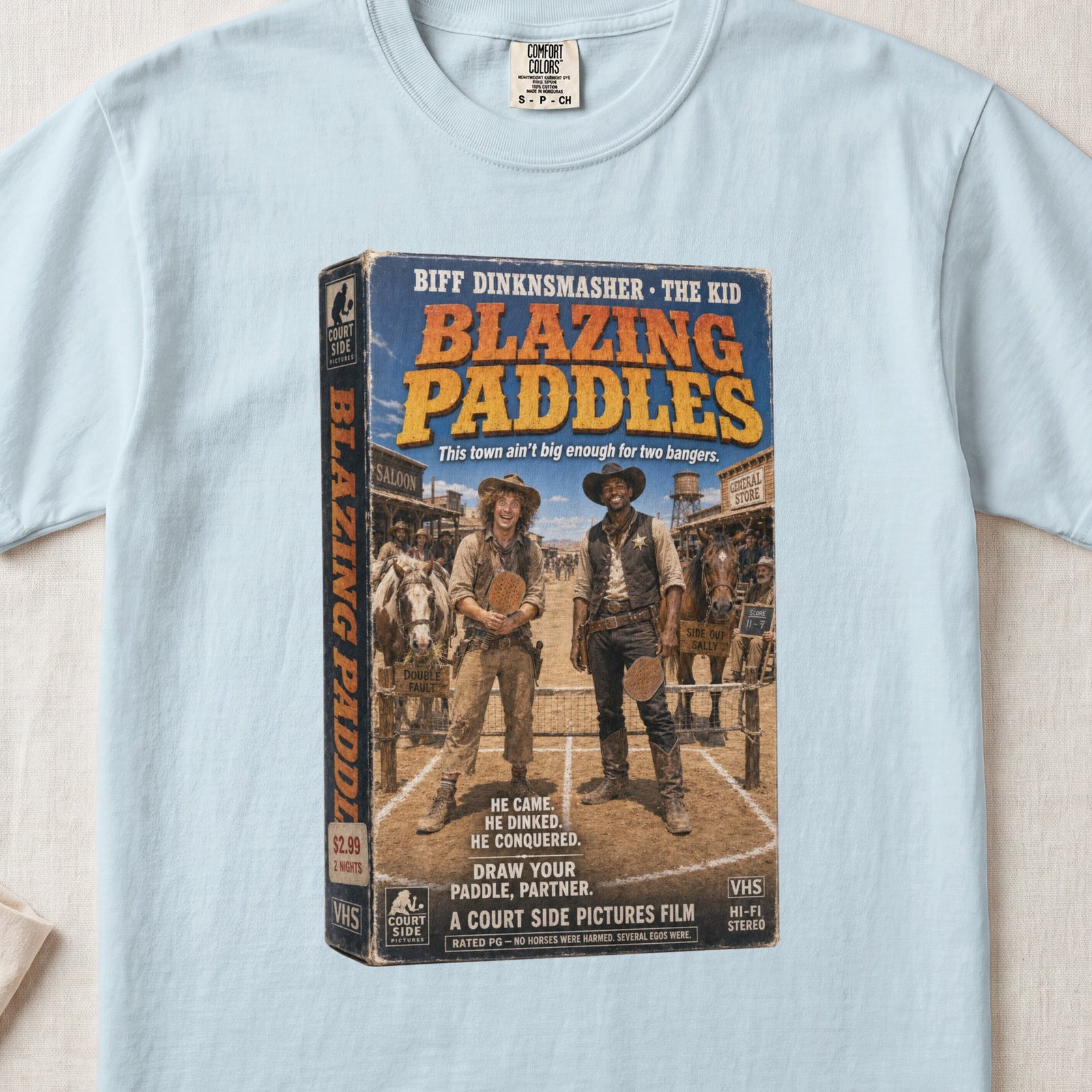
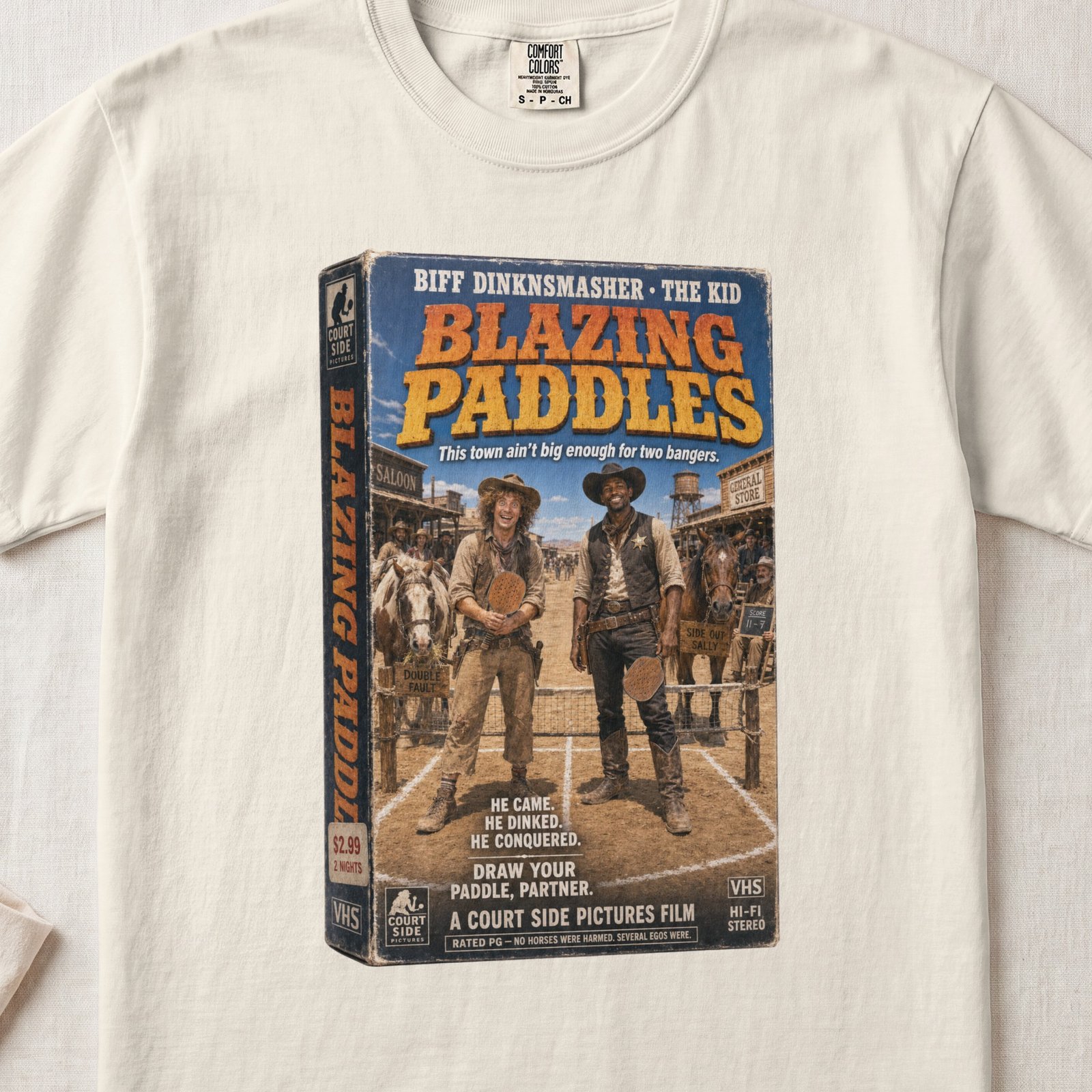
The cover looks like it spent fifteen years in a rental store bargain bin before someone recognized it as art. A dusty main street. A saloon on one side, a general store on the other. Court lines painted in the dirt between two hitching posts. And standing in the middle of it all, two cowboys holding leather paddles — Biff Dinknsmasher on the left, grinning like a man who’s about to do something his opponent regrets, and The Kid on the right, wearing a sheriff’s star and the calm expression of someone who’s already won this point in his head. Behind them, a crowd gathers between the buildings. A sign reads “DOUBLE FAULT.” A scoreboard on the general store porch shows 11-7 with the name “SIDE OUT SALLY” above it. The whole scene is framed inside a weathered VHS box from Premiere Video Rentals, Court Side Pictures logo in the corner, $2.99 for two nights.
The taglines are written like a western trailer narrated by the deepest voice at the video store. “This town ain’t big enough for two bangers.” That’s the setup — two power players on the same court, and only one of them is going to figure out that pace alone doesn’t work against someone who can redirect it. “HE CAME. HE DINKED. HE CONQUERED.” Three sentences that tell the whole story of how competitive pickleball actually works: the player who learns to take pace off the ball wins the war even when the banger wins individual firefights. Then the closer: “DRAW YOUR PADDLE, PARTNER.” It’s the challenge, the doubles invitation, and the western showdown rolled into one line. At the bottom, the rating: “RATED PG — NO HORSES WERE HARMED. SEVERAL EGOS WERE.” That last sentence is the most honest thing on the box.
Every detail on the VHS cover maps to something real on a pickleball court. “DOUBLE FAULT” is what happens when the serving team faults twice and loses the rally — but on the saloon sign, it reads like the name of the town’s worst establishment, the bar where you go after you’ve double-faulted in front of everyone at league night. “SIDE OUT SALLY” is both a side out — the loss of serve that transfers scoring opportunity to the other team — and the name of whatever frontier character runs the general store scoreboard. The score itself, 11-7, is a game that’s almost over. Someone’s about to win. And the leather paddles in Biff and The Kid’s hands look like they were made at the same shop that made the saddles, which is exactly the kind of production detail that rewards the people who stare at the shirt long enough to catch it.
The person who wears this shirt sees pickleball as a contest with stakes. Not life-or-death stakes — but the kind of recreational stakes where losing to the same person three weeks in a row starts to feel personal. They’ve had a rival at their facility. Maybe they still have one. The player who always seems to end up on the other side of the net, whose playing style clashes with theirs in a way that turns every game into a referendum on power versus finesse. The showdown on this VHS cover is that matchup distilled into a single frame: two players, one court, an audience forming, and the unspoken understanding that this game matters more than either of them will admit out loud. That’s not unique to pickleball. That dynamic exists in every competitive environment from pickup basketball to office politics. But pickleball puts it on a 20-by-44-foot court where you can see your opponent’s face from fifteen feet away, which makes the intensity unavoidable and the humor of taking it that seriously impossible to miss.
If you’re buying this for someone, it’s for the player who has a nemesis — the person at the facility whose name makes them sit up straighter and play harder. Every competitive player has one, whether they call it a rivalry or not. This shirt validates the intensity without taking it too seriously, which is the exact balance that makes a gift land. It also works for the player who just discovered competitive pickleball after years of casual play and now treats every open play session like a high-noon showdown. Their spouse has started asking why they need three paddles. Their warm-up now includes shadow swings in the driveway. They are Biff Dinknsmasher, and they didn’t choose this life — pickleball chose them.
Blazing Paddles is the fifth release from Court Side Pictures and the one that takes the VHS universe furthest from the facility parking lot. Dink Fiction keeps the showdown indoors — two guys in suits and sunglasses holding paddles like firearms, daring each other to say “dink” one more time. Breaking Balls tells the origin story of how a mild-mannered rec player becomes the kind of person who’d show up in a western. Mixed Doubles Misery is what happens when the partnership behind the rivalry becomes the horror itself. Different genres, same production company, same commitment to the idea that pickleball is dramatic enough to justify a film library. Outside the VHS catalog, Soft Hands prescribes the actual cure for the banger condition Blazing Paddles diagnoses — a Dr. Paddletudes tonic bottle that promises to reduce grip pressure by 40% and replace power with patience.
Printed on a Comfort Colors 1717 garment-dyed heavyweight tee with water-based DTG ink — sizing and care details here.
What Is the Golden Rule of Pickleball
The golden rule of pickleball is get to the kitchen line and stay there. The non-volley zone line — seven feet from the net on each side — is where points are won at every level above beginner. The team that controls the kitchen line controls the rally because they’re positioned to volley, dink, and put away short balls while their opponents are stuck hitting from the baseline or the transition zone where every option is harder.
The rule sounds simple but following it requires abandoning the instinct to stay back and hit hard. Beginners naturally stand at the baseline and drive the ball because that’s how most racquet sports work. Pickleball rewards the opposite — moving forward after every return of serve, taking the third shot as a drop into the kitchen, and arriving at the line ready to dink until the other team makes a mistake. The player who gets to the line first almost always has the tactical advantage, which is why the USA Pickleball instructional curriculum emphasizes transition and net positioning before it teaches advanced shot mechanics.
The golden rule is also why the banger-versus-dinker debate exists. A player who stays at the baseline and drives the ball with power can beat opponents who can’t handle pace. But against a team that absorbs the drive, drops it into the kitchen, and forces a dink rally from the line, the banger has to move forward into a game they’re not comfortable playing — or keep hitting drives that get blocked back soft until the errors pile up. The showdown on this VHS cover is that exact dynamic played out in a western town: two bangers on one court, and the one who figures out the golden rule first wins the match and probably the whole league season. He came. He dinked. He conquered.
-
The Pickleball Family
$39.99 Select options This product has multiple variants. The options may be chosen on the product page -
Top Dink
$39.99 Select options This product has multiple variants. The options may be chosen on the product page -
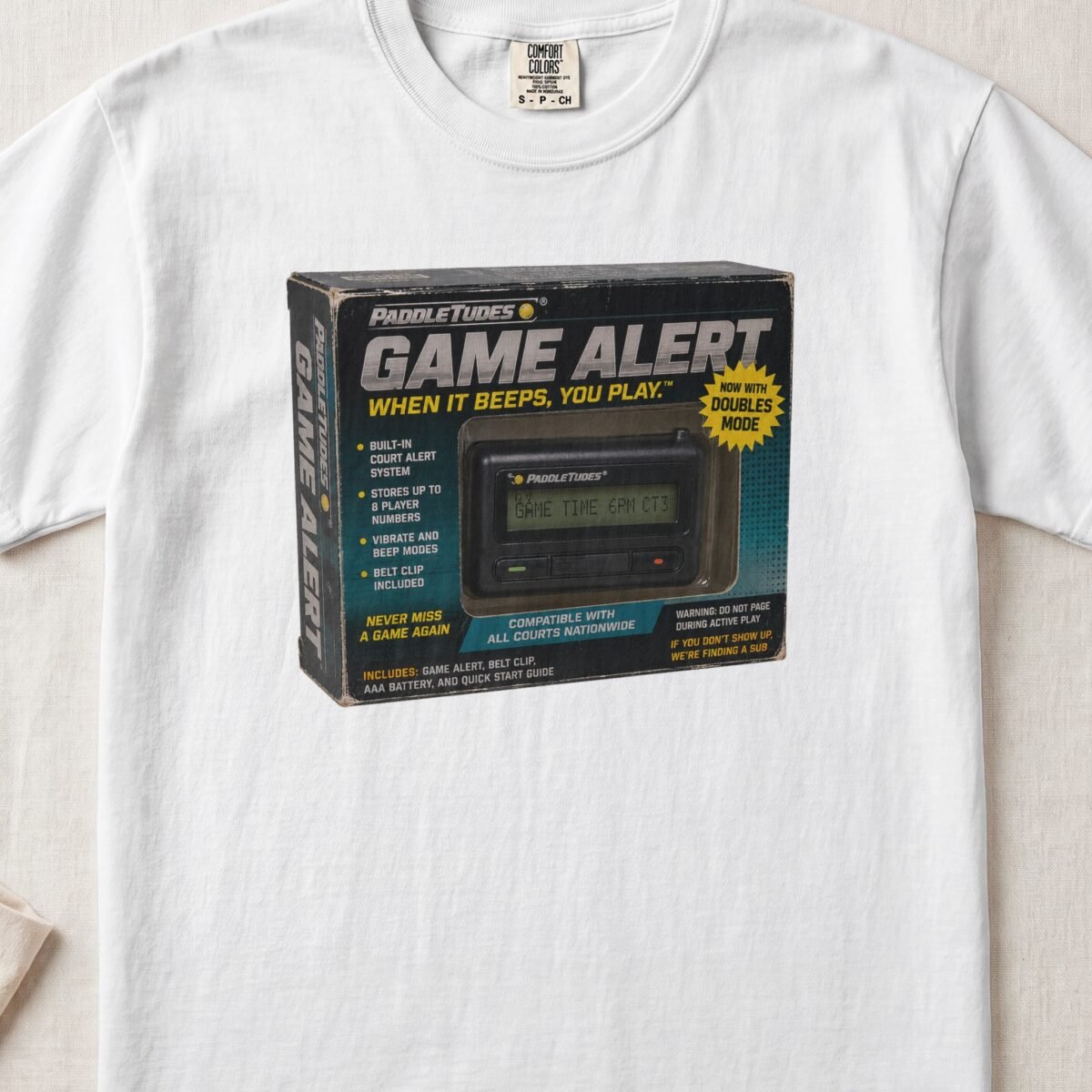
Game Alert
$39.99 Select options This product has multiple variants. The options may be chosen on the product page