Retro Comfort Colors 1717
Soft Hands
$39.99
- Comfort Colors 1717 heavyweight cotton
- Original design · printed to order
- U.S. print partners
Soft Hands — The Fake Tonic for Every Pickleball Banger
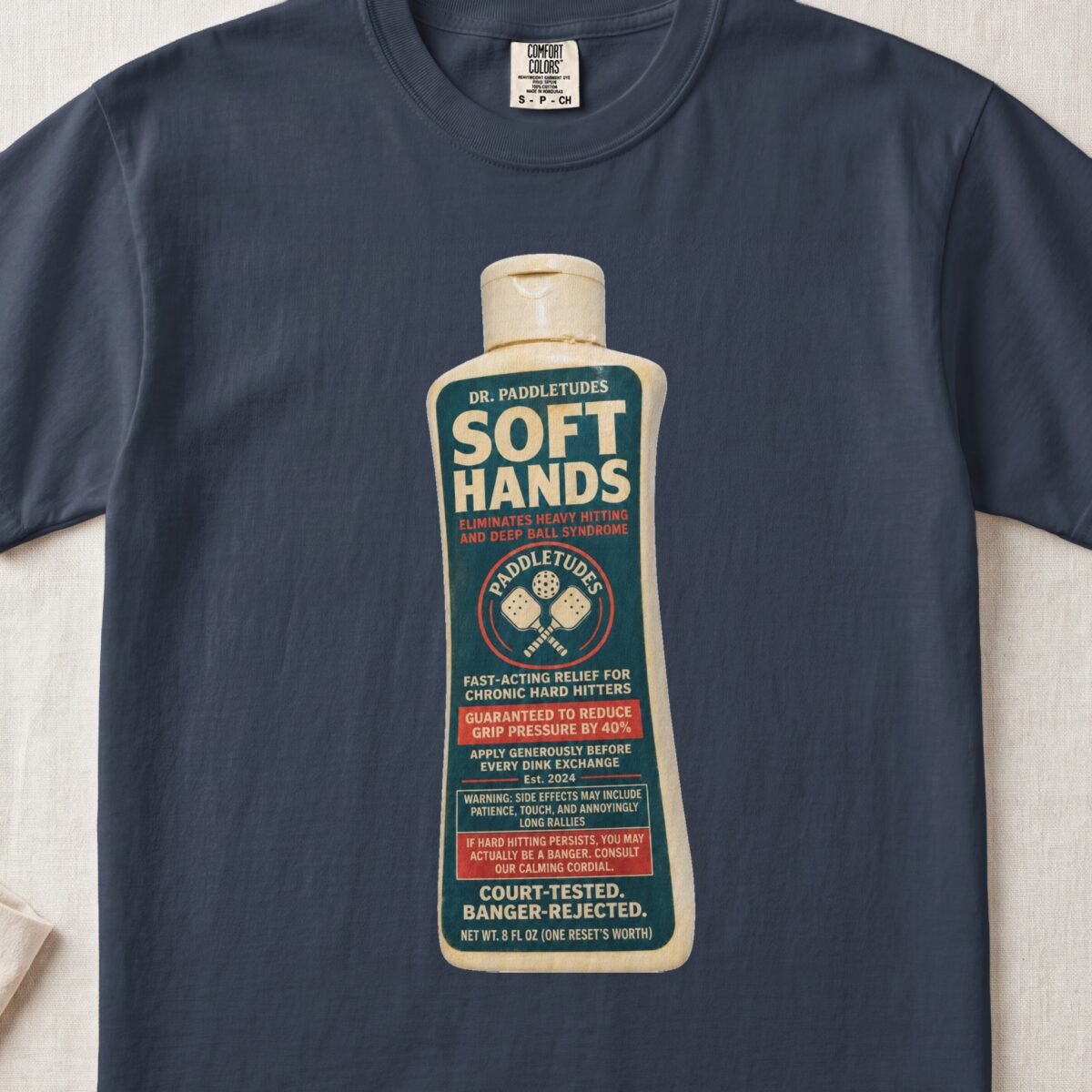
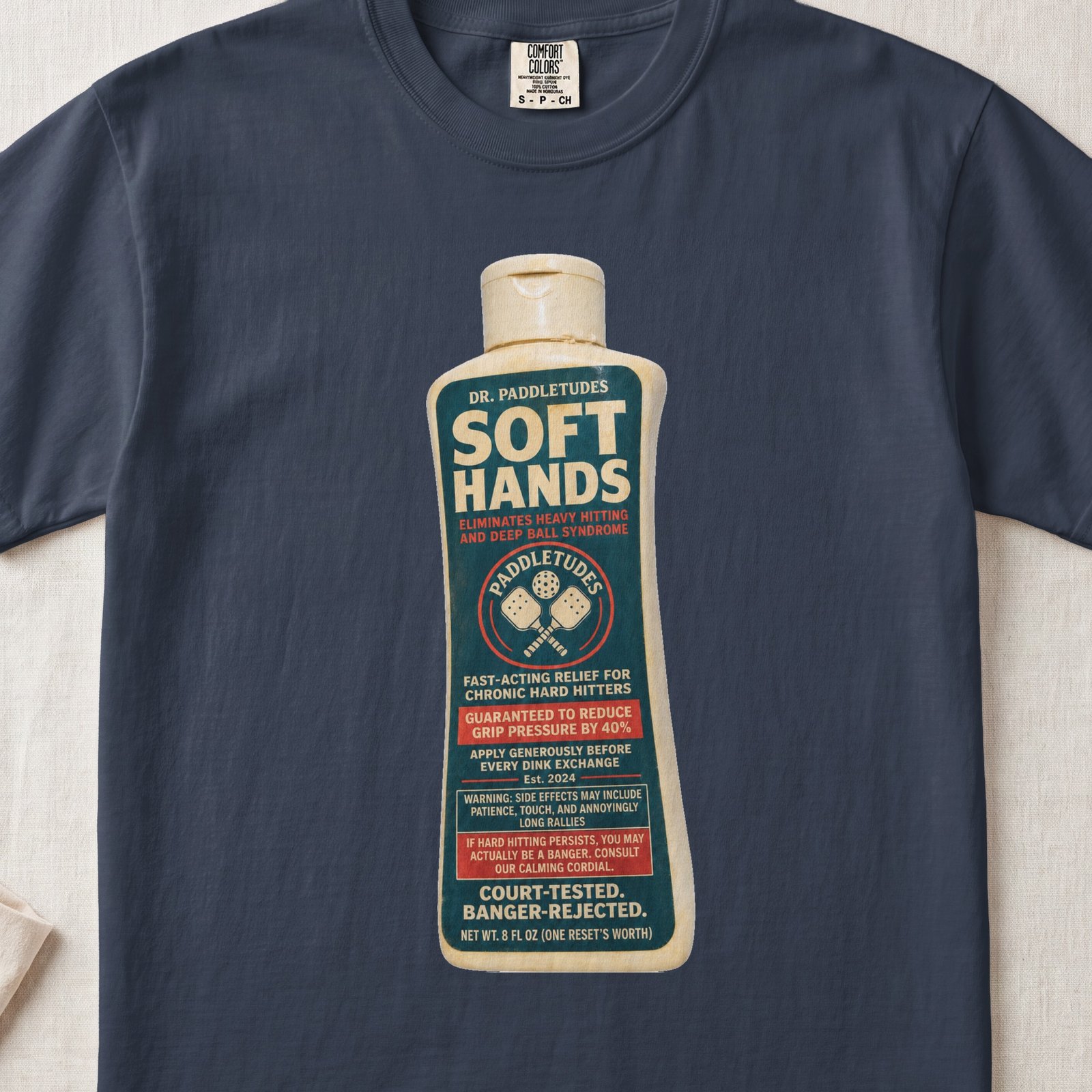
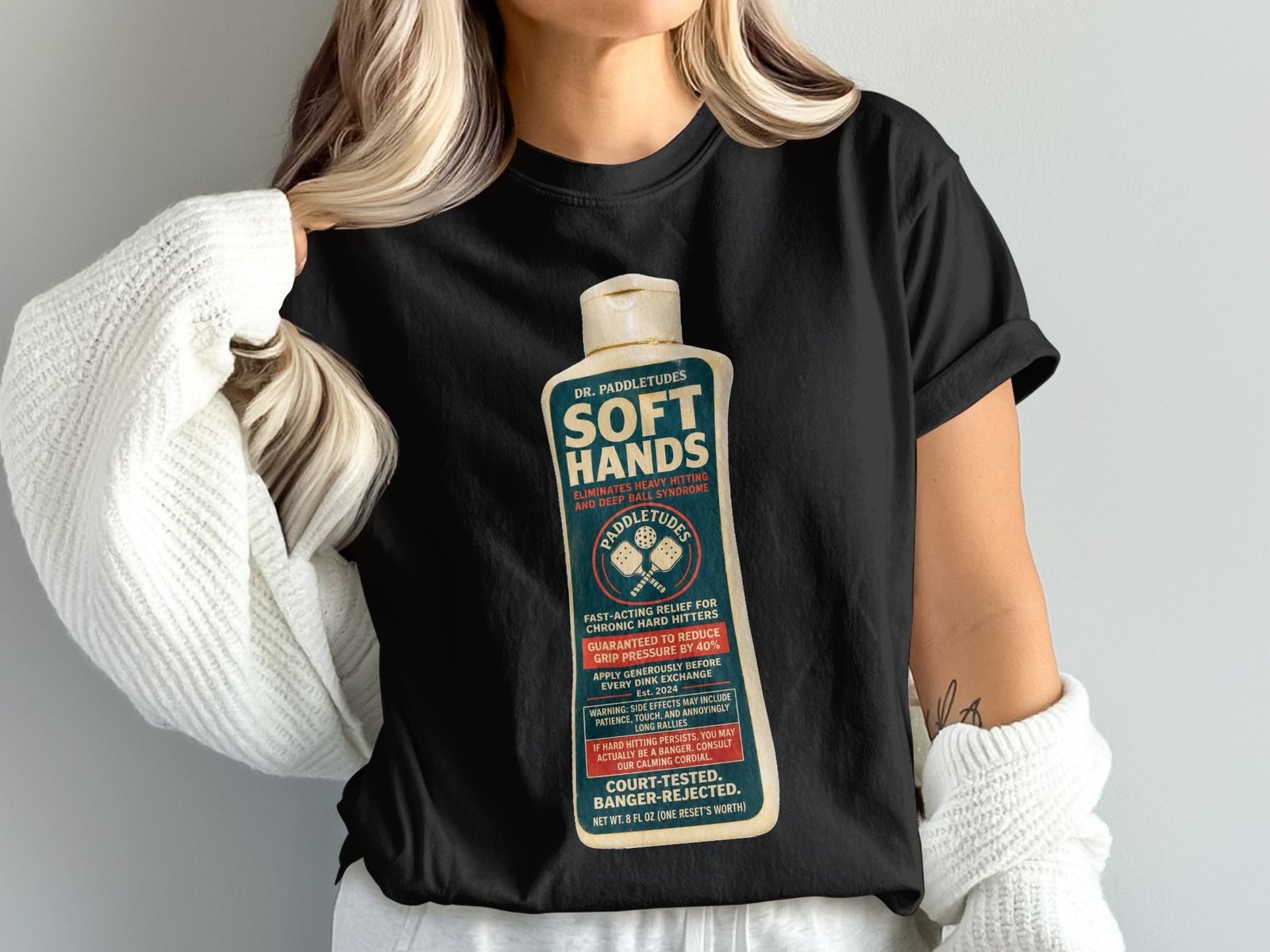
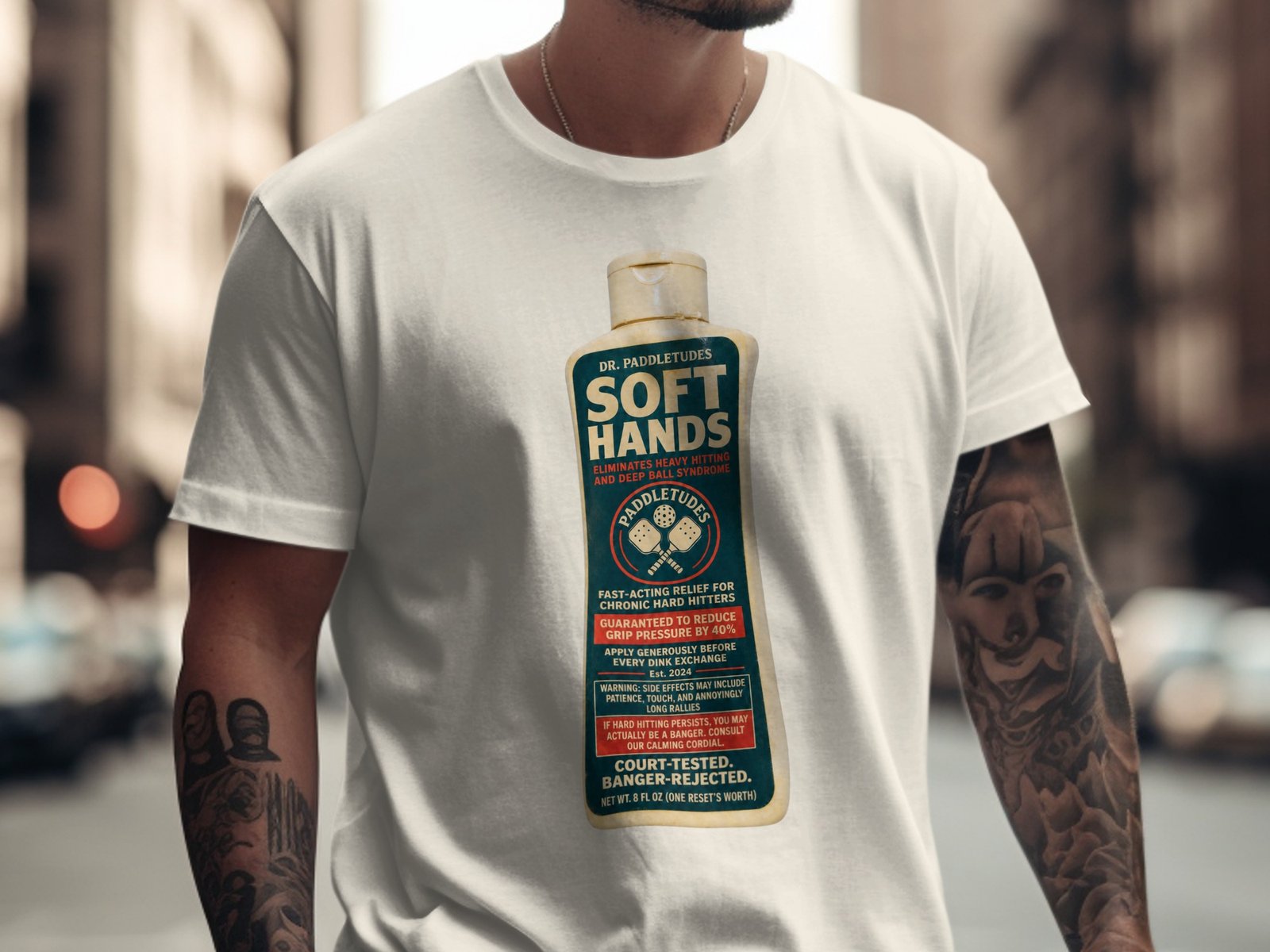
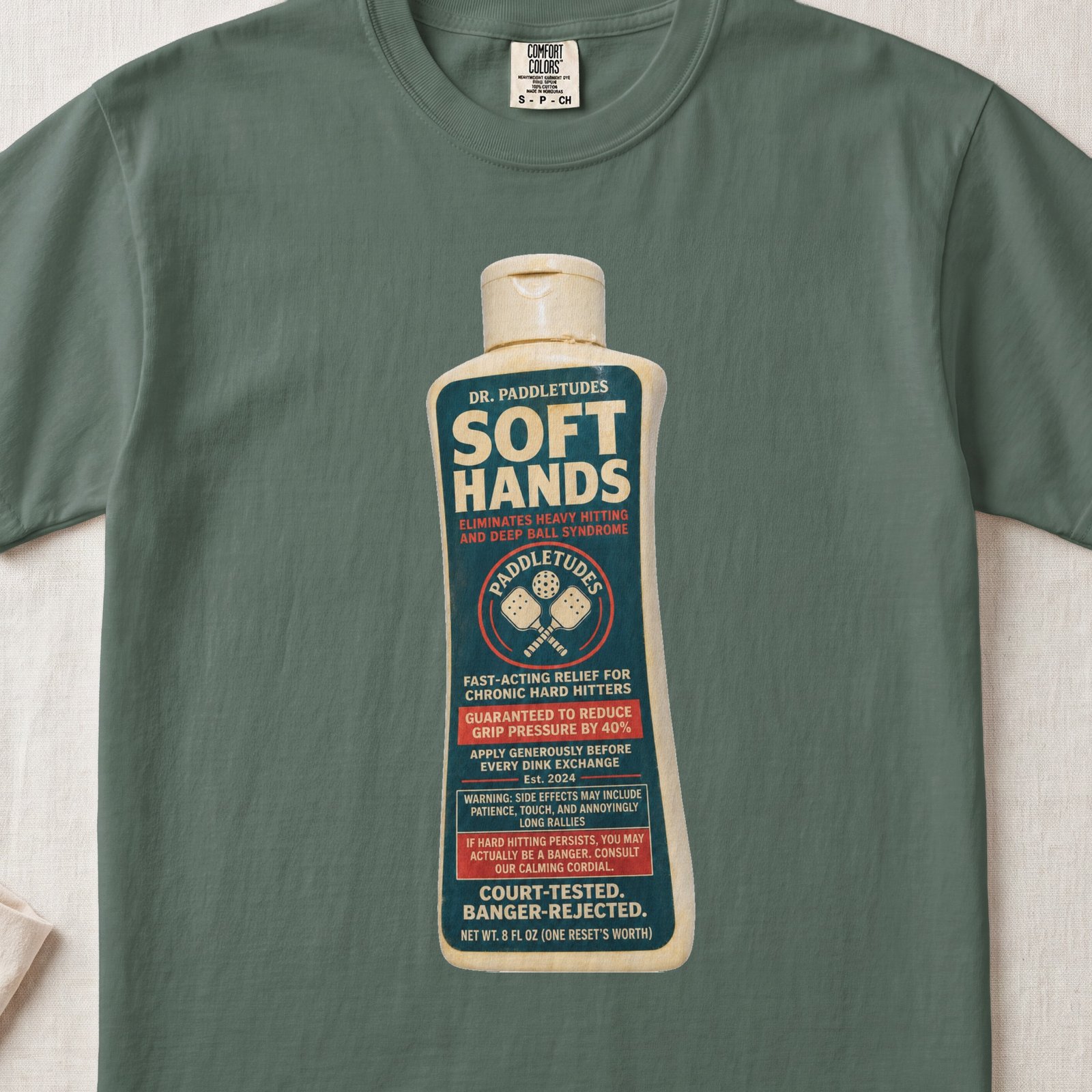
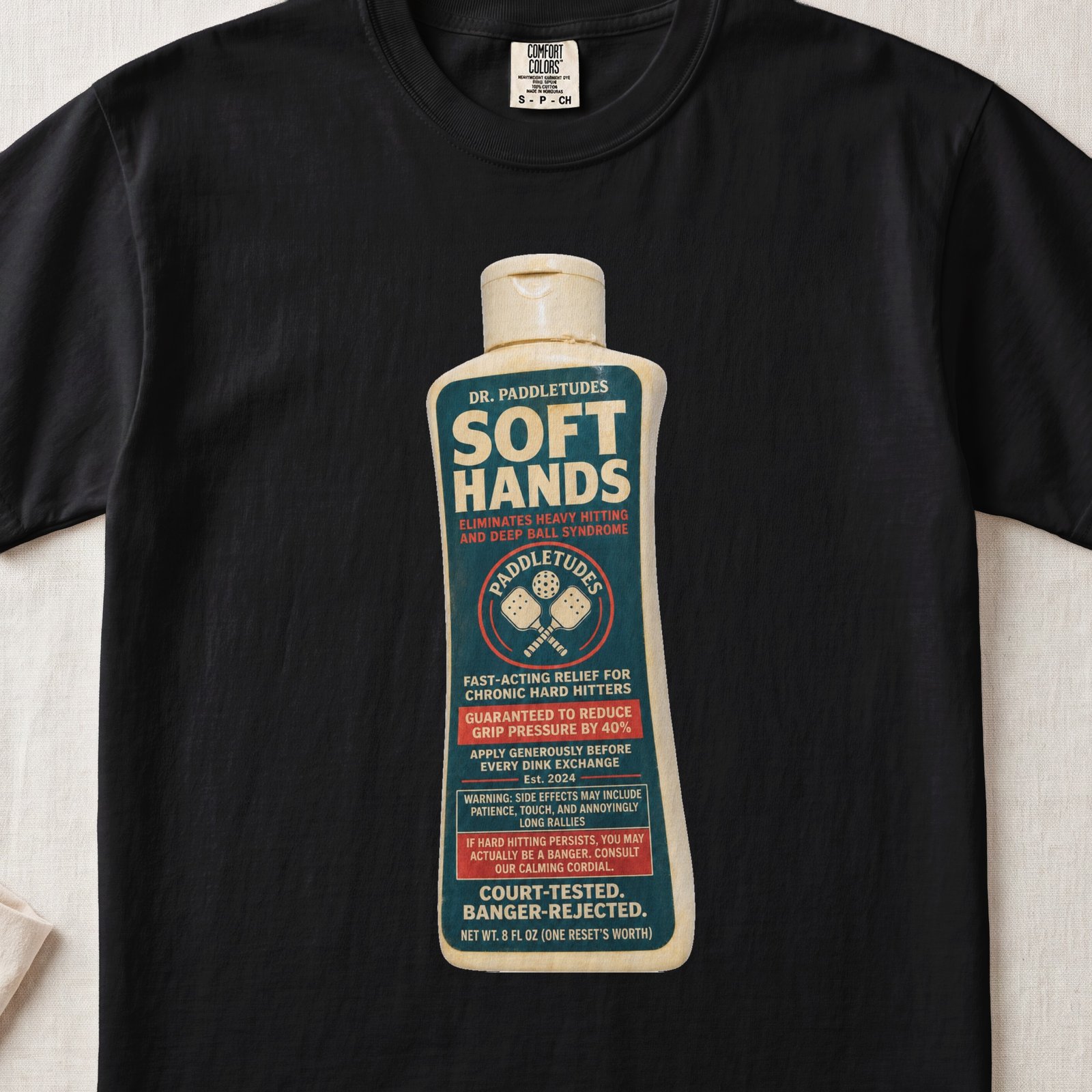
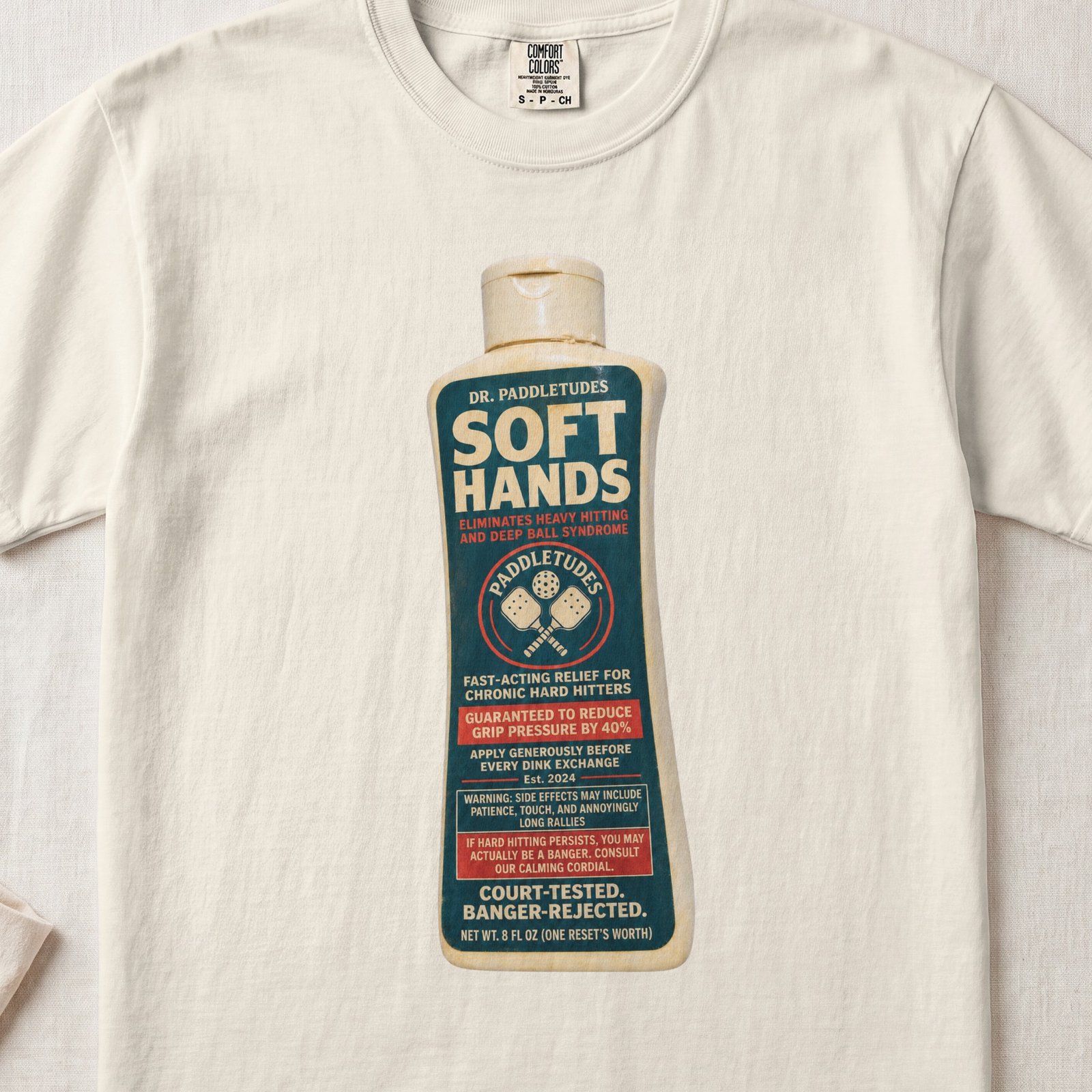
Guaranteed to reduce grip pressure by 40 percent — Soft Hands is a fake Dr. Paddletudes tonic on a Comfort Colors 1717 for every banger who needs a softer game.
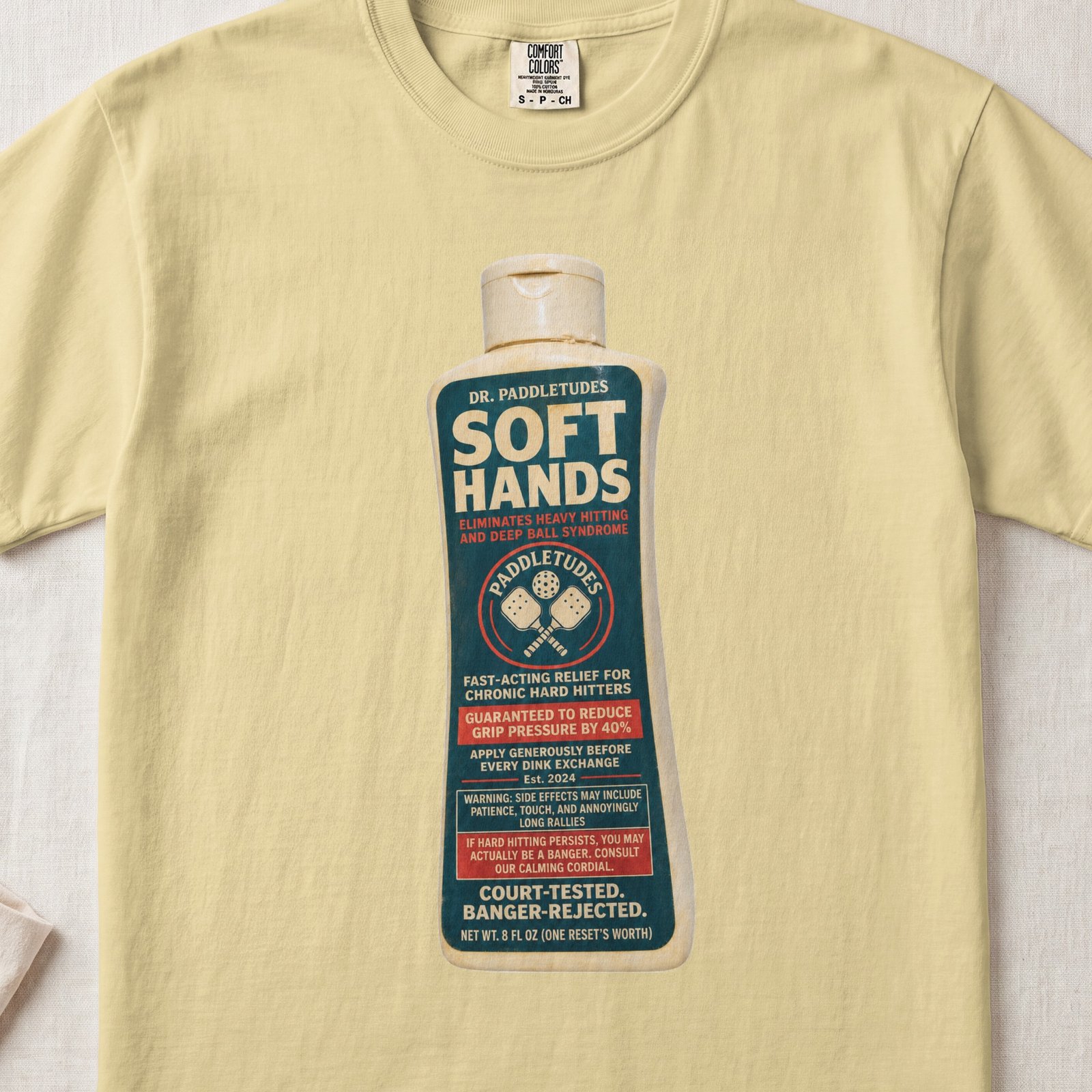
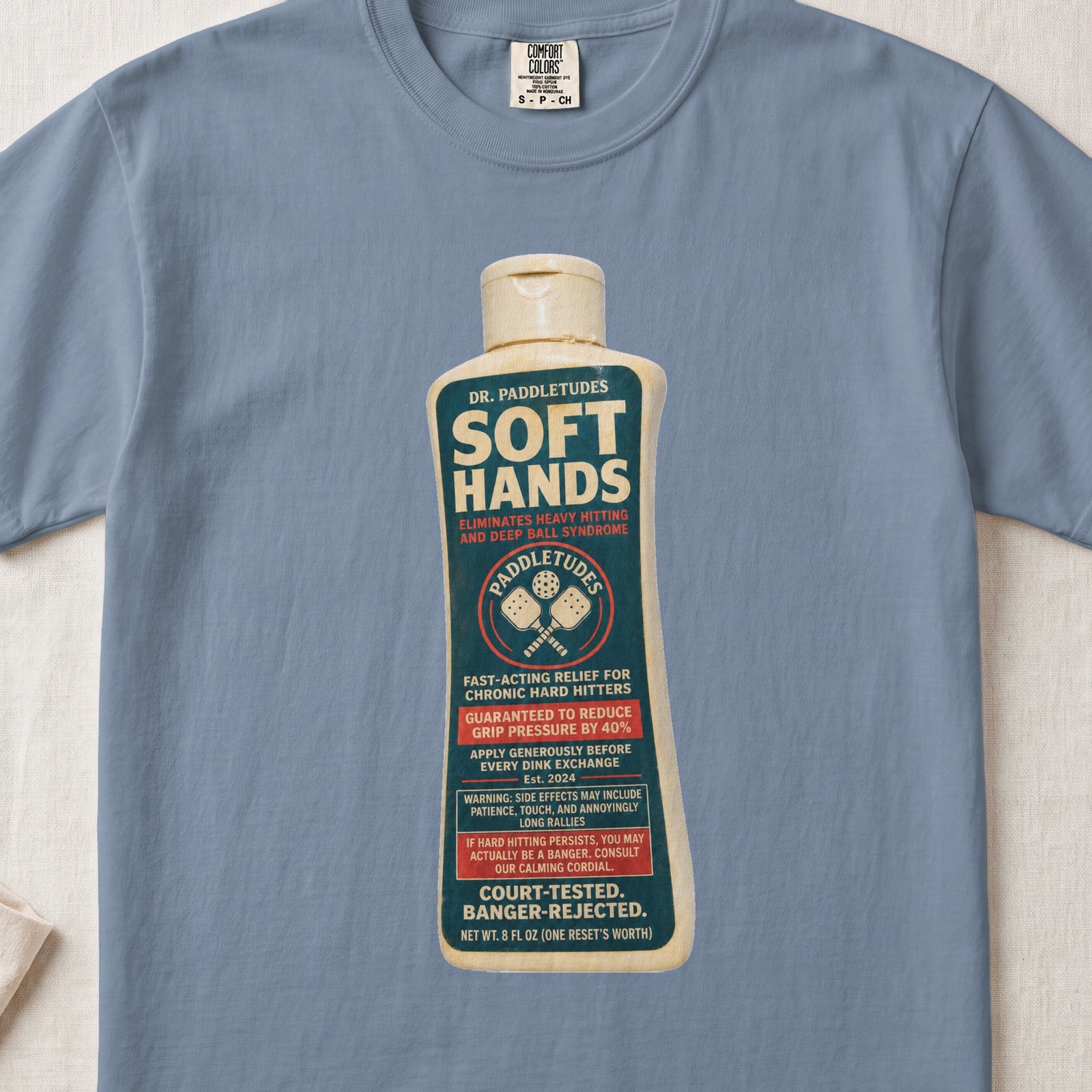
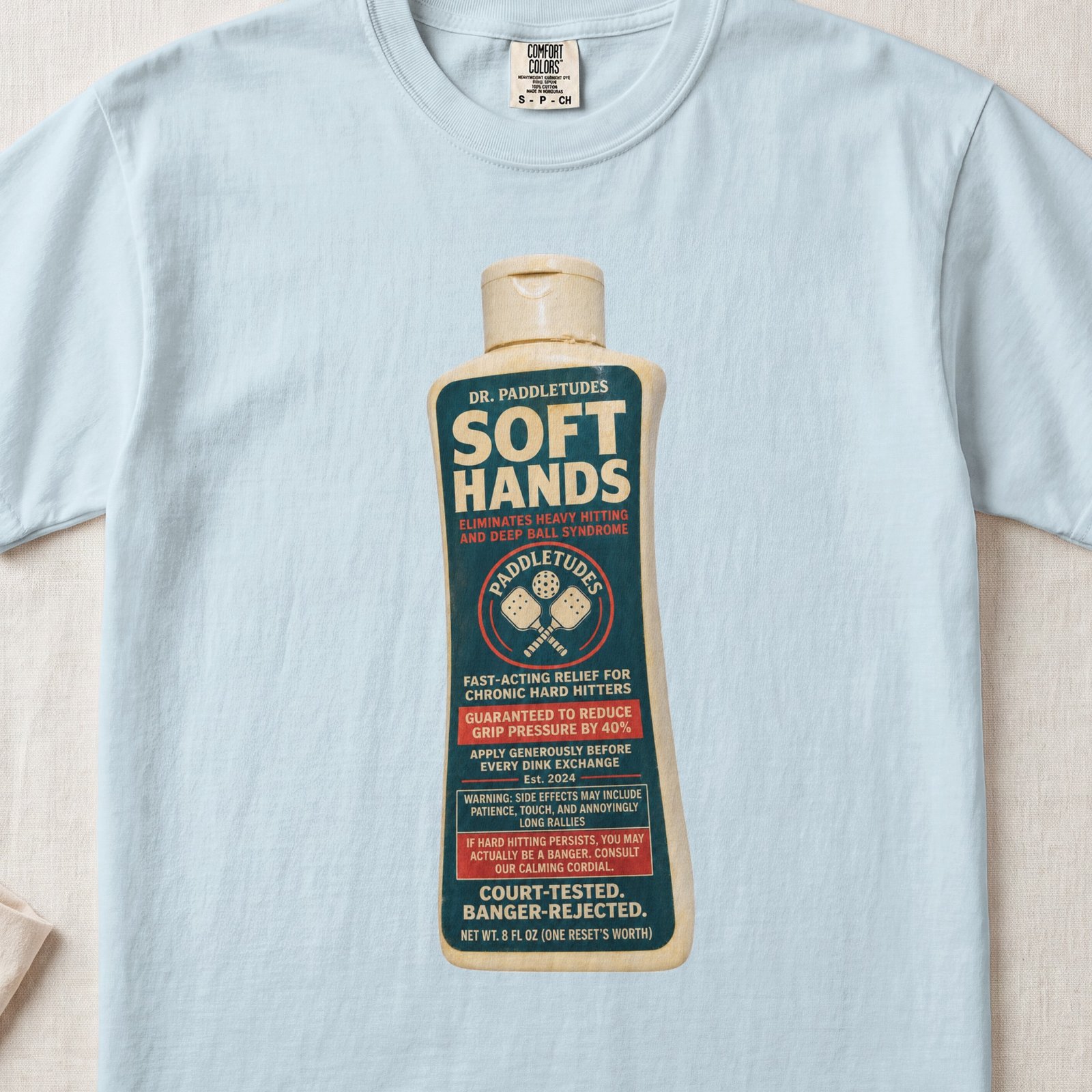
The bottle is teal and cream, apothecary-style, with the Paddletudes crossed-paddle crest centered on the label and “Est. 2024” stamped beneath it like the brand has been prescribing court remedies since the sport went mainstream. The diagnosis is printed right under the title: “ELIMINATES HEAVY HITTING AND DEEP BALL SYNDROME.” The treatment plan follows in descending order of seriousness. “FAST-ACTING RELIEF FOR CHRONIC HARD HITTERS.” “GUARANTEED TO REDUCE GRIP PRESSURE BY 40%.” “APPLY GENEROUSLY BEFORE EVERY DINK EXCHANGE.” Every line reads like an actual medication label written by someone who has watched a banger slam their third return into the net and still refuse to take pace off the ball.
The warnings section is where the prescription gets honest. “SIDE EFFECTS MAY INCLUDE PATIENCE, TOUCH, AND ANNOYINGLY LONG RALLIES.” Those are the three things that separate a competitive dinker from a recreational slugger — and they’re listed as side effects because for the person being diagnosed, patience IS a side effect. It’s the thing that happens to you against your will when you finally accept that hitting harder isn’t working. Then the kicker: “IF HARD HITTING PERSISTS, YOU MAY ACTUALLY BE A BANGER. CONSULT OUR CALMING CORDIAL.” The implication that banging is a condition requiring escalating treatment is the joke. The fact that it’s genuinely true for about half the players at any open play session is why the shirt gets a reaction. At the bottom, the endorsement: “COURT-TESTED. BANGER-REJECTED.” And the net weight: “8 FL OZ (ONE RESET’S WORTH).” Not enough to fix the whole game. Just enough to survive one exchange at the kitchen line without blasting the ball into the back fence.
Grip pressure is one of those concepts that sounds like pseudoscience until you experience the difference on a court. Most recreational players grip their paddle the way they’d grip a hammer — white-knuckle tight, full forearm engagement, wrist locked. That grip generates power, which feels productive, but it kills touch. The ball rebounds off the paddle face like it hit a wall because the hand and wrist can’t absorb any of the incoming energy. Soft hands means a loose grip — a 3 or 4 out of 10 on the pressure scale — where the paddle gives slightly on contact and the ball stays low, drops short, and dies in the kitchen instead of sailing past the baseline. It’s the difference between redirecting pace and reflecting it. Advanced players toggle between soft and firm depending on the shot, but the default at higher levels is almost always softer than beginners expect. Coaches spend entire clinics on grip pressure because it’s the single fastest improvement most players can make without changing anything else about their mechanics.
The person who wears this shirt knows exactly which side of the diagnosis they’re on — and they’re at peace with it. They’re either the reformed banger who discovered touch after months of losing to players who hit half as hard, or they’re the natural dinker who’s been trying to convert their hitting partner for two seasons and has given up on persuasion. Either way, the Dr. Paddletudes label captures the moment the sport shifts from “hit it hard and hope” to “place it soft and wait.” That transition is one of the most discussed dynamics in competitive pickleball because it separates the 3.0-3.5 tier from the 4.0+ tier more reliably than any other skill. Power works until it doesn’t. Touch works forever. The person wearing this shirt learned that lesson, and they want credit for surviving the curriculum.
If you’re buying this for someone, think about the player who just switched paddles — specifically, the one who went from a power paddle to a control paddle and has been insufferable about it ever since. They’ll explain the difference between a 14mm and 16mm core to anyone who makes eye contact. They’ve started using the word “feel” in a way that didn’t exist in their vocabulary six months ago. This shirt validates their entire personality shift. It also works in the opposite direction — the gift for the banger who refuses to change, given with love by the doubles partner who’s been absorbing their slammed returns for an entire league season. The prescription is the message: maybe it’s time to try something different.
Soft Hands is the third entry in the Dr. Paddletudes line of fake court tonics. The Backhand Strengthener prescribes relief for weak backhands and general court shame. Each bottle diagnoses a different flaw in your game and prescribes a treatment that sounds medical and plays absurd. Off the tonic shelf, Smack Talklicious is the bubblegum box for the player whose confidence outpaces their discretion — five sticks of pure trash talk fuel. Court Operation is the board game for what happens when the body can’t cash the checks the competitive drive is writing — twelve real pickleball injuries, one very sore player. And Dink Fiction puts the entire dink-versus-banger debate into a crime film where two guys in suits dare you to say “dink” one more time.
Printed on a Comfort Colors 1717 garment-dyed heavyweight tee with water-based DTG ink — sizing and care details here.
What Is a Banger in Pickleball
A banger in pickleball is a player whose primary strategy is hitting the ball as hard as possible on every shot — drives off the return, speed-ups at the net, and flat smashes instead of controlled dinks. The term isn’t always negative. At the 3.0-3.5 skill level, banging is effective because most opponents can’t handle consistent pace, and the strategy wins a lot of recreational games. The limitations show up at higher levels where opponents can absorb pace, redirect it, and turn the banger’s power against them.
The banger-versus-dinker debate is one of the longest-running conversations in pickleball. Bangers believe the fastest path to winning is overwhelming the opponent with speed and keeping rallies short. Dinkers believe the fastest path is patience — soft shots that force the opponent to create their own offense, which introduces errors. At the professional level, the answer is clearly both — top players toggle between power and touch depending on the situation. But at the recreational and intermediate levels, most players lean heavily toward one style or the other, and the resulting arguments about “right” and “wrong” ways to play are responsible for more post-game parking lot debates than any line call ever made.
The transition from banger to touch player is one of the hardest skill shifts in the sport because it requires slowing down to get better. Grip pressure drops from an 8 to a 3. Swing speed decreases. Points get longer. The player’s brain has to override the instinct that says “hit it hard” and replace it with “place it soft,” and that override feels like losing until the new pattern clicks and the ball starts consistently going where it’s supposed to instead of where the paddle’s force sends it. Most players who make the switch describe it as learning a second sport. The ones who don’t make the switch aren’t wrong — they’re just playing a different game, and at most open play facilities, both games happen on the same courts at the same time, which is half the fun and most of the arguments.
-
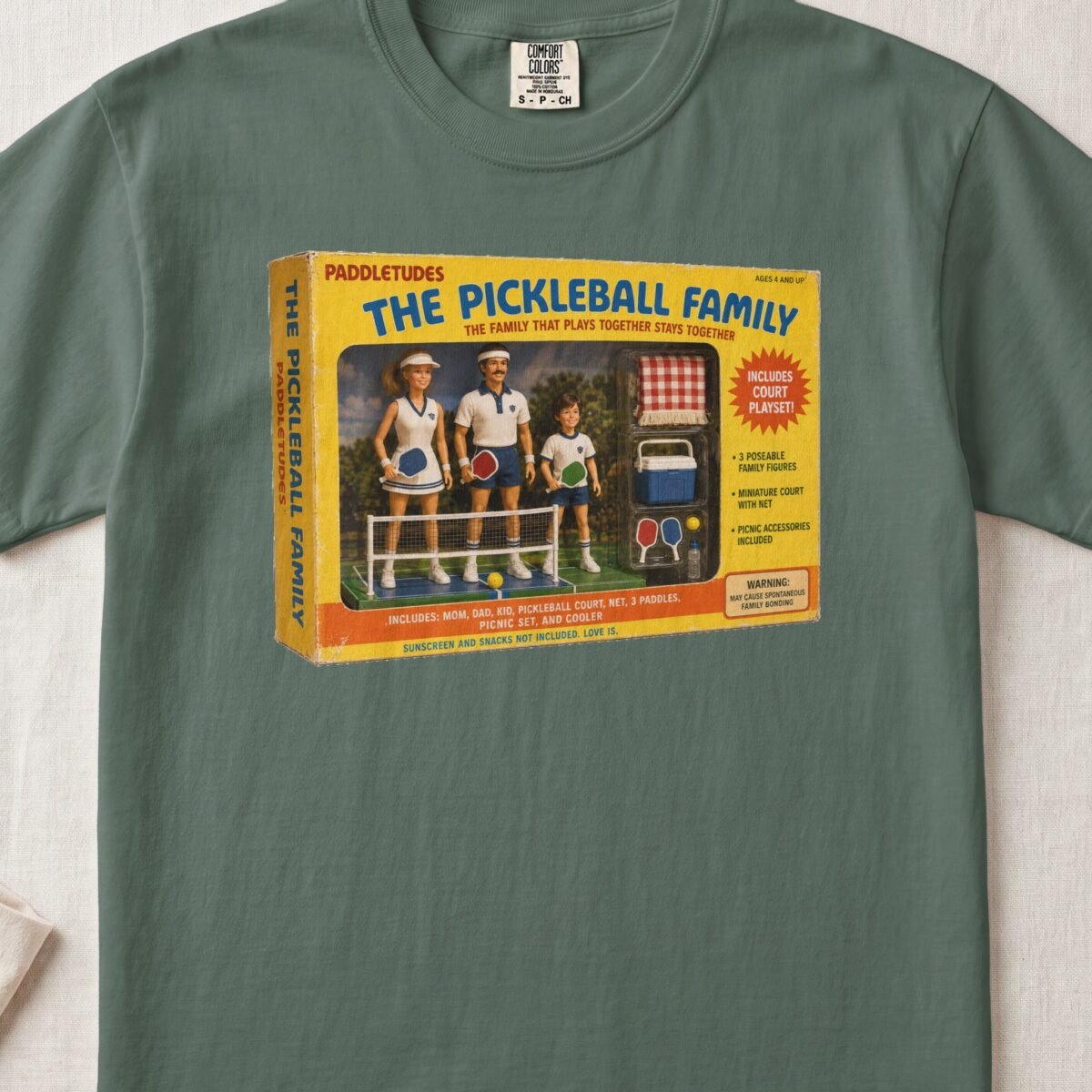
The Pickleball Family
$39.99 Select options This product has multiple variants. The options may be chosen on the product page -
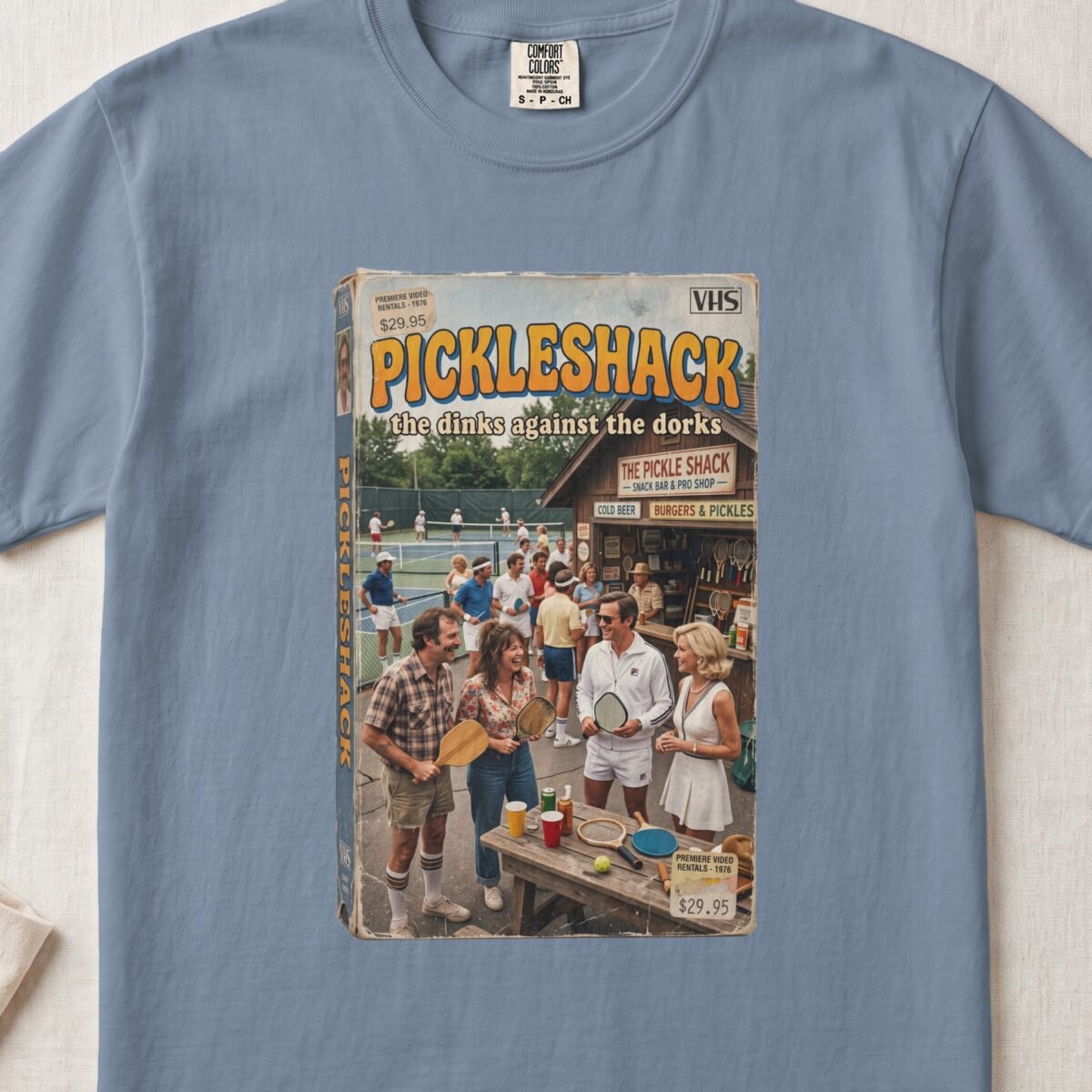
Pickle Shack
$39.99 Select options This product has multiple variants. The options may be chosen on the product page -
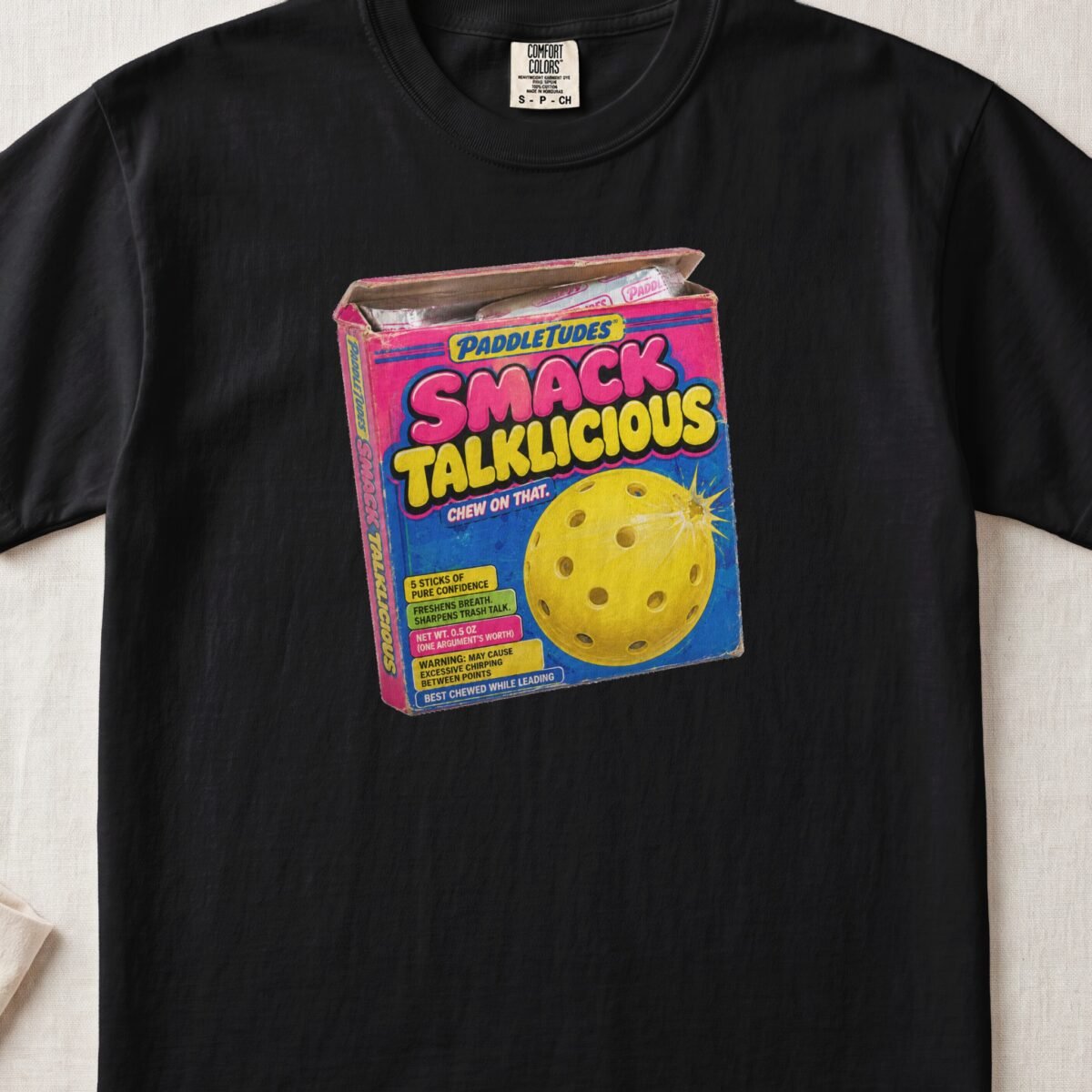
Smack Talklicious
$39.99 Select options This product has multiple variants. The options may be chosen on the product page