
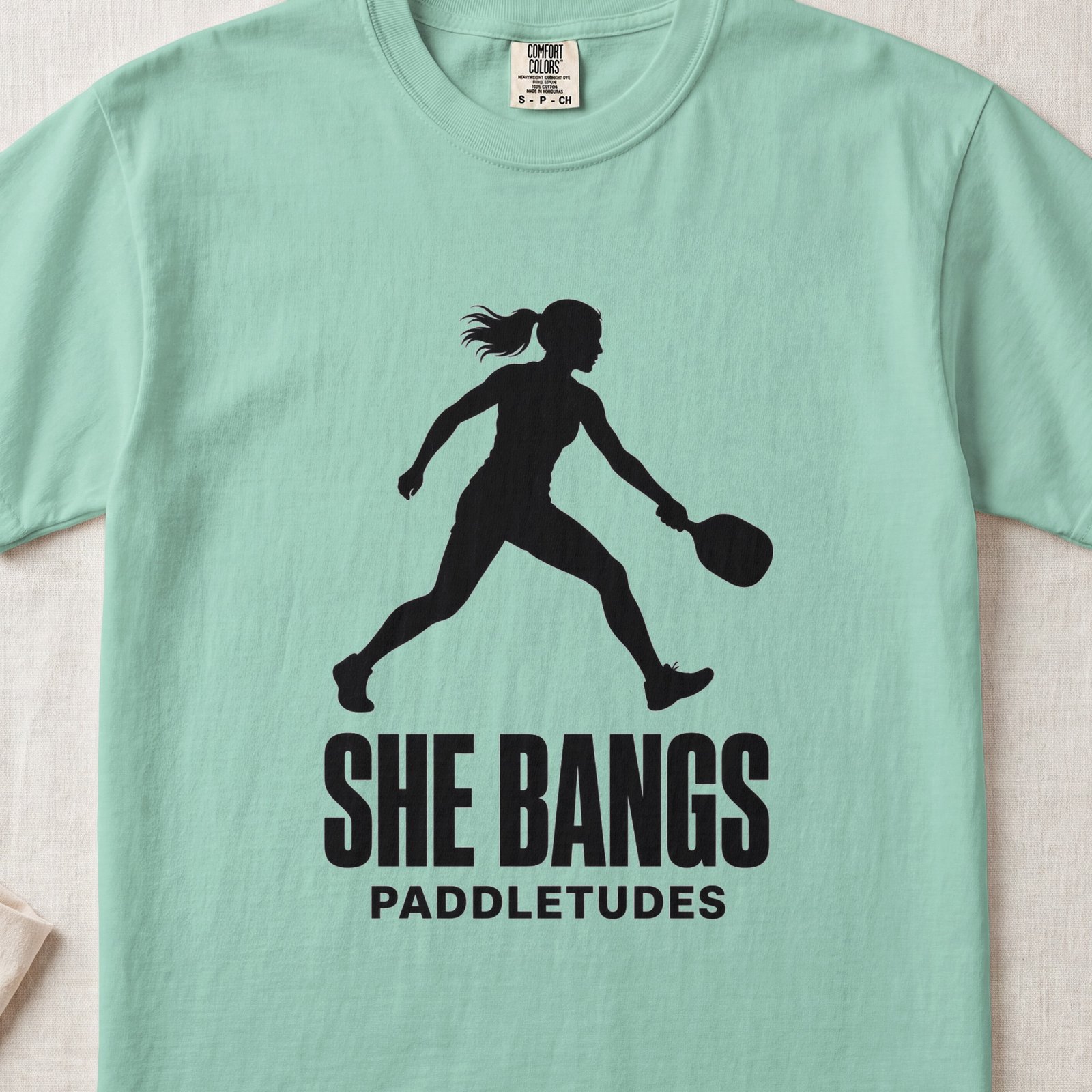
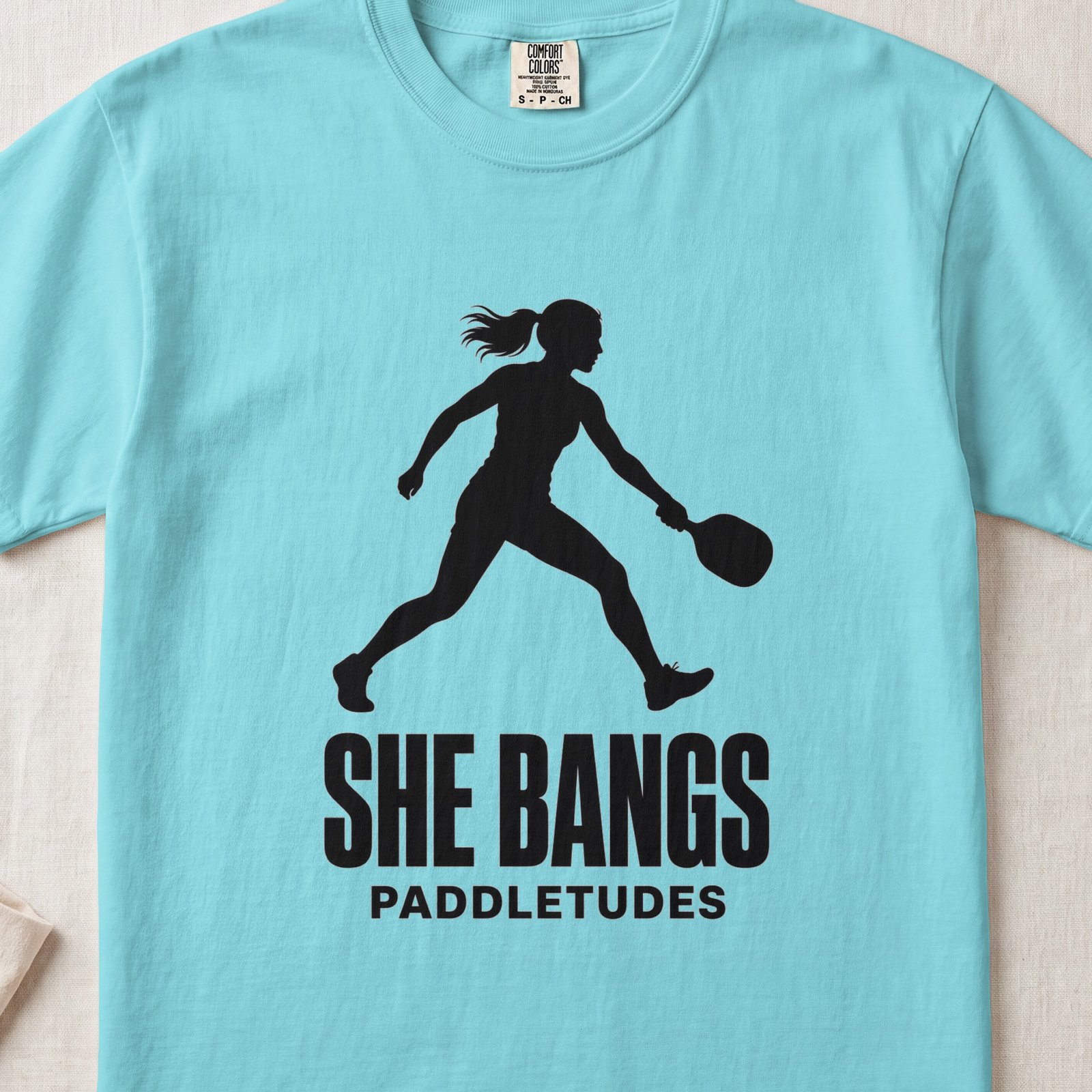
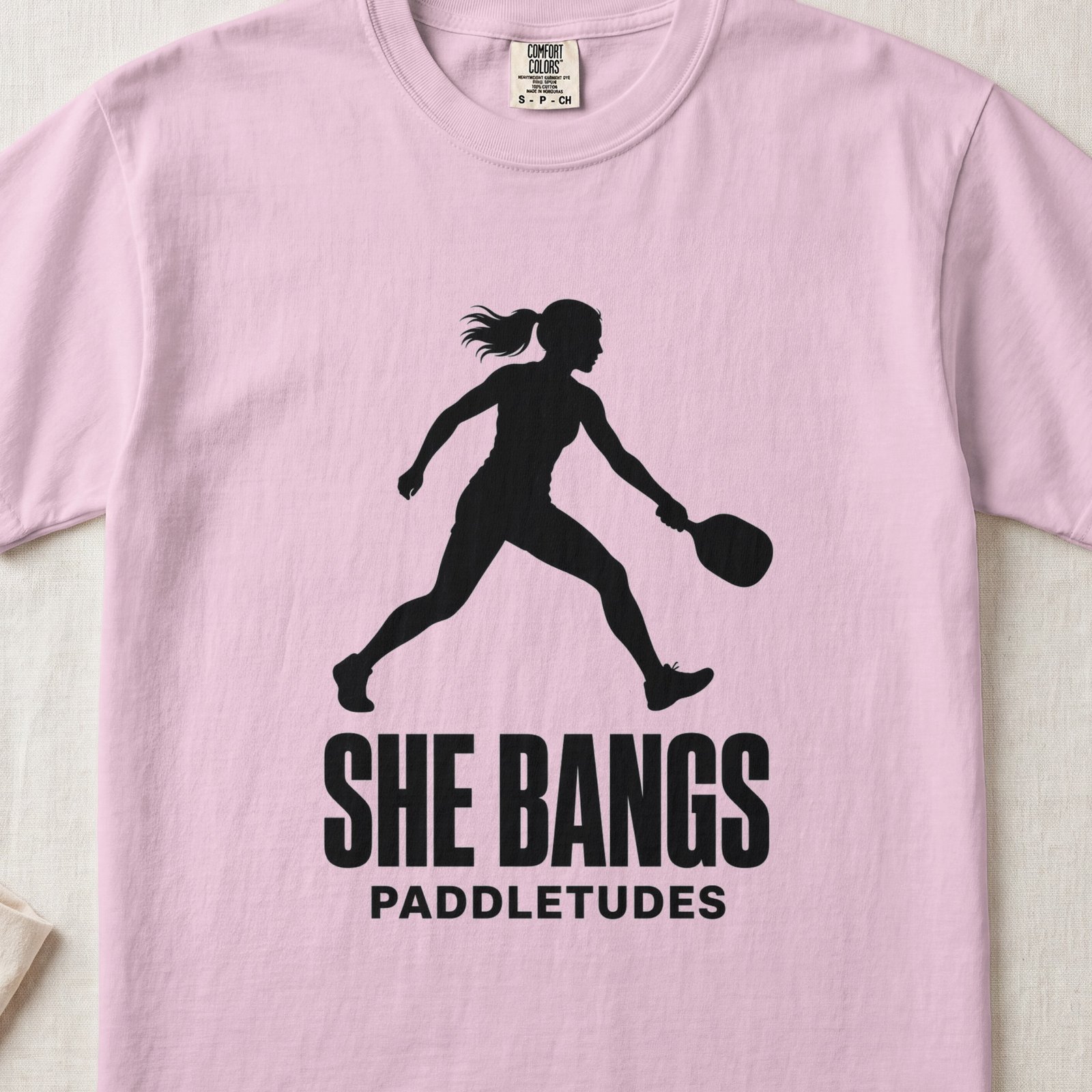
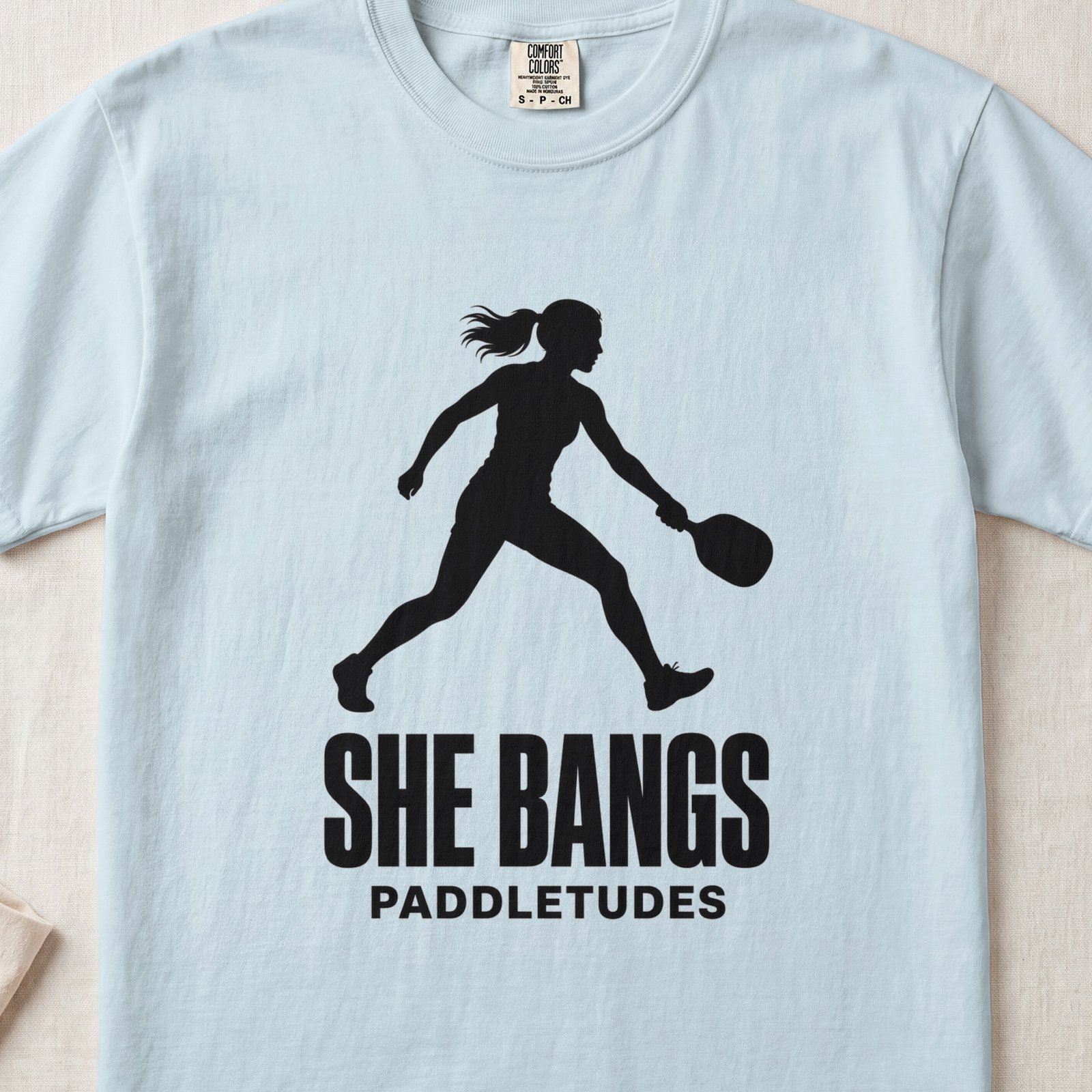
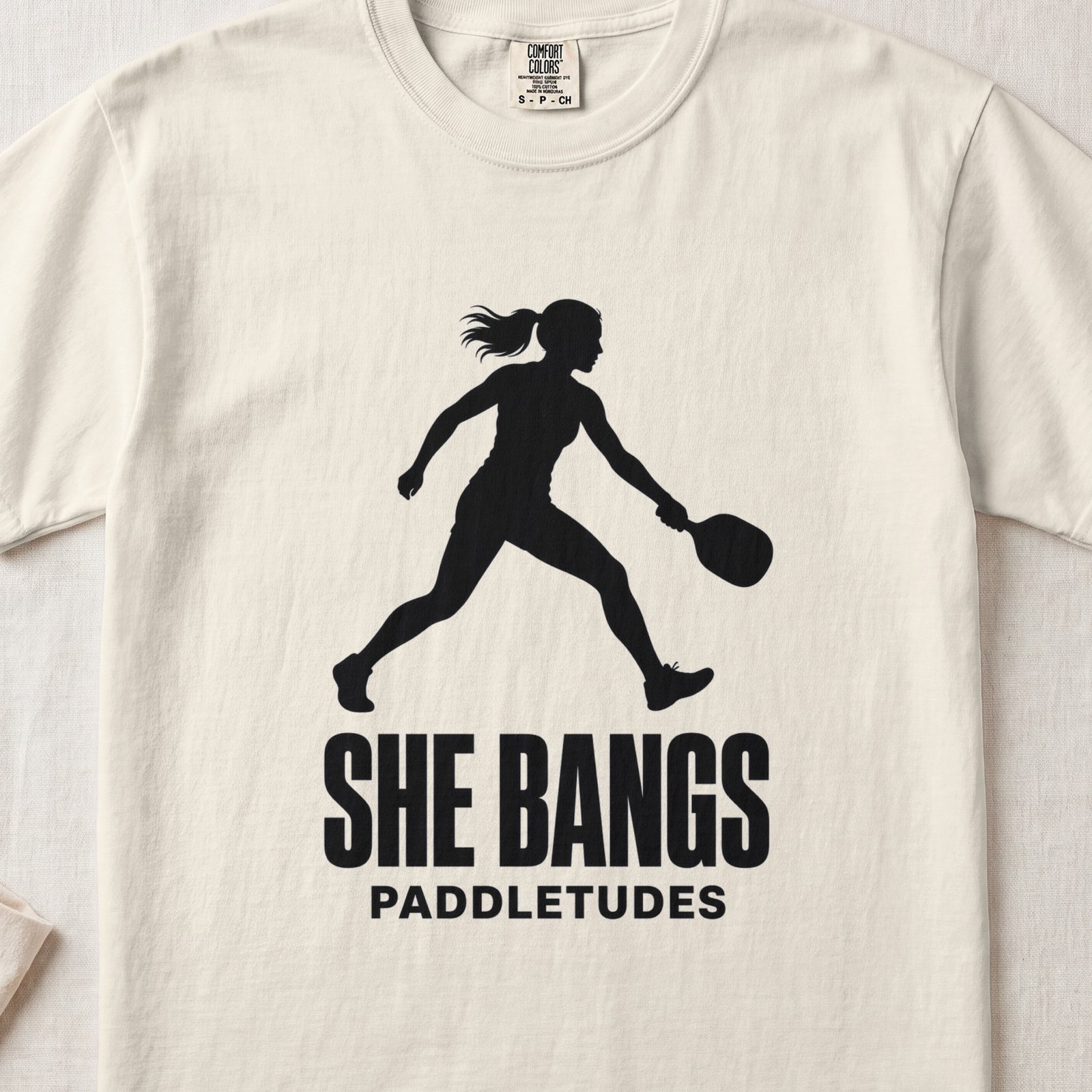
Sports Comfort Colors 1717
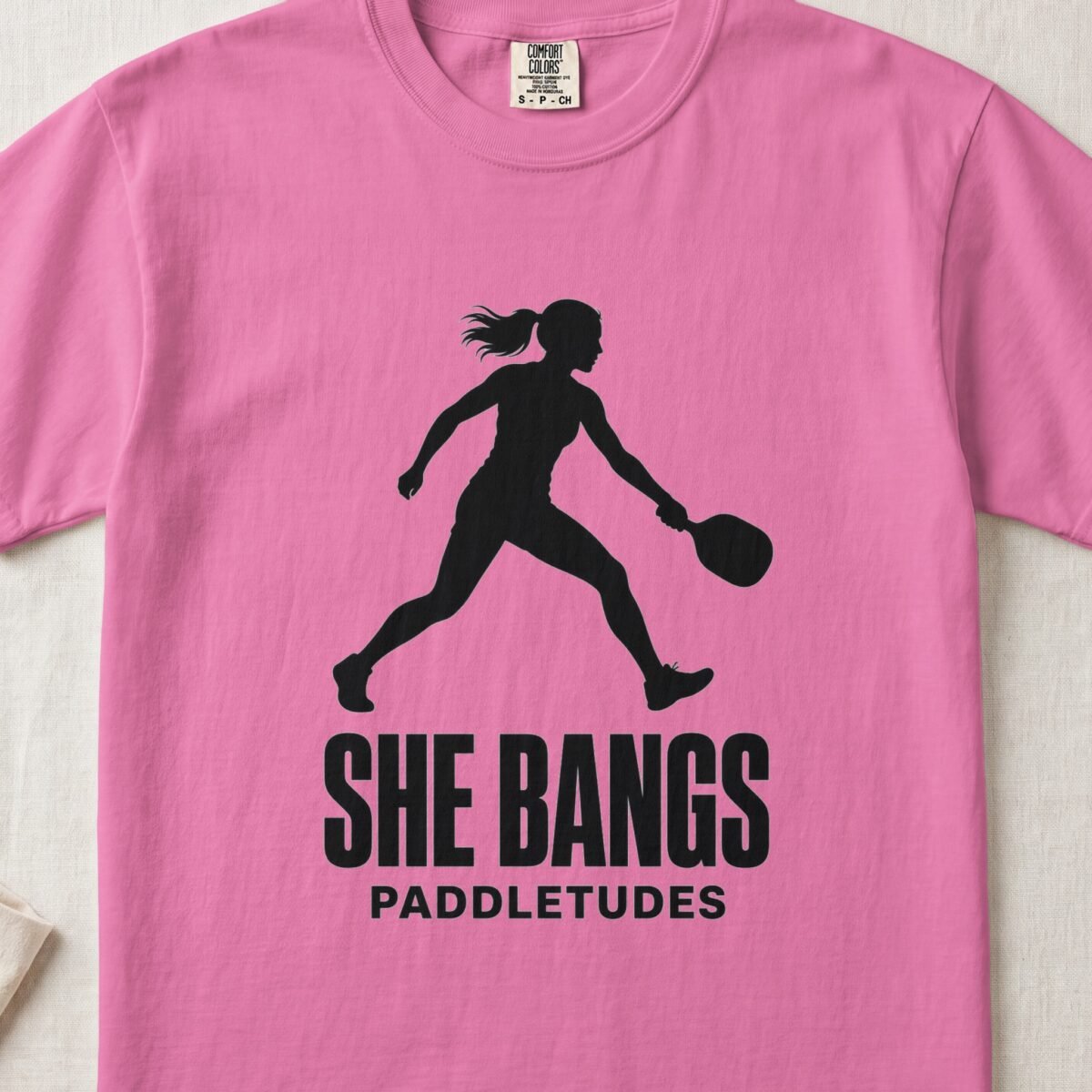
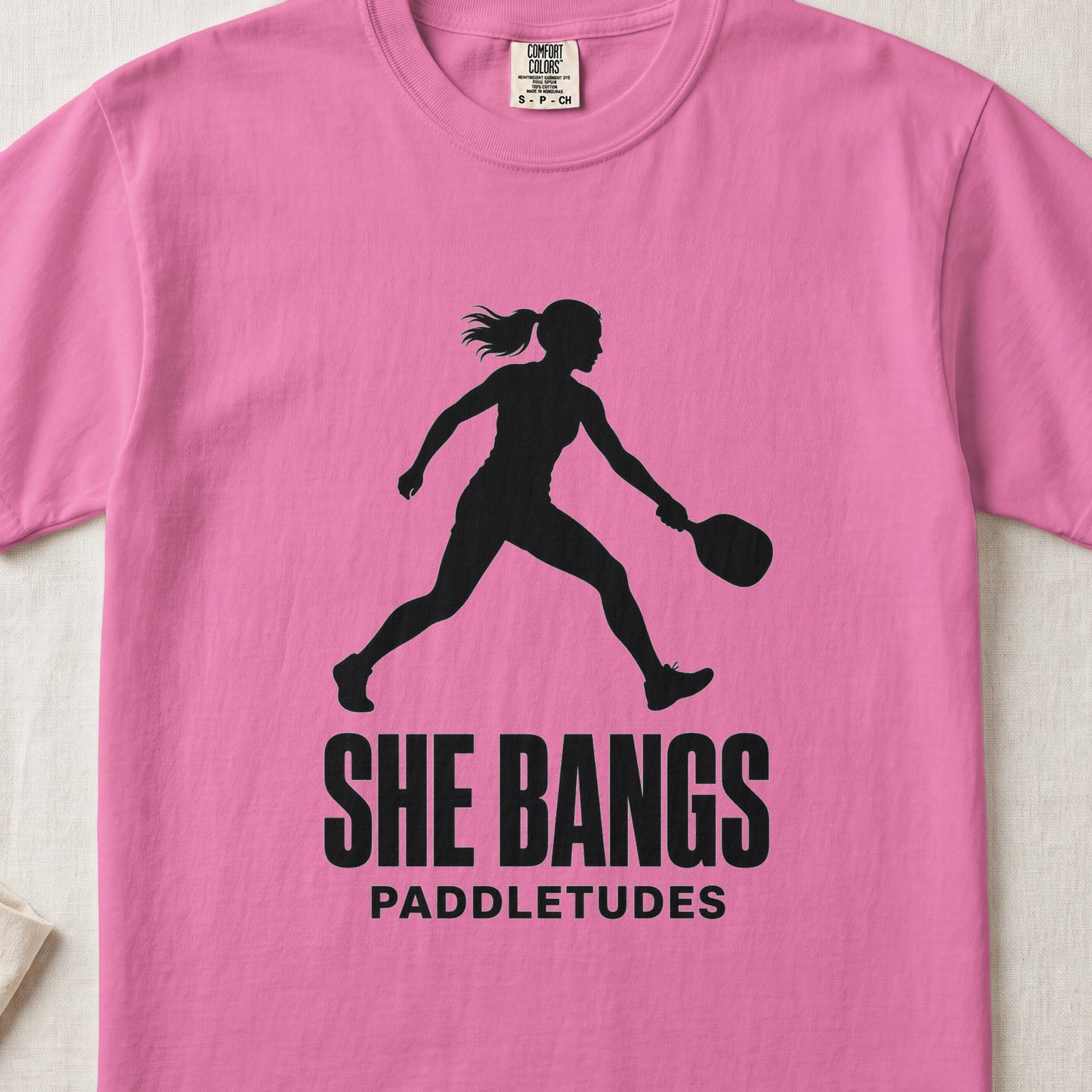
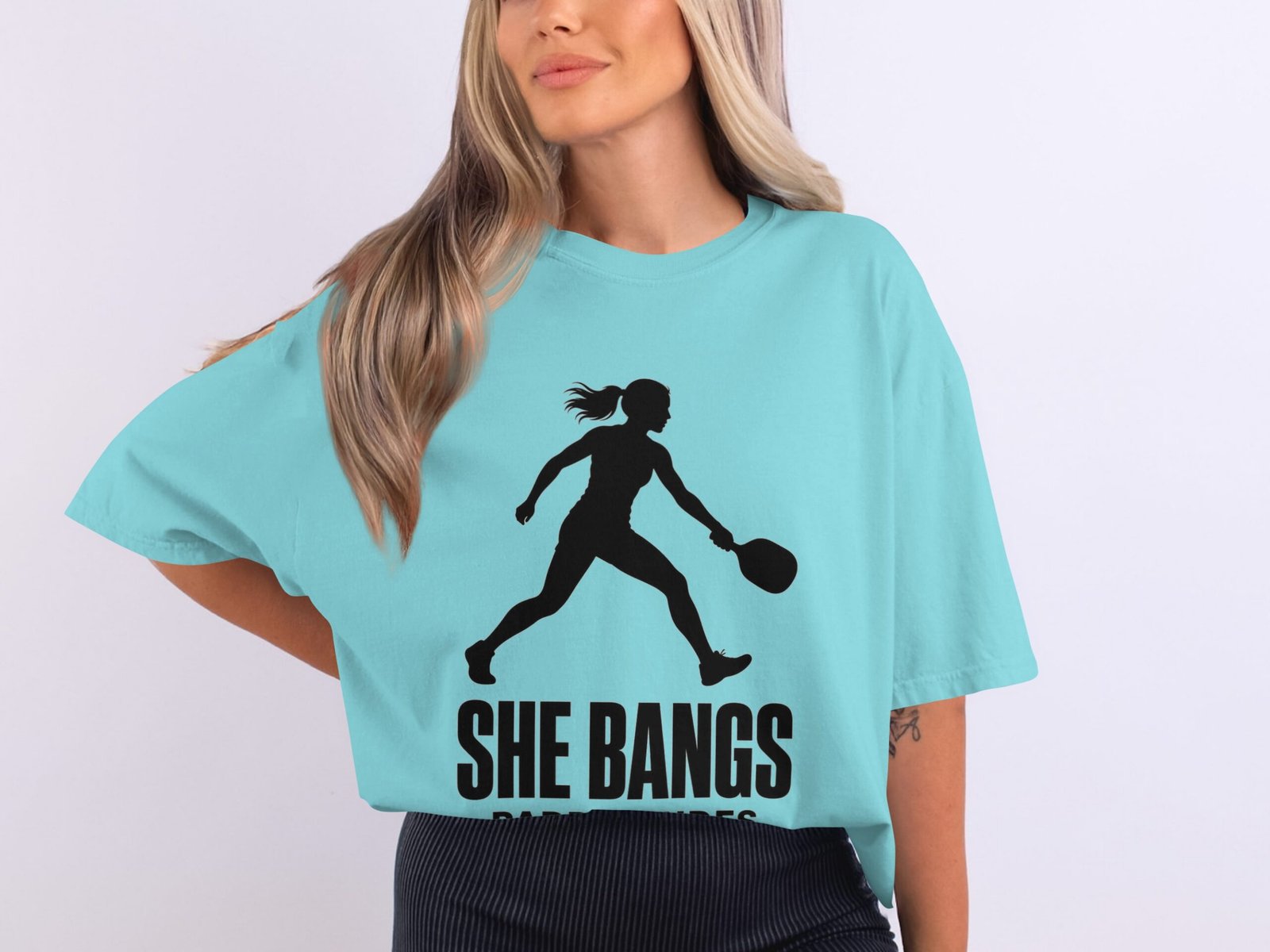
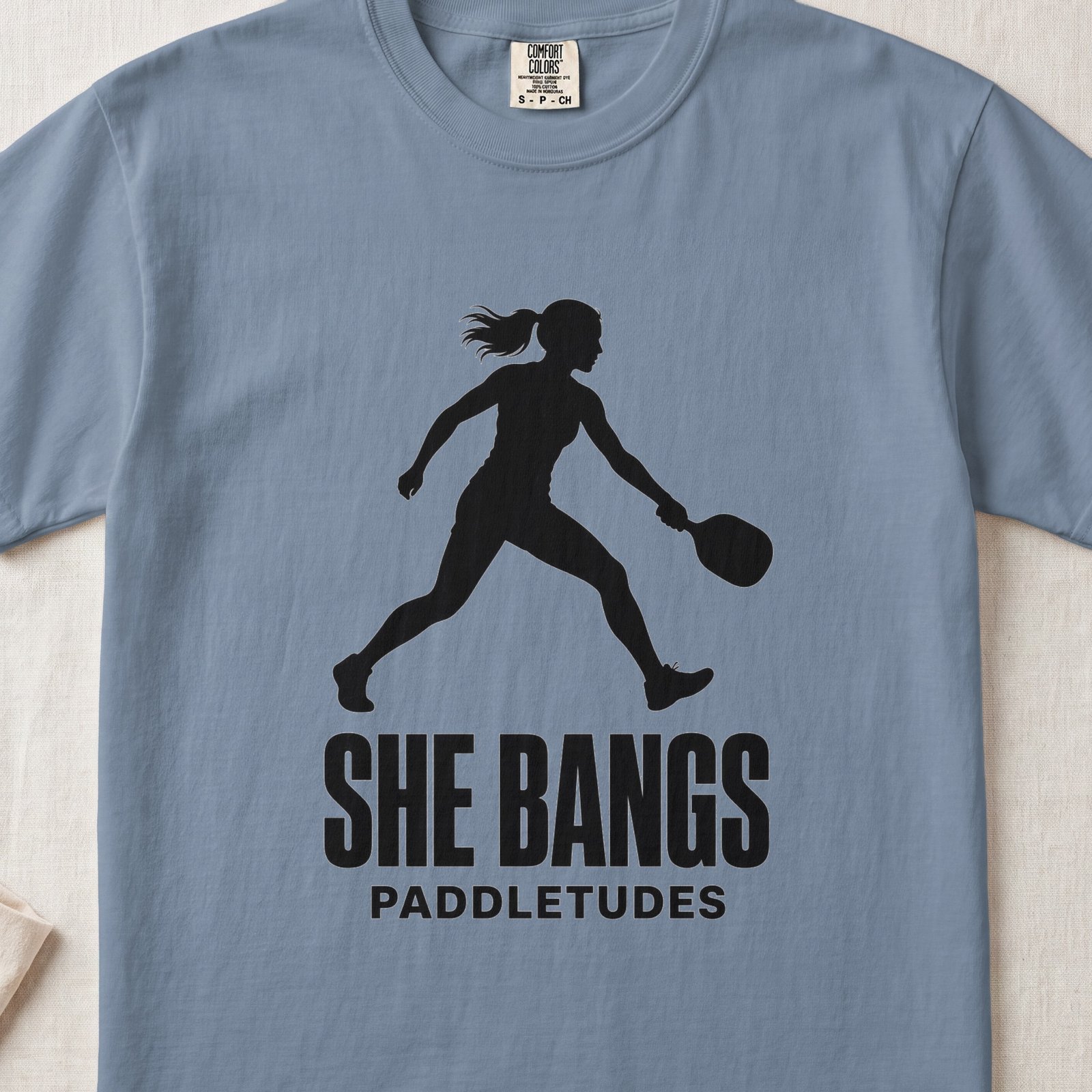
She Bangs
$29.99
- Comfort Colors 1717 heavyweight cotton
- Original design · printed to order
- U.S. print partners
A Pickleball Drive You Can Hear Three Courts Away
You hear the drive before you see who hit it. That specific crack — paddle face meeting ball flush, the sound carrying across three courts and making the player on court seven stop mid-dink and look over. That’s the She Bangs player. This shirt is for her.
She’s the former softball player whose arm didn’t retire when she did. The ex-tennis player whose groundstrokes showed up on a pickleball court fully formed and devastating. The woman who picked up a paddle at a friend’s birthday party, hit her first drive, watched it blow past two people at the kitchen line, and thought “oh, this is going to be fun.” She Bangs isn’t an apology. It’s a declaration. The soft game exists. She’s aware of it. She has chosen a different path, and that path involves hitting the ball as hard as the physics of the situation allow, with aim, with intent, and with zero interest in a thirty-shot dink rally that ends when someone pops one up.
Off the court, she’s the person who doesn’t deliberate. She walks into a restaurant, scans the menu once, and orders in under a minute. She starts the project before the planning meeting happens because the best plan is the one that’s already in motion. She makes decisions the way she hits drives — committed, fully extended, no hedging. The power game in pickleball is a personality, not just a strategy. It belongs to people who would rather be wrong at full speed than right at half speed, and who are usually not wrong.
The power game gets a bad reputation from the soft game community, and the criticism is partially deserved — at lower skill levels. A 3.0 player who drives every ball is not strategic. They’re panicking. But a 4.0 player who drives selectively — reading the opponent’s position, picking the short return, choosing the ball that’s sitting up at hip height — is playing a style that’s every bit as legitimate as the dink game and twice as efficient when it works. The drive is a one-shot conversation. It says “this rally is over” and the only question is whether the opponent can answer. The No Speed Up player on the other side of the net has an answer. So does the Can’t Teach Touch player. But the She Bangs player has already decided that their answer isn’t fast enough, and she’s betting the point on it.
The paddle for this game is not the same paddle that the soft game uses. Power players need a thinner core — 14 millimeters instead of 16 — because the thinner core flexes more on contact and translates arm speed into ball speed more efficiently. CRBN’s X power series paddles are built for this game — more pop on contact, a carbon fiber face that generates topspin on drives, and enough mass to push the ball through the court without requiring a full baseball swing. Selkirk’s Power Air line is the other end of the spectrum — designed to maximize speed through the air with a surface texture that bites the ball for spin at pace. The power player’s paddle should feel like an extension of the arm that adds to the swing, not like a wall that absorbs it.
At Pictona near Daytona Beach, the competitive courts separate the skill levels and the power players tend to cluster on the same courts — not because they’re avoiding the soft game, but because the dink-heavy courts move slower than they want to play. At Bobby Riggs in Encinitas, the challenge courts run fast enough for the power game to thrive, and the woman hitting drives from the transition zone while her partner covers the reset is a fixture of every afternoon session.
The drill that builds a better drive is simpler than most clinics make it. Stand at the baseline. Have a partner feed mid-height balls from the kitchen line. Drive fifteen forehands cross-court. Then fifteen down the line. Then fifteen at the partner’s body. The target matters more than the speed — a drive aimed at the opponent’s paddle hip (the crossover zone between forehand and backhand) produces more errors than a drive aimed at the open court, because the opponent has to decide which hand to use before they can react. Placement beats pace, and the She Bangs player who figures that out becomes twice as dangerous as the one who just hits hard.
If you just lost a game to a woman who hit three drives you never touched and one you wish you hadn’t — the friend whose power you respect even when it’s making your life miserable — this is the gift that says she earned it. It’s not sarcasm. It’s acknowledgment. She bangs. She scores. The shirt confirms what the scoreboard already said.
The dink-vs-drive debate is the best argument in pickleball, and Dink Responsibly is the other side of it — the player who believes patience beats power and has the scoreboard to prove it. For the rapid volley exchange that happens when the drive gets blocked at the kitchen line, Hands Battle Won is where the power game meets the reflex game. And for the backhand that this player has turned from a liability into a weapon, Warned You About My Backhand is the companion declaration. Use Pickleheads to find courts near you and bring your arm. The ball doesn’t care about your reputation. It cares about your swing.
Printed on a Comfort Colors 1717 garment-dyed heavyweight tee with water-based DTG ink — sizing and care details here.
Is It Better to Drive or Dink in Pickleball
Neither is universally better — the right answer depends on the ball, the opponent, and the situation. A drive is most effective when the return lands short, the ball is sitting up at hip height or above, and the opponent is out of position or late getting to the kitchen line. A dink is most effective when both teams are set at the net and the ball is below net height, making a downward attack angle impossible.
The drive gets overused at lower levels because it feels natural — the ball comes, you hit it hard, and sometimes it works. The problem is that a hard drive into two set players at the kitchen line gets blocked or redirected more often than it wins the point. The math favors the defense when both teams are established at the net. But the math flips when the opponents are NOT set — when one player is still in the transition zone, when someone’s paddle is down, when a short return gives you a ball at comfortable striking height. That’s when the drive is the correct shot.
The USA Pickleball rulebook doesn’t favor one style over the other. The rules create a framework where both strategies can succeed. The best players in the world — the ones competing on the PPA Tour — drive AND dink, choosing the shot that fits the moment. The player wearing this shirt happens to enjoy one more than the other, and when the ball is sitting up and the opponent’s feet are still moving, nobody on the court is arguing with the choice.
How Do You Hit a Harder Drive in Pickleball
Generate power from your legs and core, not your arm. The biggest mistake recreational players make on the drive is muscling the ball with an arm-dominant swing, which produces speed without control and usually sends the ball long or into the net. A powerful, accurate drive starts with a slight load in the legs, transfers energy through the core rotation, and uses the arm as a guide — not a cannon.
Contact point is critical. Hit the ball out in front of your body at roughly waist height, with the paddle face slightly closed to keep the trajectory flat and the ball from sailing high. Adding topspin — brushing up on the back of the ball during the swing — gives the drive a downward arc after it crosses the net, which keeps it in the court and makes it harder to block cleanly. Topspin drives are the standard at 4.0 and above because they combine pace with margin for error.
The paddle matters. Thinner cores — 14 millimeters — produce more power because they flex on contact and generate a trampoline effect that thicker cores absorb instead. CRBN and Selkirk both make paddles engineered for the power game, with carbon fiber faces that grip the ball for topspin and lighter weights that allow faster swing speeds. But the paddle only amplifies what the body produces. A player with good rotation and contact point timing will hit harder with an entry-level paddle than a player with a $280 paddle and no mechanics. Fix the swing first. Upgrade the paddle second. The order matters.
-
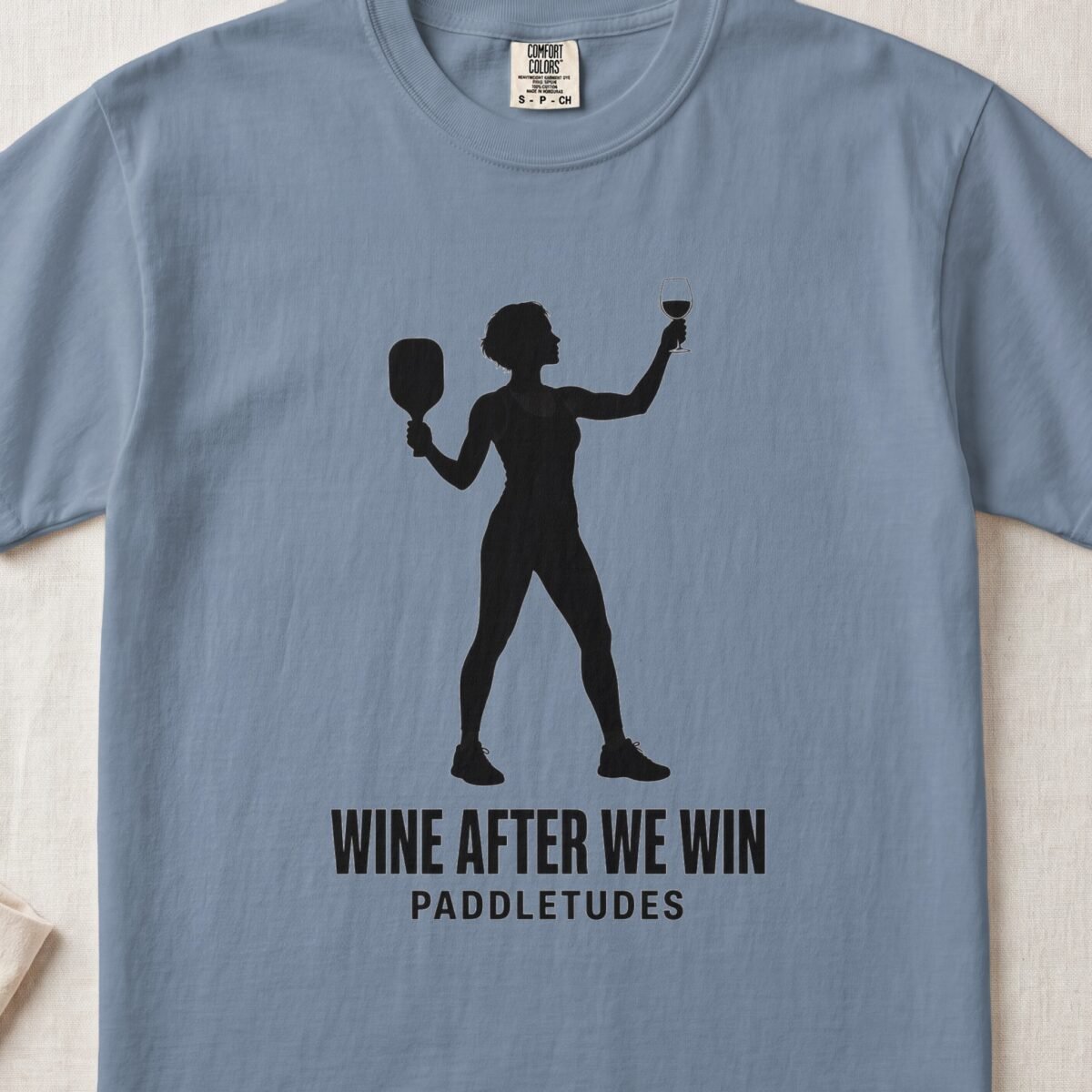
Wine After We Win
$29.99 Select options This product has multiple variants. The options may be chosen on the product page -
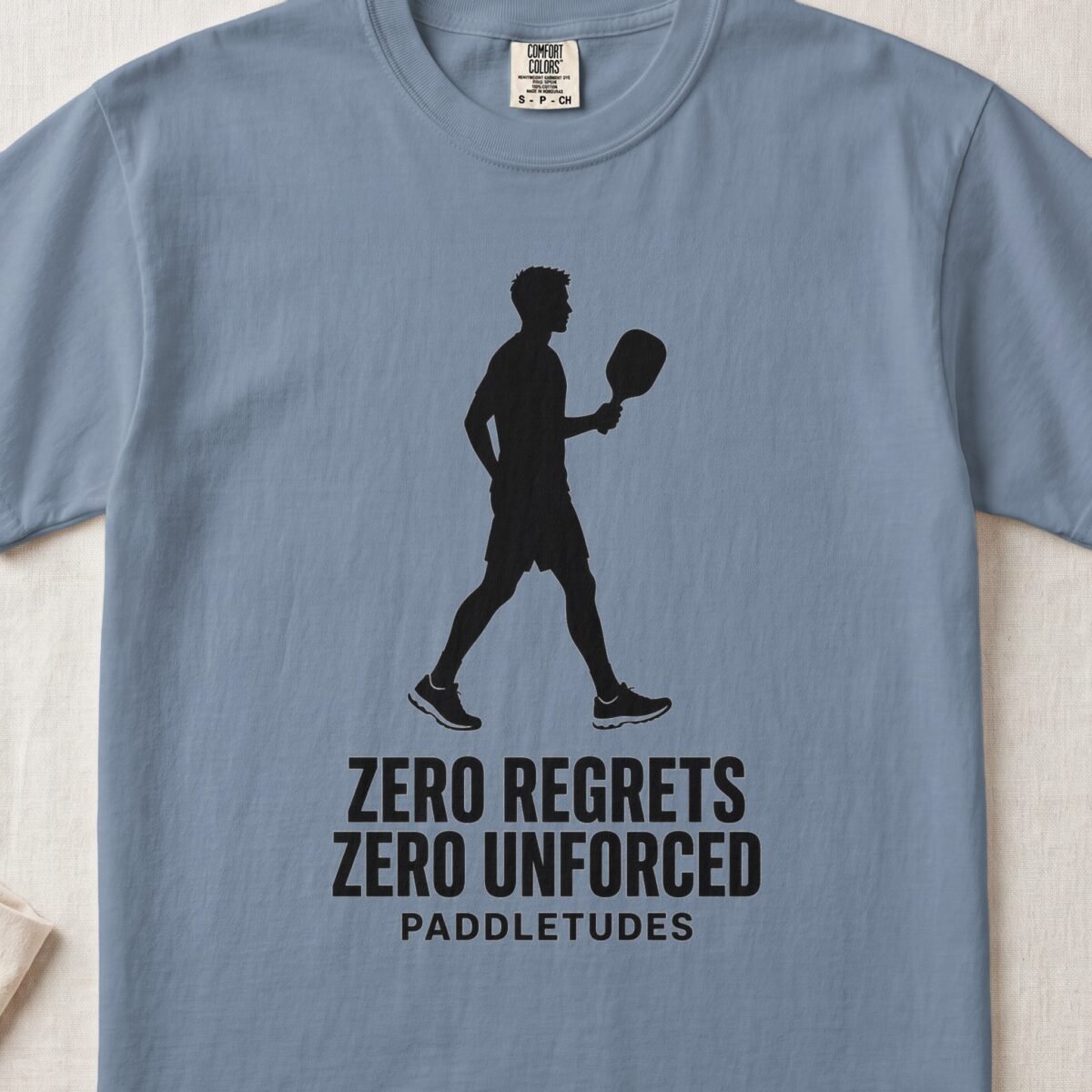
Zero Regrets Zero Unforced
$29.99 Select options This product has multiple variants. The options may be chosen on the product page -
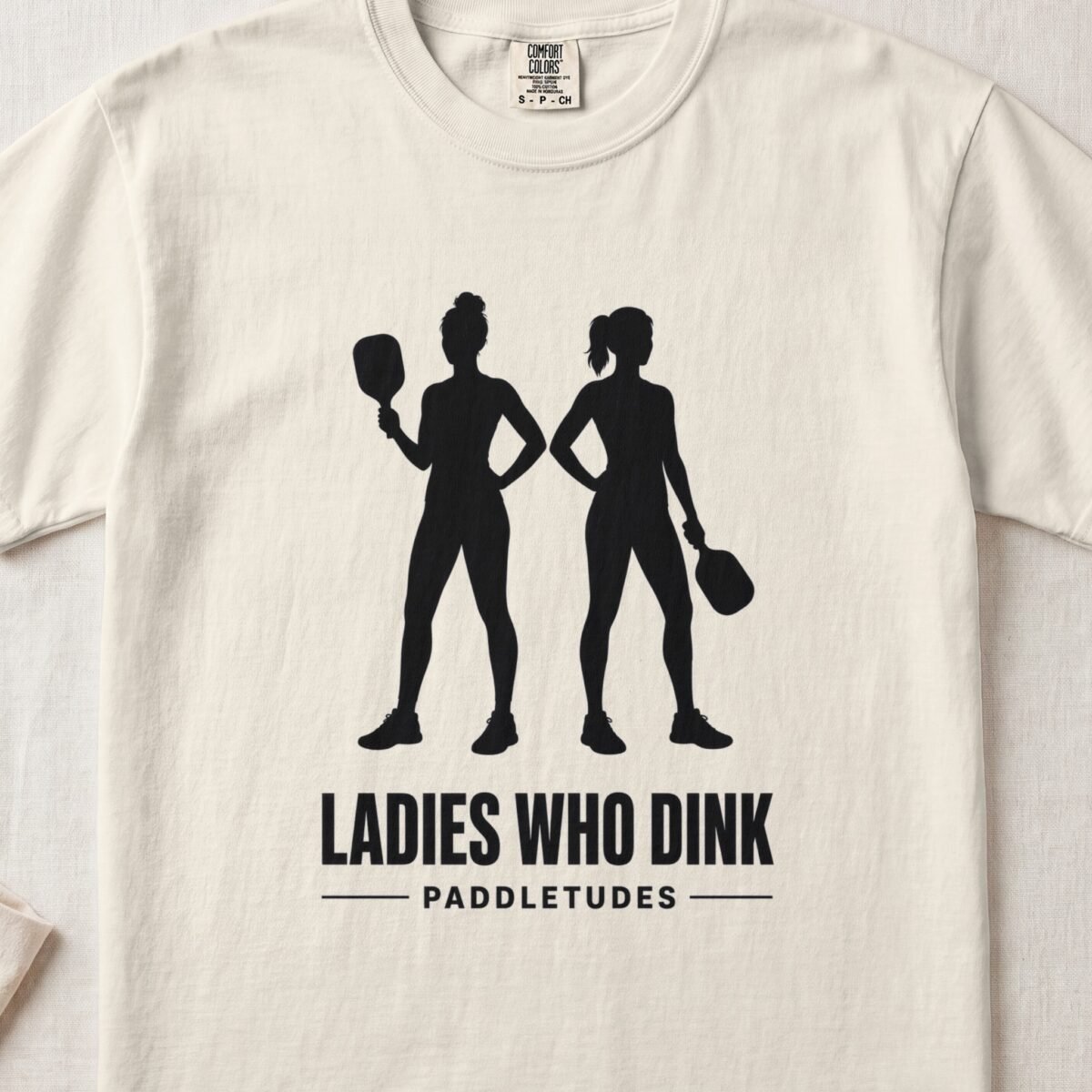
Ladies Who Dink
$29.99 Select options This product has multiple variants. The options may be chosen on the product page