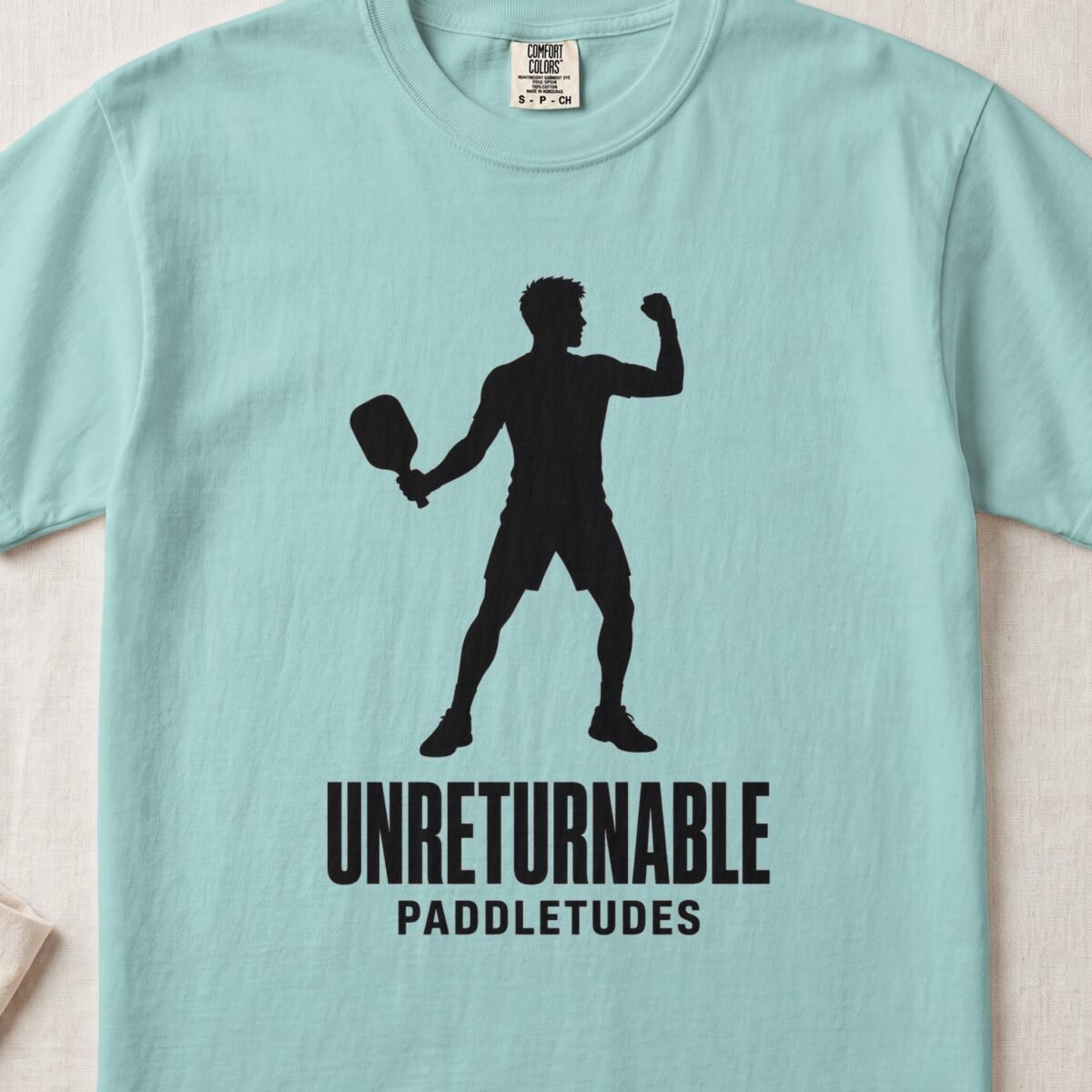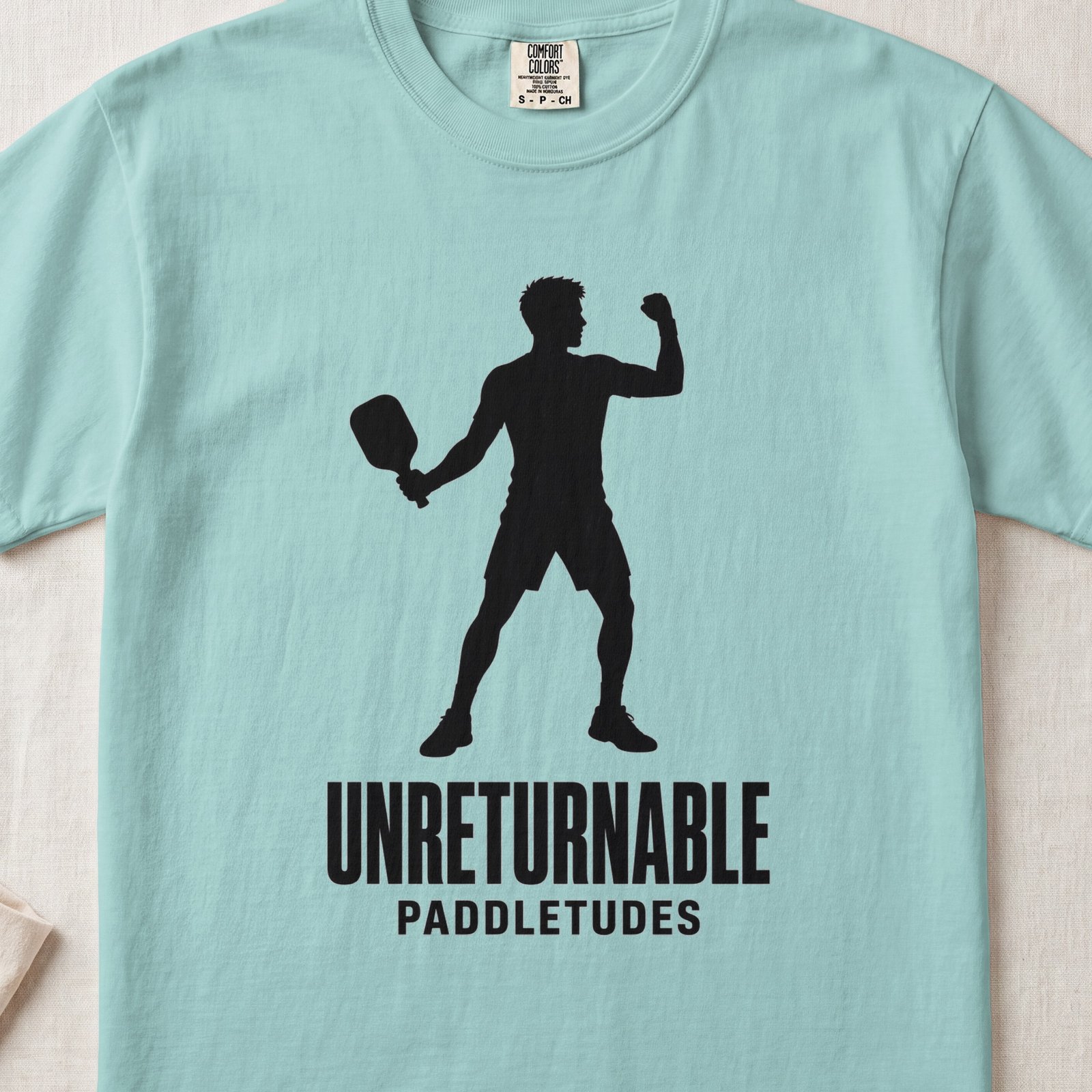
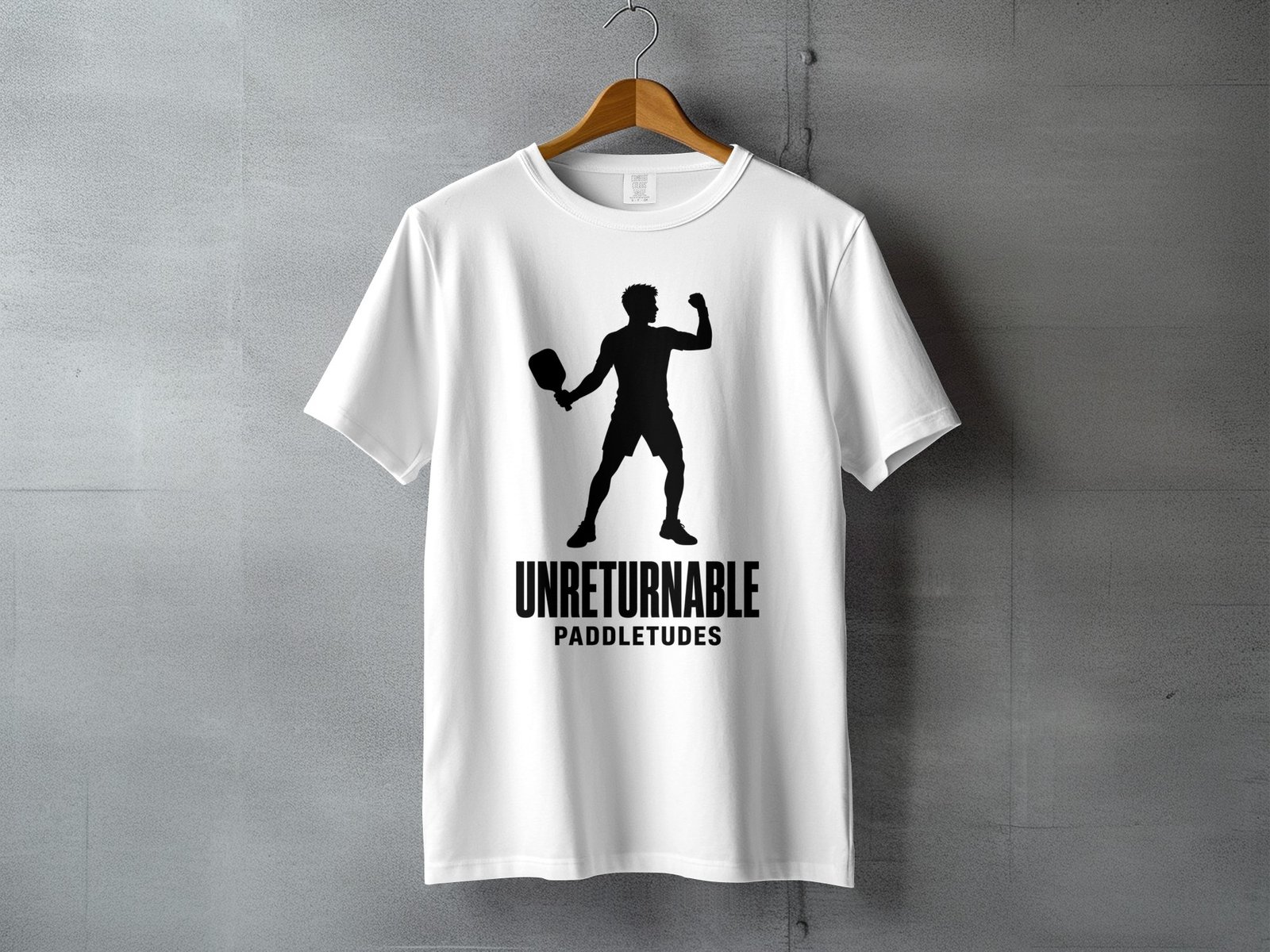
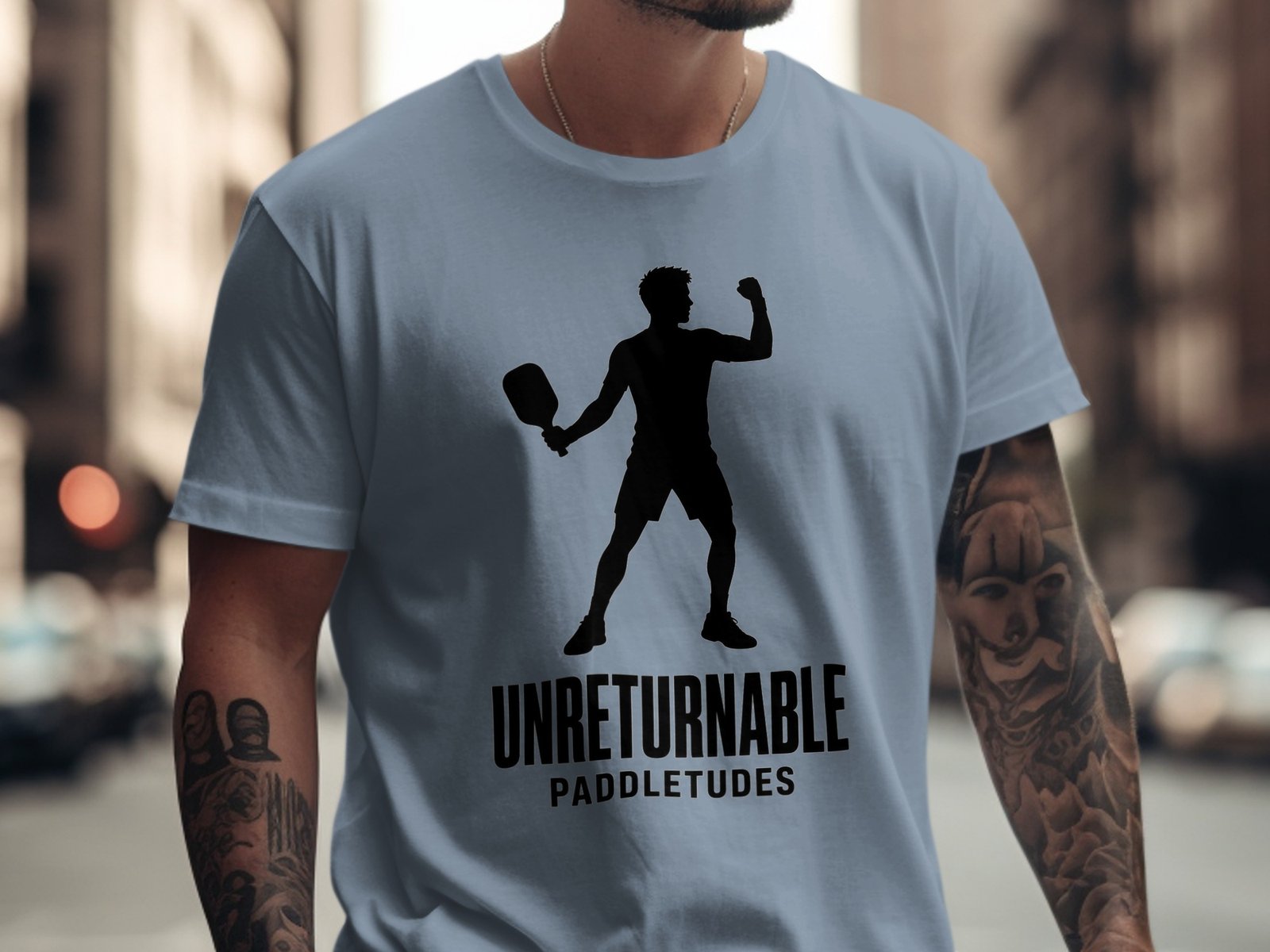
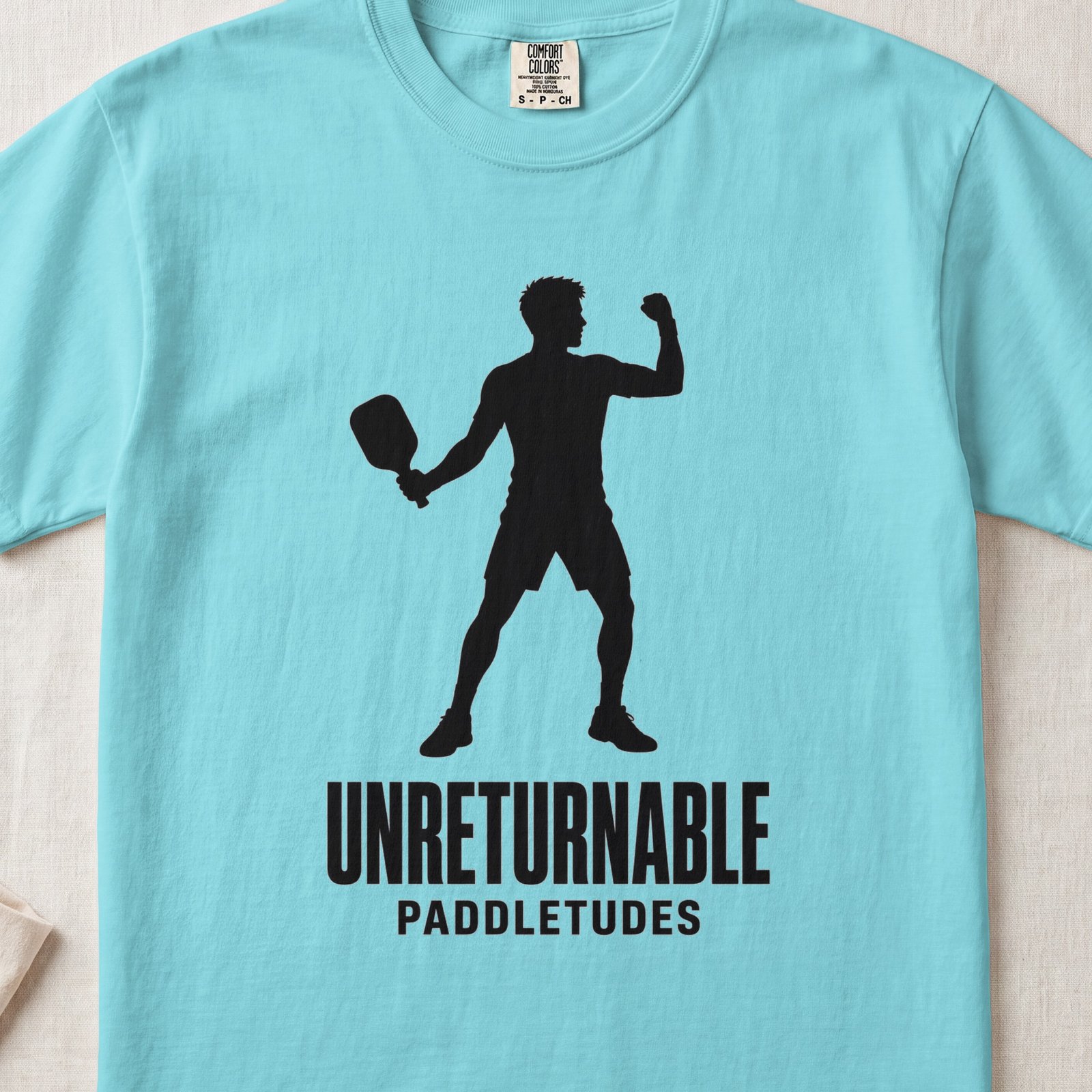
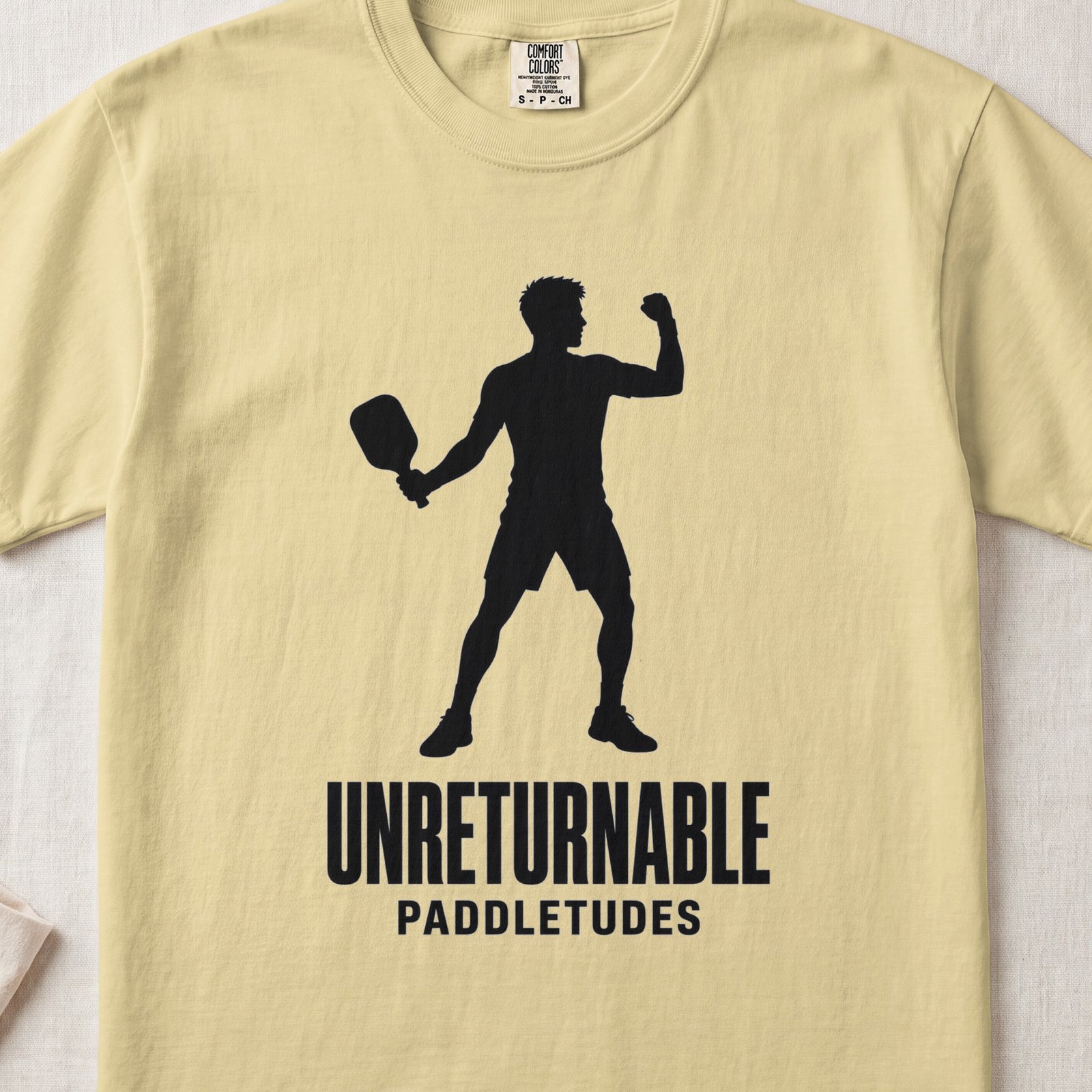
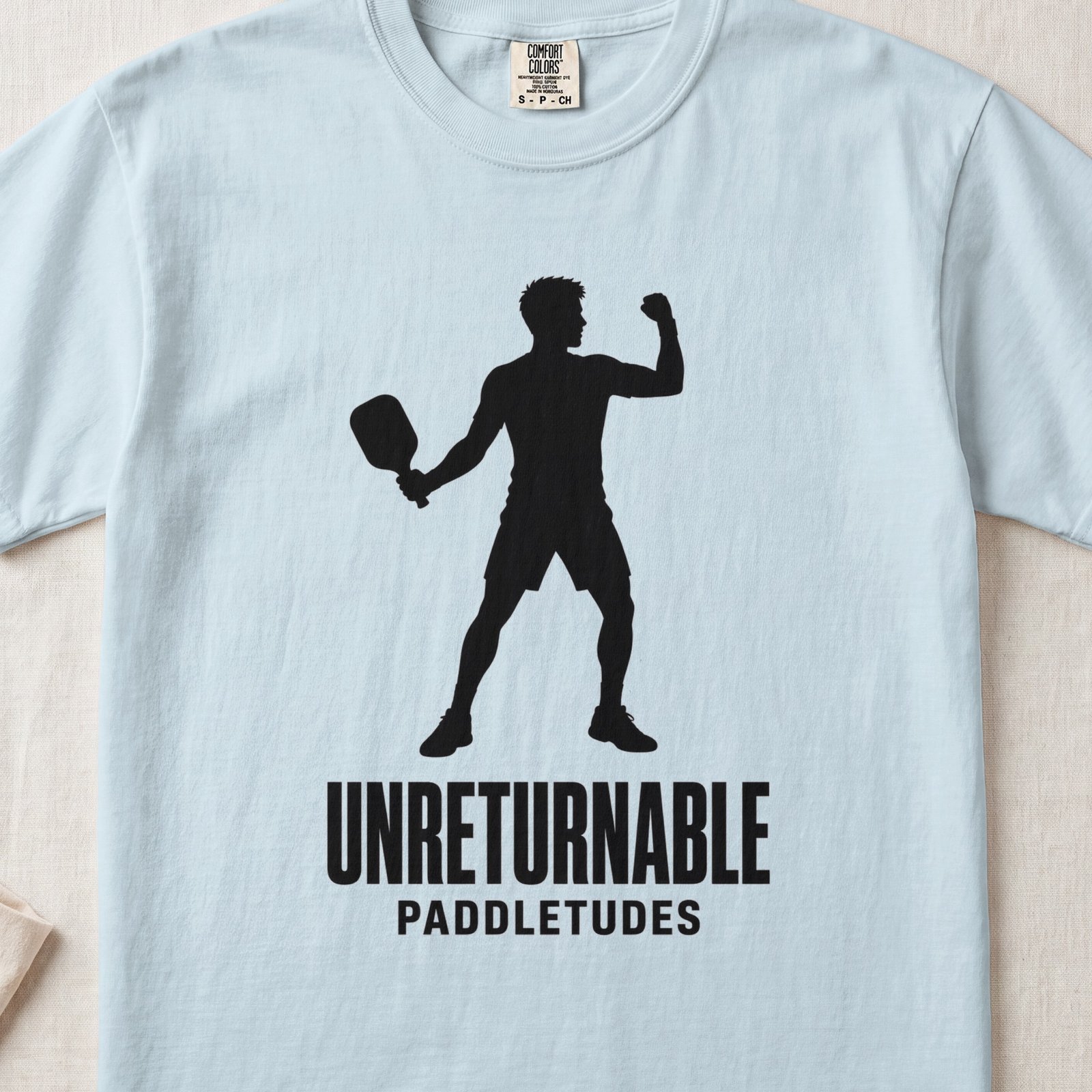
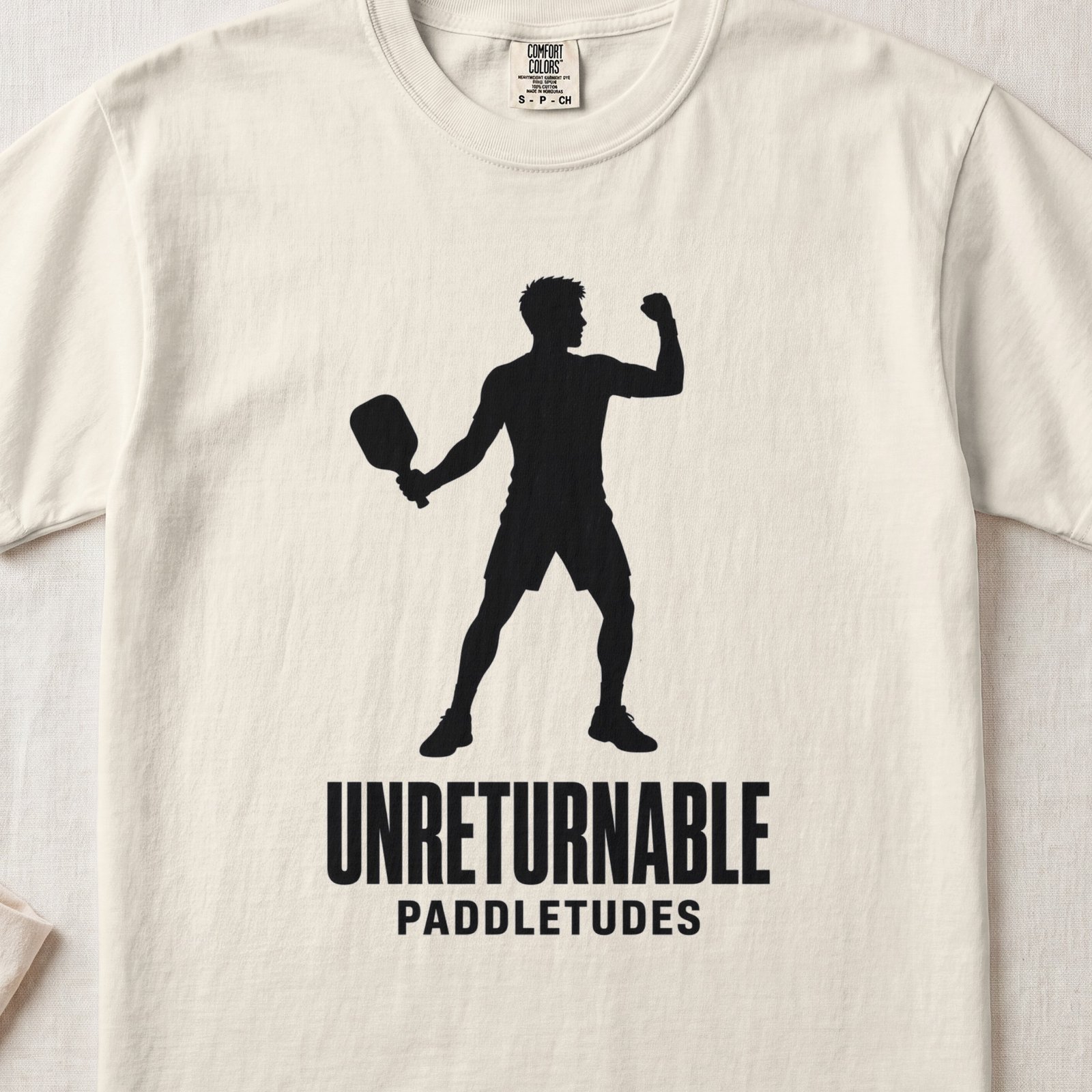
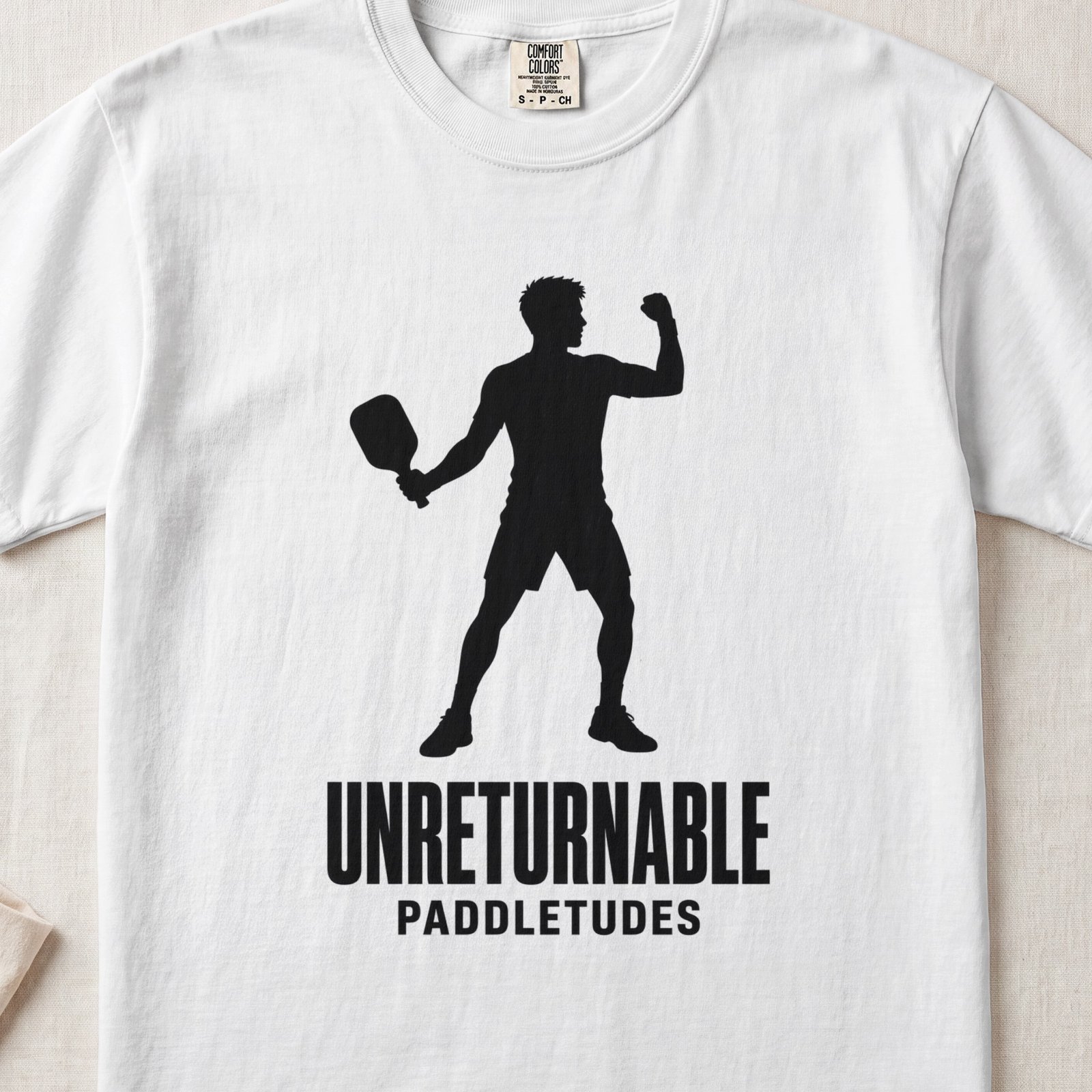
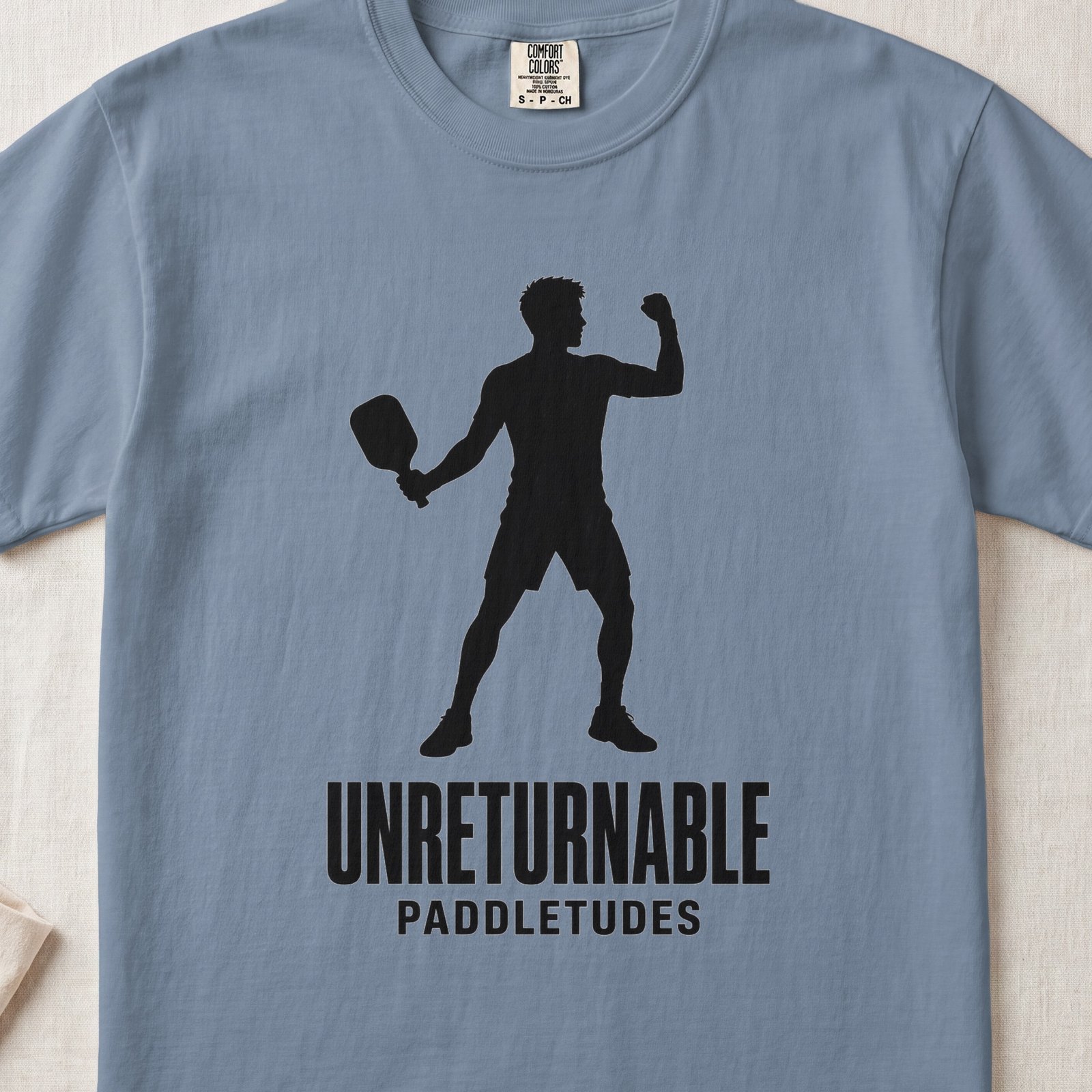
Sports Comfort Colors 1717
Unreturnable
$29.99
- Comfort Colors 1717 heavyweight cotton
- Original design · printed to order
- U.S. print partners
Unreturnable — The Pickleball Shirt for Shots That End Arguments
This funny pickleball shirt is for the player who hits shots that don’t come back. Not because the opponent chose to let them go. Because they couldn’t get there in time. Unreturnable is one word and it says everything about your serve, your drive, and the look on the other side of the net.
Some players build points. They dink, they reset, they wait for the right moment. That’s fine. Respectable, even. And then there’s the player who skips the negotiation entirely. The serve that catches the line and bounces past the fence. The drive down the middle that splits a team before either one decides whose ball it was. The overhead that lands so hard the ball stops bouncing on the second hop. Unreturnable isn’t a strategy. It’s a result. And the people who wear this shirt know the difference between playing safe and playing to win. This is a pickleball shirt for the second kind of player.
The design is clean and direct. One word in bold. No character. No cartoon. Just a declaration. It works on the player who drops aces in warmups, and it works on the player who puts away the overhead smash at match point. It also works on the person who hits one great shot per session and talks about it for the next three weeks. That’s the beauty of a one-word shirt. Everyone who wears it has their own version of what “unreturnable” means, and every one of them is right.
The pickleball gift angle here is wide open. Your friend who keeps texting the group chat about the serve they hit last Tuesday? This is cheaper than a trophy and more accurate. The coworker who just started playing and already thinks their forehand drive is a weapon? Gift them the confidence they’ve already given themselves. It works for birthdays, retirement parties for the guy who’s about to play every single morning, or just because you want to remind someone they’re dangerous on a court. Pair this with Smash First Ask Later for the full power philosophy, or pick up Hit It Like You Mean It for the teammate who’d rather hit through the point than around it.
What Is the Hardest Serve to Return in Pickleball
The hardest serve to return in pickleball is a deep topspin serve aimed at the receiver’s backhand, placed within inches of the baseline. It combines depth, spin, and targeting to create a return that’s difficult to attack and easy to pop up. A well-placed power serve to the body runs a close second because it jams the receiver and eliminates their swing path.
The USA Pickleball rulebook requires an underhand serve with contact below the waist, which limits raw speed compared to tennis. But that limitation is exactly what makes placement and spin so valuable. A flat serve at 40 mph is returnable by almost any intermediate player. A topspin serve at 35 mph that kicks up and away from the backhand side forces the receiver to reach, adjust their grip, and make a defensive return instead of an aggressive one. The best servers in the sport aren’t necessarily hitting the hardest. They’re hitting the most uncomfortable ball to handle.
At recreational levels, the most unreturnable serve is often the simplest one: deep to the backhand with enough pace to keep the receiver behind the baseline. It doesn’t require advanced technique. It requires consistency and placement. The difference between a 3.5 and a 4.5 server isn’t the serve itself. It’s where the serve lands and what they do with the third shot after the return comes back. The serve that looks unreturnable on the highlight reel usually set up the point two shots earlier.
When Should You Drive the Ball Instead of Dropping in Pickleball
You should drive the ball in pickleball when the incoming shot sits up high enough to attack, when your opponents are out of position, or when the element of surprise gives you an advantage over a predictable drop. The drive is a weapon, not a default. The best players choose it. The rest use it because they don’t know what else to do.
The third shot is where this decision matters most. Conventional wisdom says drop every third shot to get to the kitchen line. But if both opponents are standing at the baseline — or if one of them is late getting forward — a hard drive through the middle puts immediate pressure on the team. At the 4.0+ level, players mix drives and drops based on what the other team gives them. A team that only drops becomes predictable. A team that only drives gives up too many reset opportunities. The best approach is reading the court and making the call in real time.
The drive also works as a weapon off the return of serve. A deep, hard return followed by a charge to the kitchen line is one of the most aggressive plays in recreational pickleball, and it puts the serving team in an immediate bind. And at the kitchen line, the speed-up drive off a high dink is where fast hands and reflexes separate the levels. That’s the shot this shirt celebrates. The one that catches the other team flat-footed, ends the rally, and leaves a mark on the court and the scoreboard.
How Do You Hit Shots Your Opponent Can’t Return in Pickleball
Hitting unreturnable shots in pickleball comes down to three things: placement over power, timing the opponent’s position, and disguising your intention until the last possible moment. A well-placed ball to an open spot beats a hard ball to a ready opponent almost every time.
Placement means aiming for the feet, the backhand hip, or the gap between two players in doubles. The ball aimed at someone’s feet forces an awkward, upward contact that usually pops the return up for a put-away. The ball to the backhand hip gives the player no room to swing. And the ball through the middle of a doubles team creates hesitation, which in pickleball is worse than a bad shot because it means neither player commits. Timing matters because a perfect shot to an open court requires reading where the opponent is moving, not where they are. The around-the-post shot, the erne, and the inside-out dink all work because they send the ball where the opponent just left. Disguise ties it together. A soft motion that suddenly accelerates. A dink stance that turns into a speed-up. When the opponent doesn’t know what’s coming, even a moderately paced ball becomes unreturnable because they react a half-second late.
Printed on a Comfort Colors 1717 garment-dyed heavyweight tee with water-based DTG ink — sizing and care details here.
-
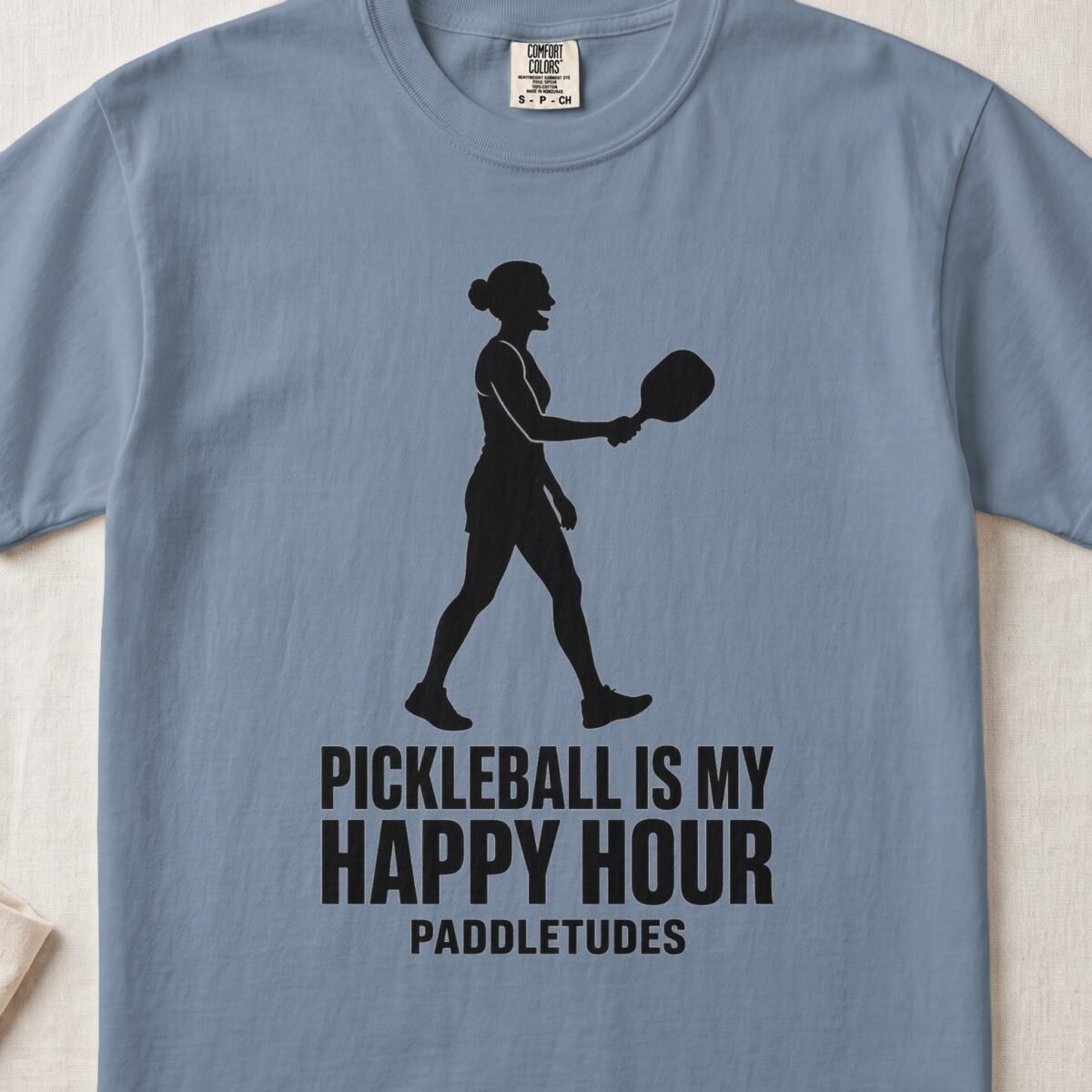
Pickleball Is My Happy Hour
$29.99 Select options This product has multiple variants. The options may be chosen on the product page -
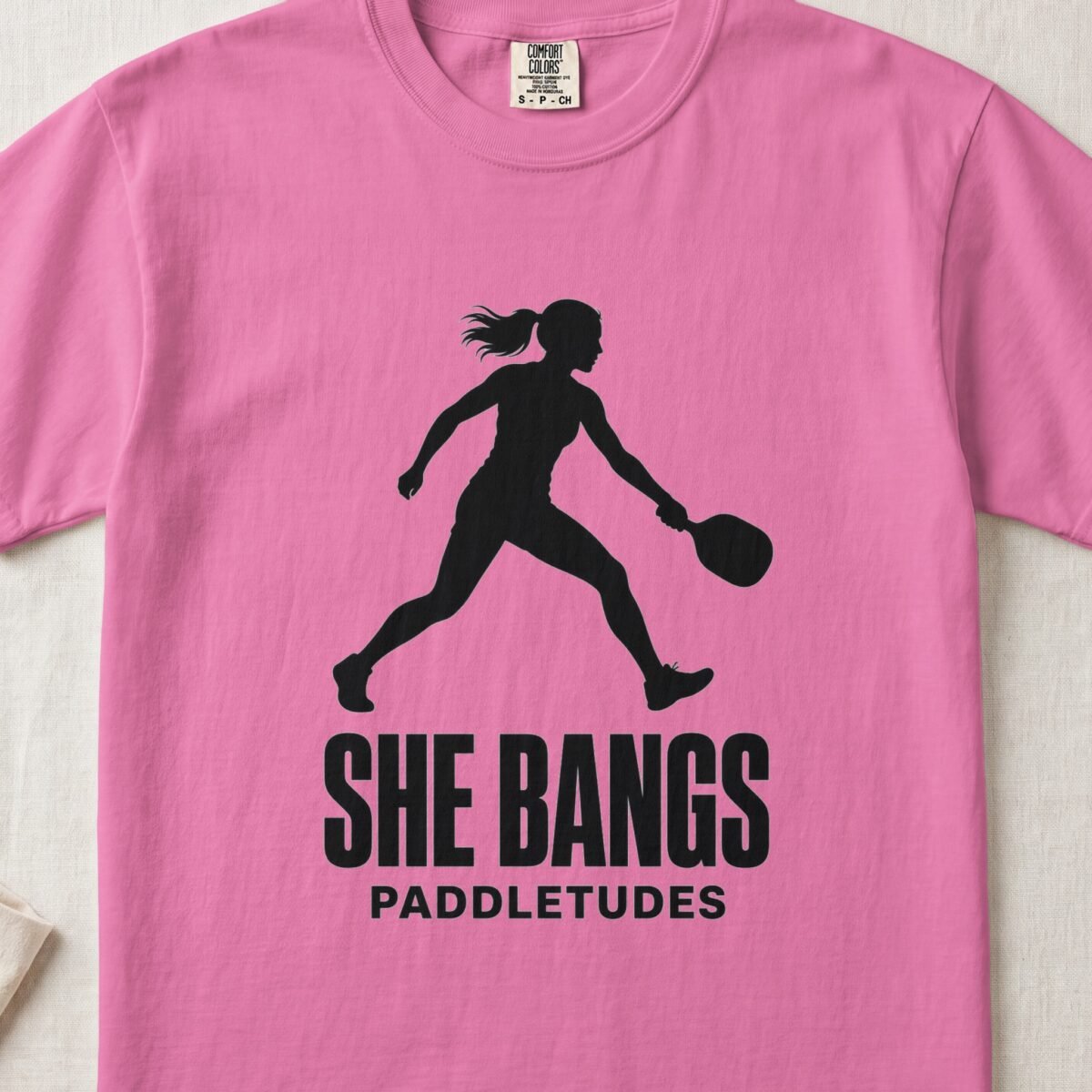
She Bangs
$29.99 Select options This product has multiple variants. The options may be chosen on the product page -
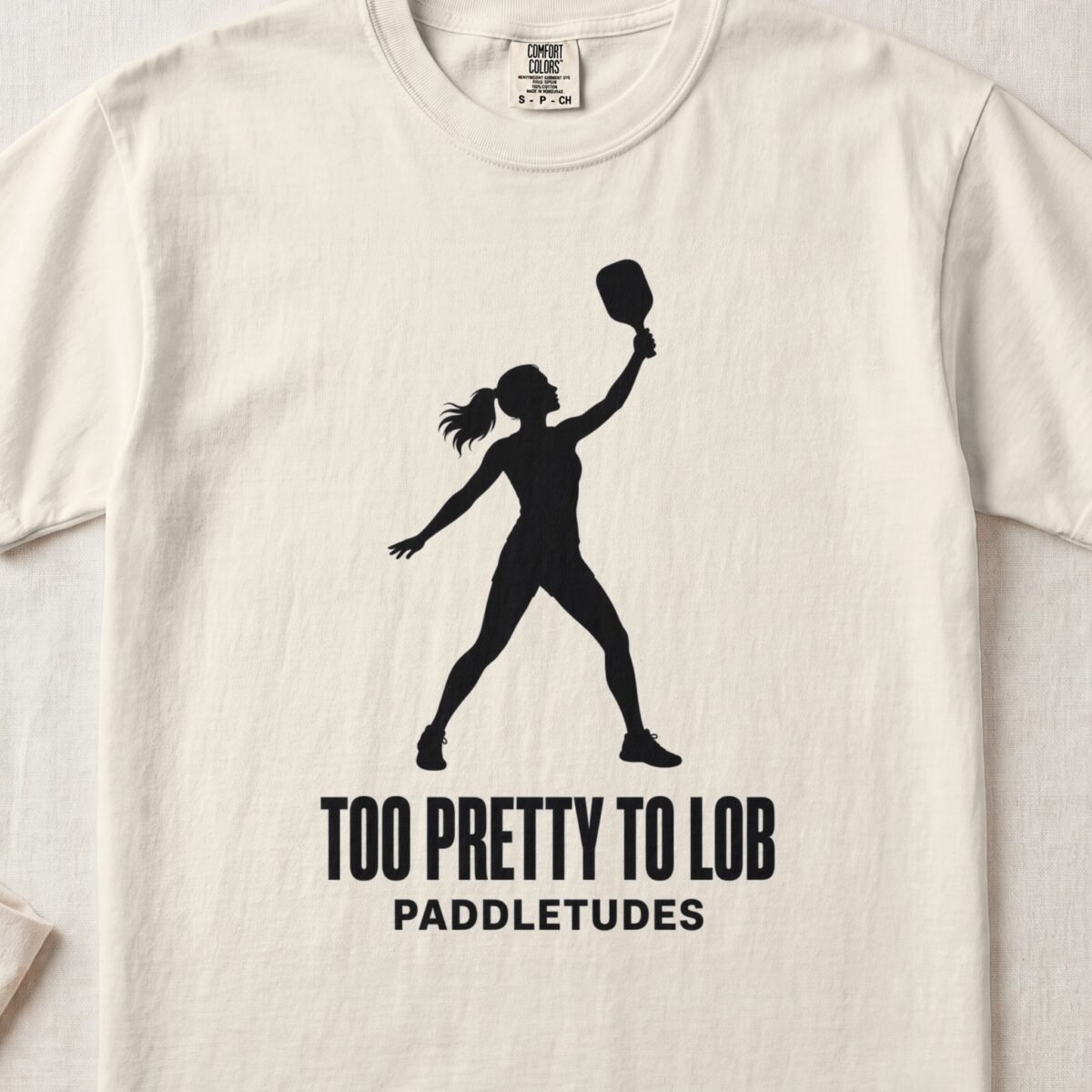
Too Pretty To Lob
$29.99 Select options This product has multiple variants. The options may be chosen on the product page