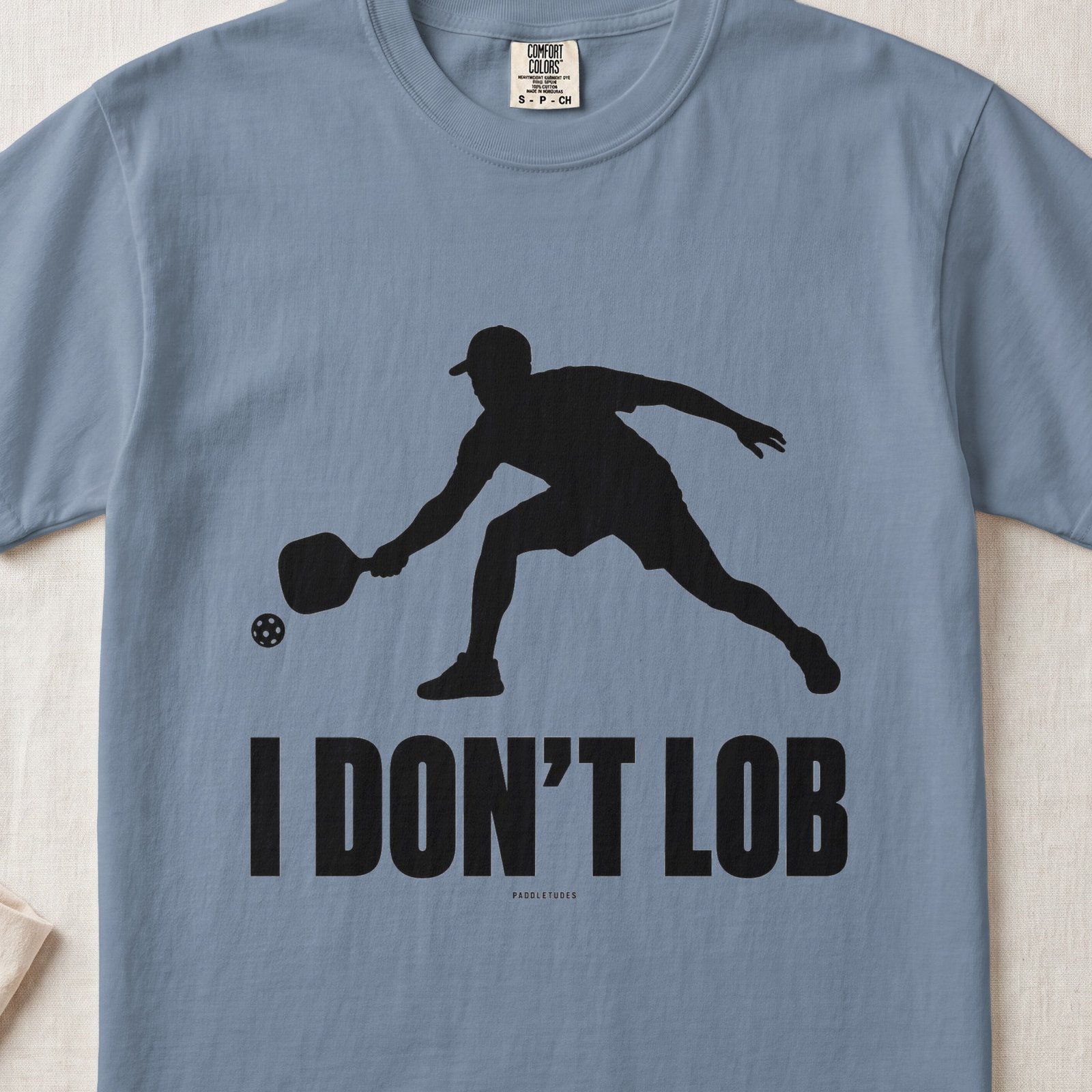
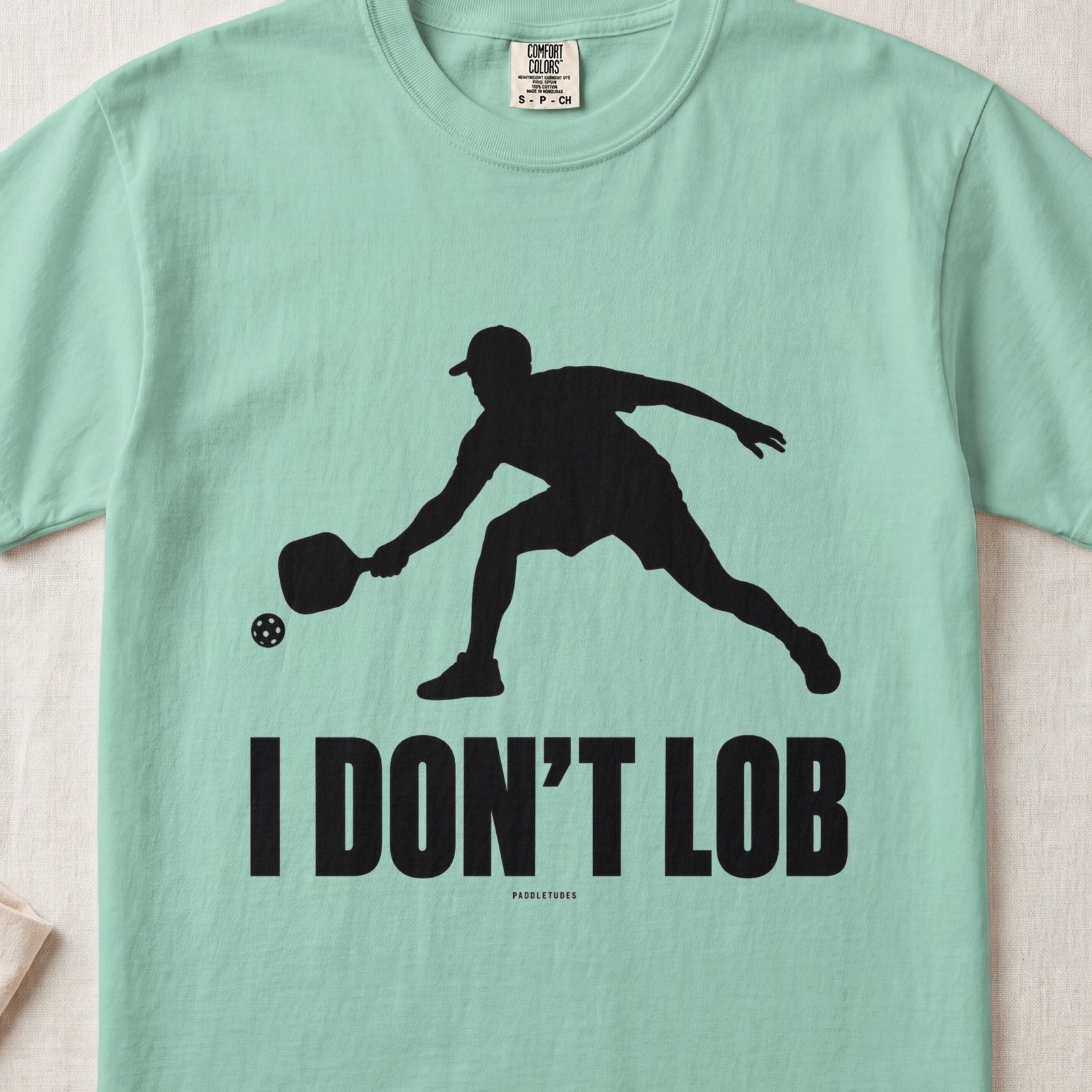
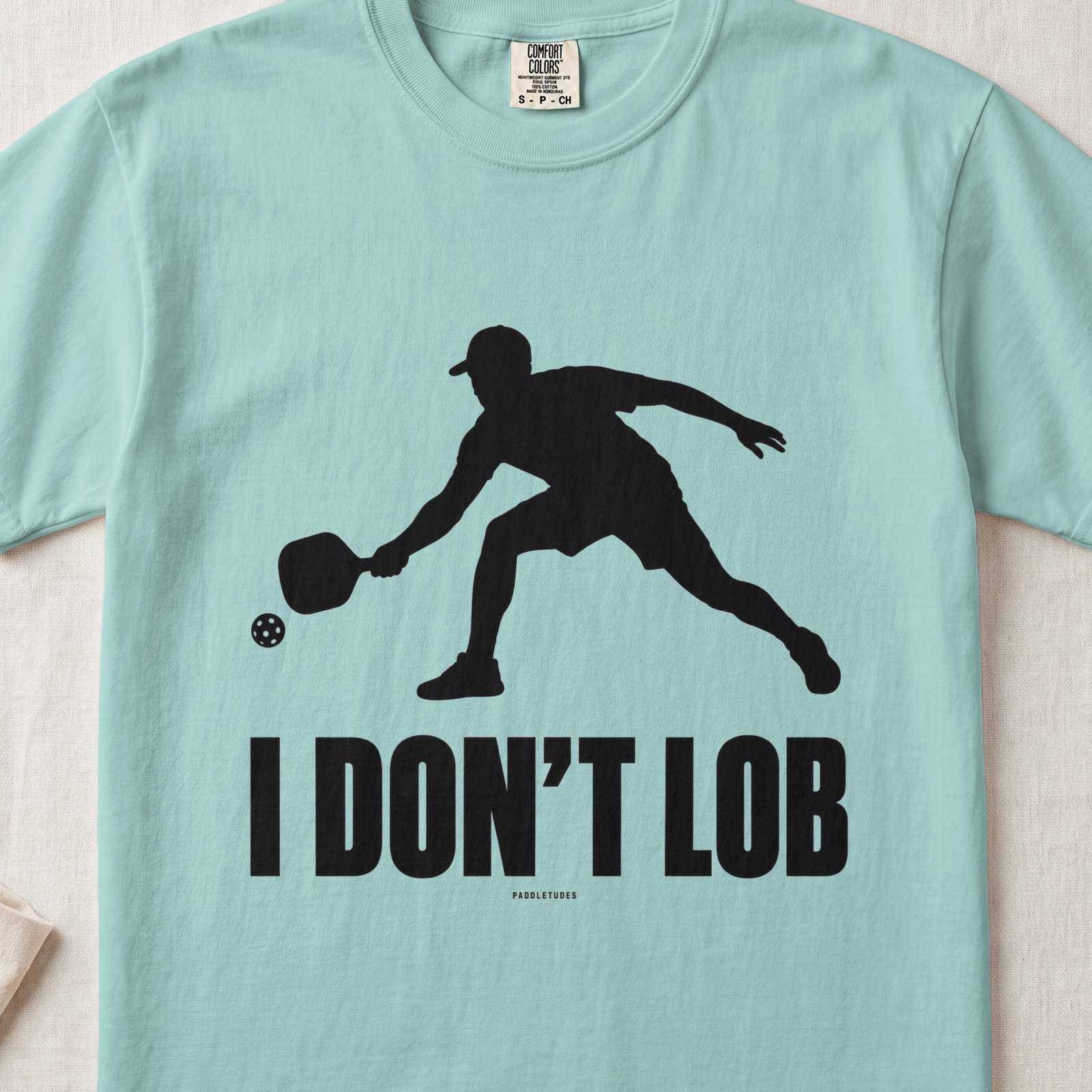
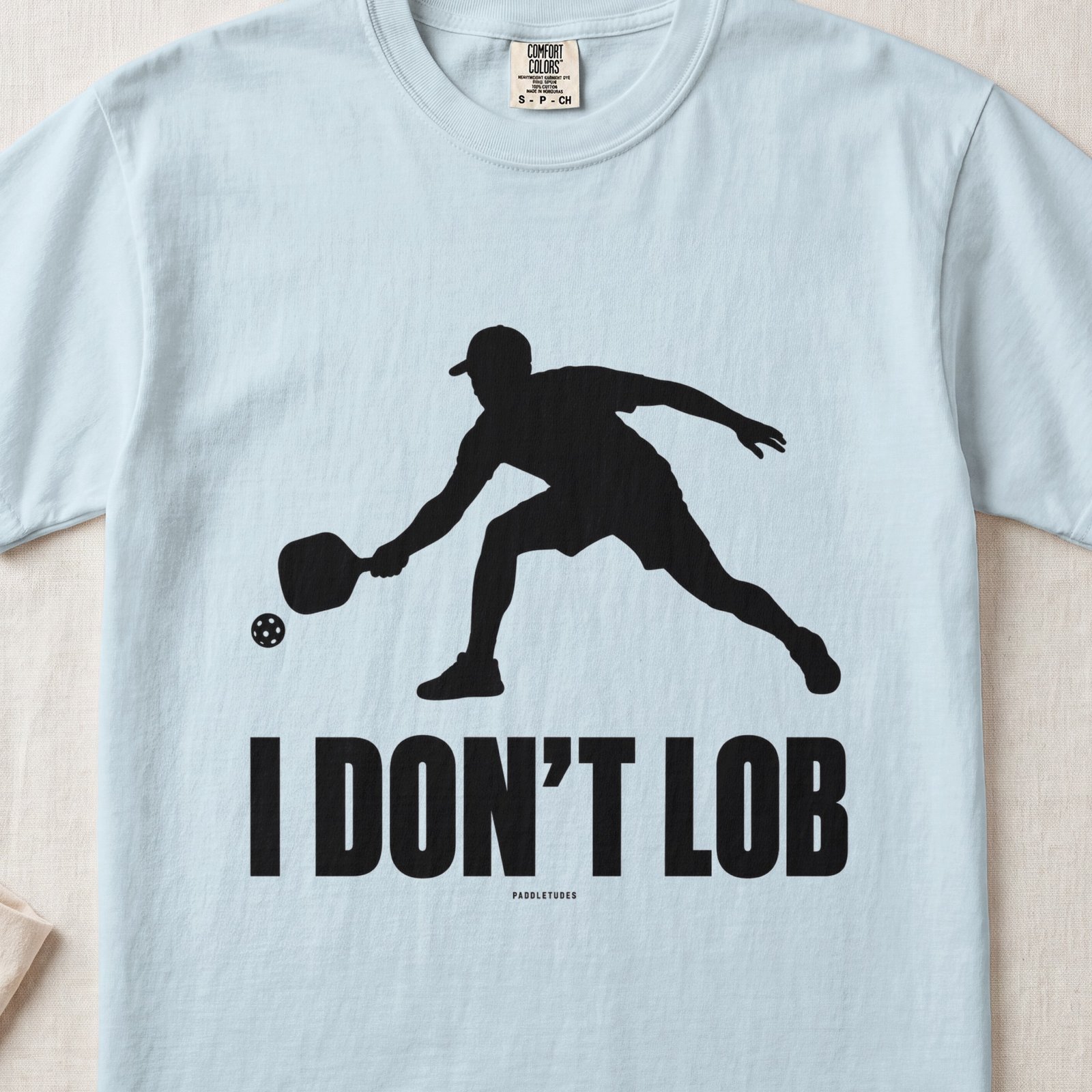
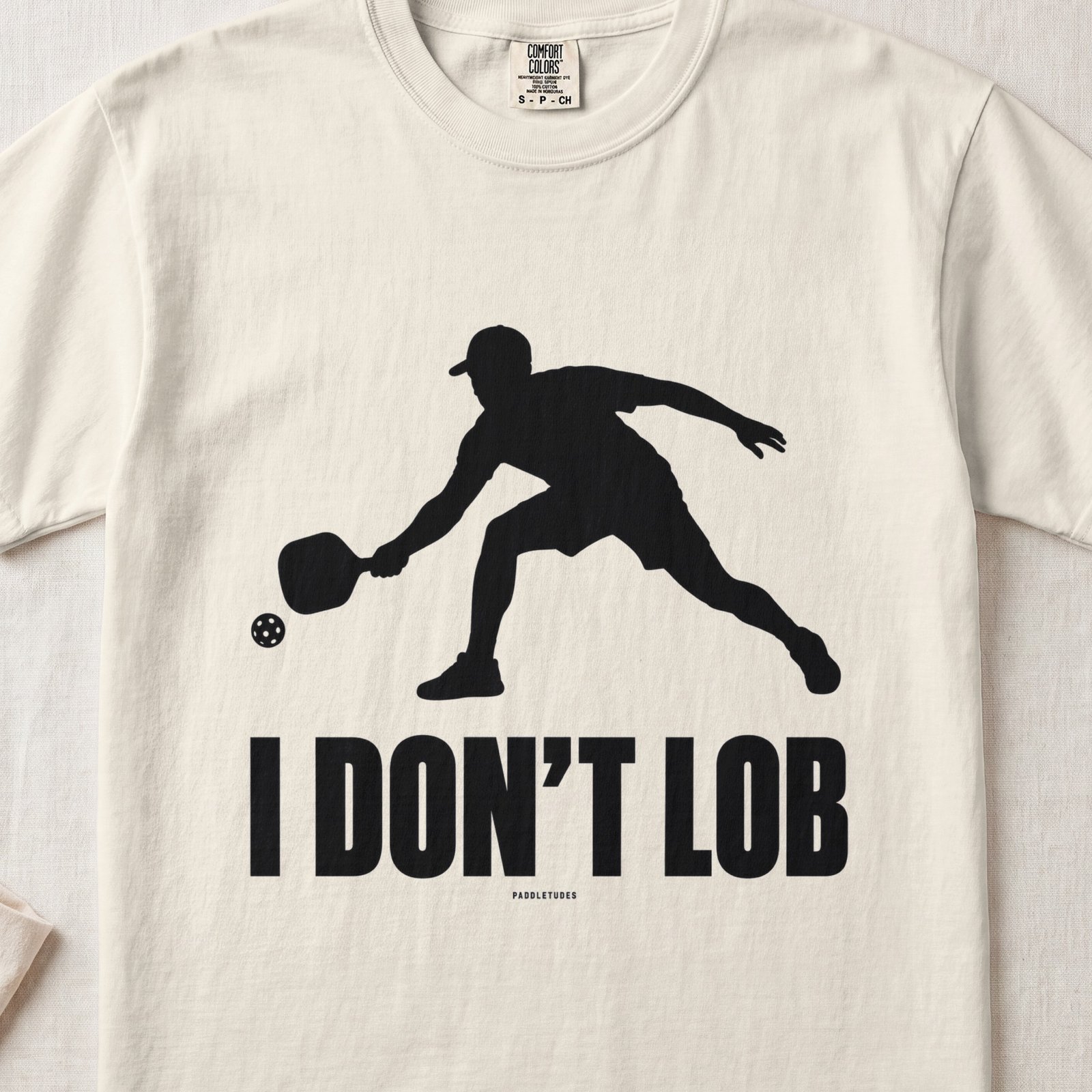
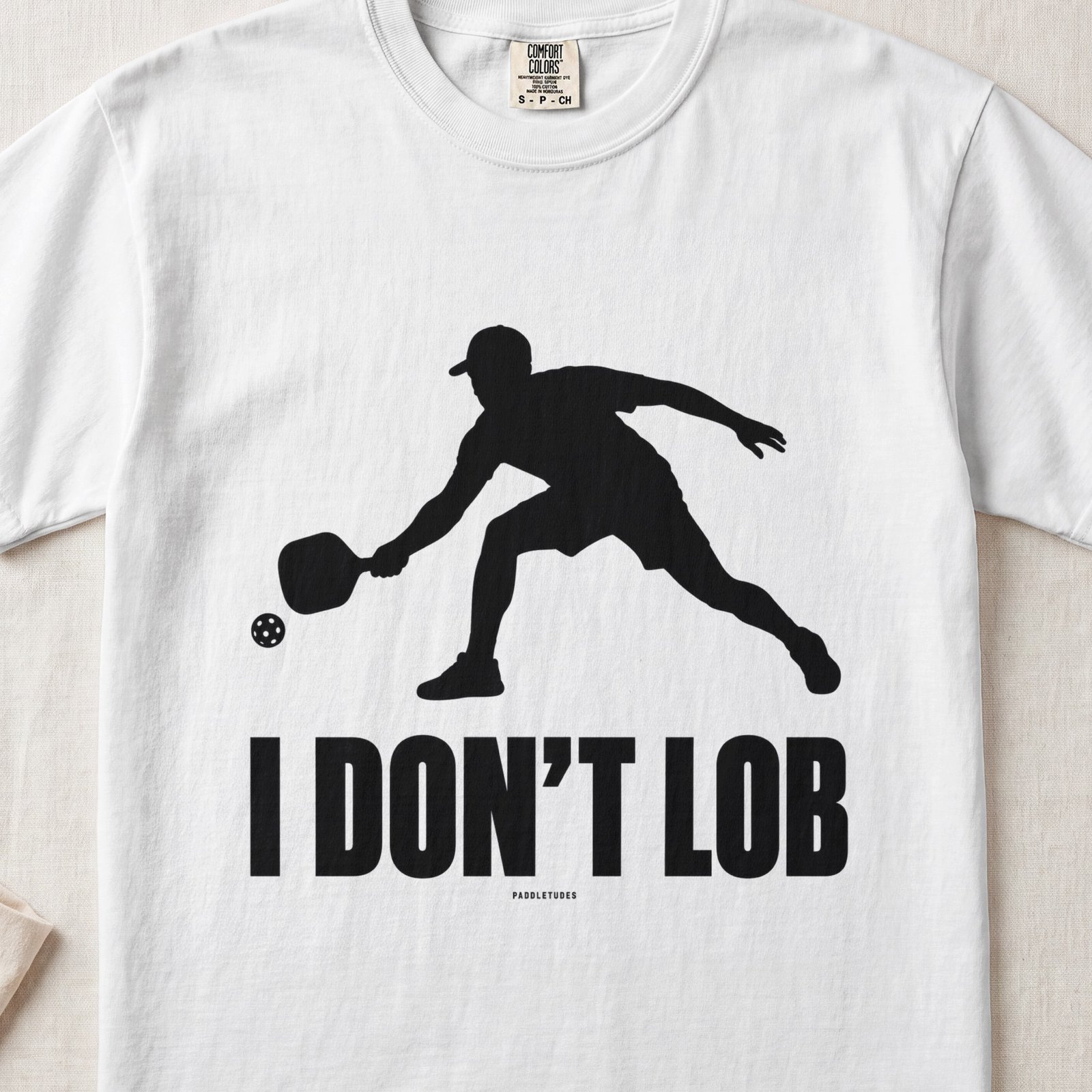
Sports Comfort Colors 1717
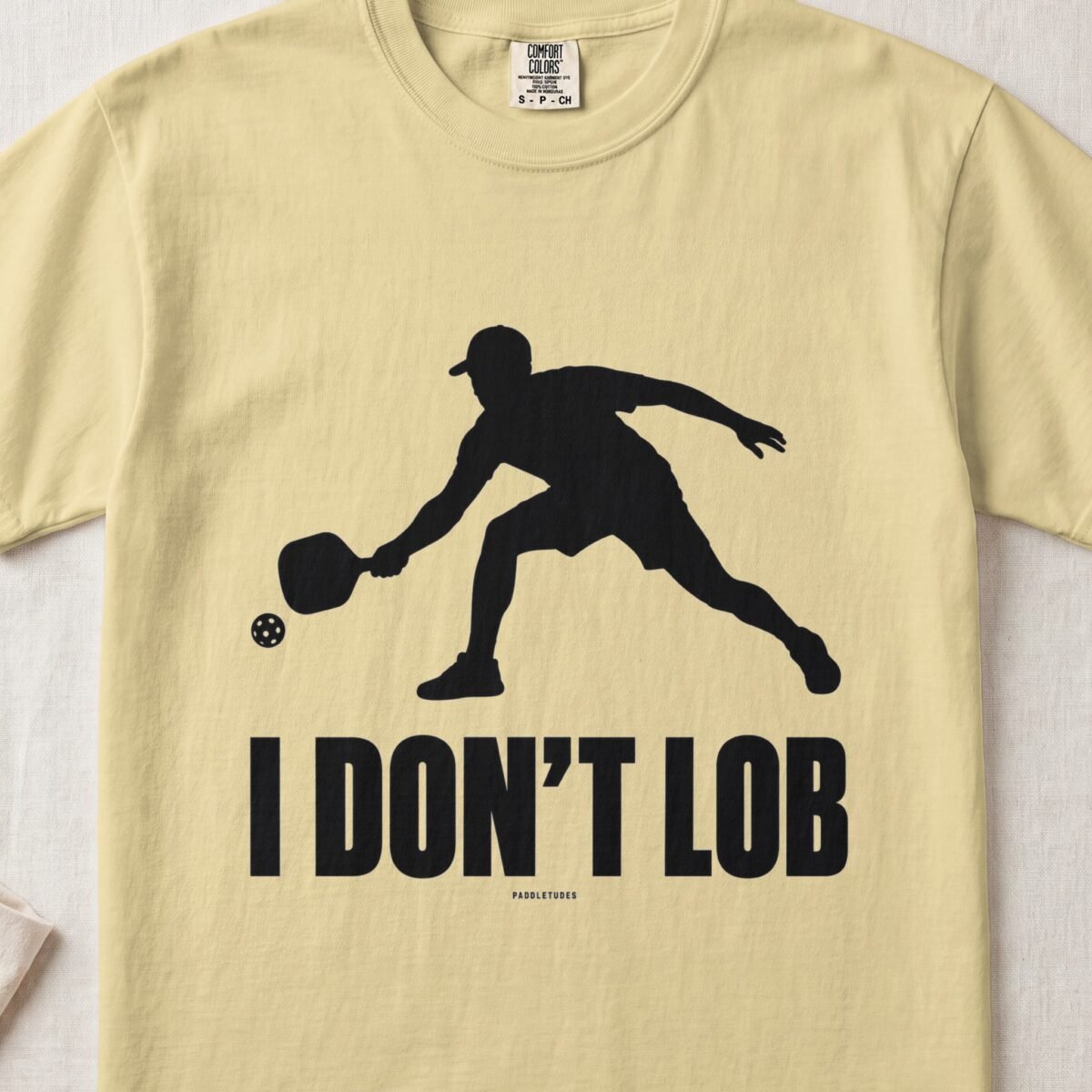
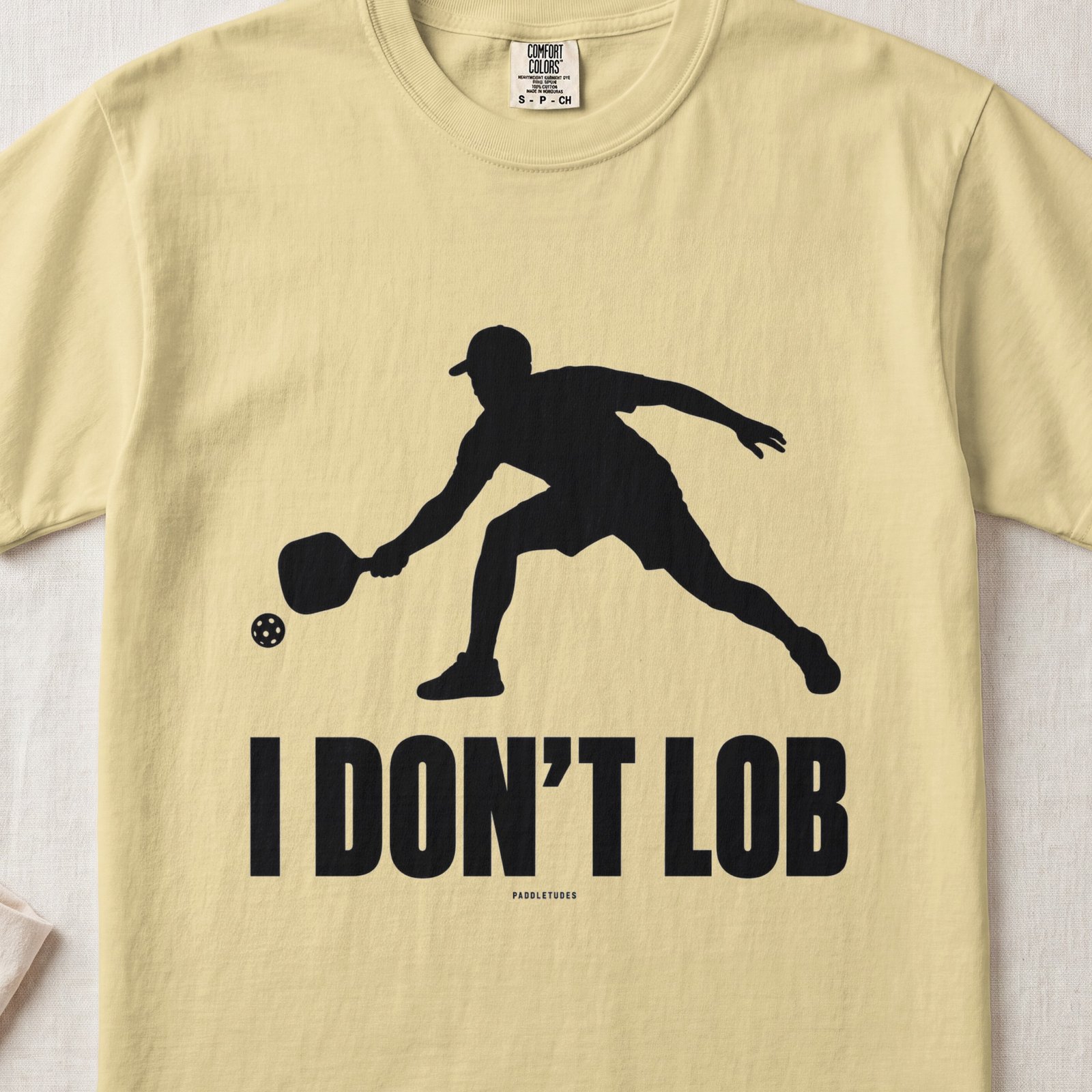
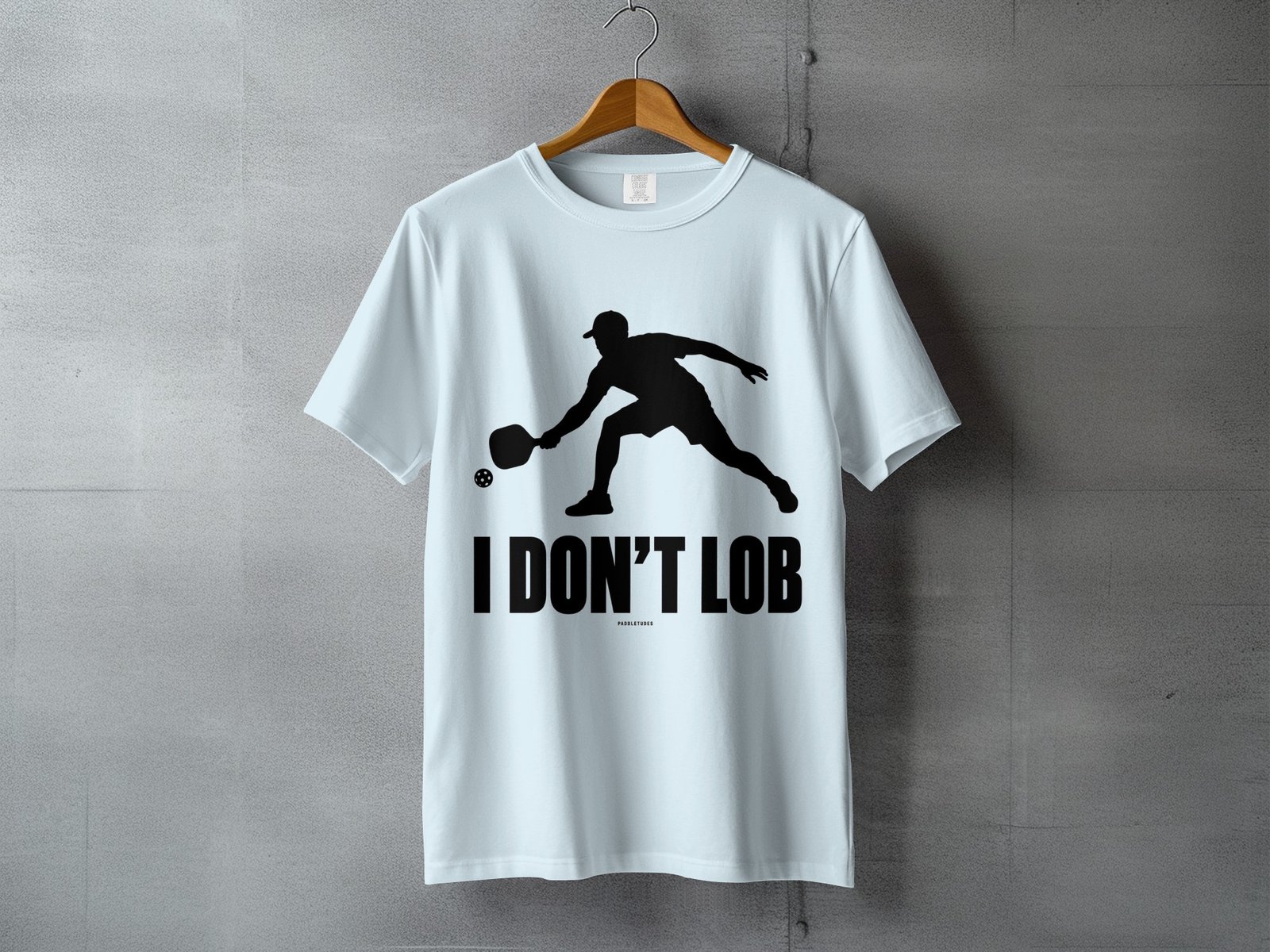
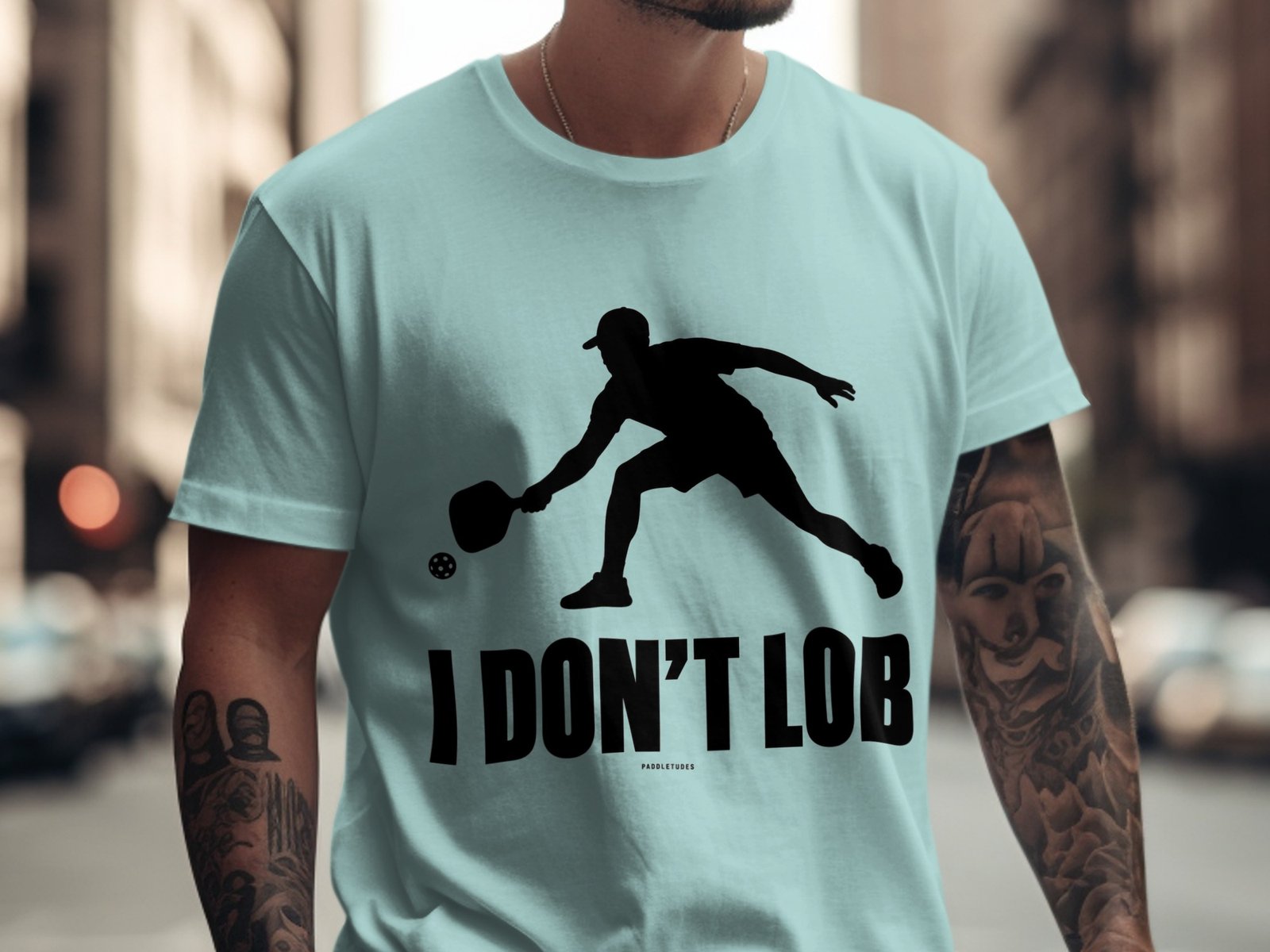
I Don’t Lob
$29.99
- Comfort Colors 1717 heavyweight cotton
- Original design · printed to order
- U.S. print partners
I Don’t Lob — A Pickleball Principle, Not a Suggestion
She walks onto the court wearing the shirt and the debate starts before the warm-up does. The guy setting up the net reads it, laughs, and says, “The lob is a legitimate shot.” The woman stretching by the fence says, “Not if you do it every other point.” A third player taps his paddle against his palm and says, “If you can’t defend a lob, that’s your problem, not mine.” This conversation happens at pickleball courts across the country, every day, and nobody changes anybody’s mind. The shirt doesn’t settle it. It picks a side.
She’s a 51-year-old accountant who found pickleball at the community center three years ago because her doctor told her to move more and she hated the gym. No tennis background. No racket sport of any kind. She learned the game from scratch — serve, return, keep it in play — and somewhere in her second year she fell in love with the dink rally. The long exchanges at the kitchen line where both teams are placing soft shots an inch over the net, moving each other sideways, waiting for someone to make a mistake or create an opening. That’s her game. That’s the game she shows up to play. When someone lobs in the middle of a dinking rally — launching a floater over her head that breaks the rhythm and sends everyone scrambling to the baseline — it feels like someone changing the channel in the middle of a movie. She doesn’t think it’s cheating. She thinks it’s quitting the rally instead of winning it.
The lob debate in pickleball is real, and both sides have a case. USA Pickleball’s lob guide teaches it as a legitimate offensive tool — effective when opponents are crowded at the kitchen line, leaning forward, and can’t retreat. At 3.0 to 3.5, the lob is genuinely underused because most players can’t move backward well and a well-placed lob wins free points. At 4.0 and above, it becomes a specialty shot — used sparingly, disguised to look like a dink until the last second, and punished severely when it’s short or predictable. The player wearing this shirt lives at the 4.0 mindset. She doesn’t remove the lob from her game because she can’t hit it. She removes it because she’d rather win or lose the point at the kitchen line, ball low, rally intact, than break the pattern with a shot that feels like an escape hatch instead of a strategy.
The drill that builds the anti-lob game is about what you do instead. A partner feeds a mix of dinks and pressure balls — fifteen to the forehand, fifteen to the backhand, fifteen aimed directly at the body. The goal is to reset every pressure ball back into the kitchen without lifting it. No high balls. No floaters. No lobbing out of trouble. When the drive comes at your hip, you absorb it with a soft paddle face and drop it back over the net. When the speed-up catches you reaching, you block it low instead of flipping it high. The player who drills this develops the muscle memory to keep the ball below the net even under duress — which is the entire anti-lob philosophy distilled into reps.
A control paddle with a softer core fits this player’s game because the work happens at the kitchen line, and the paddle’s job is to absorb incoming pace and redirect it quietly. Joola’s control-oriented models deaden hard drives and give the player precision on dink placement — the tool for someone whose strategy is to keep every ball low, every rally at the net, and every point won through patience rather than altitude. The player who doesn’t lob needs a paddle that doesn’t want to lob either.
At the grocery store, at the gym, at the coffee shop — another player sees the shirt and one of two things happens. They nod slowly because they feel the same way and have been waiting for someone to say it. Or they grin and say, “I’m the one lobbing you.” Either way, the shirt starts the conversation, and that conversation is half the fun of wearing it. If you know someone who watches pickleball on YouTube, has opinions about the lob before they’ve ever stepped on a court, and has already decided which side of the debate they’re on — this is the gift that validates the stance before the first serve.
The anti-lob philosophy connects to every soft-game design in our pickleball collection. No Speed Up shares the same DNA — the refusal to escalate, the commitment to winning through discipline rather than force. Where this shirt says “I won’t go over you,” No Speed Up says “I won’t go through you.” Can’t Teach Touch is the hands that make the anti-lob game possible — the natural feel that keeps resets low and dinks dead, even when every instinct says to flip the ball high and get out of trouble. And Overhead Everything is the nemesis — the player who lives for the lobs this shirt refuses to hit. Find courts where the dink rally culture thrives at Pickleheads.
Printed on a Comfort Colors 1717 garment-dyed heavyweight tee with water-based DTG ink — sizing and care details here.
Are Lobs Frowned Upon in Pickleball
The lob is a completely legal shot in pickleball, but the etiquette around it varies dramatically depending on where and how you play. At casual open play, occasional lobs are accepted as part of the game. At competitive levels and in serious rec play, excessive lobbing is widely considered a crutch — a way to avoid winning the rally at the kitchen line by resetting it from the baseline instead.
The frustration comes from what lobbing does to the rhythm of the game. Pickleball at its best is a fast, chess-like exchange at the kitchen line — dinks, blocks, resets, speed-ups, all happening within seven feet of the net. A lob breaks that exchange by sending both teams to the baseline, turning a tactical rally into a footrace. One or two lobs per game, well-disguised and well-placed, earn respect even from players who dislike the shot. But a player who lobs every third ball — using height as a default rather than a decision — tends to wear out the patience of opponents who came to play rallies, not retrieve floaters.
The honest truth is that most people dislike lobs because lobs expose weaknesses. A player who can’t retreat and hit an overhead off a deep lob has a real hole in their game, and the lob finds it every time. That doesn’t mean the lobber is wrong for exploiting it. But it does mean the debate will never be settled, because one side is arguing about strategy and the other side is arguing about the kind of game they want to play. Both positions are valid. The shirt picks a side — the side that says the game is best played low, fast, and honest, with every point decided at the kitchen line instead of above it.
At the professional level, the lob exists but looks nothing like the rec version. Pro lobs carry topspin that makes the ball dip sharply after clearing the opponent’s reach, landing within a foot of the baseline. They’re disguised to look exactly like a dink until the last fraction of the swing. And they’re used maybe twice a match — rare enough that the opponent never sees it coming and precise enough that the overhead opportunity is marginal at best. The gap between a pro lob and a panic lob is the same gap between a planned play and a desperation heave. The shirt isn’t against the shot. It’s against the mindset that reaches for it when the rally gets uncomfortable.
-
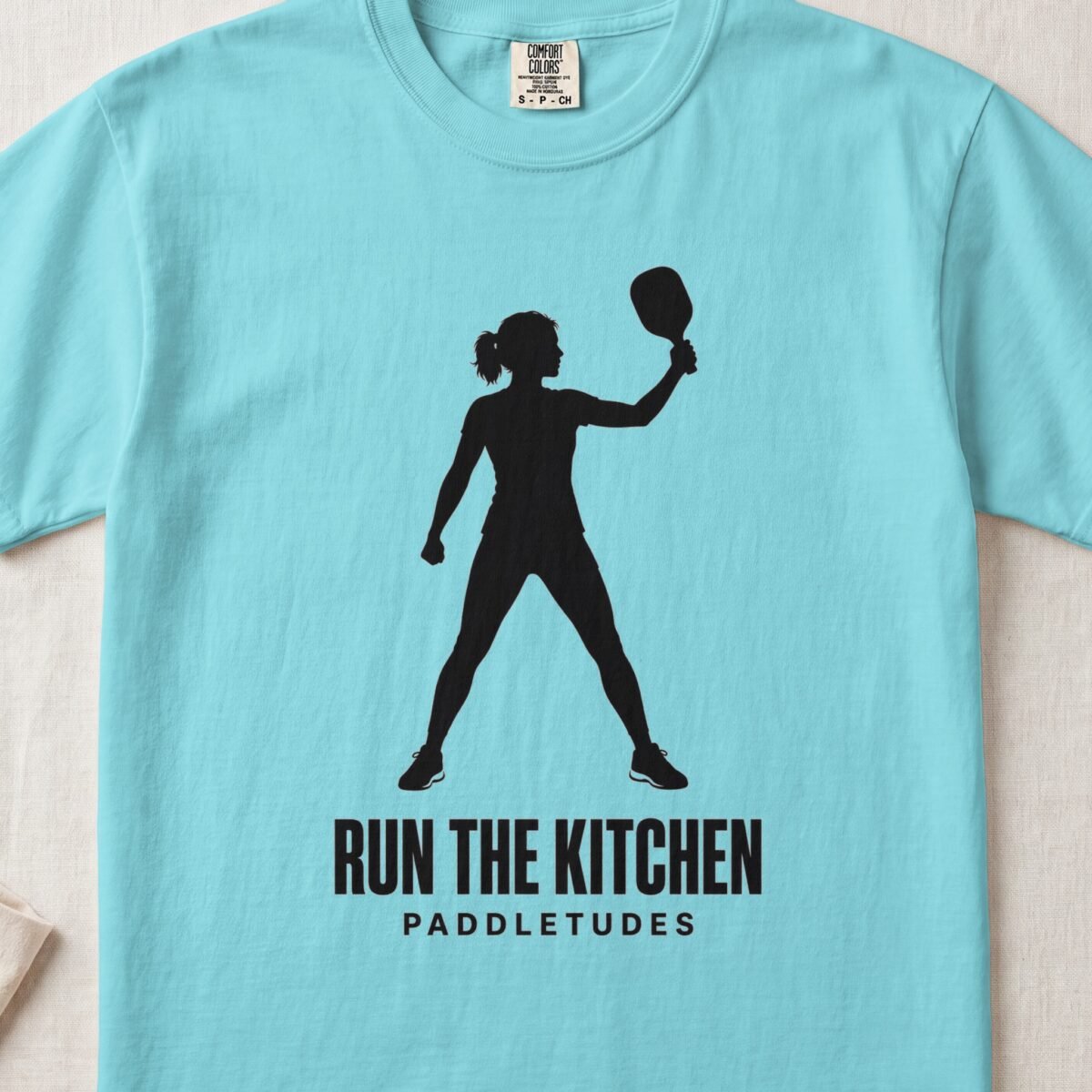
Run The Kitchen
$29.99 Select options This product has multiple variants. The options may be chosen on the product page -
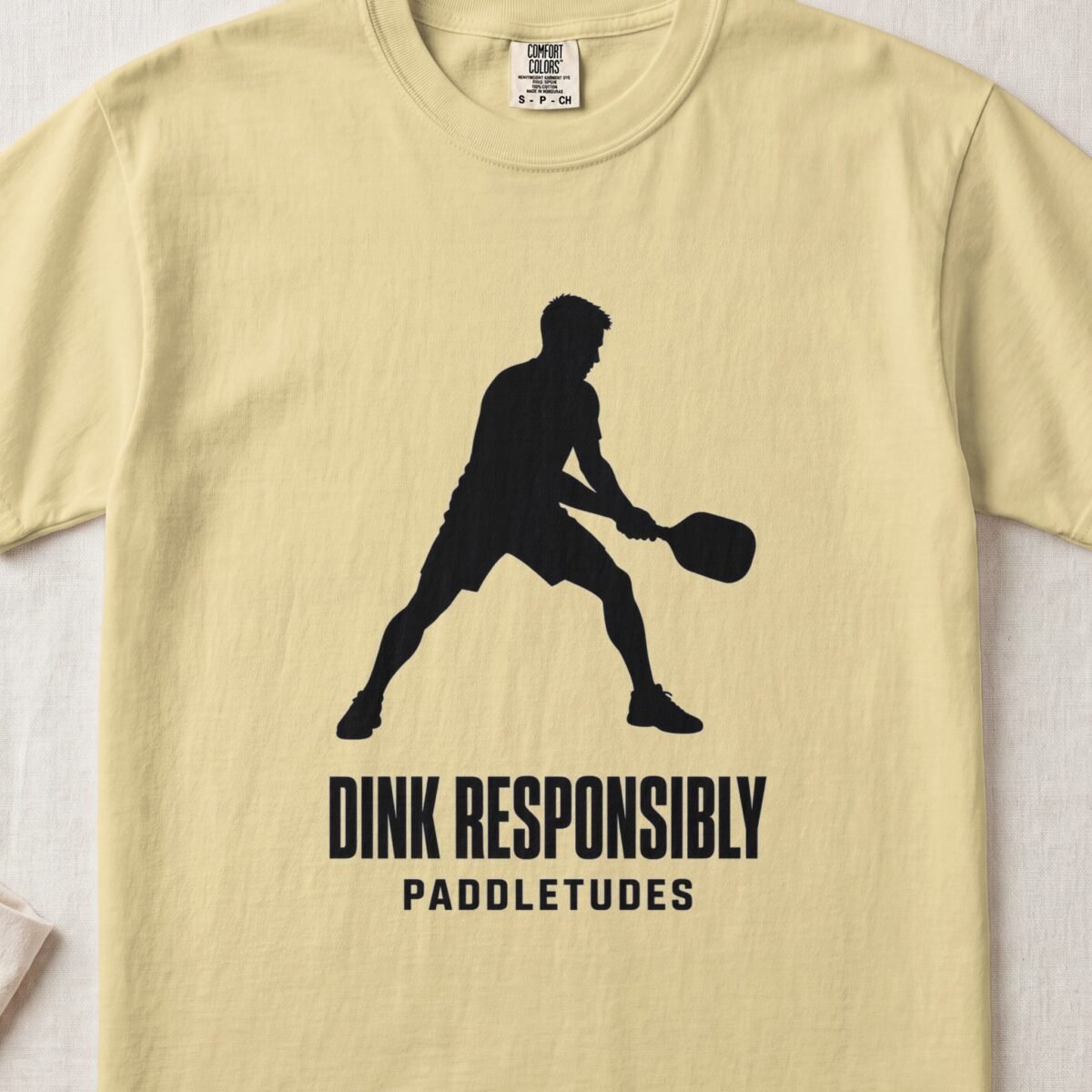
Dink Responsibly
$29.99 Select options This product has multiple variants. The options may be chosen on the product page -
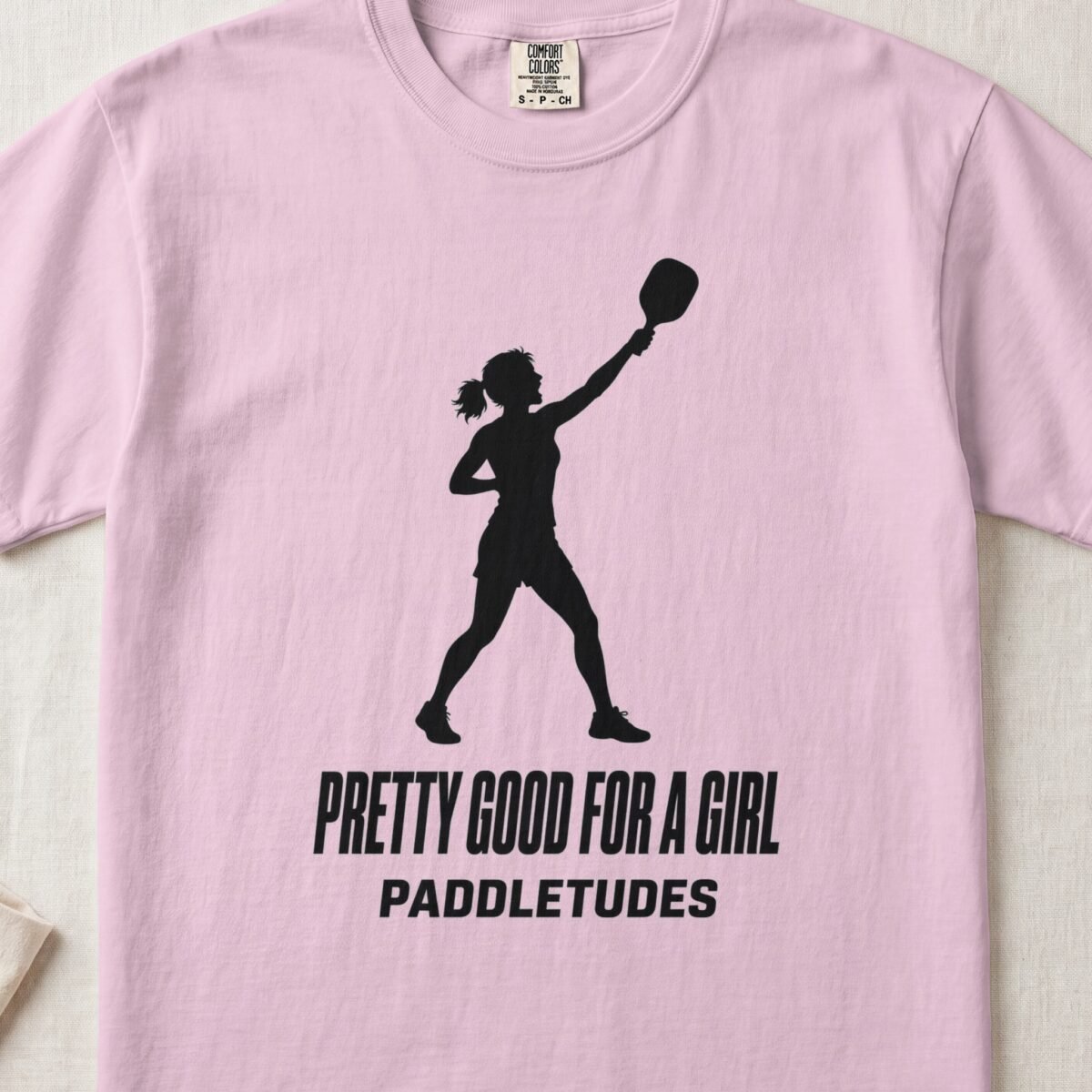
Pretty Good For A Girl
$29.99 Select options This product has multiple variants. The options may be chosen on the product page