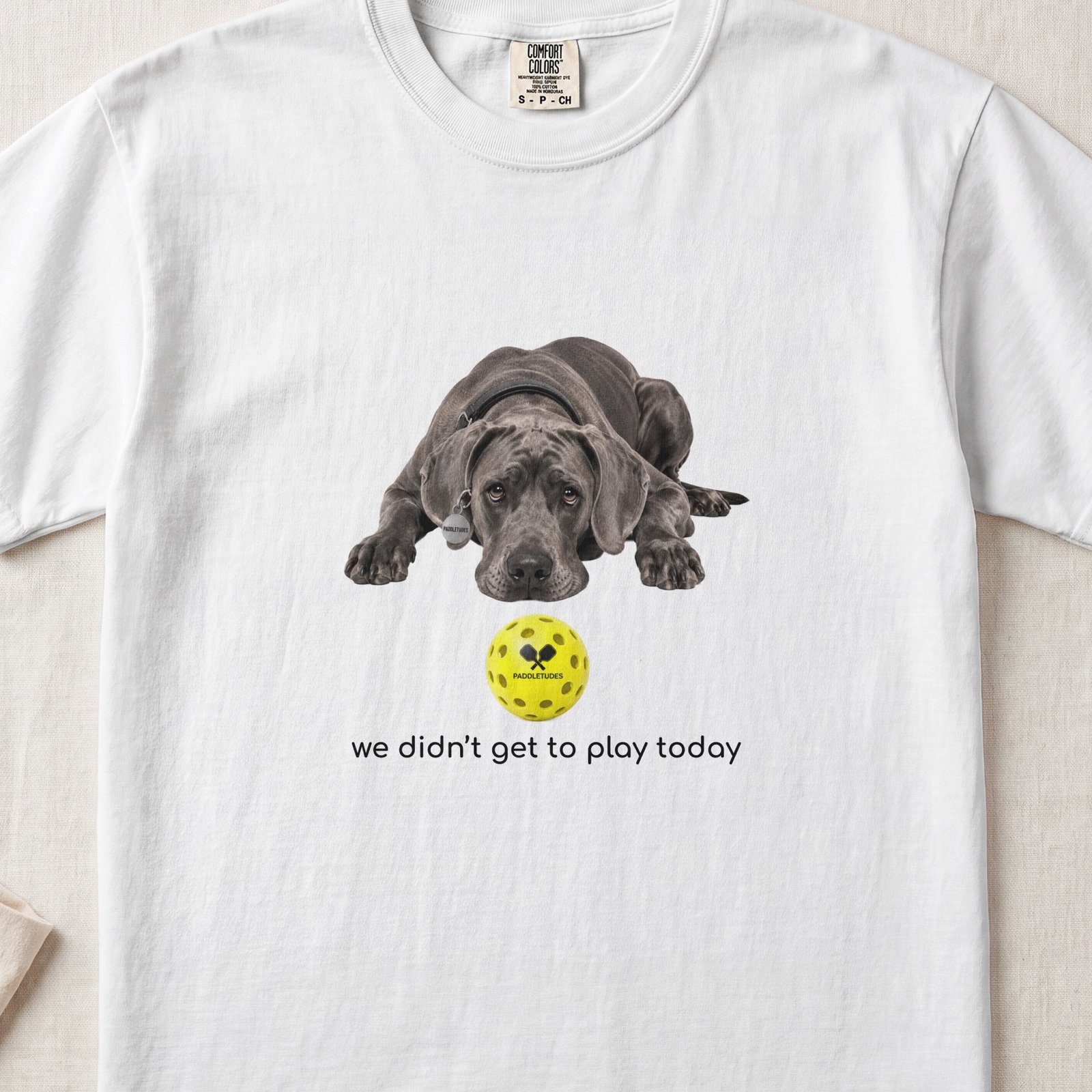
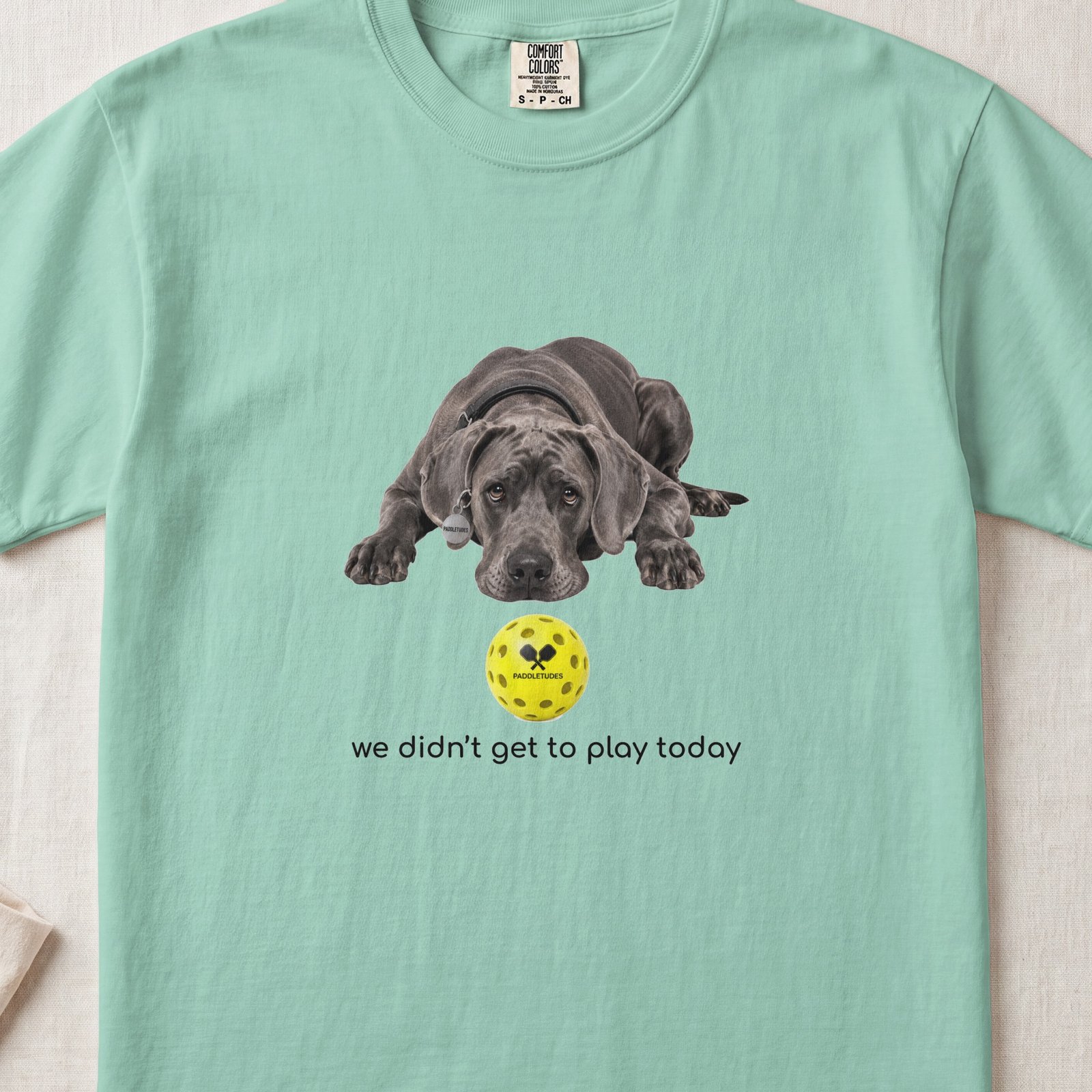
Animals Comfort Colors 1717
Great Dane Sad
$39.99
- Comfort Colors 1717 heavyweight cotton
- Original design · printed to order
- U.S. print partners
A Great Dane Gift for When the Tail Stops Wagging
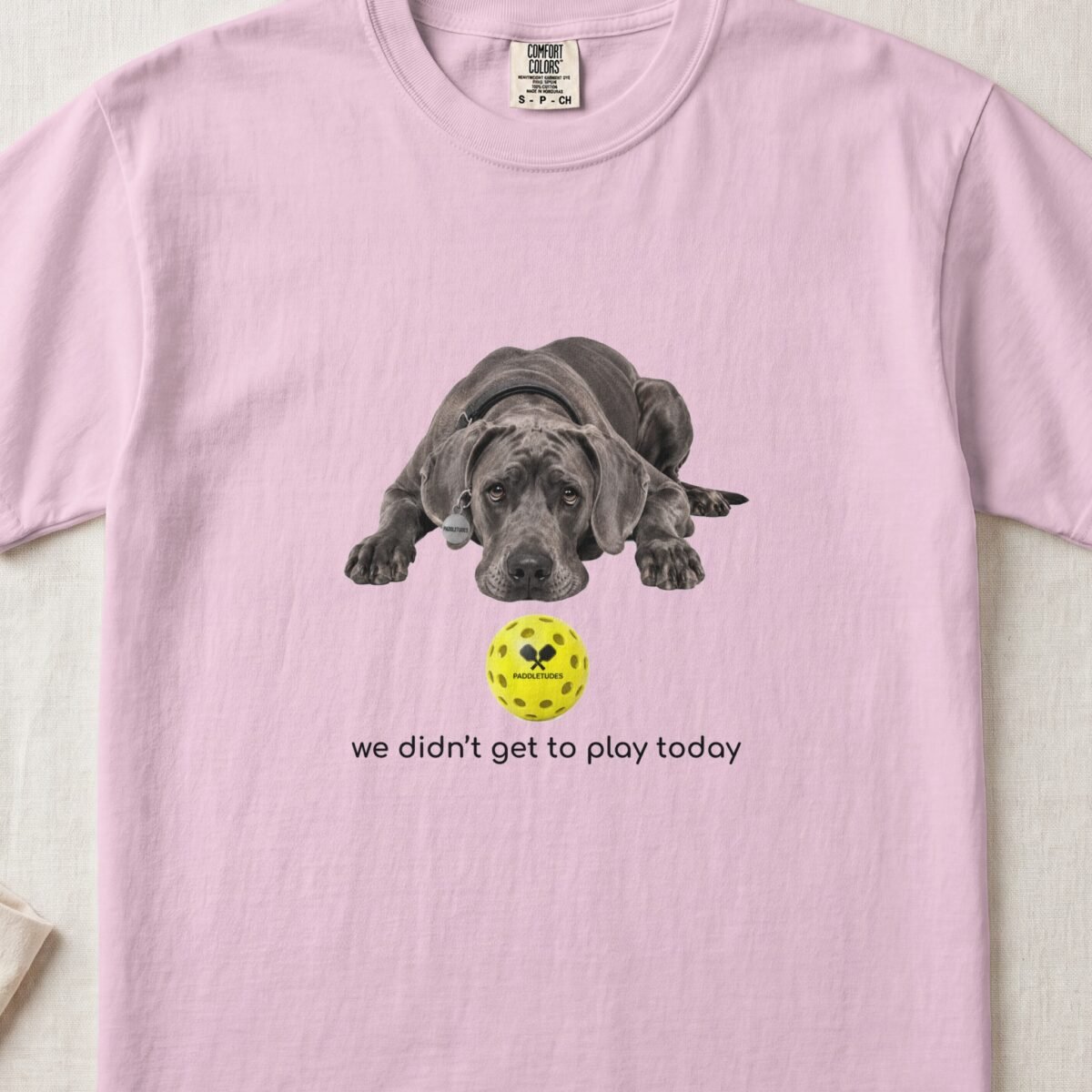
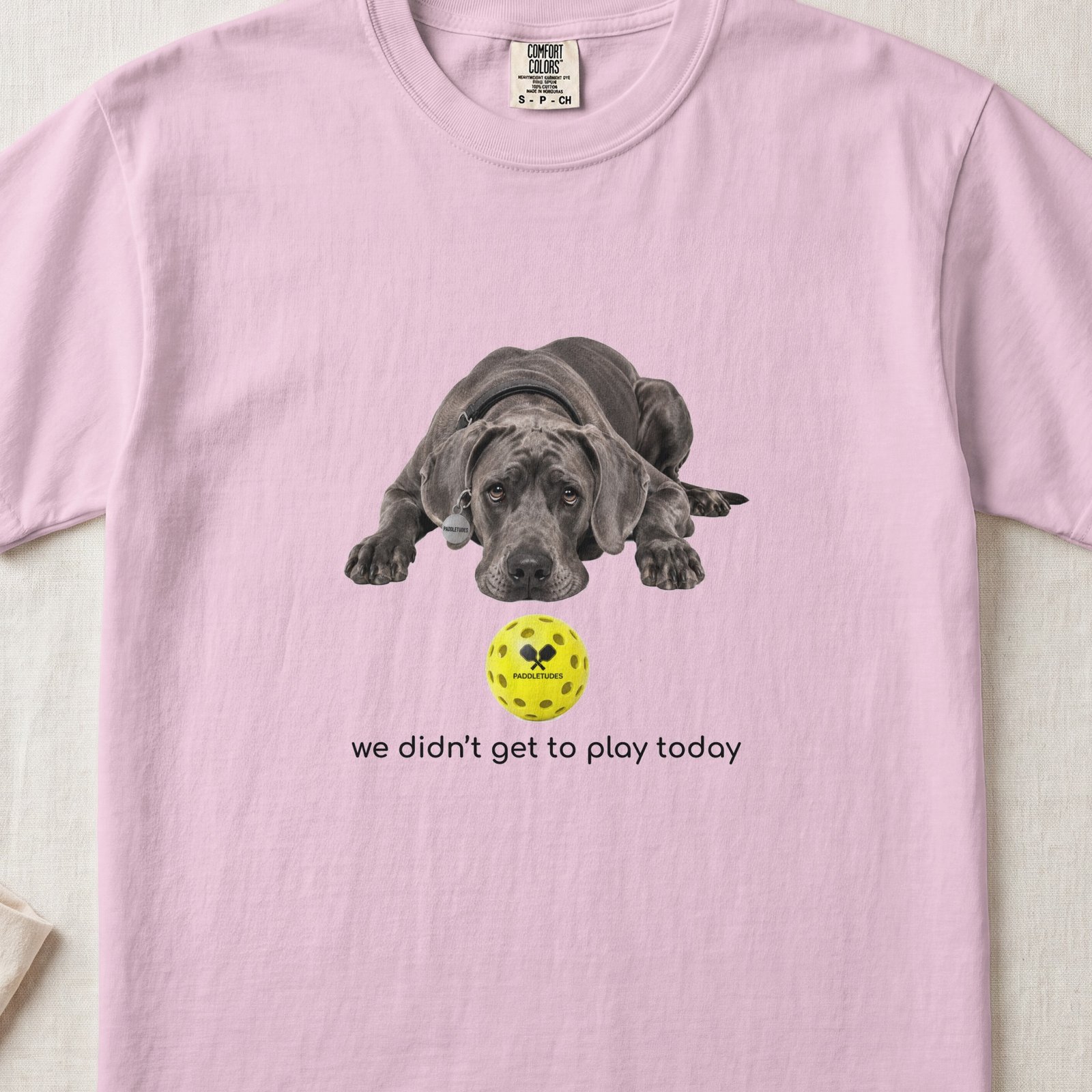
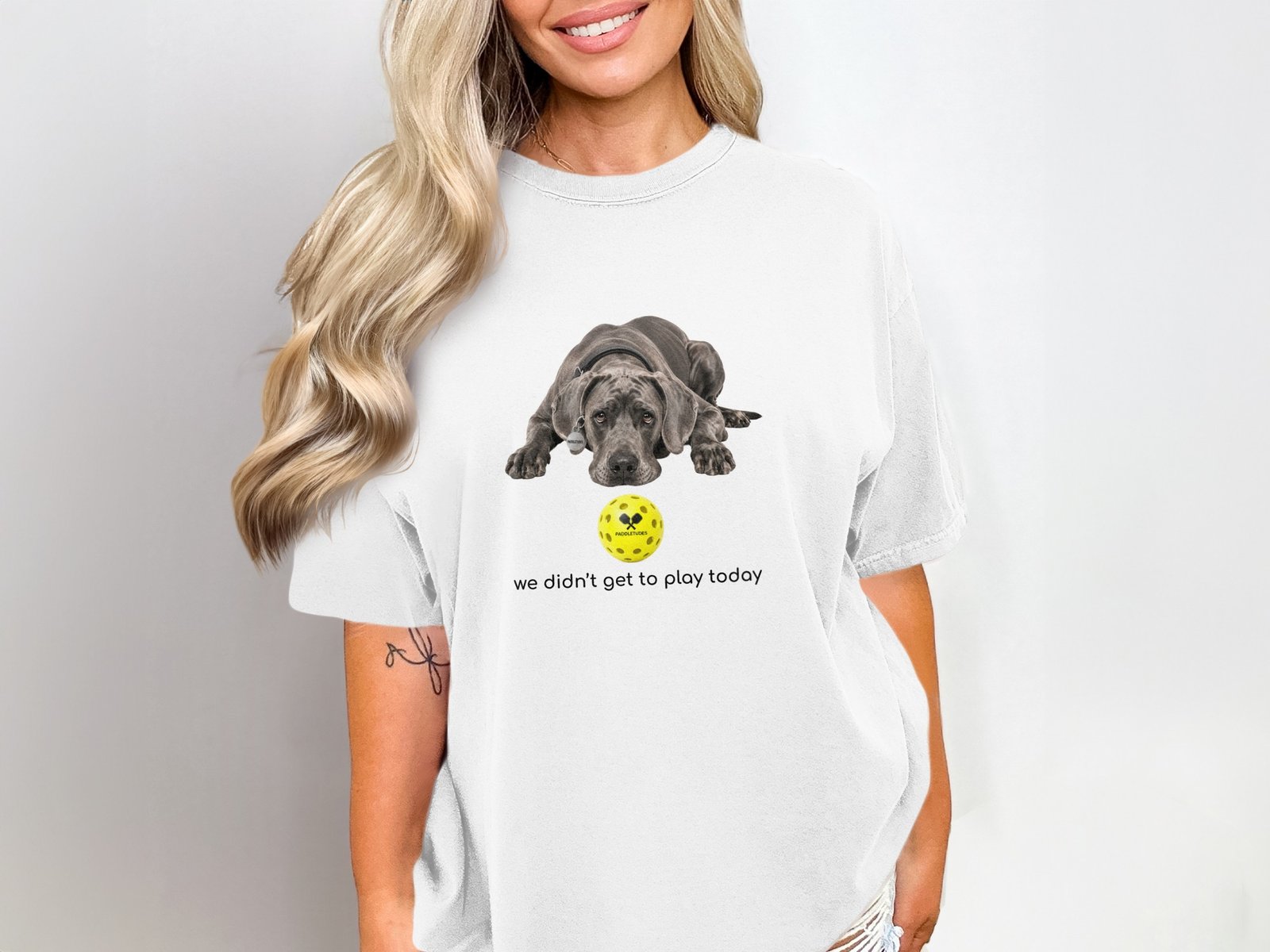
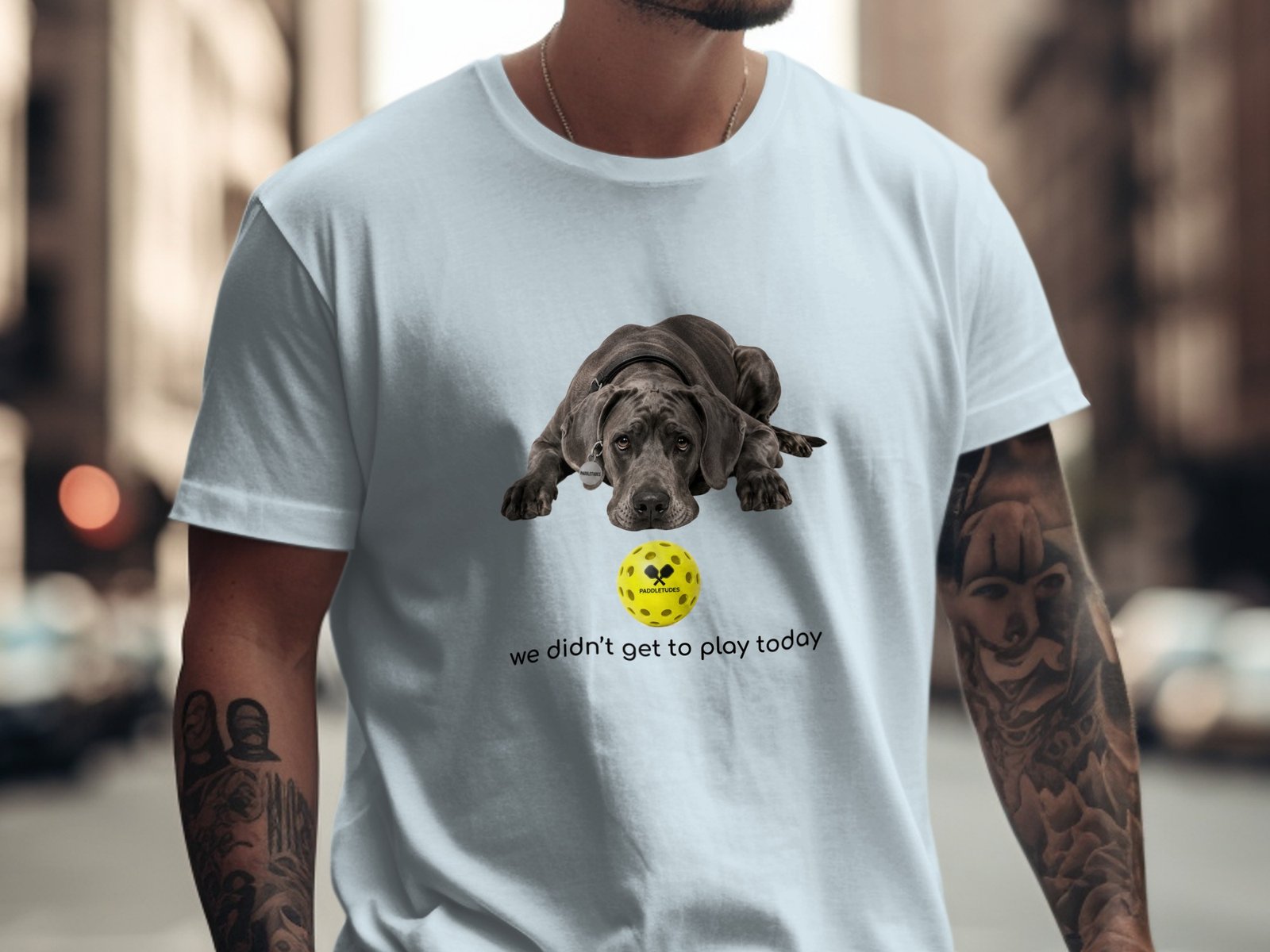
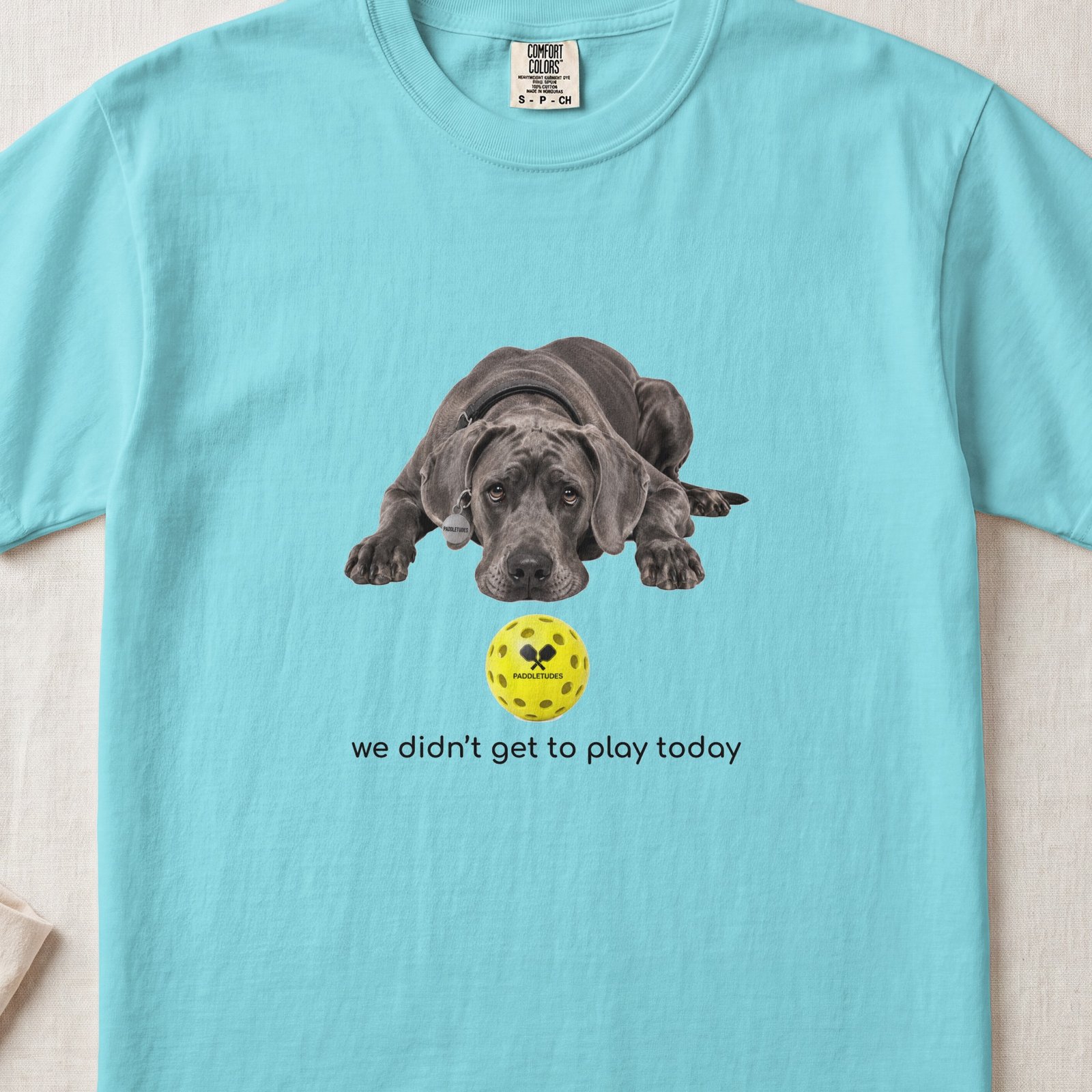
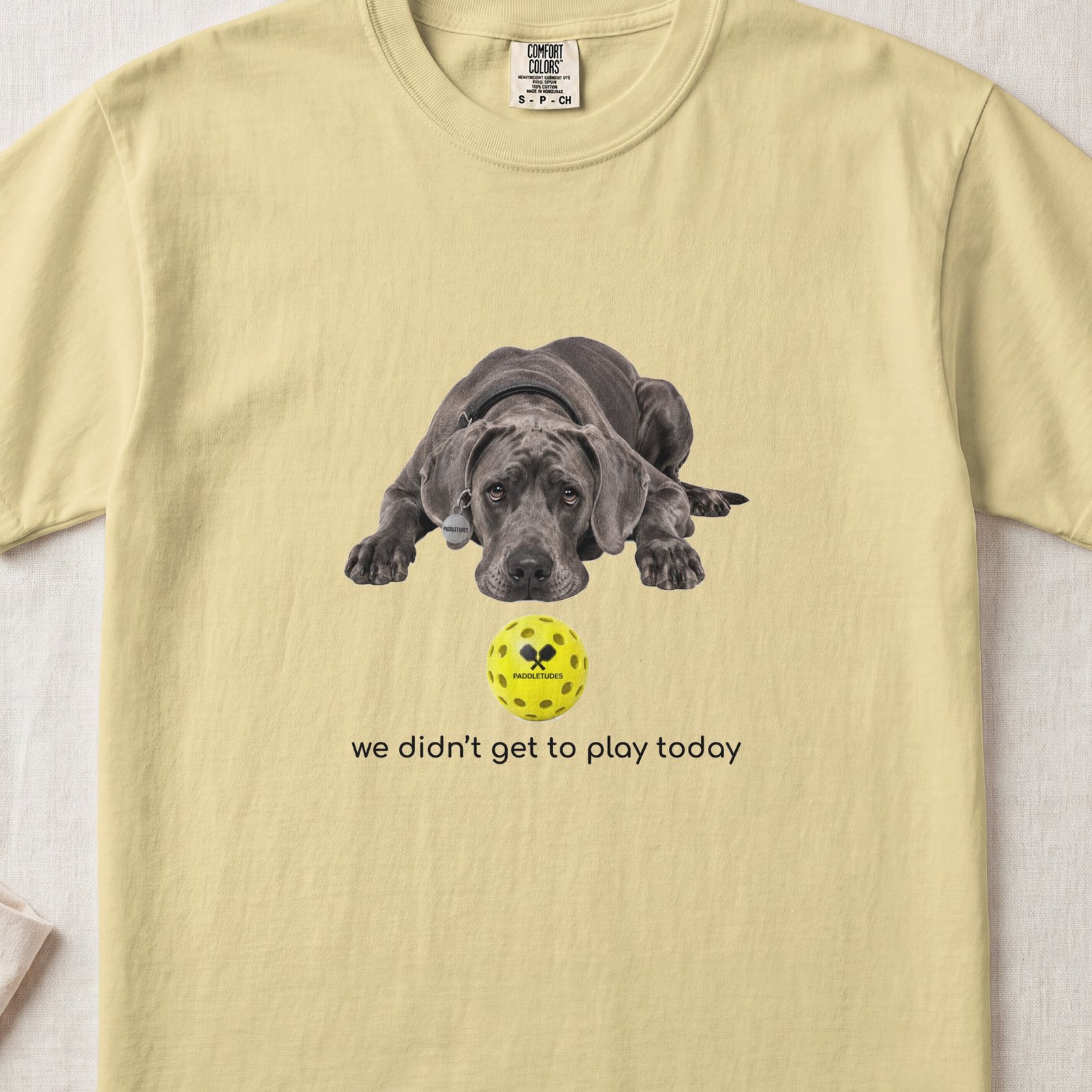
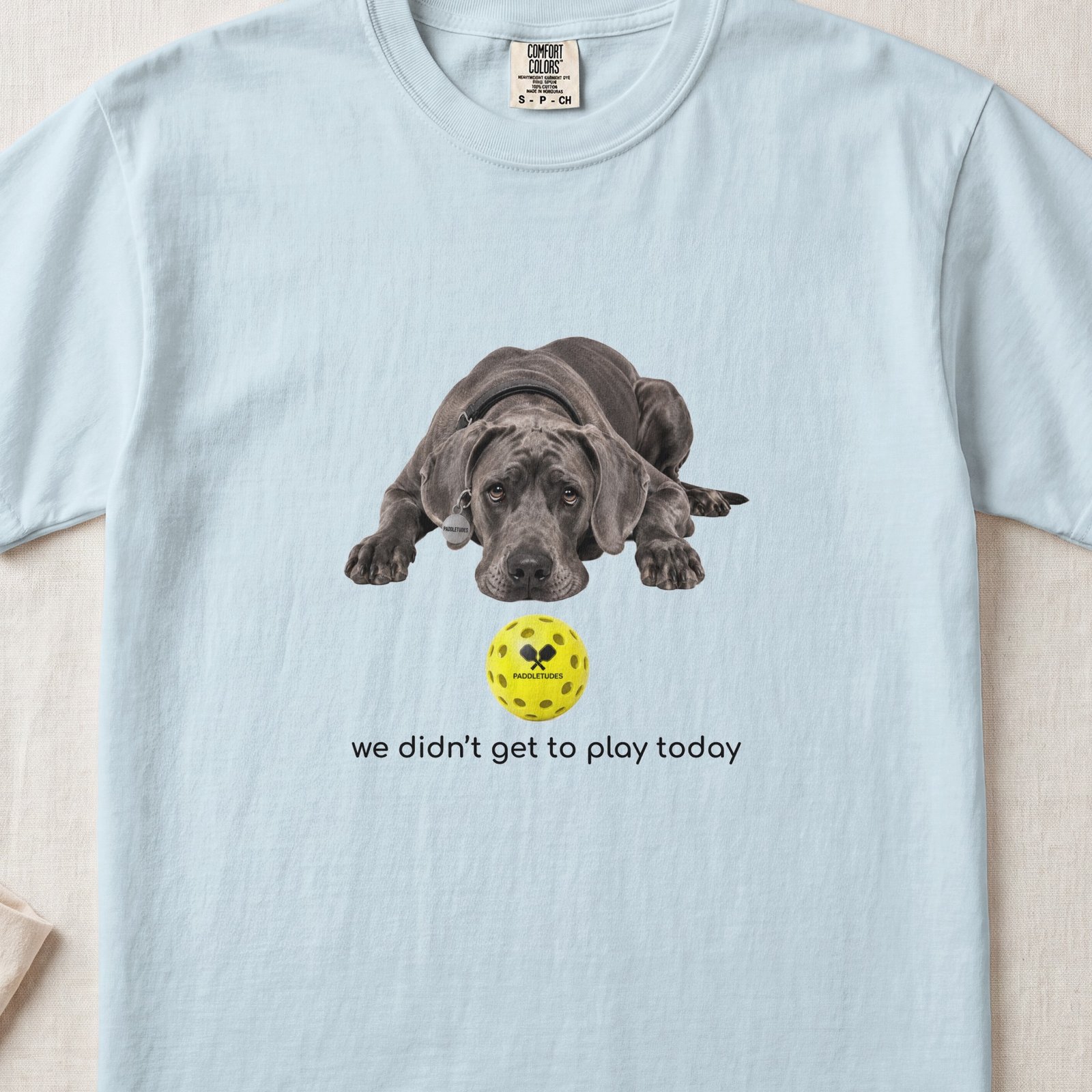
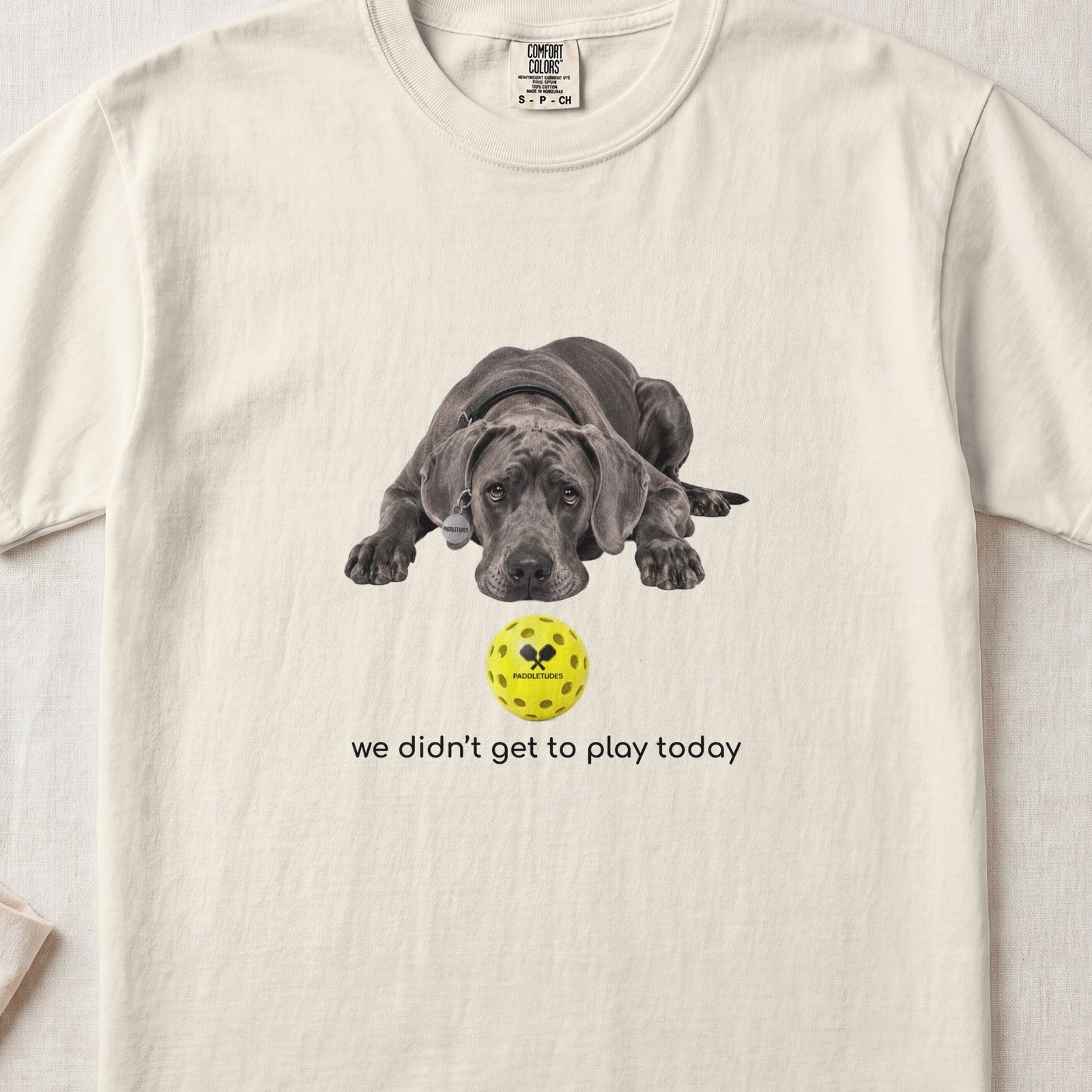
When a Great Dane is happy, you know it from two rooms away. The tail hits the wall. The paws hit the floor. The entire house vibrates with a hundred and thirty pounds of motion. When a Great Dane is sad, the silence is the tell. This great dane shirt captures the moment after the paddle bag goes back in the closet and the biggest dog in the house goes completely still — flat on the floor, chin down, eyes following you with the quiet devastation of an animal that feels everything at a scale that matches its frame. We didn’t get to play today. Printed on a garment-dyed Comfort Colors 1717 heavyweight tee with water-based DTG ink.
A Great Dane lying flat occupies more floor space than most area rugs. This is the dog that turns sadness into a physical event — not by howling or pacing, but by becoming a geographic feature in your living room that you have to navigate around while it stares at you with an expression that suggests you have personally ended joy itself. The Dane does not do subtlety. Even its disappointment is the biggest thing in the room. Other breeds process missed court time privately. The Great Dane processes it in the middle of the hallway at full extension, and every person who walks by has to acknowledge it.
Your doubles partner has a Great Dane. You know this because they have told you about it approximately four hundred times — the food bill, the vet bill, the time the dog ate an entire throw pillow and then looked confused about where the throw pillow went. Every story is bigger than the last story because the dog is bigger than any reasonable expectation. This is the birthday gift that proves you have been paying attention to every story, even the one about the slobber and the guest’s blazer. Great Dane owners do not have a dog. They have a lifestyle, and the lifestyle comes with anecdotes that could fill a podcast.
The sadness on this shirt connects to something every Dane owner carries but does not always talk about. The Great Dane lives seven to ten years. That is the number. Every Dane owner learns it before they bring the puppy home, and every Dane owner makes the same decision — the years are shorter, so they will be deeper. The bond between a Great Dane and its person is compressed by time in a way that makes every day count differently. A missed pickleball session is a small thing for a breed that lives to fourteen. For a breed that may not see double digits, a day where nothing fun happened is a day that mattered and is not coming back. This is not a guilt trip. It is the arithmetic of giant-breed ownership, and the person wearing this shirt lives inside it.
The breed’s gentleness is an engineered outcome. German breeders spent centuries refining a dog powerful enough to hunt wild boar and gentle enough to live in their chambers — the Kammerhunde tradition, where the most favored dogs slept in the nobleman’s bedroom. The Great Dane Club of America has maintained the breed standard since 1889, and that standard specifically requires a temperament that is “never timid or aggressive.” A Great Dane that shows fear or hostility is as much a breed fault as incorrect structure. The gentleness is not a personality quirk. It is a requirement that has been enforced for over a century of selective breeding, and it shows in the way a Dane handles disappointment — not with aggression, not with destruction, but with a level of visible sadness that makes you want to cancel your afternoon plans and stay home.
Managing a Great Dane through the days when the routine breaks means understanding what keeps the body healthy. Bloat remains the breed’s most dangerous emergency — the AKC recommends elevated food bowls, smaller meals, and avoiding exercise immediately after eating to reduce the risk. Joint supplements that include glucosamine and chondroitin help support the hips and elbows carrying all that weight. And the mental stimulation matters as much as the physical — a puzzle feeder, a frozen Kong, or even a slow-paced walk around the block gives a Dane something to do with its brain on the days the court is not available.
The happy version captures the opposite — a Great Dane with a pickleball in its mouth, radiating the joy of the largest breed holding the smallest ball. The Dachshund handles missing court time with a dignified silence that somehow still communicates disapproval. Browse the Dogs page — the Great Dane lover’s dog lover gift — or head to the pickleball shirt lineup.
Printed on a Comfort Colors 1717 garment-dyed heavyweight tee with water-based DTG ink — sizing and care details here.
Why Do Great Danes Lean on People
Great Danes lean because the breed uses physical contact as its primary form of communication and emotional regulation. A Dane leans when it is happy, when it is anxious, when it wants attention, and when it is simply standing near someone it trusts. The lean is not a trained behavior — it is a breed-wide instinct that appears in puppies and intensifies as the dog grows into its full size.
The origins are practical. For centuries, Great Danes lived as chamber dogs alongside European nobility — sleeping in their owner’s rooms, resting at their feet, and maintaining physical proximity as part of daily life. Dogs that stayed close to their handlers received better care and were selected for breeding more frequently. Over generations, this selection pressure embedded physical closeness into the breed’s behavioral baseline. The Great Dane did not learn to lean. It was bred to lean.
What makes the lean remarkable is the physics. An adult male Great Dane weighing a hundred and forty pounds pressing its full body weight against your leg generates enough lateral force to shift a grown adult’s center of gravity. First-time Dane owners learn this lesson at a party, in a kitchen, or on a sidewalk when the dog decides to lean and the owner staggers sideways. Experienced Dane owners learn to widen their stance when the dog approaches. The lean is an act of trust — the dog is literally placing its weight against you and relying on you not to move — and it is also an act of unintentional comedy that never gets old, even after the fifth year.
For Dane owners who play pickleball, the lean is what happens the moment you walk through the door after a session. The dog meets you in the hallway, presses its shoulder against your leg, and stays there until it has confirmed that you are home, you are real, and you are not leaving again immediately. On the days when the routine breaks and pickleball does not happen, the lean gets redirected — instead of a greeting, it becomes a statement. The dog finds you wherever you are in the house, leans against you, and does not move. It is not asking to play. It is asking why you did not.
-
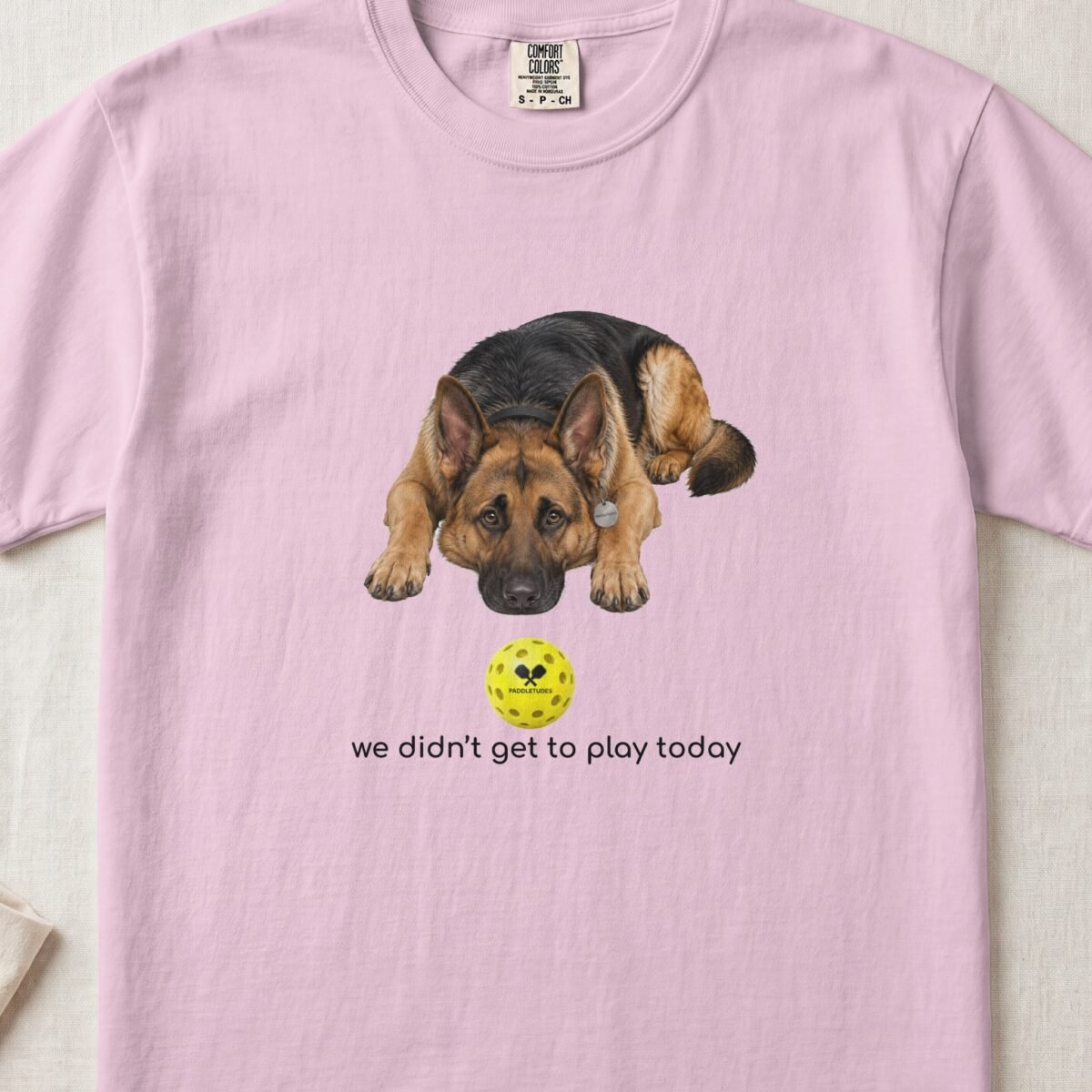
German Shepherd Sad
$39.99 Select options This product has multiple variants. The options may be chosen on the product page -
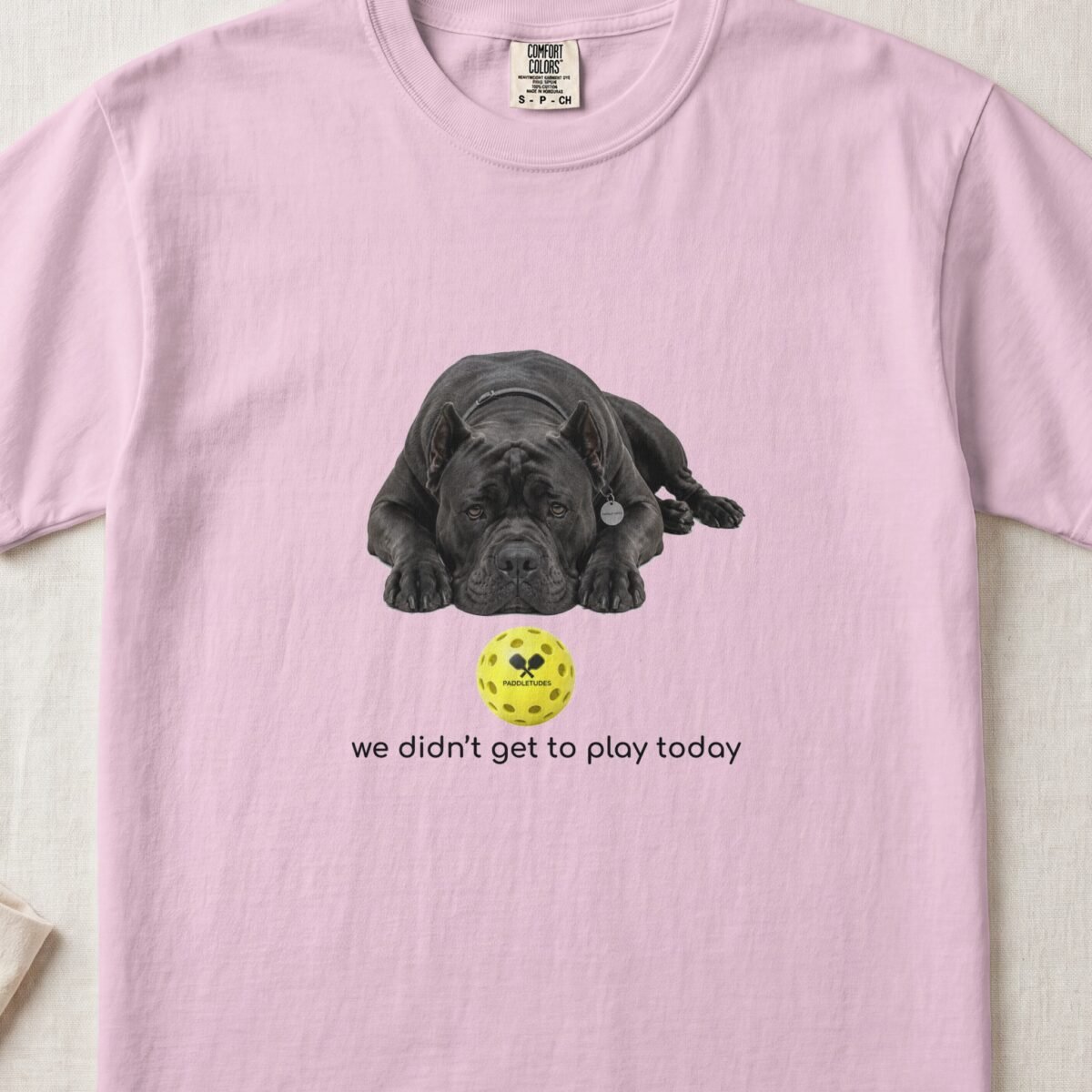
Cane Corso Sad
$39.99 Select options This product has multiple variants. The options may be chosen on the product page -
Chihuahua Sad
$39.99 Select options This product has multiple variants. The options may be chosen on the product page