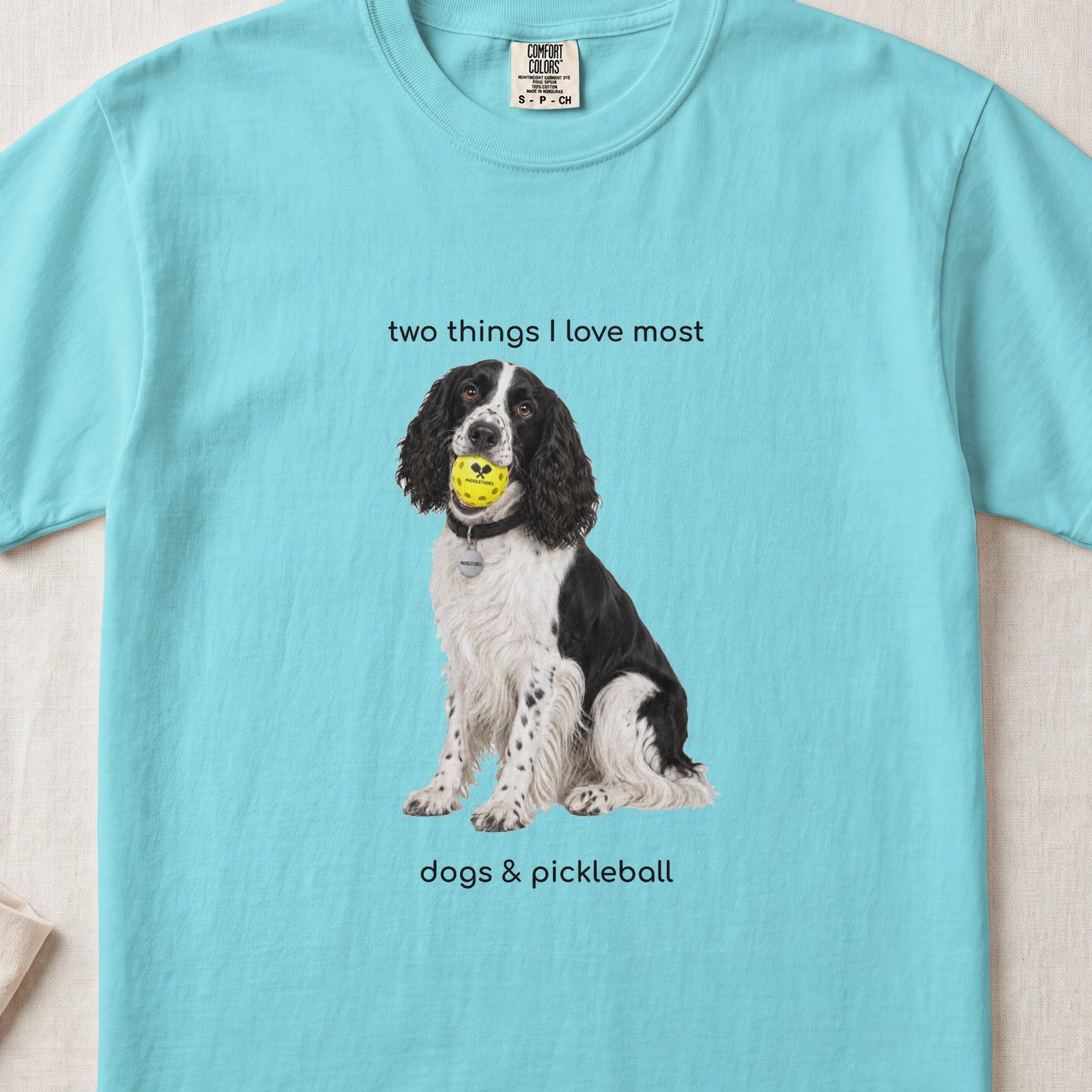
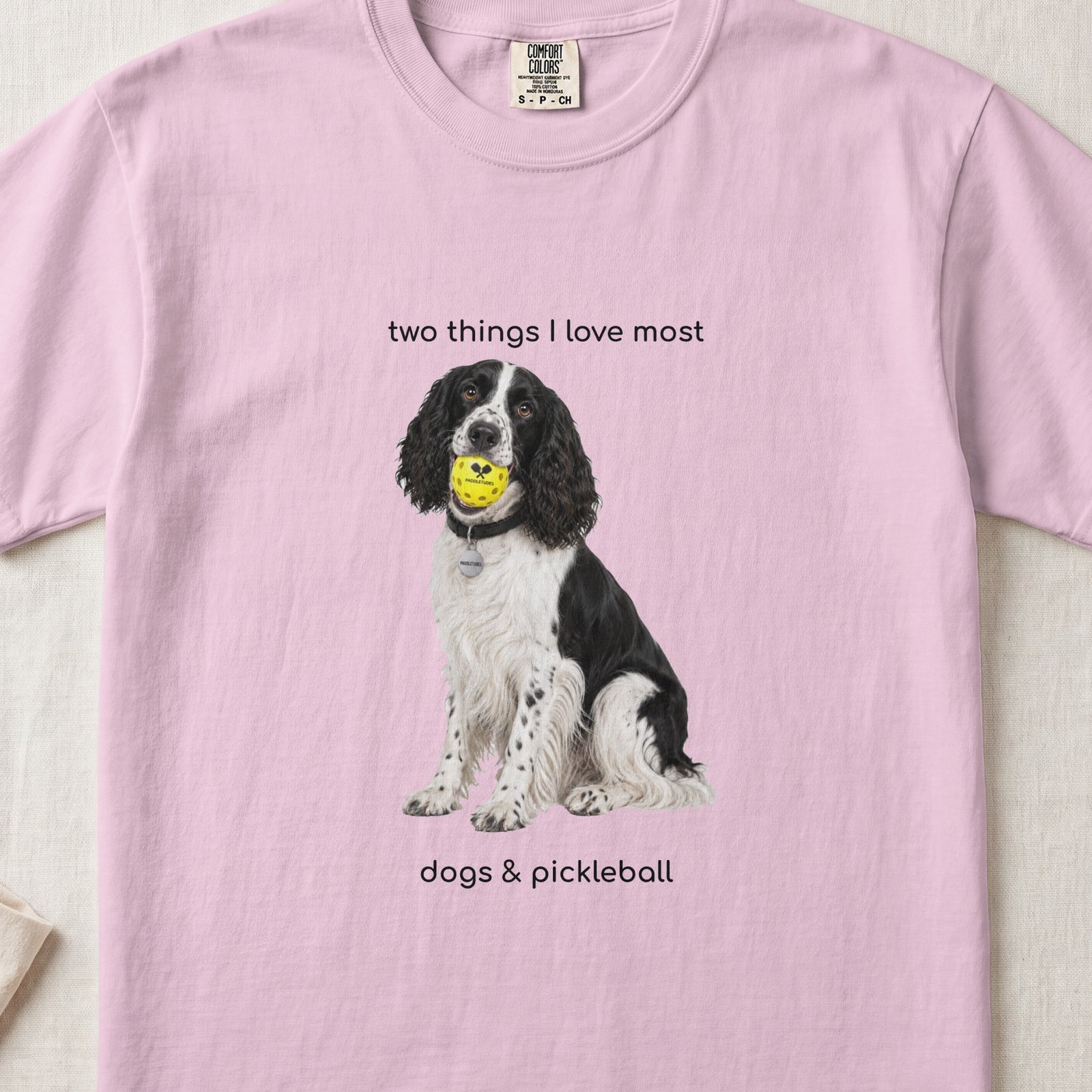
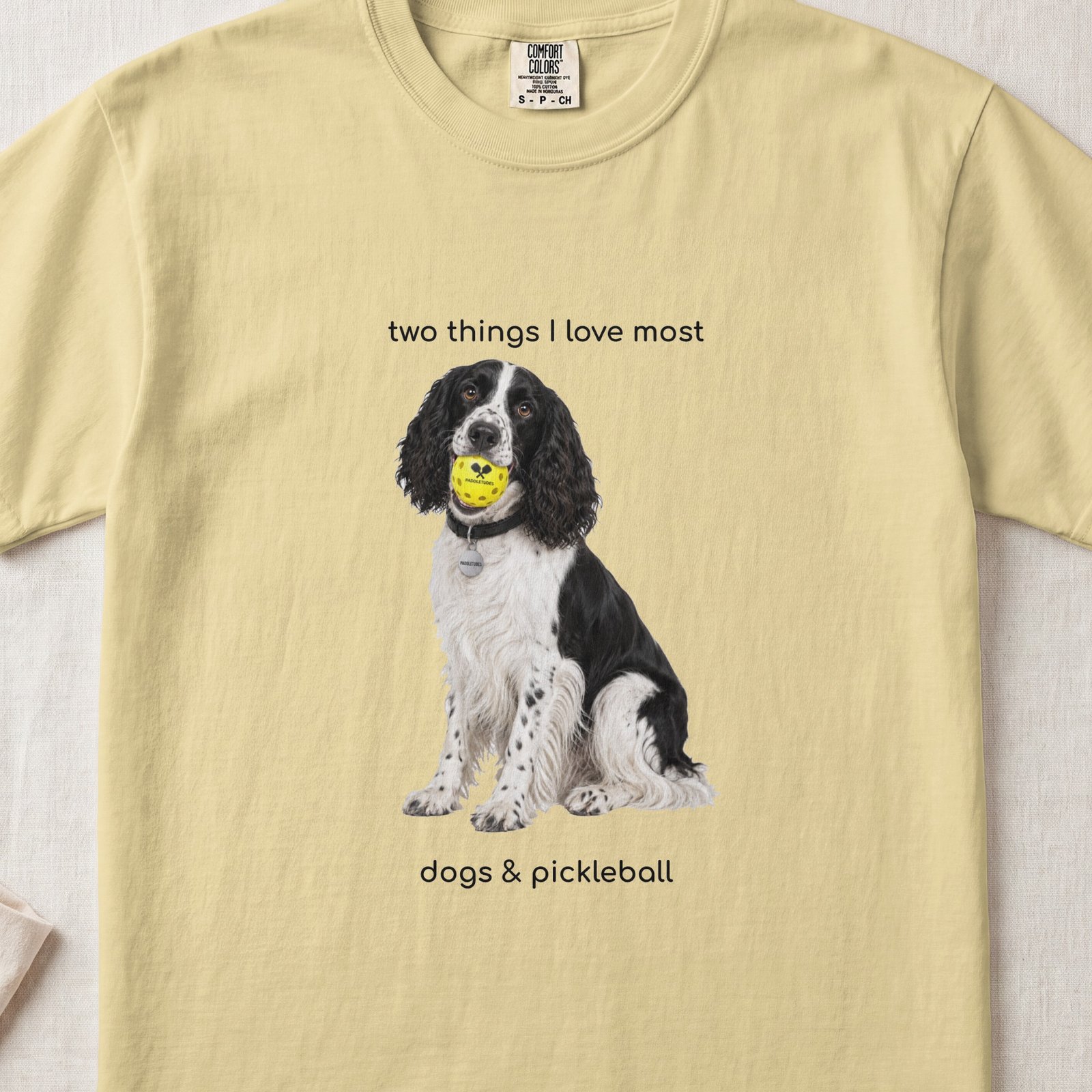
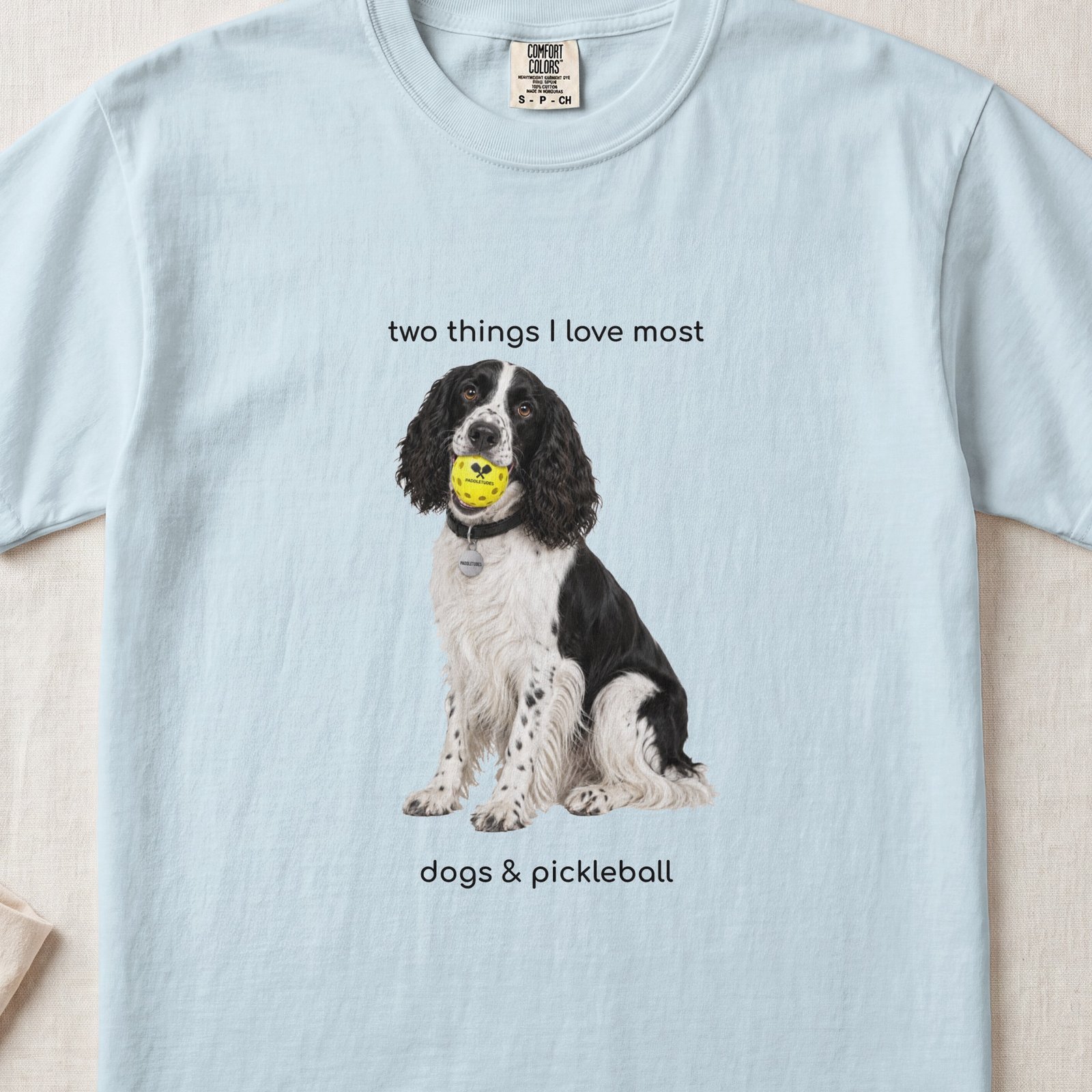
Animals Comfort Colors 1717
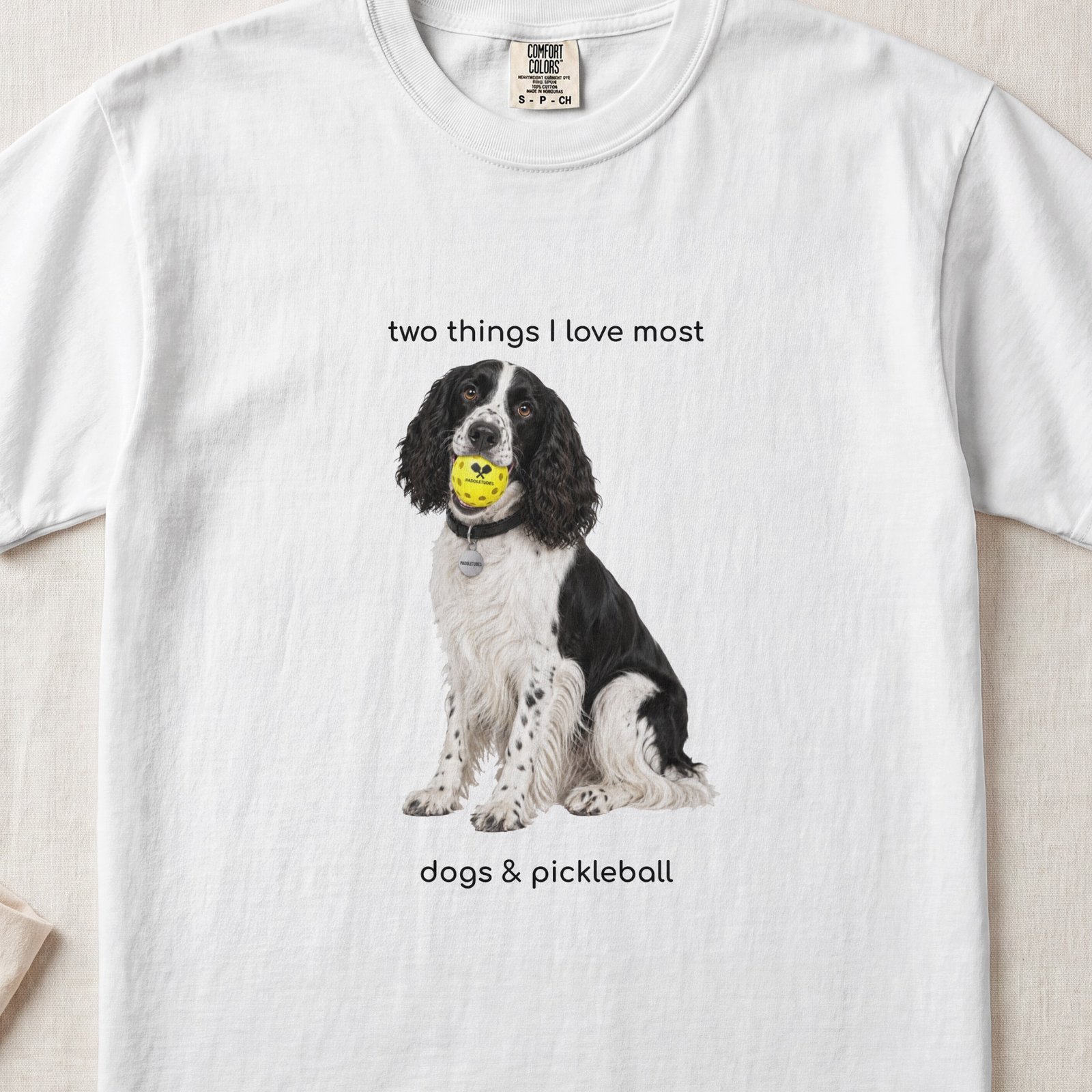
Cocker Spaniel Happy
$39.99
- Comfort Colors 1717 heavyweight cotton
- Original design · printed to order
- U.S. print partners
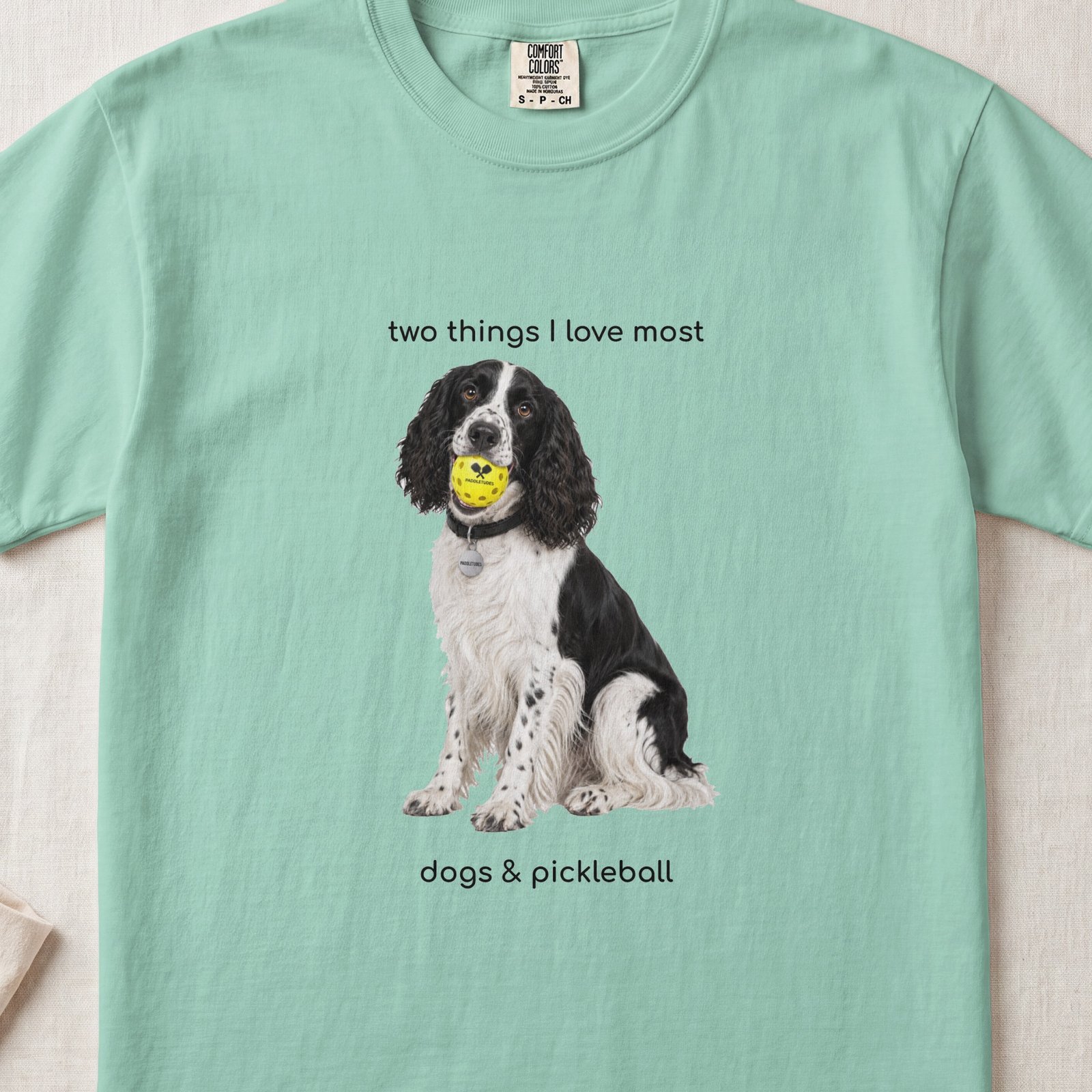
Happiest Dog on Earth on a Cocker Spaniel T Shirt
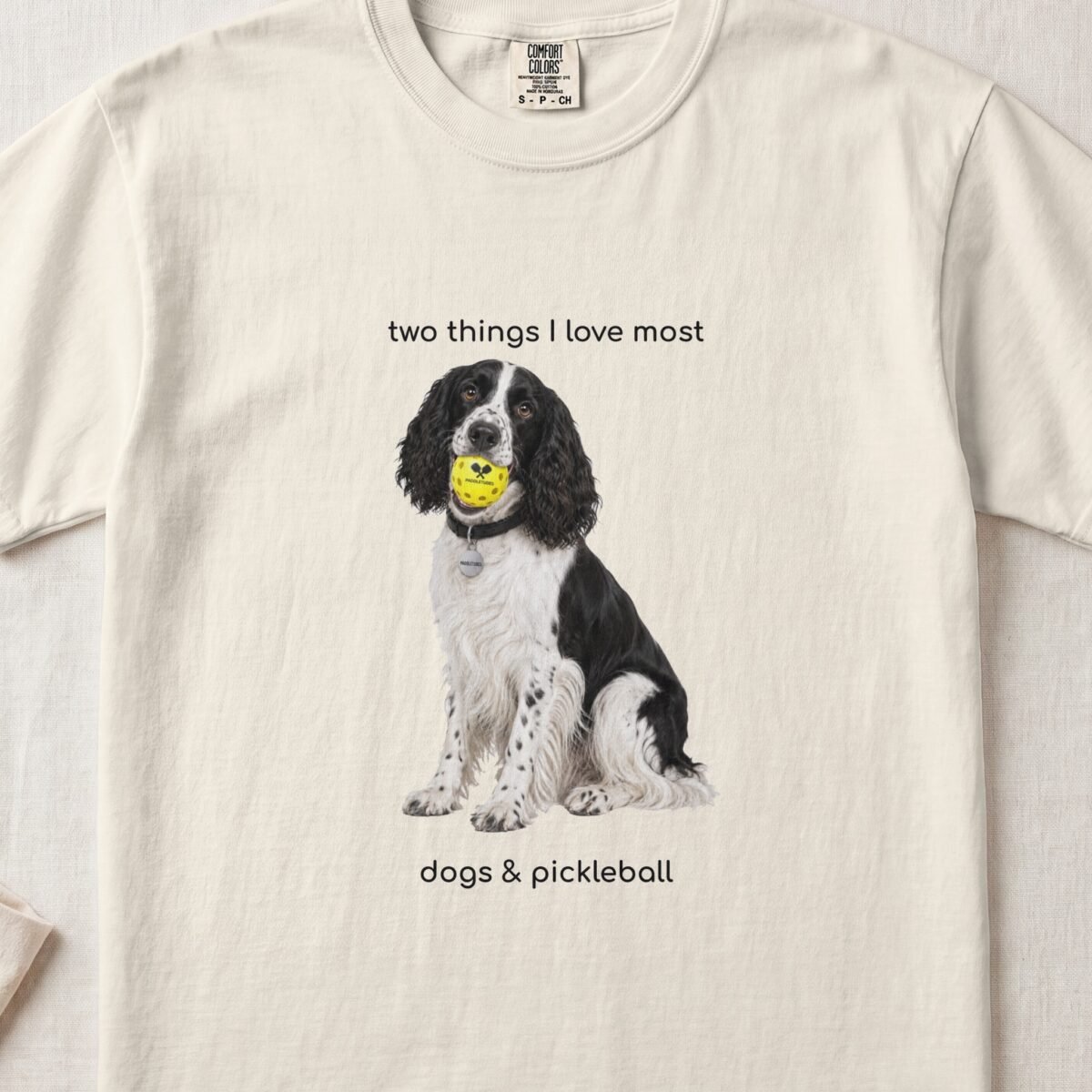
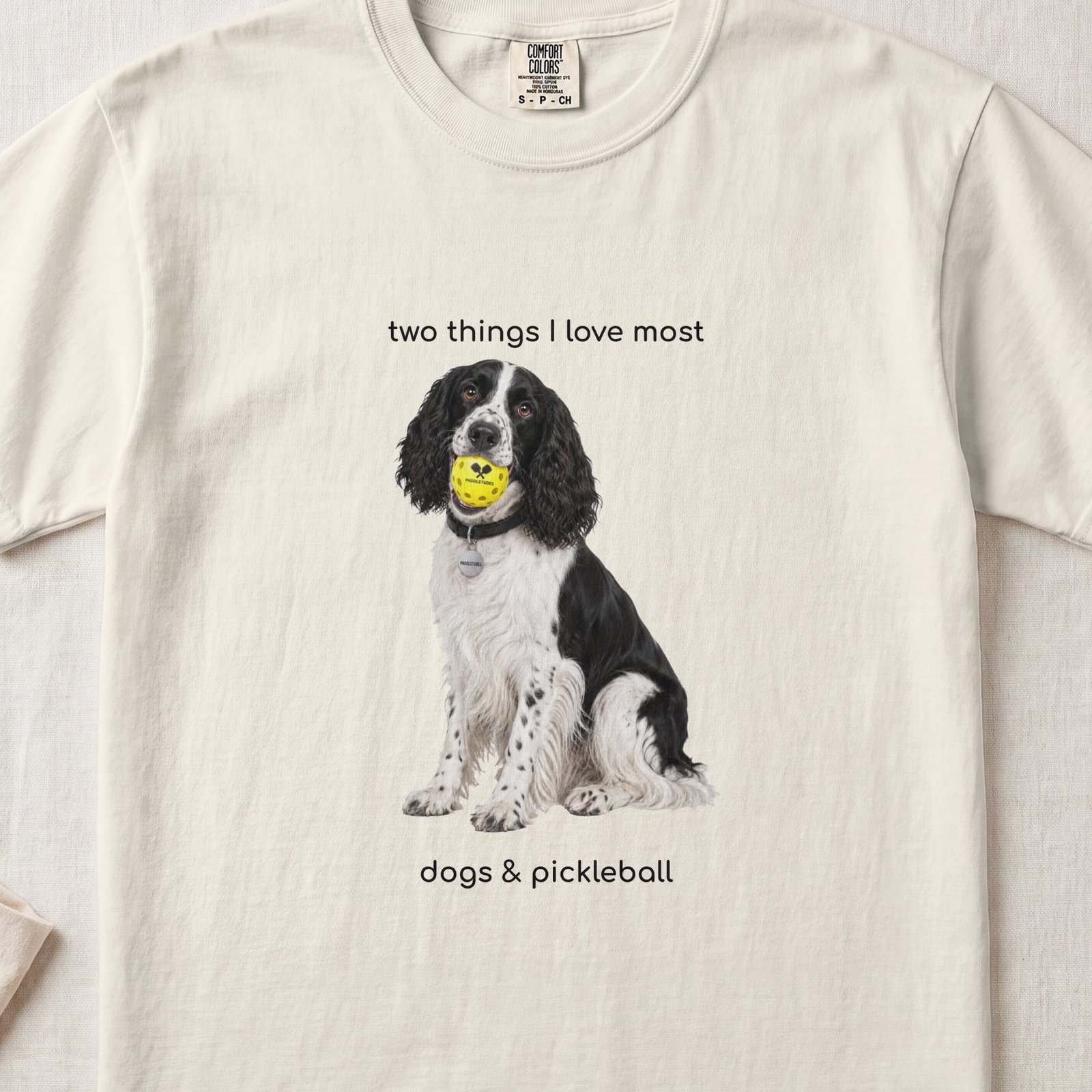
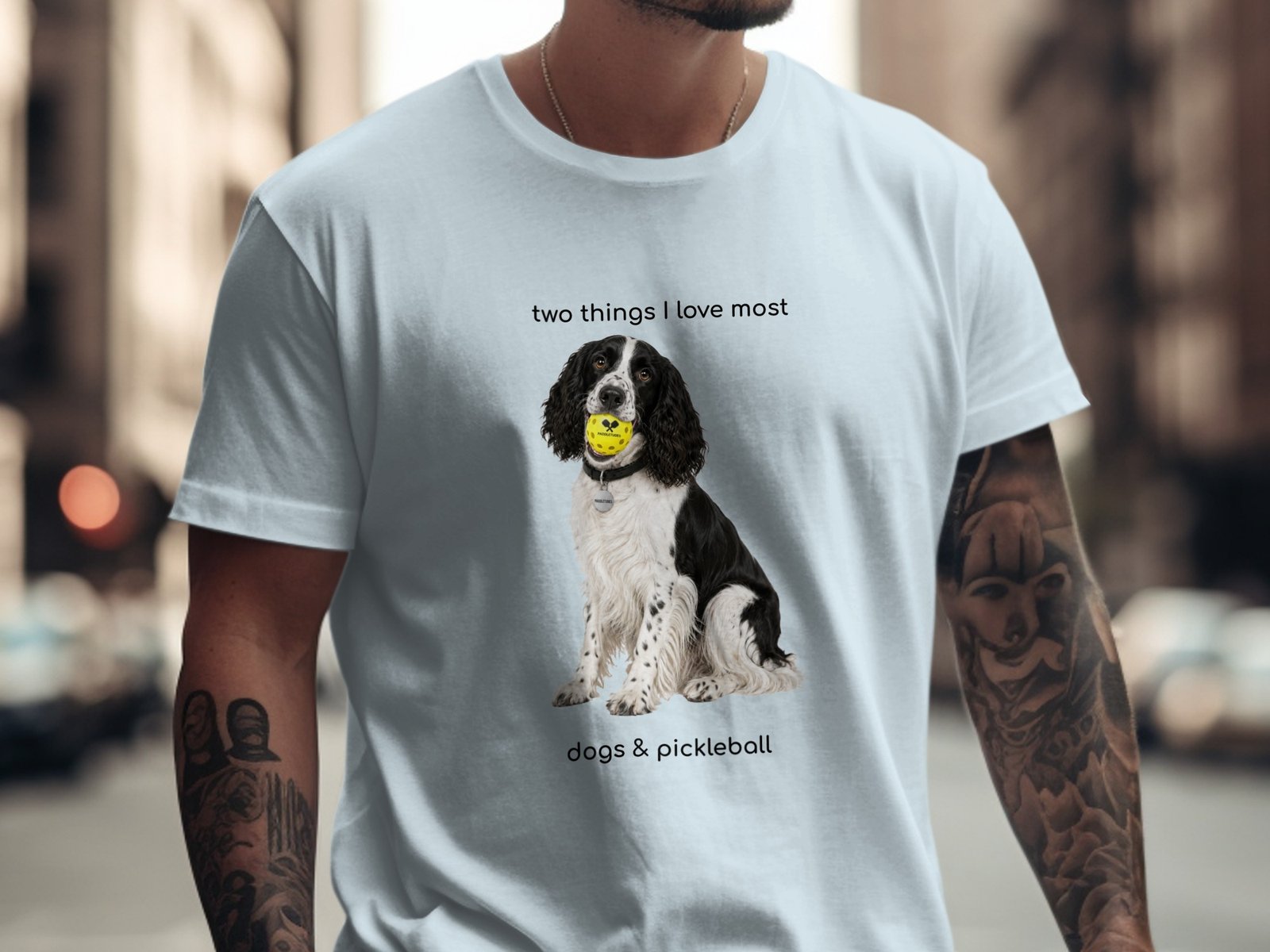
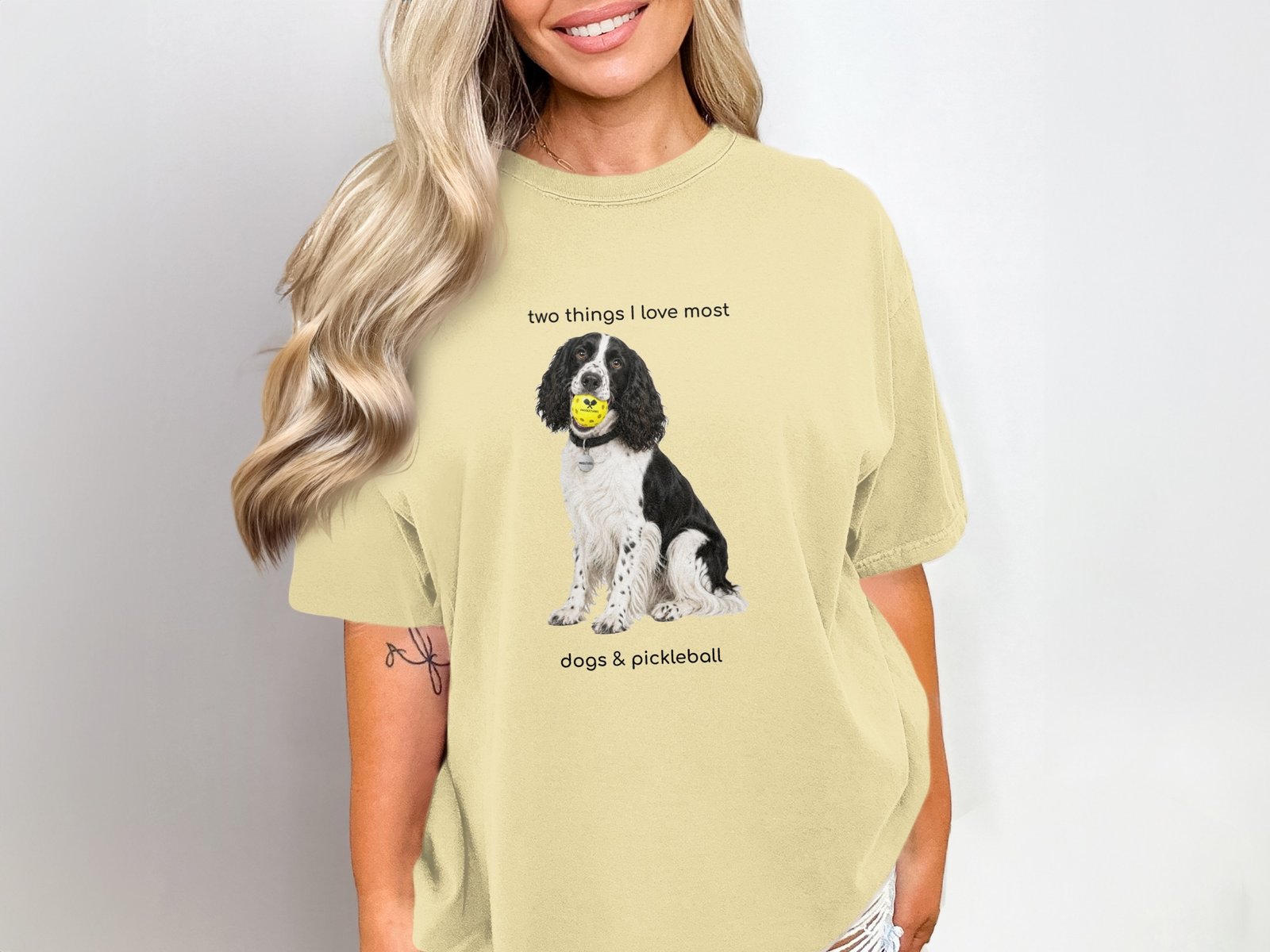
Some breeds have complicated personalities — the Cocker Spaniel is not one of them. Happiest dog on earth, holding a Paddletudes pickleball, with a tail that has not stopped wagging since approximately 2019. That’s the design. That’s the whole Cocker Spaniel in one image.
If a couple in your league just adopted a Cocker Spaniel and the husband has already started carrying grooming photos on his phone like they are wallet-sized school portraits — and he also shows you these photos between games, unprompted, while holding his paddle in one hand and scrolling with the other — this is the holiday cocker spaniel gift that tells him you see him, you understand him, and you accept that his dog now outranks you in the friendship hierarchy. Cocker Spaniel gift searches run at five hundred a month because these owners are vocal, devoted, and absolutely certain their breed is the greatest thing alive. A dog lover gift that puts that joy next to a pickleball speaks to both halves of their identity without making them choose.
The Cocker Spaniel’s entire operating system runs on joy. Not the calculated joy of a dog performing for treats, and not the anxious joy of a dog trying to make you happy. Genuine, bottomless, factory-installed delight at the mere fact of being alive and near you. They wag when you walk in the room. They wag when you open the refrigerator. They wag when you say any word in a tone that might possibly indicate something is about to happen. Cocker Spaniel owners call this the “wigglebutt” — the full-body tail wag that starts at the nose and works its way back until the entire dog is oscillating like a furry metronome set to allegro. At the dog park wearing this cocker spaniel shirt, another Cocker owner spots it and the conversation starts immediately — not with “nice shirt” but with “yours does the butt wiggle too, right?” — because Cocker people skip small talk and go straight to shared experience. The Cavalier King Charles Spaniel runs a similar emotional frequency in an even smaller package, but nobody out-wiggles a Cocker.
The Cocker owner at the pickleball court is the person who makes open play actually fun. Not the most competitive player, not the one keeping stats on their phone — the one who says “nice shot” and means it every single time, the one whose energy lifts the rotation, the one everybody wants on their side not because they are the best but because playing with them feels like the reason you took up the sport in the first place. They chose a dog that greets every human like a long-lost friend, and they play pickleball the same way.
The Cocker’s temperament is not accidental. The breed was developed as a woodcock flushing dog — the name “Cocker” comes directly from the woodcock — and the job demanded a dog that worked closely with its handler in dense cover, staying responsive, staying eager, and never flagging in enthusiasm across a full day in the field. The American Spaniel Club, founded in 1881, is one of the oldest breed clubs in the country, and the AKC breed standard describes the Cocker’s temperament as “merry” — a word that appears in formal documentation because no other word captures it accurately.
Living with a Cocker also means staying ahead of the breed’s specific maintenance needs. Those gorgeous long ears are not just beautiful — they trap moisture and restrict airflow to the ear canal, making Cockers one of the breeds most prone to chronic ear infections. Weekly ear cleaning is not optional. Their eyes are susceptible to cataracts, progressive retinal atrophy, and cherry eye — conditions that warrant annual ophthalmologic screening, especially as the dog ages. The silky coat needs regular brushing and professional grooming every four to six weeks to prevent matting. And like many sporting breeds, Cockers can gain weight quickly if their diet does not match their activity level, so a Cocker owner who plays pickleball four days a week and walks the dog every morning is actually the ideal match — both of them staying active, both of them happier for it.
The sad version captures what happens when the wigglebutt stops — your Cocker flat on the floor, happiness suspended, because pickleball did not happen today. See the Cocker Spaniel Sad Tee. The Beagle handles the same sporting-breed bond with a nose that outranks the Cocker’s ears as the primary source of household chaos. Browse the full breed lineup on our dog shirts collection.
Printed on a Comfort Colors 1717 garment-dyed heavyweight tee with water-based DTG ink — sizing and care details here.
Why Are Cocker Spaniels Always Happy
The Cocker Spaniel’s happiness is not a personality quirk — it is a bred-in feature. The breed was developed specifically to flush woodcock from dense cover for hunters, a job that required a dog eager to work closely with its handler all day without losing enthusiasm. Breeders selected for dogs that were not just obedient but genuinely joyful in the work, because a reluctant flushing dog is a useless flushing dog. Over generations, that selection pressure produced a breed whose default emotional state is set to “delighted.”
The AKC breed standard uses the word “merry” to describe the Cocker’s temperament, and it is not an accident. Merry does not mean calm. It does not mean placid. It means actively, visibly happy — tail wagging, body moving, face expressing a kind of open, trusting warmth that reads from across a room. Cocker owners describe the phenomenon as the “wigglebutt,” a full-body wag that starts at the tail and works forward until the entire dog is vibrating with enthusiasm. This happens when you come home. It also happens when you open a door, say their name, pick up the leash, or simply make eye contact from across the house.
The neurological basis is straightforward. Cockers are high in social motivation and low in suspicion — a combination that makes them one of the most approachable breeds for families, children, and strangers. They do not assess new people the way a guarding breed does. They do not hold back the way a more reserved breed might. They greet the UPS driver with the same full-body welcome they give you after work, because in the Cocker’s emotional framework, every human is a potential source of affection and therefore worth celebrating immediately.
The one caveat is that this happiness is not self-sustaining. Cockers are deeply social dogs that need consistent human interaction to maintain their sunny disposition. Isolation, boredom, or prolonged neglect can produce anxiety and behavioral changes in a breed that is neurologically wired for togetherness. The happiness is real, but it runs on connection — the same connection that makes a Cocker owner who plays pickleball rush home after the match because they know a full-body wiggle is waiting at the door.
-
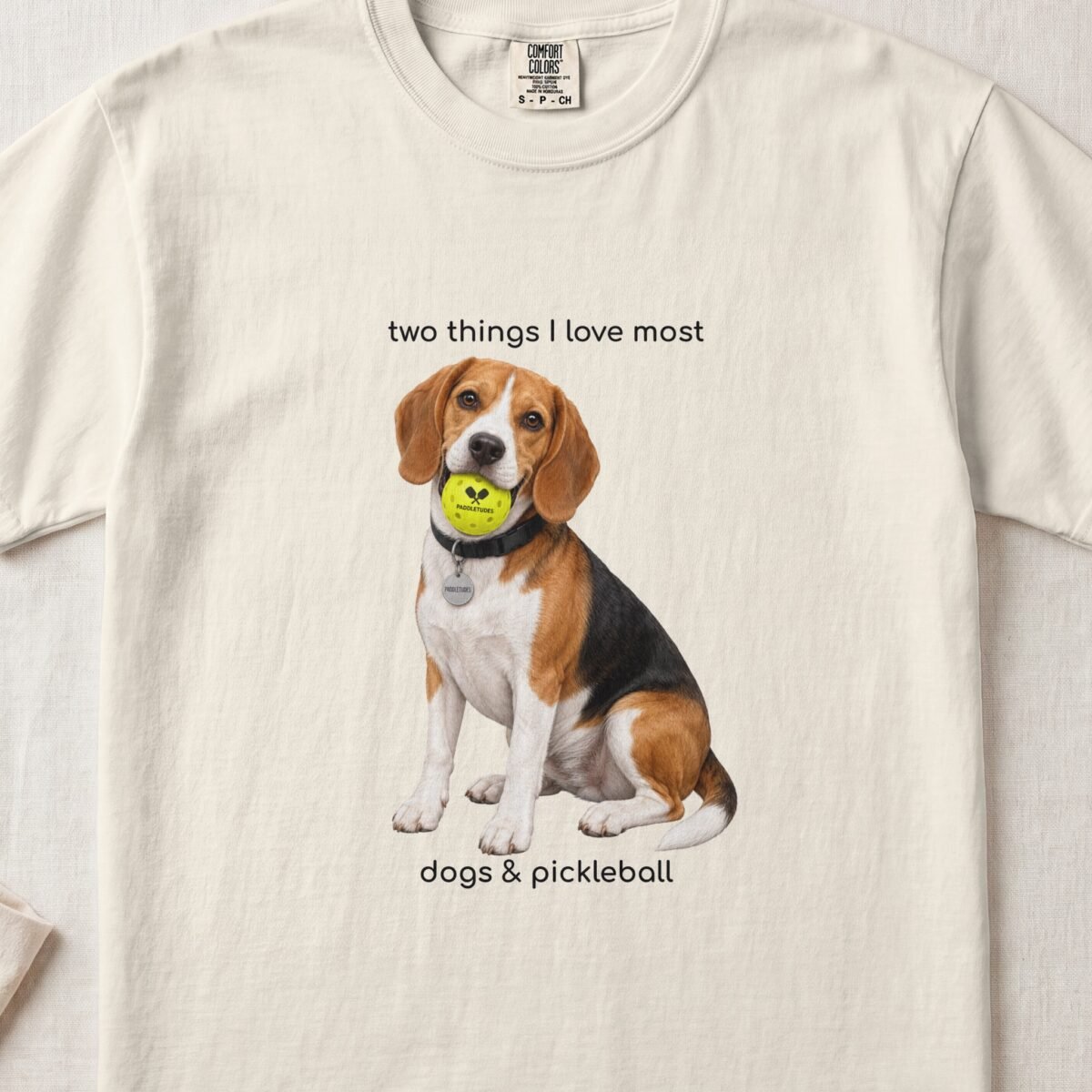
Beagle Happy
$39.99 Select options This product has multiple variants. The options may be chosen on the product page -
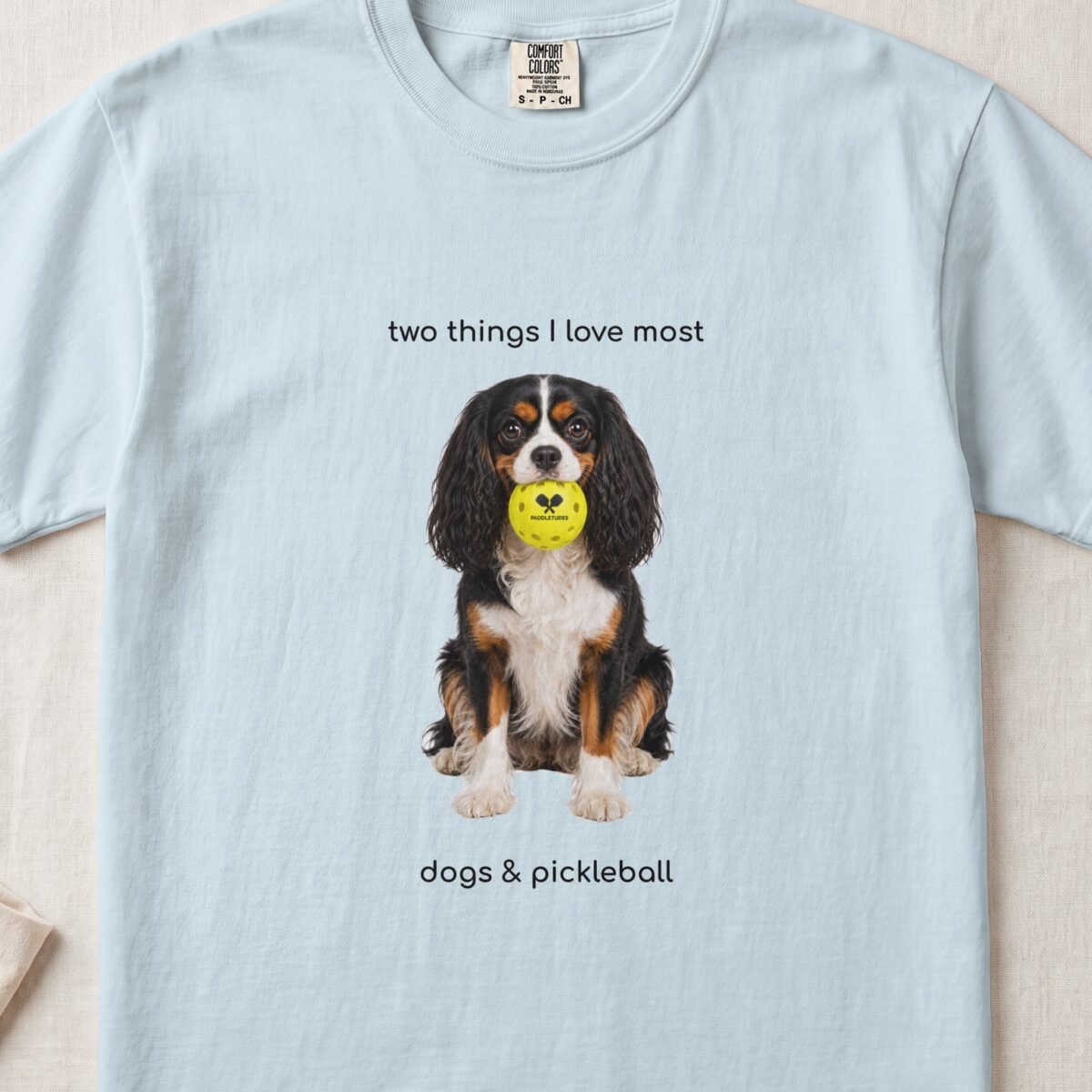
Cavalier King Charles Spaniel Happy
$39.99 Select options This product has multiple variants. The options may be chosen on the product page -
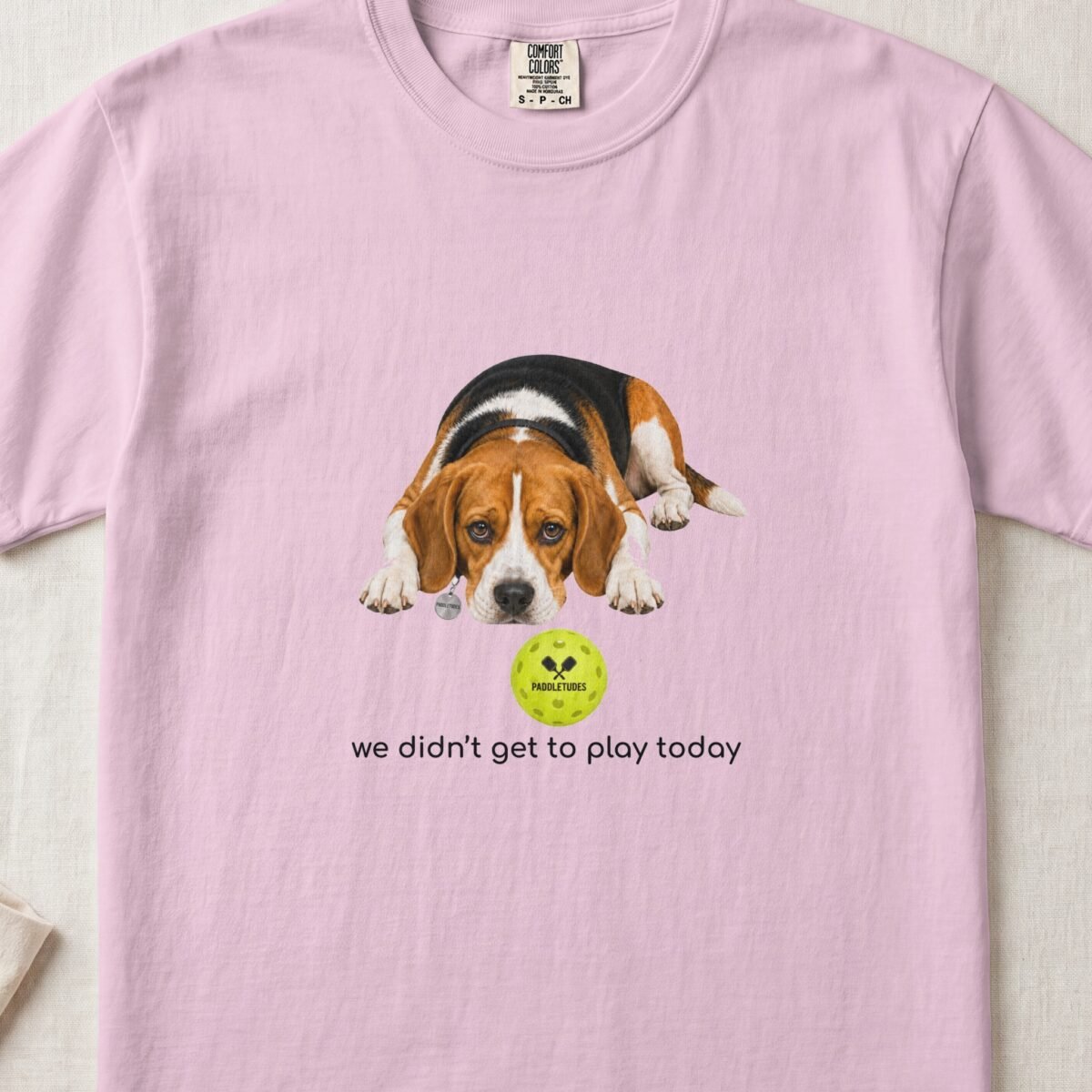
Beagle Sad
$39.99 Select options This product has multiple variants. The options may be chosen on the product page