Sports Comfort Colors 1717
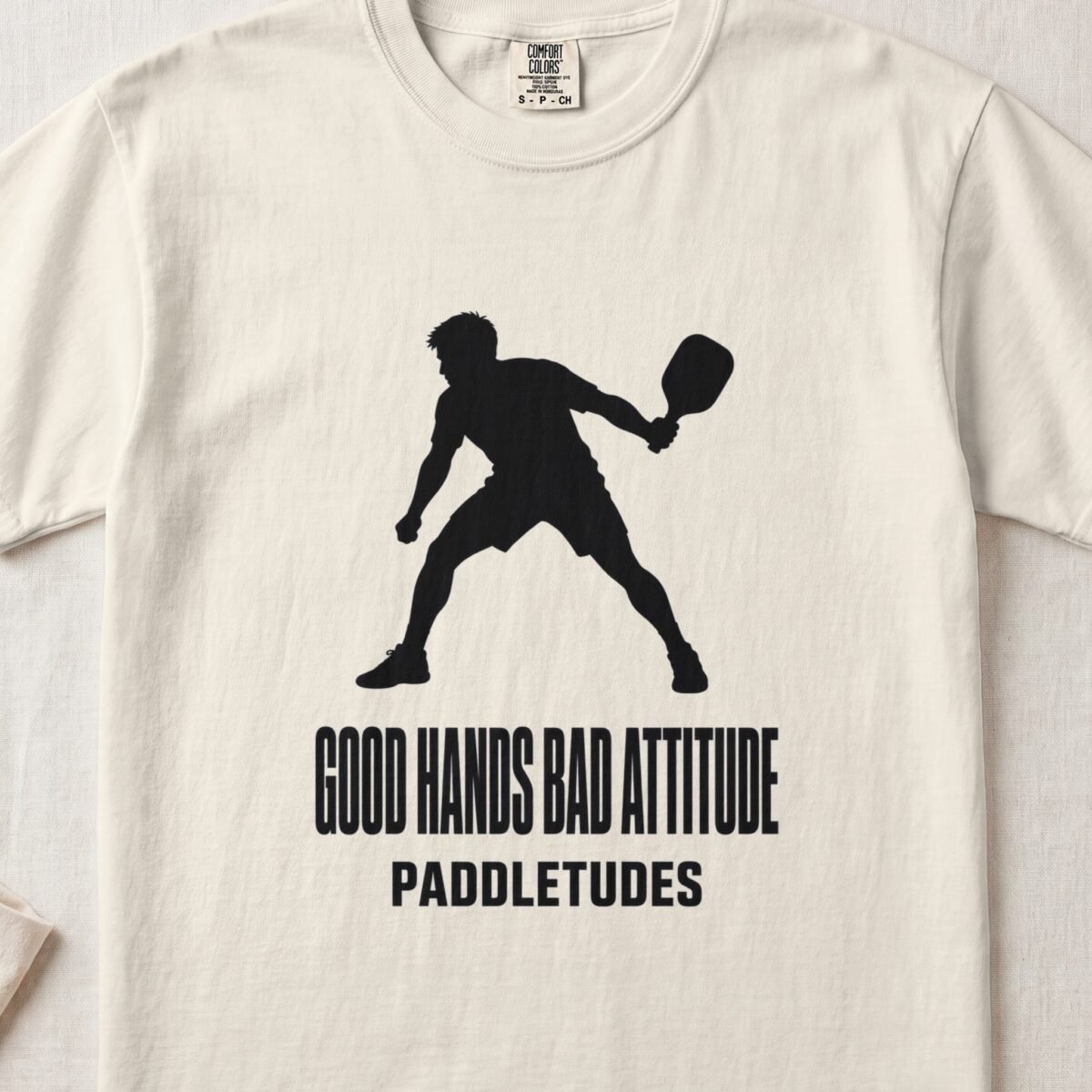
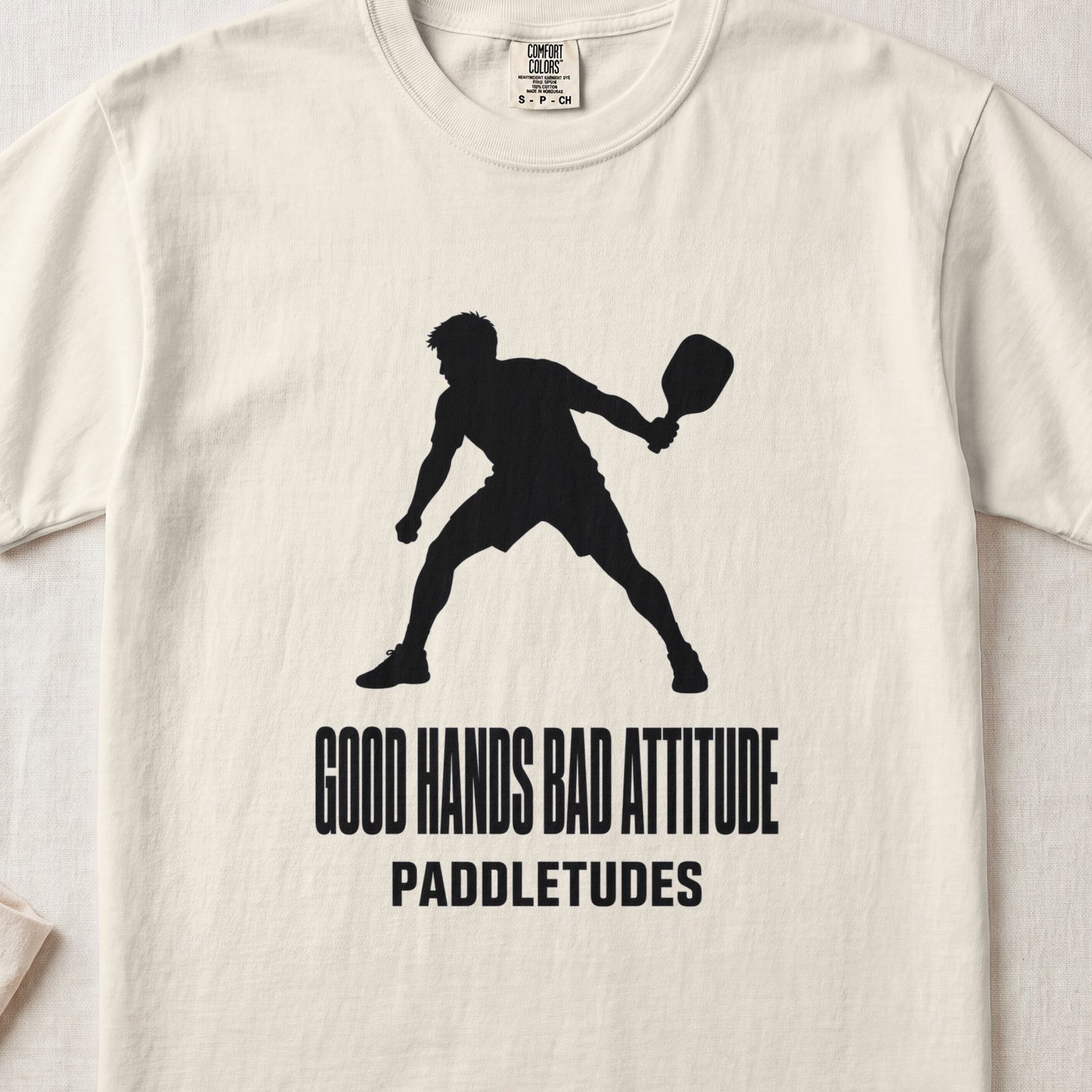
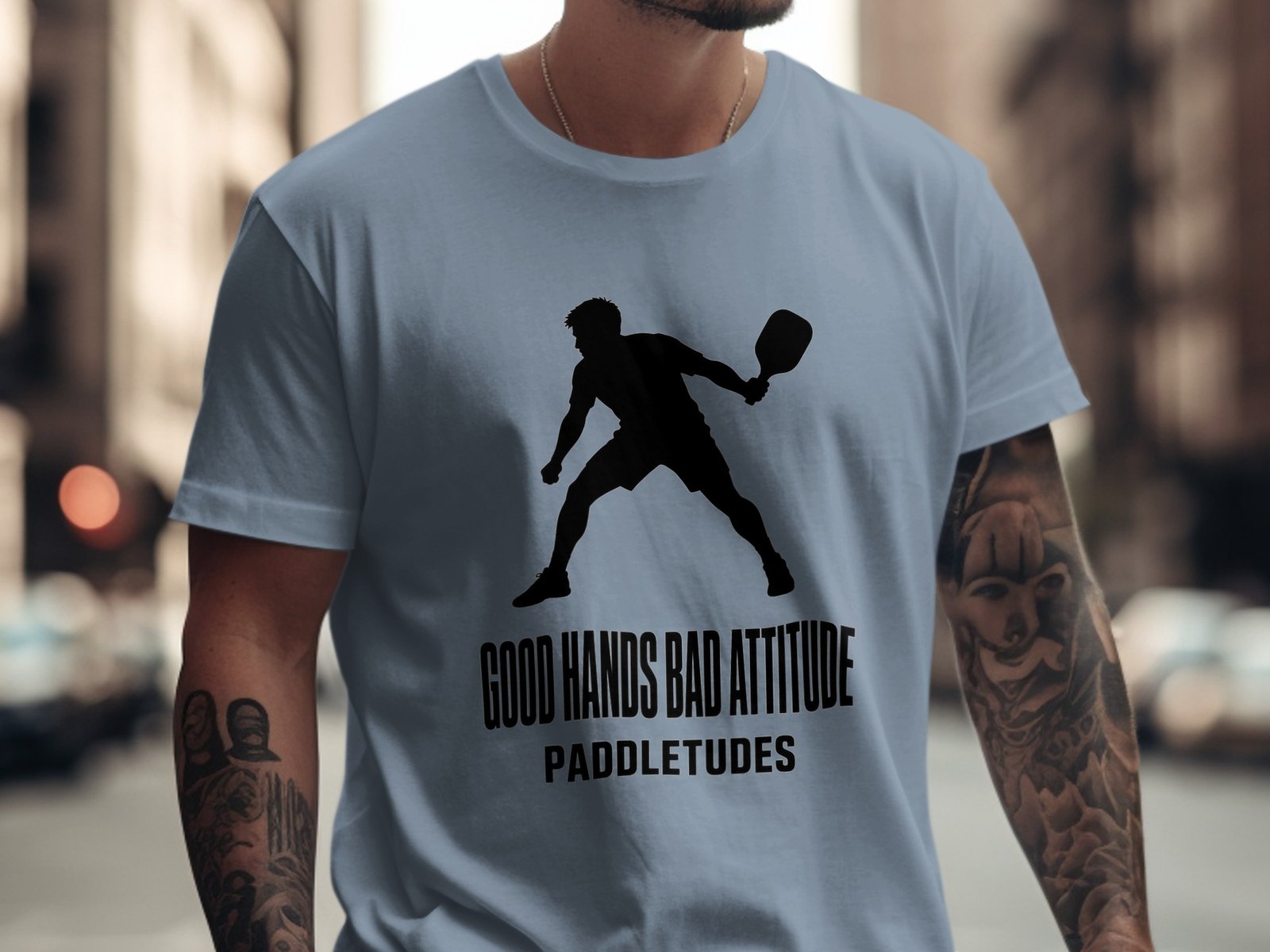
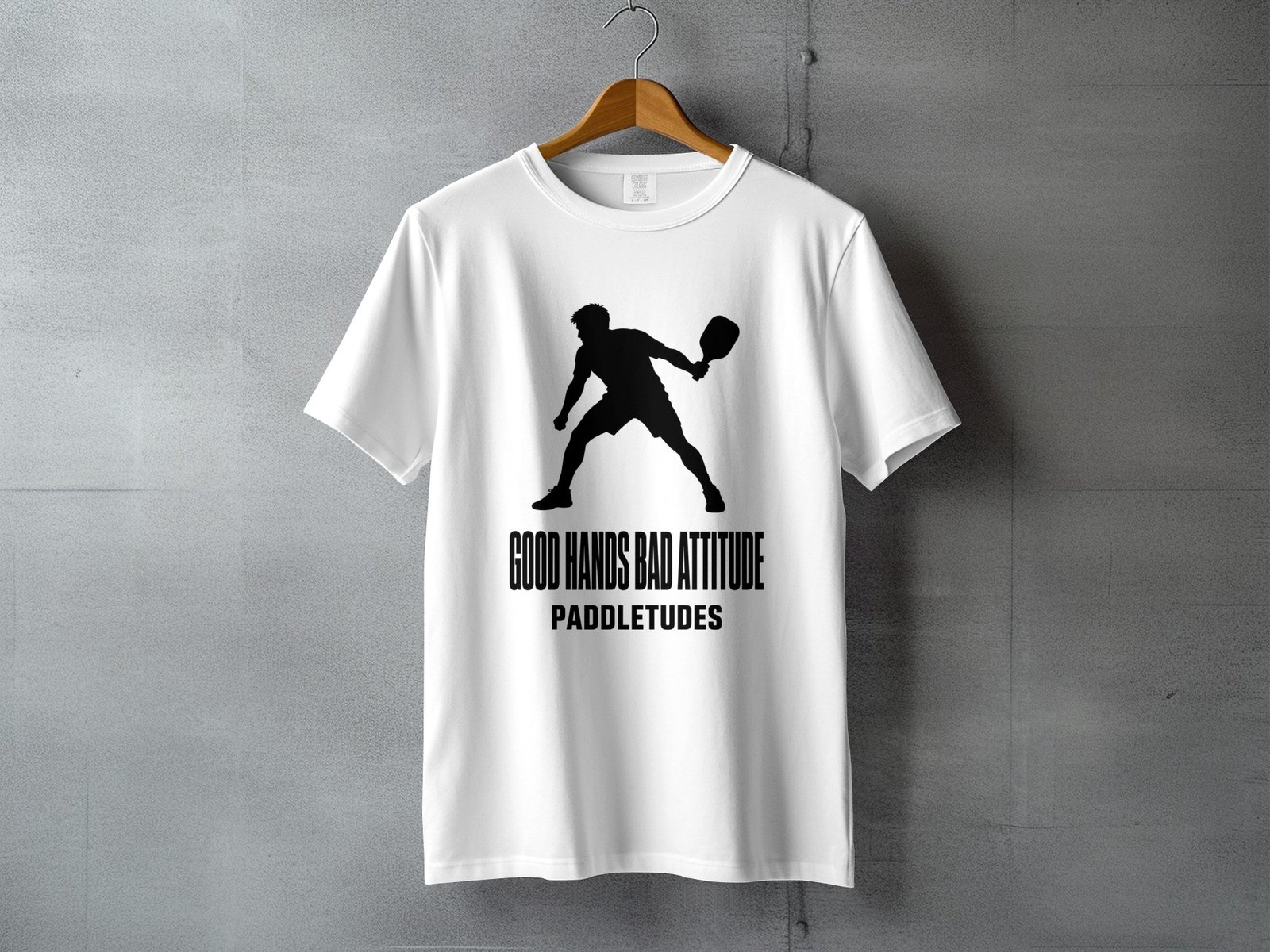
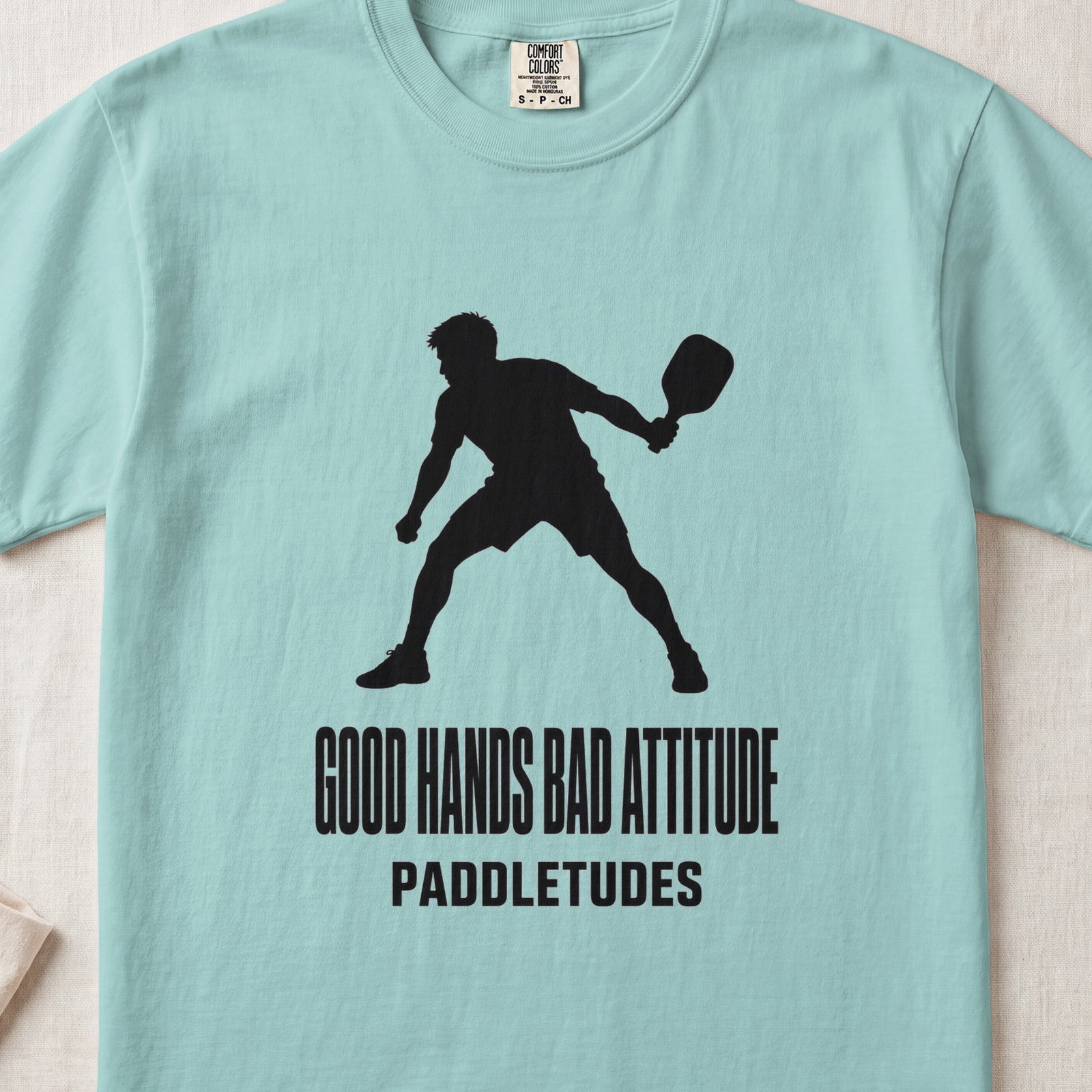
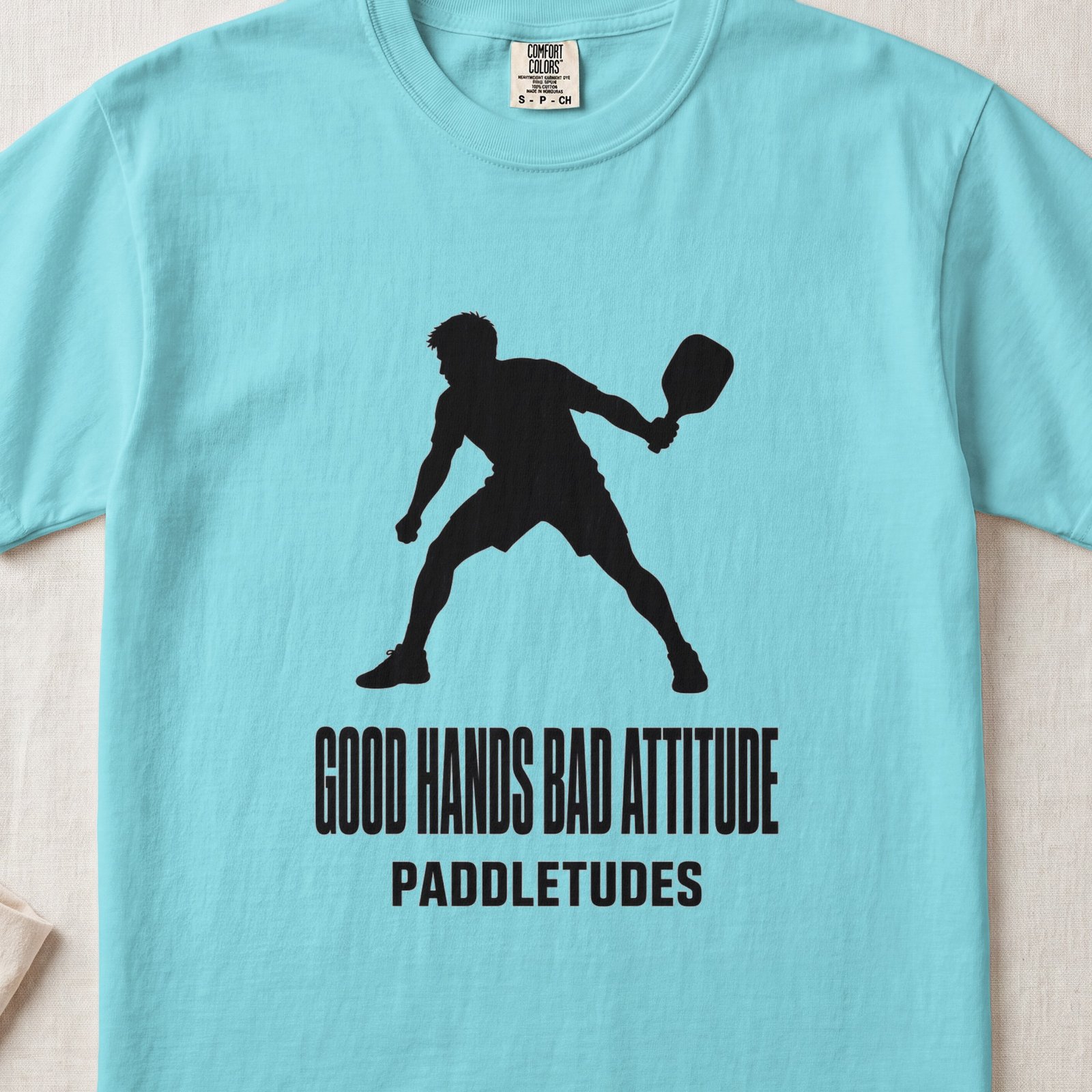
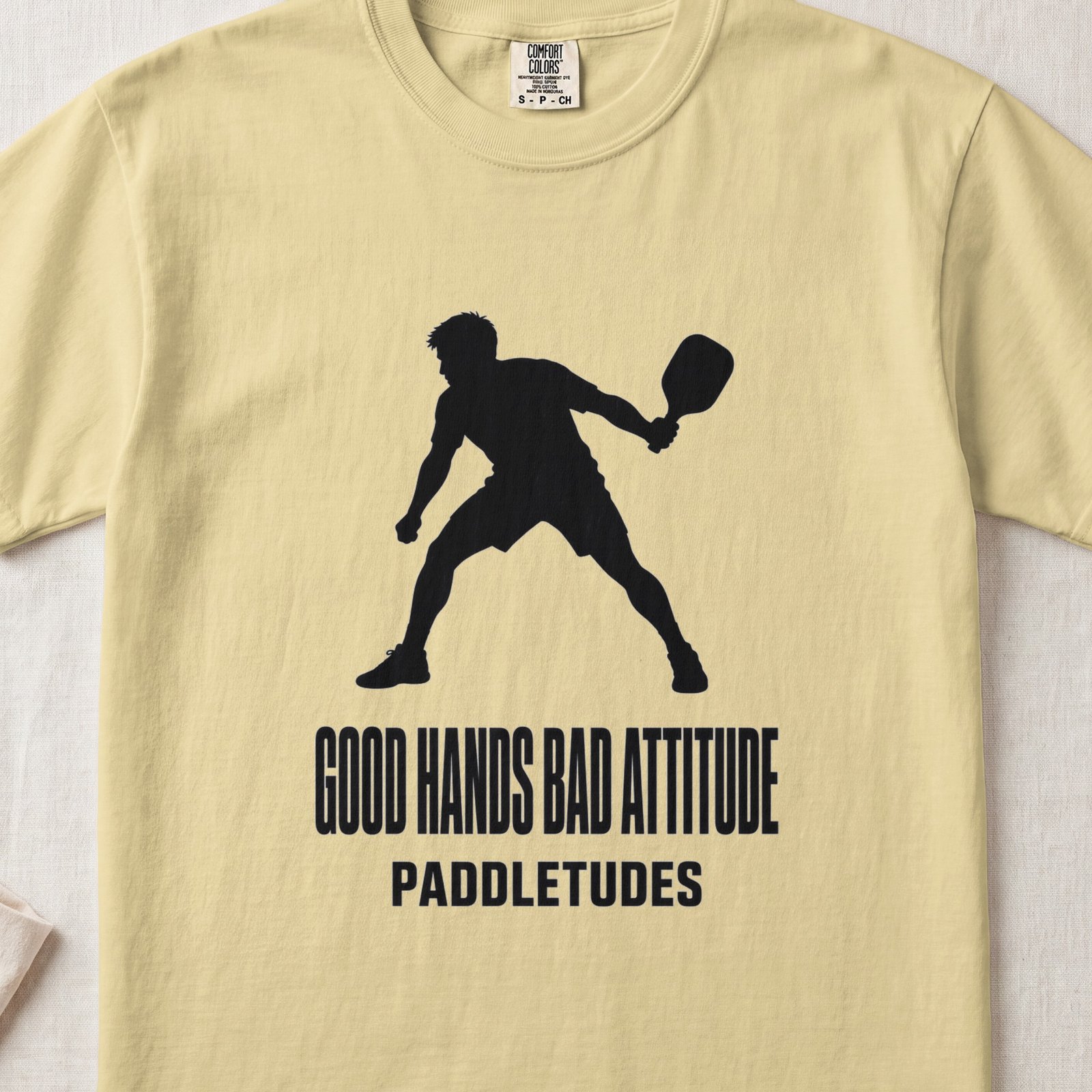
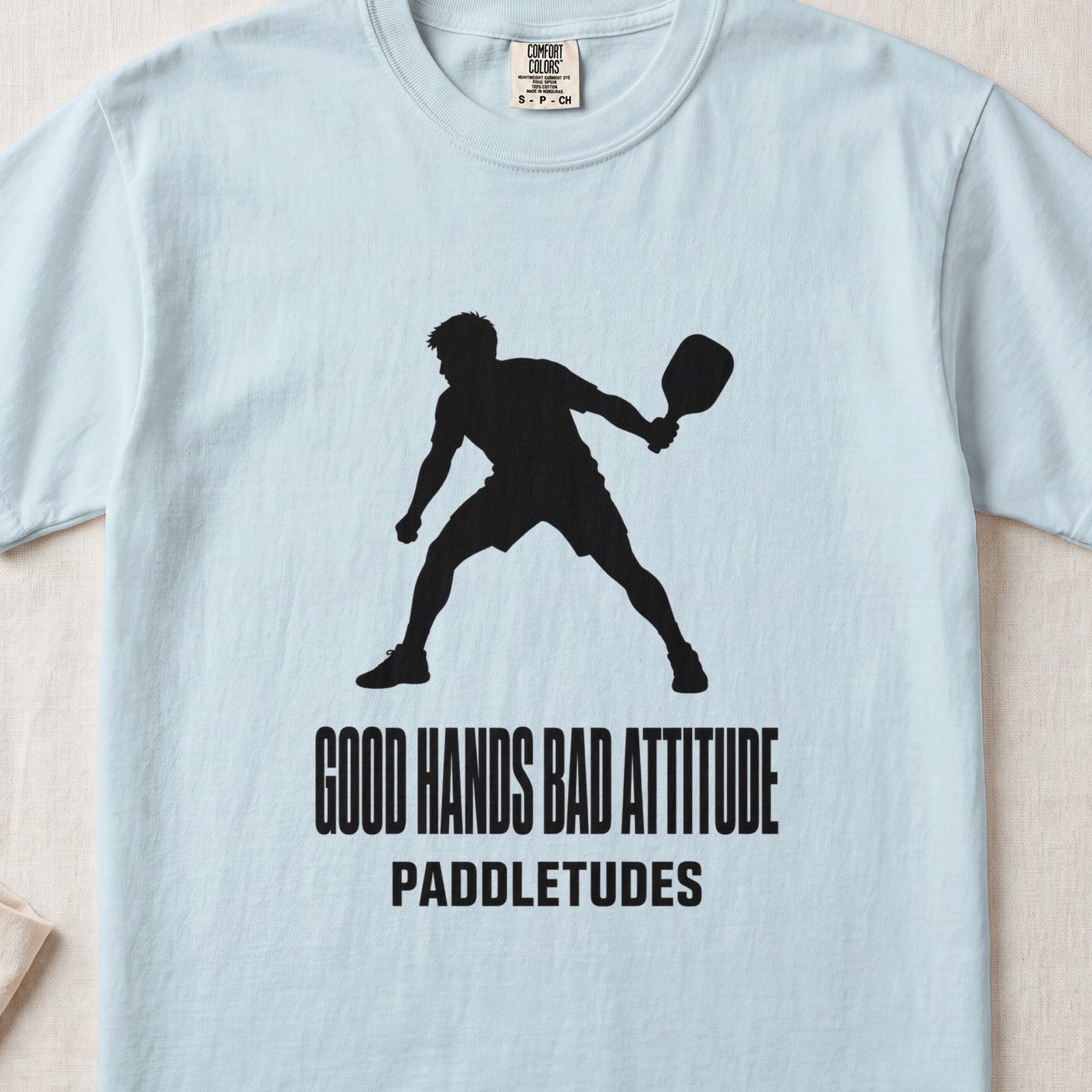
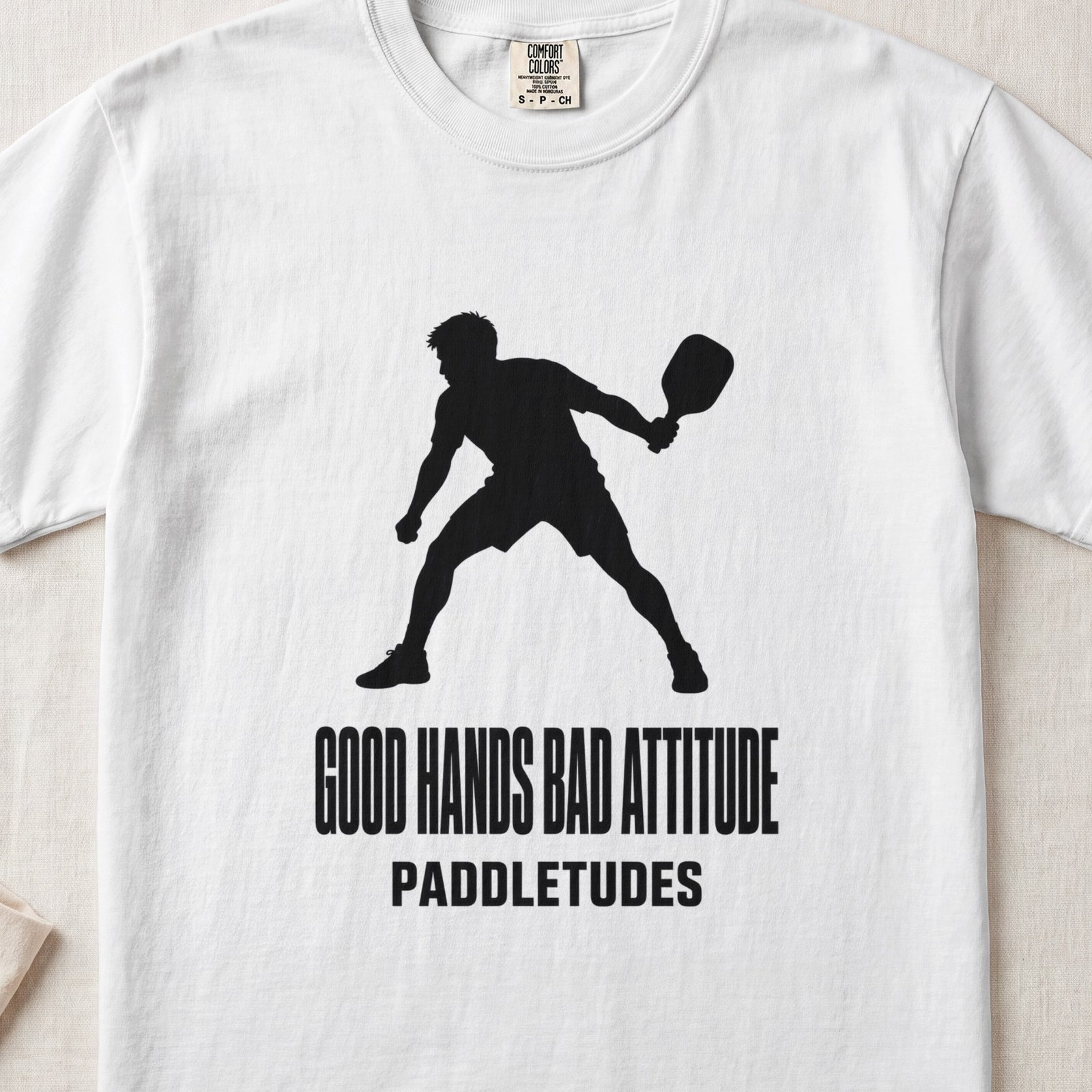
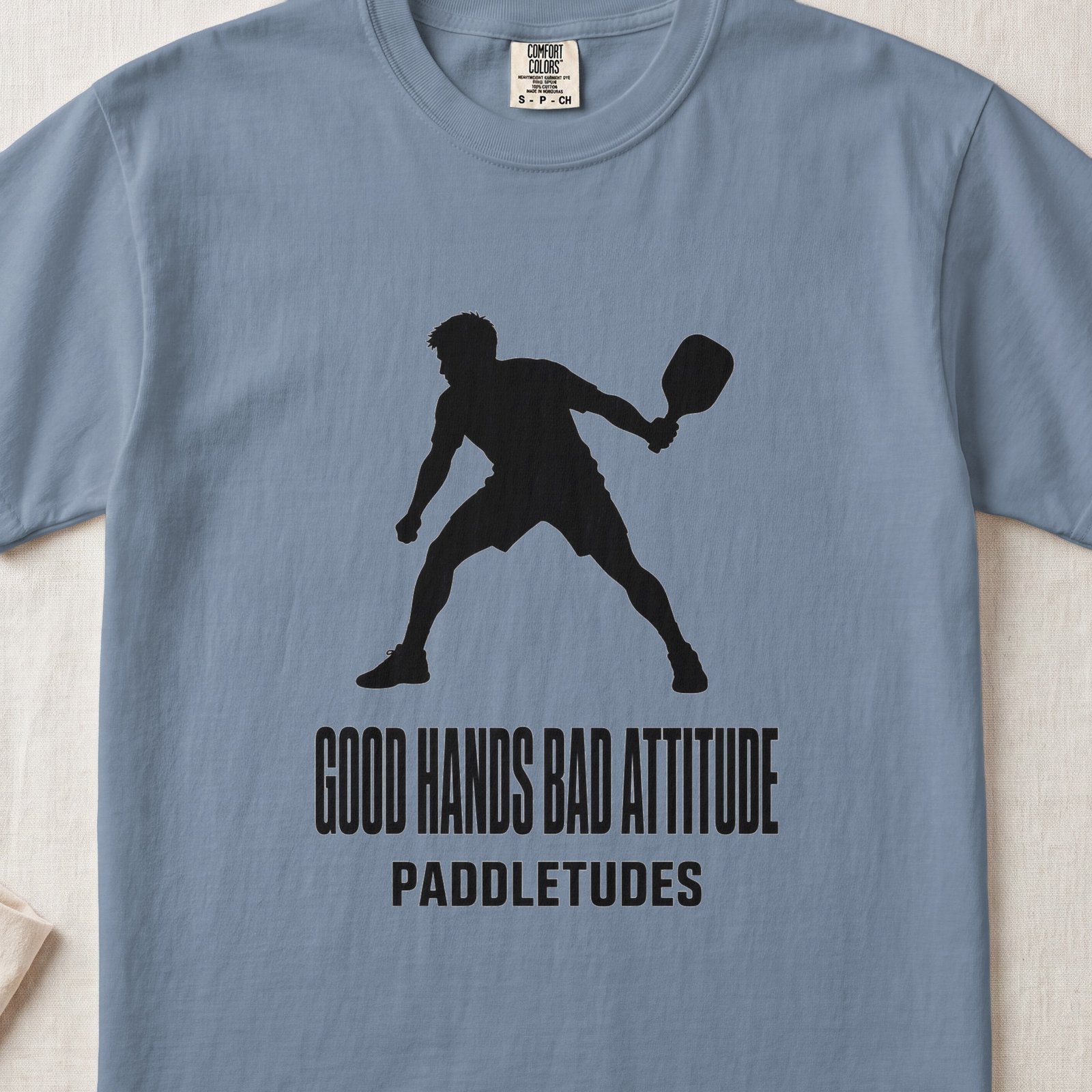
Good Hands Bad Attitude
$29.99
- Comfort Colors 1717 heavyweight cotton
- Original design · printed to order
- U.S. print partners
Good Hands Bad Attitude — The Pickleball Shirt for Players Who Win Hands Battles and Don’t Apologize
Every open play session has a player whose funny pickleball shirt says exactly what they’re about to do to you at the kitchen line. Good Hands Bad Attitude is that shirt, and the person wearing it already has three hands battles won before you’ve finished warming up your serve.
The hands battle is the moment in pickleball where technique stops mattering and instinct takes over. A speed-up comes. The exchange starts. Both teams are flicking volleys back and forth at the kitchen line so fast that your brain can’t keep up with your paddle. The player wearing this shirt doesn’t need their brain to keep up. Their hands already know. Block, counter, redirect, put away. Four shots in under two seconds, and the ball is on the ground before the other team’s backswing finishes. That’s what good hands look like. The bad attitude is what happens next. No apology. No fist bump. Just a look that says run it back.
There’s a difference between confidence and arrogance on the pickleball court, and this shirt lives in the gap between them. Confidence is knowing you can win the exchange. Arrogance is telling people before it happens. The bad attitude isn’t mean. It’s competitive in a way that some people aren’t built for. The stare after a put-away. The walk back to position without looking at the score. The complete refusal to give the other team any indication that the last point was hard. Competitive pickleball has a whole set of etiquette norms about sportsmanship and courtesy, and this player follows every single one of them. Technically. The gift version of this shirt lands at the holidays when your doubles partner already has paddles, shoes, and a bag full of overgrips. This is the pickleball gift that makes them laugh because it’s too accurate to argue with.
Pair it with Trust Your Hands for the before-and-after energy. Trust Your Hands is the mindset. Good Hands Bad Attitude is the result. And for the player who expresses their competitive edge through the soft game rather than the speed-up, Can’t Teach Touch covers the same attitude from a different angle. Browse the full sports graphic tee collection if you want to see every way this attitude shows up on the court.
How Do You Win Hands Battles in Pickleball
Winning hands battles in pickleball comes down to paddle position, compact swings, and the ability to absorb pace instead of adding to it. Players who keep their paddle up in front of their chest with a slight continental grip can redirect volleys without winding up, which saves the fraction of a second that decides the exchange.
The biggest mistake in a hands battle is swinging big. A full backswing on a volley exchange is a death sentence because the ball is back before the paddle is ready. The best hands players use their wrist and forearm, not their shoulder. They block more than they swing. They redirect more than they create. And they pick one target and stick with it instead of trying to paint corners while the ball is moving at speed. Selkirk’s coaching content breaks down the mechanics, but the real answer is simpler than any drill. Keep the paddle up. Stay compact. React. That’s it.
Paddle weight matters here more than anywhere else in the game. A heavier paddle gives more stability on block volleys but slows the hand speed on counters. A lighter paddle flicks faster but gets pushed around by hard shots. The player wearing this shirt figured out which one works for them about four paddles ago.
What Is the Difference Between a Block and a Reset in Pickleball
A block in pickleball is a defensive volley that absorbs pace and sends the ball back low over the net without adding speed. A reset is a controlled shot designed to slow the rally down and return the ball softly into the kitchen, usually after an opponent’s speed-up. Both are defensive, but a block keeps you in the exchange while a reset ends the exchange and starts a new dink rally.
In a hands battle, blocks keep the volley exchange alive. The paddle angle stays neutral, the grip stays loose, and the ball comes back at roughly the same pace it arrived. Resets happen when one player decides the exchange isn’t going their way and deliberately kills the pace by softening their grip and dropping the ball just over the net. Knowing when to block and when to reset is what separates a 3.5 player from a 4.0. The 3.5 blocks everything and hopes. The 4.0 chooses.
Why Do Some Pickleball Players Have Faster Hands
Fast hands in pickleball are partly natural reflexes and partly trained muscle memory from thousands of repetitions at the kitchen line. Players with backgrounds in table tennis, racquetball, or badminton often have faster hands because those sports train the same compact, wrist-driven reactions that hands battles demand.
Training for faster hands means drilling volley exchanges at close range with a partner, starting slow and increasing speed until the paddle moves without conscious thought. Wall drills work too, standing six feet from a wall and volleying continuously. The goal isn’t power. The goal is reducing the gap between seeing the ball and meeting it. Some players will always be faster than others because reaction time has a genetic ceiling. But the difference between a player who loses every hands battle and one who wins most of them usually isn’t genetics. It’s reps. The person in this shirt did the reps. And now they have the attitude to match.
Printed on a Comfort Colors 1717 garment-dyed heavyweight tee with water-based DTG ink — sizing and care details here.
-
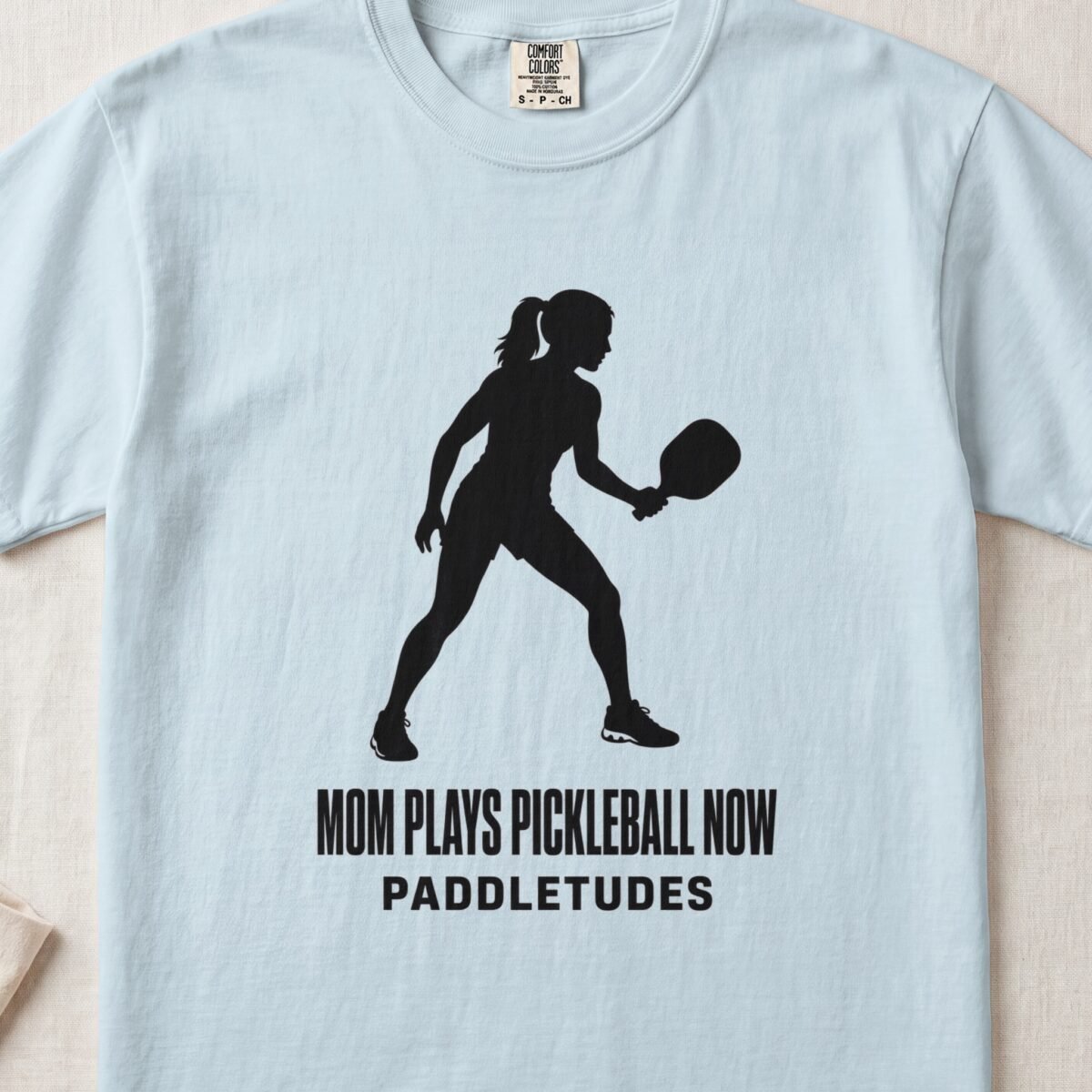
Mom Plays Pickleball Now
$29.99 Select options This product has multiple variants. The options may be chosen on the product page -
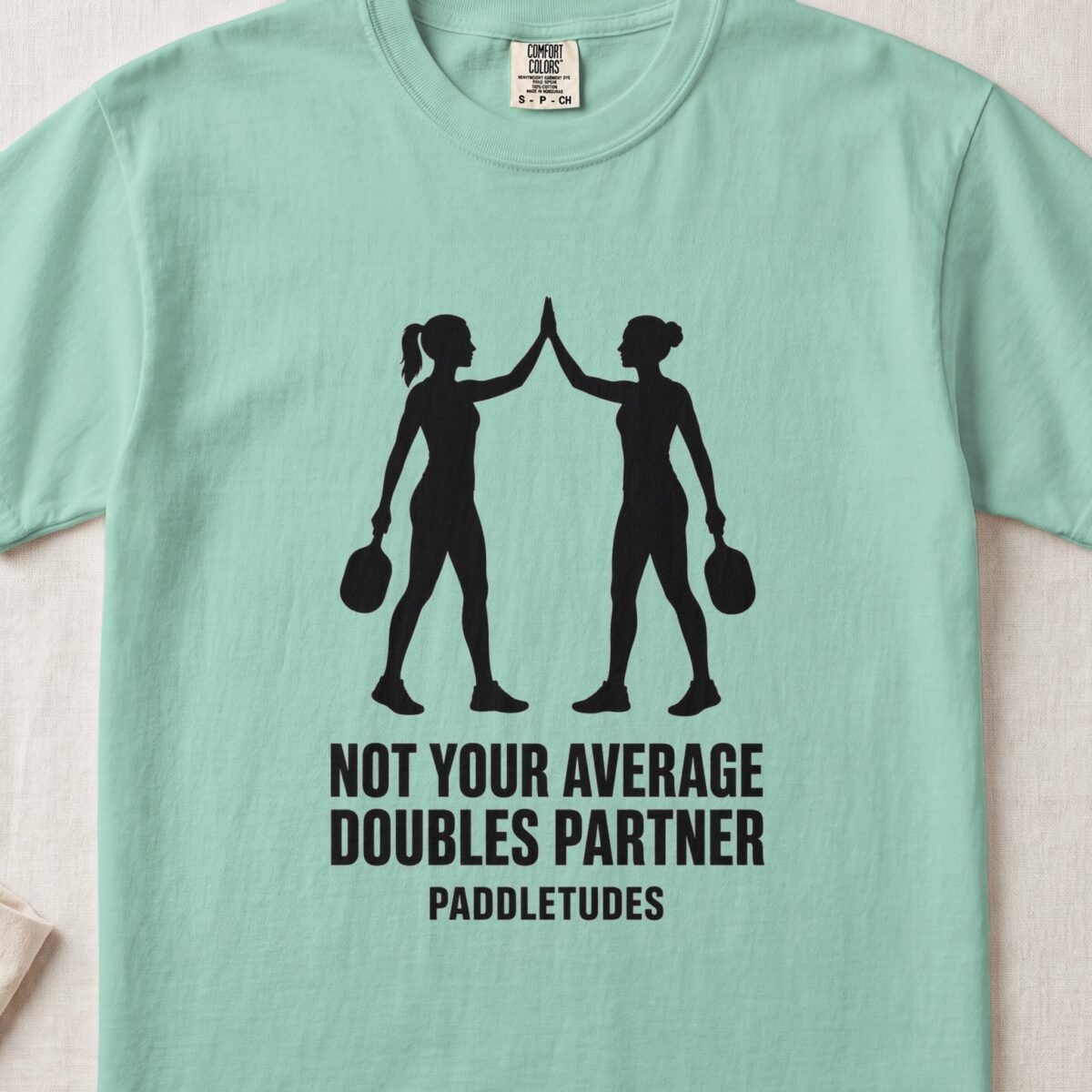
Not Your Average Doubles Partner
$29.99 Select options This product has multiple variants. The options may be chosen on the product page -
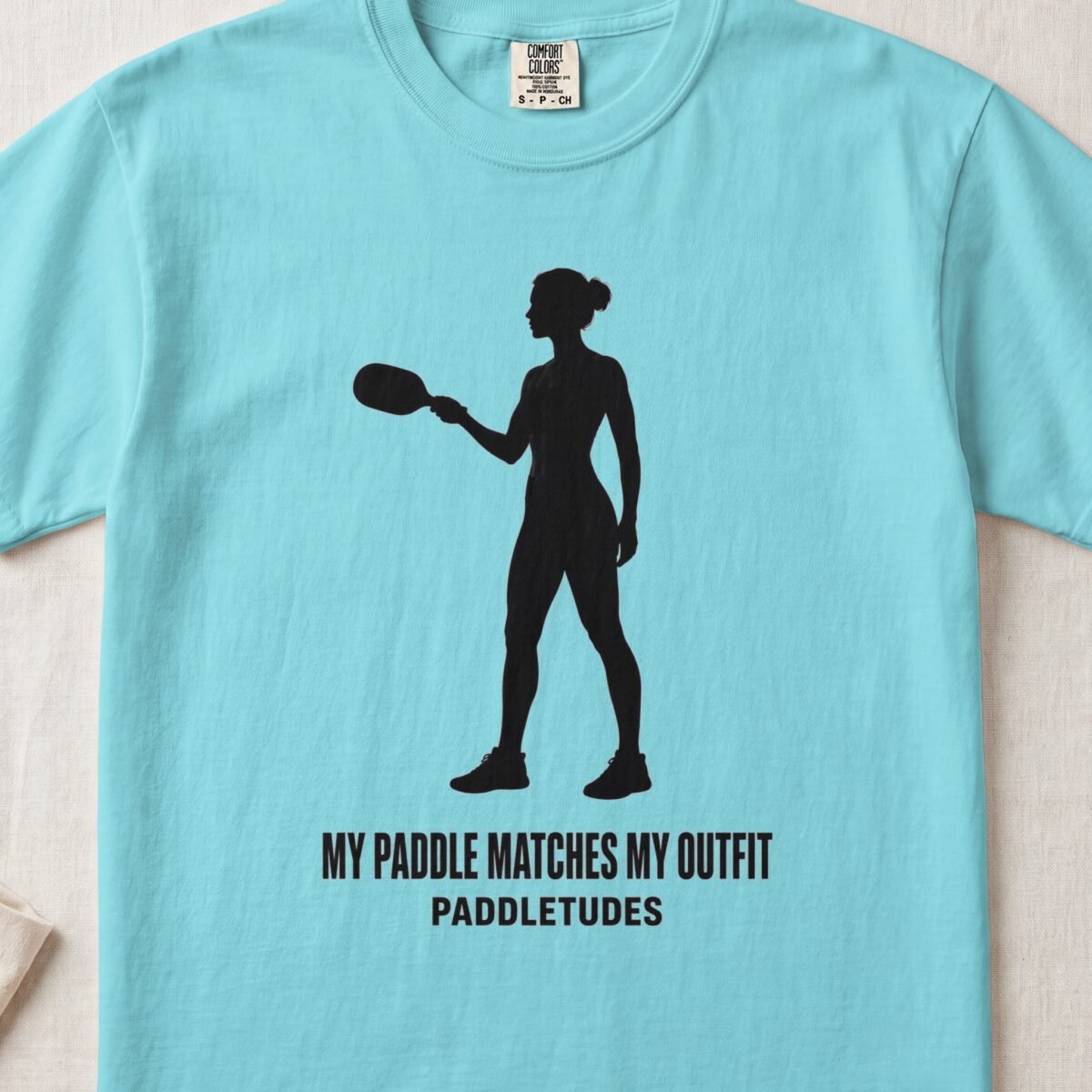
My Paddle Matches My Outfit
$29.99 Select options This product has multiple variants. The options may be chosen on the product page