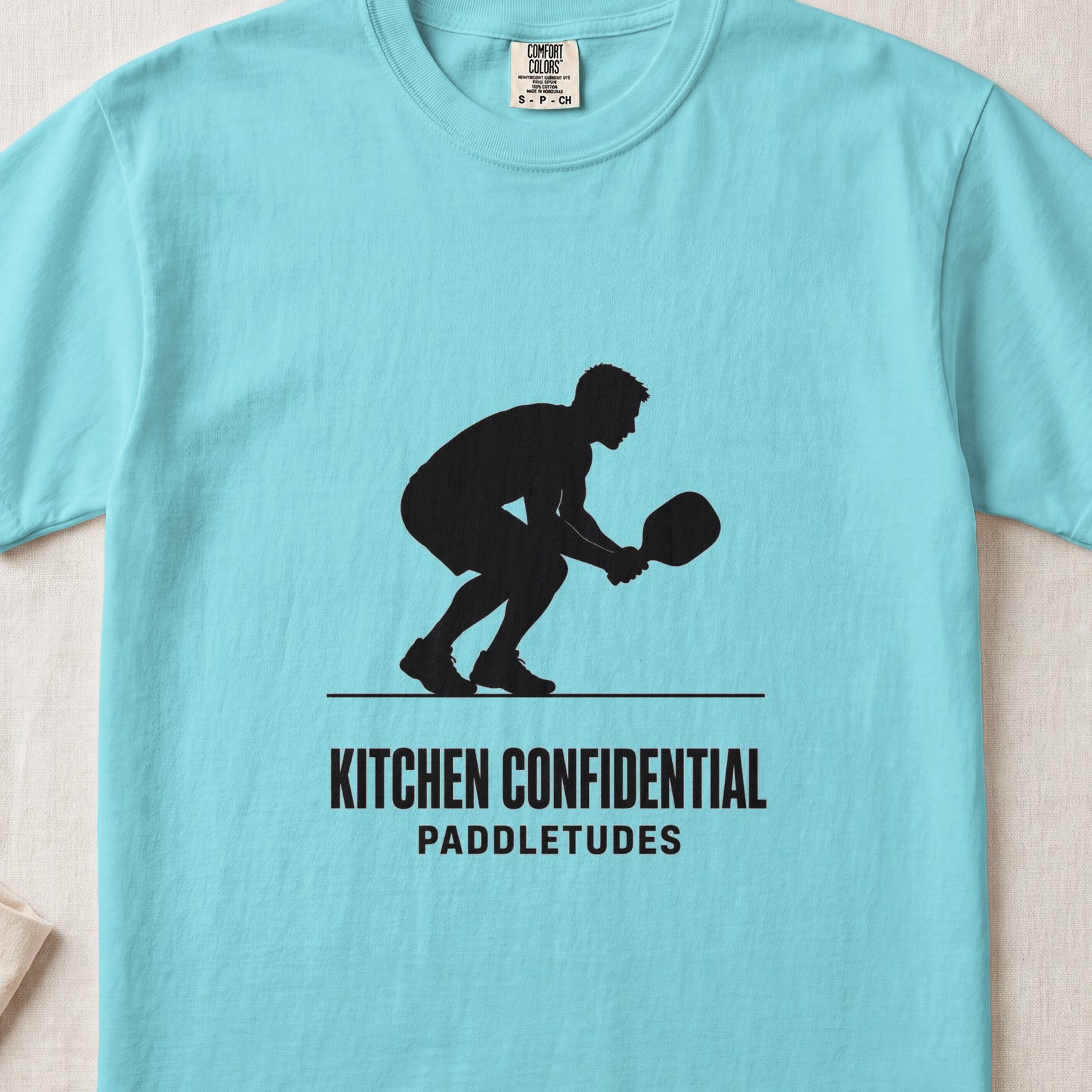
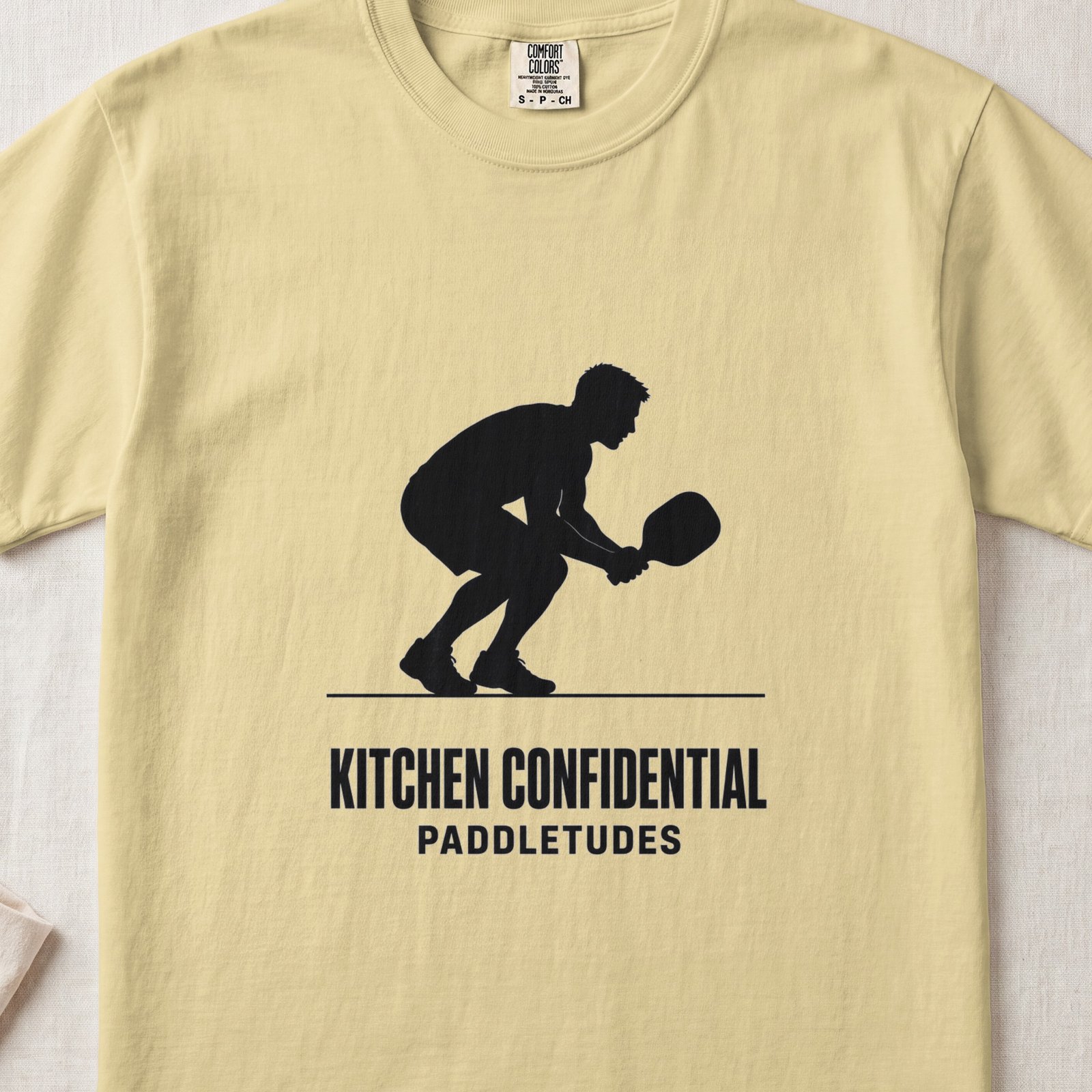
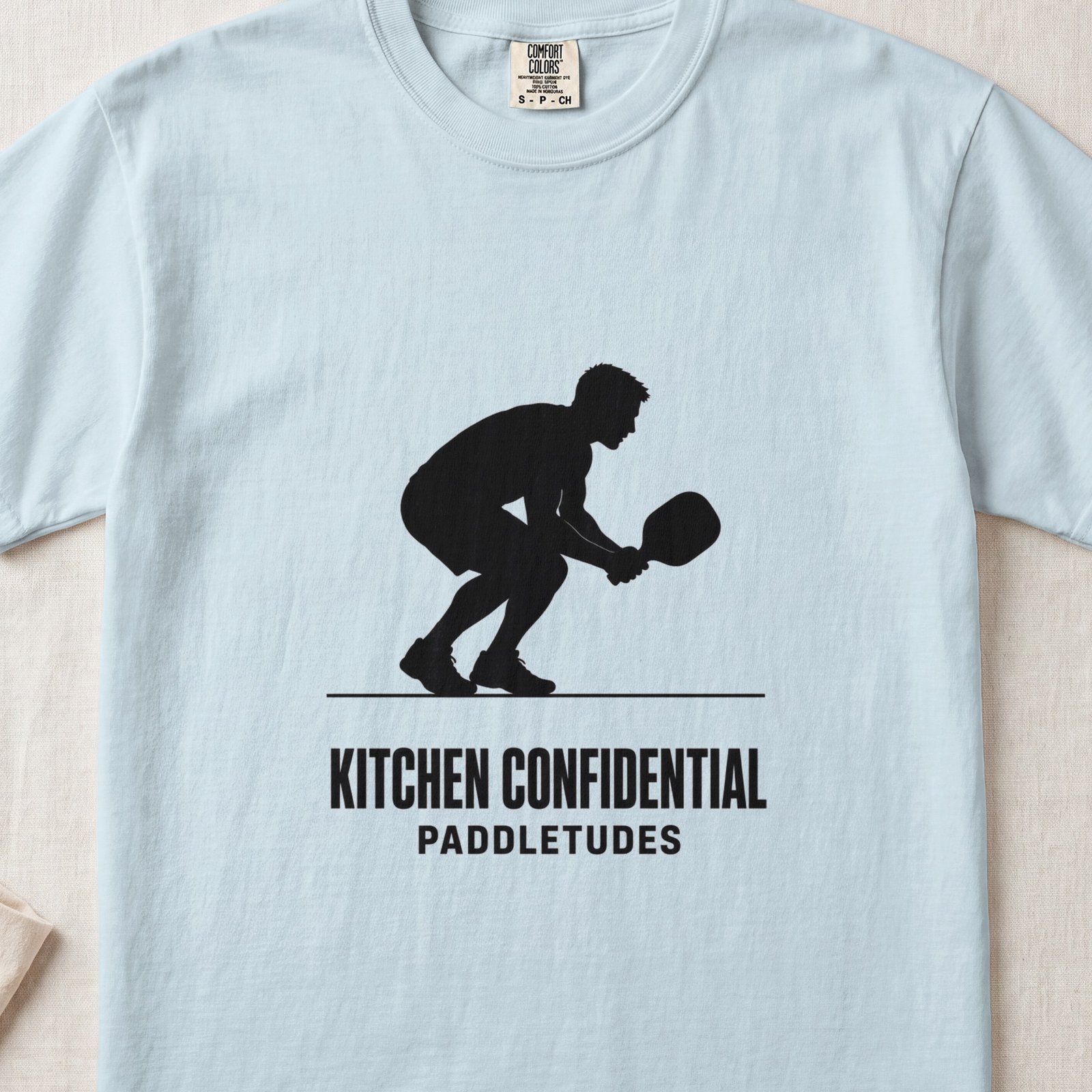
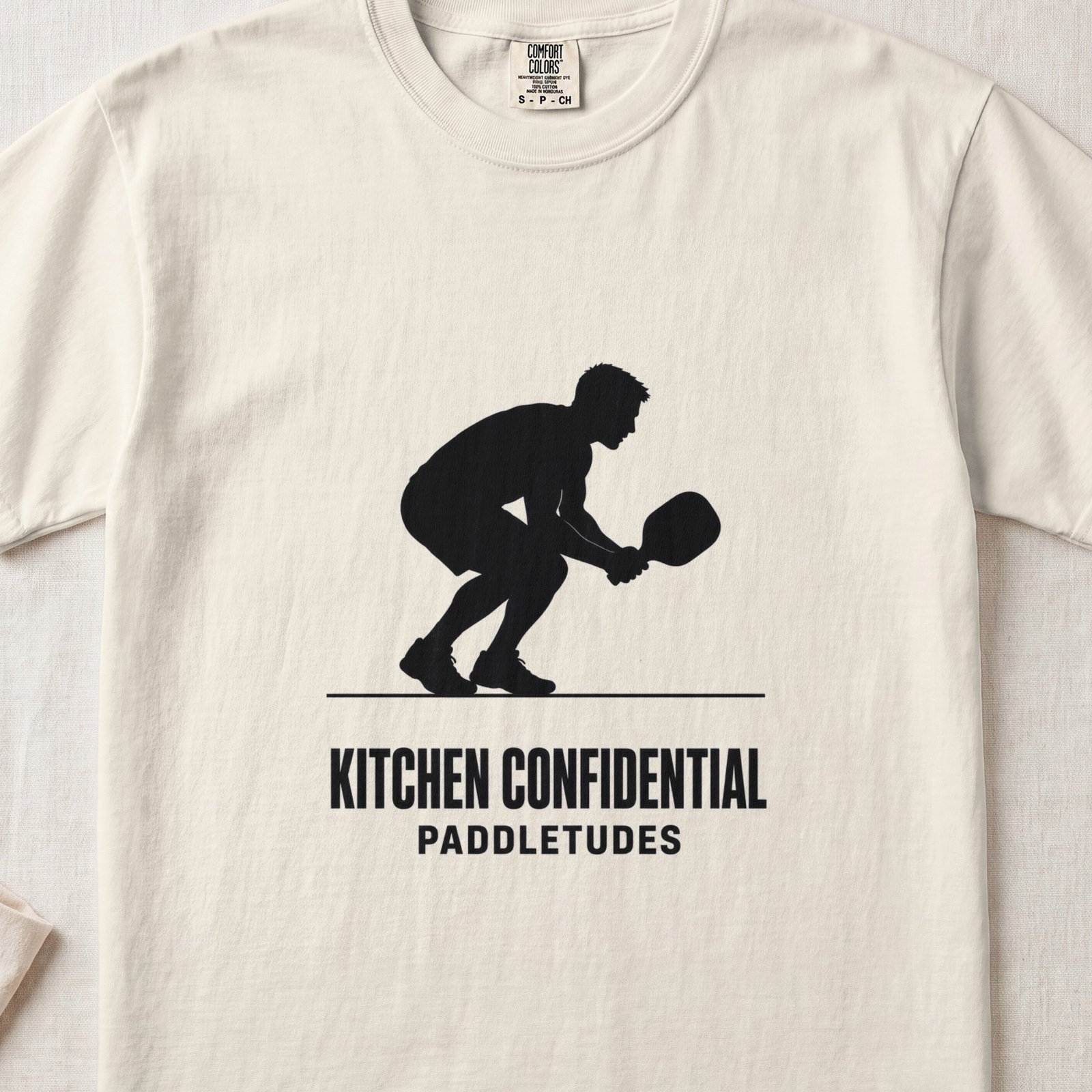
Sports Comfort Colors 1717
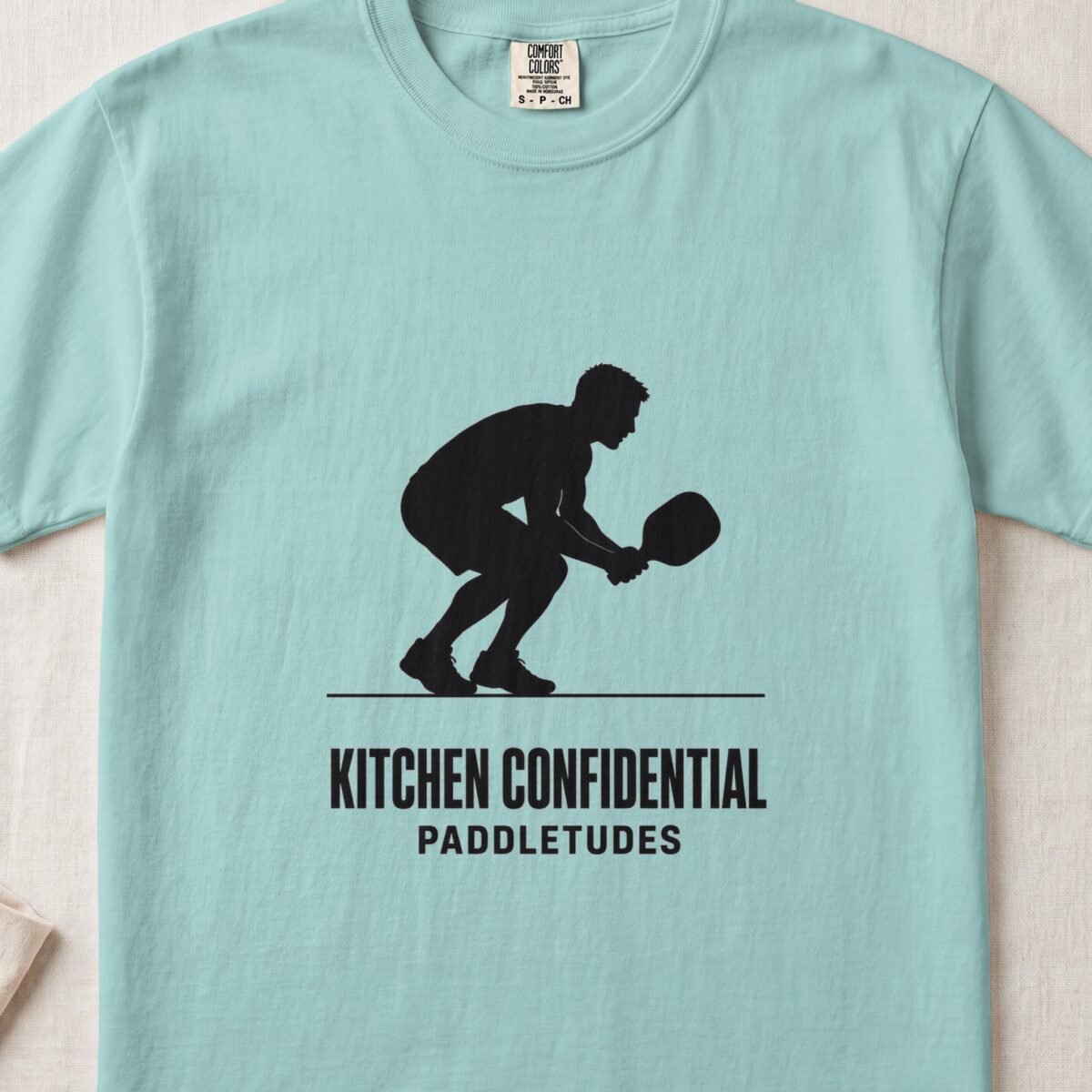
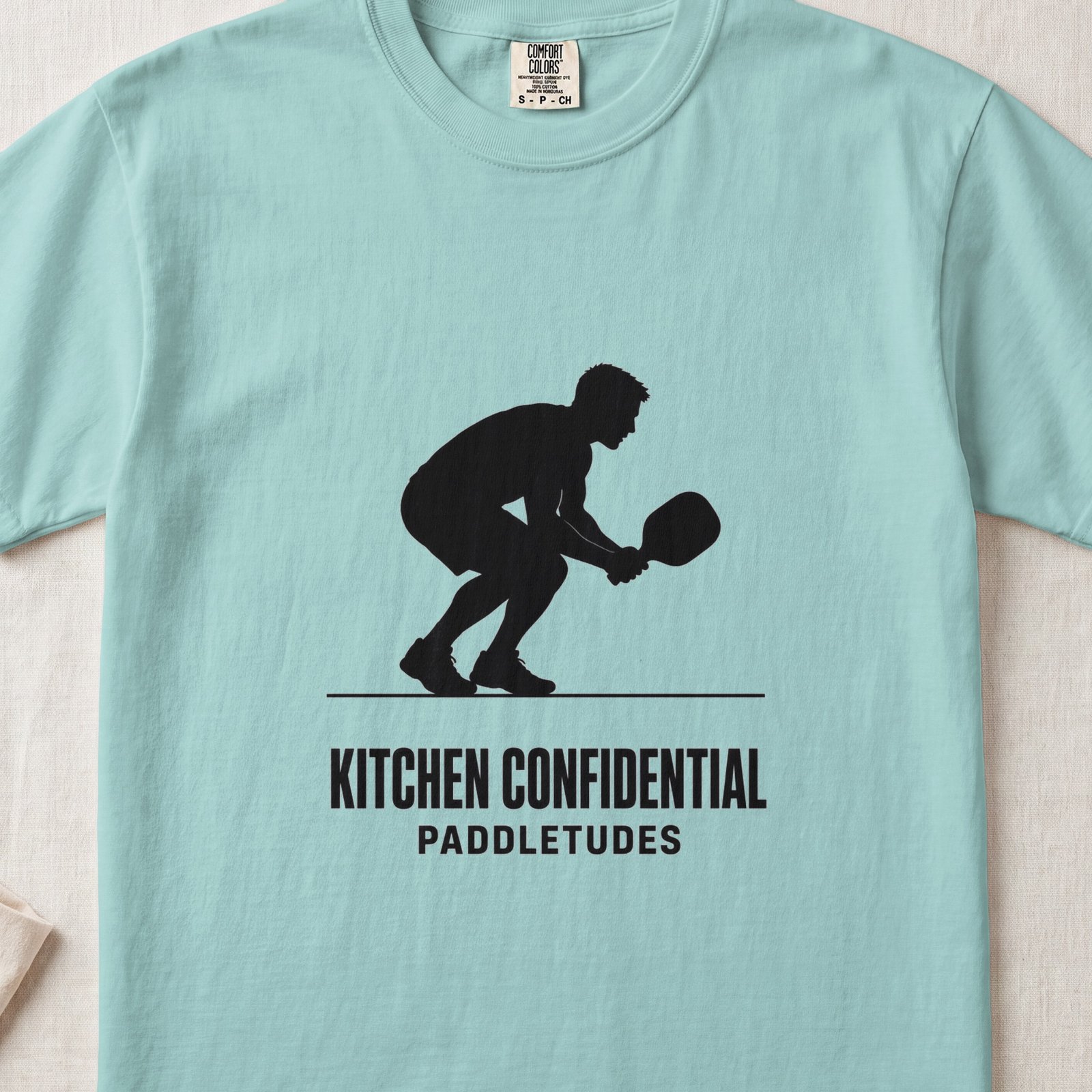
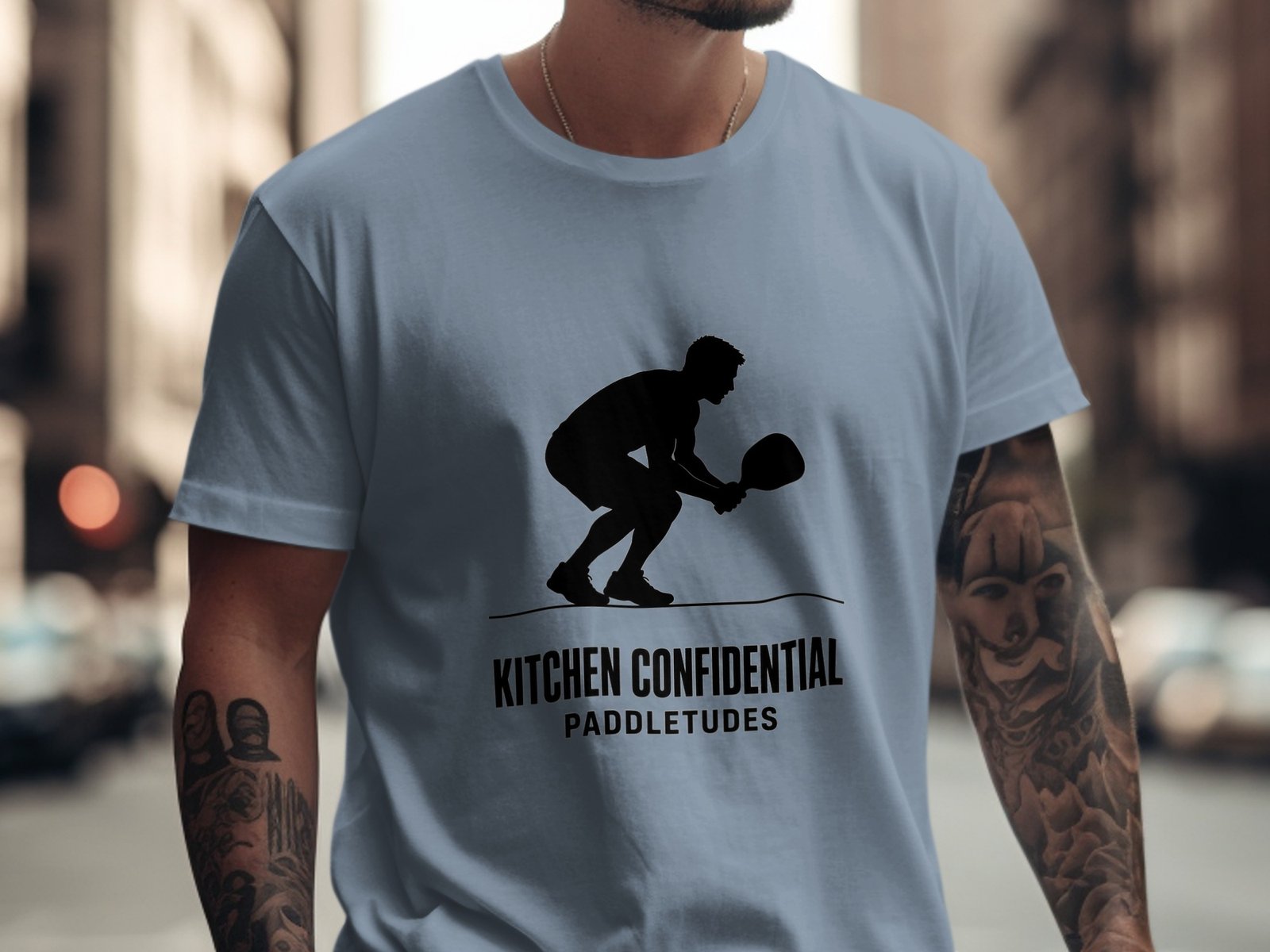
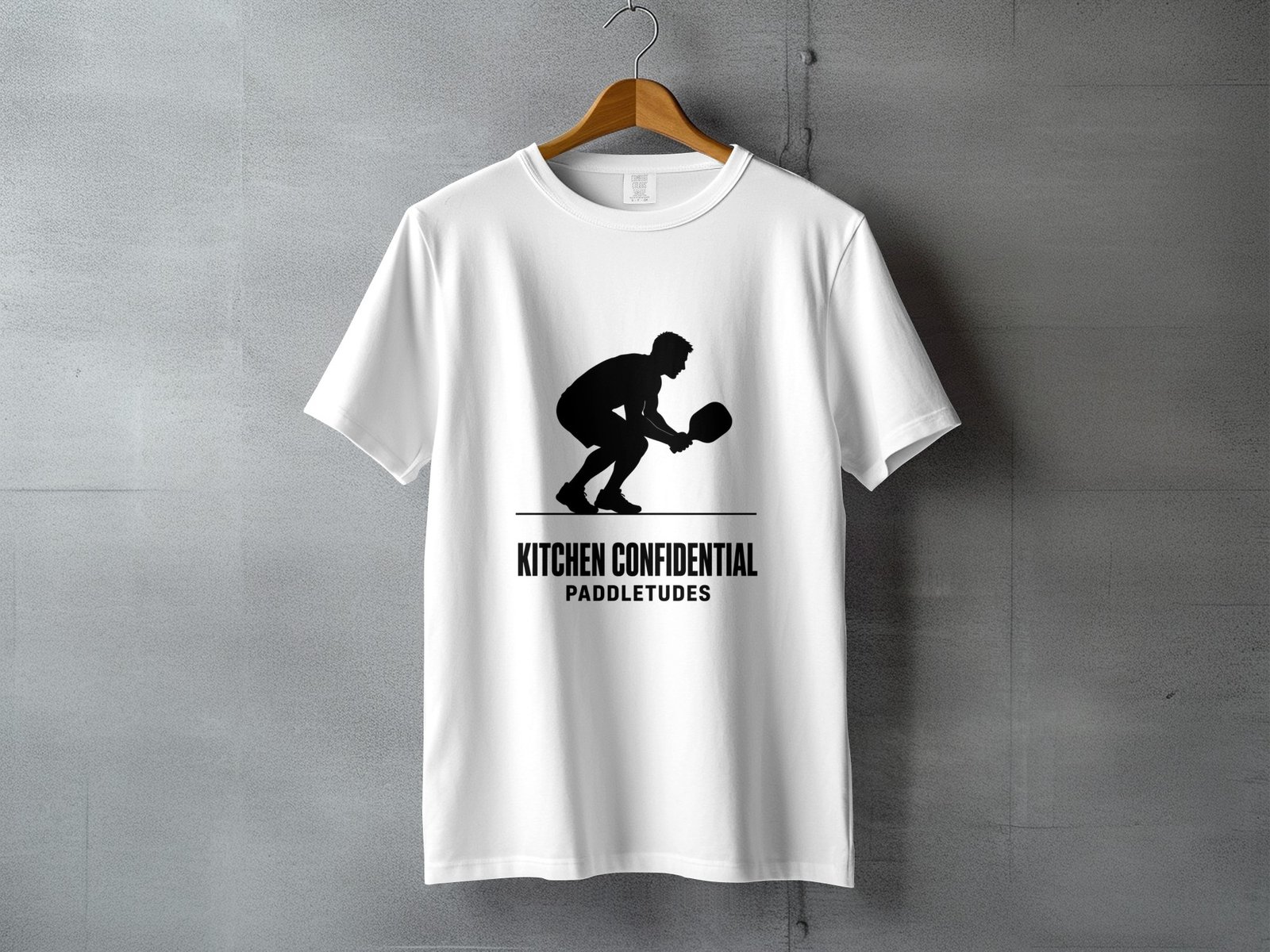
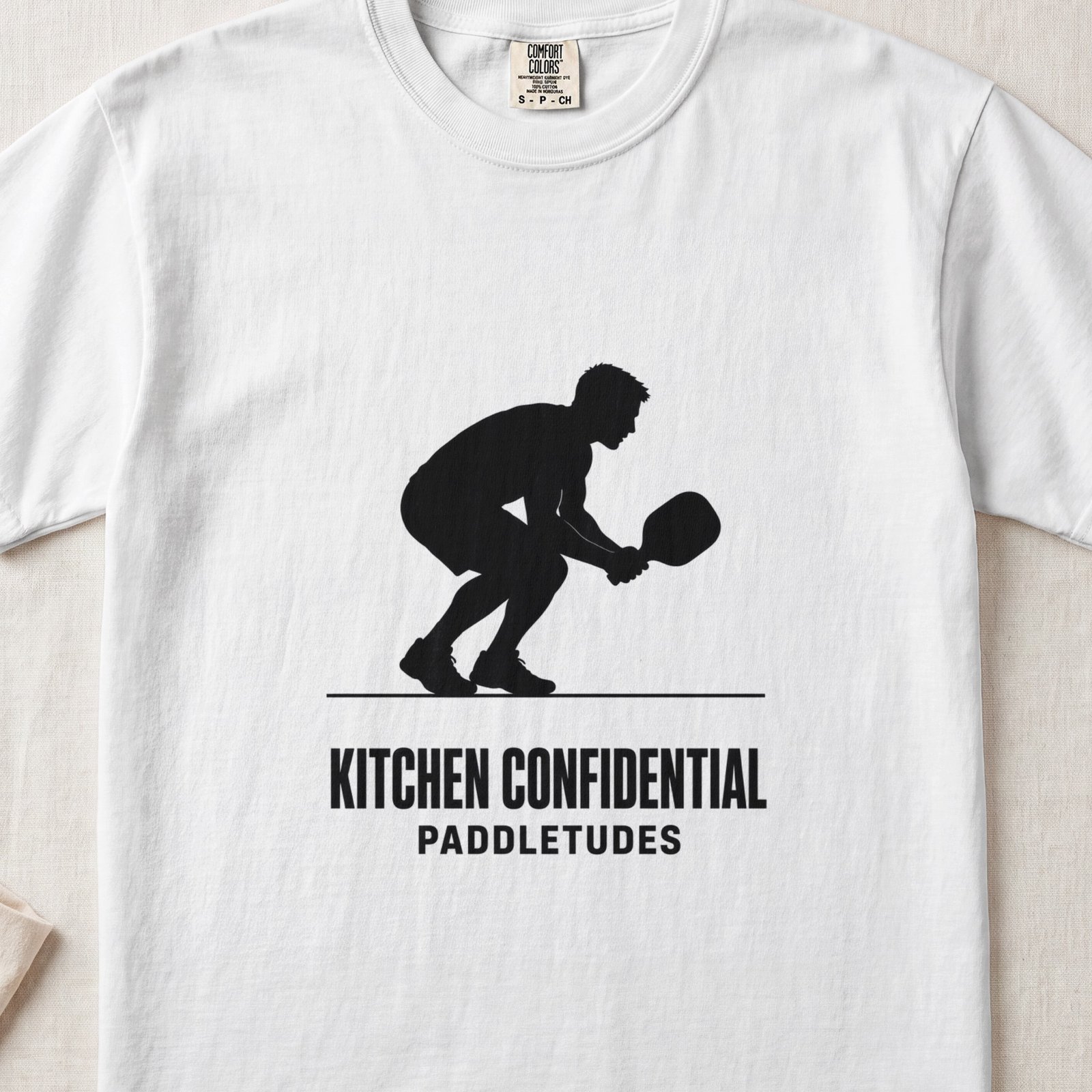
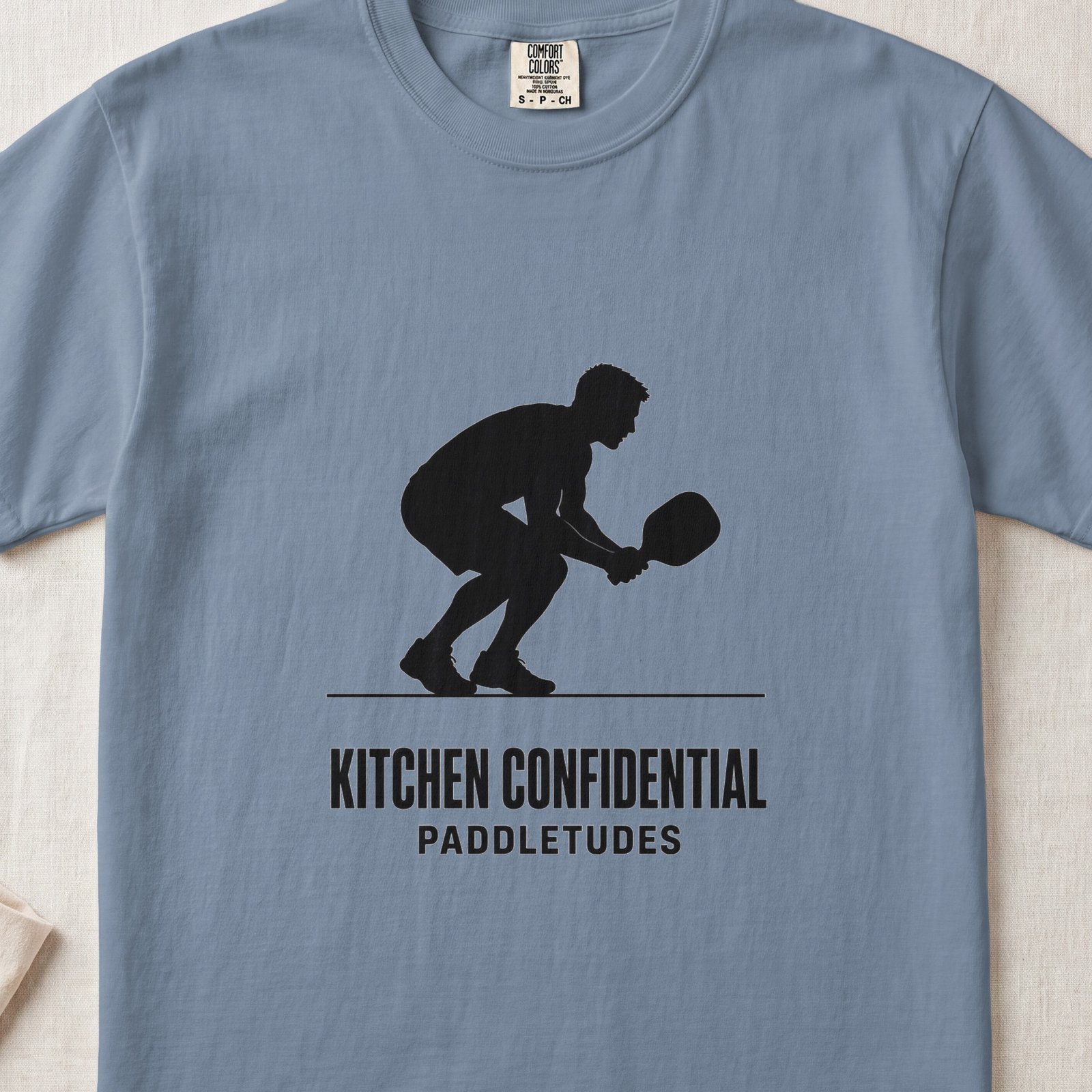
Kitchen Confidential
$29.99
- Comfort Colors 1717 heavyweight cotton
- Original design · printed to order
- U.S. print partners
Kitchen Confidential — Life at the Pickleball Kitchen Line
Somewhere at Bobby Riggs Racket & Paddle in Encinitas right now, a player is stepping into the non-volley zone between rallies and watching the opponent’s face go through three stages of confusion, outrage, and quiet Googling on the bench. That player is wearing this shirt, or they should be. Kitchen Confidential is for the person who doesn’t just play the kitchen — they’ve studied it, memorized the rules, tested the edges, and turned the most misunderstood seven feet in sports into the most dangerous part of their game.
This is also the person who reads the user manual before assembling the furniture. The person who knows the HOA bylaws better than the board president and once cited a subsection at a meeting. Off the court, they’re the friend who checked the restaurant’s health inspection rating before making the reservation and the coworker who found the typo in the contract everyone else already signed. The Kitchen Confidential player doesn’t wing it. They know the rules because the rules are where the advantages live, and most people don’t read them carefully enough to find the advantages. On a pickleball court, that tendency becomes a weapon. The USA Pickleball Official Rulebook defines the non-volley zone precisely — seven feet from the net on each side, spanning the full court width, roughly 140 square feet per side — and the Kitchen Confidential player can recite what you’re allowed to do in there, what you’re not, and the three-word distinction that separates a legal play from a fault.
The kitchen is where pickleball skill levels become visible. At 3.0, players avoid the zone like it’s electrified. They hang back, volley from midcourt, and surrender the most valuable position on the court because nobody told them they could take it. At 3.5, they camp at the line but freeze when a ball drops inside — unsure whether they’re allowed to step in, they reach for it off-balance and pop it up for an easy put-away. At 4.0 and above, the kitchen line IS the game. The player who controls it controls the point. Dink rallies that last twenty or thirty shots, each ball placed a few inches differently than the last, building a positional gap one exchange at a time until the opening appears. If your doubles partner is the person who corrected your kitchen rule understanding between points — who has said “you can enter the zone, you just can’t volley from inside it” more times than they’ve said “nice shot” — this is the birthday gift, the tournament gift, the “I finally understand what you’ve been talking about” gift. It says you’ve been listening to the explanations even when they went two minutes longer than necessary.
The gear connection matters here more than on most shirts. A player who lives at the kitchen line needs a paddle built for touch rather than power — a thicker core that absorbs pace and a face that gives feedback on contact. Brands like Selkirk and CRBN both make control-oriented paddles designed for exactly this game — softer cores, textured faces for spin on dinks, and enough feel to distinguish between a ball that needs a redirect and one that needs a reset. At Pictona in Holly Hill, Florida, where 49 courts run everything from beginner clinics to pro-level competition, the dink specialists are almost always carrying paddles that prioritize control over power. The paddle doesn’t make the player. But a power paddle in a touch player’s hands is like a sledgehammer in a watchmaker’s shop — the wrong tool for the precision required.
The drill that builds kitchen confidence fastest is skinny singles — one player per side, both at the kitchen line, using only half the court from center to sideline. Every shot must land in the non-volley zone. Play to eleven. This drill forces touch, placement, and composure under the pressure of a real score. Do fifteen minutes before open play at whatever facility is closest on the Pickleheads court map and the improvement shows up in games the same day. The Kitchen Confidential player has done this drill hundreds of times, and the muscle memory it builds is exactly what lets them walk into the kitchen between rallies — something the opponents don’t understand is legal — play a bounced ball off their back foot, and walk back to the line like nothing happened.
If your kitchen positioning is the strongest part of your game, Dangerously Good At Thirds is the shot that gets you to the line in the first place — the third shot drop that buys time to move forward. If the player across the net skips the dink battle entirely and tries to blast through you with raw power, She Bangs is the shirt for the person on the other side of that argument. And for the soft hands that make kitchen play lethal — the touch you either have or you don’t — Can’t Teach Touch is the natural companion for any player whose dinks die on contact.
Printed on a Comfort Colors 1717 garment-dyed heavyweight tee with water-based DTG ink — sizing and care details here.
Why Is It Called the Kitchen in Pickleball
Nobody knows for certain, and that’s actually the honest answer. The leading theory is that the name was borrowed from shuffleboard, which has a penalty area called the kitchen — if your puck lands there, you lose points. Since pickleball’s founders in 1965 pulled rules from badminton, ping-pong, and other existing games, a shuffleboard borrowing fits the pattern. The popular explanation — “if you can’t stand the heat, stay out of the kitchen” — sounds good but has no documented origin. It’s folk etymology that gets repeated because it’s catchy, not because it’s verified.
What IS verified is what the kitchen does and why it exists. The USA Pickleball Official Rulebook defines the non-volley zone as a rectangular area extending seven feet from the net on each side, spanning the full width of the court — roughly 140 square feet per side. The zone includes the lines that border it. Touch the line during a volley and it’s a fault. The rule exists to prevent players from standing at the net and spiking every ball downward, which would turn pickleball into a power contest where reach and height decided everything. The kitchen forces the game to be played with strategy instead of brute force, and that design decision is the single biggest reason pickleball is accessible to players across every age, height, and athletic background.
The reason the kitchen generates more arguments than any other rule is that most players learn it wrong. They hear “you can’t be in the kitchen” and internalize a restriction that doesn’t exist. The actual rule is narrower and more specific: you cannot volley — hit the ball out of the air — while you are in the kitchen or touching its line. That’s the entire restriction. You can enter the kitchen to play a bounced ball. You can stand in it between rallies. You can walk through it. The restriction applies to one specific action, volleying, and only while you’re inside the zone or on its line. Understanding that distinction is the difference between the player who panics when a ball drops short in the kitchen and the player who steps in, plays it clean off the bounce, resets the rally, and steps back to the line without raising their heart rate. The second player is wearing this shirt.
Can You Stand in the Kitchen in Pickleball
Yes. You can enter the kitchen at any time, stand in it as long as you want, and play any ball that has already bounced. The rule only restricts one action — volleying, meaning hitting the ball out of the air — while you’re inside the zone or touching its line. Everything else is legal. If a ball bounces in the kitchen, the correct play is to step in and hit it. That’s a groundstroke, not a volley, and no rule prevents it.
This is the most misunderstood rule in pickleball and the misunderstanding costs real points. Players who believe they can’t enter the kitchen give up balls they should be playing. A dink that lands two feet inside the line and dies is meant to be stepped into and played off the bounce. The incorrect response — reaching from behind the line, off-balance, arm fully extended — either misses entirely or produces a pop-up high enough for the other team to put away. The kitchen is not a penalty box. It’s a strategic space. The player who treats it as an extension of the court rather than a forbidden zone has a structural advantage over every opponent who doesn’t.
The subtlety that catches intermediate players is momentum. Under USA Pickleball rules, your momentum from a volley cannot carry you into the kitchen. If you volley at the kitchen line and your forward motion takes you across — even one toe, even after the ball is dead — it’s a fault. This is why advanced players split-step at the line with their weight slightly back, ready to strike without falling forward. If you watch the best players at facilities like Pictona or at any PPA Tour event, their positioning at the kitchen line looks almost identical — balanced, centered, paddle up, weight on the balls of their feet with a slight backward lean. That positioning isn’t style. It’s the mechanical answer to a rules question. They’ve built their stance around the momentum rule the same way a boxer builds their stance around balance. The kitchen doesn’t restrict your presence. It restricts your volleying. When that clicks, the whole game changes — and the player wearing Kitchen Confidential clicked a long time ago.
-
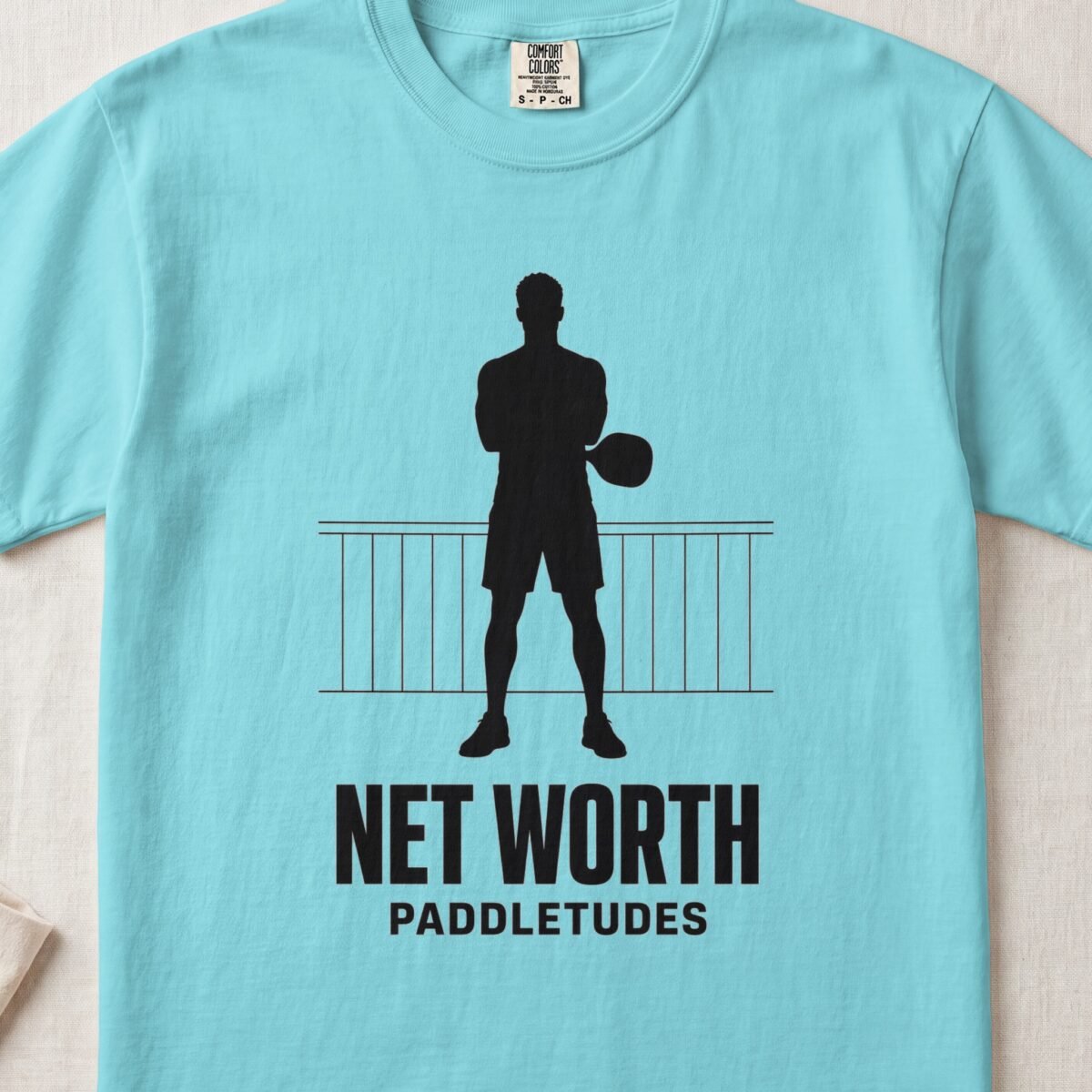
Net Worth
$29.99 Select options This product has multiple variants. The options may be chosen on the product page -
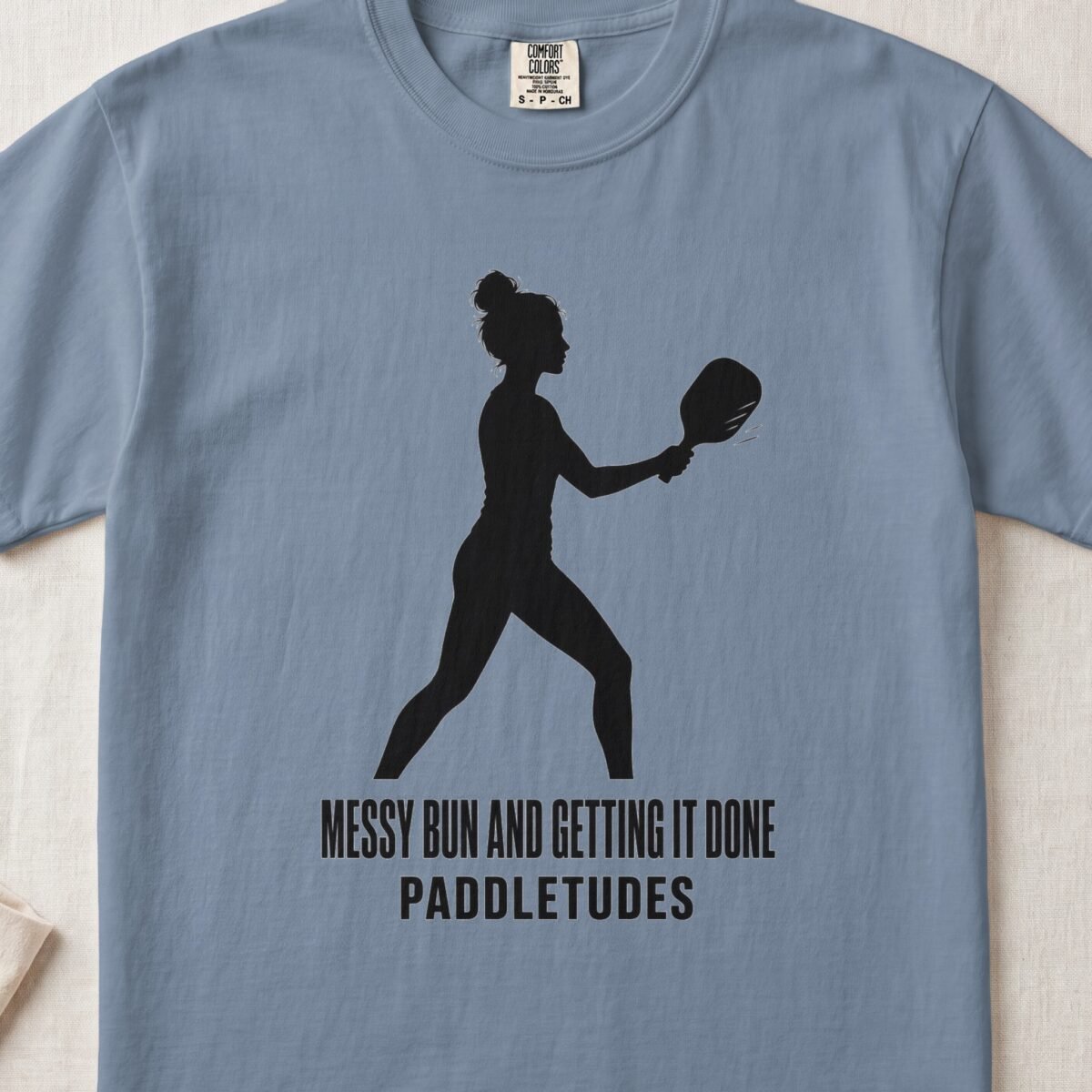
Messy Bun And Getting It Done
$29.99 Select options This product has multiple variants. The options may be chosen on the product page -
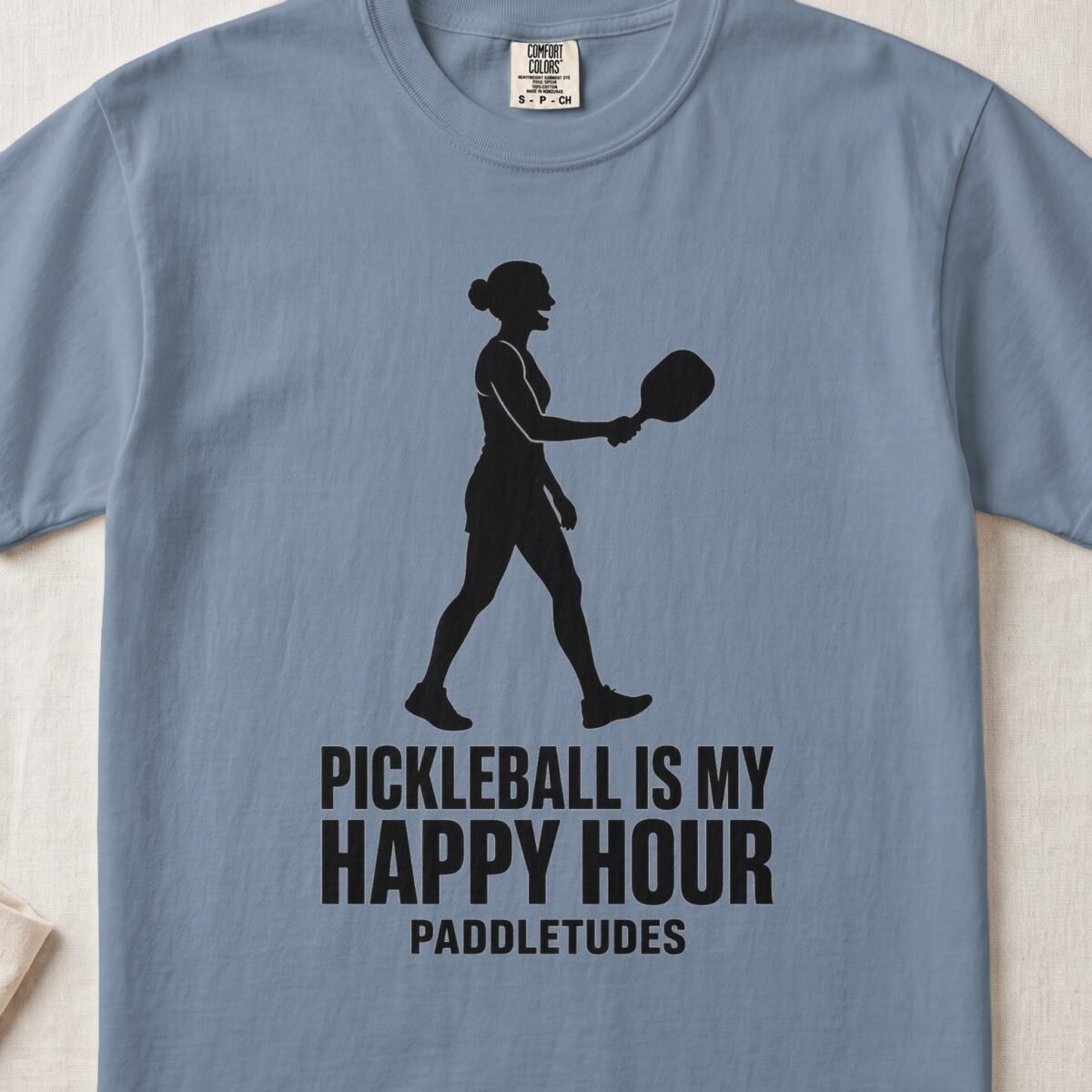
Pickleball Is My Happy Hour
$29.99 Select options This product has multiple variants. The options may be chosen on the product page