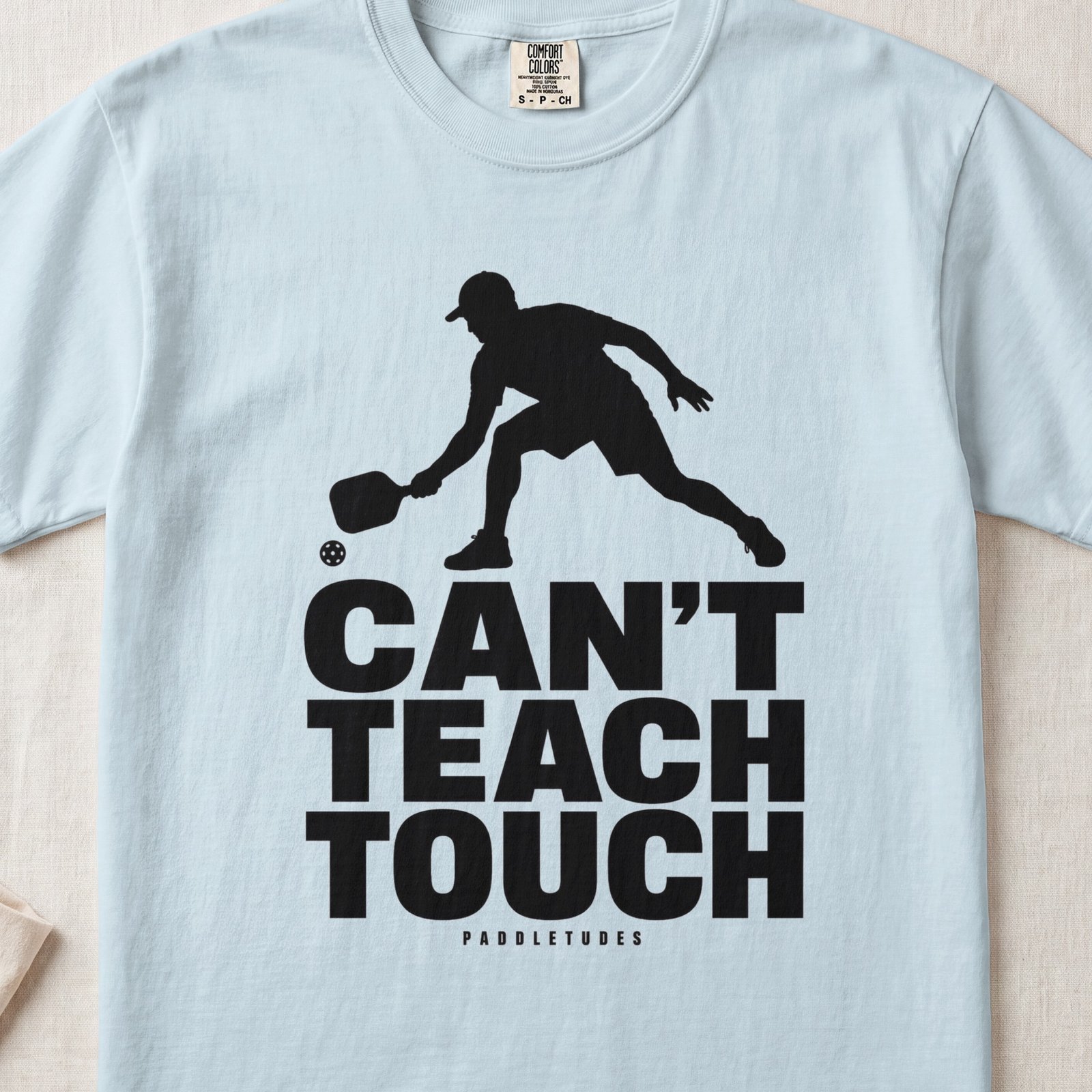
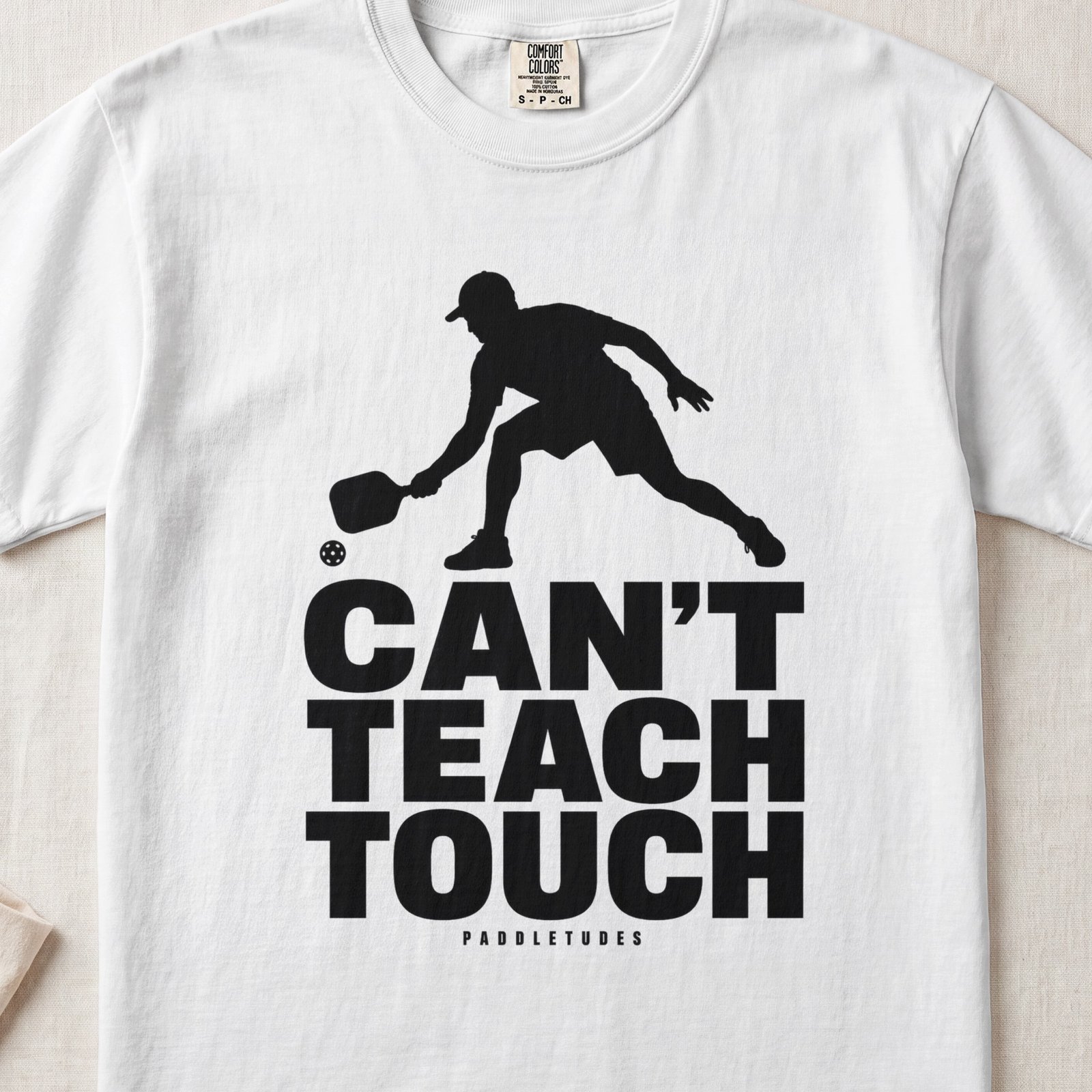
Sports Comfort Colors 1717
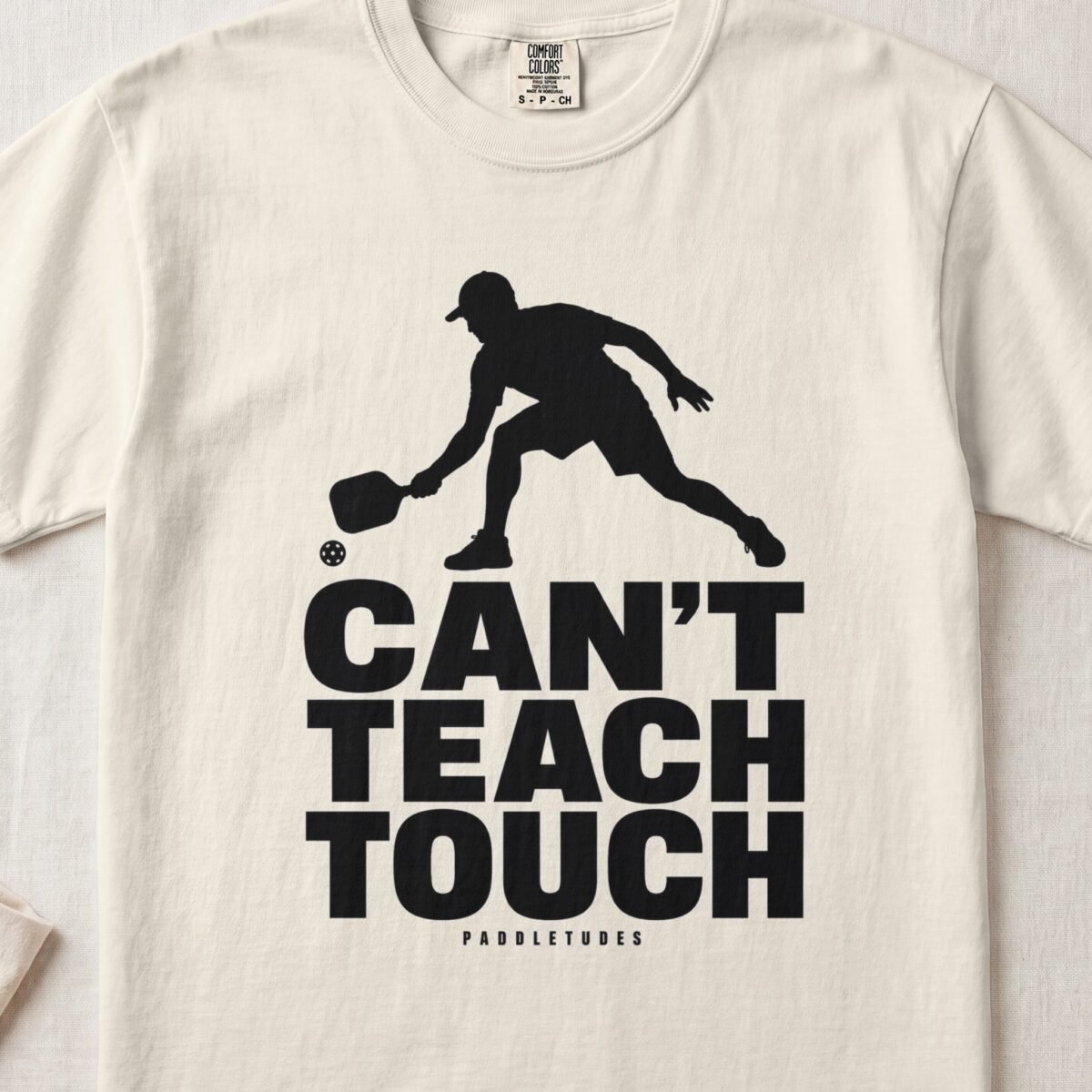
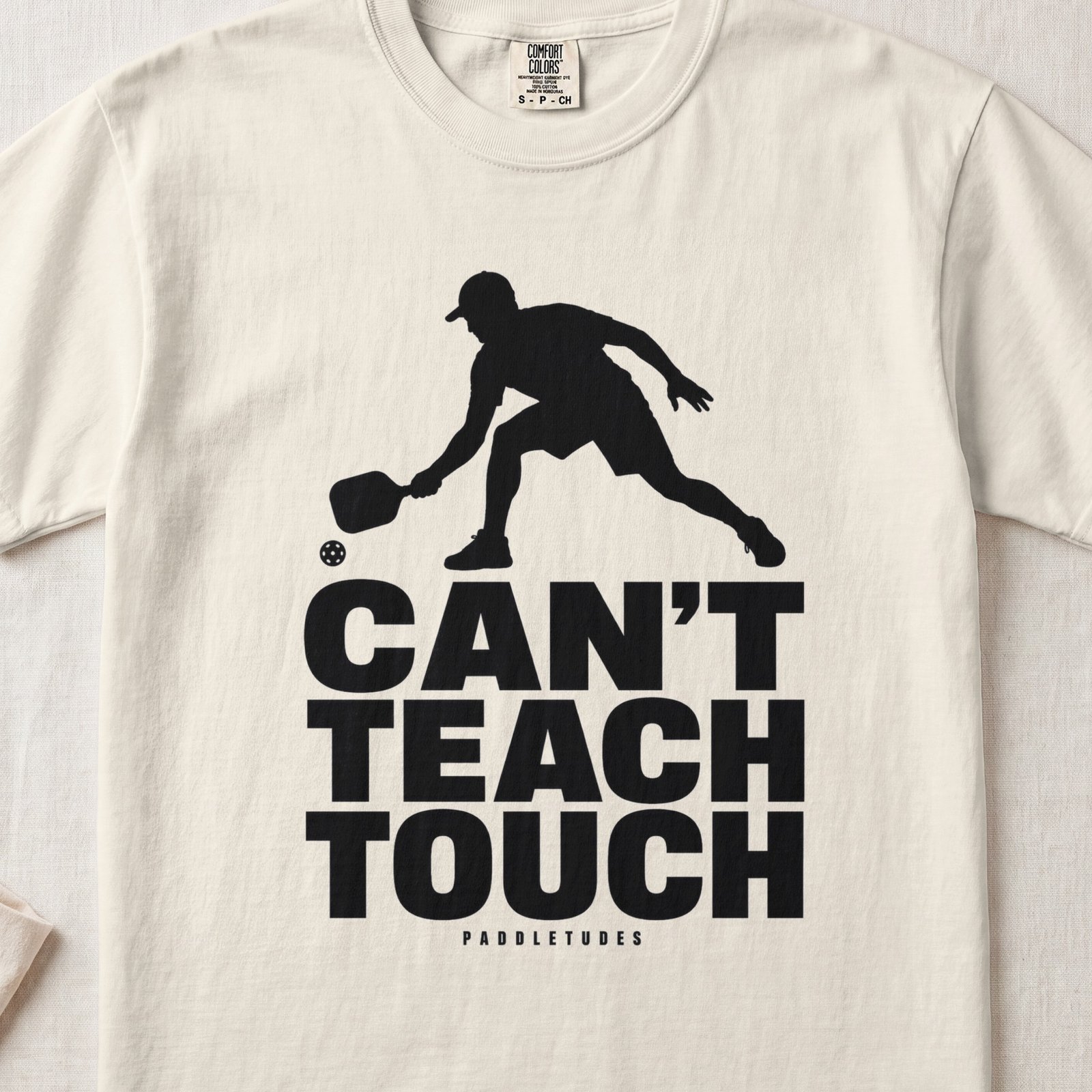
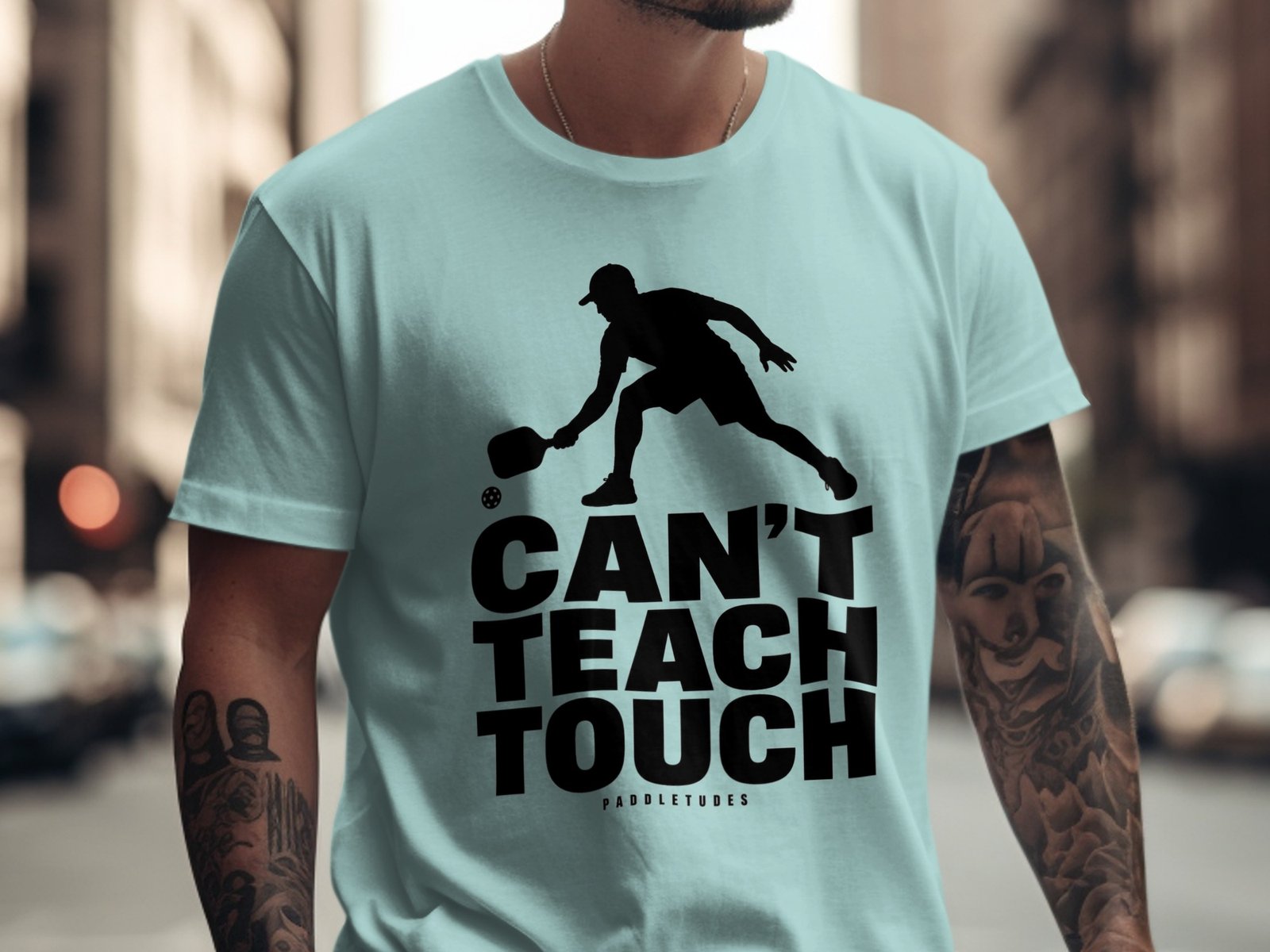
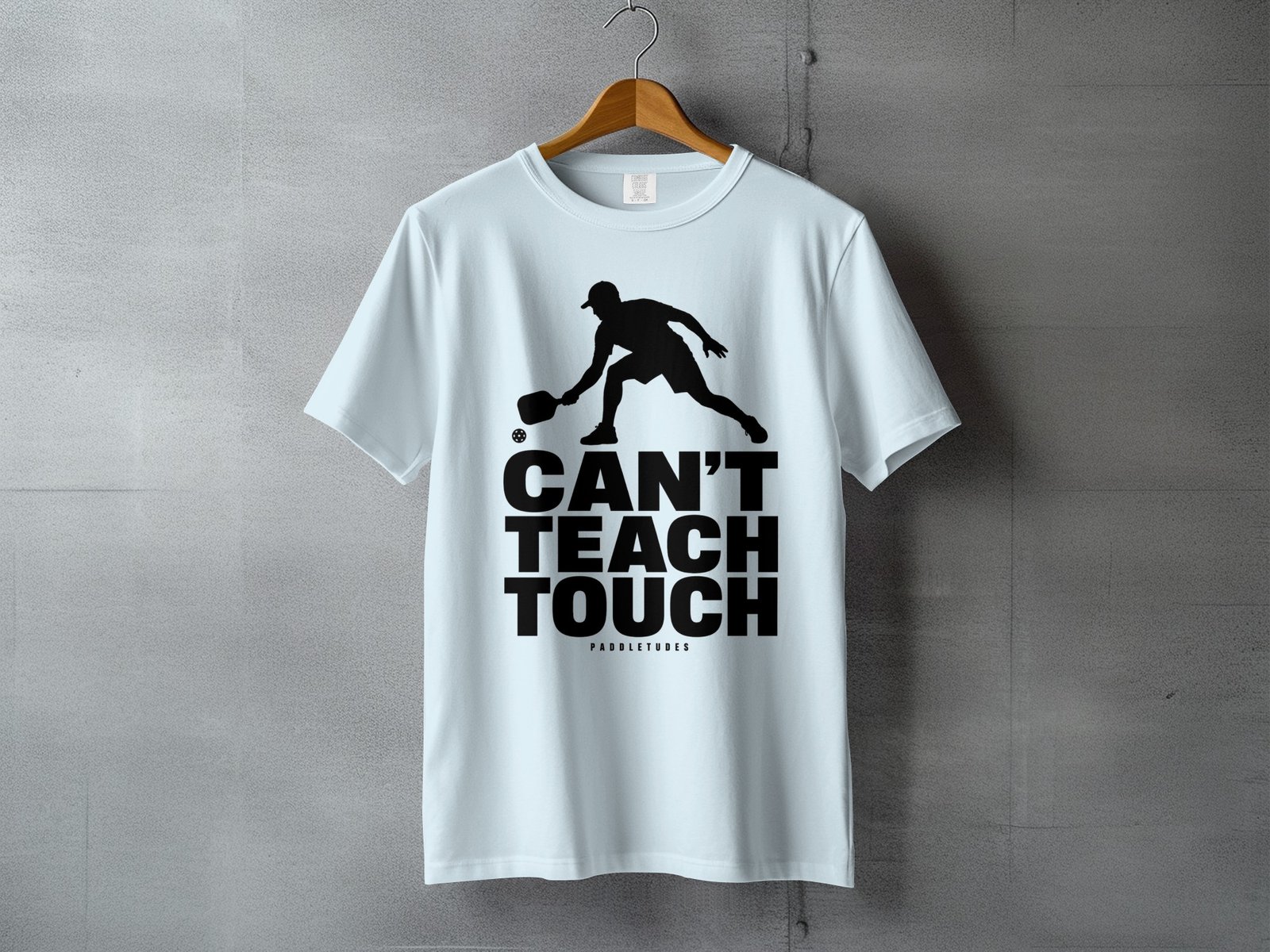
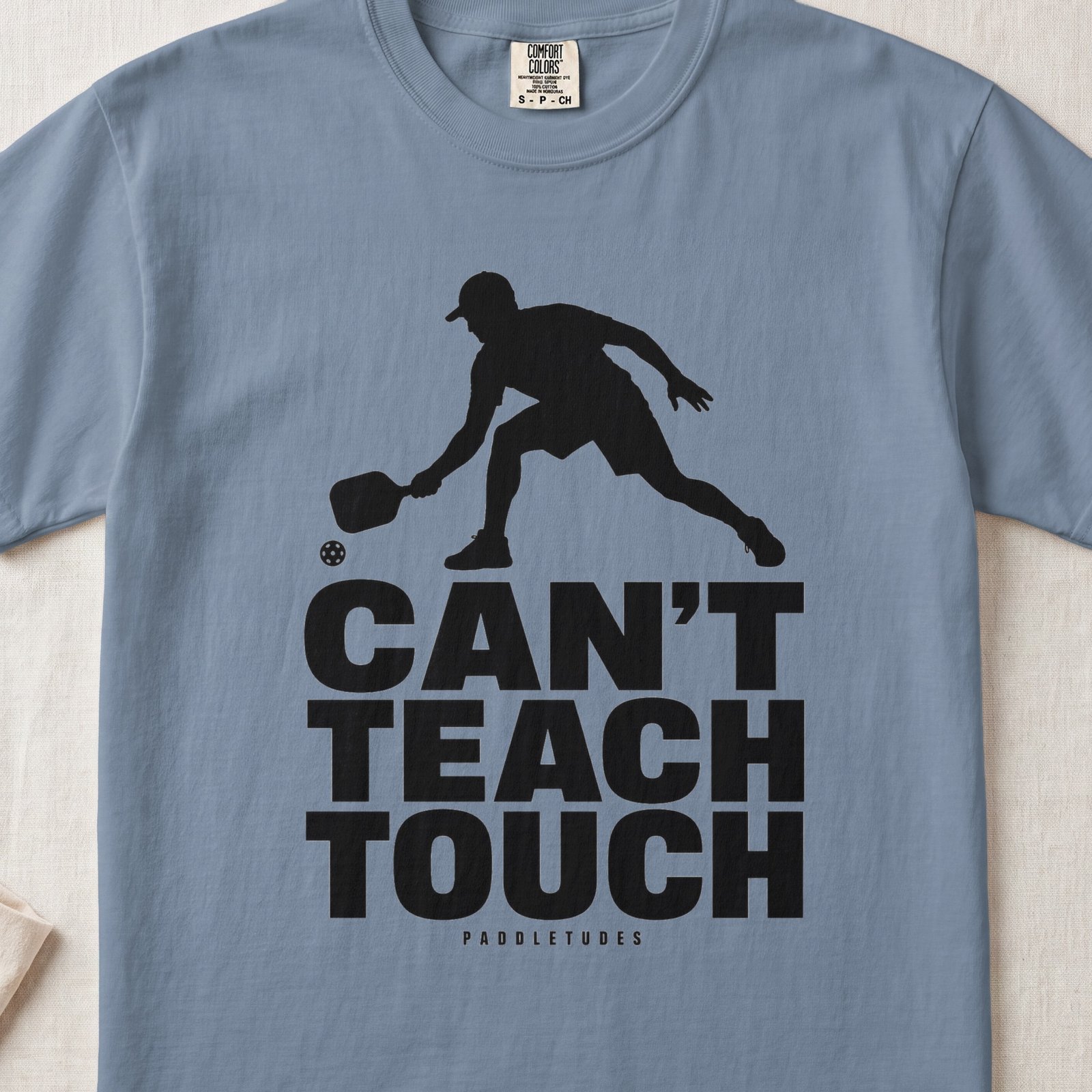
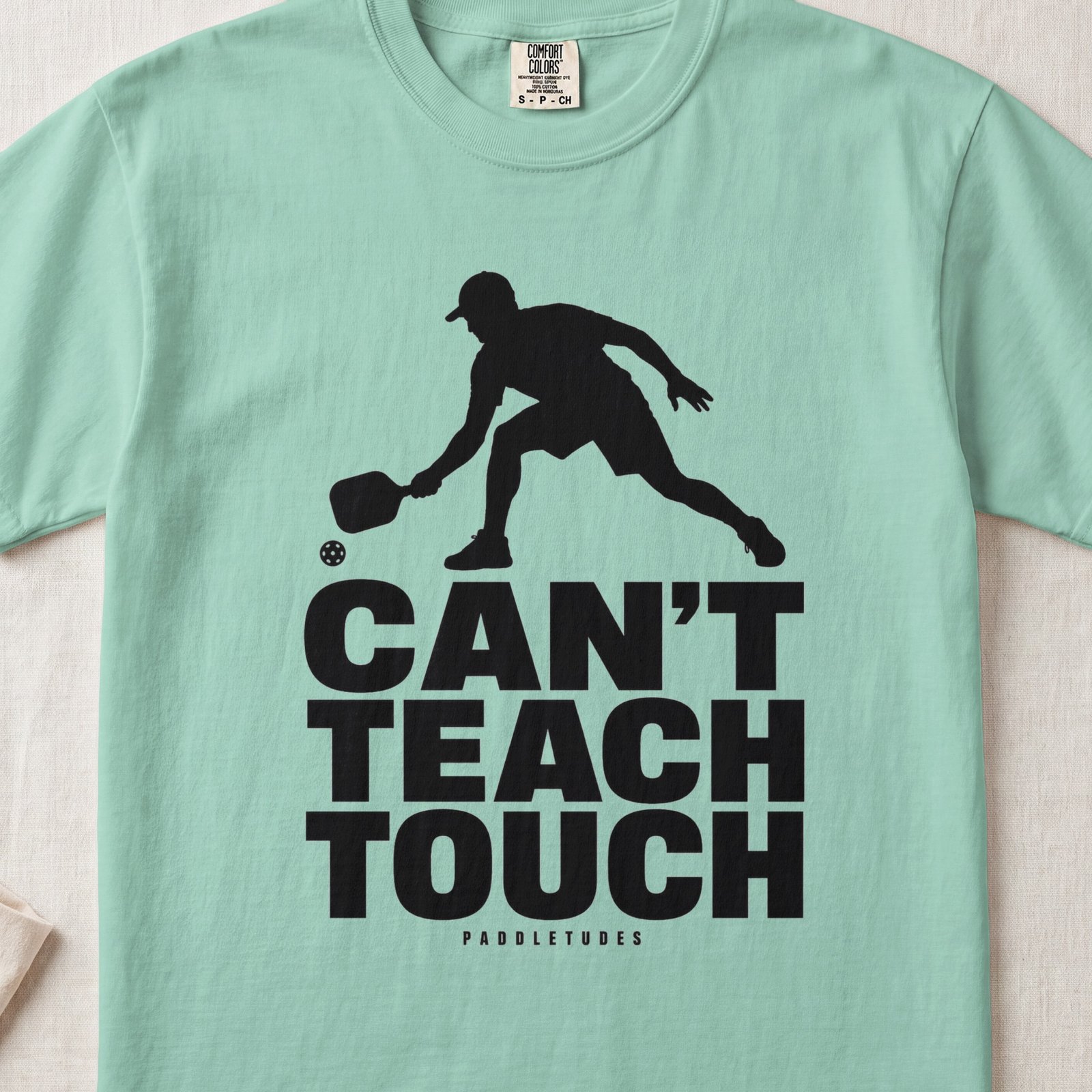
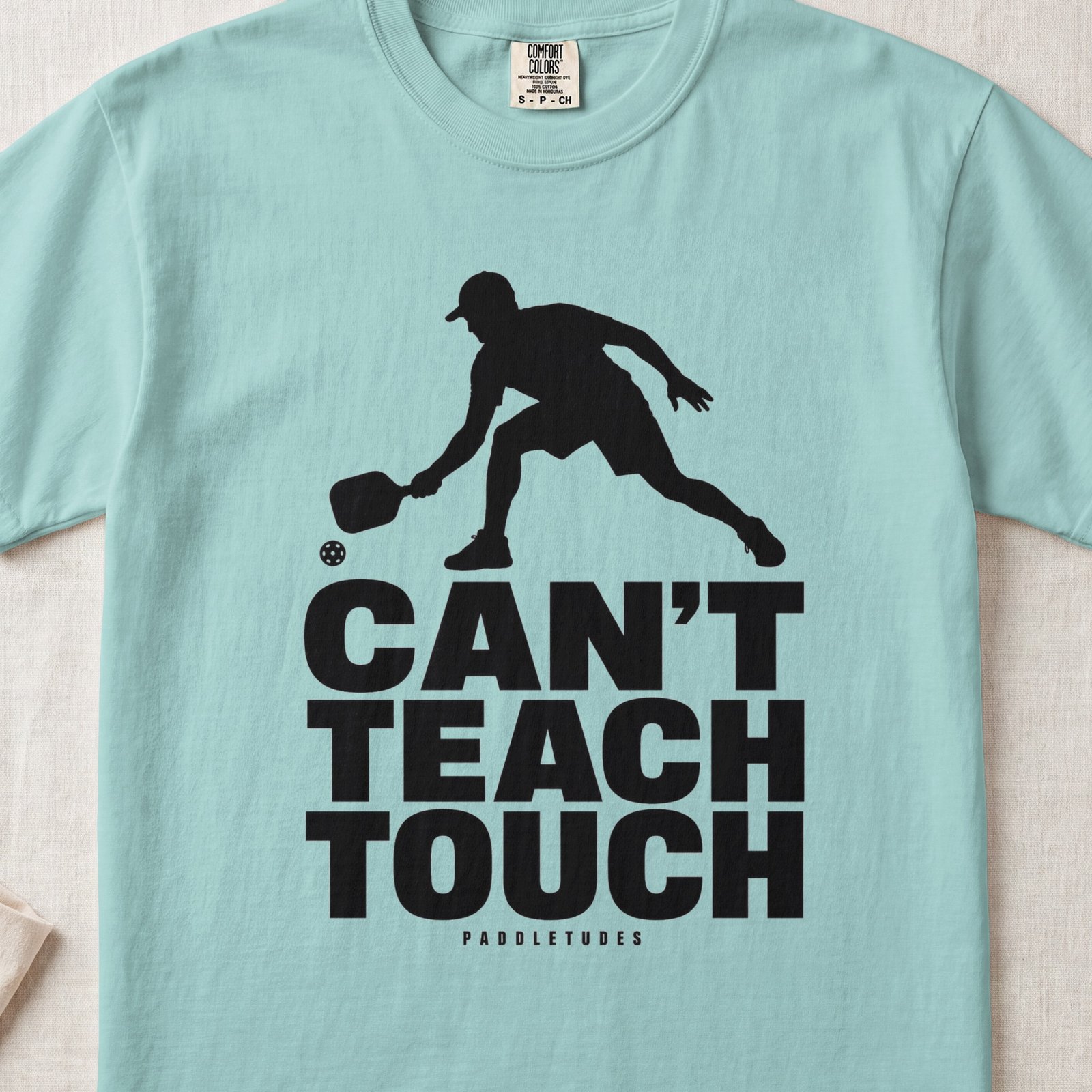
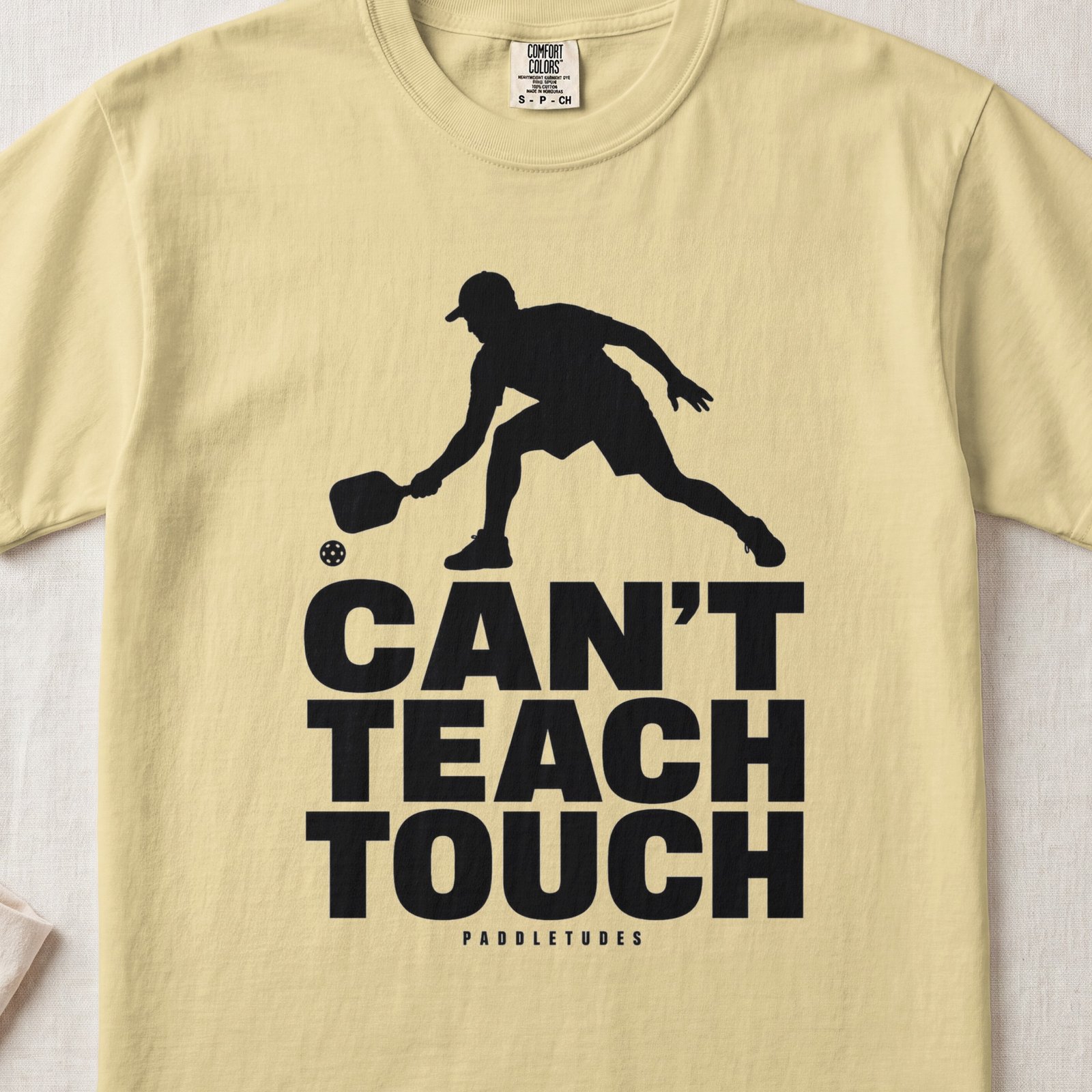
Can’t Teach Touch
$29.99
- Comfort Colors 1717 heavyweight cotton
- Original design · printed to order
- U.S. print partners
Some Pickleball Players Are Born With Soft Hands
The dink left the paddle, cleared the net by an inch, and landed inside the kitchen with a bounce so soft the ball barely came back up. The opponent bent low, reached for it, and popped it up — because that’s the only option when the ball is sitting at your ankles with no pace to redirect. The put-away was academic. The crowd reaction was silence, because the shot that set it up didn’t look like it did anything. It did everything. Can’t Teach Touch is for the player whose hands do things with a pickleball that other players practice for months and still can’t replicate — the natural feel that turns a dink rally from a holding pattern into a slow-motion dismantling of the opponent’s position, one soft shot at a time.
This is the same person who cooks without measuring. Who parallel parks on the first try in a space everyone else drove past. Who wraps a gift with clean corners and no tape showing and genuinely doesn’t understand why other people find it difficult. Touch, in pickleball and in life, is the integration of so many micro-adjustments happening simultaneously that the conscious brain can’t track them all — and the person who has it doesn’t know how to explain it because the explanation would require separating things that happen as one. Grip pressure, paddle angle, swing path, contact point, read speed. In the Can’t Teach Touch player, those five inputs resolve into a single output: the ball goes where they want it, at the pace they choose, with a margin of error so tight it looks deliberate because it is.
The paddle matters here more than on any other shirt in the line. A touch player needs a paddle that gives feedback — a face that tells their hand where the ball made contact and a core that absorbs incoming pace instead of amplifying it. Thicker cores, typically 16 millimeters, are the standard for players whose game runs on feel. CRBN’s original series paddles and Selkirk’s control-oriented models both prioritize the soft contact that touch players depend on. A power paddle in a touch player’s hands is counterproductive — it takes the pace they’re trying to remove and adds it back, which defeats the entire strategy. The Joola paddle guide breaks down how core thickness, face material, and weight distribution affect feel, and for the touch player the answer is consistent: softer core, textured face for spin control, and enough mass to absorb without bouncing.
At Pictona in Holly Hill, where forty-nine courts run every level from free beginner clinics to sanctioned tournament play, the touch players are identifiable from the observation deck. They’re the ones whose body is almost still while the ball moves. No big swings. No lunging reaches. No dramatic paddle flips. Just a short, quiet motion that produces a ball the opponent has to bend their knees and scrape off the court surface. At Bobby Riggs in Encinitas, where the challenge courts separate competitive players from recreational ones, the dink rallies on the top courts run twenty and thirty shots — and the player who controls the rally is almost always the one whose touch makes every shot land in the same six-inch window. That consistency isn’t luck at thirty reps. It’s feel.
The skill level progression on touch is honest and worth stating clearly. At 3.0, a dink is a short shot you hit because you can’t reach anything else. At 3.5, it becomes intentional — you’re trying to keep the ball low and unattackable — but the execution wobbles. The ball sits up. The placement wanders. The paddle angle shifts shot to shot. At 4.0 and above, the dink becomes a weapon. Placement is deliberate. Arc is consistent. The player can go cross-court, down the line, and at the opponent’s feet on demand, and each dink looks identical until the ball has already left the paddle. Drills build the mechanics — the skinny singles game on half the court, every shot in the kitchen, play to eleven — but the difference between a drilled dink and a natural one is that the natural one adjusts in real time to inputs the player isn’t conscious of processing. That’s touch. If someone took the time to teach you what touch looks like — the clinic instructor who fixed your grip, the patient friend who ran dink drills for an hour, the partner who showed you the soft game even existed — this is the thank-you gift that says they changed how you see the sport.
Touch is the foundation the soft game is built on. Dink Responsibly takes the same philosophy and frames it as a public service announcement — the humor version of the same respect for the soft game. For the discipline to stay soft when every instinct says speed up, No Speed Up is the companion mindset that protects what touch creates. And for the player on the other side of the net who watches the dink rally and decides the answer is raw power, She Bangs is the opposite philosophy — the one that makes this debate the best argument in the sport. Find a court near you on Pickleheads and test your touch against real opponents. The drill builds the mechanics. The game builds the feel.
Printed on a Comfort Colors 1717 garment-dyed heavyweight tee with water-based DTG ink — sizing and care details here.
What Is a Dink in Pickleball
A dink is a soft, controlled shot hit from near the kitchen line that arcs low over the net and lands in the opponent’s non-volley zone. The ball barely clears the tape — an inch or two, ideally — and bounces with minimal energy, sitting below net height when the opponent plays it. This forces the opponent to hit upward, which limits their options to another dink or a risky speed-up. A dink is not a weak shot or a last resort. It’s a deliberate offensive play that wins points through precision and patience rather than pace.
The mechanics are deceptively simple. Soft grip — three or four out of ten on the pressure scale. Open paddle face, tilted slightly upward. Short, controlled swing with no wrist action. Contact happens out in front of the body with the paddle below the ball, guiding it over the net on a low arc. The ball should peak on your side and descend into the kitchen on the other side. The best dinks land at the opponent’s feet, forcing them to bend low and scoop the ball upward from below their knees — which is exactly the ball you or your partner can then attack.
A dink rally — the back-and-forth soft exchange at the kitchen line — is where competitive pickleball is played. It’s the chess match inside the sport. Each dink changes one variable: direction, depth, or pace. Cross-court, then down the line. Three feet past the net, then one foot. Topspin, then backspin. The pattern builds a positional gap that doesn’t exist on any single shot but accumulates across the exchange. When the gap opens — when the opponent leans the wrong direction or lifts their paddle a fraction too late — the dink rally ends and the attacking shot arrives. The kitchen rules defined by USA Pickleball created the conditions for this game to exist. Without the non-volley zone, there would be no reason to hit soft. The kitchen forces the soft game into existence, and the soft game is where touch lives.
Why Do Pickleball Players Dink So Much
Because dinking is the highest-percentage way to win points when both teams are at the kitchen line — and at competitive levels, both teams are at the kitchen line for most of the rally. A hard drive into two set players at the net gets blocked or redirected more often than it wins the point. A well-placed dink at their feet forces an upward return, limits their options, and builds toward the opening that a drive alone can’t create. Dinking isn’t passive. It’s the setup for everything else.
The math is straightforward. A ball that travels low over the net and lands in the kitchen can’t be smashed. The opponent’s only realistic options are to dink back, attempt a risky speed-up, or pop it up high enough to be put away. Two of those three options favor the dinker. The speed-up works sometimes, but against a player with good hands and a composed paddle, a speed-up into two set opponents returns more often than it converts. This is why high-level pickleball looks slow to first-time spectators — both teams are dinking because both teams understand that the first player to get impatient and swing hard is usually the first player to lose the point.
The cultural divide around dinking is one of the most interesting tensions in the sport. Recreational players often view dinking as boring — they want rallies with pace, drives that rip through the air, and put-aways that make noise. Competitive players view dinking as the foundation every other shot is built on. The speed-up that wins the point existed because seven soft shots created the opening. The overhead that ended the rally started with a dink that pulled the opponent out of position. The player who dinks isn’t avoiding the fight. They’re choosing when the fight happens and where it takes place, which is a fundamentally different kind of control than hitting hard and hoping the geometry works out. The player wearing this shirt figured that out early, and their touch is the reason it keeps working.
-
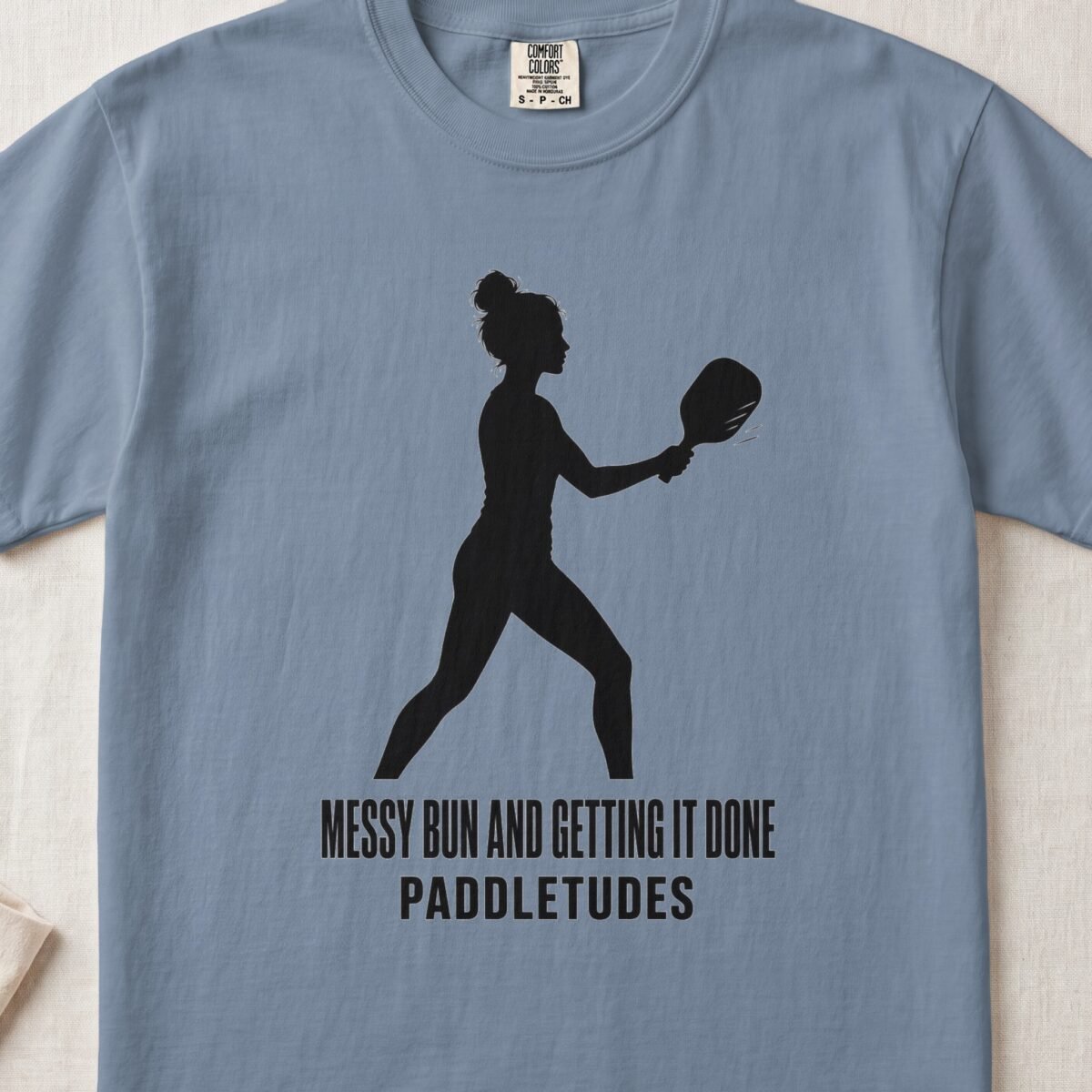
Messy Bun And Getting It Done
$29.99 Select options This product has multiple variants. The options may be chosen on the product page -
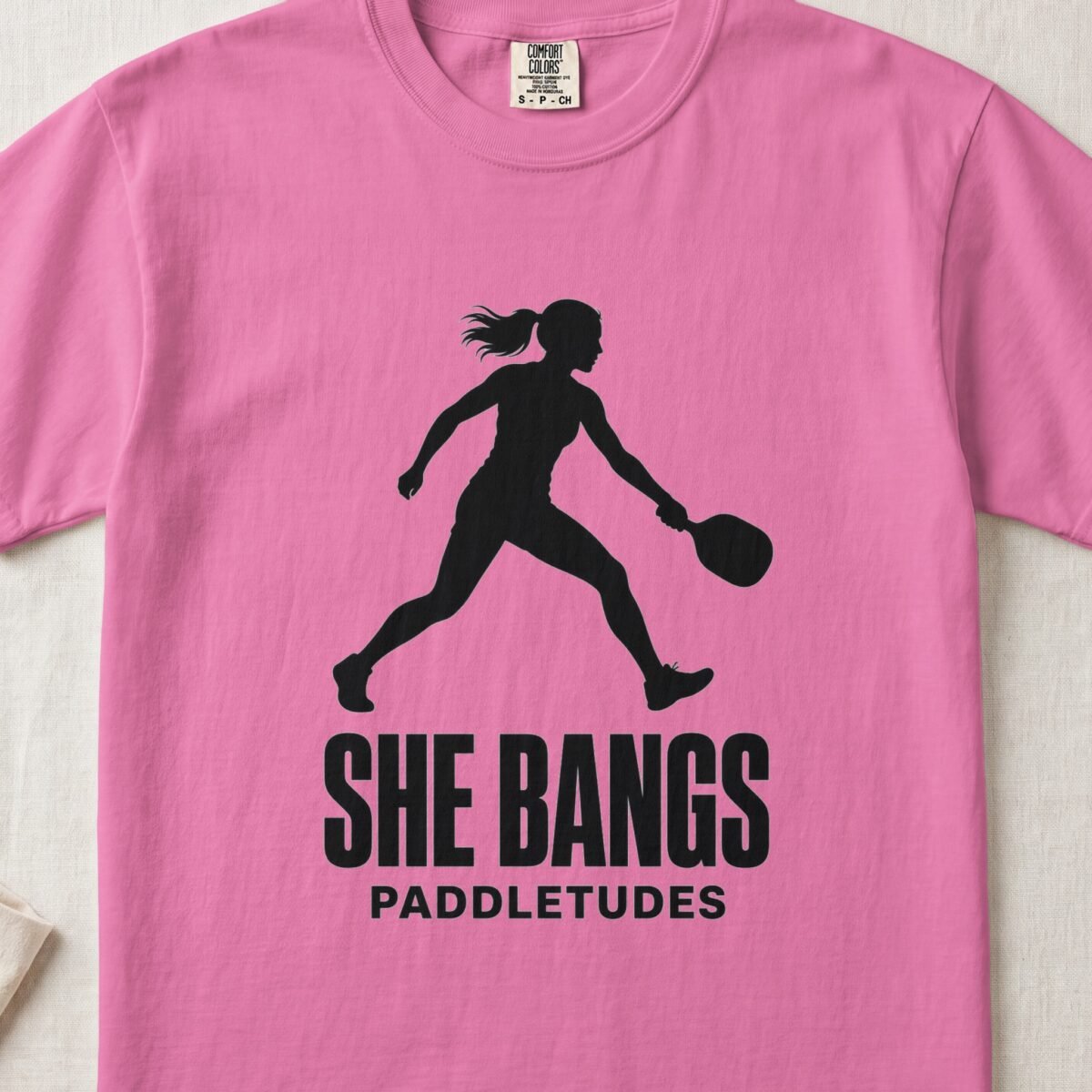
She Bangs
$29.99 Select options This product has multiple variants. The options may be chosen on the product page -
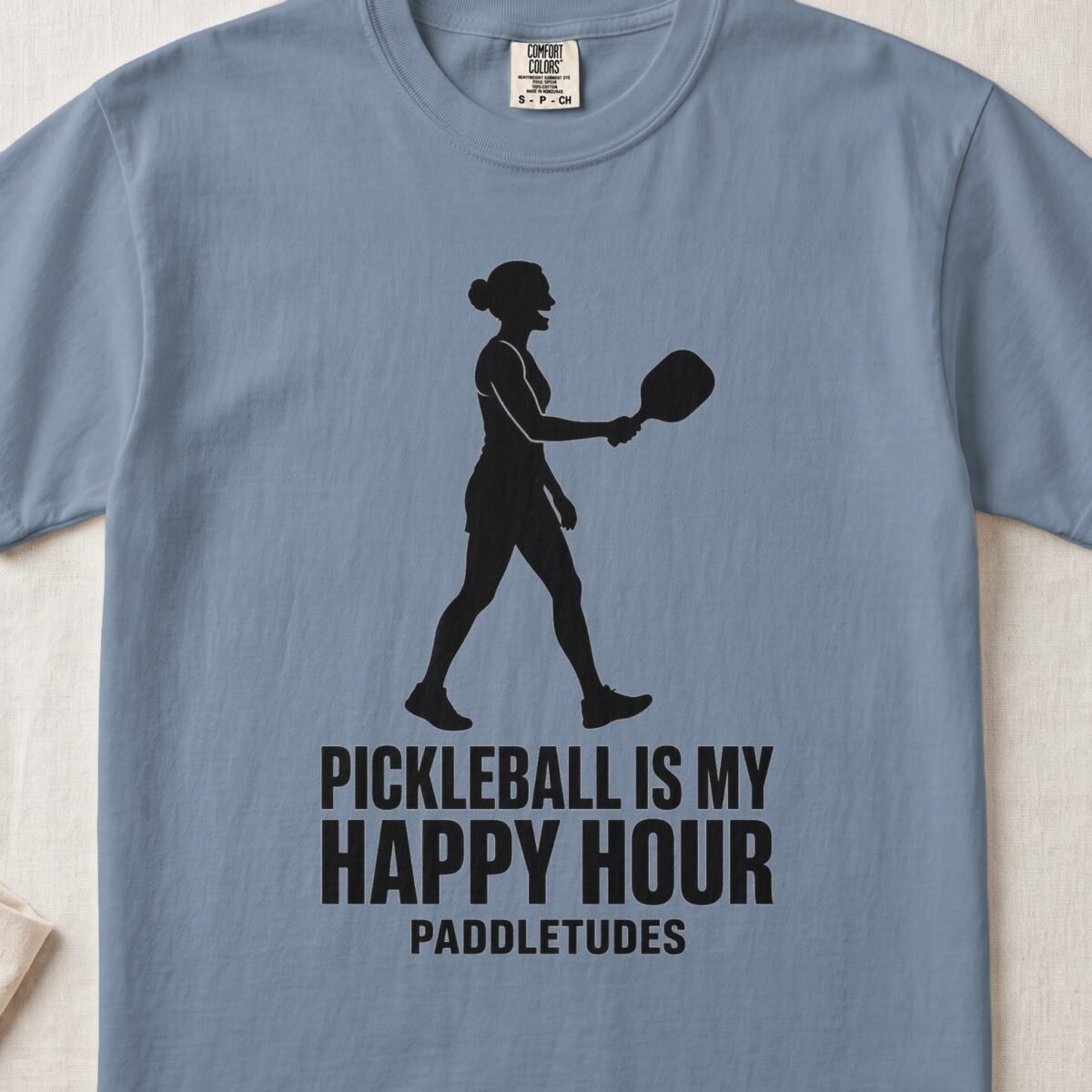
Pickleball Is My Happy Hour
$29.99 Select options This product has multiple variants. The options may be chosen on the product page