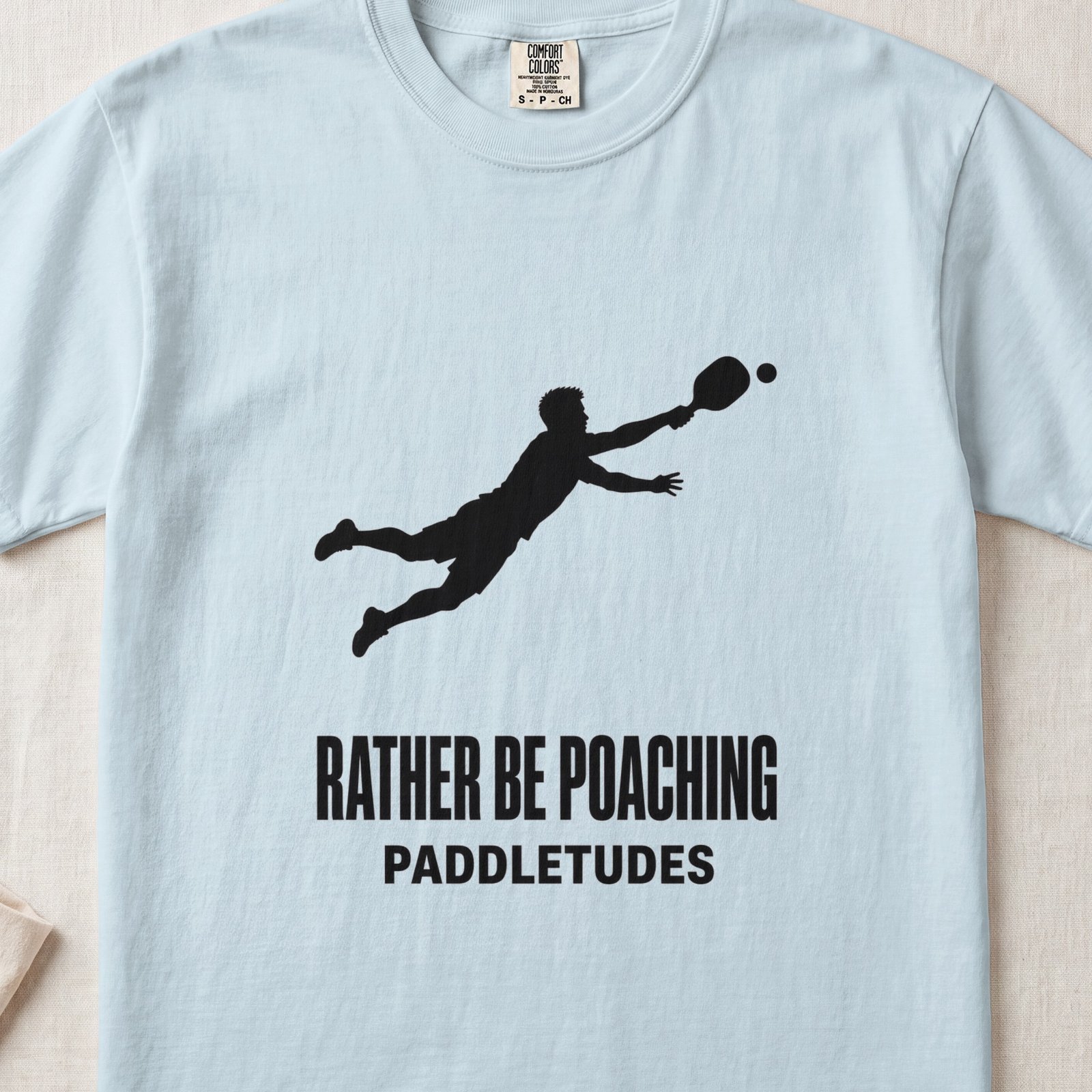
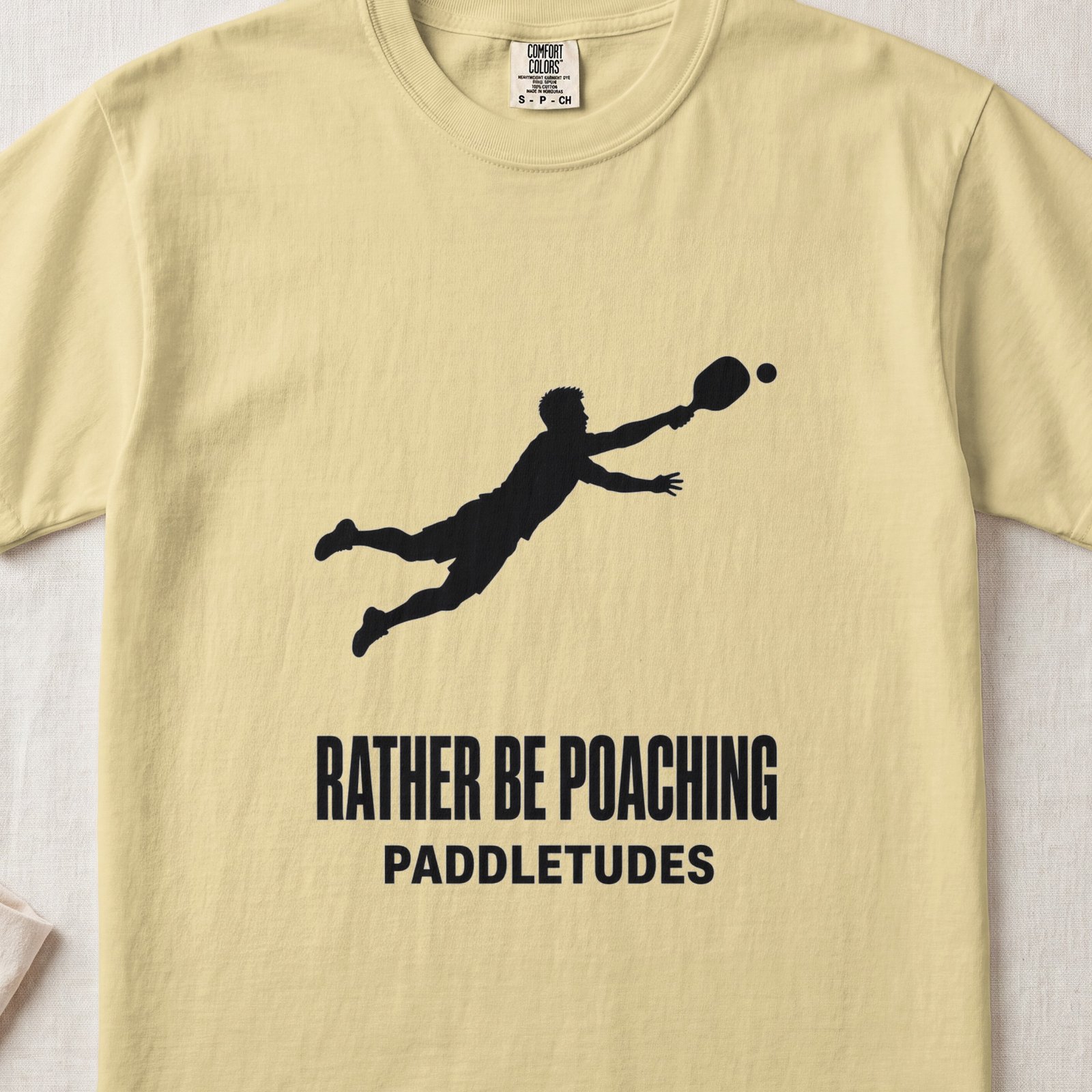
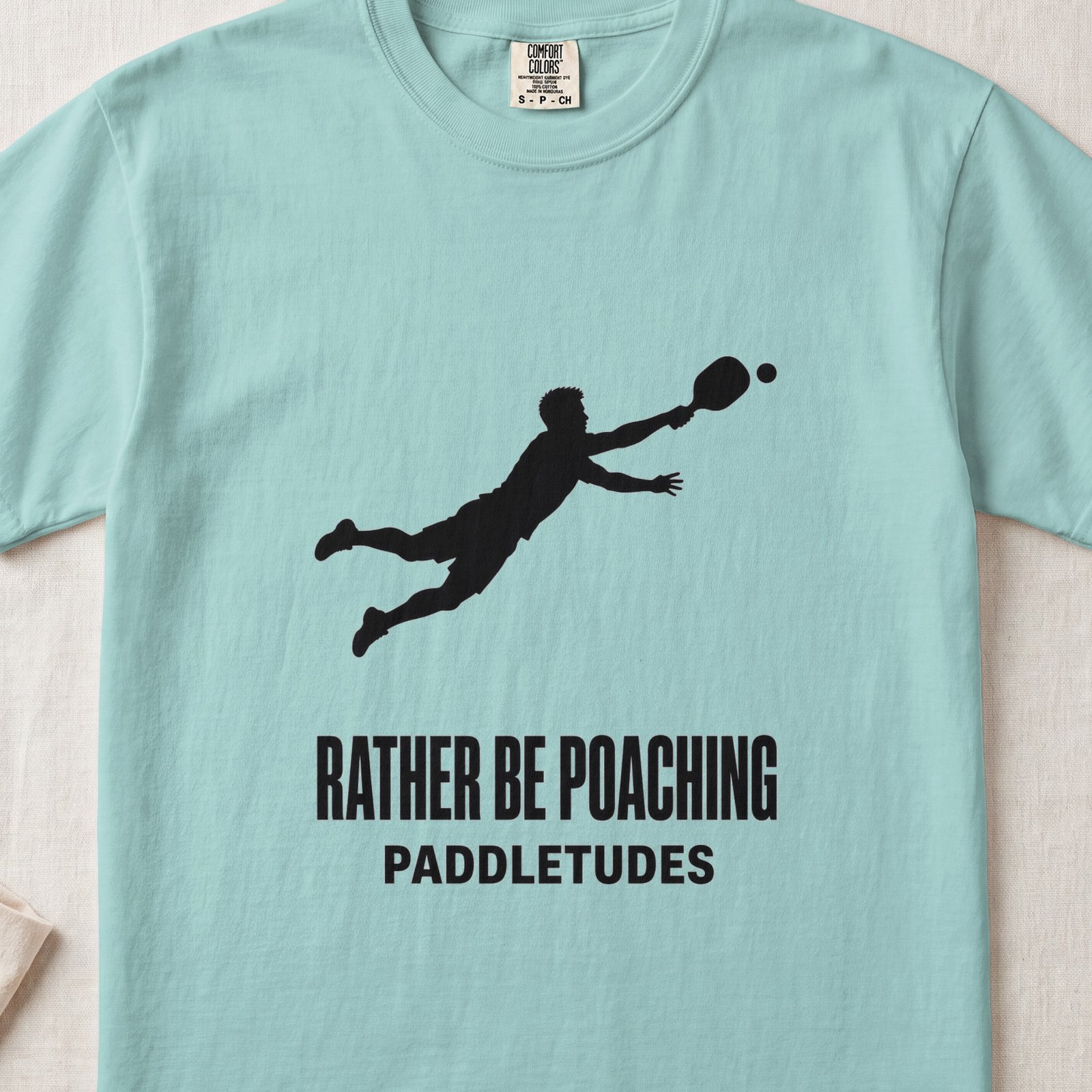
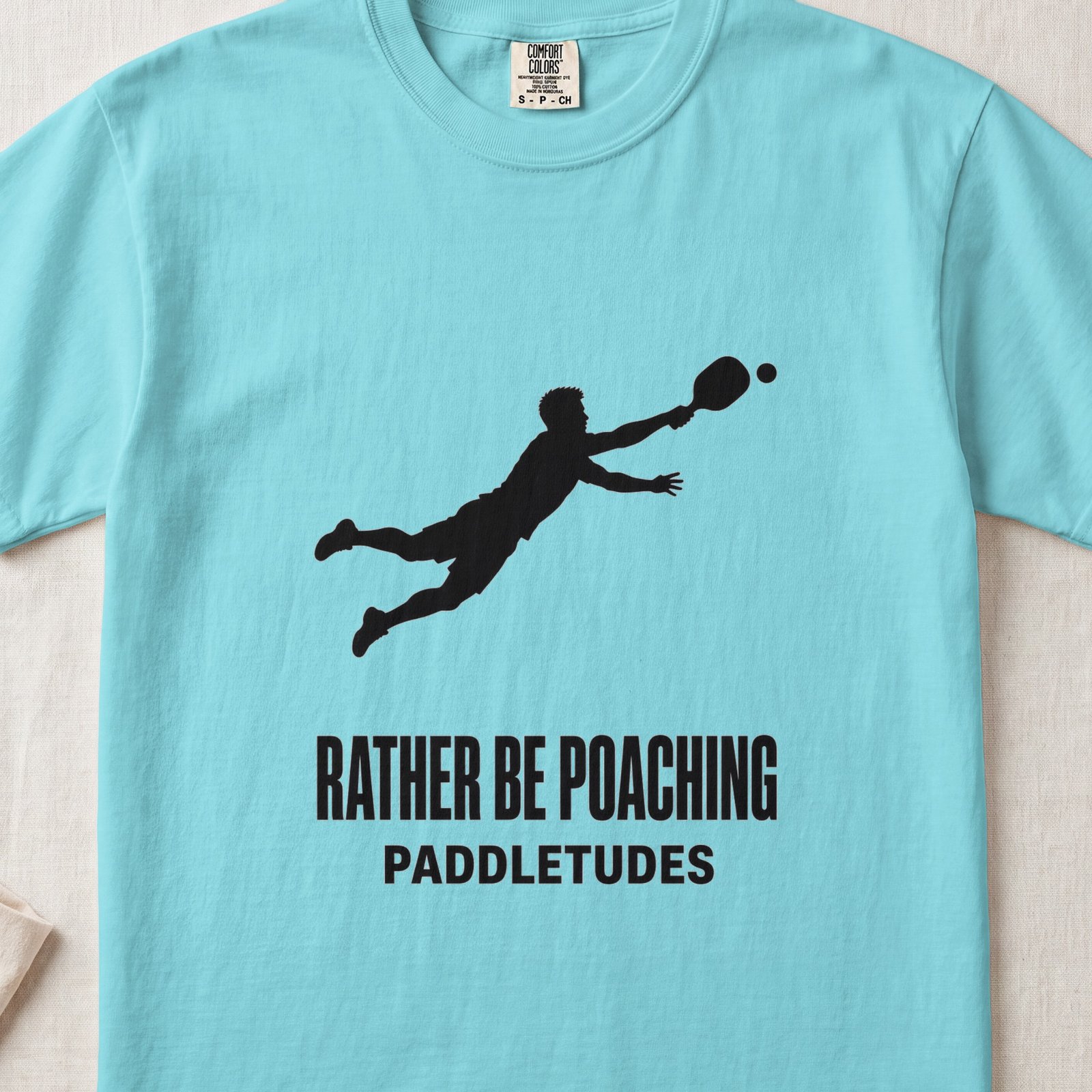
Sports Comfort Colors 1717
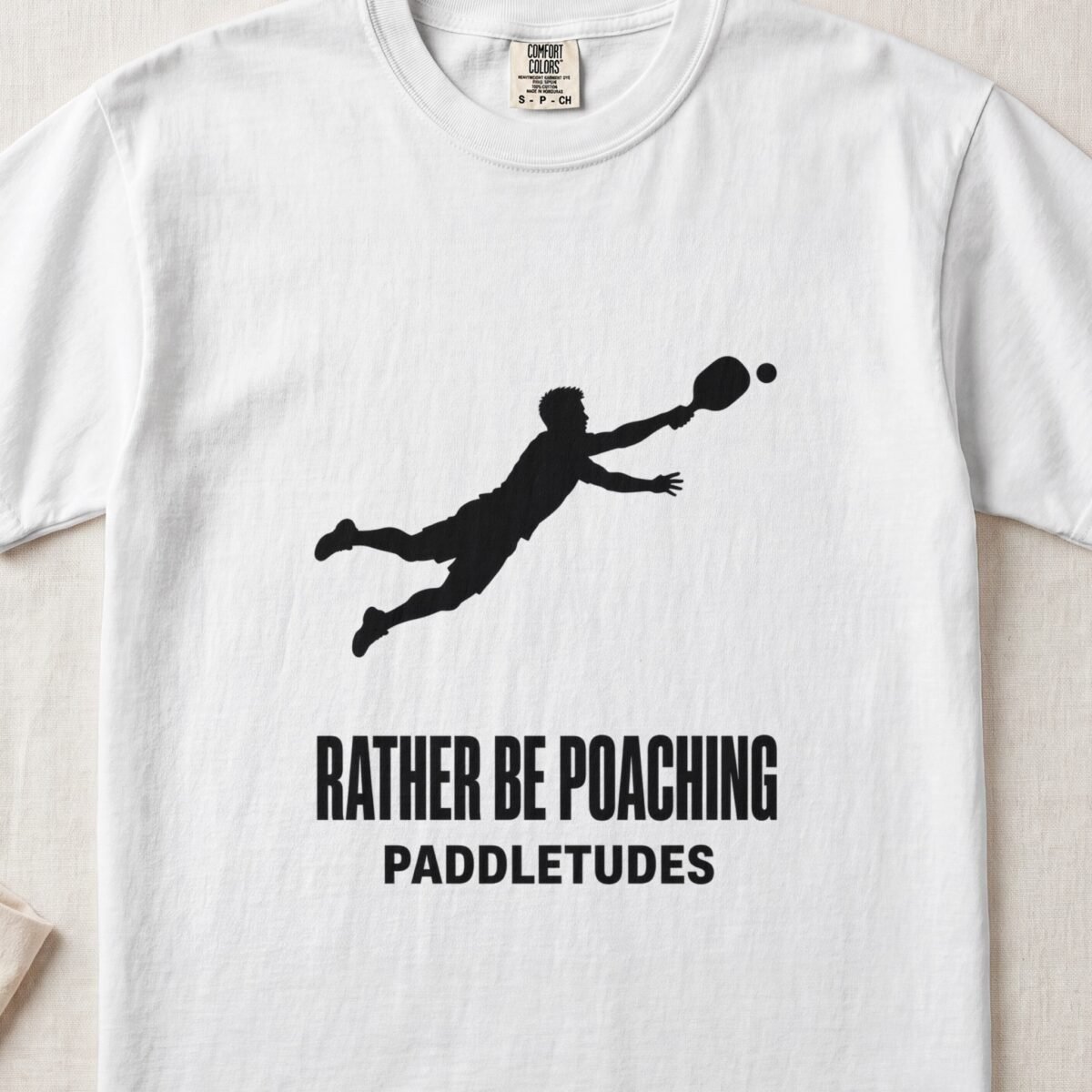
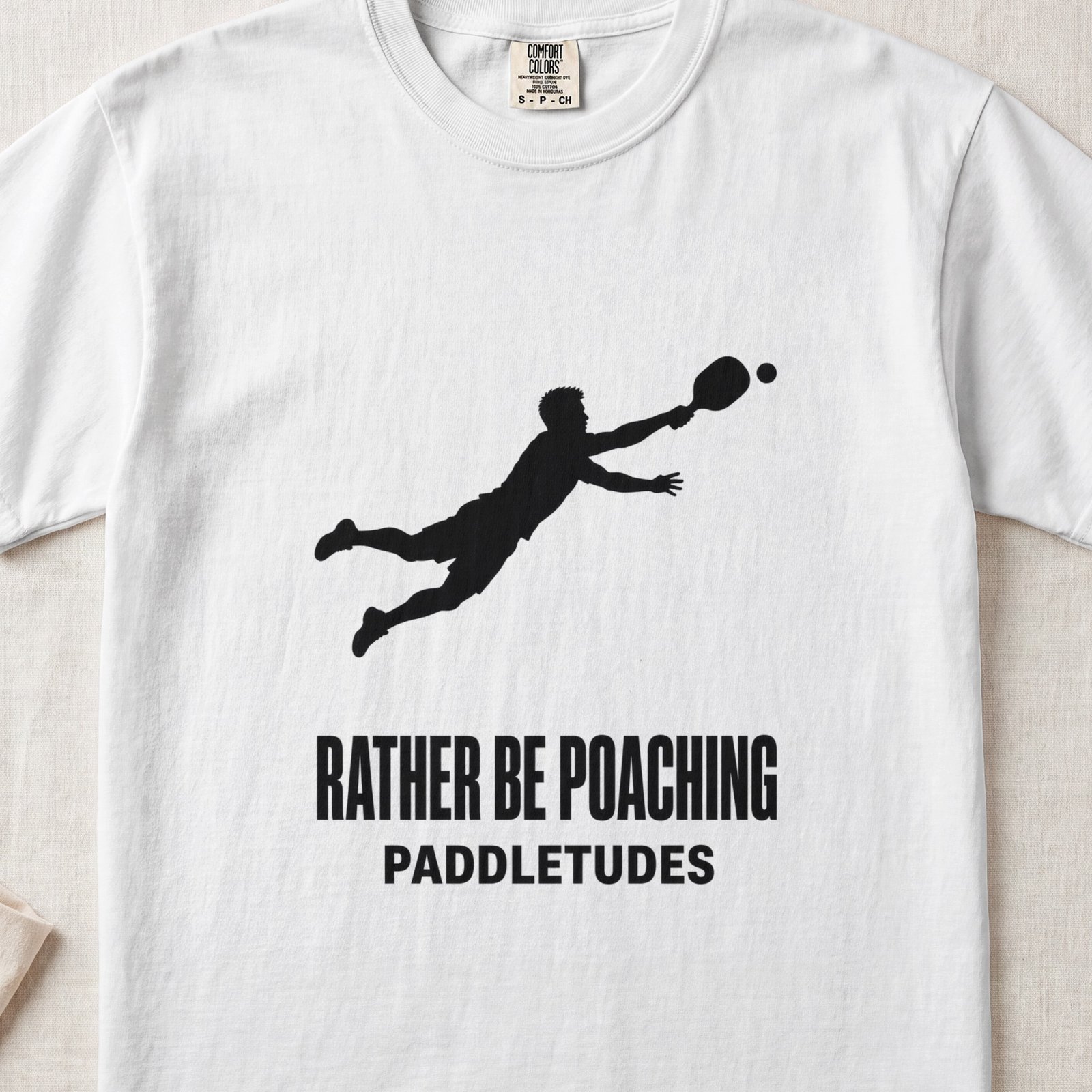
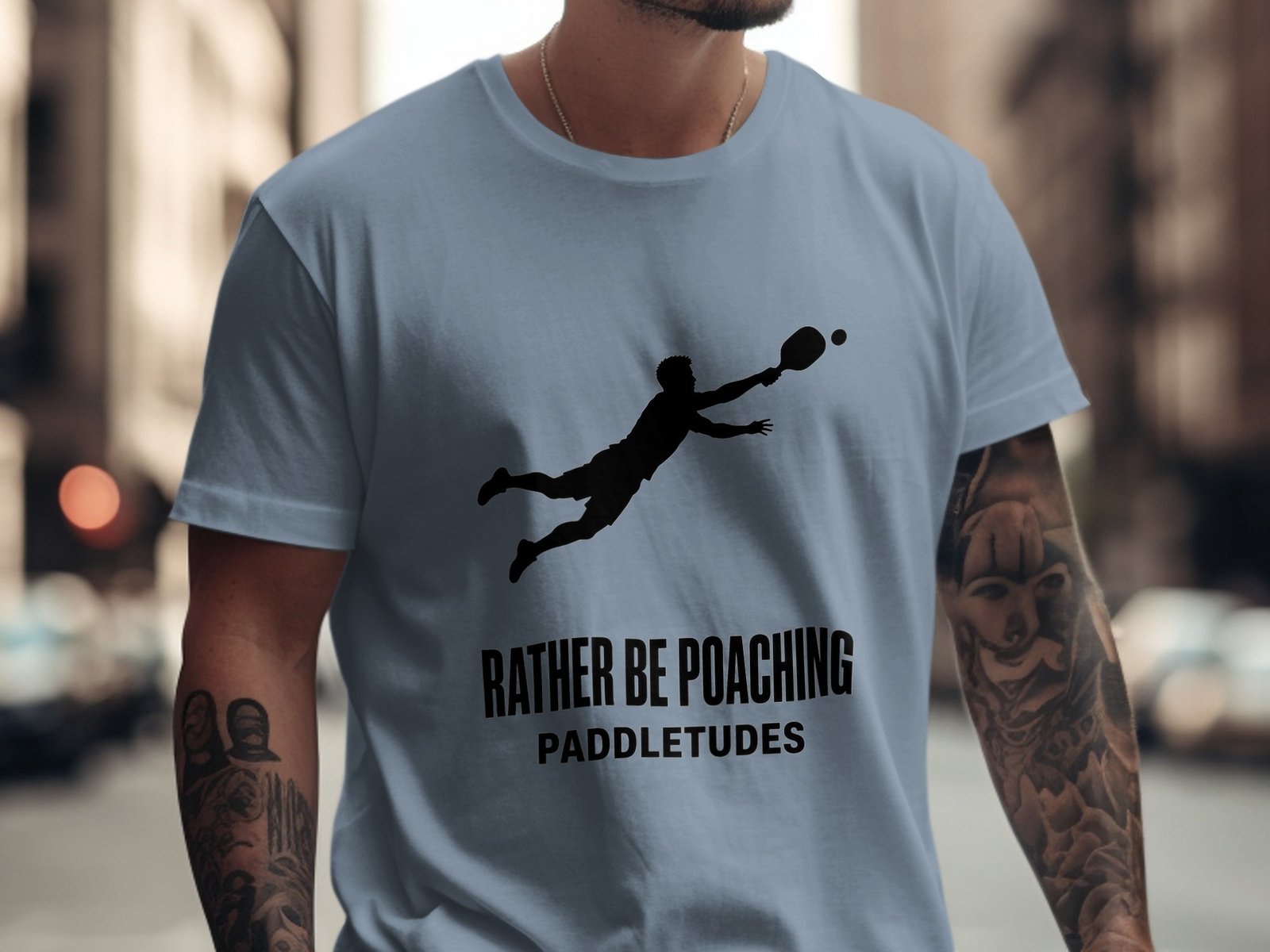
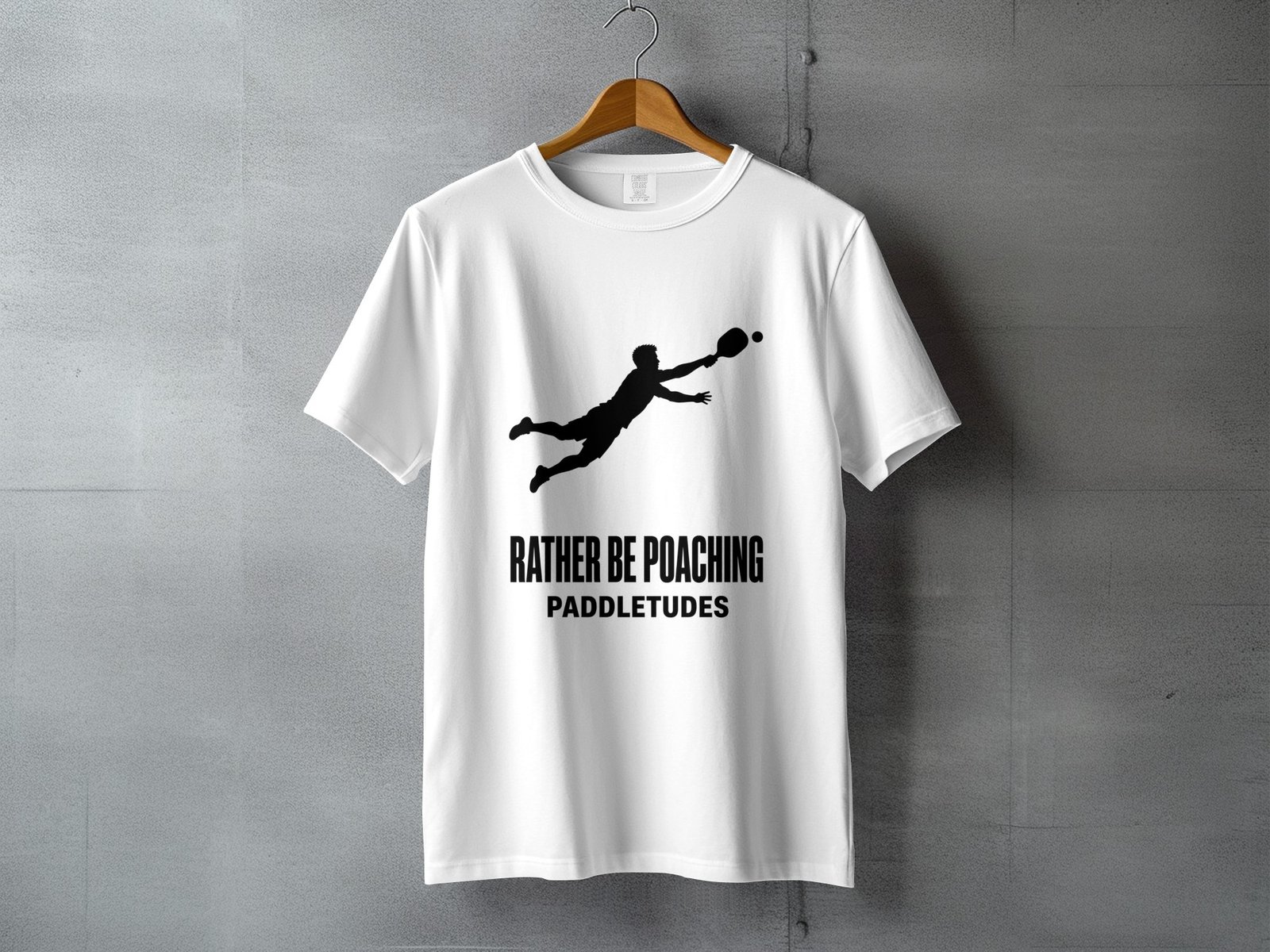
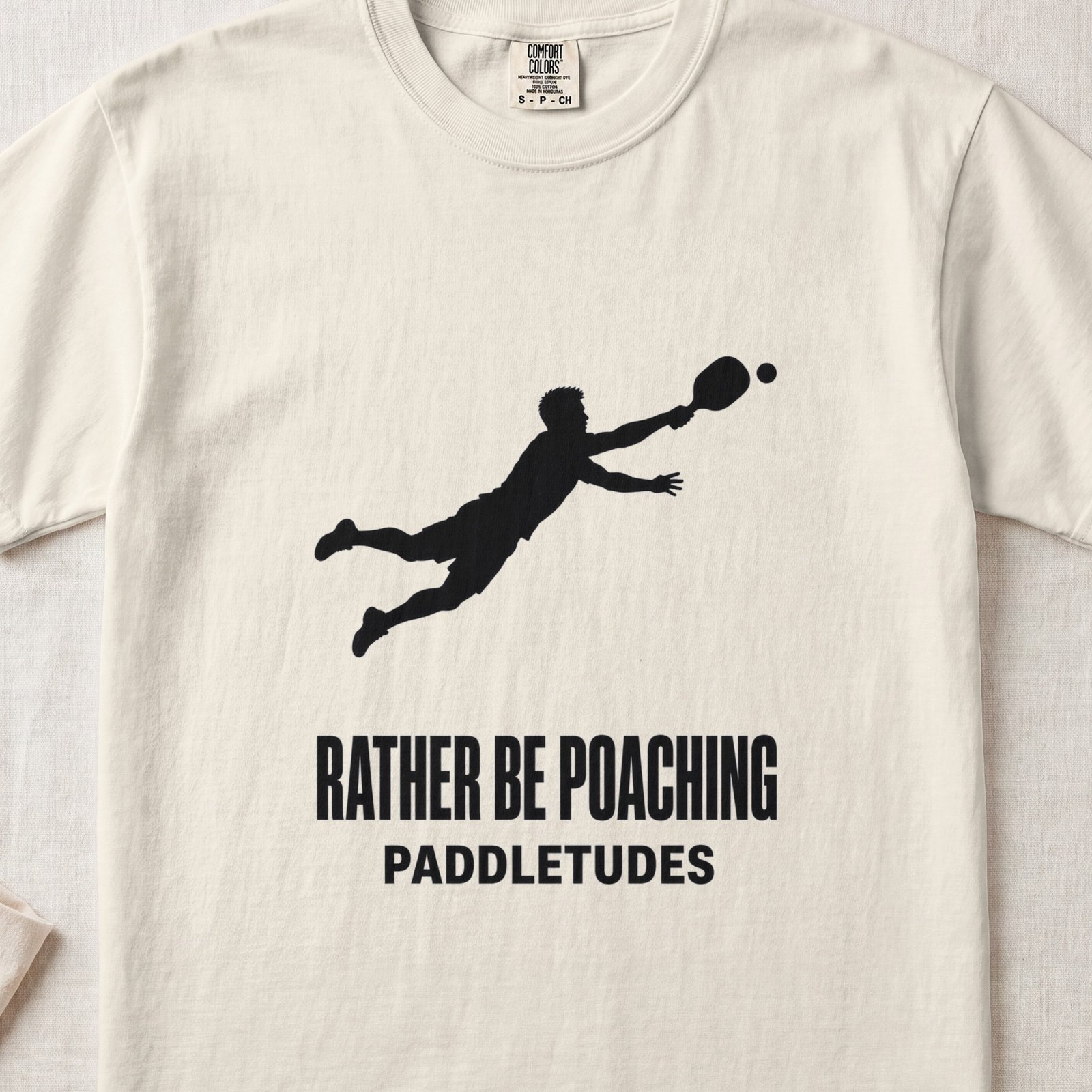
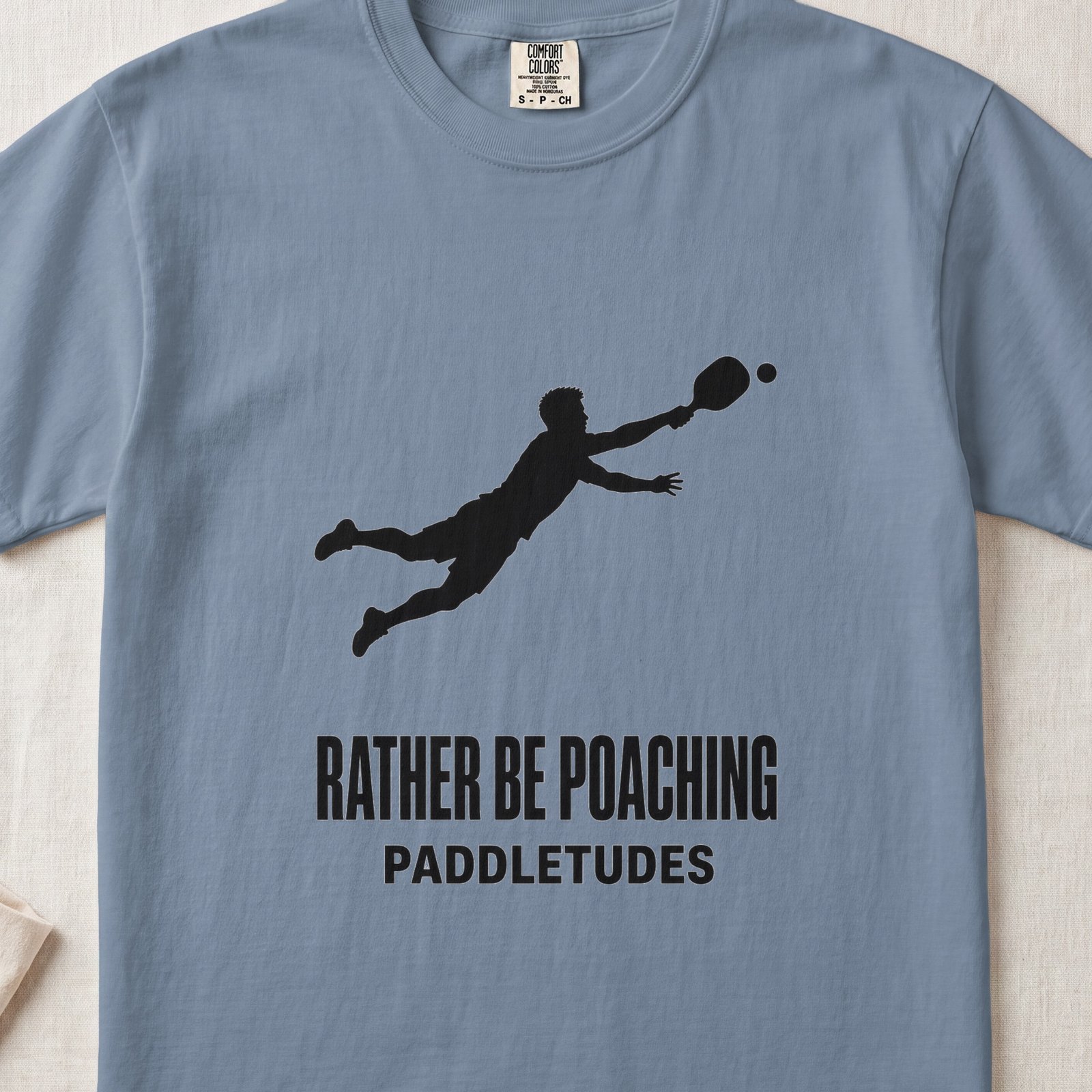
Rather Be Poaching
$29.99
- Comfort Colors 1717 heavyweight cotton
- Original design · printed to order
- U.S. print partners
A Formal Apology for Pickleball Poaching — in Shirt Form
This is a formal apology in the form of a t-shirt. Rather Be Poaching is for the doubles partner who has crossed the center line, taken a ball that wasn’t theirs, left their entire side of the court wide open, and — this is the part that makes it complicated — won the point. The poacher doesn’t want forgiveness. The poacher wants acknowledgment that the read was correct, the timing was perfect, and the put-away was clean. The partner, standing on the empty half of the court they were supposed to be covering, has a different perspective. This shirt is the compromise. It says “I know what I did, I know what it cost you emotionally, and I’m going to do it again next point.”
Off the court, this is the person who takes over the grill at someone else’s barbecue. The person who answers the question that was directed at their coworker because they knew the answer faster. The person who reorganizes the dishwasher after someone else loaded it because the plates were in the wrong section. The Rather Be Poaching player cannot stop helping. The help is not always requested. The help is not always appreciated. But the help is almost always effective, which is the infuriating part — you can’t tell someone to stay in their lane when their lane-crossing just won three straight points and the scoreboard says they were right.
Poaching at its best is a coordinated doubles weapon, not a freelance mission. At Bobby Riggs in Encinitas, the competitive doubles teams use hand signals — a closed fist behind the back means “I’m staying,” an open hand means “I’m going.” The partner sees the signal and shifts to cover the vacated side before the serve even crosses the net. When it’s coordinated, the poach creates a two-on-one situation that ends the point in half a second. When it’s uncoordinated — when one player just goes without telling anyone — it creates chaos that usually benefits the other team. The difference between a poacher and a liability is one pre-serve hand signal, and the player wearing this shirt has learned to use it. Most of the time.
The skill level gap on poaching tells you everything about doubles maturity. At 3.0, poaching is random — you move because the ball was there and your body said go. The result is coin-flip. At 3.5, the reads get better but the commitment gets worse — you hesitate halfway, ending up in no-man’s-land where you can’t reach the poach or recover to your side. At 4.0 and above, the poach is a planned play with a specific trigger: the opponent’s paddle angle says cross-court before the ball leaves the face. You read it, commit fully, and your partner shifts because they saw the signal. USA Pickleball rules don’t restrict where you stand or move on your side of the court, so poaching is completely legal. The paddle that helps here is one with a shorter handle and responsive face for quick wrist flicks at the net — brands like CRBN and Selkirk both make paddles in the 7.6 to 7.9 ounce range that prioritize reaction speed over raw power. The poach isn’t a power shot. It’s a redirection — you’re taking the opponent’s pace and punching it into the gap they just created by aiming cross-court.
In mixed doubles specifically, poaching carries social weight that the player wearing this shirt should be aware of. A male player who poaches every ball from a female partner — regardless of whether she was in position — creates an uncomfortable dynamic that has nothing to do with tactics. The best mixed teams poach by agreement. Both players have shots they’re responsible for, both have shots they’re releasing, and the conversation happens before the game starts. At Pictona’s 49 courts near Daytona Beach and at every Chicken N Pickle location across the country, the mixed doubles teams that win consistently are the ones where both partners poach and both partners cover — not the ones where one partner plays hero ball and the other watches.
If the doubles partner you keep poaching on deserves an apology gift — or if you and your partner play opposite styles and want the matching set — this shirt paired with Dink Responsibly is the couples purchase. One poacher. One disciplined lane-holder. Two shirts. The same doubles team that drives everyone at open play crazy. For the hands battle that starts after a successful poach — the rapid volley exchange where fast hands finish what the lane-cross started — Hands Battle Won picks up exactly where this shirt leaves off. Use Pickleheads to find open play near you and test your reads against real opponents. The poach only works when the read is real. Practice makes the read faster. Game experience makes it reliable.
Printed on a Comfort Colors 1717 garment-dyed heavyweight tee with water-based DTG ink — sizing and care details here.
What Is Poaching in Pickleball
Poaching is crossing into your partner’s side of the court to intercept a ball they would have played. In doubles pickleball, the net player reads the opponent’s paddle angle and cuts across to volley a cross-court shot before it reaches their partner. The goal is to end the point immediately by catching the opposing team off guard with an angle they weren’t expecting. A good poach produces a winner. A bad poach produces a wide-open court, a point for the other team, and a partner whose silence communicates more than words ever could.
The timing is everything. The read happens before contact — you’re watching the opponent’s paddle face, not the ball. If the face is open and pointed cross-court, you move before the ball is hit. By the time it crosses the net, you’re already in position, paddle out, punching it into the gap they created by committing to the cross-court target. The opponent can’t redirect mid-swing. That’s why the poach works when the read is correct — the ball’s direction was decided before you moved, and your movement was decided before the ball left their paddle. It’s a prediction, not a reaction, and accurate predictions end points faster than any other play in doubles.
At competitive levels, poaching is a structured team tactic with pre-serve communication. Partners signal with their non-paddle hand behind their back — closed fist for staying, open hand for going. The partner who isn’t poaching shifts to cover the vacated side before the ball is served. When both players are in sync, the poach produces a two-on-one advantage that no amount of shot quality from the opponents can overcome. The chaos happens when the poach is freelanced — when one player commits without signaling. At that point it’s not a tactic. It’s a gamble. And the player wearing this shirt will tell you, with complete honesty, that they gamble more often than they signal. That’s the shirt. That’s the confession.
Is Poaching Rude in Pickleball
In competitive play, poaching is a standard doubles tactic used by every experienced team from recreational leagues to the PPA Tour. In casual open play, the answer depends on context, frequency, and communication. Taking a ball your partner was in position to play — without discussion, without signaling, repeatedly — will get your name quietly removed from the preferred-partner list regardless of how many points it won. The line between strategy and rudeness runs through intent.
A single poach on a ball you could clearly finish is generally accepted and often applauded. A pattern of poaching where you’re intercepting everything — including balls your partner was better positioned to play — communicates something other than strategy. It says you don’t trust your partner. At recreational open play, that message lands harder than the put-away, because the person you’re poaching from came to play, not to watch. The unwritten rule at most facilities: poach the ones you can put away and leave the ones you’re guessing on. One or two poaches per game feels like teamwork. Six feels like a takeover.
In mixed doubles, the dynamic is even more charged. A male player who systematically poaches every ball from a female partner — regardless of whether she was in position, regardless of whether the ball was on her side — creates a playing environment where one partner is performing and the other is spectating. The best mixed doubles teams at every level communicate before the game about who takes what. Both partners poach. Both partners hold. The conversation is the foundation, and it happens before the first serve, not after the third argument. The sport is growing because it’s inclusive. Poaching without communication undermines that inclusivity one overridden partner at a time, and the courts remember how it felt long after the score is forgotten.
-
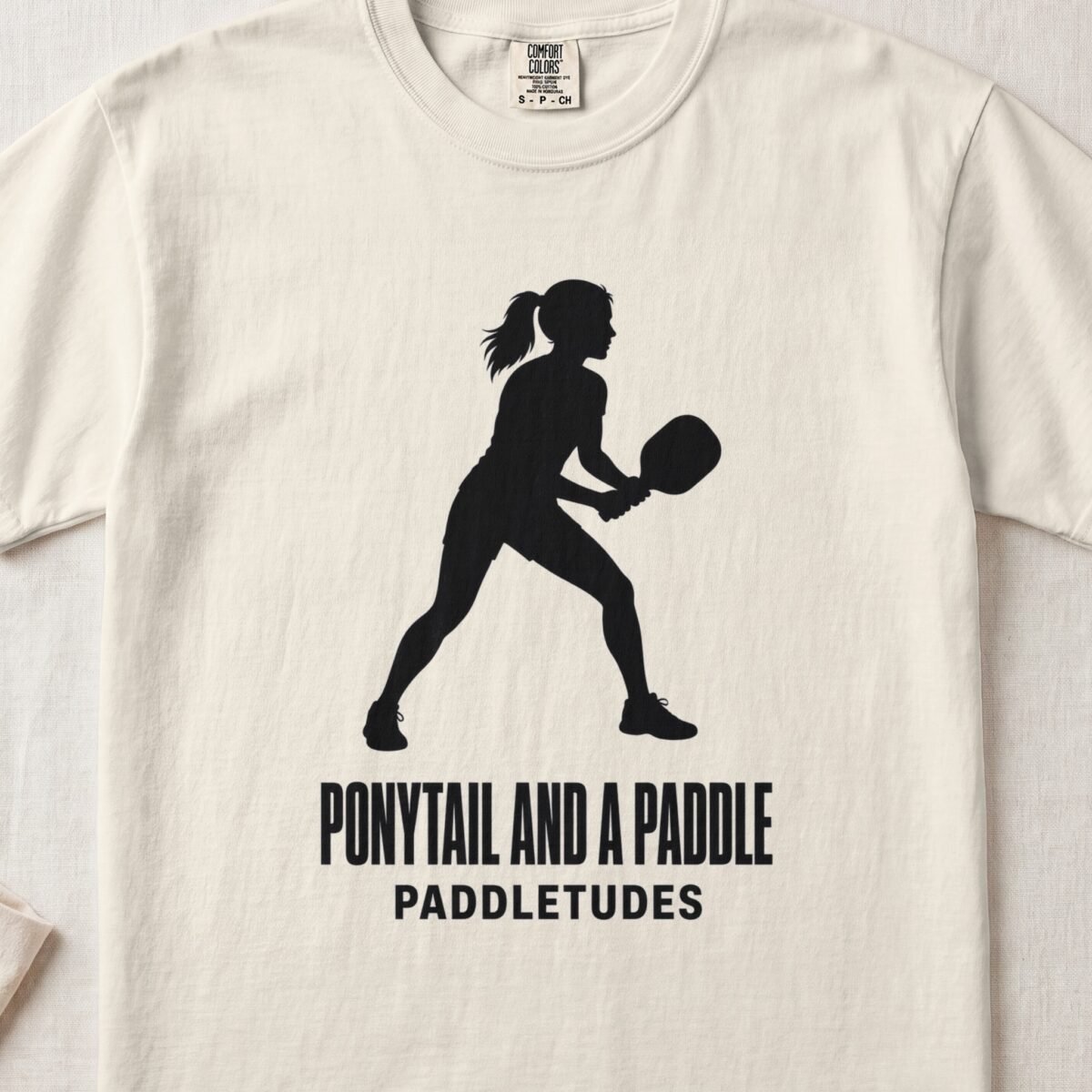
Ponytail And A Paddle
$29.99 Select options This product has multiple variants. The options may be chosen on the product page -
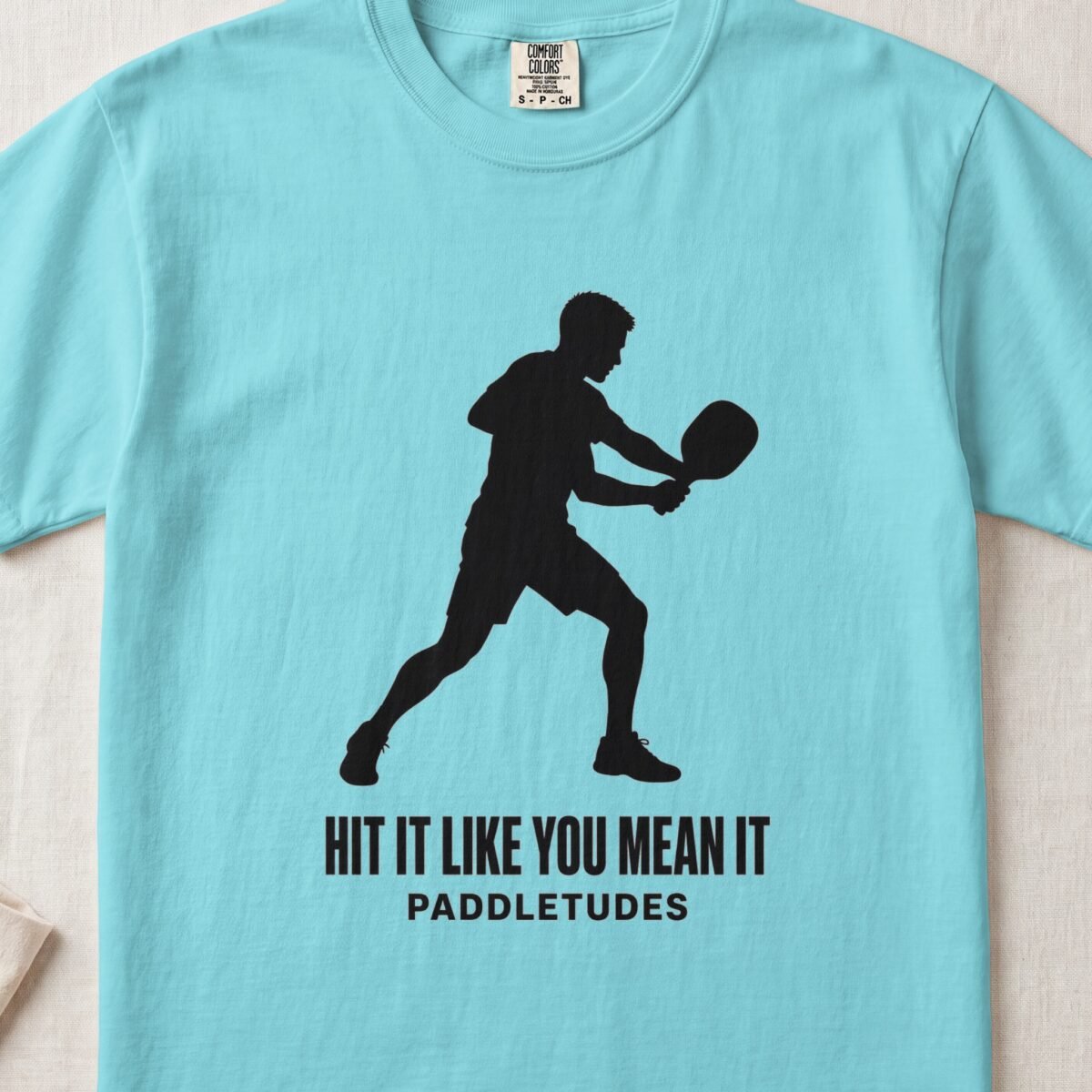
Hit It Like You Mean It
$29.99 Select options This product has multiple variants. The options may be chosen on the product page -
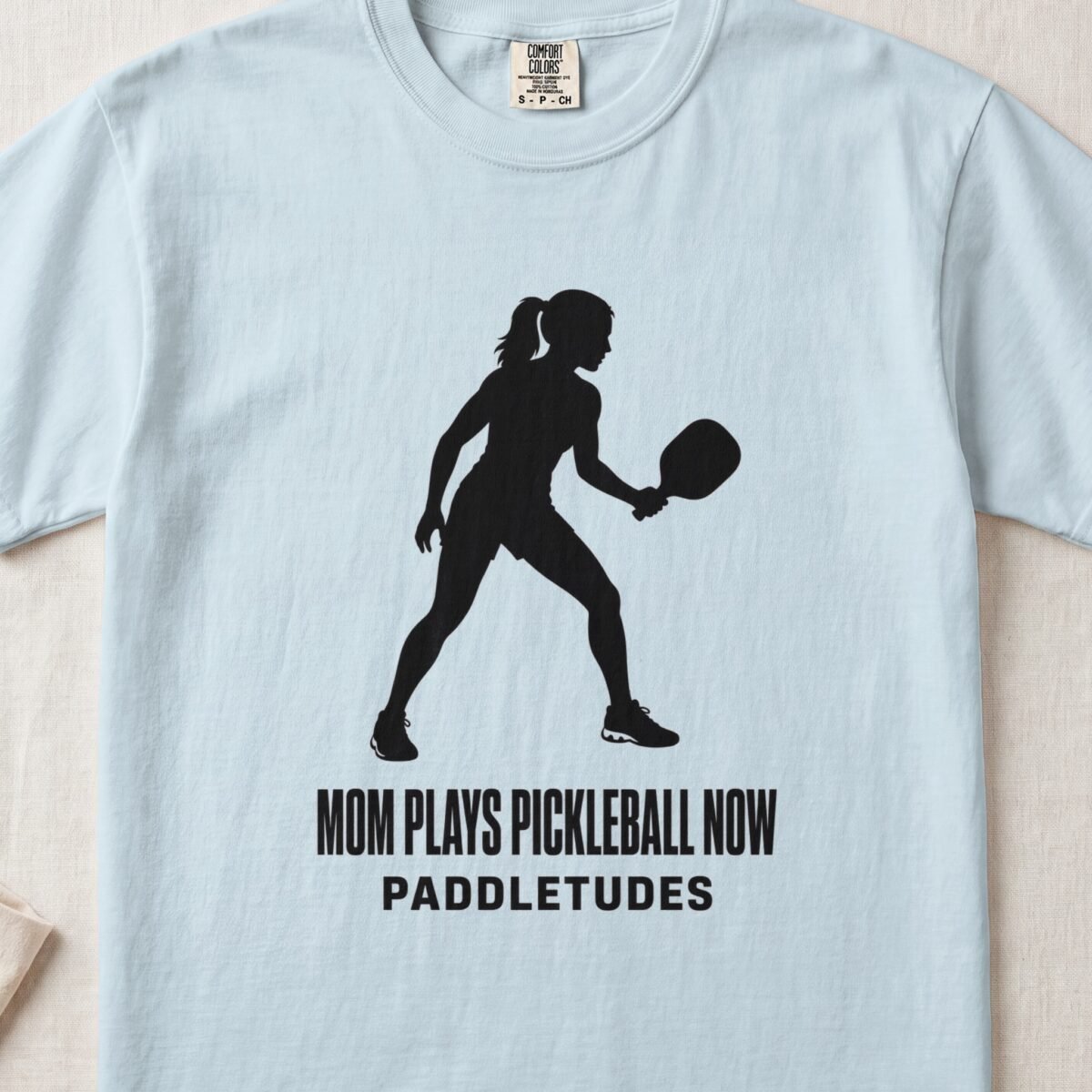
Mom Plays Pickleball Now
$29.99 Select options This product has multiple variants. The options may be chosen on the product page