Retro Comfort Colors 1717
Pickle Shack
$39.99
- Comfort Colors 1717 heavyweight cotton
- Original design · printed to order
- U.S. print partners
PickleShack — A 1976 Parody Shirt for Court Culture
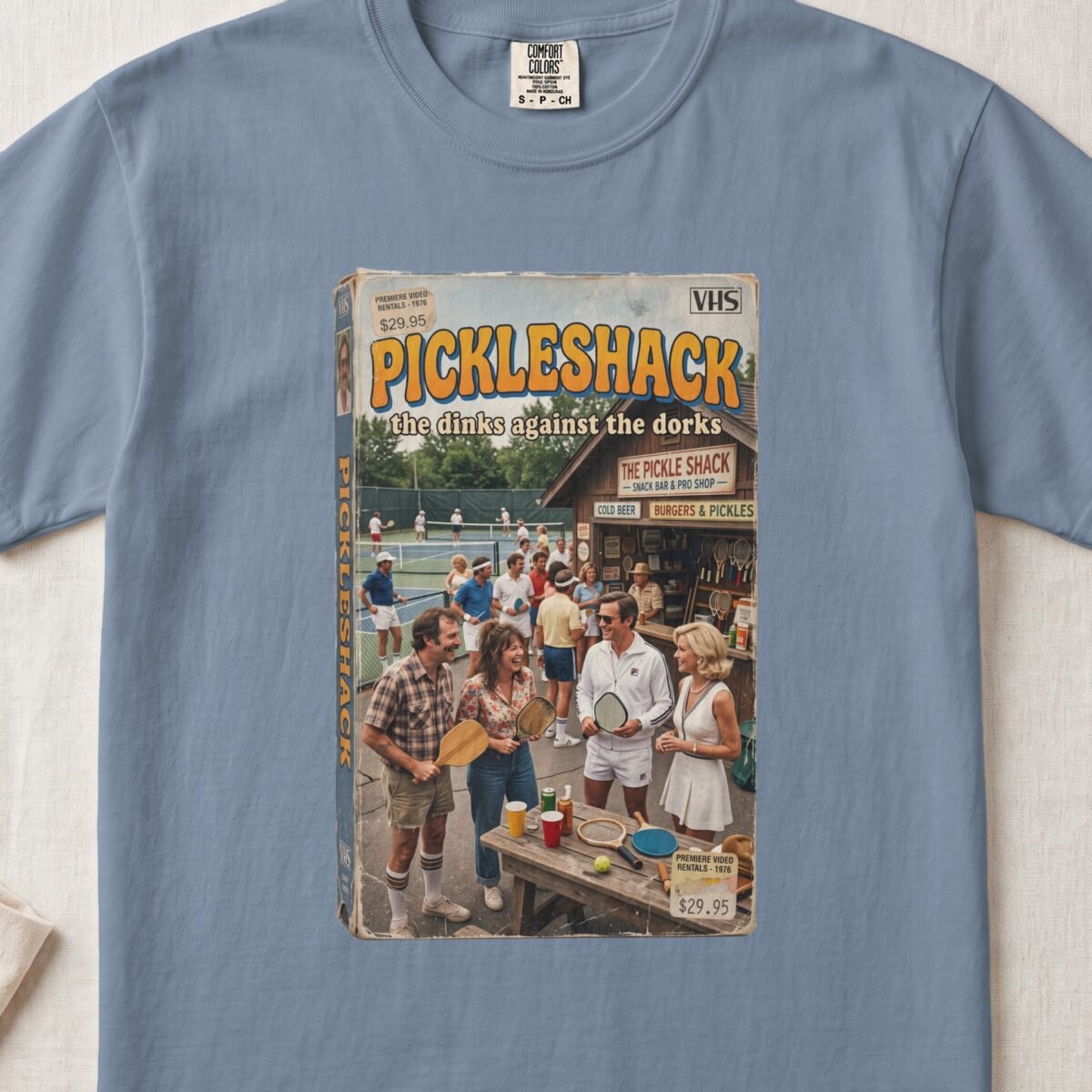
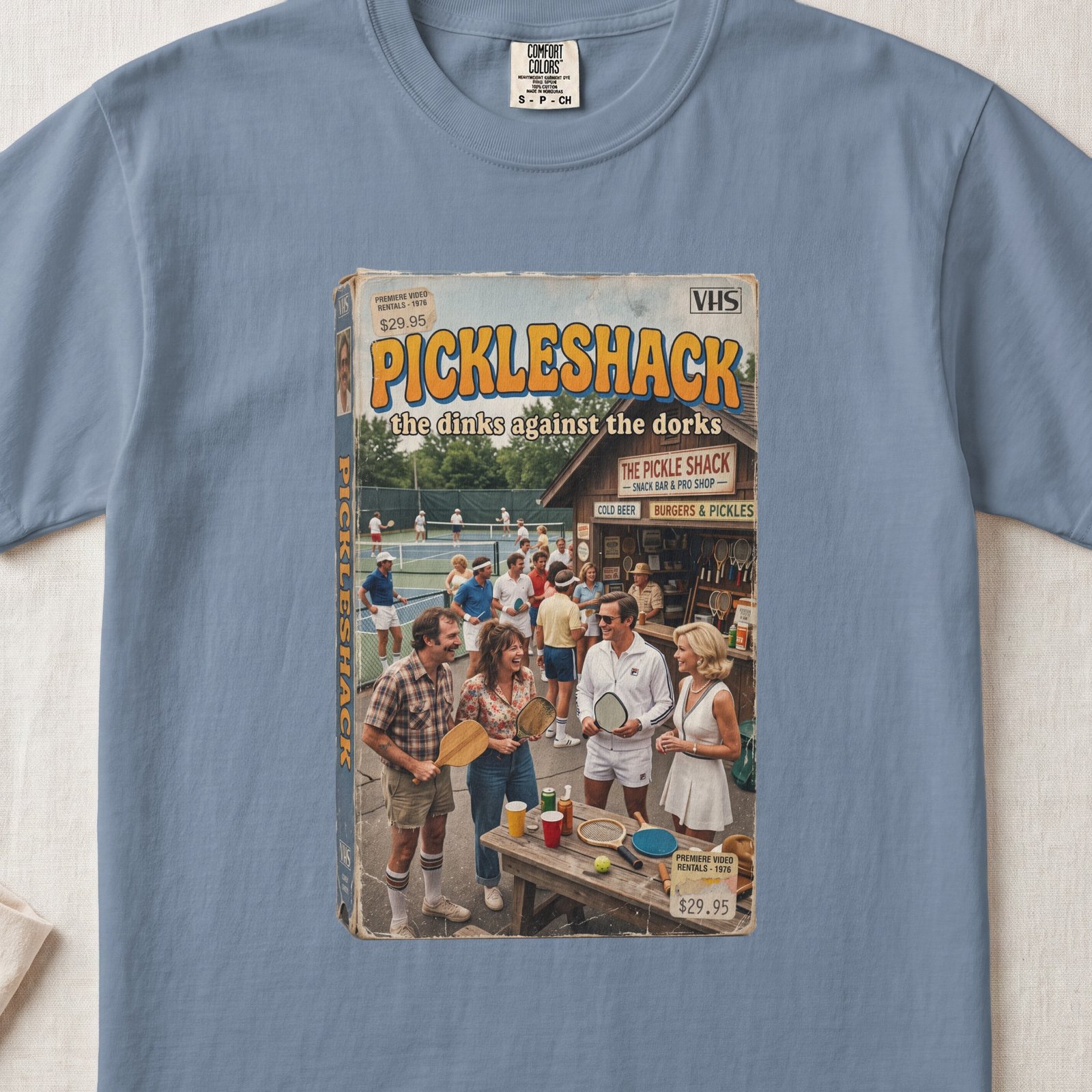
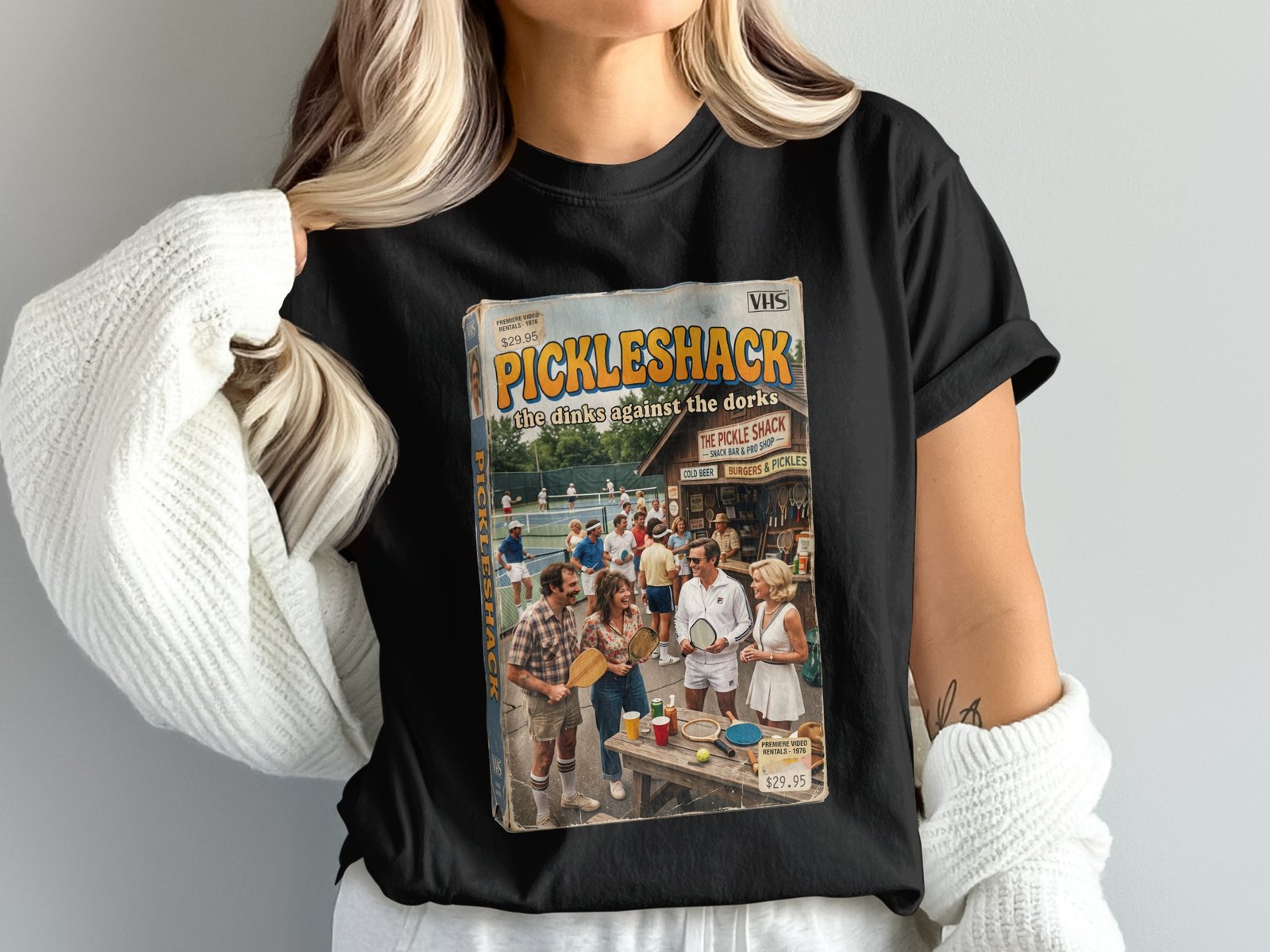
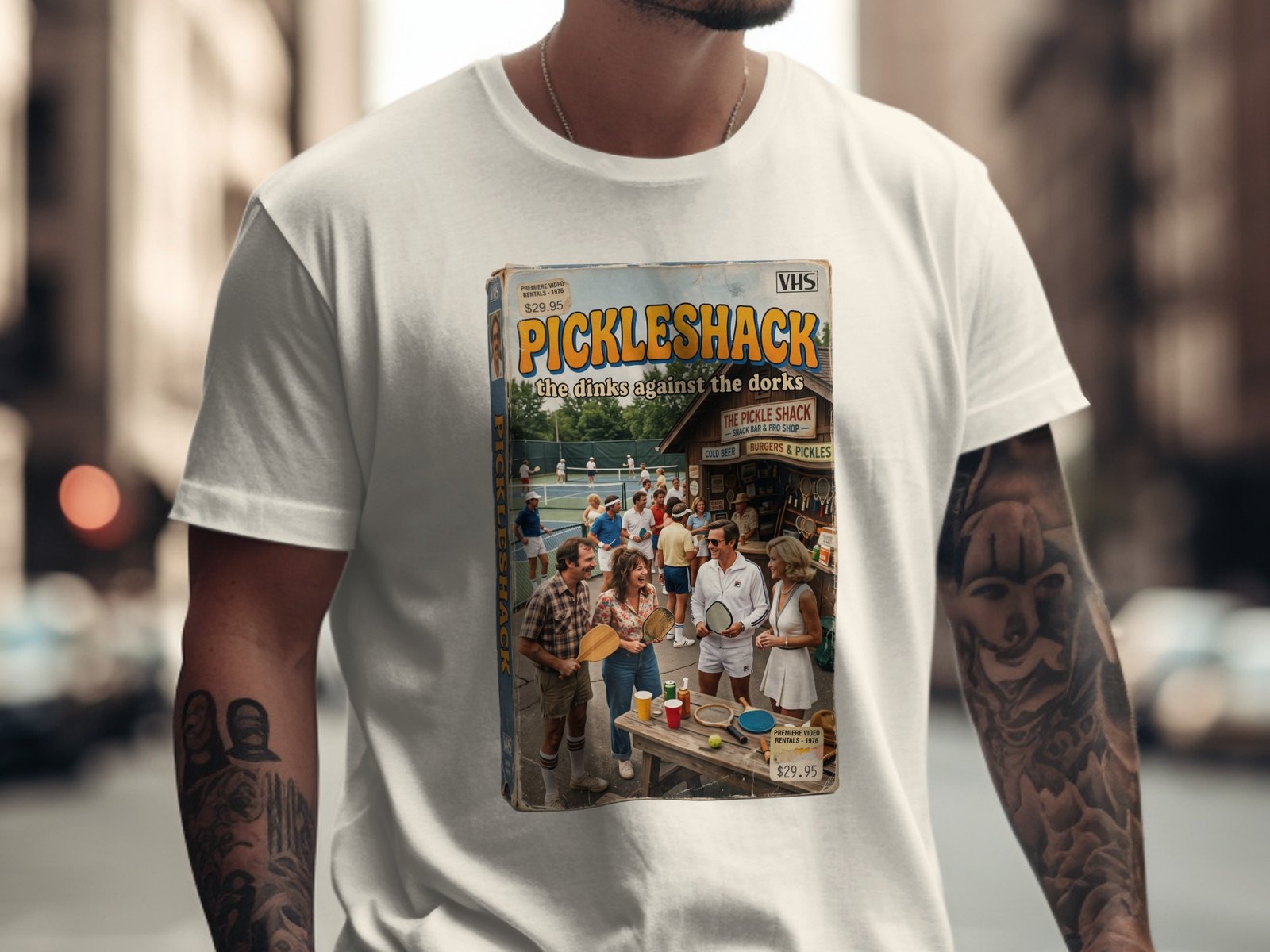
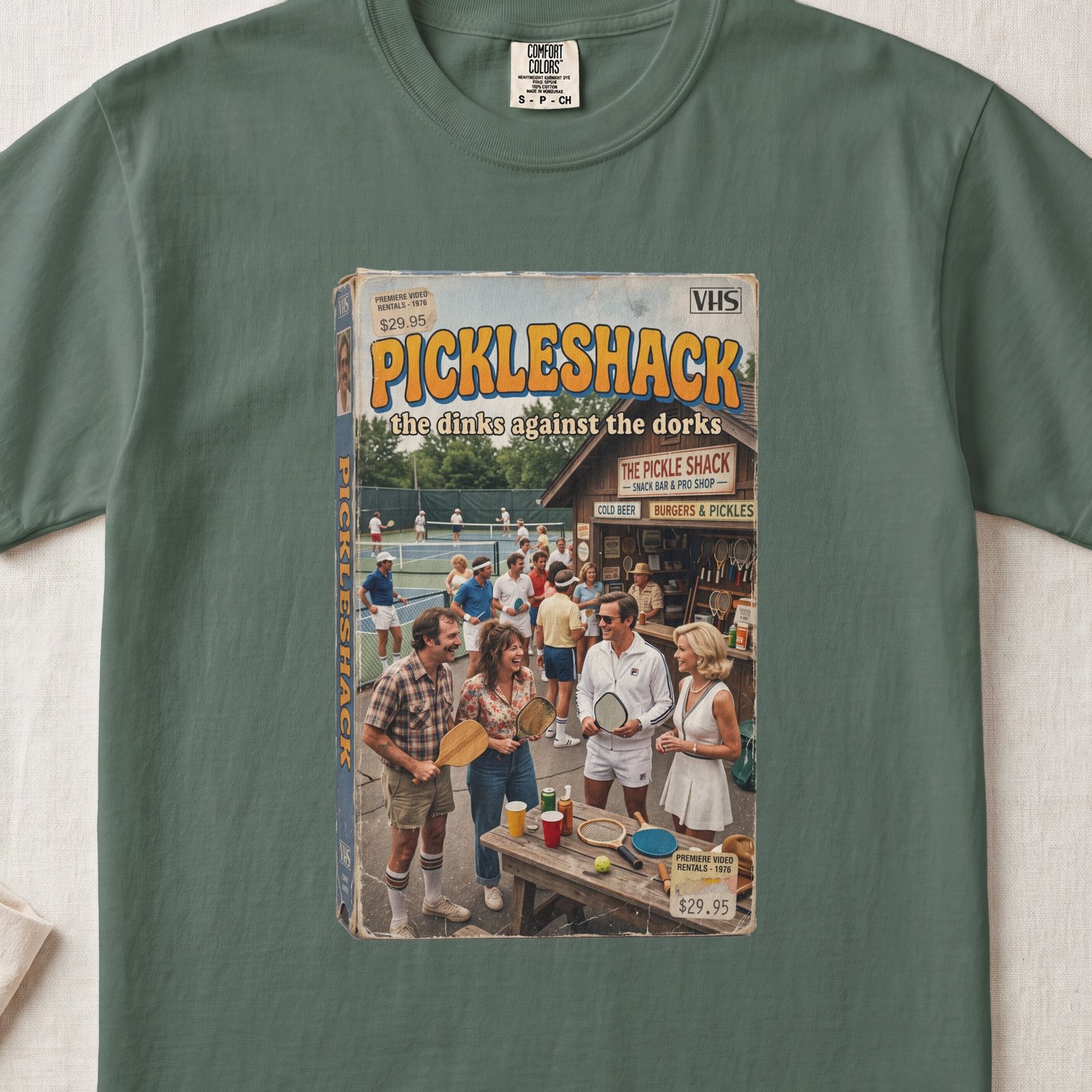
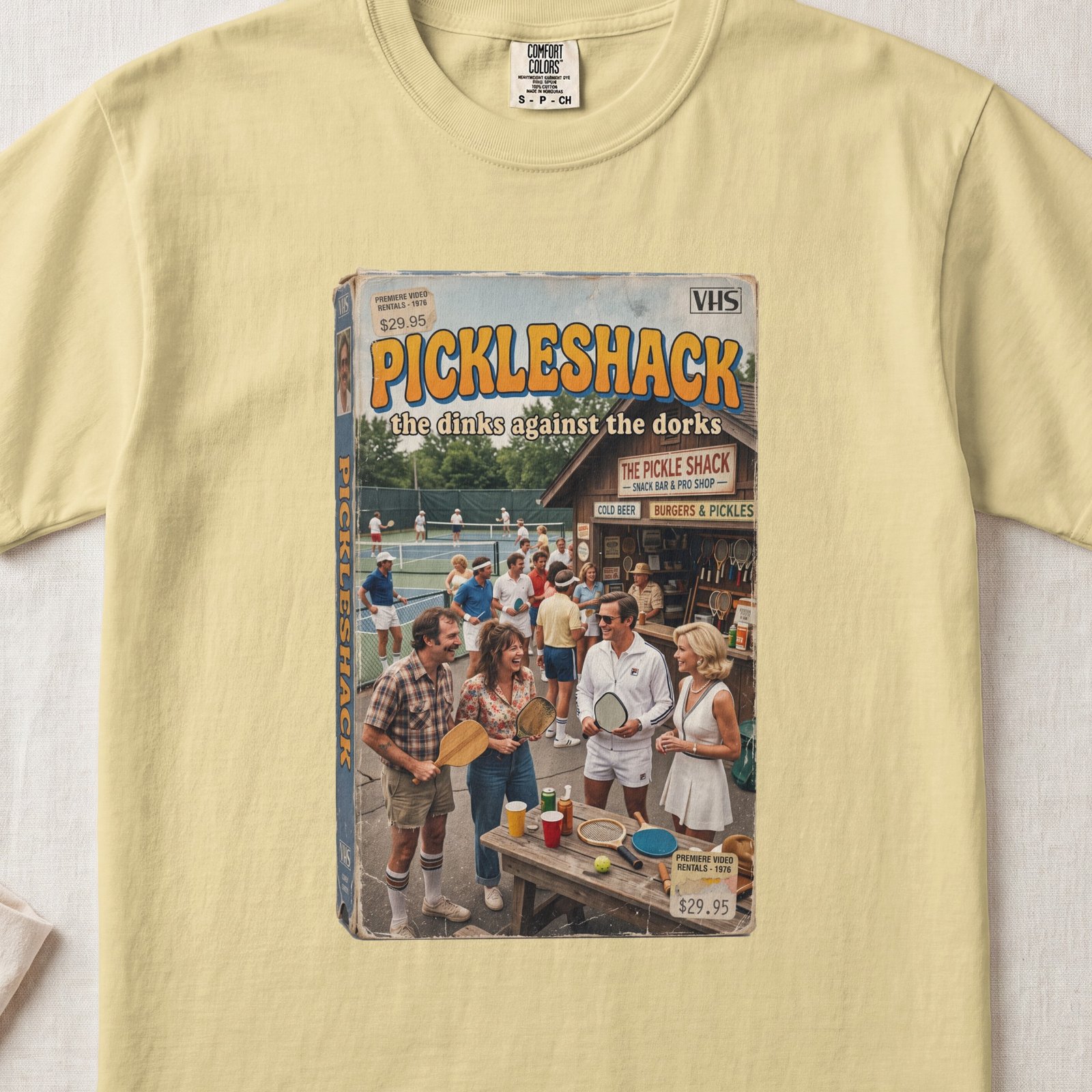
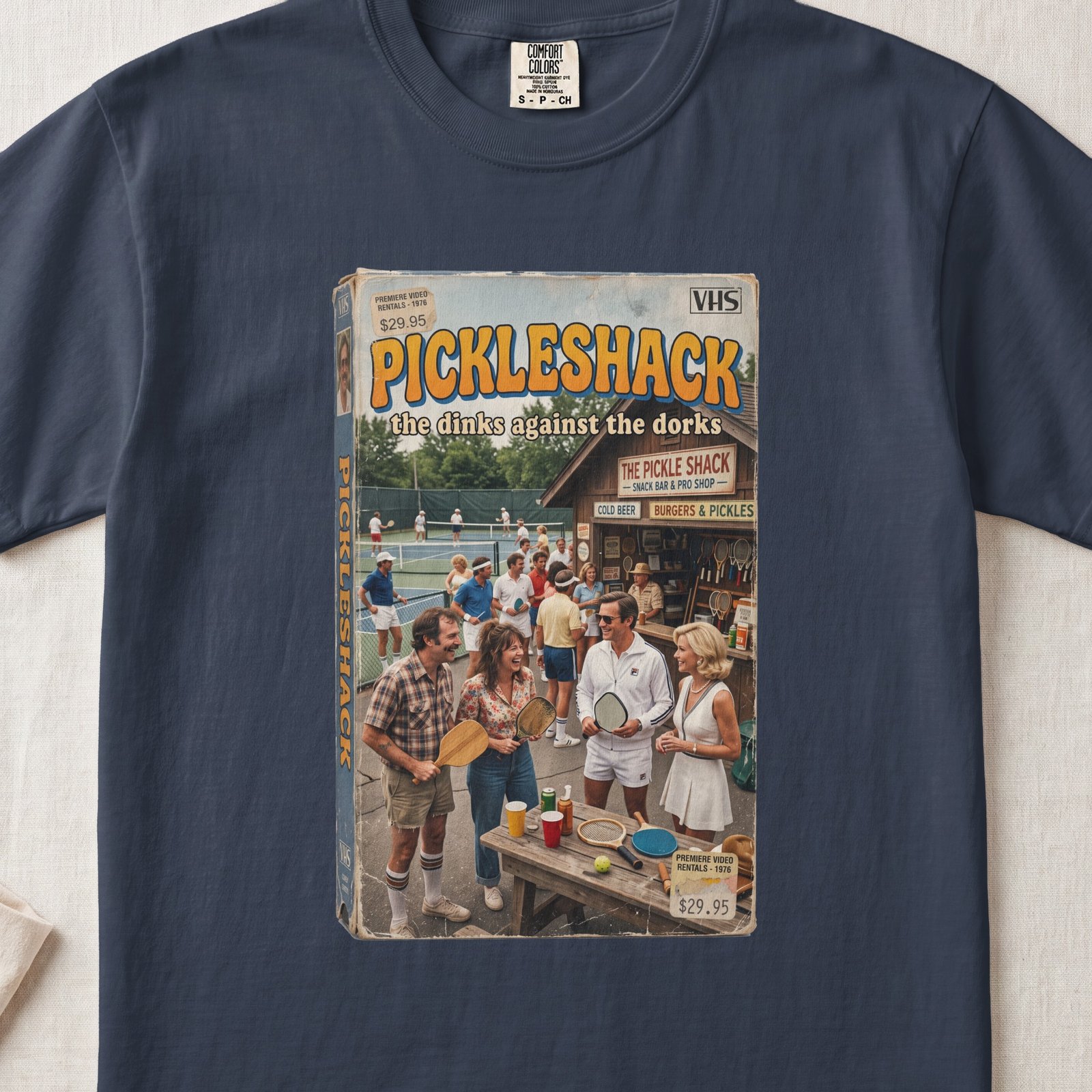
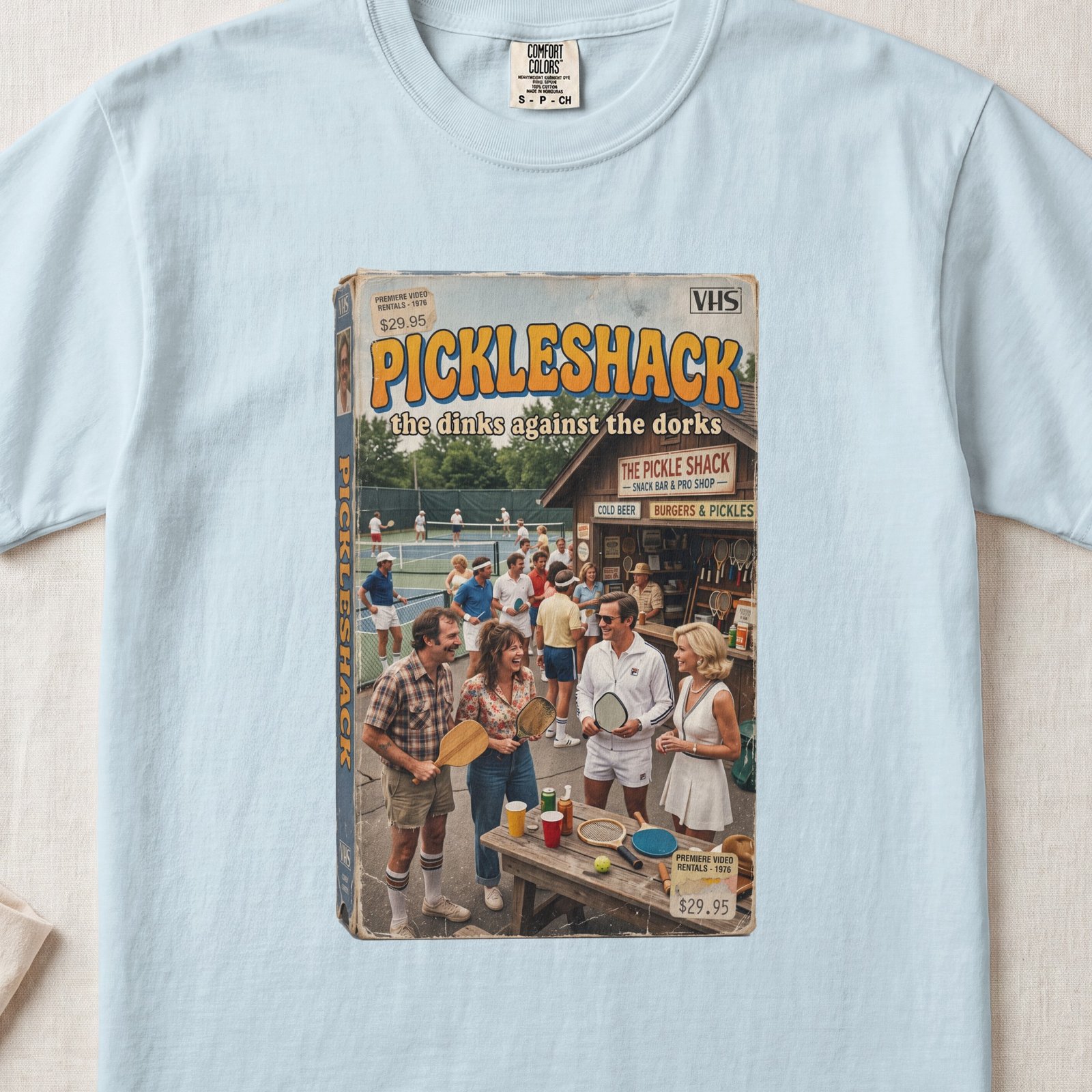
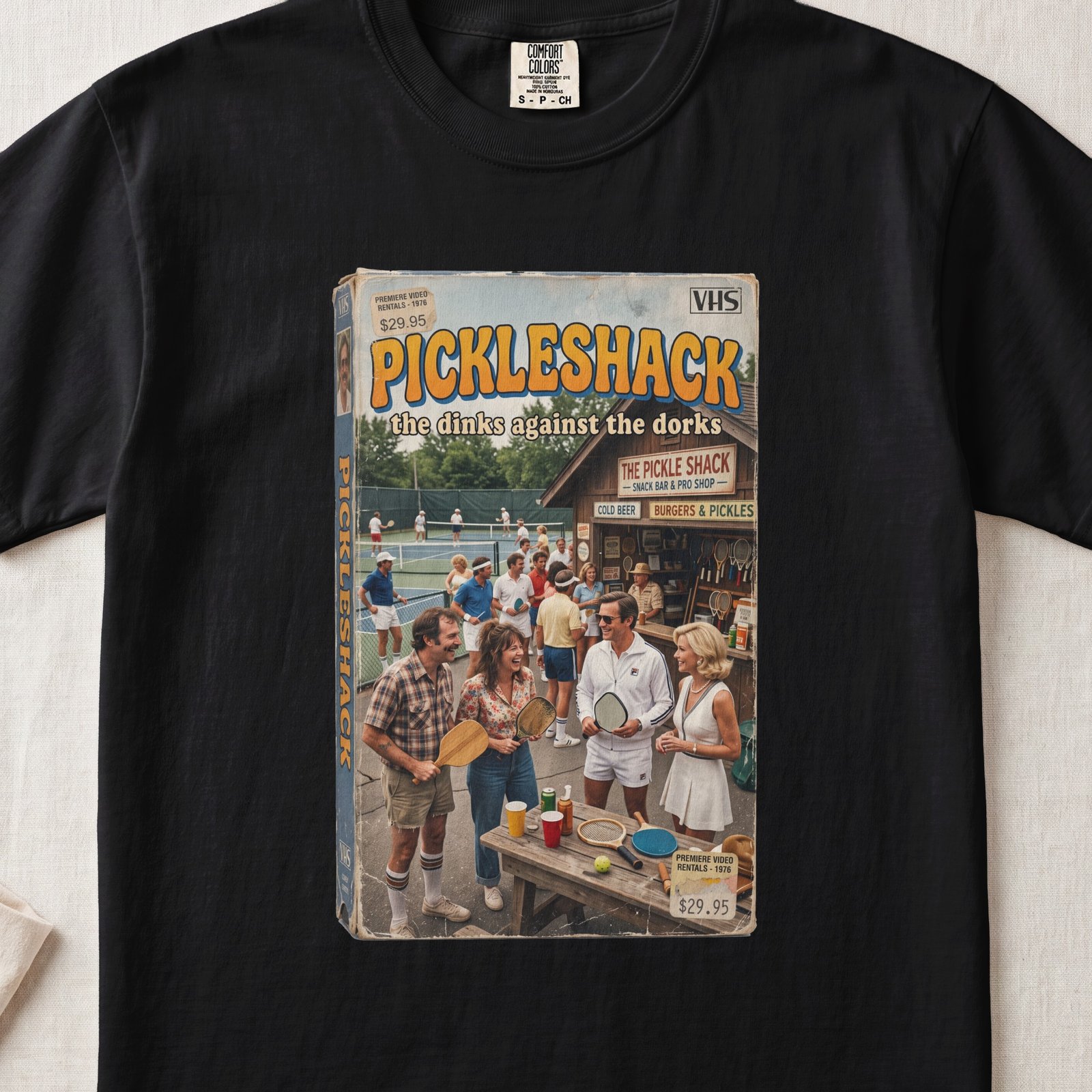
PickleShack is a retro pickleball shirt on a Comfort Colors 1717 — a fake 1976 VHS tape about the dinks versus the dorks at the local club.
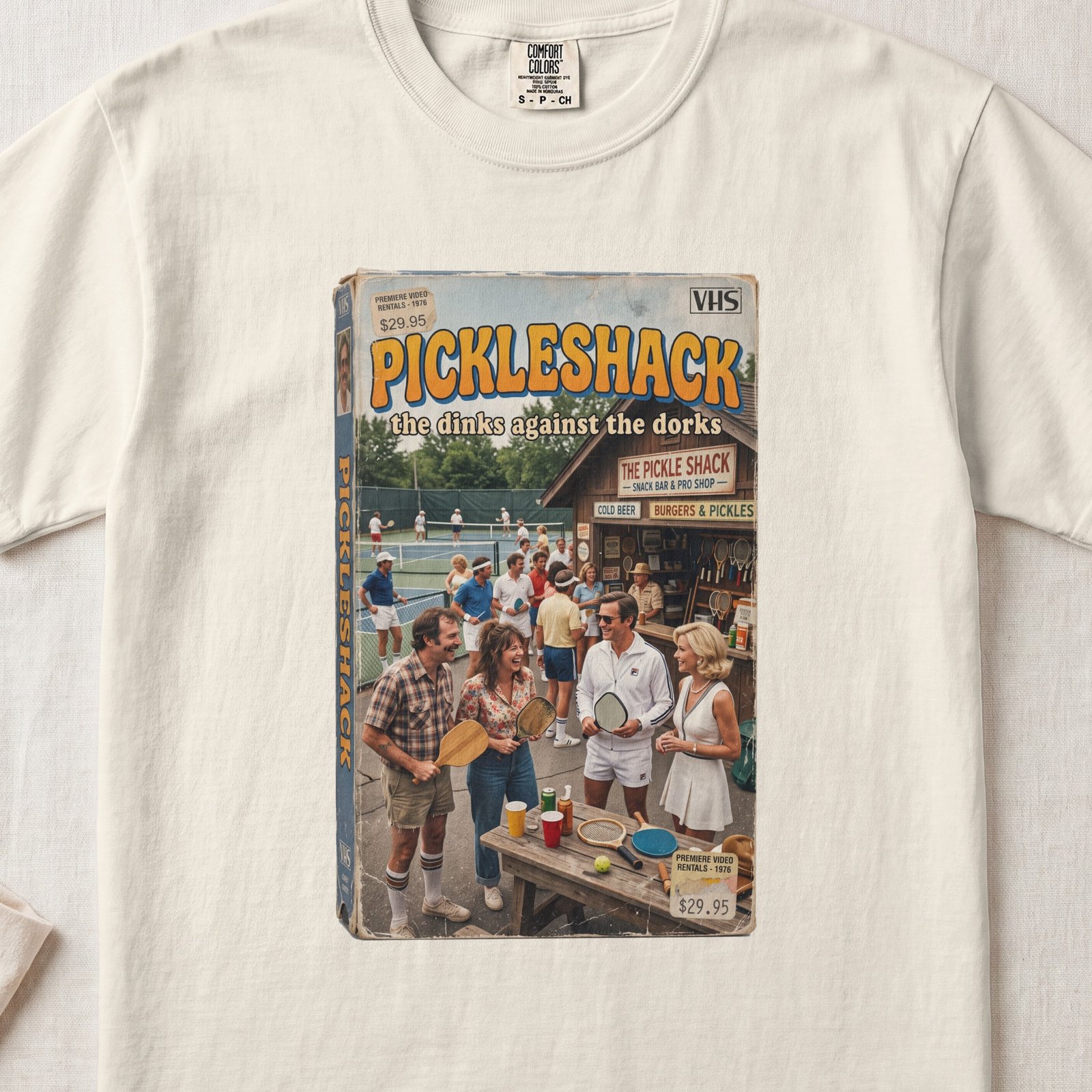
The cover art looks like it sat in a video rental store for a decade before someone finally brought it home. Sun-bleached edges. A weathered slipcover with “PREMIERE VIDEO RENTALS – 1976” stamped in the corner and a $29.95 price tag nobody ever peeled off. The scene on the front is a summer afternoon at The Pickle Shack — Snack Bar and Pro Shop — where the signs on the building advertise cold beer, burgers and pickles, and the crowd outside is split right down the middle. Wooden paddles. Tube socks. Tennis whites on one side, plaid shirts and cutoffs on the other. Everybody’s laughing, everybody’s drinking, and nobody can agree on who belongs on which court. The subtitle says it all: “the dinks against the dorks.”
That subtitle works three ways and all of them are on purpose. A dink is the soft shot in pickleball — the controlled drop into the non-volley zone that separates patient players from bangers. A dink is also the person who plays that way, the player whose entire game is built on finesse instead of force. And then there’s the social read — the club members who take the game seriously versus the ones who showed up because someone said there was beer. Every pickleball facility in America has this split. The competitive crowd warming up with drills at 7 a.m. and the social crowd rolling in at 10 with a cooler and no intention of keeping score. PickleShack puts both groups on the same VHS cover because that tension is what makes a good club good. The serious players need the casual players to fill the courts, and the casual players need the serious players to have someone to blame when they lose.
You know the person who wears this shirt because you’ve seen them at the facility. They play three or four times a week, but the playing is almost secondary to the scene. They know everyone by first name. They know which courts have the best shade at 4 p.m. They know the guy who brings homemade pickles — actual pickles — in a jar and puts them on the bench between games. Their group has a text thread that’s 90% scheduling and 10% trash talk, and the trash talk is the part everyone reads first. The Pickle Shack is their real-life Tuesday, condensed onto a VHS cover from a decade when the clubhouse was the center of every sport, not just the place you parked.
The 1976 setting isn’t arbitrary. The mid-1970s were the peak of the American racquet club. Tennis had just exploded as a mainstream sport — country clubs built courts as fast as they could pour concrete, and the social scene around those courts became the real draw. The pro shop. The snack bar. The post-match drink with the people you’d just played against. The club was where you met your neighbors, argued about line calls, and eventually agreed to play again next week. Pickleball inherited that entire culture when it started taking over those same facilities fifty years later. The courts that used to be tennis are now pickleball. The snack bar is still the snack bar. The social hierarchy — the players who take it too seriously versus the players who are just there for the burgers — hasn’t changed at all. PickleShack captures the moment those two eras overlap: the 1976 aesthetic applied to a sport that didn’t go mainstream until the 2020s, on a VHS box from a video store that would have been next to the club.
If you’re buying this for someone, it’s for the person whose social calendar revolves around court time. The one who says “we should get dinner” and means “we should get dinner after we play.” The spouse who lost every Saturday morning to a sport they’ve never tried. The retirement gift for the guy who’s about to play every single day and already has his facility picked out. PickleShack lands because the shirt isn’t really about pickleball — it’s about the scene around pickleball, the same way the best sports comedies from the 1970s were never really about the sport.
The VHS shelf has two more tapes from the same fictional distributor. Breaking Balls is the transformation story — a mild-mannered 3.0 player who picks up a paddle and becomes a competitive menace, told through a split-screen before-and-after that every serious player recognizes because it happened to them. Mixed Doubles Misery is the horror film about the doubles partner who won’t let you switch — ever. All three share the same fake production company, the same rental stickers, and the same commitment to the bit: these are real films from a real video store in a town where pickleball replaced everything. On the other side of the collection, The Pocket Paddle is a 1977 mail-order novelty and Kitchen Crunch is a cereal box — different aisle, same fake universe.
Printed on a Comfort Colors 1717 garment-dyed heavyweight tee with water-based DTG ink — sizing and care details here.
How Do You Throw a Pickleball Party
A good pickleball party needs three things: courts, food, and a format that keeps everyone rotating so nobody sits for more than one game. Reserve or set up at least two courts — four is better — and run a round-robin or king-of-the-court format where winners stay on and challengers rotate in. Mixed skill levels are fine and actually make it more fun as long as nobody is keeping official score.
Food and drink are the second half of the equation, and the growing number of dedicated pickleball facilities are building this into the experience. Snack bars, beer taps, and food trucks at the courts are becoming standard because the sport’s growth has been as much social as athletic. If you’re hosting at a public park or backyard court, keep it simple: coolers, burgers, and something pickle-themed because the pun is mandatory. Someone will bring a jar of actual pickles. Let them.
The format matters more than the food. A round-robin with eight to twelve players and two courts runs itself — use a whiteboard or a free bracket app to track rotation. Games to 11, win by 1 to keep things moving. Let people play with different partners every round so the social mixing actually happens. The best pickleball parties feel like the PickleShack scene on this shirt: half the people are playing, half are eating, everyone is talking, and nobody wants to leave. For tournament-style events, USA Pickleball publishes free bracket templates and event guides that work for everything from a backyard cookout to a charity fundraiser.
-
Rec League Redemption
$39.99 Select options This product has multiple variants. The options may be chosen on the product page -
Net Warriors
$39.99 Select options This product has multiple variants. The options may be chosen on the product page -
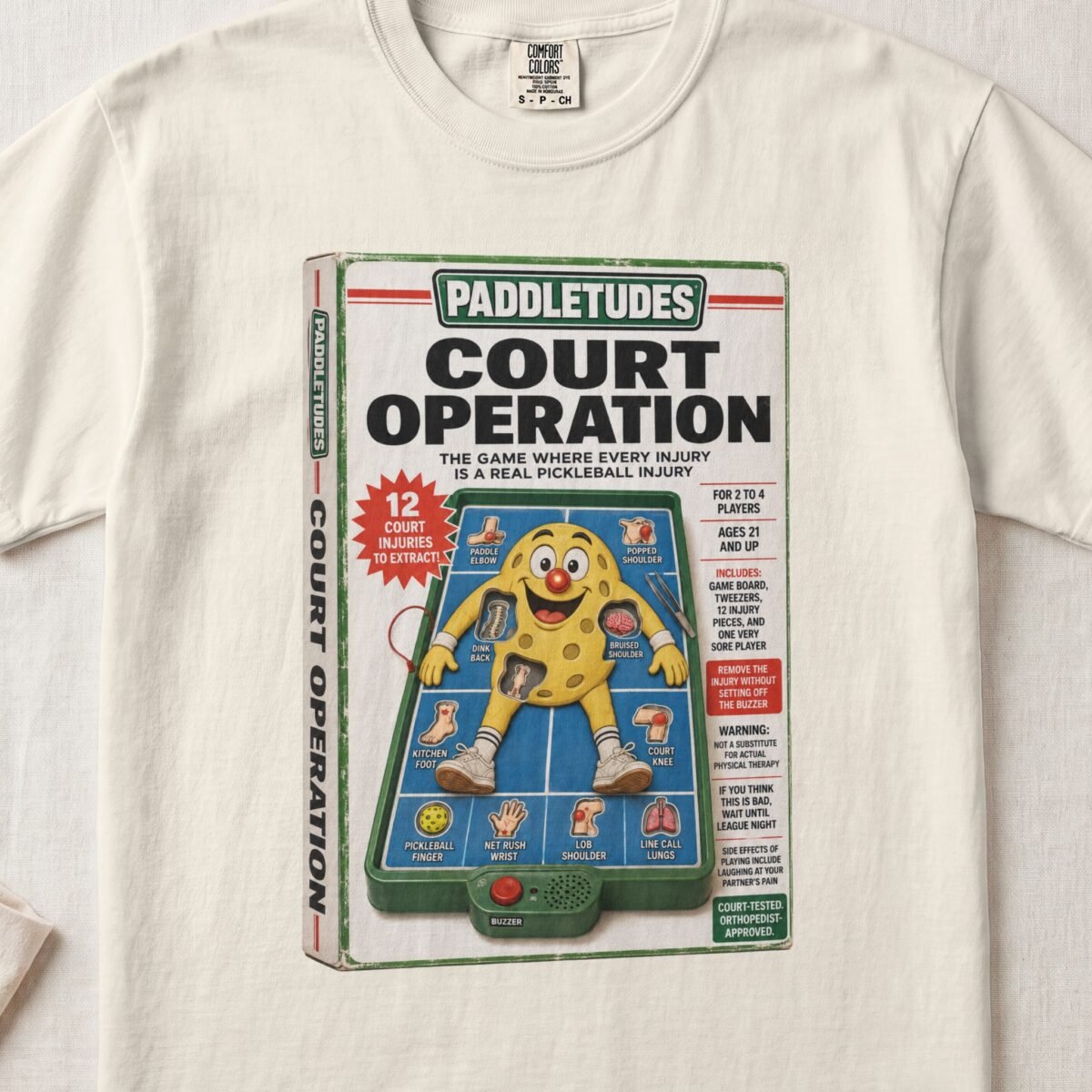
Court Operation
$39.99 Select options This product has multiple variants. The options may be chosen on the product page