Animals Comfort Colors 1717
Poodle Happy
$39.99
- Comfort Colors 1717 heavyweight cotton
- Original design · printed to order
- U.S. print partners
Not a Show Dog — A Poodle T Shirt for the Athlete
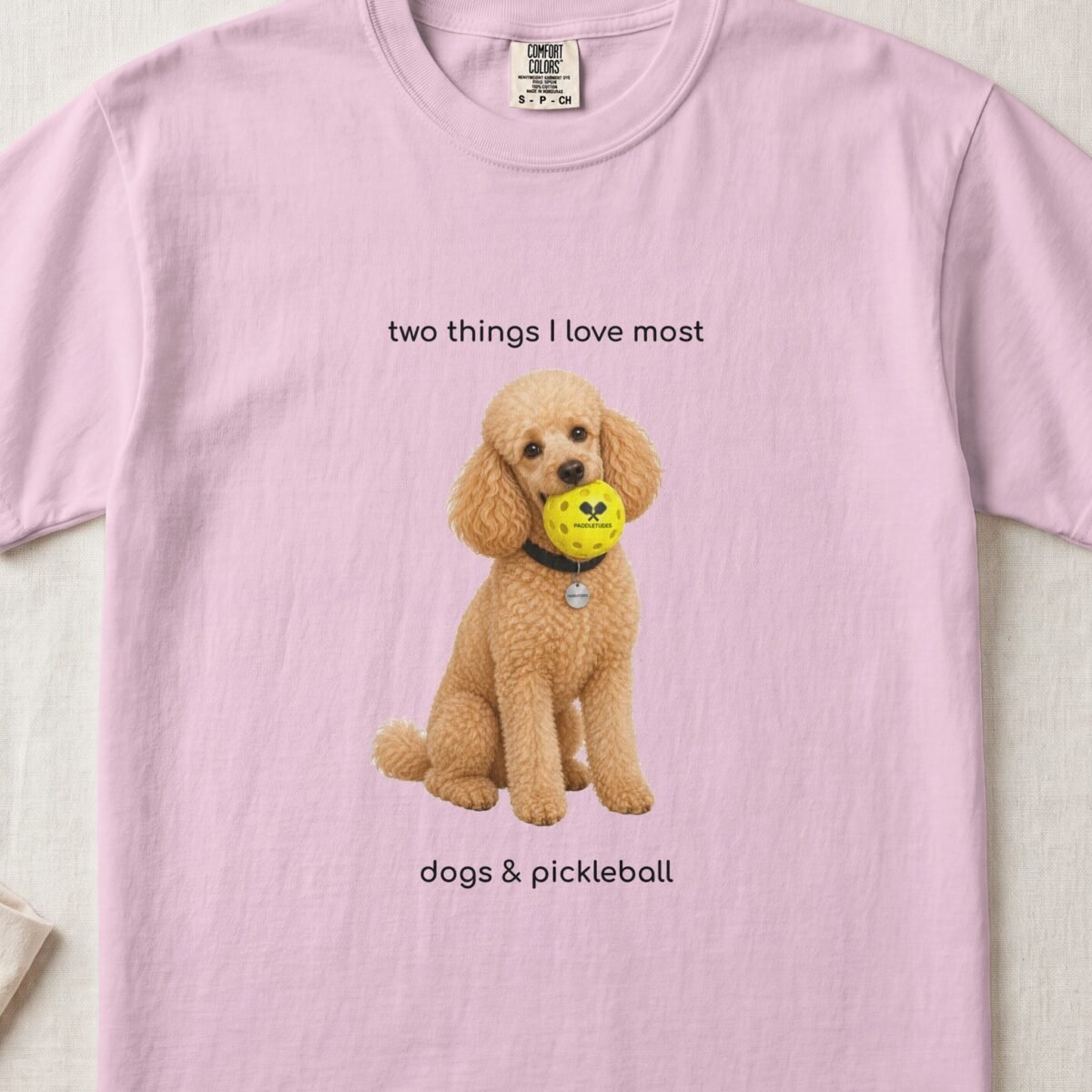
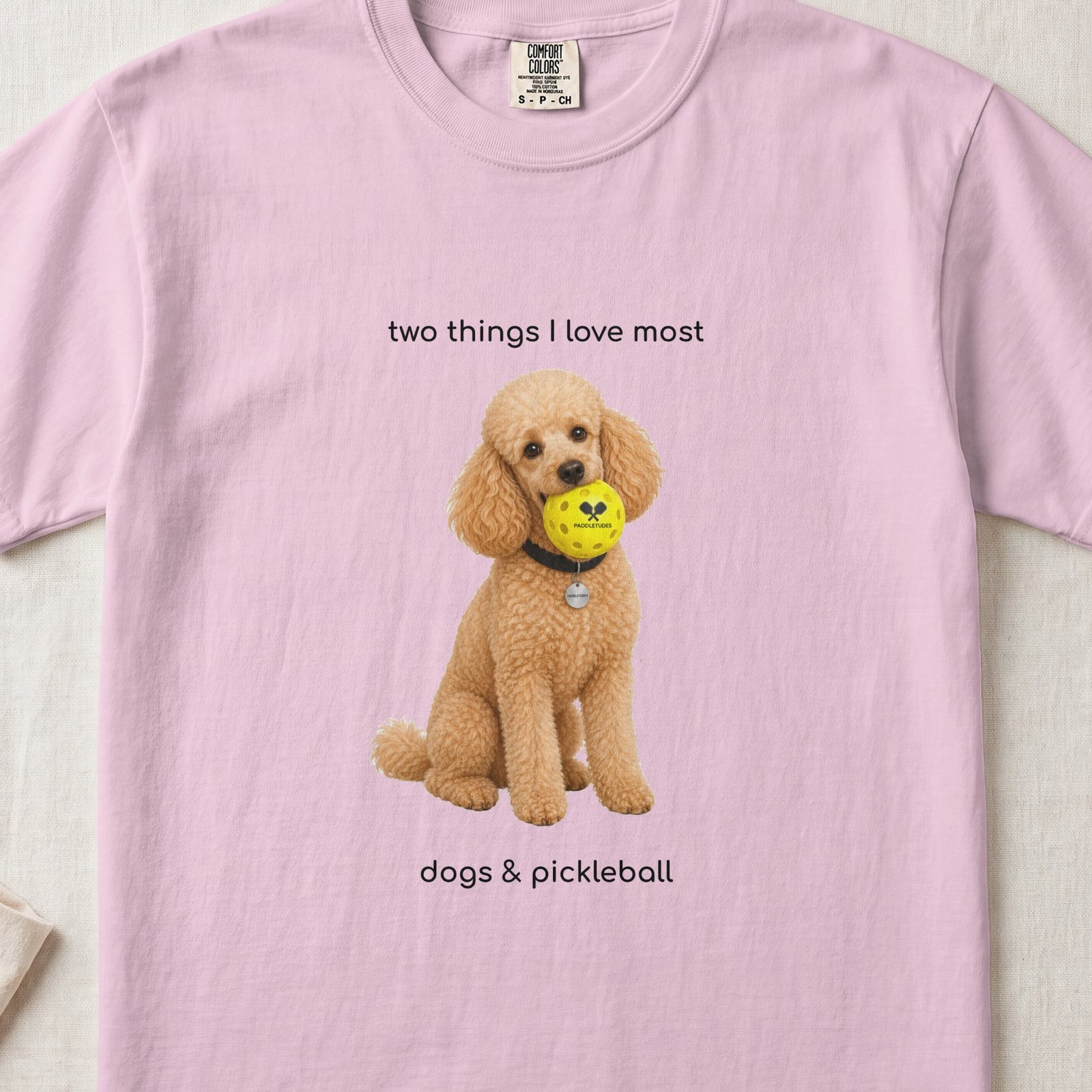
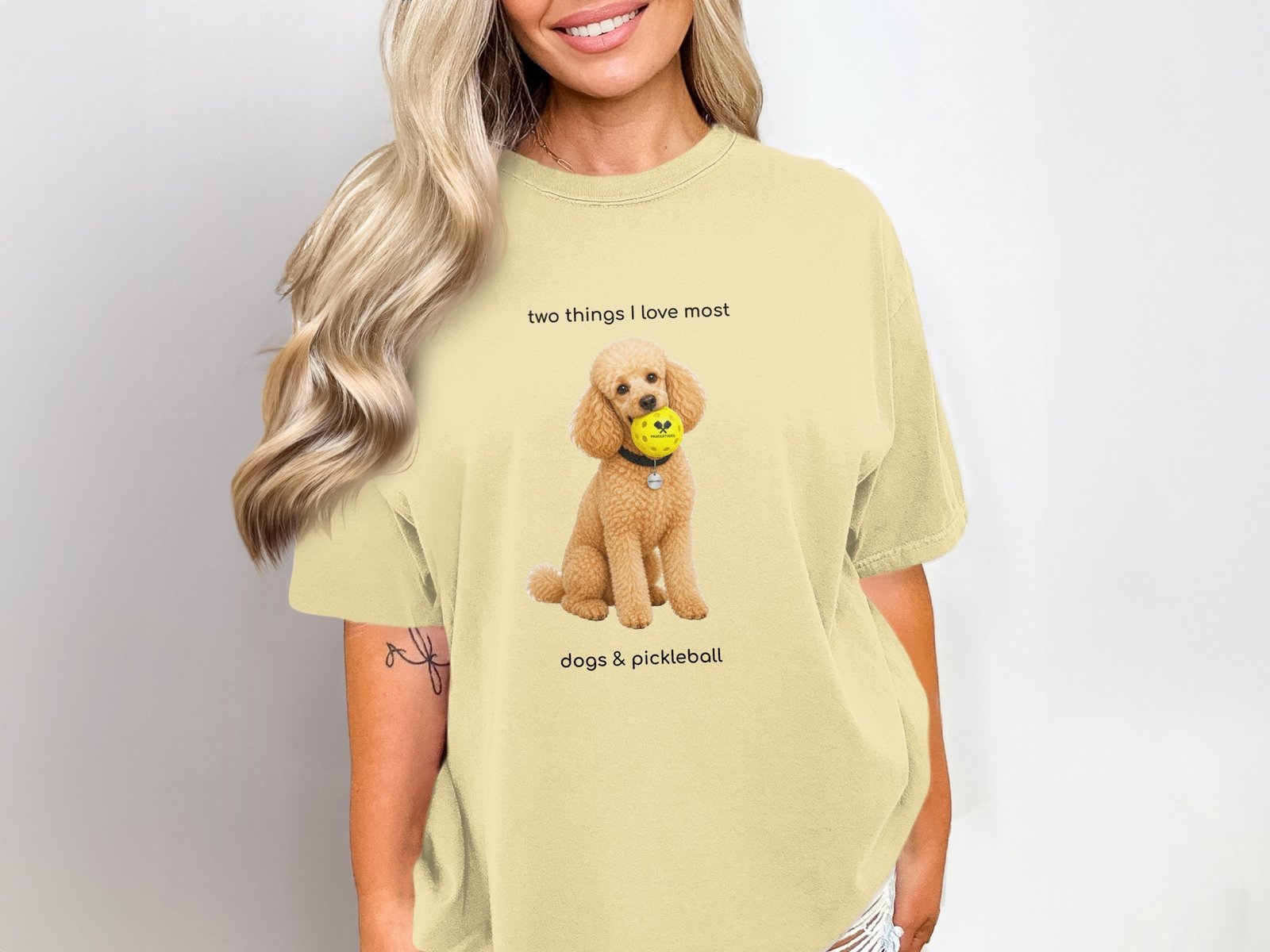
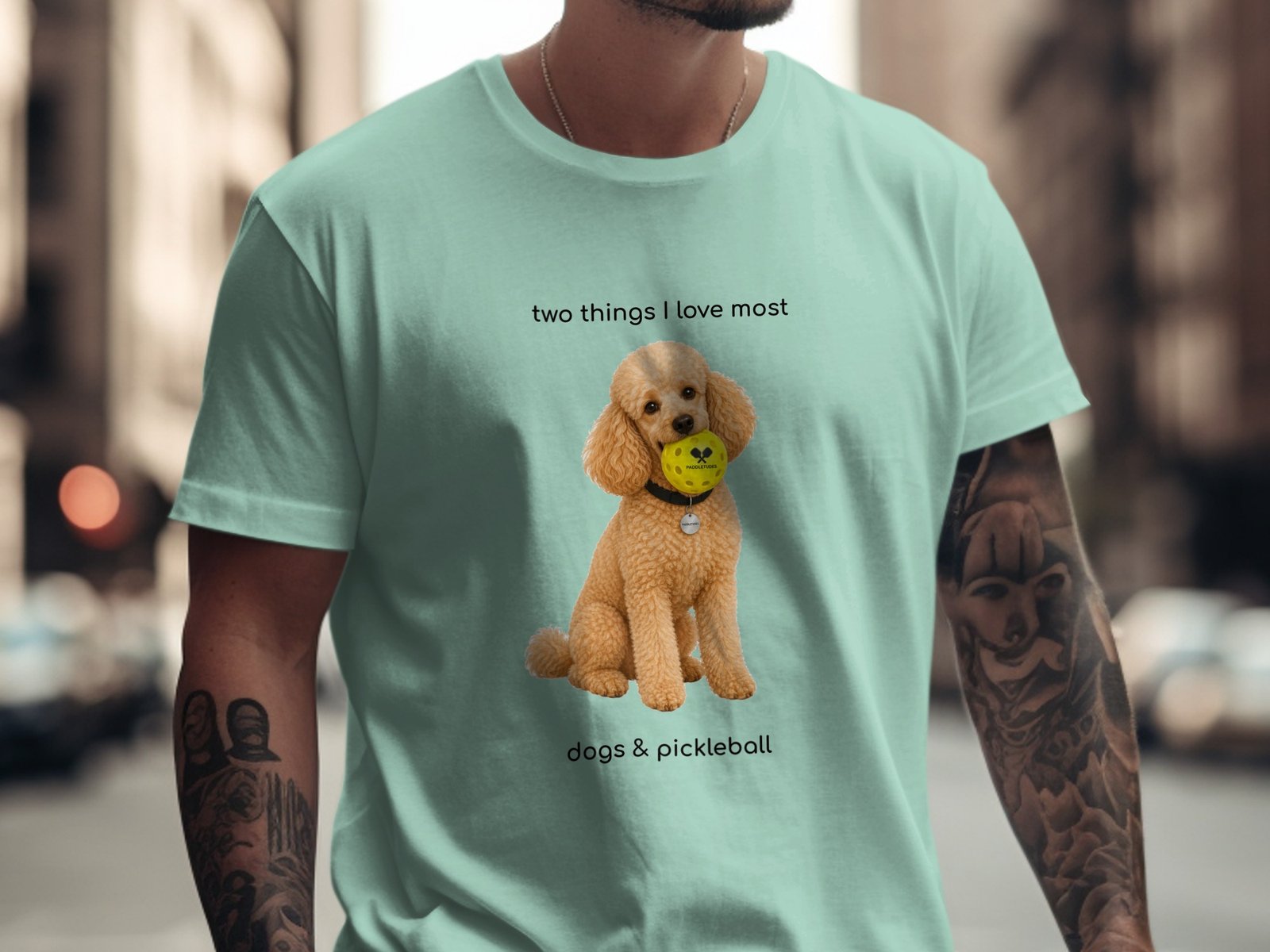
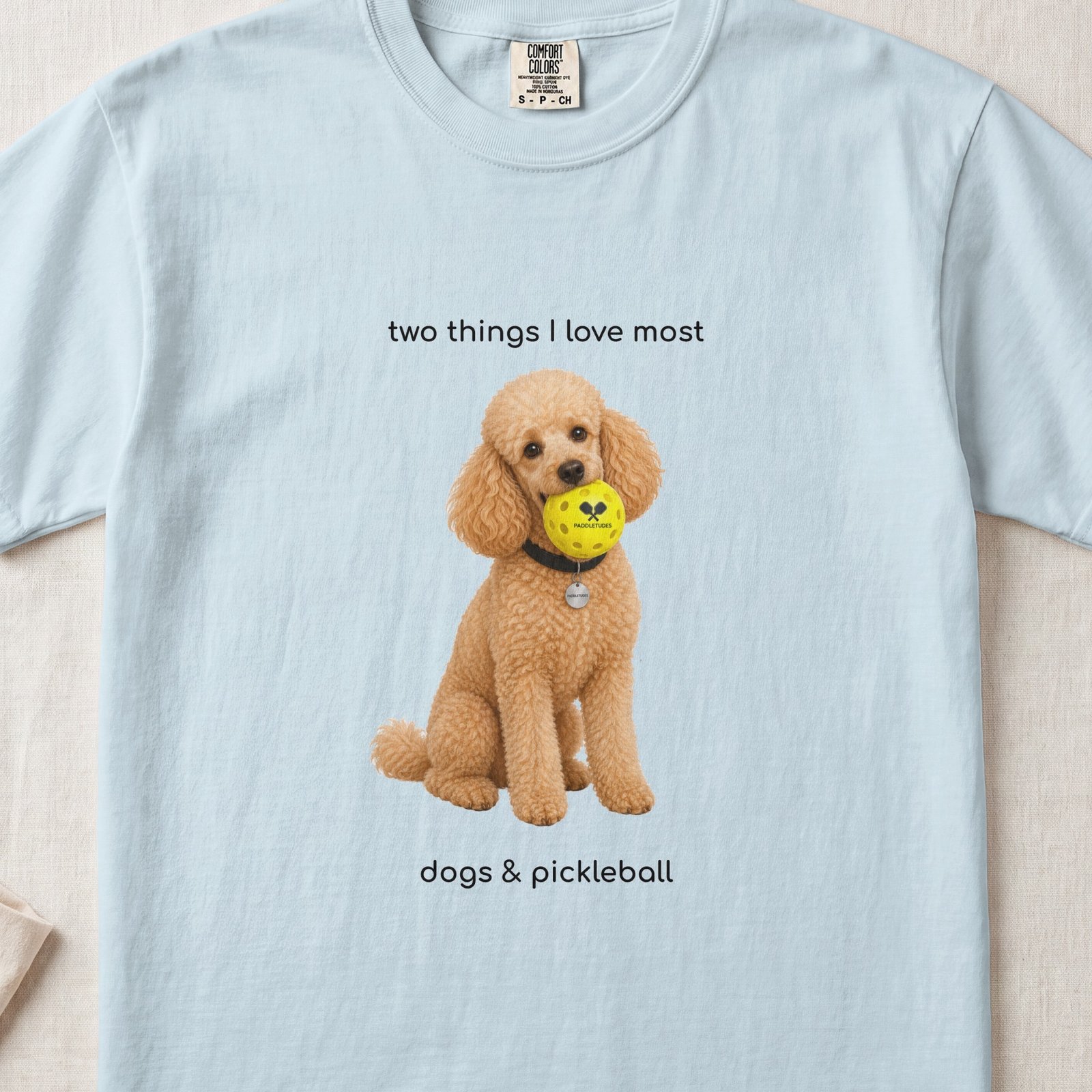
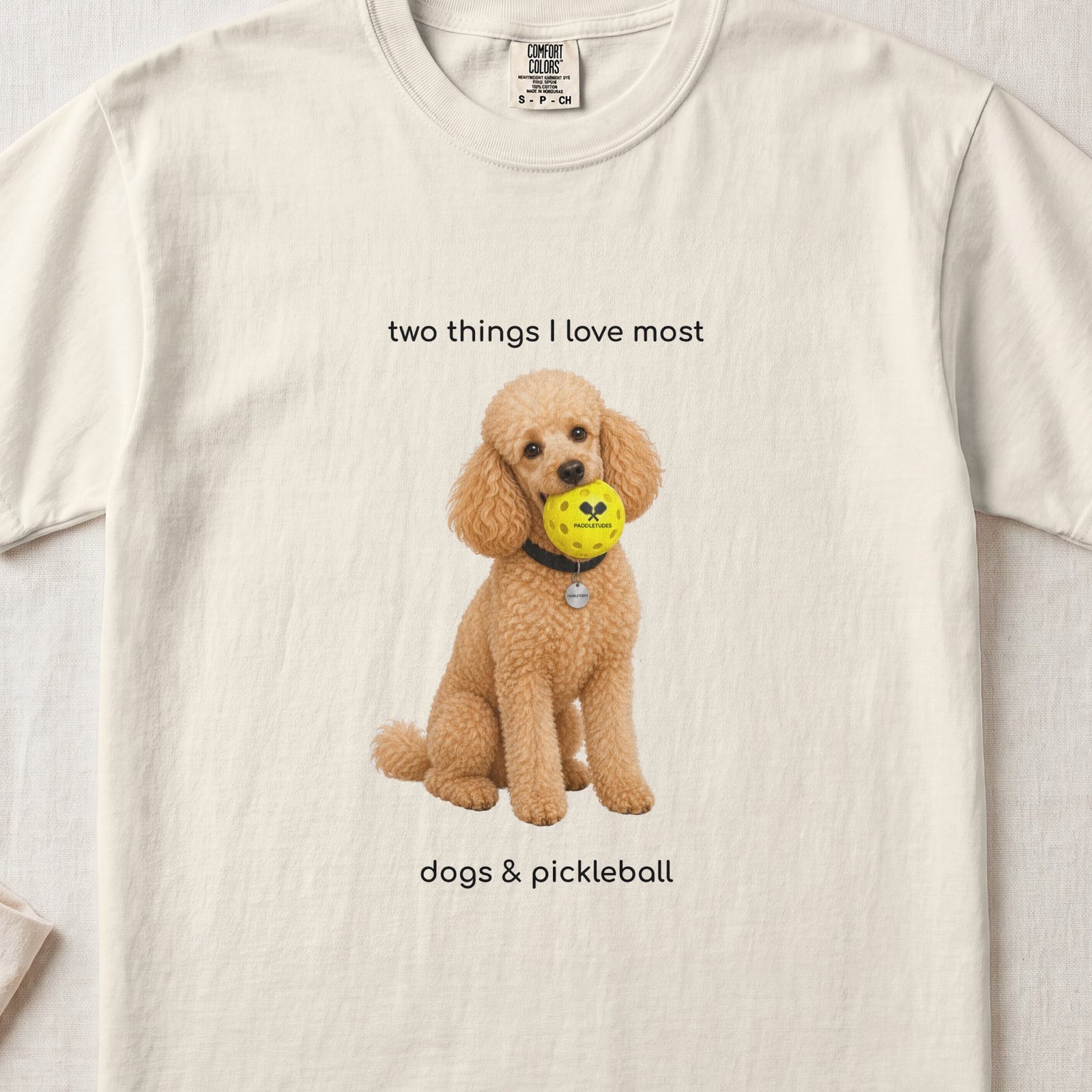
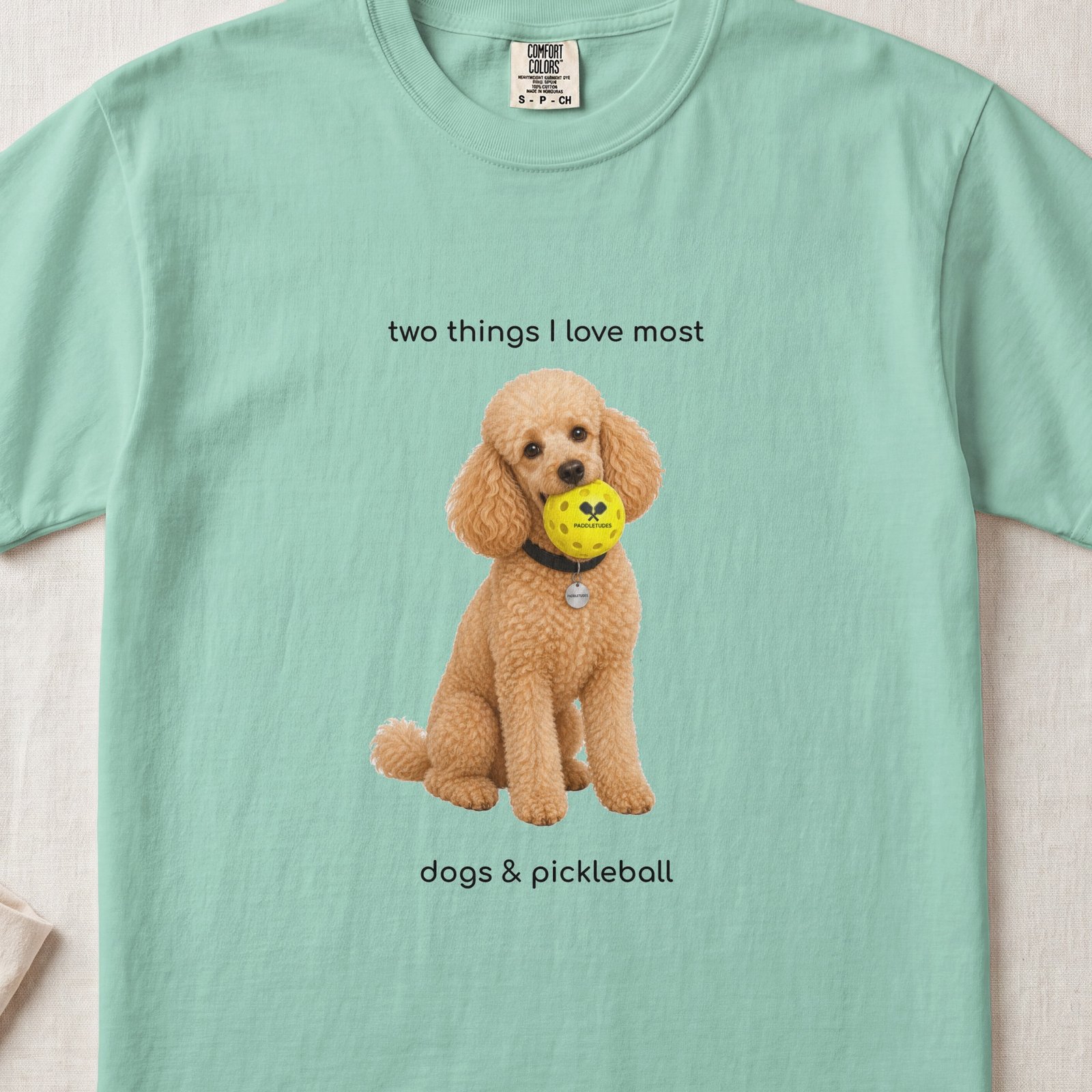
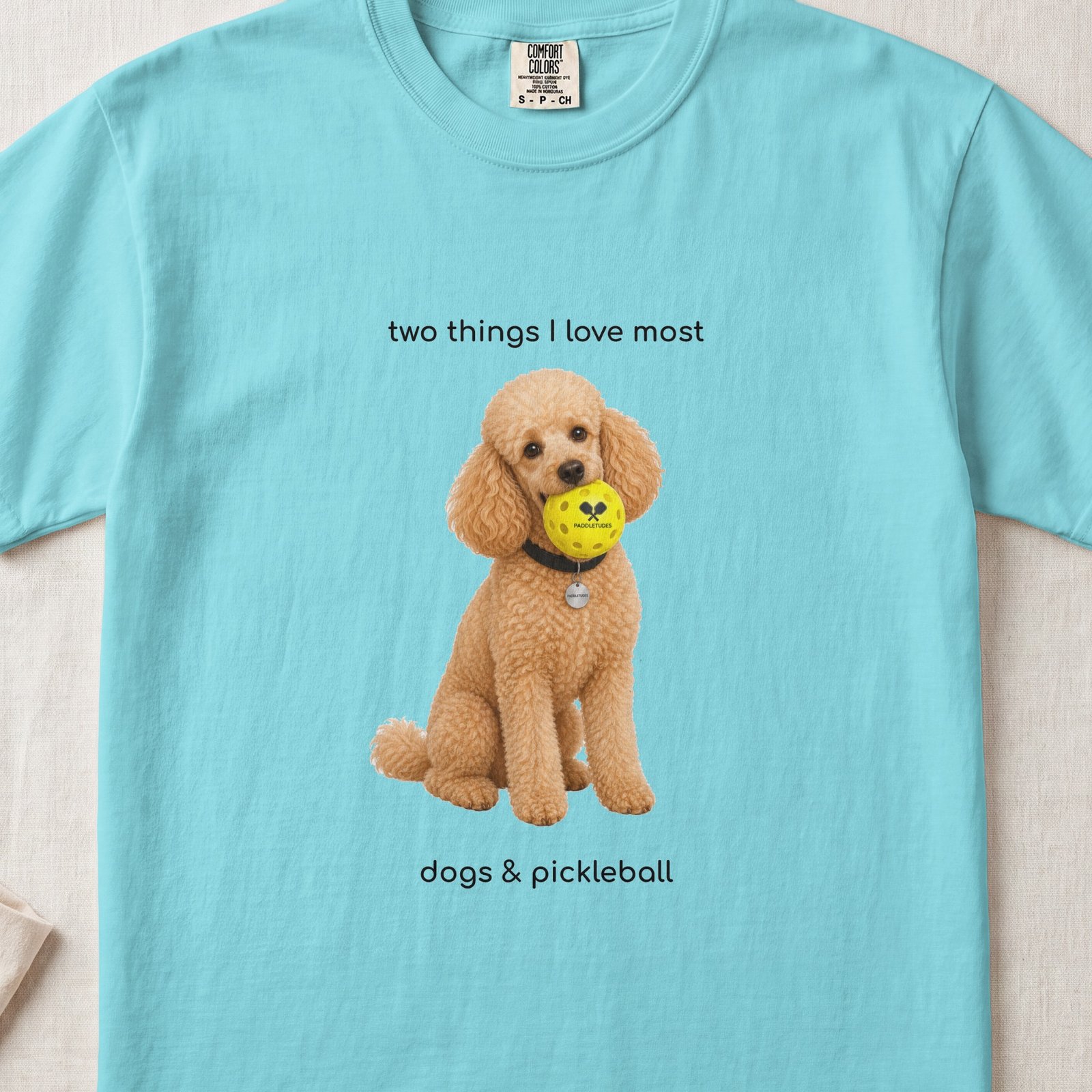
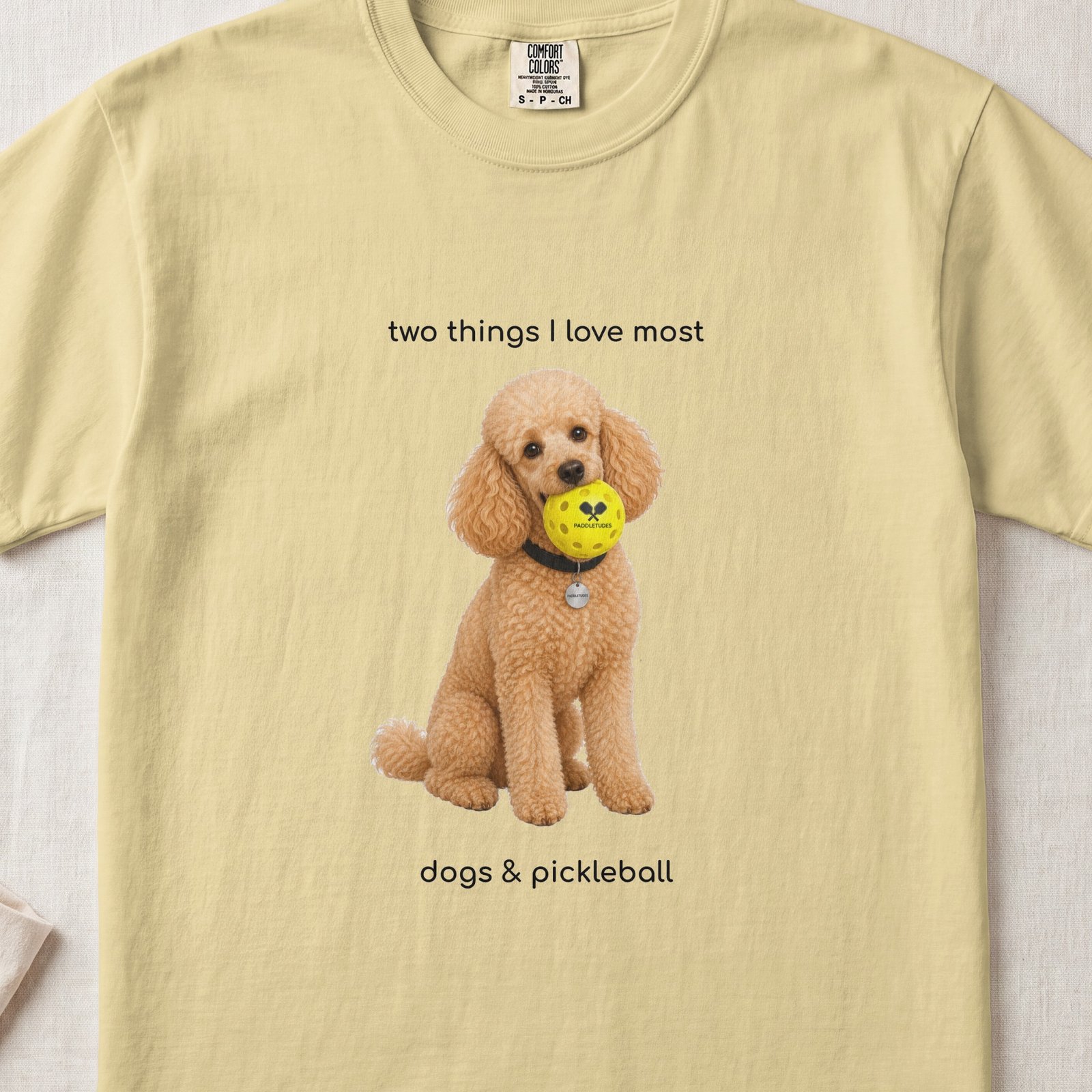
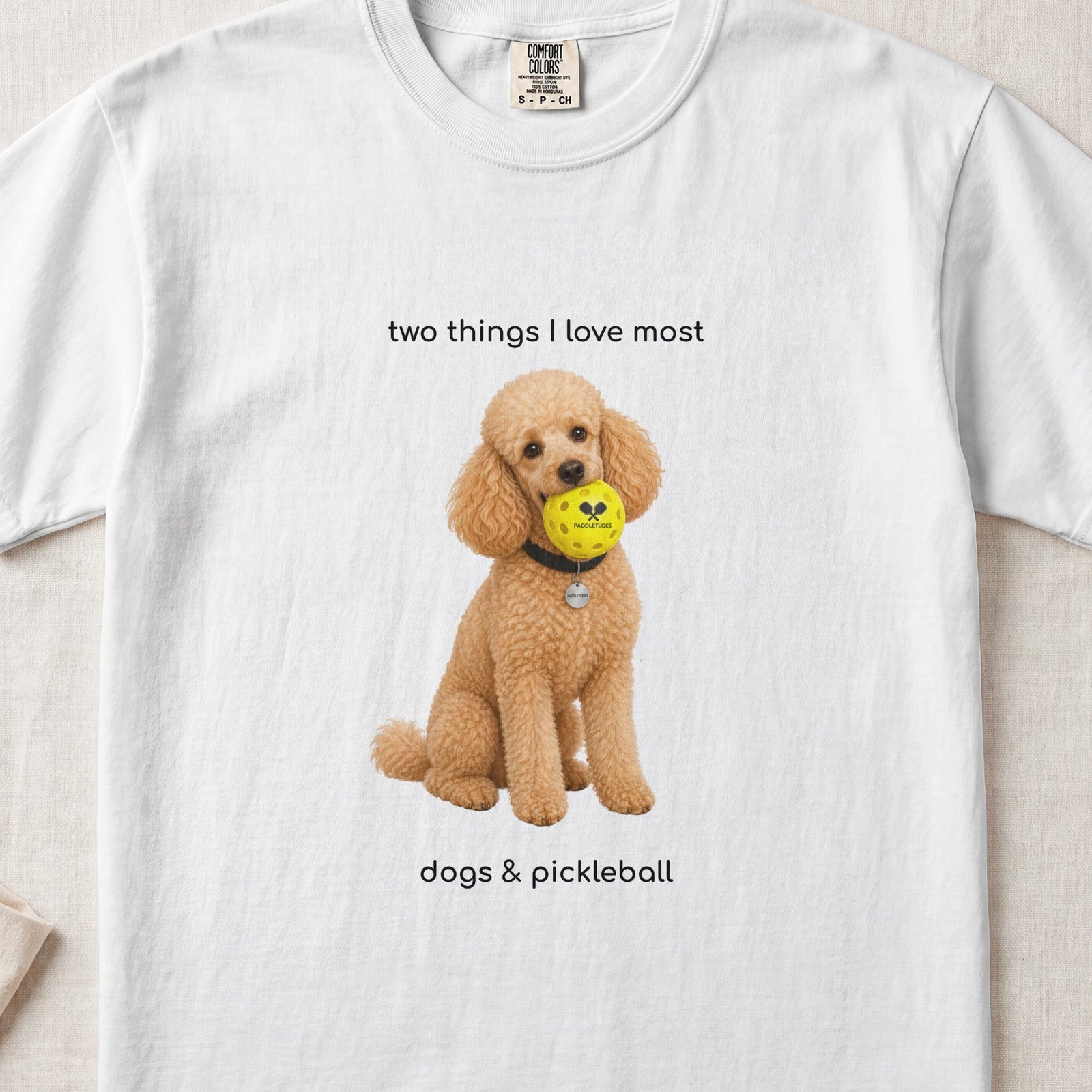
Most people see a Poodle and think show ring. Your curly-coated retriever with a Paddletudes pickleball in its mouth and the athletic confidence that surprises everyone except you tells a different story entirely.
If your dad takes his Standard Poodle on a three-mile run before breakfast and then plays two hours of open play and considers that a light Tuesday — this is the Father’s Day poodle gift that finally gets it right. Not another tie. Not a gift card. The poodle shirt that tells him you understand both obsessions and you are not going to make him choose between the two, because the Poodle and pickleball are not separate hobbies for this person. They are the same energy expressed in two forms: athletic, strategic, and wildly underestimated by people who are not paying attention.
The Poodle in this design is not performing. It is holding a pickleball with the natural ease of a dog that was literally bred to retrieve objects from water for a living. Mouth soft, posture alert, eyes locked on yours with the unmistakable expression of a creature that learned the game faster than your doubles partner did. That is not an exaggeration. Poodles are ranked the second most intelligent dog breed on the planet, and if you have ever watched one figure out a childproof latch, open a door, or systematically disassemble a toy that was marketed as indestructible, you know the ranking is earned.
The person who wears this shirt has had the conversation a hundred times. Someone sees the Poodle and says something about haircuts, or bows, or Paris, and the owner smiles the smile of someone who knows a secret the rest of the room does not. Their dog is an athlete. Their dog can swim for hours. Their dog was originally a German hunting companion that retrieved ducks from freezing marshland, and the elaborate clip that gets mocked at cocktail parties was designed to protect the joints and organs during those retrievals while reducing drag in the water. At the dog park, another poodle lover spots the design and the two of them spend fifteen minutes comparing notes on breed stigma while their dogs run circles around a confused Labrador. The Border Collie matches the Poodle’s brainpower from a completely different working tradition — one herds, one retrieves, and both outthink every dog in the room.
The breed’s real history is the best-kept secret in the canine world. The name “Poodle” comes from the German word pudel, meaning “to splash in water.” These were working water dogs, developed in Germany as early as the fourteenth century to retrieve waterfowl from lakes and marshes. The curly, non-shedding coat is not decorative — it is a waterproof insulating layer that allowed the dogs to work in freezing conditions for hours. French nobility adopted the breed and refined it into the elegant companion we recognize today, but underneath every groomed topknot is four hundred years of athletic instinct and retrieval drive that never went away. The Poodle Club of America maintains the breed standard that still lists the Poodle’s temperament as “very active, intelligent, and elegant-appearing” — and active comes first for a reason.
Living with a Poodle also means managing a breed whose intelligence creates specific needs. That cognitive horsepower requires daily stimulation — a bored Poodle does not lie around. It redesigns your living room, starting with whatever it can reach and working outward. Health-wise, Standard Poodles are predisposed to hip dysplasia, Addison’s disease, and bloat — the same gastric emergency that affects other deep-chested breeds. The non-shedding coat that makes them popular with allergy sufferers also means professional grooming every four to six weeks, because hair that does not shed does not stop growing, and a Poodle whose coat is not maintained will mat down to the skin. None of this is a warning — it is the cost of owning a breed that outthinks most dogs and a few humans. Poodle people accept it gladly because the trade-off is a dog that reads you, anticipates you, and matches your energy step for step on the court and at home.
The sad version of this pair captures the Poodle’s other superpower — emotional intelligence so sharp that missing a day of pickleball registers as a genuine mood event. See the Poodle Sad Tee. The Bernese Mountain Dog brings a gentle-giant calm that makes the Poodle’s intensity look even more surgical by comparison. Browse the full breed lineup on our dog shirts collection.
Printed on a Comfort Colors 1717 garment-dyed heavyweight tee with water-based DTG ink — sizing and care details here.
Were Poodles Really Bred as Hunting Dogs
Yes. The Standard Poodle was originally developed as a water retriever in Germany, purpose-built to swim into lakes and marshes after downed waterfowl and bring them back to the hunter. The breed name itself comes from the German word pudel — a shortened form of pudelhund, meaning “splashing dog.” Everything about the Poodle’s physical design, from the dense curly coat to the webbed feet to the deep chest built for endurance swimming, reflects centuries of selective breeding for a specific working job in cold water.
The famous Poodle clip — the one that looks like a topiary project — was not invented by a Parisian groomer with too much time. It was a practical working cut. Handlers shaved the body to reduce drag in the water but left hair around the joints, chest, and kidneys to protect those areas from cold. The pompons on the hips and ankles were insulation over vulnerable joints. The topknot kept hair out of the dog’s eyes while swimming. What reads as decorative in a modern show ring was originally functional engineering for a retrieval dog that spent hours in freezing European waterways.
French nobility adopted the breed and turned it into the refined companion most people picture today. Miniature and Toy varieties were developed later — the Miniature was used for truffle hunting, and the Toy became a court companion and circus performer. But the Standard Poodle retained its working instincts intact. The United Kennel Club reclassified the Standard Poodle from the Companion group to the Gun Dog group in 2000, formally recognizing what Poodle owners had known for centuries — this is a sporting dog in a glamorous coat.
Modern Standard Poodles still compete in hunting retriever trials, and breeders who focus on working lines produce dogs with drive and stamina that rival any Labrador. If you own a Poodle and play pickleball, you already understand the parallel — an athlete that looks elegant and gets underestimated by everyone who does not know the history. The design captures that shared identity. Your dog was bred to retrieve. You were built to compete. Neither of you gets enough credit for it.
-
Dachshund Sad
$39.99 Select options This product has multiple variants. The options may be chosen on the product page -
Chihuahua Sad
$39.99 Select options This product has multiple variants. The options may be chosen on the product page -
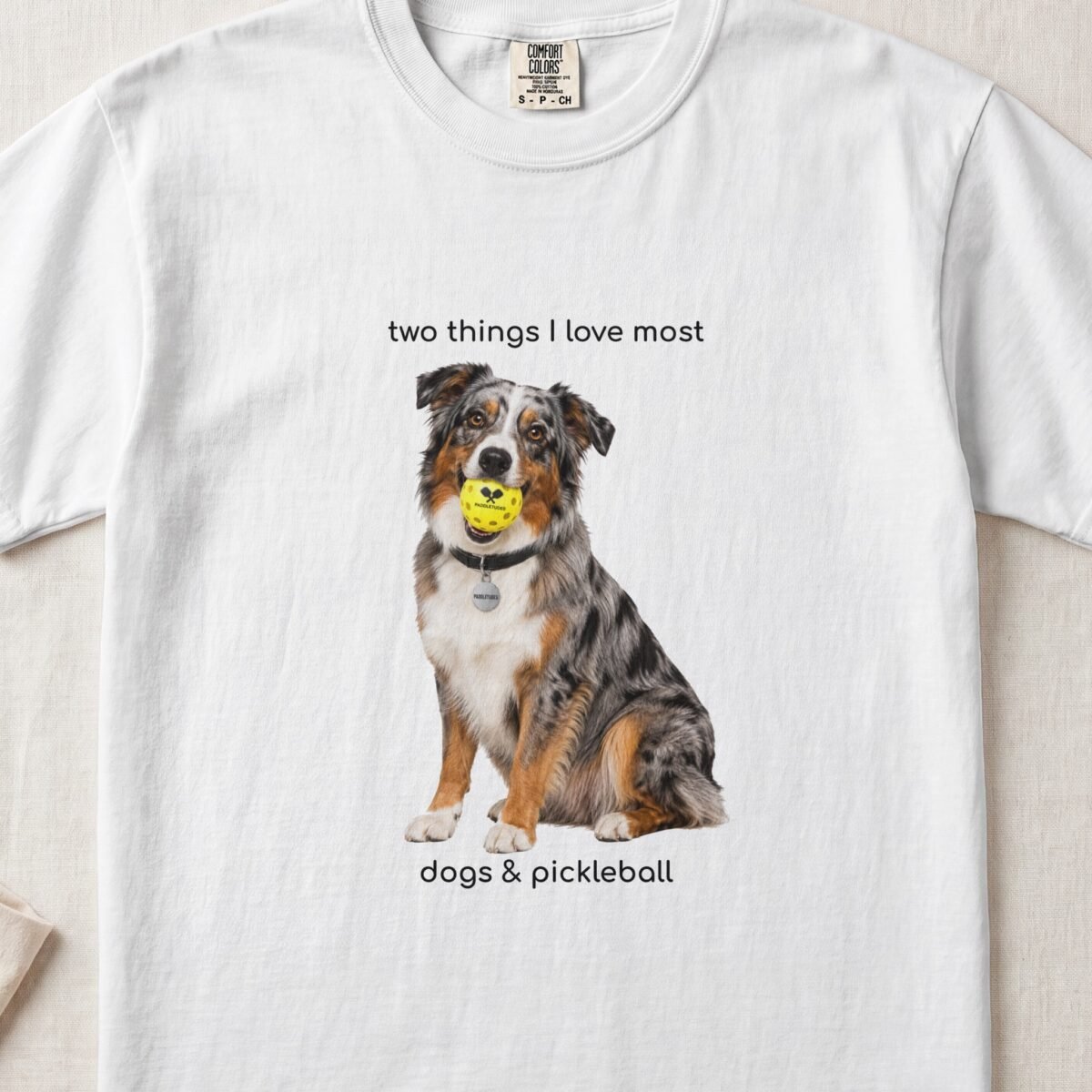
Mini Australian Shepherd Happy
$39.99 Select options This product has multiple variants. The options may be chosen on the product page