Animals Comfort Colors 1717
Schnauzer Sad
$39.99
- Comfort Colors 1717 heavyweight cotton
- Original design · printed to order
- U.S. print partners
Chin on Paws — A Schnauzer Gift for That Look
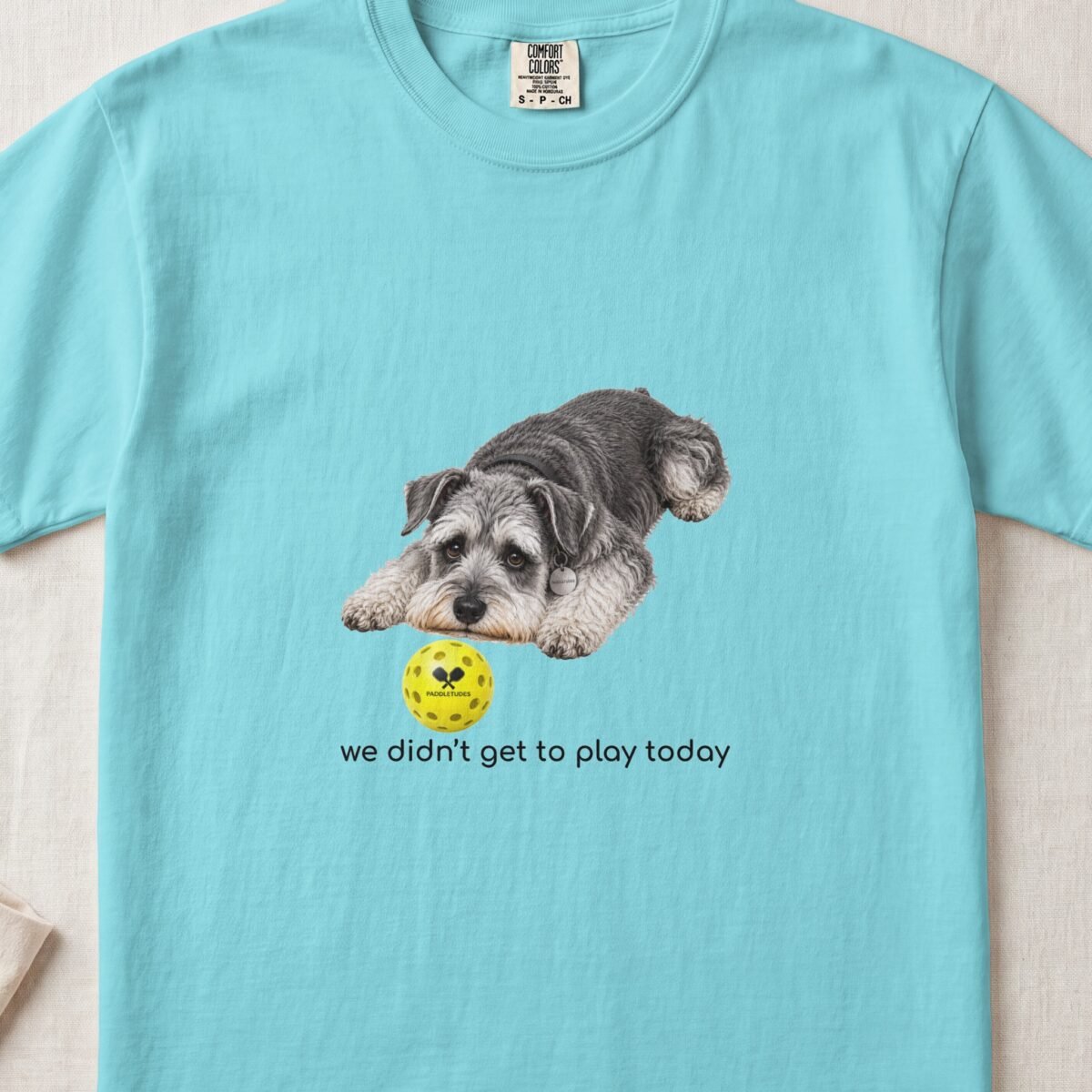
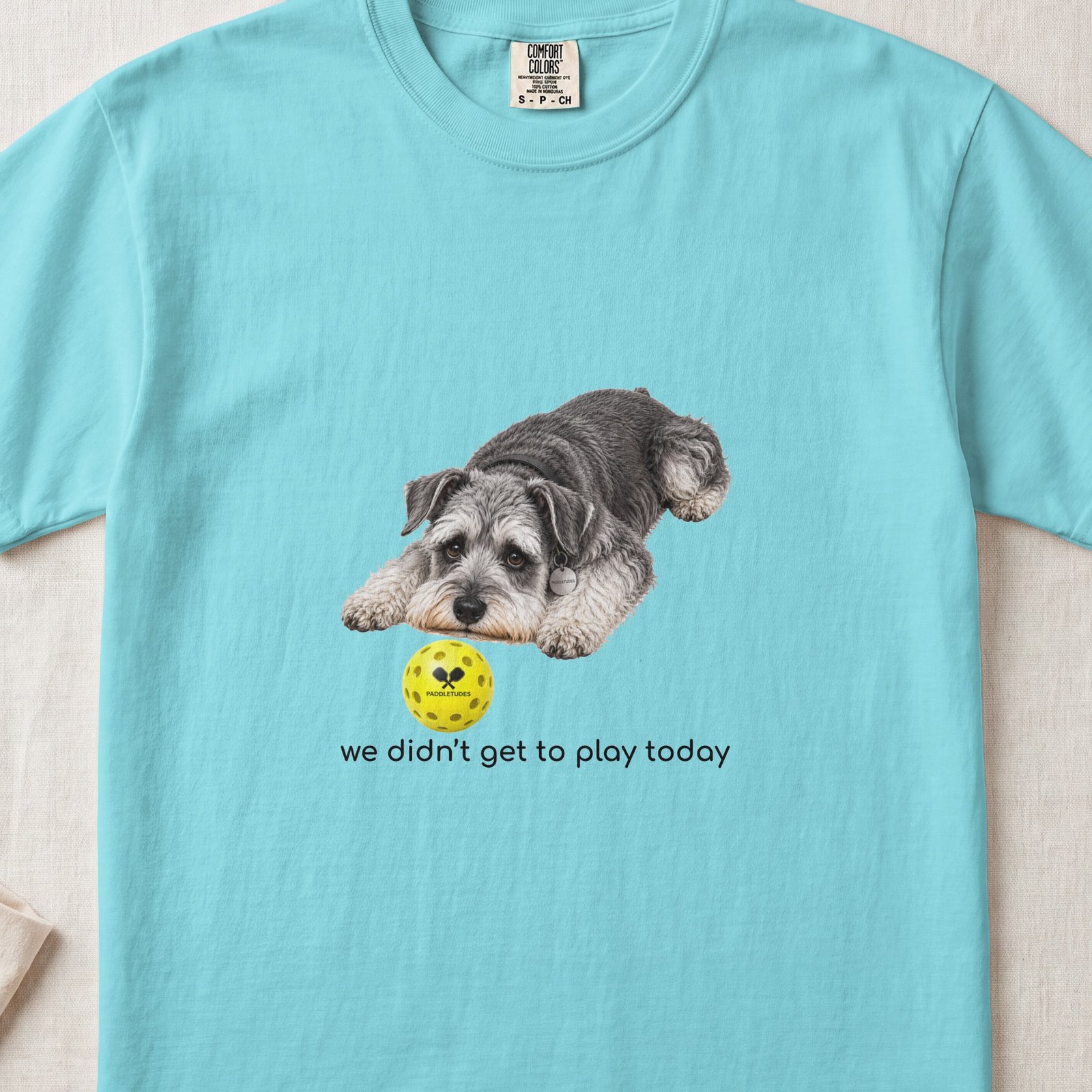
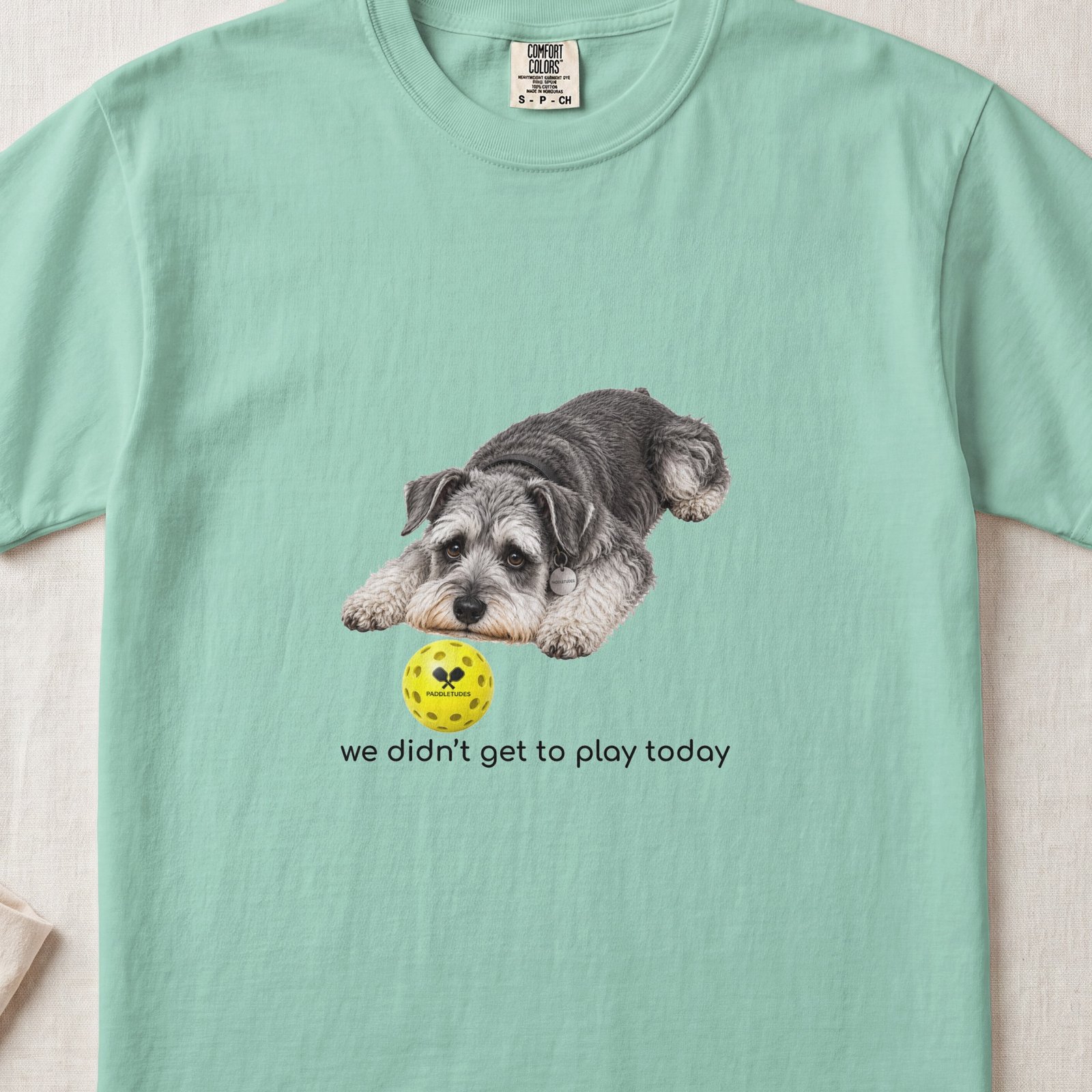
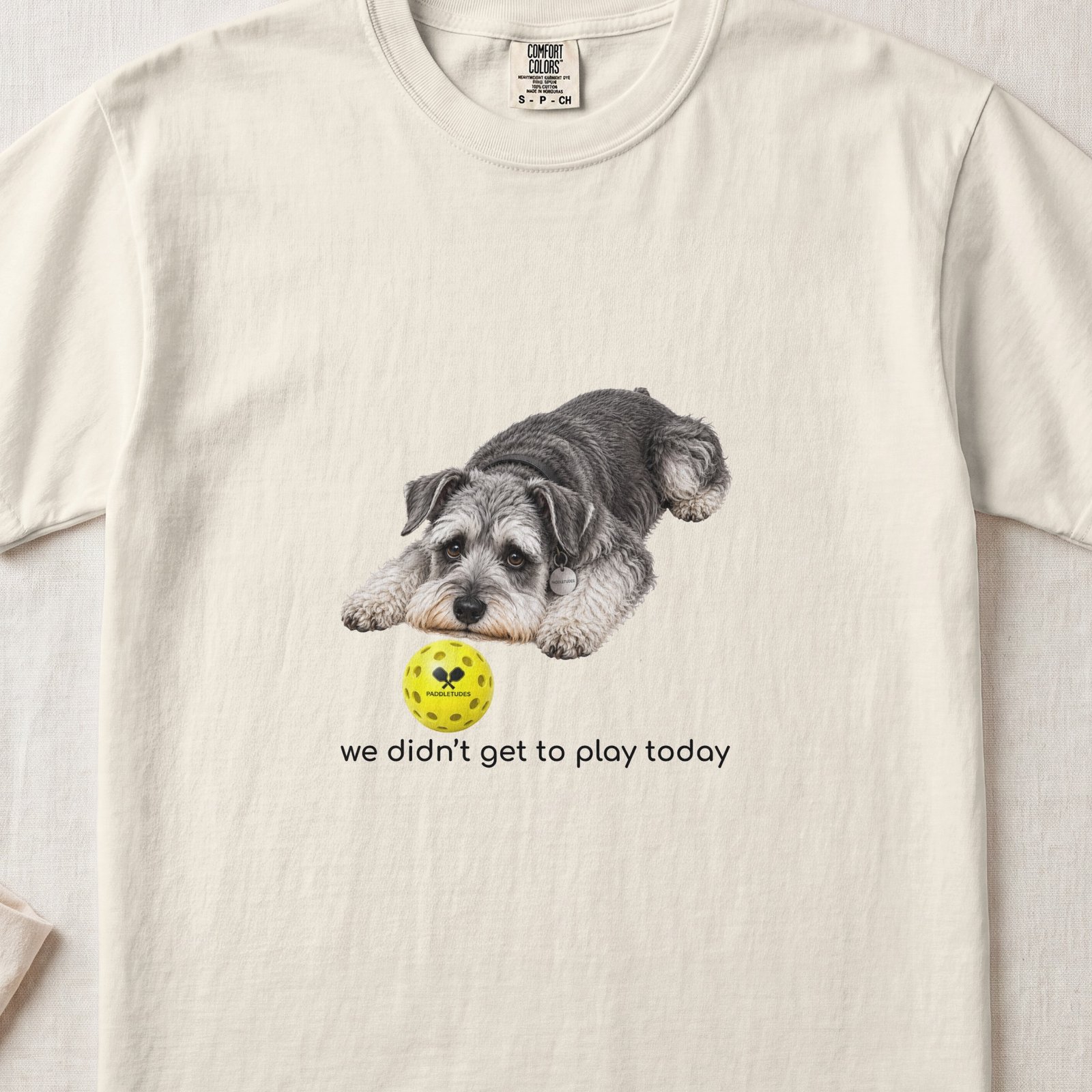
Chin on paws. Ball untouched. That look. The Schnauzer on this Comfort Colors 1717 didn’t get to play today, and the guilt is yours to wear.
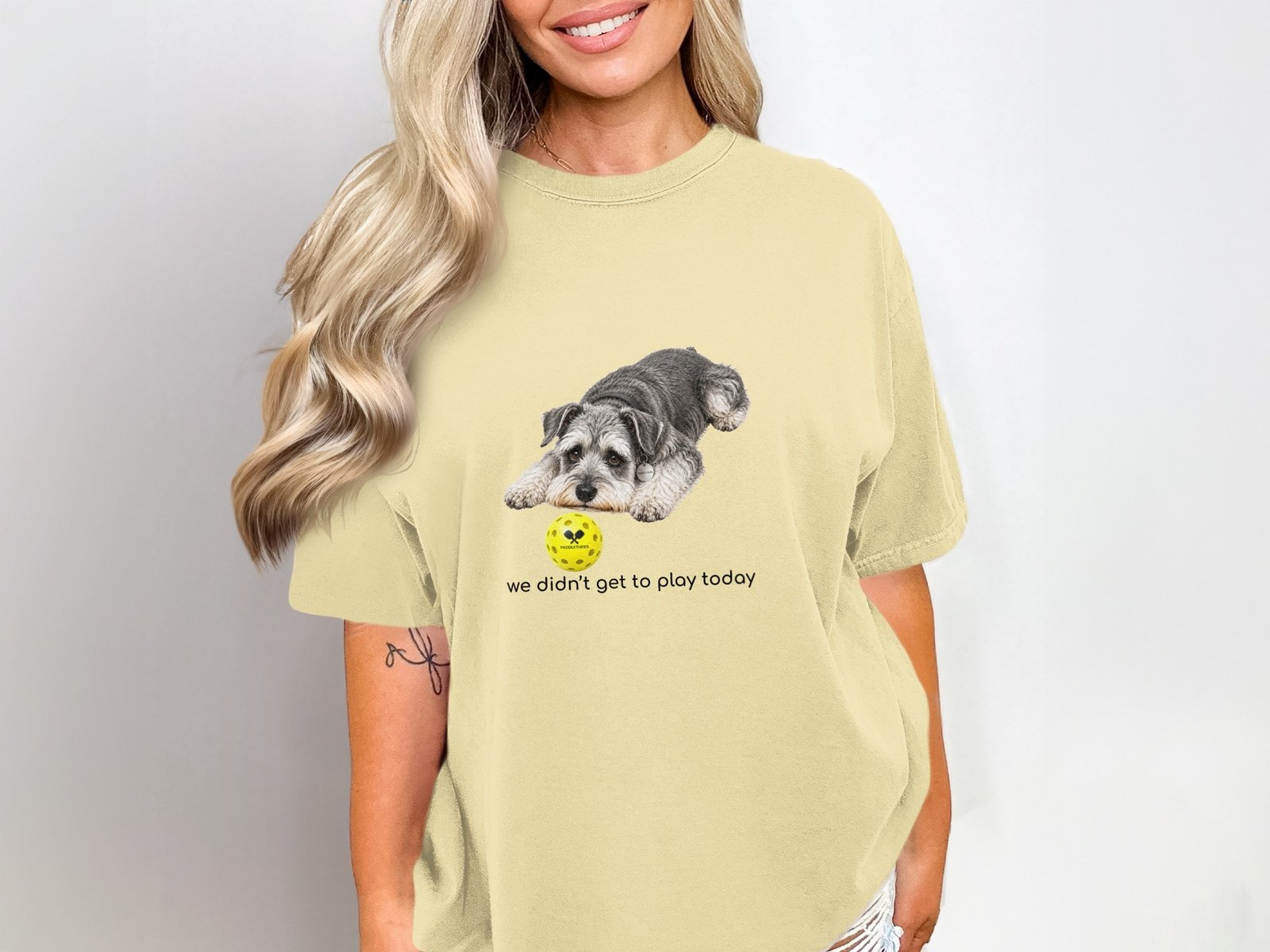
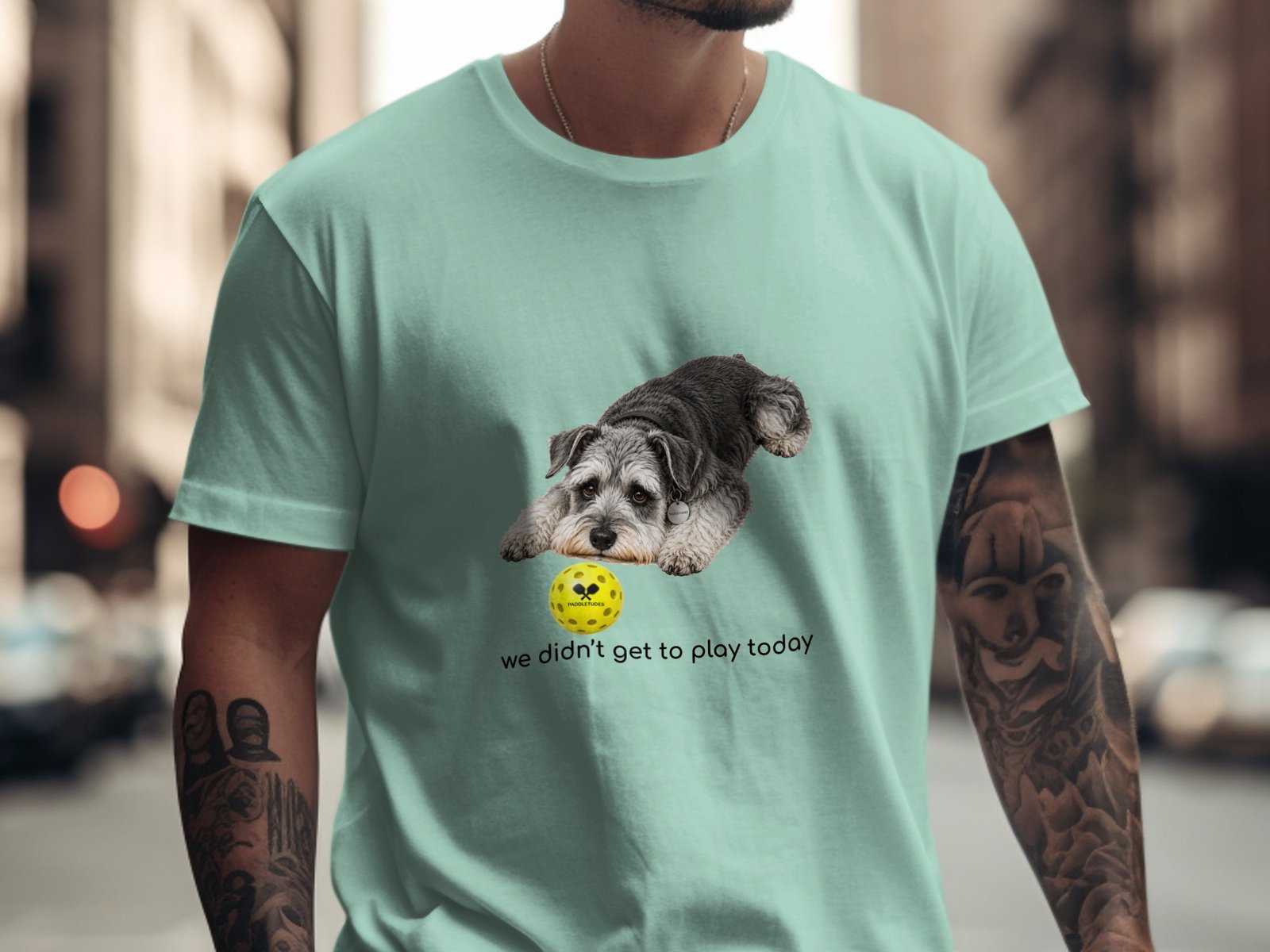
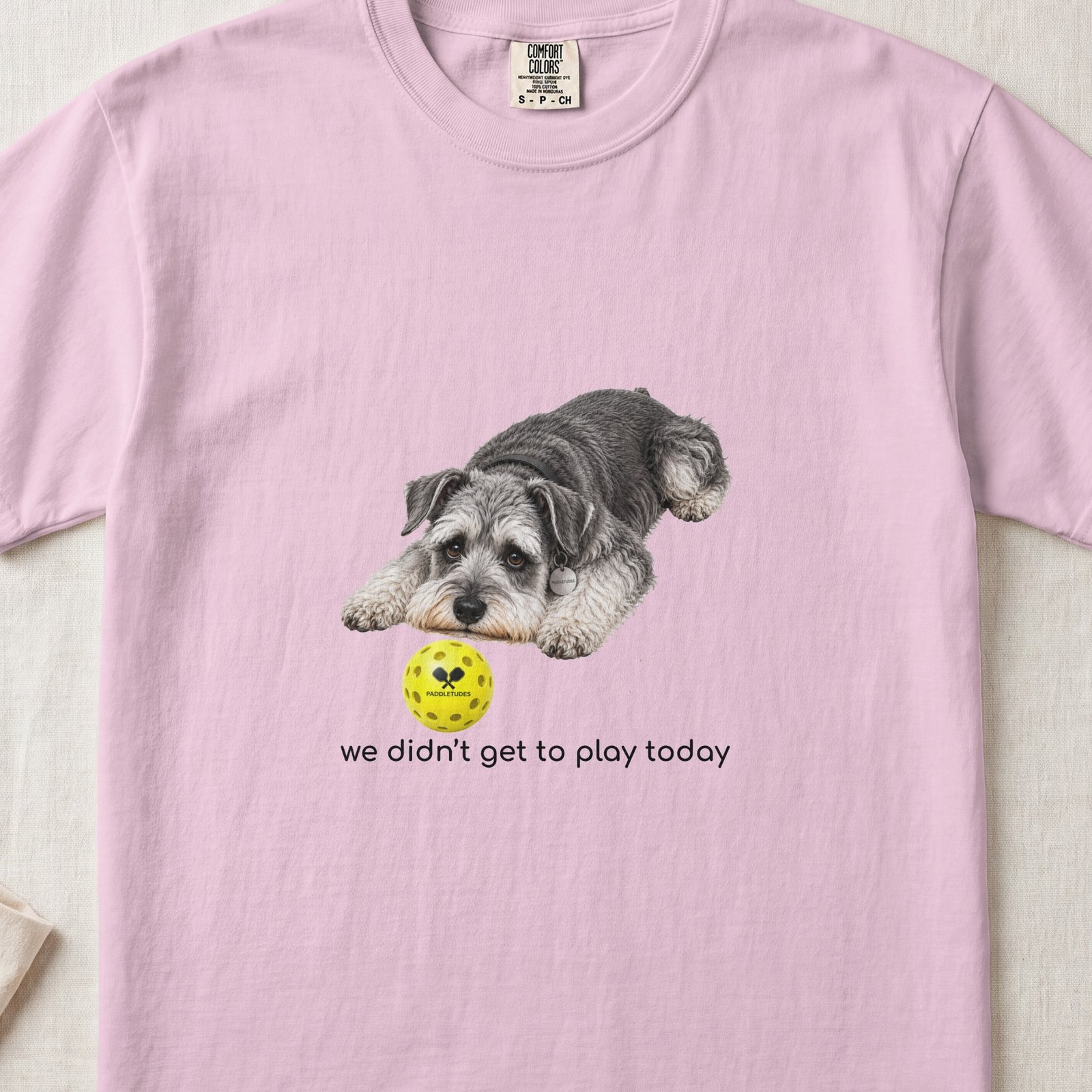
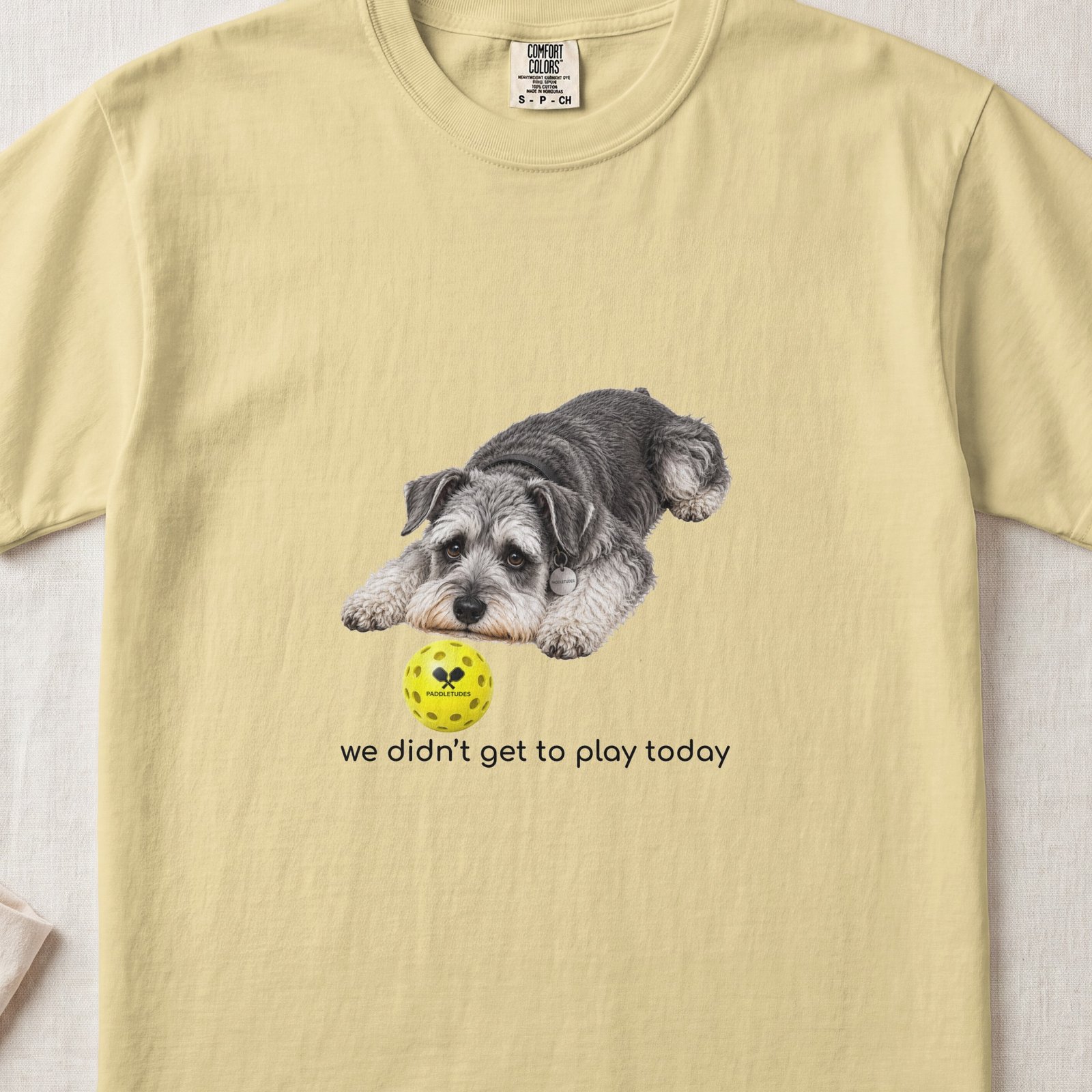
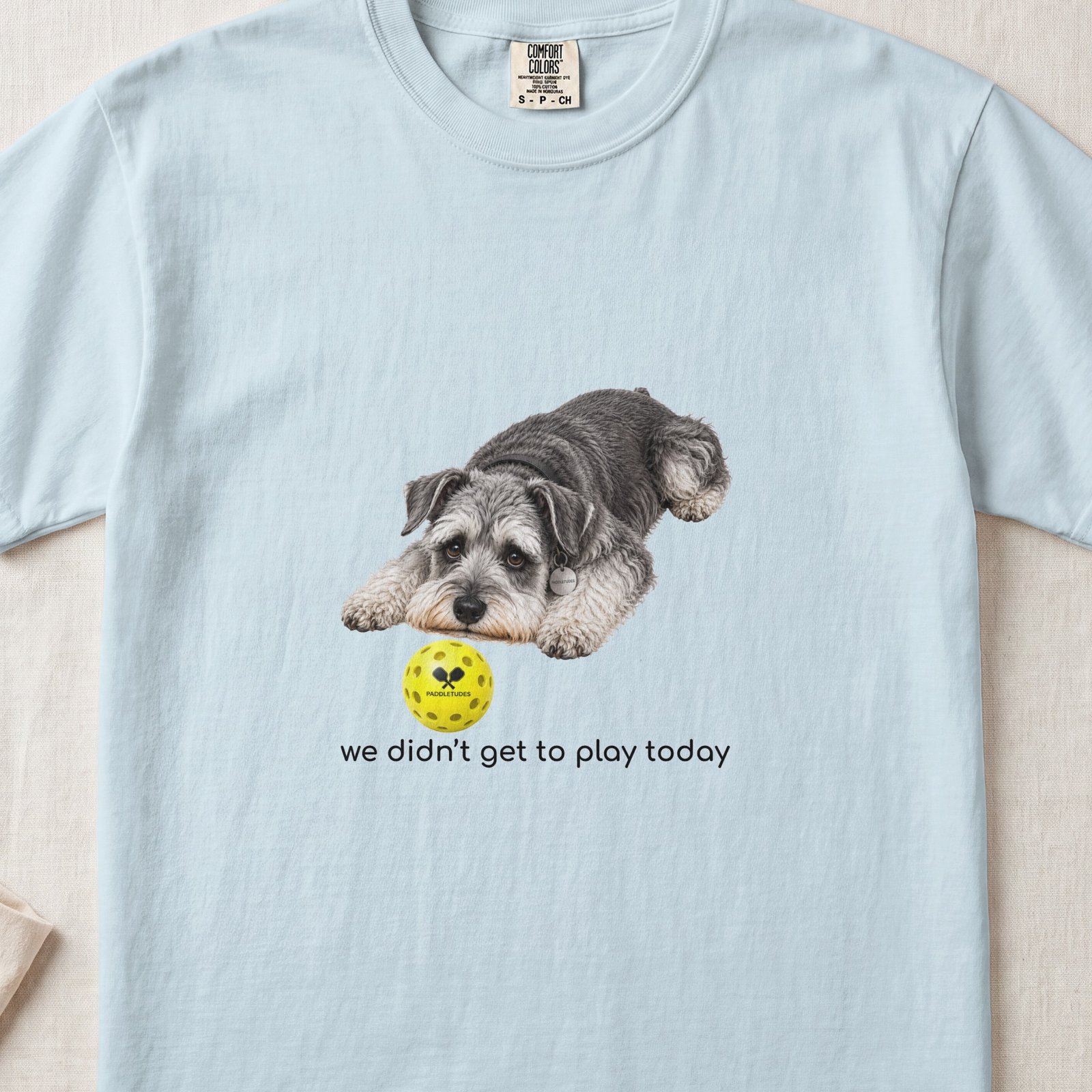
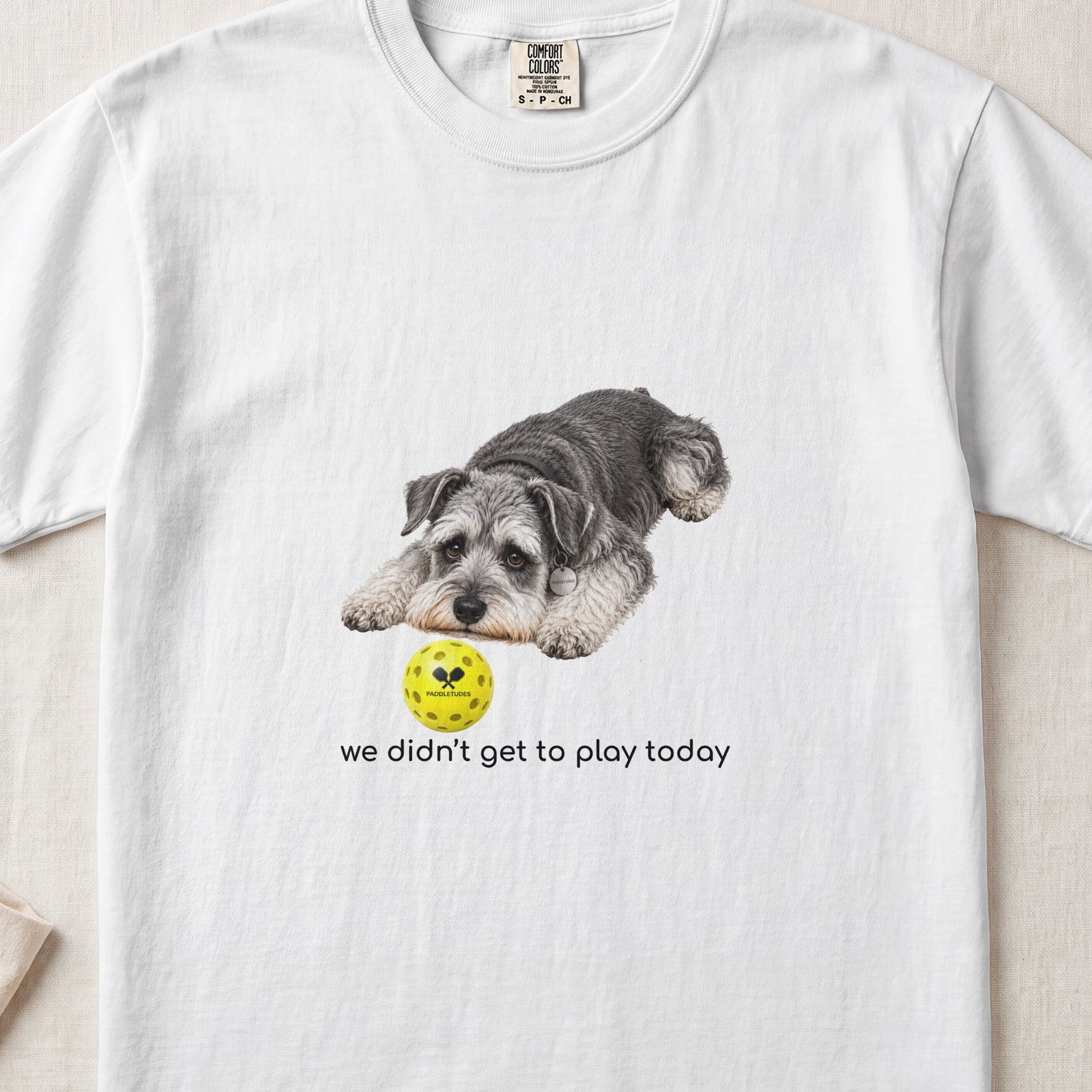
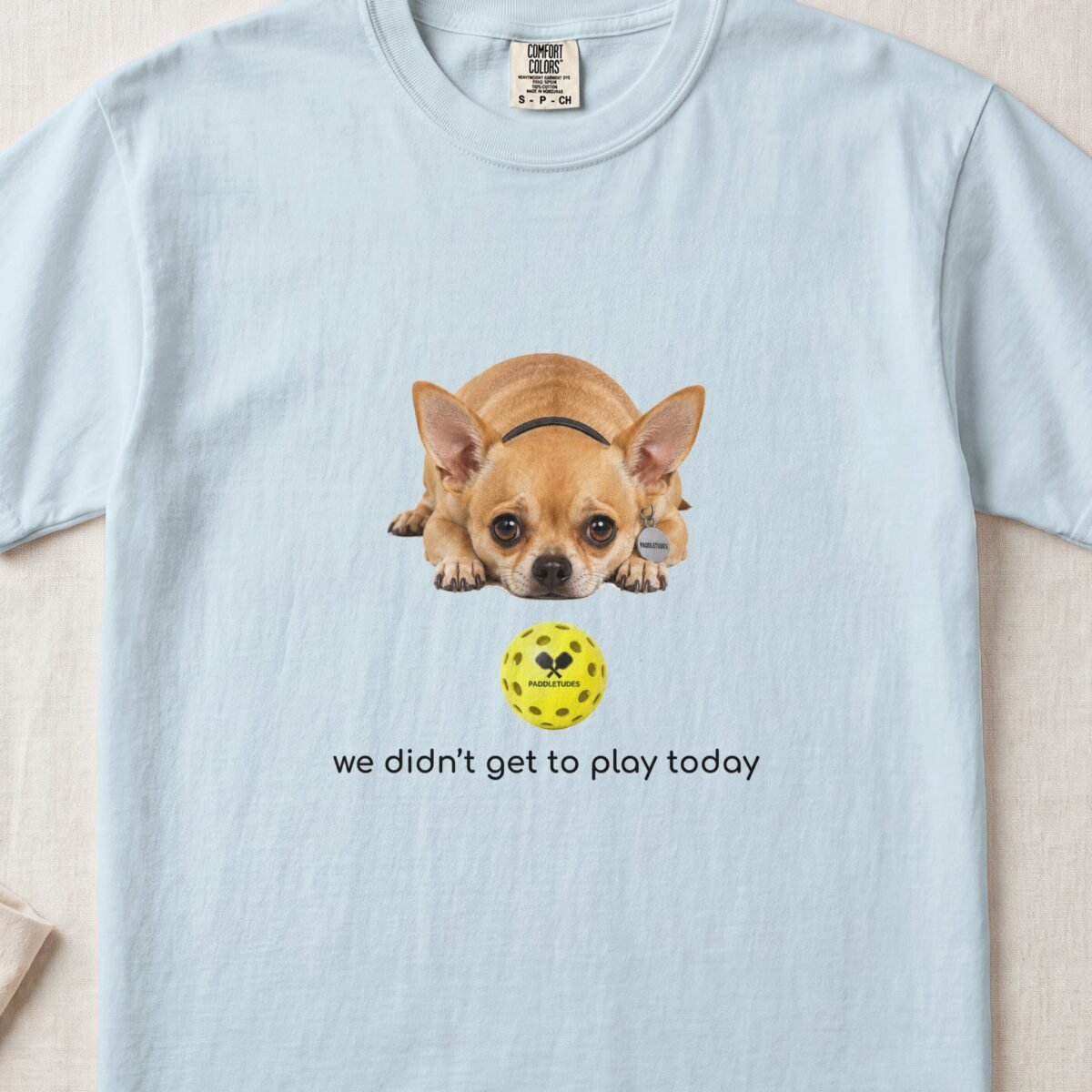
The illustration is devastation in miniature. A salt-and-pepper Schnauzer lying completely flat, front paws forward, chin resting on the ground, looking up through those wire-haired eyebrows with an expression that manages to be simultaneously heartbroken and accusatory. A yellow Paddletudes ball sits in front of him — close enough to touch, untouched. The Paddletudes collar tag is visible. And below the dog, in lowercase that reads like a confession: “we didn’t get to play today.” Not “I didn’t get to play.” “We.” The Schnauzer has included himself in the plan that didn’t happen, which is exactly how the breed processes your schedule — as a shared itinerary they were never consulted on but fully expected to participate in.
Every Schnauzer owner has lived this morning. The alarm went off. The paddle bag didn’t move. The shoes stayed by the door. And the Schnauzer — who had already positioned himself at the exit twenty minutes before the alarm because he memorized the routine the third time you did it — processed the change in plan with the full emotional range the breed is built to deliver. The Miniature Schnauzer does not quietly accept disruptions. They comment. A low huff. A repositioning from the door to the couch with deliberate body language. A sustained stare from across the room that lasts long enough to make you consider apologizing to an animal who weighs fourteen pounds. The person wearing this shirt has apologized to that animal. Possibly out loud. Definitely more than once.
The Schnauzer’s dramatic response to missed play is rooted in something the breed can’t turn off. Miniature Schnauzers were developed in Germany to work beside people — ratting in barns, guarding property, staying close to the farmer all day. The breed doesn’t range. It shadows. And when the shadow’s person does something that involves leaving, the Schnauzer interprets the departure as a disruption to a partnership arrangement that was supposed to be permanent. The rest day guilt that pickleball players already feel — the nagging sense that you should be on the court even when your body or your calendar says otherwise — gets amplified by a thirteen-pound roommate who stares at the paddle bag the way a coworker stares at the empty chair of someone who called in sick on a big day. They don’t say anything. They don’t have to.
What makes the sad Schnauzer hit differently from other breeds in this lineup is the beard. The walrus mustache and the bushy eyebrows create a face that reads like a silent film actor — every emotion is exaggerated by the architecture of the fur. A Golden Retriever looks sad with soft eyes and a lowered head. A Schnauzer looks sad with the full dramatic weight of a 19th-century German stage performer who has just been told the show is cancelled. That expressiveness is why Schnauzer owners photograph their dogs constantly — every mood is a portrait, and the “we didn’t get to play today” mood is the one that gets posted with a caption that says “someone is judging my life choices” and gets forty-seven comments from other Schnauzer owners who have the same photo on their phone.
This is the shirt for the person whose rest days feel like they need a permission slip signed by the dog. The pickleball player who drives past the courts on a non-play morning and thinks about the Schnauzer at home who watched them leave without the bag and drew conclusions. It works as a gift for the doubles partner who cancels more often than they’d like and whose Schnauzer has become a running joke in the group chat — “is [name]’s dog letting them out today?” The humor is warmer than it sounds because the people in that group chat know the cancellation was genuinely difficult. Schnauzer people don’t skip the court because they don’t care. They skip because something else demanded the time, and the dog’s face when they got home confirmed that the priorities were noted and filed for future reference.
The happy version of this shirt is the opposite morning — the Schnauzer sitting proud with the ball in his mouth, two things I love most, the plan intact. Together they’re the whole Schnauzer ownership experience distilled into two garments: the mornings that work and the mornings that produce guilt. The Shih Tzu sad version captures the same missed-morning energy with a softer, less confrontational disappointment — where the Schnauzer stares you down, the Shih Tzu just melts into the floor and makes you feel worse through pure pathetic cuteness.
Printed on a Comfort Colors 1717 garment-dyed heavyweight tee with water-based DTG ink — sizing and care details here.
What Were Schnauzers Originally Bred For
Schnauzers were originally bred in Germany as farm dogs with a specific job: catching rats and other vermin in barns and houses. The Standard Schnauzer came first, appearing in German artwork as far back as the 15th century — Albrecht Dürer included a bushy-bearded farm dog in his 1503 work that historians believe is an early Schnauzer type. The Miniature Schnauzer was developed later, in the late 1800s, by crossing the Standard with smaller breeds like the Affenpinscher and Miniature Poodle to create a compact dog that could pursue rats into spaces the larger version couldn’t reach.
The ratting background explains several traits that modern Schnauzer owners recognize immediately. The alertness — the way a Schnauzer’s head snaps toward any sound, any movement, any bag that rustles in the kitchen — comes from a dog bred to detect and pursue small, fast-moving targets in a barn. The vocal nature comes from a farm dog whose job included sounding the alarm when something was wrong. The fearlessness that makes a fourteen-pound Schnauzer challenge a dog four times its size comes from a ratter that couldn’t afford to hesitate when confronted by a cornered animal with teeth. These aren’t quirks the breed developed by accident. They’re the remaining firmware of a working dog whose job description included “go into a dark barn and fight whatever’s in there.”
The breed arrived in the United States in 1924 and spent the next fifty years climbing the popularity charts, reaching the top ten most registered breeds by the 1970s. The transition from farm ratter to suburban companion didn’t change the temperament — it just redirected it. The modern Schnauzer doesn’t chase rats in a barn. It chases a Paddletudes ball across the living room floor with the same intensity, and when the ball sits untouched on a rest day, the energy that was built for a job goes unspent, and the resulting disappointment is exactly what the dog on this shirt is expressing. The face on the floor. The paws forward. The beard pointing at the ball like evidence in a case the Schnauzer is building against your schedule.
-
Mini Australian Shepherd Happy
$39.99 Select options This product has multiple variants. The options may be chosen on the product page -
Border Collie Sad
$39.99 Select options This product has multiple variants. The options may be chosen on the product page -
Chihuahua Sad
$39.99 Select options This product has multiple variants. The options may be chosen on the product page