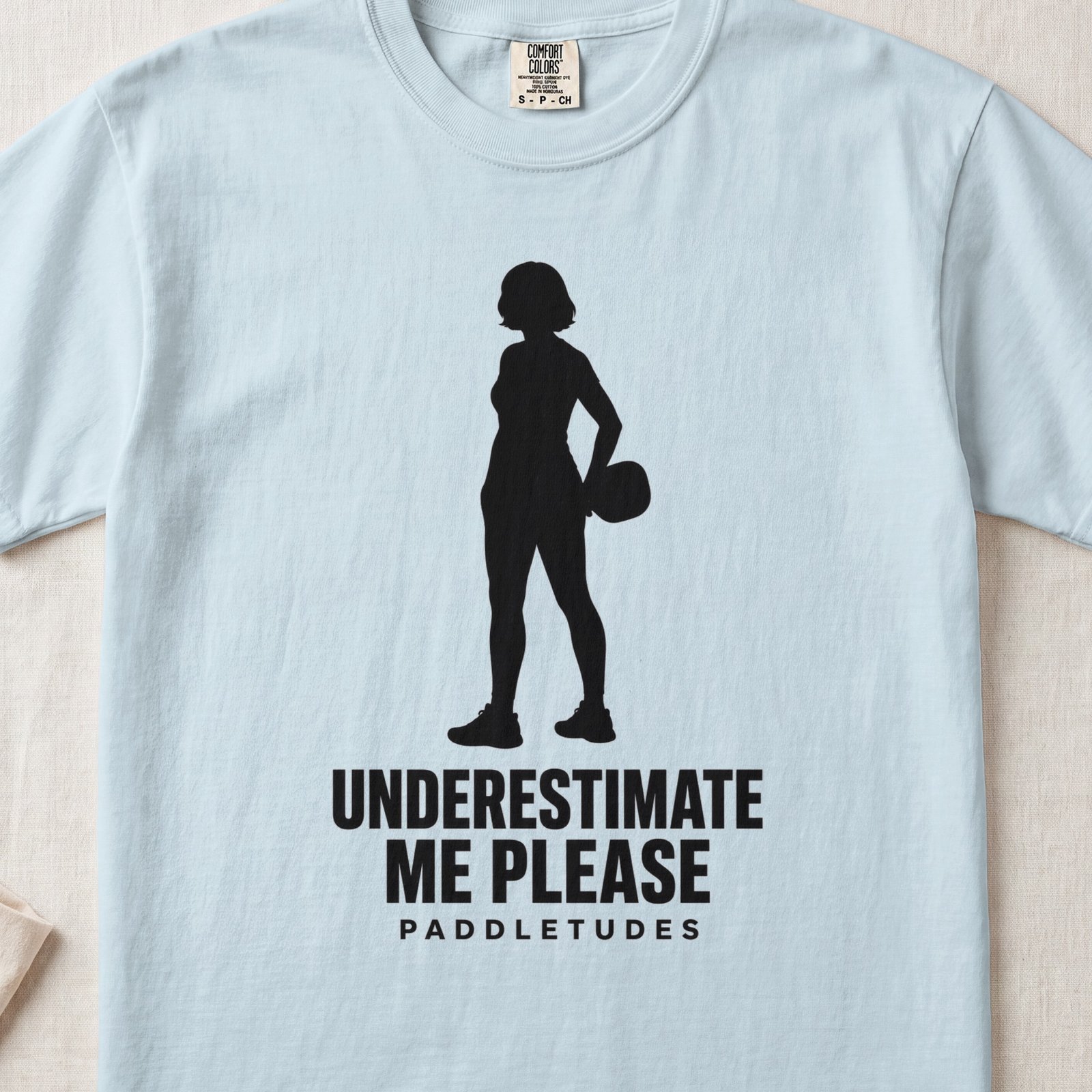
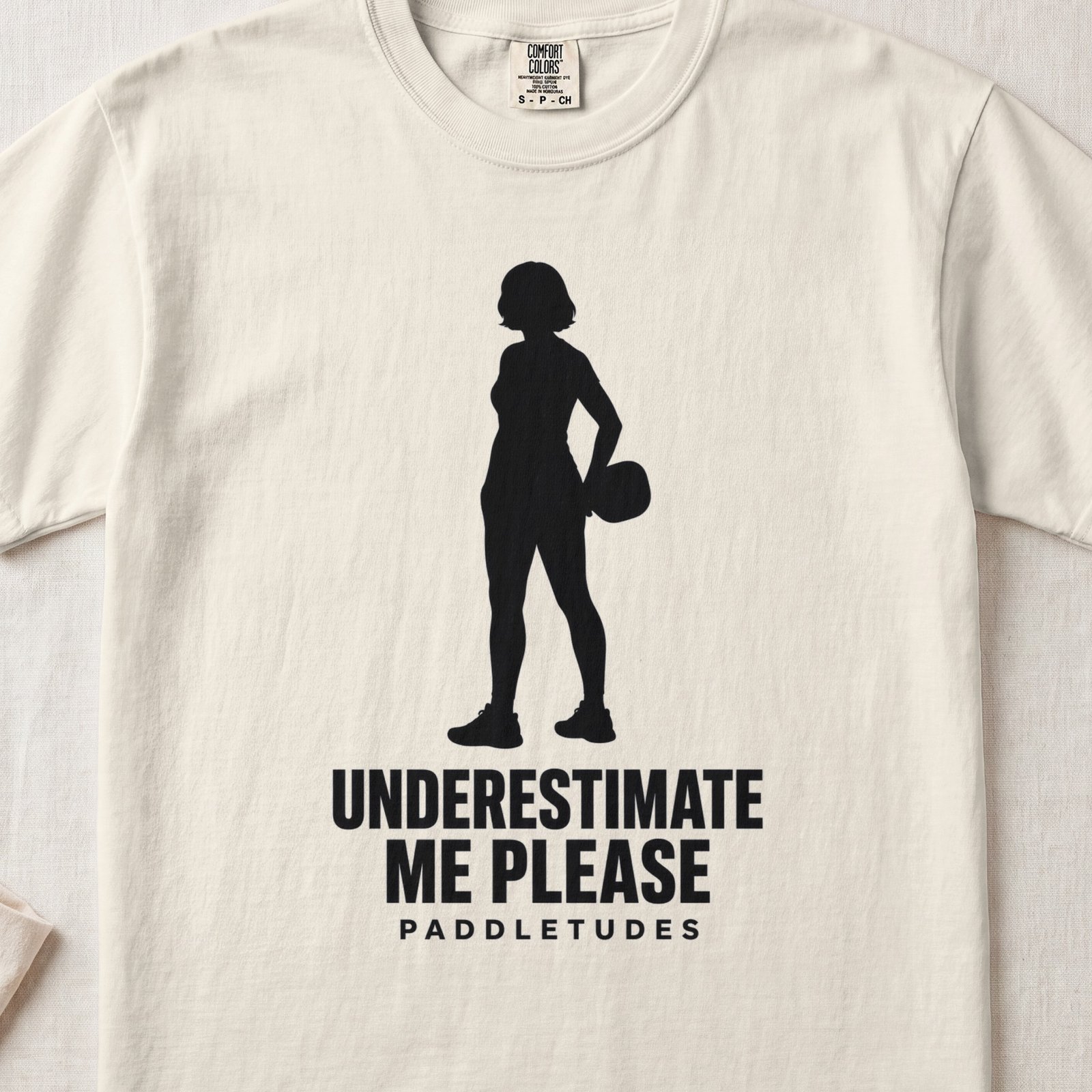
Sports Comfort Colors 1717
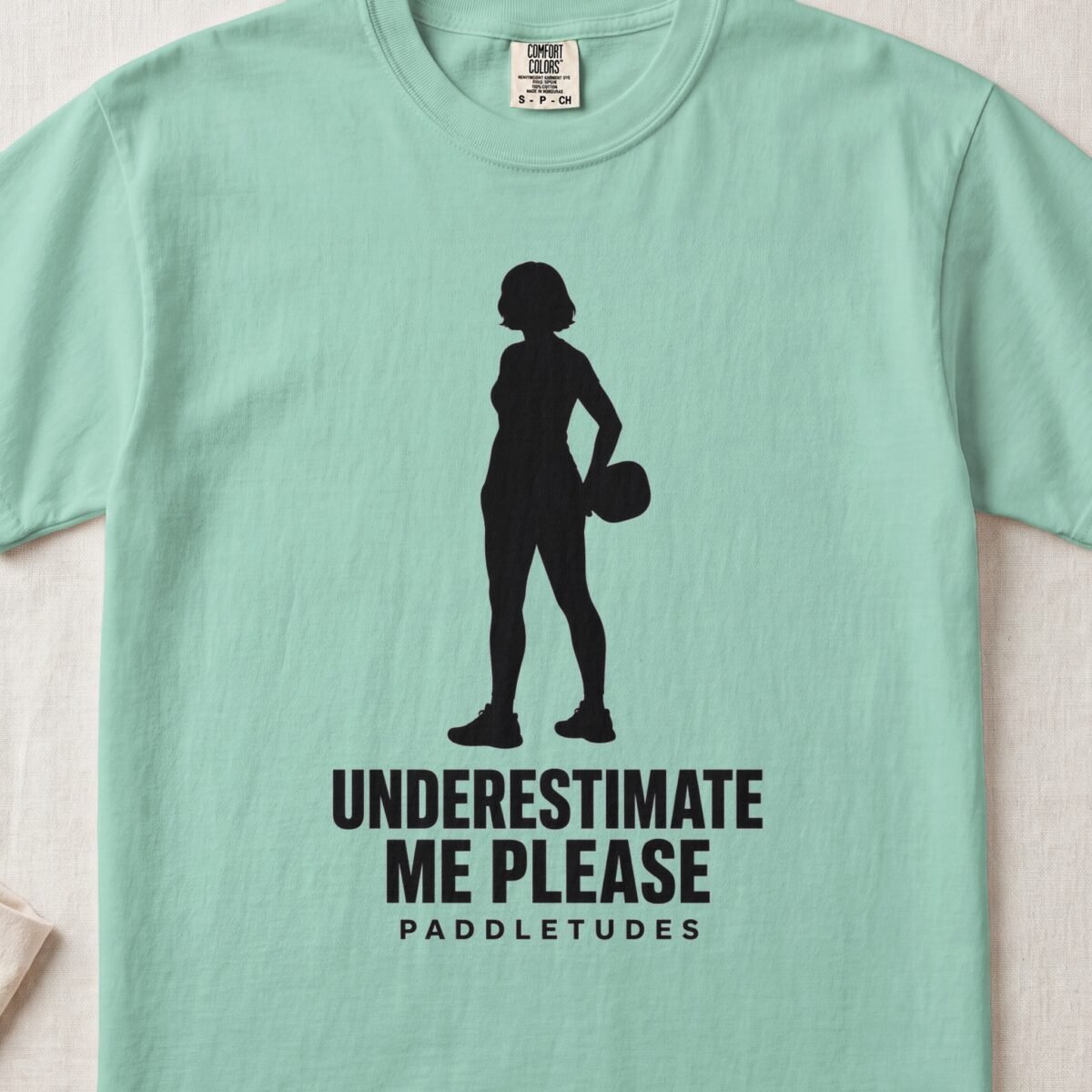
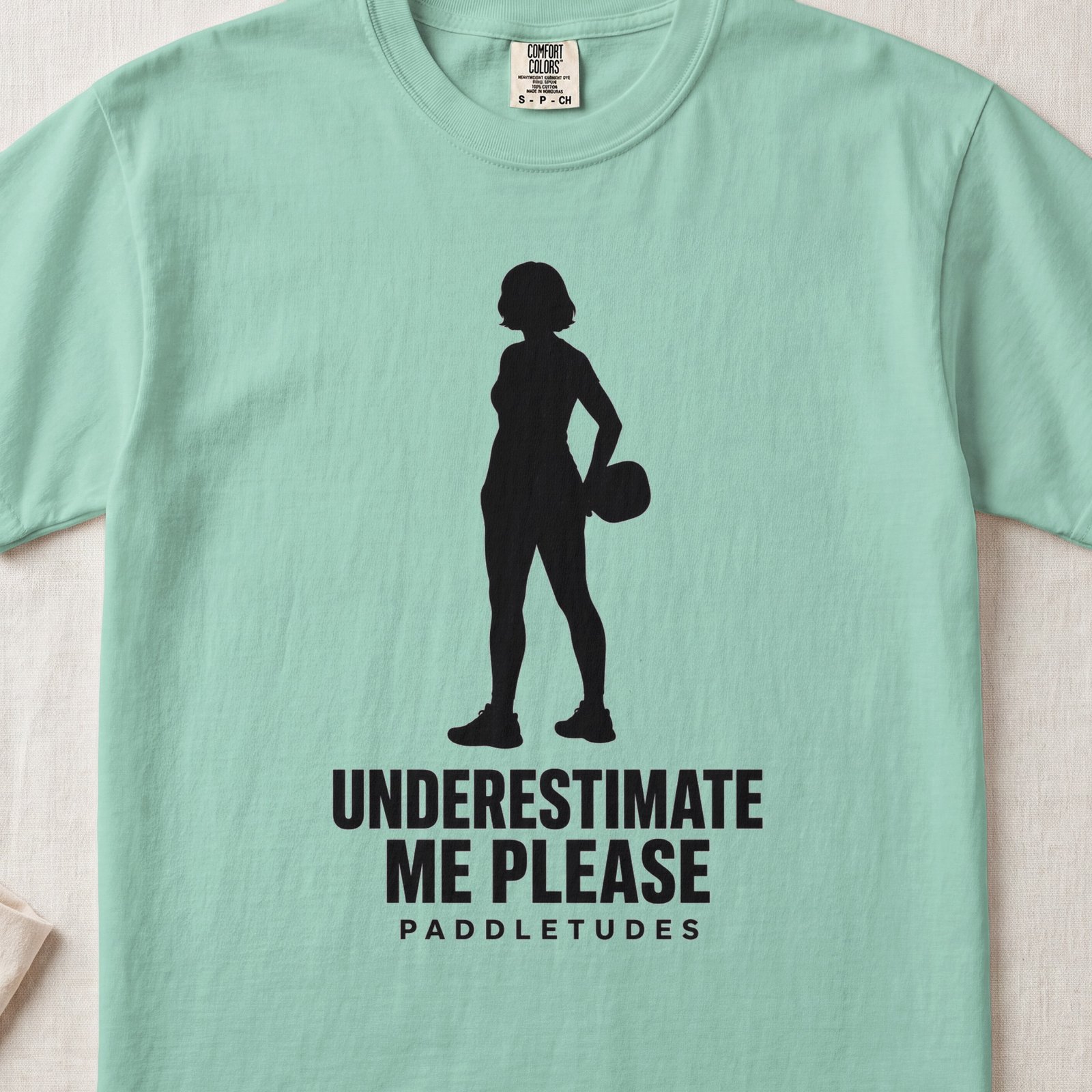
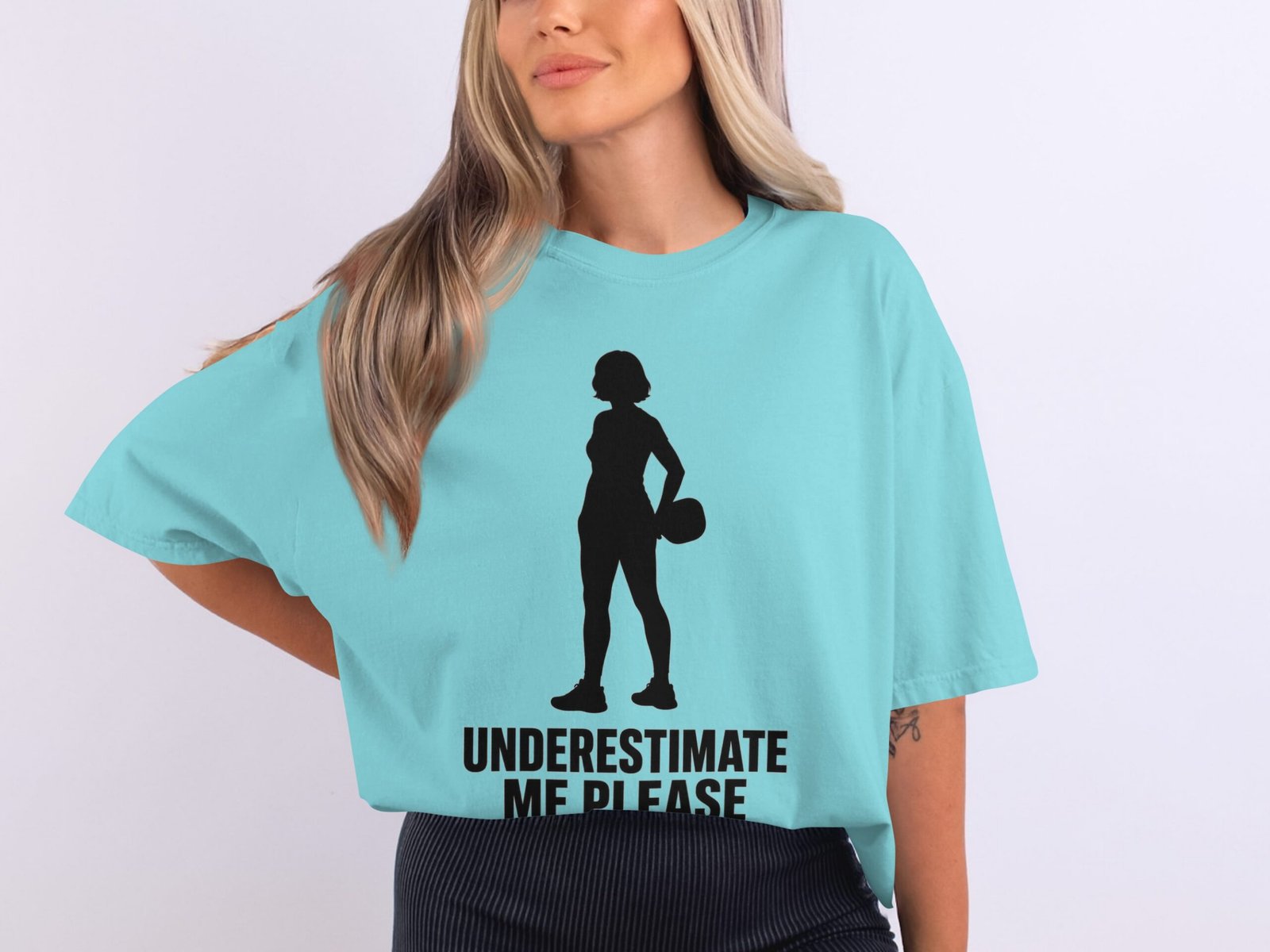
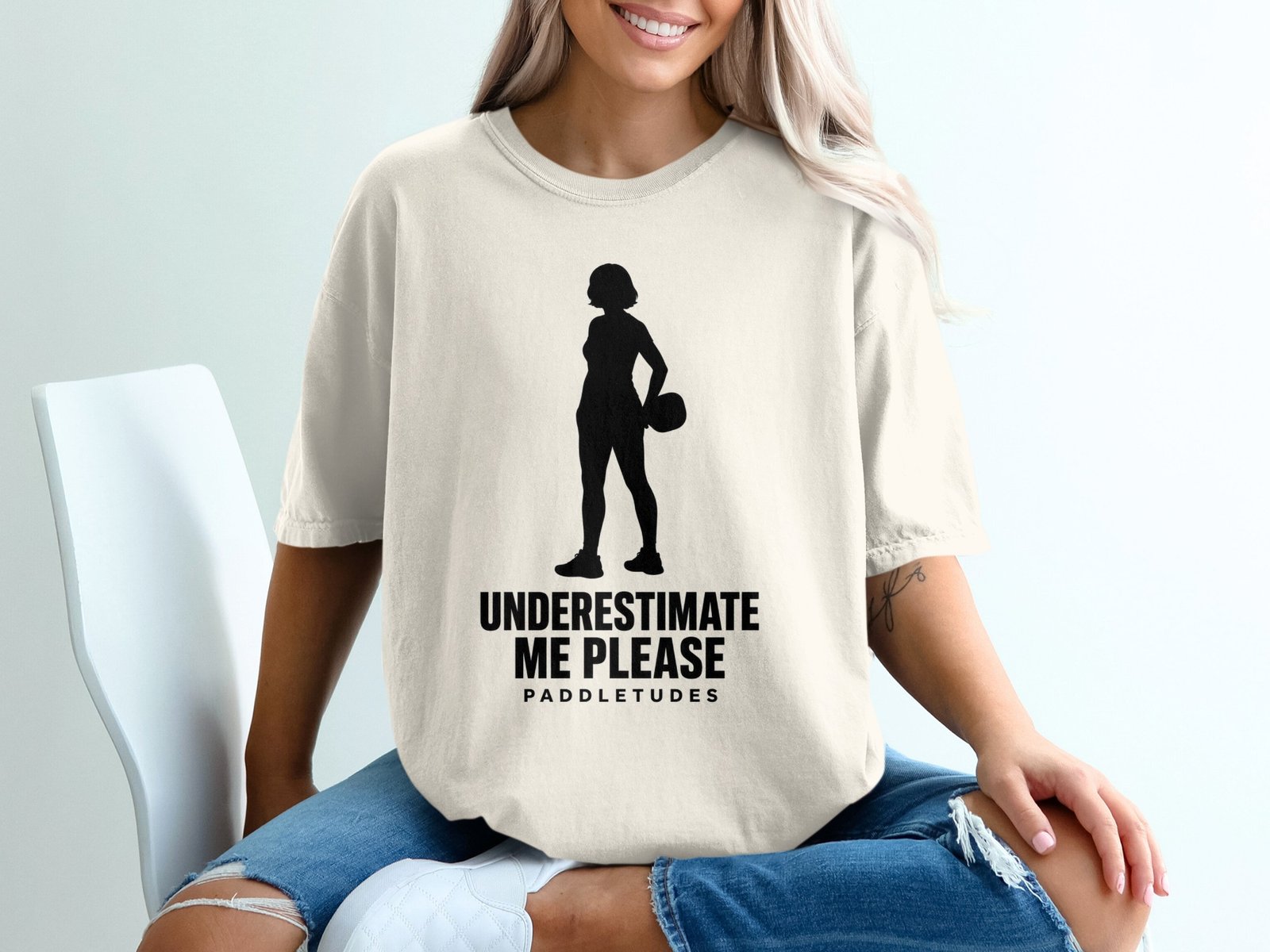
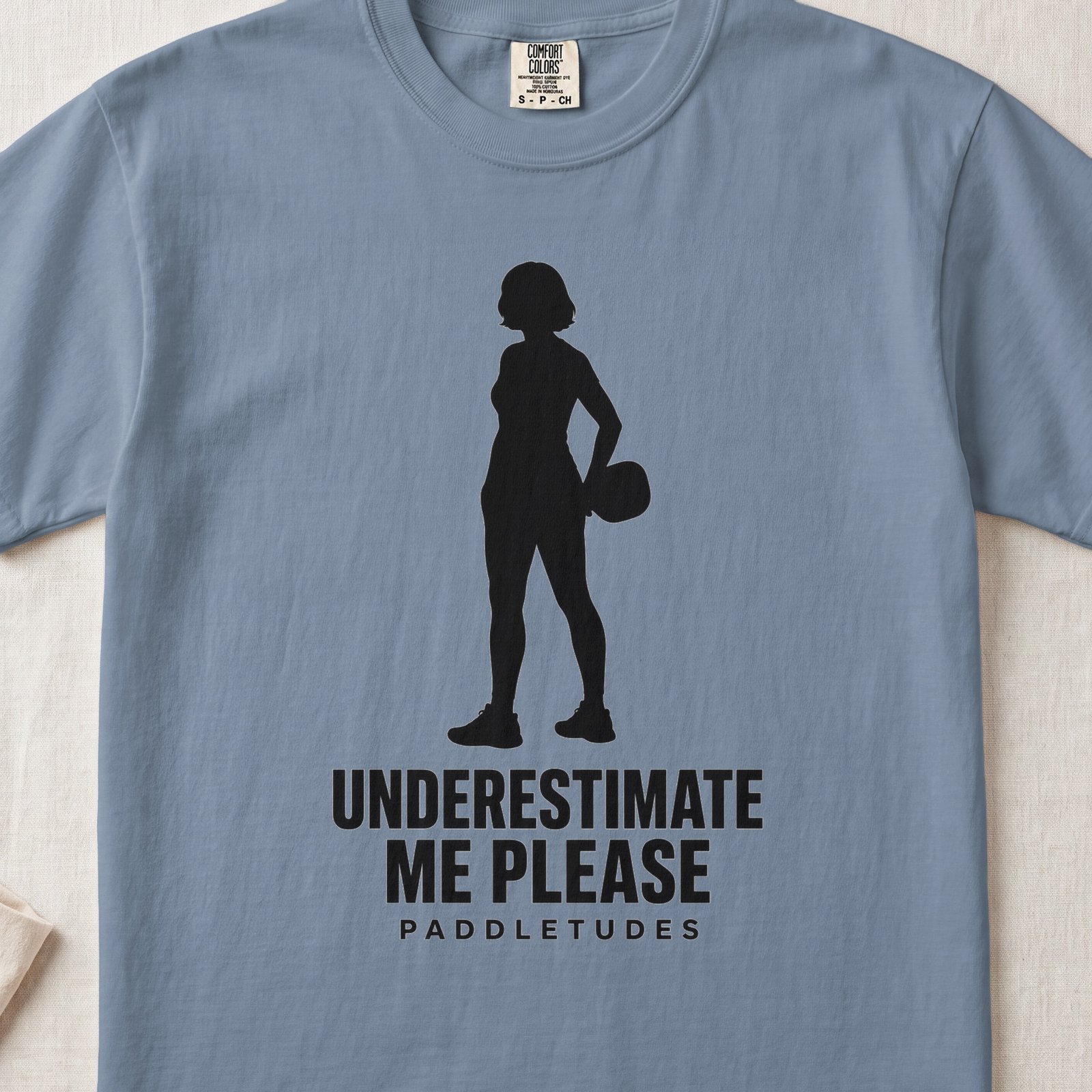
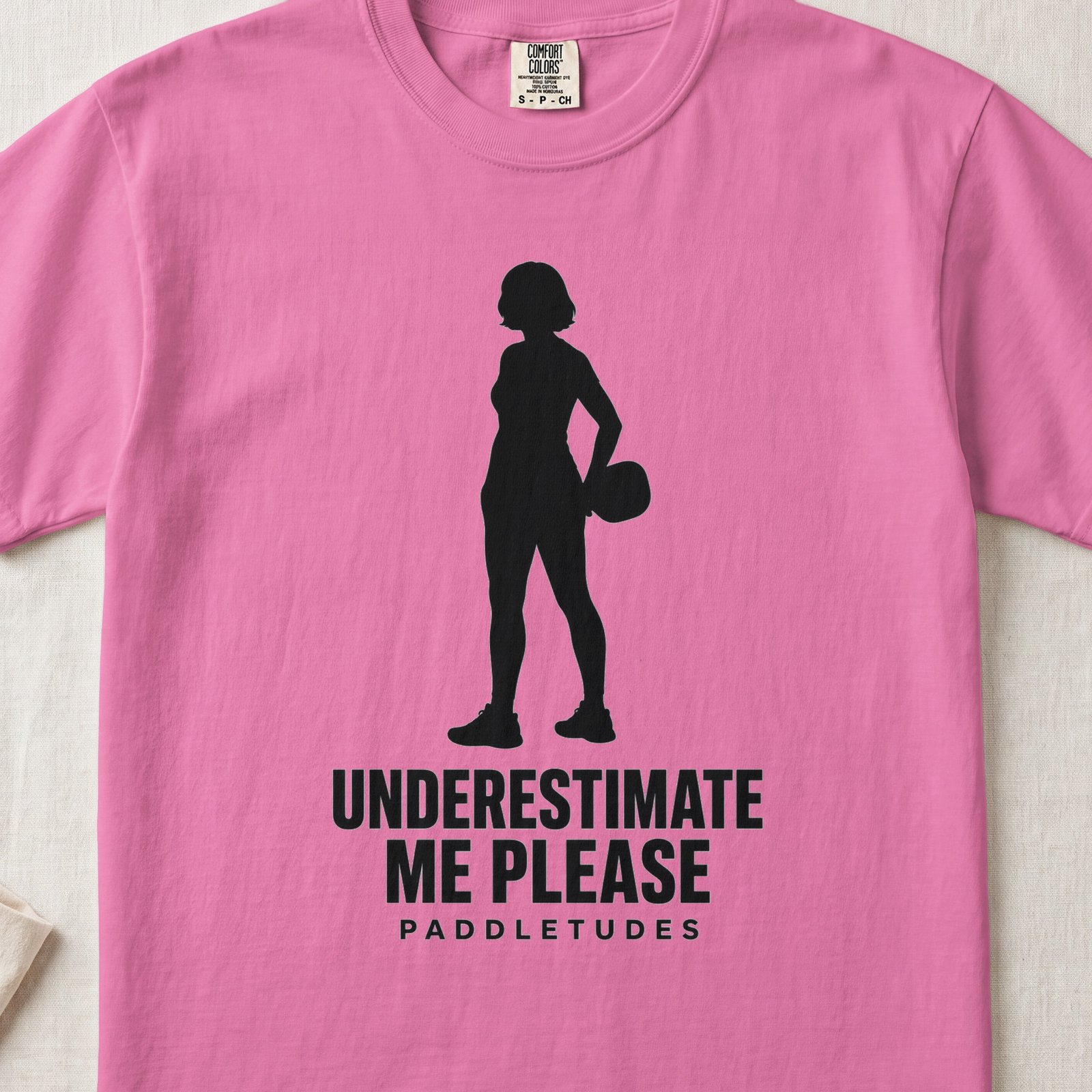
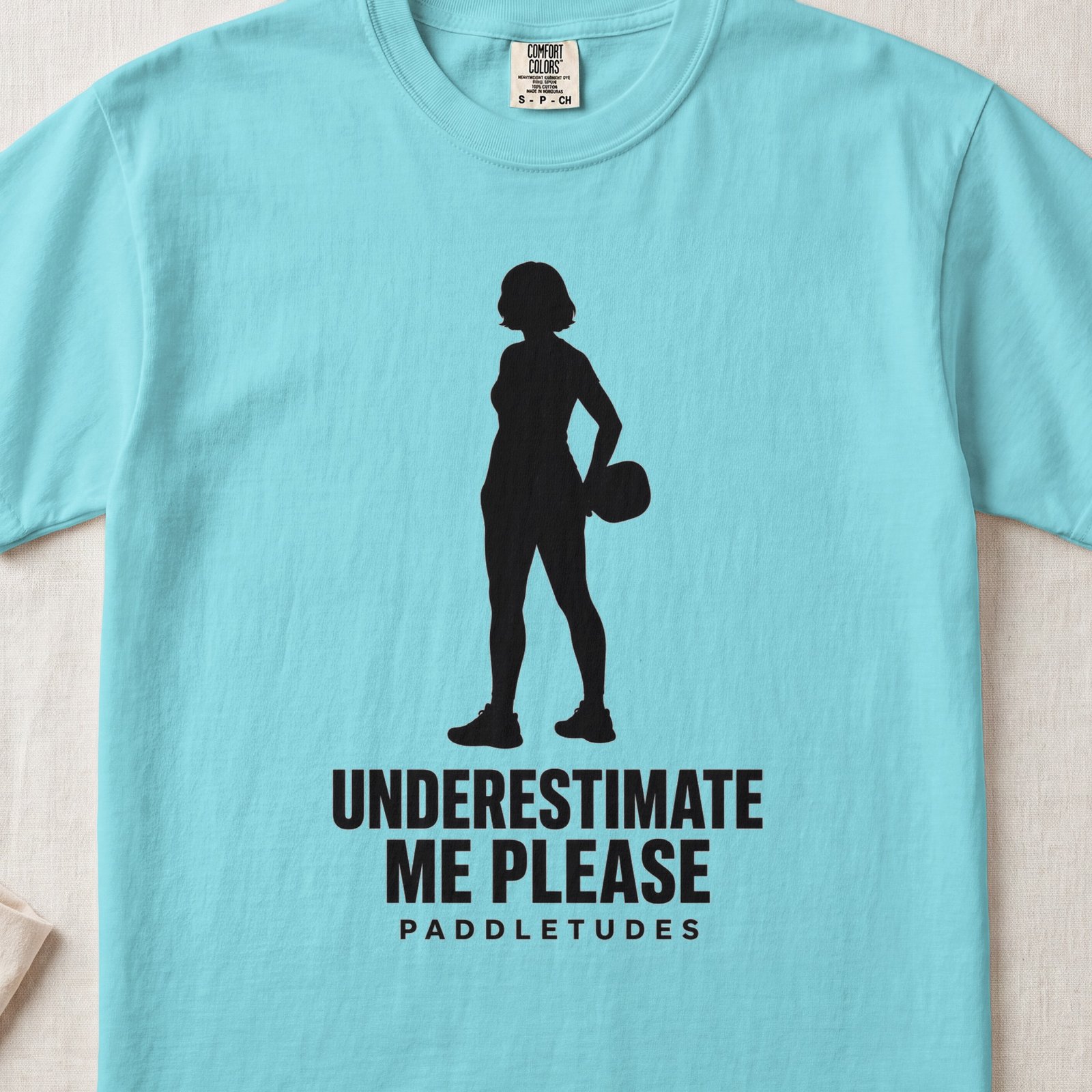
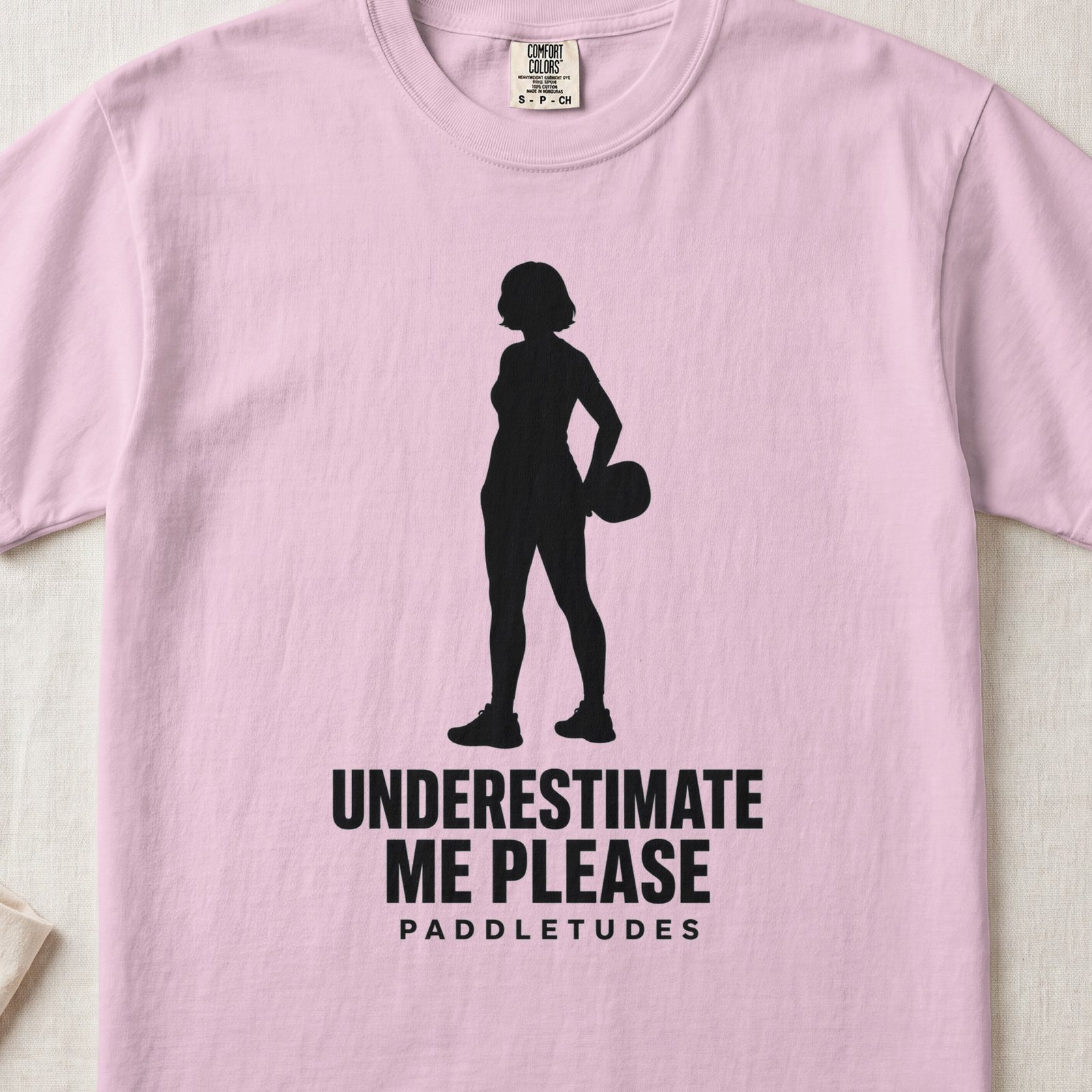
Underestimate Me Please
$29.99
- Comfort Colors 1717 heavyweight cotton
- Original design · printed to order
- U.S. print partners
Underestimate Me Please — The Women’s Pickleball Shirt That Wants You to Make That Mistake
Go ahead. Look at her warmup and decide she’s not a threat. That’s exactly what this funny pickleball shirt is asking you to do, and the woman wearing it has been waiting for that read since she walked onto the court.
Underestimation is a strategy in pickleball the same way it’s a strategy everywhere else. The player who gets dismissed early controls the tempo of the surprise. She shows up quiet. She doesn’t announce her DUPR rating. She doesn’t talk about her tournament results during the paddle tap. She lets you decide she’s recreational. Then the serve comes in with spin you weren’t expecting, the third shot drops into the kitchen like it was placed there by hand, and by the time you realize what happened, you’re down 5-1 and rethinking every assumption you made in the first thirty seconds. The shirt doesn’t warn you. It invites the mistake.
Women in pickleball deal with underestimation at a rate that men simply don’t. In mixed doubles especially, the pattern repeats at every skill level. Opponents target the woman assuming she’s the weaker player. Partners cover too much of the court assuming she can’t handle her side. Strangers at open play ask if she’s new because she’s standing in a spot that suggests she doesn’t know the rotation, when in reality she’s standing there because she’s played enough to know it’s the best position on the court. The PPA Tour’s women’s bracket has players who would embarrass most men’s recreational fours, and the gap between how women are perceived at the rec level and how they actually play is where this shirt gets its energy. Underestimate Me Please doesn’t correct the record. It weaponizes the gap.
The identity behind the shirt goes deeper than pickleball. The woman who wears this has been underestimated at work, at the gym, in conversations that assumed she wasn’t paying attention. The court is just the latest venue. What makes pickleball specific is that the proof is immediate. You can argue with someone’s credentials over email for weeks. You cannot argue with a scoreboard that reads 11-3. The moment the game ends, the underestimation ends with it. And the shirt stays on for the next one, resetting the trap for whoever walks onto the court thinking they know what they’re looking at.
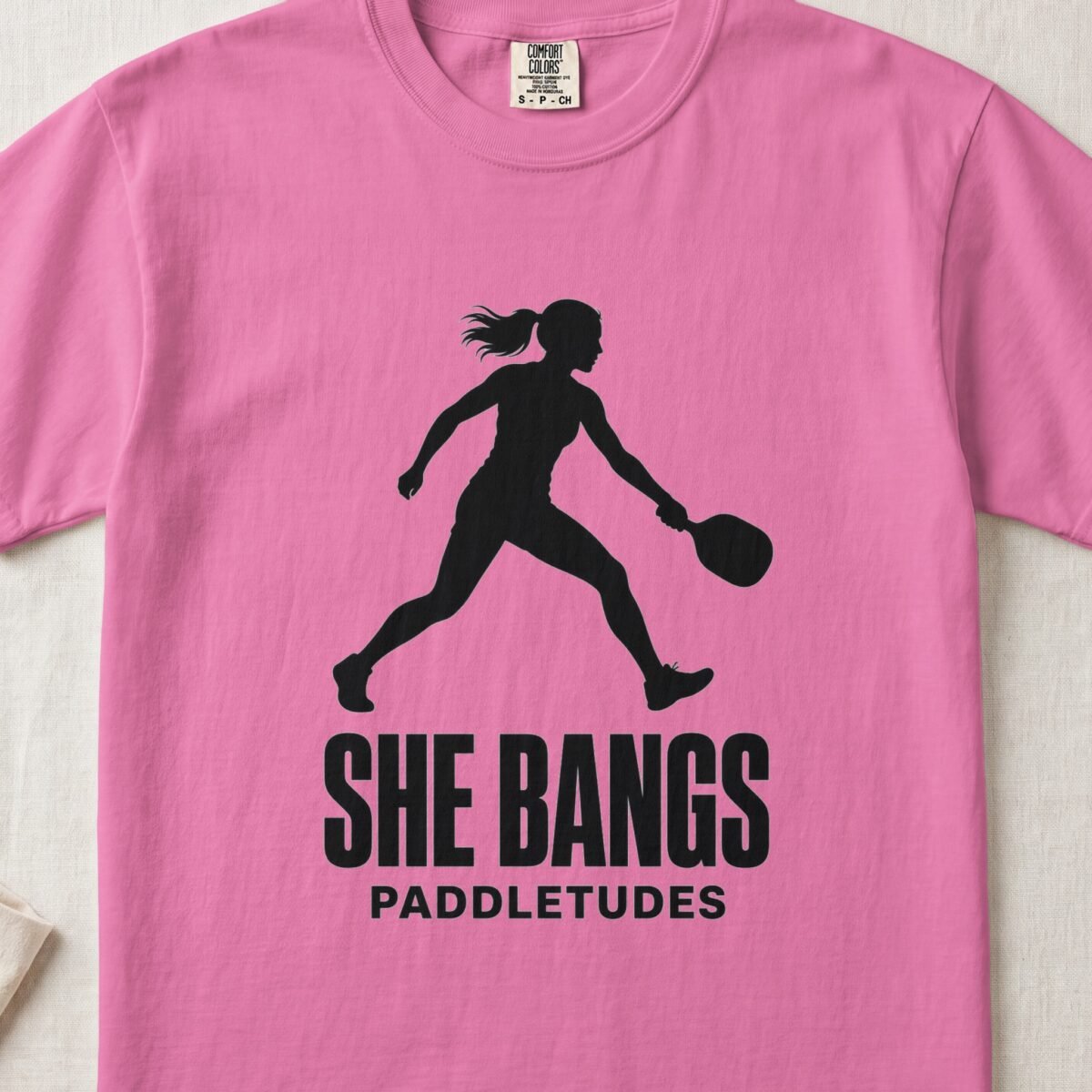
This crosses into She Bangs territory if the player’s response to underestimation is power. It crosses into Not Your Average Doubles Partner if the response is making her partner look good while quietly running the game. And it crosses into Messy Bun And Getting It Done if the vibe is less competitive edge and more casual dominance. Each of those shirts expresses a different version of the same truth. She’s better than you think. She knows it. She’s not telling you until it’s too late.
The pickleball gift version of Underestimate Me Please is the most fun to buy because the person receiving it will know exactly why you chose it. Your league partner who’s been quietly beating people above her rating all season. Your sister who started playing six months ago and already has opinions about paddle core thickness. The woman at your facility who everybody knows not to target anymore because the last three people who did lost in straight games. She doesn’t need encouragement. She needs acknowledgment. This is that gift.
Why Do Women Get Underestimated in Pickleball
Women get underestimated in pickleball primarily in mixed doubles and open play settings where opponents and partners make assumptions based on gender rather than skill level. The most common form is targeting, where the opposing team hits every ball to the woman assuming she’s the weaker player on the court. This happens at 3.0, 3.5, and even 4.0 levels despite the fact that many women at those ratings have equal or better touch, court awareness, and consistency than their male counterparts.
The underestimation has a second layer in how partners behave. In mixed doubles, some men will poach balls from the woman’s side, cover more than their half of the court, or make verbal calls that assume she doesn’t know where to be. At the recreational level, this happens often enough that women’s-only play sessions and women’s league formats have grown significantly. These aren’t separatist movements. They’re responses to a pattern that enough women have experienced that the market created a solution. The player wearing Underestimate Me Please has played through the targeting, the poaching, and the assumptions. She stayed on the court long enough that people stopped making them. The shirt is a reminder for anyone new enough to try.
How Do You Handle Being Targeted in Mixed Doubles Pickleball
Handling targeting in mixed doubles pickleball starts with positioning and preparation rather than frustration. If the opposing team hits every ball to you, they’re giving you control of the point. The player who gets every ball also gets every opportunity to place it, change the angle, and dictate the rally. Embrace the attention rather than resenting it.
Tactically, a player being targeted should focus on three things. First, own the kitchen line. If you’re at the net and receiving the majority of shots, your soft game becomes the weapon. Controlled dinks and resets that keep the ball low neutralize the power the other team is sending your direction. Second, use the targeting against them. If they always hit to you, your partner is open. A well-timed erne, a poach from your partner after three shots to your side, or a redirect that catches the opponent leaning the wrong way all punish predictable targeting. Third, communicate with your partner. Pickleheads’ mixed doubles strategy guides cover this in detail, but the short version is that a team that talks between points about what the other team is doing can adjust faster than a team that stays silent. The woman wearing this shirt handles the targeting by making the other team regret the strategy. That’s not a philosophy. That’s a three-game track record they can check at the end of the session.
Printed on a Comfort Colors 1717 garment-dyed heavyweight tee with water-based DTG ink — sizing and care details here.
-
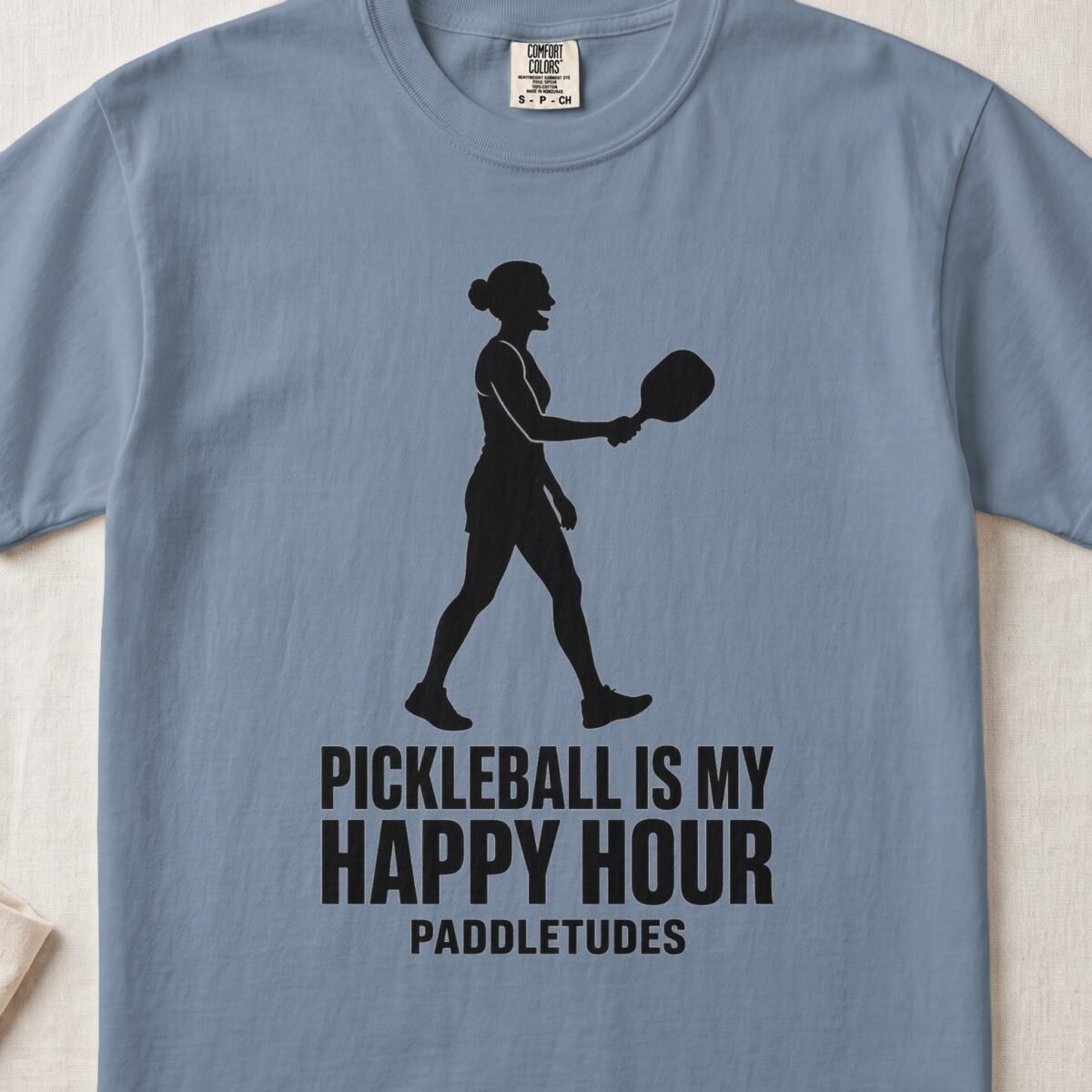
Pickleball Is My Happy Hour
$29.99 Select options This product has multiple variants. The options may be chosen on the product page -
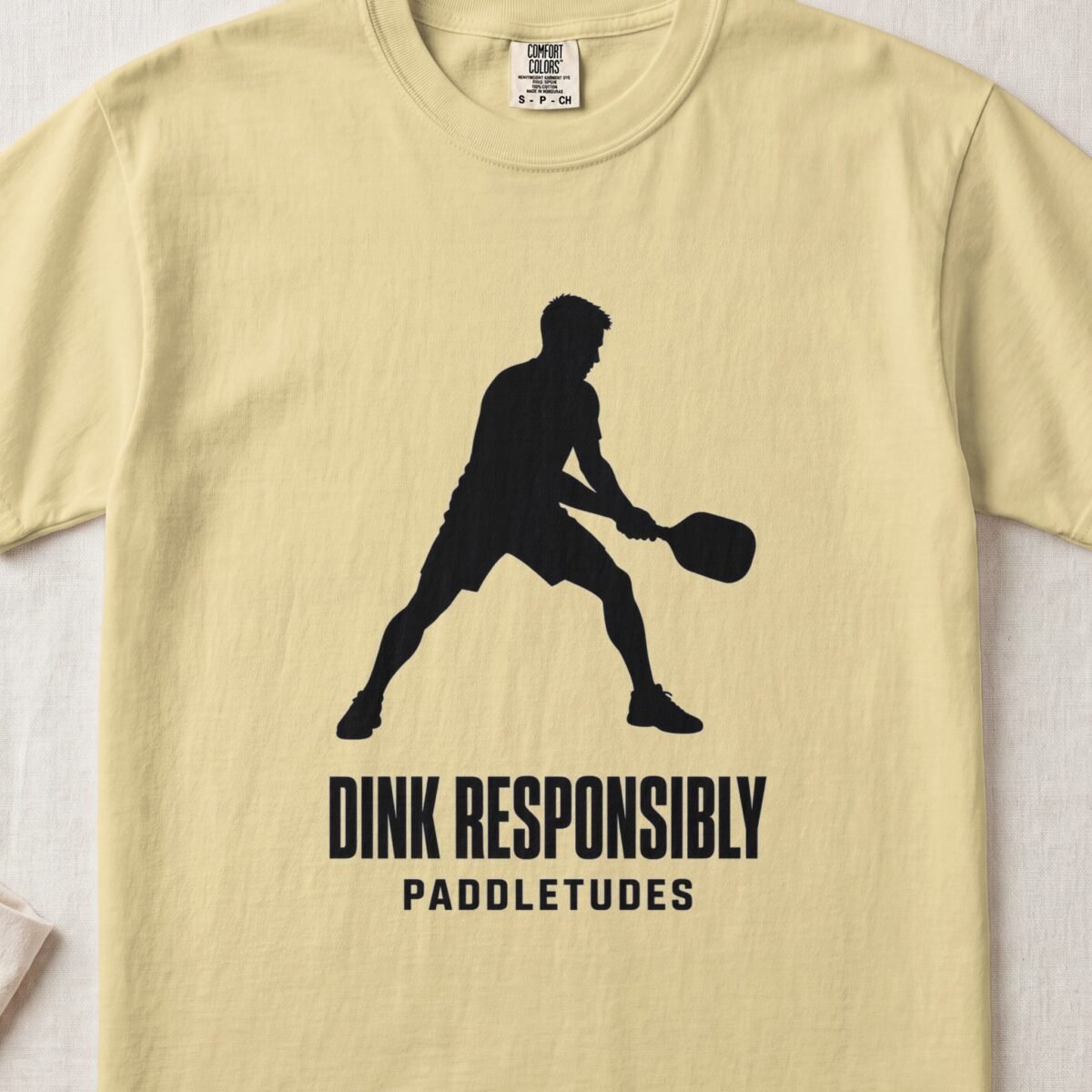
Dink Responsibly
$29.99 Select options This product has multiple variants. The options may be chosen on the product page -
She Bangs
$29.99 Select options This product has multiple variants. The options may be chosen on the product page