
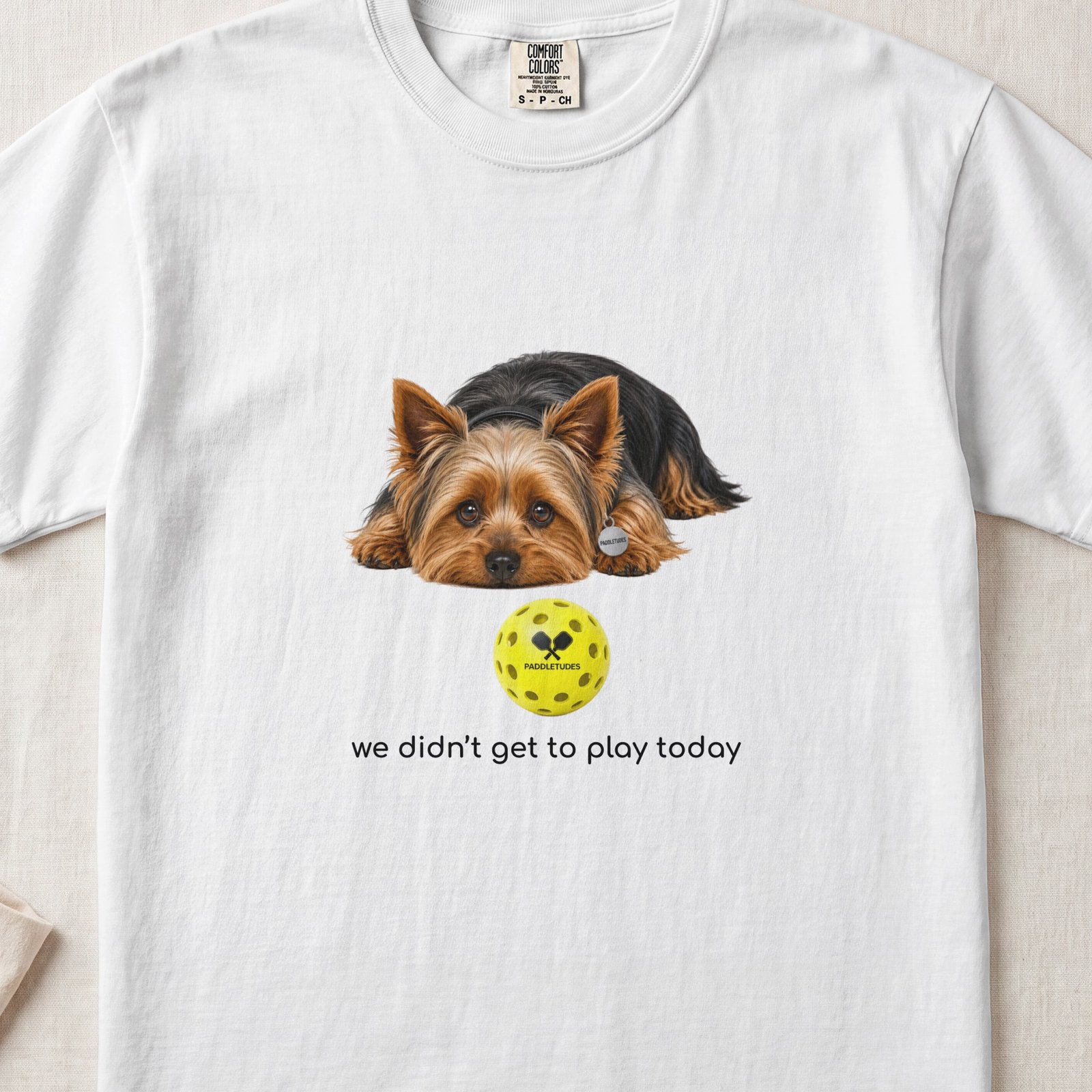
Animals Comfort Colors 1717
Yorkshire Terrier Sad
$39.99
- Comfort Colors 1717 heavyweight cotton
- Original design · printed to order
- U.S. print partners
A Yorkie Gift for Seven Pounds of Concentrated Betrayal
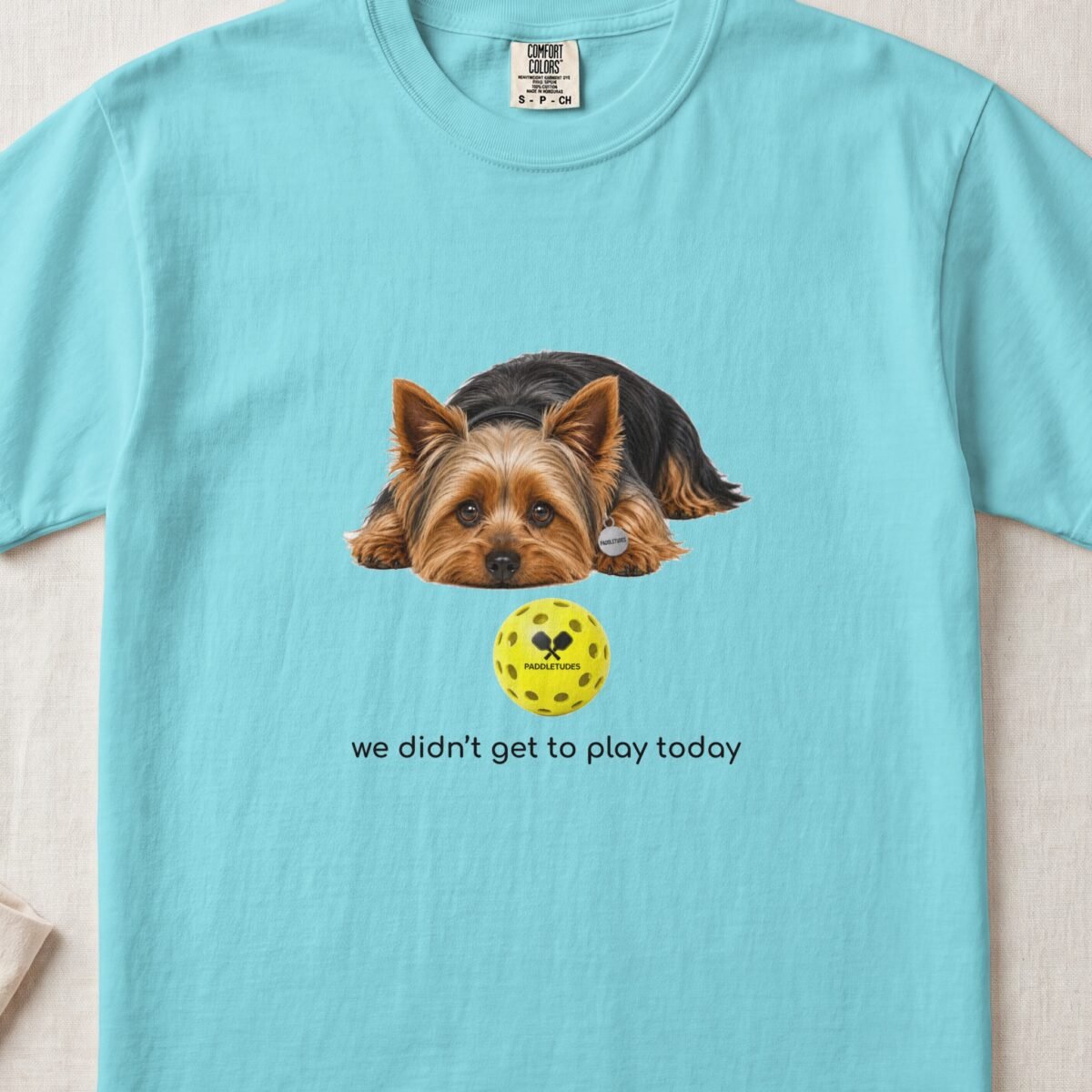
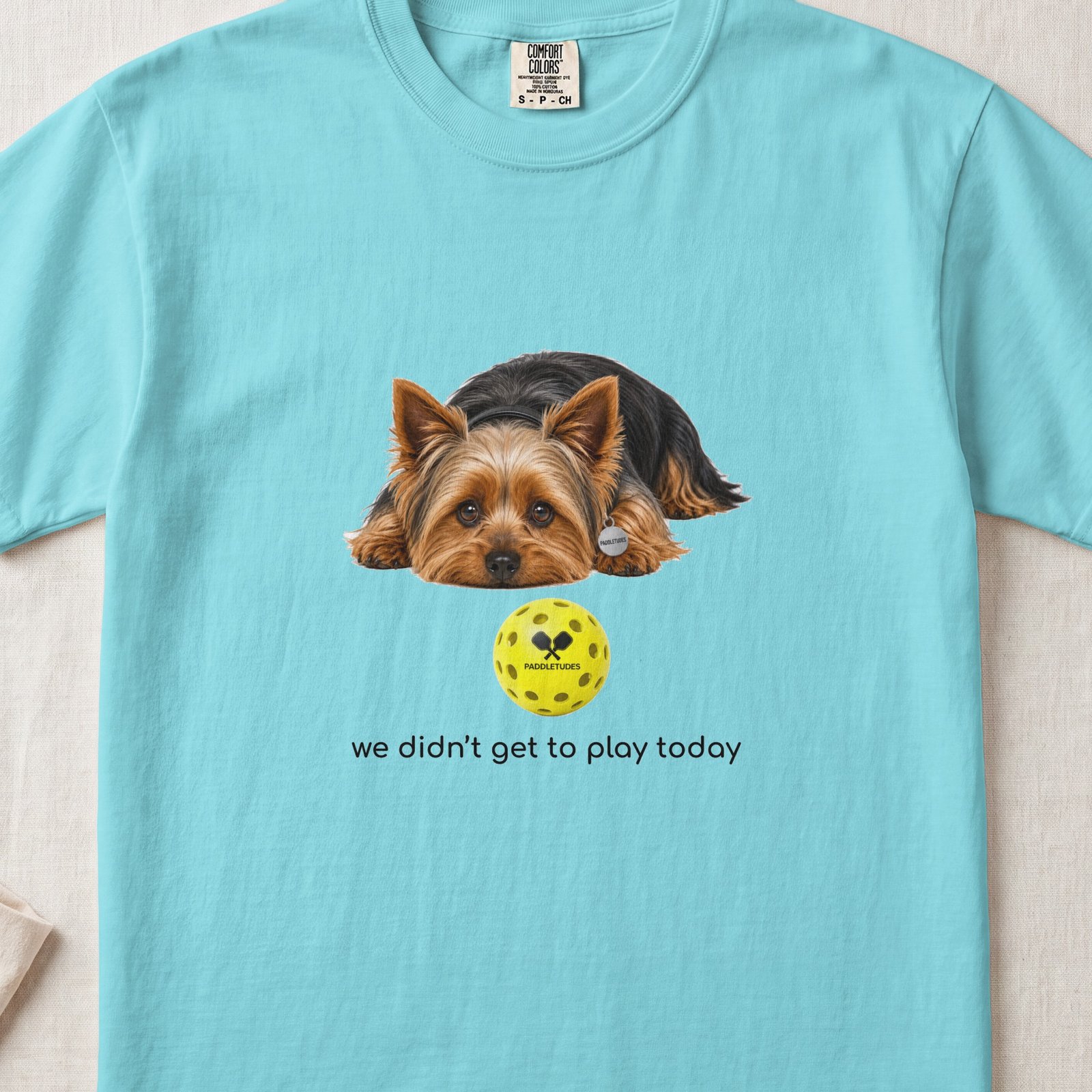
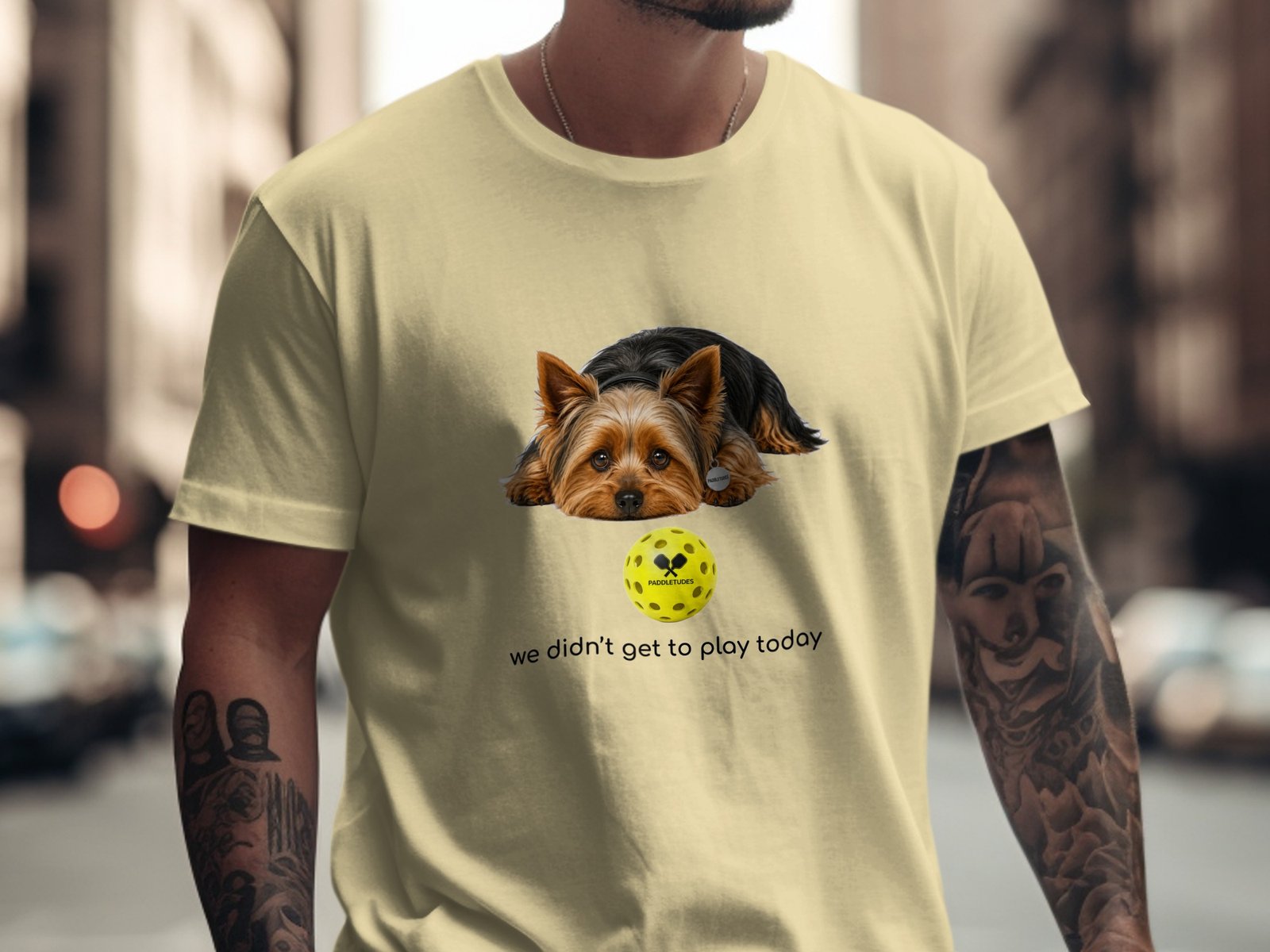
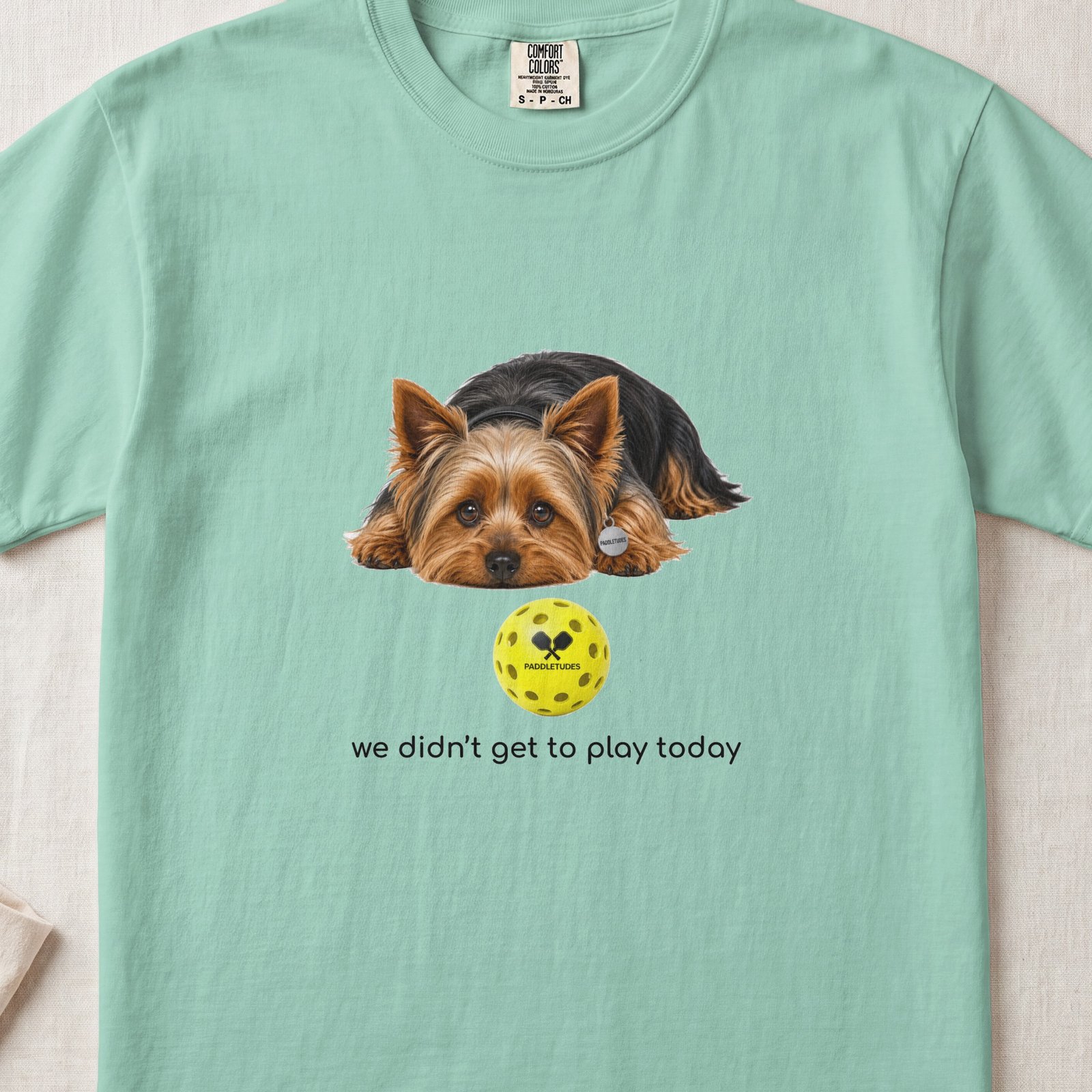
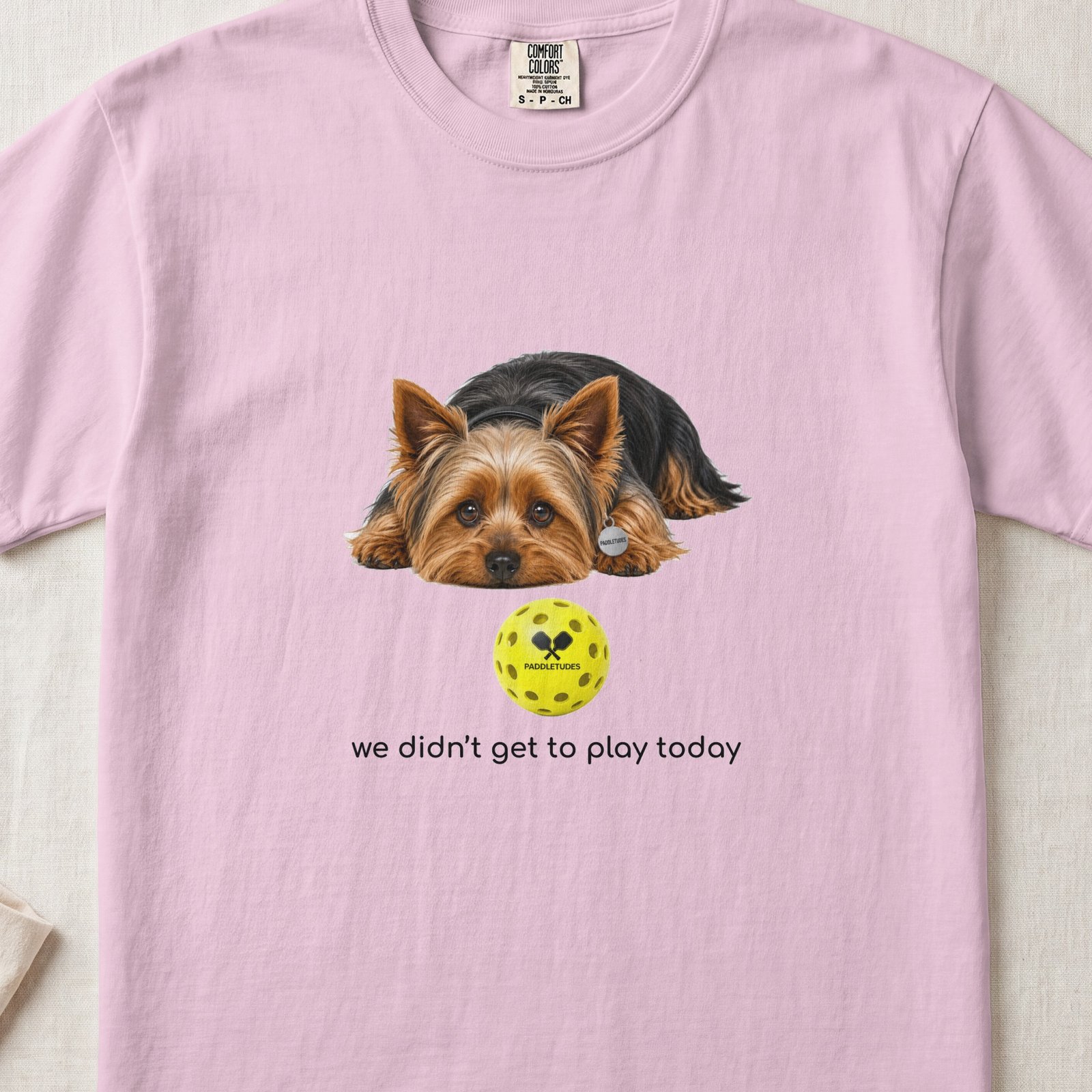
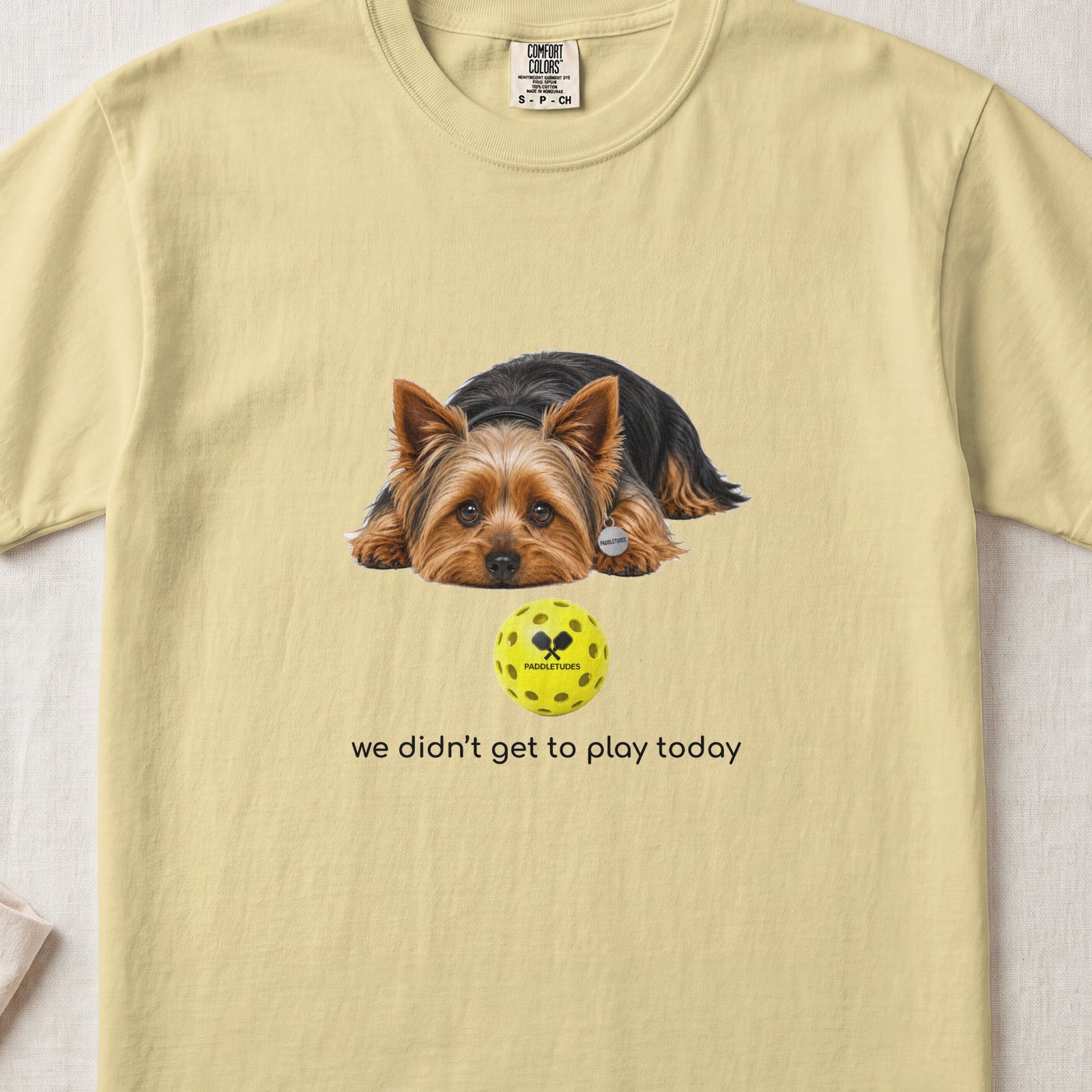
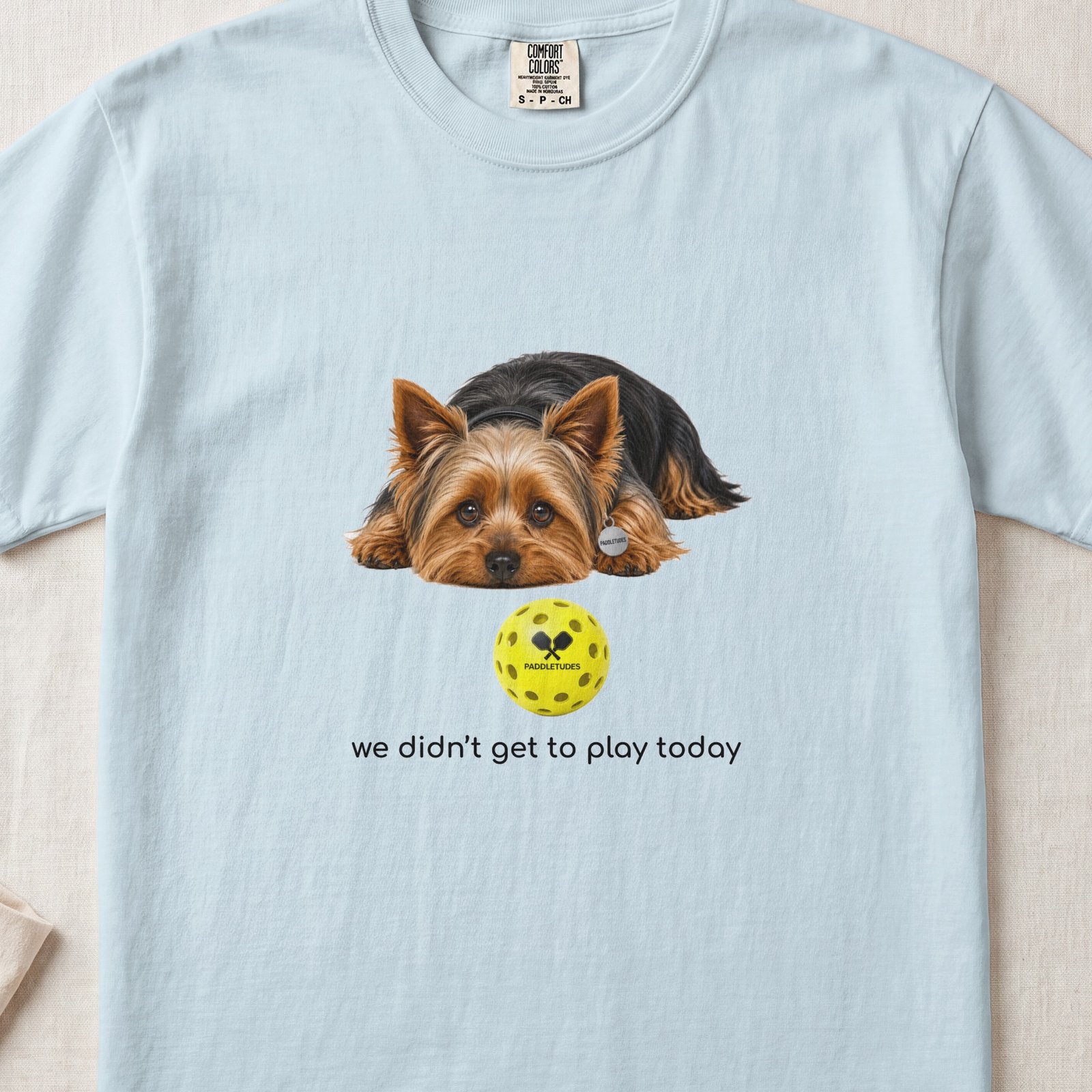
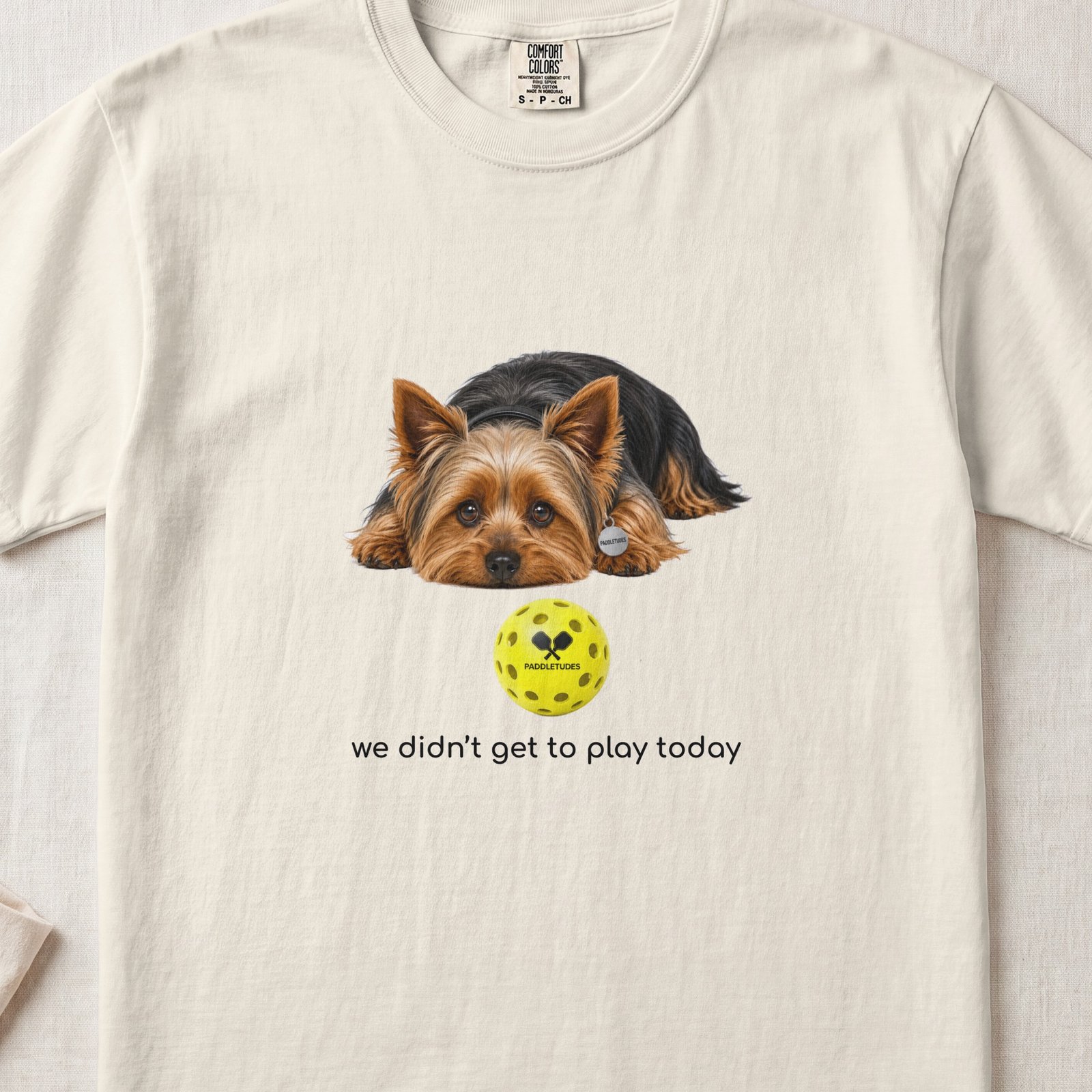
There is nothing on earth more offended than a Yorkshire Terrier who has been left behind — this Yorkie shirt captures seven pounds of concentrated betrayal lying flat on the floor with a pickleball it will not touch until you come home and explain yourself. Printed on a garment-dyed Comfort Colors 1717 heavyweight tee with water-based DTG ink.
If there is someone in your league whose Yorkie texts them during games — not literally, but the owner checks the camera and narrates the dog’s position to anyone who will listen — this is the holiday gift that captures the entire relationship in one design. Not a gag. The shirt that says yes, my seven-pound dog runs my life, yes, I feel guilty every time I leave for the court, and yes, the homecoming makes it worth it. Yorkie gift volume runs strong because these owners do not own a dog casually. They are in a committed relationship with a creature that weighs less than the paddle bag and has more opinions than the entire doubles rotation combined.
You know the scene. The paddle bag comes off the hook. The shoes go on. The Yorkie watches the entire sequence with the alert, calculating gaze of a dog that has memorized your departure routine down to the second — and the instant it confirms this is happening, the performance begins. Not barking. Not spinning. A slow, deliberate lowering of the body to the floor, chin on paws, eyes tracking you with an expression that communicates disappointment, accusation, and a detailed record of every other time you have done this, all without making a sound. At the dog park the next morning, wearing this shirt while your Yorkie struts beside you with fully restored terrier confidence, another Yorkie owner spots it and says “mine does the EXACT same thing” — and you spend ten minutes comparing notes on the guilt trip choreography, because every Yorkie does the same thing and every owner falls for it every time.
This is not a dog that processes abandonment quietly. This is a terrier. The Yorkshire Terrier was bred to chase rats through coal mine shafts — it has more nerve per ounce than any breed alive — and it applies that same tenacity to the emotional labor of making you feel guilty. The silence is a choice, not a surrender. Your Yorkie is not sad. Your Yorkie is disappointed, which is worse, because sadness is passive and disappointment is a judgement, and a Yorkie’s judgement carries the full weight of a creature that has decided it is the most important being in every room it enters and you have just proven it right by leaving.
The Yorkshire Terrier Club of America maintains the standard for a breed that was built in the textile mills and coal mines of Victorian England — dogs bred to track and kill rats in cramped, dangerous spaces, which required speed, courage, and the kind of sharp independent thinking that does not switch off when the job changes. That same problem-solving brain now tracks your routine, learns your schedule, and knows the difference between your court shoes and your errand shoes before you have finished tying them.
Living with a Yorkie also means managing a breed whose tiny frame creates specific health challenges. Their mouths contain 42 adult teeth — the same count as a Labrador — packed into a jaw the size of your thumb, and dental disease is the single most common health issue, affecting the majority of dogs by age three without daily brushing. Tracheal collapse — a weakening of the windpipe cartilage that causes a harsh, honking cough — affects nearly eighteen percent of the breed, and using a harness instead of a collar protects the airway over the dog’s lifetime. Hypoglycemia is a real risk, especially in puppies and smaller adults, because a body that small has almost no fat reserves to store glucose — miss a meal and blood sugar can drop dangerously fast. Despite all of this, Yorkies routinely live twelve to sixteen years, and the people who love them would not trade a single vet visit for a breed that was easier to maintain, because nothing else on earth combines this much personality per pound with this much loyalty per ounce.
The happy version puts the ball in your Yorkie’s mouth with the full rat-catcher confidence intact. The Chihuahua handles the same departure at maximum volume with zero subtlety. Find your breed in the full dog collection, or browse the pickleball shirt lineup.
Printed on a Comfort Colors 1717 garment-dyed heavyweight tee with water-based DTG ink — sizing and care details here.
What Were Yorkshire Terriers Bred to Do
Yorkshire Terriers were bred to kill rats. In the coal mines and textile mills of mid-1800s England, rat infestations were a serious health and economic problem, and the solution was a small, fast, relentless terrier that could navigate the cramped spaces between looms and down mine shafts where larger dogs could not follow. The Yorkie was purpose-built for that job — small enough to fit, brave enough to fight, and driven enough to keep going until every rat in the facility was dealt with.
The breed was developed by Scottish workers who migrated into Yorkshire during the Industrial Revolution, bringing their own small terrier breeds with them. Crosses between the Paisley Terrier, the Clydesdale Terrier, the Waterside Terrier, and possibly the Skye Terrier and Maltese produced a dog that combined speed, tenacity, and a coat that eventually became the breed’s signature. Early Yorkies were noticeably larger than the modern standard — closer to twelve or thirteen pounds — because the job demanded a dog with enough body to handle a rat in a mine shaft, not a dog that fits in a handbag.
The transition from working ratter to society companion happened remarkably fast. By the 1870s, the breed was being exhibited at English dog shows and drawing attention from the upper classes, who were captivated by the long, silky coat and the outsized personality. The breed was officially named the Yorkshire Terrier in 1870, and within a generation it had moved from factory floors to aristocratic parlors. The AKC recognized the breed in 1885, making it one of the earliest toy breeds registered in America.
That working history explains the precise behavior on this shirt. The alertness — your Yorkie tracking your every move before you leave — is a predator’s attention repurposed. The stubbornness — refusing to move from the spot until you return — is a ratter’s tenacity without a rat. The dramatic homecoming — the spinning, the noise, the full-body explosion of energy — is a terrier releasing the drive that has been building the entire time you were at the court. Nothing about your Yorkie’s behavior is random. It is all working-dog software running on a companion-dog body.
-
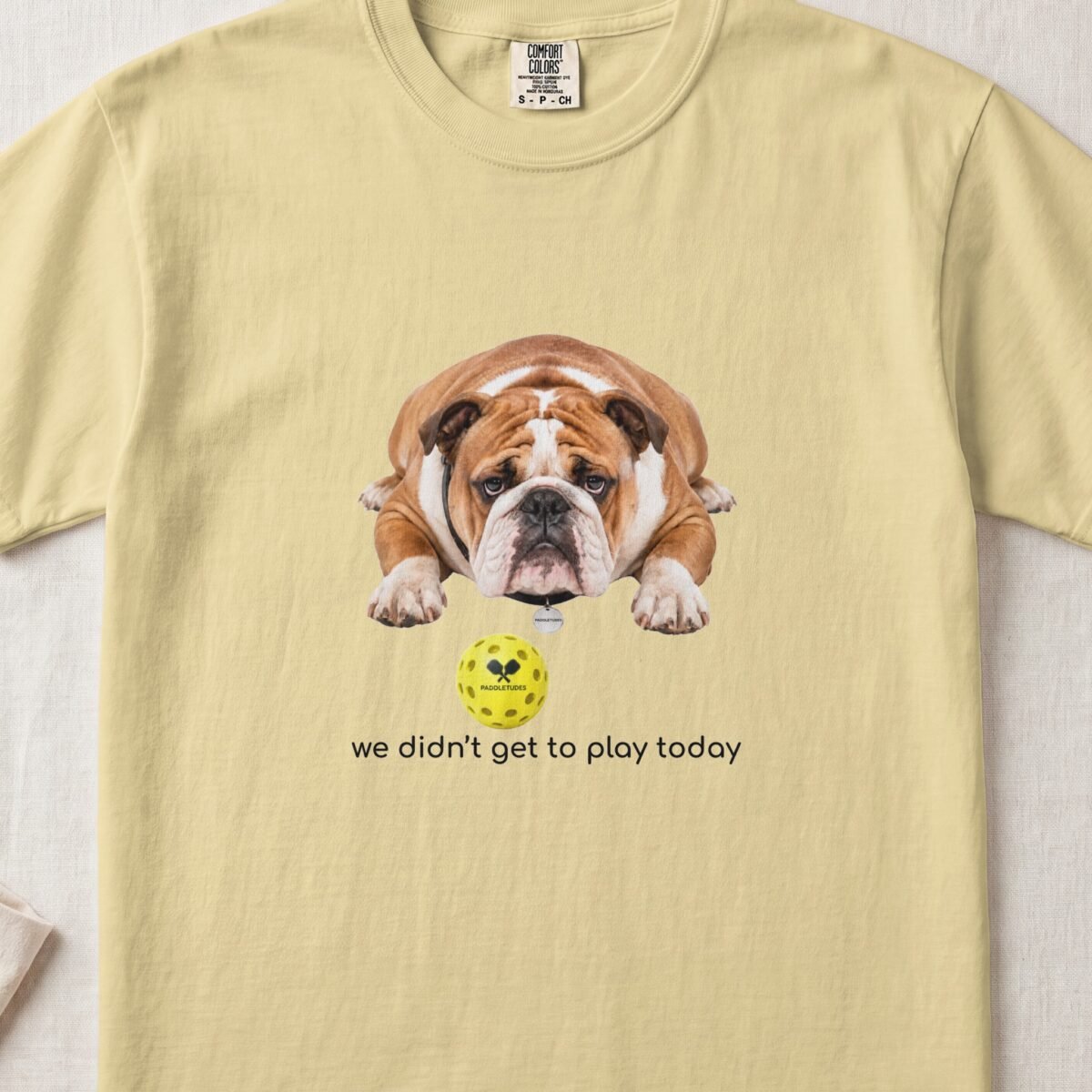
Bulldog Sad
$39.99 Select options This product has multiple variants. The options may be chosen on the product page -
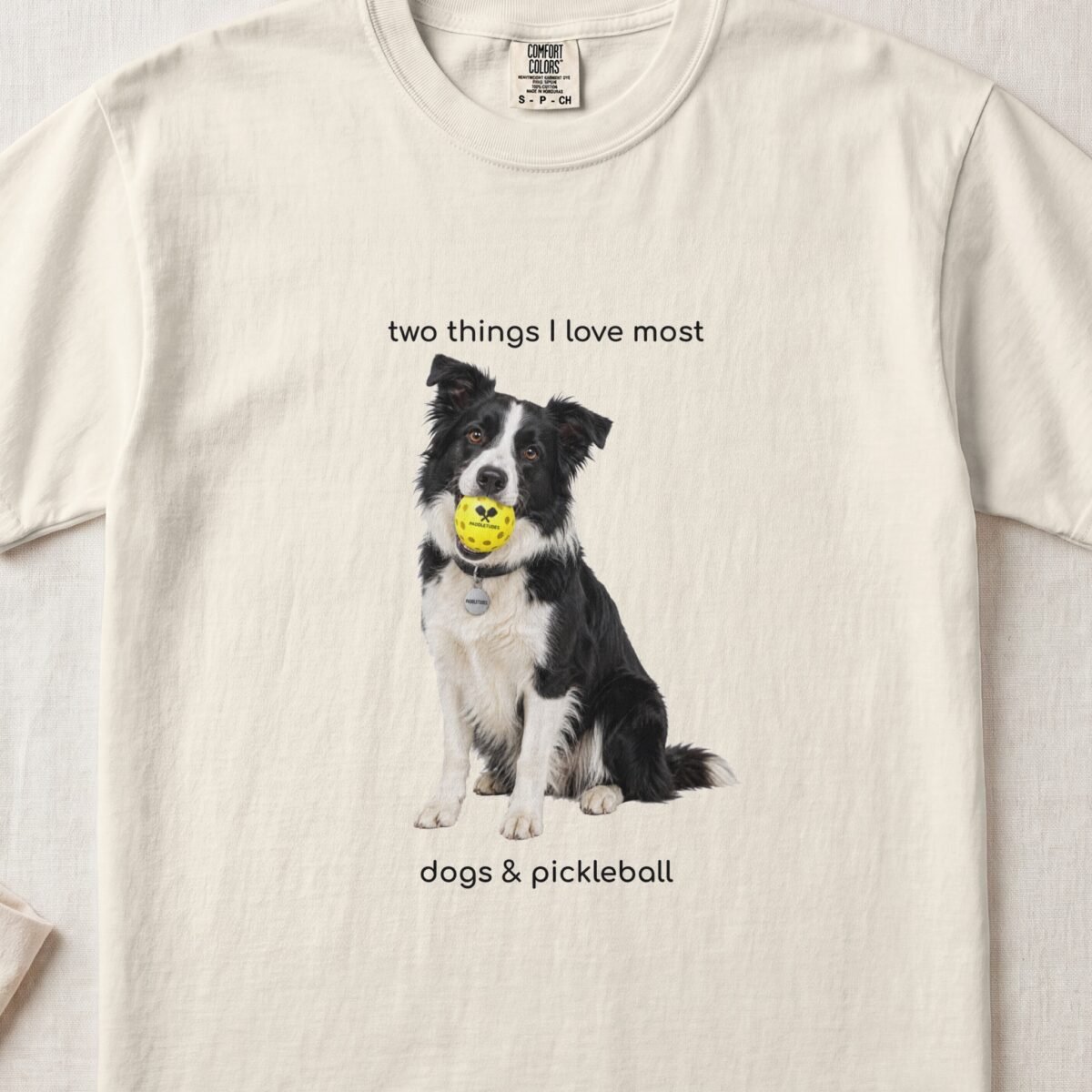
Border Collie Happy
$39.99 Select options This product has multiple variants. The options may be chosen on the product page -
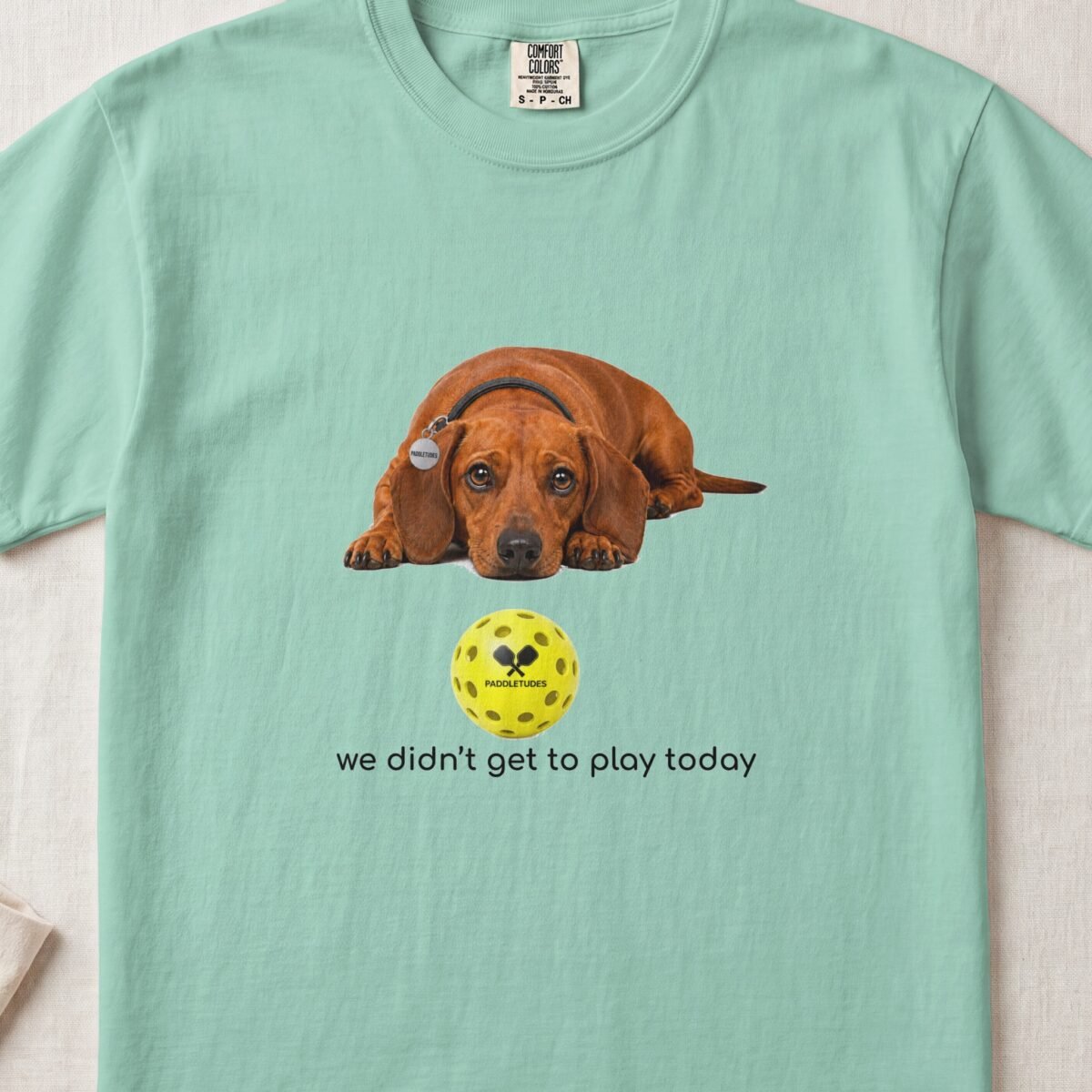
Dachshund Sad
$39.99 Select options This product has multiple variants. The options may be chosen on the product page