Sports Comfort Colors 1717
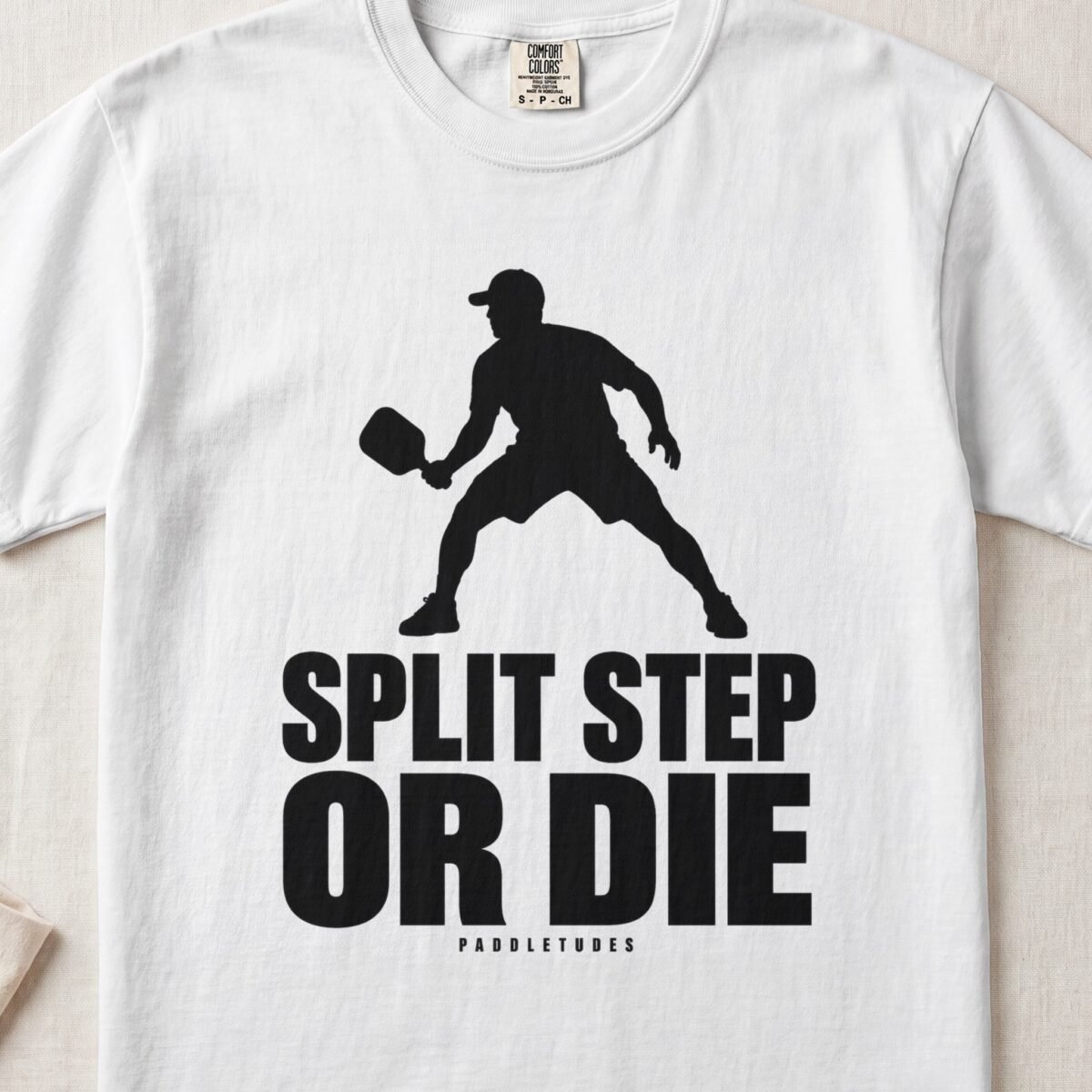
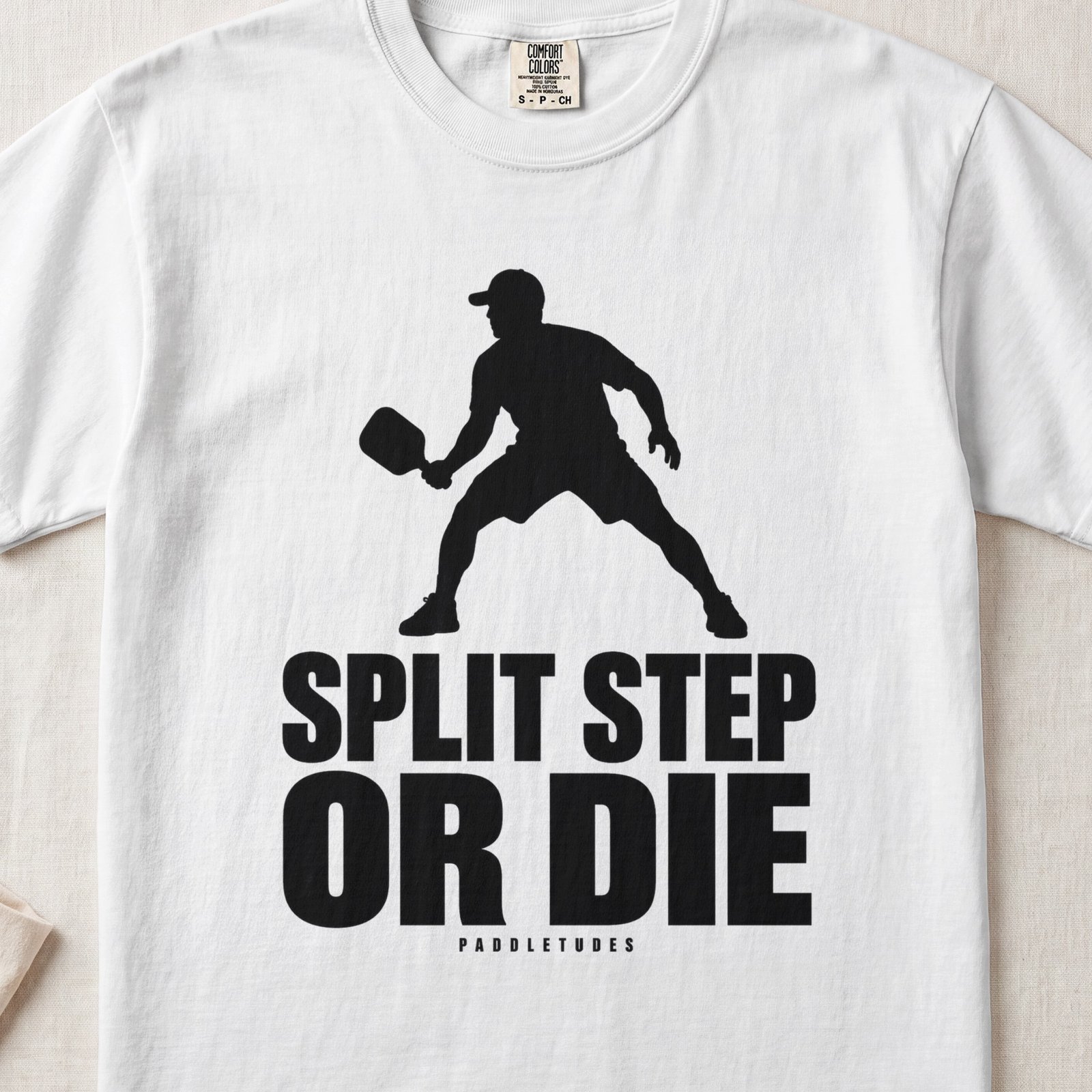
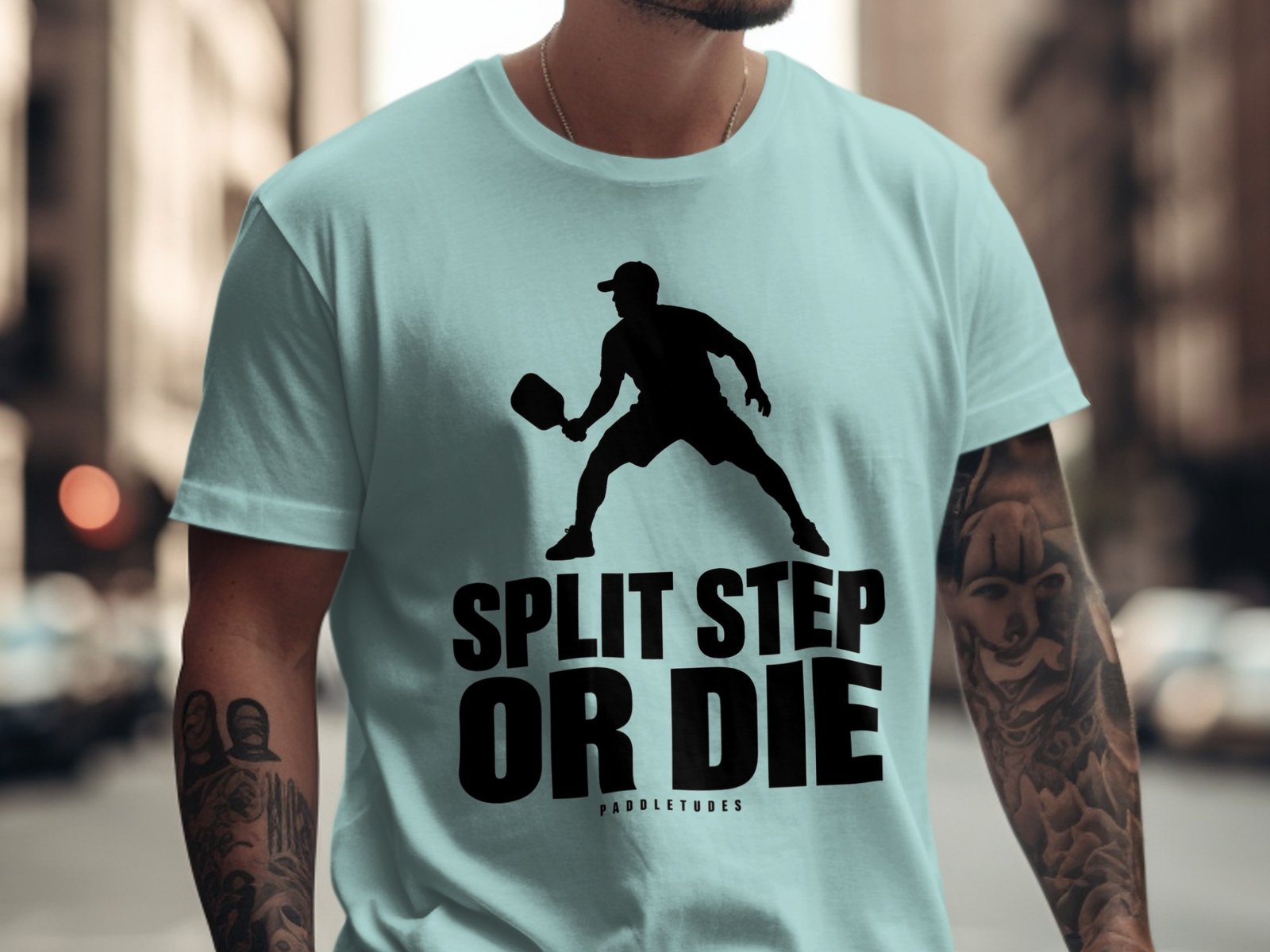
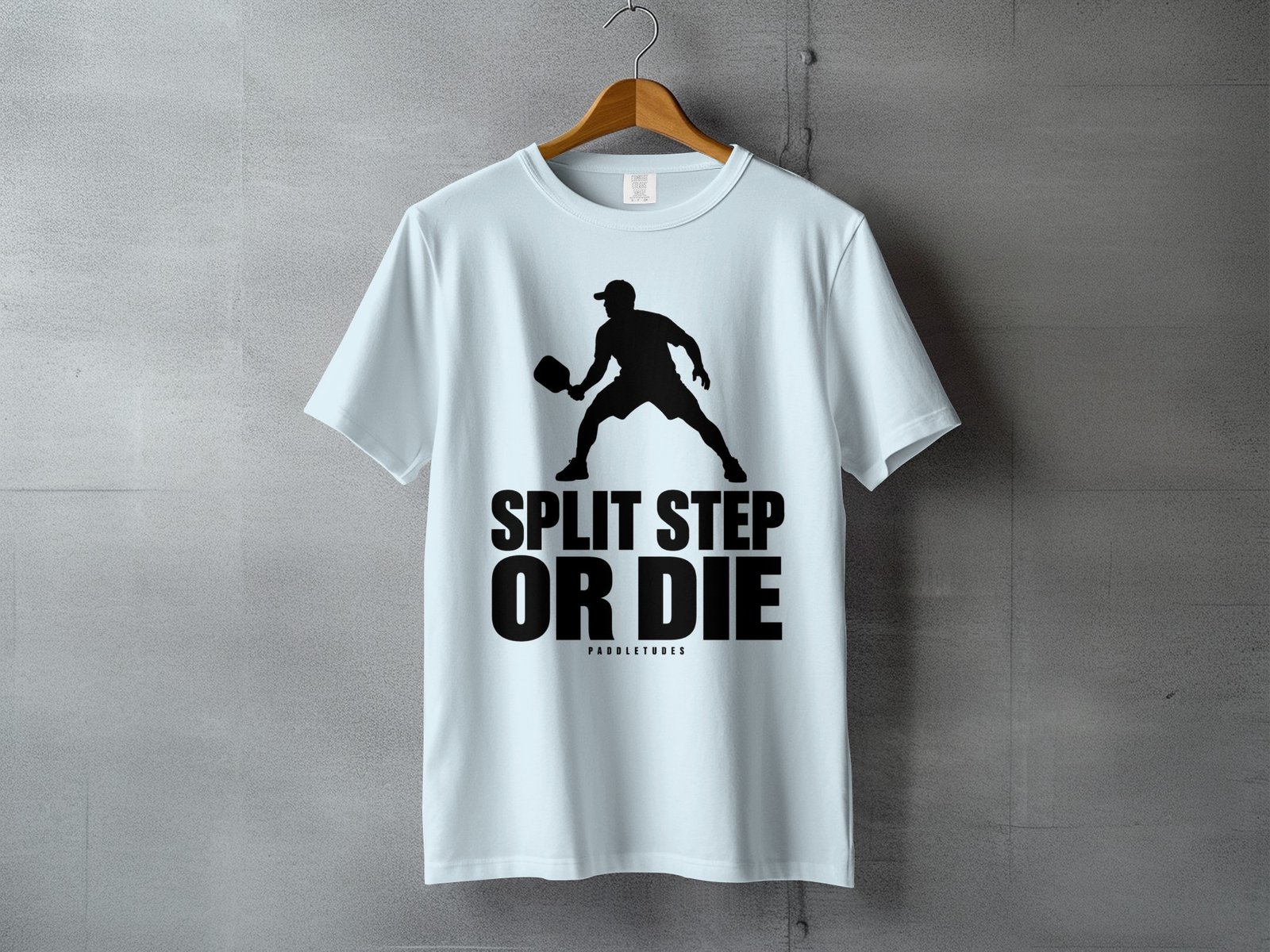
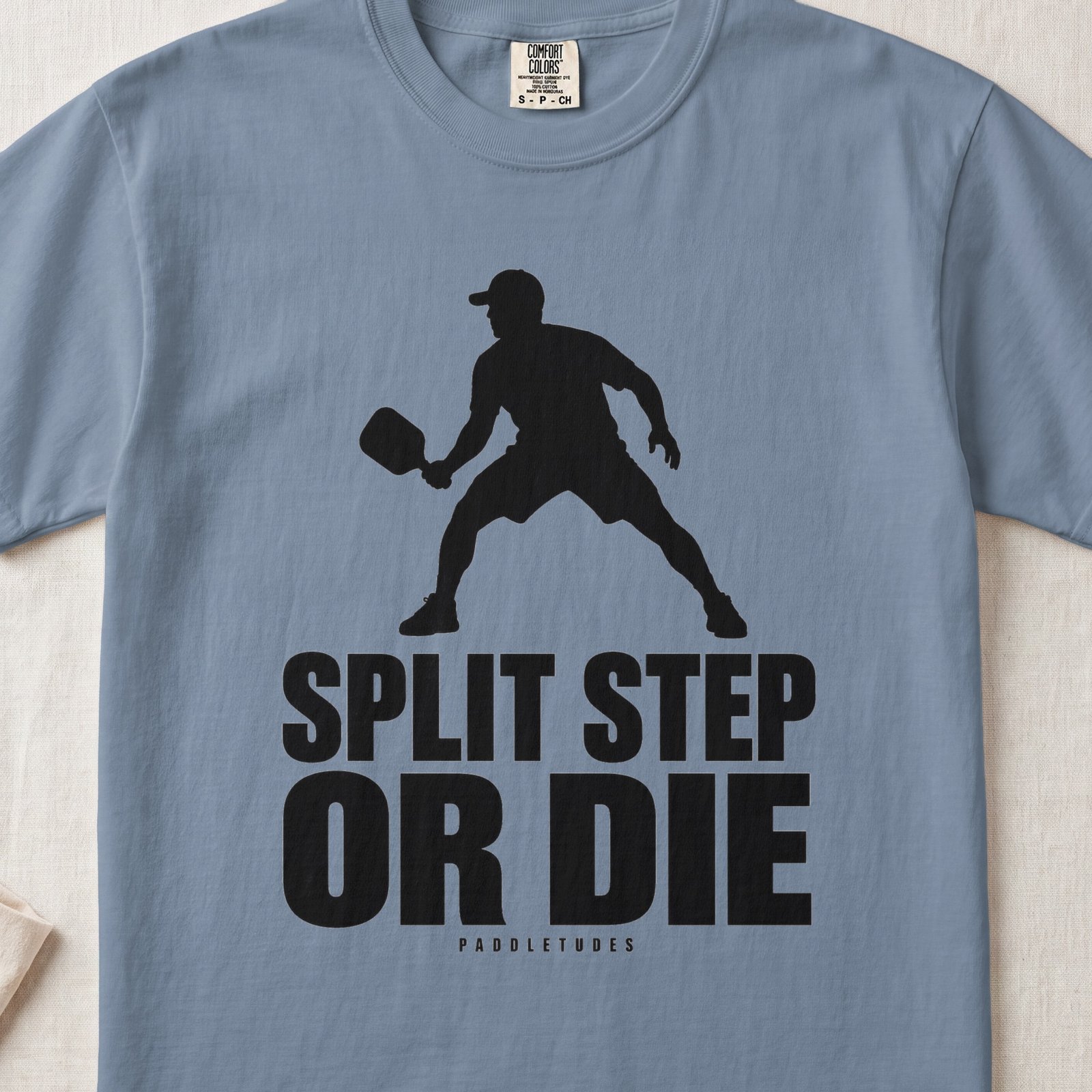
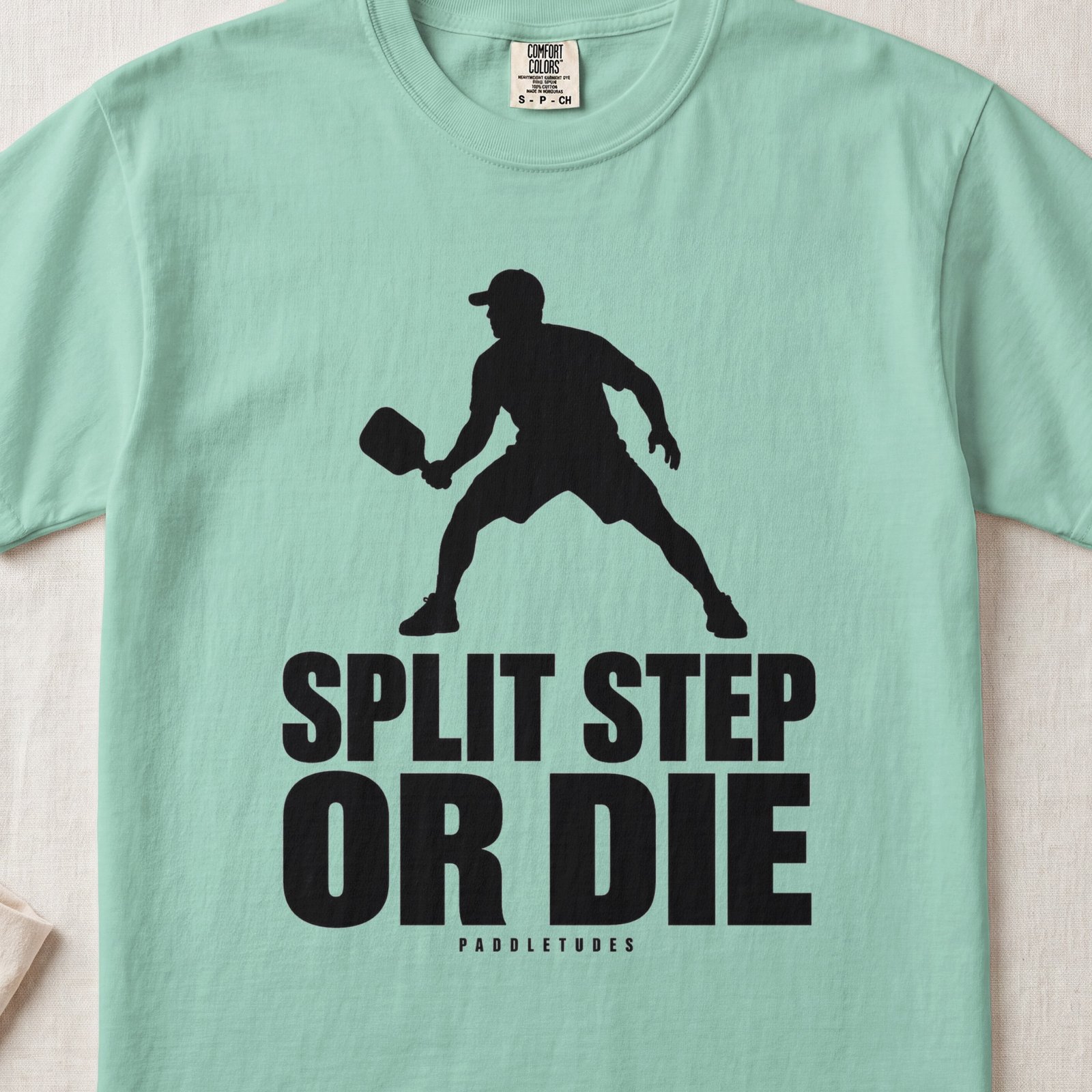
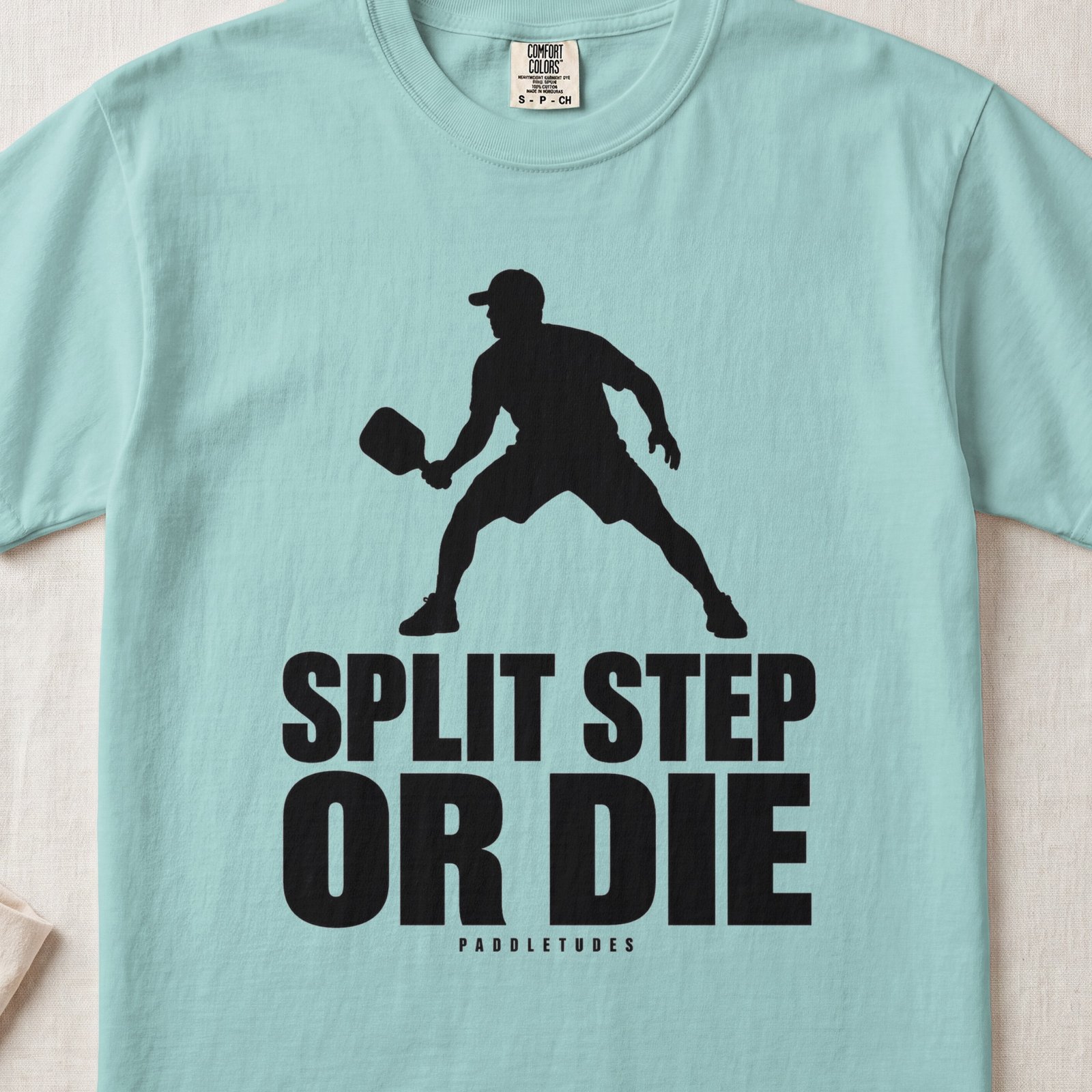
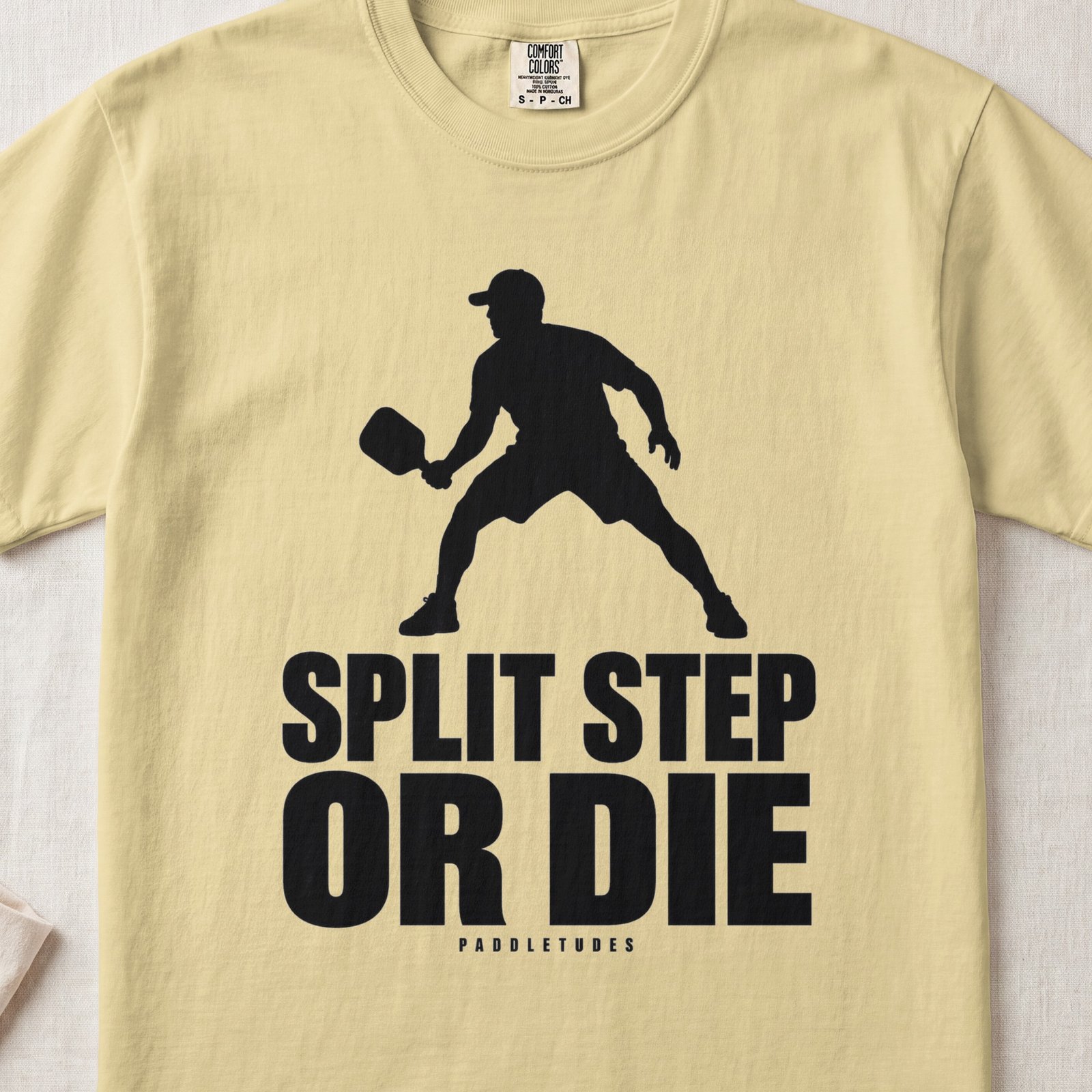
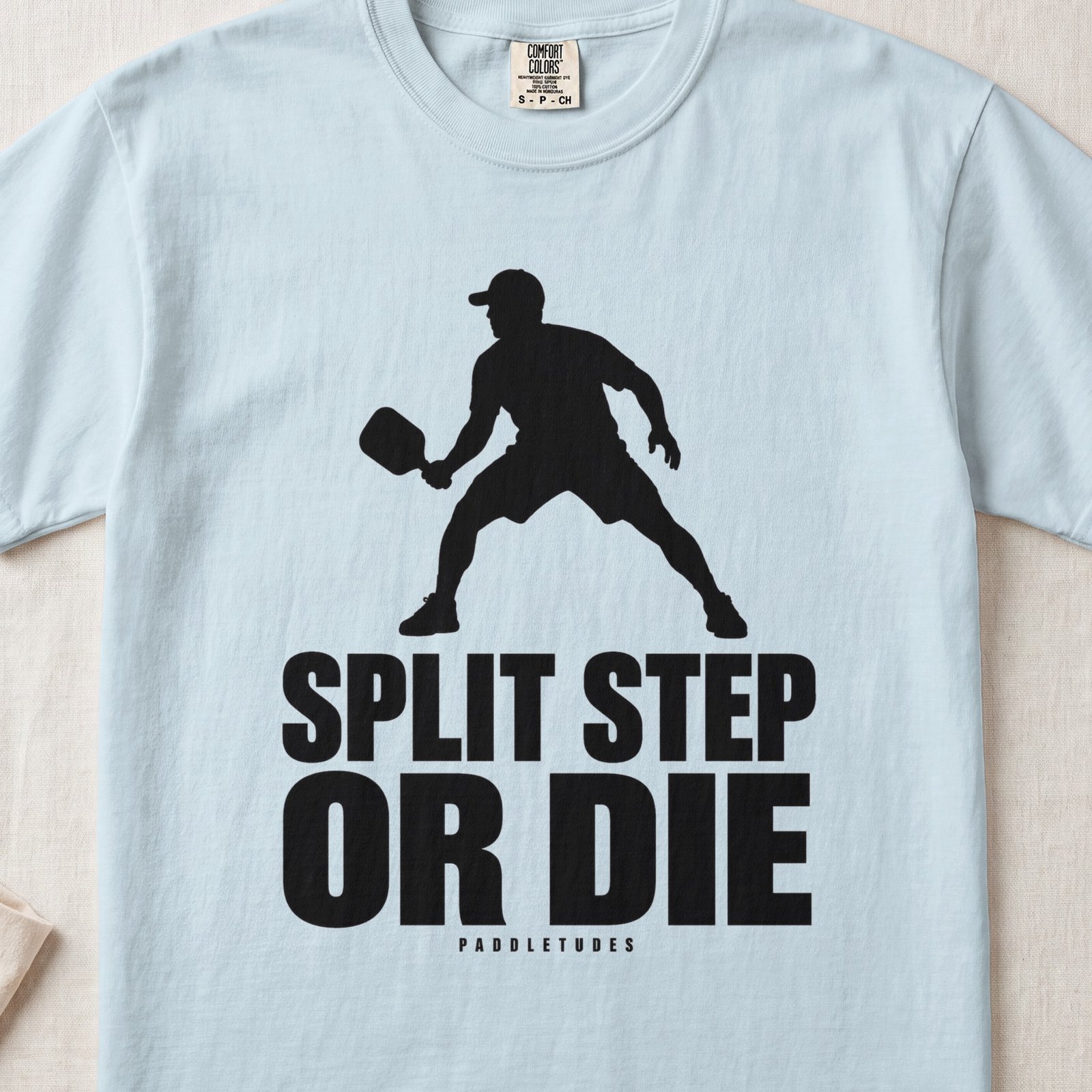
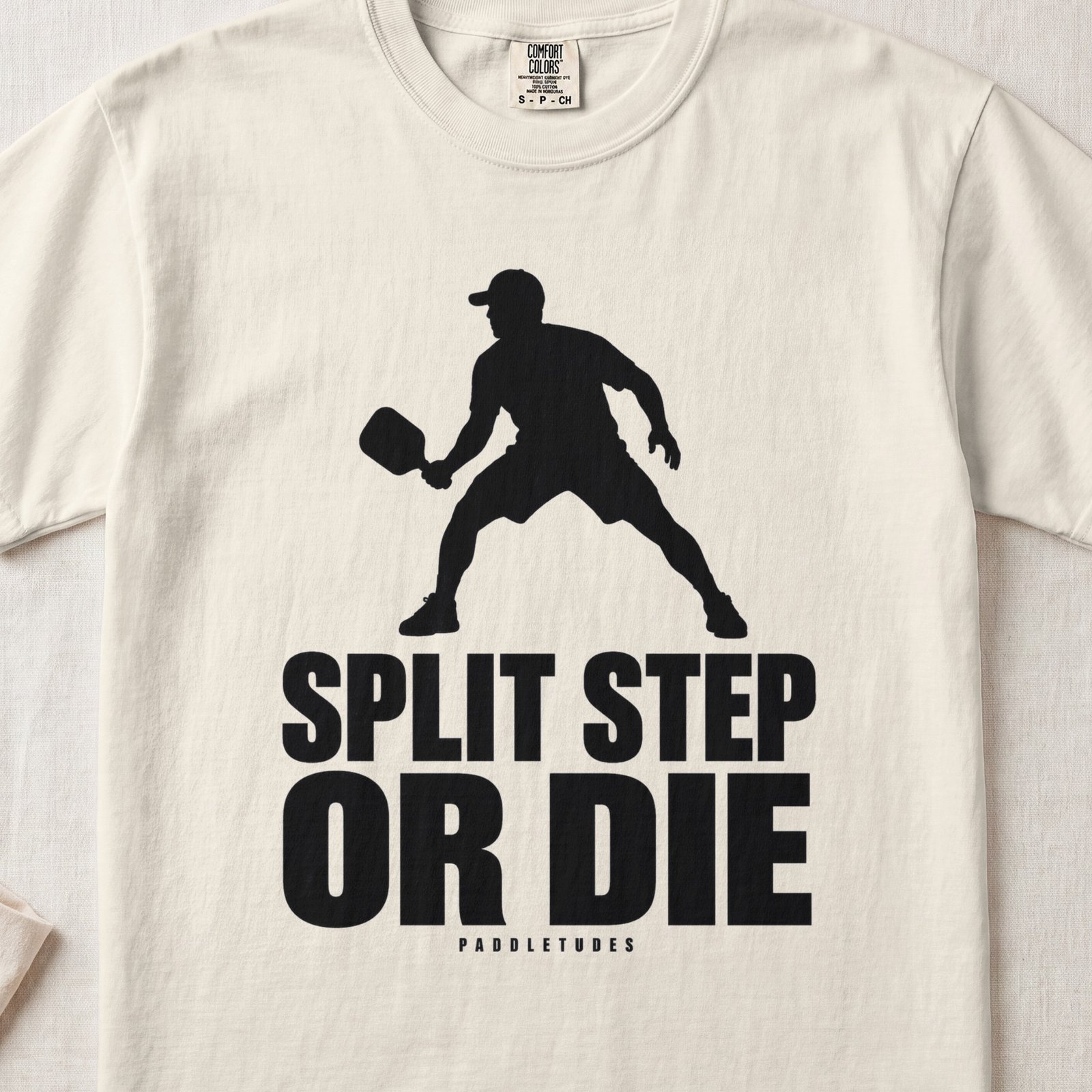
Split Step Or Die
$29.99
- Comfort Colors 1717 heavyweight cotton
- Original design · printed to order
- U.S. print partners
The Pickleball Footwork Move That Changes Everything
The ball hasn’t even crossed the net yet, and his feet are already moving. A tiny hop — an inch off the ground, maybe two — and he lands wide, knees bent, weight on the balls of his feet, paddle up. The shot comes to his backhand. He’s already there. Not lunging. Not reaching. Just stepping into it like he knew where it was going before the opponent did. The player next to him on the rotation board watches and says, “How are you always in the right spot?” The answer is three inches of air and thirty years of coaching footwork.
He’s a 62-year-old retired high school basketball coach who picked up pickleball at the YMCA three years ago because his knees couldn’t handle full-court anymore. He coached defensive slides, close-outs, and box-out positioning for three decades — and the first time he watched a rec game, he couldn’t believe nobody was talking about their feet. Every player on the court was reaching, lunging, planting one foot and stretching for balls they could have walked to if they’d been in the right position half a second earlier. He didn’t need a pickleball instructor to teach him the split step. He’d been drilling it in a basketball gym since 1992 — different sport, same principle. Load before you react. Now he’s the player at open play who corners you between games and explains why your footwork is costing you more points than your paddle choice ever will.
At 3.0, nobody split steps. Players stand and wait, flat-footed, and then lurch toward the ball after it’s already past them. The ones who do move often take one big step instead of several small ones, which puts them off-balance for the return. At 3.5, the split step starts appearing — but the timing is usually wrong. Most intermediate players hop when they hear the opponent’s paddle make contact, which means they’re landing after the ball is already on its way. USA Pickleball’s footwork guide explains the correct timing: the hop starts just before the opponent swings, and the landing happens as the paddle makes contact. You’re stable before the ball crosses the net. By 4.0, the split step is automatic — it happens before every shot without conscious thought, and the player’s attention shifts from their own feet to reading the opponent’s paddle angle. By 4.5, the split step becomes part of a chain: hop, read, push off, hit, recover, hop again. The pause between shots disappears. Footwork stops being a technique and becomes a rhythm.
The drill is deceptively simple. Stand at the kitchen line. A partner feeds balls alternately to your forehand and backhand from across the net. Before every feed, execute a split step — the small hop, the wide landing, the push-off toward the ball. Fifteen forehands, fifteen backhands, then fifteen random. Three-minute sets with thirty seconds of rest. The goal isn’t to hit winners. The goal is to feel the hop become invisible — so automatic that you stop thinking about your feet and start thinking about the ball. When the timing is right, the split step doesn’t slow you down. It speeds you up, because you’re balanced and loaded before the ball arrives instead of scrambling after it does. The advanced version: do the drill at the end of a session, when you’re already tired, because fatigue is where footwork habits break first.
The paddle matters less for this player than for most, because the split step is body mechanics, not hand mechanics. But a paddle with a balanced weight profile — not too head-heavy, not too handle-heavy — keeps the player centered during the hop-and-recover cycle. CRBN’s lineup builds paddles with a focus on feel and balance that rewards players who rely on positioning over power. The lighter the paddle, the faster the recovery between shots — and for a player who’s hopping before every contact, recovery time is everything.
If you know a parent who started playing pickleball because their kid dragged them out to the courts, and the split step was the single technique that finally made the game click — the moment they stopped chasing balls and started arriving before them — this is the shirt that says it out loud. Every parent who picks up a paddle after watching their kid play deserves the moment where footwork stops being foreign and starts being instinct.
The split step is the foundation underneath every strategy in our pickleball collection. Transition Zone is where the split step earns its paycheck — the hardest part of the court to navigate, and the place where flat-footed players get eaten alive. I Am The Wall looks like a player who doesn’t move much, but every reset starts with a split step that loads the body to absorb pace. And Midcourt Is Death is the warning for what happens without it — stuck in no man’s land because you didn’t hop, didn’t load, and didn’t push off in time. Find courts where footwork drills make a real difference at Bobby Riggs Racket & Paddle in Encinitas.
Printed on a Comfort Colors 1717 garment-dyed heavyweight tee with water-based DTG ink — sizing and care details here.
What Is a Split Step in Pickleball
A split step is a small, quick hop that lands you in a balanced athletic stance — feet shoulder-width apart, knees bent, weight on the balls of your feet — timed so you touch down exactly as your opponent makes contact with the ball. It’s the most fundamental footwork technique in pickleball, borrowed from tennis, and it puts your body in a ready position to push off in any direction before you know where the shot is going.
The name is literal. Your feet split apart into a wide base as you land from the hop. The hop itself is tiny — an inch or two off the ground at most — and the purpose isn’t height. It’s the loading of your leg muscles during the landing that matters. When your feet hit the court with knees flexed and weight centered, your legs are coiled like springs, ready to fire laterally, forward, or backward depending on the read. Without that loading, you’re pushing off from a dead stop every time, which costs a half-second on every reaction. Over a twenty-shot rally, those half-seconds compound into the difference between being in position and reaching from two feet away.
The timing mistake that costs the most points is splitting too late. Most recreational players hop when they hear the ball hit the opponent’s paddle, which means they’re in the air during the flight and landing after the ball is already approaching their side. The correct sequence is to start the hop just before the opponent swings and land as contact happens. That way you’re stable and loaded on the ground before the ball crosses the net, with a full read on the trajectory and enough time to push off toward it. Recording yourself during drills is the fastest way to diagnose this — the camera shows whether you’re landing at contact or a beat behind it.
The player wearing this shirt has been through all three stages. Stage one: not knowing the split step exists, and wondering why faster players seem to teleport around the court. Stage two: learning the hop, doing it consciously, sometimes forgetting mid-rally, feeling awkward when you remember. Stage three: the hop is gone — not because you stopped doing it, but because it became so automatic that you no longer feel it. Your feet just reset. The ball just appears on your paddle. And the person across the net is still flat-footed, still lunging, still asking how you’re always in the right spot.
-
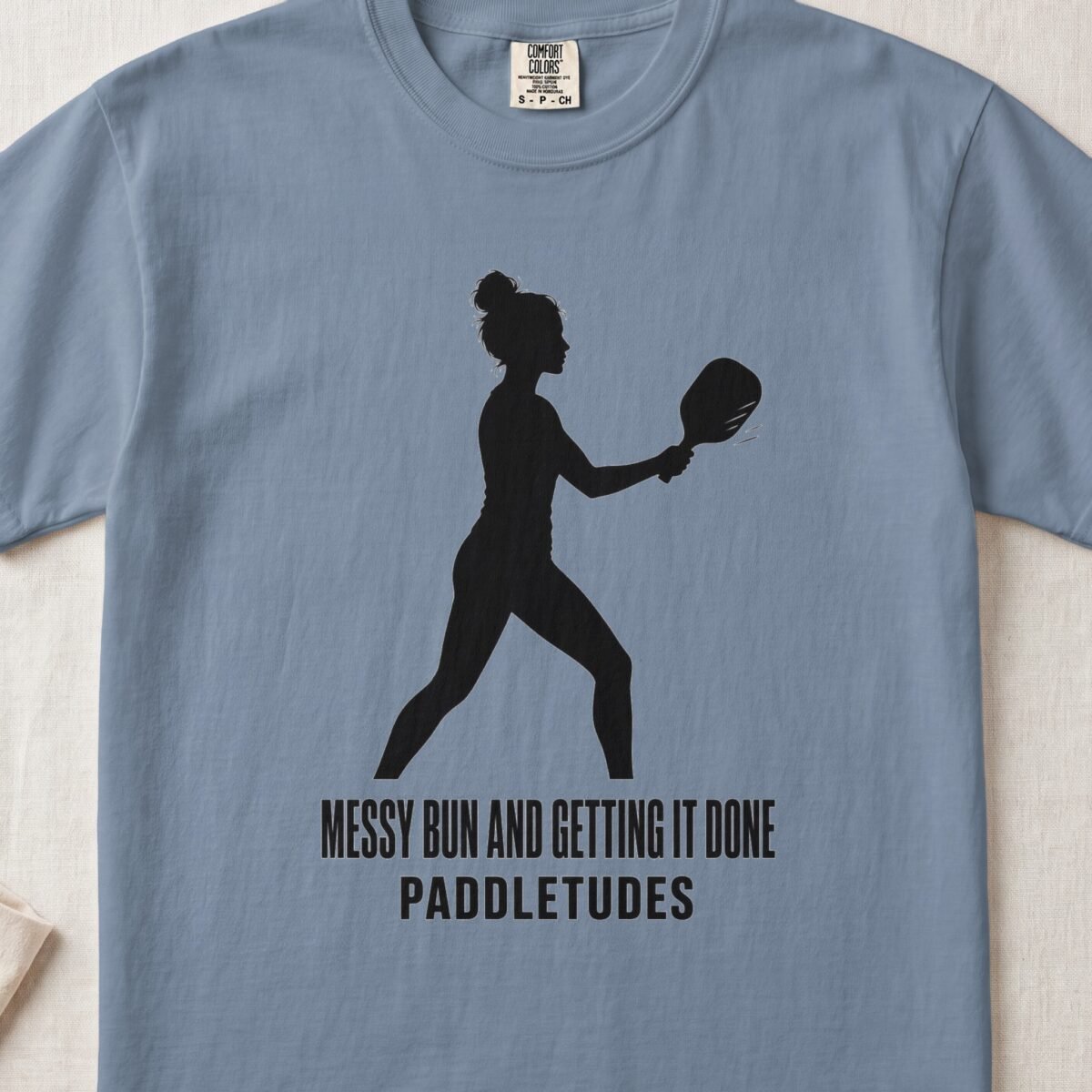
Messy Bun And Getting It Done
$29.99 Select options This product has multiple variants. The options may be chosen on the product page -
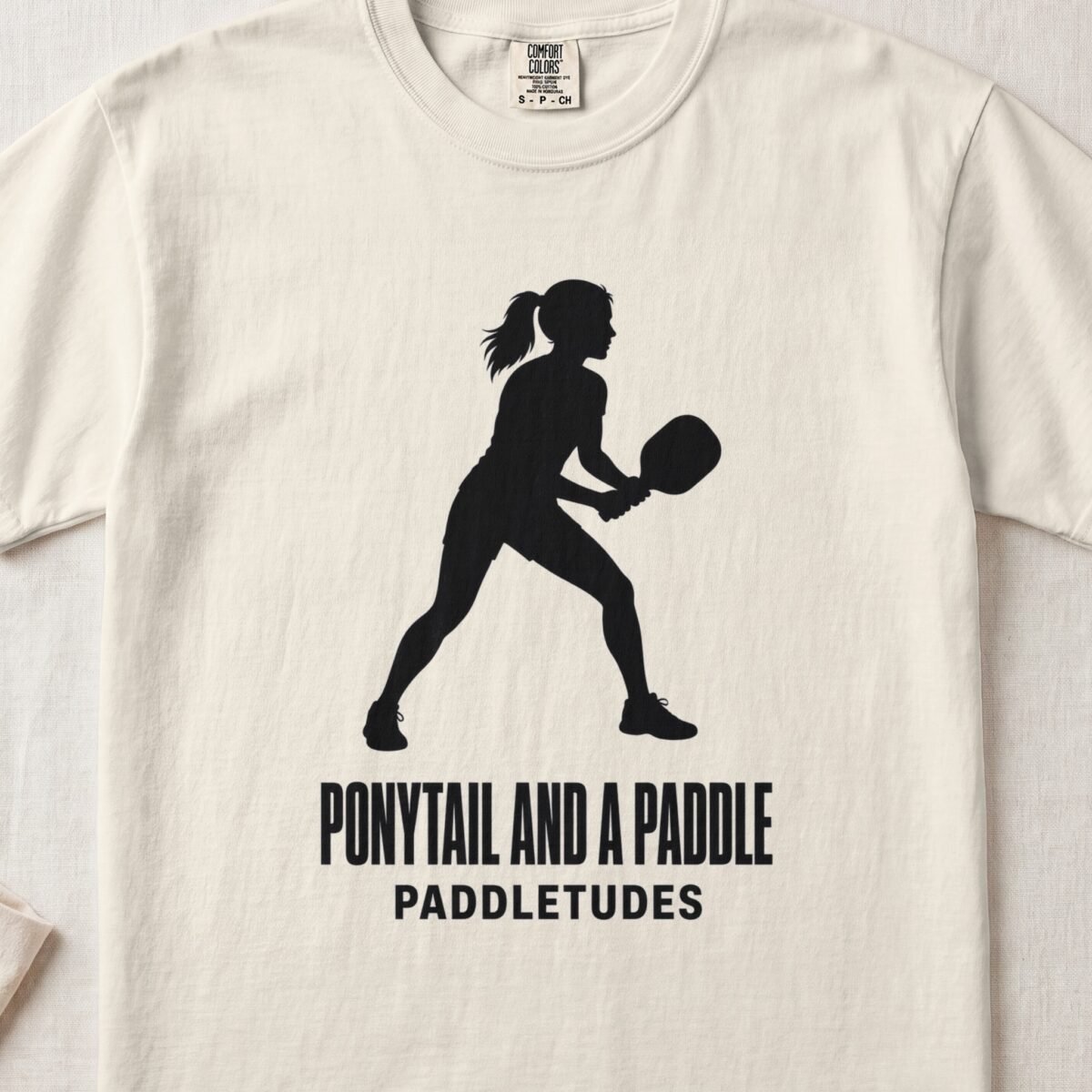
Ponytail And A Paddle
$29.99 Select options This product has multiple variants. The options may be chosen on the product page -
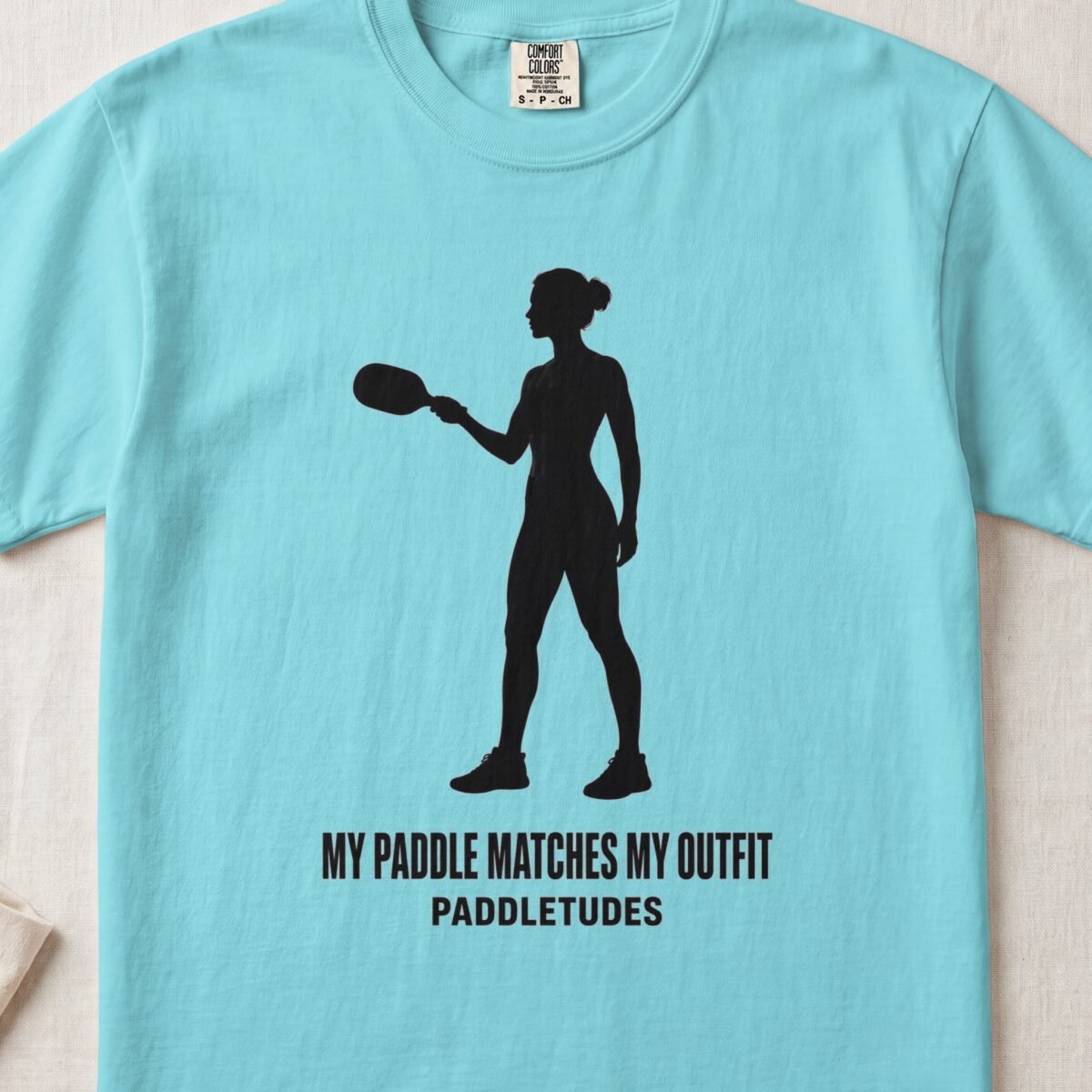
My Paddle Matches My Outfit
$29.99 Select options This product has multiple variants. The options may be chosen on the product page