


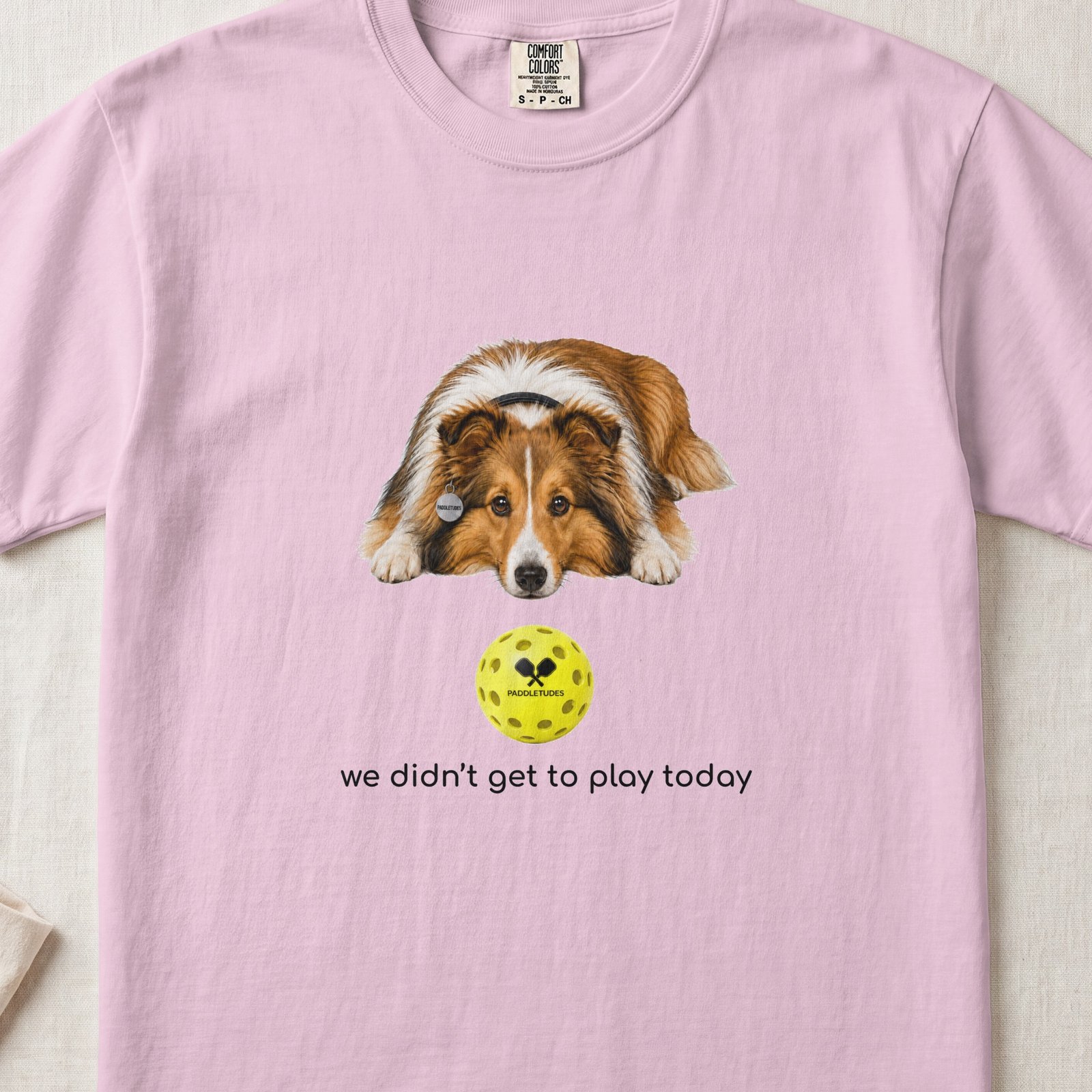
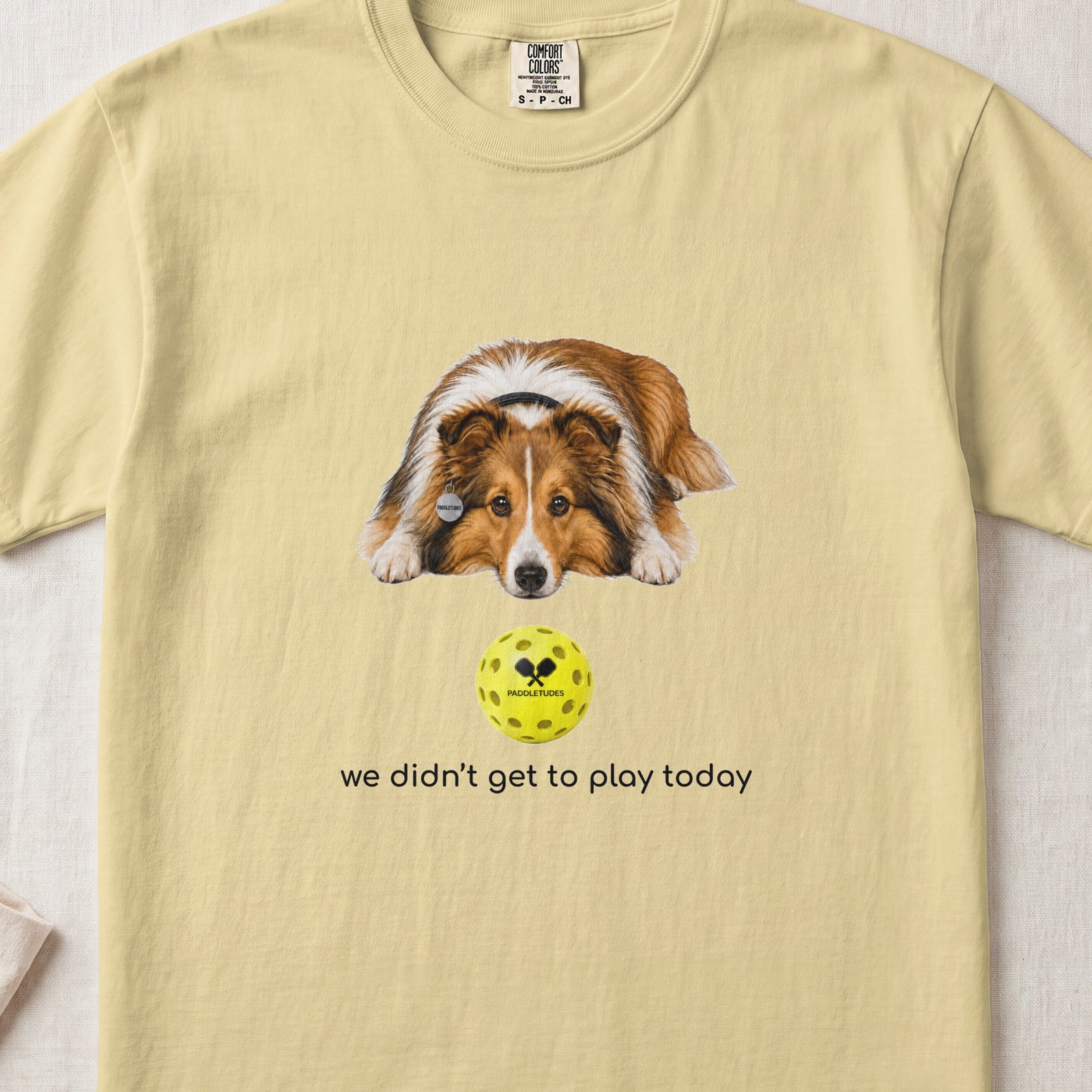

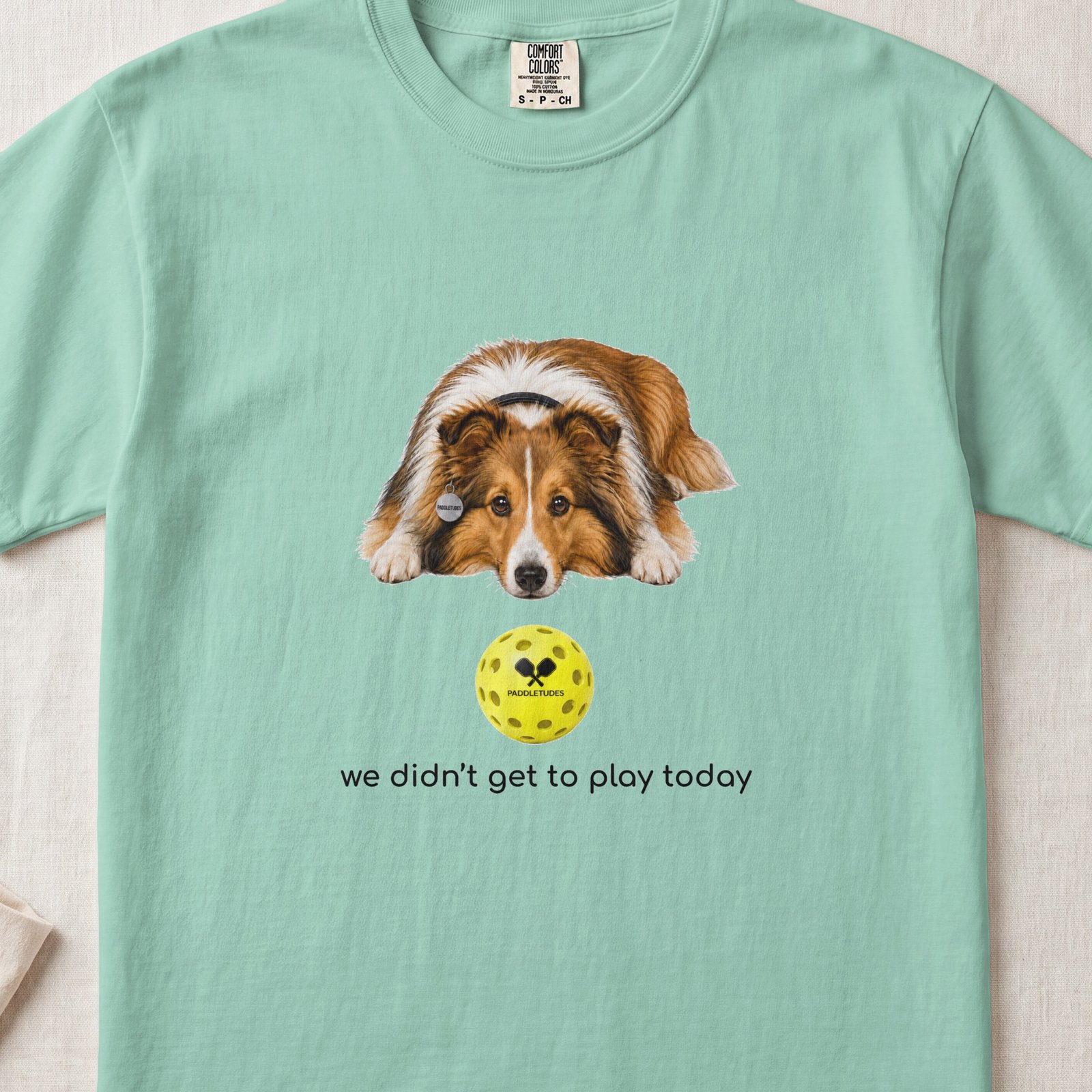
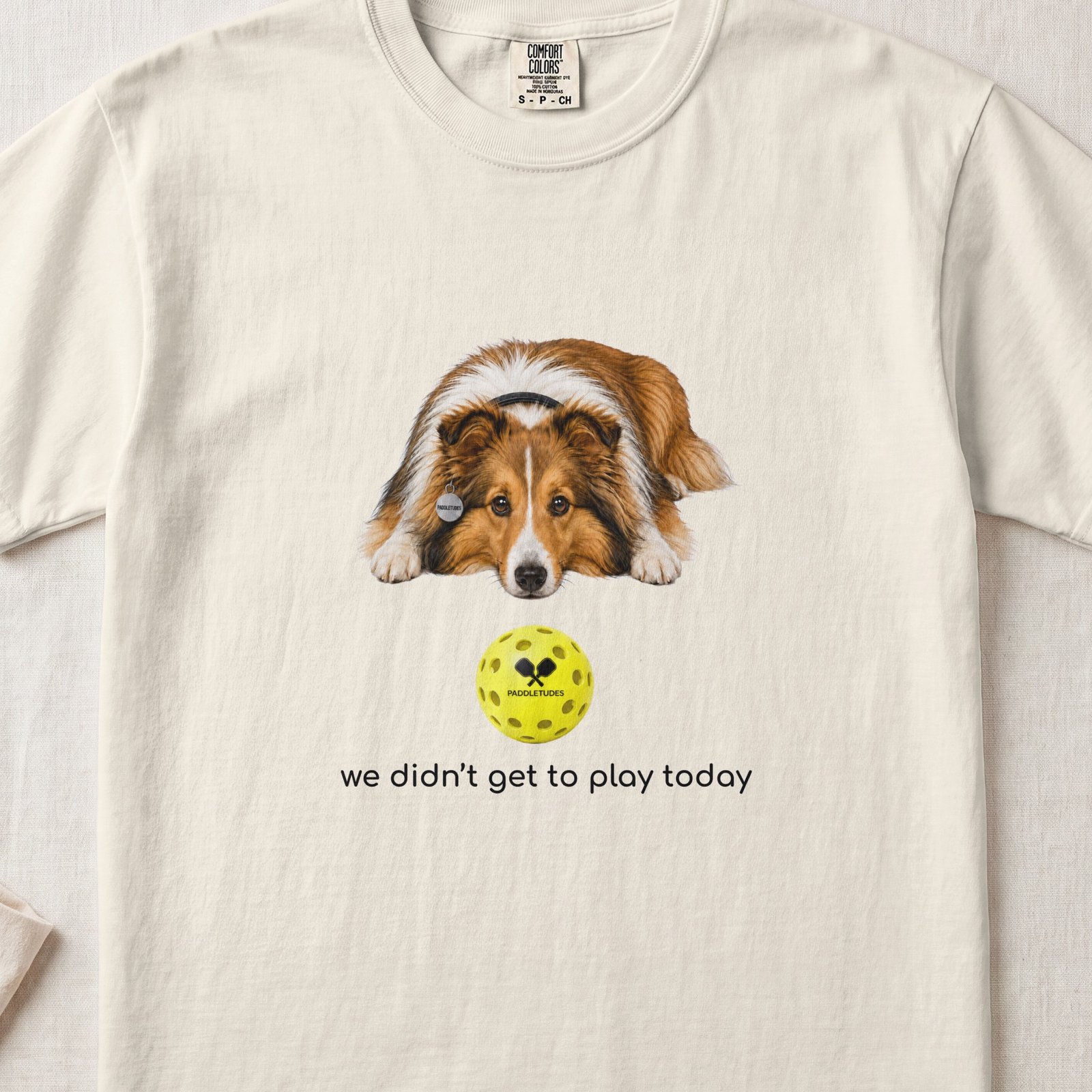

Animals Comfort Colors 1717
Shetland Sheepdog Sad
$39.99
- Comfort Colors 1717 heavyweight cotton
- Original design · printed to order
- U.S. print partners
A Sheltie Gift for the Dog Who Hears the Zipper
You hear it before you see it. The paddle bag zipper catches and a single sharp bark fires from the living room like a motion sensor tripped by something deeply personal. Then another bark. Then a third that’s higher-pitched and carries the unmistakable tone of a Shetland Sheepdog who has identified a problem and fully intends to narrate it until someone addresses the situation. The problem is that you are leaving. The narration will continue until you return. The neighbors have learned to interpret the barking schedule — short burst at 5:45pm means pickleball night, extended performance at 6:00pm means you took too long tying your shoes, and silence at 7:30pm means you’re home and the Sheltie has resumed her post on the back of the couch, satisfied that the flock has been reassembled.
The owner whose Sheltie has an opinion about everything and the vocal range to express it at a volume that suggests the dog believes it is still working on a Scottish hillside, moving sheep through fog — that’s who wears this shetland sheepdog shirt. The Shetland Sheepdog was bred to use its voice — not as a nuisance, but as a tool. On the Shetland Islands, the dog barked to move livestock, barked to warn of intruders, and barked to communicate with a farmer who might be a hundred yards away across rocky terrain with no visibility. That bark was the job. The modern Sheltie lives in a suburban living room and the livestock are gone, but the bark never got the memo. Every doorbell, every passing dog, every car door closing three houses away, and especially every departure with a paddle bag triggers the same response: something is happening, and the Sheltie will report on it until the situation resolves or the audience stops listening, whichever comes last. The Australian Shepherd runs the same herding instinct at a higher energy level, trading the Sheltie’s bark for a stare that could herd cattle through a concrete wall.
The Shetland Sheepdog comes from one of the most remote and inhospitable places a dog breed has ever been developed. The Shetland Islands sit off the northern coast of Scotland — windswept, barren, with sparse vegetation and livestock small enough that a smaller herding dog made more sense than a full-size Collie. The Sheltie’s ancestors were a mix of Collies, Pomeranians, Yakki dogs from Greenland, and local island dogs, blended over centuries into a compact herding breed with a double coat thick enough to handle North Sea winters and a brain sharp enough to manage sheep, ponies, and chickens across terrain that would break a larger dog’s legs. The breed was first shown at Crufts in 1906 under the name “Shetland Collie,” which prompted immediate protest from Collie fanciers who didn’t want their breed associated with a smaller dog. The name changed to Shetland Sheepdog, and the American Shetland Sheepdog Association has represented the breed in the U.S. since 1929 — nearly a century of proving that the Sheltie is not a miniature Collie but a distinct breed with its own history, its own temperament, and its own very strong feelings about when you are allowed to leave the house.
If your neighbor has a Sheltie that barks at your car every morning when you pull out of the driveway, and you’ve stopped being annoyed by it because you’ve realized the bark is actually a greeting — the dog has learned your schedule, recognizes your engine, and is announcing your departure the way a town crier announces the news — this is the sheltie gift that says you’ve been paying attention to the dog across the street. The AKC’s Sheltie history piece describes the breed’s “natural tendency to marked sight- and sound-sensitivity,” which is the polite way of saying this dog notices everything and reports on all of it. The gift works because it captures the specific frequency of Sheltie ownership — the love, the loyalty, the intelligence, and the constant, magnificent noise. Any self-described Sheltie lover will see this design and hear the bark in their head.
For the happy version of this bond — the Sheltie with ears up, pickleball in frame, the beauty of the breed at its most photogenic — the Shetland Sheepdog Happy Tee is the portrait the bark becomes when the whole family is together and everything is right. The Corgi brings the same vocal intensity from a body that’s somehow even shorter and more indignant. Browse the full breed lineup on our dog shirts collection.
Printed on a Comfort Colors 1717 garment-dyed heavyweight tee with water-based DTG ink — sizing and care details here.
Why Do Shelties Bark So Much
Shelties bark because they were bred to bark. The Shetland Sheepdog was developed on Scotland’s Shetland Islands to herd sheep, poultry, and ponies across remote, rugged terrain where visual signals weren’t always possible. The bark was a working tool — the dog’s primary way of moving livestock, warning the farmer of intruders, and communicating across distances where a hand signal couldn’t be seen through fog or rain.
The herding drive that produces the barking never switched off when the breed moved from the Shetland Islands to the suburban living room. The modern Sheltie doesn’t herd sheep, but the instinct to vocalize in response to movement, sound, and change in the environment remains fully operational. A doorbell, a passing jogger, a squirrel on the fence, a car door closing on the next block — each of these triggers the same response system that once told a farmer something was happening in the far pasture. The Sheltie’s sound sensitivity is bred deep, and the bark is the dog’s way of doing its job in a world that no longer provides the job it was designed for.
The good news is that Shelties are among the most trainable breeds in existence. Their intelligence — ranked among the top ten in breed intelligence studies — means they respond well to consistent, positive training that redirects the barking rather than suppressing it. The “quiet” command, paired with a reward, teaches the Sheltie that the initial alert bark is acceptable but the sustained performance is not. The key is timing: acknowledge the alert, reward the silence, and repeat. Most Shelties learn the pattern within two to three weeks of consistent practice, though the initial alert bark will likely remain for life because you cannot train out a behavior that is genetically wired into the dog’s operating system.
Another signature behavior is the spinning — Shelties who get excited will spin in tight circles, sometimes while barking, sometimes in eerie silence, looking like a small furry tornado that has forgotten how to stop. This is not anxiety. It’s excitement overflow from a breed that processes stimulation at a higher RPM than most dogs and has to physically discharge the energy before it can focus. The spin usually precedes a walk, a meal, or the arrival of a favorite person. Sheltie owners learn to read the spin the way other dog owners read a tail wag — it’s communication, not chaos.
-
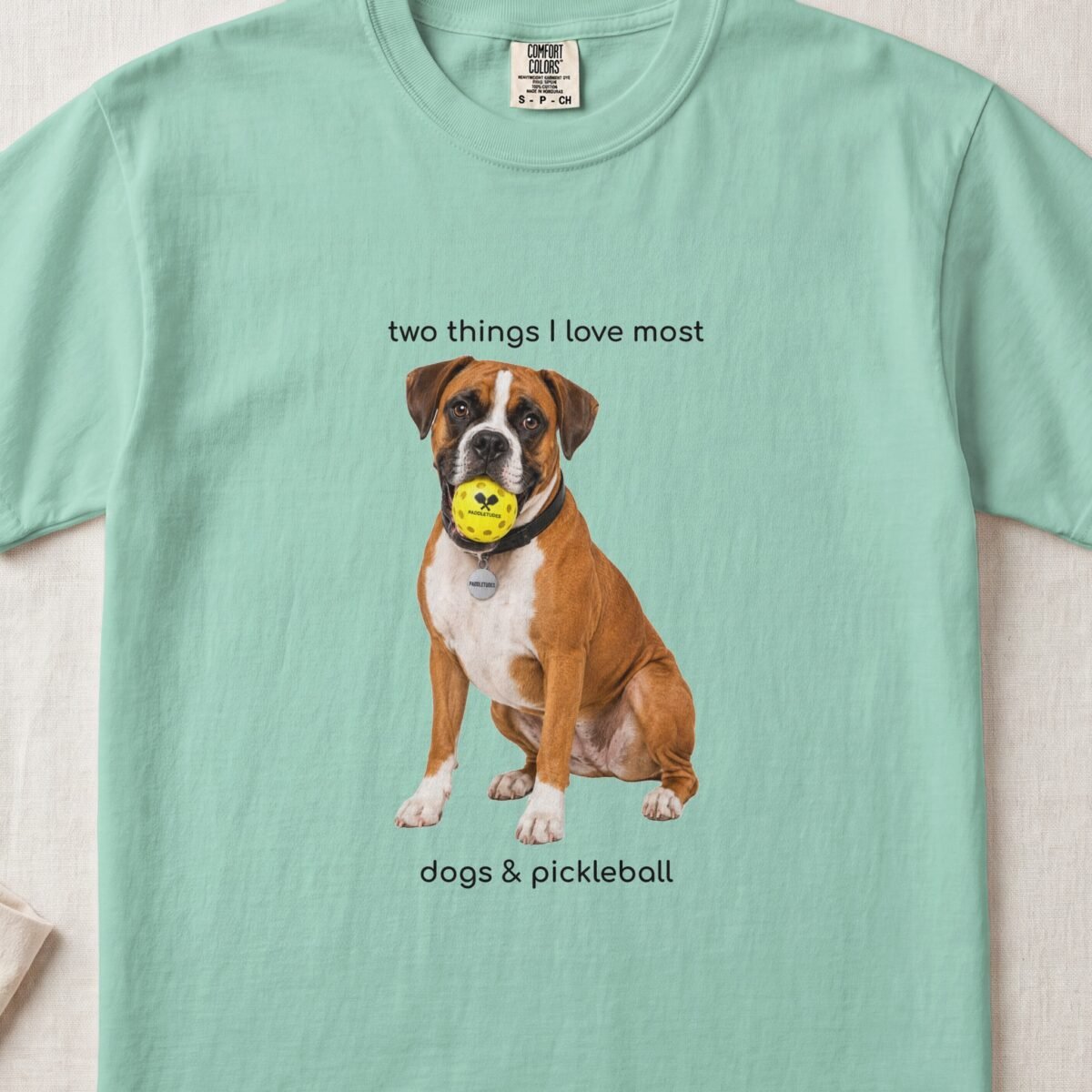
Boxer Happy
$39.99 Select options This product has multiple variants. The options may be chosen on the product page -

Boxer Sad
$39.99 Select options This product has multiple variants. The options may be chosen on the product page -
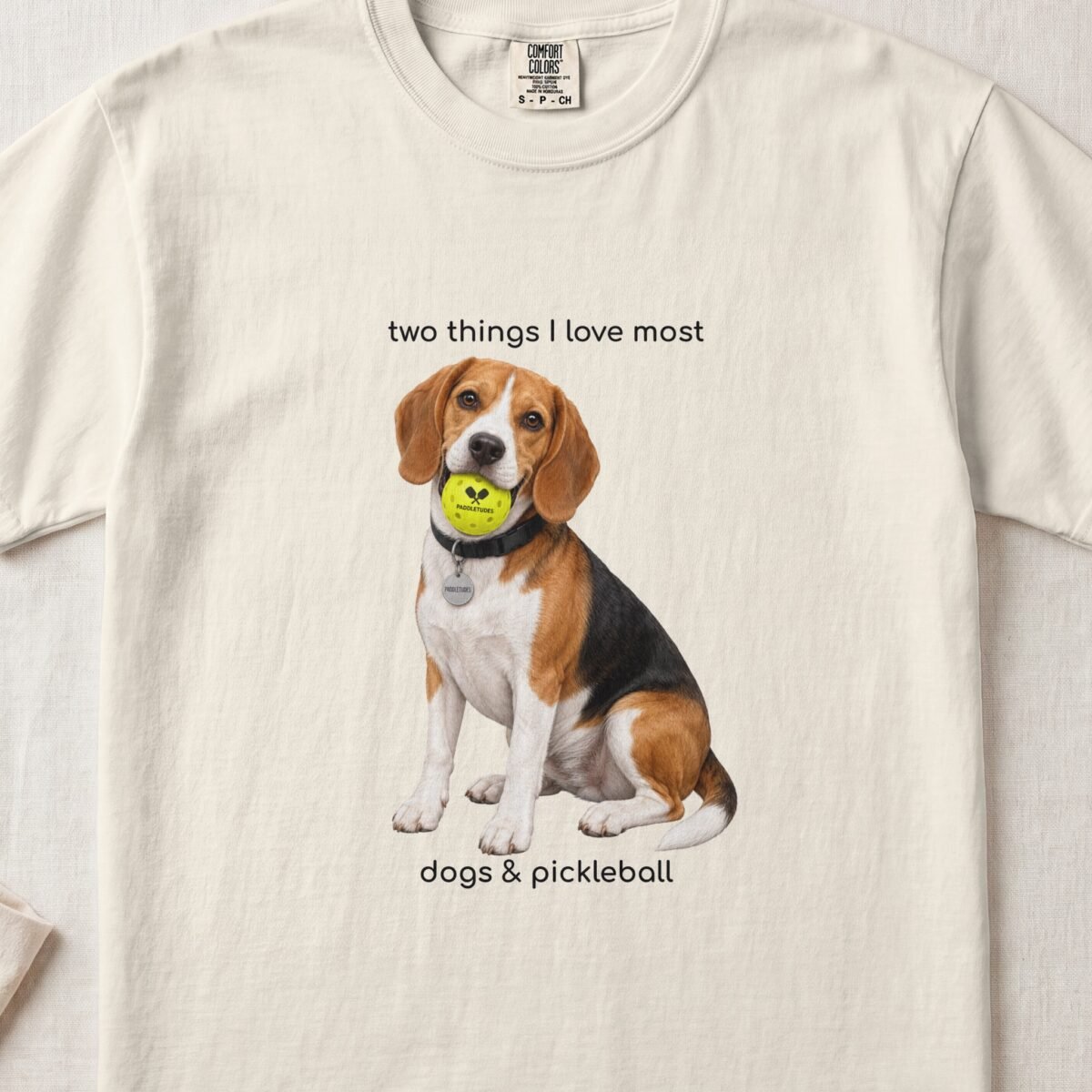
Beagle Happy
$39.99 Select options This product has multiple variants. The options may be chosen on the product page