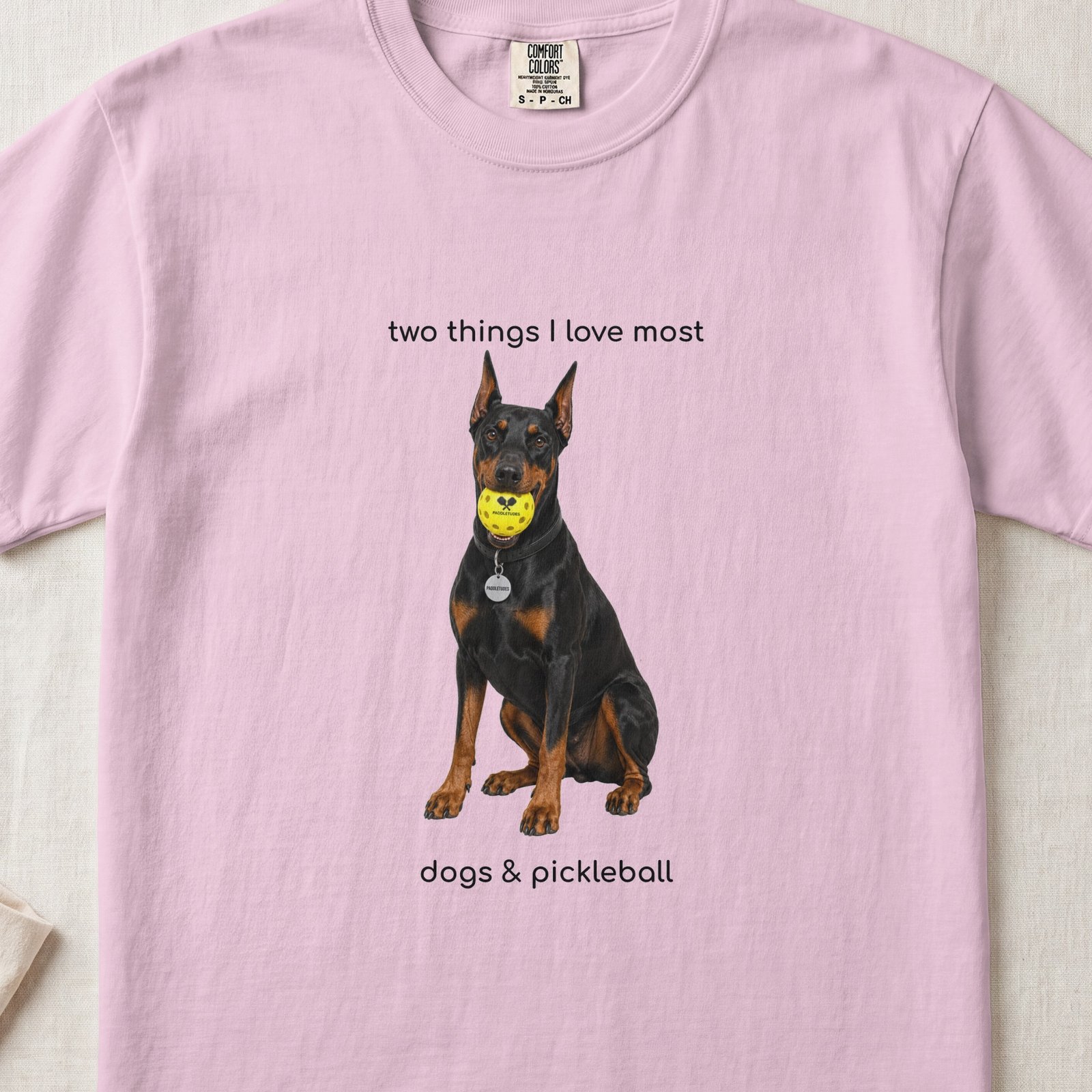
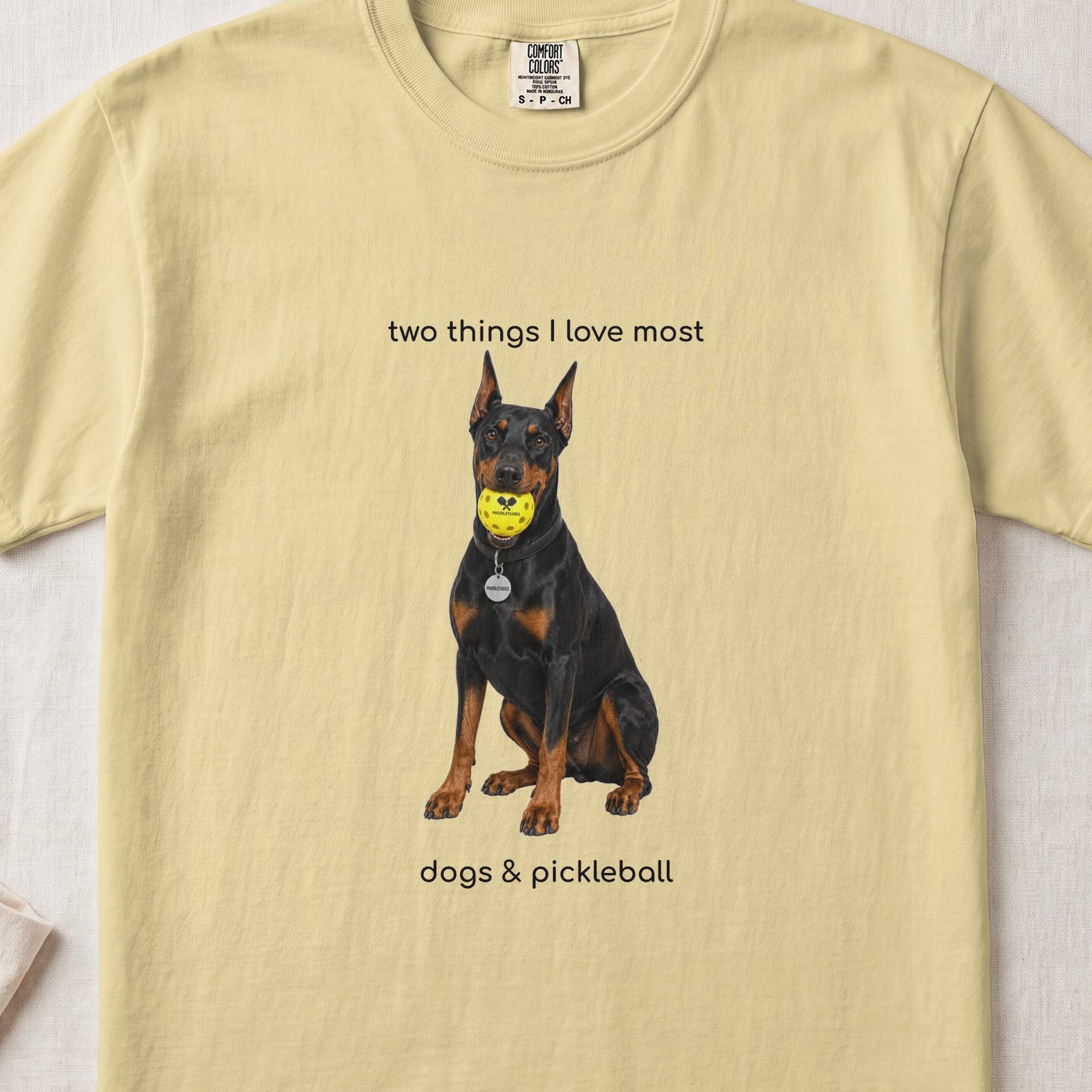
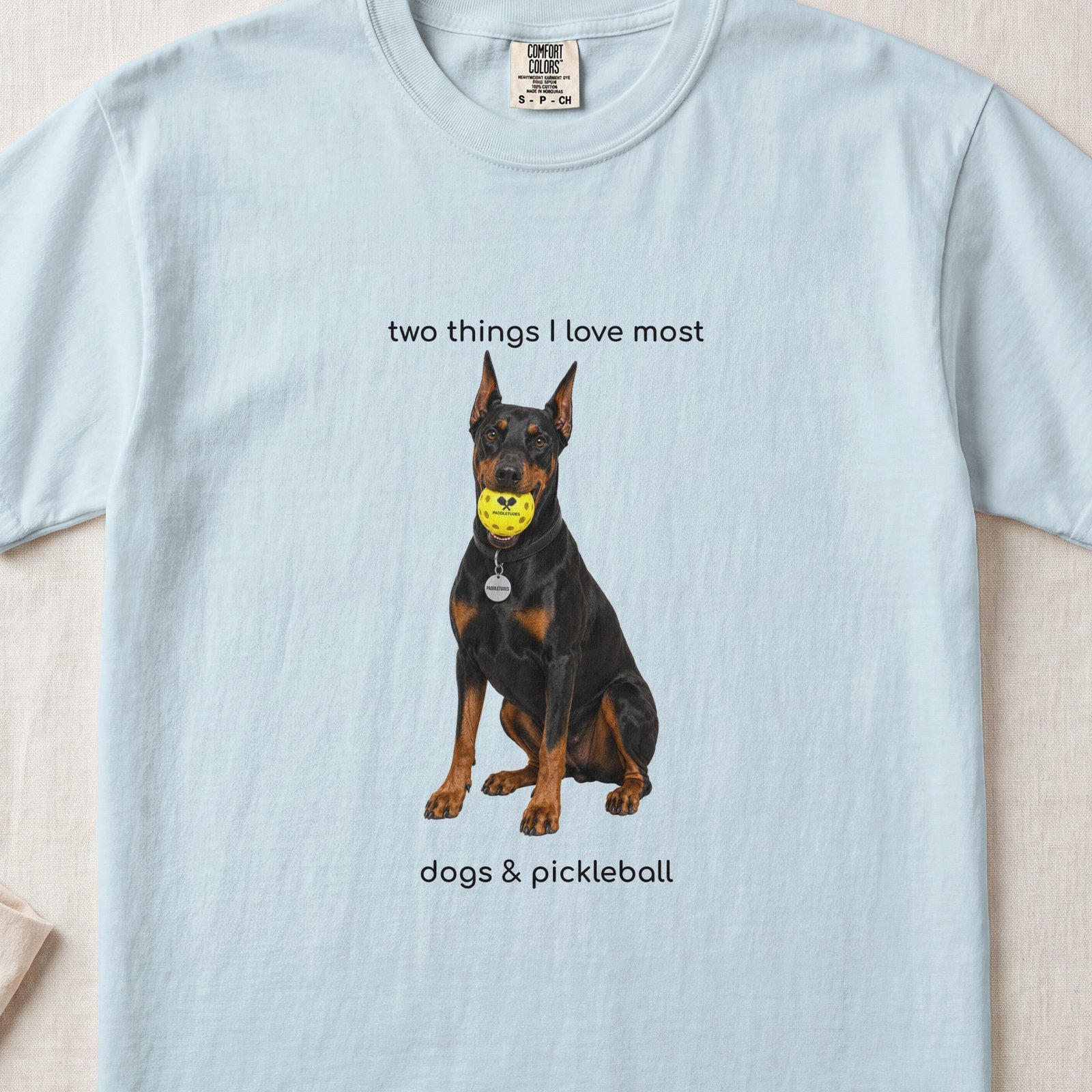
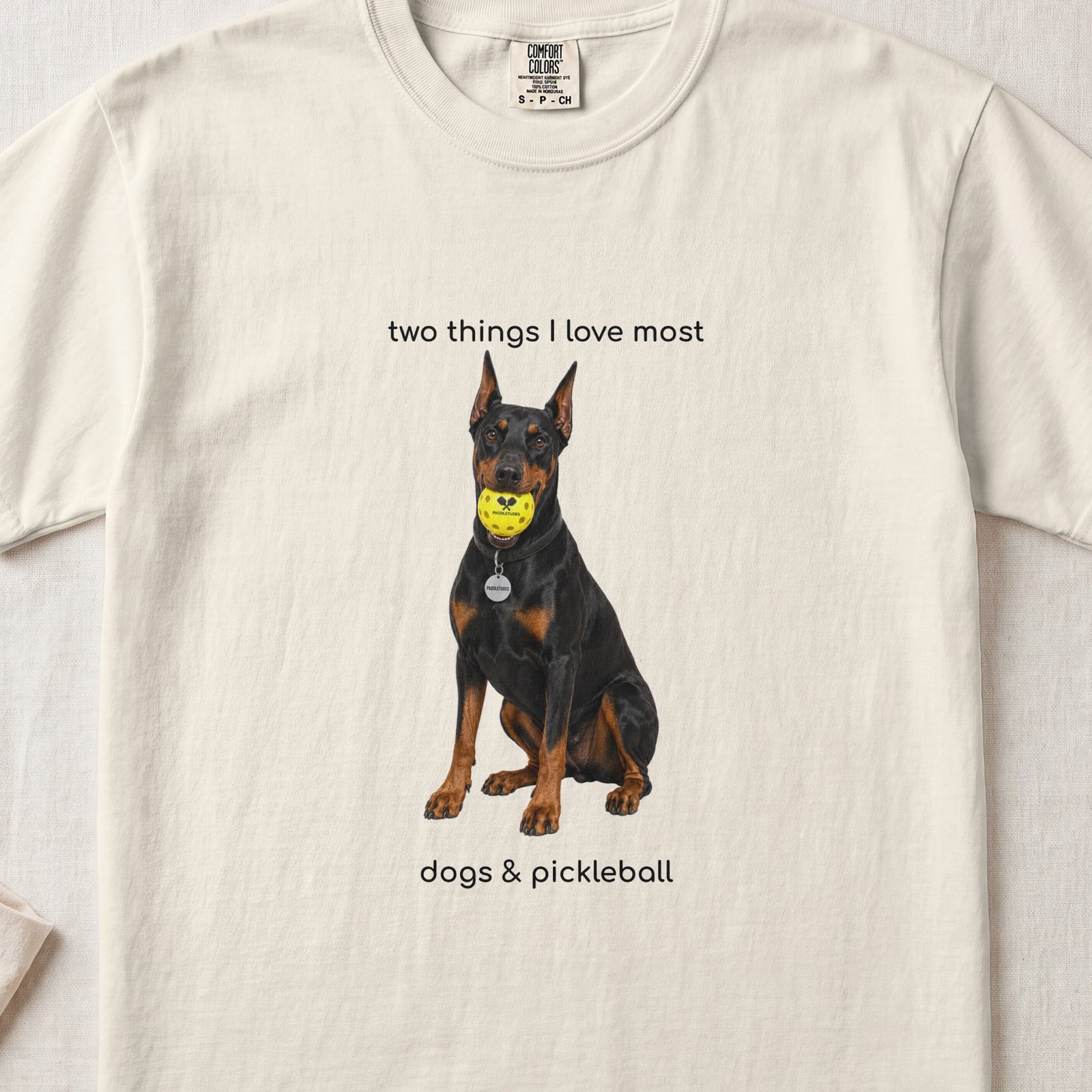
Animals Comfort Colors 1717
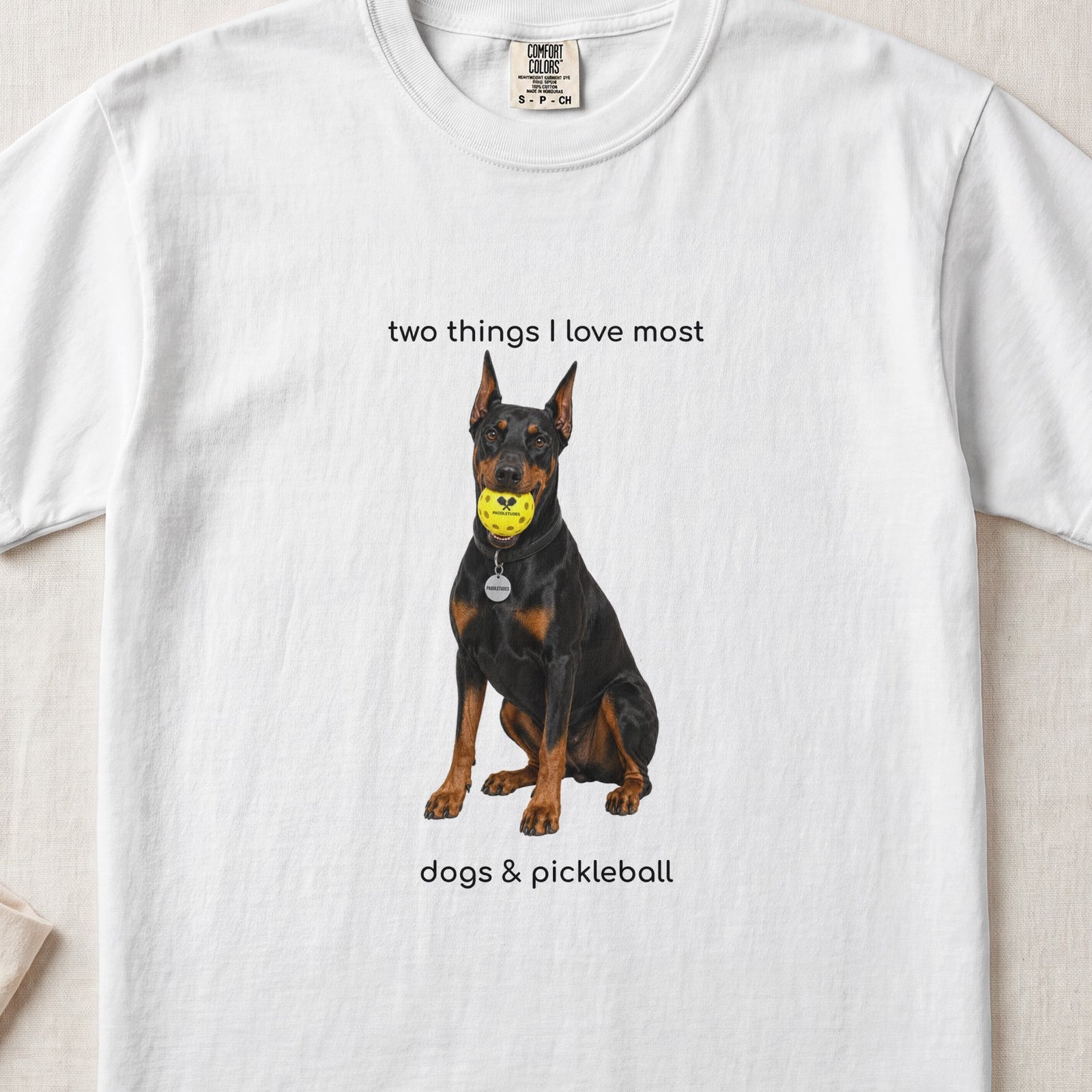
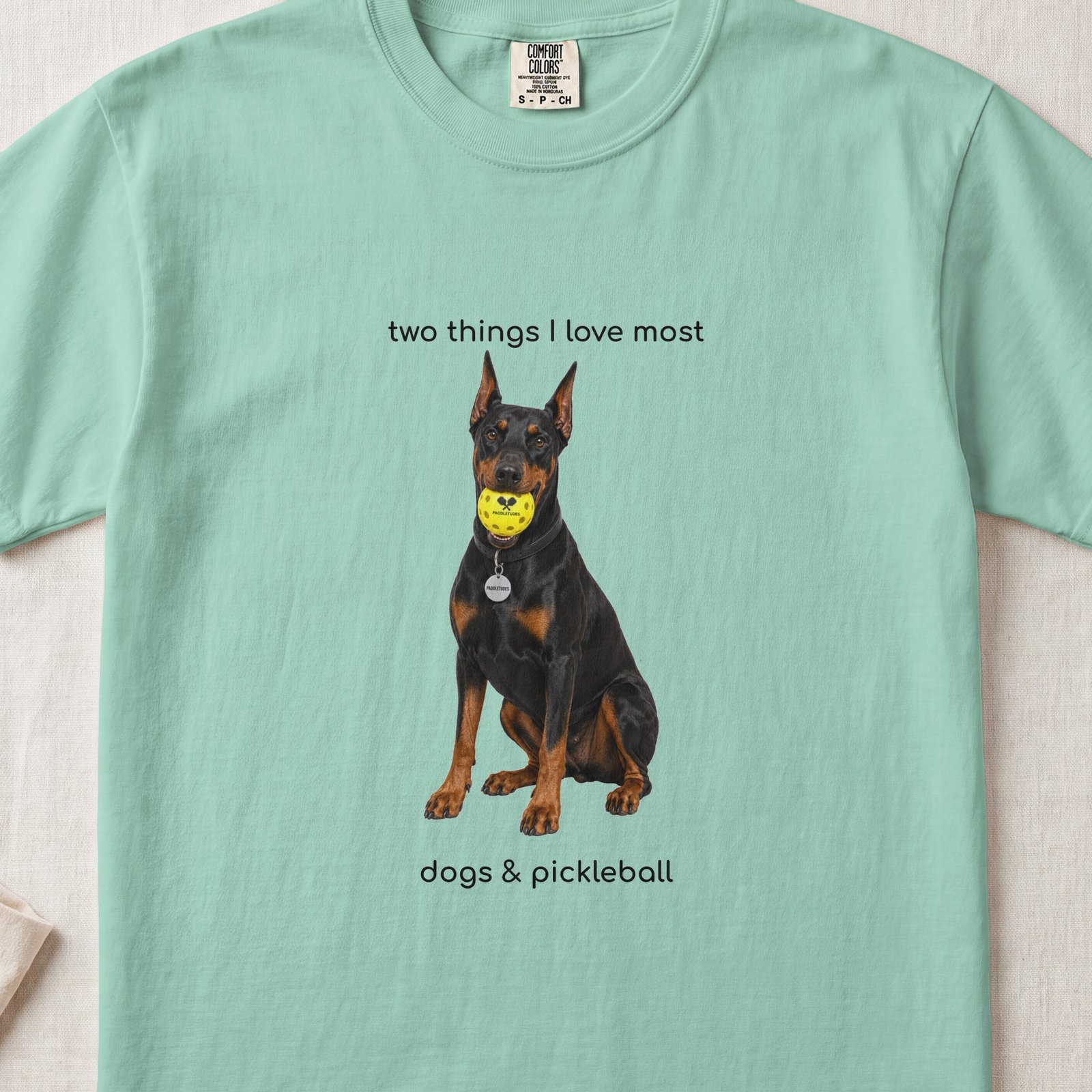
Doberman Happy
$39.99
- Comfort Colors 1717 heavyweight cotton
- Original design · printed to order
- U.S. print partners
Ninety Pounds of Quiet Authority on a Doberman T Shirt
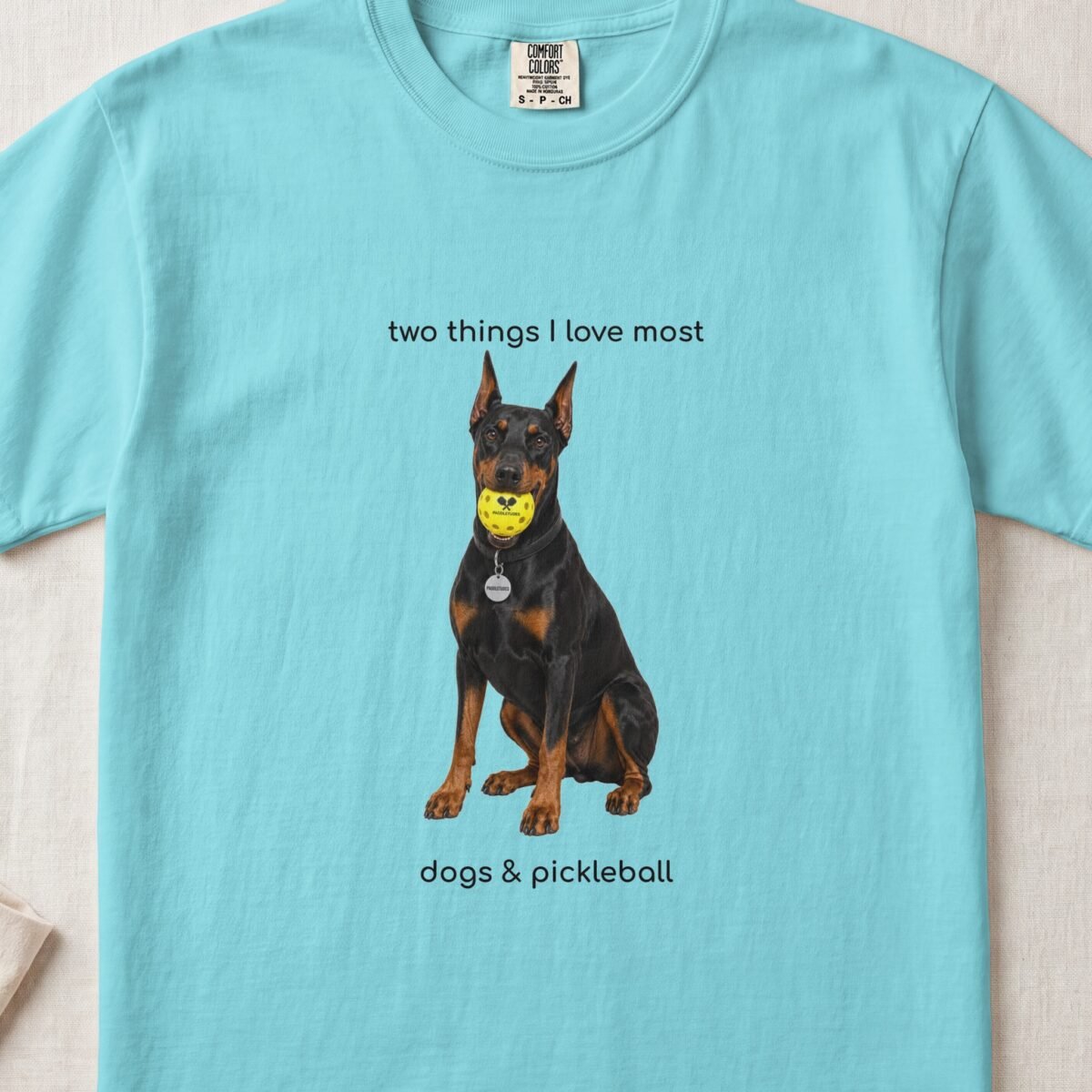
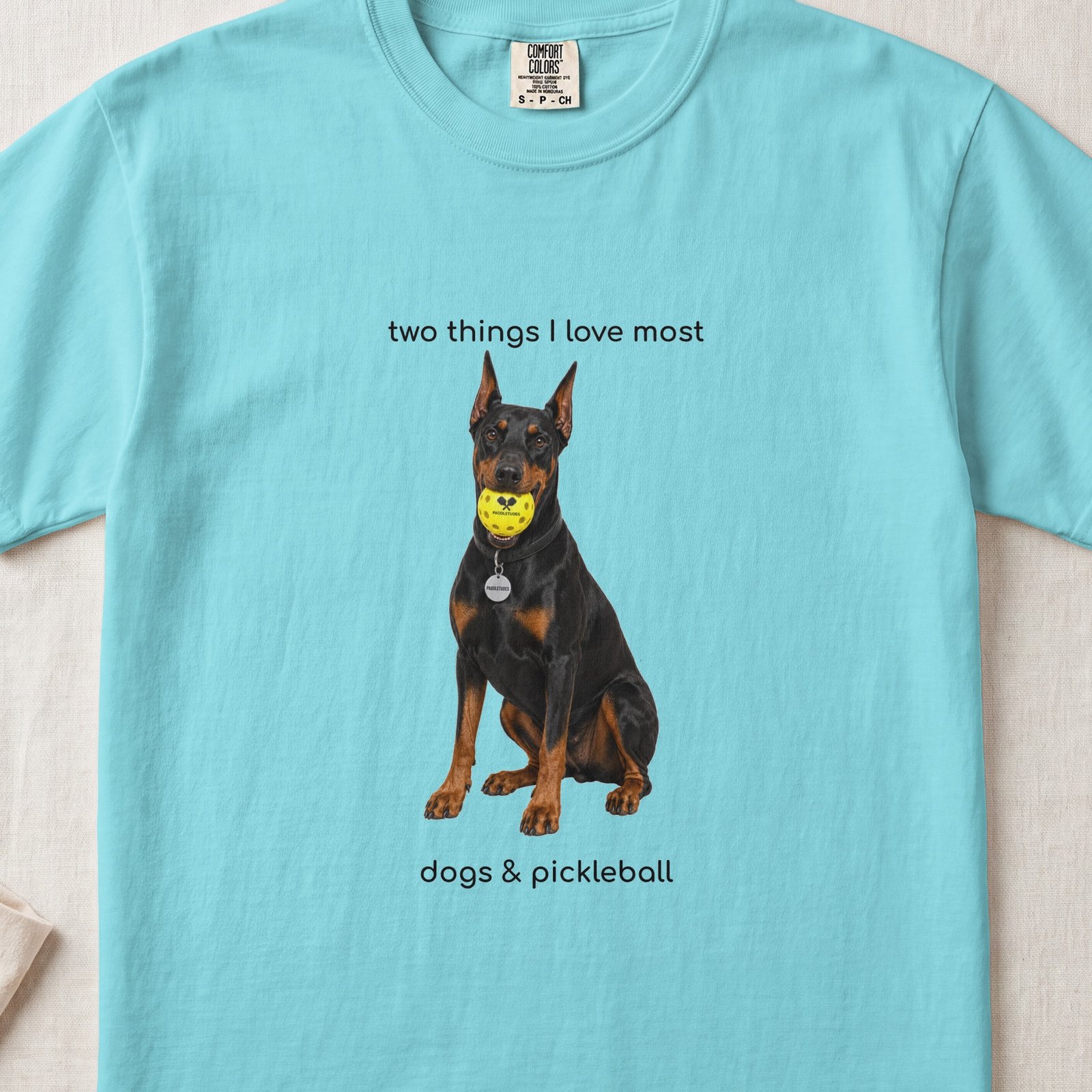
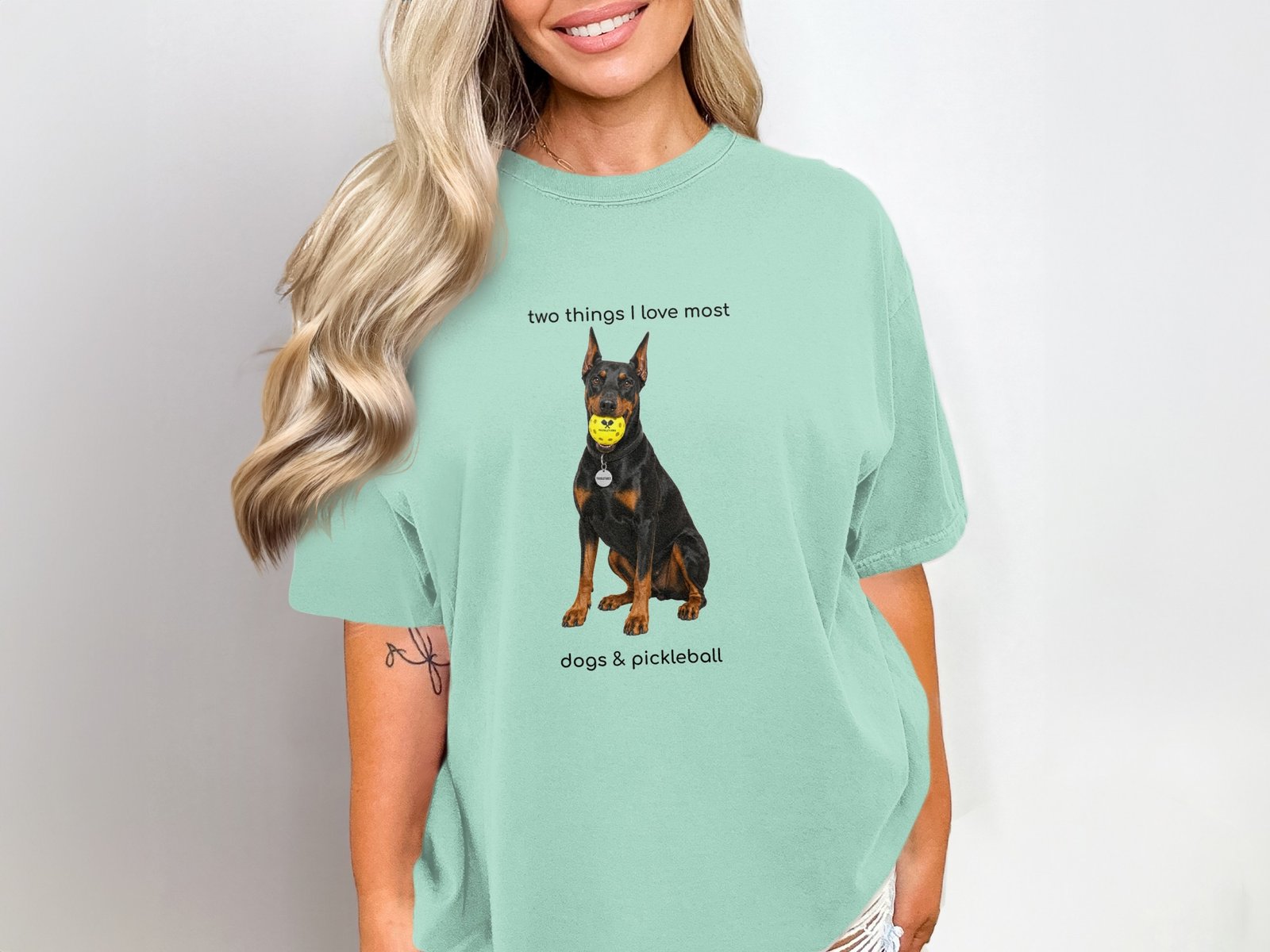
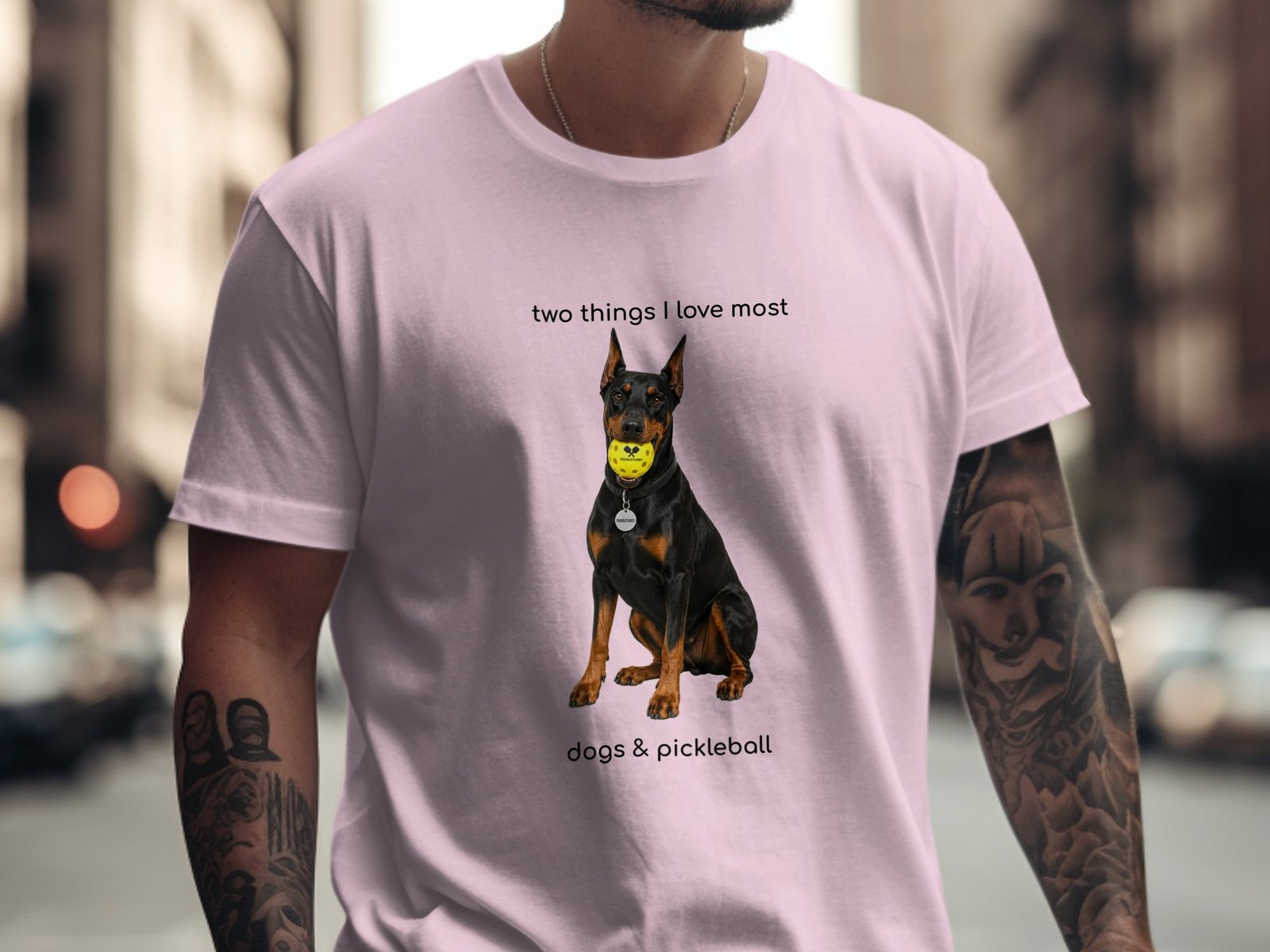
Ninety pounds of quiet authority. Your Doberman follows you from room to room like personal security detail, and this shirt puts a pickleball in that energy — the athlete of the dog world doing athlete things, posture perfect, every muscle visible even in silhouette.
A Doberman doesn’t stand next to you. They stand over you. Even when they’re sitting, they carry themselves like they’re working the door at an event you weren’t invited to. This design catches the Doberman at play — the version of your dog you see when you throw the ball and they cover thirty feet of yard in what feels like two strides. That explosion of controlled power, channeled into a pickleball. Every Doberman owner knows exactly what that looks like.
The person wearing this at the court is instantly identifiable. Doberman people carry themselves a certain way — there’s a quiet confidence that comes from sharing your life with a breed most people are slightly afraid of. You’ve had the conversations. “Is it friendly?” Yes. “Does it bite?” No. “Can I pet it?” Sure, but it’s going to lean on you with seventy pounds of affection and you’re going to deal with that. Wearing the breed on a shirt skips all the explaining and goes straight to the signal: I chose this dog on purpose, I know what I’m doing, and I’m proud of it.
For the gift buyer — this is a Father’s Day shirt. The dog dad who takes his Doberman on a run before the sun comes up, plays pickleball from 7 to 9, and is back home before anyone else is awake. His whole morning is the dog and the court, in that order, every day. He doesn’t need another tie. He needs a gift that proves someone actually pays attention to what his mornings look like. But it’s also the Christmas gift for the dog mom whose Doberman sleeps across the foot of her bed like a seventy-pound weighted blanket and goes to the court in the passenger seat like a copilot. The retirement gift for the couple who finally have time for morning pickleball and an evening walk that lasts as long as the Doberman wants it to. The birthday gift from the sister-in-law who is still slightly terrified of the dog but has come around enough to buy a shirt about it. If you know a Doberman lover whose dog is the center of their daily routine, this is the dog lover gift that lands — not a stocking stuffer they smile at and forget, but the shirt that becomes part of the rotation because it’s actually about their life. For the version where the court goes dark and your Doberman processes the betrayal in complete silence, see the Sad Doberman tee.
The Doberman Pinscher exists because a German tax collector named Karl Friedrich Louis Dobermann needed a dog that could protect him on his rounds in the 1890s. He wasn’t breeding for looks. He was breeding for function — a dog fast enough to keep up on long walks through rough neighborhoods, intimidating enough to deter anyone eyeing the tax money, and loyal enough to stay close without a leash. He crossed Rottweilers, German Pinschers, Weimaraners, and several terrier breeds until he got what he wanted. The breed that pins you to the couch with its head on your lap was originally designed as a walking security system. The Doberman Pinscher Club of America, founded in 1921, has been the national breed club for over a century, and their longevity registry awards certificates to Dobermans who reach age 10 — because in this breed, a decade is a genuine achievement.
Printed on a Comfort Colors 1717 garment-dyed heavyweight tee with water-based DTG ink — sizing and care details here.
What Were Dobermans Originally Bred For
The Doberman was created in the 1890s by Karl Friedrich Louis Dobermann, a German tax collector who also worked as a night watchman, dogcatcher, and pound keeper in the town of Apolda. He needed a dog for a very specific job — protection during his rounds through areas where carrying tax money made him a target.
Dobermann had access to a wide variety of breeds through his dogcatching work, and he crossed several of them deliberately over years. The exact mix is debated, but the most commonly accepted lineage includes the Rottweiler for guarding instinct and strength, the German Pinscher for alertness and agility, the Weimaraner for scenting ability and endurance, the Manchester Terrier for sleekness, and short-haired shepherd dogs for obedience. The result was a breed that was fast, strong, smart, loyal, and intimidating enough to keep people at a distance without the dog needing to attack.
Every trait the modern Doberman is known for traces to that original purpose. The athletic build covers ground quickly. The short coat doesn’t pick up debris during long working shifts. The alert, upright posture signals “don’t try it” without the dog doing anything aggressive. The intense one-person bond exists because Dobermann needed a dog that would stay with him — not wander off, not socialize with strangers, but maintain proximity and vigilance for hours at a time. The breed was AKC-registered by 1908, less than two decades after its creation, which tells you how quickly people recognized that Dobermann had built something exceptional.
Are Dobermans Good Family Dogs
A well-bred, well-socialized Doberman is one of the most stable family dogs you can own — but the key words are “well-bred” and “well-socialized,” and both require work the owner has to put in before the dog puts anything out. The AKC breed standard describes the ideal temperament as energetic, watchful, determined, alert, fearless, loyal, and obedient. In practice, that means a dog who reads the room better than most humans do.
The aggressive reputation comes from decades of Hollywood villains and junkyard guard dog casting. It also comes from poorly bred dogs in the hands of people who wanted intimidation without investing in training. A Doberman raised with consistent socialization, clear boundaries, and an owner who understands the breed is calm in public, gentle with kids, and affectionate to the point of being clingy. They’re called “Velcro dogs” because they attach to their person and do not let go. That’s not a liability — that’s a 90-pound dog who wants to sit in your lap and watch TV while your kids climb over both of you. If that kind of working-dog devotion in a herding frame sounds familiar, the German Shepherd channels the same intensity from a completely different lineage.
The breed does have a serious protective instinct that requires responsible ownership. A Doberman who hasn’t been socialized can become territorial and reactive, and at their size and speed, that’s not something to leave to chance. Early exposure to different people, environments, and situations teaches the dog what’s normal and what actually requires a response. Families that do that work — and it is work — end up with a dog who plays with the kids in the yard, follows the parents from room to room, and sleeps across the bedroom doorway like a hundred-pound deadbolt. The dog most people imagine and the dog Doberman families actually live with are two completely different animals. Browse the full breed lineup on our Dogs and Pickleball page.
-
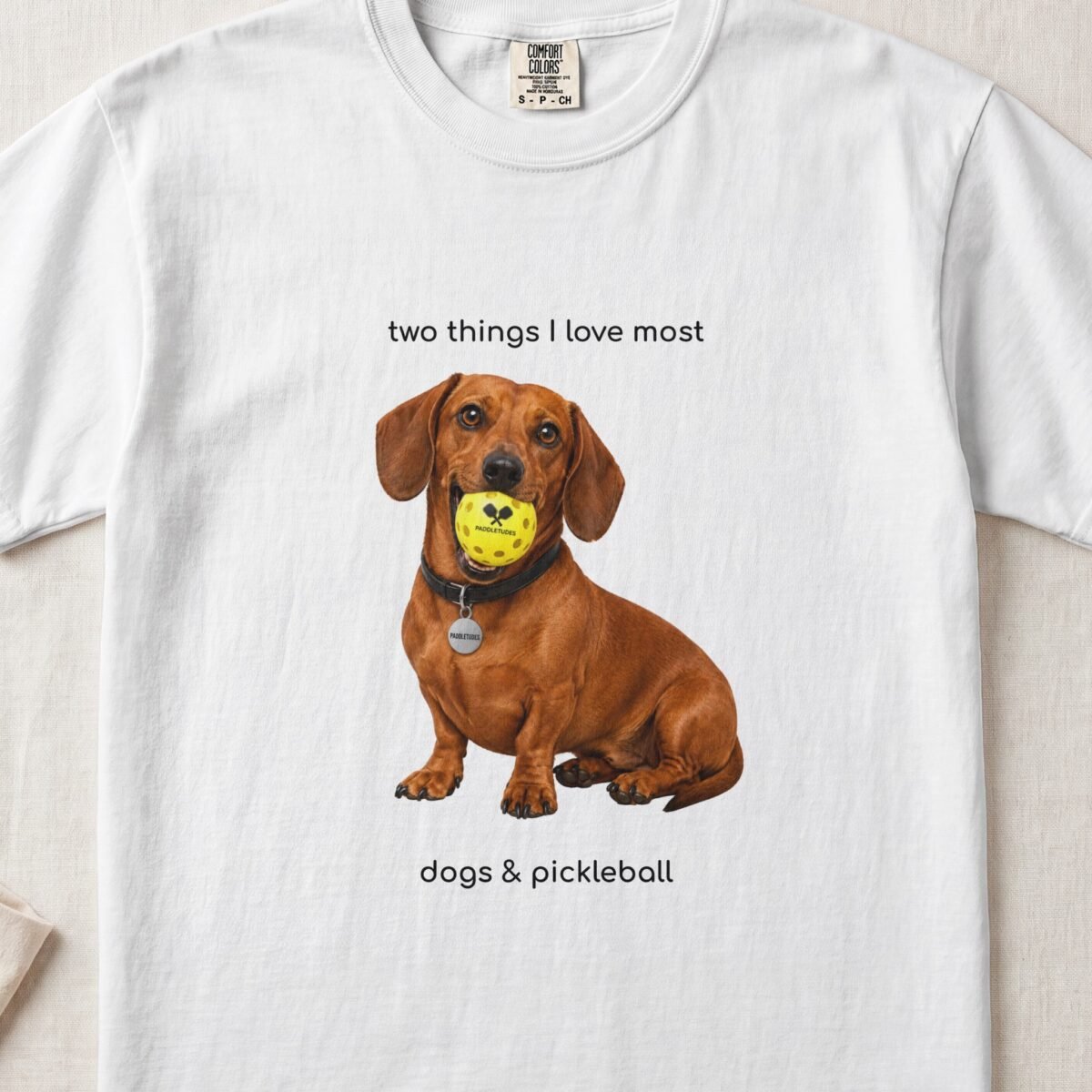
Dachshund Happy
$39.99 Select options This product has multiple variants. The options may be chosen on the product page -
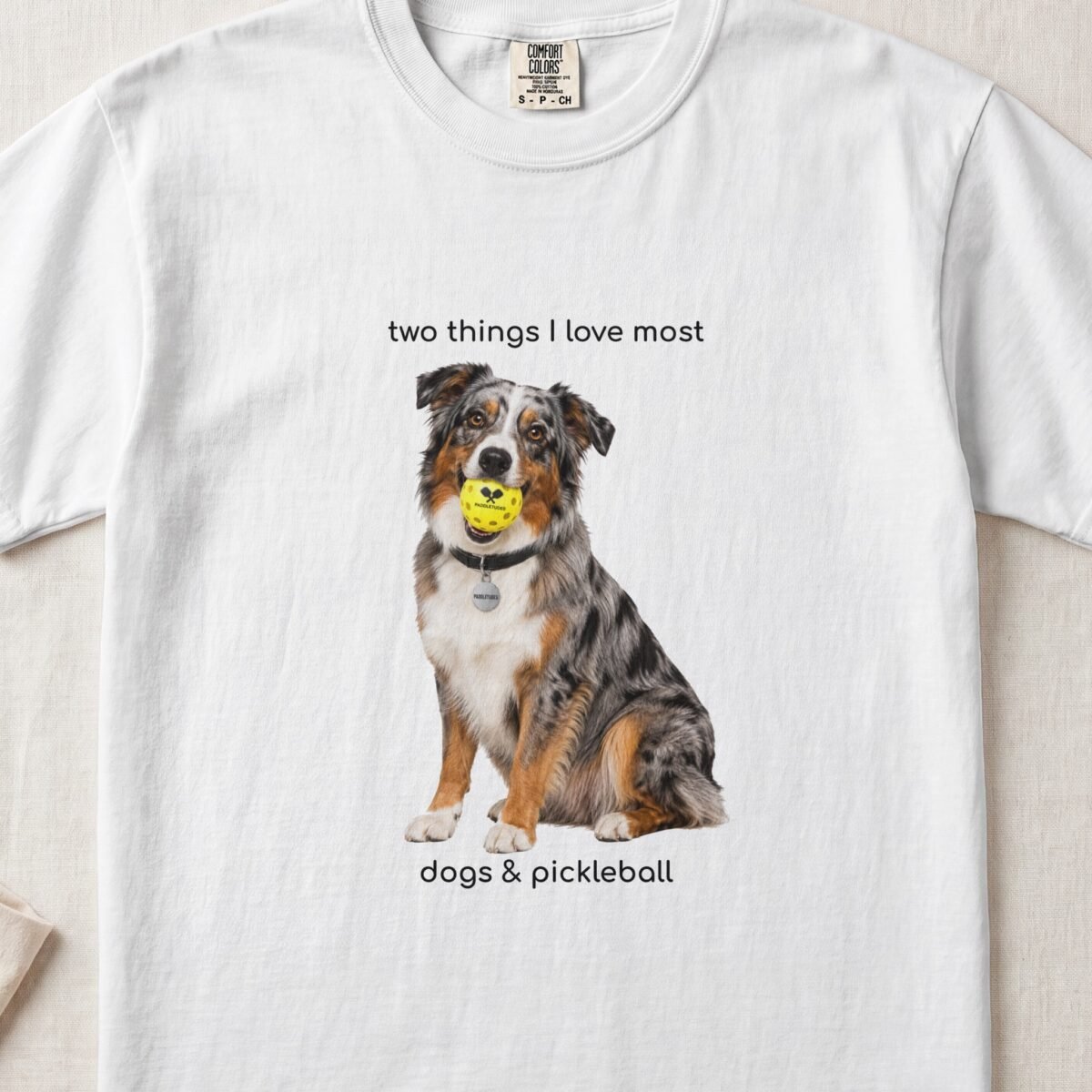
Mini Australian Shepherd Happy
$39.99 Select options This product has multiple variants. The options may be chosen on the product page -
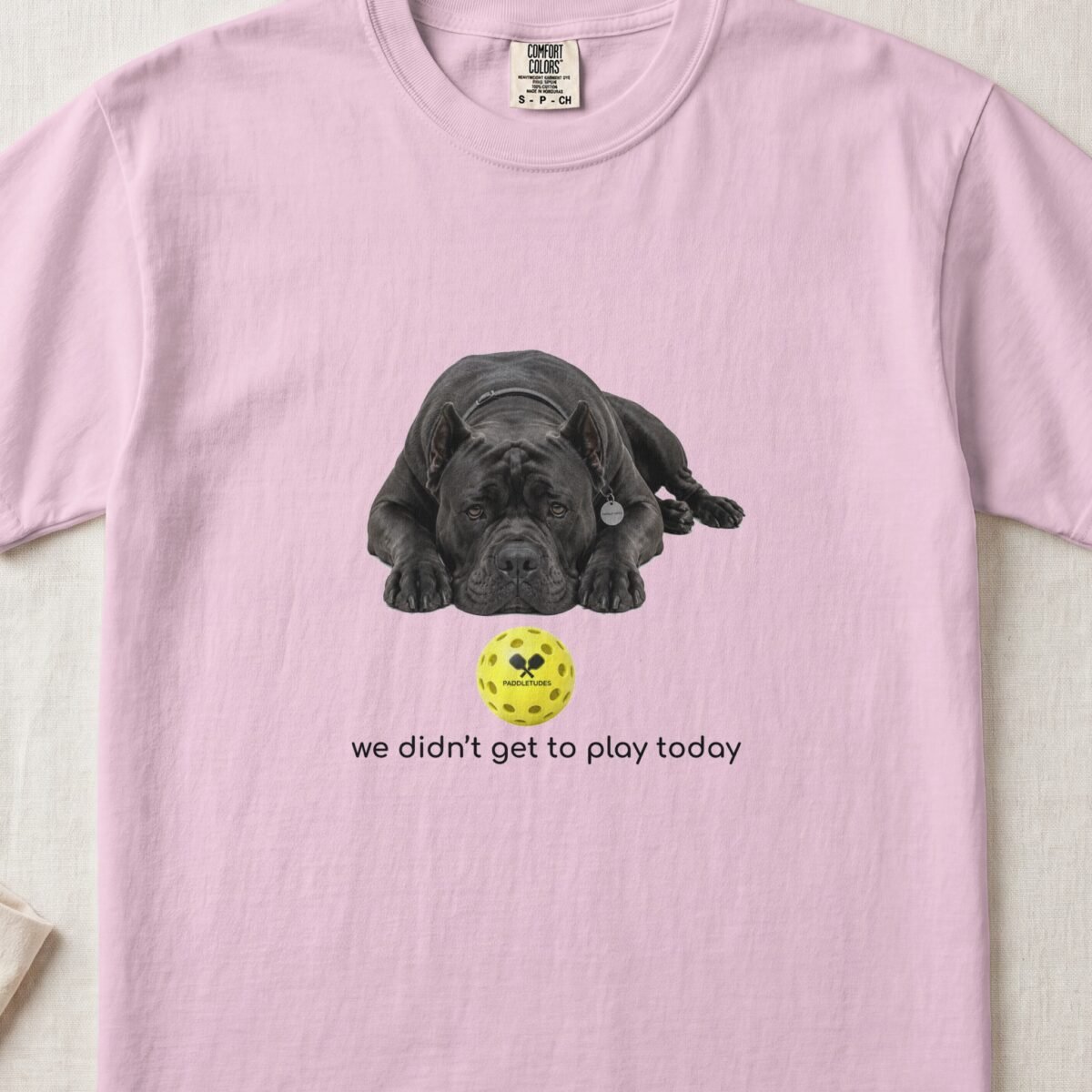
Cane Corso Sad
$39.99 Select options This product has multiple variants. The options may be chosen on the product page