Portland’s Vintage Shops and Pickleball Courts Run on the Same Frequency
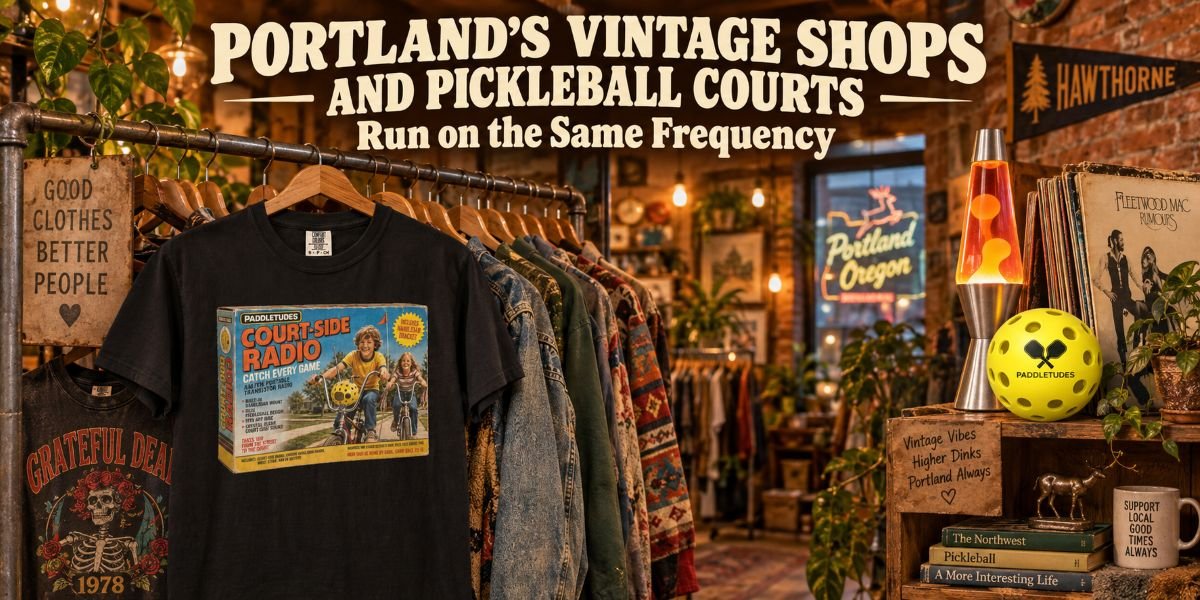
Portland has 35 pickleball venues with 132 courts scattered across the metro, no sales tax on anything you buy, and more vintage shops per square mile than any city on the West Coast. That combination matters if you’re the kind of person who spends Saturday morning digging through a rack of 1970s concert tees on Hawthorne Boulevard and Saturday afternoon chasing a plastic ball around Gabriel Park. Portland doesn’t separate those people. They’re the same person.
I’ve been thinking about Portland for a while because it’s the city that makes the most sense for what I do at Almost Seen On TV. The entire product line is fake vintage. Fake energy drinks. Fake toothpaste tubes. Fake cereal boxes. Fake transistor radios. All designed to look like real packaging from decades that feel more real than whatever decade we’re in now. Portland’s vintage culture runs on that exact frequency. The city that kept “Portlandia” supplied with props for eight seasons is the same city where someone picks up a Court Side Radio shirt and says “I had one of those” about a product that never existed.
Hawthorne Boulevard and the Vintage Corridor That Supplies Half of Hollywood
If you want to understand Portland’s relationship with vintage, start on Hawthorne Boulevard. Between 33rd and 38th, there are more than ten secondhand and vintage shops in five blocks. Not thrift stores where you’re sifting through donation bins hoping to find something wearable. Curated vintage. Real inventory. Stores run by people who’ve been doing this for decades.
House of Vintage is the anchor. Over 60 dealers inside a 13,000-square-foot building, carrying vintage clothing, shoes, and accessories from the 1920s through the 2000s. The store supplied wardrobe and props for “Portlandia” and “Grimm.” That’s not a fun fact on their Yelp page. That’s their actual client list. When a TV production needed something that looked authentically old and culturally specific to the Pacific Northwest, they called a shop on Hawthorne Boulevard in Portland.
Kissing Booth, a few blocks away, specializes in pre-1980s apparel with a focus on vintage tees, sweatshirts, and denim. One reviewer called it the place to “perfect your Portland look,” which is a polite way of saying the shirts here cost more than they did in 1978 because someone figured out that the faded cotton and the cracked screenprint are the whole point. Red Light Clothing Exchange is the opposite energy. Bright colors. Rhinestones. Ruffles. The kind of store where you turn to your friend and ask “Can I pull this off?” and choose which friend based on the answer you want.
Magpie carries vintage children’s clothing alongside adult inventory, which is a detail you don’t see in most cities. Vintage Pink runs a mid-century modern paradise that feels like walking into someone’s perfectly preserved 1962 living room. Lounge Lizard has been selling mid-century furniture since 2002.
Hawthorne isn’t the only corridor. Workshop Vintage on Mississippi Avenue draws the kind of review that reads like a love letter: “Magical and wonderful in every way. I consider myself a bit of a vintage store aficionado.” Stars and Splendid Antiques Mall in Sellwood-Moreland was founded by three friends in 1990 and now represents over 100 dealers. Hollywood Vintage anchors the Kerns neighborhood. Memory Den in the Central Eastside is a massive vintage mall with deep mid-century modern inventory.
And Oregon has no sales tax. Every vintage find, every retro tee, every mid-century lamp is the sticker price. Nothing added. That policy alone makes Portland one of the most affordable vintage shopping destinations in the country, and every shop owner knows it.
Why Portland’s Vintage Culture and Fake Vintage Shirts Are the Same Instinct
There’s a reason I’m writing about vintage shops in an article that’s also about pickleball courts. The connection isn’t a marketing stretch.
The person digging through a rack at House of Vintage looking for a 1986 concert tee they never owned is chasing the same feeling as the person who sees a Pickle Flow Lava Lamp shirt and laughs because they remember exactly what their aunt’s lava lamp looked like on the shelf next to the macramé plant hanger. Nostalgia isn’t about owning the thing. It’s about recognizing the era. The packaging. The fonts. The color palette. The feeling that someone made this object in a decade when objects felt different.
That’s what Almost Seen On TV builds. Biff’s Locker Puzzle looks like a board game box from 1983. Dink Fiction looks like a VHS case from 1994. Court Side Radio looks like a vintage transistor radio ad. Every design is printed on Comfort Colors 1717 heavyweight blanks because the shirt should feel broken-in the day you put it on, like it’s already been through a few decades. Portland gets that. A city where the vintage shops supplied television productions and the thrift stores have their own Yelp reviewers who call themselves aficionados is a city that already speaks this language.
-
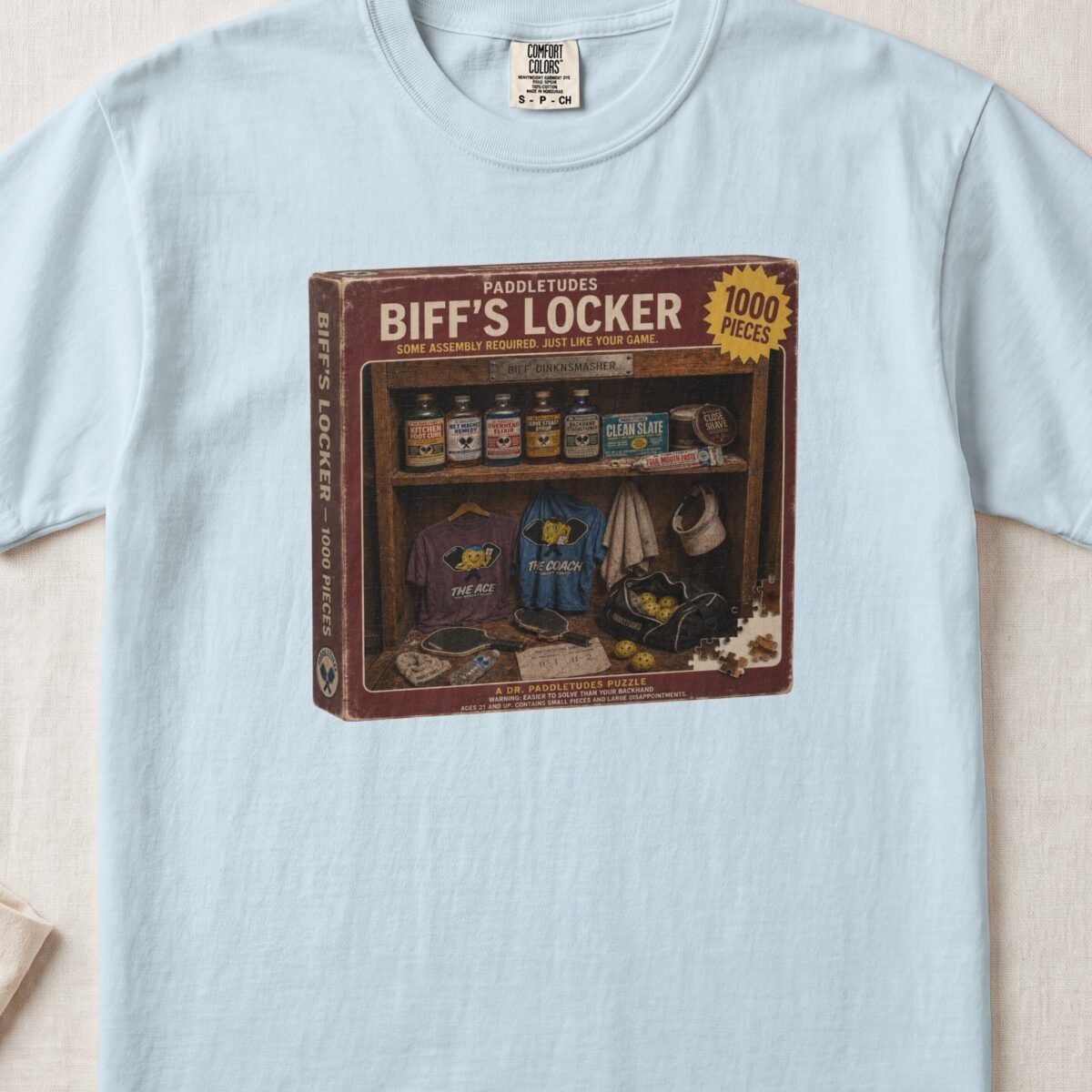
Biff’s Locker Puzzle
$39.99 Select options This product has multiple variants. The options may be chosen on the product page -
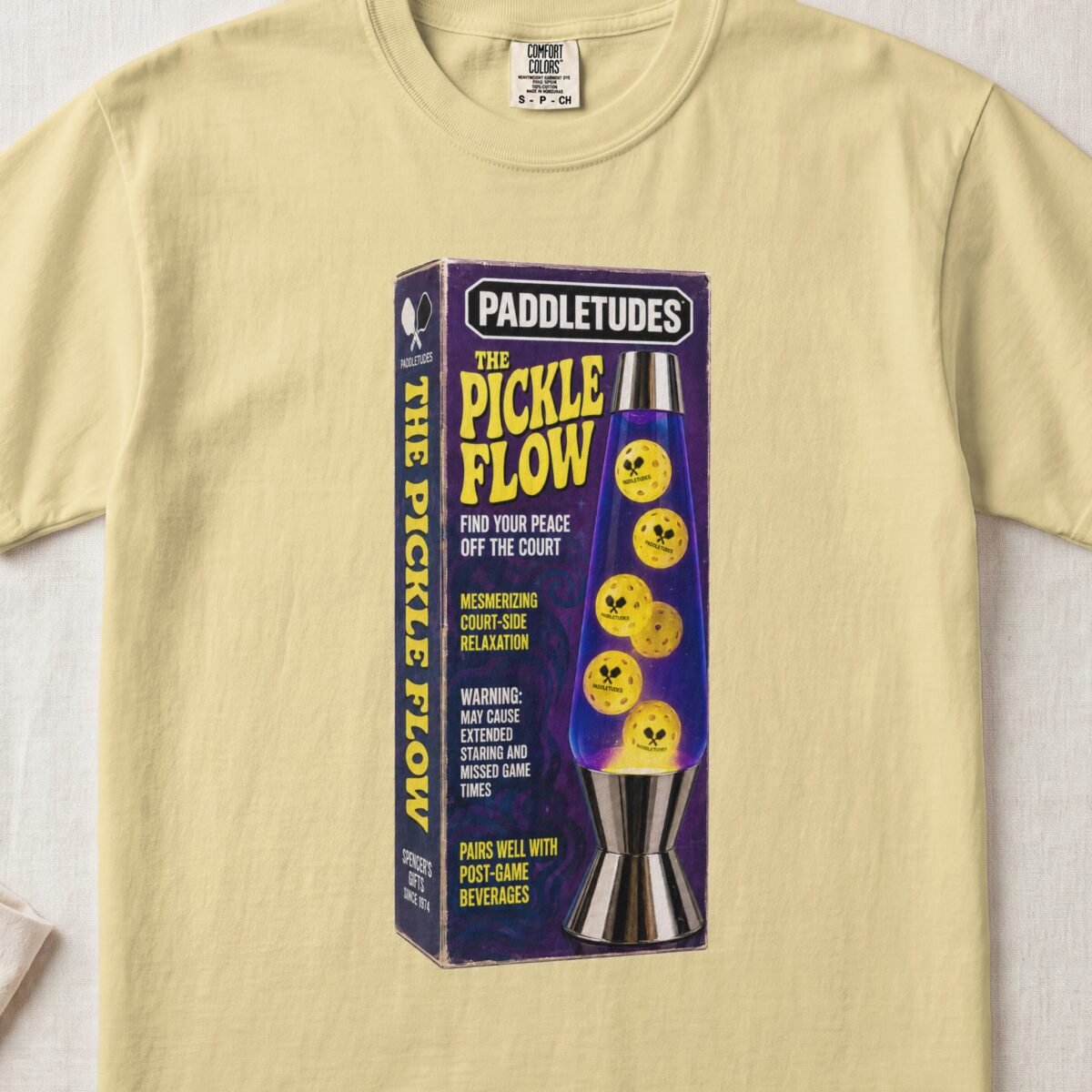
The Pickle Flow Lava Lamp
$39.99 Select options This product has multiple variants. The options may be chosen on the product page -
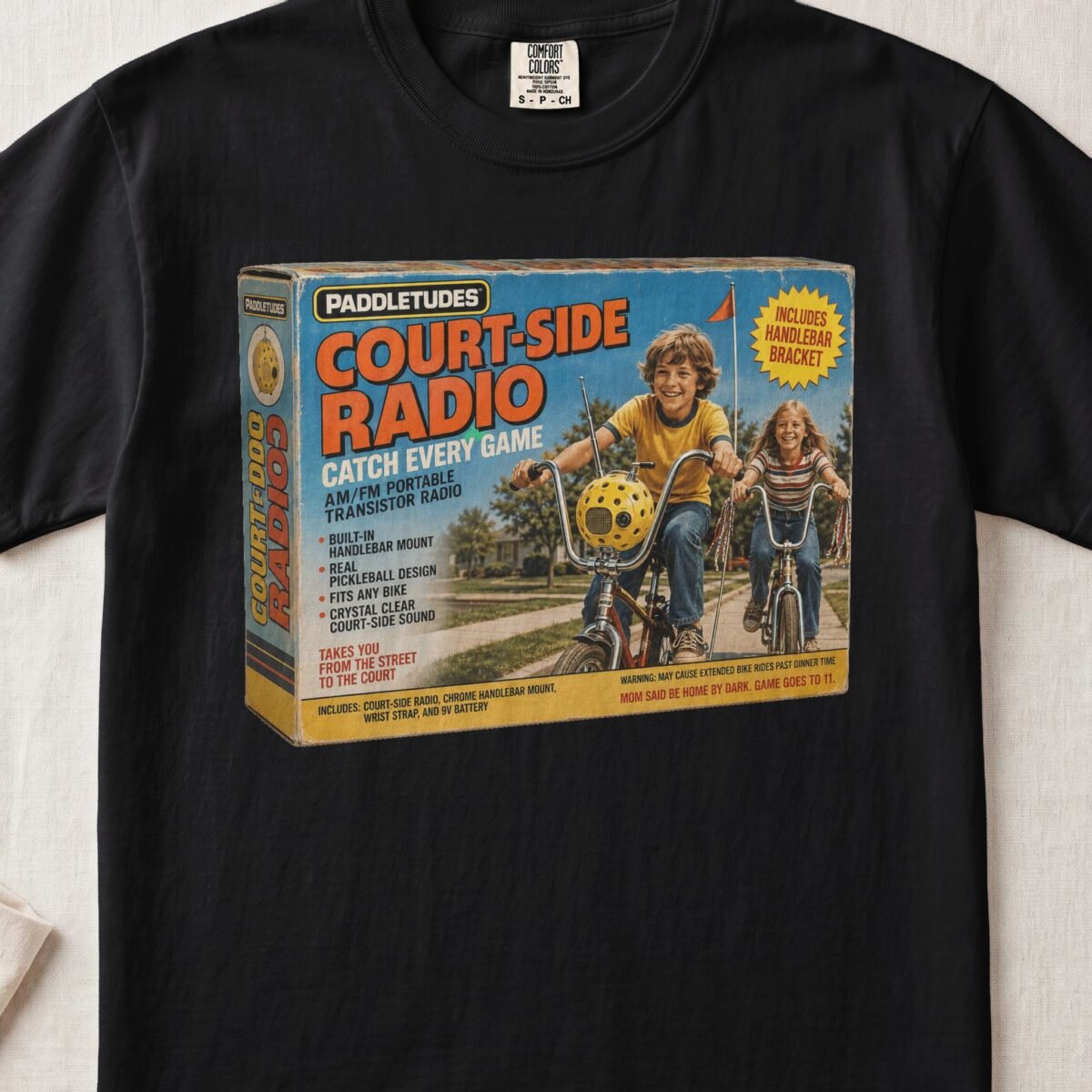
Court Side Radio
$39.99 Select options This product has multiple variants. The options may be chosen on the product page -
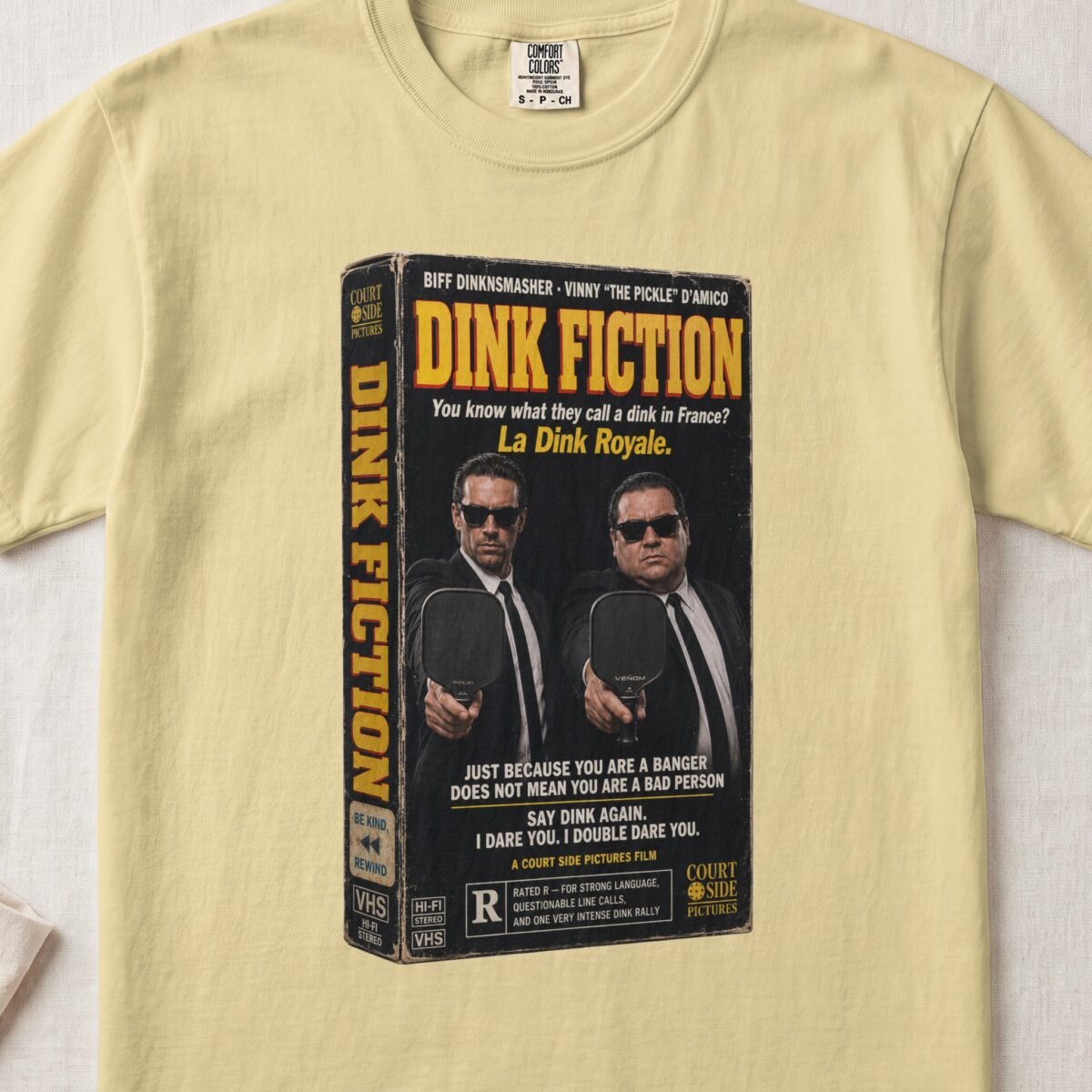
Dink Fiction
$39.99 Select options This product has multiple variants. The options may be chosen on the product page
Portland Pickleball: 132 Courts and the DIY Spirit That Built Them
Portland’s pickleball scene is exactly what you’d expect from a city that turned a bowling alley into an indoor bike park and then turned the indoor bike park into a pickleball venue with axe throwing and Plant Bingo.
That’s not a joke. That’s the actual lineage of The People’s Courts.
Where can I play pickleball in Portland?
Portland has 35 pickleball venues with 132 courts across the metro, split between 52 indoor and 80 outdoor. Nine locations have dedicated courts with permanent lines and nets. The city’s public system is one of the most accessible in the country: four community centers offer indoor drop-in at $6 per session, and six parks have free outdoor courts.
The People’s Courts at 2700 NE 82nd Avenue is the flagship. Twelve dedicated courts, six indoor and six outdoor, inside a converted AMF bowling center that later became The Lumberyard, Portland’s beloved indoor bike park. When The Lumberyard closed, the space became what Portland apparently needed more: pickleball courts, bocce, cornhole, ping pong, axe throwing, an arcade, two 150-inch projector screens, and Russell Street Kitchen serving elevated scratch-made bar food with local craft beers and house cocktails.
The reviews read like a greatest hits album. “THE place to play in Portland.” “Indoor courts are SO MUCH QUIETER than any other indoor place I’ve ever played, which allows conversation and jokes between points.” “A gem in Portland.” One reviewer who walked in for a friend’s get-together and got a quick pickleball tutorial wrote: “Now I can see why it can be addicting.” Nike runs Adult Pickleball Camps there with Joy Leising, a top-five PNW women’s doubles player, and certified teaching pro Tracie Dejager.
The People’s Courts runs Plant Bingo with Bigfoot Botanicals, free trivia on Thursdays, and Friday night events. It’s the kind of programming that only works in Portland, where “pickleball venue with a beyond pickle burger and Celtic axe throwing” is a sentence that makes people nod instead of laugh.
Where can I play pickleball for free in Portland?
Free public pickleball courts in Portland exist at six parks. Gabriel Park at 4508 SW Nevada Street has the best free setup: six outdoor pickleball-only courts with permanent lines and nets included. Laurelhurst Park at 3789 SE Oak Street has two dedicated outdoor courts with nets. Pier Park has four outdoor courts. Portland Tennis Center at 324 NE 12th Avenue opens 16 outdoor courts for pickleball seasonally from mid-June through early September.
Most other public courts require bringing your own net. The city does lend rollaway nets for free for up to seven days with a photo ID, which is the most Portland solution possible to a net shortage.
For indoor play, Portland Tennis and Education (formerly St. Johns Racquet Center) at 7519 N Burlington Avenue is a social impact nonprofit with four indoor pickleball courts at $5 drop-in or $40 for a 10-visit pass. Southwest Community Center has indoor courts. Pickleball Kingdom Tigard runs 13 indoor courts on the west side with membership-based access.
Pickleball Was Invented Three Hours North of Here
Portland players already know this, but it’s worth saying for everyone else. Pickleball was invented in 1965 on Bainbridge Island, Washington, about three hours north of Portland by car. Joel Pritchard, Bill Bell, and Barney McCallum put together the game in Pritchard’s backyard using ping-pong paddles, a perforated plastic ball, and a badminton court. The sport spent its first few decades as a Pacific Northwest oddity before going national.
The PNW is where pickleball’s DNA lives. The community-first, slightly quirky, everybody-welcome vibe that defines pickleball culture didn’t come from Florida or Arizona. It came from the same region that produced Portland’s vintage shops, Portland’s food carts, Portland’s independent bookstores, and Portland’s refusal to let anyone pump their own gas until 2018. The sport and the city share a sensibility.
That matters because Portland’s pickleball scene doesn’t look like Dallas or Scottsdale. There’s no 52-court mega-facility. No 196,000-square-foot campus with a Wolfgang Puck restaurant. Portland’s scene is The People’s Courts converting a bowling alley. It’s Gabriel Park offering six free courts with nets. It’s a social impact nonprofit running $5 drop-in pickleball. It’s someone lending you a net for a week because they’d rather you play than not. That’s the same energy that made the sport in the first place.
I’ve written about pickleball in cities that invested millions in dedicated infrastructure: San Diego, Charlotte, Denver. Portland is a different animal. The investment here is in accessibility and community rather than scale. 35 venues spread across every neighborhood, indoor options at $5 and $6 drop-in, six free parks with courts. The infrastructure is democratic in a way that reflects the city.
The Portland Overlap
Portland’s vintage shoppers and Portland’s pickleball players share something specific. Neither community takes itself too seriously, and both communities take the THING very seriously. The vintage aficionado on Hawthorne who knows the difference between a 1974 Levi’s orange tab and a 1978 red tab is the same energy as the 4.0 player at Gabriel Park who has opinions about paddle core thickness. The obsession is the point. The self-awareness about the obsession is what keeps it fun.
That overlap is where Picklefellas works. Where Blazing Paddles works. Where Top Dink works. These are shirts that parody movies from the same decades Portland’s vintage shops are built around. They work because the person buying a 1991 band tee at Red Light Clothing Exchange and the person wearing a fake 1987 energy drink shirt at The People’s Courts are operating on the same wavelength. They both understand that the look IS the joke and the joke IS the point.
Portland doesn’t need to be convinced that a fake vintage product on a heavyweight cotton blank is worth owning. This city has been proving that concept for 40 years, one Hawthorne Boulevard shop at a time.
-
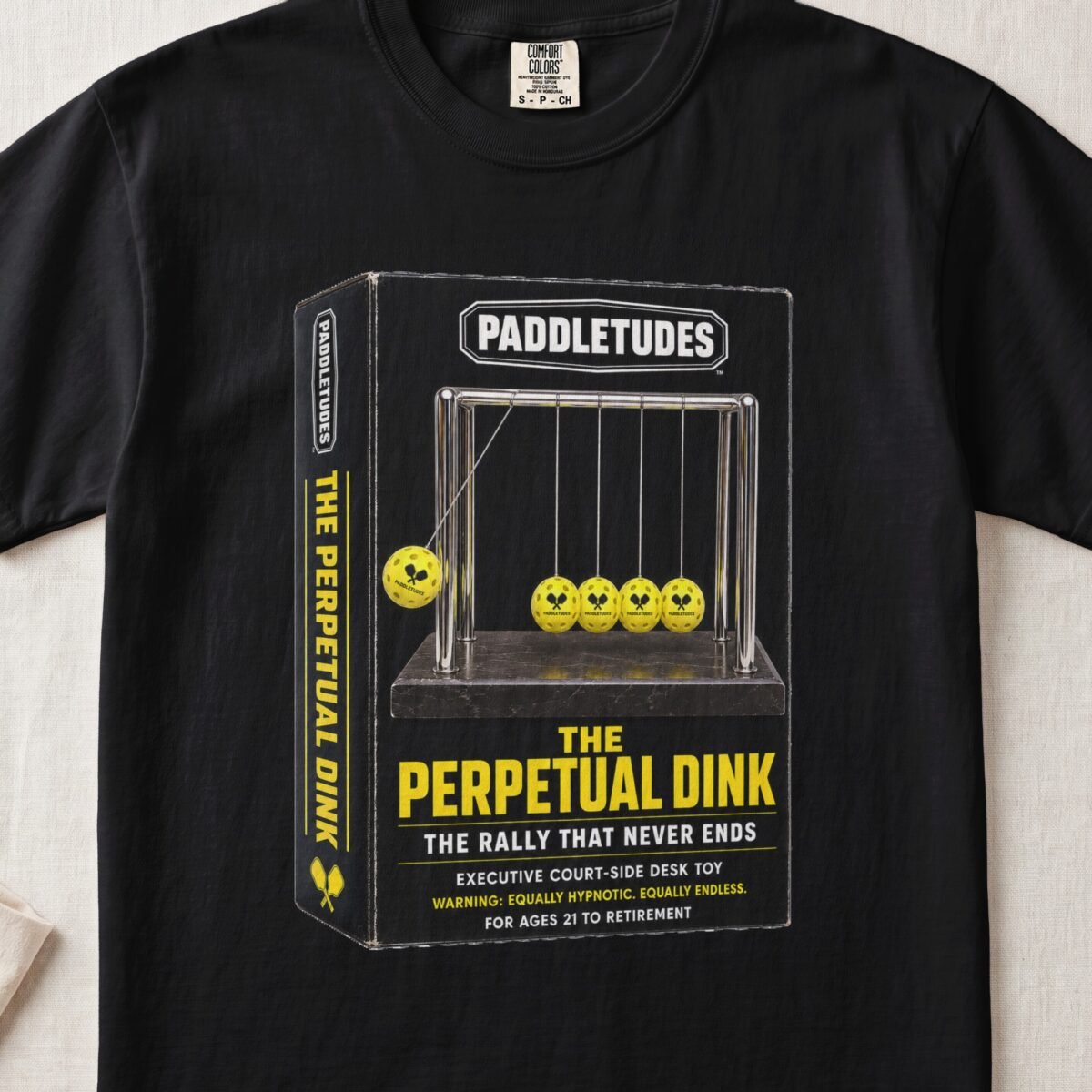
The Perpetual Dink
$39.99 Select options This product has multiple variants. The options may be chosen on the product page -
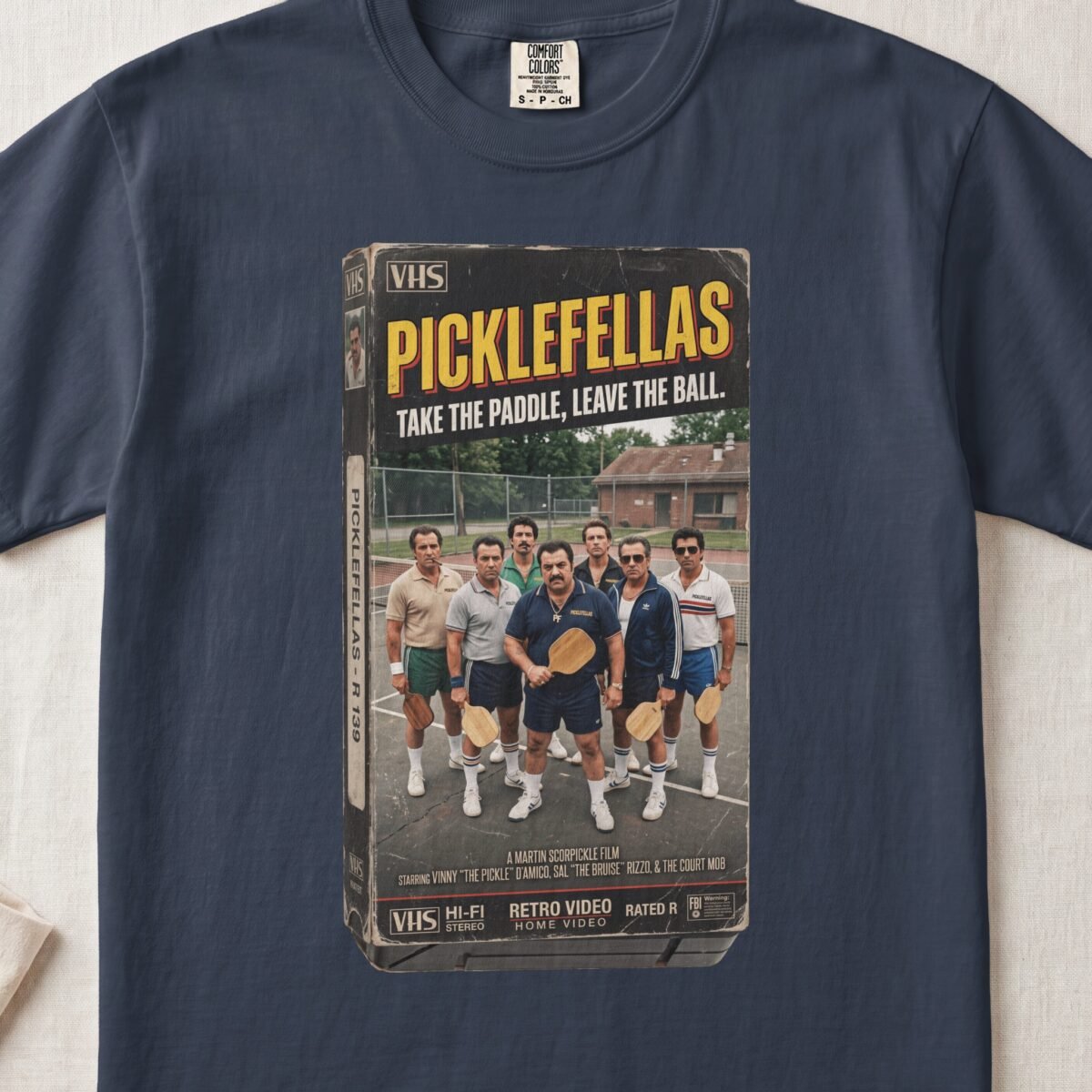
Picklefellas
$39.99 Select options This product has multiple variants. The options may be chosen on the product page -
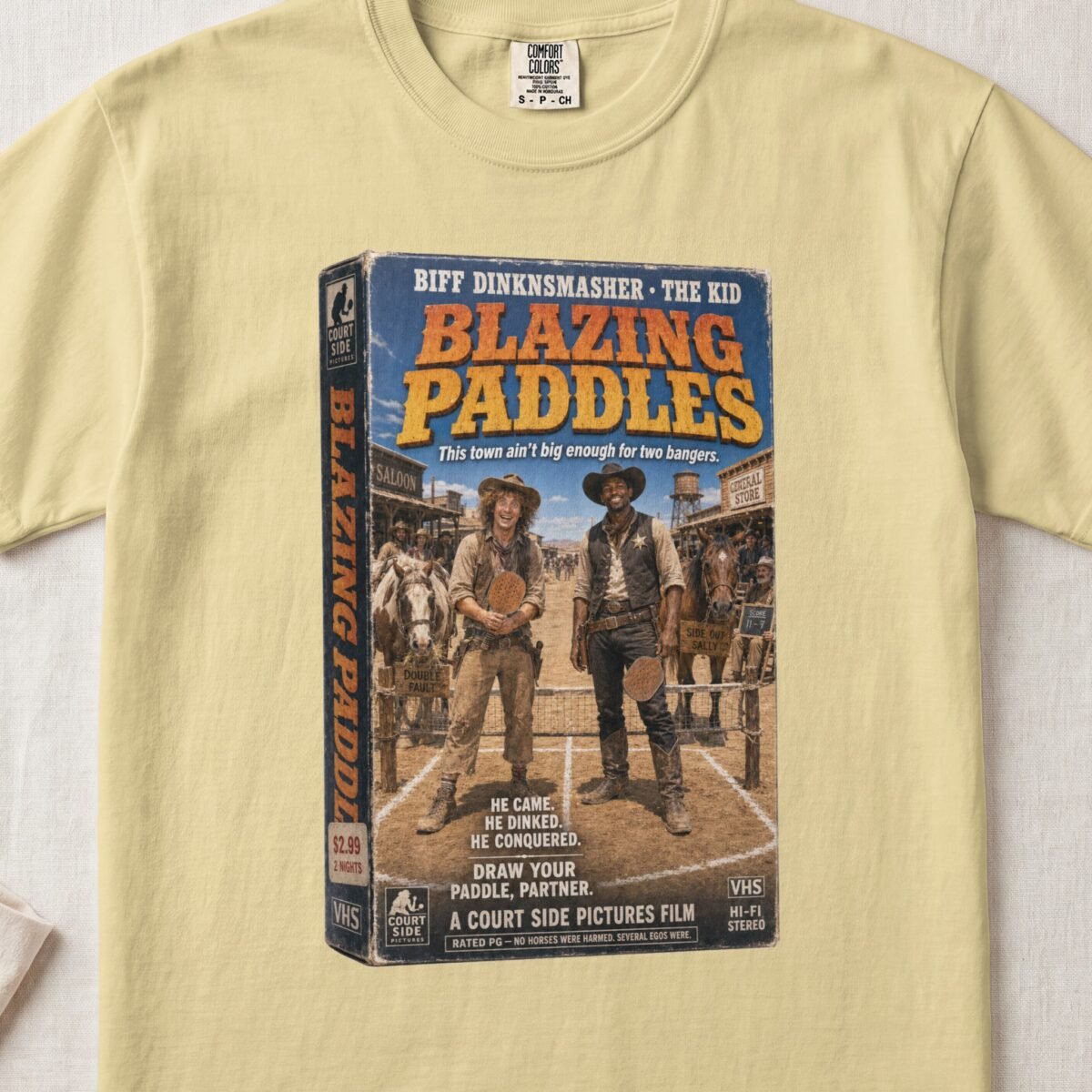
Blazing Paddles
$39.99 Select options This product has multiple variants. The options may be chosen on the product page -
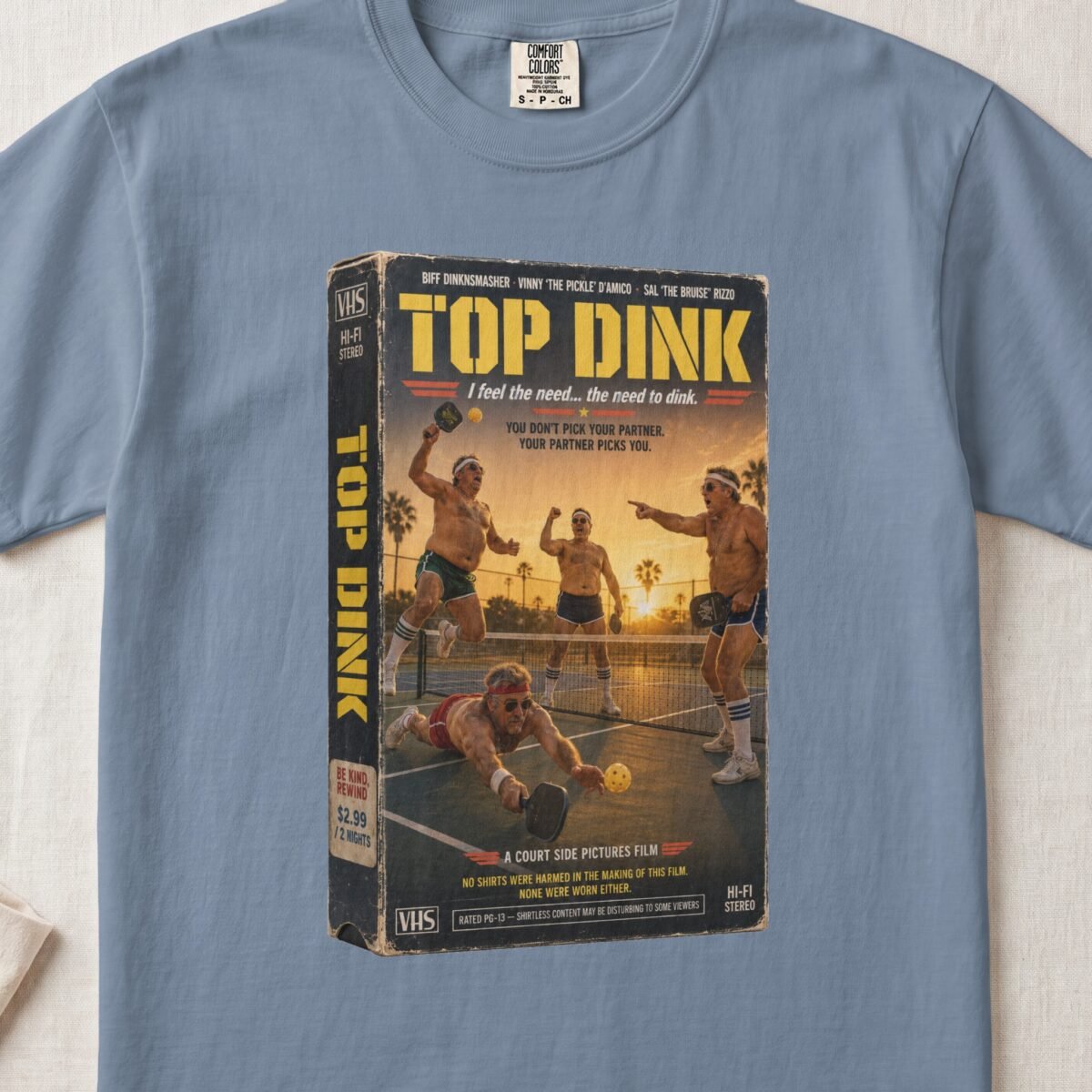
Top Dink
$39.99 Select options This product has multiple variants. The options may be chosen on the product page
Start at House of Vintage on Hawthorne at opening. Spend an hour. Buy something you don’t need from a decade you weren’t alive for. Then drive to Gabriel Park and play free pickleball on six dedicated courts with nets already set up. Then end at The People’s Courts for indoor play, a beyond pickle burger, and a local craft beer. Portland is the only city in America where that’s a coherent day, and every stop makes sense with the last one.