Sports Comfort Colors 1717
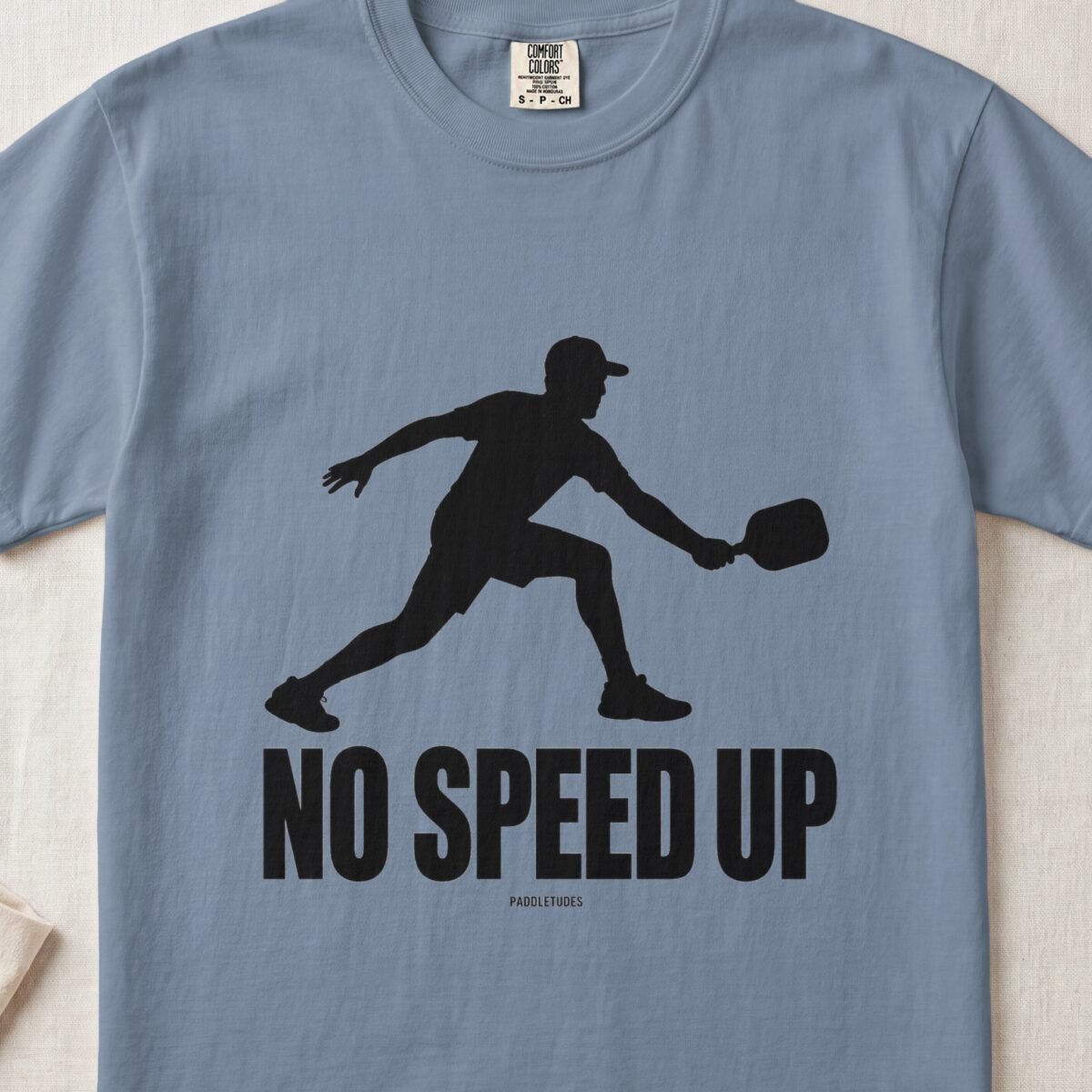
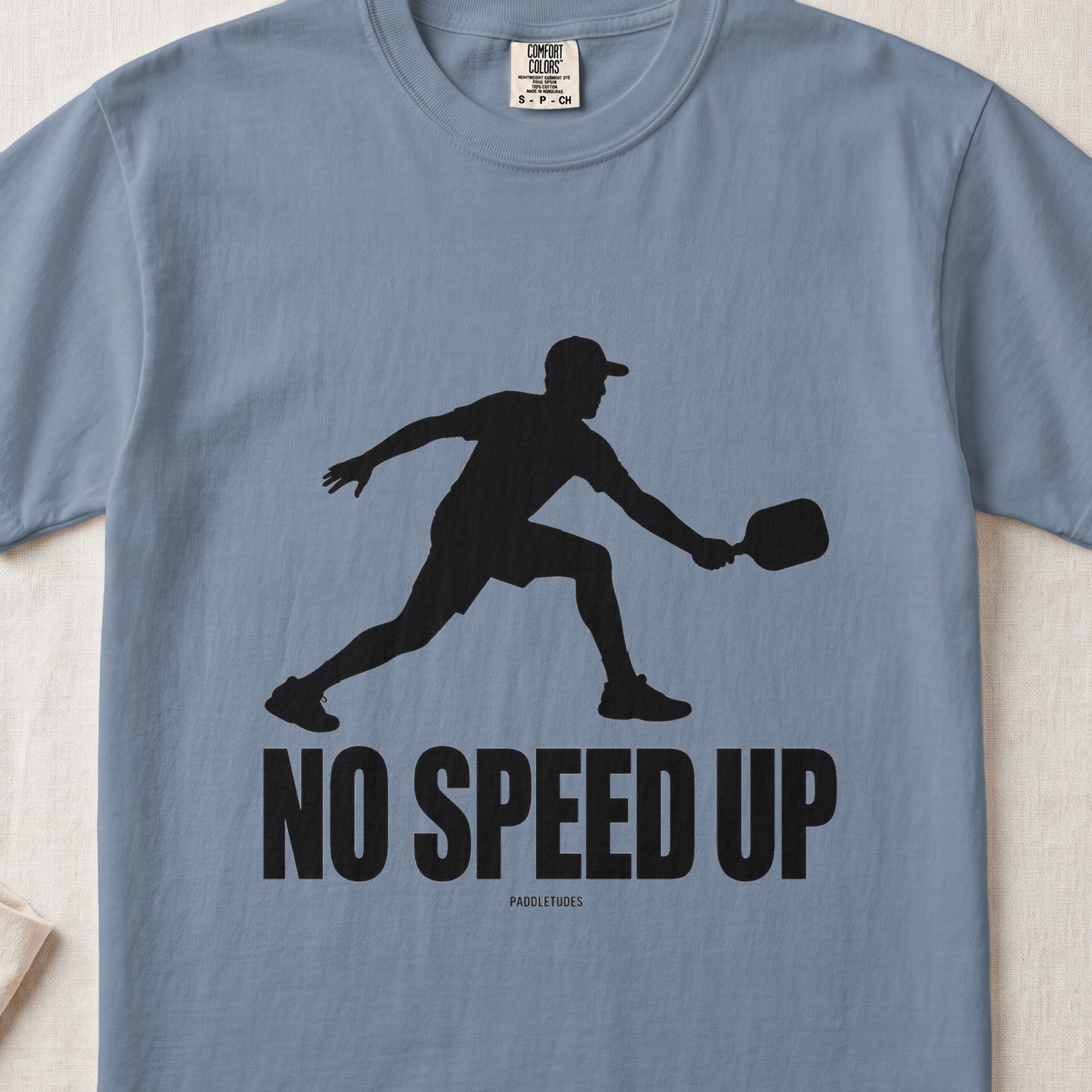
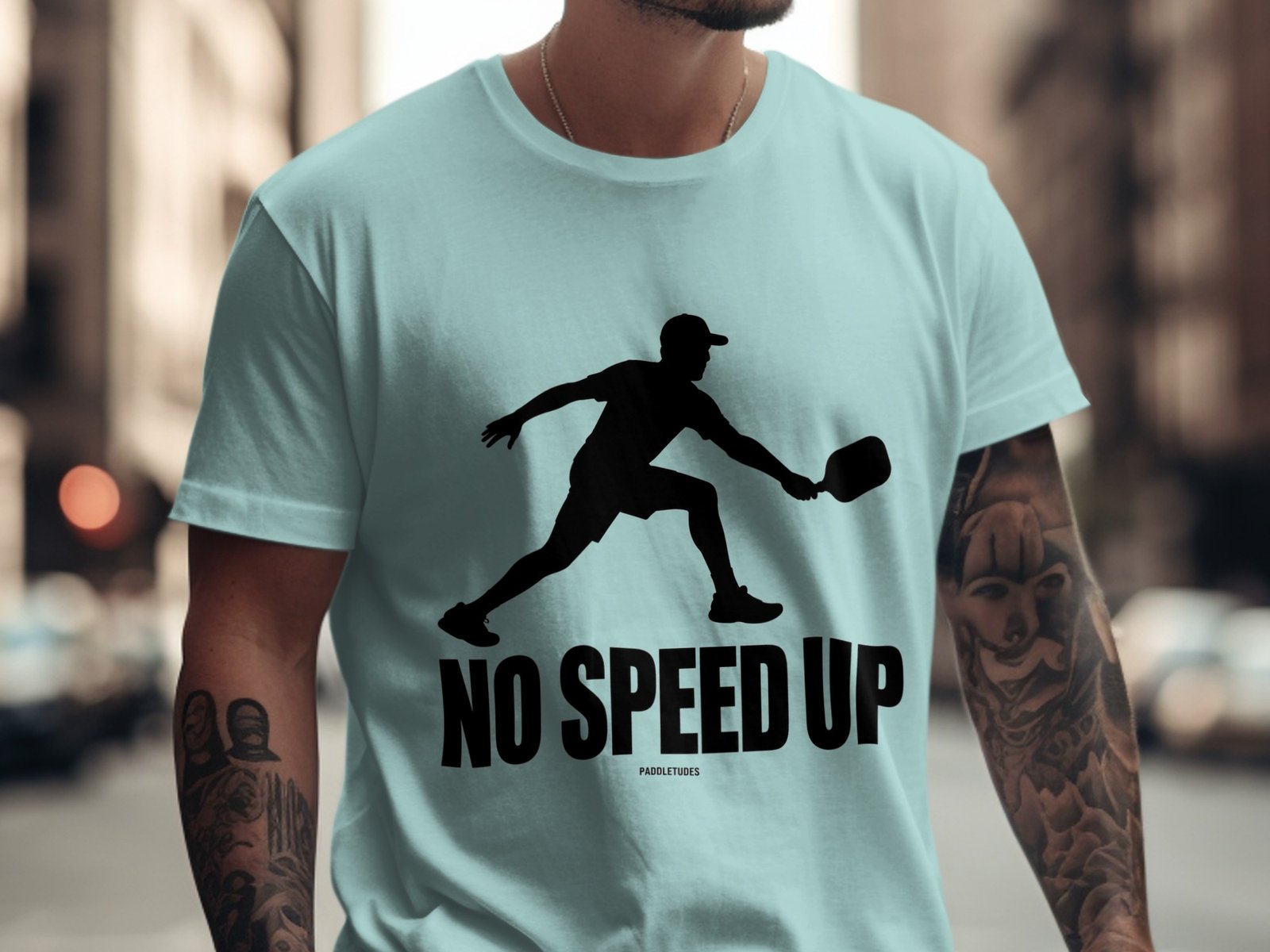
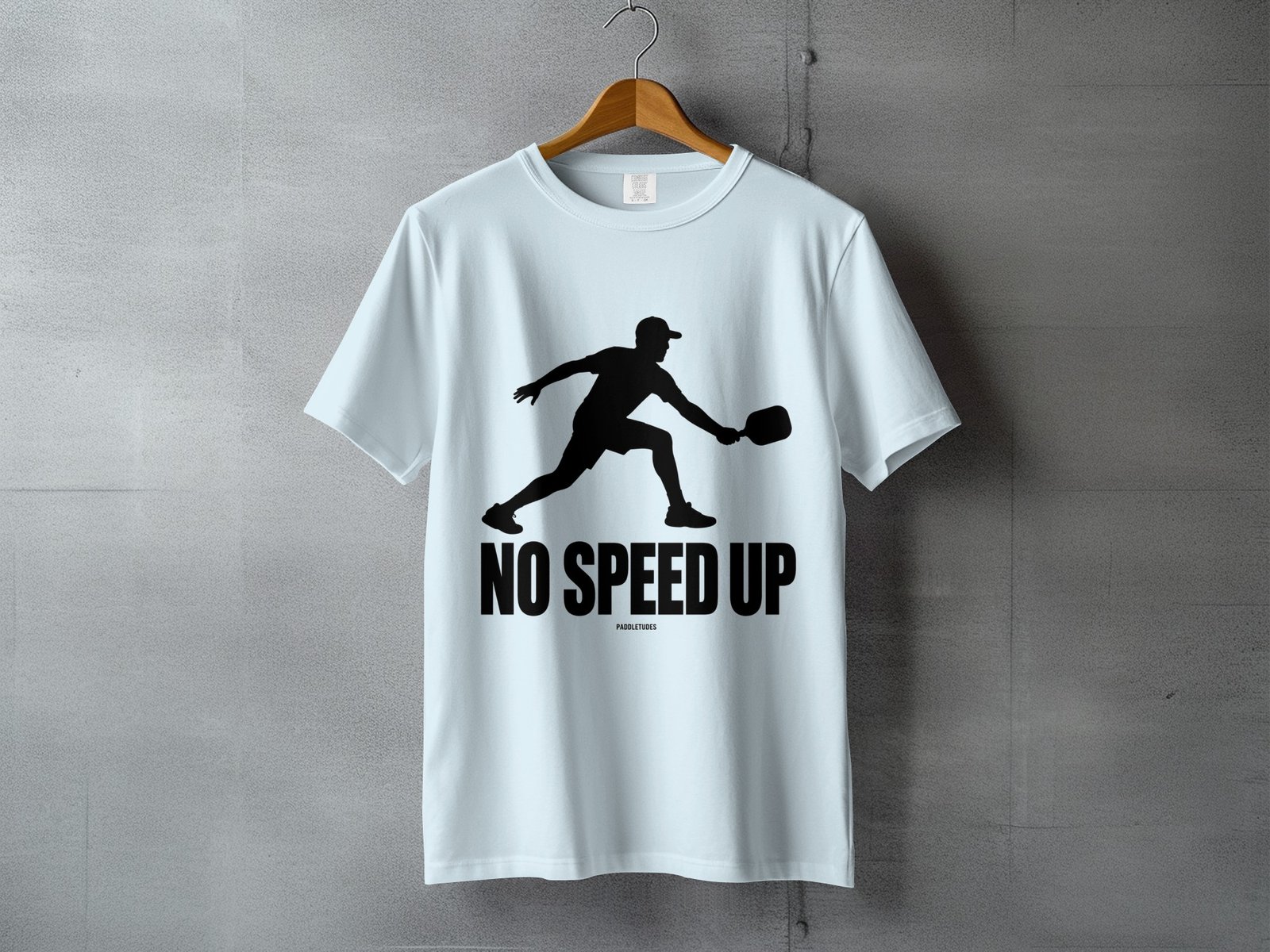
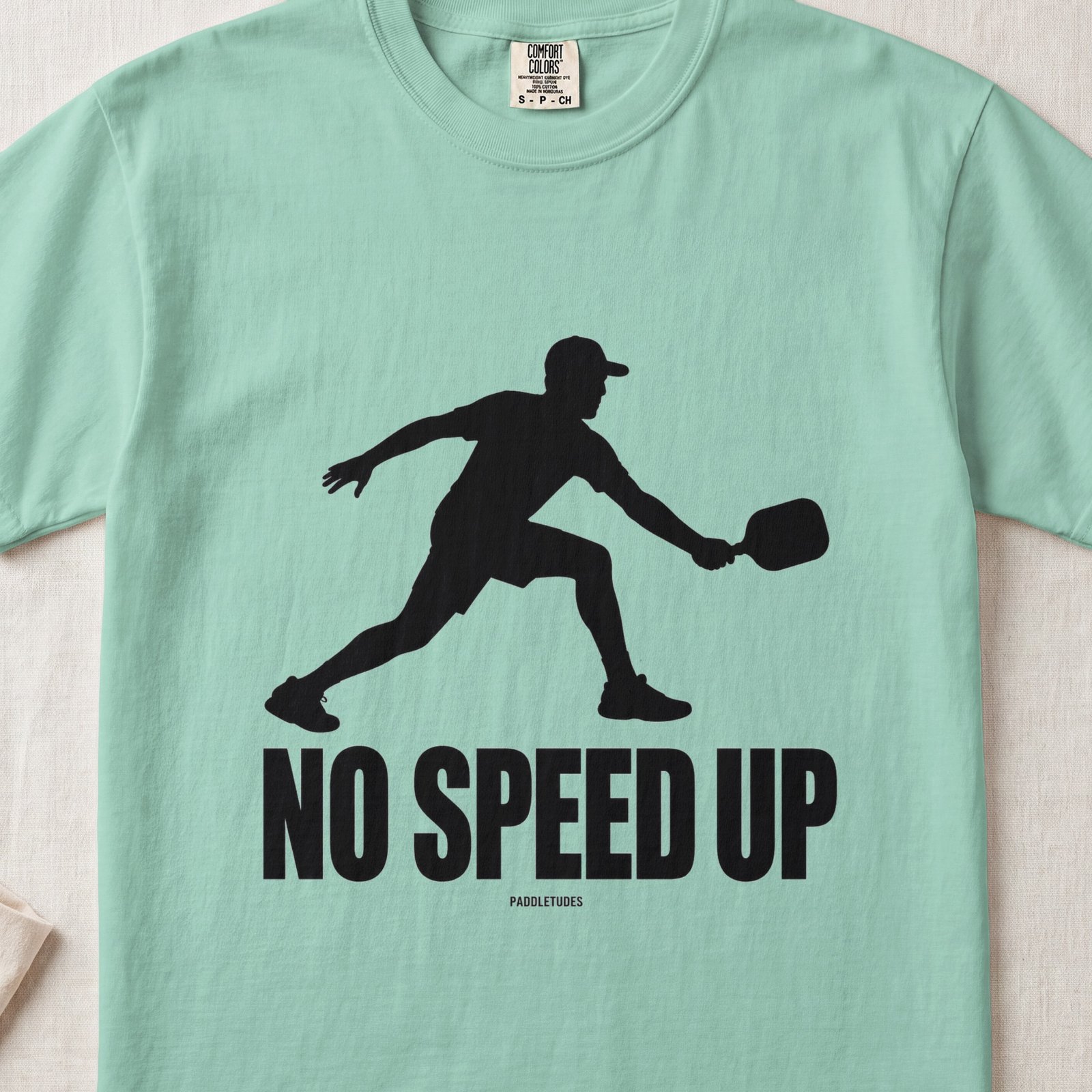
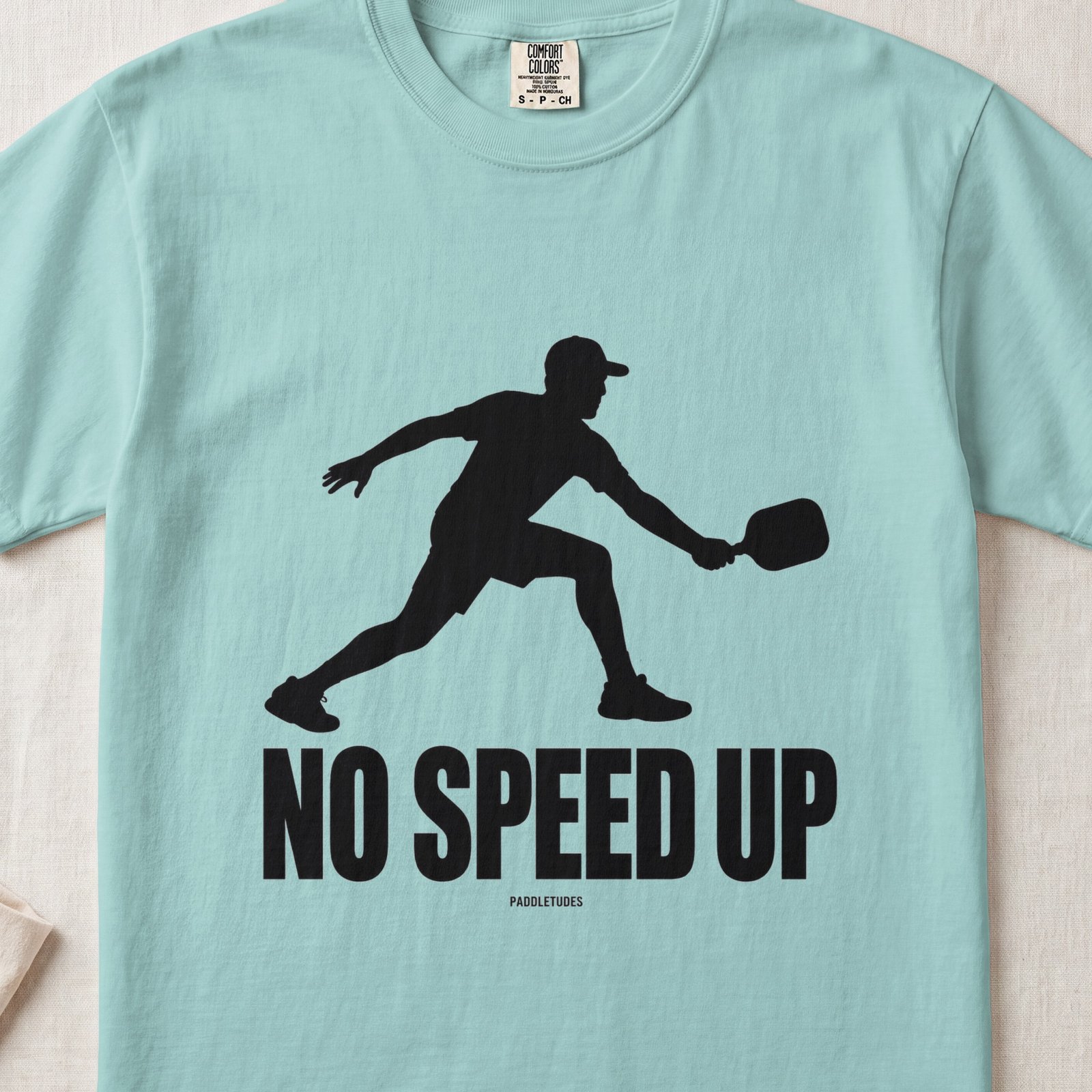
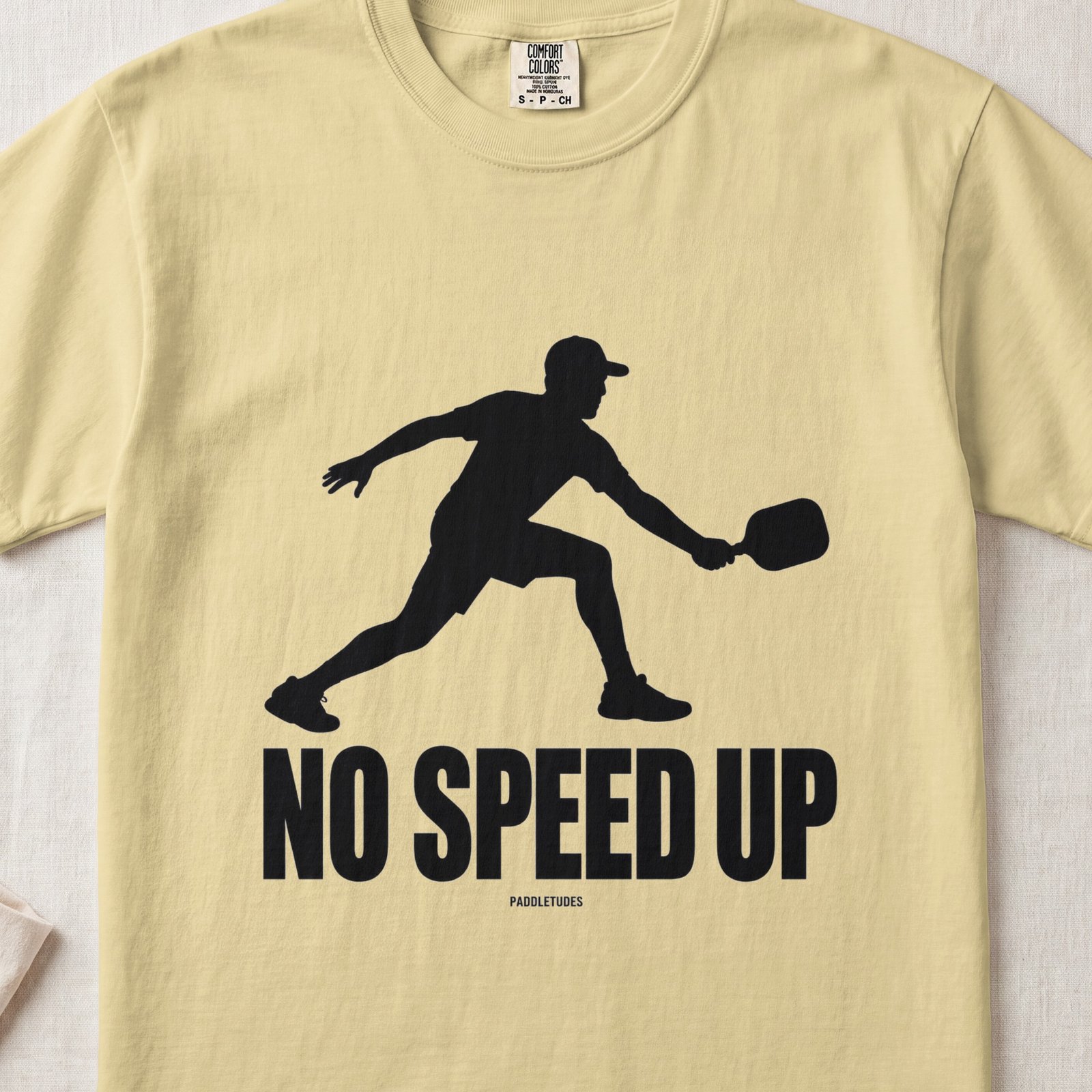
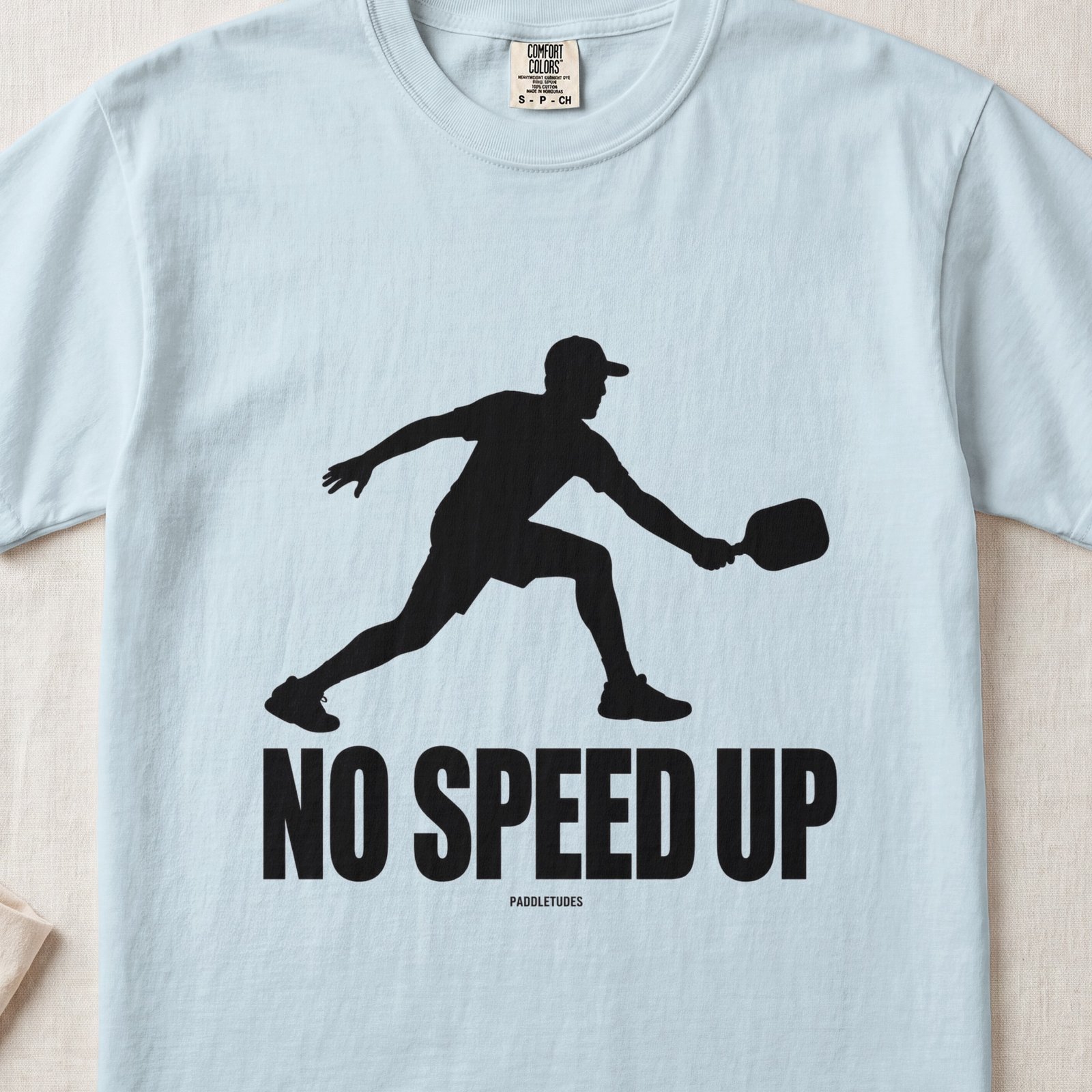
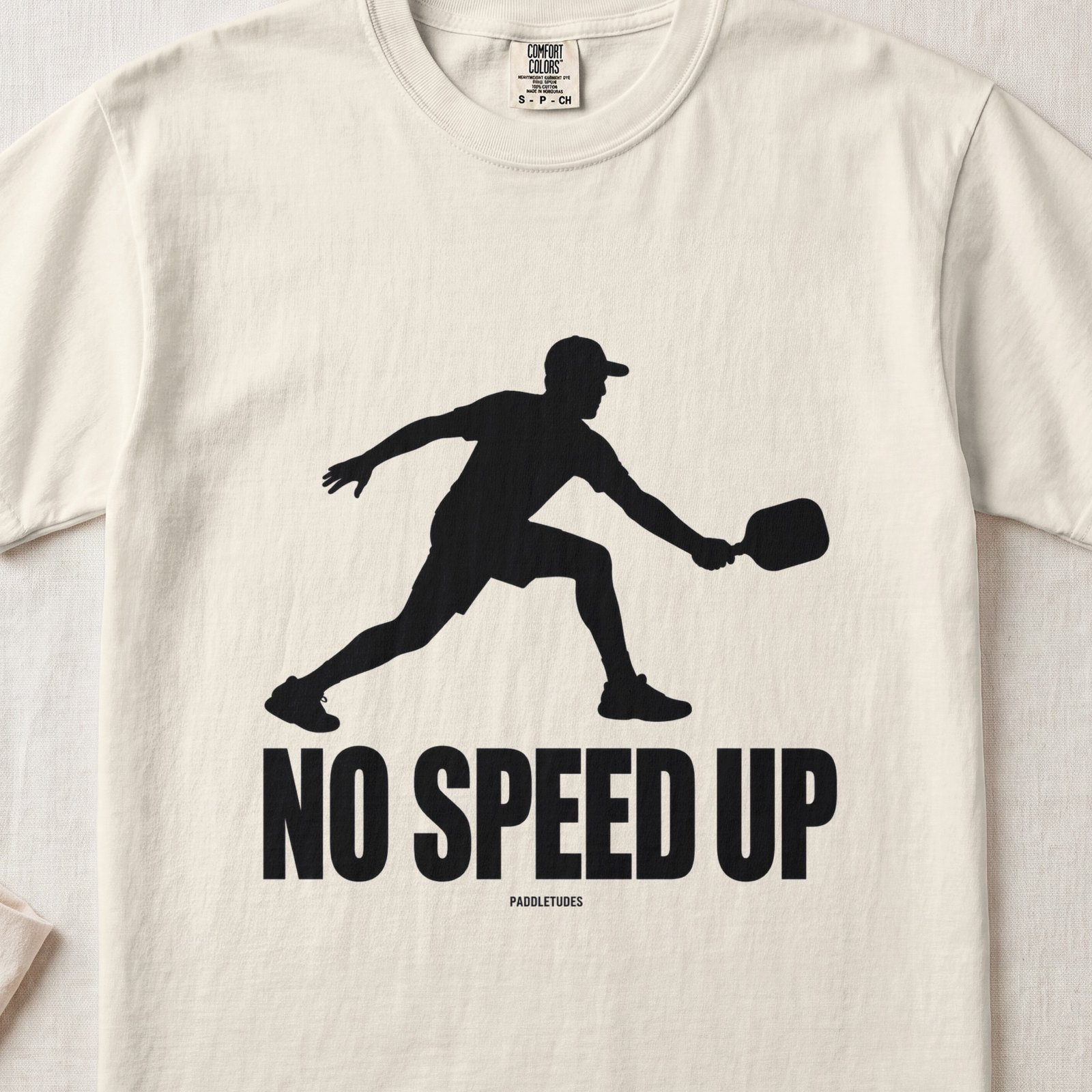
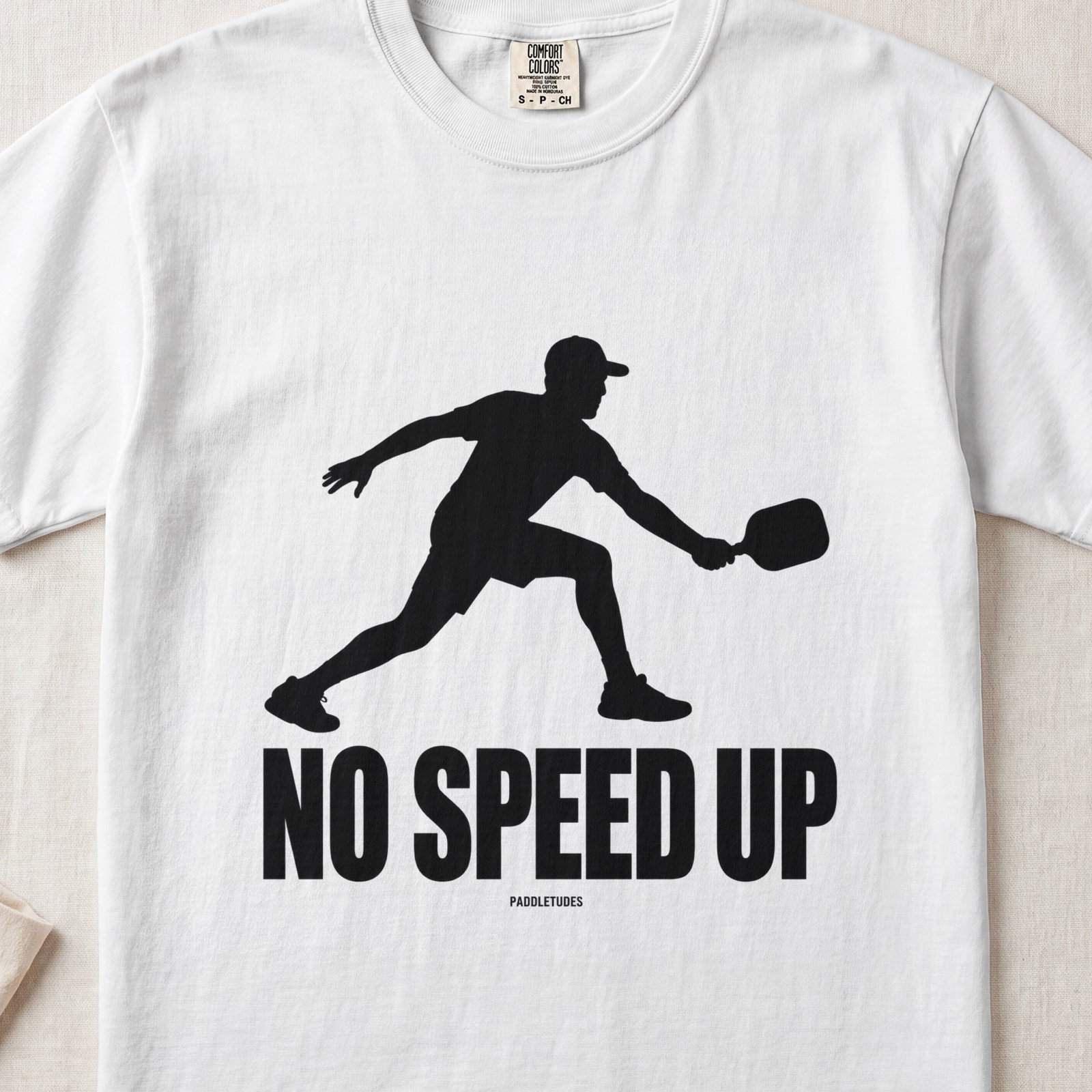
No Speed Up
$29.99
- Comfort Colors 1717 heavyweight cotton
- Original design · printed to order
- U.S. print partners
They Wanted a Firefight — This Player Refused
You’ve been playing this person for twenty minutes and you haven’t figured out how to beat them. They haven’t hit a single winner. They haven’t sped up a single ball. They haven’t done anything that looks like aggression, strategy, or effort — and they’re up 9-4.
That’s the No Speed Up player. This shirt is their uniform.
You bang, they block. You drive, they reset. You speed up to their backhand, their forehand, their body — it doesn’t matter. The ball comes back soft, low, and exactly where you didn’t want it. Your power produced nothing. Your aggression produced nothing. And the person across the net hasn’t broken a sweat or raised their voice, because they decided before the first serve that this rally runs on their terms, not yours.
Off the court, this is the person in the meeting who never raises their voice. The one who wins the argument by being the last one still talking after everyone else got frustrated and gave up. The coworker who responds to the angry email with three calm sentences that somehow make the angry person apologize. The No Speed Up player doesn’t match energy. They absorb it. They let you burn yourself out swinging hard at balls that come back soft, and they wait — genuinely, patiently, without anxiety — for the error they know is coming because it always comes.
The paddle choice for this style of play is specific and non-negotiable. A player who absorbs pace and redirects it needs a paddle with a thicker core — 16 millimeters — and a wider face for a larger sweet spot on blocks and resets. Selkirk’s widebody shape is designed for exactly this game. CRBN’s original series paddles use a softer core that deadens incoming pace on contact, which is the mechanical foundation of the reset shot. A power paddle in a No Speed Up player’s hands would work against them — it would return the opponent’s pace instead of absorbing it, and the entire strategy depends on removal of pace, not addition.
At Pictona in Holly Hill and at Bobby Riggs in Encinitas, the No Speed Up player is always on the competitive courts. Not because they’re flashy — because they win. They enter the social tournament at Chicken N Pickle, refuse to bang with anyone, and take the bracket home with an approach that looks passive from the bench and devastating from the other side of the net.
The skill level progression on speed-up discipline is one of the clearest markers in pickleball. At 3.0, players speed up because the dink rally feels uncomfortable and they want it to end. At 3.5, they speed up with intent but pick the wrong ball — a ball below the net, a ball into a set player, a ball with no angle. At 4.0 and above, the speed-up becomes selective, triggered only by a ball above the net with a clear target and a clear path.
The No Speed Up player has an answer at every level. Against the 3.0 panic speed-up, they block it dead. Against the 3.5 forced speed-up, they reset. Against the 4.0 calculated speed-up, they get the paddle out front and redirect. The quality of the incoming shot doesn’t matter if the person on the other end refuses to escalate. That’s the philosophy. You choose the fight. I choose the terms.
The drill that builds this discipline is the reset wall drill — stand six feet from a wall and hit drives at it, then reset the rebound softly to yourself. The ball comes back hard. Your job is to make it come back soft. Do fifty. Then a hundred. The muscle memory of absorbing pace and producing control is what makes the No Speed Up player unshakeable in a match. The USA Pickleball rulebook doesn’t restrict how softly you can hit the ball, and the No Speed Up player exploits that freedom to the absolute limit.
If you play with someone whose patience made you a better player — the partner who showed you through example that soft wins more than hard, who never panicked when you panicked, who turned your worst resets into playable balls — this is the gift that says they changed your game. It also works for the opponent you can’t figure out. The one you’ve played six times and beaten zero times, and every loss felt exactly the same: quiet, controlled, and slightly humiliating in a way that makes you want to play them again immediately.
For the natural soft hands that make this philosophy possible, Can’t Teach Touch is the skill behind the strategy. For the shot that slows everything down and sets up the patient game, Dangerously Good At Thirds is where the approach begins — the drop that takes all the pace off the rally before the dink battle starts. And for the opposite philosophy — the player who lives for the firefight this shirt refuses to join — Hands Battle Won is the other side of the sport’s best argument. Find courts near you on Pickleheads and test this approach against real players who want to bang. The results speak louder than the paddle ever does.
Printed on a Comfort Colors 1717 garment-dyed heavyweight tee with water-based DTG ink — sizing and care details here.
What Is a Speed Up in Pickleball
A speed-up is a sudden acceleration of pace during a dink rally — a fast, hard shot aimed at the opponent’s body or feet, designed to break the soft pattern and force a quick finish. The player flicks their wrist or punches forward instead of continuing the controlled dink exchange.
A good speed-up targets the opponent’s hip or shoulder — the hardest zones to defend because the paddle has to travel the farthest to reach them. A bad speed-up targets a set player who was expecting it, giving them a fast ball they can redirect into the open court with interest. The difference between a winning speed-up and a losing one is almost never power. It’s ball selection.
The ball you accelerate needs to be above the net, giving you a downward angle into the opponent’s body. Speeding up a ball that’s below the net means hitting upward into two players at the kitchen line, and that geometry favors the defense every time. USA Pickleball rules don’t restrict how hard you can hit. The restriction is strategic — hitting hard from the wrong position or at the wrong ball produces errors more reliably than winners.
Advanced players treat the speed-up as a weapon with a trigger condition: ball above the net, opponent leaning the wrong way, paddle not in ready position. When those conditions align, they accelerate. When they don’t, they dink. The No Speed Up player has decided that no condition is reliable enough to justify the risk — and the scoreboard tends to validate that decision more often than most power players want to admit.
When Should You Speed Up in Pickleball
Speed up when three conditions are present simultaneously: the ball is above the net, the opponent’s paddle is down or out of position, and you have a specific target — their hip, their shoulder, or the gap between two players. If any one of those conditions is missing, the speed-up becomes a gamble instead of a tactic.
Timing within the rally matters as much as ball selection. Most successful speed-ups come after three to five soft dinks that establish a rhythm. The opponent settles into the pattern. Their weight shifts back. Their paddle relaxes. Their anticipation commits to soft. That’s the window — the speed-up works because the opponent’s body was prepared for another dink and received a drive. Speeding up on the first or second exchange rarely works at higher levels because the opponent is still in ready position.
The honest answer — the one the player wearing this shirt has fully internalized — is that most recreational players speed up too often and from the wrong balls. They speed up because the dink rally feels uncomfortable, not because the tactical window opened. They speed up because they’re impatient, not because they’re strategic.
The No Speed Up philosophy isn’t anti-aggression. It’s anti-waste. It says the speed-up exists as a tool, and a tool used at the wrong time does more damage to the user than to the target. The patient player doesn’t refuse to attack. They refuse to attack poorly. And the distance between those two things — between swinging because you can and swinging because you should — is the distance between losing with effort and winning with composure.
-
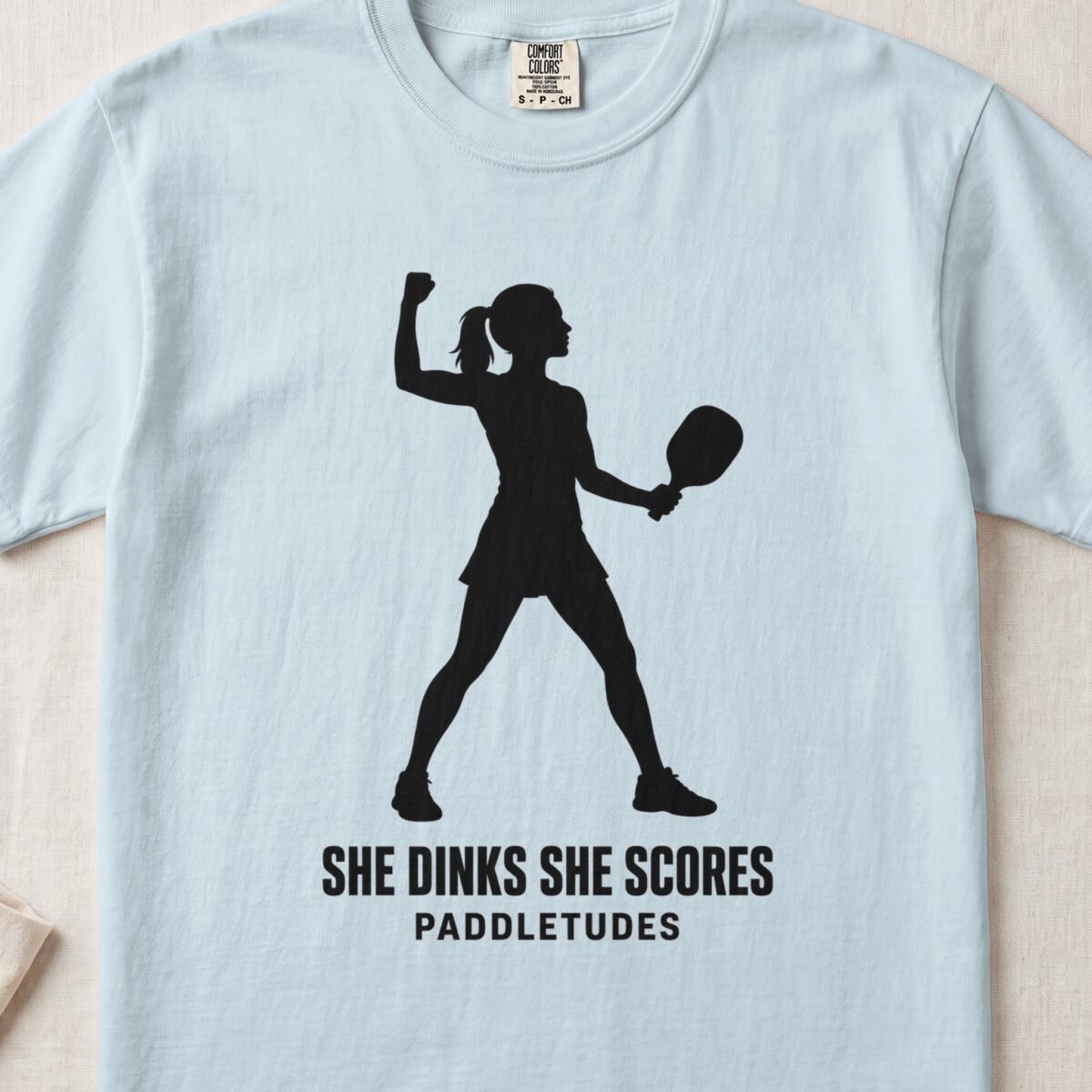
She Dinks She Scores
$29.99 Select options This product has multiple variants. The options may be chosen on the product page -
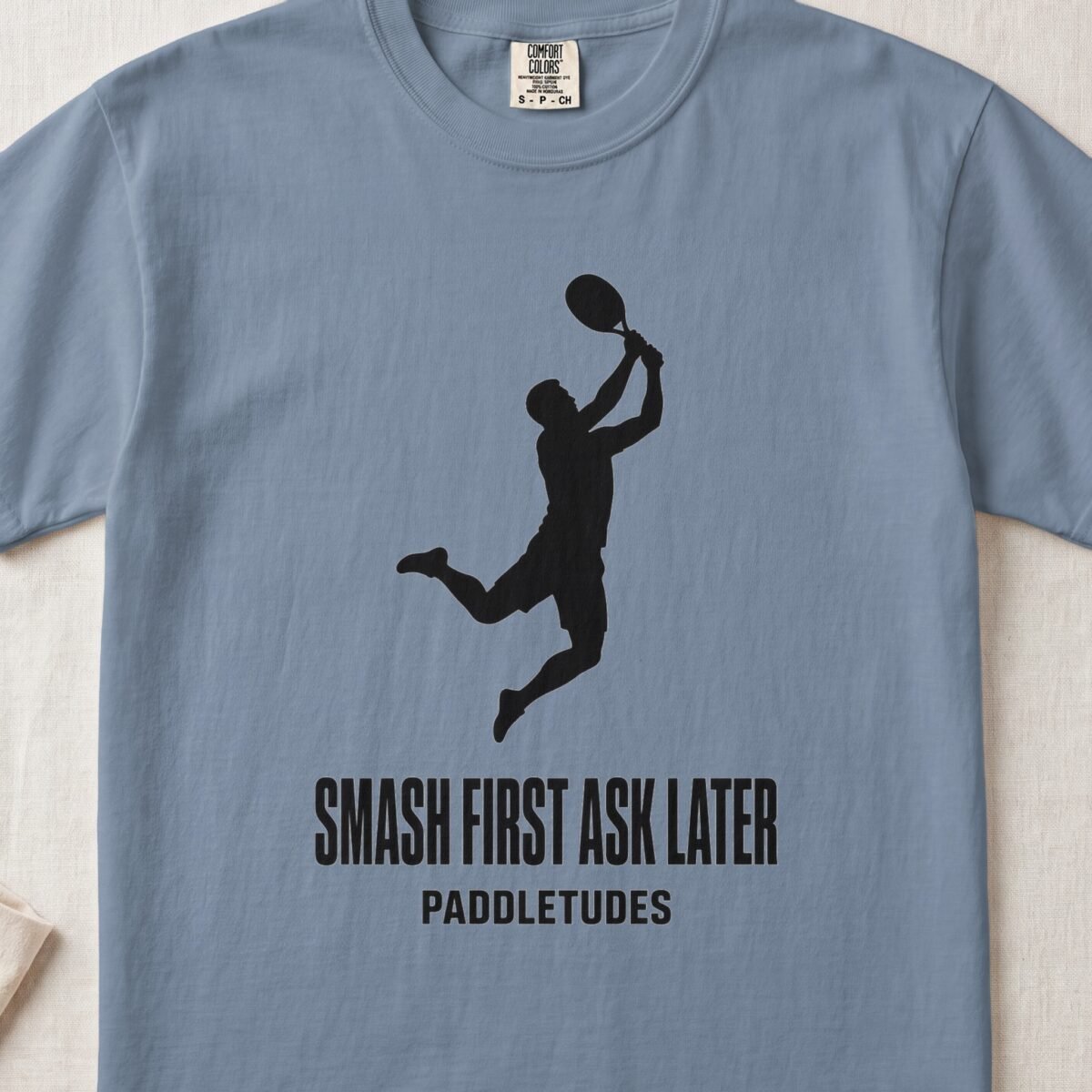
Smash First Ask Later
$29.99 Select options This product has multiple variants. The options may be chosen on the product page -
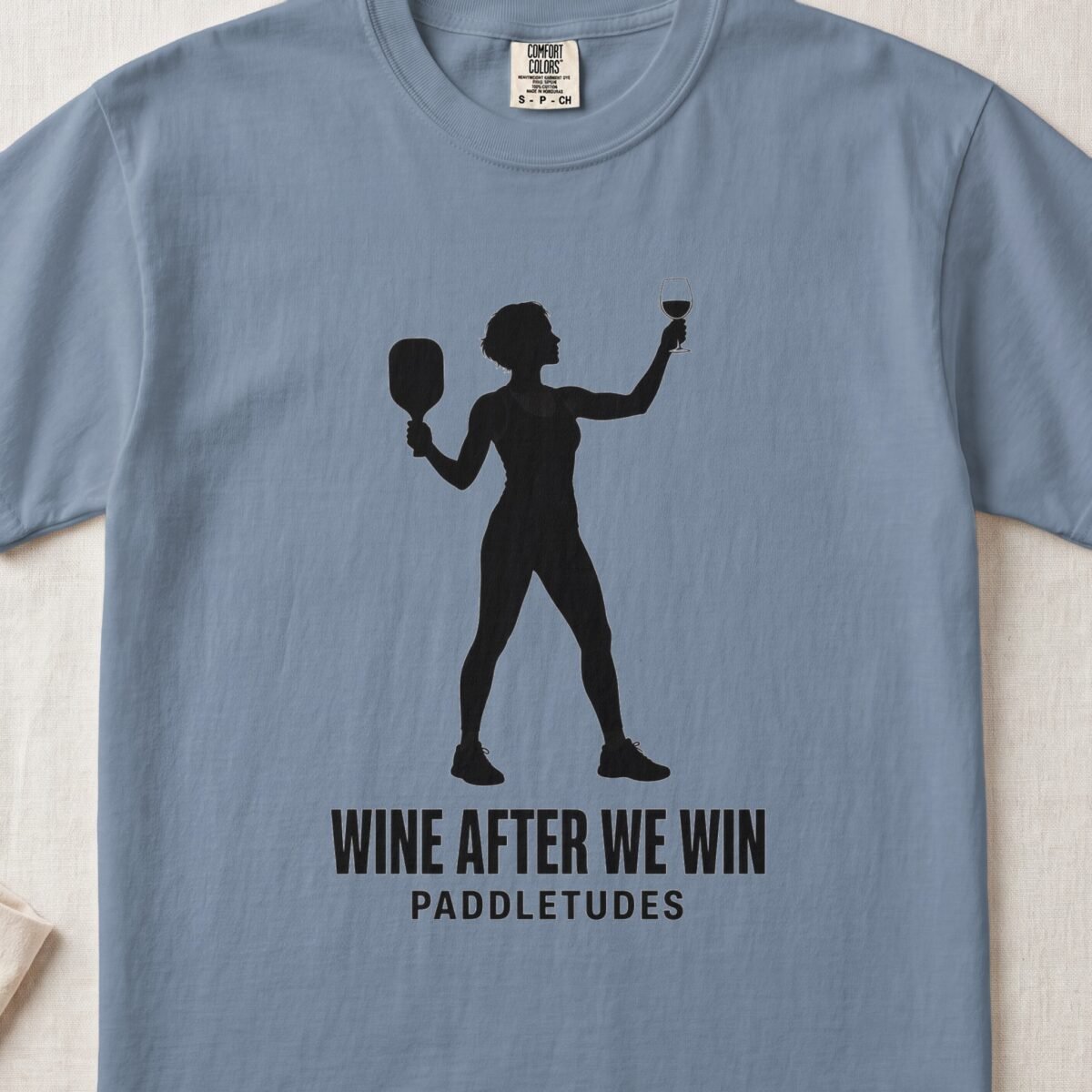
Wine After We Win
$29.99 Select options This product has multiple variants. The options may be chosen on the product page