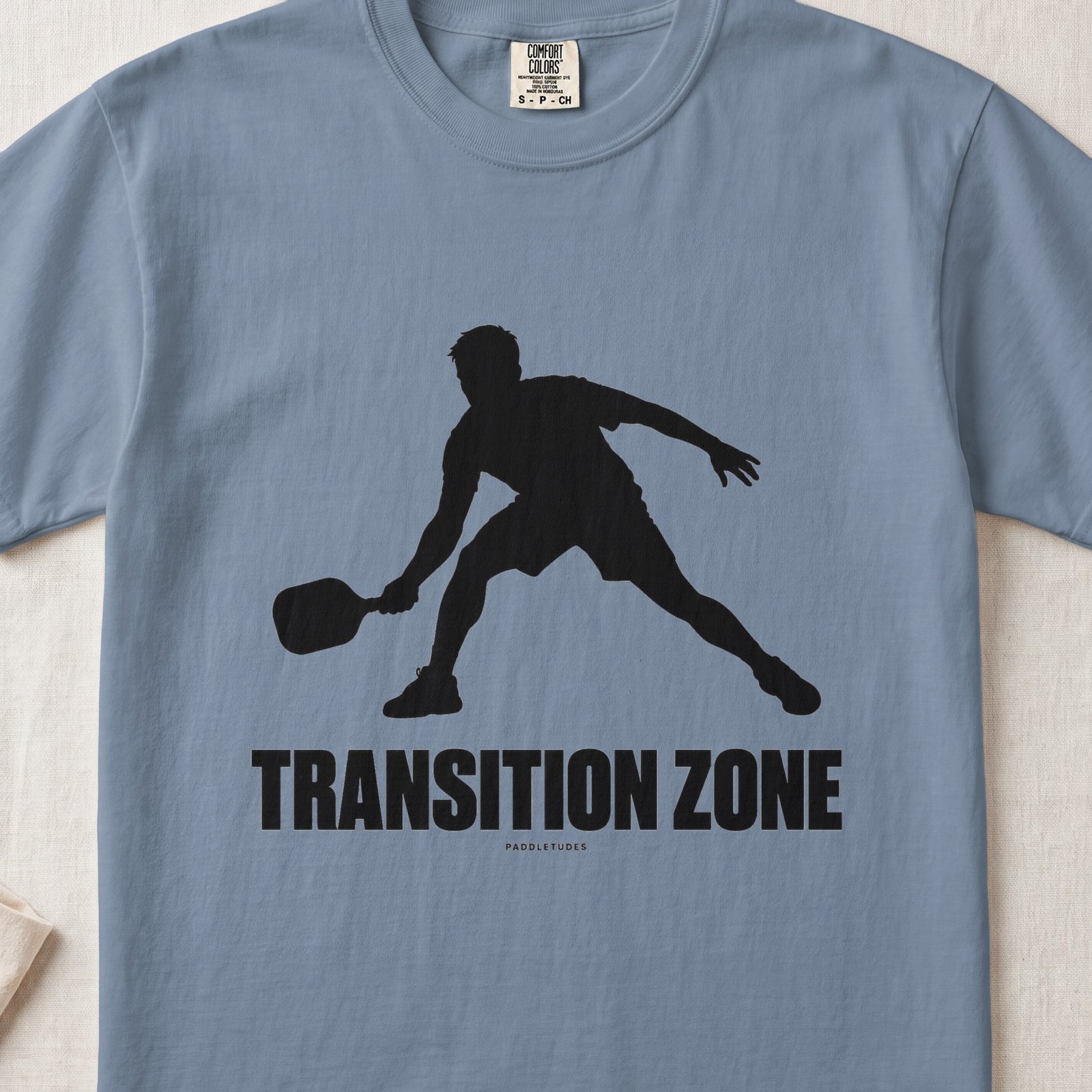
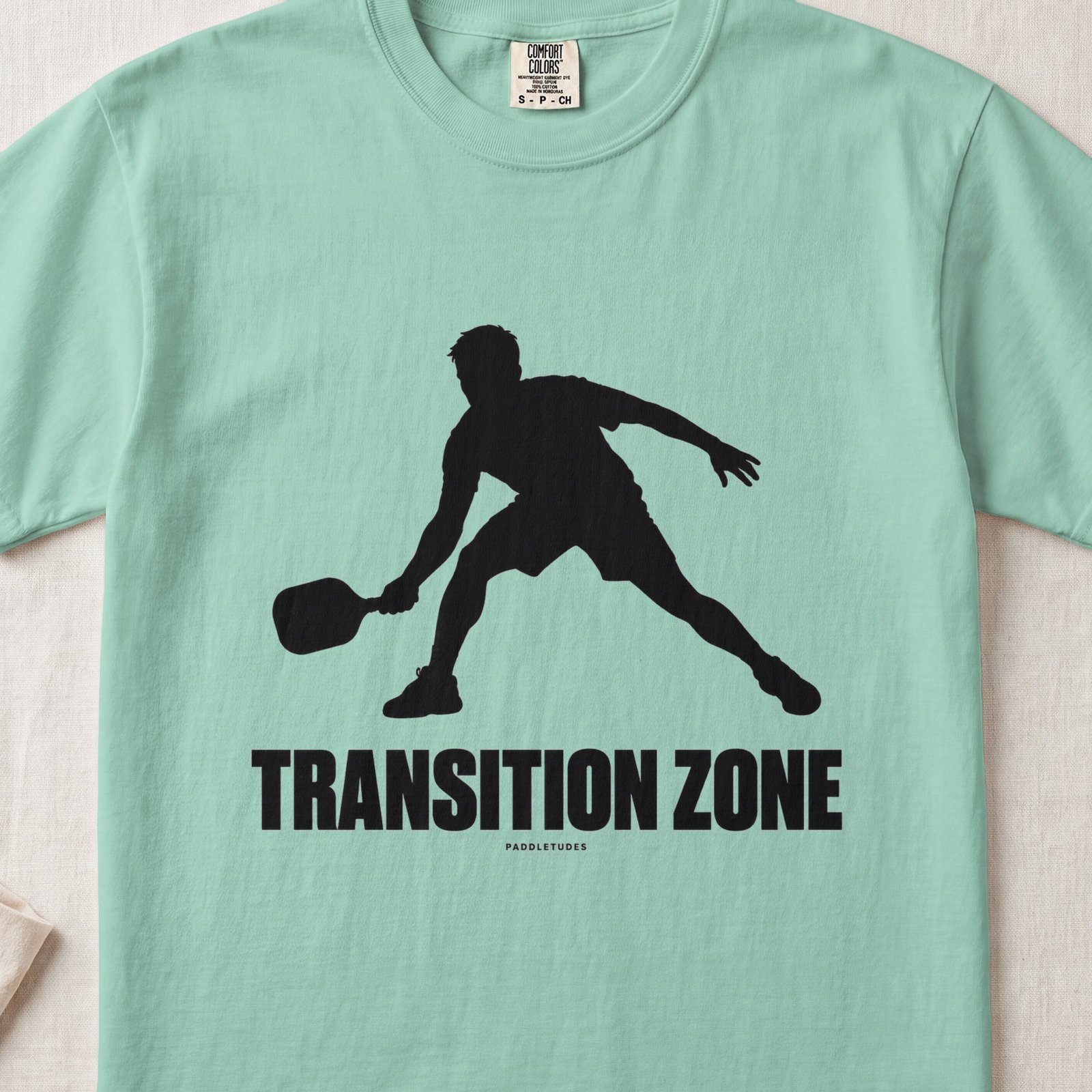
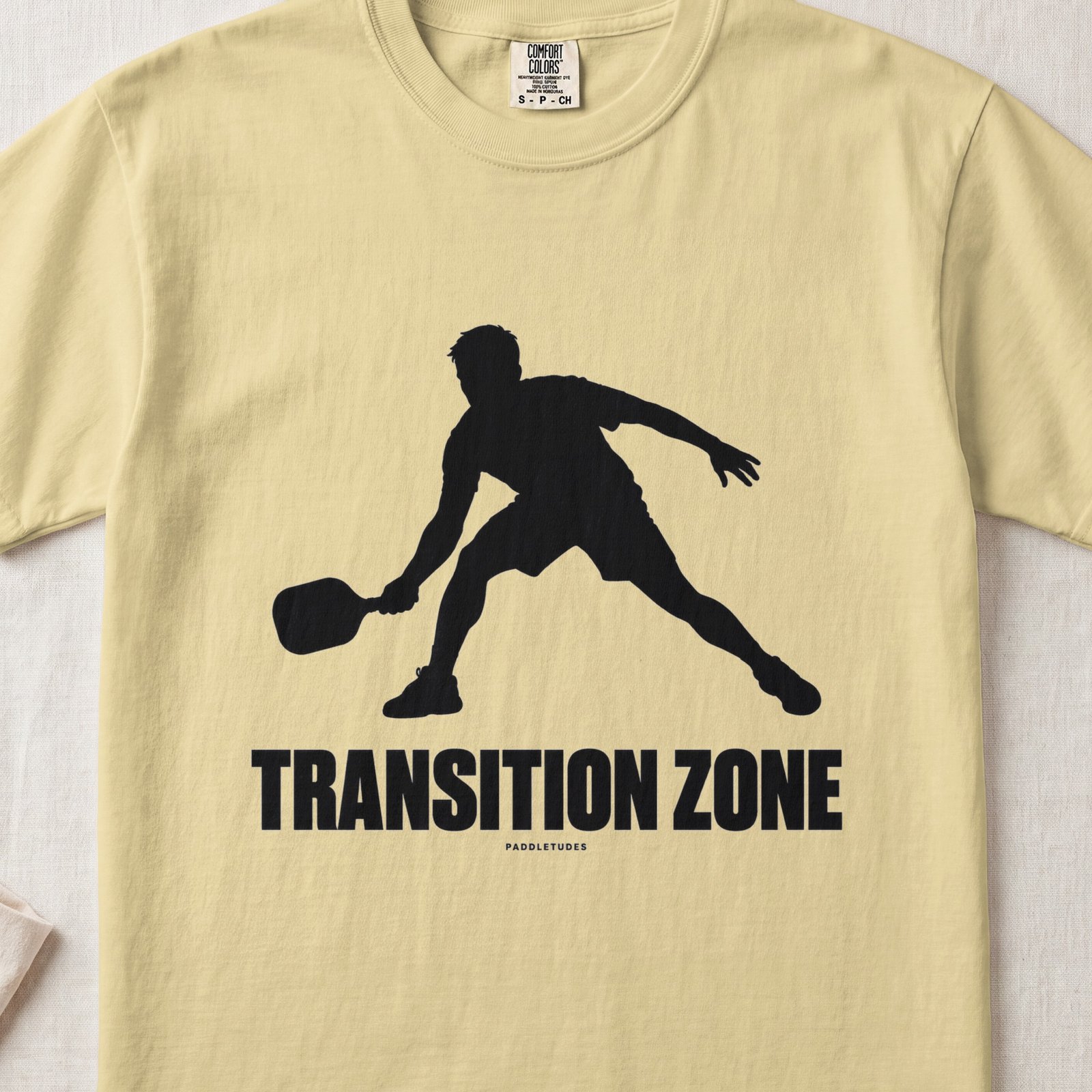
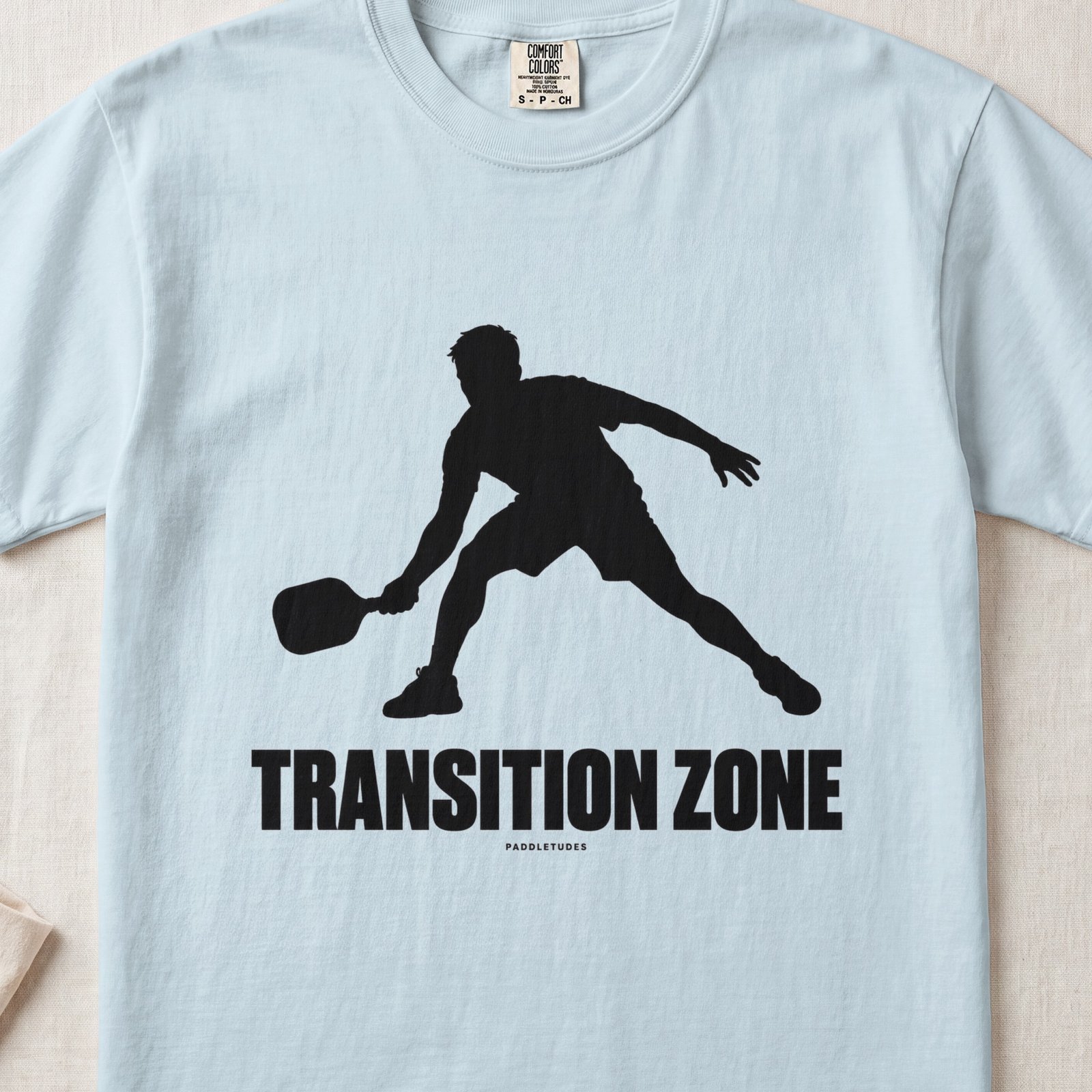
Sports Comfort Colors 1717
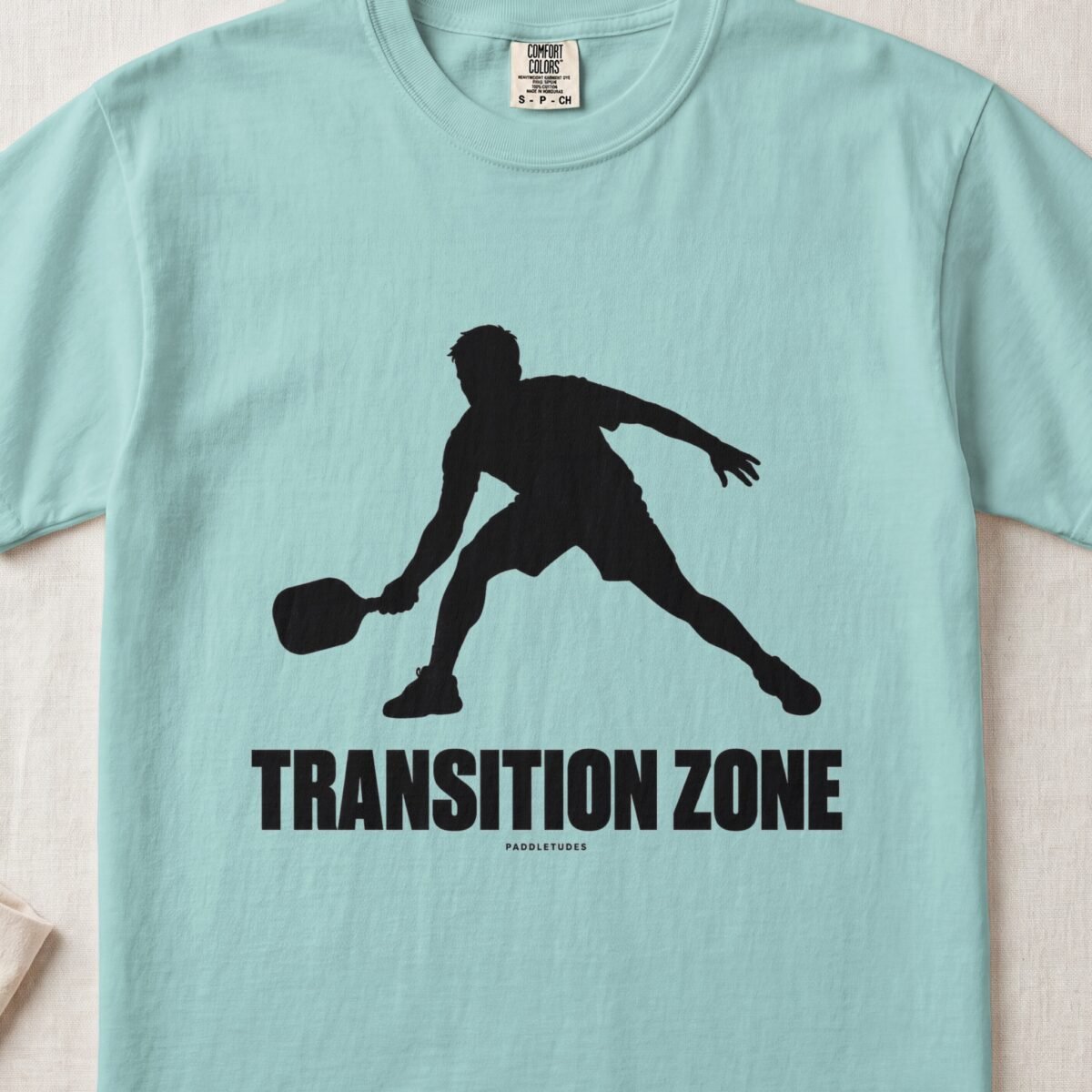
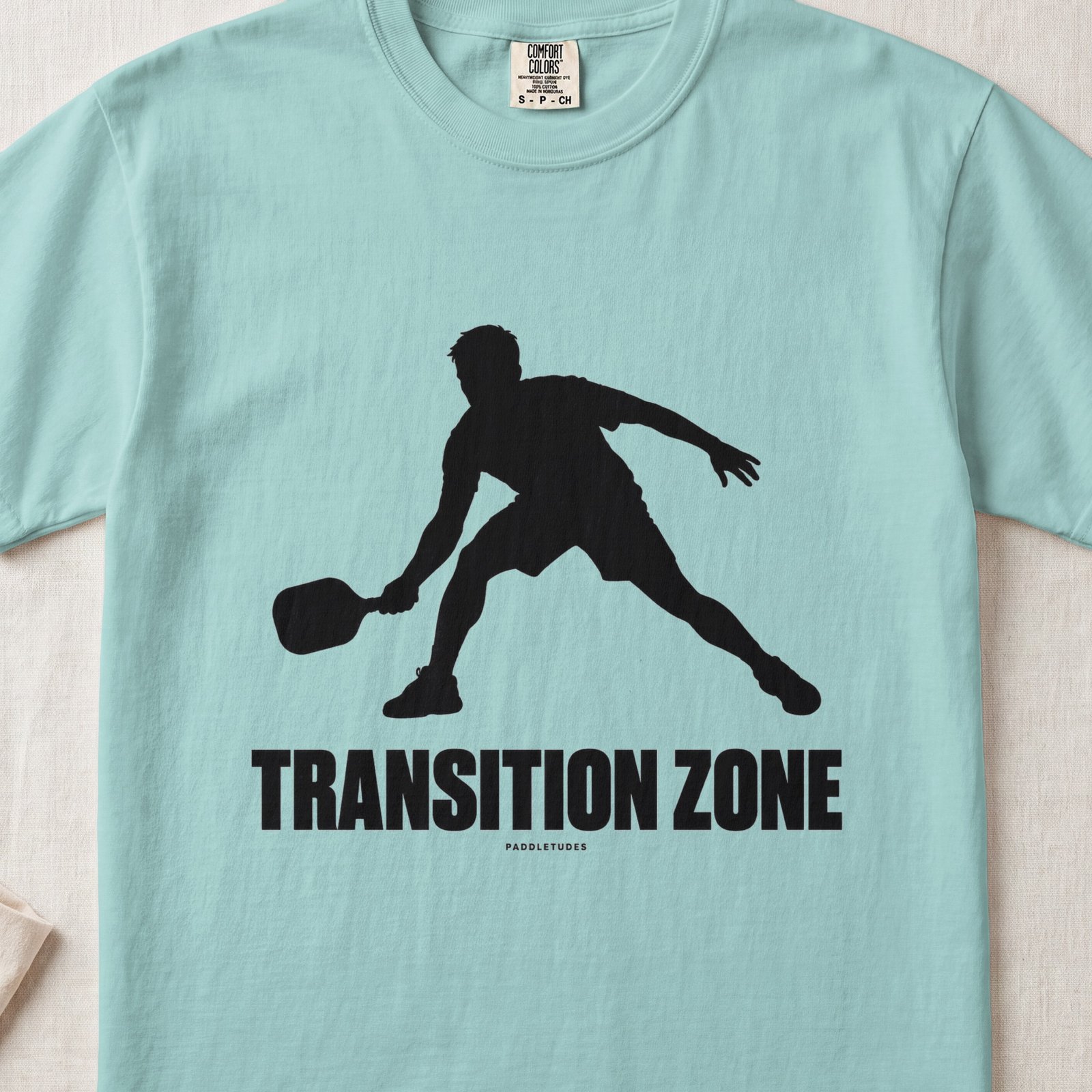
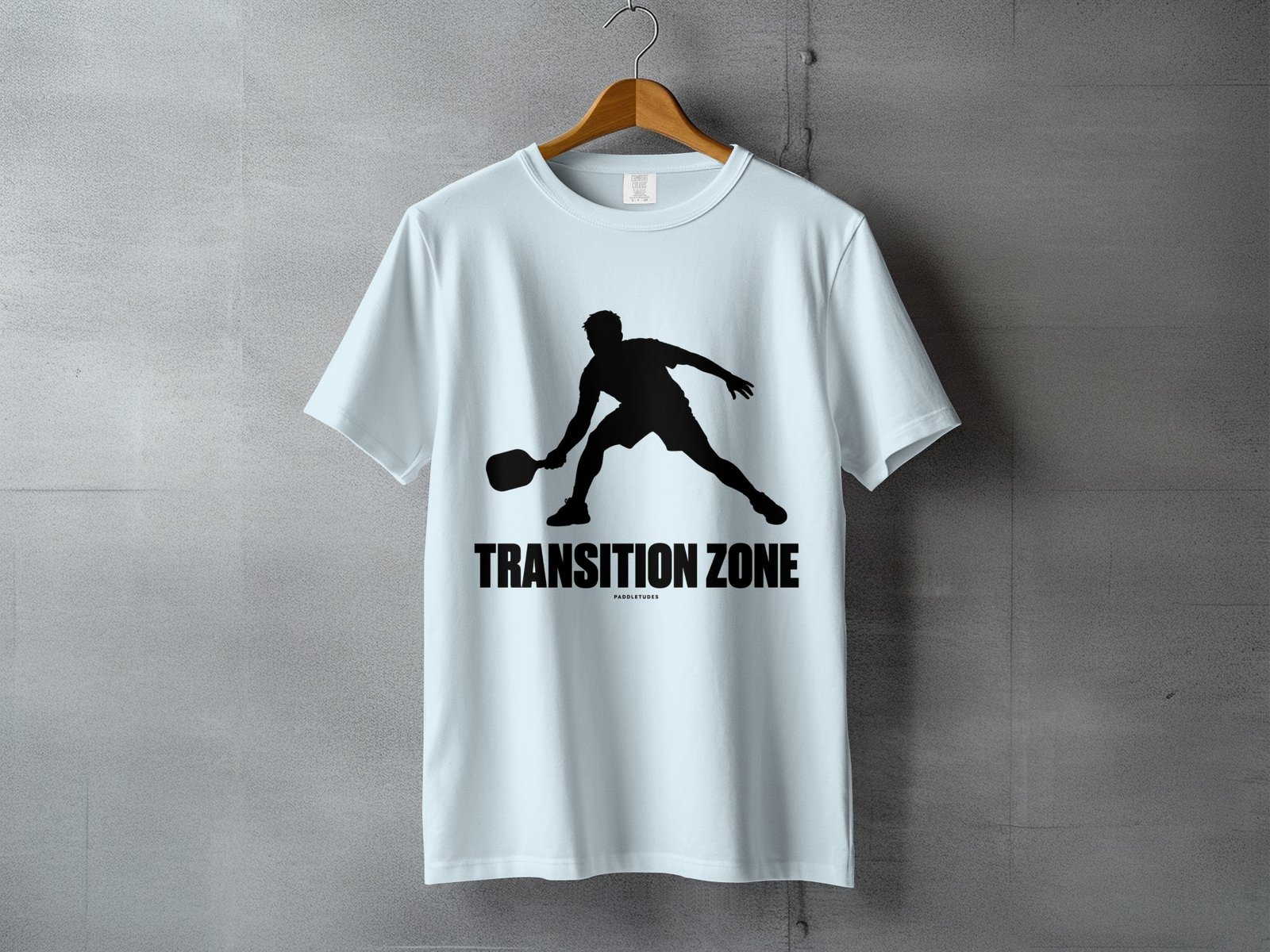
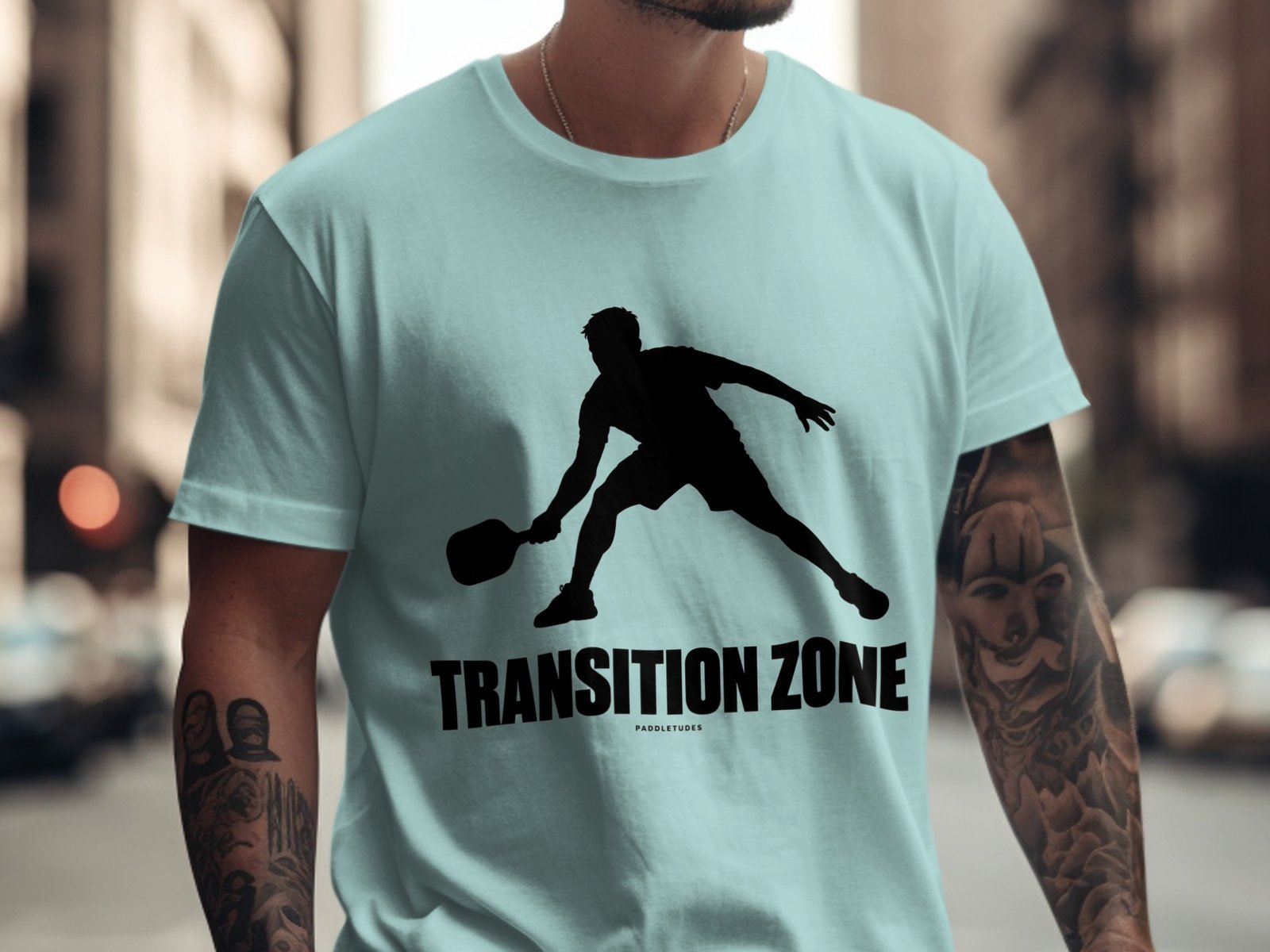
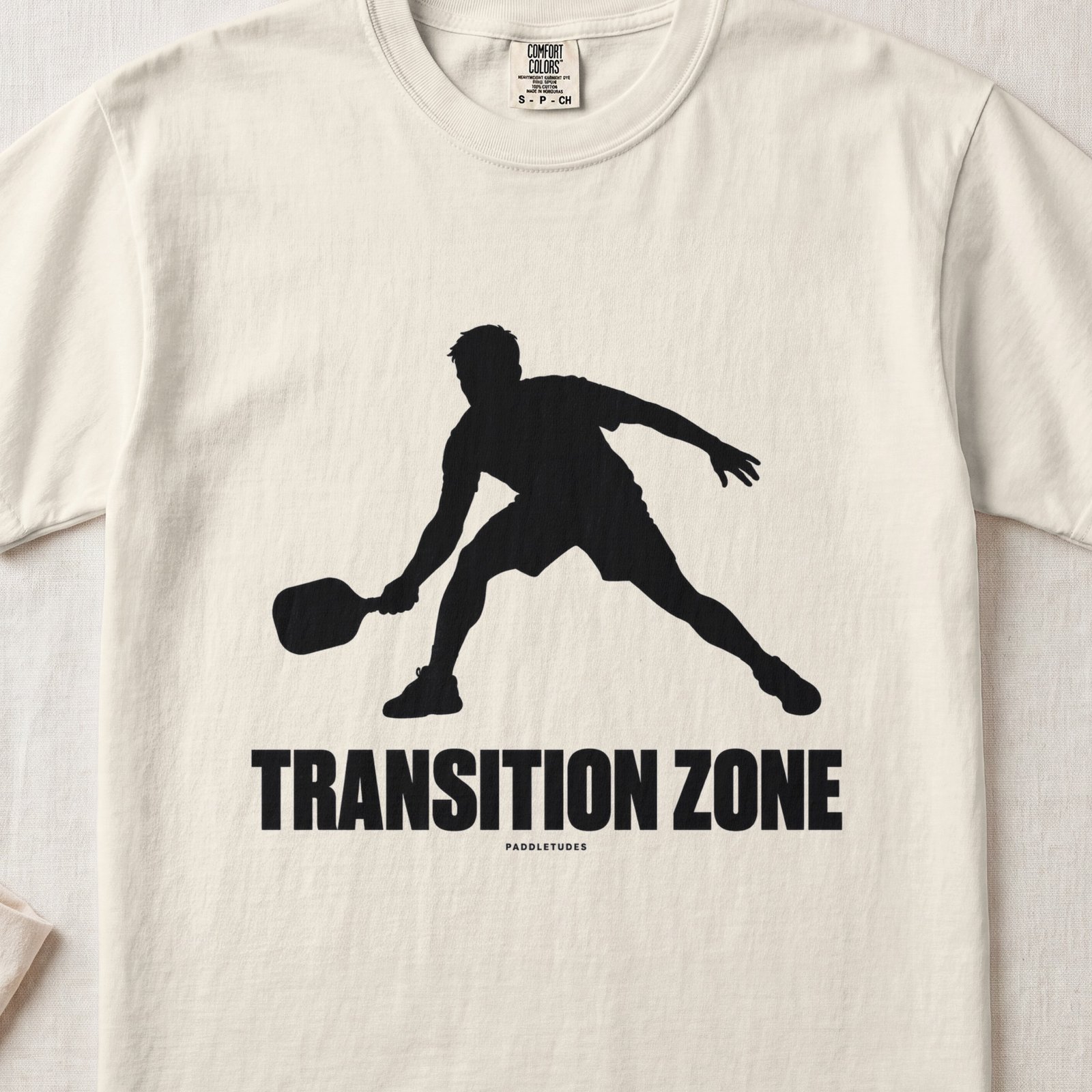
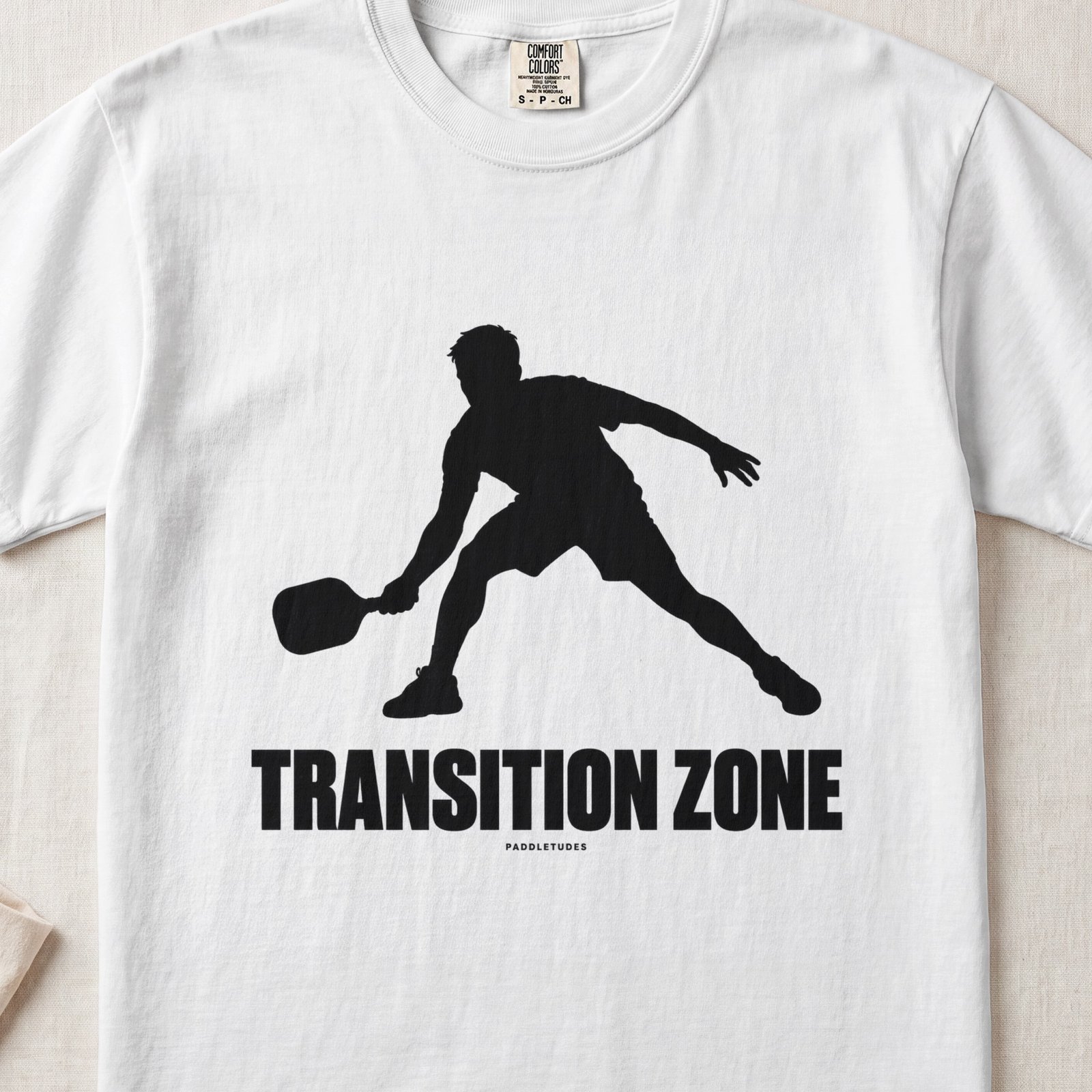
Transition Zone
$29.99
- Comfort Colors 1717 heavyweight cotton
- Original design · printed to order
- U.S. print partners
Mastering the Pickleball Transition Zone Earns This Shirt
Third shot drop. Split step. Read. Forward. Reset if the ball comes back hot. Split step again. One more step. Arrive. The player who owns the transition zone doesn’t sprint through it and doesn’t get stuck in it. She moves through it the way someone crosses a busy street — with purpose, with awareness, and with the understanding that stopping in the middle is how you get hit.
She’s the 42-year-old yoga instructor whose balance transferred directly to pickleball in ways that surprised everyone, including her. She doesn’t have the fastest hands on the court. She doesn’t crush drives or win firefights at the kitchen line through reaction speed. But she gets to the kitchen line more consistently than anyone in her group because her movement through the transition zone is controlled, deliberate, and almost impossible to disrupt. She drops the ball into the kitchen from the baseline with the patience of someone who knows the rally isn’t over until she’s where she wants to be. And where she wants to be is seven feet from the net, weight balanced, paddle up, ready.
At 3.0, the transition zone doesn’t exist as a concept — players either stand at the baseline or sprint to the net and hope. At 3.5, the third shot drop enters the vocabulary and players start understanding that the trip forward is a process, not a footrace. At 4.0, the process has rhythm: drop, split step, evaluate the return, advance or hold based on the quality of the shot. The player isn’t guessing anymore. She’s reading the opponent’s paddle angle to decide whether to take another step forward or absorb a hard shot from midcourt and reset it softly. By 4.5, the transition zone has become invisible — the player moves through it so fluidly that it looks like she walked from the baseline to the kitchen line in one continuous motion, when in fact she made three separate decisions along the way and executed all of them correctly.
The drill that builds this is a progressive advance. Start at the baseline. Partner at the kitchen line feeds a drive. Hit a drop shot. If the drop lands in the kitchen, take two steps forward and split step. Partner feeds another drive. Drop again. If it lands, take two more steps. Repeat until you’ve arrived at the kitchen line. If any drop pops up and gets put away, start over at the baseline. The goal is to arrive at the net through five consecutive quality drops without getting sent back. Ten successful arrivals in a practice session is a strong 4.0 benchmark. The drill teaches the rhythm that the concept describes — move through it in stages, not in a sprint, and the arrival becomes automatic.
Balance is the physical skill this player runs on, and it’s why the yoga instructor archetype isn’t accidental. The reset from the transition zone requires a stable base — feet wider than the shoulders, knees slightly bent, weight centered over the midline. Any lean forward causes the ball to pop up. Any lean back causes it to go long. The player in the transition zone who can stay centered while moving forward, absorb pace without tipping, and redirect the ball while maintaining balance is the player who arrives at the kitchen line ready to play instead of arriving off-balance and scrambling. USA Pickleball‘s skill progression framework identifies this controlled forward movement as the single biggest separator between recreational and competitive play.
If someone you know just leveled up — moved from the group that gets stuck in midcourt to the group that moves through it like it’s not there — this is the graduation gift. Not cap and gown graduation. The graduation that happens at a 3.5 when the third shot drop starts landing and the kitchen line stops feeling like enemy territory. That skill jump deserves recognition, and this shirt is specific enough to mean something.
Midcourt Is Death is the warning label this shirt answers. That one is the problem. This one is the solution — the player who learned to move through the transition zone instead of dying in it. For the footwork fundamental that makes every transition possible, Split Step Or Die is the prerequisite skill — without the split step, nothing else in the transition zone works. And for the soft game waiting at the other end of the transition, Can’t Teach Touch is what happens after you arrive. Find the courts where the transition game decides matches at Pickleheads.
Printed on a Comfort Colors 1717 garment-dyed heavyweight tee with water-based DTG ink — sizing and care details here.
How Do You Move Through the Transition Zone in Pickleball
In stages, not in a sprint. The transition zone is roughly the middle third of the court between the baseline and the kitchen line, and the serving team needs to cross it after their third shot to reach the net. The movement follows a repeatable pattern: hit a drop shot into the kitchen, split step immediately after contact, read the opponent’s return, and advance forward only if the drop was good enough to prevent an attack.
If the return comes back hard — a drive or a sharp volley — the player holds position and resets the ball softly back into the kitchen rather than continuing forward into a worse position. That reset buys time for another split step and another forward advance on the next shot. The sequence might take two shots to complete or five, depending on how many drops the opponent attacks. The key is that every step forward is earned by a quality shot, and no step forward happens without a split step first.
The most common mistake is rushing. A player hits a decent third shot drop and immediately sprints to the kitchen line, arriving off-balance just in time to receive a hard volley with no time to set up. Controlled advancement means moving only as far as the quality of the last shot allows. A perfect drop that dies in the kitchen buys five or six feet of ground. A mediocre drop that lands mid-kitchen and sits up buys two feet at most. Reading the drop quality and adjusting the advance accordingly is the discipline that separates the player who arrives at the kitchen line ready from the player who arrives there panicking.
The body mechanics matter as much as the footwork. Moving forward with the paddle already at kitchen-line height — chest level, face slightly open — means the player is prepared to block or reset from any position during the advance. Carrying the paddle low and bringing it up after arriving creates a gap in readiness that better opponents exploit with a well-timed drive aimed at the body. The player wearing this shirt moves through the transition zone with the paddle up, the weight centered, and the eyes on the opponent’s paddle face. Not rushing. Not stopping. Just arriving.
-
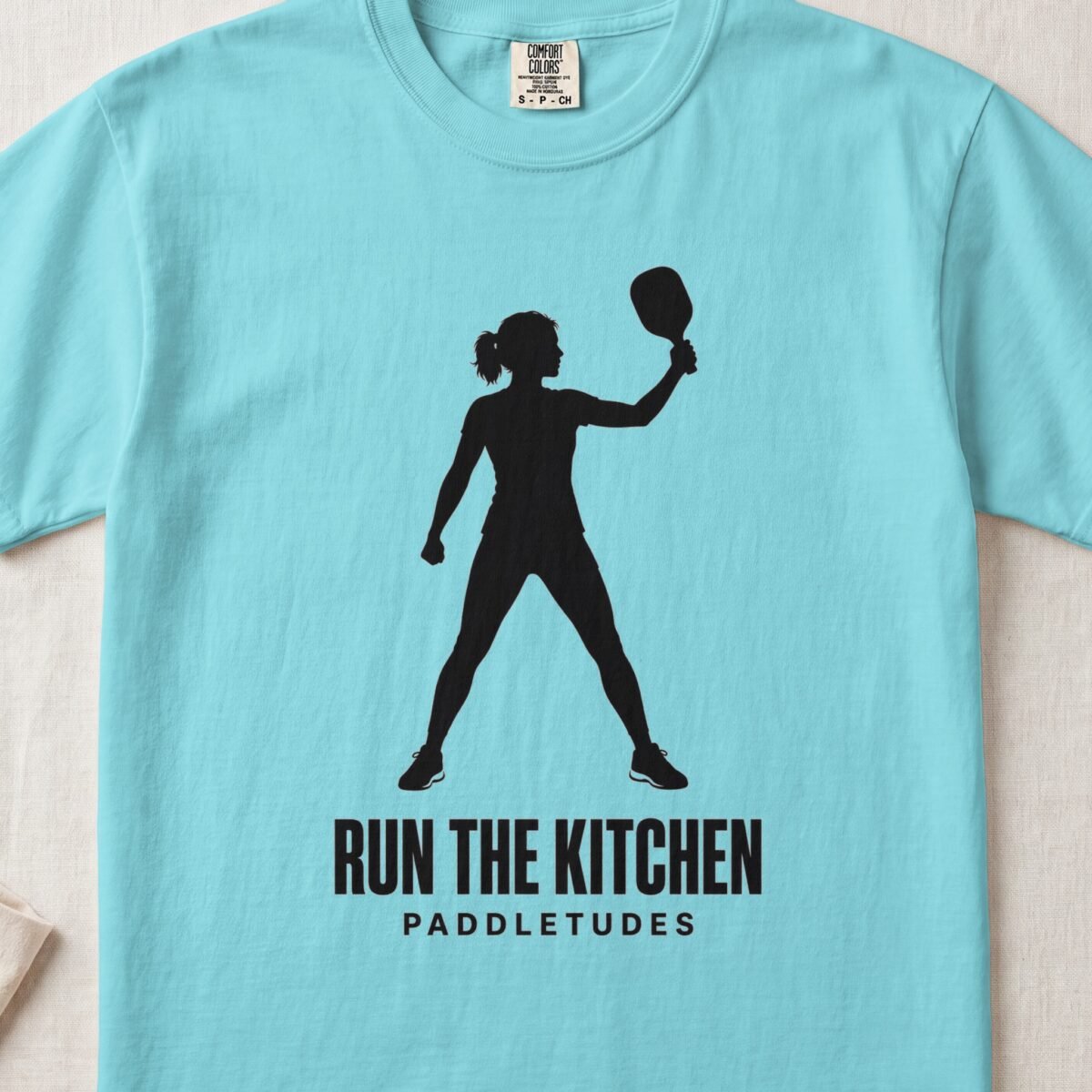
Run The Kitchen
$29.99 Select options This product has multiple variants. The options may be chosen on the product page -
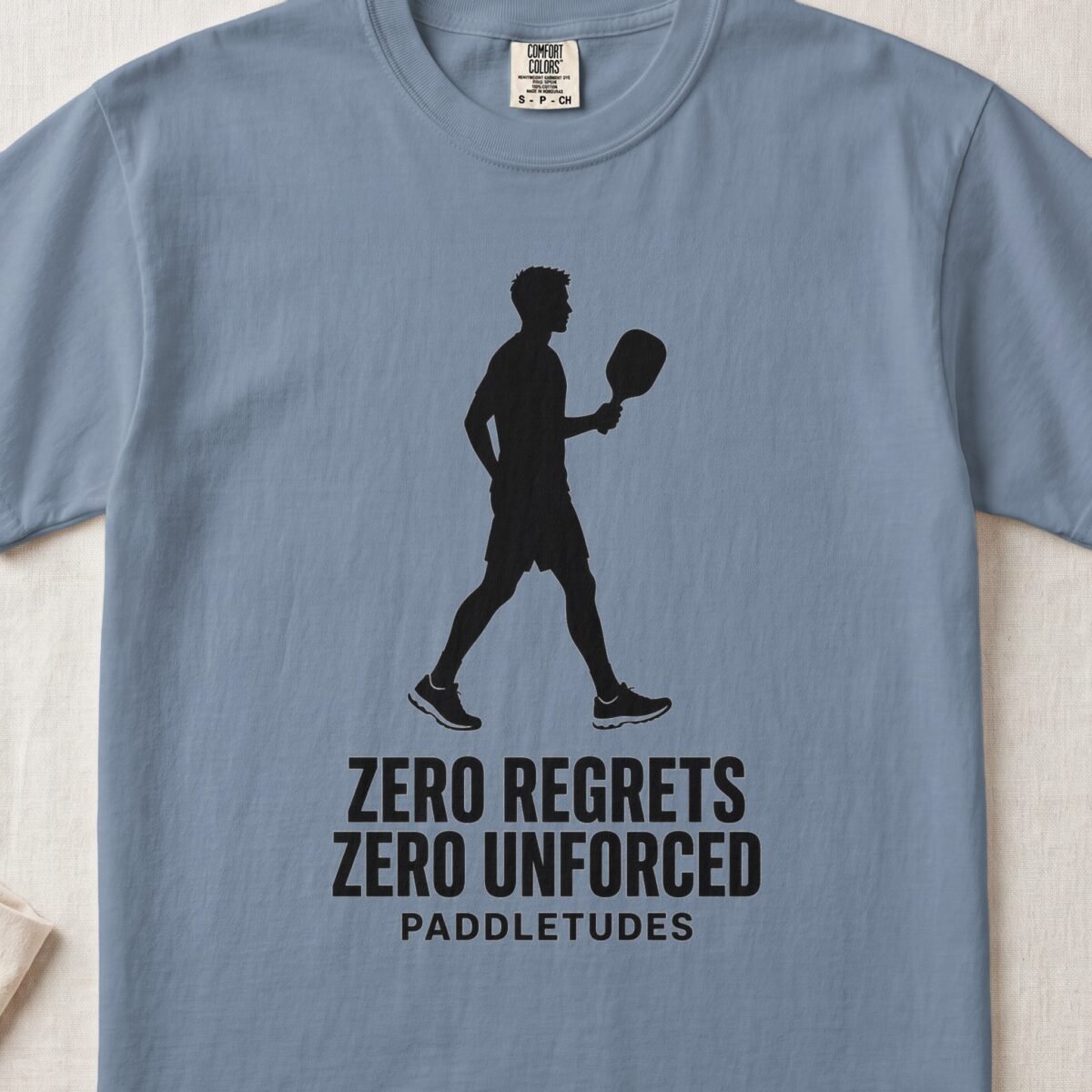
Zero Regrets Zero Unforced
$29.99 Select options This product has multiple variants. The options may be chosen on the product page -
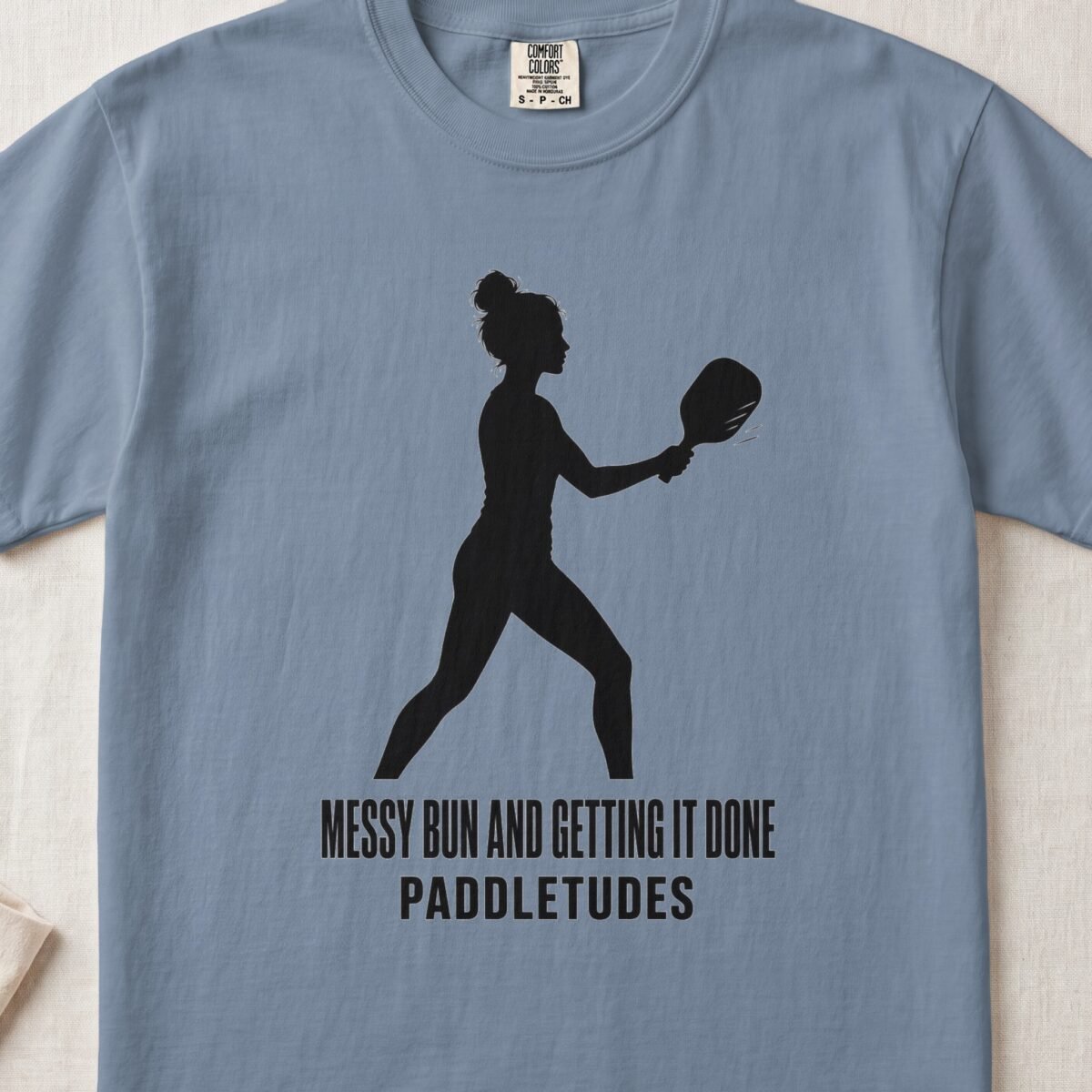
Messy Bun And Getting It Done
$29.99 Select options This product has multiple variants. The options may be chosen on the product page