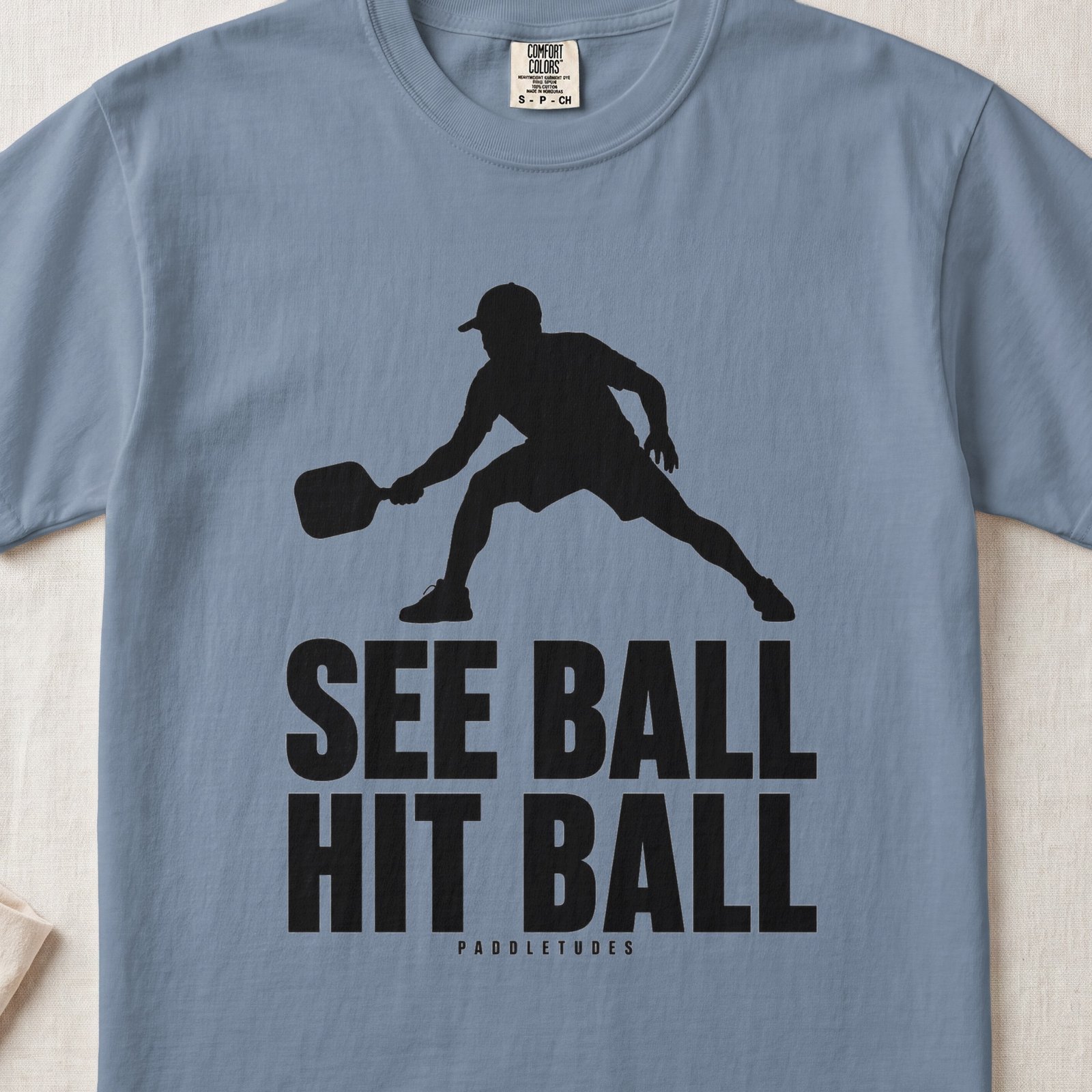
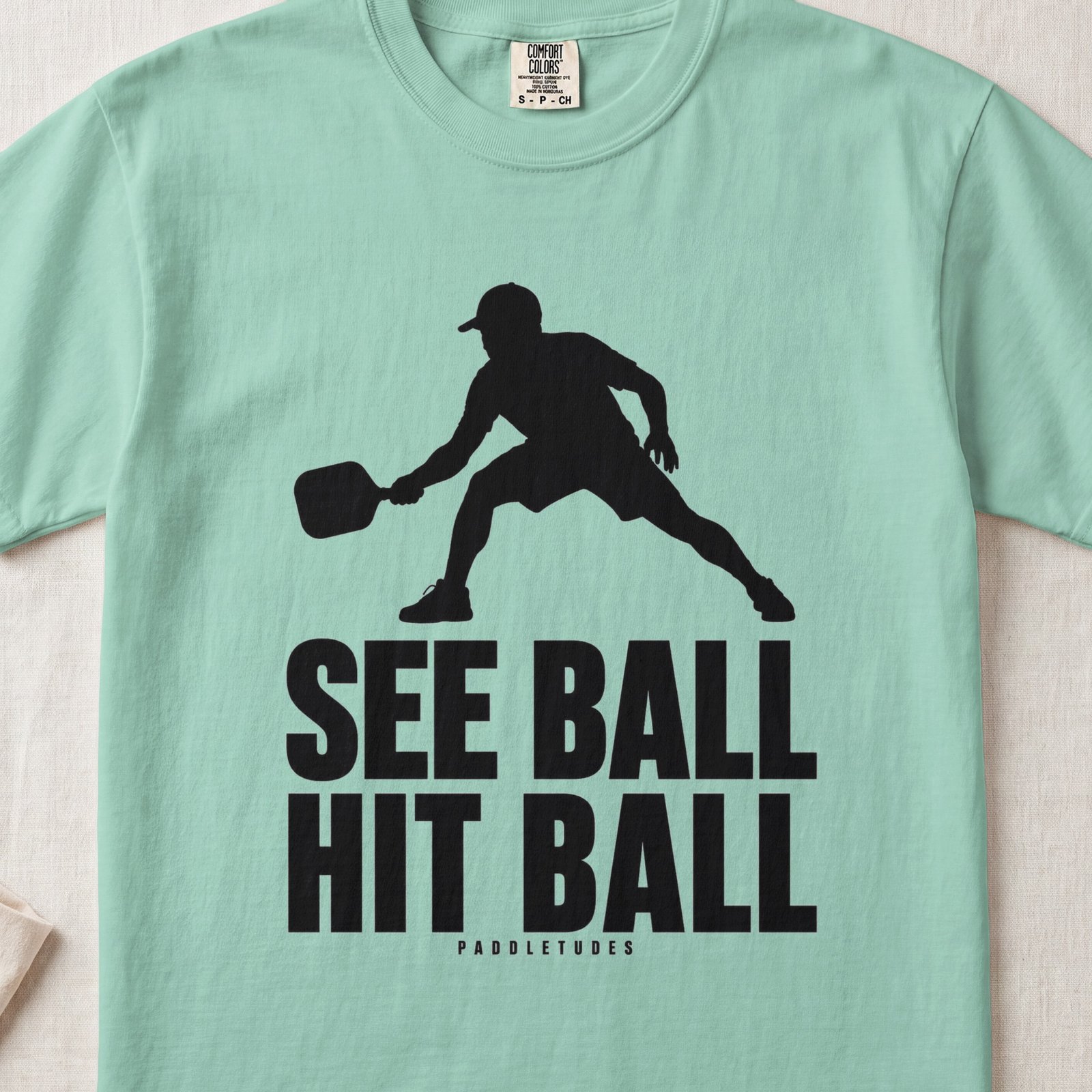
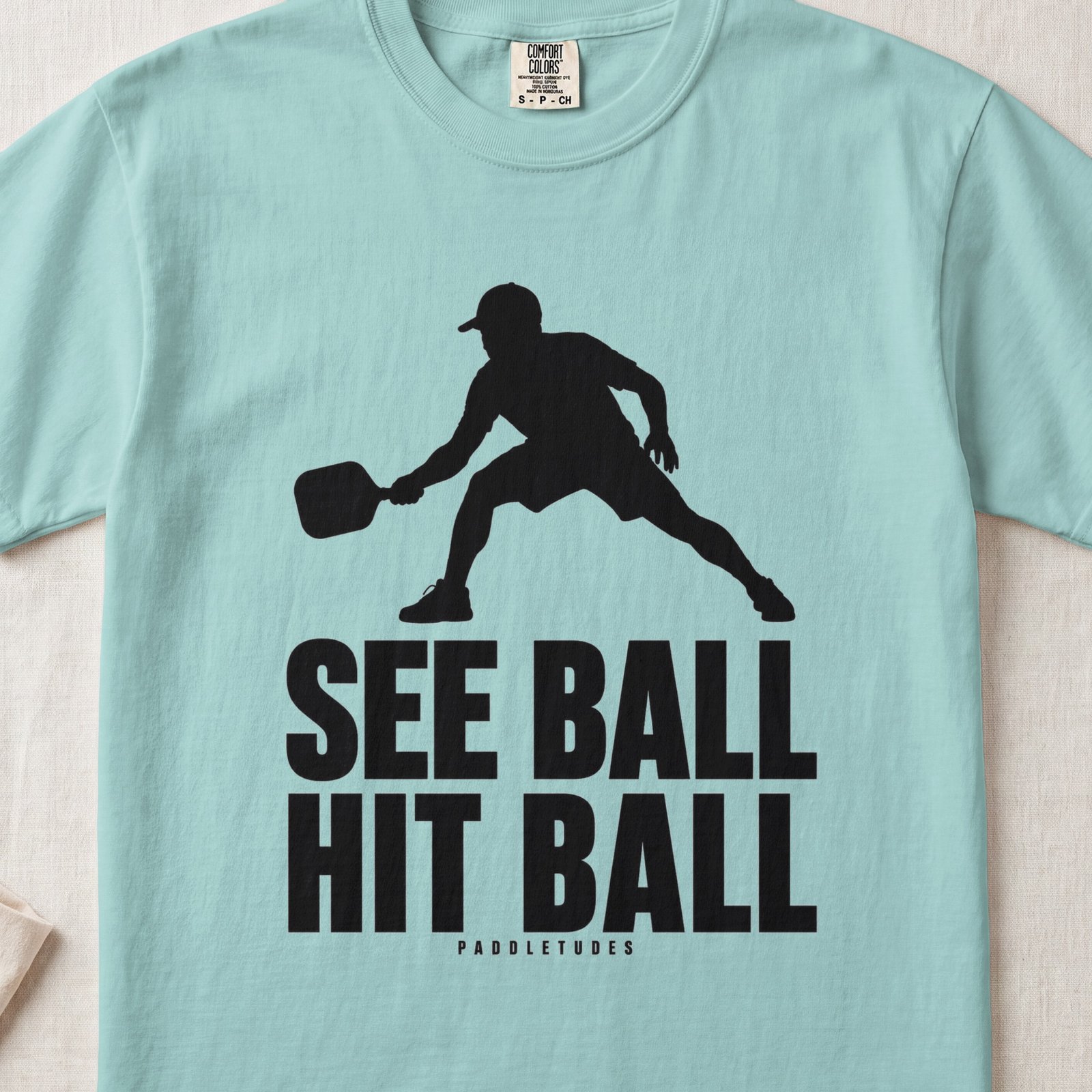
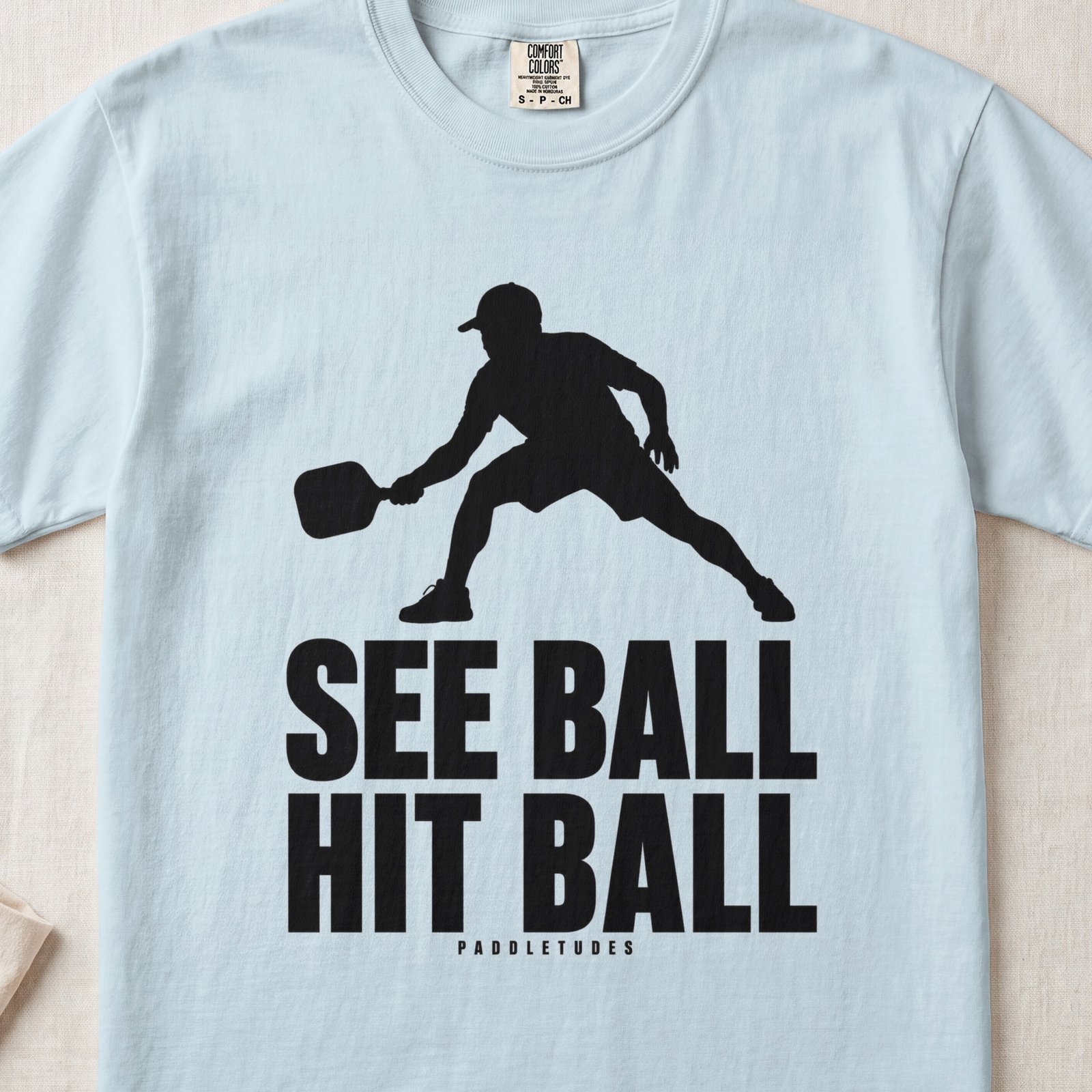
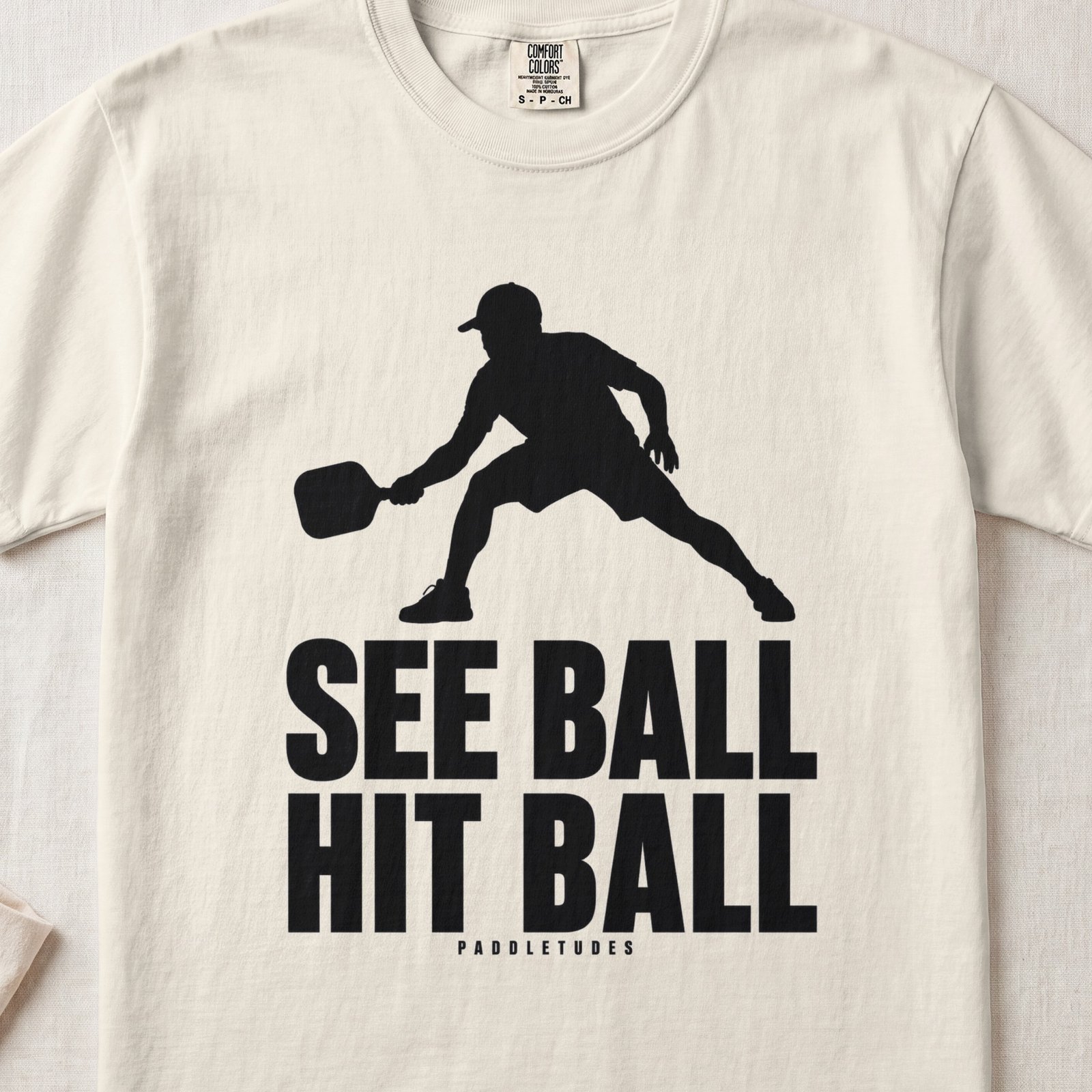
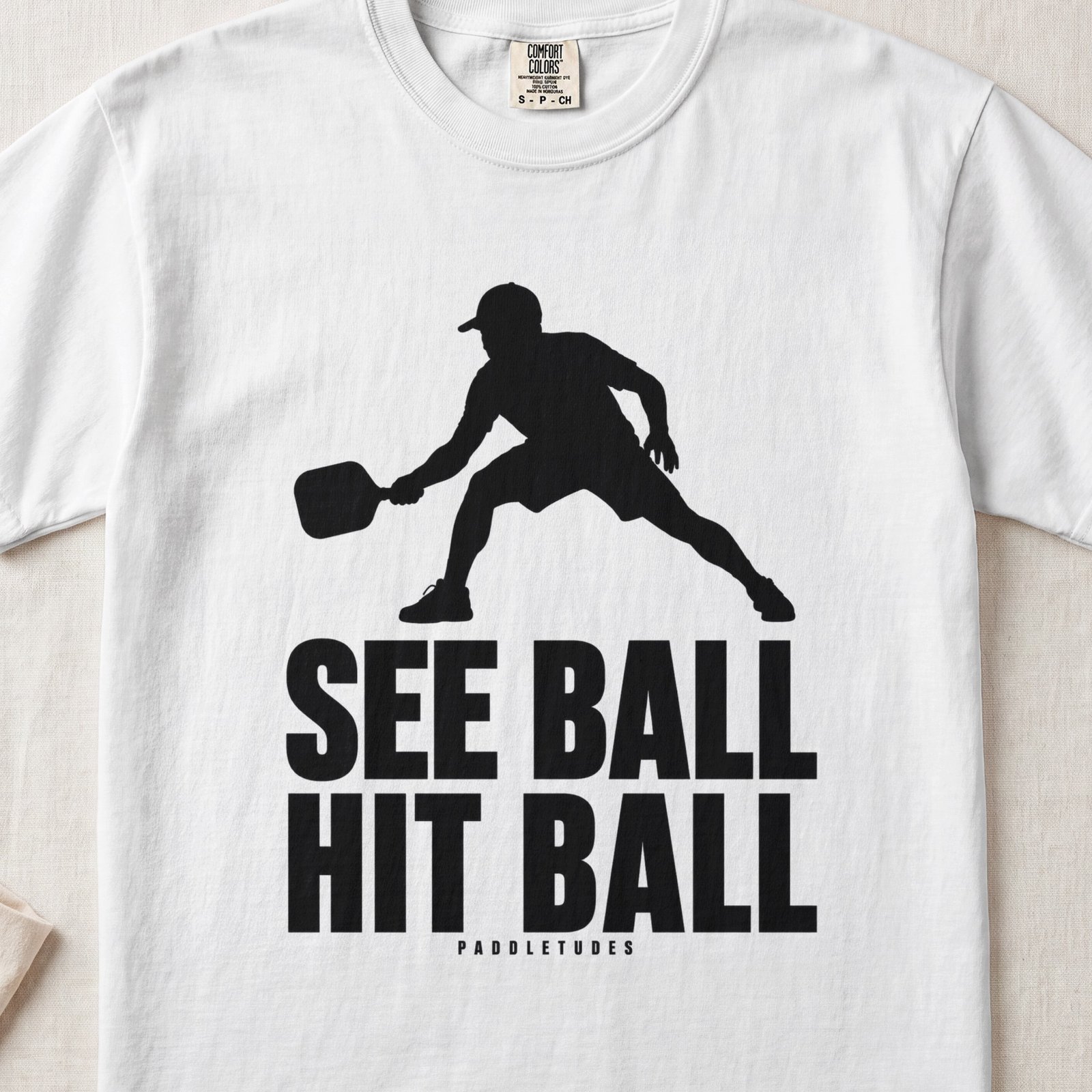
Sports Comfort Colors 1717
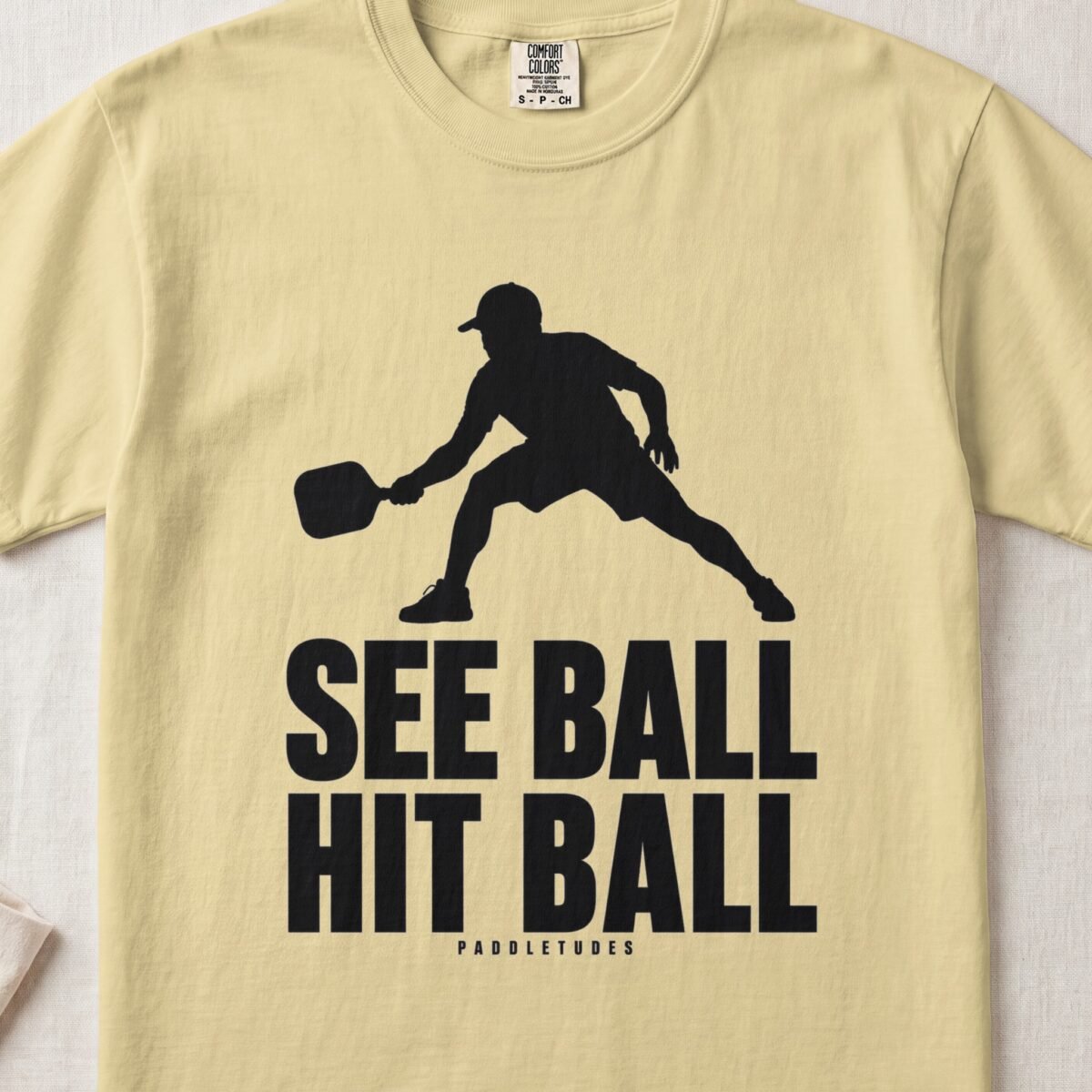
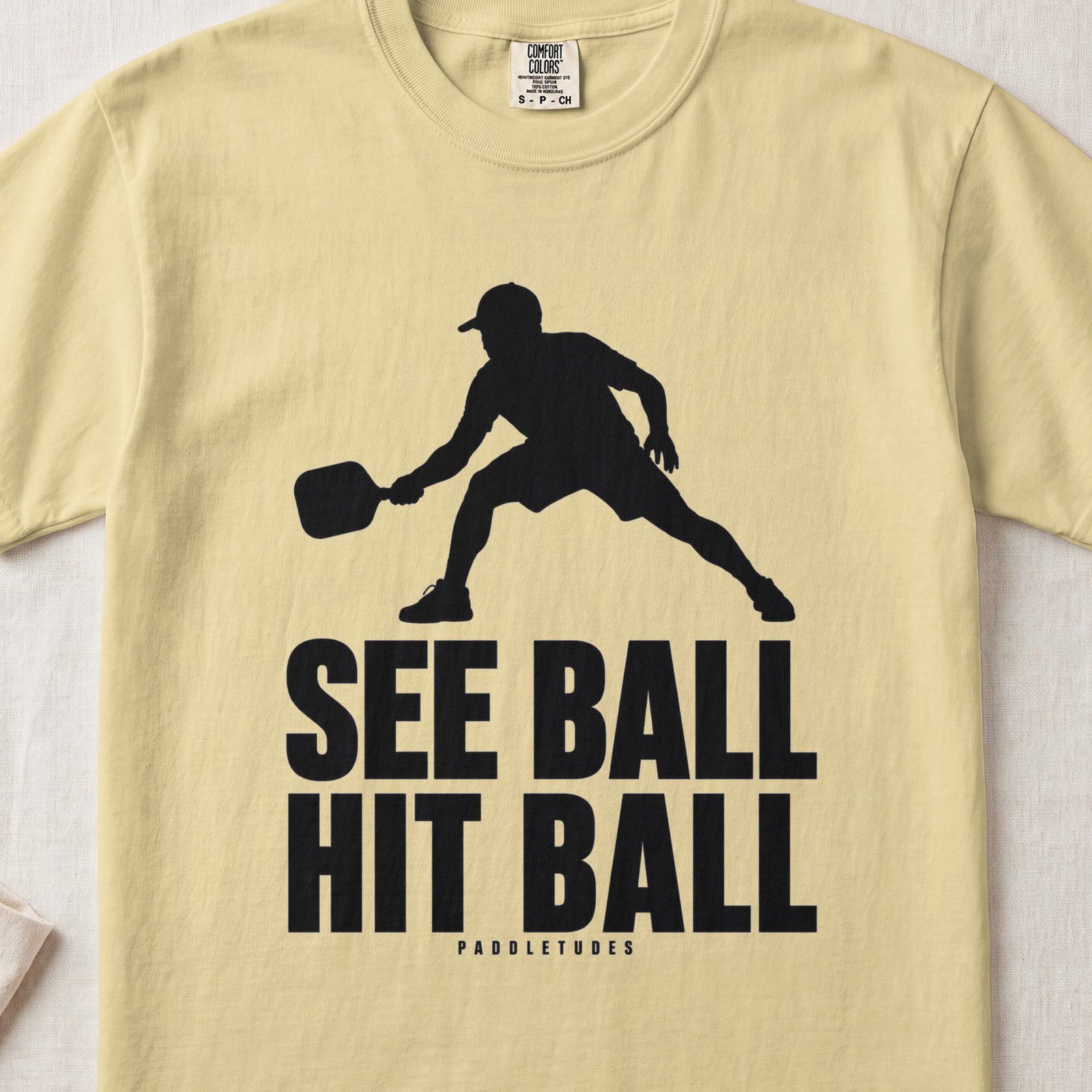
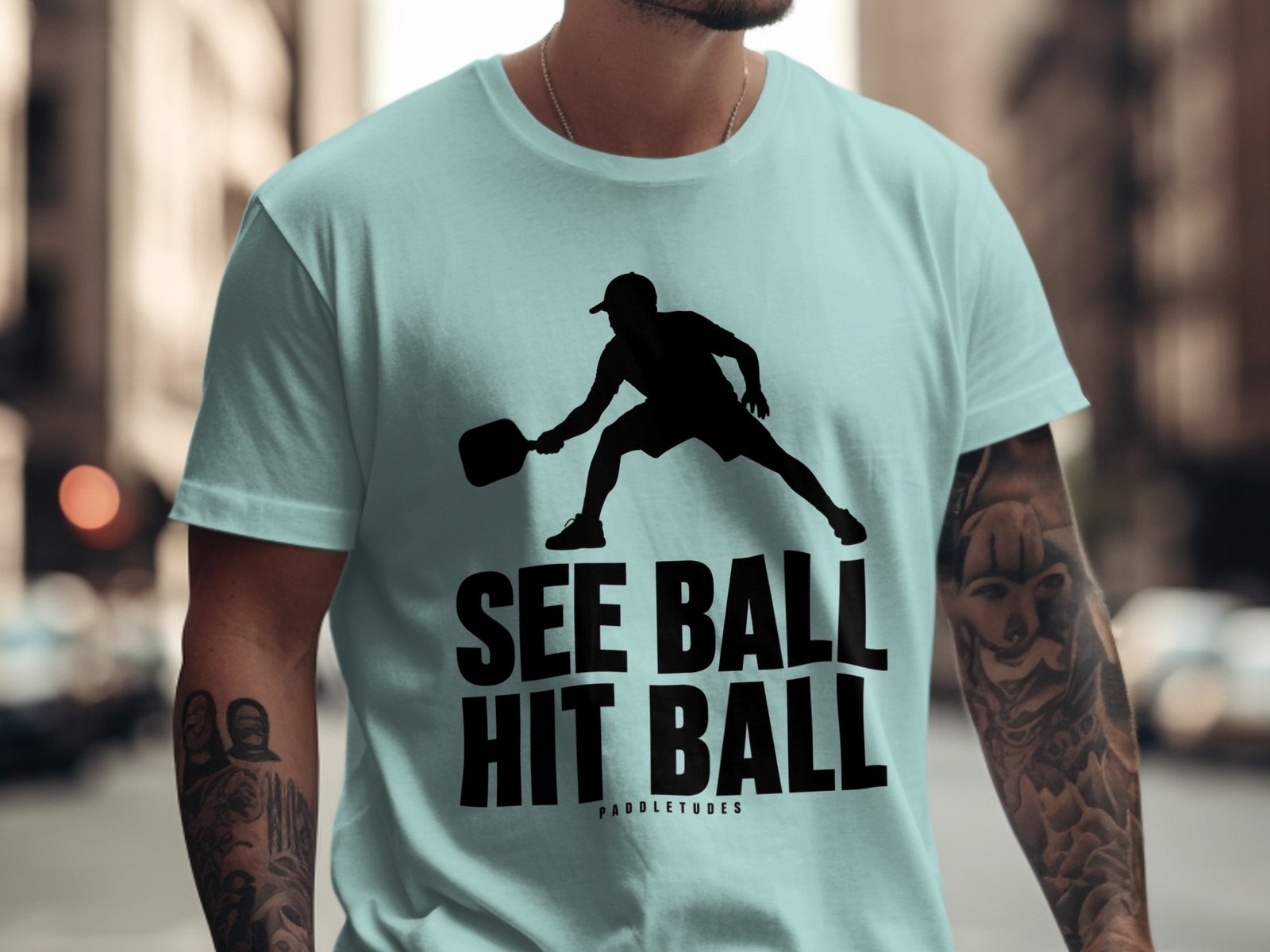
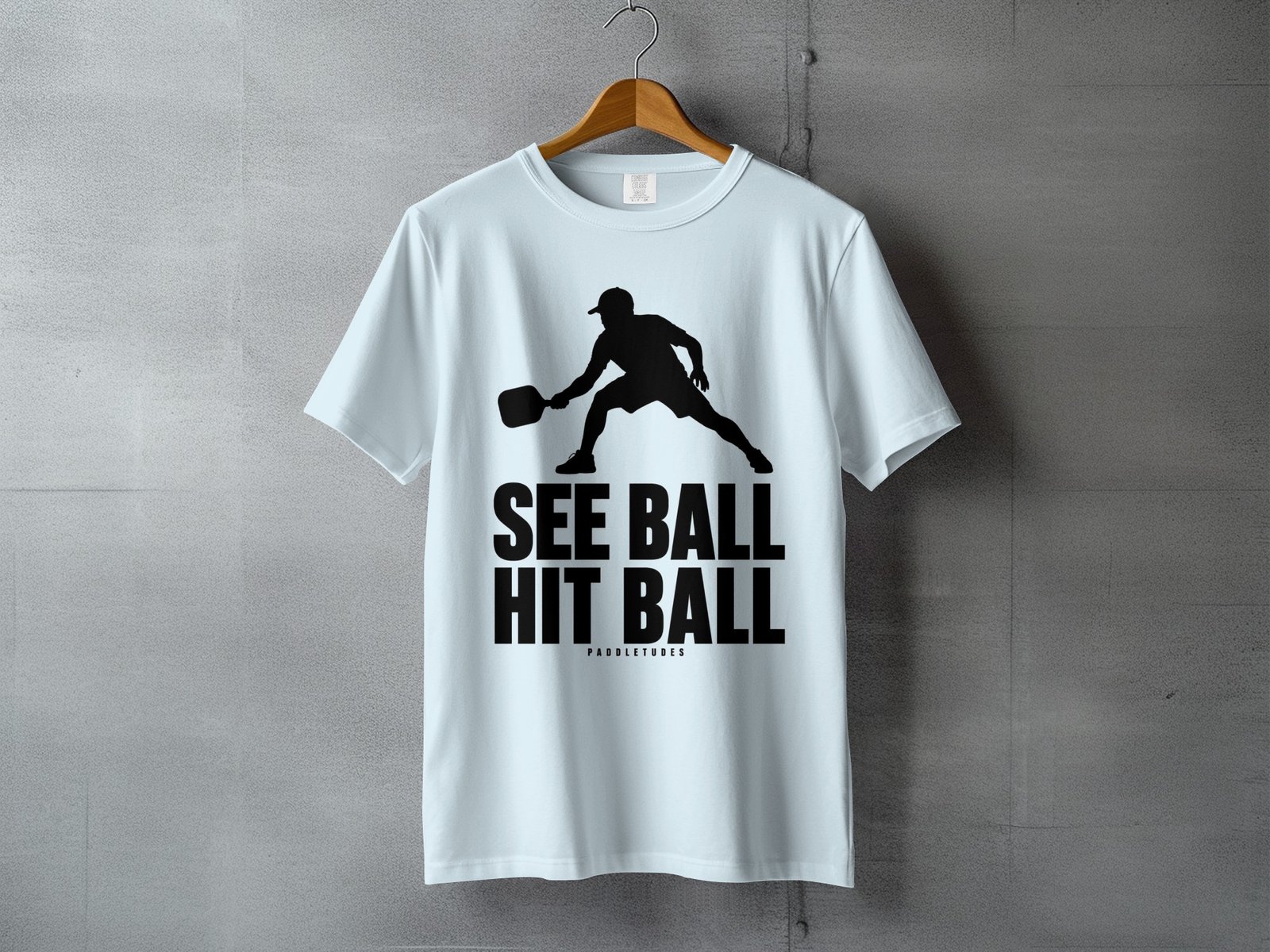
See Ball Hit Ball
$29.99
- Comfort Colors 1717 heavyweight cotton
- Original design · printed to order
- U.S. print partners
See Ball Hit Ball — The Only Pickleball Strategy You Need
He used to stand at the baseline running a checklist in his head before every serve return. Paddle angle. Grip pressure. Weight transfer. Contact point out front. Follow through toward the target. Bend the knees. Watch the ball. Breathe. By the time he finished thinking, the ball was past him. Six months of YouTube tutorials and three different coaching clinics had turned a simple game into a spreadsheet, and the spreadsheet was losing. Then one morning at open play, a 70-year-old woman who’d been playing for two months and had never watched a single instructional video beat him 11-4. She didn’t know what a third shot drop was. She just hit the ball wherever it came from and kept it in play. That was the morning he stopped thinking.
He’s a 42-year-old electrician who does precise, technical work all day — reading schematics, calculating loads, measuring tolerances that have to be exact or the inspector sends you back. He brought that same precision mentality to pickleball when his buddy got him into it, and it nearly ruined the sport for him. He analyzed his grip. He filmed his swing in slow motion. He read forum posts about paddle specifications at midnight. He knew more about pickleball mechanics than anyone at his skill level, and he played worse than people who knew nothing because his conscious brain was interrupting his body on every shot. The breakthrough wasn’t learning something new. It was unlearning the habit of thinking during play and letting his hands do the job his hands had already learned through a year of reps. At the job site, he’s meticulous. On the court, he’s free. The separation is the whole point.
The overthinking trap catches more intermediate players than any technical flaw. At 3.0, thinking during play doesn’t help because the mechanics aren’t automated yet — the player hasn’t hit enough balls for the body to know what to do without instructions from the brain. By 3.5, the body has enough reps that the basic shots work on autopilot, and the thinking should shift from HOW to hit the ball to WHERE to place it. The problem is that most 3.5 players are still running the mechanical checklist from their 3.0 days, which slows their reaction time and makes them look stiff on court. By 4.0, the best players think between points and play during them — strategy between rallies, instinct during them. By 4.5, even the between-point thinking gets minimal. The player reads the opponent, recognizes the pattern from memory, and reacts. See ball, hit ball isn’t anti-strategy. It’s the strategy that emerges when you’ve done enough reps that the strategy lives in your muscle memory instead of your conscious mind.
The drill for this player is about trusting the autopilot. A partner feeds fifteen balls at random — some high, some low, some to the forehand, some to the backhand. No target. No instruction. The only rule is: hit the ball. Don’t aim. Don’t plan the shot. Don’t think about where to place it. Just react and let the paddle do whatever it does. After fifteen balls, check where they landed. Most players are surprised to find that their unthinking shots land in smarter places than their carefully planned ones, because the body’s natural sense of court geometry is better than the conscious mind’s attempt to calculate it in real time. The advanced version: play a full game where you’re not allowed to plan a single shot. Whatever your hands do is the play. Watch what happens to your movement, your timing, and your error rate when the thinking brain steps aside.
A paddle for the instinctive player needs to feel invisible — light enough to move without effort, balanced enough that off-center contact doesn’t punish, and responsive enough that the ball goes where the hands send it without requiring perfect technique. Joola’s all-court paddles are built for this player — balanced weight, forgiving sweet spot, and a face that rewards feel over force. When the paddle disappears from your awareness, your hands do their best work.
If someone you know brings extra paddles to the court for beginners — the person who hands a newcomer a paddle and says “just hit it, you’ll figure it out” instead of launching into a twenty-minute lesson on grip and footwork — this shirt captures their whole coaching philosophy. Some people teach pickleball by adding. This person teaches by subtracting. The paddle and the instruction manual would make a set, but the shirt is the better gift.
The simplicity philosophy runs through our pickleball collection in different shapes. Rec Ball Legend is the player who perfected this approach — no lessons, no drills, no YouTube, just four years of showing up and letting the court teach them. Living My Best Court Life is the attitude that makes simplicity possible — playing for joy instead of performance, which frees the hands to do their job without the brain’s interference. And Point Mine is what happens when the simple approach meets competitive intensity — the player who stopped thinking and started claiming points on instinct. Find courts where the atmosphere rewards simple, relaxed play at Chicken N Pickle locations across the country.
Printed on a Comfort Colors 1717 garment-dyed heavyweight tee with water-based DTG ink — sizing and care details here.
What Are the Most Important Rules for Beginner Pickleball
The three rules every beginner needs before stepping on a court are the two-bounce rule, the non-volley zone rule, and the underhand serve. The two-bounce rule requires the serve and the return to each bounce once before either team can volley — which is why the serving team can’t rush the net immediately. The non-volley zone extends seven feet from the net on each side, and you cannot volley the ball while standing in it or touching its line. The serve must be underhand with contact below the waist.
Beyond those three, the rest of the rules come through playing rather than studying. Scoring in doubles follows a three-number system — the serving team’s score, the receiving team’s score, and whether it’s the first or second server — which confuses every beginner for the first few weeks and then becomes automatic. Only the serving team can score. Games are played to eleven, win by two. The serving rotation and side-switching follow the score, and most facilities have regulars who will walk you through it in real time faster than any rulebook explanation.
The mistake beginners make isn’t misunderstanding the rules. It’s overloading on mechanics before their body has enough reps to execute them. A player who has memorized grip pressure scales, paddle face angles, and optimal contact points but has only played ten hours of pickleball will play worse than someone who knows three rules and has played a hundred hours. The rules are the guardrails. The game itself is the teacher. Learn the three essentials, step on the court, and hit the ball — the rest fills in through repetition faster than any instructional content can deliver it.
This is the philosophy behind the shirt. The player wearing it isn’t ignorant of the nuances — they’ve been through the stage of studying every detail and trying to apply it consciously during play. They came out the other side and found that the best version of their game happens when they stop managing it and start playing it. See the ball. Hit the ball. The hands already know what to do. The brain’s job is to get out of the way and let them work.
-
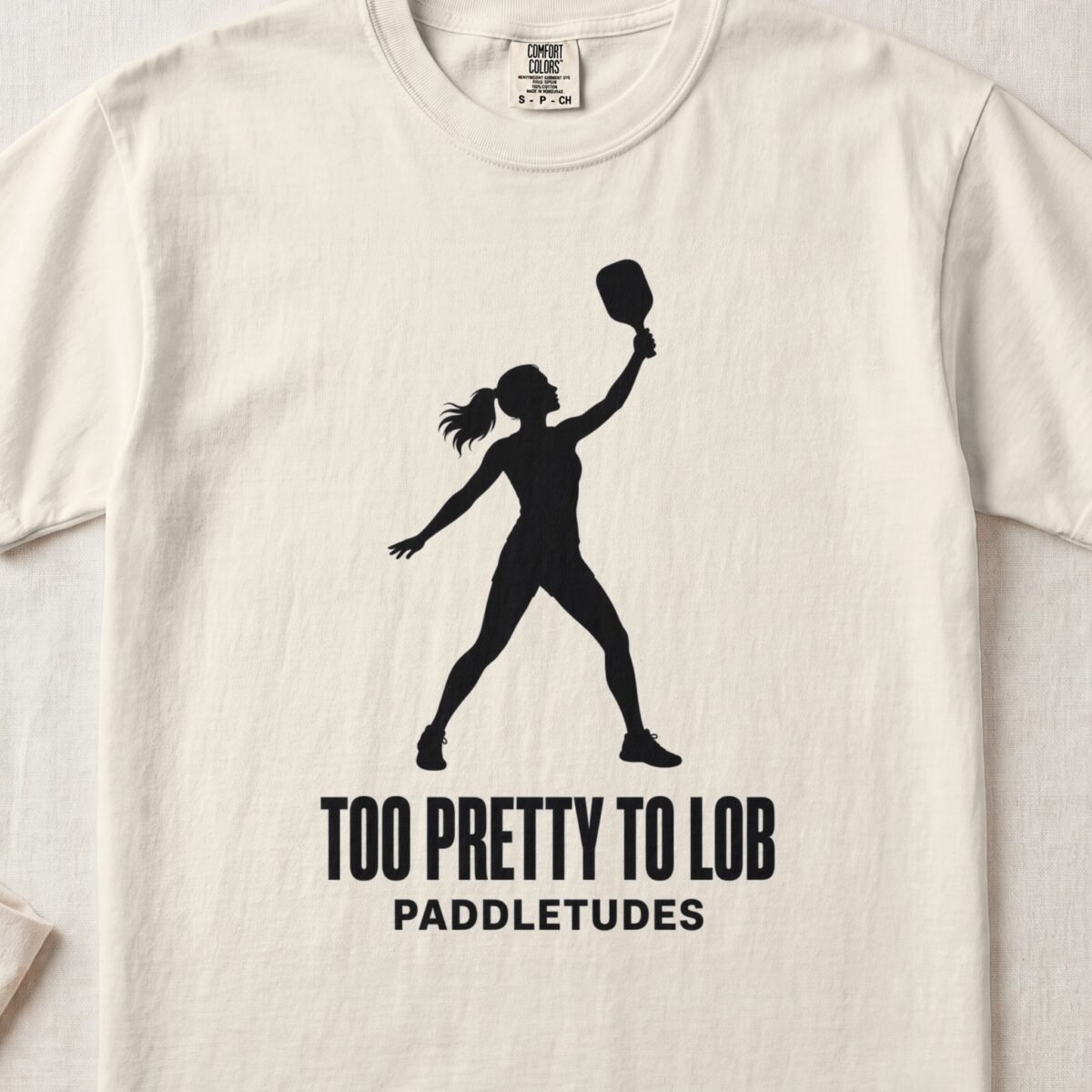
Too Pretty To Lob
$29.99 Select options This product has multiple variants. The options may be chosen on the product page -
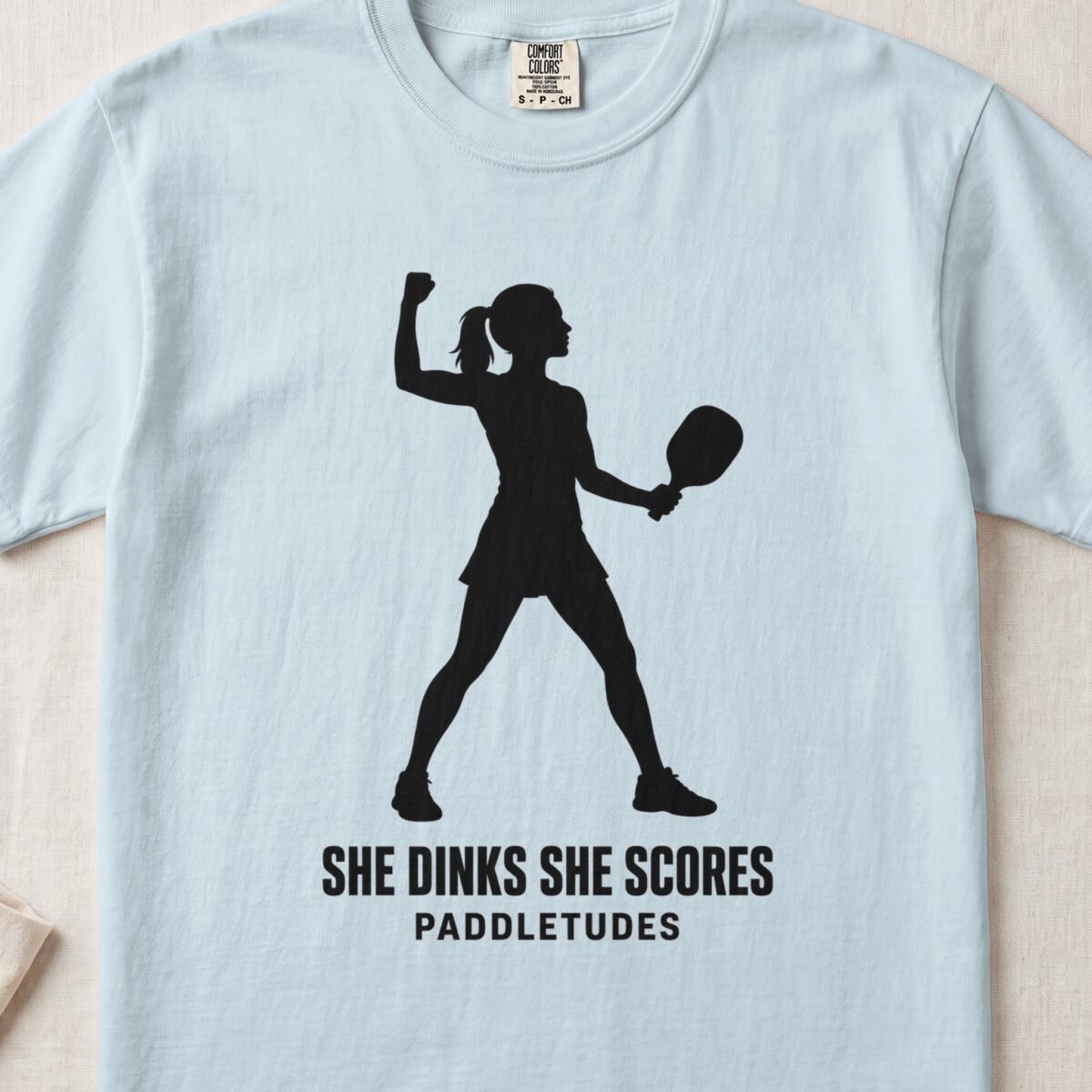
She Dinks She Scores
$29.99 Select options This product has multiple variants. The options may be chosen on the product page -
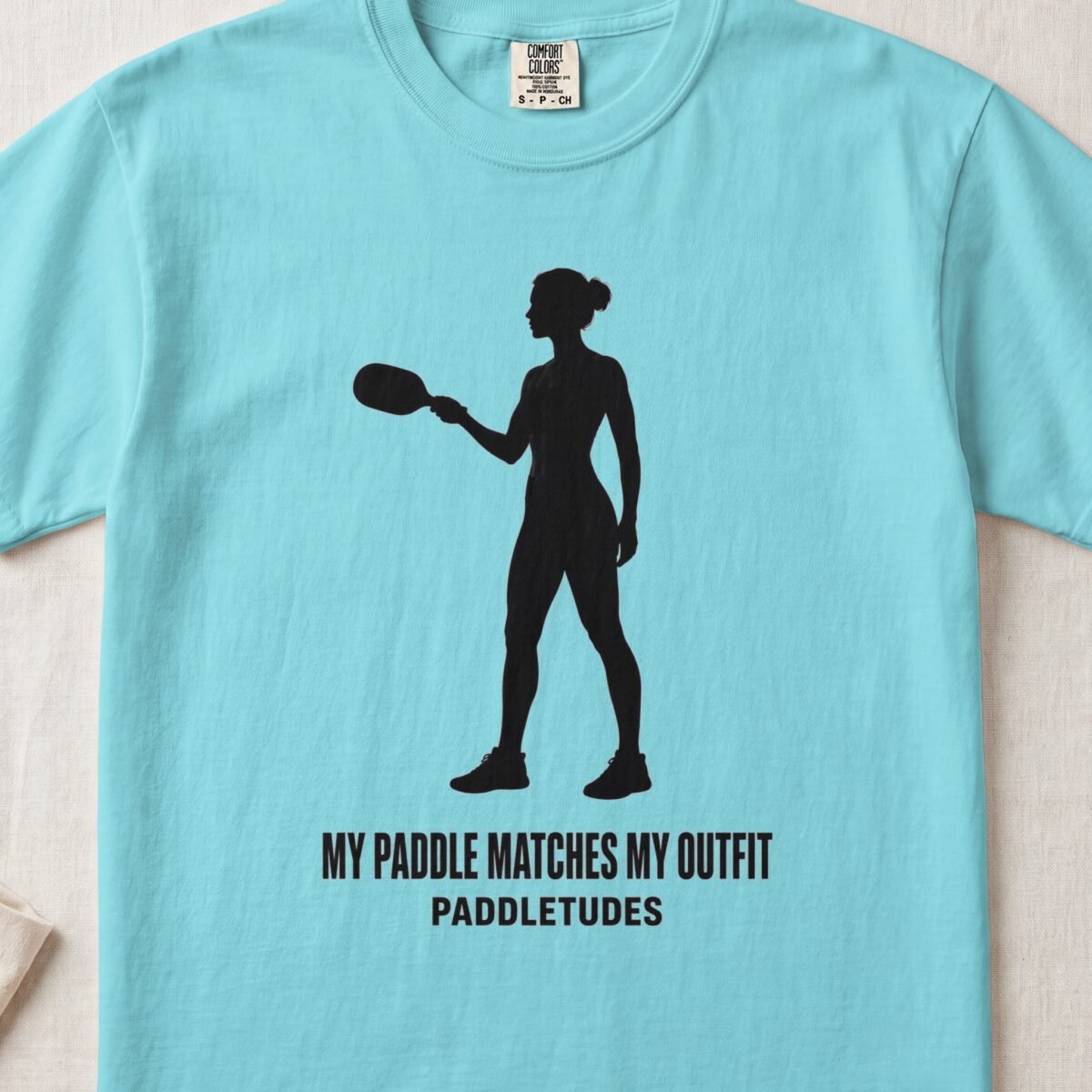
My Paddle Matches My Outfit
$29.99 Select options This product has multiple variants. The options may be chosen on the product page