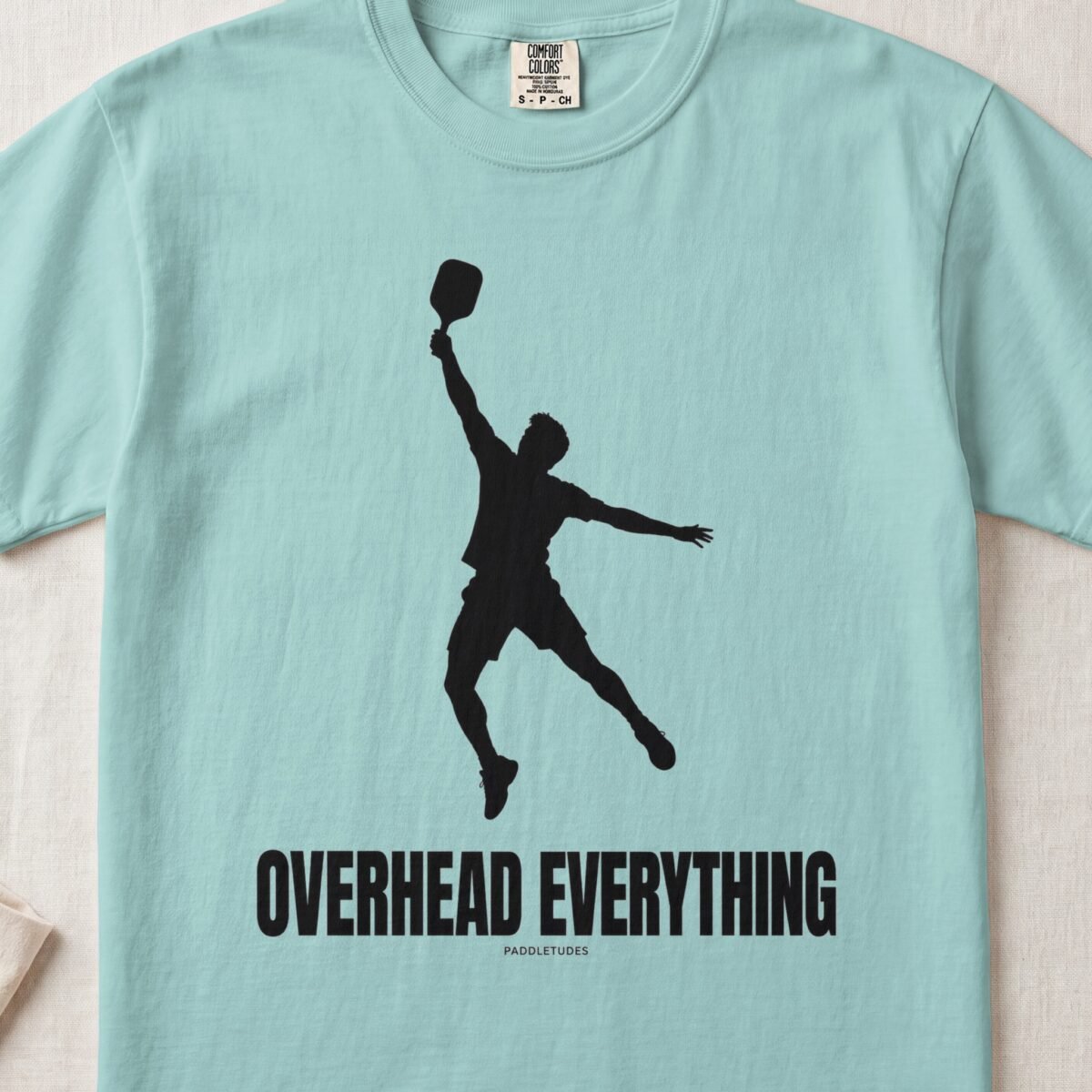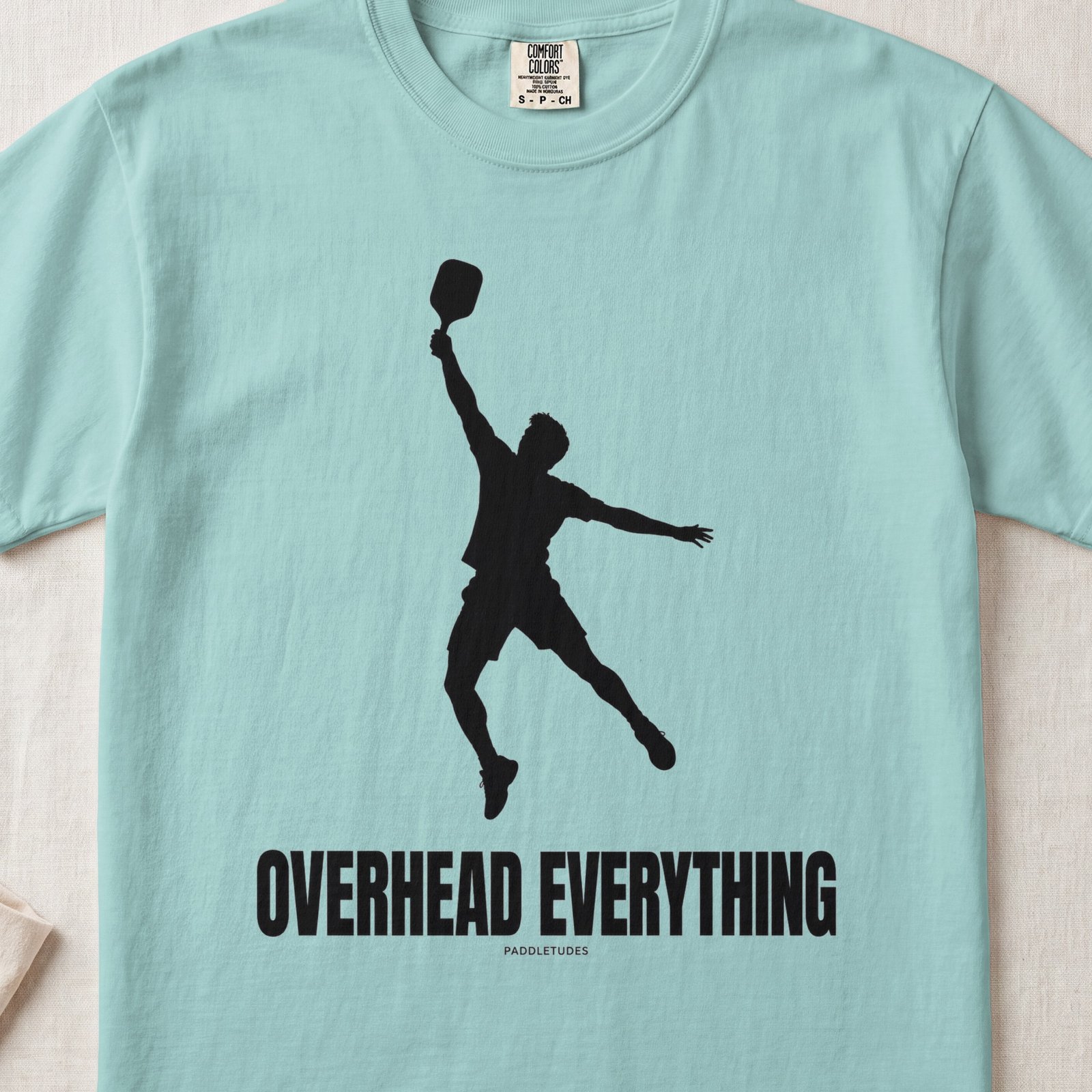
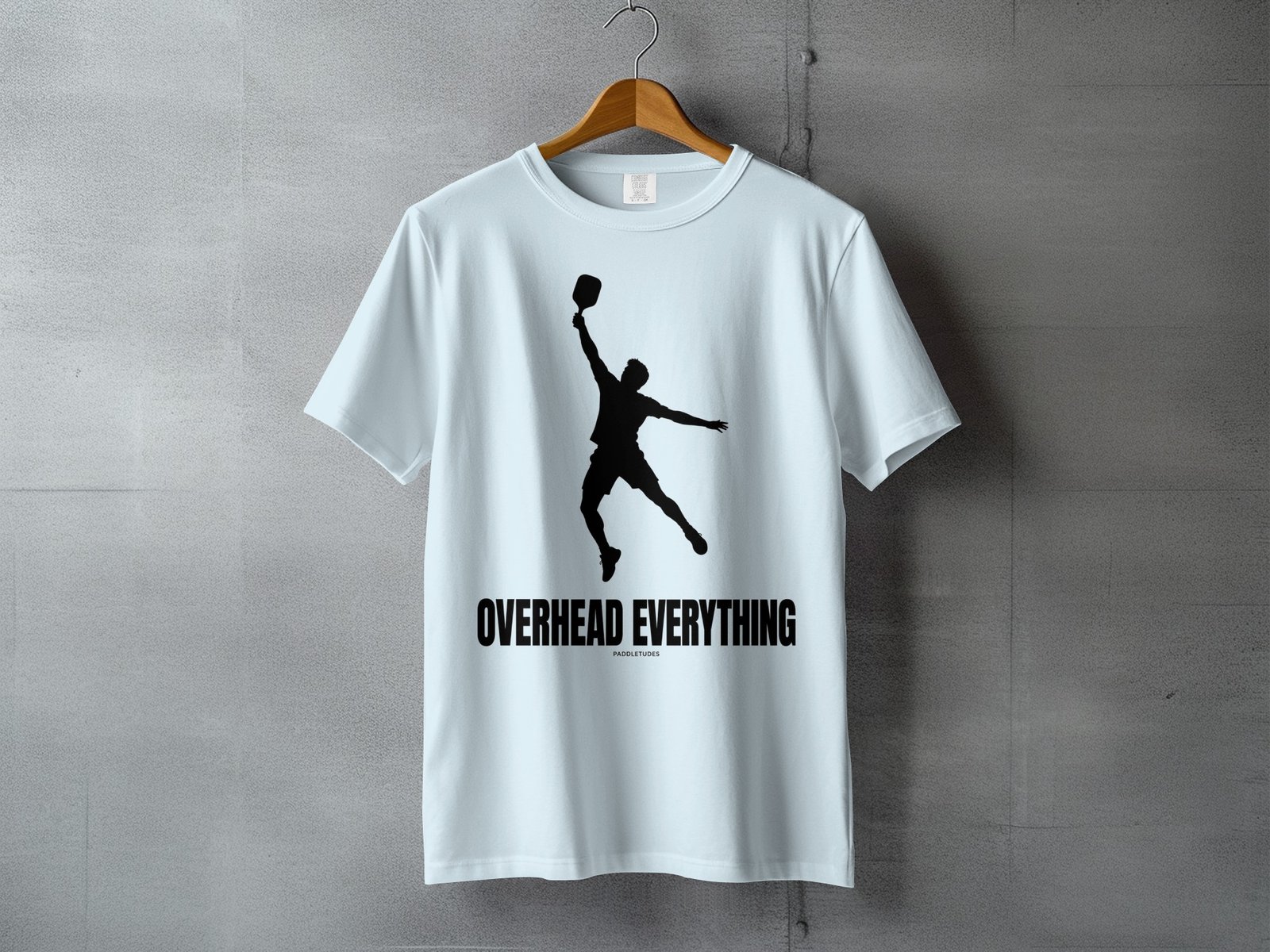
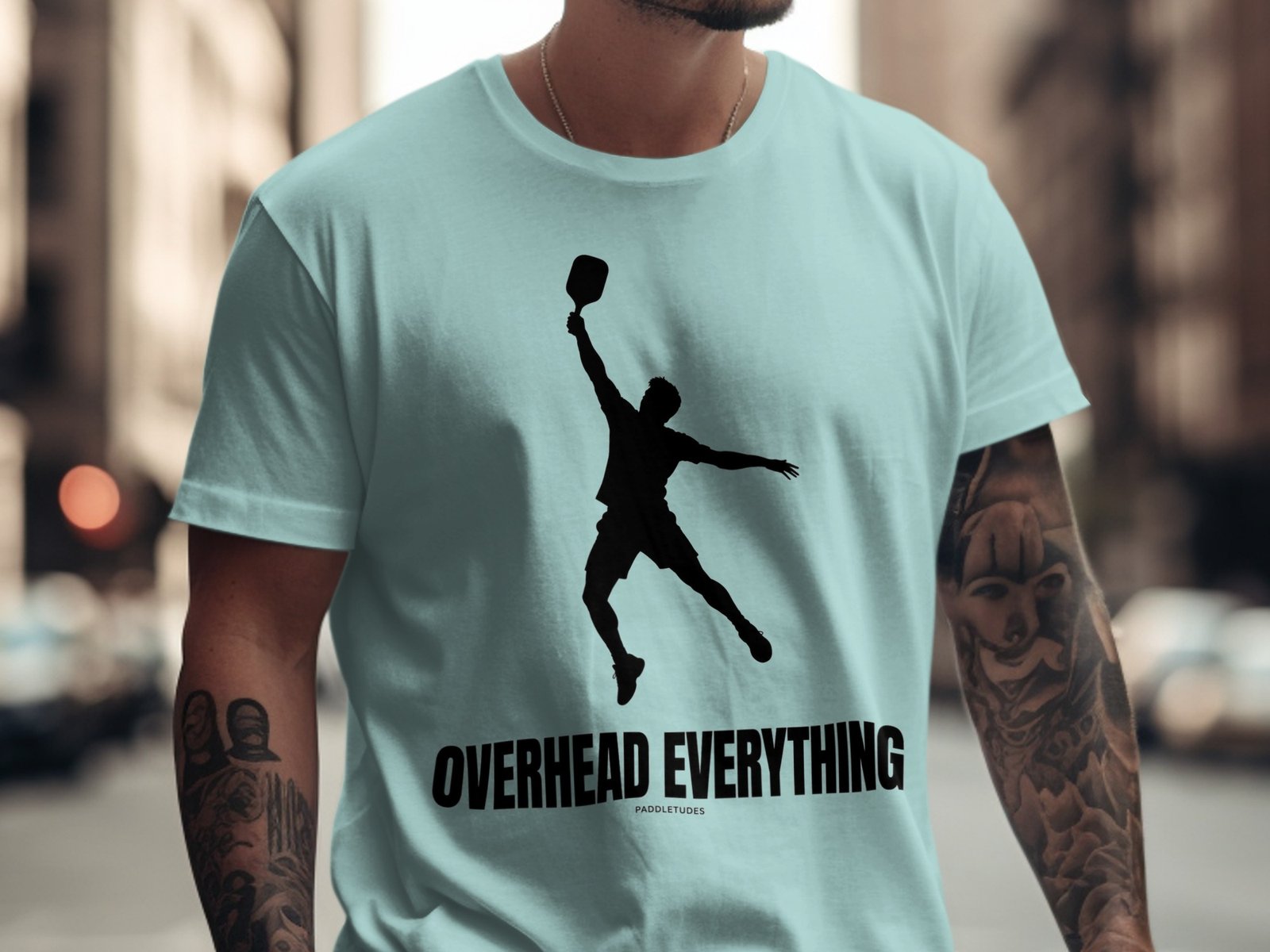
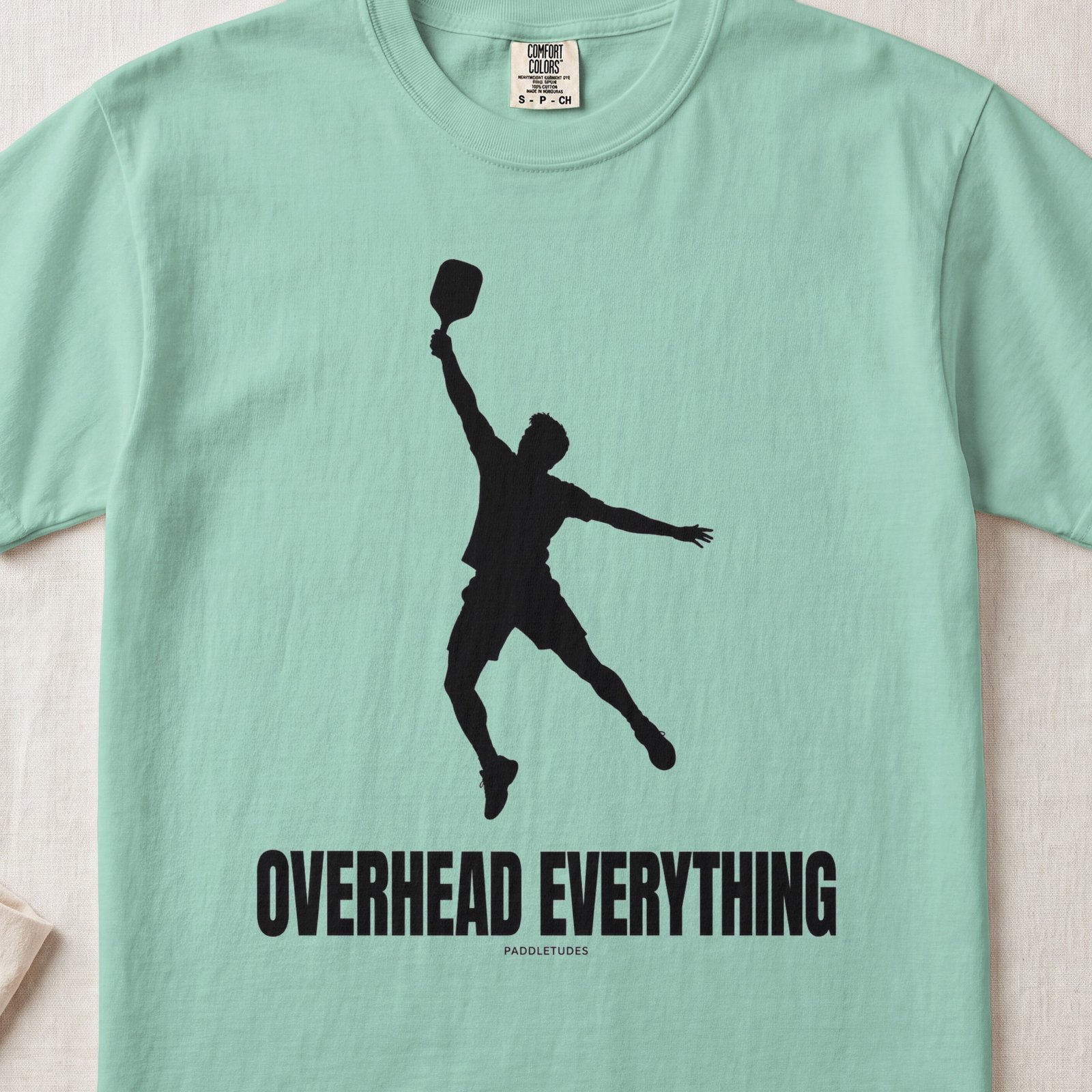
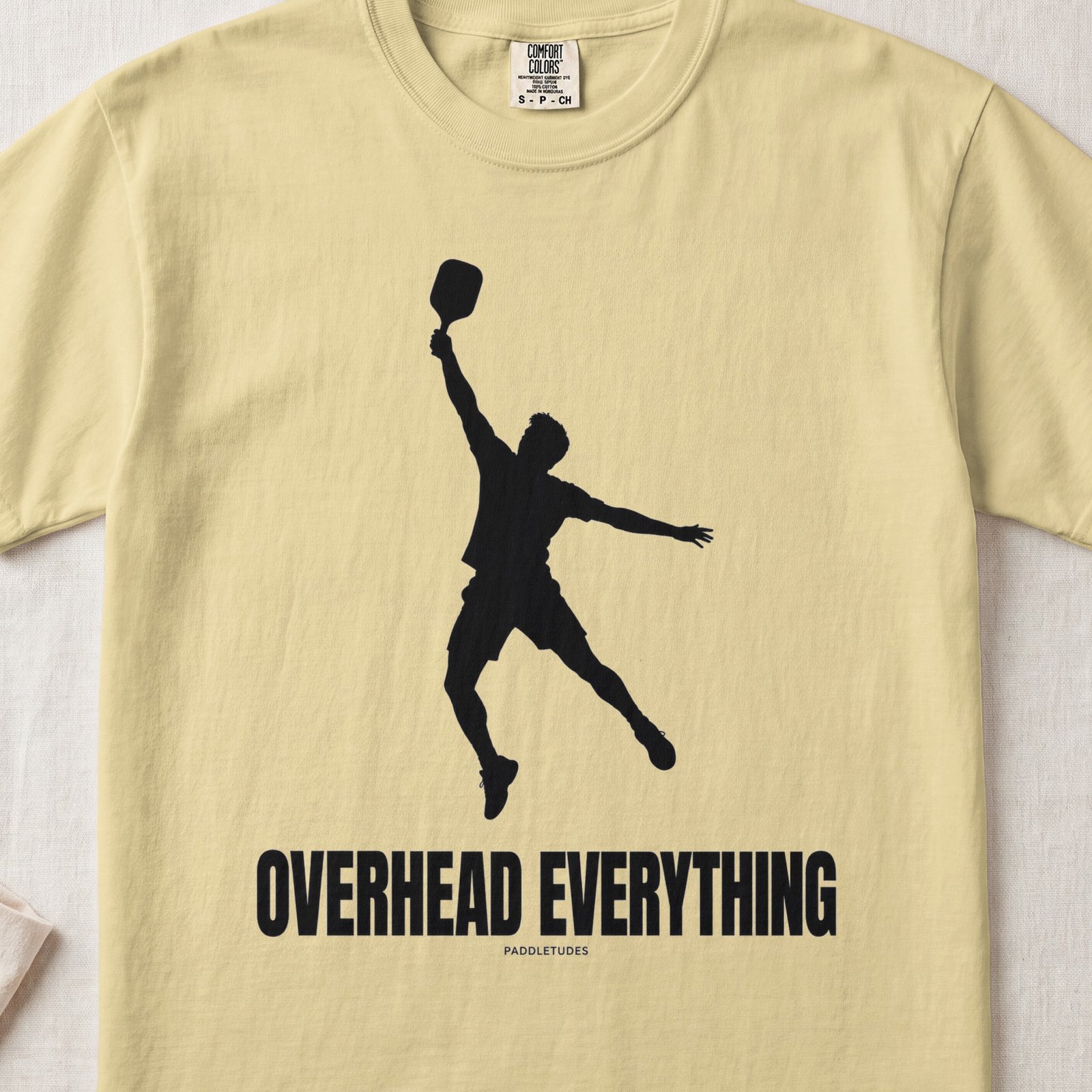
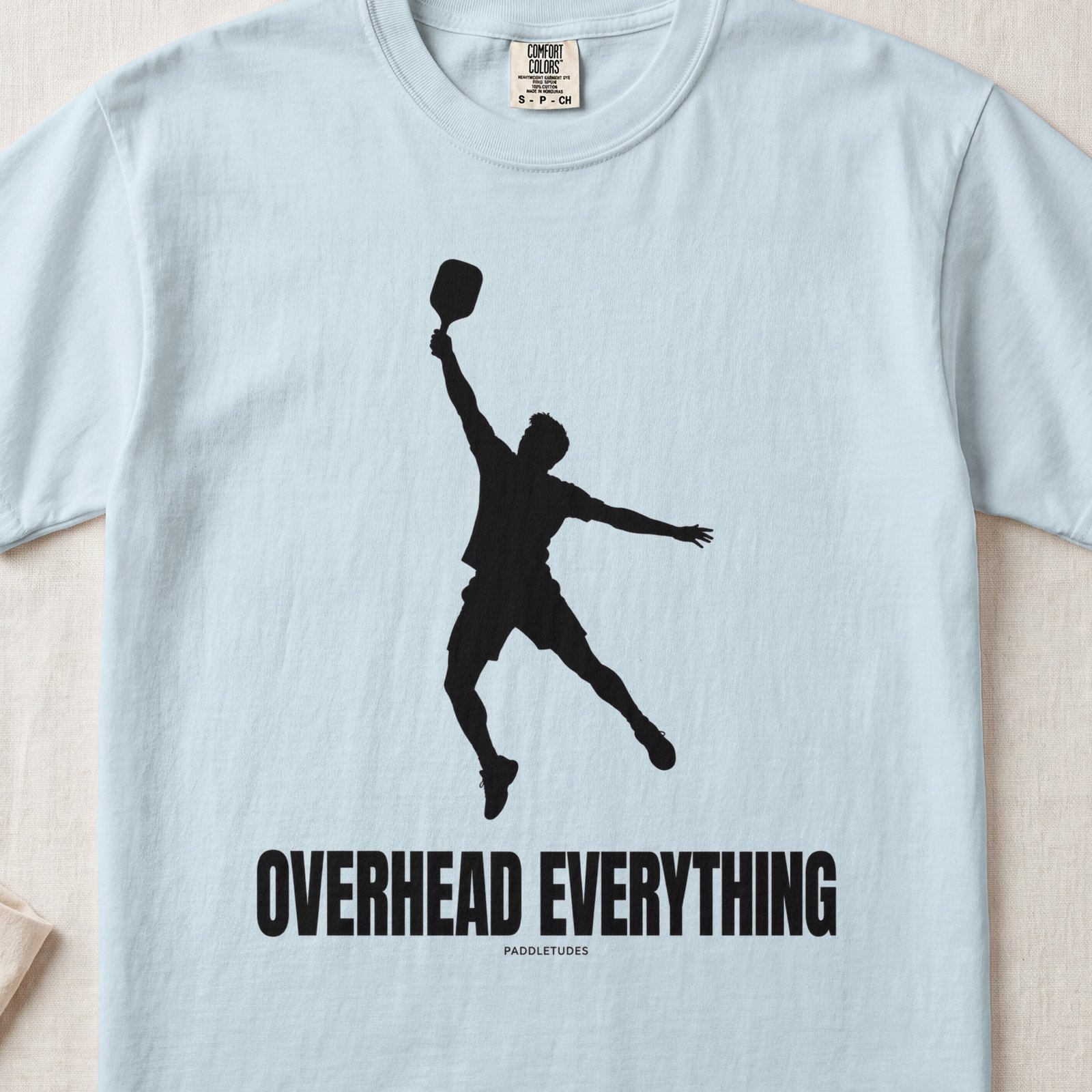
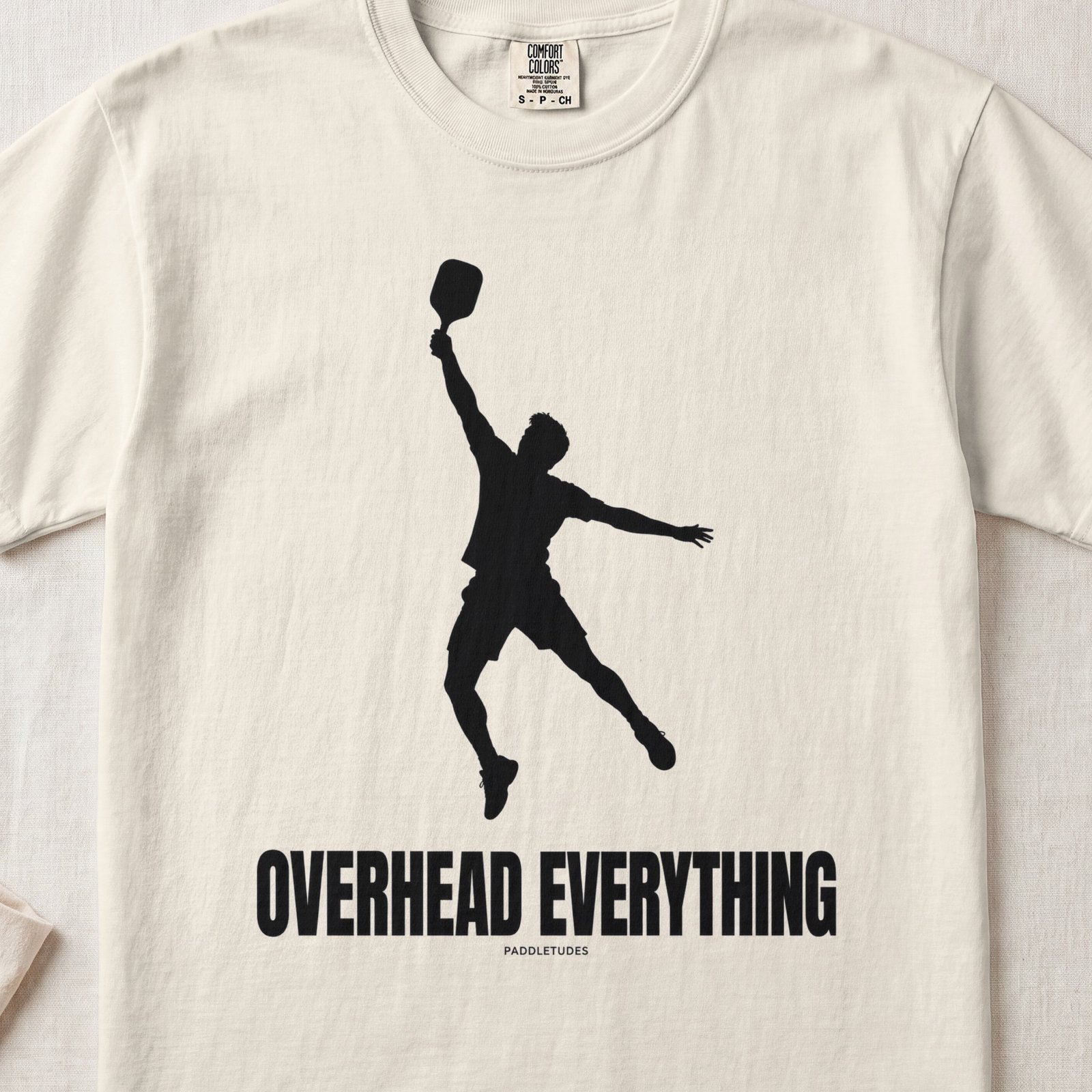
Sports Comfort Colors 1717
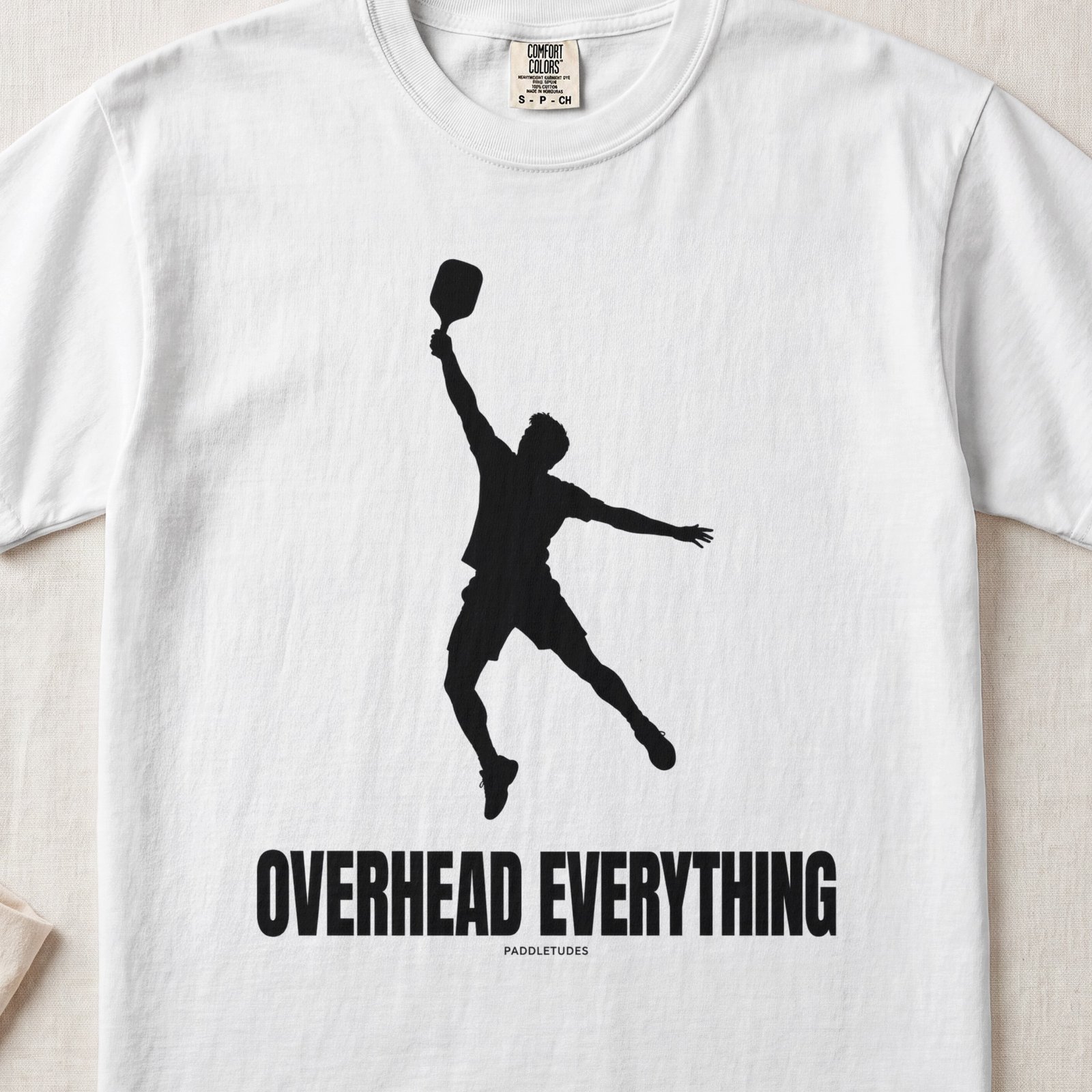
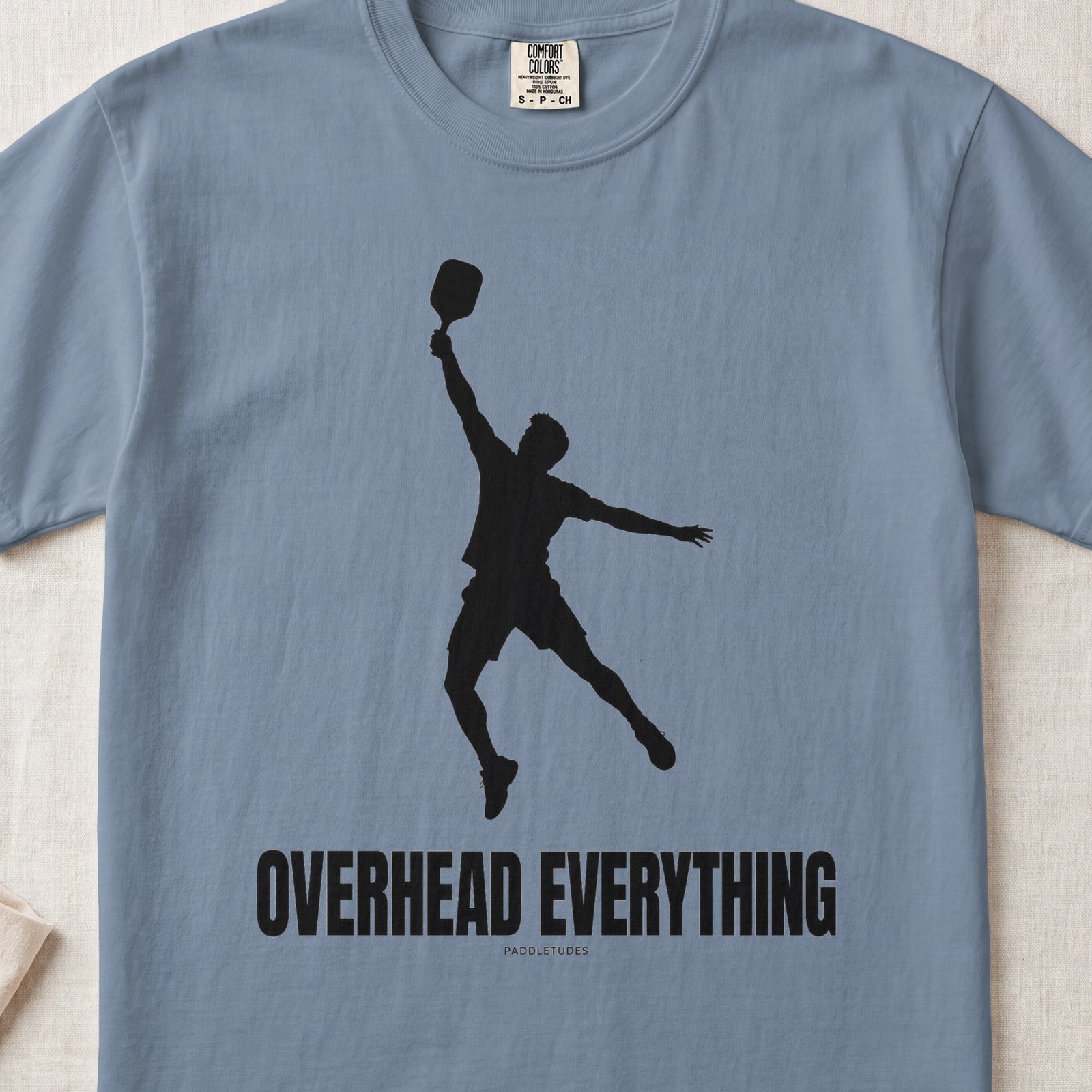
Overhead Everything
$29.99
- Comfort Colors 1717 heavyweight cotton
- Original design · printed to order
- U.S. print partners
Every Lob Is a Chance for a Pickleball Overhead Smash
The lob goes up lazy and short — six feet from the net, hanging in the air like it’s waiting for permission to come down. She’s already turned sideways, non-paddle hand pointing at the ball like a range finder, paddle arm loaded behind her ear. The crossover step puts her behind it, not under it. The contact happens at full extension — the highest point she can reach — and the ball comes off the paddle face at a downward angle aimed directly at the closest opponent’s feet. It hits the court before anyone moves. The sound of the smash echoes off the windscreens. The lobber stares at the spot where the ball landed and decides to stop lobbing for the rest of the game. That decision lasts about two points.
She’s a 38-year-old former high school volleyball player who spiked from the outside position for four seasons and never found a sport that replicated the feeling until pickleball. The rest of her game took months to build — dinking felt wrong, resetting felt passive, the soft game was a language she had to learn from scratch. But the overhead was there from day one. Same read on the high ball. Same sideways turn and footwork to get behind it. Same explosive upward motion and wrist snap at the contact point. Her volleyball coach used to yell “high hand, fast hand” during hitting drills, and the cue still fires every time a ball floats above the net. The only adjustment was learning to keep the paddle face forward instead of open — pickleball paddles don’t bend like a wrist over a volleyball — and she figured that out in the first week.
At 3.0, the overhead is a gamble. Players see the lob, face the net, backpedal, and swing with everything they have. The ball either slams into the court for a winner or sails three feet past the baseline. There’s no in-between because the footwork isn’t there — backpedaling while facing forward is the fastest way to lose balance and mistime the contact. By 3.5, players learn to turn sideways, and suddenly the overhead becomes a real shot. The sideways pivot lets you shuffle backward or forward to adjust without losing your base. By 4.0, the decision matters as much as the execution — a short lob gets smashed, but a deep lob that pushes you back behind the baseline should be played off the bounce with a controlled return instead. The player who overheads everything at 4.0 wins spectacular points and gives away easy ones. By 4.5, the overhead is directional. Instead of smashing wherever the ball goes, the player places the smash — at the closer opponent’s feet, into the gap between partners, or angled sharply cross-court to catch the net player moving the wrong direction. The power is the same. The placement is what turns it from a highlight into a strategy.
The drill that sharpens the overhead is about decision-making, not power. A partner feeds a mix of lobs — some short and hittable, some deep and dangerous. Ten balls. You decide: smash or let it bounce. The point of the drill is the read, not the swing. A short lob that peaks inside the service line gets the full overhead. A deep lob that pushes you behind the baseline gets a controlled groundstroke. After ten reads, switch to ten consecutive smashes for placement: five to the right side of the court, five to the left, all aimed at where an opponent’s feet would be. Contact point is everything — hit the ball at the highest spot you can reach, slightly in front of your body, with a compact throwing motion and a wrist snap at the finish. Full-body rotation through the shot, chest facing the net on the follow-through. Keep the swing at seventy to eighty percent — control and placement beat raw power on every overhead except the one that’s already perfect.
The paddle for the overhead player needs to generate pace on a downward swing without being so head-heavy that it slows the recovery. A power-oriented paddle with a stiff face and responsive core lets the smash carry authority without requiring a massive windup. CRBN’s power models generate speed on aggressive shots while keeping the overall weight balanced enough to recover for the next ball — because the smash doesn’t always end the point, and the player who’s still loaded in the trophy position when the ball comes back is the one who gets passed.
If someone you know plays pickleball in the rain, shows up when the wind is sideways, drives two hours for court time, and treats every lob like a personal challenge rather than a defensive inconvenience — this shirt is the gift that confirms what they already believe about themselves. They don’t miss sessions. They definitely don’t miss put-aways.
The overhead connects to the power philosophy across our pickleball collection. She Bangs brings the same attacking energy from the women’s side of the court — the player who drives when the textbook says drop and overheads when the textbook says reset. I Am The Wall is the opponent this player can’t figure out — every smash comes back soft, every drive gets blocked, and patience beats power in a way that makes the overhead player reconsider the entire philosophy. And Dangerously Good At Thirds is the shot that prevents the overhead from happening in the first place — a quality third shot drop that stays low enough to deny the smash opportunity. Book courts built for competitive singles and doubles at Indian Wells Tennis Garden, home of some of the biggest pickleball events in the country.
Printed on a Comfort Colors 1717 garment-dyed heavyweight tee with water-based DTG ink — sizing and care details here.
How Do You Hit an Overhead Smash in Pickleball
An overhead smash is a powerful downward shot hit at the highest reachable contact point above your head, used to finish rallies when an opponent sends up a high, short lob. The key is footwork first — turn sideways the instant you read the lob, shuffle or crossover step to get behind the ball, and make contact with it slightly in front of your body rather than directly overhead.
The mechanical sequence has three connected parts. First, separate — rotate your shoulders back and load your paddle arm behind your ear while your non-paddle hand tracks the ball by pointing at it. That tracking arm does two jobs: it helps you judge the ball’s position in the air, and it creates the torque-loading coil in your core that generates power on the swing. Second, reach — extend your paddle arm upward toward the ball at its apex, creating length in the stroke. Third, throw — release the paddle downward with a compact wrist snap, rotating your chest through the shot so you finish facing the net. The motion is closer to a throwing a baseball than swinging a bat. Short and compact beats long and wild every time.
The most common mistake is getting under the ball instead of behind it. When the ball is directly above your head, you have to hit straight down with almost no margin for error — it either hits the net or goes out. Getting behind the ball by one or two feet lets you drive upward and through it at a forward angle, which gives the shot depth and keeps it in the court. The second most common mistake is backpedaling while facing the net. Shuffling backward with your feet parallel to the net is slow, unstable, and how players fall over on overheads. The sideways pivot — shoulders perpendicular to the net, crossover step to move back — keeps your balance intact and your eyes on the ball.
Placement matters more than power at every level above 3.5. The highest-percentage target is the feet of the closest opponent, because a ball at the feet forces an awkward low volley that’s nearly impossible to return cleanly. A smash aimed deep at the baseline might look impressive, but it requires perfect depth control and gives the opponents more time to react. At the competitive level, the best overhead players pick their target before they swing — feet, gap, or angle — and hit at seventy to eighty percent power with full confidence in the placement. The overhead that wins the most points isn’t the hardest one. It’s the one that lands where nobody can reach it.
-
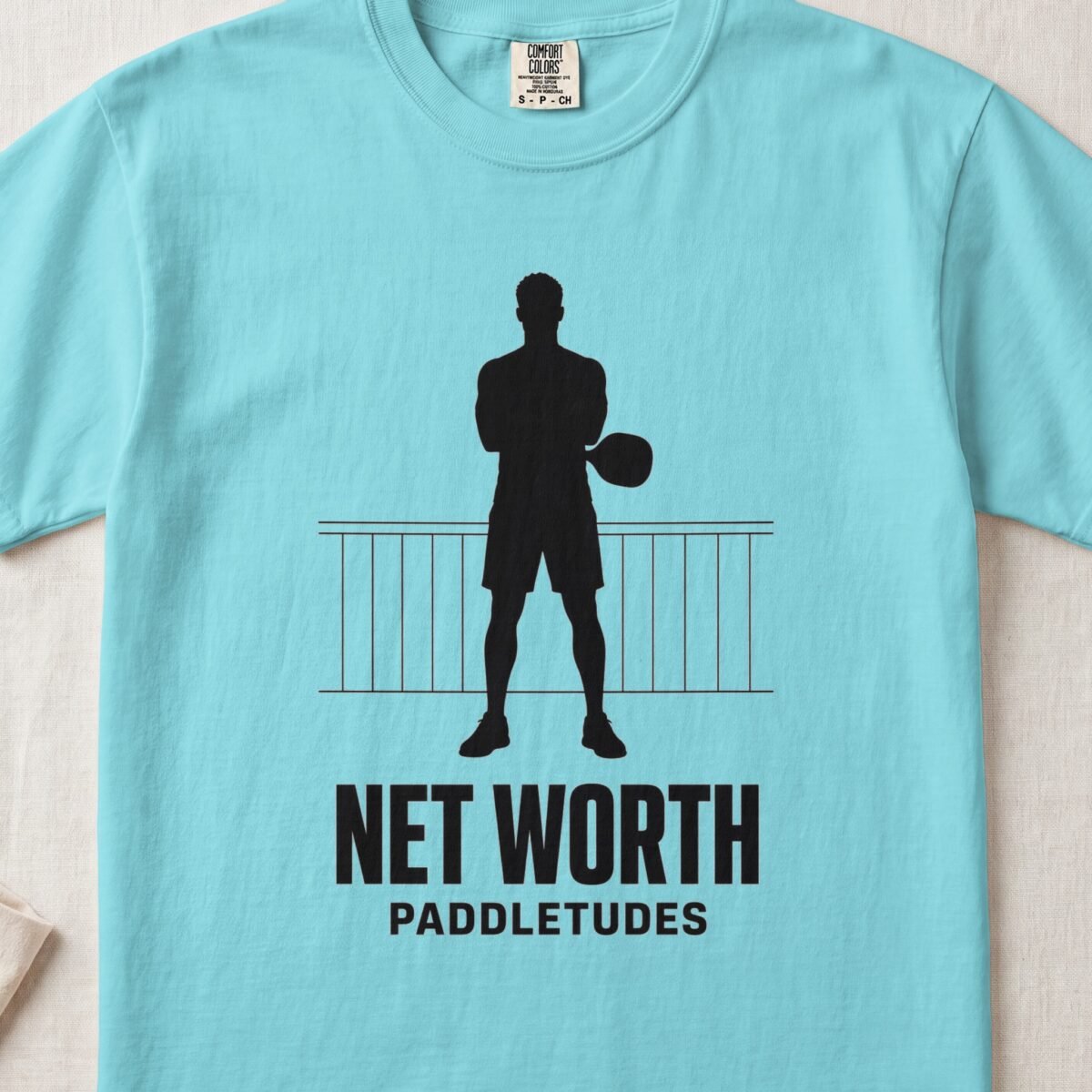
Net Worth
$29.99 Select options This product has multiple variants. The options may be chosen on the product page -
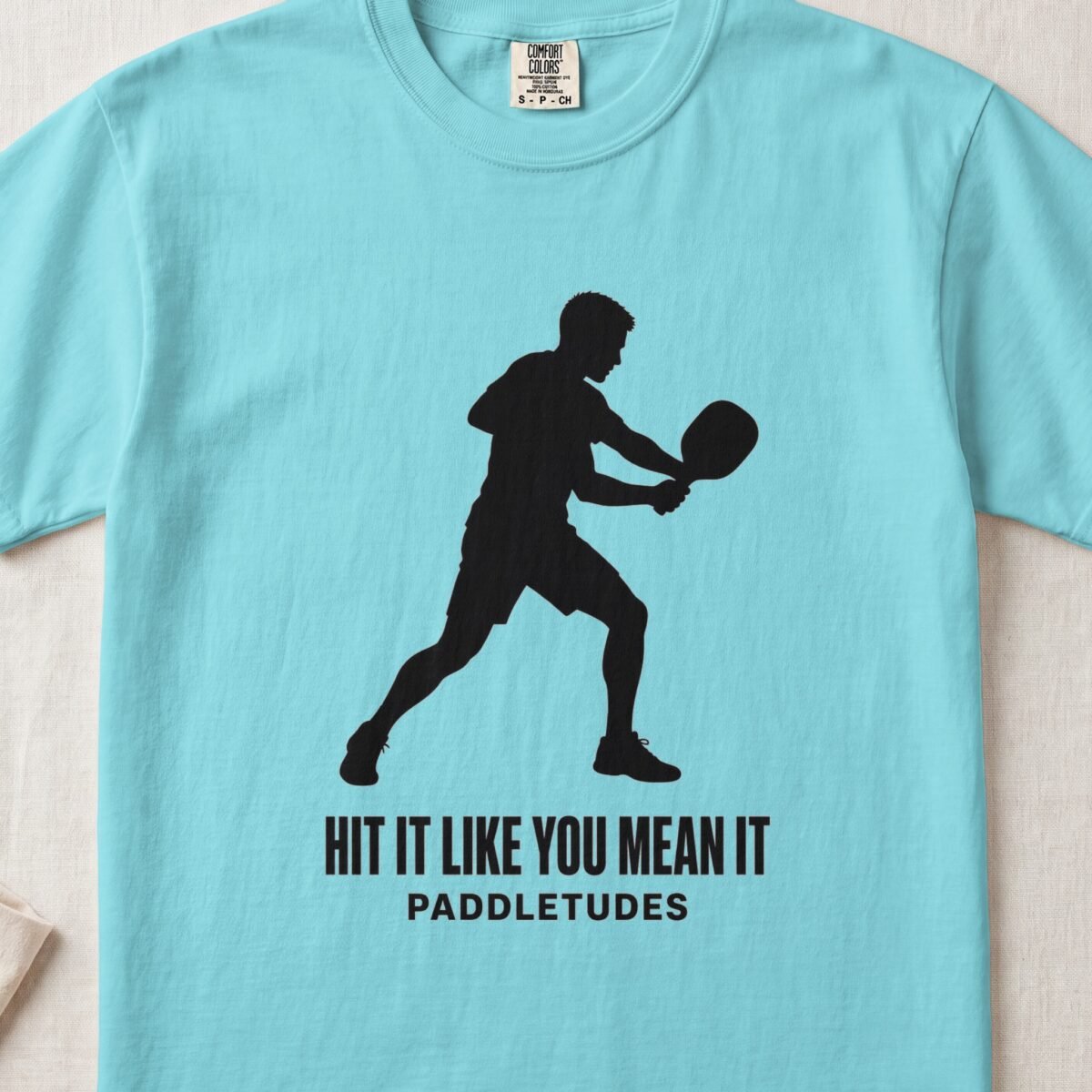
Hit It Like You Mean It
$29.99 Select options This product has multiple variants. The options may be chosen on the product page -
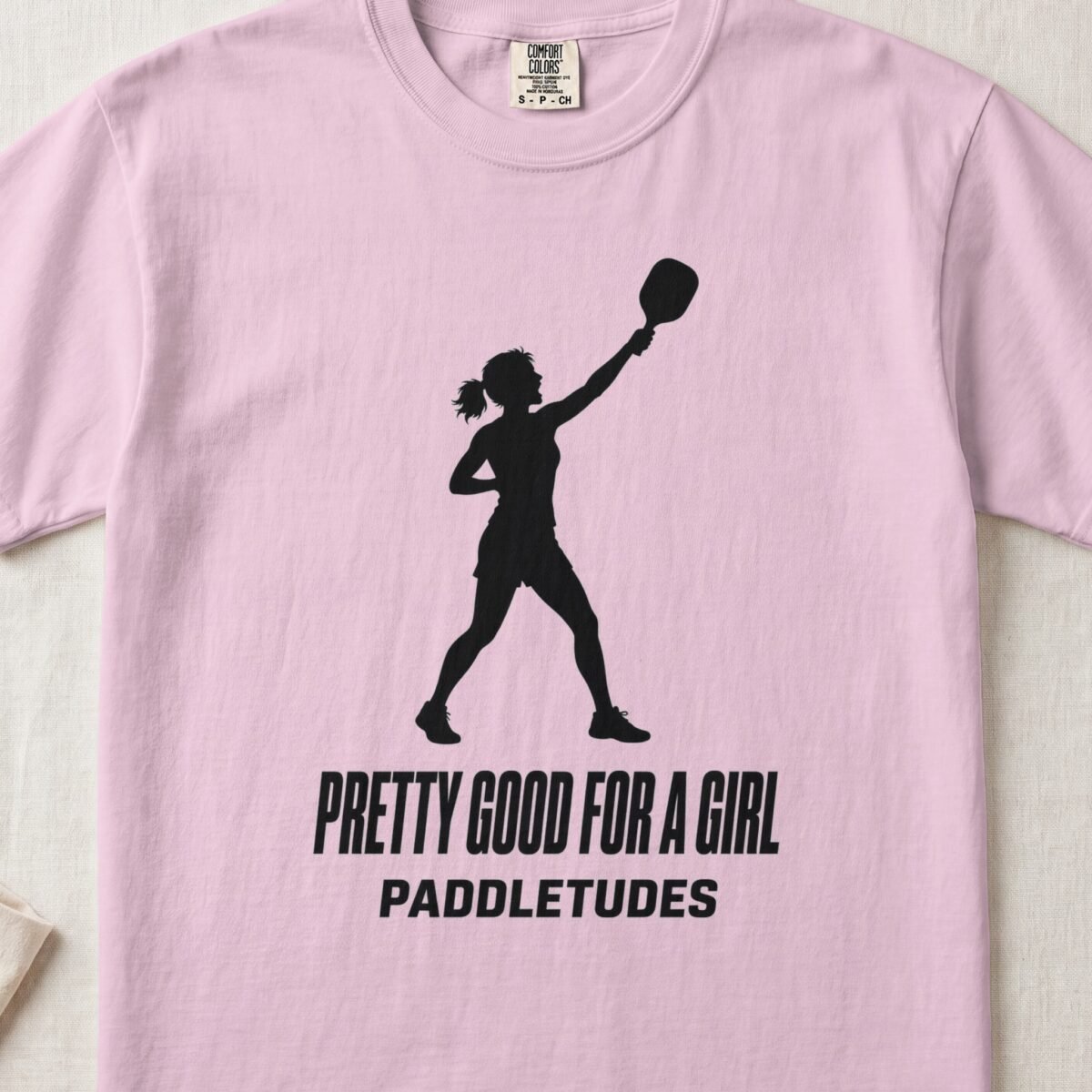
Pretty Good For A Girl
$29.99 Select options This product has multiple variants. The options may be chosen on the product page