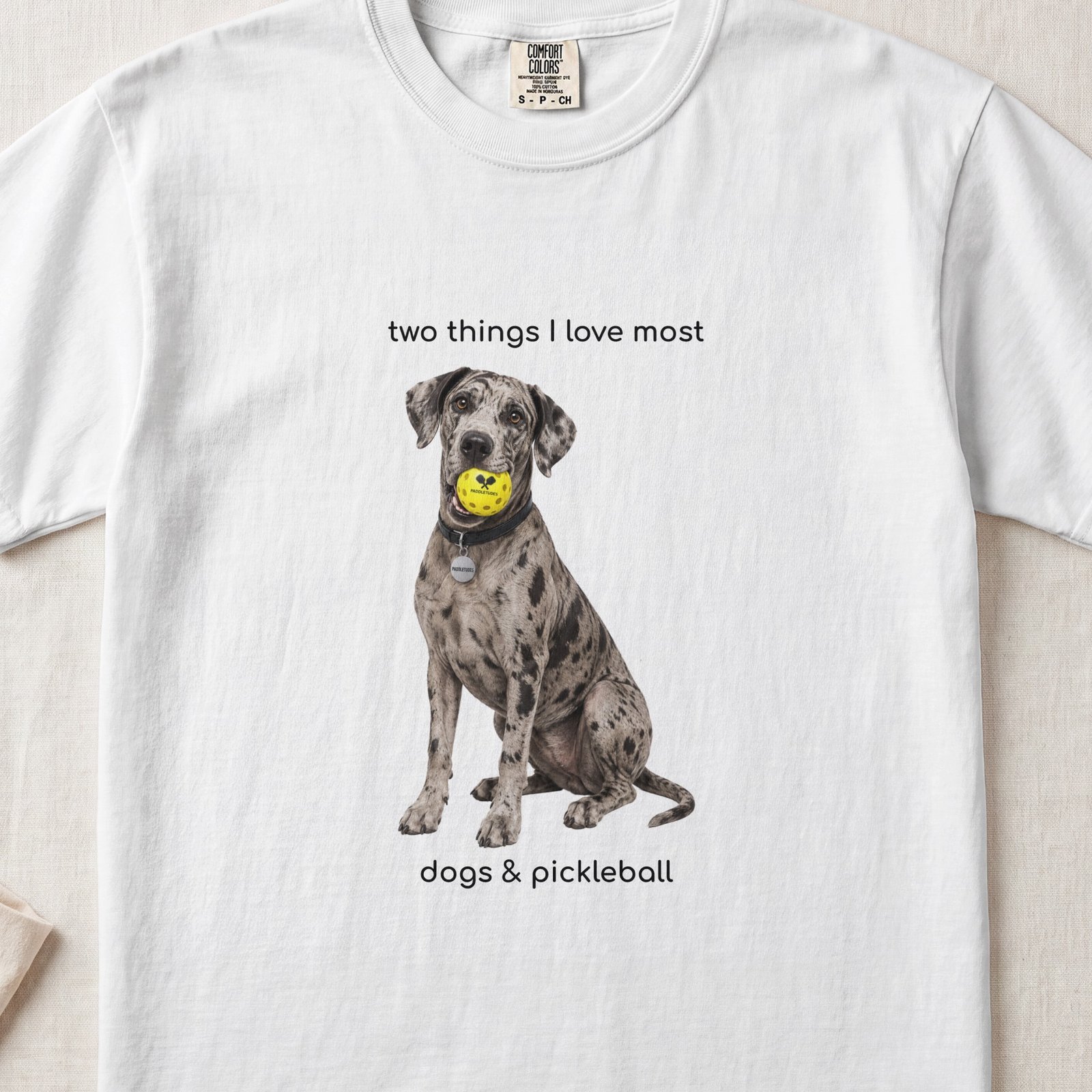
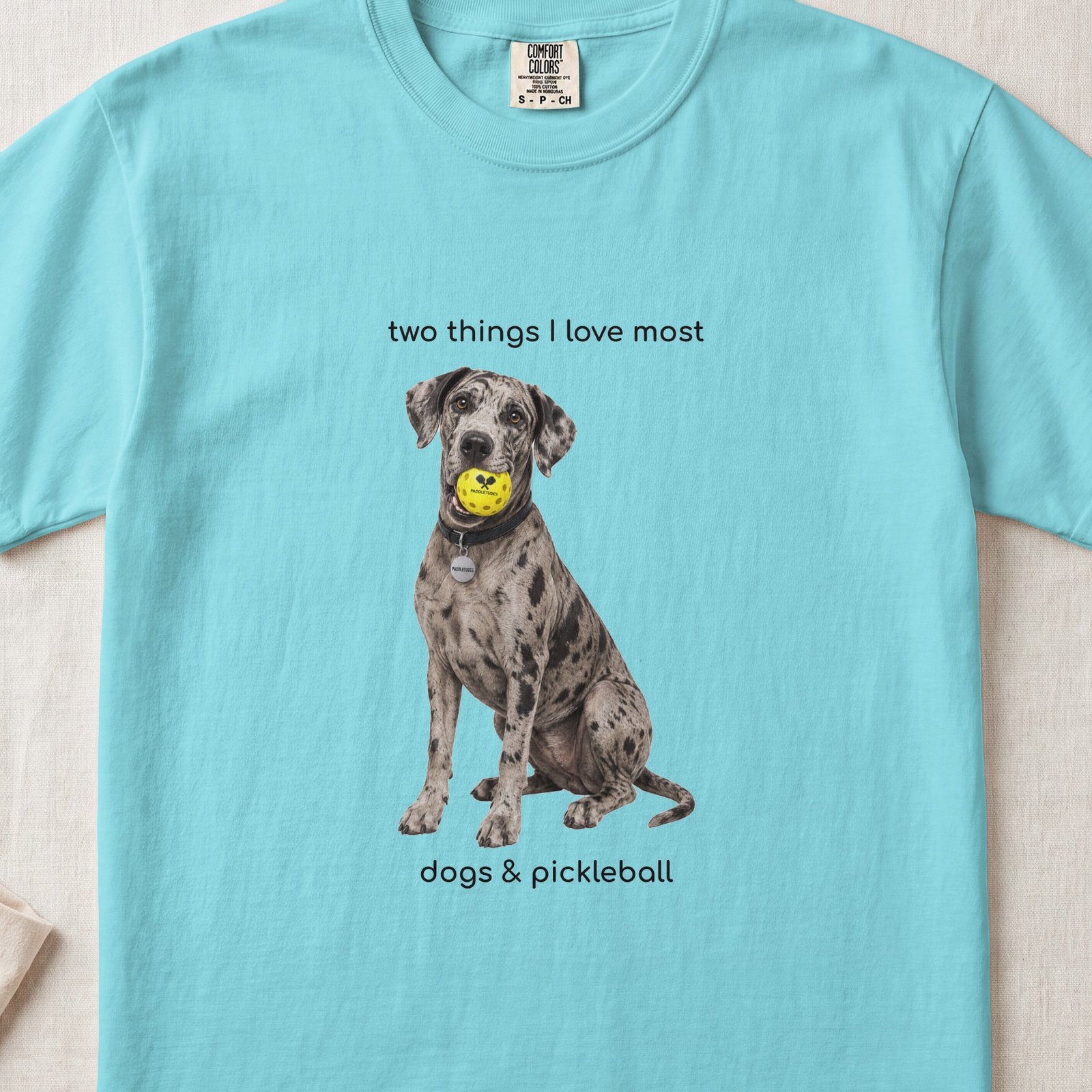
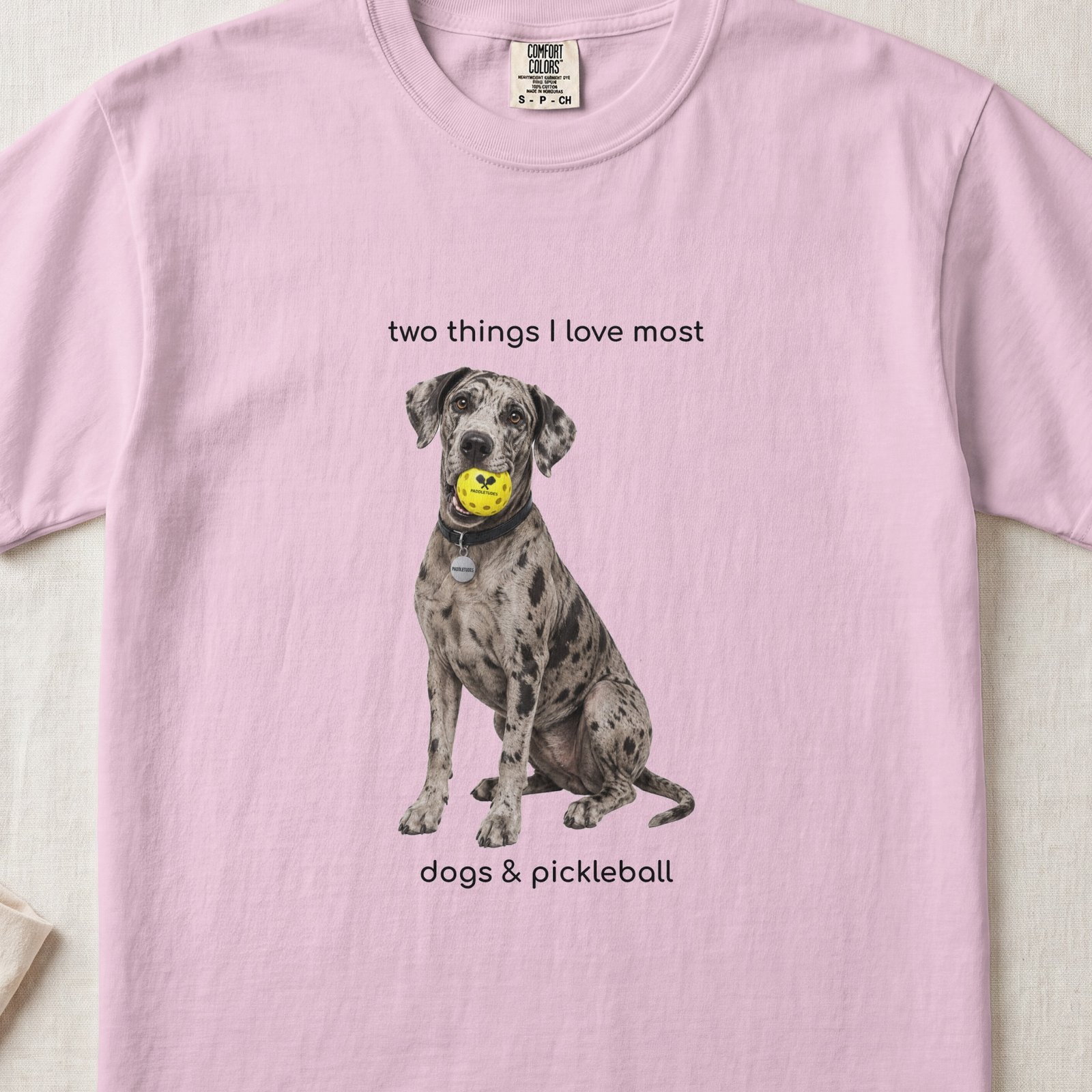
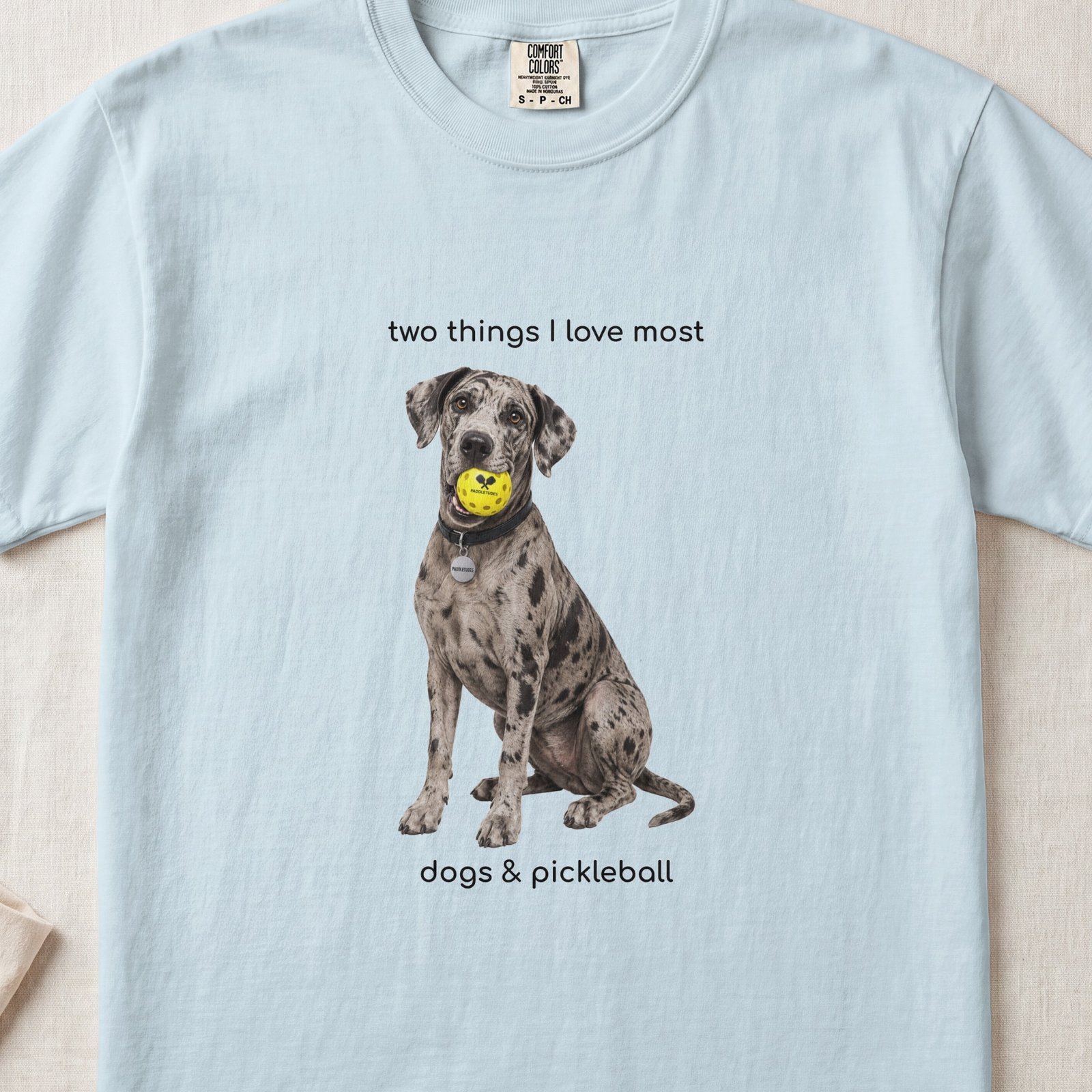
Animals Comfort Colors 1717
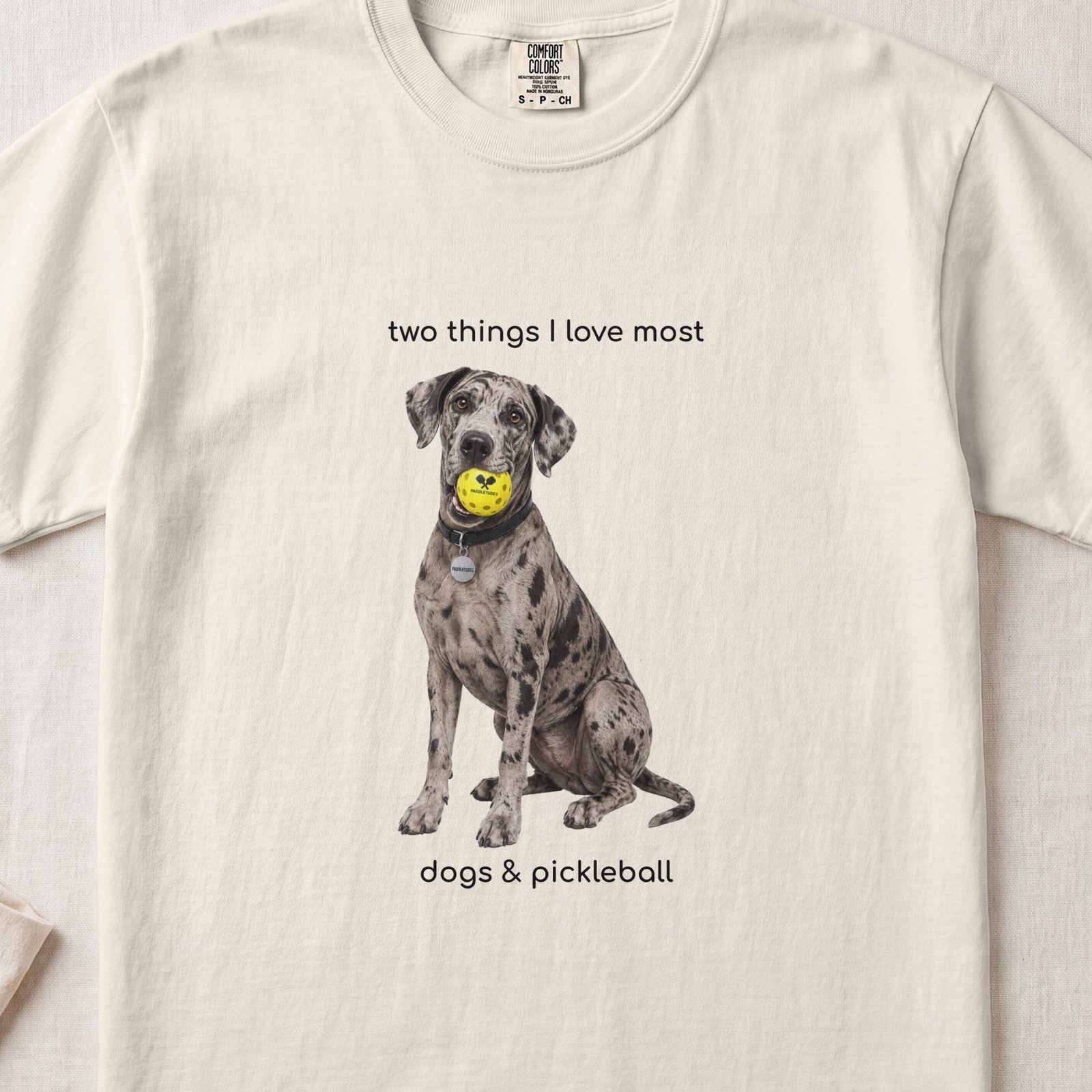
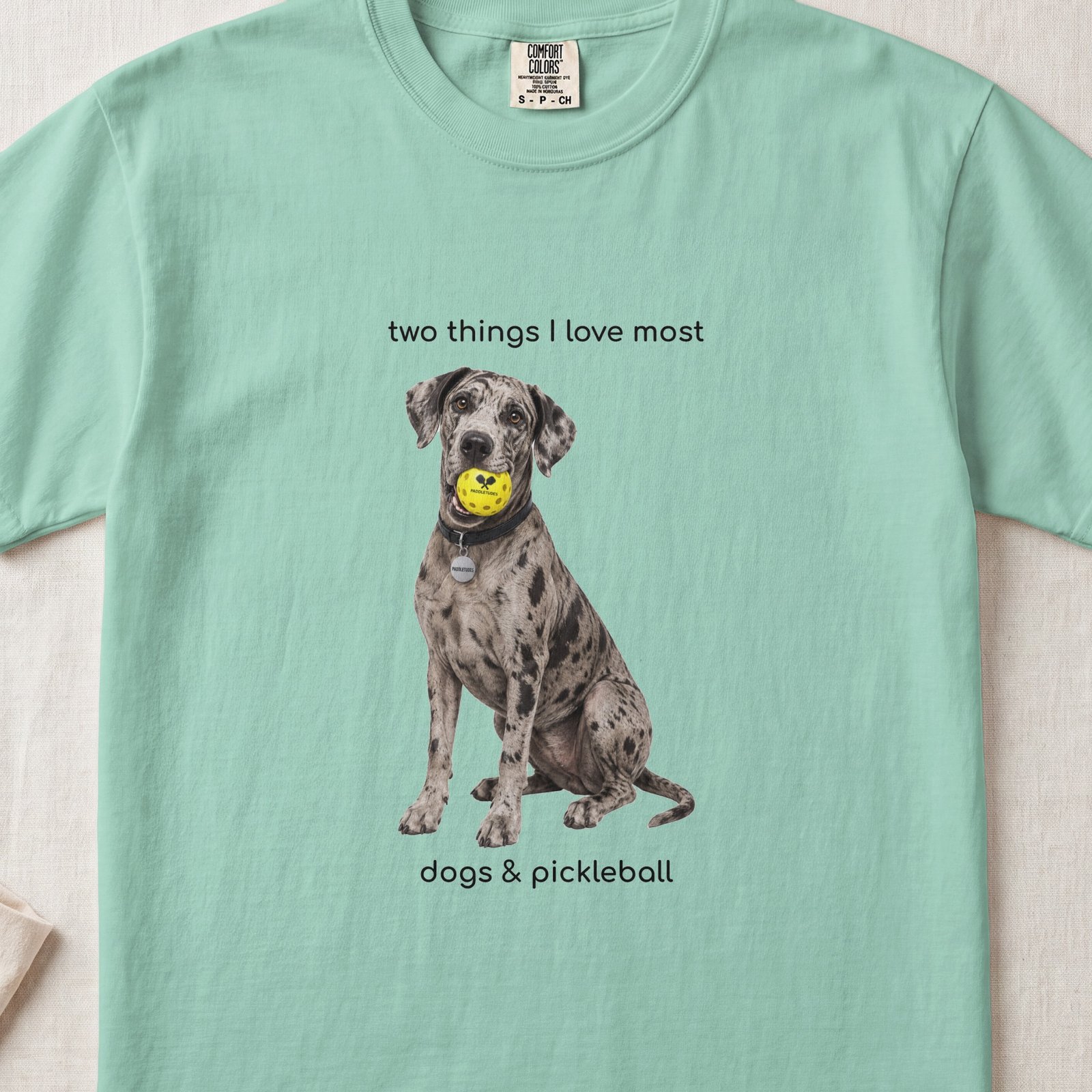
Great Dane Happy
$39.99
- Comfort Colors 1717 heavyweight cotton
- Original design · printed to order
- U.S. print partners
A Great Dane T Shirt for the Biggest Dog on Court
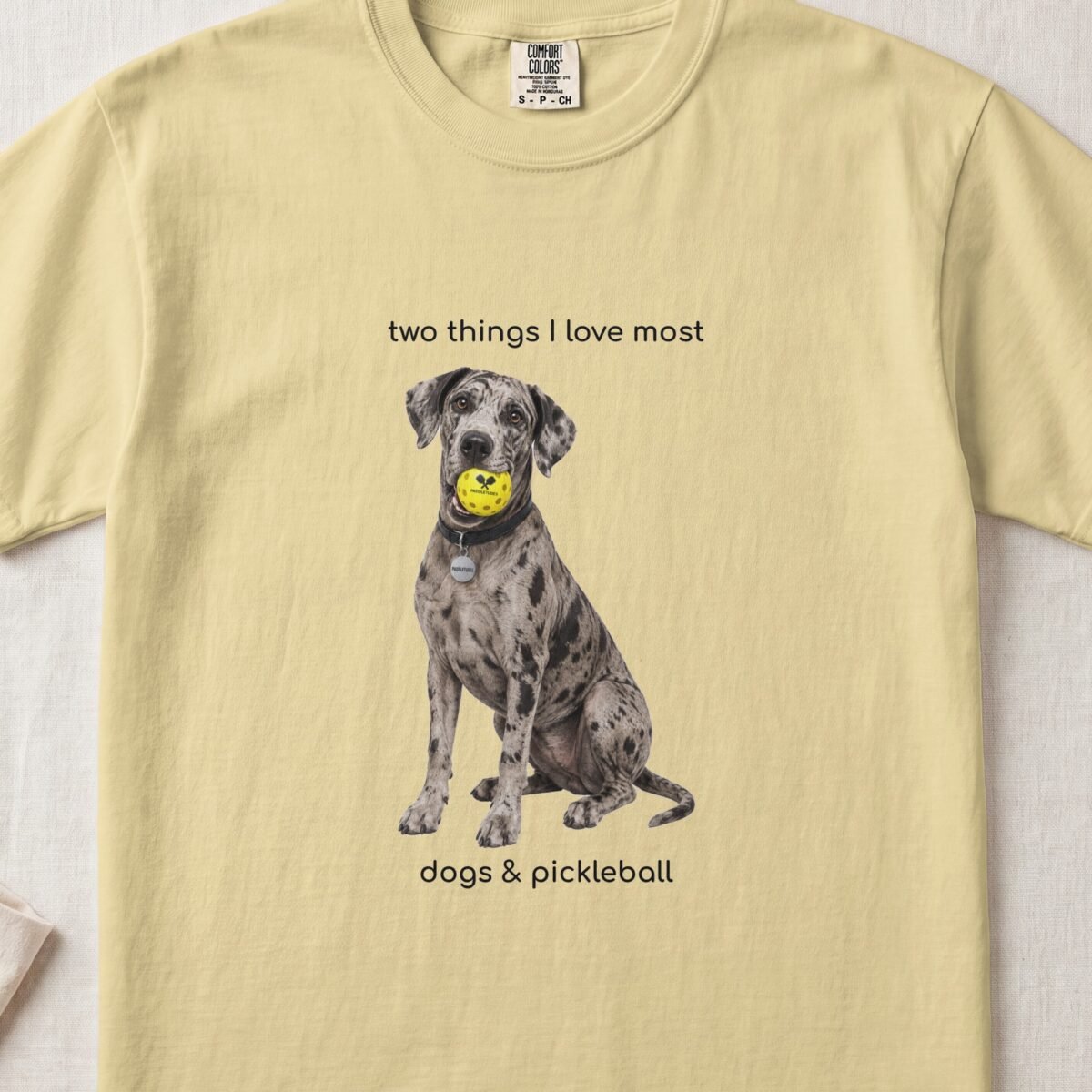
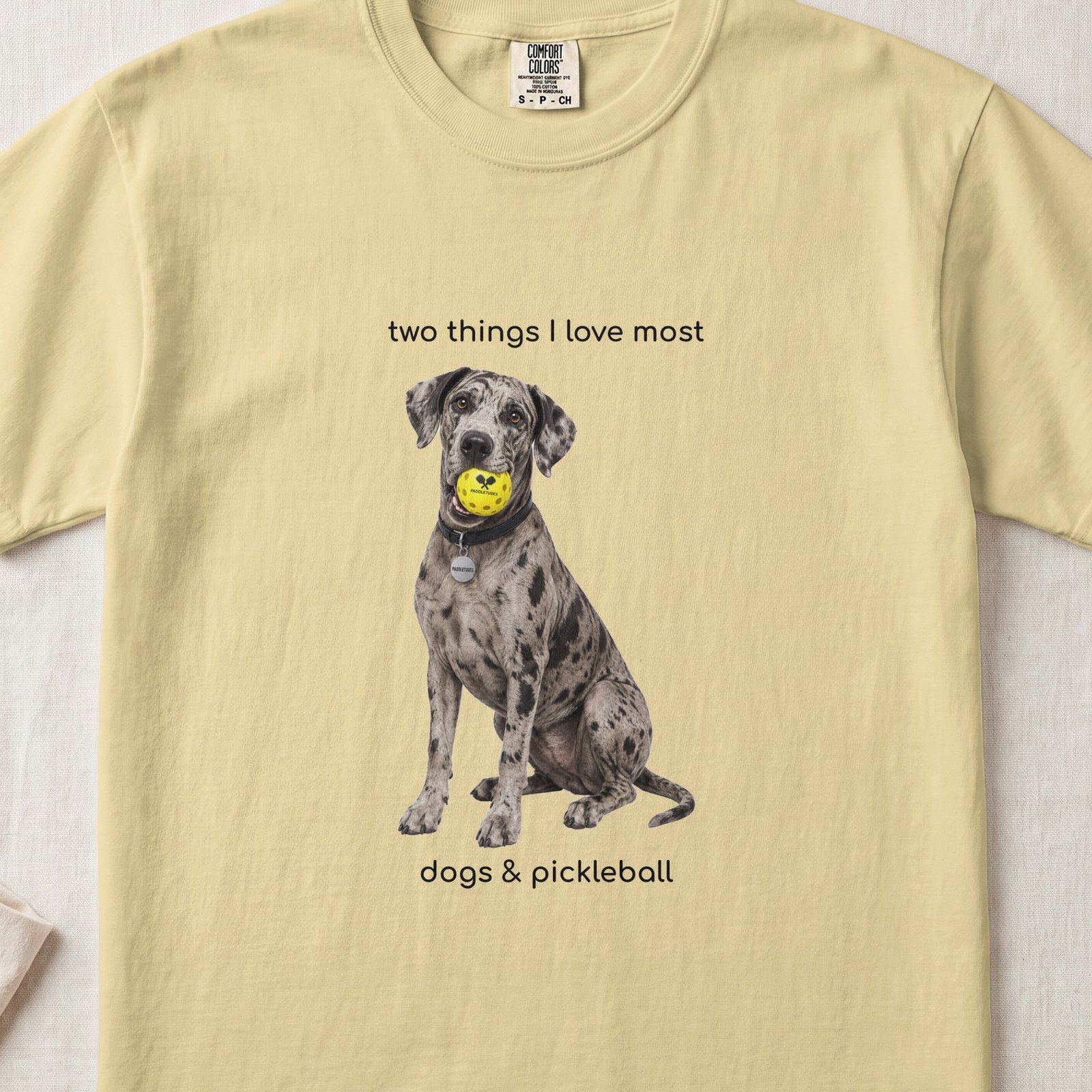
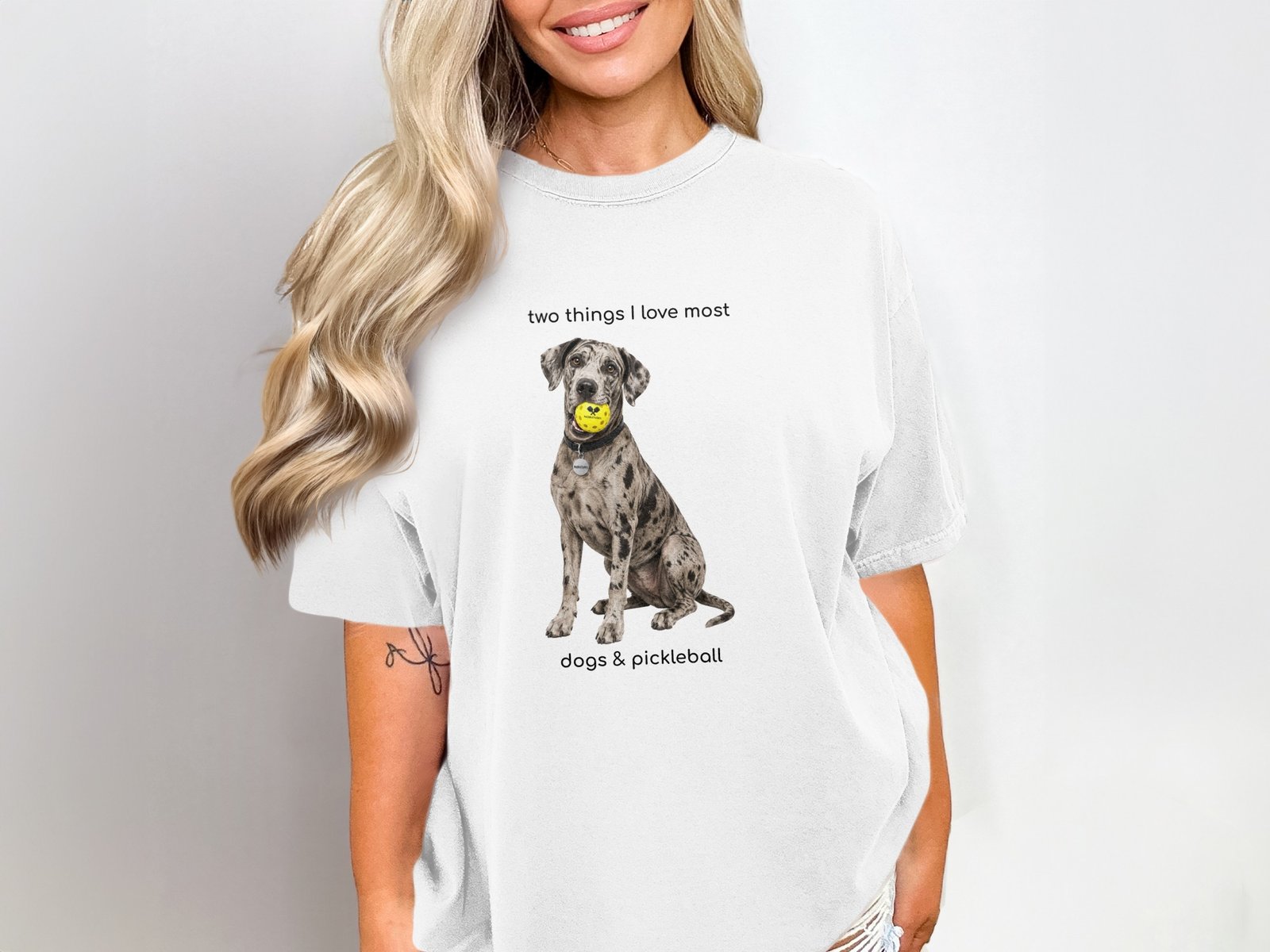
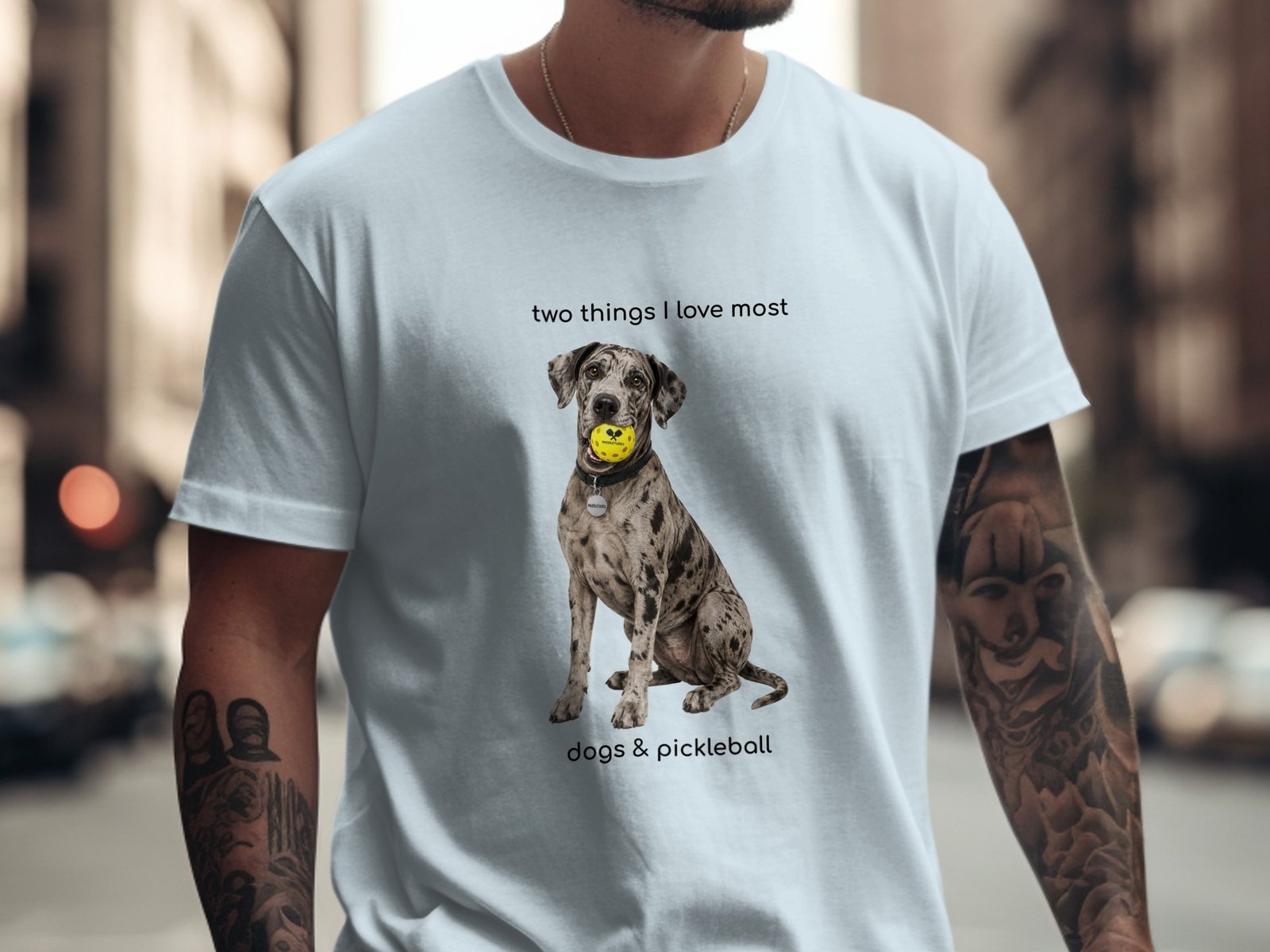
The funniest size ratio in the entire dog-meets-pickleball universe — a Great Dane holding a ball that weighs less than an ounce. This great dane shirt captures the single funniest size ratio in the entire Paddletudes dog lineup — the Apollo of Dogs — whose sad version is equally massive and twice as quiet — gripping a pickleball with the same gentle mouth that once retrieved wild boar for German nobility, looking at you like this is the most important thing that has ever happened. Printed on a garment-dyed Comfort Colors 1717 heavyweight tee with water-based DTG ink.
The Great Dane does not know it is enormous. This is the defining fact of the breed and the reason every Dane owner has the same story — the dog tried to sit in a lap, or the dog blocked an entire hallway without realizing it, or the dog leaned against a guest at Thanksgiving and the guest almost went through the wall. The AKC breed standard calls the Great Dane “the Apollo of Dogs” and describes a dog that must be “spirited, courageous, never timid; always friendly and dependable.” What the standard does not mention is that this friendly, dependable dog stands thirty-two inches at the shoulder and has absolutely no spatial awareness of that fact. The Great Dane breed page lists the temperament as gentle, and it is — but gentle at this scale is still a dog that can clear a coffee table with its tail without noticing.
The Dane owner at the pickleball court is the person everybody notices and nobody forgets. Not because they are loud or flashy — because they showed up in a truck with a dog looking out the window that people initially mistake for a small horse. The conversation always starts with the dog. “Can I pet your dog” turns into “how much does it eat” which turns into “does it sleep in your bed” which always gets the same answer delivered with the same exhausted pride: yes, and it takes up most of it. The Great Dane owner chose the biggest possible dog for a normal-sized house and has fully, irreversibly accepted the consequences. The couch belongs to the dog. The bed belongs to the dog. The back seat belongs to the dog. The owner gets whatever space is left, and they would not trade a single square inch of it.
The kids are the ones who buy this shirt. Specifically the adult kids who talked dad into getting a “puppy” without mentioning that Great Dane puppies gain ten pounds a month and do not stop gaining for two years. The dog now weighs more than the youngest child. Dad plays pickleball three mornings a week and comes home to a dog that greets him at the door by standing on its hind legs and putting its paws on his shoulders. Great dane gift searches run at fifty a month, but the real demand spikes in December when families are looking for something that captures the absurdity they have all been living with since the puppy came home. This shirt is the acknowledgment that the dog won.
The breed is not actually Danish. The Great Dane was developed in Germany, where it is still called the Deutsche Dogge — German Mastiff. German breeders in the sixteenth and seventeenth centuries refined massive mastiff-type dogs specifically for hunting wild boar, one of the most dangerous prey animals in Europe. These were not pets. They were athletes — fast, powerful, and fearless enough to hold a wounded boar at bay until the hunters arrived. The Great Dane Club of America, chartered in 1889, is one of the oldest breed clubs in the country. Over the past century, breeders deliberately selected for the gentle temperament that defines the modern Dane, transforming a boar-hunting weapon into a dog that lets toddlers climb on it.
Owning a Great Dane also means owning the conversation about giant-breed health. The breed’s average lifespan is seven to ten years — shorter than most dogs, and every Dane owner knows the number before they bring the puppy home. Gastric dilatation-volvulus, commonly called bloat, is the most serious risk — the stomach fills with gas and rotates, cutting off blood supply, and it can become life-threatening within hours. Feeding smaller meals throughout the day instead of one large one reduces the risk. Dilated cardiomyopathy affects the heart muscle and is common enough in the breed that annual cardiac screening is recommended. Hip dysplasia and arthritis come with the territory when you are built on this frame. None of this is said to discourage — it is said because the Dane owner wearing this shirt already lives inside this reality, and content that pretends the trade-off does not exist is not written for them.
The sad version shows the other side — a Great Dane lying flat with the full weight of a hundred-plus pounds of sadness because pickleball did not happen today. The scale of the disappointment matches the scale of the dog. The Chihuahua runs the opposite equation — minimum dog, maximum emotion. Find your breed in the full dog collection or browse the pickleball shirt lineup.
Printed on a Comfort Colors 1717 garment-dyed heavyweight tee with water-based DTG ink — sizing and care details here.
Do Great Danes Think They Are Lap Dogs
Great Danes genuinely do not appear to understand their own size. The breed consistently attempts to sit on laps, curl up in spaces designed for dogs a quarter of their weight, and position themselves in the smallest available spot on a couch as if they were a Yorkie. This behavior is not a phase and it does not go away as the dog grows. A thirty-inch, hundred-and-forty-pound adult Great Dane will attempt the same lap sit it managed as a twenty-pound puppy.
The behavior has roots in the breed’s history. When German nobility kept these dogs as Kammerhunde — chamber dogs — the most prized animals literally lived inside their owner’s chambers, not in outdoor kennels. For centuries, the dog that slept closest to the lord earned the best care, the best food, and the best breeding prospects. That selection pressure produced a giant breed that is neurologically oriented toward physical closeness with its person. The Great Dane did not decide to be a lap dog. Hundreds of years of breeding made it one.
Veterinary behaviorists describe the Great Dane as a contact-comfort breed — a dog that uses physical proximity as a self-regulation tool. When a Dane is anxious, it leans. When a Dane is happy, it leans. When a Dane is tired, it finds the person closest to it and collapses against them. The lean is the breed’s signature behavior, and it is not subtle — a full-body press from a dog that weighs more than most humans generates a force that has genuinely pushed people off their feet. Experienced Dane owners brace for it the way you brace for a wave.
For households with Great Danes, the practical implication is that every piece of furniture becomes communal property. The bed, the couch, the car’s back seat — the Dane will claim it all, and it will do so with the quiet confidence of a dog that has never been told it is too big for anything. Owners who try to enforce boundaries quickly discover that a Great Dane on the floor looks up at you with the expression of a dog who has been personally wronged by the concept of spatial limitations. Most owners give in. The dog knows they will.
-
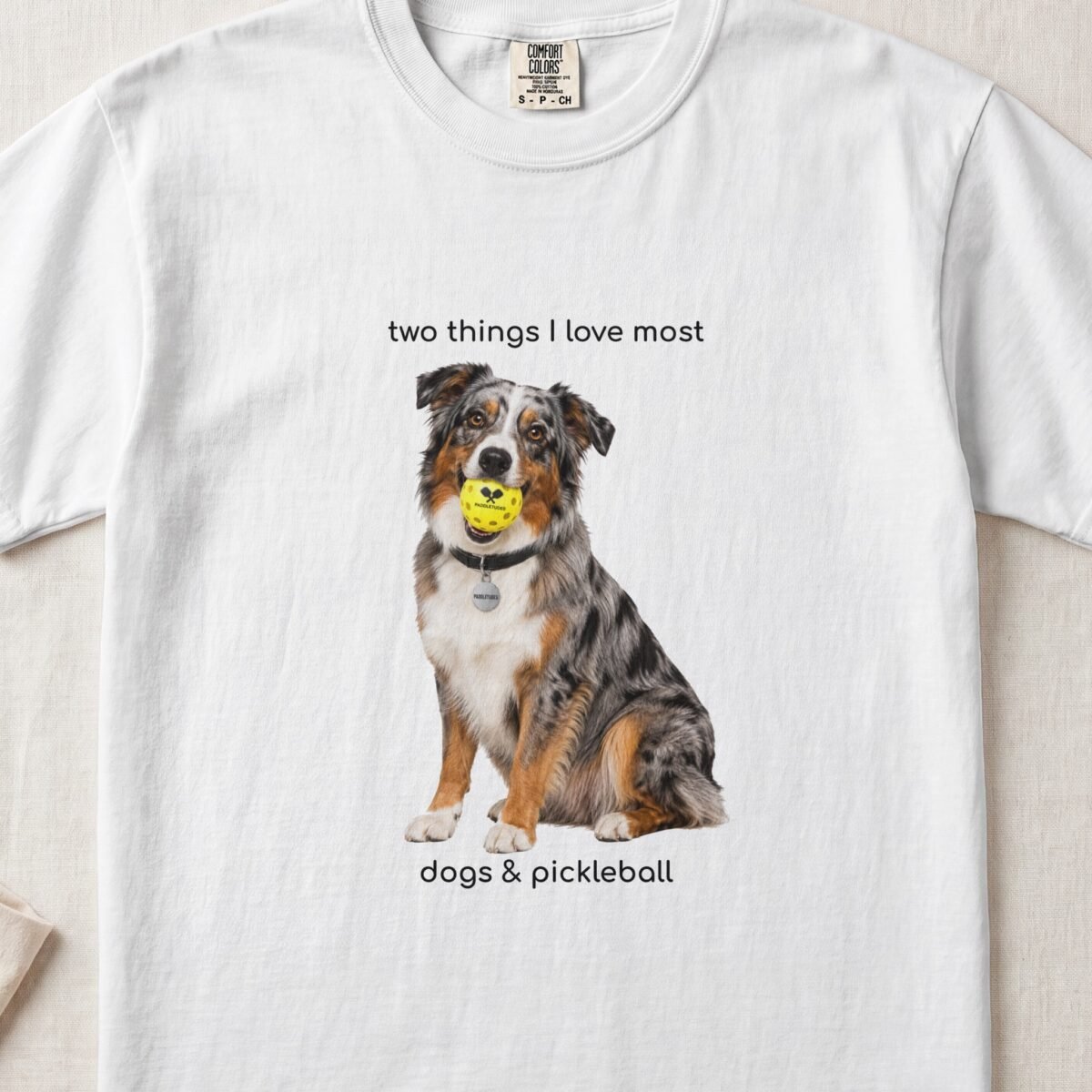
Mini Australian Shepherd Happy
$39.99 Select options This product has multiple variants. The options may be chosen on the product page -
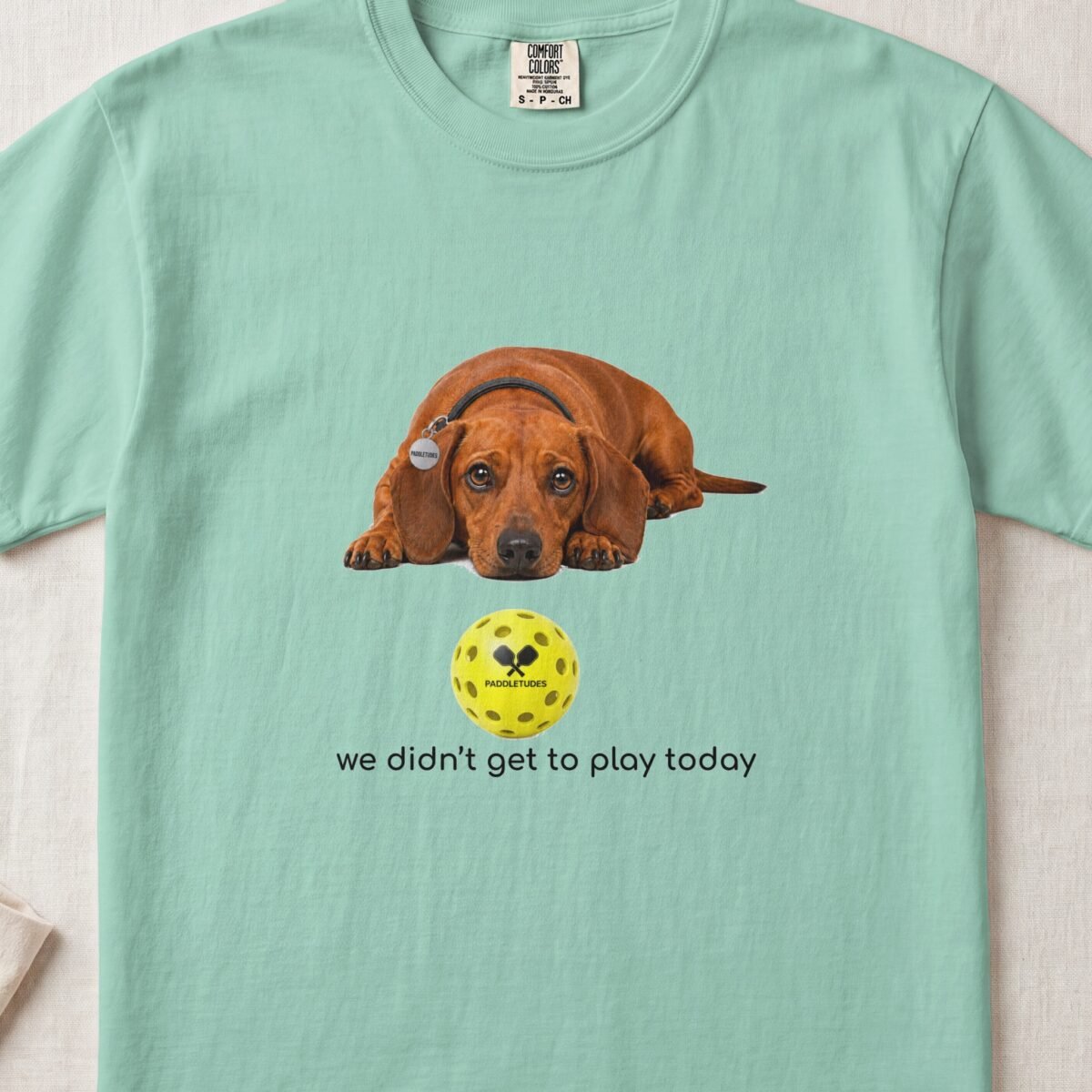
Dachshund Sad
$39.99 Select options This product has multiple variants. The options may be chosen on the product page -
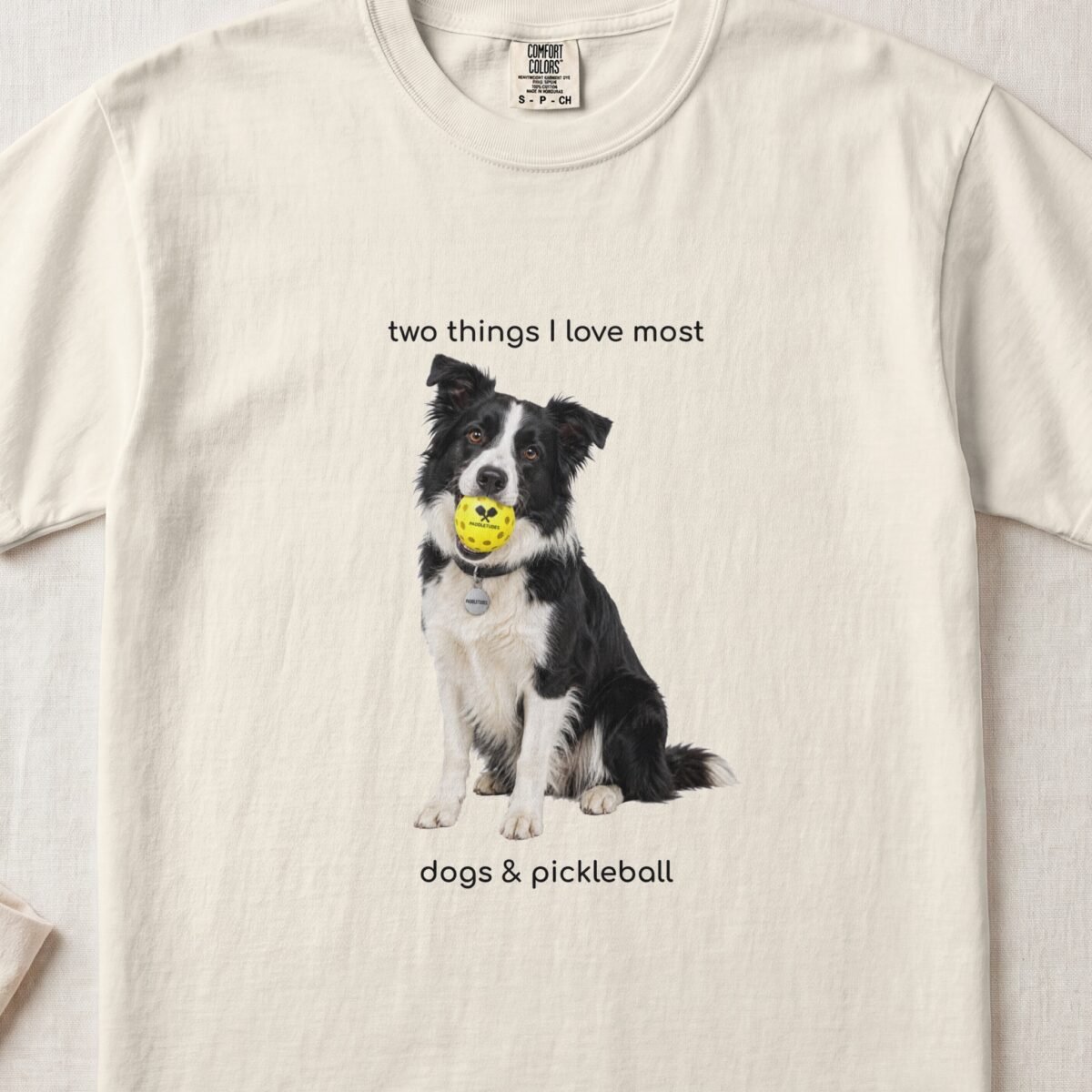
Border Collie Happy
$39.99 Select options This product has multiple variants. The options may be chosen on the product page